

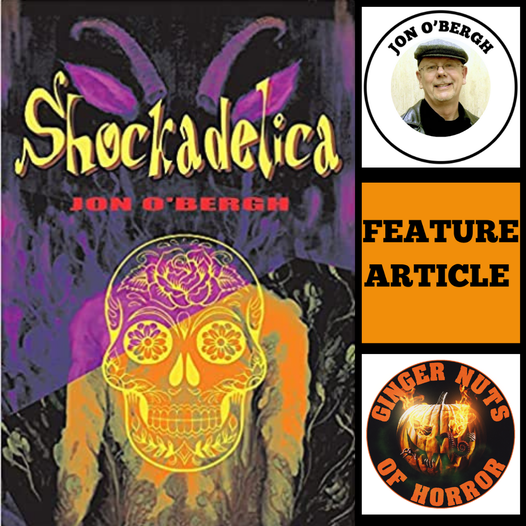
Panic attacks. If you’ve never had one, it’s hard to imagine how utterly terrifying they are. The racing heartbeat. The sense of impending doom. The impression of falling into a black hole. The impulse to just start running, as if pursued by a demon. I experienced my first panic attack during my second year of college. It came out of nowhere while I was trying to fall asleep. Not knowing what was happening, I thought I was going crazy. That autumn, I had begun to feel directionless, unsure of what to do with my life, dissatisfied with school, and increasingly isolated from any social network. It’s not surprising that such feelings would manifest as anxiety. At first, the attacks came at bedtime. But then they started intruding at any hour. The anxiety was not about anything in particular—that’s what made it so baffling. Fortunately, I sought help from a school counselor. She taught me techniques to calm the anxiety and encouraged me to make changes to my situation. I switched majors, moved into a dorm where I knew people, and started attending meetings of the gay and lesbian students club. I learned that people commonly think they are having a heart attack or going mad during an attack. As I took control over my circumstances and made positive changes, the attacks gradually subsided. You never completely conquer them, of course. They are the monster under the bed that, every once in a while, creeps out to haunt you. But now I know how to sap its power. Several conditions fall under the umbrella of anxiety disorders. In addition to Generalized Anxiety Disorder (GAD), there are Post-Traumatic Stress Disorder, Obsessive-Compulsive Disorder, and phobias. My particular situation in college showed up as what psychologists call Panic Disorder. Those bouts came on suddenly and peaked. But several decades later I experienced a constant state of anxiety for weeks on end—not technically GAD, which involves chronic, excessive worry about particular things, but an amorphous sense of panic. It was so relentless that I decided I would need to end my life if there was no relief. Once again, though, I sought help and got it under control. I learned to become aware of what I was feeling and thinking when attacks began, and how to derail the negative thoughts that seemed to precipitate the attacks. The scariest thing about panic attacks is not understanding what they are—and feeling helpless to do anything about them. But we are not helpless. Tools include counseling, medication, relaxation techniques, and behavior modification. The important thing is to seek help, to know that you are not alone and don’t have to suffer in silence. That’s why it’s critical to raise awareness about mental health issues. And that’s why I decided one of my characters in Shockadelica would struggle with anxiety. Drag artist Kendall Akande has experienced a recurring nightmare since he was a toddler. Like many of us who grapple with depression, anxiety, and other demons, he’s a horror fan. Maybe the reason, he says, is that it inoculates him against his fears. Kendall hosts a horror podcast with his best friend Jenna Chen. When they learn that their Victorian-era apartment building might be haunted, they see an opportunity for a podcast episode. But as they investigate further with the help of their quirky neighbors, they uncover something far more sinister, starting with the appearance of a goat-headed man. Kendall’s nightmare morphs into panic attacks. He even begins to suffer night terrors, where the dreamer awakens but is unable to move and senses an oppressive presence in the room. Mysterious incidents and other horrors pile up, eventually causing Kendall to have a revelation. He reinvents himself and takes control over the existential threats facing him and his neighbors. Steel is forged in fire, as they say. That’s one of the messages I hope readers take away from the story—especially those readers who struggle with an anxiety disorder. Weaving together supernatural legends from Ireland, Nigeria, and China, Shockadelica tells a story about fear, prejudice, and overcoming adversity. It’s available from Amazon: https://smarturl.it/0z9792 An album of horror-themed songs by one of the characters known as the Bone Man, whose arms are covered with tattoos of serial killers, complements the novel and can be found at most streaming sites. The Anxiety and Depression Association of America (ADAA) is a nonprofit organization dedicated to increasing awareness and improving the diagnosis, treatment, and cure of anxiety disorders. Its sister organization in the U.K. is Anxiety UK. They provide a number of online resources—a good place to start if you or a loved one might need help. Don’t suffer in silence.  Jon O’Bergh is an author and musician who appreciates a good scare. He received a Bachelor of Arts in Music from the University of California at Irvine. A fan of ghost stories and horror movies, O’Bergh came up with the idea for his first novel, The Shatter Point, after watching a documentary about extreme haunts. He has published five books and released over a dozen albums in a variety of styles. His supernatural short stories have appeared in anthologies and magazines. After many years living in San Francisco and Washington, D.C., he now resides with his husband in Toronto. WEBSITE LINKS Author website: https://obergh.net Goodreads: https://www.goodreads.com/JonOBergh Twitter: @jon_obergh The Bone Man: https://theboneman.hearnow.com 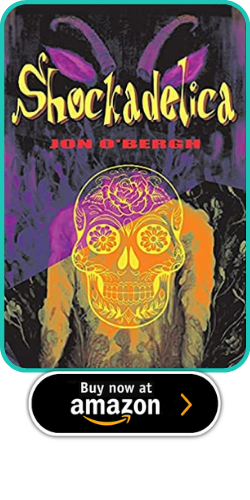 Weaving together supernatural legends from Ireland, Nigeria, and China, "Shockadelica" follows two friends who must confront their own fears while fighting an evil, existential threat. With a dash of humor and horror, the story explores prejudice, conspiracy theories, and things that aren't what they appear to be, offering a critical look at the current state of the world. Two horror podcasters―drag artist Kendall Akande and best friend Jenna Chen―share a passion for art, fashion, and horror. When they find out their Victorian-era apartment building might be haunted, they see an opportunity for an entertaining podcast episode. They learn that a past resident, inspired by demonic images of a goat-headed man, lured victims to his apartment and murdered them. While visiting his grave, they are spooked by a man in a goat mask who watches from the bushes. The two friends launch their investigation and get a glimpse into the lives of their unusual neighbors. Rooney Xavier posts fake online testimonials for businesses and starts dating the landlord's son, hoping for perks. Aging fashion diva Morvena Delacroix rages against any noise Rooney makes downstairs. The Nigerian/Irish witch Lilith Adebayo offers interventions to help Kendall with his nightmares. Lucy Lee talks to her vegetables when she cooks and helps Jenna cope with her grandmother's worsening dementia. An intimidating musician named the Bone Man has tattoos of serial killers covering his arms. The dignified Mrs. Gupta, architect Elliott Bernbaum, and a reclusive tenant in the basement round out the cast. As strange sightings and sounds spread, Kendall and Jenna visit the landlord on Ward's Island, but his house of curiosities only deepens the mystery. Then a stranger appears who promises protection if Kendall sacrifices something of value. As the ghosts of the past become entwined with the growing terror, Kendall and Jenna must use their creativity to confront the evil force that threatens them all. An album of horror-themed songs by the Bone Man complements the novel and is available at most streaming sites and online retailers. TODAY ON THE GINGER NUTS OF HORROR WEBSITE BOOK REVIEW: THE DESPICABLE FANTASIES OF QUENTIN SERGENOV BY PRESTON FASSELSOHOME HORROR FEST PRIDE 18TH - 20TH JUNE 2021 THE HEART AND SOUL OF HORROR FEATURES  From the coded taboo of James Whale to the Babadook vogueing in Pride marches around the world, the horror genre always has been and always will be queer. So to, from its inception in 2018, the Soho Horror Film Festival has held LGBTQ+ visibility, inclusivity and celebration as one of its cornerstones. And now, following from last year’s success, we are delighted to invite you to the 2021 Sohome Horror Fest: Pride Edition. In lieu of many Pride events across the country being postponed, we will once again be broadcasting an onslaught of sickening cinema straight to your homes, for a 3 day celebration of all things Queer Horror. A gala of gayness that will take a chainsaw to heteronormativity and bring you the very best voices in LGBTQ+ filmmaking: featuring 9 fierce features, 22 slaying shorts, and 5 very special events. The festival is bookended in suitably fabulous fashion with today’s answer to Greg Araki and John Waters: opening with the UK Premiere of Gem Deger’s neon-soaked violent fantasia PLAYDURIZM and closing with the kink and kitsch filled wonderland that is Molly Hewitt’s HOLY TRINITY. From the director of The Ruins and S Club 7’s “Reach” video, Carter Smith evolves the seminal classic Hellbent into the 21st century with Blumhouse Televsion’s sexy slasher INTO THE DARK: MIDNIGHT KISS. Bram Stoker’s inherently queer text gets a bi-revitalise in Matheus Marchetti’s THE NUPTIALS OF DRACULA from Brazil; and continuing our love of Argentinean cinema, there’s the simmering psychological thriller THE DOSE. We have brooding and steamy southern Gothic in Richard Griffin’s BEFORE THE NIGHT IS OVER; soul-sucking post-mortem photography in the Mario Bava inspired THE INVISIBLE MOTHER; and every mother’s worst nightmare in Lauren Fash’s incredible THROUGH THE GLASS DARKLY. And joining us for its European Premiere: Shantay, you SLAY as giallo goes rainbow in our drag-tastic centrepiece film DEATH DROP GORGEOUS.  You won’t be a size queen when it comes to our sensational short selection; including the World Premiere of 2020 guest of honour Michael Varrati’s new film WHAT’S LEFT INSIDE, the skin crawling ITSY BITSY SPIDER, and ShockdownSaturday award-nominated Kelsey Bollig’s ASKING FOR A FRIEND to name just a few. Providing a platform for some of the more marginalised voices in our community is essential to Soho Horror, which is why we’ll also have a spotlight programme of Trans and Non-Binary shorts to coincide with our “Cis-tem Error: Trans Representation in Horror” Panel. Special events are also galore, including an evening of live music from the composer of Shudder’s Queer Horror documentary, Andrew Scott Bell, a live podcast from intersectional horror icons NIGHTMARE ON FIERCE STREET and the return of Ghouls Magazine for a 25th Anniversary celebration panel of otherness-empowering cult classic THE CRAFT! So get your glitter ready, scream me by your name, and join us this June. Because, we are the queerdo’s, mister. Sohome Horror Fest: Pride Edition is a virtual festival taking place from the 18th-20th June, it is ran on a Pay-What-You-Can price basis, with a recommended donation of £25 to help cover the costs of the festival. In addition, 25% of all donations will be given to Mermaids UK, an organisation that provides support for Trans, Non Binary & Gender diverse youth. TODAY ON THE GINGER NUTS OF HORROR WEBSITE BOOK REVIEW: THE DESPICABLE FANTASIES OF QUENTIN SERGENOV BY PRESTON FASSELTHE HORROR OF HUMANITY: PANIC ATTACKS: THE MONSTER UNDER THE BED BY JON O’BERGH The Heart and Soul of Horror Websites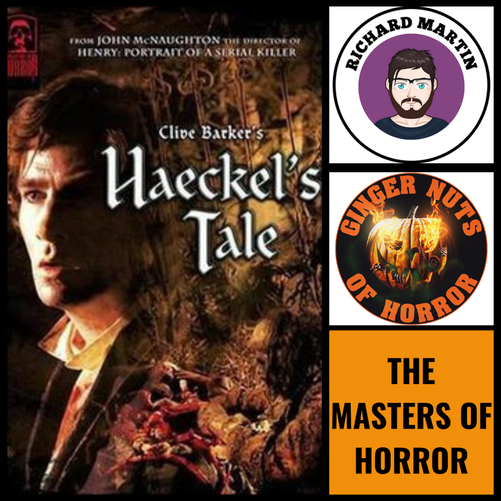 We are living in a golden age of horror on TV. Shows like ‘The Walking Dead’, ‘Supernatural’ and ‘American Horror Story’ have effectively taken the genre mainstream, offering weekly doses of gore and mayhem to the masses. Go back a decade or two however, and genre fans had far fewer options to choose from. Anthology shows, like ‘Tales From the Crypt’, ‘Monsters’ or ‘Tales From the Darkside’ were king during the horror heyday of the 1980s, providing cheesy and cheerful tongue in cheek horror in half hour bites. It wasn’t until 2005 that the TV horror anthology show got serious, and delivered arguably the most consistent, memorable and scary anthology show to date. The brainchild of horror legend Mick Garris, the show’s title is no hyperbole. ‘Masters of Horror’ brought together the best horror talent Hollywood (and beyond) had to offer. Episodes directed by undisputed genre luminaries such as John Carpenter, Tobe Hooper, Dario Argento and Stuart Gordon were like hour long movies brought to your TV screen. High production values, A-List talent and a free reign to do whatever they pleased resulted in some truly unforgettable work from a group of horror legends let off their leash. These are stories that have stayed with me in the fifteen years since many initially aired and, in this series, I’ll be revisiting all twenty-six episodes, one at a time, to shine a light on a fondly remembered and undeniably influential moment in horror TV history. Join me as I take a look back at; Haeckel’s Tale Directed by: John McNaughton Starring: Derek Cecil, Leela Savasta, Tom McBeath, Jon Polito Original Air Date: 27 January 2006 Synopsis: A young medical student trying to discover ways of bringing the dead back to life encounters a necromancer when travelling home to visit his ailing father. Revisiting the ‘Masters of Horror’: Haeckel’s Tale |
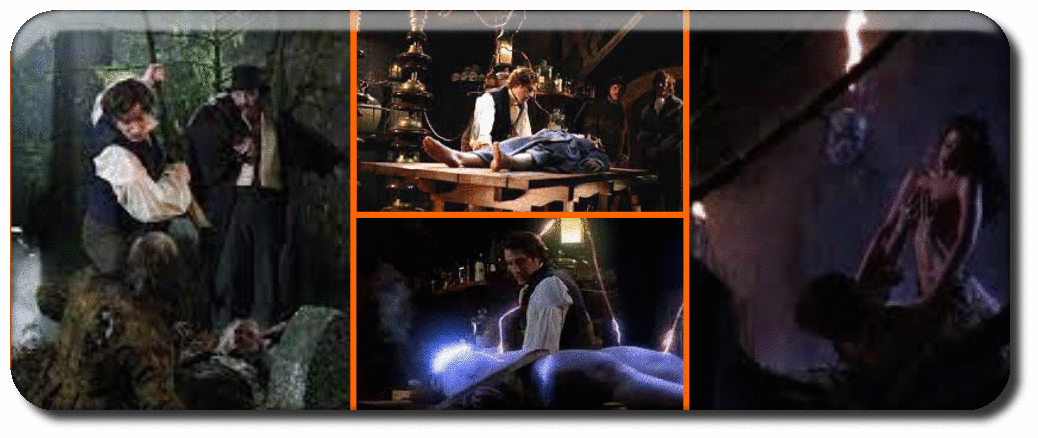

 |
|

BIO
Zachary Finn is a lover of all things history and horror. He currently resides in central NY with his dog, Bruce, and his girlfriend, Natalie. You can usually find him reading, writing, getting lost in the woods, wandering old cemeteries, or trying to improve his jab.
Zachary Finn is a lover of all things history and horror. He currently resides in central NY with his dog, Bruce, and his girlfriend, Natalie. You can usually find him reading, writing, getting lost in the woods, wandering old cemeteries, or trying to improve his jab.
WEBSITE LINKS
https://www.amazon.com/~/e/B0917T6NV8
https://www.goodreads.com/author/show/21029629.Zachary_Finn
Zachary Finn (@finzach135) / Twitter
https://www.amazon.com/~/e/B0917T6NV8
https://www.goodreads.com/author/show/21029629.Zachary_Finn
Zachary Finn (@finzach135) / Twitter
THE HORROR OF MY LIFE BY ZACHARY FINN
THE FIRST HORROR BOOK I REMEMBER READING
Like most children who grew up in the 90s and were destined to find their way into this amazing genre in one form or another, my gateway was R.L. Stine’s Goosebumps. In particular, the Welcome to Camp Nightmare wrecked me for the better part of a week. I read it while it was still light out thinking that, surely, even though it might be scary, reading it during the day would nullify the effects. Besides, once I closed the book that would be the end of it, and I’d move onto the next thing no worse for wear.
That was not the end of it, however.
I probably got a total of three hours of sleep that week and I spent the better part of my restless nights formulating escape routes should some nefarious creature try to do me in. The twist ending was great too. Classic Stine.
Eventually I recovered and was able to sleep again, however, I was hooked. Horror had me.
THE FIRST HORROR FILM I REMEMBER WATCHING
Signs. The big reveal, that shaky scene at the birthday party was truly haunting. Plus the scene where the kid killed the dog when it attacked his sister…oof, that cut deep. I just realized that explains some things about my latest novel…
THE GREATEST HORROR BOOK OF ALL TIME
I’ll probably catch some flak for this, but damn do I love IT. I know, I know: King has sold more books than any other author in the world and here’s my chance to prove I know some horror by mentioning someone who isn’t a household name known by everybody and their grandparents, and The Fisherman and Grimscribe are so tempting too, but alas…
Here’s my take: what makes IT so outstanding is the story is, in a broader sense, a community history told through the lens of cosmic horror. I work at a museum in my 9-5 and regularly turn to a few county/city histories to develop research, narrative, etc. I quite enjoy them, as well. They’re often hodge podge collections of bibliographic information, personal stories, chronologic history, both local and national, and lore and incidents deemed important to the author, who tends to be writing about the community they spent their lives in. Oftentimes they’re winding narratives, but in the end, you get to feel like you have an understanding of a place stuck in the time that the account is written; or at least how they might want to be remembered, which in itself is rather telling.
In short: they’re IT minus Pennywise. From The Black Spot to the short, strange psychopathic life of little Patrick Hockstetter, each tangent weaves together a story with a Lovecraftian scope with real, personal horrors and tragedies throughout. IT is the cosmic horror of a deity turtle not all that invested in your existence, and the visceral horror of a clown munching on your friends while your weird town opts to ignore it. It’s those moments during childhood when you realize adults aren’t all that sorted out and there’s some really bad ones out there too. It’s the racist history and underbelly of the town that is skipped over by early historians and passed down by word of mouth that reveals the horrific nature of humans.
So much to unpack, but I’ll stop myself from waxing poetic.
IT fires on all cylinders for me. There is both history (some of it fictional, not that I mind) and horror - my favorite. All that being said, someone should have axed the closing sewer scene.
THE GREATEST HORROR FILM OF ALL TIME
I was torn between a few options, notably the Phantasm and Evil Dead series, but ultimately settled on a classic that will surprise no one.
Not going to ruffle any feathers here: The Thing. The film is atmospheric and chills you to the bone, all of which makes the harsh backdrop of Antarctica and top notch ending all the more powerful. What a film. Plus, the effects are outstanding, and Kurt Rusell kills it.
THE GREATEST WRITER OF ALL TIME
Ray Bradbury. He’s a writer’s writer. What can I say about him that hasn’t been said? October Country and Something Wicked this way Comes are great additions to any horror library, and his prose, work ethic, and writing advice influenced a generation of writers I admire dearly (see my previous answer to my favorite book for proof). I discovered The Illustrated Man in middle school and I never looked back.
THE BEST BOOK COVER OF ALL TIME
I can’t pick one, I apologize, but I’ve got three that come to mind right away, all for different reasons. Bear in mind I tried to keep these as more recent editions as opposed to the classic book designs we all know and love.
First: Things We Lost in the Fire: Stories, by Mariana Enriquez. The collection of short stories is outstanding and I recommend reading it to anyone and everyone. The writing is intense and uses horror as a gateway and jumping off point to explore human tragedy, suffering and experiences in a way that’s bone chilling and unsettling. I was so excited to see she has another collection set to be translated to English soon.
But back to the cover: it immediately draws your attention. Winding and interweaving flowers, thorns and snakes that take the viewer a moment to untangle and in doing so present the initial impression that the book itself is about to burst into flames. The color scheme of greys, oranges and reds adds to this impression. Absolutely marvelous.
Second: I already mentioned this one, but John Langan’s The Fisherman. The artwork used is titled, Puget Sound on the Pacific Coast, completed in 1870 by Albert Bierstadt using the Hudson River School style made famous by Thomas Cole, and it captures the essence of this outstanding book so well. The cover is dark and foreboding, and well, so is the book. It’s one of those covers that’s easy to get lost in as you stare at it, trying to unpack a scene of both surreal beauty and chaos.
Third: North American Lake Monsters by Nathan Ballingrud. The cover image, Persian Manuscript Illumination of Leviathan or Cetus, from Corbis, first caught my eye. Then I did my research and kicked myself for not reading this outstanding collection earlier. This cover takes me back to a few medieval history courses I took in college, and the fact the pictured leviathan (or cetus) used on the cover is hairy always stuck with me for some reason. Outstanding collection, and great cover art as well!
THE BEST FILM POSTER OFF ALL TIME
The whole gambit of the Phantasm series. I dig them something fierce.
THE BEST BOOK / FILM I HAVE WRITTEN
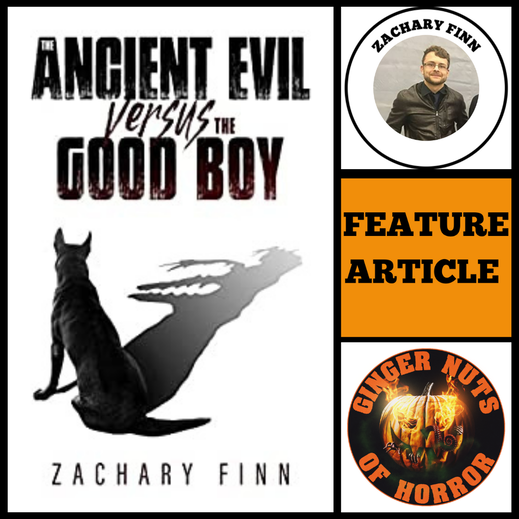
My debut novel The Ancient Evil Versus the Good Boy, which is scheduled for release with Vulpine Press in June 2021. This book means the world to me and I hope that comes across to readers. I was writing it at a time in my life where I was deeply unsatisfied with myself, and where I was in my life, and it was one of those writing projects that just flowed once I started it. I really felt, and still feel, it was a story I was meant to write, which feels arrogant as I type it, but it just was near and dear to my heart. Plus, it’s a way of giving a great shelter dog— one who really didn’t get a fair shake at things— a chance to go on an adventure he deserved.
Just as important as my personal investment to the book (as well as the therapeutic nature of writing it), however, is the fact there was a fantastic team at Vulpine Press to polish it and help fix my many blunders. Jess Jordan and the editing team there really helped turn the book into something I’m proud of. I hope readers enjoy it!
THE WORST BOOK / FILM I HAVE WRITTEN
How much time you got? I’m still, and will forever be, a student of writing. As such I’ve written my fair share of trash. My first attempt at a book (which will remain unnamed as I still plan on recycling the one decent thing from it: the title) was not good. It was me taking an urban legend I grew up with and trying to give it the IT treatment: local history, adventure, mayhem and an otherworldly antagonist. Not only was it not my voice I was writing with, but it very quickly became pretentious as I fell into using words and a writing style that was, frankly, ridiculous.
I stopped some 60,000 words in because I saw the writing on the wall, chalked it up as a learning experience, and spent some time focusing on short stories to hone the craft. I wrote another novel during that time too. Though it has not seen the light of day since a misguided attempt to land a publisher years back, I can say it was an important step in the right direction that stemmed from that rough first go at a novel.
THE MOST UNDERRATED FILM OF ALL TIME
Satan’s Little Helper and Tales of Halloween. Both are absolute gems. Check them out if you haven’t yet.
THE MOST UNDERRATED BOOK OF ALL TIME
This is a tough one, but I always wished From the Dust Returned by Bradbury got a little more love. It’s classic Bradbury meaning it’s a whole bunch of genres smashed together in a way he does so well, and what’s left behind is horror/fantasy with some heart.
Not everyone’s cup of tea, but I always enjoyed it.
THE MOST UNDERRATED AUTHOR OF ALL TIME
I mentioned him earlier, but I’ll go with Thomas Ligotti here. Though he’s revered by critics and those in the horror field and he has accomplished so much, he should be a household name too in my humble opinion.
THE BOOK / FILM THAT SCARED ME THE MOST
Insidious in the theatre. That was one of those films that just played so nicely on the big screen.
THE BOOK / FILM I AM WORKING ON NEXT
I'm trying to merge my two loves, history and horror, into a novel set in 19th century DC with elements of folk and gothic horror. I’m only about halfway done with the first draft so there’s some ways to go!
Like most children who grew up in the 90s and were destined to find their way into this amazing genre in one form or another, my gateway was R.L. Stine’s Goosebumps. In particular, the Welcome to Camp Nightmare wrecked me for the better part of a week. I read it while it was still light out thinking that, surely, even though it might be scary, reading it during the day would nullify the effects. Besides, once I closed the book that would be the end of it, and I’d move onto the next thing no worse for wear.
That was not the end of it, however.
I probably got a total of three hours of sleep that week and I spent the better part of my restless nights formulating escape routes should some nefarious creature try to do me in. The twist ending was great too. Classic Stine.
Eventually I recovered and was able to sleep again, however, I was hooked. Horror had me.
THE FIRST HORROR FILM I REMEMBER WATCHING
Signs. The big reveal, that shaky scene at the birthday party was truly haunting. Plus the scene where the kid killed the dog when it attacked his sister…oof, that cut deep. I just realized that explains some things about my latest novel…
THE GREATEST HORROR BOOK OF ALL TIME
I’ll probably catch some flak for this, but damn do I love IT. I know, I know: King has sold more books than any other author in the world and here’s my chance to prove I know some horror by mentioning someone who isn’t a household name known by everybody and their grandparents, and The Fisherman and Grimscribe are so tempting too, but alas…
Here’s my take: what makes IT so outstanding is the story is, in a broader sense, a community history told through the lens of cosmic horror. I work at a museum in my 9-5 and regularly turn to a few county/city histories to develop research, narrative, etc. I quite enjoy them, as well. They’re often hodge podge collections of bibliographic information, personal stories, chronologic history, both local and national, and lore and incidents deemed important to the author, who tends to be writing about the community they spent their lives in. Oftentimes they’re winding narratives, but in the end, you get to feel like you have an understanding of a place stuck in the time that the account is written; or at least how they might want to be remembered, which in itself is rather telling.
In short: they’re IT minus Pennywise. From The Black Spot to the short, strange psychopathic life of little Patrick Hockstetter, each tangent weaves together a story with a Lovecraftian scope with real, personal horrors and tragedies throughout. IT is the cosmic horror of a deity turtle not all that invested in your existence, and the visceral horror of a clown munching on your friends while your weird town opts to ignore it. It’s those moments during childhood when you realize adults aren’t all that sorted out and there’s some really bad ones out there too. It’s the racist history and underbelly of the town that is skipped over by early historians and passed down by word of mouth that reveals the horrific nature of humans.
So much to unpack, but I’ll stop myself from waxing poetic.
IT fires on all cylinders for me. There is both history (some of it fictional, not that I mind) and horror - my favorite. All that being said, someone should have axed the closing sewer scene.
THE GREATEST HORROR FILM OF ALL TIME
I was torn between a few options, notably the Phantasm and Evil Dead series, but ultimately settled on a classic that will surprise no one.
Not going to ruffle any feathers here: The Thing. The film is atmospheric and chills you to the bone, all of which makes the harsh backdrop of Antarctica and top notch ending all the more powerful. What a film. Plus, the effects are outstanding, and Kurt Rusell kills it.
THE GREATEST WRITER OF ALL TIME
Ray Bradbury. He’s a writer’s writer. What can I say about him that hasn’t been said? October Country and Something Wicked this way Comes are great additions to any horror library, and his prose, work ethic, and writing advice influenced a generation of writers I admire dearly (see my previous answer to my favorite book for proof). I discovered The Illustrated Man in middle school and I never looked back.
THE BEST BOOK COVER OF ALL TIME
I can’t pick one, I apologize, but I’ve got three that come to mind right away, all for different reasons. Bear in mind I tried to keep these as more recent editions as opposed to the classic book designs we all know and love.
First: Things We Lost in the Fire: Stories, by Mariana Enriquez. The collection of short stories is outstanding and I recommend reading it to anyone and everyone. The writing is intense and uses horror as a gateway and jumping off point to explore human tragedy, suffering and experiences in a way that’s bone chilling and unsettling. I was so excited to see she has another collection set to be translated to English soon.
But back to the cover: it immediately draws your attention. Winding and interweaving flowers, thorns and snakes that take the viewer a moment to untangle and in doing so present the initial impression that the book itself is about to burst into flames. The color scheme of greys, oranges and reds adds to this impression. Absolutely marvelous.
Second: I already mentioned this one, but John Langan’s The Fisherman. The artwork used is titled, Puget Sound on the Pacific Coast, completed in 1870 by Albert Bierstadt using the Hudson River School style made famous by Thomas Cole, and it captures the essence of this outstanding book so well. The cover is dark and foreboding, and well, so is the book. It’s one of those covers that’s easy to get lost in as you stare at it, trying to unpack a scene of both surreal beauty and chaos.
Third: North American Lake Monsters by Nathan Ballingrud. The cover image, Persian Manuscript Illumination of Leviathan or Cetus, from Corbis, first caught my eye. Then I did my research and kicked myself for not reading this outstanding collection earlier. This cover takes me back to a few medieval history courses I took in college, and the fact the pictured leviathan (or cetus) used on the cover is hairy always stuck with me for some reason. Outstanding collection, and great cover art as well!
THE BEST FILM POSTER OFF ALL TIME
The whole gambit of the Phantasm series. I dig them something fierce.
THE BEST BOOK / FILM I HAVE WRITTEN
My debut novel The Ancient Evil Versus the Good Boy, which is scheduled for release with Vulpine Press in June 2021. This book means the world to me and I hope that comes across to readers. I was writing it at a time in my life where I was deeply unsatisfied with myself, and where I was in my life, and it was one of those writing projects that just flowed once I started it. I really felt, and still feel, it was a story I was meant to write, which feels arrogant as I type it, but it just was near and dear to my heart. Plus, it’s a way of giving a great shelter dog— one who really didn’t get a fair shake at things— a chance to go on an adventure he deserved.
Just as important as my personal investment to the book (as well as the therapeutic nature of writing it), however, is the fact there was a fantastic team at Vulpine Press to polish it and help fix my many blunders. Jess Jordan and the editing team there really helped turn the book into something I’m proud of. I hope readers enjoy it!
THE WORST BOOK / FILM I HAVE WRITTEN
How much time you got? I’m still, and will forever be, a student of writing. As such I’ve written my fair share of trash. My first attempt at a book (which will remain unnamed as I still plan on recycling the one decent thing from it: the title) was not good. It was me taking an urban legend I grew up with and trying to give it the IT treatment: local history, adventure, mayhem and an otherworldly antagonist. Not only was it not my voice I was writing with, but it very quickly became pretentious as I fell into using words and a writing style that was, frankly, ridiculous.
I stopped some 60,000 words in because I saw the writing on the wall, chalked it up as a learning experience, and spent some time focusing on short stories to hone the craft. I wrote another novel during that time too. Though it has not seen the light of day since a misguided attempt to land a publisher years back, I can say it was an important step in the right direction that stemmed from that rough first go at a novel.
THE MOST UNDERRATED FILM OF ALL TIME
Satan’s Little Helper and Tales of Halloween. Both are absolute gems. Check them out if you haven’t yet.
THE MOST UNDERRATED BOOK OF ALL TIME
This is a tough one, but I always wished From the Dust Returned by Bradbury got a little more love. It’s classic Bradbury meaning it’s a whole bunch of genres smashed together in a way he does so well, and what’s left behind is horror/fantasy with some heart.
Not everyone’s cup of tea, but I always enjoyed it.
THE MOST UNDERRATED AUTHOR OF ALL TIME
I mentioned him earlier, but I’ll go with Thomas Ligotti here. Though he’s revered by critics and those in the horror field and he has accomplished so much, he should be a household name too in my humble opinion.
THE BOOK / FILM THAT SCARED ME THE MOST
Insidious in the theatre. That was one of those films that just played so nicely on the big screen.
THE BOOK / FILM I AM WORKING ON NEXT
I'm trying to merge my two loves, history and horror, into a novel set in 19th century DC with elements of folk and gothic horror. I’m only about halfway done with the first draft so there’s some ways to go!

When Jon Riley begins volunteering at the Richter Street Animal Shelter, he hopes it will help bring some purpose to his life. After all, who doesn't like hanging out with a few dogs after a tough day at work?
Jon quickly finds himself befriending, and eventually adopting, a mysterious dog named Desmond. But that's when the problems start, and soon Jon and Desmond find themselves fighting for their lives against The Ancient Evil and its Shadow People.
Filled with possessions, flour-drenched battles, ancient cliff tombs, and a shadowy underworld, The Ancient Evil Versus the Good Boy follows Jon and Desmond through a gripping adventure and proves the lengths people will go to for their beloved pets. Especially when they're under attack from something sinister...
Jon quickly finds himself befriending, and eventually adopting, a mysterious dog named Desmond. But that's when the problems start, and soon Jon and Desmond find themselves fighting for their lives against The Ancient Evil and its Shadow People.
Filled with possessions, flour-drenched battles, ancient cliff tombs, and a shadowy underworld, The Ancient Evil Versus the Good Boy follows Jon and Desmond through a gripping adventure and proves the lengths people will go to for their beloved pets. Especially when they're under attack from something sinister...
TODAY ON THE GINGER NUTS OF HORROR WEBSITE
RICHARD MARTIN REVISITS THE ‘MASTERS OF HORROR’: PICK ME UP (DIRECTED BY LARRY COHEN)
the heart and soul of horror features

We are living in a golden age of horror on TV. Shows like ‘The Walking Dead’, ‘Supernatural’ and ‘American Horror Story’ have effectively taken the genre mainstream, offering weekly doses of gore and mayhem to the masses. Go back a decade or two however, and genre fans had far fewer options to choose from. Anthology shows, like ‘Tales From the Crypt’, ‘Monsters’ or ‘Tales From the Darkside’ were king during the horror heyday of the 1980s, providing cheesy and cheerful tongue in cheek horror in half hour bites. It wasn’t until 2005 that the TV horror anthology show got serious, and delivered arguably the most consistent, memorable and scary anthology show to date.
The brainchild of horror legend Mick Garris, the show’s title is no hyperbole. ‘Masters of Horror’ brought together the best horror talent Hollywood (and beyond) had to offer. Episodes directed by undisputed genre luminaries such as John Carpenter, Tobe Hooper, Dario Argento and Stuart Gordon were like hour long movies brought to your TV screen. High production values, A-List talent and a free reign to do whatever they pleased resulted in some truly unforgettable work from a group of horror legends let off their leash. These are stories that have stayed with me in the fifteen years since many initially aired and, in this series, I’ll be revisiting all twenty-six episodes, one at a time, to shine a light on a fondly remembered and undeniably influential moment in horror TV history.
Join me as I take a look back at;
The brainchild of horror legend Mick Garris, the show’s title is no hyperbole. ‘Masters of Horror’ brought together the best horror talent Hollywood (and beyond) had to offer. Episodes directed by undisputed genre luminaries such as John Carpenter, Tobe Hooper, Dario Argento and Stuart Gordon were like hour long movies brought to your TV screen. High production values, A-List talent and a free reign to do whatever they pleased resulted in some truly unforgettable work from a group of horror legends let off their leash. These are stories that have stayed with me in the fifteen years since many initially aired and, in this series, I’ll be revisiting all twenty-six episodes, one at a time, to shine a light on a fondly remembered and undeniably influential moment in horror TV history.
Join me as I take a look back at;
Pick Me Up
Directed by: Larry Cohen
Starring: Faizura Balk, Michael Moriarty, Warren Kole, Laurine Landon
Original Air Date: 20 January 2006
Synopsis: When her bus breaks down on a remote highway, a young woman finds herself the target of two separate serial killers.
Directed by: Larry Cohen
Starring: Faizura Balk, Michael Moriarty, Warren Kole, Laurine Landon
Original Air Date: 20 January 2006
Synopsis: When her bus breaks down on a remote highway, a young woman finds herself the target of two separate serial killers.
Revisiting the ‘Masters of Horror’ Pick Me Up
Have you ever noticed that when David J Schow is involved in an episode of a TV series, that episode tends to be pretty great? Even disregarding the multiple episodes he wrote for the fantastic vampire smut anthology, ‘The Hunger’, his track record is pretty impressive. His single contribution to Freddy’s Nightmares (‘Safe Sex’) was one of the shows best and more recently, ‘The Finger’ was the undeniable highlight of Shudders first season of ‘Creepshow’. Masters of Horror was blessed with not one, but two episodes penned by him, the first being the Larry Cohen directed ‘Pick Me Up’.
The basic premise is a fun one. Two serial killers unwittingly find themselves stalking the same remote stretch of road. Their styles and ethics are night and day, but both pick out a young woman travelling alone as their next victim. When the two finally meet will they join forces, or is there only room for one killer on the road? The answer may surprise you.
The episode opens when a bus breaks down on a desolate-looking stretch of road, miles away from anything resembling civilisation. Some passengers opt to wait it out, and others set off walking to a trading post a dozen miles further up the road. Safety in numbers goes out the window from the very opening as the characters, including Stacia (Faizura Balk), all go their separate ways. Before long a truck pulls in and the driver (Michael Moriarty) offers to take two of the passengers up to the trading post.
So, now we have some people waiting by the bus, some people hitching a ride with the mysterious trucker, and Stacia out walking alone in the middle of nowhere. Turns out Stacia made the smart decision, as the trucker turns out to be a serial killer, making short work of one of his passengers (hanging them in the back of his ruck from a meat hook, ‘Texas Chainsaw Massacre’ style). The second passenger is unaware of the danger he’s in, but we’ll get back to him in a moment. The passengers who made the seemingly smart decision of staying with the bus don’t fare any better as a traveller (Warren Kole, replete with a worn cowboy hat and a dead snake slung over his shoulder to properly telegraph what a badass he is) makes short work of those who stayed behind after he strangles the driver with the dead snake (thereby earning the coveted ‘most inventive death in Masters of Horror’ award) before taking his gun and shooting anybody left. He leaves one woman to flee, although, with two serial killers seemingly on the loose, you can’t help but feel it is only a temporary reprieve.
Now we’ve met both serial killers and both Moriarty and Kole spend the rest of the episode trying to steal the show from the other. It is a tough call too because while their characters are polar opposites, linked only by the fact they are killers, both are absolutely fantastic anytime they are on screen. Moriarty’s character is far more menacing, clearly intelligent but often standoffish and aggressive. Kole’s character, on the other hand, is charming and personable; chatty and easy-going until the moment he turns. As soon as both are introduced you can’t wait for them to meet up, and the wheels have already been put into motion to bring the two together.
The traveller has let a victim go, but he quickly hunts her down in the forest by the roadside, leaving her tied to a tree before heading back to the bus. There he spots the driver, who has returned (presumably to ‘pick up’ more victims). Finding none alive, he instead opts to kill his remaining passenger, all but decapitating him with a bus door. This murder is witnessed by the traveller, who is intrigued by this latest development. Equally intrigued is the driver, who finds the woman tied to a tree, killing her before moving on to find out who was responsible for the deaths of the other passengers. It’s a hell of a body count, and we’re not even at the halfway mark!
The basic premise is a fun one. Two serial killers unwittingly find themselves stalking the same remote stretch of road. Their styles and ethics are night and day, but both pick out a young woman travelling alone as their next victim. When the two finally meet will they join forces, or is there only room for one killer on the road? The answer may surprise you.
The episode opens when a bus breaks down on a desolate-looking stretch of road, miles away from anything resembling civilisation. Some passengers opt to wait it out, and others set off walking to a trading post a dozen miles further up the road. Safety in numbers goes out the window from the very opening as the characters, including Stacia (Faizura Balk), all go their separate ways. Before long a truck pulls in and the driver (Michael Moriarty) offers to take two of the passengers up to the trading post.
So, now we have some people waiting by the bus, some people hitching a ride with the mysterious trucker, and Stacia out walking alone in the middle of nowhere. Turns out Stacia made the smart decision, as the trucker turns out to be a serial killer, making short work of one of his passengers (hanging them in the back of his ruck from a meat hook, ‘Texas Chainsaw Massacre’ style). The second passenger is unaware of the danger he’s in, but we’ll get back to him in a moment. The passengers who made the seemingly smart decision of staying with the bus don’t fare any better as a traveller (Warren Kole, replete with a worn cowboy hat and a dead snake slung over his shoulder to properly telegraph what a badass he is) makes short work of those who stayed behind after he strangles the driver with the dead snake (thereby earning the coveted ‘most inventive death in Masters of Horror’ award) before taking his gun and shooting anybody left. He leaves one woman to flee, although, with two serial killers seemingly on the loose, you can’t help but feel it is only a temporary reprieve.
Now we’ve met both serial killers and both Moriarty and Kole spend the rest of the episode trying to steal the show from the other. It is a tough call too because while their characters are polar opposites, linked only by the fact they are killers, both are absolutely fantastic anytime they are on screen. Moriarty’s character is far more menacing, clearly intelligent but often standoffish and aggressive. Kole’s character, on the other hand, is charming and personable; chatty and easy-going until the moment he turns. As soon as both are introduced you can’t wait for them to meet up, and the wheels have already been put into motion to bring the two together.
The traveller has let a victim go, but he quickly hunts her down in the forest by the roadside, leaving her tied to a tree before heading back to the bus. There he spots the driver, who has returned (presumably to ‘pick up’ more victims). Finding none alive, he instead opts to kill his remaining passenger, all but decapitating him with a bus door. This murder is witnessed by the traveller, who is intrigued by this latest development. Equally intrigued is the driver, who finds the woman tied to a tree, killing her before moving on to find out who was responsible for the deaths of the other passengers. It’s a hell of a body count, and we’re not even at the halfway mark!

The focus up until now has jumped around a great deal, switching between the two killers, the bus and the driver’s passengers, but now there are only three characters left, things get a lot tenser. Stacia makes it to a motel at the trading post and is soon joined by both the driver and traveller who take up rooms on either side of her. There is a fun scene when all three meet for the first time when Stacia leaves her room to visit the vending machine. She is stopped by the traveller who engages her in conversation. He is his usual charming self, but Stacia senses something is amiss (and she’s not wrong. He just finished torturing the poor girl who gave him a ride to the motel). The pair are interrupted by the driver, who joins the conversation. It’s a cleverly written sequence. Both killers know the other's secret, and Stacia is the only one in the dark and it sets up the showdown between the two, which Stacia will no doubt be a major part of.
I’m reluctant to delve too much into the final act here, in case anyone reading hasn’t actually watched the episode, but the final confrontation between the two is everything you would hope it would be. It’s incredibly tense, with lengthy moments where the two match wits before things get physical. Sadly, given the calibre of actress they have to play Stacia, she is little more than a plot device to bring the two killers together. Faizura Balk is great in the role, but the role exists solely to be the victim for two vying serial murderers, and if I had one criticism, it would be that if you get Faizura Balk to star in your episode, you really should give her a little more to work with.
‘Pick Me Up’ isn’t one of the better-known episodes in the series, but it certainly deserves to be. Everything about it just works. The script is stellar; a fantastic concept with smart execution. The comedy is pitch-black and the performances are great across the board and, most importantly, the two serial killers are stand-outs, both playing such different characters that the inevitable meeting in the finale is incredibly tense because you have no idea how such a meeting may play out. The ending is perfect, managing that rare trick of being both completely unpredictable, and simultaneously being the only way such an unlikely story should end. Join me next time as I’ll be looking at episode twelve of the first season, John McNaughton’s ‘Haeckel’s Tale’. See you then!
I’m reluctant to delve too much into the final act here, in case anyone reading hasn’t actually watched the episode, but the final confrontation between the two is everything you would hope it would be. It’s incredibly tense, with lengthy moments where the two match wits before things get physical. Sadly, given the calibre of actress they have to play Stacia, she is little more than a plot device to bring the two killers together. Faizura Balk is great in the role, but the role exists solely to be the victim for two vying serial murderers, and if I had one criticism, it would be that if you get Faizura Balk to star in your episode, you really should give her a little more to work with.
‘Pick Me Up’ isn’t one of the better-known episodes in the series, but it certainly deserves to be. Everything about it just works. The script is stellar; a fantastic concept with smart execution. The comedy is pitch-black and the performances are great across the board and, most importantly, the two serial killers are stand-outs, both playing such different characters that the inevitable meeting in the finale is incredibly tense because you have no idea how such a meeting may play out. The ending is perfect, managing that rare trick of being both completely unpredictable, and simultaneously being the only way such an unlikely story should end. Join me next time as I’ll be looking at episode twelve of the first season, John McNaughton’s ‘Haeckel’s Tale’. See you then!
If you missed any of Richard's previous Revisting The Masters of Horror articles, you can find links to them all here on our handy landing page
THE MASTERS OF HORROR

Richard is an avid reader and fan of all things horror. He supports Indie horror lit via Twitter (@RickReadsHorror) and reviews horror in all its forms for several websites including Horror Oasis and Sci Fi and Scary
TODAY ON THE GINGER NUTS OF HORROR WEBSITE
THE HORROR OF MY LIFE BY ZACHARY FINN
THE HEART AND SOUL OF HORROR FEATURES
 | Whereas The Lord of The Rings attempts to create a post-modern mythology in the manner of the oral traditions of the old anglo-saxons, Gormenghast takes a mortician's scalpel to the very concept, attempting to render it apart, break it down and reveal diseased, infested innards. |
THE HORROR OF HUMANITY: GORMENGHAST THE HORROR OF TRADITION BY GEORGE DANIEL LEA
Mervyn Peake's seminal trilogy, Gormenghast, is generally regarded as one of the foundational works of Western fantasy. Alongside its contemporary, J.R.R Tolkien's The Lord of the Rings, it established what would become the definitive tropes and subjects of the genre in the decades after, a work whose resonance can be felt in everything from Game of Thrones to His Dark Materials, from Discworld to Neverwhere.
That said, it occupies a peculiar position, given the significance of its legacy: unlike The Lord of the Rings, The Chronicels of Narnia et al, Gormenghast is largely relegated to realms of academia; it exists as a mythic body rather than as something immediate and experiential, lacking the popular appeal that its contemporaries boast. For the most part, even fans of fantasy as a genre have only heard of it in reference rather than having experienced it for themselves. Barring an ambitious -but ill-fated- BBC adaptation in the year 2000, the work has rarely been adapted outside of radio plays, with many attempts to do so faltering before completion. At present, the rumoured Neil Gaiman-penned cinema adaptation is still languishing in development Hell, with small notifications occurring from time to time without anything concrete.
This incongruous obscurity partially derives from the nature of the work itself: unlike The Lord of the Rings, it is not a series to which children or even teenagers readily flock. Whereas Tolkien's epic has an immediate appeal by dint of its fantastical subjects, mythic overtones and resonance with pervasive cultural mythology, Gormenghast is a wholly other, entirely more oblique kettle of fish:
Whereas Tolkien concerned himself primarily with the exultation of traditional mythology, Peake takes the proscriptions of tradition and reveals them in all of their innate and inevitable horror. Whereas The Lord of The Rings attempts to create a post-modern mythology in the manner of the oral traditions of the old anglo-saxons, Gormenghast takes a mortician's scalpel to the very concept, attempting to render it apart, break it down and reveal diseased, infested innards.
Like Tolkien, Peake was a man of great interiority and introspection; endlessly fascinated by the labyrinthine nature of his own mind, even unto its eventual breaking. Unlike Tolkien, Peake attempted to explore the psychological and existential implications of that through his work, whereas Tolkien was more preoccupied with the heightened and the mythic. As such, Gormenghast is that strangest and rarest of all works of fantasy; iconic and undeniable in its influence, pervasive in its legacy, and yet exhibiting almost none of the characteristics that even luminaries or students of the genre would recognise as emblematic thereof:
Despite being ostensibly a fantasy kingdom (in the sense that it does not nor ever has existed, and occupies its own strange world and history), the eponymous Gormenghast boasts no magic, no gods, no demons, no dragons; no wizards or gods or manifestations of fate. The kingdom and its characters are entirely secular, with nothing abstruse or even remotely supernatural taking place throughout the course of its three-book span. Furthermore, each of its characters is profoundly human, so much so, that they utterly defeat the archetypes that occur and recur throughout more mythically-inclined fantasy fiction:
Each and every one of Gormenghast's cast are complex, contradictory entities who respond to circumstances in manners that are charmingly strange, eccentric, often baffling in their contradictions. In this, Peake demonstrates his removal from contemporaries such as Tolkien or Lewis, for whom characters are merely archetypes; vessels for particular themes and notions that allow the story to evolve towards its proscribed conclusion:
The denizens of Gormenghast are their own selves; so much so, they almost universally chafe against the proscriptions and parameters of their culture, even when they don't intend to. That is the core tension of Gormenghast as a setting and narrative: despite being a culture informed by -often insane or incongruous- traditions, those to whom they apply find themselves either defeated by them or railing against them, to the point whereby peculiar and idiosyncratic species of madness flower throughout.
Therein lies the core of why the work is as much one of subtle horror as it is fantasy:
Gormenghast is Peake's attempt to wrestle with the tensions in which he and we all operate: our desires for self-definition, authorship and impetus clashing -often violently- with the proscriptions of culture and tradition. The horror of Gormenghast is founded in its rigidity and proscriptions: Peake paints a culture in which every moment is defined by tradition, orchestrated with reference to tenets that none now living understand. There is a madness inherent to Gormenghast as a culture, a society, but one that is hideously, oppressively stable; that grinds on year after year, decade after decade, those born to the relentless rounds often not even realising it; knowing only what those traditions allow or impart, dying in similar ignorance. There is no meritocracy in Gormenghast; it is a caste-based society, in which the sons of cooks become cooks regardless of relative talent or inclination, in which smiths give birth to smiths and wood-carvers to wood-carvers. This is also true of the upper-echelons of that society, arguably even moreso: from the very beginning, we are presented a voyeur's view of life above stairs, in which the ruling family of Gormenghast -the wonderfully named Groans- go about their various daily duties and routines at the behest of aides and secretaries whose entire ethos is to keep the wheels turning, ensure the engine continues to run, regardless of what it means on a human level.
As such, there are various instances in the story whereby characters such as Sepulchrave, the incumbent Earl, must make entirely symbolic circuits around certain quarters of the castle, performing strange ceremonies and routines the provenance of which is lost to time. Likewise, those for whom life is not so proscribed, who have no immediate function within the engines, are left in a state of limbo, almost disregarded.
Nowehere is that more clear than in the eldest daughter of the Groan family, the bag of contradictions that is Fuschia; a young woman who exhibits qualities of an extremely young girl, yet also demonstrates herself to be one of the most perceptive, imaginative and broken characters in the entire trilogy. Whereas her Father Sepulchrave, Mother Gertrude and infant brother Titus all have significant roles to play within the immense engine of Gormenghast, she does not, and so is largely left to her own devices, such that she doesn't even see her Mother or Father for months - sometimes years- at a time. The result is a strange and eccentric woman-child, a creature that is fey and prone to bouts of despair, hysteria and incredible insight. In her, Peake paints the portrait of a child who has no particular use or function within the engine, and so is all but abandoned by it. She is a lost child of tradition, the outcast who has no means or cause to fight, who can't even conceive of what she is, what she is to do.
Compare and contrast with the idealised, almost deified portrayals of womanhood that pervade Tolkien's works, in which women are generally mythic entities proscribed by patriarchal assumption and mythological requirement: the likes of Arwen, Eowyn and Galadriel are utterly themselves, composed and controlled and pristine in a manner that neuters them, rendering them ineffective in contrast to male counterparts.
Fuschia, by contrast, is a wholly more real affair; reflecting a state of psychological fracture that is not only redolent of Peake's own, but also of womanhood itself in a state where women are reduced to functionaries as much as men; in which there is no cultural space for individual development or desire. Of all the characters, Fuschia exhibits a state of mind that is always teetering on the brink, in which she hasn't been provided the means, contexts or the language to explore or understand herself. As such, she flits and dances from one state to the next, sometimes shifting from angry to despairing, from frustrated to passionate, in the blink of an eye. There are even instances in which she simply flees encounters because she doesn't know how to respond to them; because no one has taught her how or given her sufficient freedom to develop those contexts.
In Fuschia, we have the horror of being trapped in a cage without obvious walls or bars or locks; a cage of abstraction, against which she endlessly flutters and batters herself bloody, in an effort to realise her fantasies of flying. For those who have read the books, her ending takes on a bitter note of inevitability; even were it not for the trials and travails that the narrative puts her through, it's arguable that Fuschia's ending would have always been the same, that there can be nothing else in a realm like Gormenghast for a soul such as hers. A creature that endlessly reimagines and reinvents herself in the manner of a little girl playing imaginary games, but that endlessly finds the interruptions and disturbances of the real interjecting, clipping her wings, curtaling her flights.
In that, she has a certain echo in her Father, the appropriately named Sepulchrave Groan, who goes about his duties and routines as Earl in a robotic, mechanistic fashion, because he has known nothing else his entirely life, yet suffers from a burden of melancholia that he cannot define or find escape from, save in the solace of his private library. From the start, Peake takes pains to communicate that Sepuchrave's moribund nature isn't some aberration; something developed with age, perhaps as a result of some incipient dementia, but has always been part and parcel of who he is. This is subtle but massively significant, as Sepulchrave, from the moment he was born, would have been subjected to the same conditioning and endless, pointless routines as every one of his forebears. At the story's outset, he has been fed through the engine perhaps more thoroughly and utterly than any other character, ground down and ground down over a span of decades until there is little left save his status, the routines it obliges and the melancholia that consumes him.
Sepulchrave is the loss of individuality to systems of tradition, the interminable erosion of any sense of self, until there is nothing left but an existential abyss. In Sepulchrave's peculiar case, this results in near-total disassociation, triggered by the burning of his library, the loss of not only his sanctuary, but the one scrap of self he has left. In the aftermath, he loses himself, conjuring manic characteristics and personas from thin air, evoking the hideously acute horror of dementia, Alzheimers and similarly degenerative conditions. Whilst the burning of the library is indeed the cypher, it is almost incidental; his breaking is as inevitable as Fuschia's eventual suicide. A cruel and dreadful irony of the story is that: whatever endings are orchestrated or inflicted by the actions of antagonist Steerpike, they are merely expedited forms of fates that are inevitable regardless. Sepulchrave is moribund from the moment of his introduction, already losing himself within the engines that he feeds himself through day after day.
Ultimately, it is Titus, the Earl's son and the last surviving heir to the throne of Gormenghast, who exhibits the only means of surviving it: tormented by the culture and his place within it from the moment he was born, Titus grows to loathe his birthright, to express outwardly all of the frustrations and neuroses that his Father, his sister and thousands before them refused to invoke. He hates Gormenghast, hates his status as the Earl, and, ultimately, survives in the only way he can: by leaving it behind. With the death of Fuschia, there's nothing he loves there, nothing anchoring him. His leaving is the footstep of doom for the castle and its culture, as, without an Earl, the entire edifice becomes static, its engines grind to a halt, and the systems of proscription become inert. One can almost imagine Gormenghast itself winking out of existence or freezing in place the moment he is beyond sight or thought of it; a factor that is emphasised in the third book in the series, Titus Alone.
Whilst writing Titus Alone, Peake himself was slowly succumbing to a degenerative psychological disorder; one that saw him regularly disassociate from himself in the manner of Sepulchrave, become paranoid and manic, perceiving things in the waking world that weren't actually there. In this third instalment, that disease finds expression:
Following Titus during his journeys in the strange and hallucinogenic realms beyond his ancestral home, it is a feverish descent into broken-minded paranoia, in which Titus starts to doubt his own history and memories, in which his proclamations of being “The Earl of Gormenghast” are met with confusion, derision and more than a little fear. He begins to doubt if Gormenghast ever existed, considering that everything he experienced there might be nothing more than a delusion of his own breaking-down sanity.
What follows is a frantic scrabbling for reassurance and certainty in a world intent on denying it. Just as he sought to escape the stultifying confines and constraints of his ancestral kingdom, now he seeks its reassurance and definition; a means of ratifying himself in a world where he is always barely a breath or thought away from efflorescing into mania. Given the eventual fate of Mervyn Peake himself, this portion of the story maintains a peculiarly disturbing resonance, expressing, as it does, the author's own descent into paranoia and the eventual dissolution of his sanity. Interestingly, in the final steps of his prodigal journey, Titus chooses to turn his back on that reification, refusing the final steps that should, in theory, take him within final sight of the castle walls, and the reassurance he has been craving since the first page of the story. In this, Peake appears to make a peculiar commentary on the nature of certainty and sanity; that they are secondary, perhaps even empty concerns, next to determining one's own sense of self, which Titus embodies through his abandonment of Gormenghast. By allowing for the uncertainty, Titus appears to take mastery over his own mind and sense of self; it doesn't matter if it ever was physically real or merely a delusion; he is who he is regardless.
The Groans are universally disturbed, each and every one of them victims of Gormenghast itself, as much as the various specimens of the “lower orders” we encounter in the first two books. Even the seemingly most composed and coherent, the lady Gertrude, is a strangely disconnected, distracted individual who finds closer association with the menagerie of birds and cats that always surround her than other human beings, including her own children. She is a character acutely aware of her place and function within the mechanisms of Gormenghast but, rather than allowing them to grind her up and spit her out, in the manner that both Fuschia and Sepulchrave do, she has found her own peace in those systems; a means of contentment that is rare and eccentric, and seems like its own species of madness from the outside. Interestingly, being more coherent and acutely aware of the systems surrounding her than the rest, she is the first who begins to sense their arrhythmia after Steerpike sets about his sabotage of them; whilst her disconnection from waking concerns means that her process of deduction is glacial, she is amongst the first of the characters -and the only one of the Groans- to sense something off-kilter in the great engines of tradition, which she expresses openly to other characters in her quest to identify and snuff out the verminous element.
Even so, she is as much a victim of those systems as anyone; throughout the course of the story, she loses her husband and both of her children, not to mention experiences the ultimate cessation of those systems when Titus abdicates at the end of book two, presiding over a world that no longer has any figurehead or guiding principle and likely never will again. Gormenghast robs her of connection with other human beings; even those who should be her closest confidantes and most beloved, leaving her seekign surrogates in the forms of animals.
Beyond the Groans, every strata and caste of Gormenghast operates under the auspices of its own peculiar, proscribed species of madness, from the various functionaries of the castle itself -all of which preside over or operate within self-contained cultures and kingdoms with theocratic adherence- to the lower quarters; the various tribes and menials who cluster around the castle and are told that they rely upon it for patronage, sustennance, purpose and poetry, when, in any logical examination, they sustain perfectly well without it and would likely learn to thrive far more happily on their own terms. Yet, the “Carvers,” as they are known, are as zealous and conformist as any; Peake's unflattering parody of the working and under-classes in any given society, who mindlessly conform to and allow for the systems that keep them in their place, and elevate those that preside over and prey upon them. Peake makes no secret of the fact that the Carvers sustain in misery, their world one of short-lived struggle and tribal violence, whose entire culture revolves around making carvings for annual ceremonies in which the presiding Earl determines the most beautiful, condemning the rest to fire. Even those that are selected end up discarded in the so-called “Hall of Bright Carvings,” a place largely forgotten to most members of the castle itself, and certainly to the Groans.
Society, culture, history and tradition; all of these things, in Peake's estimation, are sources of insanity and horror. Having served in World War 1, Peake was well acquainted with the ultimate manifestation of that insanity; the willingness with which the patriot and the nationalist, the self-professed “citizen” hurls themselves into those meat-grinders, becomes both the subject and source of atrocity, and is enjoined to celebrate in that status or accept it as blithely every-day.
It has become a common, pop-culture assumption to market antagonist Steerpike as the “villain” of the piece. In many instances, his name has become a by-word for villainy itself, in a manner not dissimilar to Doyle's Moriarty. This is both a reductive simplifcation and misapprehension of the truth; whilst Steerpike is indeed the cypher that unsettles Gormenghast in its well-worn ruts, whilst he does indeed exhibit characteristics such as sadism and pointless cruelty (which, in the end, become the seeds of his undoing), he is no more the “villain” of the piece than any of the Groans, than Gormenghast itself. Consider: when we meet Steerpike, he is an abused and belittled youth under the dubious care of Swelter, the castle's porscine chef. A physically, mentally and (implied) sexually abusive monster of a man, it is clear that Steerpike has endured any number of tortures at his master's hands, and, thereby at the hands of Gormenghast itself. It was Gormenghast and its diseased culture of tradition and conformity that led him to be condemned to the kitchens, the lowest of low castes, despite his obvious intelligence, talent and capacities. It was Gormenghast that allowed for -and even fostered- the culture of abuse that occurs and sustains throughout its desolate and decrepit halls. Steerpike is as much a victim and product of those processes as anyone; that he emerges without conscience, without concern, for those who are born to positions of relative privilege and comfort should come as no surprise, nor is it a legitimate cause for condemnation: in many respects, Steerpike is the sins of Gormenghast returned upon itself (a role that he certainly understands and revels in, before the end).
But even he, consumed by his assumptions of superiority and separation from the systems he so despises and, utimately, seeks to bring down around their beneficiaries, is as much a product and function of them as any other. He is the mitigating and refreshing factor; that rare anomaly that brings the systems into question before uniting them in a state of conformity and absolutism even stronger than before. The irony of Steerpike's ascension and apparent vandalism of the engines of Gormenghast is that nothing he does, in all of his scheming, duplicity, manipulation and murder, is anywhere near as devestating as the ultimate abdication of Titus himself. In that, the most corrosive element to Gormenghast is not Steerpike, who ultimately serves to unite the state in hatred of a common scapegoat, but Keda, Titus's Carver-born nursemaid, who subtly imbues the infant Titus with a hatred for his birthplace and its stultifying traditions.
Keda herself is a fascinating, etheral figure; an outcast from the Carvers, she drifts through the narrative as an almost mythical Mother figure, a creature that stands apart from the brute traditions and assumptions of the world she was born to, and is punished endlessly for that transgression. Even so, she is amongst the most self-authored and self-willed of all, ultimately prophecying Fuschia's eventual end by her own suicide. In that, she represents the ultimate escape from madness and an insane world; the most reasonable and coherent solution to a cruel and inescapably abusive situation. Her suicide is not a thing of bleak despair and horror, but a distant waking, as though she steps out of her living nightmare into another dream entirely.
In that, she likely reflects certain thoughts and frames of mind that Peake himself experienced. It is known from his own conversations and writings that Peake contemplated suicide many times throughout his life, particularly in the most despairing and paranoid doldrums of his condition. Keda is strangely sanctified in that regard; arguably one of the most elevated and mythic characters in the story, despite her lowly origins and transient nature.
Madness and misery infest Gormenghast like lice; unseen and abstract violence -sometimes self-authored, most often imposed by the culture itself- occasionally transmuting into bursts of literal and horrific equivalents:
From the gruesomely slapstick duel between Flay and Swelter -which makes light of everything from ears being lopped off to fairly graphic stabbings- to the more sadistic torments Steerpike inflicts on his victims, there is murder and atrocity aplenty within the endless stone walls. Very often, Gormenghast itself silently colludes with the murderer(s). Take, for example, the suicide of Sepulchrave Groan (fittingly and gruesomely absurd, in that he ends up feeding himself to the flocks of immense owls that roost in The Tower of Flints); Steerpike never intended nor could he have preempted the madness that consumes Sepulchrave in the wake of his library's burning. His initial plan was to swoop in and save the Earl and thus earn himself a place close to his ultimate destination. Instead, the incipient mania that has been festering in Sepulchrave's breast since time immemorial blooms from the ashes, reducing his -dubious- sanity to similar desolation. He is as much a victim of Gormenghast itself as he might be of Steerpike, arguably even moreso, when we consider that Steerpike only operates as he does owing to the abuses he suffers via the same systems.
Likewise, the twin sisters of Sepulchrave: Clarice and Cora, whom Peake describes as “. . .courting aneurysm in the formulation of a novel thought between them.” Like many of the women of the Groan household, they are largely forgotten; sequestered away in some crumbling, forgotten corner of the castle, they are literally beyond sight or memory of most of it, making them perfect instruments for Steerpike's designs. But even in that, they demonstrate both their peculiar madness and victimhood; like Fuschia, the systems that be have no proscribed place or purpose for them, meaning that they are largely left to their own devices, slowly driving one another to distraction in their narcissism and misplaced ego, which, of course, Steerpike perceives immediately and utilises to the fullest extent. Like most of the characters, they begin as victims and end even moreso; manipulated, duped, abused and broken, they are ultimately left in some desolate nowhere within the castle to slowly starve to death. It is, perhaps, amongst the cruellest of fates Steerpike inflicts on his victims, but also an example of how not only the culture but the very architecture of Gormenghast colludes with him; no one in authority cares for the sisters or is concerned by their absence, nor would anyone happen by them accidentally in the derelict wing where he seals them. Whilst ostensibly emblematic of everything he despises in Gormenghast, Steerpike fails -despite his obvious intellect- to understand that there is commonality amongst them; that they are victims as he is, and of the same abusive structure into which they were all born. Whilst far from innocent, their ignorance and naivety lends them a certain patina of sympathy, especially given that almost everything they do is authored by Steerpike himself (they lack the wit and will to conceive of it themselves).
There is an abiding sense at the end of book two that, with Titus gone, and no successor to replace him, Gormenghast itself grinds to a halt, might, in fact, wink out of existence without him there to sustain it. Titus Alone certainly seems to reinforce the notion that Gormenghast is not a literal place, nor are its characters literal characters, but a metaphorical construct; a great, heaving and diseased mind in which every character is an aspect of a wider psyche, and that only by slaying certain aspects -or allowing them to die- can the consciousness represented in Titus free itself from decay and inevitable mania. Those he leaves behind are all prey to particular forms of madness and are murdered by them; from Flay's unwavering, arguably lunatic sense of duty to Steerpike's ego and sadism, Fuschia's clashing romanticism and acute empathy, Sepulchrave's unthinking conformity and unwillingness to question or redress the assumptions into which he is born. From foundations to spires, from dungeons to heights, Gormenghast is a labyrinth of psychological horrors, tortured minds and broken souls; a place where fantasy and horror meet, intertwine and produce something that simultaneously hybridises and transcends the assumptions of both.
It is beautiful, resonant, cruel, oft times hilarious, in its own gallows fashion; profound and yet intimately concerned with the madness of the mundane. A truly post-modern work, which takes an unflattering eye to the Modernist era that preceded it, in all of its violence, abuse, corruption and absurdity. Gormenghast is the horror of tradition and society itself; a despairing autopsy of the tensions that exist between cultural imposition and constraint and minds intent on transcending them. In Peake's estimation, the ultimate product and expression of that tension is madness, either collective or idiosyncratic; systems that grind mindlessly in their mad and weary fashions, as they always have, without question, critique or basic examination. In that, Gormenghast is as significant a political and socio-cultural commentary as Orwell's 1984, Bradbury's Farenheit 451 or, perhaps most fittingly, Huxley's Brave New World, which it certainly echoes and resembles thematically.
It therefore stands as little wonder that the series is currently experiencing something of a renaissance, that awareness of -not to mention engagement with- the book has escalated in leaps and bounds in recent years: Little in the annals of fantasy fiction -or horror or science fiction, for that matter- so eloquently encapsulates and expresses the frustrations and concerns of our age. The questions it raises regarding the tensions between cultural conformity and stultifying imposition are marked in an era of escalating conservatism and right-wing scapegoating, not to mention the pervasive rewriting not only of extant history but present day events in the interests of fostering a more passive, conformist society.
Gormenghast and its ilk are as essential to that cultural situation as Penicillin to a dose of Syphilis, though whether they have the capacity to cure our conditions rather than merely comment upon them remains to be seen.
That said, it occupies a peculiar position, given the significance of its legacy: unlike The Lord of the Rings, The Chronicels of Narnia et al, Gormenghast is largely relegated to realms of academia; it exists as a mythic body rather than as something immediate and experiential, lacking the popular appeal that its contemporaries boast. For the most part, even fans of fantasy as a genre have only heard of it in reference rather than having experienced it for themselves. Barring an ambitious -but ill-fated- BBC adaptation in the year 2000, the work has rarely been adapted outside of radio plays, with many attempts to do so faltering before completion. At present, the rumoured Neil Gaiman-penned cinema adaptation is still languishing in development Hell, with small notifications occurring from time to time without anything concrete.
This incongruous obscurity partially derives from the nature of the work itself: unlike The Lord of the Rings, it is not a series to which children or even teenagers readily flock. Whereas Tolkien's epic has an immediate appeal by dint of its fantastical subjects, mythic overtones and resonance with pervasive cultural mythology, Gormenghast is a wholly other, entirely more oblique kettle of fish:
Whereas Tolkien concerned himself primarily with the exultation of traditional mythology, Peake takes the proscriptions of tradition and reveals them in all of their innate and inevitable horror. Whereas The Lord of The Rings attempts to create a post-modern mythology in the manner of the oral traditions of the old anglo-saxons, Gormenghast takes a mortician's scalpel to the very concept, attempting to render it apart, break it down and reveal diseased, infested innards.
Like Tolkien, Peake was a man of great interiority and introspection; endlessly fascinated by the labyrinthine nature of his own mind, even unto its eventual breaking. Unlike Tolkien, Peake attempted to explore the psychological and existential implications of that through his work, whereas Tolkien was more preoccupied with the heightened and the mythic. As such, Gormenghast is that strangest and rarest of all works of fantasy; iconic and undeniable in its influence, pervasive in its legacy, and yet exhibiting almost none of the characteristics that even luminaries or students of the genre would recognise as emblematic thereof:
Despite being ostensibly a fantasy kingdom (in the sense that it does not nor ever has existed, and occupies its own strange world and history), the eponymous Gormenghast boasts no magic, no gods, no demons, no dragons; no wizards or gods or manifestations of fate. The kingdom and its characters are entirely secular, with nothing abstruse or even remotely supernatural taking place throughout the course of its three-book span. Furthermore, each of its characters is profoundly human, so much so, that they utterly defeat the archetypes that occur and recur throughout more mythically-inclined fantasy fiction:
Each and every one of Gormenghast's cast are complex, contradictory entities who respond to circumstances in manners that are charmingly strange, eccentric, often baffling in their contradictions. In this, Peake demonstrates his removal from contemporaries such as Tolkien or Lewis, for whom characters are merely archetypes; vessels for particular themes and notions that allow the story to evolve towards its proscribed conclusion:
The denizens of Gormenghast are their own selves; so much so, they almost universally chafe against the proscriptions and parameters of their culture, even when they don't intend to. That is the core tension of Gormenghast as a setting and narrative: despite being a culture informed by -often insane or incongruous- traditions, those to whom they apply find themselves either defeated by them or railing against them, to the point whereby peculiar and idiosyncratic species of madness flower throughout.
Therein lies the core of why the work is as much one of subtle horror as it is fantasy:
Gormenghast is Peake's attempt to wrestle with the tensions in which he and we all operate: our desires for self-definition, authorship and impetus clashing -often violently- with the proscriptions of culture and tradition. The horror of Gormenghast is founded in its rigidity and proscriptions: Peake paints a culture in which every moment is defined by tradition, orchestrated with reference to tenets that none now living understand. There is a madness inherent to Gormenghast as a culture, a society, but one that is hideously, oppressively stable; that grinds on year after year, decade after decade, those born to the relentless rounds often not even realising it; knowing only what those traditions allow or impart, dying in similar ignorance. There is no meritocracy in Gormenghast; it is a caste-based society, in which the sons of cooks become cooks regardless of relative talent or inclination, in which smiths give birth to smiths and wood-carvers to wood-carvers. This is also true of the upper-echelons of that society, arguably even moreso: from the very beginning, we are presented a voyeur's view of life above stairs, in which the ruling family of Gormenghast -the wonderfully named Groans- go about their various daily duties and routines at the behest of aides and secretaries whose entire ethos is to keep the wheels turning, ensure the engine continues to run, regardless of what it means on a human level.
As such, there are various instances in the story whereby characters such as Sepulchrave, the incumbent Earl, must make entirely symbolic circuits around certain quarters of the castle, performing strange ceremonies and routines the provenance of which is lost to time. Likewise, those for whom life is not so proscribed, who have no immediate function within the engines, are left in a state of limbo, almost disregarded.
Nowehere is that more clear than in the eldest daughter of the Groan family, the bag of contradictions that is Fuschia; a young woman who exhibits qualities of an extremely young girl, yet also demonstrates herself to be one of the most perceptive, imaginative and broken characters in the entire trilogy. Whereas her Father Sepulchrave, Mother Gertrude and infant brother Titus all have significant roles to play within the immense engine of Gormenghast, she does not, and so is largely left to her own devices, such that she doesn't even see her Mother or Father for months - sometimes years- at a time. The result is a strange and eccentric woman-child, a creature that is fey and prone to bouts of despair, hysteria and incredible insight. In her, Peake paints the portrait of a child who has no particular use or function within the engine, and so is all but abandoned by it. She is a lost child of tradition, the outcast who has no means or cause to fight, who can't even conceive of what she is, what she is to do.
Compare and contrast with the idealised, almost deified portrayals of womanhood that pervade Tolkien's works, in which women are generally mythic entities proscribed by patriarchal assumption and mythological requirement: the likes of Arwen, Eowyn and Galadriel are utterly themselves, composed and controlled and pristine in a manner that neuters them, rendering them ineffective in contrast to male counterparts.
Fuschia, by contrast, is a wholly more real affair; reflecting a state of psychological fracture that is not only redolent of Peake's own, but also of womanhood itself in a state where women are reduced to functionaries as much as men; in which there is no cultural space for individual development or desire. Of all the characters, Fuschia exhibits a state of mind that is always teetering on the brink, in which she hasn't been provided the means, contexts or the language to explore or understand herself. As such, she flits and dances from one state to the next, sometimes shifting from angry to despairing, from frustrated to passionate, in the blink of an eye. There are even instances in which she simply flees encounters because she doesn't know how to respond to them; because no one has taught her how or given her sufficient freedom to develop those contexts.
In Fuschia, we have the horror of being trapped in a cage without obvious walls or bars or locks; a cage of abstraction, against which she endlessly flutters and batters herself bloody, in an effort to realise her fantasies of flying. For those who have read the books, her ending takes on a bitter note of inevitability; even were it not for the trials and travails that the narrative puts her through, it's arguable that Fuschia's ending would have always been the same, that there can be nothing else in a realm like Gormenghast for a soul such as hers. A creature that endlessly reimagines and reinvents herself in the manner of a little girl playing imaginary games, but that endlessly finds the interruptions and disturbances of the real interjecting, clipping her wings, curtaling her flights.
In that, she has a certain echo in her Father, the appropriately named Sepulchrave Groan, who goes about his duties and routines as Earl in a robotic, mechanistic fashion, because he has known nothing else his entirely life, yet suffers from a burden of melancholia that he cannot define or find escape from, save in the solace of his private library. From the start, Peake takes pains to communicate that Sepuchrave's moribund nature isn't some aberration; something developed with age, perhaps as a result of some incipient dementia, but has always been part and parcel of who he is. This is subtle but massively significant, as Sepulchrave, from the moment he was born, would have been subjected to the same conditioning and endless, pointless routines as every one of his forebears. At the story's outset, he has been fed through the engine perhaps more thoroughly and utterly than any other character, ground down and ground down over a span of decades until there is little left save his status, the routines it obliges and the melancholia that consumes him.
Sepulchrave is the loss of individuality to systems of tradition, the interminable erosion of any sense of self, until there is nothing left but an existential abyss. In Sepulchrave's peculiar case, this results in near-total disassociation, triggered by the burning of his library, the loss of not only his sanctuary, but the one scrap of self he has left. In the aftermath, he loses himself, conjuring manic characteristics and personas from thin air, evoking the hideously acute horror of dementia, Alzheimers and similarly degenerative conditions. Whilst the burning of the library is indeed the cypher, it is almost incidental; his breaking is as inevitable as Fuschia's eventual suicide. A cruel and dreadful irony of the story is that: whatever endings are orchestrated or inflicted by the actions of antagonist Steerpike, they are merely expedited forms of fates that are inevitable regardless. Sepulchrave is moribund from the moment of his introduction, already losing himself within the engines that he feeds himself through day after day.
Ultimately, it is Titus, the Earl's son and the last surviving heir to the throne of Gormenghast, who exhibits the only means of surviving it: tormented by the culture and his place within it from the moment he was born, Titus grows to loathe his birthright, to express outwardly all of the frustrations and neuroses that his Father, his sister and thousands before them refused to invoke. He hates Gormenghast, hates his status as the Earl, and, ultimately, survives in the only way he can: by leaving it behind. With the death of Fuschia, there's nothing he loves there, nothing anchoring him. His leaving is the footstep of doom for the castle and its culture, as, without an Earl, the entire edifice becomes static, its engines grind to a halt, and the systems of proscription become inert. One can almost imagine Gormenghast itself winking out of existence or freezing in place the moment he is beyond sight or thought of it; a factor that is emphasised in the third book in the series, Titus Alone.
Whilst writing Titus Alone, Peake himself was slowly succumbing to a degenerative psychological disorder; one that saw him regularly disassociate from himself in the manner of Sepulchrave, become paranoid and manic, perceiving things in the waking world that weren't actually there. In this third instalment, that disease finds expression:
Following Titus during his journeys in the strange and hallucinogenic realms beyond his ancestral home, it is a feverish descent into broken-minded paranoia, in which Titus starts to doubt his own history and memories, in which his proclamations of being “The Earl of Gormenghast” are met with confusion, derision and more than a little fear. He begins to doubt if Gormenghast ever existed, considering that everything he experienced there might be nothing more than a delusion of his own breaking-down sanity.
What follows is a frantic scrabbling for reassurance and certainty in a world intent on denying it. Just as he sought to escape the stultifying confines and constraints of his ancestral kingdom, now he seeks its reassurance and definition; a means of ratifying himself in a world where he is always barely a breath or thought away from efflorescing into mania. Given the eventual fate of Mervyn Peake himself, this portion of the story maintains a peculiarly disturbing resonance, expressing, as it does, the author's own descent into paranoia and the eventual dissolution of his sanity. Interestingly, in the final steps of his prodigal journey, Titus chooses to turn his back on that reification, refusing the final steps that should, in theory, take him within final sight of the castle walls, and the reassurance he has been craving since the first page of the story. In this, Peake appears to make a peculiar commentary on the nature of certainty and sanity; that they are secondary, perhaps even empty concerns, next to determining one's own sense of self, which Titus embodies through his abandonment of Gormenghast. By allowing for the uncertainty, Titus appears to take mastery over his own mind and sense of self; it doesn't matter if it ever was physically real or merely a delusion; he is who he is regardless.
The Groans are universally disturbed, each and every one of them victims of Gormenghast itself, as much as the various specimens of the “lower orders” we encounter in the first two books. Even the seemingly most composed and coherent, the lady Gertrude, is a strangely disconnected, distracted individual who finds closer association with the menagerie of birds and cats that always surround her than other human beings, including her own children. She is a character acutely aware of her place and function within the mechanisms of Gormenghast but, rather than allowing them to grind her up and spit her out, in the manner that both Fuschia and Sepulchrave do, she has found her own peace in those systems; a means of contentment that is rare and eccentric, and seems like its own species of madness from the outside. Interestingly, being more coherent and acutely aware of the systems surrounding her than the rest, she is the first who begins to sense their arrhythmia after Steerpike sets about his sabotage of them; whilst her disconnection from waking concerns means that her process of deduction is glacial, she is amongst the first of the characters -and the only one of the Groans- to sense something off-kilter in the great engines of tradition, which she expresses openly to other characters in her quest to identify and snuff out the verminous element.
Even so, she is as much a victim of those systems as anyone; throughout the course of the story, she loses her husband and both of her children, not to mention experiences the ultimate cessation of those systems when Titus abdicates at the end of book two, presiding over a world that no longer has any figurehead or guiding principle and likely never will again. Gormenghast robs her of connection with other human beings; even those who should be her closest confidantes and most beloved, leaving her seekign surrogates in the forms of animals.
Beyond the Groans, every strata and caste of Gormenghast operates under the auspices of its own peculiar, proscribed species of madness, from the various functionaries of the castle itself -all of which preside over or operate within self-contained cultures and kingdoms with theocratic adherence- to the lower quarters; the various tribes and menials who cluster around the castle and are told that they rely upon it for patronage, sustennance, purpose and poetry, when, in any logical examination, they sustain perfectly well without it and would likely learn to thrive far more happily on their own terms. Yet, the “Carvers,” as they are known, are as zealous and conformist as any; Peake's unflattering parody of the working and under-classes in any given society, who mindlessly conform to and allow for the systems that keep them in their place, and elevate those that preside over and prey upon them. Peake makes no secret of the fact that the Carvers sustain in misery, their world one of short-lived struggle and tribal violence, whose entire culture revolves around making carvings for annual ceremonies in which the presiding Earl determines the most beautiful, condemning the rest to fire. Even those that are selected end up discarded in the so-called “Hall of Bright Carvings,” a place largely forgotten to most members of the castle itself, and certainly to the Groans.
Society, culture, history and tradition; all of these things, in Peake's estimation, are sources of insanity and horror. Having served in World War 1, Peake was well acquainted with the ultimate manifestation of that insanity; the willingness with which the patriot and the nationalist, the self-professed “citizen” hurls themselves into those meat-grinders, becomes both the subject and source of atrocity, and is enjoined to celebrate in that status or accept it as blithely every-day.
It has become a common, pop-culture assumption to market antagonist Steerpike as the “villain” of the piece. In many instances, his name has become a by-word for villainy itself, in a manner not dissimilar to Doyle's Moriarty. This is both a reductive simplifcation and misapprehension of the truth; whilst Steerpike is indeed the cypher that unsettles Gormenghast in its well-worn ruts, whilst he does indeed exhibit characteristics such as sadism and pointless cruelty (which, in the end, become the seeds of his undoing), he is no more the “villain” of the piece than any of the Groans, than Gormenghast itself. Consider: when we meet Steerpike, he is an abused and belittled youth under the dubious care of Swelter, the castle's porscine chef. A physically, mentally and (implied) sexually abusive monster of a man, it is clear that Steerpike has endured any number of tortures at his master's hands, and, thereby at the hands of Gormenghast itself. It was Gormenghast and its diseased culture of tradition and conformity that led him to be condemned to the kitchens, the lowest of low castes, despite his obvious intelligence, talent and capacities. It was Gormenghast that allowed for -and even fostered- the culture of abuse that occurs and sustains throughout its desolate and decrepit halls. Steerpike is as much a victim and product of those processes as anyone; that he emerges without conscience, without concern, for those who are born to positions of relative privilege and comfort should come as no surprise, nor is it a legitimate cause for condemnation: in many respects, Steerpike is the sins of Gormenghast returned upon itself (a role that he certainly understands and revels in, before the end).
But even he, consumed by his assumptions of superiority and separation from the systems he so despises and, utimately, seeks to bring down around their beneficiaries, is as much a product and function of them as any other. He is the mitigating and refreshing factor; that rare anomaly that brings the systems into question before uniting them in a state of conformity and absolutism even stronger than before. The irony of Steerpike's ascension and apparent vandalism of the engines of Gormenghast is that nothing he does, in all of his scheming, duplicity, manipulation and murder, is anywhere near as devestating as the ultimate abdication of Titus himself. In that, the most corrosive element to Gormenghast is not Steerpike, who ultimately serves to unite the state in hatred of a common scapegoat, but Keda, Titus's Carver-born nursemaid, who subtly imbues the infant Titus with a hatred for his birthplace and its stultifying traditions.
Keda herself is a fascinating, etheral figure; an outcast from the Carvers, she drifts through the narrative as an almost mythical Mother figure, a creature that stands apart from the brute traditions and assumptions of the world she was born to, and is punished endlessly for that transgression. Even so, she is amongst the most self-authored and self-willed of all, ultimately prophecying Fuschia's eventual end by her own suicide. In that, she represents the ultimate escape from madness and an insane world; the most reasonable and coherent solution to a cruel and inescapably abusive situation. Her suicide is not a thing of bleak despair and horror, but a distant waking, as though she steps out of her living nightmare into another dream entirely.
In that, she likely reflects certain thoughts and frames of mind that Peake himself experienced. It is known from his own conversations and writings that Peake contemplated suicide many times throughout his life, particularly in the most despairing and paranoid doldrums of his condition. Keda is strangely sanctified in that regard; arguably one of the most elevated and mythic characters in the story, despite her lowly origins and transient nature.
Madness and misery infest Gormenghast like lice; unseen and abstract violence -sometimes self-authored, most often imposed by the culture itself- occasionally transmuting into bursts of literal and horrific equivalents:
From the gruesomely slapstick duel between Flay and Swelter -which makes light of everything from ears being lopped off to fairly graphic stabbings- to the more sadistic torments Steerpike inflicts on his victims, there is murder and atrocity aplenty within the endless stone walls. Very often, Gormenghast itself silently colludes with the murderer(s). Take, for example, the suicide of Sepulchrave Groan (fittingly and gruesomely absurd, in that he ends up feeding himself to the flocks of immense owls that roost in The Tower of Flints); Steerpike never intended nor could he have preempted the madness that consumes Sepulchrave in the wake of his library's burning. His initial plan was to swoop in and save the Earl and thus earn himself a place close to his ultimate destination. Instead, the incipient mania that has been festering in Sepulchrave's breast since time immemorial blooms from the ashes, reducing his -dubious- sanity to similar desolation. He is as much a victim of Gormenghast itself as he might be of Steerpike, arguably even moreso, when we consider that Steerpike only operates as he does owing to the abuses he suffers via the same systems.
Likewise, the twin sisters of Sepulchrave: Clarice and Cora, whom Peake describes as “. . .courting aneurysm in the formulation of a novel thought between them.” Like many of the women of the Groan household, they are largely forgotten; sequestered away in some crumbling, forgotten corner of the castle, they are literally beyond sight or memory of most of it, making them perfect instruments for Steerpike's designs. But even in that, they demonstrate both their peculiar madness and victimhood; like Fuschia, the systems that be have no proscribed place or purpose for them, meaning that they are largely left to their own devices, slowly driving one another to distraction in their narcissism and misplaced ego, which, of course, Steerpike perceives immediately and utilises to the fullest extent. Like most of the characters, they begin as victims and end even moreso; manipulated, duped, abused and broken, they are ultimately left in some desolate nowhere within the castle to slowly starve to death. It is, perhaps, amongst the cruellest of fates Steerpike inflicts on his victims, but also an example of how not only the culture but the very architecture of Gormenghast colludes with him; no one in authority cares for the sisters or is concerned by their absence, nor would anyone happen by them accidentally in the derelict wing where he seals them. Whilst ostensibly emblematic of everything he despises in Gormenghast, Steerpike fails -despite his obvious intellect- to understand that there is commonality amongst them; that they are victims as he is, and of the same abusive structure into which they were all born. Whilst far from innocent, their ignorance and naivety lends them a certain patina of sympathy, especially given that almost everything they do is authored by Steerpike himself (they lack the wit and will to conceive of it themselves).
There is an abiding sense at the end of book two that, with Titus gone, and no successor to replace him, Gormenghast itself grinds to a halt, might, in fact, wink out of existence without him there to sustain it. Titus Alone certainly seems to reinforce the notion that Gormenghast is not a literal place, nor are its characters literal characters, but a metaphorical construct; a great, heaving and diseased mind in which every character is an aspect of a wider psyche, and that only by slaying certain aspects -or allowing them to die- can the consciousness represented in Titus free itself from decay and inevitable mania. Those he leaves behind are all prey to particular forms of madness and are murdered by them; from Flay's unwavering, arguably lunatic sense of duty to Steerpike's ego and sadism, Fuschia's clashing romanticism and acute empathy, Sepulchrave's unthinking conformity and unwillingness to question or redress the assumptions into which he is born. From foundations to spires, from dungeons to heights, Gormenghast is a labyrinth of psychological horrors, tortured minds and broken souls; a place where fantasy and horror meet, intertwine and produce something that simultaneously hybridises and transcends the assumptions of both.
It is beautiful, resonant, cruel, oft times hilarious, in its own gallows fashion; profound and yet intimately concerned with the madness of the mundane. A truly post-modern work, which takes an unflattering eye to the Modernist era that preceded it, in all of its violence, abuse, corruption and absurdity. Gormenghast is the horror of tradition and society itself; a despairing autopsy of the tensions that exist between cultural imposition and constraint and minds intent on transcending them. In Peake's estimation, the ultimate product and expression of that tension is madness, either collective or idiosyncratic; systems that grind mindlessly in their mad and weary fashions, as they always have, without question, critique or basic examination. In that, Gormenghast is as significant a political and socio-cultural commentary as Orwell's 1984, Bradbury's Farenheit 451 or, perhaps most fittingly, Huxley's Brave New World, which it certainly echoes and resembles thematically.
It therefore stands as little wonder that the series is currently experiencing something of a renaissance, that awareness of -not to mention engagement with- the book has escalated in leaps and bounds in recent years: Little in the annals of fantasy fiction -or horror or science fiction, for that matter- so eloquently encapsulates and expresses the frustrations and concerns of our age. The questions it raises regarding the tensions between cultural conformity and stultifying imposition are marked in an era of escalating conservatism and right-wing scapegoating, not to mention the pervasive rewriting not only of extant history but present day events in the interests of fostering a more passive, conformist society.
Gormenghast and its ilk are as essential to that cultural situation as Penicillin to a dose of Syphilis, though whether they have the capacity to cure our conditions rather than merely comment upon them remains to be seen.
TODAY ON THE GINGER NUTS OF HORROR WEBSITE
UNFORTUNATES BY LEO X ROBERTSON (BOOK REVIEW)
THE HEART AND SOUL OF HORROR FICTION REVIEWS


Archives
April 2023
March 2023
February 2023
January 2023
December 2022
November 2022
October 2022
September 2022
August 2022
July 2022
June 2022
May 2022
April 2022
March 2022
February 2022
January 2022
December 2021
November 2021
October 2021
September 2021
August 2021
July 2021
June 2021
May 2021
April 2021
March 2021
February 2021
January 2021
December 2020
November 2020
October 2020
September 2020
August 2020
July 2020
June 2020
May 2020
April 2020
March 2020
February 2020
January 2020
December 2019
November 2019
October 2019
September 2019
August 2019
July 2019
June 2019
May 2019
April 2019
March 2019
February 2019
January 2019
December 2018
November 2018
October 2018
September 2018
August 2018
July 2018
June 2018
May 2018
April 2018
March 2018
February 2018
January 2018
December 2017
November 2017
October 2017
September 2017
August 2017
June 2017
May 2017
April 2017
March 2017
February 2017
January 2017
December 2016
November 2016
October 2016
September 2016
August 2016
July 2016
June 2016
May 2016
April 2016
March 2016
February 2016
January 2016
December 2015
November 2015
October 2015
September 2015
August 2015
July 2015
June 2015
May 2015
April 2015
March 2015
February 2015
January 2015
December 2014
November 2014
October 2014
September 2014
August 2014
July 2014
June 2014
May 2014
April 2014
March 2014
February 2014
January 2014
December 2013
October 2013
September 2013
August 2013
 RSS Feed

|

|