

SURVIVAL HORROR: MID-LIFE CRISIS
9/5/2018
By George Daniel Lea By the early 2000s, the sub-genre of survival horror had become so enshrined and pervasive within video game markets, that it had even begun to stray out into popular culture: Resident Evil and Silent Hill had both enjoyed varying degrees of success as cinema and comic book adaptations, certain images, concepts and lines from the games became enshrined within popular culture, largely thanks to the escalating phenomena of the internet. It was also at this point that the two BIG purveyors of survival horror (Konami and Capcom respectively) began to feel the pressure of that saturation and familiarity, scrabbling for ways to reinvent the genre, to satisfy fans who had become intimately familiar with its tropes, beats and rhythms, but also to attract new generations of gamers into the fold. The video game market itself was in a state of high invention, and horror was no exception: on the burgeoning PC video game market, the likes of science fiction masterpieces Half Life and System Shock 2 demonstrated that there were sincere alternatives to the survival horror format. Meanwhile, other genres had begun to adopt and adapt horrific tropes and subjects in a manner that was far more novel and interesting than what survival horror was providing at the time (the likes of Shadow of the Colossus, Fatal Frame, Fear, Condemned: Criminal Origins and numerous others represented other shapes and formats of video game horror, all of which, whilst varying in quality and success, represented new paths the genre might follow in future generations). It's important at this point to diverge from survival horror itself to take a look at what was rising in competition of it; the young turks that, by comparison, made even its iconic franchises seem decrepit and out of touch. 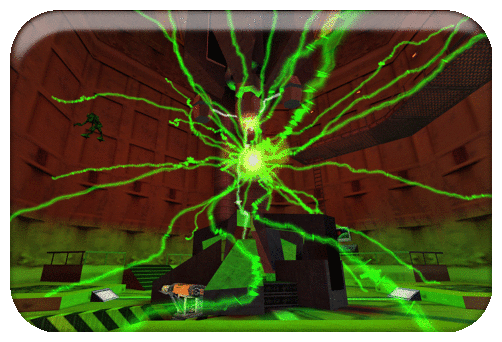 Half Life dropped into the video game market with the apocalyptic force of a meteorite, a game whose significance is still felt, resonating down the the decades, that is still referenced to this day as a high water mark in first person, science fiction horror. Whilst comparatively crude by present day standards, players simply had never seen anything like it: a game that so cinematically established its setting, its characters, its story; that played with familiar science fiction and horror tropes in so elegant and beautiful a manner. One of those rare, rare pieces that is often cited in comparison to more established and traditional mediums such as literature or cinema as evidence of video games as legitimate art. A slow-burning masterpiece of atmosphere, the original Half Life places the player in the role of silent protagonist, Gordon Freeman, a researcher at the highly covert Black Mesa compound, where secret military experiments in trans-dimensional chicanery are underway. Infamous for its interminably long opening sequence, the game takes extraordinary amounts of time and effort to establish the Black Mesa compound as a functioning, realistic environment, and to foreshadow what the player will be facing later on. Numerous subtle asides and set pieces suggest the inevitable calamity to come, from various researchers tutting and commenting over aberrant data to computer consoles exploding as they attempt to analyse what is happening. Unlike instalments in the survival horror genre, all of these set pieces are optional and occur within the game engine itself, never cutting away -and thereby distancing the player- from the game environment itself. This has the effect of more fully immersing the player in the environment and situation; of making them feel like part of it rather than an intruder within it. 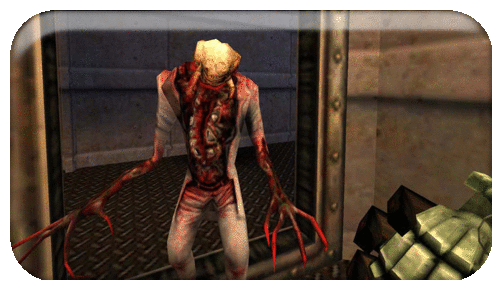 Simply as a piece of storytelling, this highly environmental and suggestive style is a million miles away from the comparatively crude, exposition heavy, FMV laden form that survival horror became infamous for. In terms of horror specifically, it allows things to happen at the edge of player perception, in a manner that is subtle and suggestive but that mounts and mounts until tension finally pays off. In terms of its world-building, escalation of atmosphere and sheer immersion, Half Life was a quantum leap; something we had never witnessed before, that video game audiences and press could not shut up about for the decades that followed, until the release of its equally, insanely brilliant sequel. What Half Life demonstrated with reference to survival horror was how different approaches were not only possible, but essential at this point; that, in order to maintain intrigue and the development of video games as mediums of narrative, art and mythology, the established formats required reconsideration, maybe even wholesale abandonment. The horror of Half Life is dense and many-flavoured, from the natural dread and tension created by the “resonance cascade” (which rips open interdimensional portals all over the Black Mesa compound, allowing various species of extra-dimensional gribbly to pass through) to the claustrophobia of being trapped underground, the various hazardous set-pieces that are part and parcel of navigating Black Mesa, from the utterly alien invading entities (not merely creatures from another world, but another dimension) to the human military forces that are at least as much of a threat, if not more so. The game has a penchant for throwing the player into highly themed and densely flavoured narrative set pieces, from hideous, “zombie movie” inspired sequences involving the parasitic “head crabs” and the mutated zombie-hybrids that occur as a result, to full-on kaiju themed moments in which immense alien gargantua face off against hordes of human military personel. The sense of escalating scope and scale is beautifully played, and allows for variation between the comparatively intimate moments of horror, that are reminiscent of those to be found in classic survival horror games, to vast and grandiose battles where the player darts and scrambles through honest-to-goodness warzones, explosions occuring on every side, pathways exploding, gun-fire filling the air, alien monstrosities teleporting in or swarming from nearby nests...It's genuinely impossible to catalogue here the sheer range and variety of material the game contains or the homages and references that litter every inch of it. 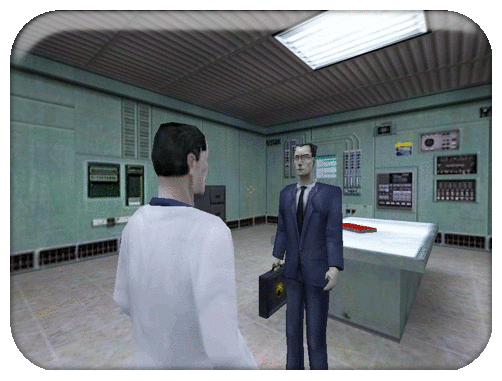 If survival horror marks the point at which cinema and video games began to sincerely overlap, then Half Life is the point at which video games begin to transcend that relationship and become their own entity: very little in all of video gaming throws together quite so many elements, so many flavours of science fiction and horror, and sifts between them so elegantly. As a contemporary to Half Life, we have the less enshrined but no less notable System Shock 2, a sequel to the original, semial work of horror that took the basic format of 1995's Doom but introduced narrative and roleplaying elements (including entirely voice-acted recording logs, that were absolutely ground-breaking at the time). The swan song for the endlessly inventive Looking Glass studios, System Shock 2 didn't land with quite the same impact as Half Life, but is arguably even more sincere and successful as a work of horror, and demonstrates unequivocably that the naivety and novelty that informed survival horror's success was nearing its end. 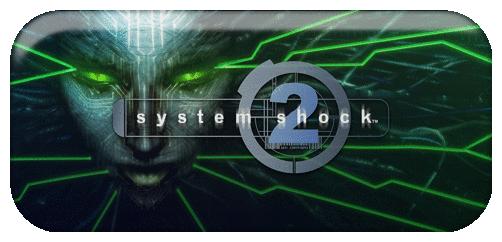 Like Half Life, System Shock 2 is a first person, science fiction horror game, but whereas Half Life has its roots firmly in action titles more reminiscent of Doom and Duke Nukem 3D, System Shock 2 is far more dense and slower-paced, exhibiting elements not a million miles away from most role playing games of the era, with a variety of character builds, upgrade systems, weapon degradation and a far more dense and detailed plot. Also, System Shock 2 is far more sincere in its efforts to horrify the player. The first time I played System Shock 2, I had never experienced such intense dread or tension when playing a video game: wandering around the darkened, clanking, hissing and whispering corridors of the starship Von Braun, I was genuinely terrified as to what might be waiting around the next corner, what the distant sounds of whispering and footsteps might mean. The game utilises sound in a manner that was unheard of at the time; a dynamic system that means enemies can not only see but also hear you, making for some extremely fraught moments as you attempt to sneak and navigate the narrow corridors and collapsing walk ways without them noticing. Furthermore, the ship itself is out to get you; its controlling computer, Xerxes, a semi-sentient entity that has been compromised by alien influences, meaning that one of the most terrifying things you can hear is the click of cameras, the warning siren that occurs if you linger for too long in their field of vision. This makes the game closer in ethos and style to the survival horror genre than Half Life, but also far, far more subtle: unlike Resident Evil or Silent Hill, there is generally not a single, elegant solution to any given problem, but multiple paths and choices depending on your style of play, character build etc. This, combined with the constant state of paranoia, harassment and impending violence that the game deliberately cultivates, leaves the player in states of distress and disturbance quite unlike almost any other horror video game, the frantic pace, the random manner in which enemies wander or manifest, making for a truly fraught experience, in which safe spaces are rare-to-none-existent, where there is a hideous ethos of being watched and manipulated throughout. These factors are enhanced to the Nth degree by the various logs and communications that are scattered throughout the Von Braun, which slowly develop a number of interlinked characters and narratives: through them, the anonymous -and conveniently amnesia-suffering- protagonist learns that the ship has been hijacked by a parasitic species of organisms that were found upon the surface of a planet called Tau Ceti V; highly invasive, worm-like creatures that infiltrate and transform their host's biomass, linking them together in a collective consciousness that calls itself “The Many.” 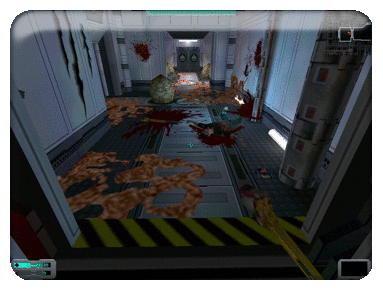 Quite apart from the physical threat posed by the hyper-violent and territorial worm/human hybrids, one of the most disturbing elements of these creatures is the dizzying array of phrases they repeat to themselves: statements of “Your flesh betrays you,” “We seek, we seek,” “Are we joined?” “Is there another?” etc echo throughout the darkened corridors, making your heart clench and your hair stand on end whenever they occur. Whilst not massively threatening in and of themselves, they can very easily induce a state of blind panic with their hideous cries of “Kill me!” or “I'm...sorry...” as they charge from the shadows, attempting to club the player to death with bits of torn and twisted pipe or peppering them with shotgun blasts. The element of tragedy that surrounds these creatures lends them a layer of horror not unlike Resident Evil's zombies, but with a more Cronenbergian, body horror quality. Intermingling elements from and references to so many examples of horror and science fiction, they're impossible to catalogue, System Shock 2 is a sadly under-represented milestone in video game horror; a sincere and significant shift away from the increasingly dull and familiar tropes of survival horror that still predominated the genre in console markets to a far more experimental state: not only is it tense and terrifying beyond description, but the ideas it plays wth are profound and engaging on an intellectual level: the collective intelligence of the parasitic worms -AKA “The Many”- is not a malevolent force, at least not unambiguously so: when it speaks to the player, it is rarely in terms of threat, but rather as a seduction; it seeks to incorporate humanity and all biology into itself, and this does not necessitate any kind of obliteration of consciousness: the minds of those it absorbs are still present within its collective, some of them granted far more in the way of independence and autonomy than the rest (Captain Korenchkin of the Von Braun starship is a peculiar example in this regard; he fully embraces The Many, becoming one of its higher control organisms for his faith). This places the player character in a somewhat morally ambiguous situation: as The Many itself argues, humanity cannot survive in its current state; it will murder itself long before it realises any true potential. As such, The Many might be regarded as a solution to many of the problems humanity creates for itself, making the player an antagonist or negative force. 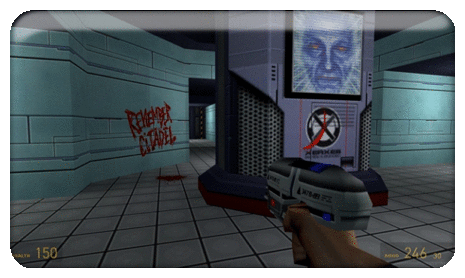 This is compounded by the inclusion of SHODAN (Sentient Hyper-Optimised Data Access Network), the artificial intelligence that was the antagonist of the original System Shock and regretful creator of The Many. SHODAN reveals herself to the player character at a particular point in the game and becomes an ambiguous ally and benefactor against The Many. Whilst united by a common enemy, SHODAN makes no bones about the fact that the player is worthless to her, as is humanity as a whole: whereas The Many are biology and evolution run rampant, whilst they are collectivism and the dissolution of the individual, SHODAN is tyranny, self-interest and narcissism to the Nth degree; a self-fancied Goddess of metal and machinery, of circuits and programming. There is an ideological conflict throughout the course of the game that, given technological constraints of the era, was never fully explored, certainly within the realms of player choice, but which lends procedings a certain air of intrigue and philosophical horror far and beyond what most examples of Survival Horror could even pretend (with the exceptions of the first three Silent Hill titles). The PC platform was peculiarly notable in this regard; having consistently enjoyed a more adult oriented and unrestricted market, the platform already boasted species of horror that were far and removed from much of what had come to predominate consoles at the time: The likes of I Have No Mouth and I Must Scream, Phantasmagoria, Realms of the Haunting and the Gabriel Knight series had already intermingled the “point and click” puzzle game with horror tropes and subjects with varying degrees of success. Likewise, Doom had introduced PC players to certain forms of horror that console gamers wouldn't be able to experience until at least a year or two after that game's release. Whilst horror on the PC continued to experiment and evolve in the early 2000s, presenting fans of distressing and disturbing material with myriad options and seemingly limitless variety, on consoles, the genre had begun to sincerely stagnate, with certain franchises and sub-genres predominating, most notably the ailing Resident Evil and Silent Hill: 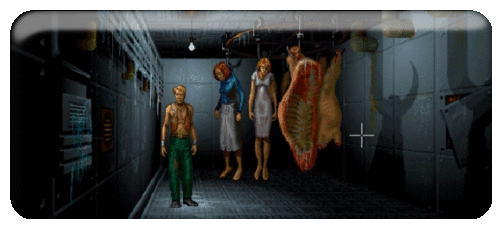 An exclusive release of Resident Evil: Code Veronica, the game originally tipped to be Resident Evil 3 before corporate shennanigans dictated otherwise, on the poorly distributed Dreamcast system (Sega's last console) ensured that the game enjoyed a very limited audience in the west, but also marked the point at which Capcom started moving the series away from the fixed camera angles and design of the original games towards a more action-oriented, dynamic style. Whilst the game itself is far from bad (it's arguably one of the more playable Resi titles), a quality it sincerely lacks is any of the tension, disturbia and dread that made the previous three games so novel and engaging: in attempting to cater to various and wider demographics, Capcom succeeded in alienating fans of one genre or the other, providing an experience that feels, for all of its comparative technical sophistication, somewhat flat and lacking in atmosphere. 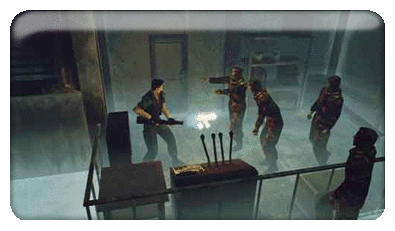 Silent Hill, meanwhile, continued to demonstrate the strength and potential of its setting and core concepts by maintaining a design and structure not a million miles away from the original game in Silent Hill 3, generally regarded as the weaker of the first three games, but still a high point of survival horror: Silent Hill 3 arguably has some of the most disturbing moments and imagery in the entire franchise, with vastly enhanced graphics, amazing monster design, a sincere and consistent atmosphere throughout. There are moments within this game that are distressing, disturbing and so, so powerfully horrible, they stand as some of the most seminal imagery I've ever seen in a horror product: 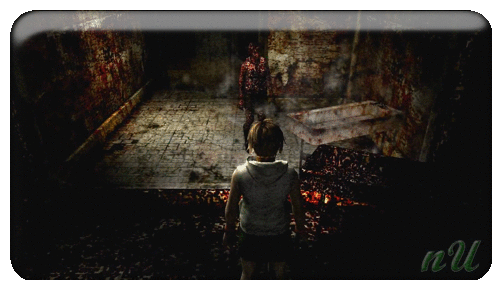 Take, for instance, a particular set-piece in which protagonist Ashley becomes locked in a hospital room, one wall dominated by an immense mirror that reflects not only herself, but her entire surroundings. As the player lingers, something begins to happen in the reflected world: creeping veins of red and black, fungal filth emerge from the nearby sink, elaborating across the floor towards Ashley's reflected self. If the player lingers too long, the matter begins to creep up her ankles, spread across her legs, eventually consuming her entire body, whilst her waking self on this side of the mirror remains visually untouched. It's a terrifically incongruous and confusing moment, with little in the way of warning or build up, nothing to signify what might occur in a room that seems no more or less innocuous than a million others the player has visited. The sheer confusion of it, the lack of any context or explanation, renders it a moment of pure distress, that leaves the player in a state of panic not unlike Ashley's own, fumbling about for some solution to or escape from the phenomena. Likewise, some of the throw-away lines of dialogue, whilst such interactions generally lack the dream-like surrealism of Silent Hill 2's, subtly cast doubt on what Ashley -and, by extension, the player- is experiencing: proclamations such as: “They look like monsters to you?” in reference to the menagerie of disturbingly freudian abominations Ashley encounters throughout her explorations casting doubt on both the protagonist's and player's perceptions, intimating that, perhaps, what they see is not reality, emphasisng the psychological horror of the game and its aspect as a descent into madness. The game retains a certain nightmare-like element, its logic not entirely that of reason or stable thinking, its storytelling bizarrely off-kilter and largely unimportant to the horror that its imagery and set pieces provide. 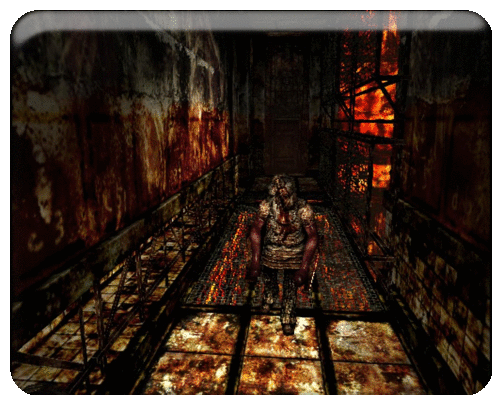 However, it tends to be less well regarded than the seminal Silent Hill 2 for a number of reasons: the story and characters are far less compelling (serving as a more direct sequel to the original), the game preoccupies itself more with direct plot than any of the previous games, which has the effect of diluting the dreaming, hallucinatory quality that makes these games so compellingly ambiguous. Whilst engaging enough, Ashley simply lacks James Sunderland's intrigue and enigmatic qualities: we don't particularly know why Silent Hill itself seems to be invading this seemingly ordinary teenage girl's life, but that doesn't lend her quite enough in the way of mystery. In and of herself, Ashley is fairly standard: whereas James engaged with the increasingly surreal and horrific world around him in the manner of a sleepwalker or schizophrenic, Ashley is acutely aware of the absurdity of her circumstances, which lends her a markedly different -and not altogether satisfying- dynamic. But perhaps most significant of all: when stripped down to its bones, it is just another Survival Horror title in a market long since saturated by them. The game is, on a mechanical level, hardly removed from the original, barring a few tweaks and refinements: still boasting the same dynamic, the same style of gameplay, puzzles and combat. That familiarity, in comparison and contrast to the brilliance and novelty Silent Hill 2 provided through its characters and story, is why the game tends to be regarded less favourably than its predecessor, and marks the point at which Silent Hill as a franchise begins to flounder. As for survival horror as a whole...a descent into disgrace was inevitable at this point, and whilst there are rare examples of the genre evolving in positive directions, for the most part, other forms of horror would fruit like fungi from its decay, arguably cultivating the environment in which entire new markets could be born.  HORROR FILM REVIEW: SOFT MATTERComments are closed.
|


Archives
April 2023
|
 RSS Feed

|

|