

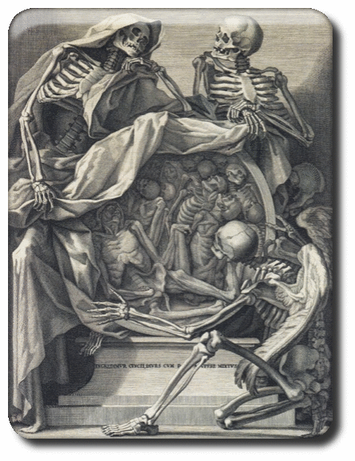
  Thanatos is certainly enjoying something of a dominion over our day to day discourses at present. With the global dread induced by pandemics, economic collapses, political incompetence and malice, the shadow of death has undeniably deepened for us all in recent months. But what does that mean, exactly, in terms of who we are, what motivates and defines us? Freud -and many that have followed since- posited that Thanatos or “The Death Drive” is one extreme of the antipodean dynamic that motivates humanity in its every thought, feeling and action. It is the opposite of Eros, “The Erotic Drive,” the desire for pleasure and experience and the celebration of being. Thanatos, named after the Ancient Greek god of death, is the darker motive force, the part of us that acknowledges the inevitability of decay, disease, the descent into old age, potential dementia and eventual cessation. Whilst commonly portrayed as a negative drive, it is, in itself, no less motivating -and, potentially, no less fruitful- than its antithesis: Freud himself certainly argued that the Thanatic urge can be an extremely powerful motivator, that it can drive us to do things we would never have considered, that it can make us brave where we might otherwise be reluctant or terrified, productive where we might otherwise be inert. It can even intermingle with Eros to become a source of pleasure, the classic example being humanity's penchant for emulating danger or potential end-of-life scenarios through rollercoasters, bungee jumps et al. Being close to death, or convincing our animal brains that we are in harm's way when we consciously acknowledge we are not, can be a source of profound pleasure, inspiration; a biochemical thrill that becomes addictive in the manner of a stimulant. But, as powerful as it can be, the Thanatic urge is rarely, if ever, discussed directly in our discourses, rarely ever addressed as one of the key components of our psychological being, outside of particular arenas. Death is a great taboo, certainly in anglophonic cultures. We rarely speak of it, and when we do, it is in a bland, unconsciously banalised manner, for fear of arousing certain states of emotion within ourselves and others; to protect our fragile assumptions of sanity and delusions of control. Recent situations have forced us out of those comfort zones. Even those of us not naturally given or inclined to existential or psychological ruminations have been forced to confront the possiblity of our suffering, the potential of our own deaths, in ways we perhaps haven't before in our lives. In any half-way sane or psychologically healthy cultures, such ruminations would give rise to deeper states of personal insight, perhaps even a focus for working through our ingrained, animal fears. However, it is just as likely, if not moreso, that the cultural denials and delusions we have put in place to insulate us against those very considerations will be strengthened, made even more obdurate, as a result of death so intimately invading our personal space, our controlled little quarters in the chaos of creation (a response which, ironically, makes us so much more prey to its violations). The consideration of our finitude, our mortality, is one that those of us in the UK are conditioned to deny from the first breath. Everything around us screams of life for life's sake, of pleasure and comfort and conciliation without purpose, poetry or meaning. Most of us are swept up into that cultural condition before we have any opportunity to consciously consider it, the delusions and distractions of which it is comprised informing the very stuff of thought, weaving themselves into the fabric of self and personality, to the point whereby they become all but impossibe to unpick. This is why, when the subject of death arises, we become so automatically uncomfortable and seek to divert focus away. And yet, death is, for each and every one of us, a unifying principle: whatever we experience, whatever we suffer, from the lowliest transient to the highest prince, death eventually comes for us and makes a bleak joke of the strivings and ambitions and comforts we chased throughout our brief spans. We end alone, no matter how many are ostensibly around us, who love and mourn us: the experience of death belongs to us, is our descent into the unknown and the unknowable. Others might ease us through, provide some comfort from its trauma, but it is still one that we experience locked in our own skins and skulls as they fail around us, as all that we thought so certain and inevitable drains away. It is something we will all experience, barring some miraculous revolution in transhumanism or genetics, but that we cannot share with another soul; the ultimate experience and, insofar as any of us still living can determine, the last thing any of us will ever know. Why, then, given that universality, that inevitability, are we so reluctant to even broach it? Part of the answer lies in the history of our cultures and the states we have allowed them to swell to: the very nature of those states is distraction and denial: we are fed through systems of diversion and education, profession and attainment that necessarily divert from and deny the notion of introspection. There is a fundamental rejection of consideration of fundamental and unifying principles in those cultures because the systems they rely on are stalled or corroded by them. The consideration of death, for example, is likely to make one far less materialist than one is enjoined to be by Capitalist and consummerist systems: toys, artefacts and baubles become ephemeral when one acknowledges that they will be lost and forgotten, that they too will corrode with time and that, upon death, whatever meaning they had is lost with us. We begin to acknowledge that the abstractions and experiences we apply to and derive from those artefacts is what matters, on a personal level, and that even this eventually dissipates along with consciousness, with memory, with self. Thus, in order to stop the train of history from derailing itself, the engine of society from stuttering, culture develops defence mechanisms in the same manner as biological systems developing immunities and antibodies against infection: certain ideas, certain paths of thought, are corrosive and potentially inimical to society itself. Such considerations have the power to throw stark and revealing grave-lights on what is systematically shrouded and obscured from us, allowing us to see that certain confections of culture and society are empty, meaningless proscriptions that only exist because we are enjoined -and invisibly coerced- into participating in them. There is a rarefying quality to exploring the Thanatic side of our psyches, the morbid obsessions and urges and considerations that haunt our waking and dreaming moments. Against the profound inevitability of oblivion, the certain slide into the abyss, so much that is promoted as absolute and necessary is revealed as being nothing more than superficial artifice, a gossamer-thin theatre curtain, so easily torn or twitched aside. 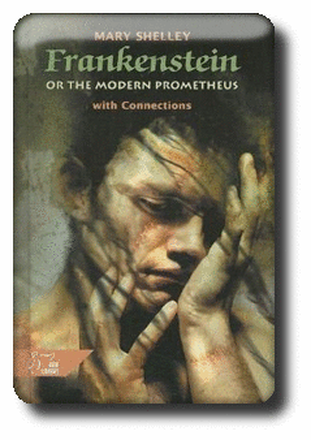 There are also more intimate, personal reasons why death is so taboo in our discourses, not least of which because it often arouses deeply turbulent and traumatic associations from our own experience. Each and every one of us knows the pain of losing a beloved childhood pet, a grandparent or parent. Some experience trauma even beyond those universal human experiences. Sometimes, for the sake of sanity, we insulate ourselves from those associations and the emotions that are part and parcel. However, by that denial, we make ourselves so much more prey to what comes after; when death inevitably invades our lives once again. Consideration and exploration of those emotional states are the only ways we can assimilate them, render them not as wounds in our souls but as scars and tattoos that tell the stories of self. Through those black depths, the despairs that necessarily derive from loss, we learn to be more than we assume, if we allow ourselves to swim them, if we are willing to see. Echoes of the same occur throughout human experience, preparing us for the greater traumas: the failure of relationships and domestic arrangements, the losses of friendships and the breaking of beloved toys. All of these are echoes of the same emotional experience on a lesser scale, and unless we are provided the means and freedom, the environments, encouragement and language to explore and express those emotions, they become sources of neurosis rather than growth. We come to fear even the notion of death as a subject, let alone as an inevitability; an inalienable part of who and what we are. 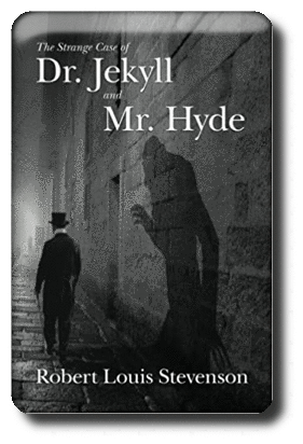 It begins, as so many things do, when we are children. Rather than allow children their traumas, the emotional ranges and depths they are capable of, we mask, we divert, we coddle and obscure behind euphemisms designed to protect us, not them. Ultimately, we are afraid of our children, certainly in the UK: we are afraid of them as people, as complex creatures, that feel and experience and process just as acutely and ambiguously as we do ourselves, if not moreso. We try to deny them their abilities to consider and experience on these levels, ostensibly out of fear that it will cause them harm. However, the truth is we are afraid for ourselves; for fragile and beloved status quos, afraid that, in acknowledging factors of existence such as death, we sign the death warrant for childhood itself, and all the vicarious experiences we enjoy through our young. Children are able to process concepts such as death in ways adults are rarely inclined to acknowledge or accept. Arguably even moreso, since they have not yet become calcified in their own preconceptions and neuroses regarding the subject. The very best children's media acknowledges death, grief and loss and the inevitability of age in the same way and to the same degree that bad children's media presents distractions from it, which often consist of hideous fantasies and metaphysical lies that pretend that it does not exist (C.S. Lewis, whilst generally beloved, is a significant culprit in that regard). 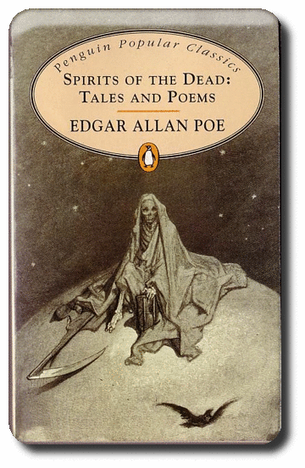 We do our children a disservice when we deny that they feel or think about these matters, when we deride or ridicule them for being “morbid” etc when they ask pertinent questions, when we try to divert them from their grief and loss rather than allowing them to experience it and providing support so that they can come through it more complex, holistic beings. That complexity itself is a genuine source of the fear and neurosis that adults have regarding children and their capacities: the expression of escalating emotional and intellectual complexity, of psychological development, is a signifier of a hurtling away from childhood to other conditions, conditions that parents themselves are often reluctant and/or ill equipped to deal with (again, arguably because their children's development towards more adult states acts as a distinct reminder of their own impending mortality). It's no coincidence that so many of our mythological and folkloric preconceptions of paradise consist of states in which youth is eternal, in which pain, trauma and Thanatos itself are purged from human experience, where we are maintained in states of animal “innocence,” without the dissatisfactions and questions and uncertainities that inevitably come with any complex degree of consciousness. 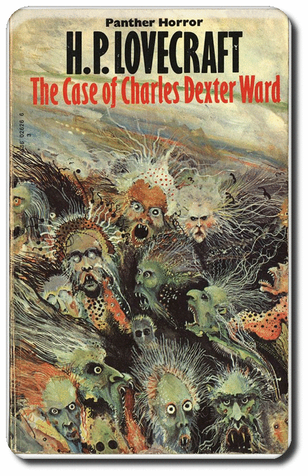 These are adult projections and manifestations of neurosis regarding our own Thanatic components, that we market as religious idealism or some measure of ultimate attainment. They are crystallisations of extremely dark and troubling inclinations that reduce not only children but the human animal itself to a cattle-state; an archaic, stick-figure simplication of conscious being that has never truly existed and never will. It is the lobotomisation of the human soul, our reduction to proscribed ideals that are designed to cater to the dreads and fears of those that wish us to be slaves within ourselves, to deny our own complexities, the ambiguities of being, even if it means we lose everything we are and might be. Thanatos is not our enemy, much as popular media and reductive pop-psychology might wish it to be otherwise. He is as difficult, as fraught, as emotionally complex a factor to consider as his counterpart, the equally problematic and potentially destructive Eros, especially when it comes to exploring the drives and psychological factors he represents with children, whose psyches are still developing, whose minds are so open to influence and manipulation. 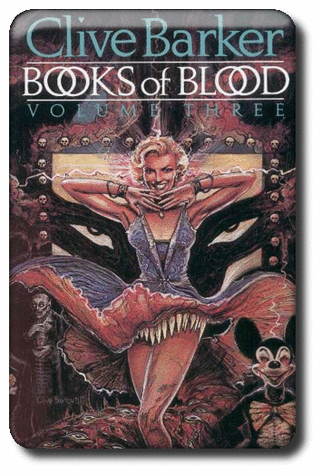 And, of course, we know this, on some level. As already mentioned, in certain areas of our experience, we seek out the experience that leads to Thanatos's gates; we attempt to emulate the survivalist sensations that occur with the imminence of death, even when that experience is simulated (i.e. in rollercoasters, thrill rides, extreme sports, bungee jumps and parachute drops etc). Even when we fail or refuse to acknowledge the parts of us that belong to him, we find ourselves doing so in indirect fashions. There are many and varied reasons why we enjoy the experience of being scared, of synthetic dread, terror, disturbia. Why we wallow in the morbid or images of the deathly. Why our art, fiction, cinema and storytelling so often broaches what we refuse to discuss in our waking lives: Thanatos is necessary. Without him, Eros becomes impotent. The contrast that death provides lends the Erotic impulse much of its meaning, poetry and lustre, as well as the passion and immediacy that are part and parcel of its nature. Beyond that, Thanatos outlasts his counterpart. Thanatos will be with us long after Eros has expended himself and receded in our minds and bodies. Unless we want to spend our twilight years in constant, neurotic conflict with him and ourselves, it's best to make peace with him while we can. This does not mean, of course, that we deny or sublimate our fear of death or that we somehow celebrate or shrug our shoulders at situations as hideous as the one we currently find ourselves in. Of course not! Such would, ironically, be counter-intuitive to Thanatic principle itself. Rather, Thanatos urges us to experience those states and emotions as fully as we can; to open ourselves to our despair, our fear, our dread, as a means of processing and assimilating them. Denial and retreat into the shadow-realms of Eros (obsession, myopic focus on comfort, self-fulfiment and pleasure) are as much expressions of sickness and neurosis as any honest despair, any fear of the circumstances in which we find ourselves. Just as Eros is a source of inspiration, motivation and energy, Thanatos can be a wellspring of wisdom, insight and sagacity. We do not give up railing against the inevitable, we do not deny our fear of the grave: we accept them, we allow for them, rather than pretending that they do not exist. In that, Thanatos provides many and varied means by which we can anneal ourselves psychologically for situations just such as this, whereby we can process the deaths of old ways and traditions, the necessary abadonment of old routines and lifestyles. Discomfort, dread, despair, want and need; all of these are parts of what we are as conscious entities and things we will all experience to greater or less degrees. To pretend otherwise is a source of potentially far greater despair and disease than any that Thanatos proscribes, a self-sabotage that threatens to leave us unequipped when circumstances turn, and we inevitably find ourselves on the edge of the abyss. Horror, in all of its various forms and manifestations, provides numerous means and paths for exploring our relationships with Thanatos (and, in its more complex forms, how that informs our relationships with his counterpart). Death, morbidity, decay, madness, murder, mutilation, despair. . .all of these are the stuff and territory of Thanatos, expressions of those parts of ourselves that secretly desire to explore his cemetery kingdoms, to delve into the internal shadows of existence and gnaw on the bones we find there. Horror, by its very nature, expresses unspoken attractions, exposes us to experiences and emotions we might otherwise reject as negative. Its existence as a genre and its consistent popularity with audiences exposes desires and fascinations that culture at large would see sublimated, denied and even expunged from us. Pain and bodily mortification, the randomness and chaos being, the failure of our minds, our bodies; their invasion, violation and distortion by external factors. . .horror not only allows for exploration of such subjects but also a celebration of them. Some of the more metaphysical specimens even take those subjects and dare to suggest that there is some transcendence to be found through pain, that mortification and transformation are intertwined concepts. The whole sub-genre of body horror is an expression of this very obsession, putting to page and screen the corruption of our own flesh and anatomy that excites reactions of revulsion and disgust, but which we still find ourselves curiously fascinated by. Some two hundred years ago, Mary Shelley penned Frankenstein, Or The Modern Prometheus, a book that explores the gardens of Thanatos perhaps more honestly and sincerely than any of its contempories: Therein, Shelley explores what a creature born of death and to nothing but confusion and suffering might make of itself, how it determines its own humanity, what humanity means in the face of its moribund origins. A creature that knows only death, that yearns for pleasure, comfort, company, but is denied. The monster Frankenstein cobbles together is a true child of Thanatos, a thing of despair, want, confusion, rage and violence, but one that is authored by obsession and disregard for the deeper existential complexities of consciousness. In that, Frankenstein is a meditation on the morbid aspects of our psychologies, the obsession with identity and definition that haunts each and every one of us. Likewise, The Strange Case of Doctor Jekyll and Mister Hyde, by Robert Louis Stevenson, provides a portrait of what happens when one attempts to deny or subvert the natural interplay between Thanatos and Eros: Ashamed of his erotic appetites, the eponymous Doctor Jekyll concocts a means of disassociating himself from those elements and aspects in his own psyche that yearn for them, giving birth to a perverse creature that is all of the most neurotic, diseased elements of Eros and Thanatos combined: a rapine, violent, aggressive and joyless monster that takes pleasure in cruelty, that rejoices in the infliction of pain. The central irony of the tale is that Jekyll himself is the true monster; the self-proclaimed “goodly man,” who yet harbours secrets and enjoys illicit liaisons that he cannot bring himself to utter or define, even to himself, making a monster from his own denial, a creature that is simultaneously him and yet not him. Edgar Allen Poe, one of the arch-saints of horror, is also a prophet of Thanatos, his work gospels that derive from those sublimated spaces of our abstract experience. Death and despair pervade his works, often externalising themselves so that architcture and environments corrode alongside flesh and sanity, as though reality is the canvas upon which Thanatic concern expresses itself. But, for all his morbidity, Poe also exemplifies how the fascination with death and decay can also be a source of poetry, of beauty. Who, having read The Raven or Ligeia can deny the despairing wonder that Poe draws, the ambiguous delight that comingles with our dread of the inevitable? Who, having read Masque of The Red Death can deny that Thanatos himself is often a redemptive and celebrated force within his stories? Death and its concomittent imagery for Poe was not a source of repulsion, but endless, unfathomable fascination. The abyss of the unknown, the possibility of oblivion -as beautifully expressed in his short story Descent Into The Maelstrom- sustained his scrutiny long after the pleasures provided by Eros had faded away, resulting in some of the most gloriously morbid poetry and prose the genre boasts. Arguably Poe's most legitimate heir, H.P. Lovecraft, took Poe's romanticism of the morbid -the finding of Eros in Thanatos, one might conclude- and extrapolated it into theretofore unknown spheres: Whereas Poe maintained some time and interest for the erotic, Lovecraft did not, discarding it as impotent and ephemeral. Lovecraft dares to suggest a reality in which Eros itself is a falsehood and a distraction from the overwhelming reality that Thanatos represents: In his mythologies (for there were far more than one, despite popular claims), reality itself is a diseased and despairing phenomena, an unconscious, uncaring process to which humanity -and conscious species in general- are nothing but evolutionary by-products, flecks of sentient filth that the forces of history and the cosmos will eventually wipe clean and forget all traces of. In Lovecraft's universe, surrender to Thanatos is the only logical option. Despair and abjection are the only recourses, as there is no redemption, no hope, no possibility of better on an individual or species-wide level. The very best humanity can hope for is quick extinction, whereas the worst is so impossibly dreadful as to defy description. Lovecraft provides a fictional and mythological vehicle for experiencing our darkest, most sublimated fears in an arena without overt consequence, myriad nightmarescapes in which we might wander and encounter all we most fear about our existence: i.e. that it ultimately means nothing, that our lives and deaths are less significant than grains of silicate washing away and dissolving in the ocean, that there is nothing to sustain, no greater purpose or poetry we might scrawl across creation, no matter how desperately we yearn for it or torture ourselves in the effort. Everything ends in abomination and madness, in regret and damnation. Later writers would extrapolate upon the cosmic hideousness of Lovecraft whereas others would act in defiance of it: Clive Barker, writer and director of Hellraiser, author of Weaveworld, The Damnation Game, Imajica and numerous others, defies the nihilism inherent to Lovecraft's writings as myopic, even simplistic: whereas Lovecraft concerns himself exclusively with the Thanatic, Barker attempts to dissolve distinctions between the two principles, exploring how Thanatos and Eros are parts of the same abstract engine, the same process of consciousness. Barker takes great pains to eroticise what might otherwise be disturbing, distressing or repulsive, proclaiming without ambiguity that human beings can even make death itself erotic. In that, Barker takes the narrower assumptions and dichotomies of tradition and provides arenas by which they might be viewed and critiqued through new contexts. He attempts to invert the proscriptions of psychology and metaphysics, co-mingle them and collapse the edifice of tradition into a seething cauldron of anarchistic potential. What Barker dares proclaim through his fiction is that all experience is worthwhile, all experience is potentially erotic and/or thanatic and various other things besides. Others have explored similar principles or taken the discussion down abstruse and unexplored avenues, from Cronenberg and his obsession with anatomy, biology and their corruption to Lynch and his flirting with the unreliability of our psyches and perceptions, the gardens of both Eros and Thanatos prove endlessly fertile grounds for play and pilgrimage, for ceremony and adventure. Horror remains a literary tradition that is inextricably bound to those very explorations, arguably born from the sublimated and suppressed desires to engage in them, to discuss the taboo, the denied, the unspoken, and hopefully find some measure of poetry in that transgression.   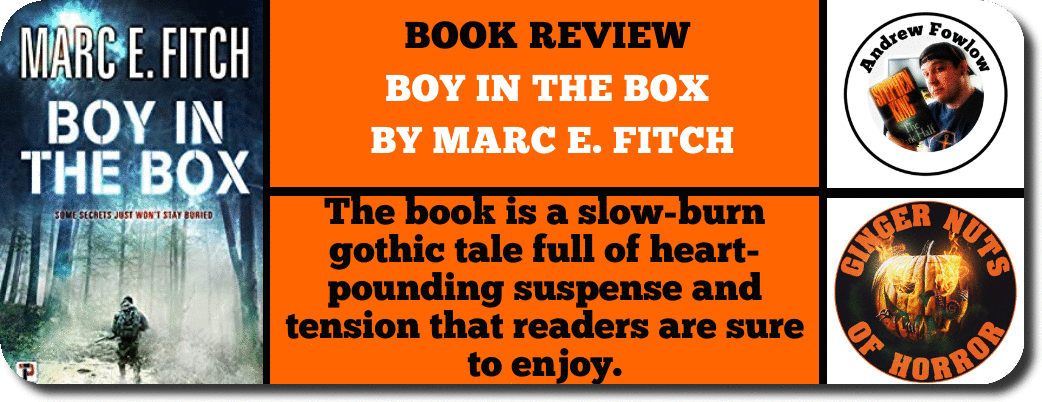 the heart and soul of horror promotionComments are closed.
|


Archives
April 2023
|
 RSS Feed

|

|