• HOME
  • CONTACT / FEATURE
  • FEATURES
  • FICTION REVIEWS
  • FILM REVIEWS
  • INTERVIEWS
  • YOUNG BLOOD
  • MY LIFE IN HORROR
  • FILM GUTTER
  • ARCHIVES
    • SPLASHES OF DARKNESS
    • THE MASTERS OF HORROR
    • THE DEVL'S MUSIC
    • HORROR BOOK REVIEWS
    • Challenge Kayleigh
    • ALICE IN SUMMERLAND
    • 13 FOR HALLOWEEN
    • FILMS THAT MATTER
    • BOOKS THAT MATTER
    • THE SCARLET GOSPELS
GINGER NUTS OF HORROR
  • HOME
  • CONTACT / FEATURE
  • FEATURES
  • FICTION REVIEWS
  • FILM REVIEWS
  • INTERVIEWS
  • YOUNG BLOOD
  • MY LIFE IN HORROR
  • FILM GUTTER
  • ARCHIVES
    • SPLASHES OF DARKNESS
    • THE MASTERS OF HORROR
    • THE DEVL'S MUSIC
    • HORROR BOOK REVIEWS
    • Challenge Kayleigh
    • ALICE IN SUMMERLAND
    • 13 FOR HALLOWEEN
    • FILMS THAT MATTER
    • BOOKS THAT MATTER
    • THE SCARLET GOSPELS
GINGER NUTS OF HORROR

​SUMMER OF SABBATH: THE ETERNAL IDOL BY KEVIN G. BUFTON

28/9/2017
 KEVIN G. BUFTON

Ah, Tony Martin: the best singer Sabbath have ever had.
I'll wait for the laughter to subside, shall I?

Picture
Well, here we are kids.

After nineteen years, a dozen albums, and a career that scaled the heights and plumbed the depths of both critical and commercial success, we arrive at the thirteenth studio album in the Black Sabbath canon.

Unlucky for some? Perhaps. But for you, the dedicated listener, it’s luckier than a leprechaun wearing a horseshoe truss because finally, after the Ozzy Era, the Dio Era and the frankly confusing Guess Who? Era we get to bask in the radiant splendour of the Tony Martin era.

Ah, Tony Martin: the best singer Sabbath have ever had.

I'll wait for the laughter to subside, shall I?

Oh, sure, you’ve got the icon in Ozzy Osbourne, the horn-throwing legend in Ronnie James Dio and the rock veteran in Ian Gillan, but Martin is something else. He exudes a rightness for the band that is difficult to describe.

Granted, he’s not the showman that Ozzy is. As impressive a set of pipes as he has, he can’t match Dio for strident vocals. He was never going to be on any teenage metalhead’s bedroom wall. Hell, in the promo video for ‘The Shining’ (the first single off this album) he looks likes Robert Palmer auditioning to join The Damned, but his voice... dear Lord.
But I'm getting ahead of myself. There’s a reason Tony Martin joined the band in the first place, and it’s a tale worth telling. Gather around the campfire, kids, and let Uncle Kevin tell you a story...


When we last left the boys in black, they had just released Seventh Star under the moniker Black Sabbath featuring Tony Iommi. This iteration of the band was fronted by Glenn Hughes of Trapeze and Deep Purple fame.

Following injuries incurred in a fist-fight with the band's production manager, Hughes had to pull out of the resulting tour. This, at least, was Hughes's story at the time. In truth, his health had been deteriorating for a while due to his overindulging in--well--pretty much everything. Food, booze, drugs... you name it. Whilst his backstage injuries may have been the impetus to quit, the man was already in no condition to perform.

His replacement for the tour was Ray Gillen, who would reach semi-notoriety in bands such as Badlands and Raging Slab. He acquitted himself well at the live gigs and was offered the position as Hughes’s full-time replacement. He accepted, and the band entered the studio to record the album we're discussing today: The Eternal Idol.

But wait!

Behind the scenes, things were not going well. With the album recorded and in the bag, a combination of financial burdens, artistic differences, and the general mismanagement and miscommunication which had plagued Sabbath for much of the eighties, caused Gillen and drummer Eric Singer to quit out of sheer frustration.

It was an awkward state of affairs. The album had been recorded, and was waiting to be mixed, edited and produced to the band's satisfaction, only now there was no band. Gillen was gone. Singer was gone. Hughes was still recuperating and was involved in the Phenomena supergroup (for which Gillen also recorded tracks). Bassist Dave Spitz was being nudged out by Bob Daisley who was also writing some of the songs.

Into this tumultuous scene stepped the man of the hour... Tony Martin.

With neither the time nor the resources to re-record the entire album, Martin had a matter of weeks to reconstruct the vocal tracks, as laid down by Gillen. It is a testament both to him and producer Chris Tsangarides that they were able to meet this challenge.

Remember, the rest of the band's instruments had already been laid out: practised, rehearsed, timed and pitched to correspond with then-resident vocalist, Gillen. Now the new boy had to match that backing track exactly, filling the spot left by Gillen so that the scansion of each song worked with the backing track. All the while he was expected to add his unique spin to the material, making it his own.

Martin was a neophyte at this point: The Eternal Idol wasn’t just his first album with Sabbath, but his first album... ever. Think on that for a minute. This monstrous merging of the cover song and the karaoke session would be daunting to a seasoned veteran. Renowned substance-abuser Ozzy couldn't have done it. Pint-sized prima donna Dio wouldn't have done, and Deep Purple warbler Glenn Hughes was in no condition to do it, but this new guy?

Nailed it.

Granted, there are a couple of moments where you can tell something isn’t quite right: ‘Hard Life to Love’ seems to cry out for some of his trademark strident tonsil work, but it’s not to be. ‘Born to Lose’ is another track where he doesn’t sound comfortable with the restraints he’s been set. Then there’s ‘Lost Forever’ which, with the best will in the world, just isn’t a very good song.

The rest of the album is great. From ‘The Shining’ to ‘The Eternal Idol’ (or ‘Some Kind of Woman’ if you’re listening to the deluxe edition of the album), it’s a blast. Tracks like ‘Glory Ride’ and ‘Ancient Warrior’ showcase what Martin would be capable of once the leash was taken off, and if you’ve ever heard them performed live you’ll notice that extra potency in every line, as the band morph the music around Martin’s lead.

It’s fine stuff. Of course, not being an Ozzy or a Dio album, none of the songs ever make it onto any Greatest Hits albums, or career retrospectives, which is a shame. It also makes one wonder what might have been achieved if Martin had come in at the ground floor and been involved in the writing and the composition.

I guess we’ll never know.
 
And what of Ray Gillen’s efforts?

Well, the 2010 deluxe edition I mentioned above comes with the full sessions featuring Gillen on vocals. Naturally it’s a rougher mix, not having been through the spit-and-polish of the studio engineers, but it’s well worth a listen. Gillen’s voice suits the songs perfectly well, as you’d expect. Of course, being more familiar with the ‘official’ Martin recordings, they still sound like cover versions to this listener’s ears.

Who knows the direction the band might have taken with Gillen at the helm? He was by no means a bad singer, but would he have stayed the course like Martin did (at ten years, five studio albums and one official live album, he is the longest serving Sabbath vocalist apart from Ozzy himself)?
​
Who’s to say? All we know is that Tony Martin took the gig of a lifetime and made the role his own... for a little while.

Picture

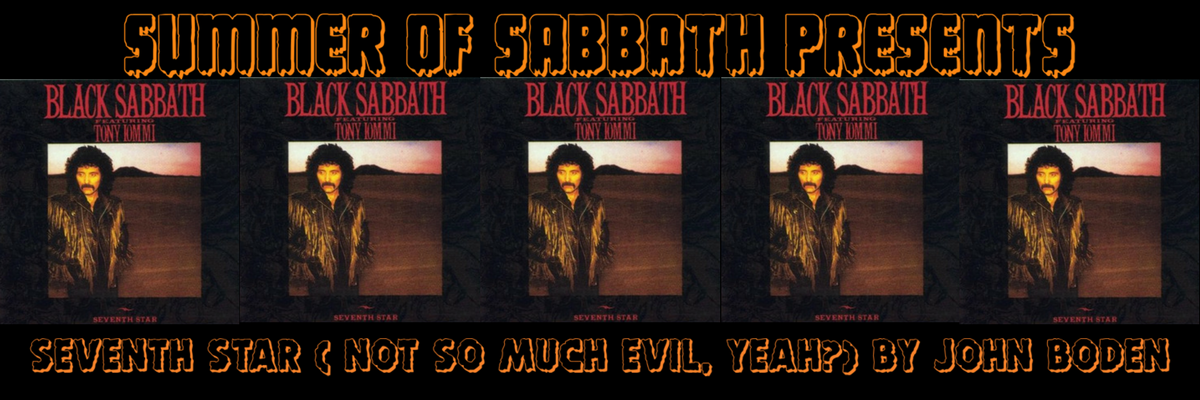
SUMMER OF SABBATH: SEVENTH STAR ( NOT SO MUCH EVIL, YEAH?)

25/9/2017
By John Boden 

"Don't misunderstand--I'm a metal head and a very open and forgiving one (except when it comes to Def Leppard--seriously guys, give it the fuck up already!?)"

Picture

Read More

SUMMER OF SABBATH: ANDREW Freudenberg GETS BORN AGAIN

20/9/2017
BY ANDREW FREUDENBERG
Picture


Around about 1980 a friend’s elder brother played me Deep Purple’s ‘Machine Head’ album. In the intervening years there have been faster, harder, and arguably better records made, but at that moment it was aural perfection. This was my gateway into a lifelong love of heavy rock’n roll.

I soon figured out that, incredibly, the singer could occasionally be seen on television, injecting some much needed energy into the charts of the time. Having devoured most of Deep Purple’s back catalog, I dived into Gillan’s solo releases. Somehow I even ended up buying the Jesus Christ Superstar soundtrack on which he played the lead role; clearly I was a man obsessed.

My first gig was Gillan’s final tour, promoting ‘Magic’, in 1982. It did not disappoint in any way. (Lead guitar role was taken by Janeck Gers, a name that may be familiar to some). Three years later I finally got to see Ian back where he was meant to be, fronting Deep Purple with a triumphant return performance at Knebworth Park. Again, it was as legendary show as a youthful Purple fan could ever hope for. Somewhere in between those two,(for me major), events, Ian Gillan joined Black Sabbath, recorded ‘Born Again’, and left again after one tour.

I’m not sure why this didn’t make more impact on me at the time. I think I was simply bemused by the whole thing. It seemed weird. Unlike some, I wasn’t appalled or even that surprised by it; after all, you can’t like Deep Purple without becoming used to rotating line ups. It wasn’t as if it was this was the first time Iommi had hired one of Ritchie Blackmore’s cast off vocalists either. It was just one of those things that seemed a little off and I didn’t pay it much attention. The line up only played one gig in the UK, (more on that later), which sadly I didn’t bother making any effort to attend. Some things just don’t click and it was a few years before I even bothered picking up the album.

‘Trashed’ is a more than decent opener, with a chug reminiscent of the Dio era and Gillan laying his stylistic cards on the table from the get go. Immediately though, its clear that there’s something wrong with the production. It lacks bite and punch.

‘Stonehenge’ is an amateurish soundscape unworthy of its own title. ‘Disturbing the Priest’ is an uncomfortable meld of Gillan’s story telling vocals, an 80’s electro-throb and some uninspired Iommi riffs. It’s a forgettable mess.

More over cooked reverb heralds the ‘atmospheric’ introduction to ‘Zero the Hero’, again undeservedly given its own title. Thankfully it’s not long before a fat riff kicks in and it sounds like we may be on to something here. Gillan and Iommi find common ground and this actually sounds like a new direction for Sabbath. Despite being hampered by the ongoing amateurish production, this really isn’t too bad. It’s not fantastic either though, and Iommi’s solo is too long and not that interesting.

A groovy riff fights against the compression squashing the life out of it to introduce ‘Digital Bitch’. The lyrics are hardly worth mentioning, clearly scribbled on the back of a beer mat somewhere, and the chorus fairly laughable in today’s context, but its at least got energy and a little fire.

‘Born Again’ is a slow cruncher in the vein of ‘Heaven and Hell’. Gillan pulls out all the stops and shows why, with the right material, he’s one of the best in the business. This is genuinely good material.

‘Hot Line’ kicks in with a riff that could have fallen off ZZ Top’s ‘Eliminator’. The similarity quickly fades as a clichéd set of riffs underline an appalling lyrical scribble. Dull.

Unfortunately ‘Keep it Warm’ features more dreadful lyrics and another lazy backing track. This just isn’t good or really worthy of listening to.

If there’s one thing I have no ambition to write, it’s a hatchet job on an album by arguably my favorite band, featuring one of my childhood heroes on vocals. This however, is really not worthy of the Black Sabbath name.

To quote Tony Iommi, "To be honest, I didn't like some of the songs on that album—and the production was awful.” Whether the production was due to poor work at the time, or as Mr Iommi claims, some mysterious event between mastering and pressing, its unacceptable. When accompanying some of the worst songs produced by the band, it’s a total non-starter. I think the deluxe CD editon makes some mild audio improvements to the original release, but its barely significant.

One can only guess at why it turned out this way. My guess is a mixture of things. We won’t get a decent explanation for the muddied production. It seems strange that it couldn’t be saved in the mix at a later date. Song writing wise, I just don’t think the rhythm of Gillan’s writing style gels with that of Iommi.

Once the recordings were done, Bill Ward headed back to rehab. Bev Bevan of ELO fame stepped in for a short lived tour, after which Geezer quit the band and Gillan answered the call that neither he nor his bank manager could refuse. All in all, not the most salubrious of episodes in the band’s history. What about this line up as a live act though?

Helpfully the deluxe CD edition of ‘Born Again’ includes their Reading Festival Set, their only UK gig with this line up. The new songs regain some of the energy that the poor album production stole from them. Of course a bad song is a bad song, but these versions are a definite improvement. Gillan does a truly great job with the classics, delivering them with every ounce of his not inconsiderable power. The encore of ‘Smoke on the Water’ Sabbath Style along with ‘Paranoid’ Gillan style is… something else… arguably worth the price of admission alone!

So… come for the album… stay for the bonus disc!

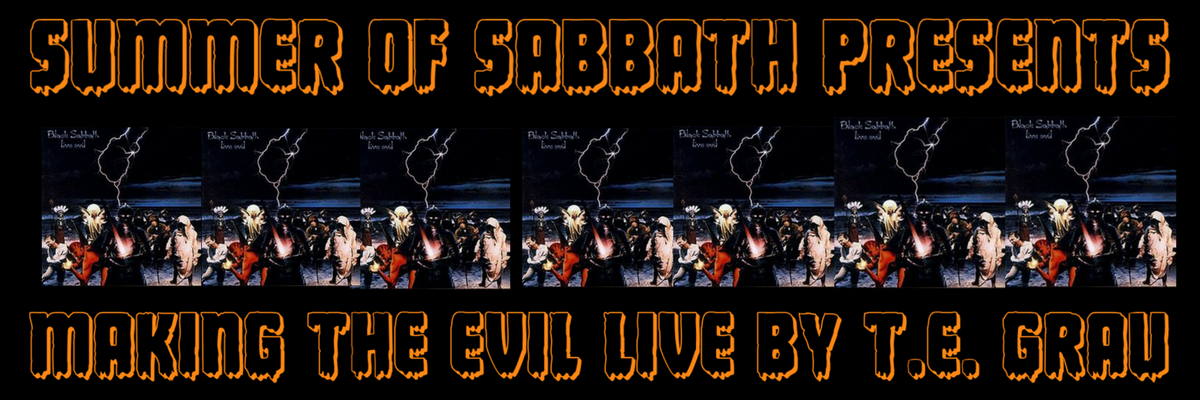
SUMMER OF SABBATH: ​MAKING THE EVIL LIVE BY T.E. GRAU

14/9/2017
 BY T.E. GRAU
SUMMER OF SDABBATH PRESENTS ​MAKING THE EVIL LIVE BY T.E. GRAU
Things hit you differently based on your age, and the age of the world when the impact occurs.


1982 America was a much different beast than the one in which we now live, as the country still clung to a hopeful, purposely naïve outlook that would soon be punctured by various internal and external forces, never to be the same again. But back then, in those first shaggy days of the ridiculous 80s, we the people were blissfully dumb and insulated. Or at least I was - a dumb, scared, awestruck little boy.


Consider the backdrop of the year: After decades of bloody conflict, the United States wasn't (publically) at war. Ronald Reagan was in his second year of his first term, still the actor with the reassuring smile and "aw-shucks" mannerisms. The radio was playing "Eye of the Tiger," Wonder and McCartney's "Ebony and Ivory," and "Hard For Me To Say I'm Sorry" by Chicago on a three song loop. At the cineplex, the feel-good story of a wayward botanist alien, pasty British guys running on the beach, and a sassy musical about the joys of prostitution ruled the screens in between showings of Rocky Balboa still kicking ass for the secret pride of all white people. Nighttime soaps about the obscenely rich and a series devoted to a talking, crime-fighting Trans Am clogged the television, paid for by Masters of the Universe and the Bye Bye Diapers Doll. After the gritty, dismal 1970s, the hair spray and toothpaste smile of the spandex 80s was just gearing up, and economic positivism, military industrialism, and a nasty case of American exceptionalism was on the rise. Like I said, it was a different time.


I was ten years old in 1982, barely a decade on this planet, and my molecular structure was still pink and pliable and deeply in the clutches of Evangelical Christianity, which grew like a weed in open soil during those blissfully dumb days (digging deeper into the ground to find new water in each year that followed). Naturally, with the threat of eternal hellfire dangled over my head like a flaming Sword of Damocles every waking hour of my life, I was strongly - and naturally - attracted to dark and arcane things that would most certainly spell my doom (like, say, such profanities as Dungeons & Dragons or Heavy Metal Magazine). This incessant pull toward the shadowlands terrified me, but to a greater degree, also thrilled me. I'd repeat my salvation prayer each morning, then go set out for the local hobby shop for lead figurines and Savage Sword of Conan comics.


Based on a short lifetime of Biblical teaching, I was increasingly preoccupied with fantasy and horror, gods and monsters, angels and demons and Lucifer himself, thrilled by the possibilities and the danger of it all. In 1982, out in Nebraska farm country, those things were best found in rock 'n roll music, that exotic import from far off lands ruled by mad deities of distortion, darkness, and a middle finger extended to quivering piety.


Over the course of the previous decade, two older siblings had already introduced me to bands like Led Zeppelin, KISS, Pink Floyd, The B-52s, Kansas, ELO, Boston, The Cars, Cheap Trick, Rush, and a variety of others in that vein. I obsessed over this music, the bands, and especially their album covers. The artwork was what set the tone for each band, giving me a glimpse into what was really going on beneath the guitars and drums, and those lyrics I could barely understand. Church propaganda had already informed the congregation that rock music was rife with agents of Satan, hiding in plain sight, spreading their disease via FM radio, seedy record stores, and live shows that amounted to public black masses. And the clues were everywhere, if one only knew where to look. KISS, with their monster makeup, blood, fire, and platform boots, were clearly performing under an acronym that stood for Kings In Satan's Service. Canadian fantasy nerd rockers Rush, with their willy-nilly use of pentagrams, were employing the same clever dupe, as Rush (R.U.S.H.?) actually stood for Right Under Satan's House. AC/DC's Highway to Hell and Meatloaf's Bat out of Hell were less coy in their intentions ("Hell" is right there in the title of both, for crisssake!), with the former featuring Angus Young sporting devil horns and spiked tail, and the latter a muscled longhair bursting from a graveyard on the back of a horse skull motorcycle, with a massive, demonic bat looking on the background. Even 60s flower power metalists Led Zeppelin were on the infernal payroll, skillfully employing "back-masking" on "Stairway to Heaven" so that the properly initiated could spin the record in reverse and hear something that sort of resembled the phrase "My sweet Satan" after the 47th attempt.


The Devil was everywhere, the Satanic Panic crusaders told us, and especially in record stores, waiting to unleash the underworld into the unsuspecting (or most likely fully suspecting) brains of children across the great Christian nation of the United States of America. Naturally, I loved it all and listened to it all, looking for the signs. It was tough sledding, with very little results, but I kept searching, looking for that proper vein that would firmly connect me to the source of all corruption.


My quest came to an end the day my brother brought home a cassette he most likely filched from the mall. The name of the band was Black Sabbath, which I had never heard of before. Black Sabbath? Good Christ, they're not even trying to hide it!


Oddly enough, as a child of the 70s, I had never heard of Black Sabbath until I heard Black Sabbath. At the time, I had no idea that Ozzy Osborne was their founding singer, that Tony Iommi played the way he did because he was missing parts of his fret fingers due to a factory accident, that they were founded in 1968 as a blues band in the rivet-tough English steel town of Birmingham (a year later changing their name, inspired by the Karloff/Bava film "Black Sabbath"), or that they weren't practicing Satanists who got together to write songs in some sort of religious tribute to Lucifer. Why would you name your band Black Sabbath if you weren't a Satanist? This was a more literal time, mind you, and I at a much more literal age.


The title of the album was "Live Evil," which - literally - confirmed everything I needed to know. I looked at the cover art, and was transfixed by the images. The mob rules figure, swaddled in Tatooine robes and holding a whip. A screaming man imprisoned in a straight jacket. The horrifying image of a pig in Vietnam era helmet and uniform, clutching an M-16. The golden glowing angel and the crouching devil.


This was the real shit. I'd found the jugular to Hades, and I wasn't sure I was ready. 


My brother slid the cassette into the double tape boom box, pressed play, and leaned back on his bed, seemingly unconcerned about what he was about to unleash. Across the room, I was sitting bolt upright, unfolded liner notes in my lap, eyes and ears wide open and mind open wider, and waited for it to begin.


"E5150" set the stage, with odd, otherworldly atmospherics priming the listener for what was to come. It sounded like something large and evil rising from the sea, ascending to join its kind raining down from the heavens. I was locked in.


This initiation was cut off by the first high hat shimmers of "Neon Nights," which introduced me to the voice of Ronnie James Dio, whose grandiose, operatic style was edged with a metal snarl, while Iommi showed that he has always been more than just thundering grooves with an impressive solo.


Next came the droning guitar of "N.I.B.," offset by soaring vocals, and the first lyrical sledgehammer blow was delivered to my fragile salvation. When Dio sang "My name is Lucifer, please take my hand," I felt myself pushed back against the wall. Everything was confirmed in that moment. The band name, the album title, that artwork, all of it was legit. These were Satanic verses set to a metal soundtrack, and I grinned with a guilty, nervous pleasure that embarrassed me. I was obviously an awful person, with the fate of my eternal soul on the line, and the fact that I was willingly taking this risk was as freeing as it was horrifying.


"Children of the Sea" brought me back to the music, where I found my first taste of Lovecraftian weirdness before I knew what I was dealing with. The lyrics sent my mind spinning with possibilities, tapping into a thirst for cosmicism I never knew I possessed.


And then came "Black Sabbath," a song that furthered the communiqué with Satan started with "N.I.B." Swirling guitar and chimes served as a prelude to a roaring siren signaling the end of the world. The music faded back, clearing room for this desperate lament of the doomed, a final journal entry of a regretful soul who made a pact with the Devil that had finally come due. On the day of payment, Lucifer comes to collect, smiling and laughing as the flames grow and the last call to a spurned God goes unanswered. This was horror fiction. No, to me, at that time, this was HISTORICAL fiction. I couldn't believe what I was hearing, or what I was feeling. To this day, "Black Sabbath" has stayed with me as the most transformative song I heard that day back in 1982. It was  horrible. It was glorious. "Black Sabbath" on Live Evil made me a Black Sabbath fan, a fan of Ronnie James Dio, and a fan of horror. All horrors, but especially those that cross the physical and dimensional veils.


My atoms still humming and turning things over inside, the dual dystopian dirges "War Pigs" and "Iron Man" stood up from the speakers like rusted steel girders, bones of ruins and charred glory, while "The Mob Rules" proved to be mostly forgettable. "Heaven and Hell" took me from side one to side two, which - even finishing with the epic "Children of the Grave" - isn't as notable in my memory, including "Paranoid," which has since become one of my favorite Ozzy/Sabbath songs. It doesn't suit Dio as well.


Side two is a bit of a blur, but the first side of Live Evil has remained with me since that day in the bedroom I shared with my brother, in the house built by my great grandfather on the rolling plains of eastern Nebraska. Those songs, hit me at just the right time, when my brain was aligned in the perfect way to receive an album such as this, allowing for maximum impact of the music and the message. I would soon discover bands like Slayer, Judas Priest, King Diamond, Deicide, and the kings of Satanic marketing, Iron Maiden, but Live Evil by the band that truly started it all, that has birthed and/or influenced so many of my favorite groups to this day, will forever live on deep inside me as that first glimpse of the truly dark. And flamboyantly so. Proud of their heresy. That was huge to me. Transformative. Now, it was all a bit of fantasy and cool occult symbolism to main lyricist and bassist Geezer Butler, but how it was interpreted by those who listened showed the power of the written word, when framed against a particular backdrop. Religions have risen and failed by this, wars started, genocides unleashed. The illusion is real if one wants to believe it.


And I believed it then. Back in those silly, dumb days of 1982, the (im)properly prepared mind could morph blue collar, pint-swilling, steel town rock and rollers into Satanic high priests. Looking around, in this age of hyper self-awareness, cynicism, nihilism, and the furtherance of rationalism, those blissfully dumb days are most definitely still with us, as is the written word, and the thoughts and feelings and actions they can inspire. Because of the framing. The context.


Maybe it will always be 1982, two years prior to our Orwellian end. Luckily, I'm no longer that dumb, scared, awestruck little boy, although enough of him remains inside me to keep things interesting.
 
​
Picture
CHECK OUT T.E. GRAU'S BOOKS ON AMAZON

RELATED POSTS 
FICTION REVIEW: ​THEY DON’T COME HOME ANYMORE BY T. E. GRAU
​
THE NAMELESS DARK BY T.E.  GRAU

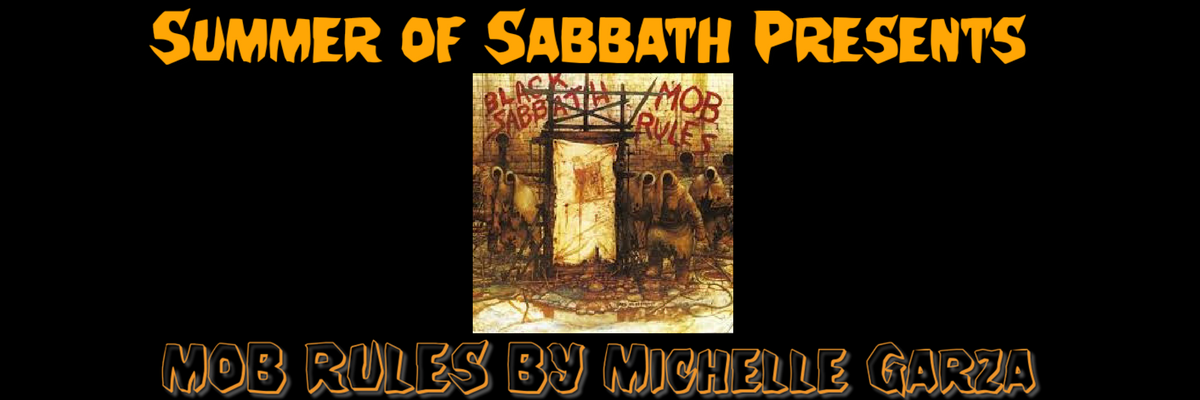
SUMMER OF SABBATH: MOB RULES

11/9/2017
BY MICHELLE GARZA

You’ve nothing to say, they’re breaking away, If you listen to fools, the Mob Rules

Picture

November 4, 1981, saw the release of Black Sabbath’s highly anticipated tenth studio album. Mob Rules was the second and last with Ronnie James Dio until he returned for the Dehumanizer album in 1992. The lineup included Tony Iommi, Geezer Butler, Ronnie James Dio and Vinny Appice who replaced Bill Ward after he suffered a heart attack. It was mixed by Martin Birch who had worked with Iron Maiden, Deep Purple and White Snake. Ronnie James Dio ended up being offered a contract for solo work after the success of the previous album, Heaven and Hell, which created a feeling of separation amidst the band. Entering the studio there was already a shift in the balance of power that made working together strained which some claimed was apparent in the final product. It was revealed years later that during the recording of the first Album with Dio, Heaven and Hell, Ronnie and Iommi had worked mostly separately on it so when they came back together to work on Mob Rules the relationships were pushed to the point of nearly snapping. A tour followed and in 1982, during the mixing of Live Evil, Ronnie James Dio and Vinny Appice parted ways with the rest of the incarnation of Black Sabbath.

Mob Rules, was admittedly an awkward album to record for the band, who were all struggling with personal conflicts, and was met with mixed reviews but spawned some real gems that are truly unforgettable, like the title track Mob Rules, which was recorded for the soundtrack to the cult classic movie, Heavy Metal. There was also Voodoo, Turn up the Night and the classic The sign of the southern cross. In 2010 a deluxe edition was released with a bonus limited edition CD of Live at Hammersmith Odeon which included recordings of classics like Children of the Sea, Neon Knights and Paranoid. The cover art was a Greg Hildebrandt piece that some fans complained had a secret message to the former front man, Ozzy Osbourne, which spelled out “Kill Ozzy”.  The band says it was complete bullshit and just the mind of rabid fans trying to stir up more conflict. 

Though when it was released, it wasn’t met with the enthusiasm the band hoped, it has become an essential album for many metal heads. It was created by some of the founding fathers of the genre and did produce a great track listing. After decades the music still holds true. There is still a heaviness many only aspire to and the strong hypnotic voice of Dio leading the listener onto a path of dark horizons, an image only he could paint in your mind. Timeless lyrics that cryptically follow each generation through their woes, like a band of bards foretelling the bleak futures of all to come.
Break the circle and stop the movement, the wheel is thrown to the ground.

Just remember it might start rolling and take you right back around.

You’re all fools!

The Mob Rules!
                                                                                                                     
Picture

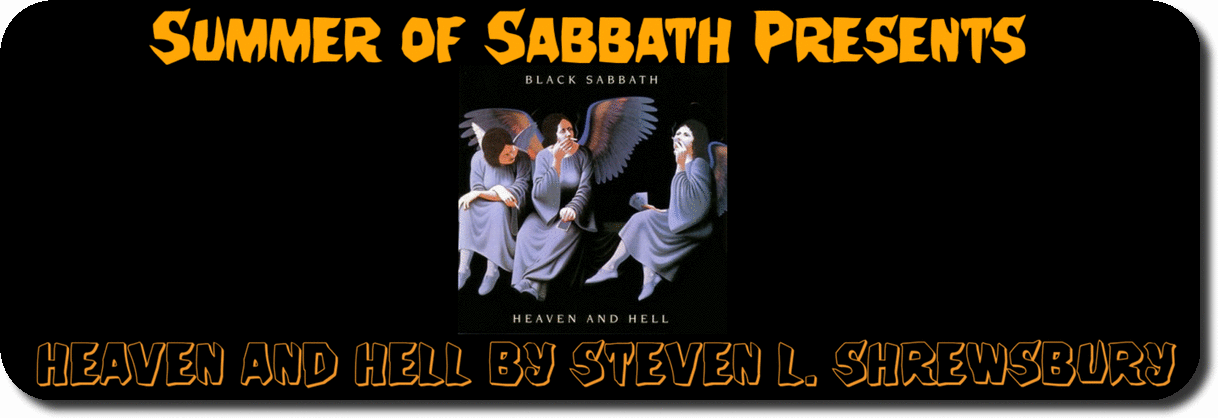
SUMMER OF SABBATH: HEAVEN AND HELL BY STEVEN L. SHREWSBURY

7/9/2017
BY STEVEN L. SHREWSBURY
Picture
 
Back in 1980 when HEAVEN AND HELL came out I was twelve years old. These type of records received no airplay where I lived and if one turned in late at night, the signal from a station near Chicago would pipe out hard rock, not really typed as “Heavy Metal” then. I was a big Sabbath fan for my brother Mark left 8 tracks of MASTER OF REALITY and PARANOID when he went to the army in 73. Anyhow, I recall hearing Black Sabbath had a new singer. No one my age had a fetish for the previous singer and Ozzy had not bitten his first bat head off yet. 
 
The idea that the same guy who sang MAN ON THE SILVER MOUNTAIN would be doing vocals for Sabbath didn’t really mean much at the time, but I knew who Ronnie James Dio was…and from the moment they played NEON NIGHTS I became hooked. I really enjoyed his vocals more than the other guy. Then again, RJD sang about things I liked as a kid, as a fan of Robert E. Howard and high fantasy…rings, dragons & kings…the supernatural and all that. Plus, Sabbath sounded reborn. The music was BAM there and great. I understood nothing of the band’s politics or any of that stuff, the tunes were boundless. The older I became and more I delved into the works, the bigger fan I became.
 
After the opening salvo of NEON NIGHTS we move into the melodic CHILDREN OF THE SEA. I understand from Iommi’s book and other sources this tune sort of existed before in the Ozzy era, and another new singer they tried to get going, Michael Bolton (yes you read that right) even is demoed singing it someplace. I adored the grandiose sweeping tale spun in this one. The images it conjured in my head were incredible. The bluey, bass bottom heavy thud of LADY EVIL rolled out next and damn, was a string puller and cool track. Evil ladies? Yes indeed.
 
The title track HEAVEN AND HELL is an epic piece and probably one of Sabbath’s better songs in all their canon. Up and down, going back to hard tones, driving and then exploding. RJD wrote such great lyrics and things still guessed at, but it all worked. When I saw DIO on tour, the opening chords of this song sent the arena into bedlam.
 
The song WISHING WELL, another hard driving track still holds up as a kick ass tune. DIE YOUNG has an eerie structure and also is highly evocative in the mind. Hitting on all cylinders, the track WALK AWAY is a simpler one, rambling and basic, but cool to the ear. RJD even sounds happy on it. The record concludes with LONLEY IS THE WORD an almost pseudo bluesy track that shows all four band members at their peak. Sadness, creepy walls closing in and a lush landscape of possibilities spread out from the words and chords.
 
Produced by Martin Birch (who later went on to Iron Maiden) the sounds are sort of stuffy and stifled in mono, but the record didn’t need to be clean. It was Black Sabbath and I think this adds to the overall atmosphere.
 
Considering this album almost didn’t happen, it is a fine testament. Ozzy had left, Geezer Butler was getting divorced (keyboard player Geoff Nichols did bass on demos and Paul Gruber played more than any want to admit) and Bill Ward had sank into his own demons of the bottle. Iommi ran into Dio, who was in a similar position and they talked of forming a new band. There is even controversy who played bass on the record for real, be it Butler or Paul Gruber.
 
In the end, it is a great album. But is it truly Black Sabbath? I think so, but many will argue Sabbath is only so called with Ozzy. To each their own, but after years of experiments, abuse and varied things, Sabbath sounded strong and moving forward. Fate is a fickle bitch, I say in my fiction, and one never knows where she will dance next. And even more change loomed for the band.
 
I recall blasting this record on my loud car stereo as a teen when everyone else was listening to Ratt or Van Halen. HEAVEN AND HELL spoke to me, it fit my mind & spirit and still does. My 19 and 12 year old sons also think it is a great work. We like all things Sabbath, but I am glad to have this one for inspiration and the memories it evokes.
 
This was good music in a time before the internet, before everyone over analyzed every detail of a work and felt all snooty about that crap. It’s rock & roll. Enjoy or get the hell out.
 
STEVEN L. SHREWSBURY lives in the middle of America. He is a blue collar worker, lives on a farm and writes horror & fantasy novels…some of which are LAST MAN SCREAMING, OVERKILL, WITHIN, PHILISTINE, BORN OF SWORDS, THRALL, BAD MAGICK and KING OF THE BASTARDS with Brian Keene BEDLAM UNLEASHED with Peter Welmerink.  
    Picture

    Archives

    January 2019
    December 2018
    November 2018
    October 2018
    September 2018
    August 2018
    July 2018
    June 2018
    November 2017
    October 2017
    September 2017
    August 2017
    July 2017
    October 2016
    September 2016
    August 2016
    July 2016
    June 2016

    RSS Feed

    RSS Feed

https://l.facebook.com/l.php?u=https%3A%2F%2Fmybook.to%2Fdarkandlonelywater%3Ffbclid%3DIwAR1f9y1sr9kcIJyMhYqcFxqB6Cli4rZgfK51zja2Jaj6t62LFlKq-KzWKM8&h=AT0xU_MRoj0eOPAHuX5qasqYqb7vOj4TCfqarfJ7LCaFMS2AhU5E4FVfbtBAIg_dd5L96daFa00eim8KbVHfZe9KXoh-Y7wUeoWNYAEyzzSQ7gY32KxxcOkQdfU2xtPirmNbE33ocPAvPSJJcKcTrQ7j-hg
Picture