
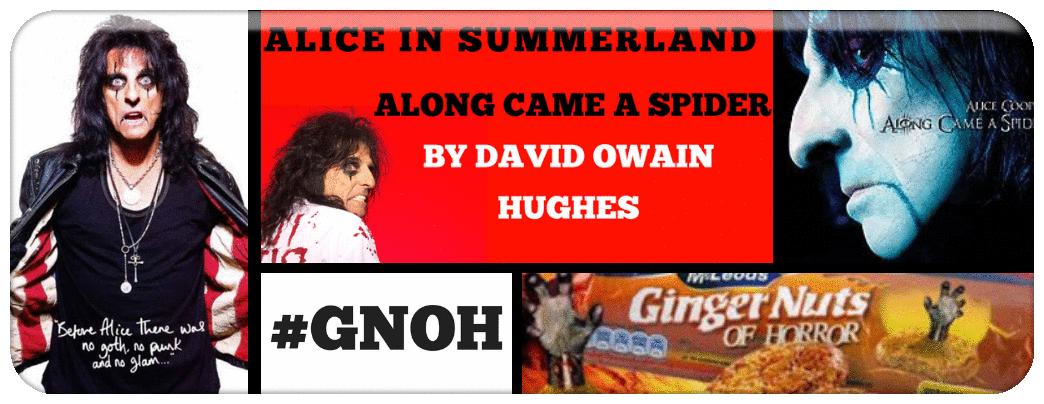
 I’m ashamed to say that I discovered Alice Cooper much later in life… Still, better later than never, right? By the time I figured out what the lanky, make-up-wearing weirdo – who I’d seen appear at WrestleMania III alongside Jake ‘The Snake’ Roberts on shitty VHS – was all about, he’d already produced studio album number twenty-one: Brutal Planet. And what a pleasurably twisted, fucked-up ride that one is, my fellow sickies. Going back to WWF (or WWE because nobody around here wants to get fucking sued): I was a massive LOD and Demolition fan, suggesting I had a thing for men in make-up as a wee lad. I guess some things never change… Worrying? Nah, not at all – it was a goddamn majestic time to be alive. The point being, I was captivated by Alice even though I’d only seen him for the briefest of moments with his gigantic snake and moody, creeping presence around the squared circle. I thought, Who is that wrestler? Yep, I was clueless, never taking much notice. Hell, I was a massive Friday the 13th VI: Jason Lives fan and never knew it was Alice who’d sung ‘Man Behind the Mask’, ‘Teenage Frankenstein’ and ‘Hard Rock Summer’ until I was old enough to know better. What can I say? I was a horror film freak. Music did nothing for me back then. Also, I’d like to point out, being a huge Jason fan helps reiterate that I had a thing for a man covering his face/identity… Don’t you dare fucking judge me! Besides, it’s the year 2018 – I can like, do and be whatever I want, boys, which is the strong silent type… All joking aside, it wouldn’t be until many years after WrestleMania III that I finally got to appreciate the theatrical rock legend on a much greater, deeper level, even though the likes of ‘Poison’ and ‘School’s Out’ had assaulted my ears in my later teenage years. I dug the hits and music in general, but it just didn’t really click with me until Meat Loaf entered my life, finally changing the way I looked at songs/words/lyrics. I also found his album covers thought-provoking. They fed my imagination, which was heavily geared towards horror. The artwork found on the inside of Bat Out of Hell 2: Back into Hell’s booklet is still among some of my favourite, alongside a lot of Manowar’s stuff. From Meat stemmed other musical interests: Iron Maiden, AC/DC, Alice Cooper, W.A.S.P. and many others, all of whom seemed to host horror elements in their songs, band mascot, appearances or album cover designs. I was hooked, and soon devoured music like film, but it was with Alice I fell in love, because it was he who played on the horror genre the most – which takes me back to the concept of a person hiding their true self behind make-up/mask. It fascinates me, and I find it cool as fuck. Behind the running mascara and black lines around the eyes and mouth, a mouth I often think of as filled with razor-sharp teeth, is a man – Vincent Collier Furnier – who plays the part of a nutcase named Alice Cooper well. And this is exactly what we get with Cooper’s Along Came a Spider. This is an album that follows the life and mission of a serial killer by the name of Spider, whose identity is hidden until the end of the CD. And what a twist it is for all Cooper fans! The album’s theme, setup and outcome all help invoke the classic stalk-and-slash films of a great era long past, with sly nods to the notorious serial killer Ted Bundy and Robert Bloch’s classic novel Pyscho’s main character Norman Bates. And, like Cooper, and indeed Spider, Bundy and Bates hid behind/acted out different personas to achieve their murderess goals. The first track, ‘I Know Where you Live’, which kicks in after a short commentary by a female speaking about Spider’s diary, plans and downfall, is probably, for me, the strongest song on the album. It’s also the most eerie and compelling of listens, and immediately engrosses you in a dark, fucked-up world of death and uncertainty – a world only Alice Cooper can build. A bold statement? Not at all. The man has decades of turning out such bleak classic tunes as ‘Dead Babies’, ‘I Love the Dead’, ‘Raped and Freezin’’ and ‘Wicked Young Man’, along with a whole host of others to boast of that comprise wickedly dark humour. In other words, dears, he knows his shit! He’s been doing this a long time, and it isn’t a wonder why he’s the grandmaster of lyrical horror that helps you envision the terror – it almost bleeds through the speakers. Alice Cooper isn’t just a genius in his own rights when it comes to making music, he’s a behemoth of talent, and you’ll either get it/him or you won’t. And if you don’t, where in the fuck is your sense of humour?! He’s not a one-trick pony, either, with his horror, humour and absurdness. Cooper has created stunning ballads, thought-provoking tunes regarding politics and hits driven by teenage angst and the destruction of the system. He’s not afraid to poke fun of himself – or America, either. The next three tracks – ‘Vengeance is Mine’, ‘Wake the Dead’ (featuring Ozzy) and ‘Catch Me if You Can’ – help move the dark, twisted story of Spider and his debauched acts along at a heart-pounding, blood-soaked pace, not letting the listener feel safe for a moment. The latter of the songs, I assume, is Spider mocking the police – something many serial killers are known to do, like the infamous B.T.K., who, to this day, still mocks the press from his cell. Two more cool-as-ice tracks slip in like a knife between the ribs in the form of ‘(In Touch With Your) Feminine Side’ and ‘Wrapped in Silk’, which is a cracker of a song, before Cooper hits the listener off-kilter with a powerful ballad regarding Spider’s undoing in ‘Killed by Love’. The poor, hapless killer falls for his last victim, who escapes him and is talked about two tunes later in ‘The One That Got Away’. Before this, we have ‘I’m Hungry’, which takes us back to the grittiness. Cooper finishes the album off song-wise with another calm offering in the shape of ‘Salvation’, where Spider is looking for redemption. Not a hope in hell, you sick, twisted fuck! And just when you think the terror is over, Cooper signs off with the internal thoughts of Spider, who unveils his identity as the one and only… Now that would be telling, right? I know, I’m a tease – all the boys tell me. It’s definitely an album that packs a serious punch, and ranks among Cooper’s more dark offerings, sitting alongside such delights as Welcome to my Nightmare and From the Inside. He followed up with some great stuff after Along Came a Spider too, but I hope he goes back and records a sequel as initially planned. Still, I can’t – and won’t – complain. I eat up everything he produces. Stay scary, people.  Bio: David Owain Hughes is a horror freak! He grew up on ninja, pirate and horror movies from the age of five, which helped rapidly instil in him a vivid imagination. When he grows up, he wishes to be a serial killer with a part-time job in women’s lingerie…He’s had multiple short stories published in various online magazines and anthologies, along with articles, reviews and interviews. He’s written for This Is Horror, Blood Magazine, and Horror Geeks Magazine. He’s the author of the popular novels “Walled In” (2014), "Wind-Up Toy" (2016), “Man-Eating F*cks” (2016), and “The Rack & Cue” (2017) along with his short story collections “White Walls and Straitjackets” (2015) and "Choice Cuts" (2015). He’s also written three novellas – “Granville” (2016), “Wind-Up Toy: Broken Plaything & Chaos Rising” (2016).  
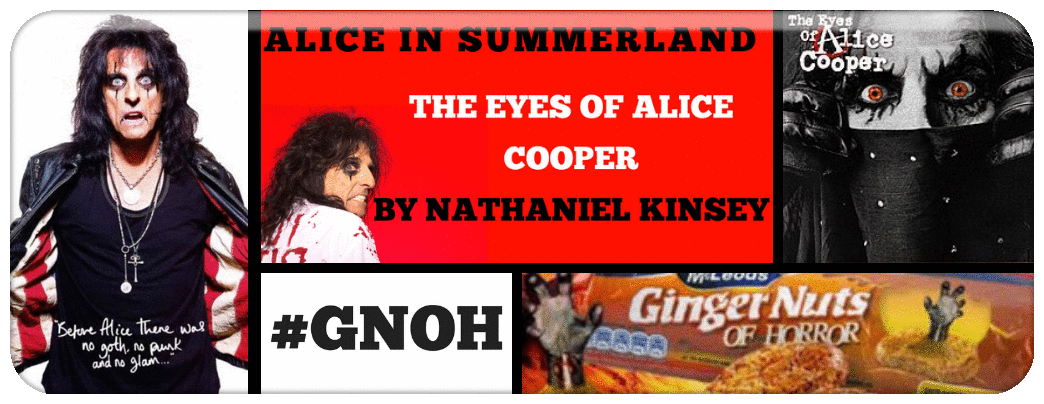 I remember the long gap between 1994's excellent Alice Cooper album The Last Temptation ( which I bought on cassette at Kmart after seeing the video for "Lost in America" on Beavis and Butthead) and 2000's Brutal Planet. Alice had been threatening a new album for a long time in the pages of Metal Edge magazine and when it finally came it was the kind of comeback like when he embraced heavy metal in the late 80's with Constrictor. This was the heaviest Alice album to date, even heavier than Raise Your Fist and Yell. The nu metal sound had never been to my taste but Alice did a good job with it like he pretty much does with everything, from disco to New Wave to pop metal. The next album, Dragontown was good but I felt it was a watered down version of Brutal Planet. After seeing the Dragontown concert I thought to myself-- "That was cool but I really wish that Alice would return to his roots". I didn't have to wait very long. A brief two years later Alice granted my wish releasing the very rootsy The Eyes of Alice Cooper. From the opening cut "What Do You Want From Me" I knew I was in for some classic Alice. In 2003 a new crop of garage rock bands like the Strokes, the Hives and others were bringing back a back-to-basics sound and Alice, always one to stay current jumped on that bandwagon but ironically by staying current he got closer to the sound of his 1970's hey day than he had been since that time. Lyrically, Alice was as clever as ever with witty lines like " I'm stuck somewhere between high school and the old school" and "The Song That Didn't Rhyme" in which a fictitious band writes a song so bad that Billboard declared it a crime! Elsewhere on the song, "Detroit City" he pays homage to his Detroit roots by name checking Bob Seger, Iggy Pop to name a few. He even had Wayne Kramer of the MC5 guest on guitar. Of course we have the obligatory Alice ballad "Be with You Awhile" which is great. Alice always did have a way with a ballad. And there's the usual just plain odd Alice song "This House is Haunted" which conjures up images of Alice's favorite holiday...Halloween of course. His next album, in the same fashion as Dragontown followed Brutal Planet, was the same vibe but a little weake, in my opinion. All in all The Eyes of Alice Cooper is my favorite of his latter day albums. I love them all but this one has a special place in my heart. If you've never heard this album, give it a listen. And if you listened to it back then but maybe forgot about it, give it another shot. Maybe you'll love it so much that you'll go insane like my friend Heavy Metal Kurt and buy all 4 of the different cd covers, each one featuring Alice's eyes in a different color!  Bio: Nathaniel Kinsey is a rocker of the highest caliber. He lives and breathes rock & roll. He has the best colelction of vintage rock shirts in the world and a record entitled Making The Most Out Of Nothing. You should reach out to him about buying a copy because it's pretty goddamn great. If you're too cheap for that you can listen to it via streaming sites or on Youtube. He lives in the wilds of Pennsylvania where he battles the Amish for claim of your soul.    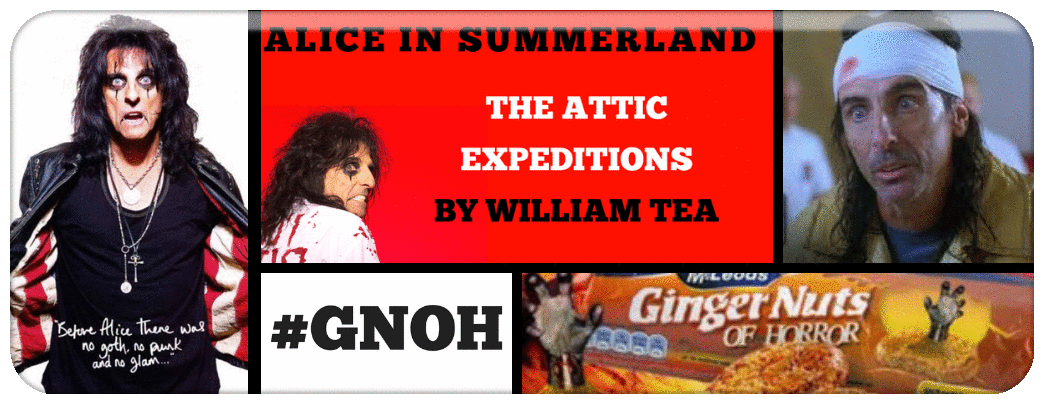 You ever have a movie that feels like it’s yours? I’m talking about a movie that you love wholeheartedly, but that no one else ever seems to talk about, that a lot of people don’t even seem to know exists. A movie that just so perfectly checks off all the boxes of things that you love, so much so that you want to share it with the whole world, even though the fact that it’s so niche, so seemingly suited to you and you alone, makes doing that feel like a frivolous effort. The Attic Expeditions is one of those movies for me. The Attic Expeditions is what I generally refer to as a “mindfuck” movie. You know the type of thing: Think Jacob’s Ladder, Naked Lunch, or Lost Highway. Or, better yet, another unsung personal favorite of mine, 1997’s The Ugly. We’re talking about movies where reality itself is fluid, where cause and effect are divorced and distorted, and where the narrative adheres more to the logic of a dream than anything rational. Of course, “it was all a dream” is often used as a cheap explanation for the surrealism in such movies. Other reliable justifications include psychosis, supernaturalism, or even just plain ol’ mind games being played by a behind-the-scenes manipulator. While The Attic Expeditions is not above employing such contrivances, it is noteworthy in that it truly goes for broke by using all of the above. The very concept of the “real” goes out the window entirely in the presence of such a tangled web of deception, illusion, hallucination, and mysticism. Here’s the set-up: Trevor Blackburn (Andras Jones, best known for his bizarre kung-fu throwdown with an invisible Freddy Krueger in A Nightmare on Elm Street 4: The Dream Master) is a mental patient in the care of the eccentric Doctor Ek (Jeffrey Combs). Though Ek tells Trevor that he was admitted after murdering his lover during a botched black magic ritual, Trevor himself remembers very little before the moment he woke up in the middle of a brain surgery procedure! As part of Trevor’s recuperation/rehabilitation, Ek sends him to “The House of Love,” a halfway house full of headcases, each one weirder than the last, though none are really what they seem. There, Trevor finds a locked trunk hidden away in the attic, one which seems to hold the very memories he seeks. That’s when the murders begin. Along for the ride are Douglas (Seth Green) another mental patient (or is he?) who quickly becomes Trevor’s confidante, and Doctor Coffee (Ted Raimi), who starts out as both a peer and a pupil to Ek but soon begins to question his mentor’s methods and motivations. Eagle-eyed viewers will also notice Wendy Robie (“Nadine Hurley” on Twin Peaks), a young Tim Heidicker (one-half of comedy duo “Tim & Eric”), and, of course, shock rock’s living legend Alice Cooper in small roles. Though his screen time can be measured in single-digit minutes, Cooper steals the scene he’s in, portraying a raving lunatic who believe he’s shrinking (“Measure me,” he screams as orderlies drag him away, “Measure meeeee!”). Sadly, there’s not much more to say about Cooper’s contribution here, although I will add that I think it might be one of his best acting performances of all time. Amazingly, that’s true of much of the rest of the cast as well. Though Combs, Green, Raimi, and even Jones are all much better known for other projects, I would argue that this overlooked little curiosity of a film contains some of their very best acting, in some cases even rivaling the roles they’re more popularly associated with. Combs and Green in particular stand out. The former imbues his character with equal parts smug superiority, manufactured charm, and thinly veiled malevolence, while the latter takes cues from Brad Pitt’s twitchy turn in 12 Monkeys, but adds in a twist of dryly comic self-awareness that comes back to bite viewers who buy into his disarming charisma. It’s hard not to, when he gets all the best lines (asked why he’s in the nuthouse, his is-he-or-isn’t-he-serious response: “I cut off my testicles with a paring knife when they kicked me out of The Pink Floyd”). It’s not surprising that The Attic Expeditions has long struggled to find an audience. General audiences seem to derive little to no entertainment from stories that “don’t make any sense,” let alone ones that don’t even try to. On top of that, the film’s low budget, quirky sense of humor, and methodic pacing have limited its crossover appeal, while its insular distribution by Blockbuster and overall lack of promotion swiftly relegated it to the clearance bin of Movies No One Has Ever Heard Of. And, yet, with its psychotropic blend of occultism, medical horror, sexuality, and paranoia, it stands out as a rough, admittedly awkward, but nonetheless engaging psychological horror headtrip. First-time director Jeremy Katsen (who, among other things, would go on to helm the Wizard of Gore remake and the wraparound segment of the anthology film The Theatre Bizarre) is certainly no David Lynch or Dario Argento, but he synthesizes the flavor of both directors reasonably well and stirs in enough of his own vision and personality to cook up something unique that may taste downright strange the first time you take a bite, but gets better when you come back for seconds. If all that isn’t enough to make you at least a little curious, then how about the fact that one of the characters is a ventriloquist with a foul-mouthed, googly-eyed, top hat-clad crocodile hand puppet which claims to have a consciousness of its own? If that doesn’t sell you, nothing will.    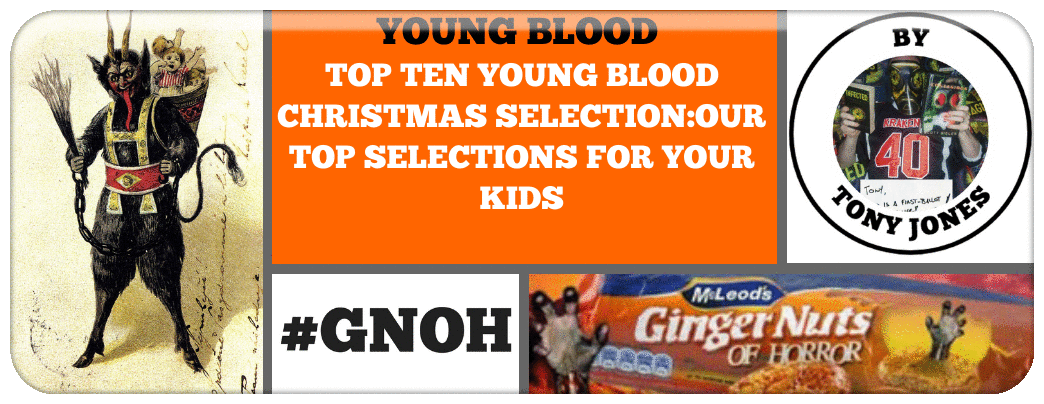 ALICE COOPER: DRAGONTOWN BY WILLIAM TEA
7/12/2018
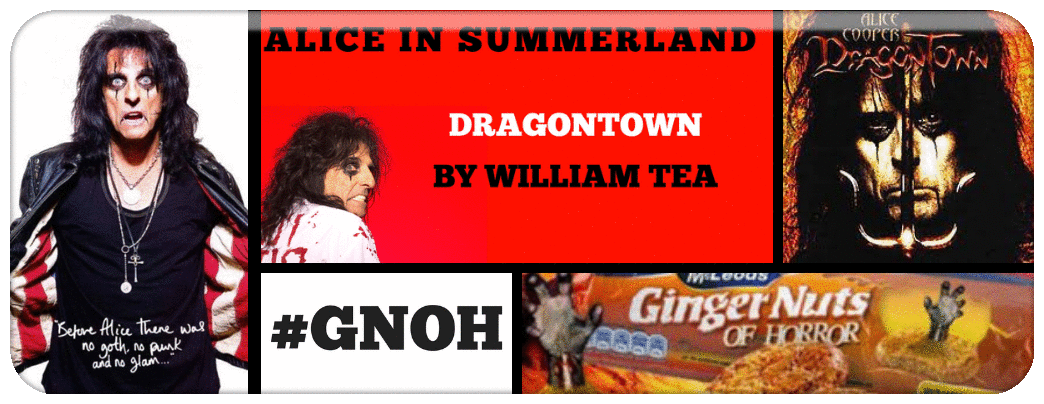 In 2000, Alice Cooper released his first record in six long years, Brutal Planet, and with it came a dark industrial metal makeover that changed him from a rock ‘n’ roll Cryptkeeper into a grim ‘n’ gritty social critic. Intent to make the most out of this reinvention, the shock rock chameleon opted not to leave his audience waiting six more years, instead unleashing another full-length in 2001, titled Dragontown. Like Brutal Planet before it, Dragontown would never quite achieve the same popularity with his established fanbase as earlier classics like Welcome to My Nightmare or Trash, nor would it achieve the Marilyn Manson/Rob Zombie-esque levels of nu-metal success it seemed deliberately designed to court. And yet, also like Brutal Planet, Dragontown would turn out to be one of the, ahem, dirtiest diamonds in Cooper’s lengthy discography, a flawed but nonetheless extraordinary portrait of a man still riding high at the peak of his musical abilities, even as his lyrics often fell to depressingly dire lows. Fittingly, Dragontown isn’t just a follow-up to Brutal Planet but actually a direct sequel, the second act of what was originally intended to be a trilogy (sadly, the proposed part three never panned out). Where its predecessor used a flimsy post-apocalyptic sci-fi veneer as a vehicle for Cooper to vent his spleen about the moral decay of modern society, Dragontown uses a similarly flimsy dystopian setting (i.e. the titular locale, which is supposedly “the worst town on Brutal Planet,” but which is obviously meant to represent the classic Christian conception of Hell) to explore a menagerie of damned souls consumed by their various sins. In this way, the record may be an even more personal and religious piece of work for the born again Cooper than Brutal Planet was. Unfortunately, that means it’s twice as preachy. Good thing then that the music here is also twice as good, just as heavy as Brutal Planet’s but with even stronger hooks and greater diversity. A machine-gun blast of drums and a motorcycle roar of guitars set the stage as album-opener “Triggerman” introduces us to another of Cooper’s many self-insert ringmaster-type characters (something Brutal Planet sorely lacked). Right away, this gives Dragontown a more cogent structure than its predecessor and makes the story feel more thought-out. After a chaotic rush to the end complete with frantic guitar solo, “Triggerman” leads into the synthetic throb and chugging riffage of “Deeper.” If there were any doubts as to the Triggerman real’s identity or Dragontown’s true location, they’re quickly dispelled amid swells of cult-like choir chanting, followed by Cooper’s revelation that “The elevator broke / It went right through the floor / It left a burning hole / Down and down and down we go.” The momentum from these two tracks builds steadily until finally climaxing in the high drama and layered atmosphere of the suitably anthemic title track. This one sees Cooper alternating between moody, malevolent verses and big, bombastic choruses, all while reintroducing us to some very familiar characters, such as the genocidal psychopath of Brutal Planet’s “Wicked Young Man” and the skeletal family of victims from “Pick Up the Bones” So far, so good. The first hint that we get that Dragontown’s lyrics have the potential to be even worse than Brutal Planet’s comes in “Sex, Death, and Money,” which itself is not bad but nonetheless signals the introduction of an element which will ultimately end up being the culprit behind some of the record’s biggest misfires: comedy. Cooper has long had a very distinctive sense of humor which pairs well with his mustache-twirling antics as rock music’s favorite bogeyman. The absence of that was one of the most jarring aspects of the intensely dour Brutal Planet, exposing a few weaknesses in Cooper’s armor that long-time fans were not used to seeing. The restoration of the musician’s inner court jester seems a welcome change on Dragontown. At first. While “Sex, Death, and Money” fares well as a catchy, enjoyable little piss-take of the kind of censorious moralists who publicly express shock and outrage over “offensive” entertainment on one hand while indulging in the same kind of perversions privately on the other, other examples prove less successful. Indeed, the juxtaposition of campy comedy with the somber savagery of the Dragontown’s concept, themes, and sound gives those moments when the humor is at its most blatant an off-putting flavor, as though it just doesn’t belong. And nowhere is Cooper’s humor at its most blatant than on “It’s Much Too Late” and “Disgraceland.” The former is unusually breezy and bouncy, even Beatles-esque at times, featuring an annoyingly nasally Cooper playing the role of a stuck-up goody-two-shoes boasting about a lifetime of good deeds even while stuck in Hell (er, I mean Dragontown) along with all the other sinners. The latter is a musically interestingly mash-up of industrial metal and rockabilly that sees Cooper doing a tiresome Elvis Presley impression while cracking terrible zingers about how the King “ate his weight in country ham” and “lived on southern deep-fried Spam” and ultimately “finished his short life sweaty and bloated and stoned / He ruled his domain and he died on the throne.” Both come off so goofy that they feel more like the sort of things you’d find on a Weird Al record than an Alice Cooper one. Then again, with the holier-than-thou tone of “Disgraceland (“When they found me dead / The whole world was stunned / Went to the pearly gates / Said, ‘I'm the hippest thing’ / And Peter said ‘Well son, / We already got ourselves a king”) and the confusing message of “It’s Much Too Late” (is Cooper really invoking the ugly fundamentalist Christian belief that even good people are still damned if they don’t accept Jesus as their lord and savior? ‘cause it kind of sounds that way), these two songs might as well be the musical equivalent of a Chick Tract. Nothing proves uglier than album-closer “The Sentinel,” though, and unlike those other tracks, one can’t point to humor as the biggest problem here. Told from the point-of-view of a Middle Eastern terrorist, “The Sentinel” is about as serious a theme as Cooper has ever tackled. Recorded prior to 9/11 but released mere weeks after, this one could hardly have come at a worst time. As deliberately controversy-baiting as it seems, though, the concept has potential; “The Sentinel” could very well have explored the psychology behind extremism and perhaps even exposed some uncomfortable truths about human nature and Western hypocrisy to boot. Instead, we get cringe-worthy lines like “There's something disturbin' going on in my turban” which reek of crude, if (hopefully) unintentional, racism. And yet from a musical point of view “The Sentinel” is stellar, an ominous bone-chiller that slithers like a snake in tall grass before latching onto you and sinking its fangs in. That, in a nutshell, sums up the legacy of both Brutal Planet and Dragontown. Sonically, both albums are underrated triumphs of infectious songwriting. They arguably have only one flat-out musical dud between them (Dragontown’s ballad “Every Woman Has a Name” is another shameless attempt to recapture the spirit of Welcome to My Nightmare’s “Only Women Bleed,” but unlike Brutal Planet’s “Take It Like a Woman” this one wallows in insipid blandness). “Fantasy Man” sneers with punk rock arrogance, “Sister Sara” writhes with venomous sexuality, and “Somewhere in the Jungle” alternately broods and soars with the same kind of apocalyptic swagger that made “Pick Up the Bones” so impressive. Lyrically, however, these albums contain some of the absolute worst writing Cooper has ever churned out, covering the entire spectrum of awfulness from dull to corny, tactless to tasteless, smugly superior to morally reprehensible. Interestingly, Cooper has gone on record in more than a few interviews stating that he thinks entertainers like him shouldn’t get political. And while that outlook seems needlessly limiting and prescriptive, maybe the man has a point, at least in regards to his own work. After all, there are no shortage of artists like The Dead Kennedys, Rage Against the Machine, Public Enemy, and Bob Dylan who serve as shining examples of music-as-social-commentary done very, very right. Unfortunately, Cooper’s efforts to similarly imbue his shock rock aesthetic with some ripped-from-the-headlines relevance proved far clunkier. For all its flaws, Dragontown, like Brutal Planet before it, represents an exceptionally strange and fascinating period in one of the overall strangest and most fascinating careers of any musician in rock history. Future Cooper records would be more well-received, not to mention artistically coherent, but few would be as interesting and fewer still would offer such a sustained warts-and-all look at the naked face of the man behind the make-up. Neither Brutal Planet nor Dragontown may be particularly strong Alice Cooper albums, but they are undeniably eye-opening Vincent Furnier albums.    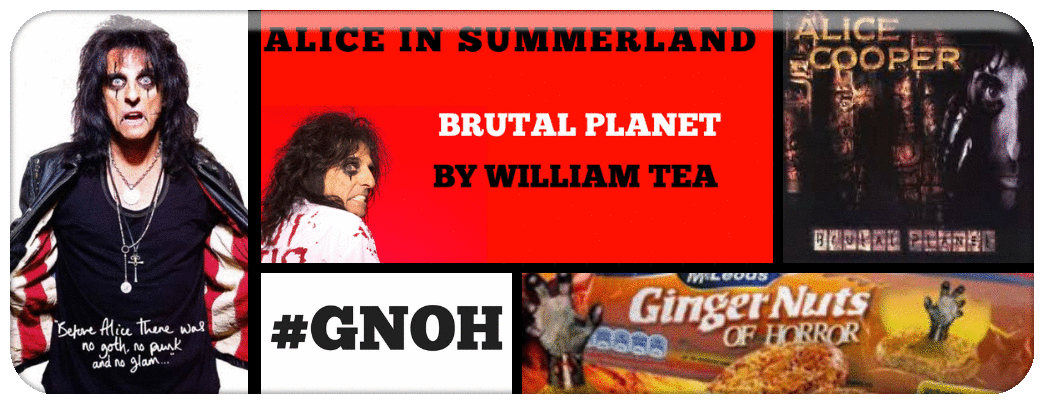 The late ‘90s/early 2000s were an interesting time for rock and metal music. To say the least. The implosion of the grunge movement left a void in the hearts of music fans who hadn’t yet sated their appetite for angst and cynicism. At the same time, the proliferation of inexpensive home recording equipment, as well as computer sampling and sequencing programs, gave rise to a new generation of independent musicians. Throw all that together, along with influences from the burgeoning industrial and rap scenes, and you get “nu-metal,” the bastard offspring of a half-dozen seemingly disparate musical genres. Sporting baggy pants, Manic Panic hair dye, and enough spiked collars to keep PetSmart stocked for a lifetime, nu-metal was simultaneously misanthropic and narcissistic, a chaotic crossbreed of grunge rock’s teenage alienation and glam metal’s flamboyant hedonism. Suffice to say, it was a huge success. More than a few of rock and metal’s old guard tried to get in on that success, either out of opportunistic bandwagon-jumping, a panicked bid to stay relevant in the face of changing tastes, or even a genuine interest in the stylistic ideas and recording methods the new trend had introduced. Results were mixed, from Slayer slowing down, stripping back, and tuning low for Diabolus in Musica to German thrashers Sodom struggling vainly to fool listeners into thinking they were a Pantera cover band with The Least Successful Human Cannonball. Among the best of such old-meets-new efforts was Alice Cooper’s underrated and oft-forgotten twenty-first (!) studio album, 2000’s Brutal Planet. While Hot Topic-trawling mallrats were busy arguing over whether Marilyn Manson or Rob Zombie was the true heir apparent to Cooper’s throne, the reigning king of shock rock still held court, rebuffing all attempts to steal his crown. Where bands like Slayer and Destruction proved to be square pegs ill-advisedly straining to jam themselves into round holes—their complex, high-speed styles were not easily brought into line with the much simpler, poppier model of nu-metal—Cooper’s classic rock roots gave him a decided edge when it came to crafting infectious hooks. Where thrash bands found themselves trying to completely reinvent their approach to songwriting, all Cooper had to do was keep it catchy and up the crunch. Right from the start, Cooper shows how good he is at balancing that exact dynamic. Eternally occupying the perfect middle-ground between drill sergeant and carnival barker, Cooper is front and center, riding crop in hand, as Brutal Planet kicks things off with the titular track’s chugging wall of riffs. Fully embracing nu-metal’s industrial influences, he builds his opener on the back of a driving, mechanical rhythm that might become monotonous in a lesser musician’s hands. Instead, Cooper deftly counters the pounding beat with regular interludes of squalling guitar licks, ethereal female backing vocals, and a rousing singalong chorus wherein the man rattles off a litany of atrocities from across humanity’s long, sordid history. Unfortunately, if Brutal Planet has one major weakness, those atrocity-obsessed lyrics are it. In keeping with the album’s grittier, grimier sound, Cooper forgoes his usual EC Comics/Grand Guignol camp in favor of darker, more grounded themes. In a sense, Brutal Planet is a concept album, something Cooper is obviously no stranger to. However, its horrors are less “serial killer psychodrama” and more “post-apocalyptic sci-fi dystopia.” And like most such science fiction, Brutal Planet is really social fiction. Ultimately, Cooper’s so-called “Brutal Planet” is basically just the world as we know it, only with the positives extracted and the negatives exaggerated. This could make for an interesting twist on the classic Cooper formula, if only the man’s attempts to imbue his lyrics with manufactured “social relevance” didn’t feel so ham-fisted. As effortlessly as Cooper manages to update his sound for the nu-metal era, his lyrics are clearly trying way too hard. It is certainly more than a little jarring (not to mention arguably in poor taste) to hear an artist who previously sang the theme song for a Friday the 13th movie literally name-drop the Holocaust as just one example out of many of how “brutal” his “Brutal Planet” is. Later, on “Eat Some More (Taste the Pain)” Cooper belts out the following bon mot: “Lots of melting cheddar cheese / Spreading its unique disease / Rotting veggies on the ground / Where hungry little kids are found.” First-world gluttony and third-world poverty are heavy themes, no doubt, but how can one take seriously a seething industrial metal song about the evils of cheddar fucking cheese? By favoring this kind of clumsy on-the-nose bluntness over the poetic ambiguity of his earlier albums or even the macabre humor of his later ones, Cooper comes off less like the caustic cultural critic he’s trying to be and more like a bitter old curmudgeon bitching about how shitty everything is. Cooper’s desire to give his music a meaningful and timely message is admirable, but it lacks tact and, one could argue, is a bit too heavily colored by the man’s real-life religious beliefs. Indeed, at times Brutal Planet feels like it could easily be filed in the Christian rock section of your local record shop (here’s an excerpt from the title track: “Right here we stoned the prophets / Built idols out of mud / Right here we fed the lions / Christian flesh and Christian blood / Down here is where we hung him / Upon an ugly cross”). A curious choice given the audience Cooper seems to be trying to court. It’s a good thing, then, that the music itself is rock-solid throughout, at times even proving more consistent than some of Cooper’s more well-known albums. Simply put, there’s not a single track here that doesn’t have a fiendishly catchy hook, some mean guitar riffs, a relentless industrial beat, or an undeniably anthemic chorus. More often than not, you get all of the above. Whether it’s the full-steam-ahead gallop of “It’s the Little Things,” the soaring arena rock balladry of “Take It Like a Woman,” or the contrast of robotic chanting and seductive crooning in “Gimme,” Cooper’s songwriting chops are not diluted in the slightest by this new aesthetic. Indeed, despite the po-faced spoken-word verses, the chorus of “Sanctuary” hearkens back to the best of Cooper’s ‘80s material, a high-energy rocker sure to get fists pumping. Though no more subtle than any other song on the album, “Wicked Young Man” is both a jet-black head-banging military march and a lyrical highlight, railing against not only Columbine-style school shooters and neo-Nazi skinheads, but also the sanctimonious politicians who blame movies, music, and video games for such real-life violence. Even the derivative album-closer “Cold Machines” (which shamelessly cribs the guitar and drum work of Marilyn Manson’s “The Beautiful People”) is not without its charms, thanks to a melodic earwig chorus that makes excellent use of rising and falling vocals. Then there’s the album’s best offering, “Pick Up the Bones,” a brooding anti-war lament that starts out with some slow acoustic plucking before gradually swelling to a tremendous, tortured crescendo that climaxes with weeping guitars and, finally, a sobering come-down into quiet loneliness and loss. Dripping with raw emotion, evocative imagery, and elegant songcraft, “Pick Up the Bones” serves as the purest realization of Brutal Planet’s bleak post-apocalyptic vision, as well as one of Cooper’s very best songs, bar none. A shame that it’s hidden away on such an overlooked album. In truth, any one of Brutal Planet’s 11 tracks could have made for an ideal lead single back in the day, and many still easily trounce the hits of those same late ‘90s/early 2000s nu-metal acts whom Cooper appears to be modeling himself after with this effort. Very much a diamond in the rough, Brutal Planet had, and still has, the unfortunate distinction of being overlooked both by the younger audiences at the time of its release, who viewed Cooper as a wrinkly old dinosaur, as well by Cooper’s own longtime fans, who saw the album as an undignified trend-chasing cash-grab. Those willing to look past their prejudices and assumptions, however, will find Brutal Planet an unexpected testament to Cooper’s timelessness, versatility, and sheer talent.  
|

 RSS Feed

|

|