• HOME
  • CONTACT / FEATURE
  • FEATURES
  • FICTION REVIEWS
  • FILM REVIEWS
  • INTERVIEWS
  • YOUNG BLOOD
  • MY LIFE IN HORROR
  • FILM GUTTER
  • ARCHIVES
    • SPLASHES OF DARKNESS
    • THE MASTERS OF HORROR
    • THE DEVL'S MUSIC
    • HORROR BOOK REVIEWS
    • Challenge Kayleigh
    • ALICE IN SUMMERLAND
    • 13 FOR HALLOWEEN
    • FILMS THAT MATTER
    • BOOKS THAT MATTER
    • THE SCARLET GOSPELS
GINGER NUTS OF HORROR
  • HOME
  • CONTACT / FEATURE
  • FEATURES
  • FICTION REVIEWS
  • FILM REVIEWS
  • INTERVIEWS
  • YOUNG BLOOD
  • MY LIFE IN HORROR
  • FILM GUTTER
  • ARCHIVES
    • SPLASHES OF DARKNESS
    • THE MASTERS OF HORROR
    • THE DEVL'S MUSIC
    • HORROR BOOK REVIEWS
    • Challenge Kayleigh
    • ALICE IN SUMMERLAND
    • 13 FOR HALLOWEEN
    • FILMS THAT MATTER
    • BOOKS THAT MATTER
    • THE SCARLET GOSPELS
GINGER NUTS OF HORROR

SUMMER OF SABBATH:  GATHERED IN THEIR MASSES

20/11/2017
by Kit Power
Picture
 
There’s something undeniably melancholic about coming in at the end.
 
I mean, it’s not The End, and I guess that’s important to note. The tour of that name followed this one, running from 2016 to 2017, and was strictly a greatest hits affair, with setlists comprising entirely of Sabbath’s 70’s output. At the time of writing, there’s no word of an official release from that tour, but you’re not telling me there weren't cameras present at the band’s final Download appearance - or at their ‘final ever’ show in native Birmingham (I put that in quotes because Sabbath have, at time of writing, completed at least 3 ‘last’ tours, to my knowledge - though it’s equally fair to say they’re not getting any younger - someday it’ll be true). I’m sure there’ll be one last blu-ray/dvd hurrah. I’d be almost disappointed if there wasn’t.
 
Similarly, if it’s ‘final original line up’ you’re after, that ship has long since sailed. Despite initial announcements to the contrary, Bill Ward never returned to the band after their 2005 tour. Not to get too old man/inside baseball here, but that is a huge loss, IMO. Ward’s drumming is a much overlooked, critical part of the Sabbath sound. Tommy Clufetos, his replacement on this tour, is technically flawless, but he can’t come close to Ward’s intense, innate, loose-yet-tight feel, and I notice it, especially during the fills on songs like Fairies Wear Boots. Go back and really listen to what Ward does on those fills on the original recordings (or for that matter, his hip-hop-beat-25-years-too-early on Hand Of Doom), and reflect how sad it is that, either for health reasons or because of contractual wrangles, he sat out the band’s final album and tours.
 
So this live recording is a bit of an odd duck, for all the above, and for another reason - it was recorded from the tour in support of Sabbath’s ‘final’ studio album, 13, putting it in a unique category compared to any other Sabbath tour of the decade - i.e., one that actually contains new material.
 
And, I mean, you can see why they’d want to do that. This is, realistically, the only time you’ll get to hear ‘God Is Dead?’ or ‘Methademic’ live, if you weren't lucky enough to be in the room for one of the 2013 live shows. And if you like that kind of thing, this is emphatically the kind of thing you’ll like - and Godspeed to you, my friend, crank it up and enjoy.
 
For me though - and I suspect I may not be entirely alone in this - I have to admit to finding Gathered In Their Masses a curious, and in some ways oddly unsatisfying experience.
 
I mean, it’s live Sabbath in 2013, with everything you’d expect that to imply. They open with War Pigs, and, I mean, it’s fucking War Pigs. There’s no arguing with that. This song, like so much of their output from their first four albums, is a gargantuan beast, from the opening air raid siren to closing epic riff. It’s massive in terms of the musical future it maps out - you can hear Maiden, Metallica, Priest, Mastodon, Faith No More (and not just because of their own cover), Pantera, and, you know, basically all metal ever. This band is the source, simple as. But it’s also massive just on it’s own terms - eight minutes and 33 seconds of crunching, heavy-as-hell riffs and doom laden lyrics.
 
And the production is brilliant, that’s worth saying. Few recordings from the 70’s were as desperate for a remaster as early Sabbath - especially the first two albums, which for all that the guitar sounds deliciously soupy, makes poor Bill Ward sound like he’s playing biscuit tins rather than drums (I mean, playing the everloving fuck out of them, but still). On this live album, the guitar and bass are unleashed, and it’s wonderful to hear. Tony Iommi and Geezer Butler are outstanding musicians, and you can hear every note with crystal clarity.
 
At the same time, live there’s no place to hide. Just occasionally, a solo gets away from Iommi. Not very often, and never for long, but, well, it happens. Similarly, Ozzy, while generally in fine form (and playing shamelessly, delightfully, to the crowd,) has his moments, like on the closing run down of Methademic, where he’s just not quite in key - as well as timing issues on tracks like Black Sabbath. It’s nothing horrific or unforgivable or anything - and it certainly underlines the live nature of the recording - but it’s the kind of thing that, while you probably wouldn’t notice it in the room, kind of leaps out on a close listen.
 
That said, when they’re really cooking, as they frequently are, on classics like Black Sabbath, Fairies Wear Boots, and Nativity In Black, it’s pretty breathtaking stuff. There’s a moment in Black Sabbath where Ozzy delivers a chuckle after a key line of the song, and it’s glorious, and his repeated engagement with the crowd, extorting them to sing, clap, chant, or ‘fucking jump’ is lovely, and helps being a sense of the live occasion home.
 
All that said, well… there’s no easy way to put it, but it doesn’t hold a candle to being there. There’s nothing wrong with the new songs at all, and I get why you’d want a live document that captures them in front of an audience, but as a fan of the original 70’s output, I can’t fairly claim that I’d rather hear God Is Dead? Over, say, Snowblind, or Hand Of Doom. Which is unfair and counterfactual, and I recognise that, but there it is. Like I said up top, I’m sure I’ll get my ‘The End’ box set sooner or later, and that’ll do me fine (especially if there’s a decent bluray of the Download set - because, damn).
 
I’m left with a nagging sense of not quite knowing what this is for. If you want the greatest hits, there’s a fucking amazing 2 CD remastered box out now (which is even better, IMO, on the 4 disk vinyl). You want live original line up, reunion era? The Last Supper (from their first ‘final’ tour) is out there on DVD, with Ward present, correct, and smoking. If you want 13, go buy 13 - it’s going to sound as good as this (the vocals, if I’m honest, probably slightly better). And, yeah, if you do want to hear 13 live, obviously this one’s for you.
 
For me? For me, Sabbath are the Mount Rushmore of Metal. Osbourne, Iommi, Butler, Ward. They lit a fire in Birmingham in 1968 that’s burning brighter than ever in 2017, and will never go out. They inspired generations. They moved musical mountains.
 
I mean, metal as a subculture is one of the most powerful and enduring that we’ve seen in the modern world. Go to any city in the world over 100,000 people, says Henry Rollins, and you’ll find a metal scene. And he’s right. And the reason for that is simple. Metal’s never been fashionable, so it can’t fall out of fashion. It is, like many of its most ardent proponents, a fucking cockroach. It doesn’t give a fuck what you think of it, so it can never be killed. Metal endures, thrives, under the surface and the skin of global culture, an ever present, seething, angry, louder than death expression of humanity. It’s never pretty. It’s never accepted. It’s never respected.
 
But it doesn’t give a fuck, because it doesn’t have to. Those of us who chose it, who name it as our tribe, know that we’ll always have a place to go. A space where we’re free from the constant side-eye our long hair and leather jackets bring us in the wider world. A place of acceptance, of comradery, of good times and good friends. Metal is the space we have. I don’t fully fit into the world I’ve been born.
 
Except when I’m at a metal show. Then, I fit like a glove.
 
And we’re talking about Black Sabbath. The source. The Wellspring. The Manhattan project of the whole bastard tribe.
 
Who gives a shit if ‘Gathered In Their Masses’ isn’t their finest hour? It’s Sabbath.  And when they hit the chorus of War Pigs, or the Outro of Iron Man, or the middle 8 of N.I.B., even here, old men pulling out all the stops, diminished in number, feeling the strain, the fucking music, man, it roars out of them, overwhelms them, creates a monster a thousand feet tall, that’ll kick down them and you and all the walls and decades in between, and make you a believer.
 
Because they ARE Black Sabbath. And they invented this.
 
And here and now, in 2017, in my humble opinion, as a fan of the whole genre and many of it’s offshoots, it is my belief that no one - nobody - does it better.
 
Black Sabbath ARE metal. They changed the world.
 
And the flame they lit will never burn out.
 
KP
29/5/17
Picture
Picture

​HORROR FILM REVIEW: ANTIHUMAN (2017)
CHILDHOOD FEARS: PHIL SLOMAN TAKES THE TRAIN TO GREEN KNOWE
​
HORROR FICTION REVIEW: WYCHWOOD BY GEORGE MANN

SUMMER OF SABBATH - 13

15/11/2017
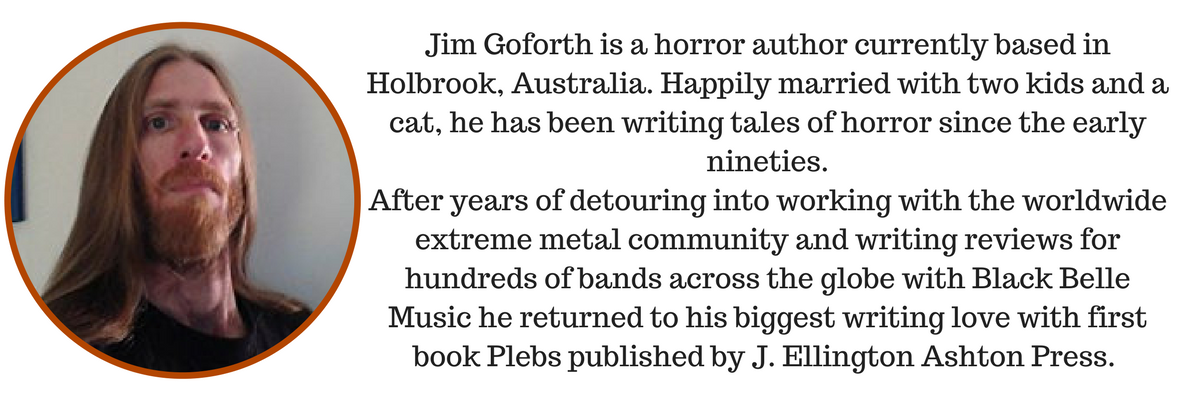
By Jim Goforth
Picture

After almost five decades of existence, nineteen studio albums, myriad line-up changes, hiatuses and reunions, the band that completely altered the face of music, inspired and influenced generations of others, and were instrumental in pioneering the heavy metal genre, finally called time on their celebrated career early in 2017.

Call them pioneers, call them forefathers, shit, call them the motherfucking godfathers of heavy metal, for that’s what they are, Black Sabbath raised the bar and set it ridiculously high with not just the likes of the classic Paranoid album but arguably all of their first five albums.

The spawning of the four-headed, heavy as fuck, dark, doomy entity calling itself Black Sabbath way back in 1968 spawned not just one of the most important bands in all of music history, but created a sound that pretty much any act playing any form of metal under the sun owes some debt to. They were groundbreakers, trailblazers, goddamn musical bulldozers, indelibly stamping their influence over generations, and unless you’ve been living under a rock, you know Black Sabbath. Don’t have to be a metal aficionado, shit, you don’t even have to like music at all, but you know Black Sabbath. The layperson on the street has some notion of who Black Sabbath are, and could potentially rattle off a handful of song titles for you, such is the great influence the band have had over music as a whole.

However, my purpose here isn’t just to wax lyrical about Sabbath and gibber on about what their existence achieved for music overall (pretty sure the first three paragraphs take care of that), but rather to focus solely on one album in particular. The one that turned out to be their swansong, 2013’s 13.

After inscribing themselves into metal history and legendary status with those aforementioned first five albums (Black Sabbath, Paranoid, Master of Reality, Vol. 4, Sabbath Bloody Sabbath) how do I feel about their final offering, some forty-odd years after those first couple of classics crawled up out of the earth in a massive bleak wall of crushing sound?

Short answer? Mixed feelings.

Long answer? Well, let’s venture into some explorations of that album.

I love Sabbath, fucking love ‘em. They were to me, like myriad other kids all over the globe, one of my main gateways into metal and helped me cultivate my lifelong infatuation with the genre (and its plethora of sub-genres). In my previous article revolving around Iron Maiden, I made mention of how I was raised in a musical household, so I won’t rehash that here, but I will make mention of the fact that Black Sabbath were a natural progression for me in my music appreciation education. Rock music was always my favourite as a young kid and it was the heavy guitars that most appealed to me, and love for The Kinks, The Animals, Zeppelin, and many others had me seeking out even heavier sounds.

Enter Black Sabbath.

Over the years, Sabbath never went out of favour, they were a frequent soundtrack to my life through all my school years and beyond. While countless other bands jostled for attention as well, and many managed to maintain it too, Sabbath albums remained high in rotation. Some band’s albums eventually wear out their welcome, and some you just never get sick of, and Sabbath have a firm handful which slot neatly into that latter category.

Unfortunately, they also do have a few that fit into that former bracket as well. And well, 13 is one of those.

Being a Sabbath fanatic, one might assume that I was looking forward to the release of 13 with great anticipation, given the classic line-up, sans Bill Ward, comprised the personnel, but the reality of it was, nah, not so much.

Sure, it was awesome to have a new Black Sabbath record emerge, but essentially, did we even need a new Black Sabbath album? Four decades down the track after irrefutably changing the landscape of music, was it necessary? Not really. Sabbath wrote themselves into the history books long ago, so any new music, no matter how good it might happen to be, isn’t really going to be a patch on the classics, and anybody who suggests otherwise would be having a big lend of themselves.

I didn’t rush out to buy 13, just like I didn’t rush out to buy any of their albums from the 80’s or 90’s, so I didn’t hear the album in its entirety for quite some time after its 2013 release. I heard lead single God is Dead? enough times to temper any real desire to delve into 13 in any great capacity, and while that particular track is a solid number, featuring some great riffs and Ozzy sounding in remarkable voice given the amount of fuckery he’s indulged in over the years, it isn’t going to hurl one back into the glory days of when Sabbath ruled the roost. It has all the requisite Sabbath elements in place (bar the drums of Bill Ward of course, replaced here by the somewhat odd choice of Rage Against The Machine sticksman Brad Wilk), but somehow it lacks the brooding darkness, and the malevolence of classic-era Sabbath. Of course, did any of us really expect it to sound anything like seminal Sabbath days? Well, yeah maybe a little, but certainly not a complete return to form. That incarnation of Sabbath is untouchable, for anybody, and that includes 2013’s manifestation of Sabbath.

The thing is, much of the material on 13 does really fucking sound like it’s been gleaned from the heydays, the pure Sabbath, the true Sabbath if you want to look at it that way. And that’s probably because, well, it has been gleaned from the heydays. Sabbath on 13 tread so close to their doomy original embodiment, that one couldn’t be blamed for thinking they’re hearing reworked riffs from classic numbers.

There’s heavy borrowing from N.I.B. in Loner, Sabbath, Bloody Sabbath lurks in the shadows of morose opener End of the Beginning, and elsewhere, Zeitgeist sounds like it wanted to be the inbred offspring of Solitude and Planet Caravan and came away with the most stunted aspects of both, but not so much of the great. There are a handful of riffs in other places that hark back to other tracks from the classic albums and so forth, maybe veering close to complete rehash territory, but then again, at this stage in the game, at this point in their career, what does it really matter? One sure as hell can’t be expecting them to reinvent the wheel, and there’s none of that going on here; there’s nothing that deviates from the primarily gloomy trudge.

Sabbath couldn’t ever be accused of being speed kings, after all, that ultra-malevolent dark brooding menace that Tommy Iommi brings to the table with his riffs makes them what they are, and that slow-march pace is pretty much the order of the day throughout 13, giving way only now and then for some marginally faster compositions to emerge.

By all accounts, producer Rick Rubin was seeking a sound akin to the classic albums, suggesting the band hark back to those days as if they were recording a follow-up album to those masterpieces, and yeah, there are plenty of moments where it does indeed work that way. I mentioned before about that deviating closely to riffery of yesteryear, but on their own merits, some of these tracks are quite solid numbers, and it’s probably a little too harsh to compare them to magic that is very difficult, if not impossible, to try and replicate.

While we’re on the subject of production, personally I feel 13’s production is far too clean, I suppose would be the right word, to suit a Black Sabbath album. I can probably count on one hand the amount of albums produced by Rubin that I genuinely have massive love for, and this one here isn’t about to add to that number. With Ozzy’s vocal’s too often at the forefront, and the guitars and drums left floundering in the background (or alternatively, vice versa), only Geezer Butler’s bass lines are given room to breathe without too much tinkering. The raw, sinister slog of sounds synonymous with Black Sabbath might be present in terms of some of the riffery, but the production far too frequently cruels any real attempt to evoke genuine menace or rawness.

Unlike those classic albums it is intended to mimic, the instrumentation is not allowed to coalesce together into a swampy quagmire of evil sound. It doesn’t sound organic, in fact, it sounds quite fucking sterile. A better production might have reaped better rewards-while it looks like Black Sabbath, sounds to an extent like classic Black Sabbath and has the ability to rock like Black Sabbath, the overall sensation is that it doesn’t exactly translate as a band, but more like four separate instruments.

These are, for the most part, fairly lengthy numbers too. Five of the eight tracks comprising the standard version of 13 span out longer than seven minutes with two of them, End of the Beginning and God is Dead? over eight minutes in duration. Clocking in a couple of seconds shy of nine minutes, the latter track would probably have benefitted from being cut in half completely.

Granted, Sabbath have taken us on some epic expeditions before with track length, but too often here, the songs wear out their welcome. Even the shortest track in residence here, the wandering acoustic guitar and bongo enhanced Zeitgeist carries on beyond four and a half minutes.

This particular song, as I made reference to earlier, is very much in the vein of Planet Caravan, and situated pretty much in the dead centre of the album, it serves as a space-travel intermission of sorts, a detour from the austere and riff-heavy doom stylings constituting the rest of the platter.

Following this, the bracket of songs that make up the second half of the album, are solid, if unremarkable, compositions. The fairly mid-paced Age of Reason and the more uptempo charge of Live Forever see the Sabbs taking it up a notch, albeit briefly. Ponderous power and crushing doom sensibilities return for the final two compositions, with Iommi getting to spread wings a little on the loose, raw, harmonica-tinged ‘Damaged Soul’, while things close off with the lyrically dark ‘Dear Father’, where an abusive priest finds himself hunted by a vengeful soul who was a target of his molestations.

Elsewhere, other lyrical explorations (with all lyric writing again handled by bassist Geezer Butler) tackle religious matters, death, black holes and astral wandering, and such cheerful fare. Nothing too extraordinary, nothing too astonishing, but a few interesting social commentaries and observations are in there, and they align with the bleak, ominous music quite nicely. For the most part, Butler’s lyrics are on par with the vast majority of his work over the years, though there are a couple of howlers amongst the more thought-provoking and intelligent lines. That’s been par for the course for the entirety of Black Sabbath’s career, so at least 13 maintains the consistency there.

All in all, you’d probably be drawing from this that I’m not a major fan of 13, and you’d be pretty close to the mark there. Is it a bad album? No, it isn’t. It just isn’t a great album. On the off-chance that you are one of those folks who just so happened to be living under the rocks I referred to earlier, and hadn’t ever heard jackshit by Black Sabbath before, and 13 was your very first experience with the band, well, hell, you couldn’t really be blamed for thinking it was a pretty good piece of work. Which, lyrically and musically (without measuring it against any of their previous output), it is.

In my case though, I grew up with those landmark Sabbath albums, so it’s inevitable comparisons get thrown, even if unintentionally. Sadly, this isn’t quite the swansong album an iconic outfit like Sabbath deserved, it’s more like Rick Rubin’s vision of Sabbath or even some Sabbath tribute band trying to recreate the inimitable sound of the first triumvirate or so records. A case of going out with a whimper instead of a bang.

I’ve no doubt the album has its fans out there, I’m sure it’s garnered an assortment of rave reviews somewhere, and by the same token I’ve a fair idea there are souls out there who take a dimmer view to it than I’ve done, or have far harsher things to say. Personally, I’m largely ambivalent about it, and ultimately, it was a record we didn’t even need.

Nonetheless, Black Sabbath still remain the godfathers of heavy metal, and nothing will ever alter that fact; one fairly vanilla album following a long illustrious career marked by some of the finest platters ever committed to record won’t put much of a dent in their legacy at all.
​
And if you just so happen to have a friend who doesn’t know the first thing about Black Sabbath, don’t be an asshole and recommend 13 to them as a starting point. A reasonable album it might be, but it is largely forgettable, and in no way is it truly representative of the massive power Black Sabbath were once capable of.

Picture
 
http://www.amazon.com/Jim-Goforth/e/B00HXO3FRG/ref=dp_byline_cont_ebooks_1
https://www.facebook.com/JimGoforthHorror
https://twitter.com/jim_goforth
https://www.goodreads.com/author/show/7777382.Jim_Goforth
https://jimgoforthhorrorauthor.wordpress.com/
https://plus.google.com/+JimGoforth/
  1. ​

“THE DEVIL YOU KNOW” – HEAVEN AND HELL

13/11/2017

​BY ANDREW FREUDENBERG
Picture
To my mind there have only really been two proper Black Sabbath vocalists. Ian Gillan and Glenn Hughes are two of hard rock’s finest veteran voices; Ray Gillen’s short stint touring with the band was highly impressive; many fans have a soft spot for Tony Martin.  Despite their competence, and in some cases legendary status, these are not the real deal.

It goes without saying that the band made their reputation in the 70’s, with John ‘Ozzy’ Osbourne up front. These were the albums that established them as something different, the albums that arguably crossed the line from proto-metal to actual heavy metal. When Osbourne left in a flurry of acrimony, after two arguably disappointing records, it could so easily have been the end of them. Then came Ronnie James Dio.

After establishing himself with a run of albums with Ritchie Blackmore and Rainbow, the American powerhouse wasn’t an obvious choice to replace the nutter from Brum. Clearly Iommi knew what he was doing though, and the new line up recorded two corking albums back to back. ‘Heaven and Hell’ and ‘Mob Rules’ were clearly a sea change in the Sabbath sound, but carried enough of the old DNA to remain true to the original vision. They gave new life to an old dog, and without them I truly believe that would quite possibly have been the last we heard from Black Sabbath.

Unfortunately animosity set in and Dio left to forge a career on his own terms. On the plus side anybody who saw his solo shows in the 80’s were treated to sets heavy with Rainbow and Sabbath tracks, as well as his formidable early solo records. I was lucky enough to catch both the ‘Holy Diver’ and ‘Sacred Heart’ tours, as well as his two shows at the UK Monsters of Rock festival.

Mind you, having missed the boat with Dio’s original stint with Sabbath, and having missed Ian Gillan’s dates with the band, I finally caught up with Black Sabbath in 1986. Ray Gillen was the singer for these shows and a treat to watch. Sadly he didn’t hang around either and Sabbath’s seemingly eternal state of instability continued.

Dio was back in 1992 for one album, before he fell out with Iommi and Butler again, returning to his solo career. There must still have been something there though, because in 2006 he was back for more. By this point Osbourne had reunited from time to time with his old band mates and it was decided by Iommi, and quite possibly Osbourne’s lawyers, that they would perform and record under the name ‘Heaven and Hell’. Released in 2008, ‘The Devil You Know’ was the last full album to be recorded by that line up.

This is an album that, predictably, is somewhat reminiscent of their previous work. It doesn’t, in my opinion, ever reach the quality of songs that were on either ‘Heaven and Hell’ or ‘The Mob Rules’. It’s still good, its not a lazy album, its just that 28 years and countless hundreds of songs later, the inspiration was clearly not flowing quite so freely.

‘Atom and Evil’ is a solid and stately opening to the album, slightly surprising with its dual tracked vocals on the chorus. ‘Fear’ is almost a spiritual successor to Rainbow’s classic ‘Gates of Babylon’; it starts well but unfortunately loses its shine in the second half.

The album’s single, ‘Bible Black’, has a gentle acoustic beginning which slowly builds to a solid grinding riff. It’s quite enjoyable. It’s followed by the more than decent ‘Double the Pain’ which uses a phased bass line to bring in a traditional Iommi chug. Again, the song has a surprisingly melodic chorus.

The unpromisingly titled ‘Rock’n Roll Angel’ is a disappointment. With a chorus as bad as you might predict, its an insipid lyric and vocal melody stuck over a half baked idea by Iommi. I’m not sure what they were attempting here but it didn’t work.

‘Turn of the Screw’ is much better, tighter and more interesting. It’s with ‘Eating the Cannibals’ though that my ears finally pricked up. We’re back in ‘Neon Knights’ or ‘Turn up the Night’ territory. Admittedly its not as good as either of those songs but its at least in the ball park, with an increased tempo and epic wailing lead guitar from Iommi.

‘Neverwhere’ and ‘Breaking into Heaven’ finish off the album in perfectly serviceable fashion, neither setting any new standards or totally letting the side down. As a farewell it could have been better, but no one knew that’s what it was at the time.

On the 11th of November 2007 I saw Heaven and Hell play in Brighton, England. It wasn’t a fantastic show, nor was it a terrible one. It was good to see them but the energy wasn’t there, although that could be blamed on the venue or simply a bad day.
​
Two and a half years later I was watching Heaven and Hell play the High Voltage Festival in London’s Victoria Park. Dio was dead, struck down too early by aggressive stomach cancer. This was a tribute show with Glenn Hughes and Jørn Landers taking the great man’s place. Tellingly they only played ‘Bible Black’ from ‘The Devil You Know’, leaning heavily instead on the material recorded more than quarter of a century earlier. Although obviously emotional, it was actually a great show, with Hughes and Landers doing a fantastic job of performing Dio’s material. Of course he would have sung it better, that’s a given, but it was a great send off for a great talent.

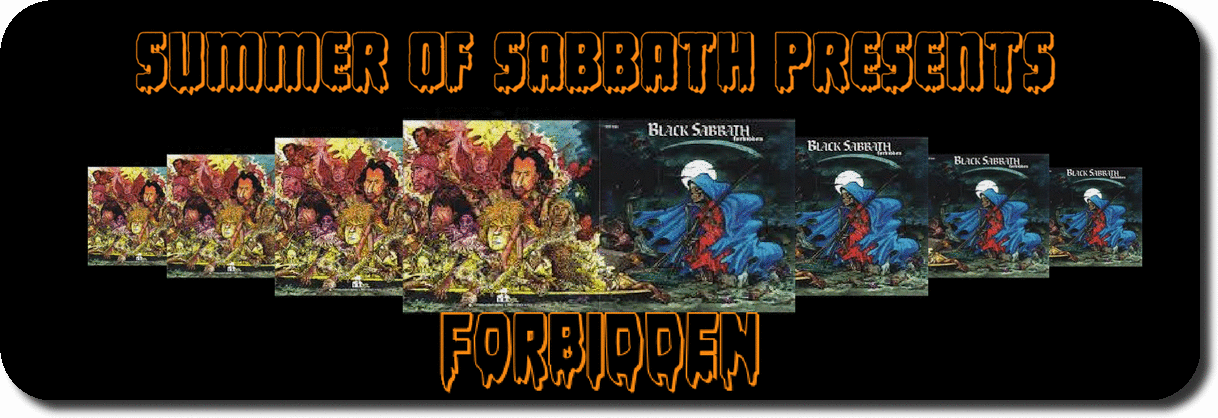
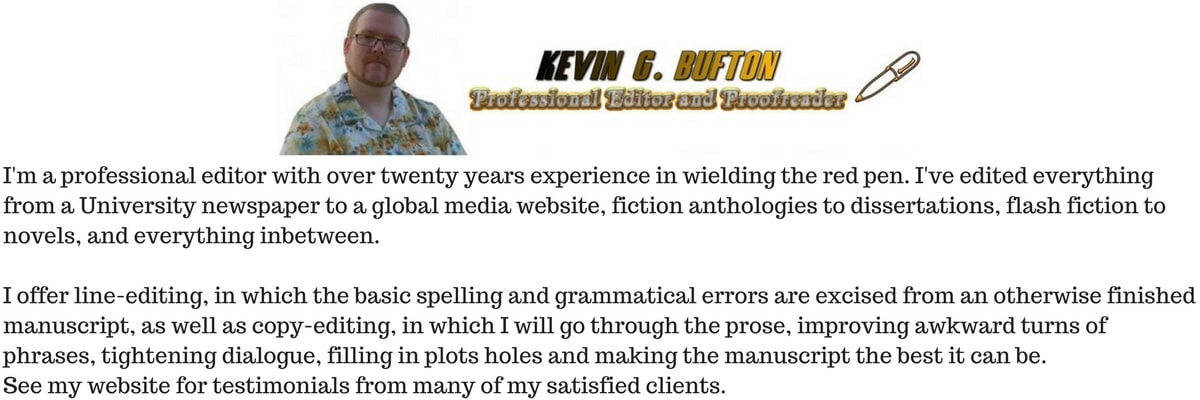
SUMMER OF SABBATH:  Kevin Bufton IS FORBIDDEN

8/11/2017
Picture
Okay, Sabbath fans, enough time has passed – over two decades, by my reckoning – and I think we can admit it now... we all thought this was the end.

Released in 1995, Forbidden was the last studio album from Black Sabbath for 18 years. If you flicked through your well-thumbed copy of The Great Rock Discography (one for the old school fans, there), this was the cut-off point.

It was not a good album to bow out on.

In many ways it is the most experimental album the band ever produced. In a post-grunge world, they try their best to sound contemporary, but they were never a group that thrived on reinvention. Line-ups might change, cultural tastes might evolve, but Sabbath have always sounded like... well... Sabbath.

Here we are treated, if that’s the word (SPOILER: it’s not) to bursts of Tony Martin doing what can only be described as rapping between the choruses of opening track ‘The Illusion of Power’. I say rapping is the only description, because ‘having a nervous breakdown’ is a bit harsh.

‘Get a Grip’ follows more familiar lines, sounding a lot like ‘Zero the Hero’ from the Born Again album, and featuring a blistering mini-solo from Iommi about halfway through.

‘Can’t Get Close Enough’ is a fine song, but like ‘The Illusion of Power’ it doesn’t sound like Sabbath.
This is the problem with the album as a whole. None of the songs are terrible – the band are too seasoned for that – but they suffer from a case of mistaken identity. They all contain traces of that classic Sabbath sound, be it a strident burst of vocals from Martin, a killer riff from Iommi, or a thunderous drum blast from Powell, but somewhere along the way they try to sound like something they’re not.

On one track they sound like Biohazard, on another we hear hints of Alice in Chains. We might get a snatch of Aerosmith-tinged blues rock here, a Maiden-inspired middle-eighth there. Fine bands all, but it leads to a very schizophrenic experience for the dedicated listener. Hell, during ‘Rusty Angels’ you could be forgiven for thinking you’d bought a Bon Jovi album.

Shudder.

Truly, it’s only on ‘Guilty As Hell’ and ‘Kiss of Death’ that they sound like the Sabbath of old. Both tracks are worthy successors to their forebears, neither are justification for sitting through the rest of the album.

So what lead to this sorry state of affairs?

It seems the blame can be laid at the feet of two men: Ernie C and Ozzy Osbourne.

Ernie C, erstwhile of rap-metal monsters Body Count, was the producer for the album, and his contract stated that he had complete control over recording, producing and mixing the album. Black Sabbath were a band infamously protective of their production, as we’ve already discussed during this Summer of Sabbath, so one can only assume that some record company pressure was judiciously applied for them to agree to such a state of affairs.

Doubtless the attempt at sounding contemporary was Ernie’s idea. Certainly it was the result of his work behind the mixing desk. Perhaps he thought he could achieve with Sabbath what Run-D.M.C. had achieved with Aerosmith a decade previous. Or maybe he just wanted to put his own stamp on a band he must have idolised given his performances in Body Count. Who knows?

Not that it would have mattered in the long run. Both Iommi and Martin have stated in interviews that Forbidden was a filler album, knocked out to fulfil contractual obligations for the singer (although Martin wasn’t aware of that at the time).

Yes, if Forbidden sounds like a rushed job, it’s because that’s exactly what it was. Iommi and Ozzy had already been in talks about getting the band back together and plans for a reunion tour were being hatched. For that to happen, they needed a Martin-free zone, and Forbidden was the unfortunate result.

The album was a disaster, both critically and commercially. It was the lowest-peaking album in Sabbath’s history, hitting a lamentable number 71 in the UK charts and not even making it onto the charts Stateside. No tracks were pulled as singles (indeed, one would be hard-pressed to think of a track that would be suitable) and the band that had once been so mighty limped away into the darkness.

Until Ozzy came back... but that’s another story.
Picture

Steven Shrewsbury IS AT CROSS PURPOSES

2/11/2017
Picture
Whenever I think of ‘Cross Purposes’, I recall the drum kick off, immediate bass thud and Iommi riff that open the record with I WITNESS. Another from the Tony Martin era of Sabbath, returning after Ronnie Dio’s one off with DEHUMANIZER, CROSS PURPOSES also has Geezer Butler, hanging around to give the work flavor. Vinny Appice left with Ronnie and was replaced by former Rainbow drummer Bobby Rondinelli, who I think did a fair enough job on the skins.
 
Oddly enough, CP isn’t my fave of the Tony Martin era, (that would be HEADLESS CROSS), but it has its moments. I WITNESS is a good track, fast paced and shifting. CROSS OF THORNS is a tad synthetic, a weak stab at the darker side. Yes, the doom looms, but the tone is a bit more smooth than other works.

My personal favorite track is PSYCHOPHOBIA. The rainfall of words and verses, breaks and stomping riffs, are right up there. Is the line “It’s time to kiss the rainbow GOODBYE” a swipe at Dio? We will never know, but one usually has to eat such words in time. If one ever wants to see this song put to disturbing use, go on you tube and see a fan made vid…edited in with the planes crashing into the twin towers at all angles…over and over. I recall my buddies & I rocking to this tune when we went to see Ace Frehley in a tiny club. We all got drunk and pondered how great it would be if Sabbath and KISS reunited with their orginal line ups…but THAT sure would NEVER happen…

I always thought the next track VIRTUAL DEATH was a track that they were saving for Ozzy. Geezer drops a bass intro and the plodding way with the tune would fit. It’s an “okay” song, as are most on here. IMMACULATE DECEPTION changes stride a lot but isn’t as cool as the title suggests. DYING FOR LOVE is the power ballad of it all and typical of metal in early 90s. Again, it’s all right, but nada to write home about. BACK TO EDEN and HAND THAT ROCKS THE CRADLE have good riffs, (hey it IS Tony after all), yet seem to struggle to rise to any level of kick ass. Not bad tracks, just sort of throw aways, typical of many bands at the time…which is sad. CARDINAL SIN as well, and EVIL EYE, while holding a solo by Eddie Van Halen, really misses the mark in my opinion.

I really had higher hopes from such a line-up. It was bad fortunes for Sabbath in the 90s at times. Geezer would depart before the next record. Many thought Sabbath in a holding pattern as a rumored reunion with the original line ups flared. Martin is a great singer, despite the “Dio Lite” labels and Leif Masses production was fine, if muddy in spots.
​
So, a truly hit & miss affair, CP is worth a listen or two, and ok for hardcore fans. 
    Picture

    Archives

    January 2019
    December 2018
    November 2018
    October 2018
    September 2018
    August 2018
    July 2018
    June 2018
    November 2017
    October 2017
    September 2017
    August 2017
    July 2017
    October 2016
    September 2016
    August 2016
    July 2016
    June 2016

    RSS Feed

    RSS Feed

https://l.facebook.com/l.php?u=https%3A%2F%2Fmybook.to%2Fdarkandlonelywater%3Ffbclid%3DIwAR1f9y1sr9kcIJyMhYqcFxqB6Cli4rZgfK51zja2Jaj6t62LFlKq-KzWKM8&h=AT0xU_MRoj0eOPAHuX5qasqYqb7vOj4TCfqarfJ7LCaFMS2AhU5E4FVfbtBAIg_dd5L96daFa00eim8KbVHfZe9KXoh-Y7wUeoWNYAEyzzSQ7gY32KxxcOkQdfU2xtPirmNbE33ocPAvPSJJcKcTrQ7j-hg
Picture