
BY BRACKEN MACLEOD “I don’t like spiders, I don’t like witches, and I don’t like you!” |


 | My principal influences are "Golden Age" and "New Wave" SF, Lovecraft Mythos, noir, and gonzo journalism. I've been published in a number of genre periodicals and write a tri-weekly column about the Chicago Cubs. My work is mostly speculative fiction shot through with veins of cosmic horror, a touch of satire, and a generous helping of scientific extrapolation. I was born in northern Maine, moved to the Chicago area as a youngster, and currently reside in the desert Southwest with my cats and guitars, books, and computers. Hope you enjoy the work. Thanks for reading! |

BOOK REVIEW: BLOOD CRUISE BY MATS STRANDBERG
SHE KILLS (2016): DIRECTED BY RON BONK
BY JOHN BODEN
"Hello, Hooray. Let the lights grow dim, I've been ready..."
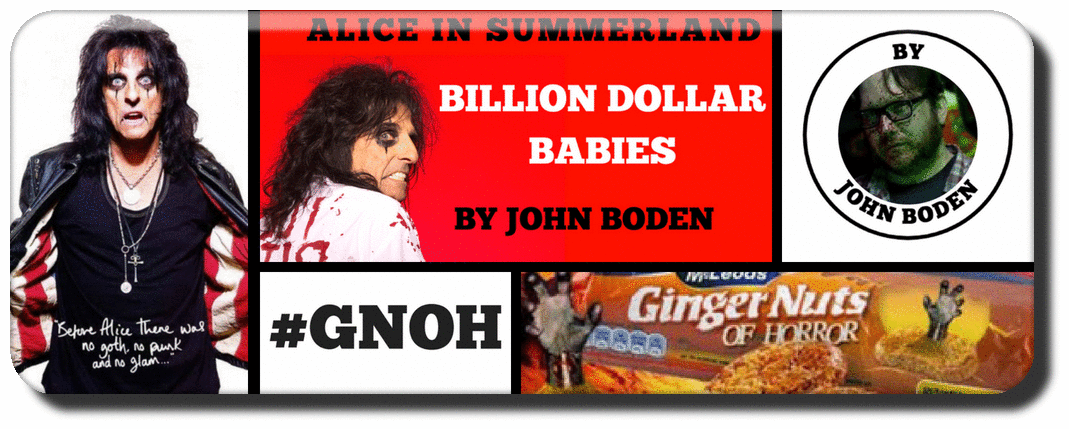
It's somewhere around 1979, I'm upstairs in the large open room that serves as my bedroom when I'm at my Dad's house for our weekend visitation. I share this room with my little brother, Roscoe. It's filled with normal childish things, toys and posters of superheroes and dressers and clothes, but there is a doorway there. A special doorway that one has to recognize before it opens. To the untrained it looks like a piles (or two) of record albums on a big dresser. To me, every album was a key. I often didn't even hear a note of what it held within its groove to be carried of to another place. I crafted stories around the cover art and song titles. Billion Dollar Babies was a long favorite of mine. Lime green scales and a gold stamp depicting a baby with scary eyes. It opened up like a wallet and had a poster of freaky looking duds with wild hair and make-up. It had song titles like "Raped And Freezin'" and "I Love The Dead." I wasn't yet ten years old but I could see the writing on the wall...
The sixth offering from the Alice Cooper Band (although they went simply by Alice Cooper any fan will tell you that the original Alice Cooper Band was a true destructive force in rock and roll-an unholy amalgamation of Stonesy swagger-channeling progressive rock and garage-dimmed din and demanding you to clap your hands and notice) Billion Dollar Babies lands on an unsuspecting world.
The first song is the fitting "Hello Hooray" a simply smirking invitation to the event about to unfold in 10 shocking stabs of mayhem. Alice sings his heart out and extends his hand for you to take and step inside. Do it.
Next up is the controversially titled "Raped And Freezin'" wherein a young man is picked up by a strange woman and after some , um, romantic mingling, left naked and alone in the desert night. After this we get one of his hits, "Elected" a tongue-in-cheek sneer at the then (and still fits as much today) political climate. The fourth track, the titular "Billion Dollar Babies" is the Alice we've been waiting for. A dank and macabre lullaby duet featuring guest vocals by Donovan. Yes, he of the "Sunshine Superman" and "Mellow Yellow" singing about a unique relationship with a doll.
"Unfinished Sweet" is probably my very favorite song on this album. From the fuzzed out skronk of the opening chord to the incredibly bizarre James Bond-style theme of the interlude, this song about a bad trip to the dentist is something only Alice Cooper could deliver this effectively and brilliantly.
Next up is another of Alice's hit songs, "No More Mr. Nice Guy" a true anthem for the misunderstood and persecuted and maybe a little for the paranoid. That opening squalling guitar and then the driving raw beat. This one gets the motor running, Boy. Rock and roll-- pure and simple.
The sixth offering from the Alice Cooper Band (although they went simply by Alice Cooper any fan will tell you that the original Alice Cooper Band was a true destructive force in rock and roll-an unholy amalgamation of Stonesy swagger-channeling progressive rock and garage-dimmed din and demanding you to clap your hands and notice) Billion Dollar Babies lands on an unsuspecting world.
The first song is the fitting "Hello Hooray" a simply smirking invitation to the event about to unfold in 10 shocking stabs of mayhem. Alice sings his heart out and extends his hand for you to take and step inside. Do it.
Next up is the controversially titled "Raped And Freezin'" wherein a young man is picked up by a strange woman and after some , um, romantic mingling, left naked and alone in the desert night. After this we get one of his hits, "Elected" a tongue-in-cheek sneer at the then (and still fits as much today) political climate. The fourth track, the titular "Billion Dollar Babies" is the Alice we've been waiting for. A dank and macabre lullaby duet featuring guest vocals by Donovan. Yes, he of the "Sunshine Superman" and "Mellow Yellow" singing about a unique relationship with a doll.
"Unfinished Sweet" is probably my very favorite song on this album. From the fuzzed out skronk of the opening chord to the incredibly bizarre James Bond-style theme of the interlude, this song about a bad trip to the dentist is something only Alice Cooper could deliver this effectively and brilliantly.
Next up is another of Alice's hit songs, "No More Mr. Nice Guy" a true anthem for the misunderstood and persecuted and maybe a little for the paranoid. That opening squalling guitar and then the driving raw beat. This one gets the motor running, Boy. Rock and roll-- pure and simple.
"Molotov milk bottles heaved from pink high chairs..."
"Generation Landslide" is a strange little ditty, part prose beat poetry almost over a sinister boogie complete with a harmonica breakdown. The lyrics to this are absolutely brilliant and terrifying in their ability to hit the target dead center.
"Sick Things" slowly burns from the black, a dark entity stepping stealthily from the shadows. From the first straining croon of Alice's vocal we know these are dark dealings. By the time the eerie chorus comes in , with the odd whisper harmony of the chorus, we're truly aware that we are one of his very sick things. Proudly so.
This is followed by the misdirection of "Mary Ann" a weird piano song that relies on a last word punch line to change the entirety of the song. The album closes with a song that has landed them on many a banned music list. Gotten them singled out by Parent's groups and their albums fuel for many a fire--"I Love The Dead." Sure, it's a grave deep and crypt dark love letter to necrophilia but it's so ridiculously somber in a tongue-in-cheek way I feel there was never much of a threat of there being an epidemic of spade-wielding teens with boners rampaging through the cemeteries.
This album, perfect in every way, would be one of the last by the original Cooper band. Their following disc "Muscle Of Love" would sadly have that distinction. The Alice Cooper Band= Dennis Dunaway, Michael Bruce, Glen Buxton, Neal Smith, and some fellow named Alice, were a band like no other and to this day I don't feel they've ever been paralleled. They truly embraced all of the contemporary rock styles, chewed them up and regurgitated them onto the sticky gutters they travelled. What they gave back was the gross mutation of what they took in. They took in bits of the psychedelic rock and prog rock and hard rock and they took those sounds and twisted their necks until they stopped twitching. They took the still-warm corpses and tried them on, stretched them in new ways and paraded around for us to like and man, did we like. It's forty-five years later and I still like. I like it a lot.
"Sick Things" slowly burns from the black, a dark entity stepping stealthily from the shadows. From the first straining croon of Alice's vocal we know these are dark dealings. By the time the eerie chorus comes in , with the odd whisper harmony of the chorus, we're truly aware that we are one of his very sick things. Proudly so.
This is followed by the misdirection of "Mary Ann" a weird piano song that relies on a last word punch line to change the entirety of the song. The album closes with a song that has landed them on many a banned music list. Gotten them singled out by Parent's groups and their albums fuel for many a fire--"I Love The Dead." Sure, it's a grave deep and crypt dark love letter to necrophilia but it's so ridiculously somber in a tongue-in-cheek way I feel there was never much of a threat of there being an epidemic of spade-wielding teens with boners rampaging through the cemeteries.
This album, perfect in every way, would be one of the last by the original Cooper band. Their following disc "Muscle Of Love" would sadly have that distinction. The Alice Cooper Band= Dennis Dunaway, Michael Bruce, Glen Buxton, Neal Smith, and some fellow named Alice, were a band like no other and to this day I don't feel they've ever been paralleled. They truly embraced all of the contemporary rock styles, chewed them up and regurgitated them onto the sticky gutters they travelled. What they gave back was the gross mutation of what they took in. They took in bits of the psychedelic rock and prog rock and hard rock and they took those sounds and twisted their necks until they stopped twitching. They took the still-warm corpses and tried them on, stretched them in new ways and paraded around for us to like and man, did we like. It's forty-five years later and I still like. I like it a lot.
CHECK OUT THE PREVIOUS ADVENTURES OF ALICE IN SUMMERLAND BELOW

BOOK NEWS: PRACTITIONERS BY MATT HAYWARD AND PATRICK LACEY IS NOW AVAILABLE
BY MATT WEBER
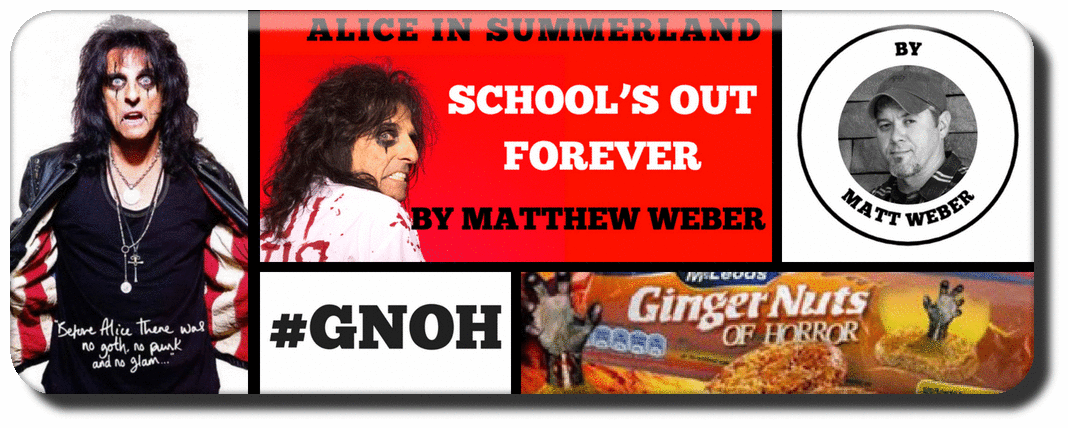
You know a song has reached near anthemic status when you can identify it by the third note that blasts out your radio. That’s what the title track of Alice Cooper’s School’s Out album brought to the world in 1972, like a call to action for every rebellious kid in America. The song is a bold invitation to break the rules, defy norms, and tell the establishment to stick it in their ear. It does this all at the behest of a shout-along chorus that’s got enough attitude to shake a teenager and is just catchy enough to corrupt their younger siblings. From the thundering drums to its rascally nursery rhyme, “School’s Out” has long been been one of my favorite Alice Cooper tunes—as much for its hard-rocking composition as for its winking nod to the anti-authoritarian streak in everybody. While I could write at length on my tendency to crank this tune to the limits of my speakers and leap around the house, throwing karate kicks and air punches, there are eight more tracks on this little opus, so I’ll give them some love too.
But before I touch on the album’s other songs, every listener should take a breather, sit back in the afterglow of “School’s Out,” and open your mind to a different experience than what you might expect in the wake of such a roof-shaking opener. Any true Alice Cooper fan knows the front man is both musician and actor, an all-around showman, and the band stresses their love for theatricality on this album through a variety of moods and musical styles, even giving the ol’ show tune a stab.
The record shifts gears from all the jumping and jamming with a more subdued track two. “Luney Tune” is a bass-heavy number that slinks and slithers along to a rolling drum beat, with Alice snarling a response to the melody before it builds into a gripping mid-song climax that grooves along until the end. I’ve read a couple of reviews that cited this as the best song on the album, but it’s no “School’s Out.”
“Gutter Cat vs. the Jets” is an ambitious effort that begins with a rumbling bass-line and a snotty Alice in full vocal swagger. The first half rocks with lines too irresistible not to sing—“House cat, you really got it made!” But be prepared for the stage play-esque breakdown halfway through, where the band throws you a loop with a high-pitched organ providing the crescendo for a midnight alley fight with rival gang The Jets, straight off a production of West Side Story.
The next cut “Street Fight” is cool the first time around but skippable on repeat listens since it’s basically a minute-long bass run with some city-squalor special effects. It doesn’t have enough scope, distortion or bloodshed for my taste. And there aren’t any lyrics.
“Blue Turk,” on the other hand, is a personal favorite. It’s a jazzy, sultry, smoldering number that showcases the singer in fine form, strutting his stuff at his top hat-wearing, cane-twirling best. Not so much a rocker as it is a sly stalker, “Blue Turk” is bass-centric and brassy, with an airy guitar that peeks around the corner rather than taking center stage. The song is a dark stranger that meets a lady on the street, seduces her with his wily charms, takes her out dancing, then leaves her dead the next morning. That’s what happens when “earthworms rule your brain.”
With its operatic piano intro, the next track, “My Stars,” careens in an entirely different direction. The piano motif frames the song and elevates this stomping rock tune with more emotional heft. It’s an odd marriage, pretty and gritty, but it works.
A title like “Public Animal #9” better come with some dirt and stank on it, and this seventh track doesn’t disappoint, kicking the album firmly back into barroom rock territory. It’s a timely change of pace with a brain-branding chorus, nasty guitar hooks, a pounding beat, and infectious backing vocals that make you wanna holler, “Hey, hey, hey!...”
The last vocal track on the album is “Alma Mater,” and I can picture drummer Neal Smith composing this song with a mile-wide grin, knowing it’s a perfectly wry fit for the band’s schtick. The song lures you into a false sense of security, beginning as a heartfelt ode to days gone by. Alice croons about how he misses his old high school, a sentiment he delivers with all the sincerity of the class clown saying “nice hat” to the nerd wearing a beanie. The band piles on the schmaltz thicker and thicker until they seemingly can’t contain themselves, reminiscing about the time they dropped a snake down schoolmate Betsy’s dress. Then the drums explode, and the music throttles up and fuzzes out as Alice channels Paul McCartney at his most earnest and soulful. It’s a tune you’ll play over and over. I know that I do.
Sticking with the theatrical theme, the final number on the album is strictly instrumental. But in its own right, “Grande Finale” is a pulsing, energetic tune with soaring horns and keyboards, something you’d expect to score an action/drama TV show of the era (think Mannix or Hawaii Five-O). You’ll picture yourself in hot pursuit of criminal perps, swerving down the highway in a high-speed chase, cuffing bad guys and winking at the camera.
To sum it up, this album is just a hell of a lot of fun. The only thing that might make it cooler would be to sell it with a pair of panties.
Wait! Back in the ‘70s, this album was first released with the vinyl record wrapped in paper panties! Hallelujah! As brilliant as it was tasteful, this ingenious marketing gimmick later had to be discontinued because the panties were found to be flammable.
But the legend remains.
Remember the Coop!
But before I touch on the album’s other songs, every listener should take a breather, sit back in the afterglow of “School’s Out,” and open your mind to a different experience than what you might expect in the wake of such a roof-shaking opener. Any true Alice Cooper fan knows the front man is both musician and actor, an all-around showman, and the band stresses their love for theatricality on this album through a variety of moods and musical styles, even giving the ol’ show tune a stab.
The record shifts gears from all the jumping and jamming with a more subdued track two. “Luney Tune” is a bass-heavy number that slinks and slithers along to a rolling drum beat, with Alice snarling a response to the melody before it builds into a gripping mid-song climax that grooves along until the end. I’ve read a couple of reviews that cited this as the best song on the album, but it’s no “School’s Out.”
“Gutter Cat vs. the Jets” is an ambitious effort that begins with a rumbling bass-line and a snotty Alice in full vocal swagger. The first half rocks with lines too irresistible not to sing—“House cat, you really got it made!” But be prepared for the stage play-esque breakdown halfway through, where the band throws you a loop with a high-pitched organ providing the crescendo for a midnight alley fight with rival gang The Jets, straight off a production of West Side Story.
The next cut “Street Fight” is cool the first time around but skippable on repeat listens since it’s basically a minute-long bass run with some city-squalor special effects. It doesn’t have enough scope, distortion or bloodshed for my taste. And there aren’t any lyrics.
“Blue Turk,” on the other hand, is a personal favorite. It’s a jazzy, sultry, smoldering number that showcases the singer in fine form, strutting his stuff at his top hat-wearing, cane-twirling best. Not so much a rocker as it is a sly stalker, “Blue Turk” is bass-centric and brassy, with an airy guitar that peeks around the corner rather than taking center stage. The song is a dark stranger that meets a lady on the street, seduces her with his wily charms, takes her out dancing, then leaves her dead the next morning. That’s what happens when “earthworms rule your brain.”
With its operatic piano intro, the next track, “My Stars,” careens in an entirely different direction. The piano motif frames the song and elevates this stomping rock tune with more emotional heft. It’s an odd marriage, pretty and gritty, but it works.
A title like “Public Animal #9” better come with some dirt and stank on it, and this seventh track doesn’t disappoint, kicking the album firmly back into barroom rock territory. It’s a timely change of pace with a brain-branding chorus, nasty guitar hooks, a pounding beat, and infectious backing vocals that make you wanna holler, “Hey, hey, hey!...”
The last vocal track on the album is “Alma Mater,” and I can picture drummer Neal Smith composing this song with a mile-wide grin, knowing it’s a perfectly wry fit for the band’s schtick. The song lures you into a false sense of security, beginning as a heartfelt ode to days gone by. Alice croons about how he misses his old high school, a sentiment he delivers with all the sincerity of the class clown saying “nice hat” to the nerd wearing a beanie. The band piles on the schmaltz thicker and thicker until they seemingly can’t contain themselves, reminiscing about the time they dropped a snake down schoolmate Betsy’s dress. Then the drums explode, and the music throttles up and fuzzes out as Alice channels Paul McCartney at his most earnest and soulful. It’s a tune you’ll play over and over. I know that I do.
Sticking with the theatrical theme, the final number on the album is strictly instrumental. But in its own right, “Grande Finale” is a pulsing, energetic tune with soaring horns and keyboards, something you’d expect to score an action/drama TV show of the era (think Mannix or Hawaii Five-O). You’ll picture yourself in hot pursuit of criminal perps, swerving down the highway in a high-speed chase, cuffing bad guys and winking at the camera.
To sum it up, this album is just a hell of a lot of fun. The only thing that might make it cooler would be to sell it with a pair of panties.
Wait! Back in the ‘70s, this album was first released with the vinyl record wrapped in paper panties! Hallelujah! As brilliant as it was tasteful, this ingenious marketing gimmick later had to be discontinued because the panties were found to be flammable.
But the legend remains.
Remember the Coop!
 | Matthew Weber is author of the books TEETH MARKS, A DARK & WINDING ROAD, SEVEN FEET UNDER and THE BULL, and he is editor of the DOUBLE BARREL HORROR anthology series. He also wrote and illustrated the children's book, I WANT TO BE A MONSTER WHEN I GROW UP. He has served as editor-in-chief of EXTREME HOW-TO magazine since 2003 and is also author of the non-fiction book, THE QUICK & EASY HOME DIY MANUAL (Weldon Owen Publishing). He lives just north of Birmingham, Alabama, with his wife, two sons and a daughter. When he isn't chasing kids, writing or remodeling, he plays bass guitar for the punk band SKEPTIC? Find him online at www.pintbottlepress.com. |
CHECK OUT THE PREVIOUS ADVENTURES OF ALICE IN SUMMERLAND BELOW

BOOK REVIEW: QUILT BY DAN PADAVONA

 RSS Feed

|

|