

 Out of the Darkness collects together brand new stories by Jenn Ashworth, Alison Moore, Nicholas Royle, Laura Mauro, Aliya Whiteley, Tim Major, Simon Bestwick, Eugen Bacon, Gary Budden and many more. They all deal with mental health in some way, and many are written by people who have first-hand experience of the challenges mental illness can present. They tackle the topics of anxiety, depression, obsessive–compulsive disorder and other issues, as well as the pressures mental illness can place on family members and friends – sometimes obliquely, sometimes head-on. At times that can make for challenging reading, but the authors have all actively engaged with the central philosophy of this book: that with support and open discussion, those who are suffering from mental health problems can move out of the darkness and into the light. In addition, all the authors are donating their fees and royalties to Together for Mental Wellbeing. Today is the final article in this series, where some of the authors discuss their stories, links to the other articles in this seres can be found at the end. Laura Mauro on ‘Lonely Souls in Quiet Houses’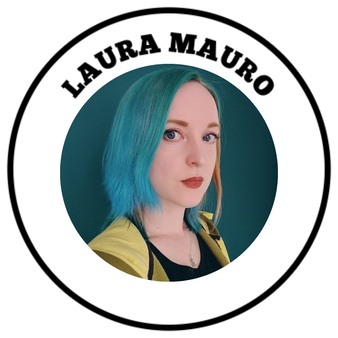 I am honoured to have my story ‘Lonely Souls in Quiet Houses’ included in this superb anthology. Mental health is a subject dear to my heart. Those who know me well will already know that I have struggled with anxiety since I was a child; in recent years OCD and C-PTSD have insinuated themselves into the frothy pot of soup that is my brain. I am therefore well acquainted with the peculiarly lonely kind of horror that comes with having a brain that would quite like to kill you. ‘Lonely Souls’ is about a few things. It was inspired by the zashiki-warashi of Japanese folklore. These mischievous ghosts are believed to be the souls of small children; zashiki-warashi translates as ‘guest-room child’. These little ghosts leave sooty footprints and play pranks on those resident in its home; in some parts of Japan the zashiki-warashi is seen as good fortune, and those who live alongside one will often leave offerings of sweets or toys to appease them. I chose to write about this ghost principally because of their purported origin. In lean times during Japan’s tumultuous history, poorer families who found themselves with too many mouths to feed may have resorted to infanticide; the zashiki-warashi may be the ghosts of these children, who were typically buried beneath the floor of the house. Perhaps this is why the custom is to honour them; it is a form of apology for the injustice visited upon them in life. The second theme of ‘Lonely Souls’ is OCD. I had been suffering from OCD for years before I received a diagnosis. I hadn’t realised it was OCD; the popularised form of the disorder revolves around obsessive counting, or detailed rituals: closing the door three times, checking the oven, a terrible fear of blue things. Mine wasn’t like that. I have what is known as ‘magical thinking’ OCD. Essentially, this is the irrational fear that an innocuous activity or thought will magically cause something bad to happen. Often, the ‘something bad’ is vague and nebulous; a terror you can’t define or predict, but you know is there. The frustrating thing about OCD is that you know how ridiculous these obsessions are. How can changing your earrings lead to the death of a loved one? How can walking on three drains in a row cause Something Bad to happen? And yet you are beholden to them all the same. You can’t risk the possibility that your worst fears might actually come true. Your entire life becomes a series of intricate rituals, avoidant behaviours and constant, low-grade panic. It sucks. You can’t ever really get rid of OCD, but you can learn to control it. You can learn to ignore the little voice in the back of your head warning of impending disaster, though it never really shuts up. That’s what ‘Lonely Souls’ is mostly about; learning to reconcile your fears with the knowledge that brains can and often do tell lies. You can’t control OCD any more than you can control the playful ghosts of long-lost children, but you can learn to live with them. Perhaps that is all any of us can do, and perhaps that is enough. Ashley Stokes on ‘Replacement Bus Service’ The most depressing phrase in the English language My story in Out of Darkness began with an intention to write about real-life and inconsequentially exasperating experiences. When Dan Coxon asked me to contribute to the anthology, these experiences were filtered through the creative agenda of Out of Darkness to become another type of story entirely. In early 2019, I had taken two train journeys north from Norwich where I live, one to Nottingham and one to Leeds, that were both marred by delays, engineering works, black weather, signalling issues that slowed the train to a crawl so a three-hour journey took eight, nine, ten, a million years, lads who oinked like pigs in a carriage full of ratty and exhausted people, and of course, each trip involved at least some time on the replacement bus service (or Limbo’s Spittoon, as I like to think of it). It was while sitting on one of these buses, staring out at the dark fields of Lincolnshire and Norfolk, that I came up with the idea of ‘Replacement Bus Service’. Chekov said, ‘if you show me an ashtray, I will write The Ashtray’. It might sound like a rubbish idea, but if you show me a replacement bus service, I am going to write ‘Replacement Bus Service’. It would be a story about a journey by RBS (let’s abbreviate the most depressing phrase in the English language to RBS from now on) so stressful that it causes reality to collapse. Initially, I’d wanted this to be an impressionistic shoal of incrementally strange story glimpses that would glide through the reader like snatches of landscape seen from the rain-splattered window of an RBS. When Dan asked me to contribute to an anthology of weird horror stories with a mental health theme, I realised that the story of a journey by RBS so stressful it causes reality to break down could happen to a character and be used to explore what it is like to live in an altered state. Red Triangle As with any story I write, once I’d settled upon it and the I’ve-started-so-I’ll-finish wilfulness kicks in, the story becomes like a magnet that attracts all sorts of iron filings. Several other ideas further complicated the story. Eventually emerged the story of a young woman, Georgia, who in the middle of the night receives a distress call from a friend, Inge, who has got herself into some sort of trouble in the dismal resort town where the pair used to work as barkeeps at a seafront casino. Georgia suspects Inge suffers from delusions and dutifully tries to rush across country to save her. At the railway station, Georgia discovers there are no trains and she’ll have to get an RBS. From the RBS, she keeps seeing – in signage, in logos and branding – a red triangle that reminds her of the symbol for Arpeggio, a secret organisation from another dimension that Inge believes conspires against her. As the journey becomes fraught with more delays, interventions, detours … CUT: we don’t want to give more than the gist away. Stuck. Snarled. Jammed. I wrote Replacement Bus Service during the summer of 2019. I remember in particular cycling through Norwich in the early morning heat obsessed with one moment in story where ‘Swing the Mood’ by Jive Bunny plays on the coach’s radio and seems to trigger something in Georgia. Looking back, I really wasn’t very well at the time and it was only holding complicated fictional structures in my head that staved off a profound crisis for me. Writing stories was all I had left. Everything else was falling away. Nothing validated me. Nothing paid. I was ashamed of everything about me. I had no relationship with my body. The past was alive; the future was dead. I was heading towards fifty, kept awake at night composing the wrong sort of story-ending in my head. I had no one I felt I could talk to about this. I was so alone. I was on the wrong bus and the bus was running out of road. The Room No One Has Ever Seen The casino in ‘Replacement Bus Service’ contains a place called The Room No One Has Ever Seen. No one has seen it, obviously, and it strikes me that generally this place, the room inside you that no one has ever seen, is that part of you that you can’t describe, that you can’t let another into, the place from which you can’t escape, where you will always be alone with that which haunts, torments or possesses you. It needs your company. It wants to keep you there. The plots of most of my stories, whether horror stories or not, have always been ‘the trap closes’. The trap might be set by an individual’s hubris and pretentiousness (‘A Short Story about a Short Film’) or it could be a neighbour possessed by a demon in a hedge (‘Evergreen’). Left to my own devices, and given what I was trying to express in the summer of 2019 – what happens when there is nothing left of you but that which no one ever sees – would have closed the trap tight shut in the story. Dan’s agenda for Out of Darkness made me realise that horror is so much more than shock and predicament. Survival, coming-through, escaping the demon, the creature, the void, the trap, that’s also the purge of it, catharsis, the thrilling uplift that comes after the chilling realisation has worn off. Writing the story and discovering that concept of purge and survive opened up a lot of new roadside for me as writer and person. Georgia survives. I survived, too. For that I am grateful. out of darkness edited by dan coxon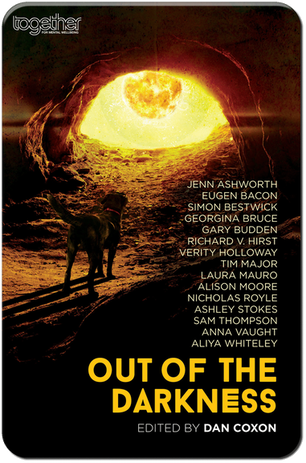 Out of the Darkness challenges some of the most exciting voices in horror and dark fantasy to bring their worst fears out into the light. From the black dog of depression to acute anxiety and schizophrenia, these stories prove what fans of horror fiction have long known – that we must understand our demons to overcome them. In the wake of the Covid-19 pandemic, what began as a mental health crisis has rapidly become an unprecedented tsunami. The Centre for Mental Health has estimated that 10 million people will need mental health support in the UK as a direct consequence of Covid-19, with a staggering 1.5 million of those being under eighteen. Edited by Dan Coxon (This Dreaming Isle) and featuring exclusive stories by Alison Moore, Jenn Ashworth, Tim Major and Aliya Whiteley, this collection harnesses the power of fiction to explore and explain the darkest moments in our lives. Horror isn’t just about the chills – it’s also about the healing that comes after. Back the kickstarter by here https://www.kickstarter.com/projects/unsungstories/out-of-the-darkness-an-anthology-of-horror-and-dark-fantasy RELATED ARTICLES |


Archives
April 2023

|


 RSS Feed

|

|