

 Short Film Supports Women Behind the Camera in Horror and Broader Film Industry STORAGE, a short horror film from producer and award-winning screenwriter Kelly Krause, launches its funding campaign on film-centric crowdfunding platform Seed&Spark. The campaign aims to support women behind the camera in the horror genre and broader film industry and will run for 30 days from March 31 – April 29, 2022. 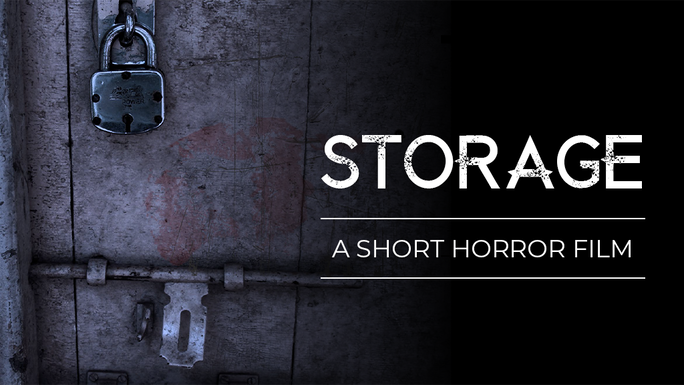 Krause is the Co-founder of Nyx Horror Collective, a Co-producer for micro-short film festival 13 Minutes of Horror, which streams on Shudder, and a Co-Founder of the Stowe Story Labs/NYX Horror Collective Fellowship, which benefits a woman horror screenwriter aged 40 and above. She is joined by cinematographer Elle Schneider (Woodlands Dark and Days Bewitched: A History of Folk Horror, 18 ½), VFX whiz Elaina Scott (Spider-Man: No Way Home, Grimm), Ashley Lynch of Gingerbreadgirl Post (13 Minutes of Horror, Ninjago), Bianca Beyrouti (Bring me an Avocado, The Singing Bones), and Berkeley Sound Artists (Marvel’s Runaways, 12 Hour Shift). Additionally, closed captions and audio descriptions will be provided by Jean Li to ensure accessibility for all audiences. The project recently received backing from Blumhouse, the iconic horror production company behind The Invisible Man (2020), Halloween (2018), and the Insidious Franchise among others. With additional funding, STORAGE will cover crew wages, post-production costs, and marketing to ensure the film reaches as wide an audience as possible. “The global pandemic has meant setbacks for women, including those in the film and horror industries,” says Krause. “The number of women filmmakers decreased by 25% between 2020 and 2021—STORAGE is our response to those challenges, addressing industry parity and transforming how we as a whole think about women filmmakers and genre.” To learn more about STORAGE or to support this project, visit: www.seedandspark.com/fund/storage-horror-film CHECK OUT TODAY'S OTHER ARTICLES ON GINGER NUTS OF HORROR
THE HEART AND SOUL OF HORROR PROMOTION WEBSITES 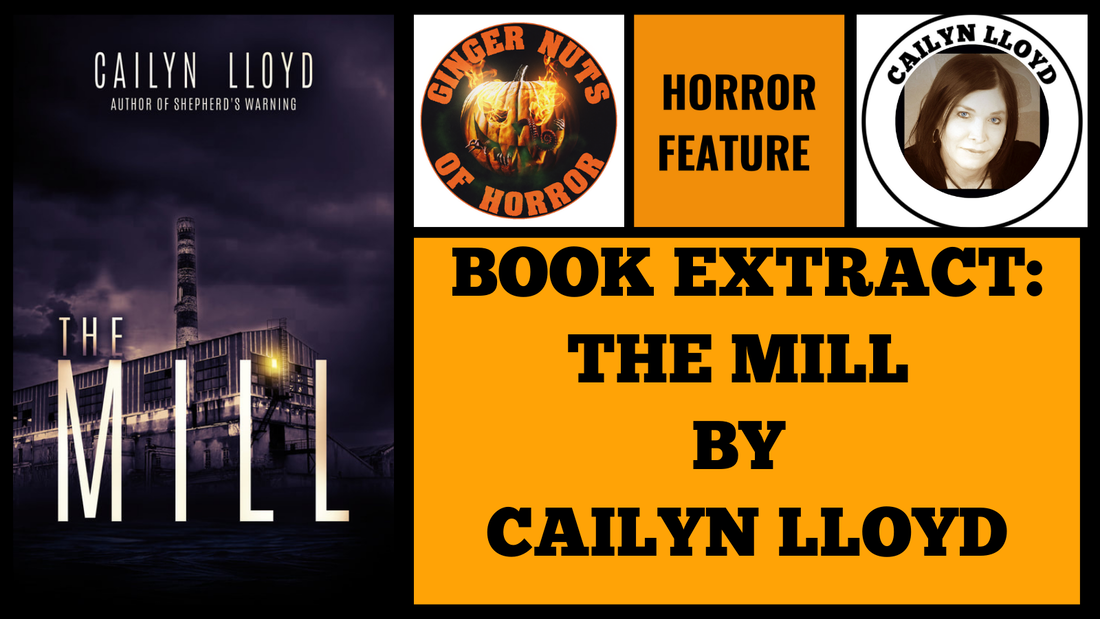 The Mill by Cailyn Lloyd One The mouse. Someone had moved it. The position and orientation were off slightly. Chase Riddell invariably placed the mouse facing due north on the exact same spot: on a prominent knot just left of center on the oak desktop. His office was otherwise undisturbed. The desk and a brown leather swivel chair were the only furniture in the small, windowless room. The tawny brick walls were bare, as was the desk—except for a 32-inch monitor and the errant mouse. The precise placement was a function of his OCD. He also hated odd numbers, unless they were multiples of five. His kitchen cabinets were studies in neatness and order, the bottles, cans, and cartons arranged by size and type. His clothing was similarly organized. He checked his locks twice whenever he went out. The building had a keyed entrance, and his apartment had two commercial-grade locks on the door: a Schlage lever handle and a double cylinder dead-bolt. The windows were new, twelve feet above ground on the exterior, and equally secure. Management had no access to the unit without advance notice. The outside walls were brick and limestone block. The apartment was more impregnable than most bank buildings. He had chosen this place in Rock River Mills—an old paper mill converted to condos and upscale flats—partly for that reason. Crime was one problem he hadn’t expected to worry about. He carefully examined the locks on the door, but there were no scratches or evidence of tampering. A quick survey of the apartment revealed that nothing else had been disturbed. Not one thing. Seemed the computer was the target of the illicit entry. Was that possible? And why? Was he being unduly paranoid? He couldn’t imagine how someone had broken in, but the wayward mouse was proof someone had and it was a big problem. Had they discovered the hidden files on his computer? Files filled with photos of deviant sexual acts. Images of domination. Rape. Murder. Just the thought of them brought a stiffening to his groin. But if someone had, surely the police would be here, arresting him. Dragging him off to jail to face life in prison. While it was unlikely a casual browser would find the incriminating files, he could assume nothing, since someone had breached his well-secured apartment, possibly hacked into the computer, and left zero evidence of his presence—other than the errant mouse. What now? He didn’t know. Chase only knew he had a problem on his hands. Possibly a disaster. Unless he found the asshole and killed him first. Two Lili stopped mid-step and closed her eyes. Concentrated, trying to visualize the invisible. Yes! Right there. A vibration, a subtle shimmer. A sense of someone—or something—close by. On the other side of the wall maybe. A moment later, the feeling was gone. But it had been tangible, her best connection yet. Having lived in Rock River Mills for two months, she had sensed spirits in various parts of the building. Each had been subtle and ephemeral, unwilling to reveal themselves. Maybe they were just shy. She couldn’t tell. Some ghosts were like that. But they were here, and she would draw them out eventually. The strongest presence felt female, and Lili hoped it was Emma Kiekhafer, a girl who had died in an industrial accident in 1894. Lili had spent the last three nights staking out the hallways around apartment 114 at the west end of the building. Over three thousand square feet in an open plan with twenty-five-foot ceilings, 114 was the largest unit in the Mills. High in one corner, a ten-ton industrial crane hung from a track. Sandblasted and painted, it was a striking element that graced the cover of the promotional brochure. The entry door to 114 lay at the end of a softly lit corridor off the main hallway. A nearby exit door led to the courtyard, a lovely area shaded by oaks and maples with picnic areas and grills. A tiki bar served drinks during the summer months. Her apartment lay on the other side of the courtyard. She walked back and forth in the hallway, sitting in various spots, meditating, trying to reconnect with the presence. When that failed, she lit two small candles and placed them near the wall—an invitation to the spirits. Still nothing. Pacing slowly but relentlessly, she rolled her ankle and bumped into the wall. Mrs. Kaplan peeked out, and Lili felt herself blush as she sat and pretended to fiddle with her shoe. She didn’t know the Kaplans, but had seen their photos in the lobby on a flyer for a charity auction. Lili had heard rumors Mrs. Kaplan was unhappy with the unit, something about the bedroom feeling creepy. It sounded like an ironic metaphor, but the story had piqued her interest. She suspected spirits at work. A moment later, Mr. Kaplan looked out, locked eyes with Lili, and walked down to where she was sitting. He was tall, at least six feet, with dark hair and a short beard. He was good looking, fit, and carried himself with a vaguely military air. Accusingly, he said, “Do I know you?” “Lili Paltrinieri, 124. You might’ve seen me around.” He shrugged. “Is there a reason you’re lurking in our hallway?” “Probably not a good one.” “Try me.” Lili contemplated several lies before settling on the truth. Technically, she could loiter here. It wasn’t their hallway, but if they took an interest, her efforts might be more effective inside the apartment. “I’m psychic and I think there’s a spirit in this hallway or your apartment.” “Oh, Jesus.” He rolled his eyes. “Not you too—” “Your wife?” He nodded, then eyed Lili suspiciously. “How do I know you’re not casing the place?” “One, I live in the building. Two, do I look like a thief?” “No. But maybe your boyfriend is.” “I don’t have a boyfriend.” Now she was sure he was a cop or ex-military from his questions and demeanor. Exasperated, she pulled a business card from her back pocket and handed it to him. He eyed it, then pulled an iPhone from his pocket and tapped furiously for a moment. “So you’re the owner of Revelations, a metaphysical store,” he said with a hint of derision. “Seems you’re legit. You might as well come in and meet my wife.” Lili stepped in and scanned the room with an admiring eye. It was stunning. The Kaplans had money. Real money. A suit of medieval armor guarded the entrance to the large combined living room, dining area, and kitchen. The brick walls were decorated with an interesting selection of quality fine art from classic to modern, interspersed with sculptures on plinths, the atmosphere and lighting imparting the impression of a cozy art gallery. Two of the abstract canvases looked like Kandinsky originals. The furnishings were a careful mix of antique and contemporary. Expensive, modernist steel light fixtures hung from the high ceiling on long pendants. It looked like the hand of a professional decorator at work. The crane hanging in the far corner was an exquisite touch. She now understood why they might worry about theft. “I’m Raleigh Kaplan, and that’s my wife, Olivia. Your name again?” “Lili—Lili Paltrinieri.” Olivia Kaplan walked over from the kitchen area and extended a hand in greeting. A short, long-haired blonde, she was more cute than beautiful with an intelligent gaze. “So, Lili, why are you hanging out in our hallway?” It wasn’t their hallway, but pointing that out wouldn’t be helpful. “I’m psychic and I think there’s a spirit in the hallway or in your apartment.” “I knew it!” Olivia said, flashing a look of vindication at Raleigh. “Who is it?” Lili briefly retold the story about Emma dying in the Mill in 1894, though she wasn’t certain it was Emma she had sensed. Olivia’s eyes widened with the telling of the story, and she looked at the apartment as if seeing it for the first time. Finally, she said, “That’s awful. Why didn’t they tell us? I don’t know if I would have wanted this apartment if I’d known—” “Babe, you love this place and had to have it.” Raleigh gave Lili the stink eye, clearly regretting letting her in. “Knowing the story, I still would’ve bought it. Somebody died here over a hundred years ago. It means nothing now.” “But I didn’t know the story when we bought it.” She looked to Lili. “Is there anything else?” Lili shook her head. “It’s getting late,” Raleigh said. “You should probably leave.” It wasn’t a friendly request. Lili scurried out the door. She didn’t much care for Raleigh Kaplan and felt a twinge of pity for Olivia. She seemed nice and exuded a pleasant aura. What was she doing with that guy? She then spent a fruitless hour wandering the mill hallways. Returning to her condo just after 1 a.m., she felt tired but not ready for sleep. There was more than one way to explore the building. After a small glass of wine, she stripped and slipped into bed. Relaxing every muscle and joint, she wiggled her fingers, enjoying the soft texture of the high thread count cotton sheets. She gazed at the white ceiling without focusing, receptive to the slightest disturbance in the ether, to the vaguest feeling or presence in her apartment, a space she had grown to love. Her apartment, a warren of brick rooms, overlooked the Rock River. The kitchen was modest but modern, with an adjoining low-ceilinged dining area that she had converted to a sitting room with a concealed flatscreen. The contractor had added a small second-floor office with a large skylight, accessible by a spiral staircase. Lili had turned it into a spare bedroom. Her bedroom sat in the left corner of the apartment. The window there, fifteen feet above the water’s edge, let in the gentle sounds of the river, an ambient soundtrack more soothing than the apps people used to relax and sleep. She had decorated the walls throughout with all manner of paraphernalia. Small antiques, clocks, old hand tools, gears, a camshaft, and other mechanical oddities. More esoteric items like runic symbols, crystals, zodiac signs, and framed Tarot cards—though she didn’t read Tarot; she just loved the card designs. Interspersed were old black and white photos and enlarged images from the Hubble Telescope collection on canvas. She also had many bookshelves stacked with books. It looked a bit like a museum. While she loved the apartment itself, there was a deeper significance in choosing unit 124. In numerology, the numbers one, two, and four equaled seven, a number that imparted reflective and introspective qualities to the space. A seven home was an ideal environment for someone with a spiritual nature like Lili. Gradually, she reached a state of total relaxation, her inner eye a blank slate, the first step to embarking on astral travel, a spiritual discipline that allowed her consciousness to leave her body. To reach out and explore the world, a literal out-of-body experience. Settling into the first stage of sleep, a shallow semiconscious state called alpha phase, her mind drifted upward and floated near the ceiling. Separate from her body but still connected by the astral cord, awaiting instructions. She could travel anywhere, but she drifted back to 114 for another look, to see if she could connect with the spirit or spirits there, even though astral travel was only vaguely useful for ghost hunting. She wouldn’t see Olivia or Raleigh. In the astral plane, she moved on a different level than the living. She couldn’t snoop or spy on people even if she wanted to. The Kaplan apartment was silent and dark when she arrived. Lili burrowed into the fabric of the room, seeking the hidden energies lurking there. At first, it was still. Tranquil. A slight disturbance rustled the drapes framing the windows and then the room and all its trappings disappeared. Lili stared, agog at the cavernous space of a different era: the stark image of a factory filled with vapors and large machines. A pungent smell permeated the air. Bleach maybe? She had slipped into a vivid, harsh world she could scarcely comprehend. How had people worked in such a place? A lurking shadow gave her a start. Someone or something was watching. A vaporous presence more sinister than the female spirit she’d sensed earlier. A ghost. A belligerent male spirit, like a dark cloud, eying her with a hostile gaze. Lili felt trapped and vulnerable until she broke the connection and drifted home. The sensation of his glare stayed with her the longest. Whoever it was, he wasn’t very nice. As she returned to her body, the memory sent an icy shudder through her. From the base of her skull to the tips of her toes. The Mill |

| |  |
THE HEART AND SOUL OF HORROR PROMOTION WEBSITES
CHILDHOOD FEARS
I’ve never been afraid of gore or jump scares. The monster that’s on the screen didn’t bother me. As a kid, I found it was easy to sneer at Freddie Kruger or Jason Vorhees. The reason being that the kinds of things which made me frightened as a younger person (and certainly remain emotive for me now) are not the things my friends found frightening.
I’m a person with multiple heritages in my background. In other words I have brown skin. Growing up in the eighties it meant I had NF written on my pencil case by classmates and was called paki in any day with the word ‘day’ in it. My fears were not of rampaging monsters because my real life was full of them and, frankly, they were more present and in my face than any thought of a smug imbecile with knives for fingers.
Worse still, from my point of view, someone like Candyman or Freddie was, in many ways, more identifiable for me because I suffered at the hands of the majority. What was uncomfortable in those tales is that their suffering, no matter how intolerable, was seen as a motive force for their evil. Which seemed to be the wrong way around for me.
What scared me wasn’t what my friends found terrifying. The reason I didn’t care about gore or extremes was because they supposed some safe place from which you could be pulled, whose sanctity could be overturned. The biggest assumption was that, except for these cases real life was a place of calm and safety.
Instead, what grabbed me and what continues to grab me, were the fears that hid just out of sight. If I could keep racist bullies and teachers in sight I could control the scenario.
If I couldn’t see them? Shit.
I don’t mean jump scares. I mean the fear of the hidden, of the creeping dread, of the fingers slowly grasping the edge of the door and pushing it open to reveal nothing but shadows. Noises which can’t be located, whispers of words which seem like dreams.
I’ve got three tales to tell of my childhood fears. The first of them was Jaws. You might laugh because Stephen Spielberg’s Jaws is pretty in your face.
For me what was terrifying about Jaws was my bedroom carpet. It was blue. And I was scared a shark would come up from underneath the floor and bite my legs off. So scared I wouldn’t get out of bed unless my bladder was going to do something out of control.
That fear didn’t last long – perhaps a few months at most – but the fear of something lurking just out of sight, waiting for me to let my guard down, was enough to have my parent’s let me sleep with the hall light on.
I still remember the scene with the three of them in the boat, alone at sea, getting drunk and talking while outside the shark circles, draws closer and weighs up its prey. That sense of feeling safe when the truth was they were anything but? That foreshadowing of just how wrong their assumptions were? It still taps into something deep in my gut.
The template of my fears was well founded by Jaws. And, truth be told, since I was a teenager there’s been almost nothing in fiction which had frightened me. Lots has left me wincing or uncomfortable but actual fear? That is an uncommon response.
I put that partly down to my experience as an outsider growing up but my next tale adds a certain other element which I hope explains a bit more.
As a seven year old I lived in an old house. It was a terrace, probably built in the late 1800s. We lived there for maybe six years, moving out when I was eleven.
My room was at the back of the house. I don’t remember much about this time in my life except that room had a presence in it. I would wake at night and see a bright skull in the corner of the room by the built-in wardrobe. It wasn’t out to get me, but it was terrifying. It happened enough that I told my parents what I was seeing and they ‘got people in’. Given my father was a devout atheist I must have been quite convincing.
Those people, whether charlatans or otherwise, confirmed something grim was going on and did whatever people like that do (I believe they were Catholics) and, weirdly, I never saw the skull floating in my room again.
Yet that sense of something hovering, just the other side of what I could see was there in my life all over again.
I have no idea what that experience was about. I don’t know what my parents explained to whoever came to sort it and I don’t know what those people did which resulted in me never seeing it again. I do know I never met the people who came to the house to sort it, so it wasn’t anything they did to me.
I’ve a doctorate in physics. I’m not given to flights of fancy (other than writing) but to this day I will not tell you that all we are is mud and dust and atoms.
The last of my childhood fears came a bit later. I was a proper teenager (which feels young to the now forty something me). For various reasons I was doing youth work with a church up in the North East of England.
We were staying in a church building.
We, as a group, started seeing things. Feeling chills and sudden changes in temperature. We heard odd noises – especially at night. We were there a week and it was thrilling. We did research, discovered the church had been built on a plague pit, discovered it had been founded by Freemasons. That’s right, count the tropes.
I didn’t really understand the concept of the ‘bad place’ as a kid. I do now. I look back on that and reflect about the centrality of the ‘bad place’ in horror and, in particular, my love of horror. I’m a sucker for ghost stories, of people finding themselves in the bad place. If the bad place is really one of those locations with thin walls between here and there then even better.
In my own writing I’m drawn back again and again to these ideas of the creeping dread, of the fight that potentially can be won but often only by escaping. I love the idea that the dread, the fear we feel is in part driven by an unacknowledged recognition that we don’t know what it is we’re facing. That mystery is awful – that double edged word which means both to be terrified and thrilled, to be full of awe. I think of how angels arrive and their first words have to be ‘do not be afraid’ because crikey they’re alien and other and beyond and of course we’re afraid.
As I get older I find I’m also drawn to what that fear does to our sense of identity. As I reflect on my childhood fears I find that much horror, whether it’s body horror or the fear of losing our faculties is a fear of losing the self, of being driven out or taken over. The bad place, the lurking other, they threaten our sense of who we are. They threaten it because they promise that what we believe about ourselves and our place in the world is a lie to be exposed by the painful peeling back of skin.
For me this is horror: to learn I am not who I thought I was, but the lie isn’t that I’m someone else, it’s that there might be nothing coherent behind my eyes at all. That I might simply be something small crawling on the skin of a giant hoping it doesn’t notice me. That someone else may come along and erase me and after they’re done everything I wanted, everything I hoped and everything I loved will be gone.
I’ve never been afraid of gore or jump scares. The monster that’s on the screen didn’t bother me. As a kid, I found it was easy to sneer at Freddie Kruger or Jason Vorhees. The reason being that the kinds of things which made me frightened as a younger person (and certainly remain emotive for me now) are not the things my friends found frightening.
I’m a person with multiple heritages in my background. In other words I have brown skin. Growing up in the eighties it meant I had NF written on my pencil case by classmates and was called paki in any day with the word ‘day’ in it. My fears were not of rampaging monsters because my real life was full of them and, frankly, they were more present and in my face than any thought of a smug imbecile with knives for fingers.
Worse still, from my point of view, someone like Candyman or Freddie was, in many ways, more identifiable for me because I suffered at the hands of the majority. What was uncomfortable in those tales is that their suffering, no matter how intolerable, was seen as a motive force for their evil. Which seemed to be the wrong way around for me.
What scared me wasn’t what my friends found terrifying. The reason I didn’t care about gore or extremes was because they supposed some safe place from which you could be pulled, whose sanctity could be overturned. The biggest assumption was that, except for these cases real life was a place of calm and safety.
Instead, what grabbed me and what continues to grab me, were the fears that hid just out of sight. If I could keep racist bullies and teachers in sight I could control the scenario.
If I couldn’t see them? Shit.
I don’t mean jump scares. I mean the fear of the hidden, of the creeping dread, of the fingers slowly grasping the edge of the door and pushing it open to reveal nothing but shadows. Noises which can’t be located, whispers of words which seem like dreams.
I’ve got three tales to tell of my childhood fears. The first of them was Jaws. You might laugh because Stephen Spielberg’s Jaws is pretty in your face.
For me what was terrifying about Jaws was my bedroom carpet. It was blue. And I was scared a shark would come up from underneath the floor and bite my legs off. So scared I wouldn’t get out of bed unless my bladder was going to do something out of control.
That fear didn’t last long – perhaps a few months at most – but the fear of something lurking just out of sight, waiting for me to let my guard down, was enough to have my parent’s let me sleep with the hall light on.
I still remember the scene with the three of them in the boat, alone at sea, getting drunk and talking while outside the shark circles, draws closer and weighs up its prey. That sense of feeling safe when the truth was they were anything but? That foreshadowing of just how wrong their assumptions were? It still taps into something deep in my gut.
The template of my fears was well founded by Jaws. And, truth be told, since I was a teenager there’s been almost nothing in fiction which had frightened me. Lots has left me wincing or uncomfortable but actual fear? That is an uncommon response.
I put that partly down to my experience as an outsider growing up but my next tale adds a certain other element which I hope explains a bit more.
As a seven year old I lived in an old house. It was a terrace, probably built in the late 1800s. We lived there for maybe six years, moving out when I was eleven.
My room was at the back of the house. I don’t remember much about this time in my life except that room had a presence in it. I would wake at night and see a bright skull in the corner of the room by the built-in wardrobe. It wasn’t out to get me, but it was terrifying. It happened enough that I told my parents what I was seeing and they ‘got people in’. Given my father was a devout atheist I must have been quite convincing.
Those people, whether charlatans or otherwise, confirmed something grim was going on and did whatever people like that do (I believe they were Catholics) and, weirdly, I never saw the skull floating in my room again.
Yet that sense of something hovering, just the other side of what I could see was there in my life all over again.
I have no idea what that experience was about. I don’t know what my parents explained to whoever came to sort it and I don’t know what those people did which resulted in me never seeing it again. I do know I never met the people who came to the house to sort it, so it wasn’t anything they did to me.
I’ve a doctorate in physics. I’m not given to flights of fancy (other than writing) but to this day I will not tell you that all we are is mud and dust and atoms.
The last of my childhood fears came a bit later. I was a proper teenager (which feels young to the now forty something me). For various reasons I was doing youth work with a church up in the North East of England.
We were staying in a church building.
We, as a group, started seeing things. Feeling chills and sudden changes in temperature. We heard odd noises – especially at night. We were there a week and it was thrilling. We did research, discovered the church had been built on a plague pit, discovered it had been founded by Freemasons. That’s right, count the tropes.
I didn’t really understand the concept of the ‘bad place’ as a kid. I do now. I look back on that and reflect about the centrality of the ‘bad place’ in horror and, in particular, my love of horror. I’m a sucker for ghost stories, of people finding themselves in the bad place. If the bad place is really one of those locations with thin walls between here and there then even better.
In my own writing I’m drawn back again and again to these ideas of the creeping dread, of the fight that potentially can be won but often only by escaping. I love the idea that the dread, the fear we feel is in part driven by an unacknowledged recognition that we don’t know what it is we’re facing. That mystery is awful – that double edged word which means both to be terrified and thrilled, to be full of awe. I think of how angels arrive and their first words have to be ‘do not be afraid’ because crikey they’re alien and other and beyond and of course we’re afraid.
As I get older I find I’m also drawn to what that fear does to our sense of identity. As I reflect on my childhood fears I find that much horror, whether it’s body horror or the fear of losing our faculties is a fear of losing the self, of being driven out or taken over. The bad place, the lurking other, they threaten our sense of who we are. They threaten it because they promise that what we believe about ourselves and our place in the world is a lie to be exposed by the painful peeling back of skin.
For me this is horror: to learn I am not who I thought I was, but the lie isn’t that I’m someone else, it’s that there might be nothing coherent behind my eyes at all. That I might simply be something small crawling on the skin of a giant hoping it doesn’t notice me. That someone else may come along and erase me and after they’re done everything I wanted, everything I hoped and everything I loved will be gone.
The Entropy of Loss
by Stewart Hotston
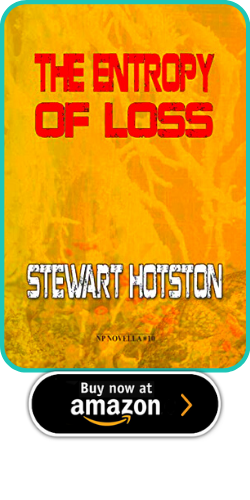
Sarah Shannon is a scientist working at the cutting edge of black hole research. She is also a woman seeking to cope with the impending death of her wife, Rhona, the love of her life. Unable to come to terms with this inevitable loss, she has embarked on an affair with her work colleague, Akshai; and that's only the start of things getting complicated.
Something has gone wrong with Sarah and Akshai's ground-breaking simulations of black holes. When they are able to correct the errors the system abandons their simulations, instead spitting out equations as if demanding a response. When they answer, the system takes over their lab and starts to transform their equipment - forcing them to flee. They are left suspecting the impossible: First Contact.
As Sarah's employer steps in and seeks to take control, she risks losing access to her own work. Worse still, when they fled the lab she and Akshai had to leave Rhona behind, and Sarah will do whatever it takes to get her back.
Something has gone wrong with Sarah and Akshai's ground-breaking simulations of black holes. When they are able to correct the errors the system abandons their simulations, instead spitting out equations as if demanding a response. When they answer, the system takes over their lab and starts to transform their equipment - forcing them to flee. They are left suspecting the impossible: First Contact.
As Sarah's employer steps in and seeks to take control, she risks losing access to her own work. Worse still, when they fled the lab she and Akshai had to leave Rhona behind, and Sarah will do whatever it takes to get her back.
STEWART HOTSON

Stewart Hotston lives in Reading, UK. After completing his PhD in theoretical physics, Stewart now spends his days working in high finance. He has had numerous short stories published as well as multiple novels. He has two novels and a novella out in 2022. Stars and Stipes, Daybreak Legacy and The Entropy of Loss respectively. When Stewart is not writing or working he's a senior instructor at The School of the Sword where he fights with and teaches all manner of swords.
CHECK OUT TODAY'S OTHER ARTICLES ON GINGER NUTS OF HORROR
 | |
THE HEART AND SOUL OF HORROR Promotion Websites
DISSECTING THE BOOK OF QUEER SAINTS
1/4/2022
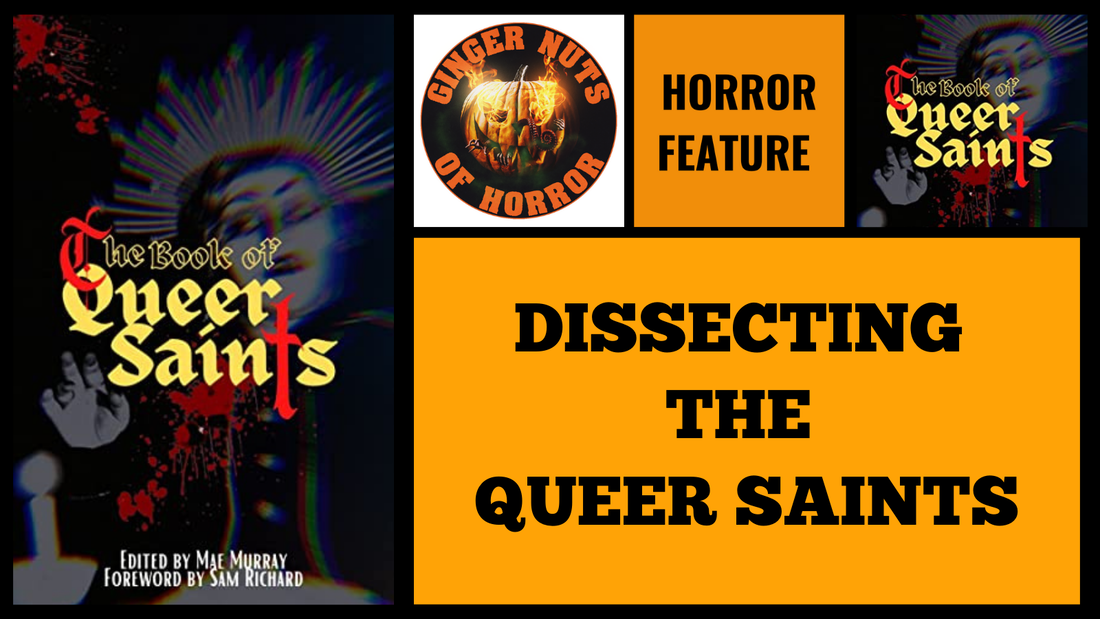
On Monday we interviewed Mae Murray about the release of the killer new anthology The Book of Queer Saints, today we welcome some of the authors of the anthology in a feature where they discuss their stories within this must buy anthology.
The Book of Queer Saints features 13 short stories and a lineup that includes renowned authors Eric LaRocca, Hailey Piper, and Joe Koch. Joining them are the innovative visions of Briar Ripley Page, Nikki R. Leigh, Joshua R. Pangborn, Eric Raglin, Belle Tolls, Perry Ruhland, James Bennett, LC von Hessen, K.S. Walker, and George Daniel Lea. A fresh blend of transformative body horror, crimson-coated romance, and monstrous eroticism, this anthology is sure to satisfy your every depraved itch. Foreword by Sam Richard of Weirdpunk Books.
The Book of Queer Saints features 13 short stories and a lineup that includes renowned authors Eric LaRocca, Hailey Piper, and Joe Koch. Joining them are the innovative visions of Briar Ripley Page, Nikki R. Leigh, Joshua R. Pangborn, Eric Raglin, Belle Tolls, Perry Ruhland, James Bennett, LC von Hessen, K.S. Walker, and George Daniel Lea. A fresh blend of transformative body horror, crimson-coated romance, and monstrous eroticism, this anthology is sure to satisfy your every depraved itch. Foreword by Sam Richard of Weirdpunk Books.
Further Reading
An Interview with The Book of Queer Saints Editor Mae Murray
Rebecca Rowlands review of The Book of Queer Saints
An Interview with The Book of Queer Saints Editor Mae Murray
Rebecca Rowlands review of The Book of Queer Saints
LC von Hessen
"The City Behind The City" is among my most pessimistic and, in many ways, most personal stories, in that one of its major themes concerns tying one's hopes and dreams to a specific geographic location in one's youth and gradually, as one ages, seeing those dreams eroded. In both my own story and my protagonist Theodore's, that location is NYC. It's a sort of unofficial companion piece to my story "Hivemind," from Planet Scumm #11 (guest-edited by my Queer Saints tablemate Hailey Piper), which was inspired by the infamous Manhattan tourist-trap-turned-suicide-destination "The Vessel"--and which, as it happens, also has a decidedly imperfect queer protagonist.
The deranged interview Theodore undergoes in "The City" was inspired by an online interview scam I was once subjected to as a struggling underemployed freelancer: my desperation was causing me to mute the alarm bells around a lot of things that seemed rather unorthodox or just plain off. What really clinched it, and saved me from potential disaster, was the typo I noticed in the company's supposed address. Incidentally, I work as a proofreader now.

LC von Hessen is a writer of horror, weird fiction, and various unpleasantness, as well as a noise musician, occasional actor, and former Morbid Anatomy Museum docent. Their work has previously appeared in such publications as Hymns of Abomination, Beyond the Book of Eibon, volumes of Nightscript and Vastarien, and the ebook collection Spiritus Ex Machina. An ex-Midwesterner, von Hessen lives in Brooklyn with a talkative orange cat.
Eric Raglin
Some stories start as jokes, and "Macramé Flames" was one of them. I thought it would be funny to write about a queer motorcycle gang that summons Satan by burning down 666 Hobby Lobbies (a craft store chain with religious right-wing politics, for anyone unfamiliar). However, some jokes contain a kernel of something more serious. It wasn't until after I wrote this story that I realized what that kernel was. One of the characters, Thorpe, distances himself from the motorcycle gang and loses touch with his values. By the time he tries to reconnect with his Satanic comrades, he's a thoroughly changed man.
I connect with Thorpe in this way. Prior to the pandemic, I was actively involved in leftist organizing. But with organizing often comes burnout, and I found myself distanced from activist work almost completely. This story was my way of exploring the feeling that I'd lost touch with my values. My hope is that I can still reconnect with them and take action. Like Thorpe, I want to do something that matters again after too much time on the sidelines.
I connect with Thorpe in this way. Prior to the pandemic, I was actively involved in leftist organizing. But with organizing often comes burnout, and I found myself distanced from activist work almost completely. This story was my way of exploring the feeling that I'd lost touch with my values. My hope is that I can still reconnect with them and take action. Like Thorpe, I want to do something that matters again after too much time on the sidelines.

Eric Raglin (he/him) is a Nebraskan speculative fiction writer, horror literature teacher, and podcaster for Cursed Morsels. He frequently writes about queer issues, the terrors of capitalism, and body horror. His debut short story collection is NIGHTMARE YEARNINGS. He is the editor of ANTIFA SPLATTERPUNK. Find him at http://ericraglin.com or on Twitter @ericraglin1992
.
.
JOE KOCH
How many angels can fuck on the head of a pin?
My story "The Love That Whirls" owes its origins to experimental queer occult filmmaker Kenneth Anger. In 1949, he made a film of the same name in Mexico that was never seen. Apparently it depicted nudity and a ritual human sacrifice story derived from the book "The Golden Bough." The only person who saw it was whoever developed the film and deemed it pornographic. The film lab's policy at the time was to destroy any footage with nudity, no matter how innocuous. Anger claims the film was not pornographic and simply featured an exquisitely beautiful young man.
So, like the legendary lost and damaged footage from Event Horizon, we can only imagine what might have been. The unknowable fascinates and delights me, and in my story I wanted to recreate an idea of Anger's arcane lost footage while paying respect to his concept that the things we create as artists are magical workings. At the same time, my own head was whirling from a terrible break-up. So I thought and wrote about why we continue to engage in romance, sex, and relationships at all when they can go so very wrong and cause us so much pain.
Working with "The Book of Queer Saints" in mind, I felt I had permission to explore a dysfunctional queer relationship with big age and power imbalances. I have mixed feelings about labeling a particular age difference as problematic. I think we need to question the specifics of a situation before making a knee-jerk judgment. I wouldn't have gone to college without the "bad" influence of an older man. He wasn't abusive and I'm grateful someone directed me away from the path I was on. Instead of moralizing about right and wrong, "The Love That Whirls" explores an older person, a creature really, not exactly human, not exactly a man, who takes in a vulnerable young guy. Both are changed over time. There's no simple formula of dominance and submission.
I had a blast writing the film footage and sex scenes in the most surreal way possible in order to suggest the unseen, the numinous. I guess my current goal as a writer is to capture angels fucking. A lot of the imagery comes through suggestion and unexpected sensory detail. In "The Love That Whirls," the older creature reconstructs the film in an effort to undo grief and change the past, and this fits into the idea of love as a whirlwind we can't always control, a force that makes and remakes us, the power both parties play with while they make and remake each other. I hope I've done Kenneth Anger's art justice in both the story and its execution.
My story "The Love That Whirls" owes its origins to experimental queer occult filmmaker Kenneth Anger. In 1949, he made a film of the same name in Mexico that was never seen. Apparently it depicted nudity and a ritual human sacrifice story derived from the book "The Golden Bough." The only person who saw it was whoever developed the film and deemed it pornographic. The film lab's policy at the time was to destroy any footage with nudity, no matter how innocuous. Anger claims the film was not pornographic and simply featured an exquisitely beautiful young man.
So, like the legendary lost and damaged footage from Event Horizon, we can only imagine what might have been. The unknowable fascinates and delights me, and in my story I wanted to recreate an idea of Anger's arcane lost footage while paying respect to his concept that the things we create as artists are magical workings. At the same time, my own head was whirling from a terrible break-up. So I thought and wrote about why we continue to engage in romance, sex, and relationships at all when they can go so very wrong and cause us so much pain.
Working with "The Book of Queer Saints" in mind, I felt I had permission to explore a dysfunctional queer relationship with big age and power imbalances. I have mixed feelings about labeling a particular age difference as problematic. I think we need to question the specifics of a situation before making a knee-jerk judgment. I wouldn't have gone to college without the "bad" influence of an older man. He wasn't abusive and I'm grateful someone directed me away from the path I was on. Instead of moralizing about right and wrong, "The Love That Whirls" explores an older person, a creature really, not exactly human, not exactly a man, who takes in a vulnerable young guy. Both are changed over time. There's no simple formula of dominance and submission.
I had a blast writing the film footage and sex scenes in the most surreal way possible in order to suggest the unseen, the numinous. I guess my current goal as a writer is to capture angels fucking. A lot of the imagery comes through suggestion and unexpected sensory detail. In "The Love That Whirls," the older creature reconstructs the film in an effort to undo grief and change the past, and this fits into the idea of love as a whirlwind we can't always control, a force that makes and remakes us, the power both parties play with while they make and remake each other. I hope I've done Kenneth Anger's art justice in both the story and its execution.

Joe Koch (he/they) writes literary horror and surrealist trash. Joe is a Shirley Jackson Award finalist and the author of The Wingspan of Severed Hands, The Couvade, and Convulsive. They’ve had over fifty short stories published in books and journals like Year's Best Hardcore Horror, The Big Book of Blasphemy, Not All Monsters, and Liminal Spaces. Find Joe online at horrorsong.blog and on Twitter @horrorsong.
HAILEY PIPER
"I went through a number of maybe stories for The Book of Queer Saints, ideas written or half-written, but I wanted the right one. This is a special project. Exhausted one night, as I was getting into bed I had a sudden thought, 'What if fish people lived in a sea monster's mouth?' I got to work on 'We Frolic Within the Leviathan's Heart' the next morning.
It was the right story, I knew from how the fish people take to returning to the land as outsiders hiding among everyone else, with interests, passion, pain, and wrongdoings too. And I won't pretend there's no incidental jab and nod at Lovecraft too. Their queerness is part of them. User @flameswallower on Twitter asked after reading 'is it gay and trans to become a fish person?' and I think that sums it up perfectly."and trans to become a fish person?' and I think that sums it up perfectly."

Hailey Piper is the 2x Bram Stoker Award-nominated author of The Worm and His Kings, Queen of Teeth, Unfortunate Elements of My Anatomy, Benny Rose, the Cannibal King, and The Possession of Natalie Glasgow. She is an active member of the Horror Writers Association, with over seventy short stories appearing in Pseudopod, Vastarien, Cast of Wonders, Daily Science Fiction, Dark Matter Magazine, Planet Scumm, Flash Fiction Online, Year’s Best Hardcore Horror, and other publications. She lives with her wife in Maryland, where their paranormal research is classified.
Find Hailey on Twitter via @HaileyPiperSays and on Instagram via @haileypiperfights.
Find Hailey on Twitter via @HaileyPiperSays and on Instagram via @haileypiperfights.
JAMES BENNETT
‘From the moment I saw the submission call for ‘The Book of Queer Saints’, I wanted to be in the antho so badly. In many ways, it chimed with my sentiments about current queer rep and the book is in line with the stories I'm working on now, essentially a drive to present some authentic and (hopefully) entertaining stories free of the demands of the mass market or the ‘queer norms’ that have a tendency to render everything so saccharine, anodyne and trite. It strikes me as a situation that has little to do with the history of queer literature, or queer lived experience, which is necessarily quite punky, rebellious and viewed as ‘grotesque’ anyway. We have to be free to relate our experience, warts and all.
You know, you can’t oppress a minority group since forever, with all the trauma, insight and subversion it stirs up in an artistic sense, and then ask queer folks to write nice, ingratiating stories for the masses so they don’t get too uncomfortable. In a nutshell, fuck that noise. It was definitely with that in mind that I came to write ‘Morta’ (Morta is the name of a Roman deity, the Fate who cuts the thread of life). It took a couple of attempts to land on the right story, but I knew I wanted to play on a 'coming out' theme and the general stickiness of adolescence. Looking back to my troublesome teens, I recalled my love for films like 'The Fly' and 'Invasion of the Body Snatchers', my real introduction to the genre.
There's quite an 80s spin to 'Morta', I think, and a healthy dollop of Cronenberg. It was a lot of fun to turn all those breathless coming-of-age tales on their head, because I don’t remember coming out as anything other than a car crash. I can laugh about it now, but… With ‘Morta’, I guess I’m saying it’s OK to get your freak on. We should be out there unsettling people. That’s what Horror is for.’
You know, you can’t oppress a minority group since forever, with all the trauma, insight and subversion it stirs up in an artistic sense, and then ask queer folks to write nice, ingratiating stories for the masses so they don’t get too uncomfortable. In a nutshell, fuck that noise. It was definitely with that in mind that I came to write ‘Morta’ (Morta is the name of a Roman deity, the Fate who cuts the thread of life). It took a couple of attempts to land on the right story, but I knew I wanted to play on a 'coming out' theme and the general stickiness of adolescence. Looking back to my troublesome teens, I recalled my love for films like 'The Fly' and 'Invasion of the Body Snatchers', my real introduction to the genre.
There's quite an 80s spin to 'Morta', I think, and a healthy dollop of Cronenberg. It was a lot of fun to turn all those breathless coming-of-age tales on their head, because I don’t remember coming out as anything other than a car crash. I can laugh about it now, but… With ‘Morta’, I guess I’m saying it’s OK to get your freak on. We should be out there unsettling people. That’s what Horror is for.’

James Bennett is a British writer raised in Sussex and South Africa. His travels have furnished him with an abiding love of different cultures, history and mythology. His short fiction has appeared internationally and his debut novel CHASING EMBERS was shortlisted for Best Newcomer at the British Fantasy Awards 2017.
Feel free to follow him on Twitter: @Benjurigan
Or join him on Facebook: fb.me/Benjurigan
Briar Ripley
When I was young— a child, a teenager, in my early twenties— I often felt monstrous. My feelings and thoughts and experiences weren’t like the feelings, thoughts, and experiences of other people. Worse, when I tried to talk about them with others, they’d push me away in horror or tell me there was something wrong with me.
I think this is exceedingly common for young queer and trans people, particularly those who are also disabled, neurodivergent, survivors of traumatic experiences, and so on. Most of us eventually learn that we’re fine, that there’s nothing wrong with being who we are, that we are not in fact causing terrible harm to others if who we are and what we’ve experienced makes them feel upset or uncomfortable. Yet that feeling of monstrousness remains in the back of our minds, occasionally flaring up in full force.
It makes perfect sense that there’s a long tradition in queer fiction of reclaiming monstrousness, celebrating it, turning monsters into the heroes of a story. I love doing this, and I love stories that do this, but for “Therianthrope” I wanted to delve into more ambivalent territory. What if you were a monster, and that was both empowering and destructive? What if you really were fated to maim and kill and rampage? What if it would be objectively bad to fulfill your desires, but fulfilling your desires was also the only thing that would let you feel truly alive?
I think this is exceedingly common for young queer and trans people, particularly those who are also disabled, neurodivergent, survivors of traumatic experiences, and so on. Most of us eventually learn that we’re fine, that there’s nothing wrong with being who we are, that we are not in fact causing terrible harm to others if who we are and what we’ve experienced makes them feel upset or uncomfortable. Yet that feeling of monstrousness remains in the back of our minds, occasionally flaring up in full force.
It makes perfect sense that there’s a long tradition in queer fiction of reclaiming monstrousness, celebrating it, turning monsters into the heroes of a story. I love doing this, and I love stories that do this, but for “Therianthrope” I wanted to delve into more ambivalent territory. What if you were a monster, and that was both empowering and destructive? What if you really were fated to maim and kill and rampage? What if it would be objectively bad to fulfill your desires, but fulfilling your desires was also the only thing that would let you feel truly alive?

Briar Ripley Page is the author of Corrupted Vessels, a Florida gothic novella; Body After Body, an erotic dystopian novel, and a forthcoming short story collection from swallow::tale press. Their fiction has appeared in places like smoke + mold, The Fantastic Other, and hyphenpunk, but The Book of Queer Saints is their big break, probably. Briar recently moved from central Pennsylvania to London, where they live with their partner and cats.
Belle Tolls
The name of my story comes from the dress code for a Halloween party I threw. I went as the death of King Midas. It was super cute. Heliogabalus Fabulous rewrites the story of the Roman emperor Elagabalus, who has been demonized by historians for their purported extravagance, promiscuity, and gender fluidity. But who wouldn’t want a financially and sexually generous genderfluid icon for emperx? What the historians regard as their crimes, I regard as their gifts, so when I saw that Mae was compiling stories about queer villains, I knew it was time to recuperate Elagabalus as a saint. The emperor in my story is still a little villainous - they conspire to murder an innocent teenage boy, but it’s for a very good cause.
I like how this collection really troubles the idea that queers have to be represented as pristine to gain some elusive acceptance from a hostile cishetero world; that we can’t be the bad guys, when it’s highly questionable that there are any totally good or bad guys, or total guys for that matter. The book queers queer representation, and I love that. I also appreciate that Mae chose my story to end the collection, because although it’s historical it’s also kind of a trans eschatology. Because the future is trans, and in that sense Heliogabalus Fabulous, which isn’t really horror, also isn’t really a story. More a prayer, or a threat.
Un bacio!
Belle
I like how this collection really troubles the idea that queers have to be represented as pristine to gain some elusive acceptance from a hostile cishetero world; that we can’t be the bad guys, when it’s highly questionable that there are any totally good or bad guys, or total guys for that matter. The book queers queer representation, and I love that. I also appreciate that Mae chose my story to end the collection, because although it’s historical it’s also kind of a trans eschatology. Because the future is trans, and in that sense Heliogabalus Fabulous, which isn’t really horror, also isn’t really a story. More a prayer, or a threat.
Un bacio!
Belle

Belle Tolls (was / were), New York City death hag and writer of queer speculative fiction. This is her first publication. She is currently working on a volume called "Headless but Haloed", collecting stories about the cephalophores.
Follow Belle on Twitter
Follow Belle on Twitter
George Daniel Lea
I can barely describe my excitement and incredulity when I received the email informing me that my short story, The Last Disgrace, had been short-listed for The Book of Queer Saints. When it comes to submissions, I try to keep anticipation to a minimum, if only to diminish disappointment, but this project...
Even now, I can't quite describe or explain my reaction: I felt an immediate and intense connection to this project; one that threads beyond the contentious frisson of its core premise. The idea of Queer Saints was immeduately and naturally exciting to me: an anthology of stories by LGBTQ creators, involving sincere, complex and genuine LGBTQ characters and situations? Given my raison d'etre, I couldn't help but be inspired.
But, even that doesn't entirely explain the powerful emotion of being short-listed. There has been something especial about this project from the very beginning, something essential; a magic that's difficult to quantify.
The Last Disgrace itself was a strange story for me: most of my work is glacially produced, picked and prodded and polished until something essential emerges (a process that can often take months or years). This was the exception that proves the rule:
Originally inspired by a piece of homo-erotic by my good friend, Alexandru Teodor, the first draft was recorded within a day, the story fully edited and shaped within the next two. Written in a feverish state of fluctuating emotion, it drew on my
own experience of LGBTQ venues and culture from when I was at university; the "gay districts" of British Midlands inner-cities, which are often oddly archaeological in nature, freighted with history and haunted by the ghosts of queer experience past.
The inhuman protagonist derived from a particular species of older gay man who so often prowled these arenas; those old enough to appreciate the raw history of those sites but also subsumed into the -often predatory and consumptive- cultures of raw sexuality and appetite that pervade them.
This creature is, in part, an exaggeration and distortion of a particular species of gay man I observed often in the gay bars and night clubs, the dusk and nighttime
streets; those I myself often sought out and seduced when I was in the place of the -ostensibly more naive- boy who happily feeds himself to the beast.
As for the boy himself, he is very much a dead aspect of myself; a reflection of the distance and divorced condition I and so many of my gay, twenty-sonething siblings operated at the time. In retrospect, we were a romantically disturbed little tribe of impending suicides; creatures fully aware of their lack of place or purpose in the world and wanting nothing from it.
That is where the anonymous, drugged and dreaming boy derives from, his suicidal ideation not only an expression of my own at the time, but one that was -and remains- sadly pervasive amongst LGBTQ youth, most notably our trans brothers and
sisters in the present day.
When I learned that The Last Disgrace had been accepted, and the company it would keep in the anthology, ecstatic would be too small a word to describe my reaction. Even now, with the project's publication imminent, I can't quite believe that my work is part of it, that readers will be exposed to such powerful and sincere expressions of LGBTQ experience.
All I can do is express my sincere thanks to Mae Murray for conceiving and seeing the project through, and to my LGBTQ siblings for their own contributions and the original inspiration.
Even now, I can't quite describe or explain my reaction: I felt an immediate and intense connection to this project; one that threads beyond the contentious frisson of its core premise. The idea of Queer Saints was immeduately and naturally exciting to me: an anthology of stories by LGBTQ creators, involving sincere, complex and genuine LGBTQ characters and situations? Given my raison d'etre, I couldn't help but be inspired.
But, even that doesn't entirely explain the powerful emotion of being short-listed. There has been something especial about this project from the very beginning, something essential; a magic that's difficult to quantify.
The Last Disgrace itself was a strange story for me: most of my work is glacially produced, picked and prodded and polished until something essential emerges (a process that can often take months or years). This was the exception that proves the rule:
Originally inspired by a piece of homo-erotic by my good friend, Alexandru Teodor, the first draft was recorded within a day, the story fully edited and shaped within the next two. Written in a feverish state of fluctuating emotion, it drew on my
own experience of LGBTQ venues and culture from when I was at university; the "gay districts" of British Midlands inner-cities, which are often oddly archaeological in nature, freighted with history and haunted by the ghosts of queer experience past.
The inhuman protagonist derived from a particular species of older gay man who so often prowled these arenas; those old enough to appreciate the raw history of those sites but also subsumed into the -often predatory and consumptive- cultures of raw sexuality and appetite that pervade them.
This creature is, in part, an exaggeration and distortion of a particular species of gay man I observed often in the gay bars and night clubs, the dusk and nighttime
streets; those I myself often sought out and seduced when I was in the place of the -ostensibly more naive- boy who happily feeds himself to the beast.
As for the boy himself, he is very much a dead aspect of myself; a reflection of the distance and divorced condition I and so many of my gay, twenty-sonething siblings operated at the time. In retrospect, we were a romantically disturbed little tribe of impending suicides; creatures fully aware of their lack of place or purpose in the world and wanting nothing from it.
That is where the anonymous, drugged and dreaming boy derives from, his suicidal ideation not only an expression of my own at the time, but one that was -and remains- sadly pervasive amongst LGBTQ youth, most notably our trans brothers and
sisters in the present day.
When I learned that The Last Disgrace had been accepted, and the company it would keep in the anthology, ecstatic would be too small a word to describe my reaction. Even now, with the project's publication imminent, I can't quite believe that my work is part of it, that readers will be exposed to such powerful and sincere expressions of LGBTQ experience.
All I can do is express my sincere thanks to Mae Murray for conceiving and seeing the project through, and to my LGBTQ siblings for their own contributions and the original inspiration.

Joshua R. Pangborn
Crumbs has all my favorite traits in a story: it's a little bit sexy, a lot scary, and so very weird. Exploring the kinky world of feederism and bondage through dark humor, the reader is taken on a journey through the life and choices of our main character, Raymond. Yet, for all of the macabre zaniness, what I love most about this story is how relatable it is. Raymond, for all of his flaws, wants love and acceptance from the one person who will never give it to him--and I think that's pretty familiar for all of us (but especially for queer readers).
Having Crumbs included in The Book of Queer Saints is an incredible honor (not the least of which is because this is the first time I've had a piece of fiction published!). This anthology resonated with me, and I knew I had to pursue it. I think the mission of Queer Saints is vital for queer art. Mainstream queer art is only allowed to be queer through a heteronormative lens, and this places limits on how queer characters can be represented. But every story I tell is a queer story, and as such I believe strongly in presenting all facets of queer characters: the good, the bad, the messy, and the mundane. I'm so grateful to Mae for putting together this book and making it possible to present authentic queer characters (albeit, horrific ones!).
I find perfection to be a false narrative we've been sold by society, And not just perfection of character; this Grecian statue appearance queer people are told we have to have is a lie. Crumbs--like all of the work I create--features characters who do not look like the queer characters found in mainstream queer art. They are fat, they are hairy--and they are human. I love to see queer characters who look like the people I know, the people in my circles, and when I create, I create those characters. For those looking for more fat-representation in horror (and not at the expense of a joke)--I'd say to check out Crumbs!
Having Crumbs included in The Book of Queer Saints is an incredible honor (not the least of which is because this is the first time I've had a piece of fiction published!). This anthology resonated with me, and I knew I had to pursue it. I think the mission of Queer Saints is vital for queer art. Mainstream queer art is only allowed to be queer through a heteronormative lens, and this places limits on how queer characters can be represented. But every story I tell is a queer story, and as such I believe strongly in presenting all facets of queer characters: the good, the bad, the messy, and the mundane. I'm so grateful to Mae for putting together this book and making it possible to present authentic queer characters (albeit, horrific ones!).
I find perfection to be a false narrative we've been sold by society, And not just perfection of character; this Grecian statue appearance queer people are told we have to have is a lie. Crumbs--like all of the work I create--features characters who do not look like the queer characters found in mainstream queer art. They are fat, they are hairy--and they are human. I love to see queer characters who look like the people I know, the people in my circles, and when I create, I create those characters. For those looking for more fat-representation in horror (and not at the expense of a joke)--I'd say to check out Crumbs!

Joshua R. Pangborn is an award-winning actor, writer, and creator, and founder of SideKick Productions, a company focused on telling queer, fat and sex-positive stories on film and television. Joshua created the award-winning queer soap opera Skeleton Crew, now in its fifth season, and the horror comedy Demon Doctor, now entering its second season. Watch these series, along with the award-winning horror shorts Wasted on the Young and Scratched, at youtube.com/sidekickproductions. He can also be found on Instagram @SideKickProductions, on Twitter @SideKickProd, and at Patreon at patreon.com/sidekickproductions. Joshua holds a doctorate in English Literature from St. John's University.
Joshua R. Pangborn (he/him)
SideKick Productions
Patreon: SideKick Productions
Creator of the independent TV series Skeleton Crew and Demon Doctor
Creator of films Wasted on the Young and Scratched
Producer of The Art of Blowing It
Instagram: @SideKickProductions and Demon Doctor
Twitter: @SideKickProd
Facebook: Joshua R. Pangborn SideKick Productions Skeleton Crew Demon Doctor
SideKick Productions
Patreon: SideKick Productions
Creator of the independent TV series Skeleton Crew and Demon Doctor
Creator of films Wasted on the Young and Scratched
Producer of The Art of Blowing It
Instagram: @SideKickProductions and Demon Doctor
Twitter: @SideKickProd
Facebook: Joshua R. Pangborn SideKick Productions Skeleton Crew Demon Doctor
The Book of Queer Saints
edited by Mae Murray

In this debut horror anthology by editor Mae Murray, queer villains reign supreme. The Book of Queer Saints features 13 short stories and a lineup that includes renowned authors Eric LaRocca, Hailey Piper, and Joe Koch. Joining them are the innovative visions of Briar Ripley Page, Nikki R. Leigh, Joshua R. Pangborn, Eric Raglin, Belle Tolls, Perry Ruhland, James Bennett, LC von Hessen, K.S. Walker, and George Daniel Lea. A fresh blend of transformative body horror, crimson-coated romance, and monstrous eroticism, this anthology is sure to satisfy your every depraved itch. Foreword by Sam Richard of Weirdpunk Books.
Further Reading
An Interview with The Book of Queer Saints Editor Mae Murray
Rebecca Rowlands review of The Book of Queer Saints
An Interview with The Book of Queer Saints Editor Mae Murray
Rebecca Rowlands review of The Book of Queer Saints
CHECK OUT TODAY'S OTHER ARTICLES ON GINGER NUTS OF HORROR
 | |
THE HEART AND SOUL OF HORROR PROMOTION WEBSITES
THE FIRST HORROR BOOK I REMEMBER READING
When I was probably nine or 10 years old, my parents bought my sister and me a collection of classic novels from Moby Books. They were these tiny paperbacks with illustrations that helped introduce kids to old-school literature. The ones I liked best had some sort of monster--Moby Dick, 20,000 Leagues Under the Sea, War of the Worlds. At around the same time, I had one friend who was into Dungeons & Dragons. I liked it, too, but I was more interested in leafing through the D&D Monster Manual than I was in actually playing the game. Some of those monsters were so cool; the Hook Horror and Black Pudding come to mind.
THE FIRST HORROR MOVIE I REMEMBER WATCHING
I’m not sure which came first, but the two that really shook me out of my skin were John Carpenter’s The Thing and Tobe Hooper’s Poltergeist. I couldn’t have been more than 10 years old when I saw either of them. At the time, I had never seen anything like either of those movies. I think that’s where my interest started. From then on, I started to seek out other horror movies, trying to rediscover the sense of fear and invigoration I felt when I watched The Thing and Poltergeist for the first time.
THE GREATEST HORROR BOOK OF ALL TIME
Wow. That’s a tough one. The ones that spring to mind are William Peter Blatty’s The Exorcist and Ira Levin’s Rosemary’s Baby, but I will go with Betty from Tiffany McDaniel. Bookstores probably wouldn’t shelve Betty under “Horror,” but holy hell, the things McDaniel puts her characters through are nothing short of grotesque. I almost did not finish reading the book because some scenes were too intense, and I don’t think that has ever happened to me before. Its brutality aside, Betty is a beautifully written story about a broken family that tries to keep all the pieces together.
THE GREATEST HORROR MOVIE OF ALL TIME
Easy one: Creature from the Black Lagoon. For a movie made in the mid-1950s, this one changed everything. It was probably the first time that filmgoers saw anything quite like it. The Creature spawned a whole generation of monsters that took the baton and ran with it. The movie has adventure, it has a science backdrop, it’s a love story, and it has an amazing soundtrack, with these blaring trumpets that announce the Creature any time even part of him is on screen. Two sequels--Revenge of the Creature and The Creature Walks Among Us—were pretty good as far as sequels go, though I thought The Creature Walks Among Us was awful the first few times I saw it. I have since come to appreciate it for what it did to broaden the Creature’s story. Whether it tried to or not, it became a commentary on humankind’s efforts to tame the untamable and the undying power of instinct.
THE GREATEST WRITER OF ALL TIME
I’d probably go with John Updike, Michael Chabon, or Elizabeth Strout. Of those three, I’m probably most drawn to Updike. His style is almost poetic. No one would confuse him with a horror writer, though he does a masterful job of writing about the horrors of everyday life, like infidelity and desperation and the pain of disappointment in adulthood. The scope and course of my own writing changed after I started reading him. Many, if not most, of his characters come from a privileged background, and he does not hesitate to put them through the wringer.
THE BEST BOOK COVER OF ALL TIME
A lot of sand has gone through the hourglass since I first saw it, but my initial response to this question is Beast from Peter Benchley. It’s much less famous than Benchley’s most notable work, Jaws, but it’s similar in the “sea creature run amok” subgenre. In this case, a giant squid terrorizes a small Bermuda town. It’s the first book I read for enjoyment. This was in the early 1990s. I remember walking into a bookstore to see a friend of mine who was working there, and I saw Beast facing out on a shelf near the register. The cover has a massive squid tentacle writhing out of the surf, with a claw in the middle of each sucker, and the title--BEAST—in a big, bold font. I know this is going to sound stupid, but it was the first time I realized that novels could be about something other than Cold War espionage or coming-of-age stories set in Victorian England. It opened my eyes to the fact that authors were writing stories I actually wanted to read. The best way to say what I’m trying to say is that the cover of Beast turned me into a faithful reader.
THE BEST FILM POSTER OF ALL TIME
My aunt and uncle ran a movie-rental business near Cowtown, New Jersey, so when my family visited, my aunt would send me home with a few movie posters. Most of them were pretty lame--Cannonball Run II, Breakin’ 2, lots of bad sequels from the 1980s, apparently—but I’d tack them to the walls of my bedroom anyway, probably just to hide the holes I made from throwing stars, blowgun darts, and other contraband. Later on I worked for an advertising agency that did publicity for all the movie studios. I remember the poster for Relic being pretty cool; it was nothing but teeth and title. Of course, the poster for Big Trouble in Little China was awesome, featuring most of the key characters from what was a truly awesome flick—another winner from John Carpenter.
THE BEST BOOK I HAVE WRITTEN
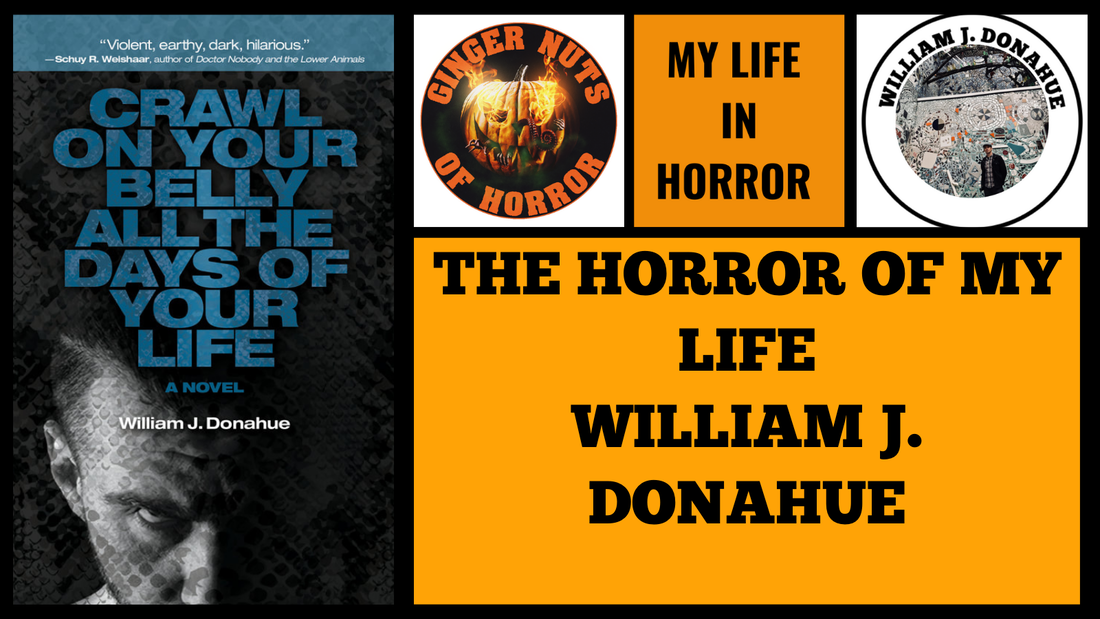
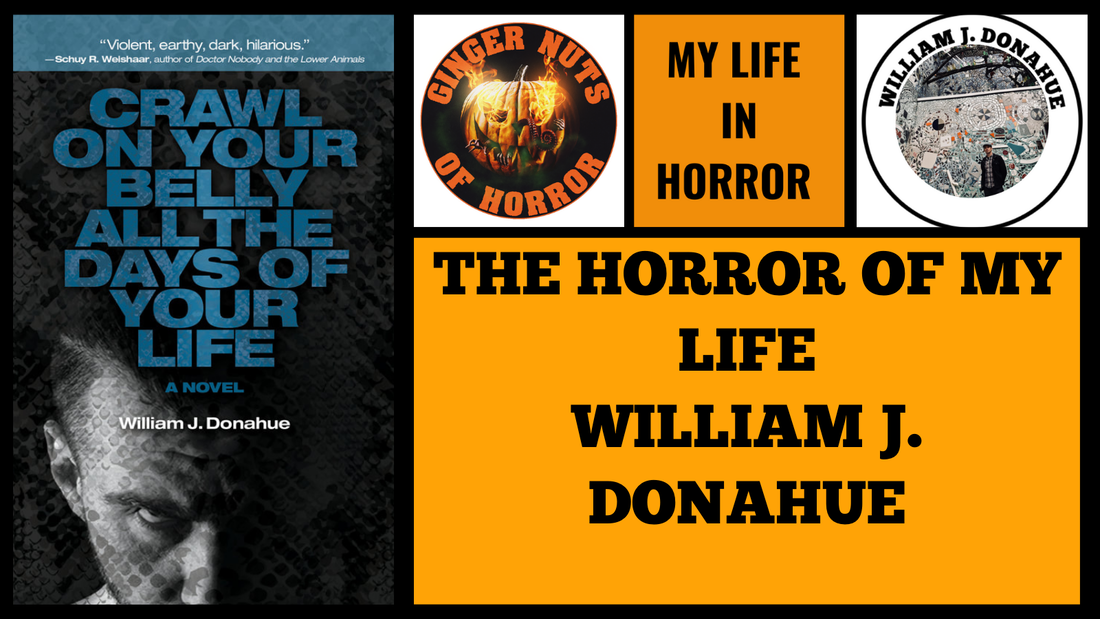
So far, I’d have to say it’s Crawl on Your Belly All the Days of Your Life, my forthcoming novel. It’s shorter than most of the other novels I’ve written, but I love the story and the characters. My last novel, Burn, Beautiful Soul, was about demons in the literal sense, but this one is more about the metaphorical demons that drive many of us to make bad or irresponsible decisions. Crawl on Your Belly All the Days of Your Life has plenty of horror elements, but it also includes elements from other genres, like coming of age, suspense, and, I’m not ashamed to say, romance. Someone in my writers’ group described it as “a dark, disturbing, snake-filled version of When Harry Met Sally, and that seems pretty accurate to me. The novel does a good job of blurring those lines, so I’ve been describing it as dark literary fiction.
THE WORST BOOK I HAVE WRITTEN
I’ve written nine novels, dating back to 2001, but only five or six of them are publishable. The first one, as entertaining as it was to write, was completely derivative of the kinds of thrillers and horror novels I had been reading at the time—books from the likes of Peter Benchley and the tandem of Douglas Preston and Lincoln Child. The writing was pretentious and silly and poorly punctuated, the characters were wooden, and the sex scenes were needlessly graphic. The monster was cool, though.
THE MOST UNDERRATED FILM OF ALL TIME
It's the complete opposite of horror, but I love the Richard Linklater trilogy Before Sunrise, Before Sunset, and Before Midnight. They’re perfect examples of how good dialog can carry a story. Two characters spend long stretches of those movies doing nothing but walking and talking. I know that sounds deadly, but I love those sequences. Other favorites I would consider underrated: Big Trouble in Little China, Return of the Living Dead, The Warriors, and Godzilla vs. Hedorah.
THE MOST UNDERRATED BOOK OF ALL TIME
I’m taking “underrated” to mean a book I really loved but probably didn’t get the kind of exposure or marketing support you see from the larger publishing houses. Also, “all time” is a tough one, because I’m sure there are some amazing books I read years ago that I just can’t remember. So, with those guideposts in place, I’ll go with either The Broken Hours by Jacqueline Baker, The Monster of Elendhaven by Jennifer Giesbrecht, or The Night Always Comes by Willy Vlautin.
THE MOST UNDERRATED AUTHOR OF ALL TIME
I’m not sure if either of them is underrated, but I really like Adam Nevill and Josh Malerman. Both of them really know their way around a sentence, and their stories are nothing short of immersive. I loved Malerman’s Bird Box and Malorie, and even A House at the Bottom of a Lake, which wasn’t quite horror, had me completely engrossed. Same with Nevill’s The Ritual.
THE FILM THAT SACRED ME THE MOST
I’m sure horror films have scared me more since, but nothing compared to the terror 10-year-old me felt watching Poltergeist. Joe Dante’s The Howling is probably a close second. I was a kid when I first saw it, but the film sticks with me to this day because of the viciousness and cruelty of the werewolves; visions of Eddie Quist in wolf form return to me when I’m doing overnight hikes in the mountains. Oddly enough, the thing that made me lose the most sleep was probably Michael Jackson’s “Thriller” video. Not so much the dancing zombies, but more so Michael Jackson as the yellow-eyed monster that looks more like a werecat than a werewolf. Don’t ask me to explain why that freaked me out as much as it did.
THE BOOK I AM WORKING ON NEXT
I’m currently pitching an apocalyptic horror/sci-fi novel to publishers, and I’m on the third draft of a paranormal horror novel, which I hope to start pitching by summer. Hopefully, both novels will see the light of day in the next year or so.
MY CURRENT PROJECT
Best described as dark literary fiction, my new novel Crawl on Your Belly All the Days of Your Life crosses multiple genres, from horror and suspense to coming of age and romance. The novel follows Sid Carver, whose reckless decisions have left him without a family, without a career, without an identity. Then he meets Holly Tithe. They’re two very different people who don’t really understand each other, each dealing with the horrors of their past. She also doesn’t understand why he keeps an enormous python and a pair of vicious lizards in his living room. Just as Sid begins to envision a path toward reinvention, new obstacles—and new adversaries—stand in his way. One of them is a Neanderthal-like brute who has won Holly’s affections. As Sid’s darkest impulses take root, he must decide which role he wants to play in the life he has left—predator or prey.
When I was probably nine or 10 years old, my parents bought my sister and me a collection of classic novels from Moby Books. They were these tiny paperbacks with illustrations that helped introduce kids to old-school literature. The ones I liked best had some sort of monster--Moby Dick, 20,000 Leagues Under the Sea, War of the Worlds. At around the same time, I had one friend who was into Dungeons & Dragons. I liked it, too, but I was more interested in leafing through the D&D Monster Manual than I was in actually playing the game. Some of those monsters were so cool; the Hook Horror and Black Pudding come to mind.
THE FIRST HORROR MOVIE I REMEMBER WATCHING
I’m not sure which came first, but the two that really shook me out of my skin were John Carpenter’s The Thing and Tobe Hooper’s Poltergeist. I couldn’t have been more than 10 years old when I saw either of them. At the time, I had never seen anything like either of those movies. I think that’s where my interest started. From then on, I started to seek out other horror movies, trying to rediscover the sense of fear and invigoration I felt when I watched The Thing and Poltergeist for the first time.
THE GREATEST HORROR BOOK OF ALL TIME
Wow. That’s a tough one. The ones that spring to mind are William Peter Blatty’s The Exorcist and Ira Levin’s Rosemary’s Baby, but I will go with Betty from Tiffany McDaniel. Bookstores probably wouldn’t shelve Betty under “Horror,” but holy hell, the things McDaniel puts her characters through are nothing short of grotesque. I almost did not finish reading the book because some scenes were too intense, and I don’t think that has ever happened to me before. Its brutality aside, Betty is a beautifully written story about a broken family that tries to keep all the pieces together.
THE GREATEST HORROR MOVIE OF ALL TIME
Easy one: Creature from the Black Lagoon. For a movie made in the mid-1950s, this one changed everything. It was probably the first time that filmgoers saw anything quite like it. The Creature spawned a whole generation of monsters that took the baton and ran with it. The movie has adventure, it has a science backdrop, it’s a love story, and it has an amazing soundtrack, with these blaring trumpets that announce the Creature any time even part of him is on screen. Two sequels--Revenge of the Creature and The Creature Walks Among Us—were pretty good as far as sequels go, though I thought The Creature Walks Among Us was awful the first few times I saw it. I have since come to appreciate it for what it did to broaden the Creature’s story. Whether it tried to or not, it became a commentary on humankind’s efforts to tame the untamable and the undying power of instinct.
THE GREATEST WRITER OF ALL TIME
I’d probably go with John Updike, Michael Chabon, or Elizabeth Strout. Of those three, I’m probably most drawn to Updike. His style is almost poetic. No one would confuse him with a horror writer, though he does a masterful job of writing about the horrors of everyday life, like infidelity and desperation and the pain of disappointment in adulthood. The scope and course of my own writing changed after I started reading him. Many, if not most, of his characters come from a privileged background, and he does not hesitate to put them through the wringer.
THE BEST BOOK COVER OF ALL TIME
A lot of sand has gone through the hourglass since I first saw it, but my initial response to this question is Beast from Peter Benchley. It’s much less famous than Benchley’s most notable work, Jaws, but it’s similar in the “sea creature run amok” subgenre. In this case, a giant squid terrorizes a small Bermuda town. It’s the first book I read for enjoyment. This was in the early 1990s. I remember walking into a bookstore to see a friend of mine who was working there, and I saw Beast facing out on a shelf near the register. The cover has a massive squid tentacle writhing out of the surf, with a claw in the middle of each sucker, and the title--BEAST—in a big, bold font. I know this is going to sound stupid, but it was the first time I realized that novels could be about something other than Cold War espionage or coming-of-age stories set in Victorian England. It opened my eyes to the fact that authors were writing stories I actually wanted to read. The best way to say what I’m trying to say is that the cover of Beast turned me into a faithful reader.
THE BEST FILM POSTER OF ALL TIME
My aunt and uncle ran a movie-rental business near Cowtown, New Jersey, so when my family visited, my aunt would send me home with a few movie posters. Most of them were pretty lame--Cannonball Run II, Breakin’ 2, lots of bad sequels from the 1980s, apparently—but I’d tack them to the walls of my bedroom anyway, probably just to hide the holes I made from throwing stars, blowgun darts, and other contraband. Later on I worked for an advertising agency that did publicity for all the movie studios. I remember the poster for Relic being pretty cool; it was nothing but teeth and title. Of course, the poster for Big Trouble in Little China was awesome, featuring most of the key characters from what was a truly awesome flick—another winner from John Carpenter.
THE BEST BOOK I HAVE WRITTEN
So far, I’d have to say it’s Crawl on Your Belly All the Days of Your Life, my forthcoming novel. It’s shorter than most of the other novels I’ve written, but I love the story and the characters. My last novel, Burn, Beautiful Soul, was about demons in the literal sense, but this one is more about the metaphorical demons that drive many of us to make bad or irresponsible decisions. Crawl on Your Belly All the Days of Your Life has plenty of horror elements, but it also includes elements from other genres, like coming of age, suspense, and, I’m not ashamed to say, romance. Someone in my writers’ group described it as “a dark, disturbing, snake-filled version of When Harry Met Sally, and that seems pretty accurate to me. The novel does a good job of blurring those lines, so I’ve been describing it as dark literary fiction.
THE WORST BOOK I HAVE WRITTEN
I’ve written nine novels, dating back to 2001, but only five or six of them are publishable. The first one, as entertaining as it was to write, was completely derivative of the kinds of thrillers and horror novels I had been reading at the time—books from the likes of Peter Benchley and the tandem of Douglas Preston and Lincoln Child. The writing was pretentious and silly and poorly punctuated, the characters were wooden, and the sex scenes were needlessly graphic. The monster was cool, though.
THE MOST UNDERRATED FILM OF ALL TIME
It's the complete opposite of horror, but I love the Richard Linklater trilogy Before Sunrise, Before Sunset, and Before Midnight. They’re perfect examples of how good dialog can carry a story. Two characters spend long stretches of those movies doing nothing but walking and talking. I know that sounds deadly, but I love those sequences. Other favorites I would consider underrated: Big Trouble in Little China, Return of the Living Dead, The Warriors, and Godzilla vs. Hedorah.
THE MOST UNDERRATED BOOK OF ALL TIME
I’m taking “underrated” to mean a book I really loved but probably didn’t get the kind of exposure or marketing support you see from the larger publishing houses. Also, “all time” is a tough one, because I’m sure there are some amazing books I read years ago that I just can’t remember. So, with those guideposts in place, I’ll go with either The Broken Hours by Jacqueline Baker, The Monster of Elendhaven by Jennifer Giesbrecht, or The Night Always Comes by Willy Vlautin.
THE MOST UNDERRATED AUTHOR OF ALL TIME
I’m not sure if either of them is underrated, but I really like Adam Nevill and Josh Malerman. Both of them really know their way around a sentence, and their stories are nothing short of immersive. I loved Malerman’s Bird Box and Malorie, and even A House at the Bottom of a Lake, which wasn’t quite horror, had me completely engrossed. Same with Nevill’s The Ritual.
THE FILM THAT SACRED ME THE MOST
I’m sure horror films have scared me more since, but nothing compared to the terror 10-year-old me felt watching Poltergeist. Joe Dante’s The Howling is probably a close second. I was a kid when I first saw it, but the film sticks with me to this day because of the viciousness and cruelty of the werewolves; visions of Eddie Quist in wolf form return to me when I’m doing overnight hikes in the mountains. Oddly enough, the thing that made me lose the most sleep was probably Michael Jackson’s “Thriller” video. Not so much the dancing zombies, but more so Michael Jackson as the yellow-eyed monster that looks more like a werecat than a werewolf. Don’t ask me to explain why that freaked me out as much as it did.
THE BOOK I AM WORKING ON NEXT
I’m currently pitching an apocalyptic horror/sci-fi novel to publishers, and I’m on the third draft of a paranormal horror novel, which I hope to start pitching by summer. Hopefully, both novels will see the light of day in the next year or so.
MY CURRENT PROJECT
Best described as dark literary fiction, my new novel Crawl on Your Belly All the Days of Your Life crosses multiple genres, from horror and suspense to coming of age and romance. The novel follows Sid Carver, whose reckless decisions have left him without a family, without a career, without an identity. Then he meets Holly Tithe. They’re two very different people who don’t really understand each other, each dealing with the horrors of their past. She also doesn’t understand why he keeps an enormous python and a pair of vicious lizards in his living room. Just as Sid begins to envision a path toward reinvention, new obstacles—and new adversaries—stand in his way. One of them is a Neanderthal-like brute who has won Holly’s affections. As Sid’s darkest impulses take root, he must decide which role he wants to play in the life he has left—predator or prey.
Crawl on Your Belly All the Days of Your Life: A Novel
by William J. Donahue
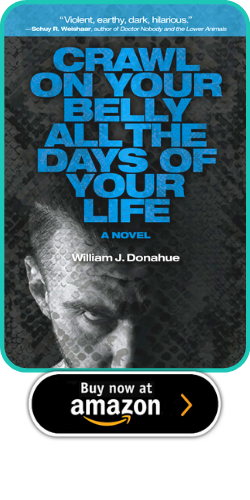
Once blessed with everything he thought he ever wanted, Sid Carver finds himself on the verge of collapse. A string of reckless decisions has left him without a family, without a career, without an identity.
The dark clouds seem to part the day a woman named Holly Tithe moves into the apartment across the hall. He sees her as a “puzzle with missing pieces.” She sees him as a “broken toy” in need of mending. He cannot grasp her cosmic views on the nature of human existence. She cannot fathom why he keeps an enormous python and a pair of vicious lizards caged in his living room. Despite their differences, their lives quickly intertwine.
Just as Sid finds a possible route toward redemption, new obstacles block his path. One of them is a Neanderthal-like brute who seems to have won Holly's affection. As Sid's darkest impulses take hold, he must decide which role he wants to play in the life he has left—predator or prey.
The dark clouds seem to part the day a woman named Holly Tithe moves into the apartment across the hall. He sees her as a “puzzle with missing pieces.” She sees him as a “broken toy” in need of mending. He cannot grasp her cosmic views on the nature of human existence. She cannot fathom why he keeps an enormous python and a pair of vicious lizards caged in his living room. Despite their differences, their lives quickly intertwine.
Just as Sid finds a possible route toward redemption, new obstacles block his path. One of them is a Neanderthal-like brute who seems to have won Holly's affection. As Sid's darkest impulses take hold, he must decide which role he wants to play in the life he has left—predator or prey.
William J. Donahue

William J. Donahue’s novels include Burn, Beautiful Soul, which won the horror category in the 2021 International Book Awards, and Crawl on Your Belly All the Days of Your Life, which comes out in April 2022. When he’s not writing fiction, he works as a full-time magazine editor and features writer. He oversees a monthly lifestyle publication serving the Philadelphia area, and he is on the editorial staff of a literary journal that celebrates the remarkable people, places, and history of Bucks County, Pennsylvania. He lives inside a small but well-guarded fortress in the Keystone State, somewhere on the map between Philadelphia and Bethlehem.
WEBSITE LINKS
https://wjdonahue.com
https://www.amazon.com/William-J-Donahue/e/B085RNJF18
https://www.goodreads.com/author/show/756993
https://www.facebook.com/wjdonahuefiction
https://wjdonahue.com
https://www.amazon.com/William-J-Donahue/e/B085RNJF18
https://www.goodreads.com/author/show/756993
https://www.facebook.com/wjdonahuefiction
CHECK OUT TODAY'S OTHER ARTICLES ON GINGER NUTS OF HORROR
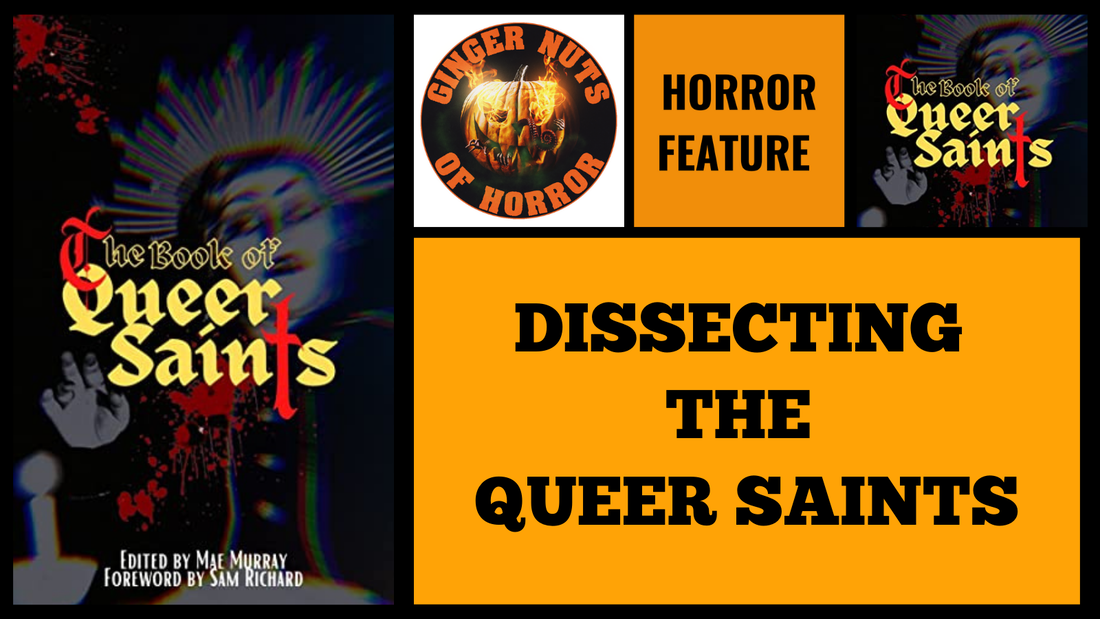 |  |
THE HEART AND SOUL OF HORROR PROMOTION WEBSITES

Cards on the table: I never really enjoyed the original Resident Evil 3. At the time of its release, not only the Resi franchise but Survival Horror itself had become well established in terms of tropes, cliches and characteristics, with numerous franchises attempting to collect on its popularity. As a result, for those of us who immersed ourselves in such fare, it had begun to lose its allure, whilst certain species of more revolutionary horror (most notably those occuring on the PC) were starting to swell in terms of popularity and market presence.
Resi 3 I find to be the weakest of the original 3 games. Not a bad effort, by any stretch; an important game in many respects, in that it includes certain revolutions that would become de rigeur in video game horror to the present day, but certainly lacking in the atmosphere and novelty that made the first two titles such seismic hits.
Part of that disappointment certainly lies with the design of the game's most prominent feature: the eponymous super-bio-weapon, Nemesis.
Resi 3 I find to be the weakest of the original 3 games. Not a bad effort, by any stretch; an important game in many respects, in that it includes certain revolutions that would become de rigeur in video game horror to the present day, but certainly lacking in the atmosphere and novelty that made the first two titles such seismic hits.
Part of that disappointment certainly lies with the design of the game's most prominent feature: the eponymous super-bio-weapon, Nemesis.

In game, Nemesis is a fantastically terrifying entity; one of the first “stalker” antagonists in horror video gaming, whose presence is felt throughout the run-time, that may turn up around any corner or at any moment to harass player character Jill Valentine.
That technical element of the game is superb; whenever Nemesis turns up, it's always a tense and terrifying struggle between whether to stay and fight the ostensibly immortal bio-horror or run and preserve essential commodities such as health, ammo etc.
Yet, the horror of Nemesis derives more from his framing than from the monster itself. In all honesty, compared to the Cronenbergian body-horror nightmares of Resident Evil 2 (William Birkin , Mr. X et al), Nemesis is almost comedic in his original incarnation, the design -in isolation from its situational framing- more likely to evoke sighs and laughter than yelps of horror.
This factor is improved later when the entity -in classic Resident Evil style- goes through several unlikely mutations, becoming ever more elaborate and nightmarish until the final encounter, when it becomes nigh-Lovecraftian.
However, even these moments feel like diluted echoes of the same truly horrific metamorphoses evinced by the previous game's William Birkin (stay tuned to the series for more on that particular abomination). Hardly ever in the original Resi 3 do I feel the same degree of tension, dread and fraught atmosphere as in the prior two titles. Atmosphere is largely sacrificed in favour of shocks and set-pieces, which is a shame given how profoundly reliant on that factor the series was heretofore.
Alone of the original three games, Resi 3 is the one I never completed all the way through nor felt particularly compelled to (learning much later, thanks to the internet, that the game was effectively a rushed-together demo that Capcom swelled out to fill an otherwise empty Christmas period does not strike me as surprising in the least; the whole game has a patchy, rushed-together feeling entirely at odds with the operatic composure of the previous entries).
Flash forward almost a couple of decades, many, many developments, trends, fashions and experiments in video game horror later, and we have the inevitable 2020 remake of Resident Evil 3.
Hot on the heels of the sublime and insanely successful remake of Resi 2, this title immediately fell into a more fraught and cautious situation (the original Resi 3, whilst beloved, has always been the least popular of the original games). Fans were somewhat dubious about the development cycle, given that the game was set for release within a year of the Resi 2 remake. Could it possibly be a fully fleshed-out game in that time frame? Could it be significantly distinct from Resi 2 in terms of gameplay to even warrant being a separate title, rather than elaborate DLC?
That technical element of the game is superb; whenever Nemesis turns up, it's always a tense and terrifying struggle between whether to stay and fight the ostensibly immortal bio-horror or run and preserve essential commodities such as health, ammo etc.
Yet, the horror of Nemesis derives more from his framing than from the monster itself. In all honesty, compared to the Cronenbergian body-horror nightmares of Resident Evil 2 (William Birkin , Mr. X et al), Nemesis is almost comedic in his original incarnation, the design -in isolation from its situational framing- more likely to evoke sighs and laughter than yelps of horror.
This factor is improved later when the entity -in classic Resident Evil style- goes through several unlikely mutations, becoming ever more elaborate and nightmarish until the final encounter, when it becomes nigh-Lovecraftian.
However, even these moments feel like diluted echoes of the same truly horrific metamorphoses evinced by the previous game's William Birkin (stay tuned to the series for more on that particular abomination). Hardly ever in the original Resi 3 do I feel the same degree of tension, dread and fraught atmosphere as in the prior two titles. Atmosphere is largely sacrificed in favour of shocks and set-pieces, which is a shame given how profoundly reliant on that factor the series was heretofore.
Alone of the original three games, Resi 3 is the one I never completed all the way through nor felt particularly compelled to (learning much later, thanks to the internet, that the game was effectively a rushed-together demo that Capcom swelled out to fill an otherwise empty Christmas period does not strike me as surprising in the least; the whole game has a patchy, rushed-together feeling entirely at odds with the operatic composure of the previous entries).
Flash forward almost a couple of decades, many, many developments, trends, fashions and experiments in video game horror later, and we have the inevitable 2020 remake of Resident Evil 3.
Hot on the heels of the sublime and insanely successful remake of Resi 2, this title immediately fell into a more fraught and cautious situation (the original Resi 3, whilst beloved, has always been the least popular of the original games). Fans were somewhat dubious about the development cycle, given that the game was set for release within a year of the Resi 2 remake. Could it possibly be a fully fleshed-out game in that time frame? Could it be significantly distinct from Resi 2 in terms of gameplay to even warrant being a separate title, rather than elaborate DLC?
Of course, present-day-Capcom being present-day-Capcom, we needn't have worried.
Whilst certainly the least distinct and certainly the least successful of the remakes, it is still a remarkable update that changes more of the original game arguably than any of the previous two. Clearly recognising that more would have to be done to make this title work, Capcom have gone out of their way in terms of design, technicals and writing to ensure that this is a fitting successor to Resis 1 and 2, as well as a more complete and rounded game in its own right than the original.
Entire sections of the original game have been reimagined, subtly reframed or changed/excised. Rhythm is all-important in this title, as it boasts a more fraught and tense species of horror; that of being hunted through impossible circumstances by an entity that cannot be reasoned with, cannot be stopped. This is the core of Resi 3's peculiar species of horror; it foregoes the slow dread of the previous two entries in favour of an almost perpetual state of panic: the “safe zones” and safe rooms of before are largely done away with, Jill's ability to render areas passable or inert massively truncated.
And, of course, there is the all-new, all-singing, all-dancing Nemesis.
As before, this titanic, leather-clad super-zombie occurs fairly early in the game, crashing through Jill's apartment wall -a notably different introduction from the original game-, growling its iconic “STARSSSSS” catchphrase (Nemesis has been genetically programmed by his creators to hunt down and murder the surviving members of the original STARs team from the previous two games) and demonstrating its incredible capacity for violence. Unlike most of the monsters encountered before, Nemesis is not awkward or clumsy, but moves with incredible speed, deftness and purpose, often leaping to scale walls and rooftops only to descend in front of Jill, forcing the player to double pack or seek alternative routes on the fly if they want to survive. He is a notably different presence and species of threat in the game from the more directionless, mindless bio-horrors that infest the rest of it, often -comedically- punching lesser zombies out of the way, picking them up and hurling them aside when they get in his way or -a development later in the game- infesting them with parasitic matter that has the quality of mutating them into something more akin to Resident Evil 4's Ganados monsters (which this remake cleverly links the Nemesis himself to mythologically).
Whilst certainly the least distinct and certainly the least successful of the remakes, it is still a remarkable update that changes more of the original game arguably than any of the previous two. Clearly recognising that more would have to be done to make this title work, Capcom have gone out of their way in terms of design, technicals and writing to ensure that this is a fitting successor to Resis 1 and 2, as well as a more complete and rounded game in its own right than the original.
Entire sections of the original game have been reimagined, subtly reframed or changed/excised. Rhythm is all-important in this title, as it boasts a more fraught and tense species of horror; that of being hunted through impossible circumstances by an entity that cannot be reasoned with, cannot be stopped. This is the core of Resi 3's peculiar species of horror; it foregoes the slow dread of the previous two entries in favour of an almost perpetual state of panic: the “safe zones” and safe rooms of before are largely done away with, Jill's ability to render areas passable or inert massively truncated.
And, of course, there is the all-new, all-singing, all-dancing Nemesis.
As before, this titanic, leather-clad super-zombie occurs fairly early in the game, crashing through Jill's apartment wall -a notably different introduction from the original game-, growling its iconic “STARSSSSS” catchphrase (Nemesis has been genetically programmed by his creators to hunt down and murder the surviving members of the original STARs team from the previous two games) and demonstrating its incredible capacity for violence. Unlike most of the monsters encountered before, Nemesis is not awkward or clumsy, but moves with incredible speed, deftness and purpose, often leaping to scale walls and rooftops only to descend in front of Jill, forcing the player to double pack or seek alternative routes on the fly if they want to survive. He is a notably different presence and species of threat in the game from the more directionless, mindless bio-horrors that infest the rest of it, often -comedically- punching lesser zombies out of the way, picking them up and hurling them aside when they get in his way or -a development later in the game- infesting them with parasitic matter that has the quality of mutating them into something more akin to Resident Evil 4's Ganados monsters (which this remake cleverly links the Nemesis himself to mythologically).
In terms of design, the Nemesis has been phenomenally upgraded, his previous 32-bit goofiness abandoned in favour of a scarred, stretched and tortured look reminiscent of some of the more elaborate Cenobites from Clive Barker's Hellraiser franchise. This version of the game also hammers home the monster's sheer indestrucible nature: from the beginning, Nemesis is variously crushed, shot, burned alive, hurled from buildings, rammed by trucks, blown up by missile launchers and explosives, yet always returns in new and more monstrous forms.
The creature's occurrence in the game and its general framing have been dramatically altered: in dynamic, he is more akin to the “stalker” entities to be found in Resident Evil 7 (e.g. Jack Baker) and the Resi 2 remake (Mr. X/The Tyrant), wandering around the various environments in active search for Jill, relentlessly pursuing whenever he catches wind of her. This lends the game a certain degree of stealth and subtlety that wasn't present in the original: it's often necessary to plot a route around Nemesis or distract him down particular corridors or alleyways before doubling back to make it past to other essential areas. All the while, he engages in numerous -and highly entertaining- forms of attack, from ripping up elements of the environment and hurling them at Jill to whipping and stabbing at her with the parasitic tendrils that emerge from his hands. Later, he'll even use certain long-range armaments such as missile launchers and flamethrowers -yes, undeniably silly, but also surprising enough for monsters in a Resi game to lend the development a certain tension.
In the set-pieces that follow, Nemesis generally experiences some fresh mutation, the unstable G-Virus in his system (the same that reduced its creator, William Birkin, to Lovecraftian abomination in the previous game) interacting with the tailored Las Plagas parasites grafted into his anatomy to produce body-horror that is as brilliant in its elaboration as it is horrific. Foregoing his former -somewhat- humanoid appearance, the resultant creature lopes down on all fours, swells into a bestial condition and lashes out with toxic barbs, one of which pierces Jill and infects her with the T-Virus itself in one of the game's most tense twists.
In a final encounter with the entity, its body loses all constraint or control, flowering into a fleshy, tentacle-sprouting, multi-mawed nonsense that requires use of a science-fiction rail-gun weapon in order to finally put down.
In all of his new incarnations, Nemesis is not only fantastically threateniing but also tremendously cool; a monster more akin to those that we've come to expect from the franchise, that -cleverly- pays homage to what has come before and what -with the benefit of hindsight- we know will come after (the much anticipated remake of Resi 4 is purportedly already in the works).
The creature's occurrence in the game and its general framing have been dramatically altered: in dynamic, he is more akin to the “stalker” entities to be found in Resident Evil 7 (e.g. Jack Baker) and the Resi 2 remake (Mr. X/The Tyrant), wandering around the various environments in active search for Jill, relentlessly pursuing whenever he catches wind of her. This lends the game a certain degree of stealth and subtlety that wasn't present in the original: it's often necessary to plot a route around Nemesis or distract him down particular corridors or alleyways before doubling back to make it past to other essential areas. All the while, he engages in numerous -and highly entertaining- forms of attack, from ripping up elements of the environment and hurling them at Jill to whipping and stabbing at her with the parasitic tendrils that emerge from his hands. Later, he'll even use certain long-range armaments such as missile launchers and flamethrowers -yes, undeniably silly, but also surprising enough for monsters in a Resi game to lend the development a certain tension.
In the set-pieces that follow, Nemesis generally experiences some fresh mutation, the unstable G-Virus in his system (the same that reduced its creator, William Birkin, to Lovecraftian abomination in the previous game) interacting with the tailored Las Plagas parasites grafted into his anatomy to produce body-horror that is as brilliant in its elaboration as it is horrific. Foregoing his former -somewhat- humanoid appearance, the resultant creature lopes down on all fours, swells into a bestial condition and lashes out with toxic barbs, one of which pierces Jill and infects her with the T-Virus itself in one of the game's most tense twists.
In a final encounter with the entity, its body loses all constraint or control, flowering into a fleshy, tentacle-sprouting, multi-mawed nonsense that requires use of a science-fiction rail-gun weapon in order to finally put down.
In all of his new incarnations, Nemesis is not only fantastically threateniing but also tremendously cool; a monster more akin to those that we've come to expect from the franchise, that -cleverly- pays homage to what has come before and what -with the benefit of hindsight- we know will come after (the much anticipated remake of Resi 4 is purportedly already in the works).
Even so, he features quite low down on this list owing to a couple of factors: first and foremost, those already mooted: he is the poster-boy for the least of the original three games, and thus, unlike Resi 1's Tyrant or Resi 2's William Birkin and Mr. X, suffers massively from over-exposure: there is no surprise in Nemesis: he occurs from the beginning of the game, is fairly clear in terms of his nature and intentions and is simply a monster to avoid and inevitably defeat. His equivalents in prior entries boast more in the way of build up, mystery and back story, and are framed so as to be the ultimate horrors of their respective narratives. Nemesis is such a perpetual and pervasive presence -even in the remake-, that he becomes almost an environmental hazard; something the player knows is going to occur at particular points in the narrative, and is therefore diminished in terms of impact.
The remake also makes a minor error in including too many encounters with the monster. Certainly towards the end, there's at least one set-piece battle that feels somewhat contrived, too “video game” in nature and doesn't need to be there in terms of story. This has the effect of diminishing the final encounter, when the monster's re-emergence would have been surprising and signficant.
On a personal level, Nemesis lacks the nostalgia and sentiment I might apply to other monsters in the series. He marks my own removal from the franchise in my youth, when I somewhat abandoned survival horror in favour of newer and more exotic species.
Whilst the remake's incarnation of the creature has gone a long way to redressing that balance, he is still, for me, one of the lesser of the “Big Bads” this series has to throw at us, and particularly suffers in context with those that occurred in the previous Resident Evil 2 and the succeeding Resident Evil 4.
A fantastic monster in his own right, but one perhaps diluted by his place in the franchise's history.
The remake also makes a minor error in including too many encounters with the monster. Certainly towards the end, there's at least one set-piece battle that feels somewhat contrived, too “video game” in nature and doesn't need to be there in terms of story. This has the effect of diminishing the final encounter, when the monster's re-emergence would have been surprising and signficant.
On a personal level, Nemesis lacks the nostalgia and sentiment I might apply to other monsters in the series. He marks my own removal from the franchise in my youth, when I somewhat abandoned survival horror in favour of newer and more exotic species.
Whilst the remake's incarnation of the creature has gone a long way to redressing that balance, he is still, for me, one of the lesser of the “Big Bads” this series has to throw at us, and particularly suffers in context with those that occurred in the previous Resident Evil 2 and the succeeding Resident Evil 4.
A fantastic monster in his own right, but one perhaps diluted by his place in the franchise's history.
Check out the other articles in George's series on Resident Evil
TOP TEN RESIDENT EVIL MONSTERS PART 1: THE CERBERUS
TOP TEN RESIDENT EVIL MONSTERS PART 2: THE LICKERS
TOP TEN RESIDENT EVIL MONSTERS PART 1: THE CERBERUS
TOP TEN RESIDENT EVIL MONSTERS PART 2: THE LICKERS
CHECK OUT TODAY'S OTHER ARTICLES ON GINGER NUTS OF HORROR
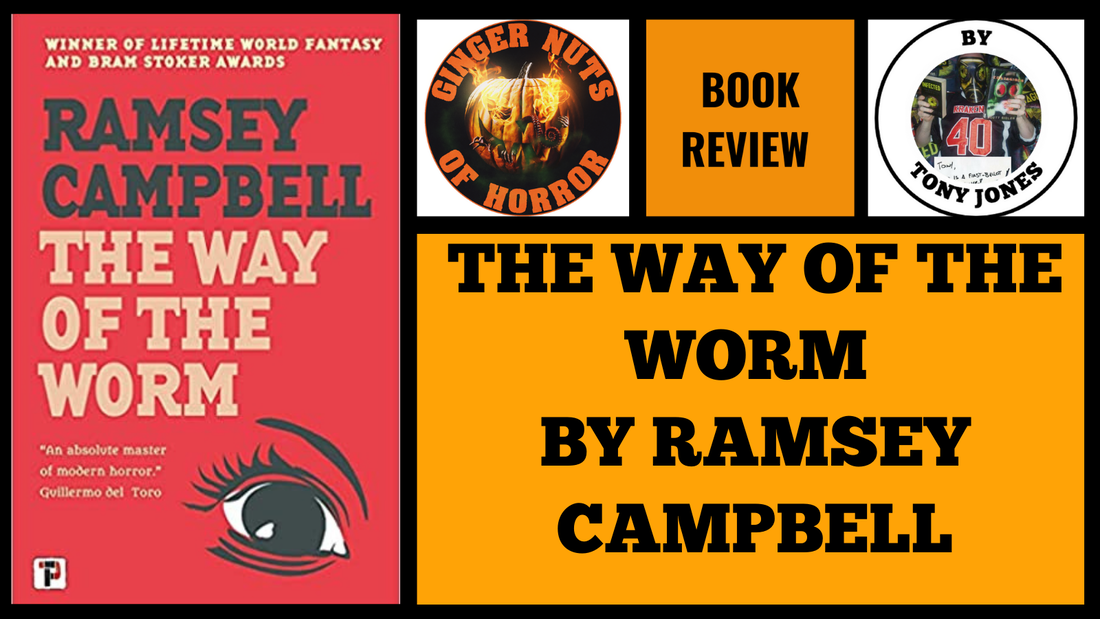 | |
THE HEART AND SOUL OF HORROR PROMOTION WEBSITES


Archives
April 2023
March 2023
February 2023
January 2023
December 2022
November 2022
October 2022
September 2022
August 2022
July 2022
June 2022
May 2022
April 2022
March 2022
February 2022
January 2022
December 2021
November 2021
October 2021
September 2021
August 2021
July 2021
June 2021
May 2021
April 2021
March 2021
February 2021
January 2021
December 2020
November 2020
October 2020
September 2020
August 2020
July 2020
June 2020
May 2020
April 2020
March 2020
February 2020
January 2020
December 2019
November 2019
October 2019
September 2019
August 2019
July 2019
June 2019
May 2019
April 2019
March 2019
February 2019
January 2019
December 2018
November 2018
October 2018
September 2018
August 2018
July 2018
June 2018
May 2018
April 2018
March 2018
February 2018
January 2018
December 2017
November 2017
October 2017
September 2017
August 2017
June 2017
May 2017
April 2017
March 2017
February 2017
January 2017
December 2016
November 2016
October 2016
September 2016
August 2016
July 2016
June 2016
May 2016
April 2016
March 2016
February 2016
January 2016
December 2015
November 2015
October 2015
September 2015
August 2015
July 2015
June 2015
May 2015
April 2015
March 2015
February 2015
January 2015
December 2014
November 2014
October 2014
September 2014
August 2014
July 2014
June 2014
May 2014
April 2014
March 2014
February 2014
January 2014
December 2013
October 2013
September 2013
August 2013
 RSS Feed

|

|