

 Wales, one of four small countries which make up the United Kingdom, is a land of contradiction and contrast. From the former coal mining valleys in the south, to the mountainous National Parks in the north, Wales is renowned for its language, its friendly people, its national flag which features a red dragon (Y Ddraig Goch), and... rain! Yes, we have plenty of rain here. And one more thing: in Wales, sheep outnumber people four to one. As a writer, my surroundings provide a wealth of opportunity. I grew up in the industrial south, and went on to teach there for twenty-eight years. As a child, the landscape, with its many coal mines (almost all of which are now closed), was pretty bleak. Slag-heaps and abandoned coal carts were our playground, and after a day playing outdoors we would arrive home with faces as filthy as the coal miners’. In every valley, towering metal structures loomed out of the ground, winding wheels groaned and spun as they lowered the men into pit bottom. And you knew, even as a child, that ‘down there’ was pitch dark, nothing but coal dust which corroded lungs and turned wounds into everlasting blue-black scars. I remember an uncle who wore one such scar above his left eye. It fascinated me, the colour. If your dad didn’t work down the pit, your uncle did, or your grandfather, or neighbour. It was impossible to be brought up in a coal mining town and not be influenced by it. I’m a little too young (just) to remember the Aberfan disaster which featured in the Netflix series, The Crown. However, the tragedy struck just a few miles from where I lived, and, like J.F.K’s assassination or 9/11, no-one forgot where they were when they heard the news. Days of relentless rain caused 150 000 tonnes of coal sludge to avalanche onto the primary school, killing 116 children and 28 adults. Those were the kind of stories I grew up with. And those are the kind of stories that stick. Consequently, one of the stories in my portal horror collection, Door and other twisted tales, is entitled Mine. It tells the story of eleven-year-old Anna, a trapper, whose job it is to open and close the air-doors underground. This one has a kind of Welsh/Cthulhu vibe (if such a thing is possible), and, like most of my stories, comes complete with a moral message. Another story, influenced by living and working in the South Wales Valleys, is the dark comedy, Two’s Company, Three’s a Shroud, published in 2020 by Kandisha Press in the Graveyard Smash anthology. As I said in the introduction, the people of Wales are renowned for their friendliness. We also have a propensity towards dark humour and will often spin an amusing yarn out of bad fortune. Two’s Company, Three’s a Shroud was inspired by an article I read in a local newspaper which spoke of how the graveyards in the South Wales Valleys (the most densely populated area of Wales) were full to capacity, and how the council were considering reclaiming old graves so that they could bury people on top of the remains of those long buried. There was a condition attached: the reclaimed graves had to be at least a hundred-years-old. This got my dark humour juices flowing. I wondered what it would be like if a typical Welsh ex-miner was buried on top of a wealthy former magistrate. What kind of relationship would develop between the ghosts of two men with such conflicting life experiences? What kind of banter would occur? I loved writing this story. The protagonist, Stan, is so typical of characters I know in real life, though I did worry a little about whether non-Welsh readers would be able to tune in to the humour. After all, I’m sure Elle Turpitt will agree that the Welsh sense of humour can be pretty bleak. After teaching in South Wales for twenty-eight years, I escaped the valleys and moved to West Wales where the grass is greener, beautiful beaches can be found within spitting distance, and Welsh is still most peoples’ first language. Now I’m free to write every day, free to roam the scenic coast-path or amble beside the many rivers, and life is glorious! My husband is an artist/photographer, so we often pack a picnic and set off on a shoot at a moment’s notice (also known as when the rain finally stops). Although neither of us is religious, we both adore old churches and graveyards and can often be found haunting such places. Ancient churches provide a wealth of story potential: unique atmosphere, incredible architecture which seems to defy everything the Welsh climate throws at it, and they also offer a dip into personal stories inscribed on gravestones. 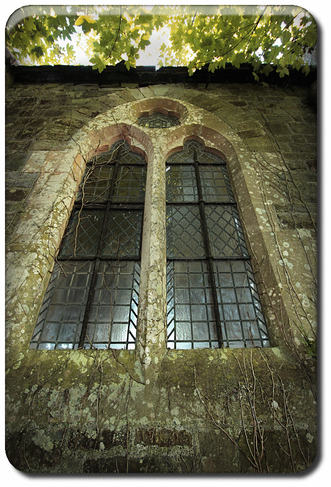 The photograph depicting an old window was the stimulus for my short story, Mosaic, which I’m thrilled to say will be published in the June edition of The British Fantasy Horizons Journal. We stumbled upon this particular church by accident after the sat nav led us along a complicated route of narrow lanes and farmland. Long-abandoned, this particular church was a gem. I fell in love with the window which stood at the back, overlooking crumbling headstones and beyond to woodland. Instead of plain glass, I imagined it once depicted a creature spawned of Cthulhu, a demonic deity once worshipped in this backwater place. My husband created a CGI image of the creature, which, by the way, will feature on the front cover of the afore-mentioned journal (how exciting!), and my pen did the rest. The main character in the story is a photographer who stumbles upon the window, but finds it smashed to pieces. She becomes obsessed with piecing it back together, revealing the ancient deity in doing so. This story will also be included in a forthcoming collection I intend to publish during 2021.  Many of my stories are set on or close to the Atlantic coast. The photo, taken top-down, of a little beach with a smattering of buildings, is of a place called Llangrannog and is the setting of my supernatural story published in the winter edition of West Wales Life & Style Magazine. Once again, my husband’s illustration was published alongside the story. We love working on projects together. As childhood sweethearts, it seems we have known each other all our lives. Our interests and skills compliment one another well; yin and yang, or since we’re Welsh, Arthur and Guinevere. Having this story published brightened what for each and every one of us had been a tough year, and the message in the story pays homage to the pandemic in a subtle way. It can be read via the magazine link on my website, or if you prefer to hear me narrate it (complete with Welsh accent), then click on the YouTube link here... https://youtu.be/tHQgqQGh5Lk 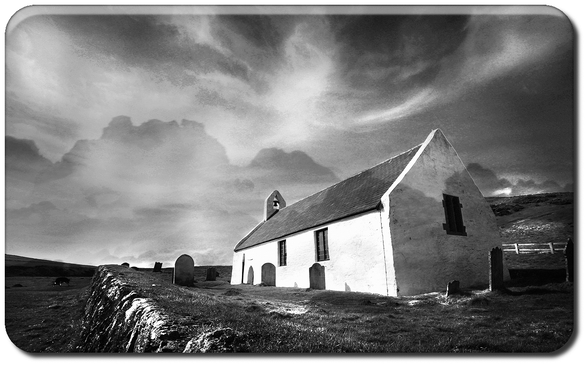 A little further north from Llangrannog lies the tiny hamlet of Mwnt, with its tiny white-washed church set on the cliff-top. In 2018, the funeral of Ray Thomas, founding member of The Moody Blues, was held right here in this little church beside the sea. It is the setting of my novella, Immortelle, a Gothic ghost story, which, I’m thrilled to say, is due for publication by Off Limits Press in July 2021. Throughout Wales, and especially in more untouched regions such as this, Victorian immortelles can still be found in graveyards. Intended as permanent memorials to the dead, they consist of ceramic flowers, birds, cherubs and such like. These ‘permanent’ memorials are arranged on a base and covered with a glass dome before being placed on the graves of the deceased. Such things appeal to my macabre nature, and for this story I imagined a ceramicist who begins to create customized immortelles as a means of coming to terms with a personal trauma. I dare not reveal more without giving spoilers, but I am hugely excited for this publication. There are several other stories with a Welsh setting sitting patiently on my P.C. right now, including a dark fantasy novel, The Wolf and the Favour, which is set right here in the two-hundred-year-old farmhouse in which I live, and a short story set deep in the heart of Mynydd Epynt, entitled Lure, published in The One That Got Away anthology by Kandisha Press. Written in second person narrative, this one is deliciously dark and frankly quite sick in a subtle, suggestive way. 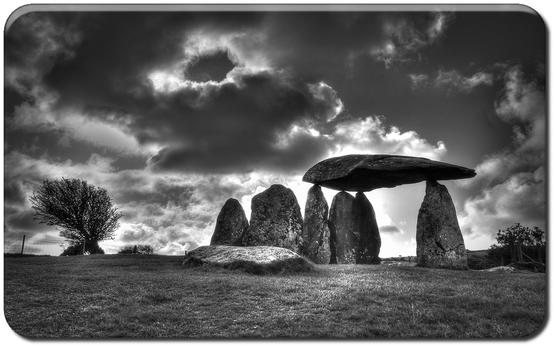 I’ll end with Carreg Samson, the story published in the charity anthology, Diabolica Britannica in 2020, and told from the point of view of a cromlech. Wales is riddled with standing stones, cairns, cromlechs and castles, and this one is set in the former fishing village of Abercastle, a few miles further along the coast in the neighbouring county of Pembrokeshire. It’s a love story of sorts, but not your usual kind. It also carries a moral message about the way we treat the natural environment. I will be forever grateful to horror master, Ramsey Campbell, for the kind words he wrote about this story. Referring to it being told from the point of view of a cromlech, he said... “Catherine McCarthy’s extraordinary saga gives a stone a voice. Might it be a distant cousin of those rocks that inhabit a nightmarish landscape in Machen’s “The White People”? As well as a heart unhappily close to human, it has the soul of the land it inhabits, on whose behalf it exacts a terrible revenge. That the author makes us care about the dilemma and the suffering of such an object is an achievement close to mystical.” So, Wales... Land of my Fathers, Land of Song, Home of the Red Dragon... you will always hold a special place in my heart. Long may you offer a nudge to the nib of my pen! MISTS AND MEGALITHS BY CATHERINE MCCARTHY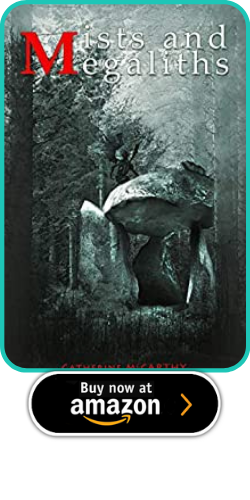 Welcome to Wales, land of mists and megaliths, where mythical creatures and ancient spirits lurk in the strangest of places. This collection of 10 supernatural stories offers a flurry of folklore, a gathering of ghosts, and even a cosmic cave creature. Stories include... Lure: A fisherman who nets the tail fin of a lure becomes obsessed with finding the rest, but what else lies hidden in the ancient lake? Carreg Samson: A Neolithic burial chamber stares out to sea, remembering times long since past, but when it loses its heart of stone to a young girl the repercussions are hard to bear. Coblynau: An old man watches the mountain which was once a slag heap of coal. He listens for the knock of the Coblynau, certain they will come for him... soon, just like they did to warn of the Aberfan disaster. Author Catherine McCarthy’s second collection invites the reader on a regional journey, evoking a sense of quiet horror from the cosmic to the Gothic. Catherine McCarthy Catherine McCarthy is a spinner of dark tales which deliver a sting in the tail. She has published two novels and two collections of short stories. Her new novella, Immortelle, will be published by Off Limits Press in July 2021. Her short stories and flash fiction have been published in various places online and in anthologies such as Diabolica Britannica, The One That Got Away, and 25 Gates of Hell. In 2020 she won the Aberystwyth University Imagining Utopias prize for creative writing. Catherine lives in a two-hundred-year-old farmhouse with her illustrator husband and its ghosts, and when she is not writing may be found hiking the coast-path or photographing ancient churchyards for story inspiration. Discover more at... https://www.catherine-mccarthy-author.com/ Social media links: https://twitter.com/serialsemantic https://www.youtube.com/channel/UCmuypTAKuZbPvgtJr3IMQ7w TODAY ON THE GINGER NUTS OF HORROR WEBSITE MEAT GRINDER (2009) - FILM GUTTER REVIEWS THE HEART AND SOUL OF HORROR WEBSITES  And so a crush was born: Ripley this, Ripley that. I didn’t stop talking about the character or the movie. For months. Technically, years, since I’m still talking about her right now. Have you seen it? Isn’t Ripley just so cool? I hope there’s going to be a sequel. Do you want to see it again? What else has Sigourney Weaver been in? Do you want to see literally every movie she ever made starting right now? There’s a tub of popcorn shuffling between us, our knees knocking in the dark. For differing reasons, we are both prepared to scream by the time the end credits roll. Even with a hazy early memory about watching the sci-fi horror Alien franchise, one thing stands out: Ripley. Before anyone swiped right or hosted LGBTQ+ student alliances for kids in the Midwest, I was a young queer kid falling into a deep infatuation with the lone survivor of the Nostromo. What follows are my reflections about this increasingly transgressive character and my experiences with Post Ripley Stress Syndrome (PRSS). PRSS never impaired my judgment, but it definitely had a set of identifiable symptoms and stages in my experience: Anxiety. Confusion. Recognition. Acceptance. Pre-Ripley, a lot of horror’s women often seemed to follow a pattern of STD: Sexy Til Death. After years of repeated exposure to these relatively un-liberatory, often voyeuristic fantasies about women, I met Ripley on an afternoon excursion to the theatre. I don’t remember a lot about that fateful day at the mall, but I imagine I bought a ticket to something PG and ducked in unnoticed. My memory loss was not because the film was so scary (though it was). Mostly, my memory blurred due to more distracting thoughts, mental intrusions that overrode my ability to process information and store memories. Cue the first stages of PRSS— anxiety and confusion. At first Ripley seemed like a side character, but then she kicked ass all over the ship and took charge of shit. Ripley saved the day. Ripley outlived the tough guy. Hell, Ripley outlived the android. These were awesome and overwhelming events in my impressionable mind: an inspiring and appealing woman hero at last. Though a refreshing alternative to the usual fare, other distractions also snagged my attention and spawned some anxiety. Just what was the matter, what thread of self-awareness prompted such a profound disturbance? Jockeys. More specifically, Ripley in Jockeys. These visuals led to a brief but disorienting bout of confusion. I considered (for reals) that despite an acute fondness for Vincent Price and a few other pretty gentlemen, I had a stirring toward Ripley that was as unanticipated as it was undeniable. In fact the first time I returned to the original Alien as an adult viewer, I spotted the old symptoms flaring up. About halfway through the movie I admitted the signs of PRSS. “This isn’t how I remember it at all.” Confusion. Turns out I had very little recollection of the film, just Ripley. Apparently I’d been so transfixed by my original viewing, I remembered the film all wrong. For instance, it took For.Ev.Er. for Ripley to take charge. All I remembered was Ripley’s extreme badassery. Also (honestly) back to Ripley in those Jockeys: My youthful queer memory rearranged all the events in the film. The way I remembered it, Ripley spent more than half the movie fighting that nasty alien in cotton skivvies, not an oversized green uniform. Busted! This momentary confusion quickly gave way to recognition, stage three of PRSS: I liked and wanted to be like Ripley. Unlike so many scream queens that came before, Ripley was highly capable. She made plans, fought hard, and faced her fears. To me, Ripley was the whole package: indignant when ignored, smart and tough, but caring enough to save the cat. That’s a model woman, right there: facing certain death and utter terror, but calm and loyal enough to retrieve her feline companion. Also— obviously, Ripley was crafted to be appealing to lesbians. Why else would the cat even be on the ship? And so a crush was born: Ripley this, Ripley that. I didn’t stop talking about the character or the movie. For months. Technically, years, since I’m still talking about her right now. Have you seen it? Isn’t Ripley just so cool? I hope there’s going to be a sequel. Do you want to see it again? What else has Sigourney Weaver been in? Do you want to see literally every movie she ever made starting right now? My preoccupation with this iconic character followed her many triumphs and trials throughout the sequels. Though early in the series Ripley’s heteronormative identity was confirmed with various love interests and backstories, I didn’t long doubt that my fondness was based on aspiration and attraction. Hence, the ultimate resolution of PRSS. Acceptance. As the franchise developed alongside my own queer identity, Ripley became a figure of resilience. During this time, Ripley also became less human and more alien. After coming out and being rejected by some important people, I felt more like an outsider in my own life, too. All of which made Ripley’s rebirth and resilience even more appealing. By the final installment, Alien: Resurrection (1997), Ripley was more than a woman, if the alien-human clone was a woman at all. This Ripley was also constructed more clearly in terms of lesbian window-dressing. In addition to the concerned, flirty glances between Ripley and Call (Winona Ryder) there was Ripley’s incredibly butch, behind the back, basketball shot (major swoon). By the time Ripley held Call’s face in her hands in a quasi-dominant, slightly threatening yet suggestive come-on, I was out of the closet and reading the queer subtext (and probably drooling a little). When Ripley pressed her cloned-alien hand into Call’s soft, white android-goo, it was damn near the steamiest, thinly-veiled lesbian sex scene I’d ever watched on the silver screen. With that kind of queering, no wonder Ripley 4.0 was more monster than woman, but to me she remained the only hero worth cheering. In retrospect PRSS guided me toward healthy independence and self-acceptance. Years later, I’m still recognizing the influence the film had on me. Amidst the terrifying effects and creepy alien cloning, I got comfortable with the co-existent fantasy of Ripley’s badassery and sexiness. Now as a happily coupled adult, I relish the presence and celebration of tough women. I make room for them in real life, and I write them into my stories. I look for horror where outsiders and underdogs take the lead, where tough women save the day and save the cat. And I’m not going to lie, I still swoon every time Ripley makes that over-the-shoulder shot. Just a few nights ago I was thinking of how to wrap up this essay with a deep comment about what Ripley symbolized to me as a youth. That night, I dreamt my real-life sweetheart miraculously arranged a Sigourney Weaver appearance at my birthday party. Sigourney cooly emerged from a giant cake in Nostromo gear (not Jockeys) and waved at me with an ironic eyebrow-raise and a twinkle in her eyes. Like one resilient outsider-survivor to another, Sigourney-as-Ripley said it all with a wink in that dream: Guess what, kid, I’ve still got this. And you know what? She does. So do I. And that’s good enough for me. Liar: Memoir of a Haunting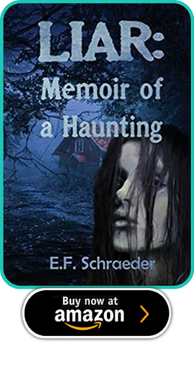 Who doesn’t crave a little escape? Dreaming of small town life and rural charm, Alex and Rainey find a deal on an old rustic home they can’t resist. But soon after Rainey moves, her preoccupation with weird local history and the complications of living alone in the woods take a toll. Alex worries that the long nights and growing isolation are driving her stir crazy. When the Sugar House is damaged and Rainey goes missing, Alex doesn’t know where to turn. Was it a storm, vandals, or something worse? What happened at the Sugar House? The only thing worse than wondering is finding out. E. F. Schraeder E. F. Schraeder is the author of the queer gothic novella Liar: Memoir of a Haunting (Omnium Gatherum, 2021); and the story collection Ghastly Tales of Gaiety and Greed (Omnium Gatherum, 2020). A semi-finalist in Headmistress Press’ 2019 Charlotte Mew Chapbook Contest, Schraeder is also the author of two poetry chapbooks. Dr. Schraeder’s work has appeared in many journals and anthologies including Strange Horizons, Birthing Monsters, Mystery Weekly Magazine, The Feminist Wire, Lavender Review, the ALA Intellectual Freedom Blog, Radical Teacher, and other places. Links Author, http://www.efschraeder.com Liar: Memoir of a Haunting! at Omnium Gatherum, Goodreads https://www.goodreads.com/author/show/5989787.E_F_Schraeder TODAY ON THE GINGER NUTS OF HORROR WEBSITE MARCH-APRIL YA/MIDDLE GRADE HORROR ROUND-UP THE HEART AND SOUL OF HORROR WEBSITES  How many times have you revisited a former favourite childhood TV show, only to find it completely and maddeningly unwatchable? You wonder what the appeal was to your younger self, someone you’d previously considered to be something of a cartoon connoisseur. I grew up in the 1990s and cartoons such as ‘He-Man’, ‘Captain Planet’ and ‘Biker Mice From Mars’ were well-loved favourites back in the day. Some of you reading this may be unhappy to hear that, in my opinion at least, they haven’t aged all that well. The animation looks a little wooden, the messages and morals are a little on-the-nose and the fact that so many were clearly long-running advertisements for a toy line is a little difficult to get past. They still have their charms but, let's be honest, they aren’t all that great in the cold, hard light of adulthood. I may not be that kid getting up early on weekends to watch his Saturday morning cartoons anymore, but I do still like my animation and I wish there were more of these shows from my youth that I could re-watch relatively pain-free. While these cartoons were ones I watched every week, there are two that we’re ones I actively looked forward to, the absolute best of the best. These were two cartoons that every kid I knew watched. Cartoons featuring characters we pretended to be in the playground when we weren’t talking about the latest episode we’d watched. They were ‘Teenage Mutant Hero Turtles’ and ‘The Real Ghostbusters’ Teenage Mutant Hero Turtles (yes, ‘Hero’ Turtles. Sorry America, but your Ninja Turtles were deemed too violent for us UK kids and they were renamed here so as not to warp our fragile minds) was an absolute phenomenon in my younger years. Everyone had a favourite Turtle (mine, controversially at the time, was Donatello) and most of my friends had a Turtles lunchbox or t-shirt or toy they’d bring to school. We even dressed up as Turtles for a school play once. I’ll be damned if I can remember what the logic behind it was, but it was a great day nonetheless. Watching the cartoon now, it totally holds up, but that is a different article for a different time. What I wanted to talk about today was my favourite cartoon growing up. The Real Ghostbusters. This was my introduction to the Ghostbusters franchise and was a pretty big deal for me. I was always the one encouraging my friends to play Ghostbusters in the playground (a game that basically entailed chasing an imaginary ghost around, shooting at it with imaginary Proton Packs until we arbitrarily decided that we’d ‘caught' it, only for another ghost to conveniently appear for us to catch all over again). I’m not going to lie, I’d always been reluctant to go back to this particular show because if this one held a special place in my heart. The others, I could live with, but if this didn’t hold up, that would’ve stung. Thanks to DVD and Blu Ray re-releases, sites like YouTube, and the seemingly infinite number of new streaming services, it is tantalisingly easy to check out cartoons from yesteryear, even obscure ones nobody else seems to recollect (you all remember ‘Samurai Pizza Cats’, right? No? Just me?). Thanks to Time Life and their fantastic boxset of the complete series, I had a chance to catch up with my childhood heroes and I’m pleased to report that, not only does the show hold up, it’s actually way better than I remember it being. Here are six reasons why seeking out this series again is well worth your time. It’s Smarter Than You Remember It seems like more of a modern approach to media aimed at children, to include things that would also appeal to adults, something perfected by studios like Pixar, and it is fun to see throwaway lines or small jokes that are there just for the grown-ups. It was something that The Real Ghostbusters were doing spectacularly, way back in the 1980s and into the 90s. It actually started with the very first episode of the show. Titled ‘Ghosts R Us’, where a trio of ghosts set up a rival ghostbusting company in order to discredit the Ghostbusters, effectively taking the shows core concept and flipping it on its head, in the very first episode! Fans of the show would probably agree that it started to take a dip in quality in later years (when it was renamed ‘Slimer and The Real Ghostbusters’ in an attempt to make an already successful show appeal to a younger audience). One of the changes made was to make the teams receptionist, Janine, was ‘toned down’ to be less sarcastic and abrasive and became a little blander as a result. When the change didn’t stick, the writers came up with a canonical explanation in ‘Janine, You’ve Changed'. In the episode, it is revealed that Janine has a fairy godmother who has been granting her wishes, gradually changing her personality and appearance based on how Janine believes she should be. The team ultimately help her to defeat the fairy godmother (actually a demon called ‘Makeoverus Lotsabucks’, in a sly jab to the studio). I’m hard-pressed to think of a children’s show that could get away with effectively airing behind the scenes issues on screen in such a funny and overt way. It Was Genuinely Scary This was probably a big part of the appeal for me as a kid. The strong characters and big action set-pieces were all great but when The Real Ghostbusters wanted to scare you, it was pretty damn effective! There were a surprisingly large number of episodes that I remember giving me nightmares and I’ve picked out just a handful of the most terrifying. The Thing in Mrs Faversham’s Attic – This was a classic episode all around and did a lot to ground and humanise the larger-than-life egomaniac that was The Real Ghostbuster’s Peter Venkman, but what stuck with me is the creepy attic and the creature trapped there by an occult ritual. This one was tense and, when it got going, surreal and disturbing. The Boogieman Cometh – Ask any fan of the show what the scariest episode is, and this will likely be your answer. A cloven-hooved demon squeezing itself through a door half its size to sneak into kid’s bedrooms at night with the express purpose of scaring the shit out of them is pure nightmare fuel, child or adult. Victor the Happy Ghost– If I had to pick the one episode that scarred me as a kid, this would be it. The concept is basically, what if Casper the Friendly Ghost wasn’t all that friendly and could transform into a Gozer-Esque roid monster with a face that’s at least 60% teeth. This one caused me more than one sleepness night! Things Get Very Meta One of the most fun aspects of The Real Ghostbusters is how it not only embraced the film franchise but actually incorporated it into the show in a very meta way. In the cartoon, the movies exist as a fictional version of the REAL Ghostbusters featured in the cartoon. So, the cartoon versions of the Ghostbusters are the real Ghostbusters and Bill Murray, Dan Ackroyd, Harold Ramis and Ernie Hudson just play fictionalised versions of them in the movie! There is a whole episode dedicated to this concept (‘Take Two’) where the Real Ghostbusters visit the set of the 1984 movie in order to bust a ghost plaguing production. After a (mostly) successful mission they attend the movie premiere, where Peter hilariously declares that the actor they have chosen ‘looks nothing like him', but not before Winston gets a killer line declaring that the names Ramis, Ackroyd and Murray ‘sound like a law firm’. It’s such a ballsy, fun take, and one that completely passed me by as a kid that was sadly unfamiliar with the films. It Does An Incredible Amount Of World-Building Ever wonder what’s inside the Ghostbusters containment unit? What became of Gozer? What the Stay Puft Marshmallow Man is up to these days? Well, worry not, because the Real Ghostbusters has answers to all these questions, and more you didn’t even know you needed answers to until now! It’s no secret that the writers on The Real Ghostbusters were largely given free rein to go as big as they liked and that freedom comes through in the finished product. Movie references aside, the rules set in the cartoon universe were clearly defined, always followed, and constantly circle back around, and the work that went into creating the additional lore is a big reason why the show has stood the test of time. All of the team get standalone episodes (even secondaries like Janine and Slimer) to develop their characters and we’re even introduced to extended family. Peter Venkman’s dad was a particular stand-out in episodes such as ‘Venkman’s Ghost Repellers’ and ‘Cold Cash and Hot Water’ He’s a likeable con-man who makes a great foil for Peter, who is obviously uncomfortable with how similar they both are. It is such a rich and vivid world, with so many recurring characters (even ghosts like Sam Hain and the Boogeyman make multiple appearances) that it was far more immersive and developed than a movie spin-off cartoon had any right to be. It Had A H.P Lovecraft Themed Episode The episode that stood out most to me as a horror fan, and one whose references completely went over my head when it first aired, was ‘The Collect Call of Cathulhu’. I know what you’re thinking, massive points for the title already, but it gets better! This whole episode is jam-packed full of H.P Lovecraft references and features Cults, the Necronomicon, Shuggoths, the Old Ones (which Egon helpfully posits ‘made Gozer look like Little Mary Sunshine’) and Cthulhu himself. There are even references that only the most hardened horror lit fans would get. A Professor called Ted Klein? A library official called Clark Ashton? The Ghostbusters are even assisted on this case by Alice Derleth, hailing from Miskatonic University and get some supplies from Wagners Occult shop! The team ultimately defeat the cultists and the Old Ones using an old issue of Weird Tales for guidance. It is so jam-packed full of obscure references that would have been so thoroughly meaningless to me when I first saw it, that I’m sure even horror fanatic present-day me missed a ton of them on the rewatch. Winston Is Awesome Please don’t think I’m speaking ill of the movies here. I love them both but, I’ve got to be honest, I found my first watch of Ghostbusters to be a little jarring having started with the cartoon, largely because of Winston. I don’t think it’s unfair to say that he’s not given a great deal to do in the first film, and it’s hardly an issue the sequel takes great pains to correct. This was weird for me as a kid, because Winston in The Real Ghostbusters is the glue that holds the whole team together. In the cartoon, Winston is the capable, ever reliable member of the team. He’s the one you want with you on the difficult cases, the one who never loses his cool. He was the team’s everyman and by far the most relatable of the team. All the rich back-story in my head about the character came from the Real Ghostbusters. He was accepted into the National Space Program (‘Spacebusters’), is a big baseball fan (‘Night Game’) and an avid reader of mystery novels (‘Boo-Dunit’,’Elementary My Dear Winston’). It’s the little details that made Winston so memorable and it’s a shame that the films never took full advantage of him as a character. With the latest movie (Ghostbusters: Afterlife) on the horizon, I can’t help but hope we’ll see a new animated iteration of the team in the not-too-distant future or, at the very least, the new films puts a well-deserved spotlight back on the well-loved and sorely missed masterpiece that is The Real Ghostbusters. *A big thank you to ghostbusters.fandom.com for the links  Richard is an avid reader and fan of all things horror. He supports Indie horror lit via Twitter (@RickReadsHorror) and reviews horror in all its forms for several websites including Horror Oasis and Sci Fi and Scary TODAY ON THE GINGER NUTS OF HORROR WEBSITE THE BIG BLIND BY LAVIE TIDHAR THE HEART AND SOUL OF HORROR WEBSITES BEHIND THE SCENES of SPAWN: WEIRD HORROR TALES ABOUT PREGNANCY, BIRTH AND BABIES, – PART THREE
19/4/2021
 SPAWN: WEIRD HORROR TALES ABOUT PREGNANCY, BIRTH AND BABIES, edited by award-winning author and anthology editor Deborah Sheldon, will be released worldwide by IFWG Publishing Australia on 3 May 2021. Spawn is a selection of the darkest Australian fiction penned by established authors and fresh new voices. The stories range from the gothic and phantasmagorical, through the demonic and supernatural, to the dystopian and sci-fi. In this four-part series exclusive to Ginger Nuts of Horror, most of the contributors have agreed to pull aside the curtain and reveal the inspiration behind their nightmarish tales. “Part Three” includes insights from writers Janeen Webb, Charles Spiteri, Ash Tudor, Jason Fischer, Jack Dann, and Mark Towse. Janeen Webb on “Mother Diamond” True horror inhabits our domestic spaces, and the horror of coercive control comes in many guises. People have always treasured relics of the dead: from the ostentation of reliquaries for the bones of saints to the simplicity of rings of plaited hair, these keepsakes connect us to our past. In the Victorian period, mourning jewellery was highly popular, and came in many forms: carved jet brooches; gold lockets containing hair snipped from the deceased; creased sepia photographs of loved ones set inside silver fob watches, and so on, all designed to be worn near to the heart. But what if our past is something we’d prefer to leave behind? What if certain objects were interred with the dead for good reason? Disturbing the dead is never a good idea. And the power of the mourning keepsake is always two-edged... When I read an article about a company which, for a hefty price, will take the cremated ashes of one's deceased pet, subject them to extreme pressures, and return them as a manufactured diamond—the ultimate keepsake—I followed the technological trail down the rabbit hole. In the end, it was a short step to apply the process to human remains, transmogrifying the deceased into wearable art. As in much of my work, I literalised the metaphor, turning it into something strange and grotesque before I transposed it into fiction. And I asked the obvious question: what if a keepsake diamond carries its own curse? “Mother Diamond” is the result. www.janeenwebb.com.au Charles Spiteri on “The Remarkable Compass for Finding the Departed” I started writing “The Remarkable Compass for Finding the Departed” about ten years ago. I went into it knowing exactly what type of story it was, where I wanted it to go, what I wanted to do with it. Although I had a great opening and loved the main character and the mythology behind the story, no matter what I did it just didn’t feel right. I got frustrated, angry even, punching in words just to finish it, because for better or for worse I didn’t like leaving stories unfinished. Eventually I abandoned it, but it was always there at the back of my mind, so much so that every now and then I would take another stab at it, much to my regret. A few things happened that steered the story into what it is today. My wife and I went through the IVF program. For some it works; for us it didn’t. It is deceptive that every IVF story in the media, no matter how challenging and torturous the procedure is for the couple, ends with the fairy tale of the couple having a baby. And, as though I wasn’t busy enough writing and working, I developed a bit of a passion for hand-tool woodworking, where I destroyed a lot of projects before I learned to pay attention to what the wood was telling me, to not fight the grain, but to patiently go with it. It follows that I threw away my preconceptions. I realised that our IVF experience fit right in; it was a story about dealing with loss, a through-line that resonated. And now, because I was seeing the story and not the writing, I got rid of the great opening, which had only served as a distraction. From there I just followed the grain. Also, this is the story that introduces my character, Demicoli. He has a world of adventures I am keen to explore in the future. https://twitter.com/strangemachina Ash Tudor on “Empty Bellies” Everyone is pregnant. At least, it feels that way. My husband and I are playing baby-bingo, trying to predict which of our friends will be the next to make a pregnancy announcement. My Facebook feed is full of sonograms and gender reveals. I look around at my friends, at my former classmates and online acquaintances and see myself in the childless minority. “Do you want to have children?” It was such an easy question when I was twenty-three. I could be flippant and answer with a shrug. “Maybe in a few years or so”. It’s not that I rejected the idea of children. I simply didn’t factor them into my grand old plans. I intended to spend my days travelling the world, studying ancient cultures and drinking spiced rum until sunup. Now I’m about to hit thirty. People ask me the same questions with an added flavour of concern. “Aren’t you going to have children soon? Do you want kids?” I still shrug, but now my flippant response is unacceptable. People who’ve always shown disinterest in my reproductive system now view my bunless oven as a problem. It seems my ovaries have started making a ticking noise and everyone can hear it, except me. The truth is I’m in no hurry. Yet, the flood of new babies has got me thinking. Maybe I should be in a hurry. Maybe I should be downright terrified at the prospect of being ‘undecided’ in my thirties while everyone around me is adhering to the same baby-making schedule. I feel like I missed a memo. Should I be worried? These thoughts were running laps in my mind and causing furious distractions during my writing sessions. (I was working on a horror story about mermaids, if you’re wondering) So, I decided to do what I think a lot of writers do; I treated my writing like therapy. I spewed out my conflicting maternal desires, my fears and my indifferences, and ended up with the short story, “Empty Bellies”. I expected the story to be a cathartic epic, with page after page of nonsensical baby-themed turmoil (to birth or not to birth, and all that jazz). After less than two thousand words, I was surprised to find myself finished. It is to date the shortest story I’ve ever completed. I implanted the rational side of my mind into the character of Alma. In Alma we see a woman heavily involved in the maternal world and yet is disinterested in any personal maternal calling. She shows no fear of being a mother and is certainly not afraid of being pregnant; she simply has no appetite for a baby-filled life. The second character represents the other side of my brain. A chaotic side. In her, I place all my anxieties and my fears of motherhood. “Empty Bellies” is a tale of two characters meeting, of two worlds colliding, of the rational trying to shake hands with the primal. It is a story that helped me reconcile two duelling sides of mind and if you’re hoping that the ending will have a similar kind of peaceful reconciliation, well, I can only apologise. http://twitter.com/ashtudor888 Jason Fischer on “A Rose for Becca” I’ve sometimes dabbled in body-horror tales, usually as some additional layer of awful crafted onto a zombie story, but “A Rose for Becca” was different. First published in Borderlands #11, and reprinted in Spawn, this was a story intended to blur the lines between flora and fauna, and to look deeper into what a body actually is. Especially, what happens when the boundaries of our classifications are blurred? Of course, being one of my early stories, this was draped across a postapocalyptic tale. What still draws me to this story of weird pregnancy and birth is this memory: my grandfather had just passed away, and my father and I were clearing up his overgrown back yard as part of the usual scramble to put a long lived-in house into order. The garden was feral with life, a once neatly-planned arrangement growing in all directions. The rose bushes, once so neatly contained in the high garden beds, now cascaded down onto the cement area we’d once played in as kids. Length after length of woody rose stem went into the chipper, and I could not help but think that I was feeding in thorny fingers, one after the other—and then I went home and wrote the story in one hit. Into “A Rose for Becca” I poured all of those feelings of loss, the changes as we wiped away an old life and house into an empty slate for the new owners. Most of all, it was a story of fear; fear of the encroaching green, how given enough time, nature will claw back a cement patch filled with Christmases, birthdays and Easters, joining together, concealing every clue that people had ever been here. This was only in the period of perhaps five to ten years, in the back yard of two ailing pensioners. Extrapolating this to a world scale, the consequences felt horrifying to me, and still do—in my own back yard, the mowers, tools and poisons only do so much to beat back all that green… http://jasonfischer.com.au Jack Dann on “Grieving the Spirit” As I’ve learned over the long years (to my Brobdingnagian chagrin!), the writer doesn’t tell the story; the story tells the writer. Which is exactly what happened with “Grieving the Spirit”. I was certain that this would be at the very least a novelette; but the story, or, rather, the characters had very different ideas. They took—or, rather, stole—my premise and most of my dialogue and then decided to narrate their own story. They decided that conciseness and precision were more important than the author’s predilection to gild and re-gild the proverbial lily. Oh, they happily used my notes, plot arc, and research; but the story—its cut and thrust and emphasis (and most of the dialogue)—is all theirs. About a quarter of the way into the story, their whispers became shouts: they told me where to go in no uncertain terms...and then they told me where to stop. So, gentle and empathetic reader, don’t blame the author. The characters (in their infinite wisdom) made him do it! https://jackdann.com/ Mark Towse on “A Sense of Belonging” “A Sense of Belonging” is about our overwhelming human need to fit in, to be part of something greater. But what if we could never settle? What if we were fed lies and deceit as a child in attempts to protect us from who we really are? Would you want to know? Perhaps sometimes, it’s best not to. This one had me worried as the first draft came in at just over 7,000 words. I had two worlds to get lost in, and that certainly made the tale more interesting while also extremely challenging to write within the specified word count. I was concerned about losing the epic feel of the story, but thankfully, after some crafty editing, I believe it packs even more of a punch. The story begins with Jon, the main character, on a journey into the mountains in an attempt to find answers, but also on the run from unspeakable events back home. Nostalgically he recalls adventures with his father and the stories he used to tell; tales of a different world, shadows within shadows, and horrors no man should ever have to experience. Such tall tales brought him and his father closer together. Over time, though, his father started going on more trips, spending more time away, until one day, he never came back. Jon’s journey in search of answers is long and arduous, made even more so by the visions of his wife and son that haunt him along the way. It’s a mammoth journey of self-discovery and the person we become when we finally connect the dots from our past. That’s all I can say without giving too much away, but I can guarantee it’s not a smooth ride and packs more than a few sucker punches. In my limited spare time, I love to hike. It’s all about the senses, and I really wanted to explore that more in a story, especially the contrasting feel of the forest by day to the one lit only by the sliver of moon. I wanted the reader to feel the forest’s heartbeat, to think of it as a living breathing being in its own right, with its own light-and-dark persona. I hope you enjoy my story! https://marktowsedarkfiction.wordpress.com SPAWN: WEIRD HORROR TALES ABOUT PREGNANCY, BIRTH AND BABIES, BEHIND THE SCENES – PART TWOSPAWN: WEIRD HORROR TALES ABOUT PREGNANCY, BIRTH AND BABIES, PART ONE DEBORAH SHELDON is an award-winning author from Melbourne, Australia, who writes short stories, novellas and novels across the darker spectrum of horror, crime and noir. Her collection Perfect Little Stitches and Other Stories won the Australian Shadows ‘Best Collected Work’ Award. Her fiction has also been nominated for various Australian Shadows and Aurealis Awards, and long-listed for a Bram Stoker Award. As editor of Midnight Echo 14, she won the Australian Shadows ‘Best Edited Work’ Award. Other credits include feature articles, non-fiction books, TV scripts and award-winning medical writing. http://deborahsheldon.wordpress.com  IFWG PUBLISHING AUSTRALIA and its US-oriented imprint, IFWG Publishing International, are based in Queensland Australia and has been operating for 10 years. The Australian imprint’s releases are distributed through Novella in Australia and Gazelle in the UK and Europe. Most Australian publications are co-released through the International imprint and distributed through Chicago-based IPG, to our North American and Latin American readers. The Australian/UK imprint website: https://ifwgaustralia.com/ TODAY ON THE GINGER NUTS OF HORROR WEBSITE THOMAS LIGOTTI AND THE UNDERWORLD BY BY MICHAEL SHLAIN THE HEART AND SOUL OF HORROR WEBSITES  Reflections on filmmaking, depression, and the benefits of embracing the darkness. 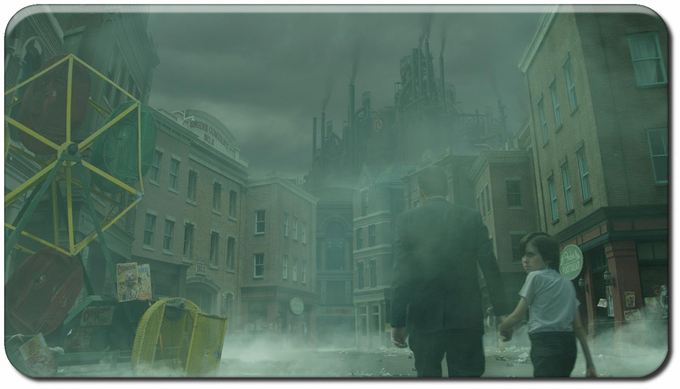 IN A FOREIGN TOWN is a short horror film based on the stories of Thomas Ligotti, who the Washington Post has called “the best kept secret in horror fiction.” In it, we tell the story of a man haunted by a terrifying apparition years after being abandoned by his father in a strange town. Among the film’s themes is the lasting effects of unresolved trauma and how traumatic experience can be passed down across generations. At first, I did not intend to make a film about these motifs. My original impulse was simply to bring to life the world of an author’s work I deeply admired. What I didn’t expect was that through the creative process, my relationship to depression, anxiety and so-called “negative” emotions would forever change. In my journey through Thomas Ligotti’s world, I discovered the psychological “darkness” which I’d so feared, so fought, and so resisted-- was the very thing that connected us all. The world of Thomas Ligotti “..Rampant oddity seemed to be the rule of the realm; imperfection became the source of the miraculous—wonders of deformity and marvels of miscreation. … It was a nightmare transformed in spirit by the utter absence of refuge: nightmare made normal.” Thomas Ligotti, VASTARIAN I discovered Thomas Ligotti’s fiction as a young literary agent and was captivated. His writing evoked the existential horror of Lovecraft, the eloquence of Poe and the biting absurdism of Kafka, and yet was wholly original. Ligotti’s characters are lost souls. Keenly aware, yet powerless, they are doomed to watch as an absurd and pitiless universe devours them. They are victims not of external monsters—but rather of a nightmarish experience of life itself. There was another reason why Ligotti’s stories resonated with me so profoundly: At that time in my life, I was struggling with depression. The recurring milieu of Ligotti’s stories--decaying labyrinthine cities, desolate “skeleton” towns--described my inner world: a place of emotional darkness, mental fog and distorted reality. A place where I felt alone, lost and unsafe. A place that foiled every effort to escape. Ligotti’s stories are rooted in philosophical pessimism, a worldview which (in Ligotti’s words) challenges the popular notion that “being alive is all right.” Surprisingly, his bleak perspective didn’t aggravate my pain. Instead, the stories gave form to my feelings of alienation. They validated the experience of not feeling at home, either in my own body—or in the world. Some part of me felt seen, acknowledged and comforted. Being not okay is not okay “…Those who suffer intolerably learn to hide their afflictions, both necessary and unnecessary, because the world does not run on pain time but on happy time, whether or not that happiness is honestly felt or a mask for the blackest despondency.” Thomas Ligotti, THE CONSPIRACY AGAINST THE HUMAN RACE Many of us are taught that not feeling okay… is NOT okay. To feel alone, afraid, or angry, to cry or show sadness, to admit helplessness – we learn that these things are not acceptable. Consequently, we bind them in shame, punishing ourselves before the world can punish us. We learn to keep these feelings hidden; from others— and sometimes even from ourselves. Whether these pressures originate from parents, teachers, social groups, or media; whether the directives were expressly stated or unspoken; they reinforce a uniform subtext: if you’re not “strong,” or “in control”, if you don’t “have it together” and feel “all right”… there is something wrong with you. Ligotti calls this cross-cultural chorus “The Conspiracy Against the Human Race.” Ligotti’s stories were an antidote, creating space and permission to feel “not all right.” And in the face of the pressures to feel “normal,” that alone was a huge relief.  Depression as a place Years later, having left representation for a directing career, I reached out to Mr. Ligotti with an idea for an anthology television series based on his IN A FOREIGN TOWN, IN A FOREIGN LAND collection. Set in a nameless town “near the northern border,” the surreal atmosphere of these stories suggested a dream-like underworld where our characters lose themselves. As the adaptation developed, I became fascinated with the idea of the Town as a stand-in for that familiar place I’d find myself when anxious or depressed. In THE DREAM AND THE UNDERWORLD, depth psychologist James Hillman proposes that there’s a benefit to taking the mythic idea of the underworld seriously, and to an extent, literally. In Hillman’s model, the Underworld is a place where our consciousness travels during the dream state. We find underworld territories described across cultures: whether it’s the Hades of Ancient Greece or the Shamanic “Lower World”, each describes a journey of the soul - in death, in dreams, or through psychedelic experiences. In these Underworlds, the rules of the “Dayworld” don’t apply. As we know from our shared dream experiences, this is a surreal, topsy-turvy place with its own “dream-logic” and strange physics. Pop culture echoes this—from the uncanny TWILIGHT ZONE to the “Upside-Down” shadow-realm of STRANGER THINGS (which itself suggests the Ancient Egyptian Underworld where “the dead walked upside-down, feet up, heads down.”) As I worked on the adaptation, I wondered: what if my descents into depression were an underworld journey? What if this was not an “illness” but a natural process? Considering depression as a place opened the possibility that the territory could be explored, perhaps even mapped. Suicide Crisis Hotline Shortly after completing the first draft, I signed up to volunteer at a Suicide Crisis Hotline. This experience showed me the power of simply listening and acknowledging another person’s emotional darkness without judgement. Counterintuitively, we were trained to invite sharing around subjects of death, suicidal thoughts, pain and trauma. As one of our instructors put it, our job was to “sit with our callers in their dark place.” I was continually moved by the power of connection and empathy to de-escalate and settle the nervous system. For those in crisis, in the upside-down underworld of depression or addiction, the experience of being alive—in that moment—is very much not all right. In that moment, we are psychically crying out in pain, asking to be seen, asking to be heard, desperate not to be rejected. And while the circumstances of individual suffering might be unique, denying, avoiding, resisting, and silencing its voice makes everything infinitely worse. By facing, naming, and connecting through our shared vulnerabilities there is a potential for a “better” to emerge. But to create space for “better,” we must first acknowledge where we’re not okay. Telling our stories “Soon my thoughts became fixed upon a town, picturing its various angles and aspects, a remote town near the northern border.” Thomas Ligotti, IN A FOREIGN TOWN, IN A FOREIGN LAND The series adaptation later gave rise to a short proof-of-concept film. Taking IN A FOREIGN TOWN on the festival circuit, I got to meet other Thomas Ligotti fans and sometimes hear personal stories of how his writing had helped them cope and persevere through dark times. Connecting to other people through my own and others’ work was the most rewarding of experiences. Ours was a kinship born of a shared love of nightmarish underworlds and seeing the world askance. After all, creating human connection is the abiding power of literature and cinema. Storytelling bonds us through shared experiences—and especially our vulnerabilities. Horror stories give us permission to be afraid, they show us we are not alone in our suffering, confusion and weakness. Perhaps ironically, it is through sharing what we most fear that we find connection, community and strength. And with the lifting of shame, stigma and isolation, comes the possibility of healing. Acknowledging the darkness was a gift I received from Thomas Ligotti. It is my hope that our film can pay it forward.  Michael Shlain is a writer-director working in Los Angeles. His short film, IN A FOREIGN TOWN, based on the works of Thomas Ligotti can be seen at www.inaforeigntown.com. A TV Anthology series of the same name is currently in active development. TODAY ON THE GINGER NUTS OF HORROR WEBSITE BEHIND THE SCENES OF SPAWN: WEIRD HORROR TALES ABOUT PREGNANCY, BIRTH AND BABIES, – PART THREE THE HEART AND SOUL OF HORROR WEBSITES  Frequenters of the ginger nuts of horror will know well my abiding appreciation for this series of remakes; flouting the tradition of horror cinema to undermine and dilute itself with endless rehashes and reimaginings of familiar franchises, the recent updates of beloved survival horror franchise, Resident Evil, have been universally lauded not only as magnificent homages to the original titles, but also superlative works in their own rights. Both Resident Evil and Resident Evil 2 managed to not only evoke the ethos of their original incarnations but also improve upon them in every conceivable way, layering in new intrigues, fresh mechanics, better scripts, set pieces and voice acting, to the point whereby Resident Evil 2 became one of the best selling and most lauded titles of 2019. Flash forward to January 2020, and the remake of Resident Evil 3 is already on store shelves, just within a year of Resident Evil 2. As you can imagine, whilst the zombie-apocalypse-mongering audience were rightly excited by the update, there was also an air of concern regarding how ostensibly short the development cycle appeared to be, not to mention how closely it seemed to resemble the previvous two titles aesthetically and mechanically in promotion materials. The general feeling was: more of the same, with maybe one or two minor tweaks and updates. Furthermore, this particular instalment has a set of added pressures: whilst Resi 1 and 2 boast a dedicated and unambiguous fanbase, the original Resident Evil 3 is somewhat more tenuous in its positioning; originally occurring late in the 1990s, at the tail-end of what would become historically regarded as the survival horror boom, Resident Evil 3 marks the point much of the original audience -myself included- moved away to other platforms and alternative forms of video game horror (personally, this was the point at which I moved away from the console markets into PC gaming, and discovered works as sophisticated as System Shock 2, Half Life and numerous others). Resi 3 is generally regarded as the last of the classic survival horror titles in the franchise, those that would come later markedly changing certain standards and mechanics, thus marking the transition to new formats of video game horror. As such, whilst it has its fans, it is not as well remembered or as universally beloved as the original two instalments. 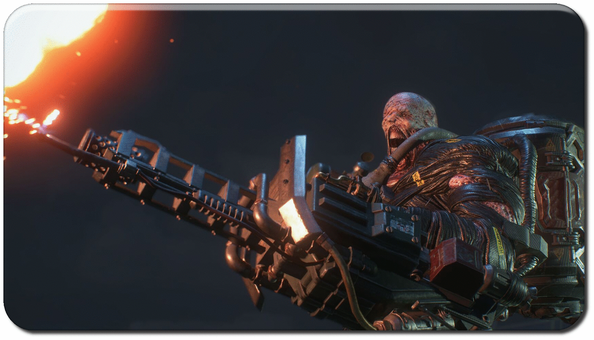 This is a problem Capcom have approached in the remake by making it a similar transition; eschewing the slower, more classically-exploration based gameplay of the first two games, Resident Evil 3 is a more streamlined, arcade-flavoured affair. Whilst elements of the original games remain -the classic item-based puzzles, the horror set-pieces, returning to familiar areas after discovering certain key-items or triggering certain events-, the game feels much-simplified and far faster paced. There is very little of the more conservative gameplay that defined the first two games, but also less in the way of saftey; whereas it was possible in Resis 1 and 2 to duck into safe rooms for a breath from the relentless action, here, that is much more difficult; the game hurtles the player through gauntlets of zombie-infested, bio-engineered-abomination-haunted wastelands with very little in the way of malingering. Much of this is due to the relentless nature of the enemies; as before, the classic zombies have been massively upgraded; whereas once, it was possible to “clear” areas by putting down all the zombies in any one space (headshots proving particularly effective), that is no longer possible; even the most mediocre specimen of the virally-induced undead can take enormous amounts of punishment, with even headshots only proving effective under particular circumstances. As such, given the incredible scarcity of ammunition and healing items, the player is forced to use other techniques in order to navigate the play-field. The game is subtly designed to allow for multiple different solutions to any given situation; it is possible to lead small bands of lurching, moaning zombies in a dance through the streets if you are quick enough to bait them, using debris, burning cars or piles of bodies in order to put some barriers between them and the player. Likewise, there are numerous environmental opportunities to stun or blockade them, from generators that can be shot to stun them with electrical discharge to explodable barrels, car fuel tanks etc. This obliges a subtly different style of play from the original games (whose environments tended to emphasise claustrophobic corridors and blind turns). Here, the player must look at the positioning of enemies and consider every move, making the map system absolutely essential (another enhancement over the previous games, the map is now much more detailed and provides specific information on what has been missed or overlooked in any given area). The environments also pose more in the way of hazard; whereas before, the Arklay Manor and the Raccoon City Police departments -for Resi 1 and 2 respectively- provided -albeit temporarily- stable strong-houses from which to venture and explore, the burning, corpse-riddled streets of the wider city offer no such opportunity. Thanks to the proliferation of the mutagenic T-Virus -not to mention the efforts of bio-weapons corporation Umbrella to “purge” the city of survivors- this is a sincere post-apocalypse scenario; the moment returning Resi 1 alumnus Jill Valentine is chased out of her apartment, she is in a scrabbling fight for survival in a city on the verge of collapse. Every street and alley is crammed full of debris, from crashed cars and trucks to collapsed, burning buildings. Paths through the environment are often determined by fire, the flames obviously proving lethal should Jill stray into them (but also useful for taking down particularly recalcitrant undead). Speed is more essential than caution here, as any lingering will give the various zombies and bio-weapon monstrosities time to mass and block off escape routes. Raccoon City itself is more of a character in this game than in previous titles; not only is the player given greater opportunity to explore the city (in what may be a derivative of -or deliberate homage to- sister survival horror franchise, Silent Hill), but the environment is more detailed, ambient and ironically “alive” than in any previous Resi game. Raccoon City feels like a genuine city on the verge of collapse; every element has been designed to eschew the standard expectations of a video game play-field and to evoke a place where people once lived and worked. This is particularly effective not only in emphasising the themes naturally implied by the franchise's title (this is maybe one of the most “resident” Resident Evils on the market), but also enhances the horror remarkably; even given the speed and impetus of the action, there is a profound sense of the atrocity underway; that thousands of people have already died under horrific circumstances and thousands more are lost or trapped, awaiting help. 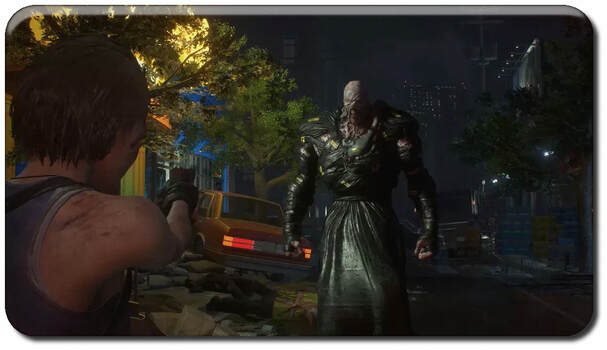 This factor is also enhanced by the zombies themselves; just as in Resi 2, the sheer range and detail of zombie-models is remarkable. Almost every single one is an individual, with details that imply their previous, human lives. Whilst it's difficult given the break-neck pace of the game to pause and properly appreciate them, examination of the zombie models will reveal distinct fibres on their shirts, tears and stains in their jeans, mobile phones hanging from pockets, identity and access cards, numerous grizzly wounds and seeping sores. As before, the number of wounds and mutilations Jill can inflict by aiming for particular areas of their anatomies is not only aesthetically incredible, but also lends combat a more nuanced level; it is possible, for example, to blind zombies by shooting out their eyes, which leaves them stumbling and lurching without clear direction. Likewise, they can be hobbled or completely crippled by aiming for legs, feet and/or ankles. Arms can be shot off so that they cannot grasp or drag you from your path. Likewise, players with acute aim might be able to get the much-coveted headshots that result in glorious bursts of gore and bodies that stumble around still spurting blood before slumping to the ground. This is before we even remark on the epic menagerie of bio-engineered abominations Umbrella has up its sleeve this time around. Early in the game, Jill has to restore power to a subway transit system, which involves infiltrating one of Raccoon City's many power stations. Unfortunately, breaching the outer perimeter of the station provides view of an immense, fleshy structure that has been woven like an insect hive to engulf the entire station. Whilst wandering the station's interior, she is attacked by strange, spider-like abominations -redolent of Resi 1's Chimeras- that, far from merely chomping on her face, extrude repulsive, fleshy umbilici by which they implant parasitic worms in their victim's bellies. Journal entries scattered about the area provide grizzly, first-hand accounts of the reproductive process. Later, after being chased into the sewers beneath Raccoon City -one of the most loving and grotesquely rendered areas in the whole game-, Jill is faced with immense, swollen entities that rise from the filth or slither from access pipes, the creatures capable of swallowing Jill whole or chomping her in half in a single bite. Incredible amounts of anatomical detail, background and behavioural pattern have been invested in each and every one of these creatures, and each and every one forms the basis for its own narrative set piece. One of the more trenchant criticisms of the original game -which is certainly carried over to the remake- is that the monsters and their various set pieces are simply far less frightening than in previous titles, erring instead on the side of action-horror and frenetic jump scares rather than atmosphere. Whilst this is certainly true -there is nothing here that even approaches the horror of seeing the flayed form of The Licker stalking past the window in Resi 2-, the more spectacle-oriented nature of the game as a whole actually serves to define it as its own work, rather than simply a rehash of previous titles. Whilst, for my personal tastes, I will always favour the slower build, more patient atmospherics of the previous two instalments, Resi 3's freshness, streamlined nature and faster pace serves as a palate cleanser, especially in an era predominated by exceptionally bleak and heavy indie horror titles (such as Visage, Dark Wood and the Amnesia series). 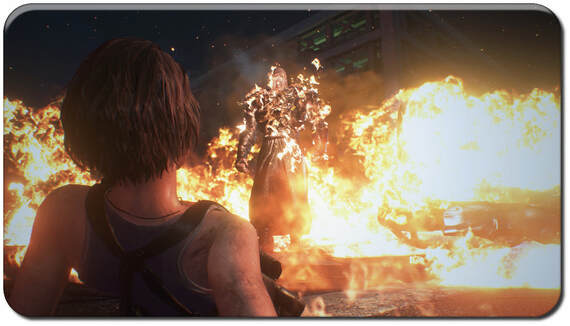 Despite its more overtly risky design (deaths are more frequent in this game than in previous Resi titles), it is also far easier in terms of exploration, puzzle solving etc. Pace and rhythm are clear watchwords with regards to its design ethos, making for an experience that feels remarkably fluid and friendly for a survival horror title, and whose excitement barely lets up for a single moment. Of course, one of the most iconic elements of the original and, indeed, the poster-child for this remake, is the eponymous Nemesis: A titanic, biologically-engineered assassin, the Nemesis occurs extremely early in the game -bursting through the wall of Jill's apartment and almost murdering her on the spot-, and, from that point on, is never absent, its threat pervading every moment, the player never entirely certain where or when the monster will next turn up. Whilst the design of the original monster never struck me as particularly remarkable -in point of fact, I found it far too exaggerated and somewhat silly in its constant exposure-, here, it has been redesigned to be more Cenobitic in nature; a tianic mass of biologically-engineered scar tissue, lashing tendrils and disturbingly incongruous mechanical components, the creature is never far away at any one time, and often comes hurtling down from rooftops or crashing through walls at the most unexpected, inopportune moments. The threat of Nemesis is profound, as not only is he practically indestructible -at various points in the game, he has burning buildings collapsed on top of him, falls from the rooves of skyscrapers, is caught in exploding train cars and far, far more besides-, he relentlessly stalks Jill throughout, his genetically-encoded mission to eliminate the surviving members of the S.T.A.R.S team from the original game. Nemesis also has the rather cute trick of being able to “upgrade” the various zombies by implanting them with mutating, parasitic organisms redolent of Resident Evil 4's “Ganados,” meaning that peviously passive areas become much more threatening. Every moment the Nemesis occurs is a breath-taking set-piece, often involving Jill fleeing through the streets or the tunnels of labs, subway systems and various other environments, attempting to throw off a creature that is not only fast but simply cannot be stopped by any conventional means. Essentially an upgrade of Resi 2's “Mr. X,” here, that dynamic of being stalked throughout the game becomes the principle theme. Invested with far more character and background than his previous incarnation, The Nemesis is a fantastic monstrosity that carries incredible threat, presence and is exceptionally redesigned, shifting from one of my least-favourite antagonists in the original series to one of my absolute favourites in the remakes. Criticisms of the game tend to echo those aimed at the original: is it a massive departure from the previous two games? Not remarkably. In fact, the game reuses many assets and even environments from Resi 2, which likely explains its foreshortened development cycle. Mechanically, it is basically the same engine as the previous game, with one or two tweaks to streamline the process and emphasise the breakneck pace it is attempting to achieve. Also, it deliberately eschews the slow atmospherics of the previous titles in favour of action set pieces, meaning it simply isn't as frightening as its forebears. That said, in an age where dense, weighty, profound horror experiences are fairly pervasive, this kind of popcorn horror experience is as welcome as a sorbet between courses; a light and pleasant palate cleanser, that is often ghost-train-ride, laught-out-loud fun, and consistently refuses to take itself too seriously. George Daniel Lea TODAY ON THE GINGER NUTS OF HORROR WEBSITE BOOK REVIEW: THE APOCALYPSE STRAIN BY JASON PARENT THE HEART AND SOUL OF HORROR WEBSITES |


Archives
April 2023
|
 RSS Feed

|

|