

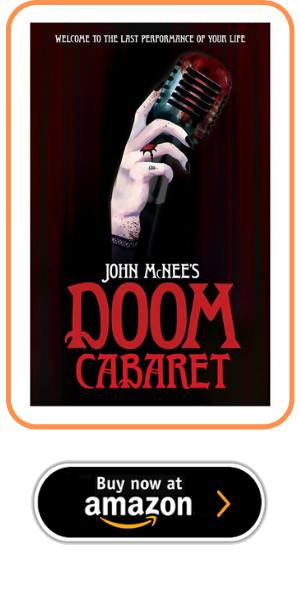
  S1.04 SUM OF THE PARTSThe biggest horror show of the '90s was undoubtedly The X-Files. It's difficult to adequately describe its impact to anyone who wasn't there at the time, but it was a worldwide phenomenon. Its theme tune went to number 2 in the UK singles chart. A whole generation had its mind opened to the possible existence of extraterrestrial life and the supernatural. Its lead actors became overnight icons. 'Mulder and Scully' became shorthand for platonic romance (and inspired another chart-topper from Catatonia) and TV networks in the US and elsewhere went into overdrive cranking out shows aiming to replicate the series' winning formula: Dark Skies, Prey, Nowhere Man, Brimstone, Strange Luck, Poltergeist: The Legacy, Kindred: The Embraced, Strange World, Psi-Factor: Chronicles of the Paranormal and my own personal favourite, Baywatch Nights (okay, so it perhaps wasn't conceived as an X-Files clone, but they did fight a vampire in one episode). X-Files DNA still runs through many of today's most successful TV shows (supernatural and otherwise) and, given its heavy influence at the time of Urban Gothic's creation, it's a little surprising it took four episodes to reach our first obvious clone. 'Sum of the Parts' feels very much like an X-Files spec script retro-fitted to serve as a one-off episode of an anthology series. From the cold open to the attractive male/female investigators to the dense dialogue (laden with conjecture and clinical terminology) and scientists playing God (a common theme in the series), everything about it screams X-Files pastiche. When Kelle Spry, in the role of Detective Rachel Winter, steps into a shadowy hospital room and sweeps her torch across a scene of bloody carnage, all that's missing is Mark Snow's trademark score. The opening scene has The X-Files written all over it. An elderly woman in a care home is set upon and killed by an unseen beast, interrupting her while she tries to read Poe's 'Murders in the Rue Morgue'. She is, it transpires, the recent recipient of a kidney transplant and the latest in a string of women to have died as a result of their new organs being mysteriously removed. Detectives Winter and Takeshi are on the case, linking all the deceased women to Dr Richard Miles, co-creator of a secret research project that appears to be splicing different animals together to create an altogether new species which can be harvested for its organs. However, in their hubris, the scientists have inadvertently imbued their new creation with a soul and some form of psychic/telekinetic/body-possessing power. Well... serves them right for trying to solve the world's organ donor crisis, I suppose. The episode ends with multiple dead bodies and a quick pan to a brass plaque bearing a quote from Charles Darwin: “Species are not immutable.” If reading that line makes everything in the plot click into place for you, you snap your fingers and cry “a-ha”, I'm pleased but it didn't help me much. The meaning of the quote is that species are capable of evolution. Is the moral then that we should beware of genetically modifying animals lest we accidentally hasten the speed of their evolution to the point where they attain demonic powers and are compelled to commit violent murders? I guess it's an argument. 'Sum of the Parts' is not top-tier Urban Gothic. It feels too much like an X-Files fan film for that, clearly illustrating the difficulty of attempting to recreate a groundbreaking US network drama on the kind of budget Channel 5 was offering back in 2000. It attempts to overcome its obvious budgetary limitations with copious amounts of gore and nudity, but never succeeds in creating an atmosphere. Its most unsettling moment is an unintended one when, during the autopsy scene, the medical examiner prepares to slice open the body of a nude actress who is very obviously alive and breathing. And what of our Mulder and Scully stand-ins? We're informed Detective Winter is a lesbian in her first scene, presumably a character choice designed to eliminate any possibility of romance between her and Takeshi and avoid any comparison with Fox and Dana (good job there). Aside from the fact she's permanently pissed off, there isn't much else of note about her. Takeshi is more of a curiosity. His name is Japanese. He eats noodles with chopsticks, displays some martial arts training and, on the subject of belief, says he believes in Godzilla. Yet he's played Ace Bhatti. I'm curious whether the original idea was to have a character of Japanese extraction but casting was unable to find any Japanese-British actors for the role, so decided Asian actor Bhatti was close enough. Or was the character always conceived as an British Asian man who was simply obsessed with Japanese culture, going so far as to change his name to that of his favourite film star (and castle)? Bhatti, who has racked up appearances in practically every British drama of the last 20-odd years, is the most recognisable face in the episode, which doesn't have much else to recommend it. According to imdb, Kelle Spry would only make two more TV appearances before dropping out of the world of film and television altogether. The role? Detective Rachel Winter. 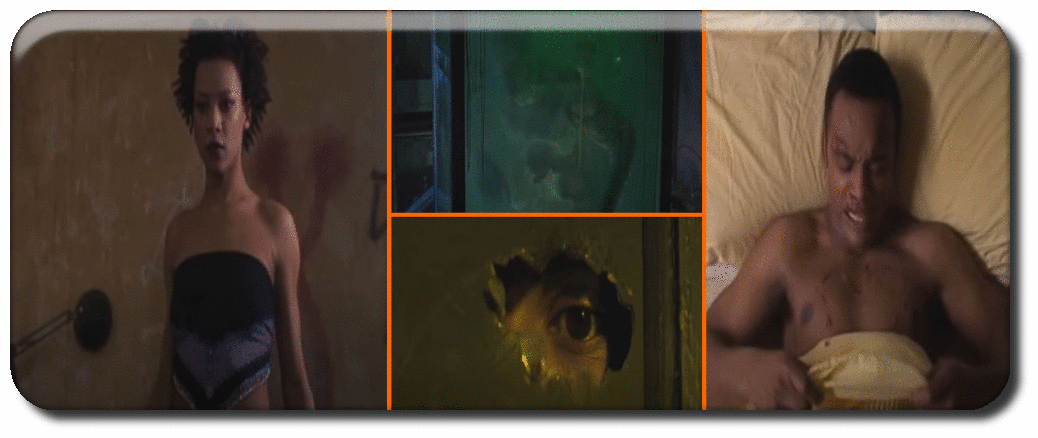  S1.05 DEPTFORD VOODOO Is this problematic? I've got a feeling it might be. Urban Gothic is a show about London, one of the most ethnically diverse cities in the world. White British people make up less than 50 per cent of the population. If you're telling a series of stories about London you'd practically have to be going out of your way not to include any about other ethnicities. But why did the first episode to feature an all-black cast have to be centred around hokey Voodoo bullshit? It simply wouldn't fly these days, would it? Not that there aren't stories to be mined, I'm sure, from immigrants bringing their spiritual beliefs to the mean streets of the capital. There are ethnic communities in London today where belief in witchcraft is as deeply entrenched as ever, leading to catastrophic and haunting tragedies. I'm not inherently against the idea of taking inspiration from these real-life situations and crafting some kind of horror story from it, but it requires a deftness of touch which is truly rare to come by. In any case, I don't believe 'Deptford Voodoo' was inspired by any true stories. More likely writer Tom de Ville threw the idea together while thumbing through the 'Ladybird Book of Voodoo'. As to the plot? An old woman (Joan Hooley) is knifed by hoodies in the midst of performing a Voodoo ritual and they steal a ceremonial jug (sitting, for some reason – and I'm not kidding about this – in a Voodoo shrine between a bottle of Encona hot pepper sauce and a jar of coconut oil). Later, social worker Zachary (Emory Ruegg) comes to visit the old woman (seemingly unhurt) and she gets him talking on the subject of one of his other cases, a young boy who has gone missing. She puts the blame on Voodoo spirits. Zachary is less than convinced, but later, he sees Papa Legba racing down the street and chases him into a bar. In the bar, Peter Straker (more commonly seen performing Jacques Brel at the Edinburgh Fringe) is on hand to provide a fair bit of background about Haitian spirits. The old woman, with her tarot deck, fills in a bit more about their motivations. The rest must be inferred from vague comments and exclamations which don't amount to a complete picture of what the hell is going on, but BASICALLY, Papa Legba is going around Deptford finding people to use as vessels for other Voodoo spirits like Baron Samedi and Damballah so they can all go track down the hoodies who stabbed the old woman and nicked the jug. One of these vessels ends up being Zachary's girlfriend (Nina Sosanya, from Teachers, Last Tango in Halifax, Killing Eve and all sorts), which means he has to... I don't know. Some kind of ritual involving candles and drums and red lighting and putting his soul in some kind of pot... It's all very confusing. Anyway, he saves his girlfriend but loses his soul, which means the old woman has to trade hers for his and dies. I remember enjoying the episode more the first time I watched it. There's still something fun about the idea of Voodoo spirits racing around Deptford causing havoc in an American Gods kind of way. But it doesn't feel like there's been much deep thought given to the mythology or how to present it through an innovative, challenging story. This is very much the cartoonish voodoo of Live and Let Die and Dr Terror's House of Horror, lacking the subtlety or skill of more effective explorations of the subject like Angel Heart or The Serpent and the Rainbow (and even they could be accused of being pretty cartoonish at times). I would still like to see someone take the concept and craft something nuanced and culturally aware from it. I do think it could be done. I don't think Voodoo should be off limits as a subject for exploitation. But it requires real sensitivity and skill to make something worthwhile. Sadly, in this instance, Urban Gothic was not up to the task. Join me next time for 'Old Nick' and 'Lacuna'.S1.04 SUM OF THE PARTS BACK IN THE CITY: REVISITING URBAN GOTHIC AT 20, EPISODE 1: DEAD MEAT REVISITING URBAN GOTHIC AT 20 BY JOHN MCNEE URBAN GOTHIC AT 20: AN INTERVIEW WITH WRITER TOM DE VILLE  JOHN MCNEE'S DOOM CABARET This is the stage. These are the players. A young woman’s sexual appetites prove too powerful to be undone by death. Hedonistic clubbers covet a drug that warps flesh rather than the mind. A wealthy cannibal encounters a meal too beautiful to be eaten. The Lullaby Man ushers another eager victim into his clockwork lair. Here is where such stories are told. Blood and beauty, defilement and deformity, musicians and monsters. Welcome to the Doom Cabaret. READ OUR 5 STAR REVIEW OF DOOM CABARET HERE   Comments are closed.
|


Archives
April 2023
|
 RSS Feed

|

|