

 URBAN GOTHIC AT 20: AN INTERVIEW WITH WRITER TOM DE VILLE A film and television writer with an impressive string of credits to his name, from Hammer's The Quiet Ones to NBC's Hannibal to Stan Lee's Lucky Man, Tom de Ville got his big break as the co-creator and writer of British horror anthology Urban Gothic, when he was only 23 years old. With this year marking the 20th anniversary of the cult show's debut on Channel 5 – and ahead of his own rewatch/analysis for GNOH – John McNee spoke to Tom to learn how the show came together and what his feelings are about it, two decades on. What's the origin of your interest in horror (specifically writing it)? I fell in love with horror at an early age. In my local library there were big books on horror from the early days through to the 1970s, with these lurid pictures from Hammer movies. Lots of Christopher Lee looking terrifying and attractive young women covered in blood. That completely caught my attention. These were things I knew I wasn't ready to watch yet, but the hook was in. Then I got to about 12 or 13 and I would go the local newsagents and flick through Fangoria, just to see the gross pictures. I still didn't feel I was ready to watch the films, but I was aware of them and became obsessed with Nightmare on Elm Street. The concept really got under my skin and I started having nightmares in which Freddy would visit me and force me to watch it. The concept of watching the film – seeing the images moving – was what really frightened me. Finally one day, I was alone in the house with a VHS copy of the film that my dad had left lying around. I decided I had to get through the experience, so I put it on. The way I handled it was, whenever I could tell a scary part was coming, I would play it on fast-forward. When I understood what was going to happen, I could rewind it and play it through again. It totally broke the barrier for me and, after that, I was a full convert and spent my teenage years watching everything I could get my hands on. These were the glory days of the video rental store and my local one was full of obscure B-movies, which I loved. While this was going on, I'd also figured out that making films was what I really wanted to do. I'd fallen in love with authors like HP Lovecraft so I was writing a lot of homages, which were basically ripping his stuff off. In my late teens, I started looking into applying to go to film school and ended up getting into Bournemouth University which, at the time, had the only screenwriting degree in the country. Whenever we had a screenwriting project I always tried to produce something very genre-based. I spent a lot of my time there reading scripts that were specifically horror or thrillers, learning how to do that kind of thing in script form. 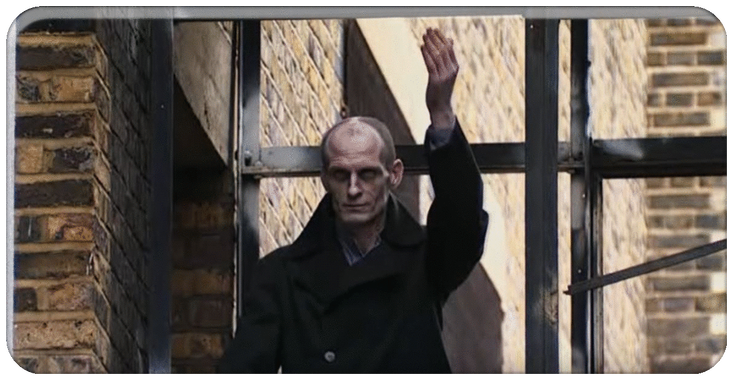 How did the opportunity for Urban Gothic come about? About four or five months after I graduated, I got a call from Bournemouth. They'd been contacted by a producer called Steve Matthews, who was looking to work with a recent graduate, so they put my name forward. I met with him and learned he had a script for a cop show from a successful but quite elderly writer and he wanted someone young to come on board and rewrite the dialogue to make it more modern. While we were at that meeting, he asked me what I really wanted to do. This was in the late 1990s when no-one, particularly in British TV, was making horror. I said I wanted to do horror and Steve's eyes just lit up. He said it was his favourite genre and he would love to do something in it too. We talked about it a bit more and he suggested doing an anthology, which I had mixed feelings about. I really loved stuff like Buffy the Vampire Slayer and wanted to do an ongoing series, but I was also hungry for opportunity and did like the idea of being able to do a different story every week. So I went away and came up with a handful of ideas, including one that I knew would be the first episode, 'Dead Meat'. I wanted to do a very simple, Sam Raimi-esque story about a bunch of kids and a zombie in a building. I wrote the outline really quickly and Steve called me back soon afterwards to commission a script. How did you decide on the overall concept for the show? Like I said, it was Steve who pitched the idea of doing a horror anthology. But I decided pretty quickly that I didn't want to do this very traditional form of British horror set in old mansions and misty graveyards. I wanted every story to be set in the modern day and city-based, not the traditional gothic style that was still lingering in British film-making at the time. We already had that urban part of the formula in place before we began shopping it around. What was the process of getting Urban Gothic onto TV? At some point, Steve took the project to Channel 5 and we had one of those amazing strokes of good fortune where someone, in a meeting that morning, had said “we really should be doing horror”. Then Steve walked in and said he had a horror project. It was just perfect timing. So I went away and wrote a couple more scripts that they really liked. I kept on pitching ideas and it snowballed to a point where they decided I should write the whole series. And because I was young and stupid, I said yes. About two or three scripts in, Channel 5 gave the green light and that was it. Were you involved much with the actual production? I was always around it. I was still writing the later scripts while they were in production on the earlier stuff. I would quite often go down to the production offices near Suffolk. I was involved in pre-production with all of the directors, getting the scripts the way they wanted them. But as a writer on set, it's very evident that no-one wants you to butt in at any point. By the time it's in production, everything is set and everyone has their jobs to do. In my head I always had this fantasy that I would be heavily involved in that part of the process, but the truth is no-one wants that. I could tell by the ambience the first time I went on set. But I was always around, though I was usually at a desk, writing. What were your thoughts when you finally saw the finished episodes? My feelings were mixed. What you learn very quickly is that once you've handed a script over to production you are not in control of it. There were definitely episodes I thought I'd conceived and executed better than others, so those were the ones I was most interested in. And each director brings their own unique approach and perspective, which means the finished product can end up very different from what you imagine. Sometimes a director would nail it and deliver something very close to what I had in my head. Other times it would be very different. With an anthology, that's just part of it. Every episode should feel different. As a writer, it was an education in realising what you imagine is not always what you get. What do you recall about the reaction the show received when it was broadcast? It had a fairly solid response. The internet was still very primitive back then, but there was an Urban Gothic chat site for fans that I would visit a lot. It was always really cool to see people talking about each individual story and I remember it being really positive. We got solid reviews in stuff like SFX, so I was definitely happy with the response. The funny thing about it, though, is that it was always a very small, cult show. One of the things that's delighted me about it is you'll just occasionally run into somebody who was a fan and will wax lyrical about it. Even now, there are people out there who hold it very close to their hearts. That's the best result I could have hoped for. How did the process differ for series two? At the time we were told we were getting a second series, I think I was feeling a little burnt out, creatively. I certainly knew I didn't want to write all of them, so it was decided I would write four and the other five would be given out to other new writers. I was overseeing all the scripts, but I was mostly focussed on my four. I was less involved, generally, but I came up with this mad idea for my episodes. I'd fallen in love with writers like Grant Morrison and Alan Moore – these very experimental storytellers – and I wanted to do something like that. At the end of the first series I had written a story which attempted to tie together the previous 12, creating a background mythology that could explain how all these things were happening in the same universe. My four-parter in series two built on that. In retrospect I kind of wish I'd just written four more juicy stories, but at the time I was young and just wanted to splash about and try different things. I do love some of the episodes in series two, but I feel way more invested in series one. Was there ever any discussion about the possibility of a third series? I'm not sure what discussions took place. I think Channel 5's management was changing a lot and people came in who wanted to focus on something else. During the production of series two I kind of got the feeling it was going to be the last one. One thing we did look at, for a while, was taking a couple of the episodes and turning them into small films. There were two in particular we were talking about – 'Vampirology' and 'The Boys' Club'. They're probably my two favourites from the first series. What was next for you, after Urban Gothic? I went over to the States and worked on the fourth season of a Canadian sci-fi show called Lexx. It was like a Canadian Red Dwarf but weirder and I absolutely loved it. I had a blast going over to Halifax in Nova Scotia, where they made it, and hanging out in their writers' room. It was my first state-side experience. After that I wanted to do more TV in the UK and pitched a few series that were very much like British versions of Buffy, but it wasn't the right time. This was just before the return of Doctor Who, so the appetite wasn't there yet, among the broadcasters, for those kind of shows. So I moved over into film and spent a couple of years working on a completely mad project that George Romero was going to direct about a British boarding school that gets overrun by vampires. After that came The Quiet Ones, which Hammer made, and then I worked with a director called Corin Hardy, who recently made The Nun, on a film called The Hallow. After that was more TV and right now I've got things happening with a couple of film scripts, one that's just about to be announced (Lord of Misrule, to be directed by William Brent Bell). 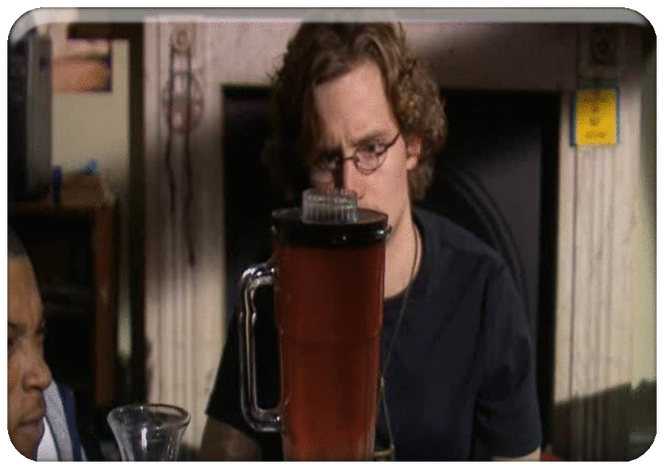 Are you still most interested in working in the horror genre? Definitely, when it comes to film. In TV, particularly in the UK, it's still very hard to get horror projects off the ground, unless it's skewed towards the more family-friendly Doctor Who-style end. There's a real appetite for that now, but more adult horror on British TV is still quite rare. Why do you think that is? Horror is not an easy format to work in, in TV. I think the two models that work best are the anthology series or the American Horror Story/Channel Zero idea where each season tells a self-contained story. I think that's a good model for TV horror, but it's really hard to sustain ongoing shows, because there always comes a point in a horror story when you have to explain what's going on. After that, an end-point is unavoidable. So it's hard for horror projects to have longevity. I also think that, over here, in the '60s and '70s, horror was very mainstream, but now it's viewed as quite niche. You get occasional films that break out and become hits, but other than that it's still quite niche. Unfortunately, that has a lot to do with the tastes of commissioners. I have no doubt the audience is there. I don't imagine Urban Gothic would have any chance of being made by Channel 5 these days. I don't think so, though they have recently begun to commission some interesting dramas. But for a long, long time they shifted away from scripted shows. What you've got to remember is, when I was writing Urban Gothic, it was just before the debut of Big Brother, which fundamentally altered the landscape of British TV. For a big part of the 2000s, reality TV was where it was at. I think the needle has swung back the other way now with the streaming boom and drama has become a big thing again. 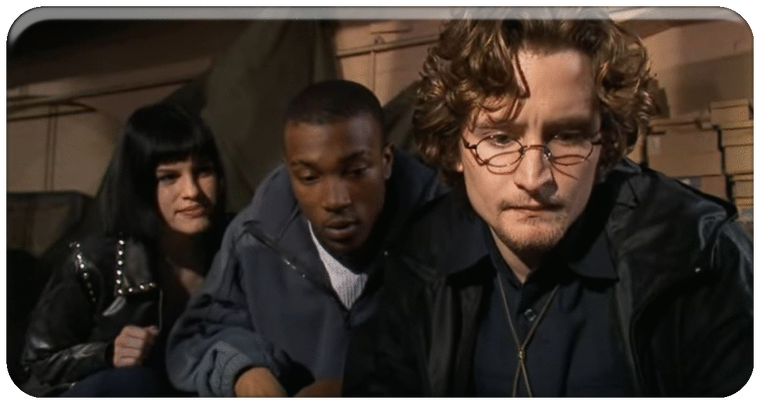 If you look up Urban Gothic online, you'll often find references to you writing the stories when you were 13 or 17 years old. Any truth to that? No, definitely not. I met Steve just after I graduated, so in the middle of writing the scripts I would have been 23. They definitely did make it part of the publicity for the show. They would describe it as being created and written by a 23-year-old, which I find really embarrassing now. I can imagine that becoming exaggerated to the point people were saying a 13-year-old had written it. Some of the scripts I look back on now and think they were definitely written by a 23-year-old and I sort of wonder what I was thinking, but at the time it was great. Looking back 20 years on, what are your feelings on the show? What counts to me is there are still people out there who remember it, talk about it and hopefully view it kindly as a show that existed at a time when there wasn't much like it on British TV. Other than that, it's something I wrote when I was very young, I had a lot of fun doing it and I'm really glad I did it. It was such a lucky break and a great start to my career. It's something I'll always cherish. I directed one of the episodes in the second series and I've got the slate for that on my mantelpiece, so it's still something I carry with me and that I don't want to be forgotten. At the same time, it was a very small show that went out late at night on Channel 5, so I think I knew at the time that it wasn't going to be a breakaway smash hit. I certainly don't expect it to become one now, but I am so glad I got to do it.   Comments are closed.
|


Archives
May 2023
|
 RSS Feed

|

|