

 After growing up in the Pacific Northwest, Catori Sarmiento’s travels while being a military spouse have often inspired her unique writing style. Although she began writing at an early age, it was not until she began writing poetry during her time as a University of Maryland student that she decided to seriously pursue professional writing. She went on to study writing in a graduate program at National University of San Diego while also living in Tokyo, Japan. Upon graduation, she began writing what would become a first place Cygnus Award winning novel, The Fortune Follies. A year later, her next novel, Carnival Panic was published. She hopes that readers will find intrigue and entertainment in her stories! WEBSITE LINKS www.catorisarmiento.com https://corvusquillpress.com/ https://www.double-dragon-ebooks.com/single.php?ISBN=1-77115-403-9 Could you tell the readers a little bit about yourself? I grew up in Bremerton, Washington, just across the water from Seattle. I married my Air Force husband after High School and since then have gone with him to bases in Italy and Japan. Living overseas has had one of the largest impacts on me and my writing, and I am thankful I had the opportunity. To get the ball rolling and get everyone relaxed, here is a hopefully lighthearted question to break the ice, which one of your characters would you least like to meet in real life and have them complain at you about they way you treated them in your work. In general, I don’t much like people who act cocksure, so the character who I would least like to meet in real life would be Jax from Carnival Panic. Other than the horror genre, what else has been a major influence on your writing? Travel has been one of the biggest influences on my writing. It allows me to step out of my comfort zone and experience life in a different way. The term horror, especially when applied to fiction always carries such heavy connotations. What’s your feeling on the term “horror” and what do you think we can do to break past these assumptions? I see horror as what ushers fear in the individual. The subjects can be wide-raging because what instills fear changes depending on perspective. A lot of good horror movements have arisen as a direct result of the socio/political climate, considering the current state of the world where do you see horror going in the next few years? I think we may see more stories with themes of socio-economic inequality and systemic cruelty. Given the dark, violent and at times grotesque nature of the horror genre why do you think so many people enjoy reading it? Reading about horror can be cathartic. It can allow us to explore our fears while exercising a method of control. What, if anything, is currently missing from the horror genre? I think what is missing from the horror genre is diversity. From that, I mean a diversity of authors and of stories. I would like to see a different perspective of horror that expands beyond mere gore. In the past authors were able to write about almost anything with a far lesser degree of the fear of backlash, but this has all changed in recent years. These days authors must be more aware of representation an the depiction of things such as race and gender in their works, how aware are you of these things and what steps have you taken to ensure that your writing can’t be viewed as being offensive to a minority group? While it is true that readers are able to be more vocal about their displeasure in authors mis-representing certain races in their writing, I think that this is a positive evolution in the relationship between authors and readers. An author should be prepared for a backlash against their writing, since once it is made available to others, it ceases to solely belong to the author; an author cannot control how a reader is going to respond to their writing. I think it is less about being viewed as offensive and more about ensuring to be honest my writing. If, for example, an author has in mind to write a story about a culture other than their own, they ought to ensure that they are depicting that culture honestly and accurately. Does horror fiction perpetuate it’s own ghettoization? I think horror fiction can perpetuate ghettoization at times because the genre can be viewed by readers and critics alike as anti-mainstream fiction. Viewing horror in such a way limits the accessibility of the genre. What are the books and films that helped to define you as an author? The Bread Givers by Anzia Yezierska Battle Royale by Koushun Takami Piercing by Ryu Murakami The Vet’s Daughter by Barbara Comyns Bioshock and Bioshock Infinite Xenogears Metropolis The Prestige What new and upcoming authors do you think we should take notice of? Maurice Carlos Ruffin Jonathan Wheatley Are there any reviews of your work, positive or negative that have stayed with you? One review I had that stayed with me was actually a rejection letter. Though the publisher rejected my novel, they had written a critique in which they commended my “beautiful writing” and encouraged me to keep trying. What aspects of writing to do you find the most difficult? I find that editing is the most difficult part because I will agonize over punctuation. In one instance, I was editing a paragraph, having placed a semicolon between two sentences only to delete it two hours later and re-write the entire paragraph. Is there one subject you would never write about as an author? I wouldn’t want to censor my writing, nor should any author. How important are names to you in your books? Do you choose the names based on liking the way it sounds or the meaning? Names are typically an afterthought. Sometimes I have a name decided for a character in the beginning, but rarely does it stay the same towards the end. I focus more on character traits and plot and the names come later. Writing, is not a static process, how have you developed as a writer over the years? The way I write is heavy on scenes that have no continuity between them, and then piece those together during editing, adding transitions. When I first started writing I tried to do so chronologically and could never make it work. I would say that I’m much better at outlining. What is the best piece of advice you ever received with regards to your writing? From Ruth Scwartz: “To write well, you must feel deeply.” To many writers, the characters they write become like children, who is your favorite child, and who is your least favorite to write for and why? I enjoyed writing the character of Fletch from Carnival Panic. Since she is an anarchist, it was fun to explore her character and motivations. My least favorite character to write for was Catherine from The Fortune Follies simply because she has had so much hardship and disappointment happen in her life. For those who haven’t read any of your books, which of your books do you think best represents your work and why? My first novel, The Fortune Follies. I think this novel presents the interpersonal and political themes that I find the most interesting. Having written it while I lived in Japan, I incorporated much of what I experienced and observed. Do you have a favorite line or passage from your work, and would you like to share it with us? I don’t particularly have a favorite line, since I try not to read my work much after I’m finished. Can you tell us about your last book, and can you tell us about what you are working on next? Carnival Panic is my most recent one, but thus far I have written a total of four novels and am halfway through my fifth. I’m very guarded about my works-in-progress, so what I can tell you about the recent novel I’m working on is that it is a supernatural murder-mystery. If you could erase one horror cliché what would be your choice? Jump scares. What was the last great book you read, and what was the last book that disappointed you? The most recent book that had an impact on me was Kindred by Octavia Butler. The last book that disappointed me was 1Q84 by Haruki Murakami. I found certain aspects of the plot meandering. What's the one question you wish you would get asked but never do? And what would be the answer? I honestly don’t have an answer for this. Carnival Panic by Catori Sarmiento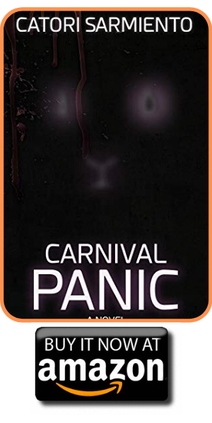 Candy makes the PonPon Bunnies sweet. Be careful if they’re angry. And watch out for traps! These are the dangers of competing in the Carnival Panic game show, a ruthless competition that tests the chosen competitors with mental and physical struggles. In order to claim the substantial monetary prize, the winner must solve a series of room puzzles and succeed in entertaining the fickle masses.
 Arthur Meursault is a long-term Asia expat who served his time in China and now writes about the country and translates works from Chinese into English. His first book Party Members, published by Camphor Press in 2016, is a dark satire on modern Chinese life. His second book is The Flock of Ba-Hui and Other Stories and is a translation of Lovecraftian tales taken from the Chinese Internet and presented to a wider audience. Could you tell the readers a little bit about yourself? There isn’t much to say! I left my native England as a teenager, throwing myself into the zeitgeist of China in the 2000s, and have remained internationally-based ever since. I started writing with my 2016 book Party Members which was a hybrid of dark-comedy and office-horror that followed a mid-level Chinese government official led astray by greed and corruption. In hindsight, it was too niche a hybrid, but horror is where my true passion lies which led to this current project. To get the ball rolling and get everyone relaxed, here is a hopefully lighthearted question to break the ice, which one of your characters would you least like to meet in real life and have them complain at you about they way you treated them in your work. The protagonist of my first book Party Members is a about a mediocre and venal Chinese government official who gradually transforms into a ruthless psychopath determined to bribe, rob, and murder his way into a promotion. For obvious reasons, I wouldn’t wish to work in the same office. Other than the horror genre, what else has been a major influence on your writing? My pseudonym is taken from the main character in the French existential novel L’etranger by Camus and that feeling of emptiness and the perpetual outsider characterizes a lot of my work. This nihilistic malaise is featured in a lot of French literature, and it was actually the despairing works of Michel Houellebecq that led me to Lovecraft after reading his essay on Lovecraft’s loathing for humanity. The term horror, especially when applied to fiction always carries such heavy connotations. What’s your feeling on the term “horror” and what do you think we can do to break past these assumptions? Horror really cuts to the heart of the human psyche, just as much as comedy and tragedy. I’ve always thought that an additional mask should be added to the original smiling and weeping Greek duo; one of outright terror. Tragedy and comedy are our oldest conceptual terms for fiction, but if you think about it both are reactions to horror – we can either laugh at the futility of it all when we realise there is no escape, or we can succomb to despair. Horror, true horror, is something that threatens not just your personal wellbeing, but your essential conception of the universe and the self. We can choose to either laugh or cry when confronted with it. A lot of good horror movements have arisen as a direct result of the socio/political climate, considering the current state of the world where do you see horror going in the next few years? Corporate horror is woefully under-represented. Thomas Ligotti has written some marvellous works of corporate horror like My Work Is Not Yet Done which handles the horror of repetition and corporate drudgery in a sophisticated manner. The problem is that for a lot of people their work is an important ingredient of their identity so they dislike corporate horror because it feels like a personal attack on how they have chosen to live their lives and the choices they have made. This is why I think that the most obvious example of where modern-horror could lead hasn’t really taken off. Given the dark, violent and at times grotesque nature of the horror genre why do you think so many people enjoy reading it? Good horror is a metaphor for real-life fears that people experience and they can see the parallels and analogies within the horror and apply it to their own situation and views. Excellent horror is a metaphor for real-life fears that people aren’t even aware they possess. They feel uneasy when reading or watching such horror but can’t quite explain why. What, if anything, is currently missing from the horror genre? The changes wrought by new technologies are some of the biggest things to happen to us, yet I feel there isn’t much horror fiction addressing it. Of course, there are schlocky movies which will re-use old tired tropes in the setting of video calls or social media, but they don’t address the fundamental issue of how these technologies themselves might be working against us… or even changing us into something else. What new and upcoming authors do you think we should take notice off? There are many unknown writers online who pump out content that goes unnoticed by the vast majority, but there are some truly unique gems out there which will never see the light of day in mainstream publishing. One example I can think of is a story called The Gig Economy that is an excellent example of taking the core of existential and cosmic horror but making it relevant to modern-day concerns. What are the books and films that helped to define you as an author? I think that great horror films and books and those that are not explicitly classified as “horror” but nonetheless leave you with a sense of shock or emptiness after viewing/reading that is unexplainable. The Terry Gilliam film Brazil has continued to be an influence on me as you are never quite sure if Gilliam is concluding the film as a happy or sad ending for the protagonist Sam Lowry or whether you are meant to laugh or cringe in fear. Another great example is the hugely complex House of Leaves by Mark Z. Danielewski. How much horror that book contains for you depends on how deeply you choose to read into its analogies and rabbit holes… and some of those rabbit holes run DEEP. What new and upcoming authors do you think we should take notice off? As mentioned above, I like the largely unknown and anonymous work that is being produced on obscure corners of the internet. The Gig Economy by Zero HP Lovecraft is one such example. Another fantastic horror experiment was the story created by a bizarre character called _9MOTHER9HORSE9EYES9 that was posted in excerpts over random subreddits. There is an explanation of it here: https://en.wikipedia.org/wiki/9MOTHER9HORSE9EYES9 Are there any reviews of your work, positive or negative that have stayed with you? One hilarious one-star reviewer of Party Members proclaimed that after reading the book she was “going to spend January taking long, hot showers, focusing on my yoga, and putting as many good books as I can between me and this nightmare. The penultimate scene probably fundamentally altered a part of my brain and left me with mild PTSD”. I was quite happy with that. What aspects of writing to do you find the most difficult? Editing. Editing is what remains when the exciting part of creating a story and delivering it to the world is done, but all that awaits you afterwards is a tedious clean-up of semi-colons and apostrophes. How important are names to you in your books? Do you choose the names based on liking the way it sounds or the meaning? Names are very important. One of the many strengths of Charles Dickens was the talent he had for creating memorable names for his characters that summarized their entire personality like Ebenezer Scrooge, Uriah Heep and Wackford Squeers. All of the names in my book Party Members have dual meanings in Chinese in order to provide little Easter Eggs for the Mandarin speaker. Writing, is not a static process, how have you developed as a writer over the years? Well, I don’t really classify myself as a writer. I’m a man with a full-time day-job that takes up 90% of my time and writing is just something I do when I have a little bit extra precious free time. The key is finding that free time and using it correctly. What is the best piece of advice you ever received with regards to your writing? Never use a long word when a shorter one will do. This obviously doesn’t apply when translating Lovecraftian pastiches. For those who haven’t read any of your books, which of your books do you think best represents your work and why? I would give The Flock of Ba-Hui a go for readers of this blog who are interested in Lovecraft and how others in other countries have viewed and interpreted his world. As far as I know there is nothing like it out there right now – a Chinese work based on English-language stories and translated back into English. Do you have a favorite line or passage from your work, and would you like to share it with us? Tekeli-li! If you could erase one horror cliché what would be your choice? The psycho who goes on a killing rampage has not only killed his victims but also the reputations of otherwise great films. Event Horizon and Sunshine were both perfect examples of this: 2/3 of both films were a wonderful masterclass in building atmosphere and transplanting old-fashioned cosmic horror to a space station, then the last one third was someone running round killing off the crew members. Ruined! What was the last great book you read, and what was the last book that disappointed you? I recently read the original Sherlock Holmes stories for the first time and I was blown away by the excellence of them. Conan Doyle knew how to craft a story and Holmes passed into the rare realm of legend for a reason. Disappointment? Easy – The City and the City by China Mieville. A book with fantastic concepts and imagination that just fell apart at the end. I find this true of most of Mieville’s books. What's the one question you wish you would get asked but never do? And what would be the answer? Can I get you a drink? The Flock of Ba-Hui and Other Stories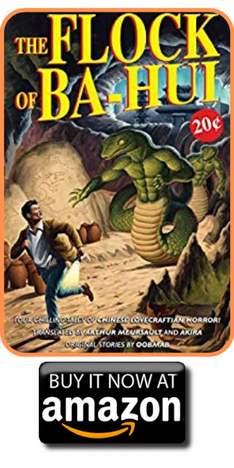 A researcher disappears while exploring the deep caverns of mountainous Sichuan, where folklore speaks of primeval reptilian gods sleeping beneath the earth. An artist dreams of a mysterious black tower stretching skyward for infinity, and glimpses the cold truth of the universe when he decides to climb it. Strange bubbling and decomposed corpses are discovered in the tunnels beneath an old mansion in the city of Qingdao, and an ancient temple in Tibet terrifies all who dare approach. Meanwhile, in an abandoned house, a stranger gathers together a group of bewildered scholars to whisper in the darkness of eldritch abominations and even weirder phantasms. From the stygian depths of the Chinese internet, we proudly present four wholly original tales of cosmic horror based on the works of H.P. Lovecraft and translated into English for the very first time. These ghoulish short stories take their inspiration from some of Lovecraft’s choicest nightmares and offer a different perspective on those things best left unseen. Follow us on a dream-quest as we explore what fresh terrors the Cthulhu Mythos has to offer from the other side of the Great Wall. Written in the authentic style of the pulp magazines of the 1930s, this unique offering of twisted tales will leave Lovecraft fans terrified and astounded by the stories’ breadth of imagination. The Flock of Ba-Hui takes Lovecraft’s world in a new direction and is essential reading for the true horror aficionado and an ideal accompaniment to the Seven Cryptical Books of Hsan.   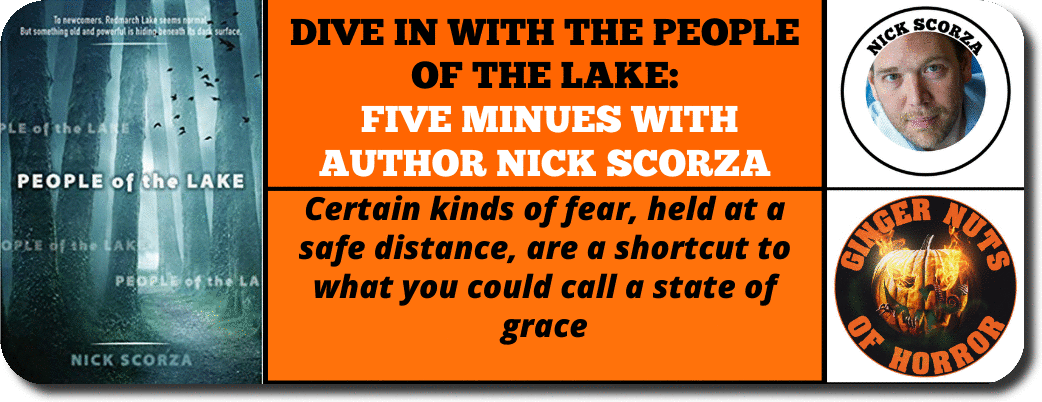 Nick Scorza is a fiction writer and unrepentant daydreamer. He has worked as an English teacher in the Czech Republic, a construction worker, a bookseller, and many other things. He grew up in Washington, DC and currently lives in New York City. People of the Lake is his first novel. His short fiction has appeared in places like Beneath Ceaseless Skies and Podcastle. WEBSITE LINKS https://www.nickscorza.com/ https://www.amazon.com/Nick-Scorza/e/B07XWPCRRD/ref=dp_byline_cont_book_1 Could you tell the readers a little bit about yourself? I live in a little NYC apartment with my fiancee. I work in the communications office of a city government agency to pay the bills and write fiction when I can. I love to cook, and to travel (again, when I can). I agonize constantly about how many books, movies, bands, TV shows, games, comics, and podcasts I'm not keeping up with. To get the ball rolling and get everyone relaxed, here is a hopefully lighthearted question to break the ice, which one of your characters would you least like to meet in real life and have them complain at you about they way you treated them in your work. I don't want to spoil anything, but I'd least like to meet Jonathan Redmarch from my novel People of the Lake. I'm sure he'd be very cordial and well-spoken while he took me apart piece by piece. Other than the horror genre, what else has been a major influence on your writing? I've been a fan of science fiction and fantasy since I could read. It actually took me a while to get in to horror, I was an easily-frightened child. In my 20's I felt I had to buckle down and learn to write what's usually called 'literary fiction.' I didn't come back to genre until I turned 30, but I now love both “genre” and “literary” fiction. Jorge Luis Borges and Angela Carter, two of my all-time favorite writers, could write both at the same time in the same story. The term horror, especially when applied to fiction always carries such heavy connotations. What’s your feeling on the term “horror” and what do you think we can do to break past these assumptions? I sometimes catch myself telling people that I don't write “that kind” of horror, meaning horror that is overly violent or grisly. Then I get mad at myself, because that's such a subjective line, and it potentially cuts off so much good horror. Also, I think what puts some people off horror isn't necessarily violence, it's the way it can present the universe as uncaring or actively malign, and that can come from even the quietest horror. I think for me at least that's the core of the genre, that it presents a fundamentally unsafe and unknowable universe. I get that not everyone enjoys confronting that, but I think it's part of what makes the genre so important. A lot of good horror movements have arisen as a direct result of the socio/political climate, considering the current state of the world where do you see horror going in the next few years? I don't think it's an accident we've seen so many post-apocalyptic stories lately, and there still seems to be an appetite for more. I think we'll probably see more overtly political themes, which I think is fine as long as they're not simplistic. I think fears of social and environmental collapse also lead to cosmic horror as we question our place in the universe. I hope we're going to continue to hear more from more diverse voices, and I love what writers like Victor LaValle are doing these days to engage with everything that made writers like H.P. Lovecraft great while grappling honestly and meaningfully with their racism and other serious issues. Given the dark, violent and at times grotesque nature of the horror genre why do you think so many people enjoy reading it? There are so many ways to enjoy horror. For me, it's incredibly cathartic. I had terrifying nightmares as a child, but now that I've built up years and years of callouses, I almost relish the feeling of being genuinely scared. Certain kinds of fear, held at a safe distance, are a shortcut to what you could call a state of grace—and the only way some of us will experience something like that. When I was a teenager, it was more about daring myself to confront what scared me, but now I come hoping it'll break down all of my defenses. What, if anything, is currently missing from the horror genre? I don't feel like I'm widely-read enough to answer that, and if I knew I'd probably be trying to write it. In the past authors were able to write about almost anything with a far lesser degree of the fear of backlash, but this has all changed in recent years. These days authors must be more aware of representation an the depiction of things such as race and gender in their works, how aware are you of these things and what steps have you taken to ensure that your writing can’t be viewed as being offensive to a minority group? I did a lot of research for my novel, and I worked with a sensitivity reader. I think it's especially important when you're writing for younger readers, who have less life experience to compare representations in a book to, and are still forming their own identities. I'm sure I still make mistakes, but I try to always be open to learning and doing it better next time. Does horror fiction perpetuate it’s own ghettoization? I guess some lit-fic readers who would love Thomas Ligotti might not pick up one of his books because of the cover art, to think of one example, but it honestly bothers me more when people call something “elevated horror,” like it can't be great art and also horror. What new and upcoming authors do you think we should take notice off? I feel like I'm late to every party. I always tell myself I'm going to keep on top of the latest new voices in magazines, but instead I end up reading novels that have already been recommended to me many times over. Of course they're usually great, but I hope to have a better answer to this question very soon. What are the books and films that helped to define you as an author? I already mentioned Borges and Angela Carter, and I'll throw in Umberto Eco and Italo Calvino. Neil Gaiman's Sandman got me into horror as a teenager, which led me to Lovecraft, then Machen, and it kind of spread through me like a plague from there. China Mieville's fiction really expanded my horizons as far as what was possible in fantasy. Caitlin Kiernan's The Red Tree is one of my favorite contemporary horror novels. Are there any reviews of your work, positive or negative that have stayed with you? My first novel just came out, and I'm trying not to read reviews, at least not right away. What aspects of writing to do you find the most difficult? There's that famous Dorothy Parker quote – “I hate writing, I love having written.” There are days when you just feel like you have nowhere to go, but you have to keep going because otherwise you'll never leave that place. Then there are the days when you realize the house you built word by word isn't going to stand, and you'll have to move it all around or rebuild from scratch. Really I guess I'm saying it's all hard. Is there one subject you would never write about as an author? I would have to have a damn good reason to depict sexual violence directly on the page, and I'd be petrified of getting it wrong, so I don't think it's very likely I'll write about it. How important are names to you in your books? Do you choose the names based on liking the way it sounds or the meaning? I try not to get heavy-handed with my names, but I do try to make them feel right for a character, which sometimes takes some refining. Writing, is not a static process, how have you developed as a writer over the years? I feel like I'm a bit better at stepping outside of myself and assessing my own writing. One thing that helps me is to try to put myself in the mindset of someone I know, and how they would read and react to what I wrote. What is the best piece of advice you ever received with regards to your writing? Lots of the standard aphorisms for new writers, “show don't tell,” “avoid adverbs”, etc. are like training wheels on a bicycle – useful at first, but eventually you have to discard them. “Read deeply and widely” is one that always stays true though. To many writers, the characters they write become like children, who is your favorite child, and who is your least favorite to write for and why? I got pretty attached to Clara, the narrator of People of the Lake, but sometimes the characters we least expect grab us. There was one character in the novel I'm working on now I thought I'd have a terrible time writing, but she turned out to be one of my favorites. For those who haven’t read any of your books, which of your books do you think best represents your work and why? I've only got the one, so far, so I've got to say People of the Lake. Can you tell us about your last book, and can you tell us about what you are working on next? My first novel, People of the Lake, is about ghosts, twins (and cryptophasia, aka 'twin talk'), buried secrets, and messed up family history. My next project is a historical fantasy set in a magical Gilded Age New York, with secret societies, social unrest, sorcerous plots, and messed up family history (which I'm realizing might be a theme I'm drawn to). If you could erase one horror cliché what would be your choice? The standard tropes of the slasher genre kind of leave me cold. Nothing against them, I know lots of people love them, it just tends not to do it for me. What was the last great book you read, and what was the last book that disappointed you? I loved Victor LaValle's The Ballad of Black Tom, Paul Tremblay's A Head Full of Ghosts, and Nathan Ballingrud's North American Lake Monsters. I might sound like I'm trying to be too polite, but I genuinely can't think of a book I've been disappointed with lately. That probably means I'm just not reading enough. What's the one question you wish you would get asked but never do? And what would be the answer? No one's ever asked me where I get my ideas, so I've never had the satisfaction of saying I have more ideas than I'll ever know what to do with, it's turning any of them into something real and worthwhile that's the problem.  An enthralling, historically rich, small-town mystery in which a teen works with her deceased sister to solve an assumed murder.Sixteen-year-old Clara Morris is facing an awkward summer with her father in the tiny upstate town of Redmarch Lake. Clara's relationship with her parents--and with life in general--has been strained since she lost her twin sister, Zoe, when the girls were eight. As a child, her sister had been her whole world--they even shared a secret invented twin language. Clara has managed to rebuild herself as best she can, but she still feels a hole in her life from the absence of her twin, and she suspects she always will. She soon finds that Redmarch Lake, where her father's family has lived for generations, is a very unusual place. The townspeople live by odd rules and superstitions. The eerily calm lake the town is named for both fascinates and repels her. The town's young people are just as odd and unfriendly as their parents. Clara manages to befriend the one boy willing to talk to an outsider, but he disappears during a party in the woods. The next day, he is found dead in the lake under mysterious circumstances. The townspeople all treat this as a tragic accident. Clara isn't buying it, but she doesn't know what to do until she receives a mysterious note hinting at murder--a note written in the language she shared with her twin sister, Zoe. 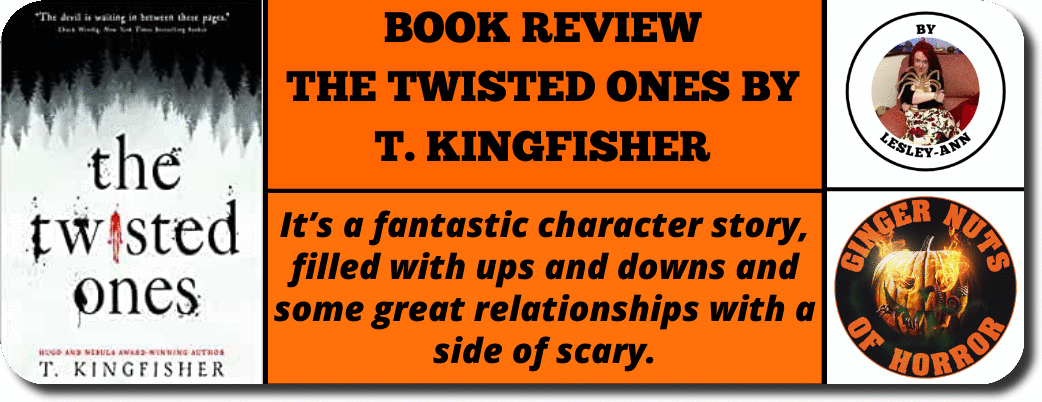  about catherine cavendishHello, my name's Catherine Cavendish and I write horror fiction - frequently with ghostly, supernatural, Gothic and haunted house themes. My latest novel - THE GARDEN OF BEWITCHMENT - is out now from Flame Tree Press. Historical haunted Gothic horror set in the wilds of the Yorkshire moors - pure Bronte country - with a Bronte theme. My novella - THE DARKEST VEIL - is published from Crossroad Press. In case you were thinking of messing with an ouija board - don't. Especially if you're not prepared to follow the rules. Also from Flame Tree Press - THE HAUNTING OF HENDERSON CLOSE. Ghostly horror set in Edinburgh's Old Town. Available now from Kensington-Lyrical - the NEMESIS OF THE GODS trilogy: WRATH OF THE ANCIENTS, WAKING THE ANCIENTS and DAMNED BY THE ANCIENTS - set in Egypt and Vienna and featuring the sinister Dr. Emeryk Quintillus whose obsession has stayed with him long past the grave. My novellas COLD REVENGE, MISS ABIGAIL'S ROOM, THE DEMONS OF CAMBIAN STREET, DARK AVENGING ANGEL, LINDEN MANOR, THE DEVIL INSIDE HER and THE SECOND WIFE have now been released in new editions by Crossroad Press. My novels THE DEVIL'S SERENADE and SAVING GRACE DEVINE have also been released in new editions by Crossroad Press, as has my novel of the Lancashire Witches - THE PENDLE CURSE. I live with a long-suffering husband and a delightful black cat who has never forgotten that her species used to be worshipped in ancient Egypt. She sees no reason why that practice should not continue. Who am I to argue? When not slaving over a hot computer, I enjoy wandering around Neolithic stone circles and visiting old haunted houses. an interview with catherine cavendishYour new novel The Gardens of Bewitchment is out now from Flame Tree Press. Would you be able to tell us a bit about it? It’s set in 1893 and it centres around two sisters. They’re actually identical twins. Their faces are identical to look at, but they’re very very different in personality and the way they present themselves. So that’s Claire and Evelyn, Evelyn known as Ev by Claire. They have left their home, their family home in a prosperous town in the heart of the Pennines, and they’ve chosen to live in a small cottage in a little village near to Hawoth because they are both absolutely devoted to the Brontës. Claire in particular is infatuated with the Brontë brother, Branwell Brontë, who died in 1848 but as far as Claire’s concerned Branwell is still very much alive and visits her. The only thing is, things are not what they appear to be at all. It’s not a straight forward ghost story, there is a lot going on there, especially when Claire finds, miraculously it has appeared in her room, this toy called The Garden of Bewitchment. Which seems like a lovely beautiful thing to play with… but it isn’t. That’s where the fun starts! There’s a big influence of the Brontës on the feel of the novel. Was that something you wanted to play with? Yes, very much so. For a long time I’ve thought I’d love to do something involving Wuthering Heights, particularly because that’s my sort of go to Brontë book. I mean I love Jane Eyre as well and also Agnes Grey, Anne Brontë’s story, but there’s always been something about Wuthering Heights. It’s a book that when I got hooked on it when I was a child, I would fetch it out and read it at least once a year, and as I grew up, I saw different things in that book. The atmosphere of it, the whole gothic feel of it, the sinister stuff that goes on there, the ghostliness that goes on there, and the incredible moors. Now I’m writing horror myself and I’m thinking, there’s a story in there that I wanted to write and I couldn’t see how to do it. And it fermented and fermented and fermented in my mind for a very long time. So I finally thought, yes, that’s what I’m going to do. Branwell Brontë is the brother who had a troubled history with alcoholism and never achieved the same heights as his sisters. What drew you, and your characters, to him? I think that’s what it is. Branwell I find a tragic character in so many ways, because as you say he was in the shadow of his sisters. He was expected to do well. His family regarded him as a talented artist, and of course, he suffered a serious setback, that turned out to be ultimately fatal in his case, when the Royal Academy wouldn’t have anything to do with him. And I think as far as Claire, my character is concerned, she’s attracted to him because he is a bad boy. You know, that’s just Claire. Ev wouldn’t have given him house room, it just wouldn’t have happened for Ev, but for Claire, oh yes. Most assuredly. Claire is drawn because he is the total opposite of what she should be considering. Both The Garden of Bewitchment and your previous novel The Haunting of Henderson Close have really vividly imagined specific settings. How important is setting to your writing? For me it’s really, exceptionally, important. It’s critical actually. I love getting involved in the setting of the book. When I’m writing, I’m actually there. That’s why I never have music playing, I don’t have any distractions, I work in a quiet room, surrounded by books as it happens, which is lovely. And it’s just me and the computer and what’s going on in my head, my characters moving around in my head. And they’re moving around in a place. And that place is very very three dimensional in my head. So it’s critical to me, I love to paint that particular scene, especially when it involves darkness, winds, gales, yes stormy conditions, that kind of thing. At the centre of the book is the Garden of Bewitchment itself, which is a very creepy toy. What is it about kid’s toys that disturb us? To start off I think that certain toys are very scary. Clowns. They’re the classic. I’ve never liked clowns, even when I was a kid, I used to find them very spooky and sinister. Pennywise - that definitely resonated with me when I read it! But also dolls, and I know a lot of people don’t like it but I happen to love the Conjuring universe. Vera Farmiga I think has done a lot for our whole genre actually by bringing those out. Annabelle is a scary doll. Chucky was a scary doll. But an awful lot of stuff has been done already. I would have loved to have done a scary doll, but I thought it’s just been done. I have actually got a scary doll in one of my previous books, but it’s not really a major character. But I thought no I can’t do a doll. It just formed in my head, I thought, well what about a doll’s house, and then the doll’s house became a house in a garden, and it kind of grew and grew and grew, and as I was writing it it grew. And it didn’t have a working title as The Garden of Bewitchment, I can’t even remember if it did have a working title until I finished the first draft! The sisters have a shared fantasy world that they write books in, which has parallels with the Brontës and Glasstown…. Oh yes definitely. I don’t know if you’ve ever been to Hawoth, but in the Brontë parsonage you can actually see these tiny little books that they wrote. And it’s extraordinary, because the writing is so so tiny, you think well how can a human, even a child - well especially a child - have written it. It’s so exquisite, you can’t read it, you need a magnifying glass. They must have written it with a magnifying glass. It was obvious to me that as soon as I decided I was going to take the tack that I took, that those two sisters of mine were going to have to have this thing about creating their own little world like Glasstown and Angria and so on. It really makes them. And then it kind of just grew from there, and yes the crossover between fantasy and reality, and the blurring of the lines of what is real and what isn’t real. There’s a lot of that in Garden of Bewitchment in different ways, and it’s something I loved playing with. It seemed to work. You’ve mentioned that you used to write historical fiction, which is interesting because that’s a particularly strong element in your latest book but some of your other ones as well.. Yes. I’m living the dream really at the moment, because I love history. I’ve loved history since I was at school, a bit of me I’ve inherited from my mum. So I loved writing historical stuff, but then I love writing the ghostly horror stuff as well, so what do you do? You write historical horror, it’s the best of both worlds! Does getting the period detail right involve a lot of research? Yeah it can do, just to get the absolute details right. You’ve got to be careful about the language that you use because some words, it really grates on me when I read a book that is supposed to be historical and then they’ll come out with some word that didn’t come into parlance until the 1960s or 70s or 80s or even later. So there are some words which I sort of think, ooh hang on, would they have said that? Fortunately now we have the internet haven’t we, so we can consult an online dictionary and straight away find out when that word was incorporated into common parlance. But the devil is in the detail, you do have to take care with that. But again I love this whole business of research, I really enjoy it. I often do research, I keep the windows open on the computer here that’s linked to some site about whatever it is I’m working on at the time and I’ll keep dashing backwards and forwards between those, making sure again I’m not going too off course, without giving my readers a history lesson, because obviously they don’t want that. They want something scary to happen. But they want it to be authentically scary! When you have a particular idea, because the historical elements and the setting are so strong in your work, do you always know where and when it needs to be set? Yes it just seems to fall into place, absolutely. That was the case particularly with Henderson’s Close, with the character of Miss Carmichael, who of course, she dies at the beginning. She’s actually inspired by a gravestone. In Greyfriar’s kirkyard in Edinburgh, on the wall there is a plaque that says Miss Casscart, and that’s all it says. And if you ask the staff in the church, they don’t know anything more about it, other than that. Who was Miss Casscart? When did she live? Why did somebody put up that plaque, who put that plaque there? They know nothing, they don’t know anything about it. And that’s where Henderson’s Close, the story that we actually now have, came from, was initially that little gravestone there, and I’m thinking, I wonder who she was? And I tried to do my own research and I could only come up with, funnily enough, two sisters, who possibly fit the bill, around about the time that I was guessing she was probably alive. It was all guesswork, so that kind of became the period, because I sussed these people out living when they did, that’s when I wanted to set a chunk of Henderson’s Close, and the rest of it I wanted in the present day. Do you feel the historical element is useful for reflecting at a distance on aspects of the present? There is that aspect of Ev and Claire’s status as women who are very much expected to live their lives in a particular way, and they both rebel against that in very different ways… Yeah. I think if you tried to set that story in the present day it wouldn’t work, because women are not expected to behave like that. And obviously, Ev and Claire kind of broke the mold, cause really they should have in the scheme of things married well, but that was, well it didn’t happen. It didn’t happen to the Brontës apart for Charlotte, and even she married beneath her according to her father! It wasn’t really that but he didn’t approve of her marrying. He didn’t think it was the right thing for her, didn’t think her constitution would stand being married. We won’t explore that any further! You have two novels out with Flame Tree Press and Crossroad Press have put out some of your earlier work. What has your experience been of working with these two different publishers? Very different ways of doing things. Flame Tree, I’ve got nothing but praise for, I’ve got nothing but praise for Crossroad, but it’s a totally different way of working. Flame Tree I’m absolutely delighted with the amount of support that they give their writers in terms of marketing and promotion, and well just all round, there’s always somebody there if you need them. And of course working with Don D’Auria. Who wouldn’t want to work with him? Crossroad have been great because it’s quite difficult to get your books reprinted when they’ve gone out of print, especially if they are novella length as opposed to novels. There are a couple of novels that they’ve put out for me but the rest are novellas, and it’s notoriously difficult to get a publisher to put those out, even if you say well stick two together and make a novel sized package. “No. They’re reprints. We try not to touch reprints!” But Crossroad are very friendly, very informal, just they’re lovely people to work with and so are Flame Tree. So fabulous, I’ve got nothing but praise for them. What’s next for Catherine Cavendish? I have a novella coming out with a different publisher, Silver Shamrock, and that’s a new one, that’s coming out in June, and that’s a witchy story, set somewhere that isn’t actually said to be Cornwall but it’s very similar to Cornwall, which again is somewhere I know, and that involves long dead witches. Unfortunately the spirit of one of them is let loose accidentally from the place where she’s been confined hundreds of years before, and so you can imagine mayhem then ensues! and from Flame Tree I’ve got a new novel coming out in January/February next year which is called In Darkness Shadows Breathe, and that’s a very different story. Two main characters, they are both in the present, both living parallel lives but their paths cross. One of them is experiencing some major major surgery, so she’s in a hospital for quite a lot of it, a lot of the action takes place in a hospital. And that’s where their paths crossed, where timeslips occur, where they find themselves in places where they really have no business being in, rooms that can’t possibly exist, corridors that can’t possibly exist. And yeah it’s some scary demonic stuff happening. In addition to this surgery that poor Nessa has to go through, she’s got to go through all that as well. At least I only had the surgery. Oh I am cruel to my characters! Thank you Catherine Cavendish for speaking with us! The Garden of Bewitchment by Catherine Cavendish "Cavendish draws from the best conventions of the genre in this eerie gothic novel about a woman’s sanity slowly unraveling within the hallways of a mysterious mansion." – Publishers Weekly Don’t play the game. In 1893, Evelyn and Claire leave their home in a Yorkshire town for life in a rural retreat on their beloved moors. But when a strange toy garden mysteriously appears, a chain of increasingly terrifying events is unleashed. Neighbour Matthew Dixon befriends Evelyn, but seems to have more than one secret to hide. Then the horror really begins. The Garden of Bewitchment is all too real and something is threatening the lives and sanity of the women. Evelyn no longer knows who - or what - to believe. And time is running out. FLAME TREE PRESS is the new fiction imprint of Flame Tree Publishing. Launched in 2018 the list brings together brilliant new authors and the more established; the award winners, and exciting, original voices.  |


Archives
May 2023
|
 RSS Feed

|

|