

 Kiwi horror-thriller writing duo Dan Rabarts and Lee Murray discuss collaborative writing, explosions, cow paddocks, moral ambiguity, and their newest release Blood of the Sun What made you decide to collaborate? DR: Lee and I had collaborated on a couple of anthologies as co-editors, and it turned out we worked fairly well together as a team, managing to find a line down the middle of her likes and mine to produce something that readers thought worthy of getting behind. We then threw around the idea of collaborating on some punchy novellas, something blending crime and mystery and humour, and from that brainstorm came Penny and Matiu Yee, and Hounds of the Underworld was born. The novella part of the plan got mislaid along the way, but the rest of it hung in there. LM: I’d been a fan of Dan’s writing for some time; his prose is so sharp, with keenly observed imagery, authentic characters, a profound sense of place, and frequent use of the word ‘spooling’. We’d already proved we could work together, so I sent a nervous email to test the waters. He said yes, and I may or may not have punched the air with excitement. We started small, with a novella, figuring it was easy enough to step away if the whole thing came to fisticuffs. But, as so often happens when you work with Dan, the project exploded. How does your collaboration work when you don’t even live in the town? DR: The world is a really small place when you have the internet in your pocket. While we make the most of any opportunity to put our heads together when we’re in the same place, the advent of email, instant messaging, shared documents and Zoom conferencing means we have a wide arsenal of tools at our fingertips—literally—to draw on to keep the work, the ideas, and the communication flowing. Late-night Facebook chats are a common occurrence... LM: We might have used telepathy on occasion. As collaborators, do you ever disagree? DR: Writing is all about letting the story take us where it wants to go, right? And if that means there’s a monster around the corner as they run away from an explosion, which hadn’t been discussed at any point prior to Lee handing the document back to me to write my next section, what can I say? The characters are more in charge of telling the story than any silly plot outline. I’m sure you agree, right Lee? LM: What’s a plot outline, anyway? Just a map to your destination. So what if we chose another route? Those digressions have paid off creatively, resulting in some great plot events like chop shop explosions, forklift car chases, and a dramatic rooftop tussle in the midst of a thunderstorm. Whenever Dan’s latest chapter would land in my inbox, I’d read it immediately. I couldn’t wait to see where he’d taken the story. The surprise was half the fun. And because we’ve adopted this big-sister, little-brother relationship, both in real life and on the page, if there had been a disagreement, as opposed to a digression, I would have used my bossy Lucy-van-Pelt big-sister voice, and that would likely have been the end of it. I’m sure you agree, right Dan? Where do you write? DR: Once upon a time I had a nice writing office all to myself, but I gave that up when my daughter came along and needed a bedroom, so nowadays it’s what I like to call an agile writing environment. Most often, I write at the kitchen table, sometimes (like right now) sitting on the couch, occasionally lounging in bed, or in the car. I also carry a journal most places and have been known to scribble furiously in places like the backs of boats, cozy cafés, and airport lounges. Not so much the airports lately, for obvious reasons. The one consistent answer is this: invariably in the vicinity of a cup of tea of some description. The rest is fluid. The tea is also fluid, but of a different sort. LM: Even before the pandemic, my husband and I both worked full-time from our home-office, our desks facing one another Victoria & Albert-style, in what was once the front living room. My husband is a software engineer, using two and sometimes three screens simultaneously, and, over time, they’ve got larger and larger, so now I can barely see the top of his head. Or perhaps, the point is so he can barely see me. Which might explain how we’ve managed to stay married for thirty-one years. Very often, I share my office chair with Bella, our Jack-Tzu terrier, who likes to squeeze into the space between the back of the chair and the small of my back. When I need to do some reading, the room also has a comfy couch and a couple of large leather armchairs, all with views over the neighbour’s cow paddock, including two white-faced Herefords and a red tractor. How do you manage your time and what or who suffers? DR: Time is a precious thing. I steal it where I can find it. Mainly this means getting up at Ridiculous O’Clock every morning (that’s about 5.20am to those of you who don’t use the Adjective System to reckon time) to carve out half an hour or so of writing time before the need to walk the dog and go to the day job gets in the way of the words. Writing is quite literally the thing that gets me up in the morning. I’m the one who suffers because I’m really not a morning person. Then there’s a small window late in the evening after the kids are off to bed when I can catch up on the business stuff, and I make sure I get some reading in there too. And as much as I enjoy getting to the kids’ football on Saturdays, I also secretly hope for rain some weekends so I can delay all those jobs around the house and steal some more time to write instead. LM: Time management? I have a masters’ degree in management, and yet I am incapable of organising my time. With the pandemic shifting conferences and literary events online, I’ve scarcely slept since March; it hardly seems worth the bother going to bed if I’m scheduled to appear on a 4am vlog hosted in the US, for example. I don’t like to let anyone down, so mostly it is my solo writing that suffers, squeezed in around my literary community-building work, where I juggle mentorships, award juries, and guest editing gigs. Tell us about the new release. What’s the premise behind Blood of the Sun? DR: Blood of the Sun is the epic third instalment in our supernatural-crime noir Path of Ra series, although it also works as a stand-alone, so readers who are new to the world needn’t be concerned about diving right in. In Blood of the Sun, our brother and sister sleuths, Matiu and Penny Yee, find themselves assisting with the processing of bodies left behind in the aftermath of a gang shoot-out on Auckland’s wharfs, only to discover that their own family dealings may be the reason for the slaughter. Family secrets start to unravel, both worldly and supernatural, leading to a truly explosive endgame which will light up the Auckland skyline in shades of apocalypse. The book is once again written in our Rabarts-Murray trademark he-said/she-said style, full of dark witty banter and the constant tension between the real and the eldritch. Penny remains determined to find a clean, logical solution to the mysteries that defy rational explanation, while Matiu braces himself for the veils between the human realm and the domain of gods and monsters being torn apart. LM: Here’s what our friends have to say about it: “A gripping excursion into supernatural New Zealand where the landscape is as much a character as the two leads, further cementing Lee Murray and Dan Rabarts as masters of Māori folk horror.” —Heide Goody and Iain Grant, authors of Clovenhoof. “I’m constantly amazed when two writers can work together as well as Rabarts and Murray. They knock another one out of the park with Blood of the Sun, putting Penny and Matiu in harm’s way once more. A killer addition to the genre!” — Matt Betts, author of Odd Men Out. What attracts you to the horror-thriller genre? DR: Dark supernatural forensic crime thriller fiction? Right there, that combination of elements. It gives the writers so many opportunities to lead the reader down the increasingly twisted paths the story needs to go. The opportunity to unsettle the reader with understated horror, while holding them locked within the pages because they must know how the mystery will be satisfactorily resolved using none other than science. And a little bit of magic, maybe. But don’t tell Penny. She wouldn’t believe you anyway. LM: It’s no secret that I suffer from anxiety, and the horror-thriller genre allows me to lay bare the things that steal my breath away, those shadowy shapes that twist and flutter and taunt me from the darkness. Somehow, straightjacketing those demons into straight lines on the page gives me a measure of distance, a means of processing those fears. Like a lot of horror fiction, your work contrasts themes of light and dark. Does your writing ever deal with moral ambiguity? LM: In Blood of the Sun, Dan’s character, Matiu, with his dubious parentage, is a matakite, or seer, able to glimpse beyond the mortal realm into the underworld. This straddling of light and dark is a powerful metaphor for the character, who is a slightly unhinged former gang member not long out of prison. Matiu’s seen some shady things. Done some stuff that isn’t entirely legit. He’s trying to put all that behind him, but if he needs to, he won’t hesitate to call in favours from his cellmates. After all, the ends justify the means, right? But actions don’t always speak to a person’s moral core, and deep down Matiu’s loyalties are never in question. He’d sacrifice everything for the lives of his sister, his mother, even a stranger, and nearly does on more than one occasion. It’s this moral ambiguity that gives the character his depth, and makes him so recognisable, since who among us hasn’t grappled with that blur between right and wrong? While Dan and I each write both characters, Matiu is mainly Dan’s creation and so cleverly complex that I sometimes wonder how much of Dan’s own demons have been poured onto the page. DR: I think it’s fair to say that for both Lee and I, we stray quite deeply into ideas of moral ambiguity, particularly in our short fiction. I’m thinking of some of Lee’s stories in her collection Grotesque: Monster Stories, notably Dead End Town (which was a Stoker Award finalist) and Lifeblood, published in Grimdark Magazine. Both are stories of essentially good people forced into situations where the only choices they have left to make are bad ones, landscapes where there is no right or wrong, only awful and worse. Stories where the rot at the core of our inhumanity has spread so far that it can’t be cut or burned out, has become so much a part of who we are that we can’t even see it anymore: It’s like in Beauty and the Beast, where Belle has to choose to love the beast if she’s going to rescue everyone from the witch’s curse. If I tell her the truth about Uncle Bradley, it won’t count. “Mum, please, just make him go,” I gibber. But she doesn’t hear me, and after a while I can’t hear her either. (Dead End Town; Cthulhu Deep Down Under Vol 2, 2018) Any sneak peeks about BLOOD OF THE SUN that readers won’t find on the jacket blurb? DR: Many of our supporting characters from the first two books return in this final chapter to the series, and the time has come for some unexpected secrets to be revealed. Where did mild-mannered politico Craig Tong get such quick reflexes, and who is Matiu’s mystery father? LM: So many secrets still to be uncovered. Why does Penny—with a doctorate in research science and her own consultancy business—rely on her baby brother to get her from A to B, anyway? What business do Craig Tong and Dad have being so chummy? And where the heck are Matiu’s hunches leading them this time, because, honestly, if he thinks she’s buying into his crazy ideas again… What questions do readers typically ask you about your Path of Ra series? DR: I love it when people ask about the influence that New Zealand, our landscape and culture, our sense of identity as New Zealanders has on our work, and how that impacts on the drama of the work we create. The answer is that there is an intrinsic link between the place we call home and this series of books, from the city harbours to the farm paddocks, from the volcanic skyline to the myths and legends carved into our souls. LM: It’s uplifting when devoted readers ask us to write more Penny and Matiu adventures. For the moment, we haven’t planned to extend the series beyond Blood of the Sun, but never say never! The audio version is on its way, and Dan and I are talking about adapting the series for screen, so watch this space. 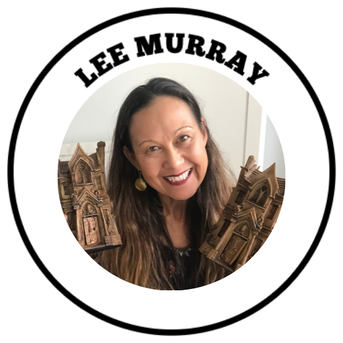 Lee Murray is a multi-award-winning author-editor from Aotearoa-New Zealand (Sir Julius Vogel, Australian Shadows), and a three-time Bram Stoker Award®-nominee. Her work includes military thrillers, the Taine McKenna Adventures, supernatural crime-noir series The Path of Ra (with Dan Rabarts), and debut collection Grotesque: Monster Stories. She has edited sixteen anthologies, her latest projects being Black Cranes: Tales of Unquiet Women co-edited with Geneve Flynn, and the AHWA’s Midnight Echo #15. She is co-founder of Young NZ Writers and of the Wright-Murray Residency for Speculative Fiction Writers, HWA Mentor of the Year, and an NZSA Honorary Literary Fellow. Website: https://www.leemurray.info/ Facebook: https://www.facebook.com/groups/MonsterReaders Twitter: https://twitter.com/leemurraywriter Instagram: https://www.instagram.com/leemurray2656/ Bookbub: https://www.bookbub.com/authors/lee-murray Amazon: https://www.amazon.com/Lee-Murray/e/B0068FHSC4 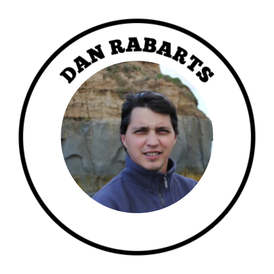 Dan Rabarts is an award-winning author and editor, four-time recipient of New Zealand’s Sir Julius Vogel Award and three-time winner of the Australian Shadows Award, occasional sailor of sailing things, part-time metalhead and father of two wee miracles in a house on a hill under the southern sun. Together with Lee Murray, he co-writes the Path of Ra crime-noir thriller series from Raw Dog Screaming Press (Hounds of the Underworld, Teeth of the Wolf, Blood of the Sun) and co-edited the flash-fiction horror anthology Baby Teeth - Bite-sized Tales of Terror, and At The Edge, an anthology of Antipodean dark fiction. His steampunk-grimdark-comic fantasy series Children of Bane starts with Brothers of the Knife and continues in Sons of the Curse and Sisters of Spindrift (Omnium Gatherum Media). Dan’s science fiction, dark fantasy and horror short stories have been published in numerous venues worldwide. He also regularly narrates and produces for podcasts and audiobooks. Find him at dan.rabarts.com. Website: http://dan.rabarts.com Facebook: facebook.com/rabarts Twitter: twitter.com/rabarts Instagram: Instagram.com/dan.rabarts Amazon: https://www.amazon.com/Dan-Rabarts/e/B00NH91DAC%3F 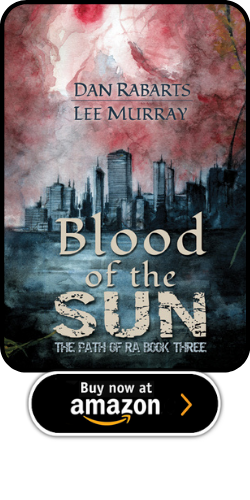 There’s been a gang massacre on Auckland’s Freyberg Wharf. Body parts everywhere. And with the police’s go-to laboratory out of action, it’s up to scientific consult Pandora (Penny) Yee to sort through the mess. It’s a hellish task, made worse by the earthquake swarms, the insufferable heat, and Cerberus’ infernal barking. And what’s got into her brother Matiu? Does it have something to do with the ship’s consignment? Or is Matiu running with the gangs again? Because if he’s involved, Penny will murder him herself… Matiu can taste the chaos in the air. All they’ve done so far is keep it at bay, but now the streets are shuddering in protest. Things are pushing up against the veil like floodwaters. The coming days promise to be dark, but there’s a bright side. He’s got this flash new car, Penny’s been too busy working to bug him, and Erica keeps scheduling their probation meetings over her lunch hour… Join Penny and Matiu Yee for the family reunion to end all family reunions, as the struggle between light and dark erupts across Auckland’s volcanic skyline. “The threads of the siblings’ disparate plots weave together much more tightly than it first appears. Rabarts and Murray write with characteristic verve, injecting the noir atmosphere with dark humor. Series readers will find much to enjoy.”—Publishers Weekly     On Tuesday evening we welcomed the legend that is Christopher Golden to the site for an exclusive reading from his new novel Red Hands and a fascinating Q&A, where Christopher answered questions from the audience. We streamed the event live on YouTube, but you can still catch up on this by either clicking here to watch it on YouTube or by clicking the embedded video below Christopher Golden is the award-winning, bestselling author of such novels as The Myth Hunters, Wildwood Road, The Boys Are Back in Town, The Ferryman, Strangewood, Of Saints and Shadows, and (with Tim Lebbon) The Map of Moments. He has also written books for teens and young adults, including Poison Ink, Soulless, and the thriller series Body of Evidence, honored by the New York Public Library and chosen as one of YALSA’s Best Books for Young Readers. Upcoming teen novels include a new series of hardcover YA fantasy novels co-authored with Tim Lebbon and entitled The Secret Journeys of Jack London. A lifelong fan of the “team-up,” Golden frequently collaborates with other writers on books, comics, and scripts. In addition to his recent work with Tim Lebbon, he co-wrote the lavishly illustrated novel Baltimore, or, The Steadfast Tin Soldier and the Vampire with Mike Mignola. With Thomas E. Sniegoski, he is the co-author of multiple novels, as well as comic book miniseries such as Talent and The Sisterhood, both currently in development as feature films. With Amber Benson, Golden co-created the online animated series Ghosts of Albion and co-wrote the book series of the same name. As an editor, he has worked on the short story anthologies The New Dead and British Invasion, among others, and has also written and co-written comic books, video games, screenplays, the online animated series Ghosts of Albion (with Amber Benson) and a network television pilot. The author is also known for his many media tie-in works, including novels, comics, and video games, in the worlds of Buffy the Vampire Slayer, Hellboy, Angel, and X-Men, among others.Golden was born and raised in Massachusetts, where he still lives with his family. His original novels have been published in fourteen languages in countries around the world  In bestselling author Christopher Golden's supernatural thriller Red Hands, sometimes a story is a warning. Sometimes the warning comes too late
When a mysterious and devastating bioweapon causes its victims to develop Red Hands, the touch of death, weird science expert Ben Walker is called to investigate. A car plows through the crowd at a July 4th parade. The driver climbs out, sick and stumbling, reaching out...and everyone he touches drops dead within seconds. Maeve Sinclair watches in horror as people she loves begin to die and she knows she must take action. But in the aftermath of this terror, it's Maeve who possesses that killing touch. Fleeing into the mountains, struggling with her own grief and confusion, Maeve faces the dawning realization that she will never be able to touch another human being again. Weird s**t expert" Ben Walker is surprised to get a call from Alena Boudreau, director of the newly restructured Global Science Research Coalition. There's an upheaval in the organization and she needs to send someone she can trust to Jericho Falls. Whoever finds Maeve Sinclair first will unravel the mystery of her death touch, and many are willing to kill her for that secret. Walker's assignment is to get her off the mountain alive. But as Maeve searches for a hiding place, hunted and growing sicker by the moment, she begins to hear an insidious voice in her head, and the yearning, the need... the hunger to touch another human being continues to grow. When Walker and Maeve meet at last, they will unravel a stunning legacy of death and betrayal, and a malignant secret as old as history.  I think it is because there is a misconception as to what “horror” is. People will always think first of cheesy slasher films (which I LOVE), and they will think of old horror pulps that were written way back when…these things are usually people’s first impression of what horror is and I think that is a hard image in their minds to break. Could you tell the readers a little bit about yourself? Hello! My name is Jennifer Gordon, I hail from New Hampshire in the United States. When I am not writing horror, I am a professional ballroom dancer/ choreographer/performer, but most of all I am a dance teacher. I am a curly haired neurotic, and mother to a silly dog, and a very large cat. Which one of your characters would you least like to meet in real life and have them complain at you about they way you treated them in your work. I would say I would least like to meet my character Anthony, he is an elderly man now, but in his youth be brutally killed the woman he was supposed to marry…just because. I think He would complain a lot to me, not about how I portrayed him as a murderer, for that he would be proud. I do insinuate he may had have “inappropriate” feelings for him mother…and for that I think he would be upset that I told that secret of his. Other than the horror genre, what else has been a major influence on your writing? I absolutely am in love with abandoned places and urban exploration, I am fascinated by the way structures decay once people are no longer living in them. That ephemeral sense of time and memory has a huge influence in how I write and what I write. The term horror, especially when applied to fiction always carries such heavy connotations. What’s your feeling on the term “horror” and what do you think we can do to break past these assumptions? Well, I know when I tell people that I write horror, they always seem a little taken aback by it. They assume right away that it is gore and monsters. I tell them that I write Gothic Horror and then they assume it is vampires. I think the world is slowly coming around to once again embracing subtle horror, and “smarter horror”. The recent trend in movies (Hereditary, The Babadook etc.) as well as television (Haunting of Hill House, Castle Rock) has been wonderful for the industry in general. Personally, I think “Horror” is something different to everyone. What I find horrifying, others would find mundane. I think as a creator that we need to keep pushing boundaries and crossing genres, blurring the lines. Also, I think we as fans of Horror must also be willing to take chances on movies or books that we normally wouldn’t. It’s how we all keep growing. A lot of good horror movements have arisen as a direct result of the socio/political climate, considering the current state of the world where do you see horror going in the next few years? I think we will be seeing A LOT of plague books and movies, a lot of things where the government has gone bad, a lot of political apocalypse worlds, where race and religion is persecuted, a lot of symbolic class wars. Given the dark, violent and at times grotesque nature of the horror genre why do you think so many people enjoy reading it? I think it appeals to the same part of us that sticks our finger just for a moment in a candle flame or walks just a little too close to a ledge. I think it’s natural for people to want that rush of adrenaline that makes them feel alive. Fear is natural for that, and horror novels or movies are a safe way to get to that point of near panic from the safety of your couch. What, if anything, is currently missing from the horror genre? The only thing I think that is missing is that it is not as widely as accepted as a form of literature. People think of horror and automatically there is an assumption that horror is a lesser quality form of art because it is a “genre”. So, I think the horror genre is fine, it’s the rest of the world that needs to catch up. Is horror its own worst enemy? What do you think keeps horror from being regarded as a valid genre by the public at large? I think it is because there is a misconception as to what “horror” is. People will always think first of cheesy slasher films (which I LOVE), and they will think of old horror pulps that were written way back when…these things are usually people’s first impression of what horror is and I think that is a hard image in their minds to break. I think what could help would be to have more horror related things that are smart and varied in style and theme, that are accessible to younger readers and movie goers. What new and upcoming authors do you think we should take notice off? I think Mona Awad’s novel Bunny was amazing, and strangely twisted in a very Lovecraftian way of thinking. It was creature horror, but it was also the horror of dark academia. Which was awesome. I also adore Jemc Jac…”In the Grip of It” was an outstanding take on a a haunted house book. What are the books and films that helped to define you as an author? The Haunting of Hill House, and We Have Always Lived in the Castle by Shirley Jackson are my top two books that are “horror” related. I am also very inspired by the Poetry of Anne Sexton, and especially how she expressed her own mental illness through her work. As for films, my favorite in the genre are The Orphanage, and The Others…basically I like anything where the house is another major character in the story! Are there any reviews of your work, positive or negative that have stayed with you? I have been lucky to have some amazing reviews so far. The ones that stayed with me and stay with me are the ones where people really connected to the trauma and grief tha is that core of my novel. I got reviews from psychotherapists, survivors, people in recovery who all mentioned that I had tapped into something incredibly personal for them. So that stays with me. A negative one…well of course we all get the comments about the grammar or editing being bad in some instances, but the thing that sticks out the most is I had an editor say that my writing style was grating, and even though he loved the idea of my book he hated reading it. Is there one subject you would never write about as an author? I don’t think I could bring myself to hurt an animal or have an animal die in my work. Also, I am not into to torture or extreme body horror work. Too squeamish. How important are names to you in your books? Do you choose the names based on liking the way it sounds or the meaning? In my first novel I keep one of my characters unnamed for most of the book. I wanted it to be powerful for her and for the reader when they heard her say her name out loud. I know it was powerful to me to write it. So, names are very important, not just to me, but also to my characters. I think most of the time I come up with the character, I see them so clearly in my head, I see the way they move, who they are. It is almost like I just ask them what their name is, and they tell me. I did have to do some “research” for secondary names in my newest work in progress, as it takes place a few hundred years ago and I needed to make sure some of the names were “right” for that time period and location. Writing, is not a static process, how have you developed as a writer over the years? I think I am finding my voice and learning more how to blend the styles of writing that I like together. For example, I love free verse poetry, and I am learning that I don’t just have to write one or the other, it can be a horror novel and it can be a long poem. Though that makes editors cry a little when they read long labyrinthine sentences filled with metaphor. What is the best piece of advice you ever received with regards to your writing? Just do it, words on paper. Don’t listen to the voice in your head that tells you that you can’t do it. For those who haven’t read any of your books, which of your books do you think best represents your work and why? I currently only have my debut novel out, and my second book should be out in June. I would say my debut novel “Beautiful, Frightening, and Silent” is exactly who I am as an author. I know I will grow and will continue to get better, but that book and the characters I created have a piece of my soul. Do you have a favorite line or passage from your work, and would you like to share it with us? I like this paragraph a lot, it is about halfway through the novel… “Though it is only the latter half of the middle of November, the sun sets early on this day. The storm rolls in, like soldiers in a battle, they fill this melancholy sky with letters to loved ones that will never be sent. This battle is one that is doomed on all sides. Could there possibly be any survivors, from a battle so hard fought? Anthony knows better than to fight it, he gives in, and he lets the dark come. The clouds grow heavy with guilt, broken promises, and half remembered dreams. It washes over this part of the island, blanketing it in a thick fog. He looks outside and realizes that if fear had a singular look, it would look like this sky, during these last ebbing days of his life. It is the manic gray light of a New England sky as it finally gives itself in to darkness.” Can you tell us about your last book, and can you tell us about what you are working on next? My debut novel Beautiful, Frightening, and Silent is a Gothic horror. A story of grief, guilt and forgiveness as it swirls around three occupants of a house on a haunted island. A young schoolteacher with survivors’ guilt and an alcohol problem, an 82 year old aging sociopath, and the ghost of the woman he murdered 60 years before. Together they form a “menage-a guilt” that drives them all slowly to the brink and beyond of their sanity. The book I am working on now, is called “From Daylight To Madness” and it is a Victorian Feminist Gothic tale, with hints of the early days of Victorian Spiritualism thrown in….kind of a combo of “The Yellow Wallpaper” and “Outlander”. If you could erase one horror cliché what would be your choice? “The hysterical woman” who no one believes. Also the religious zealot that is the only one that can see the end of the world happening around them. What was the last great book you read, and what was the last book that disappointed you? I read A LOT. But I would say the last book that shook me to my core on an emotional level was “Goodnight Stranger” by Micah Bay Gault. As for disappointment…probably The Outsider by Stephen King (and I am a huge King fan, so the bar was set really high. What's the one question you wish you would get asked but never do? And what would be the answer? Haha, so I think the one question that I would love to be asked is kind of a throwback to the Peter Straub novel Ghost Story…so I would like to be asked “What is the worst thing that you have ever done?” which is the opening line of that novel. And, I won’t answer that…not yet 😊  Jennifer was born a strange, pale, and quiet child, a ghost scared of ghosts.... Originally from new Hampshire, she studied acting at The New Hampshire Institute of Art. She grew up to become an actress, magician's assistant, artist, writer, dancer, and muse. She currently haunts lonely places in New Hampshire, though she is not dead. Goodreads : https://www.goodreads.com/author/show/20063036.Jennifer_Gordon Facebook: https://www.facebook.com/JenniferAnneGordonAuthor/ Website : https://www.jenniferannegordon.com/ Twitter : @JenniferAnneGo5  Adam, a young alcoholic, slowly descends into madness while dealing with the psychological scars of childhood trauma which are reawakened when his son and wife die in a car accident that he feels he is responsible for. After a failed suicide attempt, and more group meetings that he can mention. Adam hears a rumor of a Haunted Island off the Coast of Maine, where “if someone wants it bad enough” they could be reunited with a lost loved one. In his desperate attempt to connect with the ghost of his four-and-a half year old son, he decides to go there, to Dagger Island, desperate to apologize to, or be condemned by, his young son. Adam is not sure what he deserves or even which of these he wants more. While staying in a crumbling old boarding house, he becomes involved with a beautiful and manipulative ghost who has spent 60 years tormenting the now elderly man who was her lover, and ultimately her murderer. The three of them create a “Menage-a-Guilt" as they all come to terms with what it is that ties them so emotionally to their memories and their very “existence”.Beautiful, Frightening, and Silent is a poetic fever dream of grief, love, and the terrifying ways that obsession can change who we are.JENNIFER ANNE GORDON is a professional ballroom dancer by day, and a curly haired neurotic writer by night. She is an actor, a traveler, a photographer, a lover of horror, and a dog mom. Beautiful, Frightening and Silent is her debut novel.   THE HEART AND SOUL OF HORROR PROMOTION WEBSITES |


Archives
May 2023
|
 RSS Feed

|

|