

 Matthew Warner is a writer in the Shenandoah Valley, Virginia. His most recent works include The Organ Donor: 15th Anniversary Edition from Bloodshot Books and Dominoes in Time, reprinting nearly 20 years of horror and science fiction stories. He lives with his wife, the artist Deena Warner, and sons, Owen and Thomas. More info at matthewwarner.com. Could you tell the readers a little bit about yourself? Like most writers, I have other jobs and things I’m passionate about, the most important of which is my family. My sons are too smart for their own good and probably always will be, but I wouldn’t have it any other way. To support them, Deena and I work as web designers for the publishing industry and public safety. I also spend a significant amount of time learning and teaching Brazilian jiujitsu. What do you like to do when you're not writing? If I could train jiujitsu and boxing every day, I would. My martial arts school is a great social, physical, and mental outlet. Jiujitsu especially never gets old because there are hundreds of techniques to learn. Other than the horror genre, what else has been a major influence on your writing? Sadly, a major emotional driver in my writing for the past twenty years has been my parents’ divorce. I’m not sure I’ll ever fully get over it. Becoming a father has also been a significant force of change. The thesis of Dominoes in Time is that the best fiction should dramatize the events in a character’s life that changed him the most -- those dominoes that fell over to affect all subsequent events. The divorce and my babies certainly are among mine. The term horror, especially when applied to fiction always carries such heavy connotations. What’s your feeling on the term “horror” and what do you think we can do to break past these assumptions? Horror too often goes for cheap thrills --the boobs and blood approach -- when it should just aspire to good storytelling. Horror’s tropes are only tools to reach the goal; they are not the goal themselves. A lot of good horror movements have arisen as a direct result of the socio/political climate. Considering the current state of the world, where do you see horror going in the next few years? This is a good time for horror, because society has a lot of anxieties it needs to work out. Horror is -- or should be -- not just about entertainment but about exposing people to their unconscious fears and teaching coping skills. Because of recent events, I feel there will be some emphasis on socio-political horrors and megalomaniacal antagonists. How would you describe your writing style? Spare, with an emphasis on close-third and first-person points of view, often with a Twlilight Zone-ish twist. What aspects of writing to do you find the most difficult? Coming up with worthy ideas. I’d rather build a house than dream one up from scratch. Is there one subject you would never write about as an author? Probably not, but there are definitely some topics that make me more squeamish than others. Children in peril really get to me now that I’m a father. For those who haven’t read any of your books, which of your books do you think best represents your work and why? Dominoes in Time does a good job of stating my writing philosophy, and it gives an overview of the types of stories I like to write. The Organ Donor has always been well received. I feel I’d make a good impression on you with either one. Can you tell us about your last book, and can you tell us about what you are working on next? The Organ Donor: 15th Anniversary Edition is the author’s preferred edition of my first novel. It contains nearly 7,000 words of new material in the form of an afterword that describes my true-life encounter with China’s illegal organ trade. I’m currently recording an audio adaptation of a trunk novel, The Dagger of God, just for fun. More on that in early 2018. 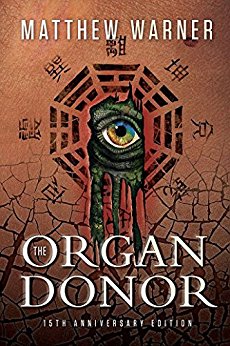 They knew it was wrong to purchase a kidney off the Chinese black market. But what the Taylor brothers didn’t realize was that its unwilling donor was an executed prisoner—and an immortal being from Chinese mythology. Pursuing them to Washington, DC, this ancient king will stop at nothing to recover what was once his. This special 15th anniversary edition of Matthew Warner's acclaimed first horror novel includes nearly 7,000 words of new material, including the author's riveting account of his true-life encounter with China's illegal organ trade. “A classic of modern horror literature.” — E.C. “Feo Amante” McMullen, Jr.   GINGER NUTS OF HORROR PLAYS CHAPPIE KNOCKIE IN AUCHTERMUCHTY: AN INTERVIEW WITH AUTHOR JOHN KNOCK
14/12/2017
 John Knock has spent the last 20 years masquerading as a teacher, husband and father but all the time a horror has been growing inside him, one with a distinctive Scottish accent. If you are ready for a Caledonian tour of our darker locations, locals you would die to meet and scenery that could very well take your breath away, think of him as your slightly manic driver. Ready? You've arrived, left the genteel surroundings of auld reekie and we're aff! Here's hoping the brakes are fixed eh? First stop, the historic Kingdom of Fife! Could you tell the readers a little bit about yourself? I’m just starting out on actually publishing but I’ve spent all my life with stories: from study, to job, through different mediums I’ve been working on stories and with people. I’m married with kids and like most fathers am really busy. I live in rural Scotland just now but I’ve lived in Glasgow, Edinburgh and Aberdeen, not to mention London, Sheffield and even Northern Ireland. I used to be a real gypsy before the kids came along. What do you like to do when you're not writing? I’m working and I have a family and an old house all of which takes up loads of my time when I’m not writing. I find myself reading or watching films. I like cooking but I really need to find time to get better at it. I love walking. It’s the best for working things through. I seem to enjoy a lot of solitary activities just now as they give me time to think. I’m getting into podcasts in a big way now. Other than the horror genre, what else has been a major influence on your writing? I’ve got to say Christopher Brookmyre of course. Chris really got that in your face style of writers like Carl Hiassen (who I also got into) and gave it a really Scottish flavour, like a Billy Connolly stand up or Irvine Welsh’s The Acid House is something I really go back to again and again. I know, everyone loves Trainspotting but The Acid House is a work of genius, you can always go back to it. Really dark humour, like a kick in the balls that also makes you think about existence. Get it and read it today. Before I got into all of these, it was the late genius of Iain Banks. I was luckily enough to start with Complicity, which is a truly unique book, opening in the second person. If you haven’t read him, go and do so now. Start with something like Espedair Street if you want a good laugh and work through them. Ross, who does my covers, loves his Sci-fi. Banks really pushed what you can do with a novel without losing narrative. The term horror, especially when applied to fiction always carries such heavy connotations. What’s your feeling on the term “horror” and what do you think we can do to break past these assumptions? Horror is a very subversive genre. I once heard it described as science fiction in a contemporary world. If you read Peter Straub’s novella Pork Pie Hat, you’d think where’s the horror for ninety percent of the novel but the atmosphere is really compelling. King is always moving towards fantasy but then reins it back to our world. He’s great on the inhumanity of man and the trials of friendship. I’m mixing up investigation, horror and comedy. I remember watching Sam Rami’s Evil Dead 2 (not the remake) at a packed cinema and the audience rollercoastering from laughter to screams. I’m not really fond of the romantic teen vampire genre but I’m not the audience for that. Yet Suzy McKee Charnas’s The Vampire Tapestry and Richard Matheson’s I am Legend are brilliant interrogations of the creature. It’s a question of actually having something to say through the horror. In both cases, the debate like Shelley’s Frankenstein is about whether man or the creature is worse. I’d hope that publishers will stop chasing trends and look for authors who have a really original idea and who mix it up. A lot of good horror movements have arisen as a direct result of the socio/political climate, considering the current state of the world where do you see horror going in the next few years? Big Ideas have a great youtube video about Zombies and technology. I reckon that the zombie survival movie is coming to an end and maybe we will see some move towards separation mutation, something like tribal difference. Maybe generational horror, where the kids have mutated into a hive mind and the adults are trying to avoid their wrath, like that old Twilight Zone episode with the kid that terrorizes his own family. The humanity out of control of The Purge is still very compelling. We have two of the most powerful countries in the world run by egomaniacs, who are more interested in power than what to do with it. Cult of personality or political horror maybe, like Invasion of the Body Snatchers. Each version has been a barometer of its time. What are the books and films that helped to define you as an author? I think I’ve mentioned a lot of Scots authors, so I’d like to start with Brookmyre’s One Fine Day in the Middle of the Night. The mix of high-octane action and school days reminiscing was very influential in finding the John Knock style. It was when Chris really got into his stride and found his voice. Ian Rankin was an influence on the background plot. Let it Bleed is a really well paced thriller about corruption and I saw DS Jimmy Melville as a take on Rebus. He has the same disrespect for authority and self-interest but without any drive to solve the case. The most influential film in terms of plot is the Oliver Reed 1961 Curse of the Werewolf. I saw the first twenty minutes over twenty years ago and it stayed with me as it gave a different reason for the werewolf origin. I would also mention Out of Sight, 1998 with Clooney and Lopez. Great chemistry, snappy Elmore Leonard plot, fantastic dialogue, really sexy. How would you describe your writing style? That’s really hard. Pacey, that’s for sure, I want to get on with the story but I know I have to set the scene, so that’s why I like using a prologue as a teaser. My new novel has the same device. I have a real feel for character. I keep making them and jumping into their heads to keep up the pace and let them talk or rant, to the reader. I like giving just enough and let the reader work. Someone, I think it was Leonard, said treat the reader or maybe it was viewer, like they are smarter than you think they are. The best work comes of a real respect for the reader, to let them put it together. Are there any reviews of your work, positive or negative that have stayed with you? One of my test readers told me she laughed out loud when reading it. I’m happiest with that. I really hope I get a good review that I can learn from to strengthen my style. What aspects of writing to do you find the most difficult? Avoiding telling the reader the plot. I had to re-write one chapter again and again to avoid a bond villain style explanation. In doing so, I really opened up a character. The words on the page, where the hardest for me to begin with, so I looked around a few articles and learnt how to avoid poor sentence structure. Is there one subject you would never write about as an author? I don’t want to write something that doesn’t feel real. I like to believe in the world I’m creating, especially when the supernatural comes into it. You need to believe in the characters, so I’m not going to write people who just wouldn’t exist in the real world. Having said that I don’t really want to gross the reader out or make him or her stop reading because it is too disturbing because that would work against the comedy element. How important are names to you in your books? Do you choose the names based on liking the way it sounds or the meaning? A bit of both. I like putting some hidden jokes in some character names or Scottish references but they always have a life of their own, even characters that don’t outlive a chapter. I think names are important. I used to struggle with them but now they come thick and fast, Writing, is not a static process, how have you developed as a writer over the years? I can’t really answer this except to say I have found my voice. I just need to get on a do the donkeywork. Ask me again in five years. What tools do you feel are must-haves for writers? Just enough research for the place, the feel of the place. Knowing a few key things about an actual place before you make it fictional. Keep listening, watching and reading. Paying attention to detail both when collecting material and when writing. Voice notes are good on your smart phone or notebook or anything to keep an idea when it comes to you. What is the best piece of advice you ever received with regards to your writing? Lee Child talks about the importance of the first paragraph, then the first page, then the first chapter. The job of the writer to grab the reader. I think that’s something I always want to do. Getting your worked noticed is one of the hardest things for a writer to achieve, how have you tried to approach this subject? Social media is a great tool for the writer. I’ve tried to approach the launch of this book on twitter and Facebook and other platforms. I am actively looking for my readers. I want them to devour this book and be hungry for the next one. I see it like trailers for a movie. To many writers, the characters they write become like children, who is your favourite child, and who is your least favourite to write for and why? I can’t answer this. I like them all, even the ones I enjoy killing. I want the readers to enjoy them and decide whom they like. I love jumping between them. What piece of your own work are you most proud of? Too early to say but I’m still fond of the prologue for Wolfman that I wrote a long time ago. And are there any that you would like to forget about? I could mention early attempts at fantasy but they got strangled at birth. For those who haven’t read any of your books, which of your books do you think best represents your work and why? That’s easy, The Wolfman of Auchtermuchty as it started everything. Do you have a favorite line or passage from your work, and would you like to share it with us? That’s really difficult. There’s a line here and there that I’m really proud of but often they only make sense when you get the second meaning. So, I’d thought about a short passage that hopefully gets the flavour of the book. Spoiler alert! He was still cursing and stamping when he heard the growl from the pines behind him. In anger, he turned and called on it. ‘Come on then ye shitty wee-’ Hamish stopped dead in his tracks and stared at the beast loping towards him. Fifty years of hate dissolved into a little boy pushed up against the gate of fear. His paralysis broken by the warm liquid trickling into his sock. He turned and lunged for the shovel as a hillock of fur, teeth and claws sprung, catching him at chest height, splitting his side. Can you tell us about your last book, and can you tell us about what you are working on next? The Wolfman of Auchtermuchty is a dark comedy set in Fife. Craig Miller, tabloid journalist returns to his hometown trying to create a piece about wolf sightings. He’s thrown into events concerning his old friends and dark secrets from their past. Meantime DS Jimmy Melville has found a finger that points to a dodgy solicitor and his missing planning officer wife. When the body parts start mounting up it’s more a case of what dunnit than who dunnit. Next up is set in Glasgow and features some senior citizens and some actual coffin dodgers. If you could erase one horror cliché what would be your choice? Clichés need to be played with. Imagine the stalker in the house and the frightened babysitter. Now imagine the stalker gets cooked by the babysitter and eaten by the kids. I hope that doesn’t make me sound to sick? What was the last great book you read, and what was the last book that disappointed you? I’m reading Michael Connelly just now, having watched the Amazon adaptions of his books avidly. I like his style. He’s a real wordsmith, really evokes the temperature of the place, so I hope it doesn’t disappoint in terms of story. A lot of fantasy disappoints. Here’s the opportunity to really create a totally imaginary world and yet they are often so formulaic. If anyone can recommend a fantasy book that doesn’t have an evil lord in the east or a bunch of mixed races on a quest, please do. The greatest book I ever read was probably Lanark by Alasdair Gray. He really understood how to play with the words on the page like a visual artist, which he is. What's the one question you wish you would get asked but never do? And what would be the answer? I’m not a big fan of fantasy but I like how his books comment on our world and our hang-ups, so I would love to be asked to write a Discworld novel by Terry Pratchett’s estate. Yes of course! 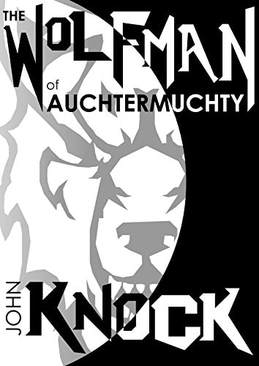 20 years ago, Craig Miller escaped suspicion and rumour in the kingdom after his mother's disappearance. Now an out of favour tabloid journalist, he returns to restart his career with a sexed-up piece about wolf sightings. What he didn't reckon on were old friends with dark secrets and a conspiracy that he might well have helped to start. When DS Jimmy Melville finds a finger near the sleepy town of Auchtermuchty, it points him to a missing planning officer and her shifty solicitor husband. When more body parts start turning up on the eve of a royal visit the brass start to panic. Can he make sense of it all while holding off his officious young DC and avoid his IBS flaring up? Dr Susannah Martin should be sorting out myth and reality but the distractions of a mysterious, albeit handsome student are about to lead her astray. She needs to keep her head on her shoulders, literally, when Craig Miller turns up on her doorstep with tale of a werewolf...   JIM "GINGER NUTS" MCLEOD'S PICKS OF 2017
|


Archives
May 2023
|











 RSS Feed

|

|