

 We welcome Mae Murray to Ginger Nuts of Horror to discuss the brand new anthology The Book of Queer Saints. And be sure to check back in on Wednesday when we will be running a feature where some of the authors in the anthology discuss their individual stories. The Book of Queer Saints features 13 short stories and a lineup that includes renowned authors Eric LaRocca, Hailey Piper, and Joe Koch. Joining them are the innovative visions of Briar Ripley Page, Nikki R. Leigh, Joshua R. Pangborn, Eric Raglin, Belle Tolls, Perry Ruhland, James Bennett, LC von Hessen, K.S. Walker, and George Daniel Lea. A fresh blend of transformative body horror, crimson-coated romance, and monstrous eroticism, this anthology is sure to satisfy your every depraved itch. Foreword by Sam Richard of Weirdpunk Books. Hello Mae, congratulations on the forthcoming release of The Book of Queer Saints. How are you feeling in the lead up got its publication? Thank you! I definitely have this sense of mounting anticipation. I'm exhausted and restless and excited and everything in between. A lot of work has gone into this moment, and my sincere hope is it's everything readers thought it'd be and more. Who is Mae Murray? Can you tell us a little bit about yourself? I'm still trying to figure that out myself! I talk a lot about being from small-town Arkansas and growing up in poverty because that's what informs my work and ambition the most. I'm driven by an incessant need to assign myself insurmountable tasks because I have a chronic illness (systemic lupus erythematosus) that has the potential to significantly reduce my lifespan. I'm only 29, but I think about my own mortality a lot. Sorry, I don't know if that's the kind of answer you're looking for! I always get too dark too fast! I think it's fair to say I do a little bit of everything; I got my start in screenwriting and journalism, which I studied in college as a first-generation graduate. For a few years, I worked in the mental health field as a Certified Peer Specialist. Then over the course of the pandemic, I realized that, while serving teens and families was something I loved, it wasn't what I wanted long-term and I returned to writing. You write for two of the biggest genre outlets Dread Central and Fangoria, how did that come about, and how did you feel when you got the call to write for them? Well, first of all, I have to say I didn't get a call to write for them. It was more the other way around, where I was begging for attention, as writers are wont to do. I just got lucky that Mary Beth McAndrews [EIC of Dread Central] was interested in hearing me pitch, and through that I was able to get my foot in the door at Fangoria for an article about indie publishing that I'm really proud of. If I'm lucky, both publications will keep having me back! You have years of experience as a journalist, screenwriter and editor, how did these experiences help you when you decide to put The Book of Queer Saints together? Even with my experience as a writer, I don't think I could have done this book had I not had roughly 4.5 years of experience working in the mental health field. I learned how to navigate relationships with people I don't know very well over the course of that time, and worked with a lot of big personalities (myself included), both as colleagues and as clients. I think that being able to approach writers with compassion, having a finger on the pulse of what a community needs or wants at the right time; that's the biggest asset a person can have when they set out to do a project like this. As for my experiences as a writer, I think it ties back to the compassion piece, the empathy piece; I know what it's like to be nervous about a submission call, to receive a rejection. I know what kinds of rejections sting and the kinds that encourage writers to keep trying. So from that angle, I was able to form strong relationships with many writers who didn't make it in, but still believed in the mission of the book and continued to support it even after rejection. A lot of people think editing an anthology is an easy job, what are some of he common pitfalls people fall into when creating an anthology? Maybe the answer is in the question itself, because editing an anthology is an incredibly difficult job, especially one to take on solo, as I did. I had guidance and advice, but the work over the course of the past 8 months or so has been all mine. I have never been more tired! I think another pitfall might be underestimating what they need budget-wise. It's not uncommon for folks to lose money or barely break even on a project like this, and I would want ambitious editors like myself to know that going in. Having a business strategy and a general idea of how to generate buzz and get people on board with the mission, and therefore willing to fundraise, is so important. And what is the one thing you think that people must do? Be kind. I really mean it. Be kinder than you even want to be sometimes. And always have the mission of the project at the forefront of your mind. You can't do this if you don't. It can't ever be about making money, because the truth is that you likely won't. So it has to mean something. Why did you decide to create this anthology? I didn't like seeing the backlash queer horror writers were receiving for writing villainous or morally dubious characters, especially from their own community. It seemed to be coming mostly from Gen Z, the TikTok generation, and I suppose my intention with this was two-fold. First, I wanted to bring awareness to the context in which Gen X and Y queer folk write; we didn't grow up with the same kind of open representation as Gen Z, and I think our queer characters embody that in a way. And two, I wanted to provide an outlet for queers who were becoming too afraid to write their experience through the lens of horror. I wanted a book that not only welcomed it, but would accept nothing less. Did you have a “dream list” of authors that you wanted to work with or did you go for the open call approach? I definitely knew right away that I wanted Eric LaRocca and Hailey Piper on board. I'm such a fan of their work and who they are as people. Joe Koch was actually recommended to me, and I was so grateful that he was game to come on and contribute a beautifully rich story as well. So I guess I took a route in the middle; I wanted authors who were already working, had a fan base, and would understand the mission, and then the rest of the stories were gathered through an open call. What kind of stories were you specifically looking for, did you have a deeper theme in mind other than promoting “Queer” authors? Oh yes. The more villainous the better. I wanted the dirty, the erotic, the boundary-pushing—and I believe what I've included in the book really delivered that with authenticity. I’ve got to admit I felt uncomfortable typing “Queer” there, do you think it’s time to take back that term? I'm not sure why anyone would feel uncomfortable typing the word queer, because for me it's been my identity for a very long time. It encapsulates who I am, how I feel, the lens through which I see the world and my relationships with family, friends, and my partner. It might be bold of me to say, but I think a lot of us in the community have already taken back that term, and it might be the straight community that still struggles with it. It's not a bad word; it's a beautiful word and it means everything to me. I like to think that the horror genre is one of the most progressive genres, in terms of inclusivity, and acceptance, what’s your view, as someone who isn’t a Cis white male like myself? I think the horror genre is getting there. I wouldn't say it's close to being on an even playing field; we'll see that more when agents are no longer turning down BIPOC, queer, disabled manuscripts because they "don't know how to sell them," and when people from vulnerable communities are no longer subjected to attacks and doxxing for simply existing, sharing their work, and wanting to make a living off it. What can people like myself do to help? Promote books like this! Promote the next projects of the authors included in the anthology. Look for every opportunity to promote and review work outside of your comfort zone. Practice saying queer in the mirror and do it with a loving heart. The line up of authors for the anthology has some brilliant writers, how did you feel when they subbed a story to you? Oh, I was thrilled every single time I got a story in my inbox, regardless who it was. What was the biggest mistake that authors made when subbing to you? I got a few stories that were from non-queer authors (at least, it feels safe to assume) and did not feature any queer characters. They were only subbed because the writers were throwing their story at every call and hoping it would eventually stick. That was annoying! How did you decide on the running order of the anthology, and do you think of people like me who have a habit of reading their favourite authors first before reading an anthology in order? Having grown up making CD mixes for my crushes, I took a very similar approach when it came to this anthology. I wanted every story to lead into the next in a way that made the transition less bumpy, while also keeping themes fresh. I considered the pacing, the density of the prose—all of it. So it is very much made to be read in order. However, I can't keep anyone from reading their favorite authors first! An album is always made to be listened to in order, but sometimes I skip to my favorite songs too! Two of the Ginger Nuts of Horror family appear in the anthology, were George and James as wonderful to work with as I find them to be? Oh yes, they are both wonderful to work with and just amazing writers. I love them, and their work, to pieces! Obviously you can’t name your favourite story, or you can if you want, but how did your favourite story make you feel? I don't have a favorite story; they're all my babies and they're all my favorites. But I can say that the one that spoke to me and my queer history was James Bennett's MORTA. It had a little bit of everything; a high school crush and all the yearning that entails, the fear around making that move as a young queer, and it plays into one of my personal fears about ruining relationships (or quite literally destroying everything I touch!) So I always come back to that one on a personal level. It's the exact story I would have wanted to read as a queer teenager/young adult, and it will take adults back to that place, I think. Sadly there are still horror fans who won’t read this anthology because of the “Queer” tag, how do we change their mind, and did you have any idea on how to break past this barrier off acceptance by the wider reading world? Honestly, I'm not looking to change anyone's mind. I don't think I have that kind of power. At the end of the day, this is a book made by and for queer people, and if it connects with a wider audience, that's great! And if it doesn't, that's also fine because it was never my goal to begin with. What would you like the readers to take away after reading Queer Saints? That messy queer stories are valuable stories. They can say a lot more about the world and the queer experience than the sanitized versions we get in widely-released films and from most major publishers. If you had to pick three books to give to someone like that what would the three books be and why? The Hellbound Heart by Clive Barker, Come Closer by Sara Gran, and Things Have Gotten Worse Since We Last Spoke by Eric LaRocca. What’s missing in the horror genre in terms of representation and diversity? There's a lot to be desired, but I think we need to lean hard into disabled voices. I don't see enough representation in that regard, and I'd like to as a disabled person myself. And what do you think is the best part of the horror genre? The community. The acceptance and support. A lot of these folks are the kindest people you'll ever meet. Some are also real stinkers! The book launches tomorrow , do you have anything planned to celebrate it launch? I'm going to sleep for a week. What’s next for Mae Murray, and how can we support you and the The Book of Queer Saints? Next, I'm going to be working on my first novel and hopefully a couple of screenplays—I think I'll always return to screenwriting because I just love the medium. And to support Queer Saints, please just read, review, shout about it on Twitter, Instagram, and TikTok. Get your friends to buy it. Purchase it, and then purchase it again as gifts for your queer friends. Put them in libraries. If you love it, if you believe in it, make sure you get as many eyes on it as possible! The Book of Queer Saints |


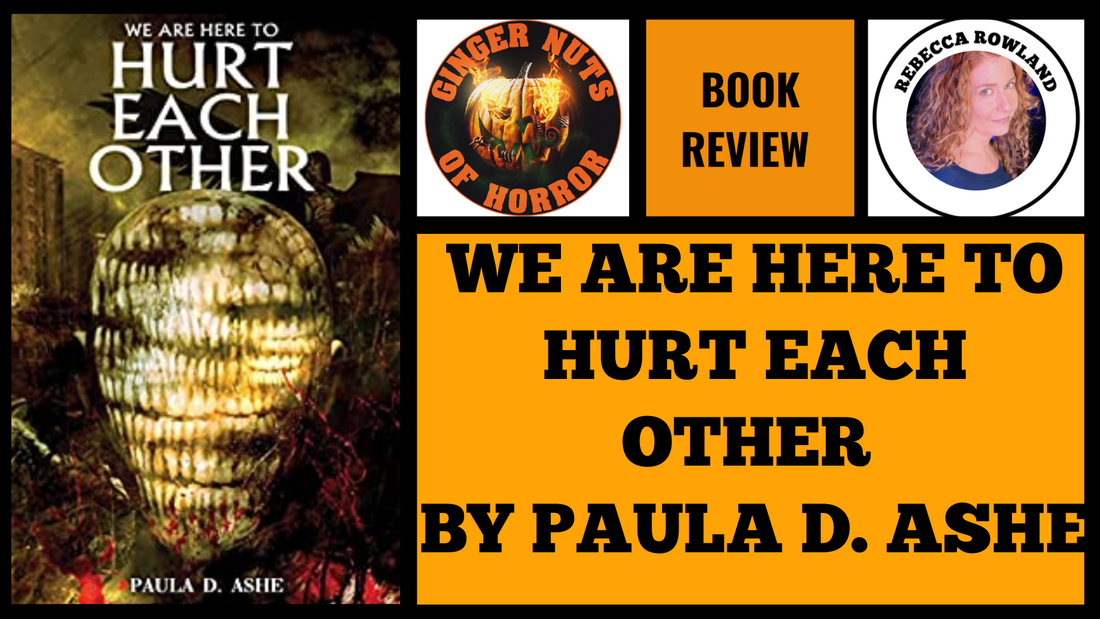 |  |
THE HEART AND SOUL OF HORROR PROMOTION WEBSITES
JOHN TRAVIS AND HIS ELOQUENCE OF SILENCE
23/3/2022

Could you tell the readers a little bit about yourself?
Hmm… the only important thing is that I write – what I can, when I can. I’d call it weird fiction but with a very strong leaning towards horror. I live mostly in my head but occasionally venture beyond it. I like spicy food, long walks and music. I don’t believe in god. People baffle me. And I’m not very good about telling people about myself.
Which one of your characters would you least like to meet in real life?
I don’t think I’d mind meeting any of them, as awful as some of them are. They’d probably make more sense to me than real people because I created them.
Other than the horror genre, what else has been a major influence on your writing?
Music (dozens of artists, but the group the Pixies have influenced me more than anything); Surrealism (in general but the works of Jan Svankmajer in particular); Comedy (again a lot to pick from but the sitcom One Foot in the Grave stands head and shoulders above the rest).
The term horror, especially when applied to fiction always carries such heavy connotations. What’s your feeling on the term “horror” and what do you think we can do to break past these assumptions?
Personally, I think the term should be as broad as possible, as horror itself can be/is a very broad genre. Generally I prefer ‘Weird Fiction’ as it encompasses horror, sci-fi, fantasy and quite a bit of crime fiction. But even then some people would balk at it, the same as they might with any genre. But horror, even as its most genteel, is still an extreme genre. Maybe we should just accept that, instead of trying to repackage it as something that everyone can get into?
A lot of good horror movements have arisen as a direct result of the socio/political climate, considering the current state of the world where do you see horror going in the next few years?
I have no idea. I’m not really up on trends in the genre. But it’s hard to imagine anything in fiction matching what’s going on in the world at present. You couldn’t make up something as vile as Donald Trump, for instance – no-one would believe it. My own response would be to just go weirder. To quote Victor Meldrew, ‘What’s the point in being sane when the rest of the world is completely mad?’
Given the dark, violent and at times grotesque nature of the horror genre why do you think so many people enjoy reading it?
I know a lot of people don’t like this term, but I always thought Thomas Ligotti had it about right when he called it ‘Confrontational Escapism’. From a personal point of view I’d also add that I’ve never found horror fiction particularly frightening – the thing that’s always attracted me to it is that at its best it’s incredibly imaginative.
What, if anything, is currently missing from the horror genre?
Easy – humour. How many horror stories and novels out there have humour in them? Not nearly enough. I think the two things work together extremely well, although I’ve never met many who’ve agreed with me on that.
What new and upcoming authors do you think we should take notice off?
I’m not that up on new and upcoming authors, but over the past few years I’ve been very impressed by Priya Sharma – I think she’s a hell of a writer.
Are there any reviews of your work, positive or negative that have stayed with you?
Des Lewis’s Real-Time Reviews of Mostly Monochrome Stories and The Terror and the Tortoiseshell stick out, along with the one he’s currently doing for Gaseous Clay and Other Ambivalent Tales. They feel like short stories in themselves!
What aspects of writing to do you find the most difficult?
Finding a way into a story, the angle that’s the best way in to tell it. That can take me years. And endings for short stories sometimes.
Is there one subject you would never write about as an author?
I’m quite squeamish, so various forms of cruelty. I think just suggesting things sometimes can be at least as powerful as spelling them out.
Writing, is not a static process, how have you developed as a writer over the years?
I’ve got slower, which I don’t like. I’m trying to learn how to trust myself again, to let the sentences flow without stopping every farts’ end to change words around. But maybe in that it means I get to the real heart of what I want to say – it’s just that it takes an eternity.
What is the best piece of advice you ever received with regards to your writing?
A couple. One directly from fellow writer Marni Scofidio, who reminded me to use all my senses when writing, not just what’s seen, but also what’s smelled, touched, heard and tasted. Another I got from an article about Kate Bush, which said that she often mixed the personal with the fictional. I was about eighteen at the time and it had never occurred to me you were allowed to do that!
Which of your characters is your favourite?
Harvey ‘The Teeth’ O’keefe, my rabbit informer in the second and third Benji Spriteman novels. He’s turning into an interesting couple of guys.
Which of your books best represents you?
Of my novels, I’d say The Terror and the Tortoiseshell. Of my collections Gaseous Clay – I think there’s a decent sweep of material in that one.
Do you have a favorite line or passage from your work, and would you like to share it with us?
Years ago I wrote a story called ‘The Arse of Dracula’, about a vampire with piles. I managed to crowbar a line in there suggesting that when dealing with such a creature “The onus is on the anus”. People seemed to like that.
Can you tell us about your last book, and can you tell us about what you are working on next?
My last/newest book is called Eloquent Years of Silence, published by Vulpine Press. It’s a haunted house/haunted person story. It was influenced in part by the film The Changeling, Oliver Onions’ masterly novella, The Beckoning Fair One and the works of Robert Aickman. Also by the house I grew up in until I was three years old. It’s the most traditional thing I’ve ever written.
Next book – a novella centred around two surrealists, Jan Svankmajer and Erik Satie, a permanently tired middle-aged student and the strange little old man who lives next door to her. This one most definitely isn’t traditional.
If you could erase one horror cliché what would be your choice?
That one in horror films where someone looks in a bathroom cabinet mirror and there’s nobody there, but when they look again there is. Tedious.
What was the last great book you read, and what was the last book that disappointed you?
The last great book was a very peculiar crime novel called The Red Right Hand by Joel Townsley Rogers. Imagine David Lynch writing a crime novel in 1945. Then make it ten times weirder. Disappointing novel – Kiss Me, Deadly by Mickey Spillane. I found that one bewilderingly bad.
What's the one question you wish you would get asked but never do? And what would be the answer?
‘Well, Mr Travis, we’ve read your novel and we’d love to make a film of it. How about selling us the rights for, say, quarter of a million pounds?’
To which my answer would be, ‘Yes, I think I can live with that.’
Hmm… the only important thing is that I write – what I can, when I can. I’d call it weird fiction but with a very strong leaning towards horror. I live mostly in my head but occasionally venture beyond it. I like spicy food, long walks and music. I don’t believe in god. People baffle me. And I’m not very good about telling people about myself.
Which one of your characters would you least like to meet in real life?
I don’t think I’d mind meeting any of them, as awful as some of them are. They’d probably make more sense to me than real people because I created them.
Other than the horror genre, what else has been a major influence on your writing?
Music (dozens of artists, but the group the Pixies have influenced me more than anything); Surrealism (in general but the works of Jan Svankmajer in particular); Comedy (again a lot to pick from but the sitcom One Foot in the Grave stands head and shoulders above the rest).
The term horror, especially when applied to fiction always carries such heavy connotations. What’s your feeling on the term “horror” and what do you think we can do to break past these assumptions?
Personally, I think the term should be as broad as possible, as horror itself can be/is a very broad genre. Generally I prefer ‘Weird Fiction’ as it encompasses horror, sci-fi, fantasy and quite a bit of crime fiction. But even then some people would balk at it, the same as they might with any genre. But horror, even as its most genteel, is still an extreme genre. Maybe we should just accept that, instead of trying to repackage it as something that everyone can get into?
A lot of good horror movements have arisen as a direct result of the socio/political climate, considering the current state of the world where do you see horror going in the next few years?
I have no idea. I’m not really up on trends in the genre. But it’s hard to imagine anything in fiction matching what’s going on in the world at present. You couldn’t make up something as vile as Donald Trump, for instance – no-one would believe it. My own response would be to just go weirder. To quote Victor Meldrew, ‘What’s the point in being sane when the rest of the world is completely mad?’
Given the dark, violent and at times grotesque nature of the horror genre why do you think so many people enjoy reading it?
I know a lot of people don’t like this term, but I always thought Thomas Ligotti had it about right when he called it ‘Confrontational Escapism’. From a personal point of view I’d also add that I’ve never found horror fiction particularly frightening – the thing that’s always attracted me to it is that at its best it’s incredibly imaginative.
What, if anything, is currently missing from the horror genre?
Easy – humour. How many horror stories and novels out there have humour in them? Not nearly enough. I think the two things work together extremely well, although I’ve never met many who’ve agreed with me on that.
What new and upcoming authors do you think we should take notice off?
I’m not that up on new and upcoming authors, but over the past few years I’ve been very impressed by Priya Sharma – I think she’s a hell of a writer.
Are there any reviews of your work, positive or negative that have stayed with you?
Des Lewis’s Real-Time Reviews of Mostly Monochrome Stories and The Terror and the Tortoiseshell stick out, along with the one he’s currently doing for Gaseous Clay and Other Ambivalent Tales. They feel like short stories in themselves!
What aspects of writing to do you find the most difficult?
Finding a way into a story, the angle that’s the best way in to tell it. That can take me years. And endings for short stories sometimes.
Is there one subject you would never write about as an author?
I’m quite squeamish, so various forms of cruelty. I think just suggesting things sometimes can be at least as powerful as spelling them out.
Writing, is not a static process, how have you developed as a writer over the years?
I’ve got slower, which I don’t like. I’m trying to learn how to trust myself again, to let the sentences flow without stopping every farts’ end to change words around. But maybe in that it means I get to the real heart of what I want to say – it’s just that it takes an eternity.
What is the best piece of advice you ever received with regards to your writing?
A couple. One directly from fellow writer Marni Scofidio, who reminded me to use all my senses when writing, not just what’s seen, but also what’s smelled, touched, heard and tasted. Another I got from an article about Kate Bush, which said that she often mixed the personal with the fictional. I was about eighteen at the time and it had never occurred to me you were allowed to do that!
Which of your characters is your favourite?
Harvey ‘The Teeth’ O’keefe, my rabbit informer in the second and third Benji Spriteman novels. He’s turning into an interesting couple of guys.
Which of your books best represents you?
Of my novels, I’d say The Terror and the Tortoiseshell. Of my collections Gaseous Clay – I think there’s a decent sweep of material in that one.
Do you have a favorite line or passage from your work, and would you like to share it with us?
Years ago I wrote a story called ‘The Arse of Dracula’, about a vampire with piles. I managed to crowbar a line in there suggesting that when dealing with such a creature “The onus is on the anus”. People seemed to like that.
Can you tell us about your last book, and can you tell us about what you are working on next?
My last/newest book is called Eloquent Years of Silence, published by Vulpine Press. It’s a haunted house/haunted person story. It was influenced in part by the film The Changeling, Oliver Onions’ masterly novella, The Beckoning Fair One and the works of Robert Aickman. Also by the house I grew up in until I was three years old. It’s the most traditional thing I’ve ever written.
Next book – a novella centred around two surrealists, Jan Svankmajer and Erik Satie, a permanently tired middle-aged student and the strange little old man who lives next door to her. This one most definitely isn’t traditional.
If you could erase one horror cliché what would be your choice?
That one in horror films where someone looks in a bathroom cabinet mirror and there’s nobody there, but when they look again there is. Tedious.
What was the last great book you read, and what was the last book that disappointed you?
The last great book was a very peculiar crime novel called The Red Right Hand by Joel Townsley Rogers. Imagine David Lynch writing a crime novel in 1945. Then make it ten times weirder. Disappointing novel – Kiss Me, Deadly by Mickey Spillane. I found that one bewilderingly bad.
What's the one question you wish you would get asked but never do? And what would be the answer?
‘Well, Mr Travis, we’ve read your novel and we’d love to make a film of it. How about selling us the rights for, say, quarter of a million pounds?’
To which my answer would be, ‘Yes, I think I can live with that.’
john travis

BIO
Called ‘a writer of considerable energy’ in The Encyclopedia of Science Fiction, John Travis is the author of six books—two short story collections, Mostly Monochrome Stories and Gaseous Clay and Other Ambivalent Tales; two weird crime novels, The Terror and the Tortoiseshell and The Designated Coconut (the former attracting the attention of several Hollywood film companies); and two chapbooks – Greenbeard and Eloquent Years of Silence. His many short stories and novellas have appeared in anthologies and journals such as Nemonymous, The Urbanite, At Ease with the Dead, All Hallows, Supernatural Tales, British Invasion, The Monster Book for Girls, Horror Without Victims, Terror Tales of Northwest England and in both volumes of The Humdrumming Books of Horror Stories, his story from the second volume, ‘The Tobacconist’s Concession’ appearing on the 2009 shortlist for a British Fantasy Award. A third crime novel and a further collection of short stories remained unpublished, looking for homes.
WEBSITE LINKS
https://www.facebook.com/JohnTravisWriter
https://www.amazon.co.uk/John-Travis/e/B0043BAOAS?ref=sr_ntt_srch_lnk_1&qid=1644263896&sr=1-1
Called ‘a writer of considerable energy’ in The Encyclopedia of Science Fiction, John Travis is the author of six books—two short story collections, Mostly Monochrome Stories and Gaseous Clay and Other Ambivalent Tales; two weird crime novels, The Terror and the Tortoiseshell and The Designated Coconut (the former attracting the attention of several Hollywood film companies); and two chapbooks – Greenbeard and Eloquent Years of Silence. His many short stories and novellas have appeared in anthologies and journals such as Nemonymous, The Urbanite, At Ease with the Dead, All Hallows, Supernatural Tales, British Invasion, The Monster Book for Girls, Horror Without Victims, Terror Tales of Northwest England and in both volumes of The Humdrumming Books of Horror Stories, his story from the second volume, ‘The Tobacconist’s Concession’ appearing on the 2009 shortlist for a British Fantasy Award. A third crime novel and a further collection of short stories remained unpublished, looking for homes.
WEBSITE LINKS
https://www.facebook.com/JohnTravisWriter
https://www.amazon.co.uk/John-Travis/e/B0043BAOAS?ref=sr_ntt_srch_lnk_1&qid=1644263896&sr=1-1
Eloquent Years of Silence
by John Travis
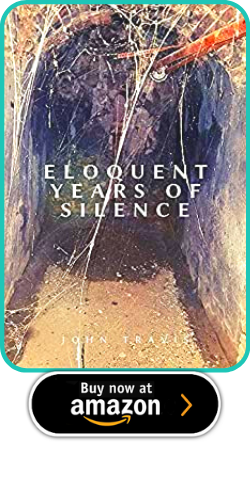
It seemed like an ideal situation to Bundrick: a couple of months house-sitting for friends just as he was about to become homeless. He was even okay with the fact that the house next door had been the scene of a strange death a few months earlier - because, for the first time in his life, Bundrick, however briefly, would have his own place.
But when strange noises start coming from that house, noises that shouldn't exist, that simply couldn't have been heard, Bundrick's curiosity leads him down into the dark cellar. Discovering the wall separating his house and the empty house has collapsed, it's almost as if it were inviting him in...
But when strange noises start coming from that house, noises that shouldn't exist, that simply couldn't have been heard, Bundrick's curiosity leads him down into the dark cellar. Discovering the wall separating his house and the empty house has collapsed, it's almost as if it were inviting him in...
CHECK OUT TODAY'S OTHER ARTICLES ON GINGER NUTS OF HORROR
 | |
THE HEART AND SOUL OF HORROR PROMOTION
YOU WANT TO GROW UP TO PAINT HOUSES LIKE ME, DAVID TALLERMAN DISCUSSES HIS NEW NOVEL THE OUTFIT.
8/3/2022

To celebrate the recent release of The Outfit, we ast down with author David Tallerman for an exclusive interview, taking in historical fiction, bank robberies, Revolution, and Young Stalin, and much more. Enjoy!
Gingernuts of Horror: I remember when you first told me about this project, thinking it was simply one of the best ideas for a historical novel I’d ever heard of. How on earth did you come across this story? And how did you come to write it?
David Tallerman: It was actually my editor on the project, David Thomas Moore, who came across the incident in question and decided the world badly needed a fictionalised account of it, and so far as I know, that was simply the product of some random Wikipedia-diving! But when he approached me and asked if I might be interested, my reaction was just the same as yours, I couldn’t believe I’d never heard about the Tiflis bank heist and that nobody had jumped on the opportunity to novelise it. The subject matter fed into my personal interests so much that it was uncanny, but that aside, coming to the topic with some years of novel-writing experience, it was astonishing the extent to which there was a book sitting there in plain sight.
GoH: One of the things that struck me as a reader was that it’s very much a heist story, but also very much a story about espionage and conspiracy (I kept finding echoes of Ellroy’s American Tabloid series). Did you find yourself wrestling with tone or approach to begin with, or did you instinctively grasp how the story needed to be told?
DT: Well, the pitch when the project was suggested to me was very much for a light-hearted heist story, something in the vein of Ocean’s 11. But the more I dug into it, the more it became clear that wasn’t really where the material led. Without giving too much away, this wasn’t the most well thought through of crimes, and most of the problems the gang encountered were the logistical ones of laying hands on weapons and the difficulties of keeping under the radar in what amounted to an occupied country. But then, on top of that, these people were professional revolutionaries, with their own allegiances and agendas, and they were all at the mercy of the Okhrana, the Tsarist secret police … so once you have all that together, it immediately begins to look more like The Manchurian Candidate or Three Days of the Condor than Ocean’s 11! Thankfully, I love that stuff, and I love writing books that play around with genre and sometimes abruptly switch gears, as this one does at least a couple of times, so I was more than happy to lean into that.
GoH: I definitely detected a tonal shift when you came to describing the events of the day of the heist - can you talk a bit about your approach to writing action, and what techniques you employ to achieve that sense of immediacy?
DT: I don’t know that I have a blanket approach, aside from technical stuff like trying to keep the sentence short and the pace fast … if you ever want to kill your action scene stone dead, long sentences are the way to go! But for The Outfit, the crucial aspect was keeping everything tethered to the characters. The book jumps between protagonists a lot, there was no way to get in all the vital events without doing so, and so I tried to make that subjectivity work to my advantage. I’m ultimately more of a film nerd than a book nerd, so I guess I automatically view it in terms of using a lot of first-person camera. But you could also see it in terms of what Lévi-Strauss called bricolage; throughout the book generally, but especially so in the action sequences, the goal was to present a collage of moments and scraps of individual experience rather than a single grand picture and then let the audience go about piecing that together.
GoH: Stalin is a central character in the narrative; a man about whom many millions of words have been written. What was your approach, both in research and technique, to finding your version of Stalin for this book?
DT: I did read a lot about the older Stalin, the one history remembers so much more clearly; but the person he was at the time of the Tiflis robbery, though obviously already containing the seeds of one of history’s bloodiest tyrants, was at the same time, in many ways, a drastically different person. He was a poet, a gangster, an agitator, sometimes a bully but also capable of being a loyal friend, and charming and handsome in a way you don’t tend to associate with Uncle Joe … I came to that youthful version of him mostly through Simon Montefiore’s superb biography Young Stalin, which gave me the core of my fictionalised version. From there, it was a case of taking what I found fascinating about him and figuring out how to utilise that in a way that got the plot from A to B in the way I needed it to. And although we know quite a bit about his younger years, there are still plenty of holes and controversies that left room for me to get a bit speculative without bending the known facts too far.
GoH: The poetry was news to me, I have to say! You mention in the afterword that you’d found through your research that his poetry was actually a key component in how the robbery was achieved; was that the most surprising thing you uncovered in the research phase? And what was your process for working out what historical detail to keep and what to discard?
DT: Stalin’s youthful poetry was certainly up there! And especially the fact that his work was genuinely well-regarded; that was somehow harder to get my head around than the notion that Stalin might have been a lousy poet! My favourite historical snippets, though, were those surrounding Stalin’s friend and lieutenant Kamo, particularly some of the stuff that happened to him later in his life, after the robbery. That material gets alluded to in the epilogue, but doing it justice would have meant an entire other book, and as much as I expect people to be incredulous about some of the details in The Outfit, that one I suspect they flat-out wouldn’t have believed.
GoH: Anything you’d care to share? Or is there a possible follow-up on the cards? I found Kamo a fascinating character…
DT: I’d better not share any details for fear of spoilers, but I’d urge anyone who gets to the end of The Outfit wanting to know more to dig into the history; Young Stalin, which I mentioned above, is a fantastic read. I’d like to come back to Kamo, and there’s a part of me that regrets not trying to nudge Rebellion towards a bigger, more expansive book that could have really dug into the events outside the robbery, but then I guess you have to draw the line somewhere, right? There’s so much great material around these people that you could go on forever. Still, if there was enough call for The Further Adventures of Kamo and Rebellion wanted me to write it, I can’t imagine I’d say no.
GoH: The story belongs at least as much to Stalin’s co-conspirators as to the man himself; how did you find researching the rest of the gang? And how did you approach fictionalising characters about whom, presumably, much less is known?
DT: I’d say the most research per time on the page actually went into Lenin, who makes a brief cameo at the very start. But then, after Stalin, it would be Kamo, who we know quite a bit about, but of course nowhere near as much as with the people who’d go on to be two of the most significant figures of the twentieth century. That was actually a major advantage, because it meant I could make Kamo more of a protagonist and use him to move the plot along in ways that were harder to do with Stalin. Actually, the working title of the book was the much less catchy “Kamo Dies At Tiflis”!
One thing that was true of both of them, though, and of the revolutionaries in general, was that I realised pretty quickly the extent to which these folks were pretty much rock stars; they were cool, and they knew it. Kamo and Stalin especially, you can see that they viewed themselves as the heroes in their own stories, and that made it easy to use them in that capacity, while also stepping back at times to acknowledge that they were simultaneously terrifying, deeply unbalanced individuals.
GoH: That part fascinated me; there seems to be a perpetual moral panic in the UK (especially our gutter press) about the power/cult of celebrity, and it’s always couched as some frightfully (and frightening) modern phenomena… and yet here we are, over a century ago, and as you say, these figures are rock stars… Did discovering that in the research surprise you? How did it feed into your approach to the narrative beyond the character notes?
DT: Yeah, the extent of it definitely surprised me. In the same way that you don’t tend to think of someone like Stalin as writing poetry, you don’t tend to imagine that they were cool in their younger years! And Kamo, too … by the midpoint of the book, he’s sporting an eyepatch and going everywhere with these three beautiful gunslinging girls that he recruited, and his contribution to the robbery is more Errol Flynn than Karl Marx. From a writing point of view, it was a license to make these people exciting and charismatic and witty, and to get away from that idea that somehow everyone in the past was boring and straightlaced and spoke very formally, knowing that by doing so I was actually veering closer to what the reality would likely have been. Really, it felt like I’d been given permission to have fun with them as characters and let them be fun to be around for the reader.
GoH: It strikes me that they’re also quite psychologically complex people - of necessity ruthless, and with a need to be highly compartmentalized in their thinking. Did you ever find yourself struggling with that, as a writer, in terms of keeping all the competing motives and desires straight?
DT: Yeah, it’s easy to look at historical figures and suppose that they must have been quite single-minded, but of course that’s not necessarily true. One of the things you see with Stalin in his younger years is that he goes through these drastically different phases in his life, and that was something I found fascinating and wanted to work in. I suppose the difficulty was that, having read so many details of these bizarre, tumultuous personalities, there was the urge to try and include as many of them as possible and really delve into those psychological rabbit holes, but that wasn’t the book I’d been hired to write and ultimately it probably wouldn’t have done much justice to the material. After all, as much as in some ways Stalin and many of the other revolutionaries were what we’d regard as intellectuals, they were also the sorts of people who went out and committed massive bank robberies using guns and explosives!
GoH: The town of Tiflis is central to the story - how was the research process for bringing the town to life?
DT: If you really dig into it, there’s not that much description of Tiflis in the book; I’ve never been the sort of writer that likes to set out a lot of physical detail when the reader’s always going to imagine things their own way. So while there was quite a bit of research - with historical writing, even figuring out how long a cart journey might take becomes a rabbit hole of poring over old maps written in a language you can’t read! - what I was much more interested in was capturing the vibe of Tiflis that was coming out of my research, this intriguing, exciting, kind-of renegade border town energy of a city that belonged as much to Asia as to Europe. I’m a big believer in place as character, and that was the character of Tiflis that fit perfectly with the story I was telling.
GoH: I noted in my review that there were parts of the story that verged on tropes typical to Westerns - was that deliberate on your part, or just a case of themes emerging naturally from the subject matter?
DT: I love me a good Western, particularly the Spaghetti variety, so I wouldn’t say that wasn’t anywhere in the back of my mind, but yeah, I do think it arose out of the material. The way Tiflis is described, it definitely has that vibe, and as the book illustrates, it was certainly brimming with outlaws and gunslingers. Of course, we think of the Wild West as something distantly historical, but actually, the events in the book are contemporaneous with the last years of that period, so in terms of the technologies and stuff, it’s not a big stretch to be imagining the scenes through that lens.
GoH: One of the things the story made me think about was the inherent violence in both repressive and revolutionary ideologies; the Tzar’s secret police play a pivotal role in the story, and the robbery itself contains some shockingly violent scenes. What are your considerations/approaches to depicting violence in fiction? And did this piece present any particular challenges in this regard?
DT: It varies by project, obviously, but my general feeling is that violence should be off-putting and have realistic consequences; that’s always seemed like the most responsible course. And that was especially true here, because, though politically I’d very much place myself on the side of the revolutionaries, there’s no getting around the fact that they showed an appalling disregard for human life. It was important not to give the impression that they were just a pack of robbers - some revolutionary gangs often kept part of the money they stole for their own purposes, but Stalin’s wasn’t one of them - but also important to make clear that they were a long way from being heroic.
In the end, though, I mostly just stuck to the known facts, and all the violence in the robbery scene is based on actual testimony. Funnily enough, the only thing I’ve been taken to task on by early readers so far was the particularly gruesome death of one poor horse. But sadly, that’s how it happened, so they’ll have to blame history, not me.
GoH: I wondered about that; do you think that speaks to a more callous disregard for human life then compared to now (thinking about the carnage of The Great War that’s still eight years away when the novel starts)? Or do you think it speaks to something in the psychology of both the revolutionaries and the regime they fought?
DT: That callousness is certainly hard to get your head around. It’s something I’ve explored quite a lot in my writing, having written about WW1 in my recent novel To End All Wars as well, but I don’t know that I’m any closer to understanding it. I’m not convinced it’s necessarily a historical phenomenon, since there are similar situations all around the world to this day, but reading about that period of Russian history, you definitely get this sense that, once the level of violence in society has escalated beyond a certain point, it’s very hard for anyone to back down from that. In the context of The Outfit, for example, the events of the book come directly on the back of brutal reprisals on the part of the Tsarist authorities, and you can understand why the revolutionaries would feel that only extreme actions would stand a chance of bringing about change; but how did they get from there to showing such disregard to casualties from among the civilian population on whose behalf they were expressly fighting for? Ultimately, I suppose it’s an unanswerable question, but for me anyway, it’s one that informs the whole book.
The Outfit is out NOW from Rebellion publishing.
heck out our review of The Outfit here
Gingernuts of Horror: I remember when you first told me about this project, thinking it was simply one of the best ideas for a historical novel I’d ever heard of. How on earth did you come across this story? And how did you come to write it?
David Tallerman: It was actually my editor on the project, David Thomas Moore, who came across the incident in question and decided the world badly needed a fictionalised account of it, and so far as I know, that was simply the product of some random Wikipedia-diving! But when he approached me and asked if I might be interested, my reaction was just the same as yours, I couldn’t believe I’d never heard about the Tiflis bank heist and that nobody had jumped on the opportunity to novelise it. The subject matter fed into my personal interests so much that it was uncanny, but that aside, coming to the topic with some years of novel-writing experience, it was astonishing the extent to which there was a book sitting there in plain sight.
GoH: One of the things that struck me as a reader was that it’s very much a heist story, but also very much a story about espionage and conspiracy (I kept finding echoes of Ellroy’s American Tabloid series). Did you find yourself wrestling with tone or approach to begin with, or did you instinctively grasp how the story needed to be told?
DT: Well, the pitch when the project was suggested to me was very much for a light-hearted heist story, something in the vein of Ocean’s 11. But the more I dug into it, the more it became clear that wasn’t really where the material led. Without giving too much away, this wasn’t the most well thought through of crimes, and most of the problems the gang encountered were the logistical ones of laying hands on weapons and the difficulties of keeping under the radar in what amounted to an occupied country. But then, on top of that, these people were professional revolutionaries, with their own allegiances and agendas, and they were all at the mercy of the Okhrana, the Tsarist secret police … so once you have all that together, it immediately begins to look more like The Manchurian Candidate or Three Days of the Condor than Ocean’s 11! Thankfully, I love that stuff, and I love writing books that play around with genre and sometimes abruptly switch gears, as this one does at least a couple of times, so I was more than happy to lean into that.
GoH: I definitely detected a tonal shift when you came to describing the events of the day of the heist - can you talk a bit about your approach to writing action, and what techniques you employ to achieve that sense of immediacy?
DT: I don’t know that I have a blanket approach, aside from technical stuff like trying to keep the sentence short and the pace fast … if you ever want to kill your action scene stone dead, long sentences are the way to go! But for The Outfit, the crucial aspect was keeping everything tethered to the characters. The book jumps between protagonists a lot, there was no way to get in all the vital events without doing so, and so I tried to make that subjectivity work to my advantage. I’m ultimately more of a film nerd than a book nerd, so I guess I automatically view it in terms of using a lot of first-person camera. But you could also see it in terms of what Lévi-Strauss called bricolage; throughout the book generally, but especially so in the action sequences, the goal was to present a collage of moments and scraps of individual experience rather than a single grand picture and then let the audience go about piecing that together.
GoH: Stalin is a central character in the narrative; a man about whom many millions of words have been written. What was your approach, both in research and technique, to finding your version of Stalin for this book?
DT: I did read a lot about the older Stalin, the one history remembers so much more clearly; but the person he was at the time of the Tiflis robbery, though obviously already containing the seeds of one of history’s bloodiest tyrants, was at the same time, in many ways, a drastically different person. He was a poet, a gangster, an agitator, sometimes a bully but also capable of being a loyal friend, and charming and handsome in a way you don’t tend to associate with Uncle Joe … I came to that youthful version of him mostly through Simon Montefiore’s superb biography Young Stalin, which gave me the core of my fictionalised version. From there, it was a case of taking what I found fascinating about him and figuring out how to utilise that in a way that got the plot from A to B in the way I needed it to. And although we know quite a bit about his younger years, there are still plenty of holes and controversies that left room for me to get a bit speculative without bending the known facts too far.
GoH: The poetry was news to me, I have to say! You mention in the afterword that you’d found through your research that his poetry was actually a key component in how the robbery was achieved; was that the most surprising thing you uncovered in the research phase? And what was your process for working out what historical detail to keep and what to discard?
DT: Stalin’s youthful poetry was certainly up there! And especially the fact that his work was genuinely well-regarded; that was somehow harder to get my head around than the notion that Stalin might have been a lousy poet! My favourite historical snippets, though, were those surrounding Stalin’s friend and lieutenant Kamo, particularly some of the stuff that happened to him later in his life, after the robbery. That material gets alluded to in the epilogue, but doing it justice would have meant an entire other book, and as much as I expect people to be incredulous about some of the details in The Outfit, that one I suspect they flat-out wouldn’t have believed.
GoH: Anything you’d care to share? Or is there a possible follow-up on the cards? I found Kamo a fascinating character…
DT: I’d better not share any details for fear of spoilers, but I’d urge anyone who gets to the end of The Outfit wanting to know more to dig into the history; Young Stalin, which I mentioned above, is a fantastic read. I’d like to come back to Kamo, and there’s a part of me that regrets not trying to nudge Rebellion towards a bigger, more expansive book that could have really dug into the events outside the robbery, but then I guess you have to draw the line somewhere, right? There’s so much great material around these people that you could go on forever. Still, if there was enough call for The Further Adventures of Kamo and Rebellion wanted me to write it, I can’t imagine I’d say no.
GoH: The story belongs at least as much to Stalin’s co-conspirators as to the man himself; how did you find researching the rest of the gang? And how did you approach fictionalising characters about whom, presumably, much less is known?
DT: I’d say the most research per time on the page actually went into Lenin, who makes a brief cameo at the very start. But then, after Stalin, it would be Kamo, who we know quite a bit about, but of course nowhere near as much as with the people who’d go on to be two of the most significant figures of the twentieth century. That was actually a major advantage, because it meant I could make Kamo more of a protagonist and use him to move the plot along in ways that were harder to do with Stalin. Actually, the working title of the book was the much less catchy “Kamo Dies At Tiflis”!
One thing that was true of both of them, though, and of the revolutionaries in general, was that I realised pretty quickly the extent to which these folks were pretty much rock stars; they were cool, and they knew it. Kamo and Stalin especially, you can see that they viewed themselves as the heroes in their own stories, and that made it easy to use them in that capacity, while also stepping back at times to acknowledge that they were simultaneously terrifying, deeply unbalanced individuals.
GoH: That part fascinated me; there seems to be a perpetual moral panic in the UK (especially our gutter press) about the power/cult of celebrity, and it’s always couched as some frightfully (and frightening) modern phenomena… and yet here we are, over a century ago, and as you say, these figures are rock stars… Did discovering that in the research surprise you? How did it feed into your approach to the narrative beyond the character notes?
DT: Yeah, the extent of it definitely surprised me. In the same way that you don’t tend to think of someone like Stalin as writing poetry, you don’t tend to imagine that they were cool in their younger years! And Kamo, too … by the midpoint of the book, he’s sporting an eyepatch and going everywhere with these three beautiful gunslinging girls that he recruited, and his contribution to the robbery is more Errol Flynn than Karl Marx. From a writing point of view, it was a license to make these people exciting and charismatic and witty, and to get away from that idea that somehow everyone in the past was boring and straightlaced and spoke very formally, knowing that by doing so I was actually veering closer to what the reality would likely have been. Really, it felt like I’d been given permission to have fun with them as characters and let them be fun to be around for the reader.
GoH: It strikes me that they’re also quite psychologically complex people - of necessity ruthless, and with a need to be highly compartmentalized in their thinking. Did you ever find yourself struggling with that, as a writer, in terms of keeping all the competing motives and desires straight?
DT: Yeah, it’s easy to look at historical figures and suppose that they must have been quite single-minded, but of course that’s not necessarily true. One of the things you see with Stalin in his younger years is that he goes through these drastically different phases in his life, and that was something I found fascinating and wanted to work in. I suppose the difficulty was that, having read so many details of these bizarre, tumultuous personalities, there was the urge to try and include as many of them as possible and really delve into those psychological rabbit holes, but that wasn’t the book I’d been hired to write and ultimately it probably wouldn’t have done much justice to the material. After all, as much as in some ways Stalin and many of the other revolutionaries were what we’d regard as intellectuals, they were also the sorts of people who went out and committed massive bank robberies using guns and explosives!
GoH: The town of Tiflis is central to the story - how was the research process for bringing the town to life?
DT: If you really dig into it, there’s not that much description of Tiflis in the book; I’ve never been the sort of writer that likes to set out a lot of physical detail when the reader’s always going to imagine things their own way. So while there was quite a bit of research - with historical writing, even figuring out how long a cart journey might take becomes a rabbit hole of poring over old maps written in a language you can’t read! - what I was much more interested in was capturing the vibe of Tiflis that was coming out of my research, this intriguing, exciting, kind-of renegade border town energy of a city that belonged as much to Asia as to Europe. I’m a big believer in place as character, and that was the character of Tiflis that fit perfectly with the story I was telling.
GoH: I noted in my review that there were parts of the story that verged on tropes typical to Westerns - was that deliberate on your part, or just a case of themes emerging naturally from the subject matter?
DT: I love me a good Western, particularly the Spaghetti variety, so I wouldn’t say that wasn’t anywhere in the back of my mind, but yeah, I do think it arose out of the material. The way Tiflis is described, it definitely has that vibe, and as the book illustrates, it was certainly brimming with outlaws and gunslingers. Of course, we think of the Wild West as something distantly historical, but actually, the events in the book are contemporaneous with the last years of that period, so in terms of the technologies and stuff, it’s not a big stretch to be imagining the scenes through that lens.
GoH: One of the things the story made me think about was the inherent violence in both repressive and revolutionary ideologies; the Tzar’s secret police play a pivotal role in the story, and the robbery itself contains some shockingly violent scenes. What are your considerations/approaches to depicting violence in fiction? And did this piece present any particular challenges in this regard?
DT: It varies by project, obviously, but my general feeling is that violence should be off-putting and have realistic consequences; that’s always seemed like the most responsible course. And that was especially true here, because, though politically I’d very much place myself on the side of the revolutionaries, there’s no getting around the fact that they showed an appalling disregard for human life. It was important not to give the impression that they were just a pack of robbers - some revolutionary gangs often kept part of the money they stole for their own purposes, but Stalin’s wasn’t one of them - but also important to make clear that they were a long way from being heroic.
In the end, though, I mostly just stuck to the known facts, and all the violence in the robbery scene is based on actual testimony. Funnily enough, the only thing I’ve been taken to task on by early readers so far was the particularly gruesome death of one poor horse. But sadly, that’s how it happened, so they’ll have to blame history, not me.
GoH: I wondered about that; do you think that speaks to a more callous disregard for human life then compared to now (thinking about the carnage of The Great War that’s still eight years away when the novel starts)? Or do you think it speaks to something in the psychology of both the revolutionaries and the regime they fought?
DT: That callousness is certainly hard to get your head around. It’s something I’ve explored quite a lot in my writing, having written about WW1 in my recent novel To End All Wars as well, but I don’t know that I’m any closer to understanding it. I’m not convinced it’s necessarily a historical phenomenon, since there are similar situations all around the world to this day, but reading about that period of Russian history, you definitely get this sense that, once the level of violence in society has escalated beyond a certain point, it’s very hard for anyone to back down from that. In the context of The Outfit, for example, the events of the book come directly on the back of brutal reprisals on the part of the Tsarist authorities, and you can understand why the revolutionaries would feel that only extreme actions would stand a chance of bringing about change; but how did they get from there to showing such disregard to casualties from among the civilian population on whose behalf they were expressly fighting for? Ultimately, I suppose it’s an unanswerable question, but for me anyway, it’s one that informs the whole book.
The Outfit is out NOW from Rebellion publishing.
heck out our review of The Outfit here
The Outfit: The Absolutely True Story of the Time Joseph Stalin Robbed a Bank for Lenin's Revolution
by David Tallerman
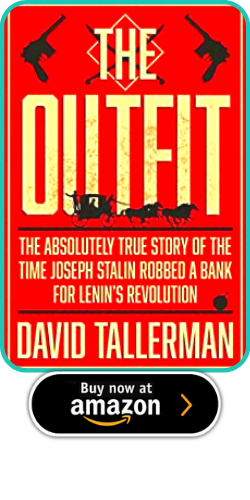
Lies and double-crosses, secret police and explosions, a carriage chase, a mattress stuffed with cash and a one-eyed master of disguise…
In 1907, the revolutionary Joseph Djugashvili – who would later take the name Joseph Stalin – met with an old friend, a clerk at the Tiflis branch of the State Bank of the Russian Empire, for a glass of milk. Over talk of national pride, the spirit of the new century and Djugashvili’s poetry, they agreed the beginnings of a plan.
With the aid of the Outfit, Djugashvili’s hardened crew of “expropriators,” they would pull off the biggest, bloodiest and most daring robbery in Georgia’s history, and ruthlessly change the direction of the Bolshevik revolution forever...
In 1907, the revolutionary Joseph Djugashvili – who would later take the name Joseph Stalin – met with an old friend, a clerk at the Tiflis branch of the State Bank of the Russian Empire, for a glass of milk. Over talk of national pride, the spirit of the new century and Djugashvili’s poetry, they agreed the beginnings of a plan.
With the aid of the Outfit, Djugashvili’s hardened crew of “expropriators,” they would pull off the biggest, bloodiest and most daring robbery in Georgia’s history, and ruthlessly change the direction of the Bolshevik revolution forever...
TODAY ON THE GINGER NUTS OF HORROR WEBSITE
 | |
THE HEART AND SOUL OF HORROR FEATURES


 RSS Feed
Archives
May 2023
April 2023
March 2023
February 2023
January 2023
December 2022
November 2022
October 2022
September 2022
August 2022
July 2022
June 2022
May 2022
April 2022
March 2022
February 2022
January 2022
December 2021
November 2021
October 2021
September 2021
August 2021
July 2021
June 2021
May 2021
April 2021
March 2021
February 2021
January 2021
December 2020
November 2020
October 2020
September 2020
August 2020
July 2020
June 2020
May 2020
April 2020
March 2020
February 2020
January 2020
December 2019
November 2019
October 2019
September 2019
August 2019
July 2019
June 2019
May 2019
April 2019
March 2019
February 2019
January 2019
December 2018
November 2018
October 2018
September 2018
August 2018
July 2018
June 2018
May 2018
April 2018
March 2018
February 2018
January 2018
December 2017
November 2017
October 2017
September 2017
June 2017
April 2017
March 2017
February 2017
January 2017
December 2016
November 2016
October 2016
September 2016
August 2016
June 2016
May 2016
April 2016
March 2016
February 2016
January 2016
December 2015
November 2015
September 2015
August 2015
July 2015
June 2015
May 2015
April 2015
March 2015
February 2015
January 2015
December 2014
November 2014
October 2014
September 2014
August 2014
July 2014
June 2014
May 2014
April 2014
March 2014
February 2014
January 2014
December 2013
November 2013
October 2013
September 2013
August 2013
July 2013
June 2013
May 2013
April 2013
March 2013
June 2012

|

|