

 "Moody is as imaginative as Barker, as compulsory as King, and as addictive as Palahniuk." Scream the Horror Magazine 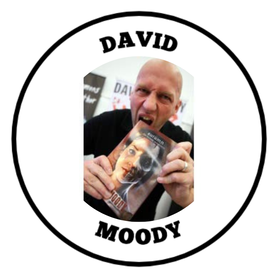 A pioneer of independent publishing, DAVID MOODY first released HATER in 2006, and without an agent, succeeded in selling the film rights for the novel to Mark Johnson (producer, Breaking Bad) and Guillermo Del Toro (director, The Shape of Water, Pan's Labyrinth). Moody's seminal zombie novel AUTUMN was made into an (admittedly terrible) movie starring Dexter Fletcher and David Carradine. He has an unhealthy fascination with the end of the world and likes to write books about ordinary folks going through absolute hell. With the publication of a new series of Hater stories, Moody is poised to further his reputation as a writer of suspense-laced SF/horror, and "farther out" genre books of all description. Find out more about his work at www.davidmoody.net and www.infectedbooks.co.uk. Could you tell the readers a little bit about yourself? Sure. I’ve been writing for an unfeasibly long time now (25 years). Hard to get my head around that, because it feels more like 25 minutes! My first book, Straight to You, was published in 1996 and (rightly) sank without trace. I then wrote Autumn, and rather than spend ages trying to find a publisher, I decided to give it away online. These were the early days of the Internet, before ebooks had taken off and before every new author started giving their work away – I’m so old school I literally used to email Word documents and pdfs to people! Autumn was a big success for me (half a million downloads in a relatively short space of time), and I followed it up with a series of sequels. Then I wrote a book called Hater and, somehow, a copy ended up on Guillermo del Toro’s desk. He bought the film rights and my world went crazy. What do you like to do when you're not writing? I wrote full-time for a number of years before rejoining the real world back in 2014 for the sake of my sanity (it can be harder than you think sitting on your own all day, every day, thinking about the apocalypse). But my writing commitments haven’t slowed, so my free time is currently negligible. That said, I love to watch horror and science-fiction movies – often the more obscure the better. I’m a big live music fan, and distance running helps me keep my mind and body in check. I don’t know what I’d do if I couldn’t run – it’s regularly where I do my best work. I’ve come up with some great plot twists while I’ve been out on the hoof. Generally, when I’m running is the only time I can think about something without being interrupted. Other than the horror genre, what else has been a major influence on your writing? This might sound like a cliché, but the biggest influence on my work is people. I think the survival of the human race is an impossible equation, and whenever I think we’ve seen everything, something else happens to take the craziness to a new level. If you’re in the market for writing a dystopian novel and you’re in need of inspiration, switch on the TV and spend a little time watching the rolling news channels and I guarantee you’ll see plenty that’ll set your mind racing! Regardless of your politics, I think anyone would be hard pushed to remember a time when the world has ever been more polarized. My Hater series takes that polarization as its start point. It’s weird – I wrote the first book back in 2006 and people were telling me back then how reflective it was of what was happening in the world at large. And with each passing year the books seem to have become even more prescient. It’s terrifying to think where we might end up as a species. The term horror, especially when applied to fiction always carries such heavy connotations. What’s your feeling on the term “horror” and what do you think we can do to break past these assumptions? That’s an excellent question. I’ve always really struggled with the label ‘horror’, primarily because I believe horror is more about a feeling or emotion than it is a genre. And I think because ‘horror’ has always had such negative connotations (because it’s easy to make a shitty, blood-soaked horror movie or write an exploitative, gore-filled book), people tend to look down their noses at you when you say you write horror. I get asked this a lot, and there’s a couple of things I usually say to make my point. First, think back to some of the most horrific books and films... have you ever read/seen The Road, Threads, or We Need to Talk About Kevin? They’re all utterly horrific, but the word horror is never once used in their marketing approach. Also, think about other genres – an example I often use is the Western. You know when you watch a Western that you’re likely to get gunfights in the mid-1800’s Americas. But when you tell a horror story... well that could encompass anything at any time in any place. I think a lot of the stuffiness and snobbery comes from the fact we’re often writing about the future rather than the past, and horror stories usually focus on the worst possible outcome. I was a guest at an event a couple of years ago and the panel was asked why anyone should bother reading the stuff we write. I said it’s because we’re trying to warn you what’ll go wrong with the world if we’re not careful. They just laughed politely... A lot of good horror movements have arisen as a direct result of the socio/political climate, considering the current state of the world where do you see horror going in the next few years? I think I’ve already touched on this. I think we’ll continue to see a surge in dystopian horror, given what a fractured society we live in right now. I think another theme we’ll see more in horror is linked to how connected/ interconnected we are now. Imagine the nightmare if the internet suddenly disappeared and people had to think for themselves! It doesn’t bear thinking about... I actually think the internet and its effects on us are fascinating. We seem to be losing individuality in search of what we see online: people follow ‘influencers’ like sheep, abandoning their own likes, dislikes, tastes and desires to fall in line with someone else’s. It’s all beginning to remind me of that classic Twilight Zone episode – Eye of the Beholder. What are the books and films that helped to define you as an author? The books which made me want to write horror for a living are absolute classics: John Wyndham’s Day of the Triffids, Richard Matheson’s I am Legend, and HG Wells’s The War of the Worlds. For me, this is the holy trinity of post-apocalyptic novels, each of which has shaped not only the books I’ve written, but also the genre as a whole. In terms of actually wanting to become a horror writer, it was James Herbert’s Domain which sold the writer’s life to me. I’d never come across a book before which had so much gore, violence and bleakness sandwiched between its covers, and it had a huge effect on me. My movie inspirations are vast, and it’s easier to narrow it down by listing my favourite directors: Cronenberg, Carpenter, Romero. What new and upcoming authors do you think we should take notice off? One of the great things about the explosion in independent publishing over the last decade or so is the huge number of new and upcoming authors who now have a voice and an audience. But, conversely, one of the worst things about the explosion in independent publishing over the last decade or so is the huge number of new and upcoming authors who now have a voice and an audience! There are so many books being published now that it’s hard to find the gems. A chap I’ll always name here is Rich Hawkins, and not just because he’s a friend. There’s a beautiful apocalyptic poetry to a lot of what Rich writes, and I’ve always been really impressed by the stuff of his that I’ve read. How would you describe your writing style? No crap. Straight to the point. I sometimes wish I could be lyrical and set new literary standards but, hey, it’s never going to happen. Instead I just want to tell stories that have an impact on people. That usually means paring down the text to the bare minimum. You won’t find beautiful imagery and layers of allegories in my books, you’ll just get what I hope are bloody good stories told through the eyes of interesting, relatable characters. That’s the plan, anyway... Are there any reviews of your work, positive or negative that have stayed with you? I think you have to read every review, no matter how good or bad. I always used to get particularly hung up on bad reviews (I think all authors do at some point in their career), and it’s all too easy to focus on the bad instead of the good. I’ve grown to think that a bad review is a good thing in some ways – it means you had enough of an impact on a reader for them to want to tell other people what they thought. There are a couple of particular review experiences which stick in my mind... My novel Autumn was filmed in 2008, and it’s fair to say, the film stank. It was made with the best of intentions and the cast was great (it starred Dexter Fletcher and David Carradine), but the folks behind the camera weren’t up to the job. I was asked to introduce a screening of the film in Belfast, and just before I walked out in front of the audience, I received a review by email which included an invoice – the reviewer was a solicitor, and he’d billed me for the time he’d spent enduring the movie! I guess you have to remember that a review is only one person’s opinion, and that was really brought home to me when I received two reviews of Hater within minutes of each other. I’m paraphrasing here, but the first review said ‘great book, crap ending’, whilst the second said ‘crap book, great ending’. You can’t please everyone, and receiving those reviews in quick succession really helped me realise that. What aspects of writing to do you find the most difficult? From a purely practical perspective, starting. One I’m typing, the words always just seem to flow. It’s sometimes hard getting going, particularly when you’ve got a bulging inbox or you’ve neglected your promotional duties recently. I also think it’s sometimes hard to maintain a focus on a piece of work, particularly when it’s long-form like a novel. It’s a massive investment of time and effort, and I’ve been guilty in the past of steering a book in completely the wrong direction. I have a couple of unreleased novels where that happened. I’m naturally an introvert, and so have a tendency to work on something in absolute isolation until it’s finished. Of course, the real danger there is that I might not realise I’ve written a crock of shit until it’s far too late... Is there one subject you would never write about as an author? No. How important are names to you in your books? Do you choose the names based on liking the way it sounds or the meaning? As an author, I collect several things. You just become attuned to them and can’t help picking them out of the ether and noting them down. One is ideas – be it a title or a character or a single line of dialogue; I keep a document in the cloud which I can access from my phone or tablet or computer and add to whenever inspiration strikes. The other thing I collect are names. I do love a good name! I tend to go for names which suit the character – I write about ordinary people most of the time, so often pick ordinary-sounding names. Occasionally I’ll go for a name because of how it sounds. Every so often, weird things happen with names. The main character in the original Hater series is Danny McCoyne. In the second Hater trilogy, which is told from the opposing viewpoint, the main character is Matthew Dunne. It wasn’t until I was well into writing All Roads End Here, the fifth book, that I realized the two leads have interchangeable initials! And if you’ve read the books, you’ll know that’s very significant. I think my favourite names are those you find in David Cronenberg films. The Fly is the example which immediately springs to mind – the three leads all have magnificent names. Where else could you find Seth Brundle, Veronica Quaife and Stathis Borans? Genius! Writing, is not a static process, how have you developed as a writer over the years? I’ve been thinking about this a lot recently, particularly in light of what I’ve written (and not written) over the last five years. Ginger Nuts of Horror was kind enough to feature one of my earlier novels – the 2014 re-write of my 1996 debut, Straight to You. The difference between both versions of the book are stark, and I think they came about for two reasons. Firstly, because I’d had more practice in the decades since I wrote the original, but more importantly, I’d grown as a person. I’m fully aware how pretentious that sounds, but it happens to be true. The book’s about a doomed relationship at the end of the world, and when I first wrote it I was young, free and single and I didn’t have a clue how relationships actually worked. When I came to write the second version I was married with kids and a mortgage and a heck of a lot more life experience. It made all the difference, and gave the characters in the 2014 version the depth and believability they were lacking first time around. Earlier this year I released a collection of short stories – The Last Big Thing – and that included three stories I’d specially written for the release. They were ideas which I’d had kicking around for years, but until late last year I wasn’t in a position to write them. They were informed by particular experiences, and I guess that’s the point. As a writer you’re constantly inspired by everything that goes on around you. That’s why when I turned into a hermit a few years back and wasn’t spending any time with other human beings, my writing dried up. I also believe that you learn from other creators, so I make it my mission to watch as many films and read as many books as I can. It’s not so I can plagiarise, it’s so I can learn! What tools do you feel are must-haves for writers? Headspace, patience, determination, and something to write with/on at all times! What is the best piece of advice you ever received with regards to your writing? I was lucky enough to meet James Herbert a couple of times, and he corrected me when I was talking to him about a book I’d ‘churned out’. He taught me not to be so dismissive of my work. From a practical point of view, the best advice I can share is a few rules which I set myself back in 1994. I’d been trying to write a novel for a while but hadn’t ever got further than a couple of chapters. I set these rules and made myself follow them from 1 January that year, and by May I’d written Straight to You. 1. Plan a chapter-by-chapter outline. 2. Write at least a page every day. 3. Never go back and edit until you’ve finished a full draft. Getting your worked noticed is one of the hardest things for a writer to achieve, how have you tried to approach this subject? You’re absolutely right, and as I mentioned in one of my earlier answers, I was fortunate to hit the market at a good time in 2001/2. The combination of what I was writing, along with the way I was promoting it, gave me an instant platform. But it’s the same with everything... people are always on the look out for what works, and when they find it, they copy it. Now the market is deluged with independently published horror novels, and it’s increasingly difficult to remain in the public eye. I do believe that the most important thing is to have written the very best book you can first and foremost, and you have to have faith that the market will find you. I think the challenges are increasing daily for independent publishers and authors, not least because of the changes we’re seeing in social media. The use of the word ‘social’ is a misnomer, because there’s nothing social about it anymore – it’s cold, calculated business. You want people to see your post? You have to buy their attention. It’s difficult, and is doesn’t come naturally (not to me, anyway). At the present time I’m trying to cover all bases, and the key way of doing that is to remain a hybrid author – one who publishes work traditionally and independently. To many writers, the characters they write become like children, who is your favorite child, and who is your least favorite to write for and why? I have to say that Danny McCoyne, the main character in my original Hater trilogy, has to be my favourite character. He really resonated with a lot of people. He also annoyed just as many! He’s an ordinary guy, wrapped up in the most extraordinary of situations. I love Danny. When I first wrote about him, I wanted to give him an incredibly soul-destroying job and I couldn’t think of a worse thing than to be working in the parking fines processing department of a local council. Fast-forward ten years to the time when I decided to return to the real world after writing full-time, and what job did I end up doing? You got it: I currently manage charging and enforcement policy for the largest charging authority in the UK! My least favourite character is Scott Griffiths from Strangers. I wrote Scott when I was at a real low ebb in my personal life, and I find it hard to go back and read the book again now. He’s a lying, wife-abusing, family-trashing shit, and though I was never guilty of anything like the things he did, I can read between the lines and see some of my own mental health issues being at the route of Scott’s inherent shittiness. It makes me go cold just thinking about it. What piece of your own work are you most proud of? Now that is like having to pick your favourite child! I’d have to say the Hater series as a whole just because of the impact it had and the sales it achieved. Equally, though, Autumn had a similar impact. It’s amazing that people still contact me on a daily basis to talk about these books which are both more than a decade old. And are there any that you would like to forget about? The original versions of Straight to You and Trust. And that’s why I rewrote both books entirely. For those who haven’t read any of your books, which of your books do you think best represents your work and why? Again, I’d say start with either Hater or Autumn. Both are the start points of long-running series which go onto show how I love to build worlds. I’m particularly pleased with the way I’ve expanded the Hater story with the second trilogy – it’s something readers are responding really well to. All of these books deal with the fragility of society and how, when the shit hits the fan, we stop complying with the rules and start acting on instinct. I’ve said it before and I’ll say it again, I just love writing about extremely ordinary folks who find themselves, usually through no fault of their own, stuck in the most extraordinary, life or death situations. Do you have a favorite line or passage from your work, and would you like to share it with us? Here’s a gem from the mouth of Danny McCoyne which a lot of readers picked up on: “Life feels like a game of Snakes and Ladders, but without any ladders.” And here’s a quote from Autumn which sums up my approach to post-apocalyptic stories. I’m not interested why these huge, cataclysmic events have happened, I just want to know what people are doing to survive them. “Surviving is one thing," he said quietly, his voice suddenly calmer, "but you've got to have a reason to do it. There's no point in living if you don't have anything worth living for.” Can you tell us about your last book, and can you tell us about what you are working on next? I’ve had two releases in quick succession so far this year. First was The Last Big Thing, a collection of stories which wouldn’t be out of place in The Twilight Zone or Tales from the Crypt. Also this month, the fifth Hater novel, All Roads End Here, was released by St Martin’s Press. I’m just working on edits for Chokehold, the absolute final Hater novel which is out in November, and for the first time in a long time I now have a clean slate. I’ve a number of ideas I want to work on, so it’s a question of finding the right one (ie the one my agent thinks will sell) and getting it written. If you could erase one horror cliché what would be your choice? There are so many... groups splitting up and going into dark places, idiots doing ridiculously risky things they wouldn’t normally do under any other circumstances... I love zombies (that sounds so wrong!) and in the Autumn series I actually did erase a number of clichés to try and make the living dead more believable. The infection in Autumn is in the air, and you either catch it or you don’t – that meant there’d be no people getting bitten and hiding the bite mark from everyone else in their group of survivors until they ‘turn’ at absolutely the worst moment possible... I also did away with flesh-eating altogether. I’ve just never been able to understand why zombies would eat? They don’t drink, sleep, go to the toilet... why would they eat? It makes no sense (not that reanimated corpses make any sense anyway). What was the last great book you read, and what was the last book that disappointed you? I tried really hard to read Justin Cronin’s The Passage, and I know this is an unpopular opinion, but I just couldn’t get through it. I thoroughly enjoyed Josh Malerman’s Bird Box, and I thought the movie was a decent adaptation. It’s been great to see that movie be such a success – it gives me hope for the genre and for the adaptation of Hater which has been edging towards the screen for over a decade now. Filming almost started in 2009, but things fell apart at the last minute as they often do. But we’re still working on it. I read the script at the end of last year, and it’s brilliant. What's the one question you wish you would get asked but never do? And what would be the answer? Why do you write? It’s simple enough, but no one ever seems to ask. My answer is because I have to. It may sound pretentious, but I have an infinite amount of story ideas rattling around my head, and I need to get them out. Plus, there’s genuinely no better feeling than when you write something and it has an impact on someone else. It’s also a huge power-trip! Being a writer allows you to a). make stuff up for a living, b). be in control of infinite numbers of characters and situations, and c). make the most amazing movies in your head with endless special effects budgets, perfect locations and a top-notch cast. It’s bloody hard work though. Links: www.davidmoody.net (main site) www.facebook.com/davidmoodyauthor www.twitter.com/davidjmoody www.instagram.com/davidmoodyauthor www.amazon.com/David-Moody/e/B001JSCGOU/ “Moody has the power to make the most mundane and ordinary characters interesting and believable, and is reminiscent of Stephen King at his finest.” —Shadowlocked “In his evocation of fear and unease and the speed with which he grips you, he brings to mind old Brit horror writer James Herbert. And that is some recommendation.” —London Lite “Moody is an inarguably talented author... one of the best horror authors of the new decade.” ―Bloody-Disgusting.com "British horror at its absolute best." —Starburst ALL ROADS END HERE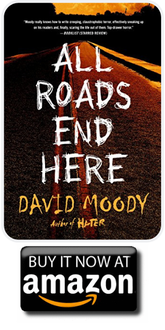 Set in the world of David Moody's Hater trilogy, All Roads End Here is the sequel to the "top drawer horror" (Booklist, starred review) One of Us Will Be Dead by Morning. It’s taken Matthew Dunne almost three months to get home. Never more than a few meters from the Haters at any time, every single step has been fraught with danger. But he’s made it. In his absence, his home city has become a sprawling, walled-off refugee camp. But the camp–and the entire world beyond its borders–is balanced on a knife-edge. During his time in the wilderness, Matt developed a skill which is in high demand: the ability to anticipate and predict Hater behavior. It’s these skills that will thrust him into a web of subterfuge and danger. As the pressure mounts inside the camp, he finds himself under scrutiny from all sides. He’s always done his best to avoid trouble, but sometimes it can’t be helped. The shit’s about to hit the fan, and this time Matt’s right at the epicenter. All Roads End Here is a fast-paced, and wonderfully dark story about humanity’s fight for survival in the face of the impending apocalypse.    FIVE MINUTES WITH AUTHOR MICHAEL J MOORE
11/3/2019
 Could you tell the readers a bit about yourself? When I discovered I was a writer, I became instantly obsessed. I was twenty-nine. I didn't start submitting my work until three years later. That was the beginning of last year. I've since landed two book deals through different publishers, one of which will be released next week, the other sometime this year. One of my books was adapted into a play, and will be performed in Seattle this summer. Two plays I wrote were produced last year, and I've had multiple short stories published. What do you like to do when you're not writing? I grew up in a small town about an hour north of Seattle. Since I was young, I've always had a strange infatuation with big cities though. I really enjoy traveling and admiring the different architectural layouts of cities I haven't been to. Other than the horror genre, what else has been a major influence on your writing? Moods. Emotions. Reflections. It all pretty much stems from internal experiences that I've done my best to recreate through stories. The term horror... What’s your feeling on.it and what can we do to break past these assumptions? I've had people look at me funny when I tell them I write horror. Some have even laughed. I don't let it bother me when people refuse to take the genre seriously. If they miss out on a good story because of incorrect assumptions, it's their loss. The bottom line is good writing is good writing, regardless of genre or even topic. A well written story should provide emotional payoff, and not just fear. With horror, fear is merely the vehicle that gets us there. There's always going to be the stigma that scary stories are nothing more than excuses to glorify gratuitous violence and gore. I don't think we need to reprogram the way people think though. Just keep writing what we want to write, and let them read what they want to read. The pieces will fall into place on their own. There will always be an audience, just like there will always be critics. A lot of good horror movements have arisen... Where do you see horror going in the next few years? The social issues haven't changed. Throughout history, they've always been the same--racism, classism, poverty, corrupt politicians, etc.--they've only manifested in different ways at different times. There will always be stories that hinge on the gloomy potential consequences of these things. And a lot of it has, and will continue to be great fiction. A lot of recent horror, however, has been influenced more by style than social climate. Writers are trying to offer situations and monsters that haven't been used before. I think we can expect to continue to be surprised. What are the books and films that have helped define you as an author? From the time I was old enough to enjoy television, I was watching old scary movies with my Mom. I would save every penny I found until I had a dollar to rent a VHS from the horror section. I remember one time when I was ten or eleven, my mom pulled Sleep Away Camp off of the rack and said, "Michael, you have to watch this one. You'll love it." I fell in love with RL Stine as soon as I learned to read. One day I found a box of dusty Stephen King and VC Andrew books in the closet. I tore through “The Shining” in three days when I was eight. Regretfully, I didn't subject myself to the traumatization caused by Flowers in the Attic until twenty years later. What new and upcoming authors do you think we should take notice of? Tom Richey. How would you describe your writing style? I like to approach social issues without beating you over the head with them. My style is meant to take you for a fun ride, not tell you how or what to think. Are there any reviews of your work, positive or negative, that have stayed with you? Recently the guitar player for My Life with the Thrill Kill Kult wrote in a blurb that he was patiently strumming his guitar, waiting for one of my sequels to be released. I thought it was pretty awesome, since that band was not only on the soundtrack, but appeared on The Crow. That was my favorite movie as a Kid. What aspects of writing do you find most difficult? It's funny, because my favorite parts of the book, tend to be the most difficult to write. Dialogue has always come naturally to me. Description is simple enough. I never have to put much thought into pacing. It's the action scenes, particularly, the big climax, which I have to write very slowly and carefully. There's a certain degree of anxiety that comes with writing these scenes. I've put a lot of work into building the tension and the thought of disappointing anybody who's taken the time to make the journey with my characters and I, is terrifying. Is there one subject you would never write about? No. How important are names? Do you choose names because...? Good fiction paints a picture of a believable world that readers can relate to. In the real world, names are usually given before we know anything about a person and who they will grow up to be. It's a cheap gimmick to give forgettable names to disposable characters, or sinister sounding names to antagonists. Of course there are exceptions to everything, one being nicknames. You still have to be careful, though, because even the bad guy is the protagonist in his own story. I could never in good conscience give my characters names that reveal their personalities and attempt to pass it off as realism. How have you developed as a writer over the years? Somehow, I've gotten much faster. It took me three months to write the first draft of my first novel, which came out to be roughly 225 pages. These days, I write about 300 plus pages a month, and as it should with everybody, the quality of writing continues to grow. What tools are must-haves for writers? A sense of style. A clearly recognizable voice. Something that readers can connect with and become attached to. Good dialogue breathes life into characters. It makes them real. Too often, especially in literary fiction, we read long conversations that consist of short, one-to-two sentence exchanges between characters who all sound the same. This isn't how people talk. Listen to the people around you. Learn speaking patterns and use them. What is the best piece of advice you ever received with regards to your writing? Revise, edit, proofread, and revise again. Getting your work noticed... how have you tried to approach this subject? Publishing anywhere I can, whether it pays or not. Building a resume is the most important thing a writer can do in the beginning. To many writers your characters are like children. Who is your favorite and least favorite and why? Jazmin Gutierrez, from my forthcoming Ninja Girl series, is my favorite. If I told you too much about her, it would ruin the story. Book One is set to be released this year. Jazmin doesn't show up until Book Two. I really enjoyed getting to know her through the writing process though. I think my least favorite was Carol Estes, the psychotic ex-preacher/cannibal in After the Change. She was a horrible character who I tried hard to like. She just wouldn't give me a reason to. What piece of your own work are you most proud of? After the Change. Are there any you would like to forget? I have a binding agreement with my trash, not to discuss the many stories I've fed it. For those who haven't read...which book best represents your work and why? After the Change. I write young adult fiction and I write horror. This book is a mixture of both. Do you have a favorite line from one of your books? "The hanged man in the gallows keeps the entire world at balance." Can you tell us about your last book and what you're working on now? After the Change, is my debut novel about a group of three teenagers surviving the Zombie Apocalypse together. They eventually decide to come out of hiding and search for survivors in order to colonize a local prison. It's written from the perspective of fifteen year old Diego Conner, an intelligent boy who often has to be the voice of reason to his two best friends, Sheena and Wes. On the way to Snohomish Correctional Complex, they find what they're looking for, along with more trouble than they're prepared to deal with. I'm working on this series side by side with my Ninja Girl series. If you could erase one horror cliche...? "The stuff nightmares are made of." It's backwards. Nightmares are the stuff horror stories are made of. Last great book, last disappointing book. Joyland, By Stephen King is an amazingly smooth read. I recently re-read it, and it was just as good as the first time around. As for disappointing, The Road, by Cormack McCarthy. It was highly recommended, but I just couldn't get into it. What's the one question you wish you would get asked, but never do? Can I buy you a drink? MICHAEL J MOORE Michael has worked as a personal trainer in Seattle, Washington. His spare time is spent searching the darkest corners of his mind for whatever horrors, oddities or fascinations have found their way in, begging expression in his unique literary voice.ave worked as a personal trainer in the Seat For more info and to follow Michael on social media please follow the links below https://michaeljmoorewriti.wixsite.com/website https://www.facebook.com/michaeljmoorewriting AFTER THE CHANGE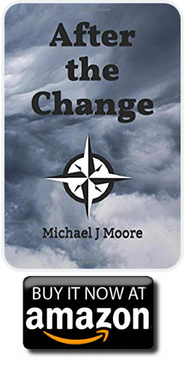 Diego Conner was at school when his world changed. As soon as his classmates started killing each other, he ran. Then, when he got home, his parents tried to eat him. They weren’t zombies though. They were alive and could be killed like any other living thing. He chose to simply call them “the changed”.The only people he knew who didn’t turn were his friends, Sheena and Wes. With their families gone, the fifteen year olds are forced to look out for each another, constantly moving and hiding in the shadows. Eventually, though, they decided to search for survivors and colonize a local prison. Along the way, they quickly learn that the brainless, flesh-eating monsters that roam the streets are the least of their worries after the change.    As part of Ginger Nuts of Horror's LGBTQ+ focus drive we approached several straight writers who have written stories featuring LGBTQ+ characters with a view to discovering why and how they approach this topic. Today we welcome Chad Stroup, author of the brilliant Secrets of the Weird, for our LGBTQ+ focused Five Minutes with interview series Could you tell the readers a little bit about yourself? Hello, I’m Chad Stroup, and I am an addict, though my vices are far from the usual suspects. I am an obsessive collector of words, images, and sounds, all of which steer me like a substitute religion. The various types of art I adore, as well as my daily experiences, influence my brain to create dark and strange fiction. Why horror? What is appeal of the genre to you as both a fan and as a writer? For as long as I can remember, I’ve had a proclivity toward the dark side. It’s the ultimate irony, as I’m a fairly positive and jovial fellow. Call me a sick man, and I’ll likely just shrug, but horror is so much more fun than any other genre. As a fan, I’m not interested so much in being “scared,” but rather I hope to have my face ripped off and handed back to me with a little note tied to it that says “Betcha never seen THAT before!” I want something to stick with me longer than a cheap cat in a cupboard. As a creator, I suppose I write horror by default. Though I fly the horror flag proudly, my stories often don’t fit what most people associate with the genre. They don’t neatly squeeze into a single box. Instead, they poke a hole through the side of the cardboard and reach their mealy hands over into an adjacent box to see what might be hiding there that could help. Other than the horror genre, what else has been a major influence on your writing? I love dark satire, Bret Easton Ellis. A lot of people think of American Psycho as horror, but really it’s satire with a horror backdrop dressing the set. I became very influenced by modern literary fiction while pursuing my MFA, and I think that informs my work just as much as horror. I’m also a lifelong lover of comic books. Granted, many of the comics I love would be considered horror, but two of my all-time favorites are really in their own category (The Maxx & Love and Rockets). The way Sam Kieth and Jamie & Gilbert Hernandez tell stories in their respective books is so brilliantly left of center, and they’re likely the creators who are most responsible for my choice to weigh character heavier than plot. The term horror, especially when applied to fiction always carries such heavy connotations. What’s your feeling on the term “horror” and what do you think we can do to break past these assumptions? Horror—at its best—is so much more than how it’s commonly portrayed in mainstream media. It should slice open your skin, crawl through the slit, hook into the sinews, and never let go. It should stay with you and haunt you indefinitely. I think the more we as writers push the limits of what can be considered horror, the more the public will be open to new interpretations. Never settle for the simple “boo” moment. Instead, dig deep into the dread and spread it like a highly infectious disease. A lot of good horror movements have arisen as a direct result of the socio/political climate, considering the current state of the world where do you see horror going in the next few years? I rarely allow current events to directly influence my fiction, as I’m always concerned it could quickly become dated and irrelevant. It’s one of the reasons I often set my stories in the recent past or in some indeterminate present that may or may not include certain modern amenities. I often reflect on what has come before and attempt to see how it might impact things today. I feel forcing a political message into a story is highly unlikely to work. If it comes naturally, it can be brilliant, but that’s rare. As for where horror might go, I’m just hoping whatever limitations might still be attached to the genre are eradicated. What are the books and films that helped to define you as an author? When I discovered Clive Barker via Cabal at a fairly young age, the whole game changed. I was like, “Oh, you can do that with horror? Count me in!” Also, the Hot Blood anthology series. Just so many wonderful stories of erotic horror, including my all-time favorite Bentley Little story (“Llama” still blows my mind). Interestingly, despite myself not identifying as LGBTQ+, many people have compared the vibe of Secrets of the Weird to a slew of authors who do/did (e.g., Barker, Brite, Burroughs, Palahniuk). So I suppose queer fiction inadvertently (and heavily) influenced my own work. As for films, all the wild and crazy movies of the 80s have been with me since childhood. But more than anything else, the films that have influenced me as a writer are those of my favorite director—David Cronenberg. The Fly and Videodrome are my personal favorites, but I love most of his work. I respect him deeply as a filmmaker and a writer, and since much of my own work could be loosely classified as “body horror,” I owe Mr. Cronenberg great gratitude. In recent years there has been a slow but gradual diversification within the genre, which new LBGTQ+ writers do you think we should be paying attention to? J. Daniel Stone, Larissa Glasser, Indra Das (honestly not sure if he himself is LGBTQ+ or not, but The Devourers definitely is as a book, and it’s incredible), Torrey Peters (not really horror, but her stuff is dark and weird and I believe open-minded horror fans would still love it). Honestly I’m probably missing quite a few amazing authors because I don’t happen to know offhand if they are LGBTQ+ or not. How would you describe your writing style? Punk rock after it discovered more than three chords, but before it lost its sense of humor. Are there any reviews of your work, positive or negative that have stayed with you? There have been a handful of reviews for Secrets of the Weird that floored me because it was clear the reviewer completely “got” what I was going for as a reader and appreciated what I’d done. Sometimes it’s tough to tell if you’ve pulled off what you’ve attempted until you get responses from individuals you’ve never met before, and it’s like the words earned souls and linked from writer to reader. A wonderful feeling. On the negative side, I once had a short story referred to as the only story in a particular anthology that was “unreadably awful.” That one stung because it was just plain mean. But then I realized the story was so stylistically different from the others in the book that it was just at the opposite end of the spectrum from what that reader was looking for. I don’t care if someone doesn’t like something I wrote. No writer is right for everyone. I just wish this reviewer had been more constructive in his criticism. What aspects of writing to do you find the most difficult? Getting that first draft done. I always feel like the most wretched writer on the planet during the early stages of developing a story, and it’s a difficult feeling to shake until starting on subsequent drafts when the real magic starts to happen. Are there any subjects that you would never write about? As far as things that might be considered “taboo,” no I don’t think so. Any subject can be written in such a way that still serves the story and its characters. However, there are plenty of dull subjects I’m sure I’d never care to write about. Like, say, “Soccer Mom Dreams About Vanilla Sex During Tupperware Party.” Writing is not a static process, how have you developed as a writer over the years? When I was in grad school, I improved by leaps and bounds. I found the discipline I needed, and I realized I could write stories that weren’t easy to pin down and still have them accepted by genre readers as well as readers who normally wouldn’t be caught dead reading genre fiction. When I wrote for sheer shits and giggles when I was younger, the stories lacked substance and finesse and were rarely anything more than an arguably cool idea. But I also wasn’t trying. I had no legitimate dreams of being a writer at that age. Once I actually began to take things seriously (which came much, much later), I think my writing started to feel like something I was proud of and wanted to share with the world. What is the best piece of advice you ever received with regards to your writing? Write what you want, but do it well and only in the way that you and no one else can, and eventually those who want to come along for the ride will find you. Many CIS white male authors use LGBTQ+ characters in their works, what’s the mistake that they make when trying to portray these characters? As a cis male, this is the absolute perfect question for me, and I go into greater detail about this in my accompanying article, so I’ll not waste the space repeating myself here. Moving on to getting your work read by unwashed masses, what do you think is the biggest misconception about LGBTQ+ fiction? Perhaps that it’s solely intended to be about LGBTQ+ issues and/or a person’s sexuality and has no substance beyond that, which is completely untrue. There are as number of presses dedicated to LGBTQ+ fiction, do you view these as a good thing, or do you think they help to perpetuate the ongoing exclusion from mainstream presses? I think it’s fine as long as they’re committed to the same level of quality as any other respectable press. If they have authors and/or stories I’m interested in, I’ll read them. The only drawback is that it will unfortunately turn off some readers, though they’re probably not enlightened enough to appreciate it anyway. And here is the million dollar question do you agree with movements like this and things such as Women in Horror Month? If so how would you like to see sites such as Ginger Nuts of Horror tackle diversity? Absolutely. Visibility is important, and I think all readers should check out writers who come from different backgrounds than they do (race, gender, or whatever the case may be). As far as tackling it on Ginger Nuts, you’re already doing it right, so just keep it up. The most common phrase you hear when people object to active movements to encourage all forms of diversity is “I don’t care about the sexuality, gender, color etc etc of the writer I only care about good stories” what would you like to say to these people? Look, of course the story is the most important element in the end. That’s a given. But detractors who think someone of a particular sexuality, gender, etc. isn’t going to bring their own unique perspective to a story that someone else might not be able to—they’re just fooling themselves. Who you are as a person and the experiences you’ve had in life are, more often than not, essential to the fiction you create. At times, it’s near impossible to separate these things. So, for instance, let’s say two talented writers (one of them hetero, the other not) are both given a prompt to write a coming of age story with horror elements. The stories are almost guaranteed to be vastly different, and thus they are both worth reading for the unique perspectives. A “good story” is nothing without the guts that went into writing it. To many writers, the characters they write become like children, who is your favorite child, and who is your least favorite to write for and why? Trixie from Secrets of the Weird is positively my favorite child, but perhaps that makes me a horrible parent considering what I put her through and what I plan to put her through in future books. But she taught me so much, and I’ll forever love her for it. My least favorite is probably whichever character I’m working on in any given first draft because they tend to be stubborn and refuse to do what I tell them. What piece of your own work are you most proud of? So far, it’s Secrets of the Weird all the way. I mean, it’s my first book, which I never imagined would ever become a reality. I created it on my own terms while bending and breaking the rules and still managed to find the perfect home for it. As much as I want all of my future works to match up to and/or surpass that one, it’s really hard to beat the feeling of that first success. For those who haven’t read any of your books, which of your books do you think best represents your work and why? Well, I only have the one full book so far, so that one. But even if I already had a a dozen books out, Secrets of the Weird is very representative of me on various levels. It takes inspiration from many of the things that have made me who I am today and twists them into something hopefully unlike anything else out there. Do you have a favorite line or passage from your work, and would you like to share it with us? I’ll have to go with the opening line from Secrets of the Weird. I’ve actually sold a few books at conventions and book fairs just by getting some wishy-washy folks to open up to the first page and read the line. Others have run away in terror upon reading it. That line? “Trixie loathed her penis.” Can you tell us about your last book, and can you tell us about what you are working on next? My second novel, Sexy Leper, is in the can and should be out relatively soon from Bizarro Pulp Press. I also have a three-issue comic series called Hag coming this year from American Gothic Press. My current work in progress is a novella featuring some of the characters from Secrets of the Weird that is intended to serve both as a stand-alone story to get people interested in the Sweetville universe and also as a bridge between the first book and the eventual full sequel. What was the last great book you read, and what was the last book that disappointed you? The Cabin at the End of the World by Paul Tremblay is probably the best book I read in 2018. I’ll pass on the second part of the question, as I prefer to not publicly mention books I don’t like, but instead ignore them until they go away. What's the one question you wish you would get asked but never do? And what would be the answer? Q: Well, what do you thrash? A: What do you got? ABOUT CHAD STROUP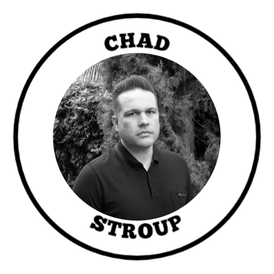 Chad Stroup received his MFA in Fiction from San Diego State University. Secrets of the Weird, Stroup’s debut novel, is available from Grey Matter Press and his second novel, Sexy Leper, is forthcoming from Bizarro Pulp Press. His short stories have been featured in anthologies such as Chiral Mad 4, Lost Films, Splatterlands, and California Screamin’, and his dark poetry has appeared in all five volumes of the HWA Poetry Showcase. Visit his blog Subvertbia at http://subvertbia.blogspot.com/, follow him on Instagram (@chadxstroup), and drop by his Facebook page at https://www.facebook.com/ChadStroupWriter. SECRETS OF THE WEIRD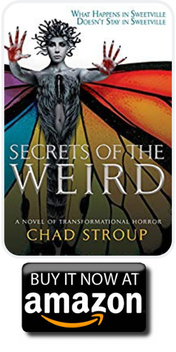 The fulfillment of your every desire… That’s the enticing yet dangerous promise of Sweet Candy, the new designer drug making the rounds through the community of club kids, neo-Nazis, drag queens, prostitutes and punks who populate the mean streets of Sweetville. With its chewable hearts and candied lips threatening to forever transform the delicate social balance and the very lives of each and every member of the city’s underground, Sweet Candy is poised to ignite the tenuous powder keg that is life, love and lust in Sweetville. But could the enigmatic back-alley surgeon Julius Kast and his partnership with a peculiar cult be the spark that lights the fuse once and for all? And how will their actions affect the life of a young woman named Trixie who is seeking salvation through transformation? Take a remarkable journey that’s equal parts irreverent social commentary, revisionist dystopia, dark fantasy and horrifying reality when you travel to the unforgettable world of Sweetville’s counterculture where a host of sometimes dangerous, often deviant and always dark secrets are waiting to be revealed. Such secrets refuse to be confined to Sweetville. But instead will come home with you. Changing everything. Forever…   |


Archives
May 2023
|
 RSS Feed

|

|