

 Could you tell the readers a little bit about yourself? I’m Guy Anthony De Marco, and I’m a write-a-holic. (Waves at the rest of the writers sitting around in a circle.) I write mostly horror and dark fiction, but I also have illicit affairs with science fiction, steampunk, fantasy, and anything else that piques my interest. I wrote a graphic novel with Peter J. Wacks that was a finalist for the Bram Stoker Awards® this year in New Orleans, and I have dozens of short stories in anthologies and magazines. Do you prefer the term Horror, Weird Fiction or Dark Fiction? Not to weasel too much, but they’re all valid. Some of my work, for example, I consider horror—it’s more visceral; some is more atmospheric/Lovecraftian, which I consider weird fiction; and the rest falls under dark fiction, which I consider having horror/weird/dark elements in stories that are not typically thought of as “horror”, such as military science fiction that happens to have horrific elements in them. They cross-breed at times, so some stories get a dollop of all three elements just to keep things interesting. That’s the coolest thing about horror—it’s a gut reaction versus having the brain getting involved. Writing something that invokes emotion is a lot of fun, especially when blended with other genre elements. I just submitted a weird western ghost story with graphic horror elements to Supernatural Colorado, and I’m finishing up a steampunk short story for Penny Dread Tales IV that involves someone who is not quite alive falling in love with a rich playboy who plays airship pirate on occasion. Or, in concise terms, if the shoe fits, check for a brown recluse hiding in there. Who are some of your favourite authors? I love early King up to Pet Cemetery, and Joe Hill seems to have more of that feel in his books. Joe Lansdale could make a shopping list give me a heart attack. Damien Walters, Usman Malik, and Mercedes Yardley are up-and-comers I particularly enjoy. Michaelbrent Collings puts out consistent fantastic novels. Surprisingly, Kevin J. Anderson, best known for his science fiction and media tie-in work, has a hilarious horror series called Dan Shamble, Zombie PI that’s worth every dime. In the more extreme horror categories, don’t overlook the Bizarro movement. There are the old favourites like Carlton Mellick III, John Skipp, Robert Devereaux, and Shane McKenzie. Editors Rose O’Keefe and Jeff Burk have a keen eye for quality, over-the-top weirdness that just has me laughing and cringing at the same time. I also love the old pulp-era stories. Besides Poe, I enjoy Ambrose Bierce and Algernon Blackwood, whom I consider the scariest authors folks have probably never read. If you want to get a taste of atmospheric and mood-based horror, look for the old masters. What are you reading now? I’m reading The Colony by Michaelbrent Collings, Skorpio by Mike Baron, and Kevin J. Anderson’s Hair Raising, part of his Dan Shamble, Zombie PI series. How would you describe your writing style? Relaxed and informal. The biggest complement I usually get concerns how I write dialog. I try to write the spoken words as though someone was sitting at the next table in Starbucks while carrying on an odd conversation. My biggest problem concerns filling in description, which is why I have a writing group with professional authors go over the work. I’m my own worst enemy when it comes to editing, because my brain automatically fills in those missing pieces. My wife, Tonya, also takes a turn at ripping me a new one. I think she enjoys it a bit too much, but she is usually spot on. I’m lucky that way, even though it can be painful at times. Describe a typical day spent writing. Do you have any unusual writing habits? I prefer writing at night, but when deadlines call, I can write anytime, anywhere. I write about 1,500 words daily on average. My record was 165,000 words during one NaNoWriMo when I had nothing else to do. I also wrote a 45-page rebuttal paper in 12 hours once, but I was motivated by fury. I always have multiple projects running at the same time. If I get writers block, which is code for I have no idea what happens next, I switch to something else and work until my brain works out the missing pieces. What’s your favourite food? Everything that’s bad for me. Seriously. I love sweets, but I have blood sugar issues, so I’m left with just licking the plates when nobody’s looking. I’m Italian, so pasta is a big part of my diet. My wife is full-on no-gluten vegan, so sometimes I’ll eat what she’s having because I’m too lazy to grill a steak. Of all the stuff I shouldn’t eat, I miss ice cream and Tim Tams, a biscuit from Australia, the most. What’s your favourite album? This would change daily. Music has been a big part of my life for so long that I can influence how I’m feeling by playing a particular album. I love Rush, Blondie, and Hooverphonic. Depending on what I have to write, I’ll toss on Portishead or Enigma, or even Louis Prima or Frank Sinatra. I’m a member of ASCAP, so sometimes I’ll play something from my old band if I want to torture my wife. What’s the most important lesson you have learned about writing? Shut the hell up and write. Nice and concise. When you’re done with something, start something else. Always have something in the works. Something interesting I picked up from the Superstars Writing Conferences came from Tracy Hickman. He gave a presentation where he showed it was better to put out four 80K novels than a single 320K word novel. They take the same time to write, but you have four chances of getting a bestseller instead of one. Kevin J. Anderson also gave a talk on his “popcorn theory”. Always have multiple things in the works and out there for your audience, because you never know which one of those kernels will pop. That’s one of the reasons why I’ve been branching out to other media like comics, graphic novels, game writing, and even writing plays. Fame and fortune, or respect? Both. It’s tough to get one without the other and be happy. For folks who make fun of Stephanie Meyer’s Twilight series, she wrote a book that really connected with a wide fanbase (and got rich in the process). I have to respect that because I haven’t accomplished it. Yet. Looking at 50 Shades of Grey, there’s someone else who got insanely rich writing stuff that people look down their nose at, even if they secretly read it at night. I was fortunate enough to have the opening story for 50 Shades of Decay, a zombie erotica anthology. At conventions, people pick it up and giggle, but it’s been my best seller. They usually come back after they’d ditched their friends to snag a copy and get it signed. What piece of your own work are you most proud of? It’s a tie between my graphic novel, Behind These Eyes, which was up for a Stoker, and The Dynasty Sentinel, a novel currently in the editing phase. Can you tell us about your last book, and can you tell us about what you are working on next? I’ve been writing large volumes of short stories recently. One of my goals is to have 40 titles under my name on Amazon and Kobo before December 2014. I’m currently around 22 titles. I have three novels ready to roll out, several gaming modules that are about to get released, and two graphic novel projects in the planning stage. My latest book is a collection of essays and stories from when I was in the US Navy called Tales from the Fleet. I was interviewed on a radio show called Walking a Walk, a show dedicated to talking about active duty military and veterans. I wrote these essays over a twenty year period, and I figured that I might as well put them together in an ebook. In the future, keep an eye out for The Dynasty Sentinel, an apocalyptic steampunk novel, and The Bride, a horror novel based on a form of mad cow disease. I have a blog at http://www.GuyAnthonyDeMarco.com, or you can connect with me on Facebook or Twitter (@GuyADeMarco). Thank you for your valuable time, it’s appreciated. 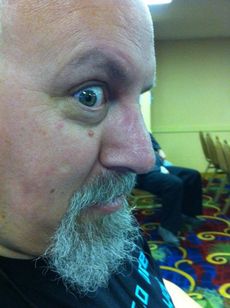 Guy Anthony De Marco is a speculative fiction author; a Graphic Novel Bram Stoker Award® finalist; winner of the HWA Silver Hammer Award; a prolific short story and flash fiction crafter; a novelist; an invisible man with superhero powers; a game writer (Sojourner Tales modules, Interface Zero 2.0 core team, D&D modules); and a coffee addict. One of these is false. A writer since 1977, Guy is a member of the following organizations: SFWA, HWA, SFPA, IAMTW, ASCAP, RMFW, NCW. He hopes to collect the rest of the letters of the alphabet one da Purchase Guy's Books from Amazon Via The Links Below Could you tell the readers a little bit about yourself? Thirty-eight years old, shaved head, tattoos, and I like classical music. And cappuccino. And dogs. Do you prefer the term Horror, Weird Fiction or Dark Fiction? Not too sure about weird fiction; the other two don’t bother me at all. Weird fiction suggests something not quite right, too far out, undefined and er … well, weird. Who are some of your favourite authors? George MacDonald Fraser, Tolkien, Charlie Huston, Richard Kadrey, Neal Barrett Jr. What are you reading now? Snow Crash by Neal Stephenson – awesome! How would you describe your writing style? Linear mainly. I always start each book with a plot or story that I want to explore and aim for, but it’s what happens on the way that really excites me. Seeing how characters react, what they do and say and how far I can push them to draw out their true essence. Detailed and graphic and I’ve been very lucky to get praise for both my action writing, scene setting and most importantly for me – the characterisation. Describe a typical day spent writing. Do you have any unusual writing habits? Cappuccino in the morning followed by very long stints at the keyboard broken by mini-trips to the kitchen for more coffee. What’s your favourite food? Chinese and Thai, but I have a great passion for plain roast chicken and lasagne. I don’t eat lamb and very rarely pork. What’s your favourite album? I don’t have one, I like songs. Anything from Metallica through to Beethoven. Different songs and styles of music invoke a different reaction to how I write and the manner in which I write, so they are carefully chosen to enhance the writing, especially when I am working on a set scene. What’s the most important lesson you have learned about writing? Write. Write as much as possible, write every day without fail. Without fail - that is the most important thing. Personally, I think character and characterisation is the next most important lesson to learn. A bad plot or weak story can be supported by a decent character but never the other way round. Learn to characterise, learn your characters and let them be themselves, they are not you. Fame and fortune, or respect? All of the above please! No, but really, fame can bugger off. I’m not at all interested in fame as in the celebrity side of things. To be respected in your field and to bring enjoyment to others, and for readers to enjoy your work is the goal, and if someone wants to give me lots of hard cash on the way, then great! What piece of your own work are you most proud of? Ah, well, there is pride in completing a section or a piece of work but never to the extent that it is perfect. It will never be perfect. There is always something you could have done differently. I’m proud of my development but still so very frustrated that learning the craft takes so much hard work and dedication. Can you tell us about your last book, and can you tell us about what you are working on next? I write a series so my last book was The Undead Day Thirteen which I am quite proud of, as it took the story to the point I want it to be, while allowing me to work on the existing characters and draw some new ones in. The Undead Day Fourteen is underway now and is by far the hardest work I have attempted to date, with multiple story lines running at the same time. 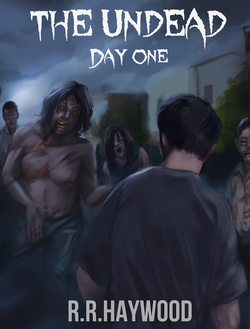 R.R. Haywood currently lives on the Isle of Wight, but was born in Birmingham, England. The early years of his life were spent moving frequently, living in diversely different cultures. Picturesque rural south coast of England where front doors were rarely locked to inner cities where front doors were triple locked, bolted, barred and not opened after 9pm.
Having travelled widely and after a few minimum wage jobs, he became involved with law enforcement some 15 years ago and only started writing in May 2012 with The Undead Day One. The Undead series has since become the bestselling UK based zombie horror series currently available with a strong cult following. Presently, the series is available as e-books on Amazon, and The First Seven Days compilation edition is also available on Sony, Smashwords, Barnes and Noble, Diesel and iBooks.. The author is actively seeking representation from an agent or publisher. Find out more at Richard's website HORROR INTERVIEW : 5 MINUTES WITH ANNA
29/10/2013
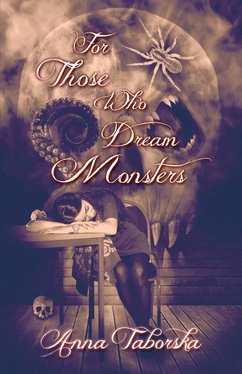 Could you tell the readers a little bit about yourself? I was born in London. I’m a filmmaker, and I write horror stories and screenplays. I love horror films. Do you prefer the term Horror, Weird Fiction or Dark Fiction? Horror! Who are some of your favourite authors? James Herbert, Stephen King, Richard Matheson, Shirley Jackson, M.R. James, Edgar Allan Poe. What are you reading now? His Red Eyes Again – a short story collection by members of The Dracula Society edited by Julia Kruk and Tracy Lee, No Monsters Allowed – a short story anthology edited by Alex Davis, and Necronomicon: The BestWeird Tales of H.P. Lovecraft. Which book do you wish you had written? The Complete Works of Shakespeare. Or Simon’s Necronomicon (that way I’d still be alive). If you could use any other author’s creation in your own work, who or what would you use? Stephen King’s Carrie. One poor, scary girl! Perhaps a zombie version of her once she leaves her grave. How would you describe your writing style? A cross between Jane Austen and Shaun Hutson. Describe typical day spent writing. Do you have any unusual writing habits? I write whenever I am able, which is often at night. I write on my laptop, on the sofa, frequently with the TV on, and the sound turned low. Seems to work for some reason. What’s your favourite food? Milk chocolate. What’s your favourite album? Probably Slayer’s ‘South of Heaven’. What’s the most important lesson you have learned about writing? Don’t stop. The more you write, the better you get. Plus, once you stop it’s very difficult to start again. And keep re-writing. Fame and fortune, or respect? Respect. Although fame and fortune would probably help me get a feature film made. What piece of your own work are you most proud of? The screenplay adaptation of my novelette The Bloody Tower. I think it’s a good screenplay and would make a great film. What do you like to do to relax? Watch horror movies. And sometimes crime dramas or haunted house stuff. Can you tell us about your last book, and can you tell us about what you are working on next? My last book is a short story collection called FOR THOSE WHO DREAM MONSTERS. It’s for all those people who, like me, suffer from nightmares and/or have a fascination for the dark side and monsters of all types. I am currently working on a screenplay adaptation of my novelette TEATIME, which should hopefully come out next year in my next horror story collection, working title: BLOODY BRITAIN. Thanks! J 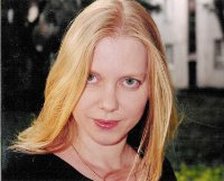 Anna Taborska was born in London, England. She is a filmmaker and writer of horror stories, screenplays and poetry. Anna has written and directed two short fiction films, two documentaries and award-winning TV drama 'The Rain Has Stopped'. She also worked on seventeen other films and was involved in the making of two major BBC television series: 'Auschwitz: the Nazis and the Final Solution' and 'World War Two behind Closed Doors - Stalin, the Nazis and the West'. Anna's stories have appeared in various anthologies, including the 'Black Books of Horror' and 'Terror Tales of London' in the UK, and 'Best New Writing 2011', 'Best New Werewolf Tales Vol.1' and 'The Best Horror of the Year Volume Four' in the US. Anna's short story 'Bagpuss' was an Eric Hoffer Award Honouree, and the screenplay adaptation of her story 'Little Pig' was a finalist in the Shriekfest Film Festival Screenplay Competition, 2009. Anna's debut short story collection, 'For Those who Dream Monsters', is due out in late 2013, with the release of a novelette collection, 'Bloody Britain', planned for 2014. You can view Anna's full resume here: http://www.imdb.com/name/nm1245940/, watch her films and book trailers here: http://www.youtube.com/annataborska and learn more about her short stories and screenplays here: http://annataborska.wix.com/horror.  Could you tell the readers a little bit about yourself?
I am a 33-year-old EMT-Enhanced, living in the hills of Southwest Virginia. I have worked in the EMS field for 15 years. I am married with one child and two stepchildren whom I love very much. I started writing at the behest of a partner at work, who pushed me to start writing down ideas and a story about what I would do in the event of a zombie apocalypse. Those ideas became the first Six Feet From Hell book. As I finished writing the first book, more and more ideas came flooding in, fueling the action for the next several books. Do you prefer the term Horror, Weird Fiction or Dark Fiction? Horror, simply because horror can be dissected down into so many sub-genres that actually describe what the book is. It shouldn’t be pigeonholed into a sub-genre that it doesn’t fit in. By putting it into generalized horror, the fans and readers can make their own distinction as to what it belongs to. Who are some of your favourite authors? Stephen King, Brian Keene, Michael Crichton, James Rollins, D.J. Molles. What are you reading now? I’m about a third of the way through a dozen different books … I tend to jump around quite a bit from one to another. I am a little over halfway through “The Remaining – Fractured” by D.J. Molles right now, and I really want to finish it before I move on to another. How would you describe your writing style? Random … and a touch disorganized. That’s why I have such a wonderful editor (Monique Happy) to make sense of the random ramblings in my brain. Describe a typical day spent writing. Do you have any unusual writing habits? I really don’t have any writing habits other than I write when the mood and the ideas are hitting me. I don’t pressure myself into saying, “Well, I need to do 2,000 words today, or I will never get caught up.” When that happens, you lose some of your best ideas to the pressure of simply filling in words for a word count. What’s your favourite food? Steak and eggs with home fries. Steak medium-well and eggs over medium … Delicious! What’s your favourite album? Metallica – The Black Album What’s the most important lesson you have learned about writing? Have fun! There is no sense in pressuring yourself into doing something that isn’t fun to do. Writing a story shouldn’t feel like a chore; if it does, then maybe it’s time to stop. Fame and fortune, or respect? Respect. There is an overabundance of rich, famous people that no one has any respect for. I would rather be looked on with respect than have money. What piece of your own work are you most proud of? I’m very proud of every piece that I’ve done, but my favourite story hasn’t been released yet. I have a Sci-Fi novel coming out in 2014 titled Lost Between that is a completely original story, unlike anything that I have read or written before. I am very excited to see what people’s reaction to it will be. It is also the first non-horror story that I have done. Can you tell us about your last book, and can you tell us about what you are working on next? The last book that I released was Six Feet From Hell: Crisis, the 4th book in the series. It is set nine years after the first three books, with the same characters but with an entirely new story. It was released a little under a month ago and is doing very well, making the top 100 in horror and post-apocalyptic science fiction on Amazon. As I said before, I have a Sci-Fi novel titled Lost Between that is currently about 25% done, as well as the next installment of the Six Feet From Hell series which will be Six Feet From Hell: Unity. Unity will be released in the first quarter of 2014. I will be releasing a serial novel, R.I.P. Van Winkle, over the next year or so. It will be done in 3,000-5,000 word installments once a month. It is a modern-day retelling of Washington Irving’s classic, with some zombies thrown in. It will be free on my blog at www.sixfeetfromhell.blogspot.com starting October 1st. I have several stories on the back burner, both zombie and non-zombie related.  Scarlet has been writing short stories and books since she was 11, and published her first short story at the ripe old age of 13. When she looks back on the stories she created in those days she realizes how naive she was but also how creative. Her writing has changed become more adult and less childish, it is dark and more often than not contains erotic material as well, but the tingle of excitement she received as a child when writing or reading has never changed. She tries to keep the happiness for writing and the imagination she has alive in everything she writes. She prefers writing horror stories and horror will always be her first love 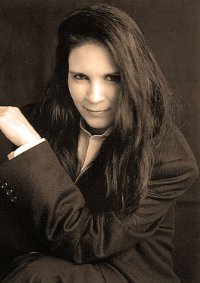 Could you tell the readers a little bit about yourself? I was born in Ohio and lived most of my young life in New York and Pennsylvania. I started writing stories as soon as I could write letters. My fascination with the horror genre started at the age of five when I watch the movie Dracula with Bella Lugosi, I was terrified all night but loved the thrilling feeling of anticipation. I have lived in almost every state in the union and enjoy traveling a great deal. When I’m not writing horror, I write non-fiction articles for several blogs and magazines, a few attorneys, publishers and medical professionals. I also do music reviews for a popular music site online. I also help write, produce and make short films. I am a member of the Horror Writers Association and am the Chair of the Grievance Committee; I am also a member of The Authors Guild and the National Writers Union. I currently live in Texas with my husband and two corgis’, and several aquariums full of insane fish. Honestly, all of the animals in my family, from the dogs to the fish, and I am including the crazy squirrels and owls that live in the backyard, are all completely insane and for some reason they all think they are human. Do you prefer the term Horror, Weird Fiction or Dark Fiction? I prefer Horror or Dark Fiction, mainly because I do not consider what I do as weird. Lately I have been referring to my work and genre as Horror-Sci; it just feels like the best definition. Who are some of your favourite authors? I love and adore Brian Lumley; he has been the greatest influence in my work for the better part of twenty-five years. I was influenced by Poe, Bradbury, Lovecraft and Wells of course and I really enjoy Stephen King and Joe Lansdale and hold Clive Barker in the highest of regard. I am also a big Poppy Z Bright fan. What are you reading now? Oddly enough I am reading several anthologies as I am on the Bram Stoker Jury for the Anthology category. I am also reading all George Martin’s, Game of Thrones books, as well as reading material for research on a new book. How would you describe your writing style? I think I combine allot of different styles in my writing, most of them dark, some erotic and as of late, psychological with a humorous edge. Describe a typical day spent writing. Do you have any unusual writing habits? A typical day usually starts with a pot of coffee and me trying to find any and all excuses NOT to write. Once I do away with all the excuses, which usually includes doing housework, shopping, playing with the dogs and allot of other pitiful excuses, I sit down at my desk, put on my ear phones, find some motivational music, usually opera or classical, or heavy mental, unless I am writing a romantic or love screen, which is truly rare in my work, then I spend about six hours non-stop writing whatever comes to me. I usually write about seven thousand words a day so either fiction or non-fiction is irrelevant. I refuse to allow anyone to read my material until it is finished and only if they are at least 100 miles away. This seems to be the limit that I will travel in order to correct them if I feel their opinion of my material is incorrect. What’s your favourite food? Tacos can’t get enough of them, ever! What’s your favourite album? Queensrÿche – Empire, I love the story the songs tell. But truthfully my favourite will change depending on my mood. What’s the most important lesson you have learned about writing? You will never regret the stories you have told, only the ones you haven’t. Fame and fortune, or respect? I don’t like the word or but if I had to pick one I would say respect. Fame and fortune come and go, but respect is something you can have for a lifetime. What piece of your own work are you most proud of? A relatively new story that won’t be published until 2014 – The Leeching. It is the first story I have written that went exactly the way I planned it, and might be my best work to date. It combines everything I love in a story without any unnecessary fluff. Can you tell us about your last book, and can you tell us about what you are working on next? My latest work can be found in several anthologies out this month from Horrified Press (Silent Screams), Dark Moon Press (A Slow Afternoon) and Diabolic Publications Diabolic Tales III (The Jester) and Dying to Live (Halloween) as well as a poetry collection being published by Chupa Cabra House in their Unpredictable Change Quarterly Magazine. I am currently working on two books, one that will be pure Sci-Fi and one that is true Monster Horror. I am also working on several short story projects for various publishers and a screen play for a short film project. Purchase Scarlet's book on Amazon HERE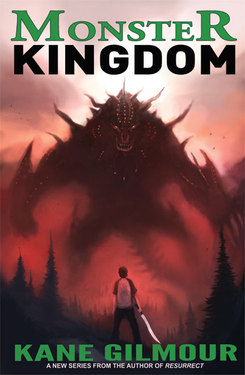 Kane Gilmour is a Vermont-based author and editor–that devilishly good looking fellow in the banner art. He has finished his first thriller novel, Resurrect, and he’s now working on his first mystery novel and a YA paranormal adventure novel. He writes short stories and webcomics too. He’s also the co-author of the upcoming Chess Team novella CALLSIGN: DEEP BLUE, with series creator Jeremy Robinson. 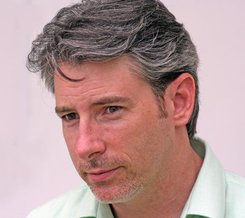 Could you tell the readers a little bit about yourself? I’m primarily a thriller author, working on my own series of action/adventure novels, featuring a mountaineer, and working with Jeremy Robinson on his Jack Sigler/Chess Team series. But I also write nostalgic horror novellas, and I’m writing horror short stories under the name Edward Phantom. When I’m not writing, I’m editing for several thriller authors. When I’m not doing that, I’m publishing New Pulp, Space Opera, and Erotica stories for some other author friends. When I’m not doing that, I’m wondering what sleep would feel like. Do you prefer the term Horror, Weird Fiction or Dark Fiction? I much prefer the term Horror. I have an issue with it, in fact. Pisses me off when the genre doesn’t get the respect it deserves. Bothers me to hear horror authors calling themselves psychological thriller authors, or some other thing, because it further removes some of the respect the genre should have. I hate it when I see something like Justin Cronin’s The Passage shelved in Literature, when the store in question has a horror section. I get the Weird Fiction title from its association with the Weird Tales magazine, and I have respect for that, but Dark Fiction or any other variant bothers me. Horror has good writing in it as a field. It’s worthy of respect. So I use it where it’s warranted. Who are some of your favourite authors? I like a wide swath of authors in different genres. Stephen King, Clive Barker, Bentley Little, Simon Kurt Unsworth, and the New Duke of Spook, Stephen M. Irwin in horror. I’m a big fan of Robert B. Parker in mystery, and Matthew Reilly and Jeremy Robinson in thrillers. Neil Gaiman and R. A. Salvatore in fantasy. I also really like Arthur C. Clarke in sci-fi. Had the chance to meet the man a few times in Sri Lanka. He was quite funny in person, and loved to talk about anything but himself in his latter years. What are you reading now? King’s Doctor Sleep, and the as yet unpublished Jeremy Robinson sequel to his Kaiju novel Project Nemesis, David Wong’s John Dies at the End, Carol ‘ Pixie’ Brearley’s Rise of the Dark Angel, and a few manuscripts from newbies. I’m usually reading several things at once. How would you describe your writing style? Most of the things I write have a style that fits the project. I tend to throw in something gross and disturbing in nearly everything, and there’s usually a lot of action toward the end of a Gilmour or Phantom story. Beyond that, I’m just trying to fit the scenery and time, whether it’s 210 BC, WWII Japan, or 1899 in Hungary. Describe a typical day spent writing. Do you have any unusual writing habits? I don’t have typical days. Every day is a new adventure in finding time to write in a house with two fantastic (but wild) kids, a freelance editing career, and a small publishing venture. When I do write, I tend to do so for anywhere between a two to ten hour stretch. I can generally knock out a thousand words (that are keepers) in an hour. So a lot of my work has been done in a very short amount of time, once it gets started. I alternate between a standing and sitting desk, and I try to listen to either metal (where I’m so familiar with the lyrics that I’m not concentrating on them while writing) or film and video game scores from a variety of composers. Following the lead of my mentor and friend Jeremy Robinson (horror’s Jeremy Bishop), I’ve gotten to the point where a single film or game score becomes the soundtrack to a story or novel. Going back to that music brings those characters back to mind rapidly. I wrote The Crypt of Dracula to Health’s score for Max Payne 3 and Christopher Young’s score for the 2011 film ‘Priest.’ What’s your favourite food? I was born in New York, so I think by law I have to say Pizza. What’s your favourite album? The eponymous album by the Riverdogs from 1990. Soulful singing from Canadian singer-songwriter Rob Lamothe, excellent guitar from Irish phenomenon Vivian Campbell (before he joined Def Leppard), and great bass and drums as well. They were a short lived thing, as they came out right before Grunge pretty much executed hard rock and metal, just when a lot of hair bands decided to get serious about songwriting and were becoming influenced by the blues. Riverdogs were a truly great band that slipped away too soon. What’s the most important lesson you have learned about writing? To shut up and do it. Otherwise the books don’t get written. Fame and fortune, or respect? You can keep the respect and the fame. Right now I’d settle for Fortune. Actually, right now I’m grateful for the fans I have, who are the best fans you could ask for, and who relentlessly hound me for more. That’s a great feeling. But being so famous you couldn’t walk down a street without being mobbed isn’t something I aspire to. I like to please fans and I like to please reviewers, but as for the respect of peers or academia? I’ll live just fine if I don’t have it. What piece of your own work are you most proud of? I dig all my stuff, but oddly the thing I’m most proud of is the anthology I co-edited with Scott P. Vaughn, Warbirds of Mars: Stories of the Fight! The book was a labor of love, and has some amazing stories from a wonderful list of creators covers a slew of genres from action and adventure to noir, new pulp, weird western and horror. So basically it has something for everyone. Can you tell us about your last book, and can you tell us about what you are working on next? My most recent book is OMEGA, with Jeremy Robinson. It’s the finale to the existing storylines in the series, and for the monster fans, it has the team battling an animated Colossus of Rhodes. I’ve really enjoyed writing with Jeremy on his Chess Team series. We make it balls-to-the-wall action and then get to throw in whatever wacky sauce ideas we can come up with. I’m currently writing a Kaiju story for the excellent upcoming anthology Kaiju Rising: Age of Monsters, which just blew the doors off with a Kickstarter campaign that earned out in seven days and then went on to meet all of its stretch goals. After that story, I’m hoping to get another nostalgic novella done and out in e-book format for Halloween, called The Monster of Frankenstein. It will be a direct sequel to Mary Shelley’s story, showing the creature coming back for the corpse of his creator, and Captain Robert Walton fulfilling his vow to the doctor, to hunt down the creature and attempt to destroy it. Once that story is done, I plan to package it with The Crypt of Dracula and offer the two books in one compilation. I’ve also just started releasing one horror story a month under my Edward Phantom name. Two stories out so far (“The Firmament of Night” and “The Wound in the Woods”), with “Lunar” on the way in November. The latter features an astronaut on a mission to a space station in Lunar orbit, who was bitten by a werewolf before the mission. If the sight of a full moon can turn a man into a werewolf, what does he turn into when he’s just 50 miles above the Lunar surface?  Could you tell the readers a little bit about yourself? I have worked in the films industry for 11 years. During that time I have written a number of short stories and scripts, but never did anything with them because I was too busy with sound FX editing and doing music. Later I became a stay at home dad raising my daughter. I Enjoy working at home so much that I decided I should try my hand at earning an income with writing, and now I have my book. Do you prefer the term Horror, Weird Fiction or Dark Fiction? Horror is the best term. That is the purpose of a scary story to install horror. The other terms sound like sugar coating a nightmare. Who are some of your favourite authors? H.P. Lovecraft, Stephen King, J.R.R. Tolkien, Ray Bradbury, Joe Hill What are you reading now? American Gods by Neil Gaiman How would you describe your writing style? Right to the point, dialog driven, I won’t bore you with endless descriptions or a character’s thoughts that wander. Describe a typical day spent writing. Do you have any unusual writing habits? My work days comprise of sitting behind my computer from 9 to 5 typing away at the story. I do write my first draft in a notebook in script form first. This gets the story out faster and gives me a guide for what to type, even when I don’t feel motivated. What’s your favourite food? Ice cream, I know it is bad for you. What’s your favourite album? Roller by Goblin. Great mood music for writing. What’s the most important lesson you have learned about writing? Do plenty of research before getting into writing. Writing a book is the easiest part of being an author, it’s the sales part that is the real killer. Fame and fortune, or respect? I’ll take any of the above. The point of writing a book is to have an impact on others, those three options are sure signs that it is working. What piece of your own work are you most proud of? One Dark Halloween Night – It’s my first novel and something I am not embarrassed to show to others. Can you tell us about your last book, and can you tell us about what you are working on next? One Dark Halloween Night is a tale of ultimate Halloween horror, full of nightmares, mysteries, suspense, action, and a whole lot of monsters. I’ve tried encompassing all the aspects of Halloween in my book and deliver a real entertaining read. For such a major holiday there aren’t any real definitive Halloween stories out there. You could say it’s The Halloween Tree by Ray Bradbury, but it reads like a kid’s history lesson on the holiday. Or John Carpenter’s Halloween which is just a serial killer movie. So there is a void out there needing to be filled. Christmas has several stores that does that, A Christmas Carol, A Christmas Story, etc. I hope my novel will fill that void. As for what’s next you have to read my book to find out. "The ultimate Halloween adventure." - Professor Grimmgraves.. HORROR INTERVIEW : JOSEPH D'LACEY
21/10/2013
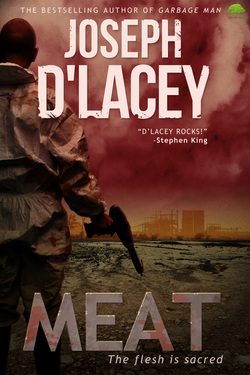 Joseph D’Lacey is best known for his shocking eco-horror novel Meat. The book has been widely translated and prompted Stephen King to say “Joseph D’Lacey rocks!”.
His other published works to-date include Garbage Man, Snake Eyes, The Kill Crew, The Failing Flesh and Splinters – a collection of his best short stories. He won the British Fantasy Award for Best Newcomer in 2009. When not realising his fantasies on paper, he dabbles with Yoga and continues a quest for the ultimate vegetarian burger recipe. 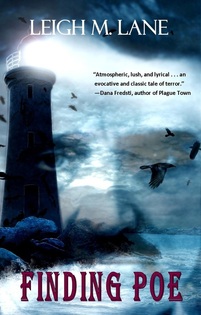 Leigh M. Lane has been writing for over twenty years. She has ten published novels and twelve published short stories divided among different genre-specific pseudonyms. She is married to editor Thomas B. Lane, Jr. and currently resides in the beautiful mountains of western Montana.
Her traditional Gothic horror novel, Finding Poe, was a 2013 EPIC Awards finalist in horror. Her other novels include the supernatural thriller, The Hidden Valley Horror, inspired by Barker, Bradbury, and King; World-Mart, a tribute to Orwell, Serling, and Vonnegut; and the dark allegorical tale, Myths of Gods. Could you tell the readers a little bit about yourself? I’m a bit eccentric, reserved and reclusive, although I’m also painfully empathetic and honest to a fault. I sang in a few bands in my younger days, even sang the National Anthem for the opening of a Dodgers’ Game (with my twin sister, with whom I spoke a “twin language” during childhood). I’m married to a wonderful man who also happens to be an editor (which works well for a writer) and we have an extremely spoiled Maine coon cat named Kadie. Do you prefer the term Horror, Weird Fiction or Dark Fiction? I think each really describes its own subgenre. Horror evokes a thrilling sense of shock or fear. Weird fiction explores the bizarre; it’s the brain teaser that uses the twisted and unusual to elicit the shocking and the profound. Dark fiction doesn’t have to be particularly scary or bizarre, working instead to disturb on a more subtle level. Who are some of your favourite authors? On the top of my list are Stephen King, Kurt Vonnegut, Edgar Allan Poe, George Orwell, H. G. Wells, Louise Erdrich, and Roald Dahl, although I also enjoy Lisa Mannetti, Trent Zelazny, Dana Fredsti, Billie Sue Mosiman, Bryan Hall, Dan O’Brien, Robert S. Wilson, Jeffrey Kosh, Michael Meeske, Clayton Bye, Rob M. Miller, Tom Piccirilli, Peter Giglio, Joe R. Lansdale, Lori R. Lopez, and Jaime Johnesee. What are you reading now? I’m currently reading Christine Sutton’s The Prodigal Son. How would you describe your writing style? I would describe half of what I write as dark, psychological horror, the other half twisted political or psychosocial thriller, with both containing a literary slant. Describe a typical day spent writing. Do you have any unusual writing habits? I don’t really have a typical writing day. Some days, I stare at the screen for a while, labor over every sentence as though trying to squeeze blood from a turnip, and then retreat to Facebook in defeat after only a few hundred words. Other days, the words flow like water and I lose track of the hours, forgetting to eat and writing until I can’t see straight. In the past, I’ve written an excess of 8000-12,000 words during these “writing binges.” An average day is around 1000 words. No matter which type of day I happen to have, I must have my coffee. What’s your favourite food? Fresh steamed crab … or maybe baked salmon. What’s your favourite album? Bowie’s Space Oddity. What’s the most important lesson you have learned about writing? Be true to yourself. Write what you feel compelled to write, not what you think might be marketable. I made the mistake once to try to write something mindlessly mainstream, and I will never make that mistake again. Fame and fortune, or respect? Hands down, respect. What piece of your own work are you most proud of? I’m most proud of my Gothic horror, Finding Poe, which integrates bits and pieces of his best works into an original story that takes place during his dying days. I spent months studying Poe’s works, his language, and his style before writing it, and I believe the novel did justice to his legacy. Can you tell us about your last book, and can you tell us about what you are working on next? My last published book, The Hidden Valley Horror, was that attempt at mainstream horror I mentioned above and, while it’s not terrible, I’m also not especially proud of it. I’m currently shopping my latest novel, titled The Private Sector, which is one of those twisted political thrillers I mentioned. It contains some elements of horror, but is more disturbing that terrifying (for the most part). I’m currently working on a series of dramatic horror novellas, which I hope to sell as an on-going episodic saga of sorts. HORROR INTERVIEW : JOHN F.D. TAFF
7/10/2013
 John F.D. Taff is an author with more than 25 years experience in all sorts of writing…public relations, marketing, sales, journalism and creative. He’s a published author with more than 65 short stories and seven novels in print. His writing tends to be categorized as “horror,” though most of it has a weird, pulpy Twilight Zone vibe to it. He also writes fantasy, suspense and some science fiction. Over the years, four of his short stories have been awarded honorable mentions in Datlow & Windling’s Year’s Best Fantasy & Horror.
|


Archives
May 2023
|
 RSS Feed

|

|