

HORROR INTERVIEW : JOSEPH D'LACEY
21/10/2013
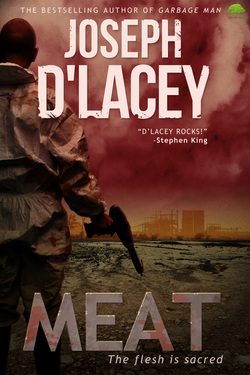 Joseph D’Lacey is best known for his shocking eco-horror novel Meat. The book has been widely translated and prompted Stephen King to say “Joseph D’Lacey rocks!”. His other published works to-date include Garbage Man, Snake Eyes, The Kill Crew, The Failing Flesh and Splinters – a collection of his best short stories. He won the British Fantasy Award for Best Newcomer in 2009. When not realising his fantasies on paper, he dabbles with Yoga and continues a quest for the ultimate vegetarian burger recipe. 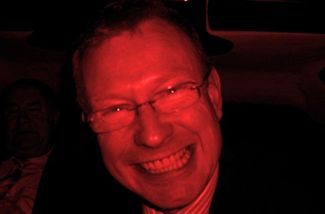 Hi Joseph, how are things with you? Right now, things are looking good, thanks. It was great to finally meet you in Edinburgh this year, how was the event for you? It was brilliant. Ellie Wixon did a wonderful job of organising it and the meal afterwards was lovely too. These events are always fun, especially with Jasper Bark hosting, but it was particularly satisfying to do my first reading in Scotland and to meet the legendary Gingernut himself! Do you enjoy doing these sorts of event? Yes, I really do. It’s the moment when you get to step away from the desk and talk to the people who actually buy and read your books. And, unlike the endless hours spent writing and editing, it’s fun! Horror means different things to different people. What does horror mean to you? Horror is reaching your hand into a dark recess when you’ve every reason to believe there’s something venomous in there. Horror is not wanting to see something so badly that you have to look before you can rest. Horror is the howling void we’ll plummet into, falling forever, when we die. Horror is suspecting none of what we sense is real, that there’s something far worse all around us that will one day reveal itself. Horror is waking into the same nightmare every single day of your life. Horror is drinking a cup of cold, blood-tinged mucus or having your organs removed without anaesthesia. It’s the touch of a spider’s legs against your neck when you’re sleep-paralysed. Horror is the realisation that everyone and everything you love will be taken away from you. Horror is the light going out in your lover’s eyes. Horror is being eaten alive, one piece at a time, by a deadpan psychopath. Horror is good people acting in ignorance. Horror is the screams of children. Horror is the journey we do not wish to make but the one we must make. Thankfully, almost all of the time, Horror is simply a result of our imagination, our fears. There’s really nothing to be scared of. Right? 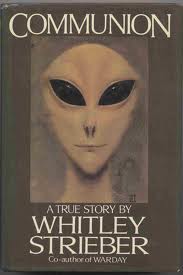 If you had to pick one book by another author, that to sums up what you think is the best of horror what would that book be? If you’re simply talking about being scared; Whitley Strieber’s ‘Communion’. I was so terrified I couldn’t finish the book when I read it in my late teens. I still haven’t. For the random, senselessness of what ‘could’ happen to a person, it would be “Let’s Go Play at the Adams’” by Mendal Johnson. Does horror scare you? And if it doesn’t what does? It’s when, by extension, you bring the events or ideas from a film or book into your own world that it becomes truly scary; when you connect with it. When you’re young, that happens a lot. Over time, you become inured, I think. Especially if you’re involved with creating the genre. Horror doesn’t scare me all that much these days. There have been scenes in films that have shocked me over the last few years. Ray Liotta chowing down on his own brain in ‘Hannibal’ and Paul Bettany using his toolkit on Lenny Taylor in ‘Gangster Number One’ come to mind. Going farther back, when I first saw Hellraiser, I had a proper case of the creeps. But I can’t think of a book that has genuinely chilled me in the last fifteen years or so. Real life, on the other hand, is full of terror for me. The inevitability of bodily and mental decrepitude – the idea that my shell and sensory apparatus, my way of being in the world, is being slowly broken down until it’s no longer viable. The knowledge that people are slaughtering each other in a conflict of ideologies as I write this. The possibility that there are people who hate me for being born different from them – people I’ve never even met. The thought the country I live in is being run by corporations instead of individuals who truly wish to serve its people. The fear of my death and the death of those closest to me. The horror of real life, the dark threat of it, nags away endlessly. How did you first get into the writing game? I wrote a lot of anguished poetry when I was a boy and in my teens and twenties. When I’d got most of it out of my system I wrote a series of nonsense verse for kids and a talented friend illustrated it. We approached all the UK children’s publishers directly and were rejected across the board. About the same time I began my first unfinished novel – there’ve been a few – and decided I ought to try a story. The first short piece I wrote was called Getaway Car. I submitted it to a small press print magazine, Cadenza, and they snapped it up. I’ve still got the lovely acceptance letter somewhere. On the strength of that, I was convinced I’d become a top-selling and much-respected author – a delusion I now keep locked in a cage under the stairs where it yowls a lot and never dies no matter how starved it becomes. Looking back at your career, you have had a bit of a tempestuous relationship with writing. If you could go back in time what advice would you give yourself? It has been tempestuous, both in terms of the writing itself and the business aspects. I have to say, though, that if I don’t learn the hard way, I don’t usually learn at all. And if I’ve found myself buried under unfeasibly malodorous heaps of misery, it’s almost always been my own fault. Such are the wages of ignorance. I’ve written bad fiction, thinking it great. I’ve got ‘stuck’ on long projects and been reduced to tears. I’ve taken other people’s opinions personally. I’ve written half-arsed synopses that prevented my work from selling. I’ve submitted what I considered near-perfect work, only to discover gaping, dim-witted holes in the execution. I’ve tangled with editors who don’t respond to submissions. I’ve written painfully unprofessional and naïve cover letters and some downright insulting chase emails. I’ve gone against my gut feelings in the name of progress, only to find myself going backwards as a result. At all times, I’ve expected and dreamed of far greater things than I’ve ever achieved. But if I was to go back in time and give myself some advice, it would be this: ‘If you’re going to tramp through an ocean of shit, next time wear waders instead of flip-flops.’ The writing game is a complicated industry, and at times a harsh one. How you deal with the knocks? I don’t. I take knocks the way an academic takes punches. The only thing that gets me through is the passage of time and the knowledge that this is what I’m meant to be doing with my life. I’m also fortunate to have the most supportive wife in the history of penniless misfits. On the occasions when I’ve considered packing it all in, she’s the one who’s encouraged me to continue. 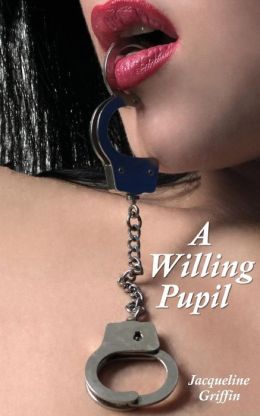 A lot of folks think that Meat was your first novel, however, if I’m correct, it was actually your sixth. Do you think any of these earlier novels will see the light of day? It’s impossible to say. My second novel, A Willing Pupil (written under the pseudonym Jacqueline Griffin) was published about eighteen months ago. It’s a BDSM story in which a young man searches for enlightenment through sexual gratification. My first novel was a black comedy about a faith healer with terminal cancer. Three, four and five fell between Horror, SF and Fantasy and the three I’ve written since Garbage Man are leaning more towards fantasy. Some of them will be published, I think, and some will not. Having met you I find it difficult enough to picture you writing horror, but BDSM, you are far too nice a man to write that sort of stuff. How do you get into the mind set to write things such as BDSM and horror? To give the subject some balance, I do write humour and children’s stories too! When I sit down to work on a tale, I’m accessing a different area of my imagination depending on each subject. The story is only ‘personal’ or part of me for the moments that I’m writing. After that my imagination flips back into normal mode until the next time I need it. Turning the imagination on and off is part of the job. I think a writer needs to employ whatever imagery or idea is necessary in order to tell an entertaining story. BDSM and horror are nothing more than colours on the human spectrum of experience. You don’t need to be ‘nice’, or even not nice, to write about it – or romance or flower arranging. Personally speaking, I seem able to maintain a professional distance from the material itself, perhaps in the way a surgeon is removed from her anaesthetised patient while she makes her incisions… Your novels have some very strong moral and ethical themes, are you someone who has strong moral and ethical leanings? I have moral and ethical musings, possibly. And I do try to stick to a few basic principles in the way I interact with people and the world. You have to live and let live, though, otherwise you’re constantly embattled. I don’t go around telling other people how they should live their lives and I don’t think my books do either. I’m far more likely to ask a question than I am to presume I have an answer. In fact, the more I discover about this world, the clearer it is how little of it I really understand. It doesn’t do to moralise too much when the supposed high ground is constantly shifting beneath your feet. Has your writing strengthened your beliefs? I don’t have beliefs. It struck me in my youth that a belief is a thing you have until you start believing something else. Beliefs can be replaced and they can easily become a source of conflict. Not only that, humans seem able to believe two opposing ideas at the same time and even act on one of them, against their better judgement. Perhaps people might think of that as the heart ruling the head or vice versa. To me it’s a sign that a belief is no more than a notion one clings to because it makes life simple. To believe something, you have to have thought about it and come to a decision based on those thoughts. What if your thoughts (or the knowledge and experience that gave rise to them) are simply wrong? I’m more attracted to the idea of knowledge. When you know something, you don’t have to think about it. It simply resides in your cells. For example, I might think I’m a coward. I might then believe I’m a coward and spend my life acting on that belief. But then, one day, someone or something might threaten my dearest love or companion and I might, very suddenly and without any thought whatsoever, give up my own life to save theirs. That is knowledge. I didn’t even need to know it until the moment when it was truly important arose. When that moment arrived, my beliefs were as nothing in comparison. I like the idea of knowledge but I don’t have very much of it! The occasions when I know something in my very blood are so rare I could probably count them on one hand. But I’ll take my limited knowledge over a whole library of belief any day. You seem to have garnered the tag of an ecological horror writer. Is this a tag you are happy with? Personally, I think dystopian apocalyptic horror is a better tag for your writing. Ah, gad! Tags! What can you do? I don’t mind the label. It’s a pretty good one. Better than ‘sleazy, talent-free gore-hack’. I do write a lot of stories which have environmental themes, so I suppose it fits quite well. And it works at an ideological marketing level, too, in an age when ecology is important (or ought to be) to everyone. It’s accurate enough for me and it’s useful; that’s what I’m trying to say. I like to write dystopian fiction and I very much enjoy apocalyptic fiction but whether those terms describe my work is another matter. Tags and labels, even genre and sub-genre, are the subject of much nerdy debate – apologies to all who may have flirted with such debate but never actually inhaled such nerdiness – but what’s far more crucial, to me anyway, is am I able to write a gripping, entertaining tale? If the answer’s yes, that’s a tag worth having. If you had the power to choose what form the Apocalypse would take, what would be your choice of planetary destruction? The Apocalypse should either be a cleansing of the Earth or an opportunity for a new phase of evolution, not the total destruction of the planet’s body. Organisms, especially those hell-bent on growth and proliferation at any cost – parasites so thorough that the kill their own host – must be expunged. I can only think of one species insane enough to qualify. How much research did you do for Meat? A lot by my own standards. By those of authors who write accurate historical fiction, probably not much. I hate research, mostly because I’m not very academic. Facts and figures don’t ‘do’ it for me at all. I don’t go ‘Oooh, look at this, darling. Did you know that the average orang-utan has to eat twice its own body weight in jam sandwiches in order to survive a Javanese winter?’ Also, research stops me writing and I absolutely do NOT require any assistance with that. How much of an eye opener was it for you? Imagine I’d pulled my lower eyelids down and stapled them to my chin and then taken my upper eyelids, stretched them back and nailed them to the nape of my neck. I was a lot more wide-eyed than that. Not to mention nauseous and affronted by the cruelty and ignorance of my own kind. Have you heard from any readers who have turned vegetarian as a result of reading your book? Yes, there’ve been quite a few. Including me. Always fertilises my ego, that does - the idea that a story can make a little difference in the world. Pass me that cranial support sling, would you? One of the highlights for me was the strength of the characters that populated the novel, how do you go about creating characters? Ah, now that would be telling. And then there’d be hundreds, possibly even thousands of authors out there becoming millionaires overnight, just like me. Generalising here, Jim – about my own methods – but usually it’s the story that matters to me most. Not being able to tell that story without characters, they come second. I don’t consciously create characters; they exist for the sake of the story. That being the case, I begin with someone in a situation and let them explore their predicament. Within a short time, I know a lot about them and who they’re going to be. In the vast majority of instances, I don’t plan characters, in the same way I don’t plan stories. They just – both of them – happen. The only time this isn’t true is when I’ve had a long time to think about a story before beginning. That sometimes means I have more to go on once I open a new document. Have you ever used a character’s grizzly death, as a way of getting literary revenge on someone who has annoyed you? Never. It’s far less effective and nowhere near as satisfying as killing them for real. 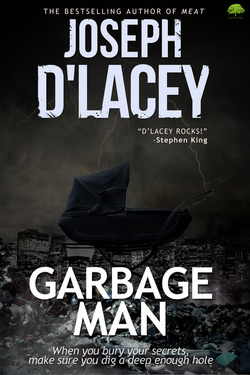 Garbage Man, how did you come up with the idea for the novel? I can’t remember. Not being difficult here; I really can’t. I think anyone can recognise the seed growing from stories like The Iron Man, Frankenstein and Little Shop of Horrors. The novel began life as a short story and slowly got out of hand – a bit like the Fecalith. I thought it would stop at novella length but it ended up as a short novel, about 55K. My starting point was Mason Brand laying bare the earth in his garden ready for planting and the storm approaching as he worked. I expect the only thing I really knew about this one before starting was that lighting would strike a landfill to bring forth vengeful life. It all grew from there. Then Bloody Books got hold of the manuscript and made me add another forty thousand words and address a whole raft of other issues they had with it. It was a question of either doing what they wanted or not getting the novel published. It’s a very weird book as a result. Why did you settle on Garbage Man, I would have thought coming from the UK, it would be Rubbish Man or Bin Man? Garbage Man was more pleasing to my ears. There’s a great Cramps tune by the same name and, somehow, garbage struck me as a more organic-sounding word. The main character in the book has become a recluse from society. Have you ever considered taking this action? And if so, what’s the one thing about society you would miss the most, and the one thing you’d be the most happy to see the back of? I think about it all the time. If I wasn’t married with a family, I’d have bowed out from society a long time ago. It’s not snobbery; I’m just not cut out for the tsunami of hype and bullshit the world serves up the moment I open my eyes each morning. So, yes, given the opportunity, I’d do a Henry David Thoreau in a heartbeat. The aspect I’d miss would be people’s essential good-heartedness and love for each other. I’d be happiest to see the back of corpocracy. As with Meat there is a strong message to the book. Was it always your intention to have such strong messages in these books? It’s hard enough to write a book that can make it past a commissioning editor without trying to cram in a moral for readers. MEAT examined corporate and religious control as well as the ethics of taking life to prolong life. Garbage Man’s theme was the burial of unwanted realities. It would be tough growing a novel from such themes without it looking like there’s a message but it was more like exploration for me. With a speculative nail or two in humanity’s coffin for good measure. 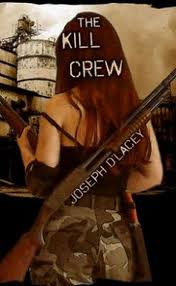 With Kill Crew you made the move into the zombie novel. What prompted the move? Again, this is not something I consciously decided. I love the risen dead as much as the next geek but I didn’t know The Kill Crew would be a zombie story until I started writing it. All I had was the title. It intrigued me enough to make me want to find out what the hell a Kill Crew was; what they did and why. The names of all the characters come from a time when my inbox was plagued with spam. The idea of using randomly generated names struck me as fun at the time, so I didn’t have to make up a single character name for The Kill Crew. What would you say is the unique selling point of The Kill Crew? I’m not sure there is one from a reader’s standpoint. It was unique for me in a few ways, though: the protagonist is female and the story’s told from the first person point of view. It was an odd experience; writing Sheri Foley’s tale was like taking dictation or channelling. She had such a strong voice and it was an absolute pleasure to discover her. The ‘zombies’ in the story weren’t the same kind of zombies we all know and adore, either. Discovering their genesis and ultimate motive has been both challenging and exciting. Do you think you will ever return to this world? I already have! A second linked novella, The Failing Flesh, is in Surviving the End from Dark Prints Press – out at the end of April. In this story, a family in the Cotswolds struggles to survive a very similar cataclysm by taking refuge in a secluded house at the end of an abandoned rural track. Isolation from populated areas seems to protect them; at least for the first few days… I hope to write at least two more novellas set in the same scenario but in different parts of the world, ultimately revealing the nature of the cataclysm and whether or not we survive. The Kill Crew is out of print for the moment but I’m hoping to collect all the episodes in a single volume one day. I recently read and reviewed Snake Eyes, what the hell were you on when you wrote it? Seriously, the last time I saw so many red herrings I was at Peterhead Harbour. Just another day at the office, as it would have been for anyone exploring similar ideas. I was probably drinking tea… If it was unusual, it was only in terms of genre; I’ve always enjoyed SF and Fantasy and Snake Eyes allowed me to put together both genres, with a little pinch of horror in the mix. How did you go about constructing the novella A Man of Will and Experience? I would have thought it would have been easy for you to get lost with all the twists and turns the story makes? Did you know the ending to the story when you first sat down to write it? I wrote most of ‘the tube’ episode in a creative writing class about ten years ago but didn’t feel it was complete. A year or so later, I extended the story when I found a ‘way out’ for my trapped protagonist. Realising I was onto something in terms of layered realities, I wrote a third sequence and a new beginning. It was a very organic process. The novella was originally titled The Tiers of Robert Johnson but I wasn’t entirely happy with that, so I changed it. By comparison the other story is a much more traditional tale. Was it always your intention to put these two stories together? How well do you think they complement each other? It wasn’t my idea at all. You can tell by how long ago I wrote these tales that selling them has been difficult. After a few years, I stopped submitting them in favour of spending more time writing and less on marketing. It wasn’t until Bill Breedlove had approached me about writing some stories for Dark Arts’ ‘When the Night Comes Down’ that I sent them out again. Bill suggested Bad Moon Books who got back very quickly saying they’d ‘do both’ if I was prepared to wait two years. Another two years wasn’t going to make much difference so I said yes. At first I thought they’d bring the novellas out separately. It wasn’t until closer to publication that I found out they were coming out in a single volume. I was delighted. People who like SF seem to prefer A Man of Will and Experience whereas those with a soft spot for Fantasy plump for A Trespasser in Long Lofting. Whether they work together like this, I can’t say, but I’m very fond of both stories and was overjoyed to see them finally make the metamorphosis from manuscript to book. 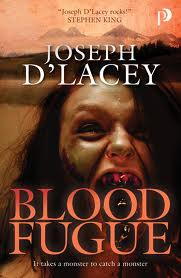 Blood Fugue is a fantastic take on the vampire genre, one with a very unique take on the monsters. Did you ever consider doing just a normal take on them? I find ‘standard’ vampires a bit uninspiring! I think I’ll always prefer a skewed angle on any of the better known horror themes and tropes, only because if I’m not satisfying my own interests at my desk, I won’t be satisfying the interest of the reader. In other words, I believe it’s more likely a reader will be drawn into a story I loved writing than one I forced out. So, no. No normal vampires for me! Are the vampires and the idea of the village’s guardian based on any real myths and legends? Not really, no. I just loved the idea of a long line of solitary sentinels with superhuman power. A bloodtype so secret, even they weren’t fully aware of their abilities. The rituals and everything else about Jimmy Kerrigan and the Sallow Man were pure invention. The book has upset a small minority of people on the internet with its graphic depictions of death and sex, however personally I thought it was a joy to finally have a vampire story where the vampires are monsters. Was this book a reaction to the romanticising of the vampire? I wrote Blood Fugue ten years ago when I was living overseas. The ‘paranormal romance’ vampire hadn’t quite arrived on the scene back then. So, no, it wasn’t any kind of reaction. But if there’s one place where sex and death need to be seen side-by-side it’s in a horror novel – especially one of mine! The novel has an open ending; will we ever see a sequel to the book? When I wrote it, my thought was to run the story over another two books and sell it as a series. Unfortunately, it took me ten years to find a publisher! Things have developed a lot since then in terms of my work. These days I’m too focused on other projects to consider writing any kind of follow-up. Prioritising has become the name of the game and Blood Fugue, sadly, has slipped down the list. A shame, really, as it was a lot of fun to write. 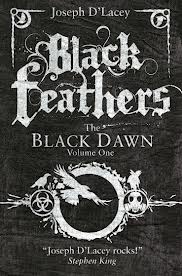 Black Feathers is your latest release, can you tell the readers a little bit about this excellent book? It’s an apocalyptic fantasy that follows a boy and a girl on a quest. Though they are separated by many generations, both children are searching for the same mythical creature – The Crowman. Neither of them are certain, however, whether The Crowman is the saviour of the world or the final incarnation of evil, sent to destroy Earth. The initial germ of an idea for the book came from school project you did with crows. Crows are excellent birds, what is it about them that you like so much? I bet The Crowman from Worzel Gummidge is a personal favourite of yours? That’s right – I made a batik in art class and the subject was three crows silhouetted in the branches of a dead tree. Within a week or two, someone had stolen the batik so it must have been quite good. Anyway, since than, I’ve never stopped being fascinated with crows. During the time I was writing Black Feathers, a crow used to come and forage in the grass outside the office window every day. I took to feeding her my apple cores and she still visits sometimes now. Corvids are generally aloof and extremely wary of humans. They’re also very, very smart indeed. I love them for that and for all the myth and mysticism associated with them. I did, of course, watch a bit of Worzel Gummidge when I was a kid and was aware of The Crowman then, but I was never particularly entertained by the show. I had another look at a Worzel Gummidge clip the other day and felt exactly the same way. The first time the Crowman’s name really stuck with me was when a friend of mine told me about a character he’d created for street performances and festivals. His costume was a cross between a voodoo priest and Gummidge’s Crowman. Another part of the book fell into place in that moment. That was almost twenty years ago. I get the feeling that this is perhaps the book that you have been building up to write since you first stated writing professionally. The themes and ideas explored within its pages are ones that are very dear to your heart. Is this the case? It’s certainly had the longest gestation of any of my ideas – being as it kicked off when I was thirteen – but the whole thing has gathered pace and momentum over the last ten years, gaining mass and drawing more story to itself until it had to be set down as a story. It’s full of pagan ideals and Gaia worship and, yes, it was written with passion. You have said the book itself grew “directly from my personal interactions with the landscape, during time spent in purposeful reflection” can you tell the readers about your vision quests, or are they too personal to talk about? Not at all – everyone should try it! A vision quest is a four-day period spent alone, fasting in a natural space with minimal shelter. Usually there’ll be a particular question you hope to answer or an issue you hope to solve but it can also used as a rites of passage from childhood into adulthood or at any other time of personal transition. Or, like me, you can go out there and wrestle demons. J I’m sure the practice is older than any written history and it’s no wonder; you feel renewed and clear when you come back, not to mention reconnected to the land. The book and its sequel are to be published as a duology, was this move an idea to tie in with the duology of the novels narratives? Actually, it started out as one long book. It became two books because it was too long to publish in one hit. That has resulted in some major edits and rewriting to make it work as two separate publications, but I think it’s a much better book owing to all the extra work. So when is the second book out, and do you have a title for it? March 2014. It’s called The Book of the Crowman. You have recently posted some very funny lines from some extremely critical reviews of your books, I was going to ask why you did that, but I have just realised, that you were having a laugh. You really had me going, and by the looks of it, a lot of other people as well. How do you deal with criticism? I hate criticism. I don’t think I deal with it badly; I don’t deal with it at all. But it’s just another facet of the writing business and I suppose you get used to it. I hope that’s how it works, anyway. Those un-blurbs were fun to write. A real release. After I wrote the first one, I just couldn’t stop. I really ought to have been working. For those readers who haven’t had the pleasure of reading your work, where would you recommend they start? I’d say MEAT is the place to begin. So before we end this interview, are there any closing words you would like to give? I’d like to say bollocks to you, Jim, for asking me so many bloody questions – so many difficult questions. As you know, it’s taken me weeks to finish this interview. And I’d like to thank you for the opportunity to further infect the horror-loving networks of the web with my cockeyed take on things. I’ve thoroughly enjoyed it. If you haven't already acquainted yourself with Joe's writing then please click on the carousel below and get your hands on some fabulous books |


Archives
May 2023
|
 RSS Feed

|

|