• HOME
  • CONTACT / FEATURE
  • FEATURES
  • FICTION REVIEWS
  • FILM REVIEWS
  • INTERVIEWS
  • YOUNG BLOOD
  • MY LIFE IN HORROR
  • FILM GUTTER
  • ARCHIVES
    • SPLASHES OF DARKNESS
    • THE MASTERS OF HORROR
    • THE DEVL'S MUSIC
    • HORROR BOOK REVIEWS
    • Challenge Kayleigh
    • ALICE IN SUMMERLAND
    • 13 FOR HALLOWEEN
    • FILMS THAT MATTER
    • BOOKS THAT MATTER
    • THE SCARLET GOSPELS
GINGER NUTS OF HORROR
  • HOME
  • CONTACT / FEATURE
  • FEATURES
  • FICTION REVIEWS
  • FILM REVIEWS
  • INTERVIEWS
  • YOUNG BLOOD
  • MY LIFE IN HORROR
  • FILM GUTTER
  • ARCHIVES
    • SPLASHES OF DARKNESS
    • THE MASTERS OF HORROR
    • THE DEVL'S MUSIC
    • HORROR BOOK REVIEWS
    • Challenge Kayleigh
    • ALICE IN SUMMERLAND
    • 13 FOR HALLOWEEN
    • FILMS THAT MATTER
    • BOOKS THAT MATTER
    • THE SCARLET GOSPELS
GINGER NUTS OF HORROR
horror review website ginger nuts of horror website

V. CASTRO CHATS TO CHAVA CARTAS ABOUT HIS NEW FILM THE TENANTS

31/5/2019
author castro chats to CHAVA CARTAS abouyt his new fil the tenants .png
The Tenants is showing as part of the Hola Mexico Film Festival at  Montalbán Theatre, Regal Cinemas LA Live and LA Plaza De Cultura Y Artes. in Los Angeles on 01 June 2019,  and we are honoured to bring you an interview with the director of the film Chava Cartas. 

The director Chava Cartas , was born on September 15, 1971 in Guadalajara, Jalisco, Mexico. He studied photography at the Hospicio Cabañas in Guadalajara and film at the International Film and Television School of San Antonio de Los Baños, in Cuba. He began his career as director of photography in the new millennium with the short film Bala Bume Bum!, Which was followed by the feature films Love You Hurts ,  Dark Cities  and  San Pancho Athletic , among many others. His career as a director began in 2006 with the films  Amor xtremo  and  Sexo, amor y otros perversiones 2 . In 2010 he made his first series, Mujeres Asesinas , followed by El Equipo , Gossip Girl Acapulco , Los Heroes del Norte and El Mariachi. Despite the good reception on television, Cartas returned to the big screen with Once Again and  Rock Marí. Among his latest projects are the feature films  Treintona, Soltera y Fantástica ,  Rosario Tijeras, Tenants, Mirreyes against Godinez  and  Solos at home,  most of them premiered between 2018 and, the others, to be released in 2019.

If you are in LA this weekend you can purchase tickets to the film by  by clicking here ​
 
Hello and thank you for doing this Interview. I have been a life-long fan of occult and possession films, so The Tenants (Inquilinos) was a real treat to watch considering many of them can be very similar. Watching horror from a different cultural lens always makes me smile because it can only further enrich the genre. As a Mexican American woman, I actively seek out these films.

What drew you to this particular project?

The script came to me when the producer, who I was working with preparing the film “Trientona Soltera y Fantástica”, calls me to tell me he has a great script for a horror film. To be honest, it is a very difficult genre and even more so if you don’t have a big budget to resolve all of the VFX and FX needs so my first reaction was that of horror but when I read the script I thought it was fascinating how the writers managed to tell the story, to talk about our Latin-American beliefs—one way or another there are topics that always surrounds us. In our local markets for example, you can find all types of witchcraft and “remedies or potions”, it is part of our folklore and a part that I could dare to take to the big screen.

The creepiest parts for me were the bloody saints and scenes of ritual. That opening scene sets the viewer up for a very sinister story. What was your approach to filming this? Do you have any experience with Santeria?

After doing a lot of research about Santeria, the saints came to play a part in the film because the base of many of their rituals was that they had to dress them up so that they could worship them, this was the common thread in all of the different practices of Santeria.

One of the most important ingredients in the film was the location, an additional character in the story. I found the “vencidad” or neighborhood in Guadalajara and that is why I decided to film there, and it definitely was visually a very sinister location.

Did you do any research into Santeria rituals before filming?

Of course, doing research was essential because up to that point I had no direct contact with “Santeros” even though these are topics that are always present in our culture. I made it my homework to get close to the “santeros” so that I could learn and dive into their beliefs to make sure we were always portraying their beliefs in a respectful way. There are very sensitive topics that personally I don’t follow but have utmost RESPECT for.

You have a wide spectrum of genres under your belt. What draws you to horror?

As a filmmaker, I am more passionate about being a storyteller regardless of the genre, if a script captivates me and I know that I can responsibly talk about the theme, I film it. If the story is a horror film, well I’ll film that genre, if the story is an action film then I will be making an action film.
I have a firm conviction that we should be storytellers not tellers of a certain genre. 

Favourite horror film and why?

SINISTER (2012) Scott Derrickson

This is a great example of how you combine reality with the supernatural. This story had great influence on my decision to film INQUILINOS.

I felt this had dashes of The Entity and Rosemary’s Baby. Were either of these influences?

Neither of them, my biggest influence was SINISTER that I believe has a very similar structure to my film.

The film is set in Guadalajara and this is where you are from. Did you have ideas in mind when it came to filming locations? I loved the Santeria market scene.

During my childhood my brothers and I would go to the local markets and we were always scared of walking down the halls that had witchcraft, where they sold the “remedies or potions.” Also talking to Tato Cartas, my brother and production designer of all my projects, we recalled all these moments we lived when we lived in Guadalajara and it just seemed like the best place to tell this story. Take the story out of the big city and tell it form a small city—one of the scenes that I like the most is that one shot in a market. Tato was able to recreate those halls that we were so scary. We were not allowed to film in any real market because of the superstitions people have about this so Tato had to create the entire market from scratch!
Any upcoming horror projects?

I am about start filming a very funny story alongside a great Mexican producer, Francisco Gonzales Compean and all I can tell you for now is the name of the film, but I think you will get the theme and the genre from the name…MEXZOMBIES

Thank you again for the interview. I look forward to spreading the word about The Tenants.

Thank you for your interest in my work. I really appreciate it.

check out V. CastrO's other reviews and interviews from the Hola mexico Film Festival by clicking on the links below 
​
REVIEW OF THE TENANTS 
REVIEW OF FERAL
INTERVIEW WITH FERAL DIRECTOR ANDRÉS KAISER 


ABOUT V. CASTRO 

Picture
V.Castro is the author of Maria The Wanted and the Legacy of The Keepers - her debut vampire novel series and The Erotic Modern Life of Malinalli the Vampire- an erotic novella series. You can also find her horror film reviews on

​www.scifiandscary.com.

She is a Mexican American ex-pat living in the UK for the past 12 years. As a full-time mother, she dedicates her time to her family and writing.
Violet can be found on Instagram, Twitter and at her website www.vvcastro.com 
​Contact: vvcastro100@gmail.com

MARIA THE WANTED AND THE LEGACY OF THE KEEPERS (THE KEEPERS SERIES BOOK 1)

Picture
Maria is a wanted woman. She's wanted by and Aztec trafficker, a cartel boss, the people she fights for, and now the Devil she can't resist.Her journey begins as a would-be immigrant turned vampire in Juarez, Mexico until the injustices of the world turn her into somehting else. She's not just out for blood, she wants answers.Maria spends twenty-two years in motel cleaning purgatory trying to keep her faith and sanity intact. When she feels all hope is lost she meets an ex-boxer that offers her a new job and teaches her to fight. During this time, she becomes an unlikely bad ass enforcer of justice for the community that has embraced her. Is she a saint or an old God from a forgotten past?

Not only does she evolve into the woman she always hoped to be, but she finds her creator – Adam- he is nothing like she imagined.  He invites Maria to travel with him to England to join The Keepers, a vampire organization led by the ancient Mordecai and Dr. Elizabeth Appleton.
​

Learning that the true vampire way isn’t destruction but the safety of humanity, Maria joins The Keepers as they uncover a plot set into motion by Lucifer himself. The Keepers must end his corruption through political manipulation or watch as the world hurtles towards self-destruction.


Interview with Feral Director Andrés Kaiser by V.Castro

29/5/2019
INTERVIEW WITH FERAL DIRECTOR ANDRÉS KAISER BY V.CASTRO
Feral is showing as part of the Hola Mexico Film Festival at  Montalbán Theatre, Regal Cinemas LA Live and LA Plaza De Cultura Y Artes. in Los Angeles on 01 June 2019,  and we are honoured to bring you an interview with the director of the film Andrés Kaiser.  A member of Vicente Leñero’s writing workshop since 2009, Andrés studied screenwriting and film editing in Madrid. As an editor, he worked in HBO's Capadocia and Lourdes Grobet's Bering: Balance and Resistance. Feral is his debut as a director.

I
f you are in LA this weekend and would like to watch Feral  you can purchase tickets by clicking here 
 
I want to start by saying I thought the film was fantastic on so many levels. As a Mexican American woman, I am desperate to see more diverse narratives in horror. It was a pleasure to view this film. Thank you!
Thank you so much for this. It really means a lot to me!
 
What sparked the initial idea for this film, and how long did it take you to write? Was it a slow burn or something you envisioned immediately?

The film took 7 years to see the light. A lot of that time was due to writing the script, which was a major challenge. I think the core of the idea came to me as a kid when I read William Goldwing’s The Lord of the Flies. The story seemed to be very dark and really scary. I think the fact that as a reader, you always know that the real horror is coming from the kids and it has nothing to do with ghosts or paranormal activities is the scariest notion of all. As the character of Piggy well says:

“I know there isn’t no beast —not with claws and all that, I mean— but I know there isn’t no fear, either... Unless we get frightened of people.”
 
I absolutely loved that you included an indigenous woman speaking her own language. What was the significance of this? Did you encounter any issues when deciding to include this character? I ask this question because of the backlash Yalitza Aparicio faced after Roma.
 
For the documentary wrap it was important to always remain attached to the likelihood. It is strange to see a film where a German speaks in English with another German. The diversity of languages is a human reality, and that is how it should be treated in the cinema. In Feral's case, listening to a character speak Mixe, his own language, was vital.
 
You showcase a lot of beautiful landscape from the mountains to the forest. Does Oaxaca hold a significance for you?
 
The forest has always seemed to me a sinister and beautiful place alike. It is home to multiple legends and myths that nourish an important part of western civilization, such as the myth of the savage. In the case of Oaxaca, it is a state with enormous diversity - natural and human - that contains a unique energy in the world. The mysticism that historically surrounds Oaxaca was an element that helped to add a layer of atmosphere to the film and its drama.
 
Whenever the church is shown, I had this deep feeling of domination and almost coldness, it dwarfs everything in its presence, especially when it is contrasted with the natural landscape. The mountains are massive, yet they are inviting. Am I projecting my own emotions or was this deliberate?
 
It was very important to be able to construct the image of the church as an impenetrable fortress - both physically and mystically - that even if it was full of the faithful, it was alien to the needs of the community. A church that pursues its own interests and labels as strange or dangerous that which it does not know. During the shooting, we always took much care on how we portray the church and the people who rotate its gears. I love that the screen was able to project some of these ideas.

Does the cast consist of professional actors only? It felt very authentic: the acting was subtle, yet the emotion seemed very real.

I believe that one of the great mystical elements in cinema lies precisely in the direction of actors; It is a very deep process that can make the difference between a good and a bad movie. In Feral, the choice of actors was based on the emotion that each character should convey. The cast is a mix of natural actors, professional actors, and debuting actors. In the end, it was a very powerful ensemble that brought the best of all the worlds. However, I had to work differently with each actor, that is, exercising a different direction technique, each one according to the origin of the actor in front of the camera. In the end, there were great surprises: children are spectacular, like Hector, who was somehow his guide and mentor with his discipline and talent. On the documentary side, "El Máquinas" and José Ángel García make the film "credible". It was a difficult process but of which I learned a lot and I am very grateful.

This film relies a lot on found footage. Do you have any favorite found footage films?

Yes. 1. Cannibal Holocaust   2. The Blair Witch Project    3. The Sacrament

What is the scariest film you have ever watched, and why?

The Innocents by Jack Clayton. I've only watched it once and I think it was enough. It is a ghost story brutally narrated. I have an equivalent proportion of desire and fear of watching it again.

I am desperate for more Latinx writers to break into horror because I feel we have such a wealth of ideas and history to draw upon. Is horror a genre you want to continue creating?

Yes. I want to continue exploring the horror from the human's point of view and its atrocities. I also have curiosities about drama or other types of movies, but for now, I want to continue making genre films.

Do you foresee creating an English language film with Mexican themes to break into the US Market? I was disappointed with The Curse of La Llorona. Please. Say. Yes.

I would love for that to happen one day. However, I know that it is difficult to become part of the American production system. Not impossible, but difficult. I would love to work in the film industry in the United States and at the same time continue to develop my concerns as an artist around issues that I think are important.

What is next for you?

Well, now I'm in my next horror movie. It is called Preciosísima Sangre (Precious Blood) and tells the story of a nun whom the Inquisition of death and the pact with the devil in eighteenth-century Mexico. The film explores themes such as death, isolation, fear of the unknown, religion, the role of women in Colonial México. I am very excited about this movie. It electrifies me every time I think about it.
 
Once again, Thank you for the interview. I look forward to seeing more of your work and spreading the word about Feral.
 
¡Muchísimas gracias!
Read V. Castro's review of Feral here 

ABOUT V. CASTRO 

Picture
V.Castro is the author of Maria The Wanted and the Legacy of The Keepers - her debut vampire novel series and The Erotic Modern Life of Malinalli the Vampire- an erotic novella series. You can also find her horror film reviews on

​www.scifiandscary.com.

She is a Mexican American ex-pat living in the UK for the past 12 years. As a full-time mother, she dedicates her time to her family and writing.
Violet can be found on Instagram, Twitter and at her website www.vvcastro.com 
​Contact: vvcastro100@gmail.com

MARIA THE WANTED AND THE LEGACY OF THE KEEPERS (THE KEEPERS SERIES BOOK 1)

Picture
Maria is a wanted woman. She's wanted by and Aztec trafficker, a cartel boss, the people she fights for, and now the Devil she can't resist.Her journey begins as a would-be immigrant turned vampire in Juarez, Mexico until the injustices of the world turn her into somehting else. She's not just out for blood, she wants answers.Maria spends twenty-two years in motel cleaning purgatory trying to keep her faith and sanity intact. When she feels all hope is lost she meets an ex-boxer that offers her a new job and teaches her to fight. During this time, she becomes an unlikely bad ass enforcer of justice for the community that has embraced her. Is she a saint or an old God from a forgotten past?

Not only does she evolve into the woman she always hoped to be, but she finds her creator – Adam- he is nothing like she imagined.  He invites Maria to travel with him to England to join The Keepers, a vampire organization led by the ancient Mordecai and Dr. Elizabeth Appleton.
​

Learning that the true vampire way isn’t destruction but the safety of humanity, Maria joins The Keepers as they uncover a plot set into motion by Lucifer himself. The Keepers must end his corruption through political manipulation or watch as the world hurtles towards self-destruction.

the-best-website-for-horror-news-horror-reviews-horror-interviews-and-horror-promotion-uk-horror-review-website
stoker-s-wilde-by-steven-hopstaken-and-melissa-prusi-book-review_orig

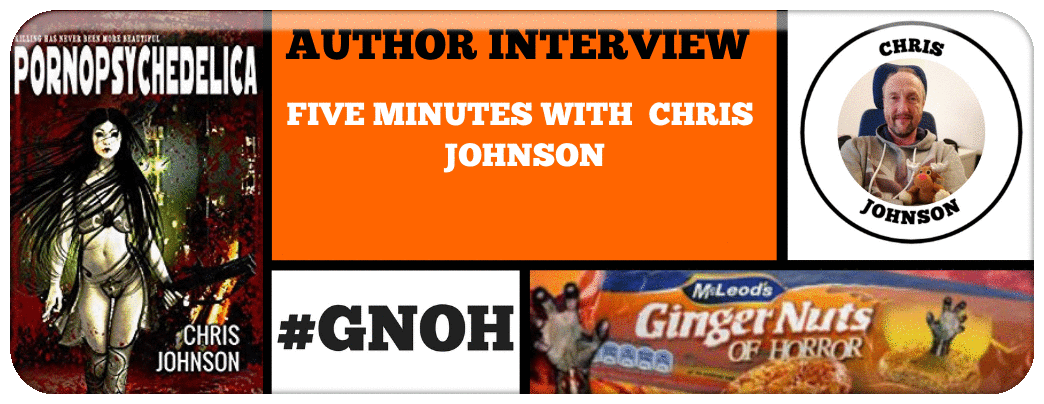
FIVE MINUTES WITH AUTHOR CHRIS JOHNSON

21/5/2019
FIVE MINUTES WITH AUTHOR CHRIS JOHNSON
Could you tell the readers a little bit about yourself?
I live in West Yorkshire and share a big old house with a wife two kids. I've worked in a variety of jobs over the years, from cinema projectionist to a telecoms rigger working on radio towers.

What do you like to do when you're not writing?
Isaac Asimov once said that time not spent writing was time wasted, unless it was time spent with his wife. I have to agree with that, when I'm not writing it's family time. I've always been into movies, so an evening with a bluray, with DTS sound blasting out, is perfect – with wine and snacks, of course!


Other than the horror genre, what else has been a major influence on your writing?
Travelling and meeting people. I've travelled extensively across Asia, Japan, China, Malaysia. They say write about what you know, and I think what's meant by that is cherry pick from your personal experiences, the places you visit, the people you come across. Every place I visit has a potential place in a story, everything I hear is potential dialogue. People are fascinating. You can't write convincing dialogue or great characters if you don't get out and open your ears.
 
 
The term horror, especially when applied to fiction always carries such heavy connotations.  What’s your feeling on the term “horror” and what do you think we can do to break past these assumptions?
I think if you say you love horror, there's a misconception that you love blood and gore, monsters, listen to death metal, only fuck Goth chicks, live on take-out and would never watch Downton Abbey. OK, I'm exagerrating for dramatic effect. Horror is a very wide-ranging concept in fiction, and I think people who like the genre should embrace all of its forms, and that applies to people who say they are not into horror. Horror fiction isn't just  about blood and guts, monsters and  the occult, it can be about the darker side of life, the things that scare us or we find creepy, it's the fear factor most of all. The feeling that a cold hand is going to creep up the covers, grab your ankle and drag you to the bottom of the bed. I think if there's any assumptions about horror, then the way to change those assumptions is for publishers to embrace horror that might not be in the traditonal vein. It might a psychological thriller, but one that leaves a lasting impression on the reader.


A lot of good horror movements have arisen as a direct result of the socio/political climate, considering the current state of the world where do you see horror going in the next few years?
That's an almost impossible question to answer. But to take a guess, I can see horror returning to its roots, yarns about zombies, vampires and werewolves. I think also distopian, apocolytpic survival stories seem very popular now – Walking Dead meets Mad Max. A lot of up-and-coming horror authors are influenced by what's popular in the media, right now that seems to be the end of the world, zombies and gangs fighting for survival across a nuclear wasteland or those futuristic urban thrillers where one night a year you can kill anyone you want for free. I can also see horror moving into gang warfare, if you look at what the drug gangs are doing to each other in South America, especially Mexico, there's a lot of fertile ground there to throw in a few twists for the horror genre. There's the digital age of horror to consider now as well, in real life brutal murders are being filmed on mobile phones as entertainment.

What are the books and films that helped to define you as an author?
I was a big movie nut as a kid so I read a lot of movie novelizations, mostly by Alan Dean Foster. Through Bladerunner I got introduced to Phillp K. Dick, through The Shining I discovered Stephen King. Reading all that Alan Dean Foster taught me to not woffle as a writer, just to get on with it and tell the story in a very clean and precise manner. Foster has a very easy, straight-forward style, it's almost workman-like. I also read a lot of Robert E. Howard. I think Howard taught me to make a story thrilling and exciting, above all entertain the reader and don't bore them. Been a child of the 80s, I grew up with all of the so-called video nasties, and I loved every single one of them. Last House on the Left, A Clockwork Orange, Driller Killer, Suspiria, The Evil Dead, all those Italian exploitation movies. I think movies that made a lasting impression were the ones that threw a spanner in the works and did something totally unexpected – Caligula showed what you could do when you threw the rule book out of the window, and John Carpenter's The Thing showed what could be achieved when you let your creative side go all the way. I mean, some guy's head tearing itself from his body, growing spider legs and eyeballs on stalks and then scurrying across the floor ? That is pure genius !

What new and upcoming authors do you think we should take notice off?
Myself, of course, but  I reckon that'll be the stock answer for everyone interviewed here. There's a lot, too many to mention. But the sad thing is, all those great authors with terrific novels might remain unheard of and unread because publishers won't give them a chance.

How would you describe your writing style?
Straight forward, easy to read. As Elmore Leonard called it, without any of that hooptedoodle. I hate dense prose, long paragraphs, and repitition. You can say a lot with the right choice of words.

Are there any reviews of your work, positive or negative that have stayed with you?
Criticism can be harsh, but dumb criticism is the worst. Somebody hating your book for all the wrong reasons. But criticism is good, all authors should embrace it.

What aspects of writing to do you find the most difficult?
The sitting down and writing part. Motivation and having the time to get into my writing zone.

Is there one subject you would never write about as an author?
Vampires. A love story with vampires.

How important are names to you in your books? Do you choose the names based on liking the way it sounds or the meaning?
I want the characters to be real so they need names that sound normal. I don't want my hero to have a name that draws attention to itself.
 
Writing, is not a static process, how have you developed as a writer over the years?
By reading and doing a lot of writing. But mostly having that writing read and critiqued. You can't improve as a writer if you don't let people read your work.  I think my writing style has become cleaner and more precise, I've dumped the hooptedoodle and stopped trying to be a smart ass.


What tools do you feel are must-haves for writers? 
A computer and a printer.  A place to work away from everybody.  A desk that doesn't wobble. An open imagination, you can't be a good writer if you are narrow-minded.


What is the best piece of advice you ever received with regards to your writing?
This is shite, you can do better.


Getting your work noticed is one of the hardest things for a writer to achieve, how have you tried to approach this subject?
My publisher, Wild Wolf Books, has a pretty interesting business model for its authors. They are a traditional publisher, but they expect the author to be very hands on with their own marketting, which I feel is fair play. I thought social media would be the way to go, but it's only a tiny slice of the cake. The problem with Twitter and Facebook, especially Twitter, is that it's full of authors all shouting the same thing and fighting for attention. Word of mouth is by far the best way to get noticed, although for that to happen people have to know that your novel exists. And when Waterstones is only interested in celebrity books and Jamie Oliver, the only avenue is to direct readers to Amazon. I'm planning an advertising campaign that will target the places where my potential readers might hangout, drink coffee, the magazines they might read. I've got a novel that will appeal to a certain reader, so the marketting has to be laser-precise. I intend to attend literary fairs and horror conventions. The plan for next year is to attend comic con with two hot Asian models.


To many writers, the characters they write become like children, who is your favorite child, and who is your least favorite to write for and why?
One of my favourite characters in Pornopsychedelica was a guy called Martin, an ex-soldier who goes to work for the villian of the story. A major critique came back and said he was the least interesting character in the story and was in fact boring. I had to have a major rethink, decided the criticism was right, and changed the character. It actually made the character way more interesting and gave those parts of the story a darker, more realistic tone. I don't have a least favourite of my own characters, otherwise they wouldn't be in the story. I hate stories with the token whiny kid, you know like Wesley Crusher in Star Trek. You just want to shove him in an airlock and blast him into space.


What piece of your own work are you most proud of?
The action scenes. I write pretty good action. I think I write good dialogue, too.


And are there any that you would like to forget about?
Time will tell, when the reviews start to come in. The reader will be the judge not me.

For those who haven’t read any of your books, which of your books do you think best represents your work and why?
I've not written that book yet. I find all kinds of fiction interesting, so I want to switch genres whenever I get a great idea – fantasy, dark horror, sci-fi, literary. So no one book could represent me as an author. I think Pornopschedelica shows I can write action, snappy dialogue and I'm not shy to push a few boundaries.


Do you have a favorite line or passage from your work, and would you like to share it with us?
 
He didn't like Asia. Now they had refugee Americans and Europeans treating the country as their own. He once heard a Chinaman say Americans were like fleas on a dog.
And there was nothing worse than an itch you couldn't scratch.
A Road Runner you couldn't catch.
     Martin kicked open the twisted door of the car.    'Sumbitch.'
 
Can you tell us about your last book, and can you tell us about what you are working on next?
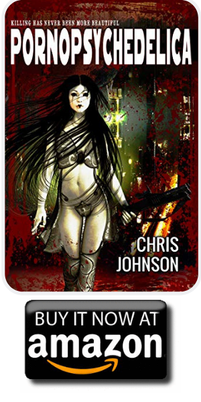
The lastest book is Pornopsychedelica, a violent crime thriller set in Malaysia and Japan. It's set in the near future and is about a woman called Tomoko who goes on a mission of revenge against the crime boss who keeps her a virtual prisoner, using her as a killer for hire. Imagine if Takashi Miike had made Pulp Fiction. I wanted the story to be erotic and violent, with strange, almost trippy parts to it, but with a head-long narrative drive – very much a story driven and with great characters. Currently, I've moved away from genre fiction and I'm writing a literary novel about a guy who's spent the last five years searching for his missing children. The writing style is totally different, the approach is different. I want to flex my writing abilities and not just stick to the same thing. It might be literary, but it's very dark. It'll certainly be shocking and stay with the reader for a long time.


If you could erase one horror cliché what would be your choice?
I hate clichés. How about the killer coming across the couple having sex?


What was the last great book you read, and what was the last book that disappointed you?
The Letter Bearer by Robert Allison was a great read. I can't remember the last book I was disappointed by.

What's the one question you wish you would get asked but never do?  And what would be the answer?
Hey, you're an author. I'm writing a novel, would you mind critiquing it?
The answer would be, sure, love to.
Too many wanna-be authors are terrified of people reading their books, so they remain in this bubble with the firm believe that they are brilliant, yet the only person who has ever read them is their mom and their gay best friend.

about ​CHRIS JOHNSON

Picture
Author of Pornopsychedelica and currently working on a thriller. I have travelled extensively across Asia and write in a variety of genres, from sci-fi to horror to literary. My working life has been just as diverse, with careers ranging from cinema projectionist to telecoms rigger.
 
Pornopsychedelica is available on Amazon as an E book and will soon be appearing as a paperback.
 
Twitter chrisjohnson66


Pornopsychedelica​

Picture
Tomoko Iwamoto is kept a virtual prisoner in Malaysia by crime boss Peter Yang, using her as a killer for hire, a highly-trained trophy he thinks he can control. Until Peter pushes Tomoko too far, ordering her to kill his own wife.

With her repaired android lover, who could prove to be even more dangerous than Tomoko herself, Tomoko sets in motion a plan of escape that will threaten Peter's criminal empire and force him to a final confrontation in Japan.

Pornopsychedelica is a heady mix of sci-fi thriller, erotica and violence, where ruthless gangs own the streets, and murder and sex are turned into sadistic performance art.

Fans of Anime and Kill Bill will devour this novel.


the-best-website-for-horror-news-horror-reviews-horror-interviews-and-horror-promotion-uk-horror-review-website
sporm-by-matt-hay-book-review_1_orig

FIVE MINUTES WITH PENNY JONES

16/5/2019
author interview five minutes with penny jones

Penny Jones knew she was a writer when she started to talk about herself in the third person (her family knew when Santa bought her a typewriter for Christmas). She loves reading and will read pretty much anything you put in front of her, but her favourite authors are Stephen King, Shirley Jackson and John Wyndham. In fact Penny only got into writing to buy books, when she realised that there wasn’t that much money in writing she stayed for the cake.


Q: Could you tell the readers a little bit about yourself?
 
A: Sure. I’m currently in the process of moving house, to live by the coast which I’m very excited about. My husband and I both lived by the sea when we were younger and have been dying to get back, we’ve spent the past twenty odd years in the Midlands. Other than that I love to travel, and I’m obsessed with rabbits, I had a couple as pets when I was growing up and loved them. Though I don’t have any now as I can’t even keep a houseplant alive.

Q: What do you like to do when you're not writing?
 
A: I read a lot, my favourite genre is horror, but I will read anything that takes my fancy, whether it’s contemporary, literary, sci-fi, whatever. With our move back to the coast I’m also looking forward to taking kayaking back up. I’ve also recently taken up indoor flying, which is amazing fun.

Q: Other than the horror genre, what else has been a major influence on your writing?
 
A: I love the work of John Wyndham. I have most of his work, but I’m currently on the lookout for the first American edition of The Midwich Cuckoos as it has an extra chapter in, which our British edition doesn’t contain. I also really enjoy literary fiction, whether that’s Gothic classics such as Charlotte Bronte’s Jane Eyre or more modern tales such as Donna Tartt’s The Secret History. I’m also a bit of a sucker for a psychological thriller, so really enjoy the works of Patrick Redmond, Dennis Lehane, and Patricia Highsmith.


Q: The term horror, especially when applied to fiction always carries such heavy connotations.  What’s your feeling on the term “horror” and what do you think we can do to break past these assumptions?
 
A: I’m actually a bit squeamish, I don’t really like torture (I’ve been goading myself to watch the Saw films, as I think their concept is brilliant), emotional torture is especially distressing for me to watch or read. My husband jokes that I make him watch horror movies, then hide behind my cushion and ask him to tell me when it’s over. I am definitely more of a fan of the quiet, creeping horror; than the, in your face gore and chainsaws. I actually find it strange when people turn their nose up at horror as if it is something unnatural, but will then happily watch Game of Thrones, which I find far more horrific. I’m not sure how we can break this assumption, other than letting people know that the majority of “Horror” is less horrific than their mainstream reading and viewing.

Q: A lot of good horror movements have arisen as a direct result of the socio/political climate, considering the current state of the world where do you see horror going in the next few years?
 
A: I see dehumanization and a loss of self, a lot in the current horror market, but I think what is interesting is that horror has started to edge its way across into more mainstream viewing. The popularity of the television adaptation of Margaret Atwood’s “The Handmaid's Tale” or the Oscar nomination for “Get Out” is a case in point. It is only understandable that as our socio/political climate becomes more fraught, then more people will want to immerse themselves in this kind of fiction.

Q: What new and upcoming authors do you think we should take notice off?
 
A: I have a habit that if I read something that I love, I wake my husband and tell him I hate that particular author (only because of my intense envy of their writing), the writers that have caused that particular disturbance have been Priya Sharma, Tracy Fahey, Laura Mauro, Georgina Bruce, Cate Gardner and Tim Major. My husband is very understanding, as he realises I have to vent my frustration somehow, and it is wake him or throw the book across the room, and that would never happen.

Q: How would you describe your writing style?
 
A: I’m still trying to find my writing style. I always say I’m a bit of a writing whore, I’ll write anything, in any style, for anyone.
 
Q: What aspects of writing to do you find the most difficult?
 
Starting. Each day when I sit down to write I tense up. After a couple of hundred words everything is fine, but for that initial ten minutes or so each day, writing is hell. I get really bad impostor syndrome, and each time I turn on the computer it hits me afresh. It is why you will usually find me on Facebook or Twitter, I’m definitely no impostor at procrastination.

Q: Is there one subject you would never write about as an author?
 
A: No. I will write about anything. My collection is themed around children, and I know a lot of authors who say they draw the line killing children in their stories, but I feel that if we are writing horror then we should look at those subjects that scare us the most. As long as it is done sympathetically, I don’t believe any subject should be taboo in writing.

Q: How important are names to you in your books? Do you choose the names based on liking the way it sounds or the meaning?
 
A: I hate names. The names in my book mean nothing. They are actually the bane of my writing life, as I usually forget what my characters are called, or discover that they’ve changed name throughout the story.


Q: Writing, is not a static process, how have you developed as a writer over the years? 
 
A: I hope I’ve become better. I’ve certainly learnt some techniques when writing first drafts that make the latter stages of rewrites and editing easier.

Q: What tools do you feel are must-haves for writers?     
 
A: A kettle, mug, and a tea caddy.    

Q: What is the best piece of advice you ever received with regards to your writing?
 
A: When I was really struggling through the first draft of my novel, Mark West told me to stop trying to write 1,000 words a day, and just aim for 500. Mark said that he used this tip, and it meant that if he only got 650 words a day it felt that he had succeeded instead of failed. He was right, as soon as I did this I found I was usually writing around 1500 words a day, instead of my usual 1000. But even on a difficult day 500 was achievable and I didn’t feel like I’d failed.

Q: Getting your worked noticed is one of the hardest things for a writer to achieve, how have you tried to approach this subject?
 
A: I’ve not really thought this process through yet. Though I did suggest to my publisher that I was going to walk round EdgeLit shouting “Buy my book!”

Q: To many writers, the characters they write become like children, who is your favourite child, and who is your least favourite to write for and why?
 
A: I don’t actually have one. I don’t have a maternal bone in my body, so as far as I’m concerned both stories and children are parasites that are born and then should be thrown out into the big, scary world to stand on their own two feet.
 
Q: Can you tell us about your last book, and can you tell us about what you are working on next?
 
A: The last book I was working on was my debut collection “Suffer Little Children” which is being released by Black Shuck Books on 16th May. I tend to find that children are often central to my stories either as the antagonist or the victim. The whole vulnerability of the child fascinates me. The fact that they are often unheard, that if they raise concerns or fears they are told to grow up, or that it’s a phase they will grow out of. But also on the flip side of that I remember the sheer maliciousness of children, the pack mentality. I look back on my childhood, the situations I was in, the behaviour of myself and others. As children we haven’t yet learnt that our actions have consequences, or at least haven’t got an understanding of the depth of those consequences. I look back on my childhood and I can see so many moments that could have gone differently and ruined peoples lives.
 
A: I’m currently packing up my house to move, so I haven’t got anything I’m working on in particular at the moment. But I find I work better if I have some sort of deadline, so this year I have set myself the goal of writing and submitting one short story a month to open submissions.
 
Q: What's the one question you wish you would get asked but never do?  And what would be the answer?
 
A: It’s not really a question I don’t get asked. But I certainly don’t get asked it enough. It’s “Would you like to write a story for our anthology?” It’s a question that never gets old, and my answer is always yes.

Suffer Little Children (Black Shuck Shadows Book 13)
by Penny Jones 

Picture
Black Shuck Shadows presents a collectable series of micro-collections, intended as a sampler to introduce readers to the best in classic and modern horror.In Suffer Little Children, Penny Jones offer six stories of juvenile peril.

the-best-website-for-horror-news-horror-reviews-horror-interviews-and-horror-promotion-uk-horror-review-website
i-spit-on-your-grave-2010-a-film-gutter-review_orig

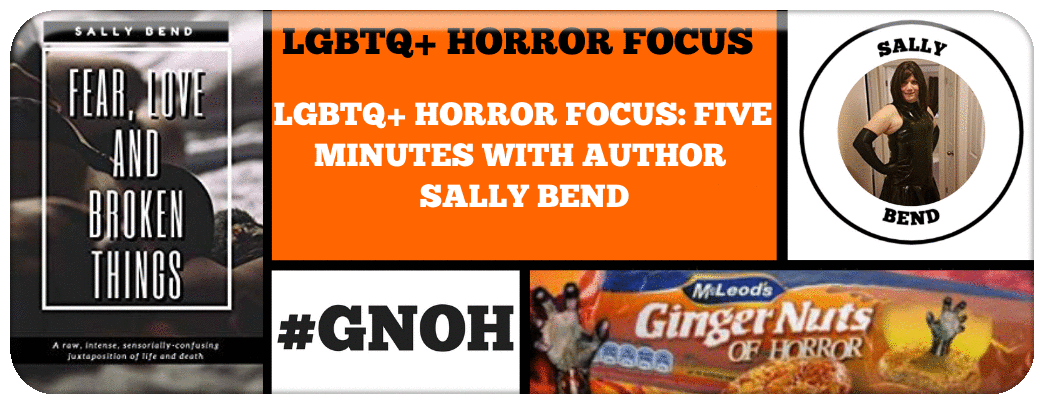
LGBTQ+ HORROR FOCUS: FIVE MINUTES WITH AUTHOR SALLY BEND

9/5/2019
Picture
Could you tell the readers a little bit about yourself?

My name is Sally Bend, and I am a genderfluid author and reviewer of erotica, romance, and genre fiction. I love dragons and unicorns, ancient treasures and lost civilizations, monsters and tentacles, and dominant women and pretty boys.

Why horror?  What is appeal of the genre to you as both a fan and as a writer?

Well, there are two parts to that answer. The first is that I cut my teeth on the horror genre, having begged my mother to buy me a copy of Stephen King’s Pet Sematary from the paperback rack at the corner store.
 
The second half of that answer has to do with spending much of my life in hiding, burying my identity. I was so afraid of exposure that I practiced holding my emotions inside, lest they betray me, and I am sad to say I got rather good at it. Unlearning those habits has not been easy, but writing allows me the freedom to express myself, and nowhere are our passions and our emotions stronger – or more honest - than in erotic horror.

As LBGTQ+ fan and writer of horror, how did you when you first became immersed in the genre and found that representation that you could identify was few and far between?

Having grown up in the eighties, representation was there, but it was not positive. We were victims, targets of humor, sources of titillation, and sometimes even deranged killers. I remember watching Sleepaway Camp for the first time, feeling angry and shocked at the big twist – and sorry for Angela – while all my friends were hooting and hollering and making gagging noises.

How did you discover authors that wrote about characters that you could relate to?

It all comes down to one person – Clive Barker. It started with the BDSM themes of Hellraiser, continued with the outsider themes of Nightbreed, and reached its culmination (for me) in his masterpiece, Imajica. That was the book that opened my mind, not just to the magic of literature, but to the power of stories to capture, reflect, and celebrate the full spectrum of identities and sexualities, and to do so in a positive way.

Other than the horror genre, what else has been a major influence on your writing?

The other major influence for me has been erotica, starting with the fetish-themed science fiction and fantasy novels published by Nexus in the late 90s. Here were mass-market paperbacks that I could easily pick up at the bookstore in the mall, with characters I could identify with, relate to, and look to for validation.
 
The term horror, especially when applied to fiction always carries such heavy connotations.  What’s your feeling on the term “horror” and what do you think we can do to break past these assumptions?

To be honest, I have never thought of the term “Horror” having any negative connotations, especially today. Twenty years ago, sure, it could have been dismissed as trashy entertainment, without literary value, but I think readers and critics alike are far more receptive to what it does well – and that is pick up on our fears, force us to confront our insecurities, and shock us into some sort of awareness. What I would love to see is publishers and bookstores pull back from the “Thriller” genre they invented to make softer, less disgusting horror more socially palatable. Put those stories back onto the “Horror” shelves and allow readers to explore the diversity of the genre from there.

A lot of good horror movements have arisen as a direct result of the socio/political climate, considering the current state of the world where do you see horror going in the next few years?

Yikes, I am not even sure I want to speculate on that, but I suspect we will see more stories about the monsters within, about the breakdown of polite society, about bad people doing bad things, and about how seductive evil ideas can be. 

What are the books and films that helped to define you as an author?

Clive Barker’s body of work is, of course, huge – Hellraiser, Nightbreed, Imajica, Weaveworld, Sacrament, and so on. John Everson, Sèphera Girón, and Poppy Z. Brite all had an impact on me as well. Outside the genre, the fantasies of Mercedes Lackey, Lynn Flewelling, and Jacqueline Carey were all pivotal, with approaches to characterization and themes that I can only hope to someday emulate.

In recent years there has been a slow but gradual diversification within the genre, which new LBGTQ+ writers do you think we should be paying attention to? 

Long Black Veil by Jennifer Finney Boylan is one of those books I eagerly thrust into people’s hands, a “Horror” novel from the “Thriller” shelf that is just amazing. Bryce Calderwood is an author I cannot recommend highly enough, an author who melds fetish with fear like no other. His take on vampires, especially, will make you forget anything romantic or sparkly.
 
I recently had the chance to give the Dark Rainbow: Queer Erotic Horror collection a read as well, which put Julianne Snow, Lindsay King-Miller, and Lisi Damette on my list of authors to who we should be paying attention.

How would you describe your writing style?

My writing style tends to follow one of two avenues. The first leans more towards imaginative horror, with supernatural themes and a pulp sensibility. The second falls more under the umbrella of dark, realistic, visceral horror, drawing on real-life fears and familiar situations.

Are there any reviews of your work, positive or negative that have stayed with you?

Like many authors, I live and die by reviews. They are evidence that somebody read your work, and that it made enough of an impact for them to take a moment to write about it. The 5-star reviews are flattering, but it is the unexpected reviews from brand new readers that I find most encouraging.

What aspects of writing to do you find the most difficult?

I tend to procrastinate, driven by a fear of the blank page, so getting started is what I find most difficult. Once I get past the excuses, the stories flow, but sometimes that blank page is a hurdle. Beyond that, I struggle with titles, and I hate blurbs.

Are there any subjects that you would never write about?

Horror is an exciting genre because it offers us the opportunity to explore subjects we abhor and, quite literally, exorcise our demons. I would never glamorize homophobia, and I have no great love for organized religion, but a homophobic preacher could make for a fantastic villain.
 
Writing, is not a static process, how have you developed as a writer over the years?

I think the biggest evolution for me has been opening myself to feedback. It is one thing to publish a story and open yourself to the feedback of strangers, but it is another thing entirely to bare your soul for friends and colleagues. Learning to work with editors and beta readers has allowed me to develop my work in ways I could have never done on my own.

What is the best piece of advice you ever received with regards to your writing?

A good friend once advised me to write what I love, and love what I write. She reminded me that my passion will come through in the writing, so there is no need to exhaust myself trying to force the story into a niche. If it’s not natural or enjoyable for me, readers will pick up on that and they will feel the same dissatisfaction.

Getting your work noticed is one of the hardest things for a writer to achieve, how have you attempted to break through the barriers that are so often in place against LBGTQ+ writers?

Well, I started as a reviewer and an editor before getting serious about writing, so I already had a strong network of connections across publishers, authors, and social media. Getting mainstream exposure is still difficult, but networking within genre groups on places like Facebook and Goodreads has been huge.

Many CIS white male authors use LGBTQ+ characters in their works, what’s the mistake that they make when trying to portray these characters?

The biggest mistake is using LGBTQ+ characters as a costume or a cliché. To write them well, they need to have personality, emotion, and depth. There is absolutely nothing wrong with writing outside your own experience, whether it be gender, sexuality, race, social class, religion, species, or mortality. If we only wrote who and what we are, our stories would be familiar and boring. I think authors who make a genuine effort to relate a different experience are to be celebrated for their efforts.

Moving on to getting your work read by unwashed masses, what do you think is the biggest misconception about LGBTQ+ fiction?

I think the biggest misconception is that it is all about sex. You can write an immensely powerful story about a lesbian couple or a transgender protagonist and never even kiss, much less hold hands.

There are as number of presses dedicated to LGBTQ+ fiction, do you view these as a good thing, or do you think they help to perpetuate the ongoing exclusion from mainstream presses?

Not only are they a good thing, I think they are hugely important to ensuring that LGBTQ+ authors continue to have a voice. They present authors with a defined market where they can feel accepted, encouraging them to explore their voices without fear. There is often a tendency to hold back, to censor yourself when submitting to a mainstream press. A dedicated press takes away that fear, it allows us to take chances and stretch our boundaries.
 
I think they have immense value for readers too. For mainstream readers, it is often an invisible line. It is a book cover, a title, and a blurb that catches their attention. They choose a book because it interests them or excites them – they could care less who the publisher is. For LGBTQ+ readers, though, dedicated presses make it easier for them to find stories with which they can identify.

And here is the million dollar question do you agree with movements like this and things such as Women in Horror Month?  If so how would you like to see sites such as Ginger Nuts of Horror tackle diversity? 

Oh, absolutely. I think any opportunity to showcase a different aspect of the community is fantastic. It creates awareness of new books and new voices and encourages readers to try something new. Women in Horror month and LGBTQ+ Horror month are both fantastic initiatives, but I think Ginger Nuts could accomplish just as much with a few dedicated weeks, or maybe even a branded day of the week.
 
Not only would it avoid the risk of potentially overwhelming readers, but it would send a wonderful message by incorporating ongoing diversity.

The most common phrase you hear when people object to active movements to encourage all forms of diversity is “I don’t care about the sexuality, gender, color etc etc of the writer I only care about good stories” what would you like to say to these people?

My mother has a habit of qualifying her prejudices. She will bring up the fact that somebody is gay, Asian, Muslim, or whatever - facts that are completely irrelevant to the fact that they were buying fresh Italian bread - and then add “not that there’s anything wrong with that.”
 
The truth of the matter is, if she really thought there was nothing wrong with that, and readers really did not care about race, gender, or sexuality, then they would not have brought it up.

To many writers, the characters they write become like children, who is your favorite child, and who is your least favorite to write for and why?

Oh, that is an easy one. Futanari Moans is my favorite, a character who straddles my public and private personas, embodying interests from both real-life and fantasy. She is so much fun to write about, over-the-top adventurous with pulp sensibilities.  As for least favorite, that would most definitely have to be Mrs. Kay, the transphobic, holier-than-thou, zealot of a mother from my current work-in-progress, a full-length supernatural horror novel.

What piece of your own work are you most proud of?

I would have to say Fear, Love and Broken Things, my darkly erotic horror story from last year. It is some of my finest writing, with so many passages and images that still give me chills.

For those who haven’t read any of your books, which of your books do you think best represents your work and why?

It is so hard to pick a favorite child, but I would have to go with my twinned Alpha Transformation/Alpha Surrender stories. Imaginative post-apocalyptic horror, with solid world-building, complex characters, and supernatural themes. I am as proud of the characters as I am the writing, and I loved how my own “what if?” scenario played out.

Do you have a favorite line or passage from your work, and would you like to share it with us?
 
There is a passage in Fear, Love and Broken Things that I love, and which had my beta reader comment “Pardon my French, but holy f*ck that’s incredible.”
 
In her mind, the spider was straddling her moist, dark hole, its eight legs tickling her with their teasing caress. She imagined it spinning a new hymen for her, a sparkling white web to catch a lover unawares, leaving them with a silken condom.
 
With indisputable proof of her rebirth.
 
Can you tell us about your last book, and can you tell us about what you are working on next?

Fear, Love and Broken Things was my last book, and I think is some of my darkest, most polished, most mature writing. I spent a long time working on it, and I feel like the hours paid off. As for what’s next, I am working through what I hope will be my final rewrite of my massive supernatural horror novel, an atheist’s take on the afterlife, which tackles themes of love, faith, gender, and sexuality.

What was the last great book you read, and what was the last book that disappointed you?

I am midway through The Mirror Empire by Kameron Hurley, and it has absolutely blown me away. The last to disappoint me was a memoir about sex work that was far too focused on spirituality, and which was far too thin, without a comfortable flow to the storytelling.

What's the one question you wish you would get asked but never do?  And what would be the answer?
 
I am rather shy and introverted, a very private person offline, so every question is a source of anxiety. Having said that, I am an open book, just not one that invites questions. 😊


ABOUT SALLY BEND 

Picture
Sally Bend is an author, editor, columnist, and reviewer. Although shy and polite (she is, after all, Canadian), she loves to boldly and boisterously express herself through stories that bend the binaries of gender and sexuality.
Her fiction incorporates a wide range of styles, from dark horror to quirky erotica, with her favorite themes being the acceptance of gender identity and the exploration of submissive sexuality.
When she’s not reading, writing, or wandering the forest, she can be found online at http://sallybend.com.


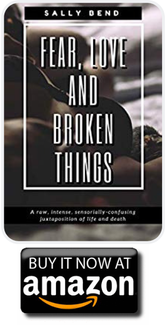
Fear, Love and Broken Things

Picture
A battered woman, already pushed to the breaking point, discovers both her self and her sexuality in a seedy motel - where her indoctrinated fear of filth takes a heavy toll on her sanity, but ultimately proves to be the path to freedom . . . and perhaps even love. 

"Fear, Love and Broken Things" is 10,000 words of erotic horror that explores fear, love, and the redemption of broken things.


the-best-website-for-horror-news-horror-reviews-horror-interviews-and-horror-promotion-uk-horror-review-website
Picture

FIVE MINUTES WITH MICHAELBRENT COLLINGS

3/5/2019
Picture
Michaelbrent Collings is an internationally-bestselling author, produced screenwriter, and multiple Bram Stoker Award finalist. Best known for horror, he has also written bestsellers in fantasy, science fiction, mystery, thriller, suspense, humor, and even (under a pen name) Western Romance. Find out more about him at his website, WrittenInsomnia.com.
Links:
Website: http://WrittenInsomnia.com
Facebook fanpage: http://facebook.com/MichaelbrentCollings
Twitter: http://twitter.com/mbcollings
Amazon author page: https://www.amazon.com/Michaelbrent-Collings/e/B003VSI88O
Mailing list (free stuff and deals!): http://writteninsomnia.com/michaelbrents-minions/


Could you tell the readers a little bit about yourself?

Sure. Devastatingly attractive, sweater-vest. My friends call me “the Sausage King of Chicago.”

Wait. That’s Ferris Bueller I’m thinking about.

I’m not that cool, and I definitely can’t rock a sweater-vest.

I’m just a writer-type, which means I am essentially Gollum before he was forced out of the cave by losing the One Ring: kinda unattractive, not really used to bright lights or people. But instead of having a ring I fondle, I sit at a keyboard typing up weirdness.

A good life.

What do you like to do when you're not writing?

I love to watch movies, read, do martial arts, and (most of all) hang with the family. We play board games or video games together, or do the aforementioned activities. Occasionally we pillage a small village while wearing our Viking hats, just to switch things up.

Other than the  horror genre, what else has been a major influence on your writing?

Soooo many things. I love to read tons of different books in different genres, and the fact that I also write (and love to read) screenplays has influenced the way I write. I enjoy a sense of immediacy, and my writing is often mentioned as being “cinematic,” which I’ll take as a compliment.

I also enjoy history, so there’s a lot of callbacks to important people or moments in literature and history in my work – Easter eggs that I don’t really expect anyone to catch, but which are fun for me!

The term horror, especially when applied to fiction always carries such heavy connotations.  What’s your feeling on the term “horror” and what do you think we can do to break past these assumptions?

So, pinned to the top of my Twitter page @mbcollings (at least at the time of this writing) is the following:

Talking to someone last night, who asked why I write horror.

My response: because horror is the genre of hope.

I’ve found that most people who say they “don’t like horror” really don’t have enough experience with it to know whether they like it or not. What they don’t like in reality is movie posters, for which I can’t blame them given that a lot of them are intended to shock or provide a grim image. It’s an unnuanced, shotgun blast to the psyche. So to those folks who don’t like horror, I talk to them about how the point of the best horror isn’t to wallow in darkness, it’s to show that there is a light beyond that darkness.

I’m a religious guy, so I’ll often talk about the scariest horror story ever written, about this Everyman who gets betrayed by his friends, tossed into prison for crimes he didn’t commit, where he’s tortured Hostel-style, then gets nailed to a cross.

But the point of that story isn’t the torture or the pain or the death… it’s the after. The victory, and the redemption. That’s what horror does best, and when doing it right, can do it better than any other genre.

A lot of good horror movements have arisen as a direct result of the socio/political climate, considering the current state of the world where do you see horror going in the next few years?

People are talking about how horror is having a “resurgence” or a “renaissance” or a sudden rise in popularity. That’s bunk – horror’s always been intensely popular. What we do have now are aggregators like Netflix and the other streamers who have drilled into the demographics to quantify that horror is, in fact, popular. So as more people realize it matters to a lot of people, I think we’re going to see more and more horror pictures vying for Academy Awards, more an more horror novels being taken seriously as “literature.” That’s a good thing. Horror’s been treated like the (I’m sorry, GNoH, I have to say it!) red-headed stepchild for years. But it’s high time for the world to realize that the red-headed stepchild isn’t the thing to be ashamed of – it’s been the quiet bad-ass for decades, and is finally getting something approximating its due.

What are the books and films that helped to define you as an author?

Toooooo many to count.

What new and upcoming authors do you think we should take notice off?

That’s a tough one. I can name a few authors who haven’t gotten the recognition they deserve: DJ Butler, Mercedes Yardley, The Behrg. I also think that Stephen King fellow is going to be huge at some point.

How would you describe your writing style?

I love twisty plots and surprises that yank the rug continually out from under your feet. Right now I’m getting ready to release a novel called Terminal, and when a reviewer named Michael Patrick Hicks (no slouch of a writer himself) said the ending caught him by surprise, it was like, *fistpump.*

Are there any reviews of your work, positive or negative that have stayed with you?

See above. Also, probably my favorite, was a three-star review that literally had a heading of “Lots of pages,” and the review in total said, “It was okay.” I laughed my butt off reading that.

What aspects of writing to do you find the most difficult?

Anything that involves me crawling out of my Gollum-cave.

Seriously, it’s great to interact with people and I enjoy marketing… but it’s a LOT of work, and very wearing.

Is there one subject you would never write about as an author?

Tax law.

But now that I’ve said that, I’m getting an idea about a tax accountant who murders people by beating them to death with an old-fashioned actuarial table, while whispering, “You tax me, sir, you… tax… ME.”

So no, I guess not.

Words exist to talk about important, wonderful, dark, beautiful, evil, abhorrent, miraculous, scary, loving things – and everything else, besides.

There are things I would address with more care, and I definitely don’t ascribe to the “oh, I’m an artist, and I go where my muse takes me, regardless of the outcome” school of thought. I think authors have a responsibility to help the world, not harm it in the name of their “art.” So I definitely think about every story and whether it’s going to make the world a bit better or a bit worse. But that doesn’t have much to do with subject matter, and has a lot to do with the themes and lessons that every author puts into their work as a reflection of themselves.

How important are names to you in your books? Do you choose the names based on liking the way it sounds or the meaning?

Names are so hard! I will very often use meanings of names to inform the characters, and in one of my books, pretty much every twist and surprise is foreshadowed explicitly by the names… if one cares to go and look up their etymologies. That kind of thing is tremendously fun for me.

Writing, is not a static process, how have you developed as a writer over the years?

I think I’ve gotten better at feeling how a good story should lay out. It’s not just events, it’s rhythm and pacing, and I think I’ve gotten better at that kind of thing.

What tools do you feel are must-haves for writers?

Something to write on. Something to read. A willingness to work. And a very thick skin.

What is the best piece of advice you ever received with regards to your writing?

My father once told me, “Imagine every word you write costs you a thousand dollars.” Really makes you think of your choices, and whether you really need a word or sentence or chapter.

To many writers, the characters they write become like children, who is your favourite child, and who is your least  favourite to write for and why?

None are favorites, and I don’t view any as my children. I think that’s a potential deathtrap for anyone who wants to make a living at this. I view my work as hamburgers – I’m making them to please people, to give them some energy to face the day, to do them a bit of good for a cost that adds value to both of our lives. I’m willing to change, to adjust. That’s impossible if you view your work on the same level as you view your kids or the things in life you love. By definition, those things are to be protected – even at the cost of others. I view myself as an other-centered author. I enjoy the work, I love what I do. But I’m here for the audience, not the other way around. And I think that’s part of why I have an audience, because fans know that I’m doing my best to give them something that will enrich their lives.

What piece of your own work are you most proud of?

Whichever one I just finished. Seriously.

And are there any that you would like to forget about?

Nah. They’re all part of the process. Though I do feel about a few of them sort of the same way a lot of us feel about high school yearbook photos. “Oh, geez, no. I really… that was me, yes, but… oh, geez… I’m not like that now.”

For those who haven’t read any of your books, which of your  books do you think best represents your work and why?

Given the range of stuff I write, that’s a tough one. Whenever someone asks what to read of mine, I answer, “What’s your favorite genre? Subgenre? Subsubgenre?” At that point, I can probably point to one of my books that fits in that world, and the reader (hopefully) walks away with a shiny new book in hand.

Do you have a favorite line or passage from your work, and would you like to share it with us?

“This is a true fairie tale.  And like all true fairie tales, it is bloody, violent… and there is no guarantee that good will win in the end.” (Peter & Wendy: A Tale of the Lost)

Can you tell us about your last book, and can you tell us about what you are working on next?

Just finished Terminal, which bows on April 24, 2019. It’s about a dozen or so people in a bus terminal in the middle of the night. A fog rolls in, and they’re informed by an entity in the mist that they have a few hours to make a choice: they have to vote on one person to leave. That person will survive, the rest will die. And the vote has to be unanimous – which is bad enough, but things go even darker when the dozen folks realize the best way to ensure a unanimous vote for themselves is to kill everyone else.

As for what’s up next: I’ve got a Western Romance called Only the Brave coming out a month or so after Terminal, then a YA fantasy called The Dying Immortals, then probably a horror called Scavenger Hunt.

If you could erase one horror cliché what would be your choice?

None. Clichés are more fun to twist and subvert than they are to ignore or erase.

What was the last great book you read, and what was the last book that disappointed you?

Last great book: probably House of Assassins, by Larry Correia. Last book that disappointed me: the Bill Hodges trilogy, by Stephen King. Compulsively readable (he’s just great as a writer, and hard to put down no matter what), but I hated how he jerked the story from mystery to paranormal without setting up the world-shifts, and the structure was so wonky it was disconcerting.

What’s the one question you wish you would get asked but never do?  And what would be the answer?
​

“How did you get so handsome?”

And I would toss back my luxurious curls of hair (impossible with a bald head), bat my eyes, and say, “Why… BUY MY BOOKS AND GIVE ME MONEY!”

And they would. Because Handsome.

Terminal by Michaelbrent Collings  

Picture
"[Collings] brings the reader close in and doesn't want them to leave... I'd give this an A." - Horror Drive-In
All passengers, please prepare for departure...

An employee, a cop, and six passengers; a prisoner, a stowaway, and a madman.

These are the people waiting at the Lawton bus terminal. Mostly late-night travelers who want nothing more than to get to their destinations, and employees who want nothing more than to get through the graveyard shift.

"The final reveal of Terminal is masterclass-level stuff..." - High Fever Books
But when a strange, otherworldly fog rolls in, the night changes to nightmare. Because something hides in the fog. Something powerful. Something strange. Something... inhuman.

5 stars! "[A] nightmarish tale that was both captivating and frightening and also a novel that I would highly recommend!" - The Genre Minx
Soon, those in the terminal have been cut off from the rest of the world. No phones, no computers. Just ten strangers in the terminal... and The Other.

The Other is the force in the mist. The Other is the thing that has captured them. And The Other wants to play a game. 

"Terminal is a fun read that keeps you guessing..." - Rae's Reading Lounge
The rules are simple:

1) The people in the terminal must choose a single person from among them. That person will live. The rest will die.
2) Anyone who attempts to leave the terminal before the final vote will die.
3) The final vote... must be unanimous.

"Another win for [Collings]... Excellent!" - The Raven Podcast
A nightmare. And getting worse, because the best way to make a vote unanimous... is to kill the other voters.

Welcome to the Terminal.

Picture
​STRANGEST THINGS- PUBLISHING OUTSIDE THE MAINSTREAM BY DAN COXON
    Picture
    Picture

    RSS Feed

    Archives

    May 2023
    April 2023
    March 2023
    February 2023
    January 2023
    December 2022
    November 2022
    October 2022
    September 2022
    August 2022
    July 2022
    June 2022
    May 2022
    April 2022
    March 2022
    February 2022
    January 2022
    December 2021
    November 2021
    October 2021
    September 2021
    August 2021
    July 2021
    June 2021
    May 2021
    April 2021
    March 2021
    February 2021
    January 2021
    December 2020
    November 2020
    October 2020
    September 2020
    August 2020
    July 2020
    June 2020
    May 2020
    April 2020
    March 2020
    February 2020
    January 2020
    December 2019
    November 2019
    October 2019
    September 2019
    August 2019
    July 2019
    June 2019
    May 2019
    April 2019
    March 2019
    February 2019
    January 2019
    December 2018
    November 2018
    October 2018
    September 2018
    August 2018
    July 2018
    June 2018
    May 2018
    April 2018
    March 2018
    February 2018
    January 2018
    December 2017
    November 2017
    October 2017
    September 2017
    June 2017
    April 2017
    March 2017
    February 2017
    January 2017
    December 2016
    November 2016
    October 2016
    September 2016
    August 2016
    June 2016
    May 2016
    April 2016
    March 2016
    February 2016
    January 2016
    December 2015
    November 2015
    September 2015
    August 2015
    July 2015
    June 2015
    May 2015
    April 2015
    March 2015
    February 2015
    January 2015
    December 2014
    November 2014
    October 2014
    September 2014
    August 2014
    July 2014
    June 2014
    May 2014
    April 2014
    March 2014
    February 2014
    January 2014
    December 2013
    November 2013
    October 2013
    September 2013
    August 2013
    July 2013
    June 2013
    May 2013
    April 2013
    March 2013
    June 2012

https://l.facebook.com/l.php?u=https%3A%2F%2Fmybook.to%2Fdarkandlonelywater%3Ffbclid%3DIwAR1f9y1sr9kcIJyMhYqcFxqB6Cli4rZgfK51zja2Jaj6t62LFlKq-KzWKM8&h=AT0xU_MRoj0eOPAHuX5qasqYqb7vOj4TCfqarfJ7LCaFMS2AhU5E4FVfbtBAIg_dd5L96daFa00eim8KbVHfZe9KXoh-Y7wUeoWNYAEyzzSQ7gY32KxxcOkQdfU2xtPirmNbE33ocPAvPSJJcKcTrQ7j-hg
Picture