

HUNTING FOR SKINNER: WRITER PAUL HART WILDEN FLESHES OUT THE SEARCH FOR A LOST HORROR MOVIE
31/10/2019
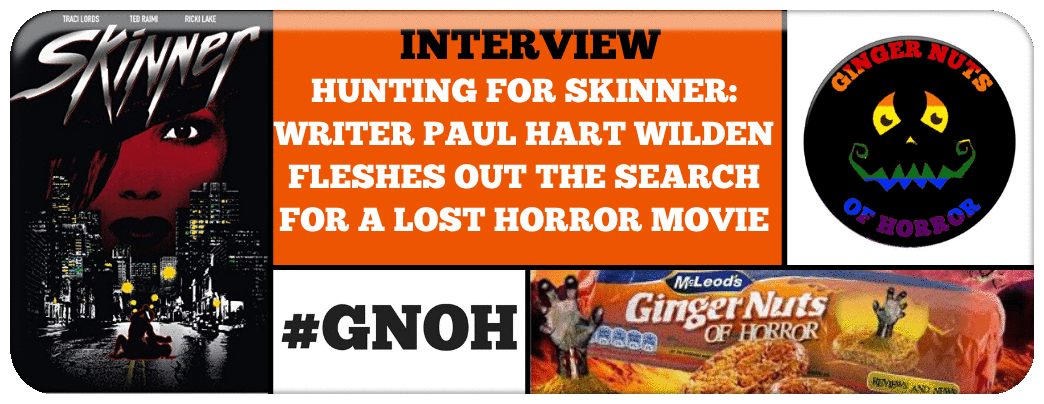 Today we welcome writer Paul Hart Wilden to the site to talk about his quest to the lost horror movie Skinner. At one time thought a lost film, Skinner has been resurrected from obscurity in a mind-blowing 4K restoration so cult cinema fans can now witness this 90s horror gem in all its sinful, sleazy and violent glory. Dennis Skinner seems like a normal enough guy but he has a very abnormal hobby. At night, he creeps through the back streets looking for potential victims, and when he finds one, carefully removes their skin with an elaborate collection of knives. Heidi, one of Dennis' victims, is on his trail, waiting for a chance to get her revenge, but in the meantime Dennis has developed a crush on Kerry and wants to find a way to show her he really cares. Starring: Ted Raimi (Spider-Man), Traci Lords (Blade), David Warshofsky (There Will Be Blood), Richard Schiff (Se7en) and Rikki Lake (Hairspray). Directed by Ivan Nagy (The Hitchhiker) and written by Paul Hart Wilden (Alone). This marks Skinner’s UK debut on any format. How did you first get involved with the project? I’d written a movie called Living Doll. I’d managed to get the script into the hands of infamous film producer Dick Randall who was living and working in London. He was quite taken with the script and within half an hour of meeting him had agreed to buy it and make it into a movie. Living Doll had been a ‘study of the problems of unrequited love in teenage youth’ as I used to explain it to people or, as other people had said, it’s a necrophilia movie. Which meant that for movie #2 I needed a new angle to pursue. We’d been through the serial killer boom of the 1980s, the world was changing as was the world of the horror movie. I’d read about Ed Gein, H. H. Holmes, real life cannibals and all sorts… so I had my idea, I wrote the script. Now, like with the previous stack of papers, all I needed to do was go out, meet someone, have them buy it and another notch on the filmmaking bedpost would be mine. Can you tell us a little about how Skinner was first released? Did it go into cinemas or onto home video? Skinner was made back in the days when there was only one medium for film - 35mm. So, the hope (at least in my head) had been that at some point the movie would be finished and released upon the world via various movie theatres. But the path out into the world wasn’t smooth. For various reasons the movie got mired in the ‘straight-to-video’ world of the 90s a couple years after it was produced, so any real attention the movie had was cold by the time it hit the streets. This was Ted Raimi’s first or second movie as a leading man and even his brother’s Evil Dead wasn’t enough to generate the kind of interest you’d probably get today in similar circumstances. Traci Lords move to ‘respectable’ acting was still very much direct-to-video faire that wasn’t mainstream. Even Ricki Lake’s daytime TV show and the John Waters connection weren’t enough to bring in either an audience or notoriety – especially as even to this day I think she pretty much has refused to acknowledge or speak about the movie. Richard Schiff was just beginning his career. Why it never really caught the eye of Fangoria (the one real outlet for horror movie publicity in those days) is still a mystery to this day. It really is one of life’s great mysteries as to why it never seemed to gain any kind of traction at all. To add to the weight of disadvantage, by the time the various parties involved managed to get the movie out to the public, a movie called The Silence of the Lambs had been released to worldwide acclaim, so Skinner was seen by most people as just a shameless attempt to ride someone else’s coat tails. But come out it did… on good old VHS tapes. The original US distributor seemed to consider the 10,000 or so units they shipped a decent amount for a movie ‘of this type’. It then made its way to Laserdisc and then onto DVD. The people then responsible for putting the movie out into the world on the new-fangled DVD format either didn’t care or didn’t seem to notice that the version they put out was not only heavily censored but also of such atrocious technical quality that it rendered the movie almost unwatchable. Then it appeared on a weird two movie DVD with another underperforming project called The Surgeon. There was the initial US release, then it appeared in a French language version, South American iterations in both Spanish and Portuguese, a version from somewhere in the Czech Republic, a Japanese release, a version in Hong Kong under the title of Skin Person Devil (still my favourite) and a seemingly bootlegged PAL version in Australia that I still can’t find the origin of. At what point did Skinner become a 'lost film'? I guess in some ways it became a ‘lost film’ pretty much from the moment I signed a contract and turned over the rights for my script to be made into a movie. Not wishing to sound trite or flippant, whatever confluence of circumstances that lead to the creation of the film and its subsequent journey out into the world, everything just came together in a perfect storm of events that meant it disappeared from the zeitgeist. I realised pretty quickly that it wasn’t going to be the ‘next big step’ on my career path and was more of a big fucking stumble… so the fact that barely anyone saw it or new about it was in some ways a bit of a relief as I could retreat with my ego a little battered and hope to regroup and try again (hopefully) without too much residual damage. But time moves on and as we get older things take on a different aspect as we look back at them. I watched a documentary series on TCM (Turner Classic Movies) about the restoration and preservation of movies and how many of the classics no longer existed in any physical form. I read a newspaper article about some scenes from King Kong turning up in a garbage dumpster in New Zealand... and one of my favourite movies The Wicker Man is legendary in forever being incomplete because scenes were cut out and the negatives dumped in a freeway construction site… and then it suddenly struck me... what if Skinner just disappeared off the face of the Earth. Would anyone notice? Would anyone care? And at that point I had to re-evaluate my own relationship to the movie. What I had turned my back on was a part of my growth as a writer, it was a part of my personal history in the movie industry and whether the end result had turned out to be a pile of garbage or a misunderstood classic or just a noble experiment that hadn’t come out as intended… it had begun from an honest place. I had wanted to write a horror movie that would be part of what we all know and love as part of the history of horror and the end result deserved at least someone caring enough about it to make sure it didn’t just disappear from existence. Suppose that shitty DVD transfer or the unwatched Laserdisc in my closet were the only remaining evidence that this film ever existed and the only (apart from a VHS copy that the dog used as a chew toy) physical copies of the movie. So, all of this made me realize... there had to be a 35mm negative of this movie and at least one 35mm print somewhere. The only real question was… where? When was the film re-discovered and how? I’d maintained a vague social media/email type friendship with the film’s producer and his assistant from the time and so figured they’d be the best place to start with any inquiries .The producer, Brad Wyman, had nothing to add regarding the current ownership or whereabouts of the movie other than the company name that appeared on the IMDB listing. I contacted Image Entertainment who had produced the Laserdisc version of Skinner but their only response was that they didn’t keep track of where the rights reverted to once they lapsed. Cinequanon were the original sales company but they were no longer in existence and the owner, Daniel Sales, had died some years ago - but I was able to track down one of the former associates who advised me to contact a certain ‘FD’ who was responsible for handling the affairs of Daniel Sales and so might be able to shed some light on where ‘things’ might have gone after the passing of the owner and the company. I contacted him and although he initially said he did not know of the whereabouts of any elements or ownership – subsequent pestering on my part got him to admit there was a storage unit that might have something inside and that the next time he visited it, he would report back about what he might find. Subsequent ‘pestering’ only brought up that he was ‘still looking into the matter’. I then got a response from JK (one of the editing assistants). He suggested I contact a company called Crest Digital where he remembered dropping off a work print at some time in the past. I contacted Crest in Hollywood and would you believe it - they had a copy of the movie - a box containing 10 reels of… something. When I opened the box, inside were the ten white boxes, each containing a reel of 35mm film. But it was a workprint. So after all these years, all I’d come up with was a picture but no sound? Yes, it seemed so. But was it even the complete picture? And did the box of work print reels contain the fully intact version of the movie or a censored and incomplete version? In 2012 I got a Facebook message from Dave Gregory at Severin Films. ‘This is DG, can you give me a call about Skinner. I was out drinking with JK and he told me you were looking for it.’ It turned out that David had been looking for the elements for 4 or 5 years, having been contracted by a company who owned the rights to the movie to put together some BTS stuff. DG gave me the name of a company and a person - and a phone number. I contacted the company and it turned out they owned the rights to Skinner. So... suddenly my 35mm workprint looked like a highly valuable asset which in conjunction with the sound from an existing video master... might just about be the makings of a newly minted version of Skinner. But when the workprints were examined we heard that, ‘it’s full of grease pencil marks and debris and tape splices. I could have it sonically cleaned and then do a test transfer to better gauge the quality. Otherwise, the colour and condition are very good but it’s an untimed element so grading will take twice as long. I’m not sure if it’s the uncut version either but once I find time to get to the other reels I’ll know more. In the meanwhile, never give up the search for the negative!" So once again, the curse of ‘Skinner’ had struck… The 35mm negative had to be out there somewhere, even a 35mm print of the film would be something, it was just a matter of tracking it down before it vanished forever. Thanks to Facebook page I met a guy called David Austin. It turned out he not only knew the movie but was actually a fan of it, probably not too much of a stretch to say a very big fan. David had been down this road before and had actually been involved in finding elements of movies that had supposedly been lost. So we’d talk about where Skinner might be or how to go find it and I’d talk him through all the efforts I’d made over the years and something kept sticking in the back of my head every time we spoke. I’ve no idea why, but I just couldn’t shake the notion that a certain person with the initials FD (remember him from earlier) had more to tell than they would let on. I had no proof. I hadn’t spoken to the man in over a decade and when I had, he’d promised me that if he ever remembered or came across anything, he’d let me know… surely that decade of silence only meant one thing. I couldn’t shake the idea that he’s somehow the key to all this, but he’d been as much of a dead end as every other avenue I’d tried. David said: ‘Just let me speak to him. I’ve done this before. If he has something, I know what it’ll take to make him give it up.’ Like I said, this had been more than ten years of fruitless effort, I wasn’t even sure if I could or should ever find what I was looking for… but why not take the easy option and let someone else do some lifting at least to see. I dug out the contact phone number I had for FD, not knowing it if even worked or to be honest if he was even still alive, and handed it off to David. David called back. ‘I spoke to him. He’s got it and we’ll have it next week.; Me: ‘Excuse me?’ David: ‘It’s done. He’ll ship it to where you want it to go.’ Me: ‘Are you serious? What did you do? What did you say?’ David: ‘I’ve dealt with people like this before. I know what he wanted.’ Me: ‘And what might that be?’ David: ‘Money.’ And that ladies and gentlemen is how we’re now sitting here with a beautiful 4k restoration of Skinner. That’s honestly all it took, one of the earliest connections I tried turned out to be the key all along. To this day, I have no idea what was said in that phone call or how much David actually handed over – but whatever it was and however much it took, it worked. I never even got to see what was in the discovery. It was shipped directly from wherever FD had it to the company in Illinois who ‘owned’ the distribution rights. We found Skinner, managed to dig up the original camera negative and got it into the hands of the people who needed it and they put together a beautiful 4k restoration of the movie that became available to one and all. It was a long journey, but the work is done; over 25 years since the movie was originally made and over 10 years since I first began efforts to try and track it down and bring it back from the dead. So now we’re here, I want to give my immense thanks to all the people I met in the course of this journey and who contributed to tracking it down and ensuring that what at one time looked like a lost cause turned out to be anything but. How do you feel now that fans can now see Dennis Skinner's horrendous crimes in this 4K restoration? Time and distance lend an entirely different perspective to all aspects of life – and so it is with my relationship with Skinner. All my disappointment and resentment at dreams dashed, ambition unfulfilled has gone away and I have a much more mature perspective on things. It was quite something to sit in a movie theatre in Hollywood, beside Ted Raimi, with a sold-out audience to watch the movie. The work that went into producing the 4K release is quite something. The movie looks great and more importantly it sounds great. That was the biggest revelation to me when watching it again for the first time in a quarter century… you can actually hear the music and get a whole new appreciation for the work that Keith Arem (Contagion) put into the movie which adds a great depth to the film and is something I wish we’d all been able to appreciate way back in the day. I’m grateful for the people I’ve met along the way as part of the rediscovery of the film, the friendships and connections that have been born out of the journey. So yeah, it’s all good. 101 presents Skinner on dual format Blu-ray and DVD now Amazon: https://amzn.to/363exlJ     Ahead of the International premiere of UNCANNY ANNIE at Arrow Video FrightFest Halloween 2019, director Paul Davis reflects on working for Blumhouse, bemoans attitudes to British genre film funding and reveals the movies that inspire him the most... 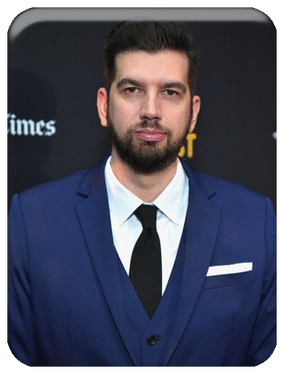 Welcome back to FrightFest. It’s been a while. Excited? Very excited. This is very much a homecoming for me having spent the best part of two-years now making movies in Los Angeles. What makes it all the more special is that after two shorts and a documentary, this marks the first time I’ve had a narrative feature film play at FrightFest, and on the 10th anniversary of my first FF appearance. So this one means a lot to me, as it was something I’ve longed to do ever since BEWARE THE MOON in 2009. Tell us how UNCANNY ANNIE came about? UNCANNY ANNIE is my second movie for Blumhouse as part of Hulu’s INTO THE DARK movie series. I had the opportunity to actually kick off INTO THE DARK last October with a feature adaptation of my short film THE BODY (which had its world premiere at FF in 2013). The concept was to release a movie a month, for twelve months, with each revolving around a holiday or particular day for the month of its released. With THE BODY taking place on Halloween, it literally was a right place/right time scenario in which my co-writer, Paul Fischer, and I had literally just written a spec first draft of a feature version, and within a week it was sold to Blumhouse. The feature starred Tom Bateman (Vanity Fair), Rebecca Rittenhouse (Once Upon a Time… in Hollywood), Aurora Perrineau (If They Could See Us) and Ray Santiago (Ash Vs Evil Dead). I’m still hoping it’ll drop in the UK at some point. I know Sony Worldwide own the rights outside of the US, so we’ll see what happens. Until then… the series did well enough to get a second year at Hulu and that’s when I got the call to return to Halloween and make UNCANNY ANNIE, which was my opportunity to do something completely different to THE BODY. Essentially I wanted to make a kids horror film with blood and swearing – inspired mostly by Joe Dante’s THE HOLE and Robert Rodriguez’s THE FACULTY. What were the particular challenges you faced? Oh man, where to start. First of all these are super low budget movies, but of course, with the Blumhouse brand comes huge expectation, so these are very ambitious films for very little time and money. With THE BODY being my first film, every day was a learning experience. I at least had a bit more money and a few more days on that one compared to UNCANNY ANNIE. When it came to Annie I was faced with a three week prep from the day I received the script (which was being re-written), a 16 day shoot, and under $1m to do a movie that ended up with over 200 VFX shots. Paul with the cast of UNCANNY ANNIE 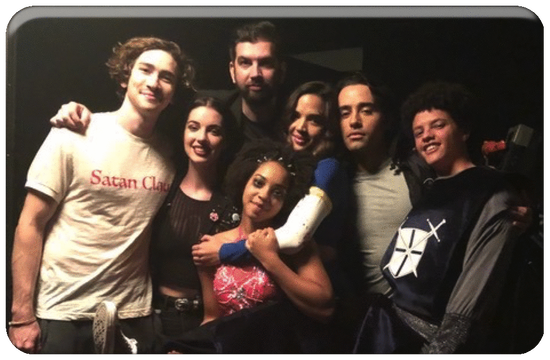 That said, coming into this film I knew that this is exactly how these movies are now made – and they’ve just completed 12 of them in a year. That is an insane and impressive achievement. So for me it was about coming in and making the best damn movie I could within those parameters. And that’s the same with all of the filmmakers on this. Sophia Takal, Nacho Vigalondo, Gigi Saul Guerrero, Daniel Stamm, Patrick Lussier… doesn’t matter if it’s your first movie, or your eighth. We all get the same shake. And what’s great about Blumhouse is that they give you the freedom to create your movie with 100% encouragement. All that aside, the biggest challenge for me was post production. My mother sadly passed away a week before my director’s cut was due, so I had to fly back to London and consult on the edit from London. It wasn’t easy, but we eventually got there, and I couldn’t be more proud of the film, and excited to share it with a FrightFest audience. Your breakthrough movie was the much praised documentary BEWARE THE MOON: REMEMBERING AN AMERICAN WEREWOLF IN LONDON (2009). John Landis introduced the film at FrightFest, Was that a defining moment in your career? It certainly was at the time, and without BEWARE THE MOON I wouldn’t have met Reece Shearsmith, which means HIM INDOORS wouldn’t have happened, which means no THE BODY either. So it was definitely the moment that kickstarted everything for me. I got to say thank you to John by giving him a cameo in my feature adaptation of THE BODY. You began your career as a writer / journalist, specialising in horror cinema. Would you say those roots have helped you grow as a filmmaker? Absolutely. Not only in the sense that your own research leads you to discover movies that had previously passed you by, but had I not been a staff writer at Horrorhound in 2006, I would never have written the 25th retrospective on AN AMERICAN WEREWOLF IN LONDON that lead to the documentary 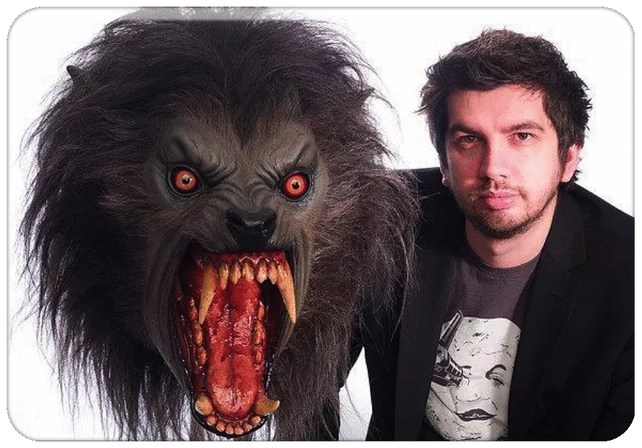 Paul in 2009 In terms of my current projects, they’re littered with Easter eggs to movies I love. It’s always fun when someone sends me a tweet that they’ve spotted something new. You’ve also written a couple of books: LOST IN THE SHADOWS - The Story of The Lost Boys and BEWARE THE MOON - The Story of An American Werewolf in London. Any literary plans for the future? I’m an ‘idle hands’ kind of guy. I can’t sit and not do anything. These were done purely out of frustration, waiting for movie projects to green light. They were a lot of fun, but I have no desire to do anymore. I also did some creature performing during that time. I played a sand monster in a Mark Gatiss written episode of DOCTOR WHO (which reunited me with Reece Shearsmith) and then spent the best part of a year on SOLO – A STAR WARS STORY as a wookiee. Do you have a favourite bunch of horror movies? You’re not allowed to list AMERICAN WEREWOLF IN LONDON! I do, but you know what, the older I get the more I feel my sensibilities getting tamer and tamer. I couldn’t watch a movie like MARTYRS again. Or LAST HOUSE ON THE LEFT for that matter. One thing that has never changed is my love for THE EXORCIST, which to this day I still believe is the greatest movie ever made. George Romero’s DAWN OF THE DEAD also remains a comfort movie of mine – as is De Palma’s CARRIE. I watch that movie whenever I’m about to start shooting a new movie. It’s my lucky rabbit’s foot. Q: How do you view the current state of the genre, particularly in Britain? Are there any current home-grown directors you admire? I think horror across the globe is thriving. The world is a mess right now, and from chaos comes creativity. It was the same in 1968 and it’s the same today. That said, I’d love to see more studios and production companies taking a chance on UK talent. I’ve made two movies studio movies for Blumhouse yet I’d still love to make a movie here at home. The horror genre in Britain continues to be treated as an embarrassment that is kept on the naughty step. There’s a lot of pissed off creative people out there, and Brexit has only pissed us off even more. The British Jordan Peele or Ari Aster could be lying in dormant, but we’ll never know that until attitudes in British film funding change. This is the home of Hammer Horror, for Christ sake! It’s time horror became a staple of the British film industry once again. The talent is there… USE US!!!! As for home grown directors who I enjoy and find inspiring… Edgar Wright, Neil Marshall, Corin Hardy, Ben Wheatley. I also loved Alice Lowe’s work on PREVENGE. I’d love to see more women having opportunities to tell genre stories in the UK. I don’t think we’ve caught up with the US yet in that respect. Finally, what’s next for you? UNCANNY ANNIE came out I the US on October 4th so right now I’m reading a million and one screenplays to make sure what’s next is something I believe in and feel passionate about. There are a couple of things in the pipeline, but until anything is signed, I can’t really talk about them. In addition, I’m also writing my own material again, which is pretty much what I’m spending my time doing right now. UNCANNY ANNIE is at 3.15pm at Cineworld, Leicester Sq. on Sat 2 Nov, as part of the Arrow Video FrightFest Halloween all-dayer. Where Paul will be introducing the film. www.frightfest.co.uk   Today we are honoured to kick off the the blog tour for The Dead Girls Club by Damien Angelica Walters. Damien Angelica Walters is the author of Sing Me Your Scars, winner of This is Horror's Short Story Collection of the Year, Paper Tigers, and the forthcoming Cry Your Way Home. Her short fiction has been nominated twice for a Bram Stoker Award, reprinted in The Year's Best Dark Fantasy & Horror and The Year's Best Weird Fiction, and published in various anthologies and magazines, including the Shirley Jackson Award Finalists Autumn Cthulhu and The Madness of Dr. Caligari, World Fantasy Award Finalist Cassilda's Song, Nightmare Magazine, and Black Static. Until the magazine's closing in 2013, she was an Associate Editor of the Hugo Award-winning Electric Velocipede. Find her on Twitter @DamienAWalters or on the web at http://damienangelicawalters.com. Could you tell the readers a little bit about yourself? I’m Damien Angelica Walters, the author of The Dead Girls Club, Cry Your Way Home, Paper Tigers, and Sing Me Your Scars. My short fiction has been nominated twice for a Bram Stoker Award, reprinted in Best Horror of the Year, The Year’s Best Dark Fantasy & Horror, and The Year’s Best Weird Fiction, and published in various anthologies and magazines, including the Shirley Jackson Award Finalists Autumn Cthulhu and The Madness of Dr. Caligari, World Fantasy Award Finalist Cassilda's Song, Nightmare Magazine, and Black Static. I live in Maryland with my husband and two rescued pit bulls and a to-read pile the size of Texas. Other than the horror genre, what else has been a major influence on your writing? Definitely Margaret Atwood, Joyce Carol Oates, Alice Hoffman, and Agatha Christie. The characters the first three authors create are always so vivid, so real, and the latter was a genius when it comes to twists and surprises and hiding clues so well you don’t even realize what they are. She definitely set the stage for every novel with a twist you don’t see coming. Given the dark, violent and at times grotesque nature of the horror genre why do you think so many people enjoy reading it? Because it’s controlled fear. The world is a terrifying place with monsters that can tear you and your life apart. And by monsters, I mean things like overdue bills, health insurance woes, medical problems, active shooter drills in our schools, all the things we can’t seem to escape from. Reading about fictional monsters and evil characters allows you to leave the everyday horrors behind for a time. What, if anything, is currently missing from the horror genre? Stronger visibility for women and writers of color. Even in 2019, it’s not where it should be. I still see lists of favorite books/stories that contain only work written by white men and what’s upsetting is when no one seems bothered by it at all or even seems to notice at all. Is there one subject you would never write about as an author? Gratuitous animal or child abuse. I don’t feel that writing about cruelty to the small and powerless for cruelty’s sake is interesting or edgy. With that being said, I also feel there are ways to write about both subjects that aren’t gratuitous, with the trauma happening off-stage. What is the best piece of advice you ever received with regards to your writing? There will be negative reviews, there will be plenty of readers who don’t like your work, but stressing over what you can’t control is pointless. It’s wonderful advice I try to follow, try being the operative word because of course I’m only human. Sometimes harsh reviews hurt, but all you can do is move forward and keep writing. For those who haven’t read any of your books, which of your books do you think best represents your work and why? I suspect Cry Your Way Home showcases my range as a storyteller well because it spans several genres. But I know there are people who don’t care for short stories, so perhaps they’d enjoy The Dead Girls Club which is a suspense/horror/mystery hybrid. Do you have a favorite line or passage from your work, and would you like to share it with us? There are always darlings in any story or novel. Some end up on the cutting board, others get to stay. But there are also sentences that seem simple or even lackluster but they stick out in my memory because it’s where part of the story fell into place or something about a character became clear while I was writing it. One of my favorite lines from The Dead Girls Club is the chant the girls say: “Red Lady, Red Lady, show us your face” because that simple phrase is what birthed the story of the Red Lady in my head. The Dead Girls Club has a dual timeline for its narrative, what’s the hardest part of writing a book that covers distinct timelines? The hardest part was creating and keeping the two voices distinct. I didn’t want young Heather to sound like adult Heather. Also, there’s a call and response between the narratives in many places and keeping those in order was sometimes tricky, especially in the editing phase, when I moved a few scenes from one chapter to another. The Dead Girls club is a group of girls obsessed with the dark stuff, do any of the members of the club represent you in any way, or are they all splinters of you in some way? I remember being drawn to darker things – movies, books, television shows – at that age, so in that respect, yes, they represent me. But once on the page, they took on their own personalities and became their own people. And honestly, I think most young girls all go through a stage where darkness holds a fascination so they represent all of us, not just me. Heather has been described in a couple of reviews as being unlikeable, why do you think we still have a hang up about protagonists being likeable? It’s interesting because I don’t see the same complaints when a male character is unlikeable. That’s curious, don’t you think? What it says to me is that we still expect women, even fictional women, to smile and be nice, so to speak. We don’t want difficult women. We don’t want unpleasant women. We want women who fit a narrow definition of femininity. But I don’t think we need to like characters in books. Joe from You by Caroline Kepnes is horrid. So, too, are Nick and Amy in Gillian Flynn’s Gone Girl, and plenty of readers despise Eva Khatchadourian from We Need to Talk About Kevin. I think it’s possible to not like a main character and still enjoy the story. What's the one question you wish you would get asked but never do? And what would be the answer? What’s your favorite dinosaur? I think everyone should have a favorite. As an adult, my favorite is Deinonychus. As a child, it was Ankylosaurus. When I was small, I had a whole slew of plastic dinosaurs that I played with and treasured for years and years. Now, I have several larger ones that sit on a bookcase shelf and they make me smile. That was more fun than something writing related, wasn’t it? To find out more about Damien and to follow her on social media please follow the links below www.damienangelicawalters.com Twitter @dawalters Instagram @dawalters Facebook @DamienAngelicaWalters Amazon Links: https://www.amazon.com/Dead-Girls-Club-Novel/dp/1643851632/ https://www.amazon.co.uk/Dead-Girls-Damien-Angelica-Walters/dp/1643851632/ The Dead Girls Club by Damien Angelica Walters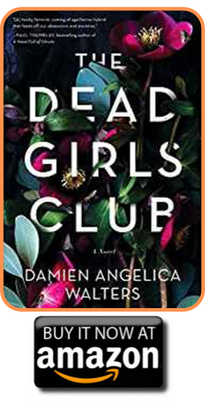 A supernatural thriller in the vein of A Head Full of Ghosts about two young girls, a scary story that becomes far too real, and the tragic--and terrifying--consequences that follow one of them into adulthood.Red Lady, Red Lady, show us your face... In 1991, Heather Cole and her friends were members of the Dead Girls Club. Obsessed with the macabre, the girls exchanged stories about serial killers and imaginary monsters, like the Red Lady, the spirit of a vengeful witch killed centuries before. Heather knew the stories were just that, until her best friend Becca began insisting the Red Lady was real--and she could prove it. That belief got Becca killed. It's been nearly thirty years, but Heather has never told anyone what really happened that night--that Becca was right and the Red Lady was real. She's done her best to put that fateful summer, Becca, and the Red Lady, behind her. Until a familiar necklace arrives in the mail, a necklace Heather hasn't seen since the night Becca died. The night Heather killed her. Now, someone else knows what she did...and they're determined to make Heather pay.    The horror genre has long been a home for those looking to exorcise, or just exercise, their personal demons. Author Sam Richard knows that far too well. In 2017, Richard suffered one of the worst tragedies many of us could likely imagine. Like most deep wounds, that tragedy left behind a scar. That scar is a book. And that book is To Wallow in Ash & Other Sorrows. Richard’s debut short story collection, To Wallow in Ash & Other Sorrows hits bookshelves and storefronts this month courtesy of NihilismRevised. In anticipation of its release, Richard gave The Ginger Nuts of Horror free reign to pick his brain… and his scabs. Before anything I just wanted to say thank you, Sam, for taking a minute to answer my questions. William! Thank you so much! First off, for any readers who might be unfamiliar, could you introduce yourself a little, give a bit of background on who you are and on your writing, editing, and publishing endeavors? For sure, sorry if this is novella length. I’m a weird and transgressive horror writer from Minneapolis, MN. I am also the owner and editor of Weirdpunk Books. I started out merely the editor when Emma Alice Johnson started the press, but a couple of years ago she passed the whole thing over to me. When she was still running it, she published and we co-edited two anthologies: Blood for You: A Literary Tribute to GG Allin and Hybrid Moments: A Literary Tribute to the Misfits. She passed it to me in the midst of publishing Zombie Punks Fuck Off, which I ended up roping CLASH Books into co-releasing with me as I was out of my depths as a first-time publisher, haha. Up next is The New Flesh: A Literary Tribute to David Cronenberg, which is a bit of a change for the press, as it isn’t punk/music forward, but I decided that for me, as head of the press, the punk aspect is more the DIY spirit in which I publish and the ethos of how I run the press and less the over-arching outward aesthetic, as I was getting a little burnt out with music-themed anthologies. Plus, Brendan Vidito, my co-editor on The New Flesh, and I came up with the idea for this anthology ages ago, so I was excited to finally make it a reality. It will be out in November. As for my own writing, it has mostly been anthology and magazine placements, with my debut short-story collection, To Wallow in Ash and Other Sorrows, coming out on October 11th, which collects some of these previously published pieces, as well as some that haven’t been seen yet. Seven of the nine stories were written in the wake of my wife’s death in August of 2017. A short, three story anthology I worked on with Jo Quenell and Katy Michelle Quinn called LAZERMALL is currently on preorder at filthyloot.com, too. It’s lazer-inclusive mall-horror that started out a joke but we’re all super proud of it. I also am currently shopping a small-creature horror novella with a satanic-panic aspect that I was writing when Mo died. What came first, writing or editing and publishing? What inspired you to get into the latter? Has being a writer yourself had an effect on how you view editing/publishing, or vice versa? Writing for sure. I’ve been writing since Junior High and wrote four terrible novels in my very early 20s. I got into editing through Emma, specifically for Blood for You. She was like, ‘I’m gonna do this thing and you’re gonna do it with me!’ and I just couldn’t say no, haha. And it has only grown from there. Being an editor has, 100% without a doubt, made me a better writer. If you want to improve your writing game, read slush. This gives you a lesson on what doesn’t work. It also shows you the incredibly common story-types people write. Plus, working with so many talented writers over the years has afforded me an inside view that I wouldn’t otherwise have had, and that has been super helpful. Having a foot in both worlds, so to speak, has given me a good perspective on submitting to publications, as well as being accepted/rejected by them. I know so much more about what it’s like on that other side (from either role) that I try my best to do everything with compassion and not take rejection personally. So let’s focus in on your first short story collection, To Wallow in Ash & Other Sorrows. The big subject that demands to be talked about, as it’s so much of what this book is about, is your wife, Mo, who in 2017 passed away suddenly without warning. You mention in the book’s introduction that some of the stories included were written just a couple weeks after that happened. The stories themselves very straightforwardly confront your feelings from that time. Did it take a lot of effort to push those stories out of you or were they practically begging to come out? What did writing those stories do for you at that point in your life? And lastly, did you ever have second thoughts about writing or publishing them? It took a lot of effort to try to begin writing at that time, but once I did, they just poured out of me. “To Wallow in Ash” and “We Feed This Muddy Creek” were days 16 and 17, as in on day 16 I wrote that entire story, basically as it is now, same with the following day with the following story. But it was a weird, horrible process as they bled out of me. I had to confront a lot of things that I didn’t even know I was feeling yet, as I was just 100% in shock. It’s strange to look back at those and try to place myself in the headspace they were written in, to be honest, as much of that time I simply don’t remember a ton of. What they did for me was allow me to begin processing what had happened in a way that I didn’t know I needed, because I didn’t know what I needed other than for her to not be dead. So writing those stories was a way to try to even understand what had happened. “To Wallow in Ash” is me confronting the idea that she was even gone, which still to this day, 2 years later, is still a staggering thought. I didn’t have any second thoughts about them being published, nor did I about writing them—I just needed to do it. For the collection, I did go through and change the names, as in the original version of “To Wallow in Ash,” which can be found in Strange Behaviors: An Anthology of Absolute Luridity—published by NihilismRevised who published my collection—the names were all real. When I was going through it for the book, I was like, ‘This is a bit much…’ and I hadn’t even remembered that I didn’t change the names, so I added that additional layer of fictionalization and changed the names, as that did give me pause. That story, the collection’s title story, is difficult to read. I can’t even imagine what it must’ve been like to write it. It reads less like a story and more like a confessional. It’s in the first person, it’s conversational, it features a character with a name that is still very close to your wife’s real name, and it includes real details from her life. The line between fiction and reality becomes very, very blurry. That blurriness gives the piece a lot of its power, but even still I have to ask: Aside from the obvious, how much of it is true? Or at least, how much of those thoughts and ideas went through your head back then, beyond the context of them being elements of a story? It’s funny because a fellow widow friend reached out to me after she read it when it came out in the Strange Behaviors anthology and was like, “So…what did she taste like?” which really made me question everything, haha. Like, are there a bunch of people out there who think this is 100% real? Because I didn’t eat my wife’s ashes, even though a part of me wanted to. So the surrounding details are mostly all true: her death, aspects of our relationship, some of the specifics I bring up - like the conversation about the couple who ate each other’s fingers was an actual conversation we had and how we each feel about it in the story is how we both felt about it in reality. The petite-cannibalism aspect is fiction, obviously. As I wrote that day 16, anything that’s projecting into the future obviously didn’t happen. I was trying to figure out what staying alive was going to look like, as the suicidal ideation was really starting to creep in those first couple of months. That story gave me an opportunity to write a future. Not a great future. Still a future of oblivion, but a different kind of oblivion. But the thought of consuming her did cross my mind, in a weird way. My brain, in trying to wrap itself around her death, tried to come up with every-single-thing it could think of to keep her here, to keep her close. That was one of the weirder ones. For those closest to you, the people who know you personally and who knew Mo, what have their reactions been like upon reading these stories? I know that they have made a lot of our friends and family cry, which makes me feel both good and bad. It’s an odd situation. The first year I went to KillerCon—in 2018—the legendary Joe R. Lansdale, who is a huge writing influence of mine, said, “Write like everyone you know is dead.” I really needed to hear that at that moment. I hope people who knew her, who loved her, find value or catharsis or something in the stories I’ve written, but I also need to remember that it isn’t about them; that it isn’t for them. These stories are my way of processing and if I spent time thinking about how other people will react to them, I don’t think I’d be able to write them. This was especially true for the final story in the collection. That one hurt so much to write but I needed to get it out and I honestly still don’t know how I feel about other people reading it, especially those who knew Mo. But I couldn’t not write it. Even with the intensely personal and therapeutic nature of these stories, is there anything you would you like your readers, total strangers, to take away from To Wallow in Ash & Other Sorrows? One of the things I realized while making the TOC for the book was that I hope, if nothing else, this collection can help at least one person who is going through big loss know that they aren’t alone. As for anything else, I’ll be happy if it resonates with people on that emotional level. If I’m able to express my experience through fiction and have it touch people then what I am experiencing is somehow more real, as I no longer carry the pain alone—I’ve now given a little bit of it to the reader. My pain is now shared and I, in some way, have a little less of it. Of the stories included in the collection, all but two were written after Mo’s death, is that correct? The ones that weren’t, it says in your introduction that you included those because Mo liked them. What has it been liking going back and reading those older works and comparing them to your more recent ones? Can you see the difference? Can you see the commonalities? Yes, “The Prince of Mars” and “The Verdant Holocaust” were already written and published in anthologies before she died. The one major thing I’ve noticed is that while they were both absolutely written under totally different circumstances, they were still written by me. I’m sure that’s a weird thing to say, but I guess I mean that while widowerhood has changed me in a lot of ways, I’m still the same person, which is easy to forget at times. They don’t carry the same weight as the others do, but I was shocked to find that there are still common themes. “The Prince of Mars” is very much about loss. And, in its own way, “The Verdant Holocaust” is too, though more about the loss of friendship than loss via death. It’s fairly apparent how your stories from late 2017 and after are to varying degrees autobiographical. But those other two stories, do you feel there’s any elements of autobiography in those as well? Was that an element that was always in your writing or is it something that has only become integral in these last few years? Is it something important to you going forward? There is some autobiography in all my work, to varying degrees for sure. “The Verdant Holocaust” being kind of about the death of a friendship is absolutely based on an experience I had, though obviously a lot else is different. The religious/cult aspect as well is an exaggerated riff on reality. I grew up in a pretty extreme Pentecostal Christian environment, so anytime I include religion in my work it is me trying to come to terms and deal with issues from that aspect of my childhood. I think the biographical aspect is something I’ve always leaned on, at least a little. Small details from my life or experiences I’ve had always seem to worm their way into the stories, and I think I’ll always do that. I did reach a point earlier in the year where I realized I had written a few stories that open with the burial of an urn by a river. Something I’ve now done. So it is a goal of mine to push away from telling variations of my own story over and over again. But the biographical element will likely always be a factor in my work, even if it isn’t obvious to the reader. On the subject of those two stories, one was written for a Misfits tribute anthology and the other for a William S. Burroughs tribute anthology. Your press, Weirdpunk Books got its start with a GG Allin tribute anthology and most recently released a David Cronenberg tribute anthology. I have three questions: 1. Why all the tributes? 2. What do you feel is the most important thing when writing a tribute story or putting together an anthology? 3. The Misfits. Burroughs. Allin. Cronenberg. What is it about these creators that connects with you so strongly that you wanted to pay tribute? How do you feel they’ve influenced you? Haha. The first two Weirdpunk Books tributes were Emma’s idea and I was l just all on board because they were brilliant concepts. The WSB tribute was just an open subs call that I saw and knew I had to tackle as he was an extremely early influence on me as a reader and budding writer back when I was like 14. Things to keep in mind when writing for an anthology is making sure you have a fresh take on the ideas the subject presents. There are gonna be several people who write stories with the most basic understandings of the subjects and their work, and those writers are going to be doing the most obvious takes on them. Try to dig into the details and mine from there. The Misfits are just fucking awesome and Emma had a brilliant idea with that anthology. I love their classic stuff and it’s so fun and surreal that getting to work on that was kind of a dream-I-didn’t-know-I-had come true. With Allin, I’m not a fan, haha. He’s never resonated with me on any real level other than a mild interest in folks who take things to stupid extremes. But I also can’t deny how shitty of a person he was. The power of that book, I think, is how we approached the concept. The idea that he, as a person, wasn’t right for our reality, but what reality would he make sense in and let writers figure that out. That idea made working on that a lot of fun, even for someone who doesn’t like him—which was a lot of the contributors, haha. Like I mentioned above, William S. Burroughs was a big early influence on me, and I knew I’d be mad at myself if I didn’t try to write something in tribute to him. His work is just so cryptic and interesting. That story, “The Prince of Mars,” is a mashup of WS Burroughs and Edgar Rice Burroughs where I put Bill Lee on Mars, so I got to blend a love of his words and play with strange concepts, but also put it within a sort of pulpy context which was so fun to write. It was strange how easily his way of writing just kind of poured out of me, like that bizarre shit is somewhere in my writing DNA from having read so much of him at such a young age. I had a blast with that one. The Cronenberg anthology was something Brendan and I came up with after having known each other for only a few hours. It was my first BizarroCon and we were talking themed anthologies, Cameron Pierce having recently just put out the David Lynch anthology. We were wondering why no one had done Cronenberg yet, both being massive fans, and decided that we would eventually do it, if no one beat us to the punch. Which I’m still shocked didn’t happen. Another project you recently finished was a successful Kickstarter campaign you put together for the purposes of finishing a set of tarot cards Mo had been working on but never managed to complete. Can you give a little background on that and maybe share what the experience running that campaign was like? For sure. Mo was a tattoo artist and so she spent a lot of her time drawing tattoos at home for the next day, which made it harder for her to find time for personal art. She would try to find reasons to do personal stuff here and there, like specific art shows and whatnot. She had the idea to do a tarot deck as a long project, which was already a big passion of hers, and she fit in doing that whenever she had time. When she died, she had finished the Major Arcana and was into the 2s on the Minor. Several of us closest to her knew it couldn’t sit as an unfinished project, so we gathered about 40 artists to help finish what she had started. Luckily, she had made notes about how she wanted everything to be. It took about a year and a half, as the couple of us heading it up were having a difficult time with the emotional toll of making this project happen. My sister got involved to basically be the project organizer and she got us back on track. The Kickstarter campaign was incredibly emotional, as was the whole process, but seeing it hit that funding goal, and knowing that these decks are going to be a reality, has been an amazing experience. I can’t wait to hold them. She would be so happy. Since the campaign is over, of course the backers will be getting tarot decks. Beyond that, though, do you have any plans to make any decks available to those might have missed out on the campaign? If so, when might that be possible and how best can those interested get in contact with you? With the Kickstarter over, we are going to have some decks leftover. We had to buy a minimum amount from the printer and didn’t hit that, so if you missed out, you’ll still be able to get one! I don’t have them on the site quite yet—I’ll try to get them up for preorder this week!—but they will be available on the Weirdpunk Books webstore: https://weirdpunkbooks.square.site/ Between the Kickstarter campaign and the release of your debut fiction collection, this has been a very busy few months for you. With the end of 2019 just over the horizon, what’s next? Anything in the works at Weirdpunk or in your personal writing endeavors? Yeah, it has been fucking exhausting, haha. LAZERMALL just got on preorder, too, and that’ll be out soon. I have a story in Breaking Bizarro which also just came out. It has been a lot at once. I have stories in two other Filthy Loot projects, which I hope will be out sooner than later. I have a story in Planet X Publications’ Strange Stories of the Sea, which should be out any day now. I have the small-creature horror novella that I am currently shopping around. I’d love to see that get on a 2020 release schedule. I just had an awesome publisher reach out, so here’s hoping that they’ll take it! I wrote a story a month the first half of the year, and the latter half has all been working on longer pieces, so I’m working on a couple of things at the moment, which I will hopefully have done before the year is up. Brendan and I are also going to spend the winter working on a collaborative novel, so we’ll see how that goes as it’s new territory for both of us. On top of already being close friends, working together on The New Flesh has just been such a blast that we figured we should try something bigger. One of those other projects I’m in the midst of is a memoir about grief/widowerhood that CLASH Books is putting out. It has easily been the hardest thing I’ve ever written and is taking me so long to write (sorry Leza and Christoph!) but I’m trying to get the rough-draft done by the end of the year. As for Weirdpunk Books, I’m not sure yet if I’m going to do a 2020 anthology, as that collaborative novel will kind of take up the time I would have spent on an anthology. But we are releasing our first novella. Jo Quenell, who is in LAZERMALL and Zombie Punks Fuck Off, wrote this amazing novella and asked me to look at it for feedback—we often read each other’s work and give notes—and I loved it so much I begged them to let me publish it. It’s called The Mud Ballad and I’m so fucking excited to be releasing their debut novella. That’ll be out either later 2019 or early 2020, we’re still hashing some details out right now. I’ll likely try to publish another novella or two for the press in 2020. It’s a new direction, but I think it’s time to grow what Weirdpunk is doing. Finally, I just wanted to say thank you again for taking the time to speak with The Ginger Nuts of Horror. Is there anything else that you would like to say or that you want people to know? Thank you so much for taking the time to interview me! I so fucking appreciate it. I don’t think I have anything else to add other than that I’d love to see more stuff from you in the world, William! Put more stuff out! Cheers!! To Wallow in Ash & Other Sorrows Written during the black-depths of early widowhood, To Wallow in Ash & Other Sorrows explores grief, loss, and the alluring comforts found within the heart of oblivion. Written in the spirit of J.G. Ballard, Georges Bataille, and Kathe Koja, these nine Sorrows are a cross-section of literary splatterpunk, transgressive fiction, and weird horror, which seek to illuminate the terror, dread, and discomfort of mourning through the black mirror of the grotesque. This book is full of pain. This book is full of tears. This book is full of ash.  5 MINUTES WITH DAVID PINNER
9/10/2019
 Before David Pinner became a full-time writer, he was trained at R.A.D.A., and he has acted in many stage and television plays. The cult movie, THE WICKERMAN, is based on his 1967 novel, RITUAL, (Hutchinson/Arrow), which was re-published in 2011 by Finders Keepers and Endeavour. In 2014 the sequel to RITUAL; THE WICCA WOMAN was published by Endeavour. His other novels; WITH MY BODY (Weidenfeld and Nicholson) and THERE’LL ALWAYS BE AN ENGLAND (Anthony Blonde). He has had several plays produced in London; FANGHORN, starring Glenda Jackson at the Fortune Theatre; LUCIFER’S FAIR, Arts Theatre. THE POTSDAM QUARTET, with Clive Swift at Lyric Hammersmith, directed by David Giles, and at the Lion Theatre, New York, directed by Jacques Levy; and at the Jermyn Street Theatre in 2013. THE LAST ENGLISHMAN, with Kate O’Mara at the Orange Tree. CARTOON, SHAKEBAG and AN EVENING WITH THE G.L.C. at the Soho Poly. SINS OF THE MOTHER, Grace Theatre; LENIN IN LOVE with James Faulkner, New End Theatre, and OH, TO BE IN ENGLAND, Finborough Theatre. His other produced plays; THE TEDDY BEARS’ PICNIC, with Philip Madoc as Stalin at The Gateway Theatre, Chester; DICKON with Joseph O'Connor; THE DRUMS OF SNOW; HEREWARD THE WAKE ; SCREWBALL; REVELATIONS; SKIN DEEP; ALL HALLOWS’ EVE and MIDSUMMER. Penguin Plays (New English Dramatists) published his plays DICKON, FANGHORN and DRUMS OF SNOW. Oberon Modern Playwrights have published his ‘Stalin Trilogy’ THE POTSDAM QUARTET, LENIN IN LOVE and THE TEDDY BEARS’ PICNIC; his ‘Three Power Plays’ DRUMS OF SNOW, RICHELIEU and PRINCE OF TRAITORS; his ‘Seasons’ Quartet’ REVELATIONS, MIDSUMMER, ALL HALLOWS’ EVE and LADY DAY; his ‘Vampire Trilogy’ FANGHORN, EDRED THE VAMPYRE and LUCIFER'S FAIR; his 4 one act plays ‘The Joy of Misery’ CARTOON, AN EVENING WITH THE G.LC., SHAKEBAG and SUCCUBUS; and OH, TO BE IN ENGLAND. Imperial College Press have published his play about Isaac Newton and Robert Hooke; NEWTON’S HOOKE. DROPPING OUT OF A SEA WEED SKY, his book of poem, is published Levellers Press. Could you tell the readers a little bit about yourself? I was an actor, but latterly I’ve spent most of my time writing plays, novels and poetry. To get the ball rolling and get everyone relaxed, here is a hopefully lighthearted question to break the ice, which one of your characters would you least like to meet in real life and have them complain at you about they way you treated them in your work. My thousand year old, Anglo Saxon bisexual vampire, who slept with Shakespeare but didn’t bite him. Other than the horror genre, what else has been a major influence on your writing? History and politics have been the biggest influence as I have written plays about Hereward the Wake, Oliver Cromwell, Cardinal Richelieu, Napoleon, Karl Marx, Lenin, Stalin and Mao Tse Tung – and unfortunately many of them created a great deal of real, mass horror!! The term horror, especially when applied to fiction always carries such heavy connotations. What’s your feeling on the term “horror” and what do you think we can do to break past these assumptions?. I think we need to infuse all our works on horror with a great deal of mordant, draconian humour, which profitably lighten our darkness. A lot of good horror movements have arisen as a direct result of the socio/political climate, considering the current state of the world where do you see horror going in the next few years? Climate change will prove to be the greatest of horrors. Given the dark, violent and at times grotesque nature of the horror genre why do you think so many people enjoy reading it? It allows them to live in the world of fearful imagination, but without having to suffer the consequences. What, if anything, is currently missing from the horror genre? My thousand-year-old vampire, Edred, who lives in a church and who love garlic, but he can’t die – even though he wants to! In the past authors were able to write about almost anything with a far lesser degree of the fear of backlash, but this has all changed in recent years. These days authors must be more aware of representation an the depiction of things such as race and gender in their works, how aware are you of these things and what steps have you taken to ensure that your writing can’t be viewed as being offensive to a minority group? I’m very aware of them so now I’m very careful what I write. Are there any reviews of your work, positive or negative that have stayed with you? Clive |Barnes in the New York Post wrote about Stalin play, which is appropriately called THE TEDDY BEARS’ PICNIC; ‘David Pinner is a recording angel with a mean pen.’ What aspects of writing to do you find the most difficult? Beginning a new work, but once I’m into it…. Is there one subject you would never write about as an author? Not that I know of. How important are names to you in your books? Do you choose the names based on liking the way it sounds or the meaning? Yes, the sound of the name is very important. My vampire, Edred is equally Ed-Dread. Writing, is not a static process, how have you developed as a writer over the years? Every new work is a leap in the dark, and then you learn how to fly. What is the best piece of advice you ever received with regards to your writing? My father said ‘You will only ever be a good as your technique, and when your technique is good enough, it won’t show.’ To many writers, the characters they write become like children, who is your favorite child, and who is your least favorite to write for and why? I have too many favourite children, so I can’t name them. For those who haven’t read any of your books, which of your books do you think best represents your work and why? ‘Ritual’ because it was the inspiration for the Cult movie, ‘The Wickerman’ and my Stalin play, ‘The Teddy Bears’ Picnic’. Can you tell us about your last book, and can you tell us about what you are working on next? My last play was ‘EDRED THE VAMPYRE’ and I’m working on the screenplay of my novel, THE WICCA WOMAN’. What was the last great book you read, and what was the last book that disappointed you? ‘The Brothers Karamazov’ by Dostoevsky was my favourite.  Marcus James is the award-winning author of eight novels, including Blackmoore and Instructions in Flesh. He has contributed to several anthologies from Alyson Books, has been a contributor to the Seattle Gay News, and is co-host of the Queerly Spoken podcast. He lives in the Pacific Northwest with his Husband and Staffordshire bull-terrier. He is 35 years old. Links: www.facebook.com/MJameswriter www.facebook.com/queerlyspoken twitter.com: @MJamesbooks Instagram: @marcusjamesauthor website: www.marcusjamesbooks.com amazon author page: www.amazon.com/author/marcusjames Could you tell the readers a little bit about yourself? Sure thing. I’m the author of eight novels, and I’m most known for my Blackmoore Legacy series of which there are two novels, Blackmoore and Symphony for the Devil, along with a two-part prequel novella, Rise of the Nephilim and Fall of the Nephilim, and will be followed next year (hopefully) by the third book in the series, The Beckoning One. It’s a series focused on Trevor Blackmoore, who is seventeen in the first book, and who comes from a secretive family of rumored witches (which they are,) and all the complications that come from that. I am an out and proud gay man who writes horror and I co-host a podcast called Queerly Spoken, which is focused on curating the LGBTQ experience in all of its fantastic complexity. I love to cook, it’s a passion of mine for sure, and any excuse to drink champagne (which is pretty much all the time) I will find it. I live with my husband and my adorable Staffordshire Nikita. To get the ball rolling and get everyone relaxed, here is a hopefully lighthearted question to break the ice, which one of your characters would you least like to meet in real life and have them complain at you about they way you treated them in your work. Honestly, that would be all of my characters. I’m not easy on them, that’s for sure. But two specific ones come to mind. In my novel Blackmoore, there is a character named Christian Vasquez, who is a dick when you first meet him, but as the story goes, you see how really complicated he is, and his love for Trevor Blackmoore, which goes back a long way, gets used against Trevor by Christian, and in turn Christian gets it used against him. In the end, Christian redeems himself but things don’t turn out the best, and I think he would have a lot of bitterness towards me. Actually I’m sure of it. Often I feel him hovering over me with that bitterness. But he’s not exactly out of the picture. The other is Andy Stone, who is a character from Ghosts of Blood and Bone, my latest novel. This one is complicated because every single person in the novel is based off of real people, and Andy gets a raw deal, but she’s also not a really likeable person, and so though she would complain till blue in the face, I don’t really feel bad for her. Other than the horror genre, what else has been a major influence on your writing? Music. I write to music. I put together playlists for every book, individual songs for scenes and chapters, and certain songs end up assigned to particular characters. I am inspired more by music than anything else. Also, architecture, geography, the news. The works of Gore Vidal, Jim Grimsley, Edmund White, Michelle Tea, etc. great queer authors, both living and dead, who have chronicled the richness of our lives. In my work it has always been important to me to show that queer people can be heroes too. That young gay boys, no matter how butch or effeminate, can see that they can be heroes and save the world too. We aren’t weak or need to be rescued. Being an outsider is where our strength and resilience lies. Every person I write about teaches me something about survival, and in their worlds—worlds filled with breathing shadows—I get closer to understanding my own journey as a queer person and the experiences that bind us all together. No matter how individual our own personal journeys are. That’s the beauty of writing. That’s the power of literature; all the lives we get to inhabit. The term horror, especially when applied to fiction always carries such heavy connotations. What’s your feeling on the term “horror” and what do you think we can do to break past these assumptions? I love it. I think horror is amazing. Horror and gothic literature lives in the space of grief. Grief is a powerful thing. The constant sense of loss and a refusal to give up the ghost—whether that ghost is metaphoric or literal. It is a bleakness and a pain that gives the darkness life and keeps the dead from moving on. It is a genre that deals with the big things. Life. Death. Gods and Devils. Questions of morality, good and evil, and everything in between. I think that has always made people uncomfortable. Even in the slasher sub-genre, we have the concept of original sin—that thing that sets everything else into motion later on, and that always begins in a loss and grief of some kind. Horror explores the brutality of ourselves more than it shows anything else. Ghosts are everywhere in the horror genre. Whether they be actual vengeful spirits and beings, or people haunted by the ghost of experience and memory. They exist in the places we refuse to see, because those places are in the corner of every eye and within every shadow, and facing them means facing ourselves and that historically has made people uncomfortable because they don’t want to be reminded of how dark the night really can be. Do I think we can really break these apprehensive or negative connotations of horror? Probably not. It is getting embraced more and more, thanks to popular shows and groundbreaking films, but I think it’ll always have a stigma to fight against. A lot of good horror movements have arisen as a direct result of the socio/political climate, considering the current state of the world where do you see horror going in the next few years? More explorations of Us versus Them. The terror of being marginalized and oppressed in an increasingly fanatical, nationalist, religious world. We’re watching a terrifying seismic shift in the western/free world, where oppressive movements—these dark relics of the past—are gaining so much support and traction. Horror will do what it always does and does effectively; it’ll continue to shine the light on the worst of ourselves and continue to supply cautionary tales of what can happen when all of these things are taken too far. Horror has this amazing capacity, whether film or literature, to show us viscerally what the end of the road can look like if we continue to follow it, and often it makes us ask ourselves what our own capacity to hurt others, and what we do and do not value, really is. Given the dark, violent and at times grotesque nature of the horror genre why do you think so many people enjoy reading it? It’s a safe release. It’s the ability to explore our fears—to face what scares us and to have the assuredness of knowing that no matter how terrifying it can get, we can close the book and put it back on the shelf and get back to our lives, where by and large, the things we are reading about will never touch us personally in our real world. It can also help us cope with the terrible things that have touched us. It can sound weird for example, for someone who has had a loved one killed brutally, turn around and watch a bunch of slashers or for someone who has experienced the impact of suicide to then turn around and watch or read stories about angry, sad, lingering ghosts who took their own lives, but it can be a catharsis that no other genre can provide the same way horror can, because horror isn’t nice. It doesn’t sugar coat, it doesn’t fade to black. It takes you through all of it and we need that. What, if anything, is currently missing from the horror genre? Queer representation. Being a queer horror author, I can tell you this genre is historically a ‘white straight boys club’ even though women, LGBTQ people, and people of color are some of the largest and most fanatic consumers of horror, we find ourselves continually and systematically shut out of it. There is an uphill (more like a mountain) battle for queer authors, regardless of whatever genre they are writing in, to get the same kind of traction and to be embraced by readers the same way straight authors writing about cis-hetero main characters and focused stories receive. In the film industry, even amazing queer storylines get the short end of the stick, because the production quality is so low. Simply because the studios don’t want to touch it, they don’t think it’ll have a broad enough appeal/waste of money/can’t be “marketed properly” etc. so we have to rally and do what we can ourselves to tell our stories, but because of the quality of production and the ‘cheap’ feeling to it, it’s hard for even us to watch them. It’s really not the filmmaker’s faults, it’s just funding is a mountain with a summit that’s hard to reach. So many queer authors, especially in horror, have no other choice but to self-publish, because for all of our progress, a lot of publishers just don’t want to take on queer lit, especially when it’s horror. Writing memoir, coming-of-age, YA, stories of coming out, AIDS, these are the things publishers are more likely to take on when it comes to accepting queer novels, but horror? That’s just too weird. Even if the only thing queer about it is the character or characters themselves and not the story’s plot; it’s still too risky. In the past authors were able to write about almost anything with a far lesser degree of the fear of backlash, but this has all changed in recent years. These days authors must be more aware of representation an the depiction of things such as race and gender in their works, how aware are you of these things and what steps have you taken to ensure that your writing can’t be viewed as being offensive to a minority group? First, I don’t believe in censorship in art. Art is the enemy of censorship. Horror especially is the enemy of censorship. Horror is not safe. Horror is a place where all things can and should be tackled. I’m gay. I’m mixed. I write and explore the subjects and things that I know. If a character is African American or some other race or nationality, aside from mentioning it in character description, that’s about as far as it goes. I focus on who they are as people. If I have a racist character and they say something derogatory or offensive, well, that’s life. That’s the world we live in. obviously a character like that would more than likely be an antagonistic character, and would either evolve or something bad will happen to them. I have characters who are homophobic and heterosexist (obviously) and they say terrible and derogatory things, but again, that’s reality. I’m not advocating for or perpetuating those views, but I’m not going to leave out reality in order to ensure someone isn’t offended by the F-word or anything else. Parents calling on schools for bans on books like To Kill a Mocking Bird and Huckleberry Finn, these books, are not only a product of the times and our history that we shouldn’t be running from, but their authors were not racists nor did they advocate for the mistreatment and abuse of POC. This whole safe space, cancel culture thing—it’s not good. Shutting down opposing viewpoints, demanding everyone’s heads; bullying and attacking authors—it’s pathetic. I am gay. My responsibility, my mission as a queer person is to write about that. To tell stories that anyone can enjoy, but to do so through the lens of queerness. Toni Morrison famously said, that she writes outside the white man’s gaze, and when she’s writing, she’s writing to black people, free of having to explain anything to white readers about blackness. I write without the cis-hetero gaze hovering over me. I have a lot of straight-identified readers, and yet I don’t worry if they are understanding the things I am and am not referencing when it comes to the queer experience. For many queer people, growing up is a constant horror, and you spend your life terrified and hiding from everyone, and sometimes really awful horrific things happen to us—it did to me, and in horror that’s what I get to tackle, that’s what I get to approach and shed light on and explore. It could offend people or anger people who strive hard for this social media purity of ‘wokeness’ and I’m aware at any time that the mob could suddenly come after me out of the blue, but so what? I have had hundreds of cis-straight people call me a faggot from a passing car or walking down the street, I’ve been bullied and attacked everyday as a teen who was the only openly gay kid in school, and twice I’ve been gay bashed brutally and I was surprised both times that I somehow lived. I don’t fear mobs and I don’t bow down to them. Horror and art is dangerous. Literature is dangerous. It’s dangerous because it takes you places, and you may not always like where it goes or what it reveals. But unless the author and the work is openly advocating harm and destruction of other communities and groups, actively promoting oppression and enslavement as good things, then the rabble needs to shut up. Human life and people are complicated, messy, and so uniquely individual and we have no right to go after people with some litmus test of being woke. If you’re spending all this time harassing, stalking, dictating, attacking on social media, then you’re not living life and you obviously have nothing better to do and I feel sorry for you. Does horror fiction perpetuate its own ghettoization? For example Julia Armfield’s latest collection Salt Slow has a cover that most horror fans would walk past in a book shop, and is one that probably is not marketed as horror, does the genre’s obsession with horrific covers cause more harm than good? I think the only obligation of a great cover is that it reflects the story between it. I definitely think that means the cover should evoke horror or the gothic in some way. Salt Slow is definitely a book that based on the cover does not reflect those things, but from what I understand, it kind of crosses a lot of genres. If I saw it in the horror section, I think it’s lack of horrific imagery would actually pique my interest, if for no other reason than I would be like “what the hell is this noise?” so that may be to its benefit. Does horror create its own ghettoization? Of course it does. It’s horror. It attracts who it attracts and repels who it doesn’t. We also have this skewed definition of ‘literary’ fiction. Often what is given the badge of literary merit and considered intellectual is pedestrian realism. Coming-of-age-human-condition-the-struggle-is-real kind of stuff. Genre is often dismissed as childish/entertainment/escapism. Rarely do people explore what it actually means. A prime example is the misogyny accusation hurled at the slasher genre and yet, we have the mythology of the Final Girl, and that final character was made almost deity-like in horror mythos in Buffy Summers. The ultimate Final Girl. We understand that of all genres, especially in film, Horror uplifts and celebrates the strength and power of women and the feminine. It’s not about the casualties, it’s not about the women who are killed along the way, both men and women are fair game in horror, but nine times out of ten, the hero—the chosen one, is a woman. But horror has its stigma, as most genres do, and sadly, horror is considered as degrading and smutty as the worst porno for a lot of people. It doesn’t really get taken seriously. With films like Get Out, Us, Midsommer, The VVitch, etc. we’re seeing the same critics looking at the genre with new eyes, and I think they are now finally starting to see what we’ve all known about the genre all along. What new and upcoming authors do you think we should take notice off? Benjamin Hively comes to mind. His novel, The House the Devil Built impressed me as a debut, but by and large, I don’t read a whole lot of new authors unless we connect through social media or at a party or something. Drew Forest is another one. His book The Corpse Rooms was fantastic. Queer authors of horror are really exploring and doing fantastic things in their work, and more people—the cis-hetero majority—really need to start paying attention to the fantastic stories we’re telling. Just because it’s queer, doesn’t mean there isn’t anything you can’t relate to or identify with. What are the books and films that helped to define you as an author? How much time do you have? Let’s see… Interview with the Vampire (both film and book), The Virgin Suicides (both film and book), Dream Boy, A Density of Souls and The Snow Garden, Exquisite Corpse, The Value of X, Liquor, Prime, and Soul Kitchen, The City and the Pillar, Messiah, The Hellbound Heart, Candyman, Hellraiser and Hellrasier II, Valencia, Dark Shadows (1990), Original Halloween, Halloween II, and H20, Nosferatu (Both 1922 and 1979), Dracula (1931), almost every Hammer film, A Boy’s own Story, Stella Maris and Other Key West Stories, Little Reef, The Boy’s in the Band, Other Voices, Other Rooms, In Cold Blood, Haxen, The Tropic of Cancer, Less Than Zero, The Client, Midnight in the Garden of Good and Evil, Summer of ’84, Fantasia, Les Liaisons Dangereuses, Fashion documentaries… honestly, the list goes on and on. All of these things converged; blending with art, history, and defining and powerful songs and musicians to create the tapestry of who I am and what I write and explore. Are there any reviews of your work, positive or negative that have stayed with you? My novel, Symphony for the Devil, the second novel in my Blackmoore Legacy series was described by The Manhattan Book Review as descended from the same lineage that gave us Bram Stoker’s Dracula and Mary Shelley’s Frankenstein. That review confirmed to me that everything I had hoped to achieve with that novel was achieved and re-confirmed for me that I’m doing something right and what I’m meant to do. For years I was in such a dark place due to a terrible heartbreak, that I was unable to write anything. As a result my career was slipping away from me. I was honestly uncertain if I would ever write again. I kept telling people Symphony was a work in progress, but the truth was, I thought it would never be completed. But then I finally got the closure I had been waiting for, for years, and it opened up that part of myself again, and the rest of the book poured out of me and I got it finished, and it was so well received and my first signing event for it was a packed house. It was such an incredible thing to remember who I am and that I can touch people with my words. It is a bar that once set, I have fought to keep that standard for myself. The negative review that stuck out the most had actually nothing to do with the writing or the story telling or anything else, and I hesitate to call it a review because it was so absurd and therefore I’m not even going to name the review site or the reviewer. It was for my novel Blackmoore, the first in the series, and her issue with the novel was that the main character, Trevor Blackmoore, had not one, but two male love-interests, and for her, that was just not realistic for her since they were seniors in high school. Yet, she had reviewed other books with opposite sex love triangles set in a high school and loved them and believed them, etc. but when it came to a love triangle involving three boys, she just couldn’t wrap her head around it, and therefore gave it three out four stars. That’s the kind of ridiculous stigma and heterosexism that I was talking about earlier. The book wasn’t given a fair shake all because two guys were interested in Trevor at the same time. What aspects of writing to do you find the most difficult? Starting. Literally that first paragraph. I research and research so much that when it’s time to start writing I can convince myself I still have more research to do, even though I’ve read 52 books in prep for said novel, I can still feel not ready. Also, picking the voice. None of my novels sound the same. The voice and structure of Blackmoore echos that of 19th century Victorian gothic novels and penny dreadfuls, Symphony echoes the horror novels and sagas of the Gilded Age (1900-1920) like The House of Mirth and The Age of Innocence by Edith Wharton. For Ghosts of Blood and Bone, I re-read a lot of thrillers and contemporary American Gothic novels that I love and have always inspired me to get to the desk and start typing. A few examples are The Virgin Suicides by Jeffrey Eugenides, which I think is one of the most perfect books ever written, along with Exquisite Corpse by Poppy Z. Brite (Billy Martin), A Density of Souls and The Snow Garden by Christopher Rice, and The Silence of the Lambs by Thomas Harris. The voice—the language and syntax should reflect the kind of book it is. I love when readers of my books catch that. That each one sounds different and each books’ voice is intentional in that difference. These are the things that can drive me insane and cause stagnation. The fear of starting, the fear of being too ambitious, and then failing in that ambition. Is there one subject you would never write about as an author? Not really. I will probably never write a book with a straight male character as the central focus/main character. My straight male characters will probably always remain supporting because that’s a skin I can inhabit in small doses, but not for a whole novel. I just can’t connect with it and honestly I don’t want to. It’s the queer experience, particularly the gay male experience that I write about. It’s those stories and that lens that I am coming from and what I want to tell. But when it comes to actual subjects? No, there isn’t anything I won’t write. If it catches me and demands to be explored then I will. How important are names to you in your books? Do you choose the names based on liking the way it sounds or the meaning? No. The names come with the characters. When they show up, their name usually comes with them. Sometimes I do have to hunt for names because the character has shown up, but they are still in the distance, and I know I have them if I stumble upon names and they suddenly come into being. That’s when I know their name has been found. Writing, is not a static process, how have you developed as a writer over the years? Just growth. Each book is a constant evolution for authors. I started writing at a really young age, and I was submitting to publishers by the time I was fourteen. Obviously none of these things would result from anything, but it got me going early. I landed my first agent when I was 19 and my first publishing credit was at the age of 20 or 21 with Alyson Books which for two decades was like the Knopf/Random House of LGBTQ publishing, and I had a long career with them writing for their various anthologies, and I can see the evolution of my skills through all of those stories in all of those collections. As you get older and keep writing, the writing changes with you. It sharpens, you learn what works and what doesn’t, and with each story, with each novel, you continue to hone that skill. Reading voraciously and dissecting the books you love, their use of language, especially if they are books that inspire you to sit down and write are all ways of sharpening your skills and feeding your talent. What is the best piece of advice you ever received with regards to your writing? Never stop writing the book you want to write, and never stop exploring what inspires you and terrifies you, no matter how different or strange it can seem. Always maintain your integrity because readers will know if you don’t believe in the story you’re telling. So only write what you believe in. My strength is telling the story through the characters, and not just the plot and events. I get to all those things through the journey of the characters that these things are happening to. I don’t respond to novels with flat, one or two-dimensional characters. I thrive in description and emotion and it is through the people who inhabit my worlds that I most effectively tell the stories I want to tell. Learn what things are your strengths—where you excel the most—and use those strengths everywhere you can to write something that pierces the heart of what you care about to make readers care about it too. To many writers, the characters they write become like children, who is your favorite child, and who is your least favorite to write for and why? I actually call my characters the Boys. Even though, yes, there are female characters, it’s my male characters—the gay boys—that bring the others into the room with them. Out of all my Boys, my favorite is Trevor Blackmoore. We are very different, but in other ways, very similar. Trevor came into my life and changed it forever. When the time comes and our journey together is over, I think the pain I will feel—the loss—will be some of the most profound I will ever experience. As for my least favorite? I don’t really have one, honestly. If I don’t like writing about them then I just don’t. I have to understand all of my characters. I will say I have written about some vicious Boys and when I’m alone with them it can leave me in a dark place, but that only means that hopefully I’m translating that to you, the reader. For those who haven’t read any of your books, which of your books do you think best represents your work and why? Of all of them? The Blackmoore books and my latest, Ghosts of Blood and Bone. These are the books I would direct people to if they are reading me for the first time. They get to the heart of who I am and what I can do and do exceptionally well, and huge pieces of me are throughout them. Don’t read too much into that last statement though. Nothing irks me more than when people super impose me on the main protagonist. No matter what of my life finds itself in the narrative, they are not me, and a lot of those experiences have been modified from the facts of them. Do you have a favorite line or passage from your work, and would you like to share it with us? The last sentence from the prologue of Ghosts of Blood and Bone: “No one would forget this year. It would always be there in the back of their minds—the day they were forced to grow up, the day that killed them. That day in spring when flowers bloomed and school gods fell, their thrones left vacant and unattended. A day like none other.” Can you tell us about your last book, and can you tell us about what you are working on next? Ghosts of Blood and Bone is my latest, and to sum it all up, I will just give the tease from the publisher: “When four eighth-graders experience the sudden death of a school bully, they are drawn back together years later by the dark secret it involves and the terrifying force hiding in the shadows. Ghosts of Blood and Bone is a lyrical and haunting exploration of trauma, love, and the loss of innocence. This engrossing, ominous psychological horror-thriller will keep you on the edge of your seat and linger long after the book is closed. It is Christopher Rice’s A Density of Souls meets I know What You Did Last Summer. A smart and compelling entry into the slasher genre.” What I’m working on next is the third Blackmoore novel, The Beckoning One. It’s been a year and a half of research and three research trips and mountains of notes. The research process is very thorough for me and I probably do more research than I really need to, but it’s important to me that I get everything right. Even if two books worth of research on something culminates in a couple of paragraphs in the actual novel, the reader will know that everything available to learn about it has ended up there. If you could erase one horror cliché what would be your choice? Honestly, it’s just in film, and it’s the jump-scare. Especially the false jump-scare. You hear something, then a cat or friend appears, leaves, and then the real bad happens. It gets used so, so much. I’ve counted eleven of these in some films, and it has gotten used so often that now you can always spot when it is coming. Along with the “ah-ha, gotcha” ending. It makes it super predictable. I’m not saying get rid of them, but lordy, they need to be reduced and used more sparingly by filmmakers. What was the last great book you read, and what was the last book that disappointed you? The last great book I re-read in horror was Exquisite Corpse. It just guts you in the best possible way. The last great book I read for the first time, and that I’m ashamed to admit took me forever to finally get to id Mysterious Skin. I have already seen the film many times, but the novel wrecked me in a different way than the film did. It wrecked me in the best way. The last book to disappoint me? The novel I know What You Did Last Summer. It’s not a slasher. There is no body count, everyone is okay in the end. I get the story behind the author and what happened to her in her own life, and I understand why she didn’t like the film, as it was a skeleton of her actual book and she didn’t like slashers. The film was all of the bones of the book but not its meat. As a film, the book had to be turned into a slasher to be effective and to translate, and there is still so much meat there, just a different type. The book just sort of peters out and I kept waiting for the pay off. It builds and builds to what you think is the horror you’re going to get, but then you don’t and yay, happy ending. What's the one question you wish you would get asked but never do? And what would be the answer? Honestly, I have no idea. There’s a couple I would have listed, but you actually asked them. So thanks for that! Ghosts of Blood and Bone by Marcus James Bailey Nguyen has been dead for nine years, and yet, he still lingers. Chase Sheppard was Bailey's best friend, but something had always lurked beneath Bailey's surface; something dark and sadistic that had made him more than the average middle school bully, and had caused Chase to fear his friend and all that he was capable of. Between Chase and Bailey was Aaron Christopher--insecure, unpopular, friendless, and effeminate. An obvious target for any teens ire, but for a fourteen-year-old Chase Sheppard, everything about Aaron had captivated and drawn him in, and in Bailey it had created a poisonous fixation that would lead to a horrific accident involving him, Aaron, and a bathroom that only Aaron would walk out of alive.For nearly a decade Aaron has tried to move on from that horrific day, and everything that came before it. Now, a senior at Fairhaven University in Bellingham, Washington and a budding artist, Aaron has done his best to carve out a normal life for himself, making friends, and hanging with his roommates; getting by despite the ways he's learned to cope with the dead boy who, it seems, will never let him go. As if orchestrated by some greater, diabolical force, Aaron and Chase are brought back together suddenly, and the feelings that had hovered over them back when they were kids have not lessened in their effects, nor has the pull between them relaxed its grip .A taunting voice over the phone that sounds like Bailey, and a mysterious shape that begins to stalk Aaron wherever he goes, emerges from the shadows of a blood-soaked past that refuses to stay dead and buried. Ghosts of Blood and Bone is a lyrical exploration of trauma and the loss of innocence wrapped up in a blood-stained bow of human horror. This thrilling, ominous tale will keep you on the edge of your seat and linger long after the book is closed.   Michelle R. Lane writes dark speculative fiction about women of color who battle their inner demons while falling in love with monsters. Her work includes elements of fantasy, horror, romance, and occasionally erotica. In January 2015, Michelle graduated with an MFA in Writing Popular Fiction from Seton Hill University. Her short fiction appears in the anthologies Dark Holidays, and Terror Politico: A Screaming World in Chaos. Her debut novel, Invisible Chains, will be available from Haverhill House Publishing July 2019. She lives in South Central Pennsylvania with her son. Could you tell the readers a little bit about yourself? I never know what to say when I’m asked to tell people about myself. Because identity is always evolving and mutating, I never feel like the same person from day to day. But I suppose my origin story has something to do with being a multiethnic woman of color born and raised in Pennsylvania in the United States. I grew up in a homogenously white, rural community and dealt with varying degrees of bigotry and racism that masqueraded as acceptable social norms. I was born in the early 70s, which was a chaotic time of racially charged outrage and political protest. The historical events and social climate of that time helped to shape the person I am today, and they have had an influence on my voice as a writer and what I choose to write about. But, I’m also a single mom who works full-time, so balancing the priorities of my life can be challenging. Writing is a priority. When it isn’t at the top of my list, when I’m not writing every day, my mood shifts and I get very cranky. What do you like to do when you're not writing? I love to read, but lately I don’t feel like I have a lot of time to do that. So, instead I listen to audiobooks while I’m walking to work or doing chores around the house. And, I love watching TV shows and movies. I suppose you could call me a narrative junkie. Hi, I’m Michelle, and my drug of choice is escapism. I also enjoy spending time with my son and going out for a drink with friends. I like to cook, because I love to eat good food and I was raised by some of the best cooks in the world. Other than the horror genre, what else has been a major influence on your writing? I’m a fan of all speculative fiction, so science fiction and fantasy have been major influences on my writing as well as horror. I tend to prefer the darker side of these genres, and probably have my grandparents to thank for that. Until she passed away, my grandmother collected every Stephen King novel in first edition, and they were on display in the bookshelves that lined her dining room. She also collected Richard Nixon memorabilia, which helped me learn to appreciate the complexity of the human psyche. My grandfather preferred to read Louis L’Amour Westerns, but he introduced me to The Twilight Zone, Star Trek, and fostered my love of 1960s spy films and TV shows. I found a copy of Anaïs Nin’s Little Birds and Delta of Venus in my early teens. I’ve been fascinated by erotica and the representation of sexuality in art and fiction ever since, which has also had an impact on what I write. I spent a lot of time reading about feminist theory, queer theory, gender politics, and race politics as an English major, which gave my academic writing a certain flavor, and whenever possible, I would slip in a reference to vampires and/or fairy tales. Fairy tales have had a major impact on my work, and two of my favorite books on the subject are The Trials and Tribulations of Little Red Riding Hood, by Jack Zipes and Morphology of the Folktale, by Vladimir Propp. The term horror, especially when applied to fiction always carries such heavy connotations. What’s your feeling on the term “horror” and what do you think we can do to break past these assumptions? I think a lot of people who haven’t explored the vast range of narratives within the genre have a very narrow, and often negative view of horror. Horror is really the genre of emotions, and I think because people have a hard time confronting their own feelings, it can be difficult to enjoy stories that focus on some of the more unpleasant and terrifying aspects of human nature. While I was earning my MFA in Writing Popular Fiction, we were assigned a common reading that we would discuss at each residency. During one of my last residencies, we were assigned Joe Hill’s NOS4A2, which is one of my favorite books of all time. It was the first time a horror novel had been assigned since I entered the three-year program. To be fair, I think categorizing this novel as solely horror does it a disservice. It is a multi-genre novel that delves into fantasy and horror with a literary writing style. NOS4A2 is a masterpiece of fiction. So, I was very excited to talk about it at residency. When we began discussing the novel, it became very clear that people who didn’t write or read horror fiction were upset about having to read the book. They couldn’t get past the child abduction, rape and murder to see that this is a very dark fantasy novel with an amazingly strong female lead who defeats a terrifying villain and saves her family. Not only could they not see beyond the horror, but they were angry with the horror writers in the program and accused us of being very sick individuals. Fortunately, the faculty used this experience as a learning opportunity and had further discussions about how people view genres. ALL GENRES. We talked about some of the negative perceptions people held about romance fiction and discovered that a lot of people didn’t view the romance writers among us as serious fiction writers. It was an eye-opening experience for all of us and I think it brought us closer together as a community regardless of what genre we enjoyed writing and reading. I think more conversations, more exposure to different kinds of narratives, and a willingness to share opinions can go a long way toward breaking down the stereotypes associated with horror fiction. A lot of good horror movements have arisen as a direct result of the socio/political climate, considering the current state of the world where do you see horror going in the next few years? As more diverse voices emerge within the genre, I think that we will have more stories that redefine horror on a very personal level. Stories that look at identity politics as well as horrific experiences that can only be told from the POV of people who have experienced them. I wrote a mixed-genre slave narrative with supernatural characters. Yes, there are monsters, but the history of slavery in America and all the terrible violence associated with it create the real element of horror in the novel. I’ve also noticed that film and TV writers are using horror as a liberal seasoning to science fiction and fantasy narratives. Oddly enough, I think the obsession people have with reality TV has sparked an increase in the desire for sensationalism. Horror seems to appeal to more people as we examine how unsettling real human behavior can be, which may be why shows like Black Mirror are so popular. What are the books and films that helped to define you as an author? When I was in my teens, I wanted to write like Anne Rice. The Vampire Chronicles created a strong desire in me to write about vampires. But, as an English major, I started reading more classical fiction and philosophers like Jean-Paul Sartre, Simone de Beauvoir, and Michel Foucault, and I began thinking about writing in a very different way. Then I discovered Toni Morrison, Alice Walker, Octavia Butler and Jewelle Gomez, and realized I wanted to write like them. It occurred to me that stories do more than entertain. Language has the power to start revolutions and open people up to the endless possibilities in the Universe. Images, like language, can also change your view of the world. In college, I took several film studies courses and watched many of the films that defined the art form. Classic cinema led me to explore more films based on who was directing them rather than subject matter or genre. And I became obsessed with silent films and foreign language films. It’s difficult to point to one film or director and say, “That influenced my writing.” I think the art of filmmaking has influenced my writing more than films themselves. The narrative devices, the use of scenery, or color, and the casting of characters. And most importantly, dialog and how it is used to tell a story. How would you describe your writing style? Recently, a friend contacted me and told me she had a dream in which Oprah declared me the Alice Walker of Horror. I laughed about it at first, but then started thinking about that as a concept. How would I describe my writing style? Invisible Chains is a supernatural slave narrative with monsters. Toni Morrison’s Beloved is a horror novel in my opinion, Black Southern Gothic Horror. I don’t know if that’s a recognized genre, but that’s what came to mind when I read it. Morrison’s novel affected me deeply and had a lasting impression. It’s a ghost story set in the South after the Civil War and it is filled with powerful images that explore the idea that slavery had a lasting physical and psychological effect on the people who suffered under it. I wanted to achieve something like that. In my bio, I claim that I write dark speculative fiction about women of color battling their personal demons while falling in love with monsters. I believe that to be true for most of my work. But is that a writing style? I don’t know. Are there any reviews of your work, positive or negative that have stayed with you? I have gotten some amazing reviews of Invisible Chains. It’s a little strange to have people read your work and say that some of the scenes brought them to tears. I never really expected to have that kind of impact, but I am beyond grateful for that kind of feedback. I loved the review Ben Walker did for his YouTube series, Bizarre eBook Review. I was kind of amazed by the time and effort he put into it and I loved the pop culture references he chose to talk about the book. But, by far, the best review I’ve gotten has been from one of the writers who inspired and gave me courage to write the stories I wanted to tell. A few months ago, I was seeking reviewers and writers who would be willing to blurb my book. I contacted Roxane Gay and she declined, but very politely. Then, I contacted Jewelle Gomez and she agreed to read the book. Her feedback was very positive, and after reading her blurb I floated around on a cloud for a few days. What aspects of writing to do you find the most difficult? The self-exploration can be difficult. I put a lot of myself and the people I know into my writing and I am often shocked when I go back and read something I wrote several months or years ago and see a snapshot of the feelings and experiences I was going through at that time. It can be wonderfully cathartic, too. Procrastination brought on by self-doubt can be a real stumbling block from me at times. I don’t suffer from writer’s block; I suffer from imposter syndrome and the anxiety caused by those emotions. Is there one subject you would never write about as an author? I tend to write about subjects that make many people uncomfortable, so I’m not sure what would be out of bounds for me. Invisible Chains has rape, murder, and incest – something for the whole family. I like the challenge of tackling difficult subjects, unusual settings, and diverse characters. So, at this point, I don’t think there’s a subject I would avoid writing about. How important are names to you in your books? Do you choose the names based on liking the way it sounds or the meaning? The names of characters are important to me. I try to find names that are appropriate for specific time periods and the cultural practices of certain ethnic groups or nationalities. I think about their economic standing as well. And their personalities. Sometimes, I’ll hear a name while listening to the news or overheard while eavesdropping and write it down to use later. And, in some cases, the names of my characters are based on real people from my life, like Carlos Velasquez, the vampire in my novel. Writing, is not a static process, how have you developed as a writer over the years? When I was writing for an audience of one (myself), I really didn’t plan on publishing any of my work because I didn’t think it was very good. And, in some ways, I felt freer to write about whatever I wanted. But after I decided to apply to the MFA program and had to share my work with others, I realized that writing in a vacuum wasn’t going to help me improve my writing. Working with writing mentors and critique partners forced me to not only learn better writing skills but start thinking of myself as a REAL writer. When I’m writing a first draft, I still try to write the story I want to read without listening to the voice in my head telling me to edit for an imaginary audience. It’s hard not to listen to that voice sometimes, but I find that if I can ignore it, I usually end up with a much better story. What tools do you feel are must-haves for writers? Books. The more you read and the more variety of books you choose to read go a long way to making you a better writer. What is the best piece of advice you ever received with regards to your writing? RECON! One of my friends and unofficial writing mentors from my MFA program, Timons Esaias, told me that one of the best ways to break through a writing block, to figure out how to write a particular scene, or, you know, write that pesky middle part of your book between the beginning and end, was to find similar books within your genre and see what other people are doing. You simply go find a stack of books that are attempting to tell a similar story and you read them to figure out what to do next. I ended up reading a lot of real slave narratives to see how they were written. Many slave narratives were first-hand accounts that were recorded and then later transcribed by someone else. Some were written by former slaves. I struggled with finding Jacqueline’s voice for a long time, but after reading first-hand accounts of people who survived slavery, I had a better sense of how she needed to tell her story. Getting your work noticed is one of the hardest things for a writer to achieve, how have you tried to approach this subject? For the most part, I have been using social media (Facebook, Twitter, WordPress, LinkedIn, etc.) to get the message out about my novel and short stories. It seems to be working so far. I’ve made connections through friends, and I reached out to people and asked them for favors – blurbs, reviews, interviews. Sometimes, people say no. That’s okay. But if you don’t ask, the answer is always no. It helps to reciprocate also. If a friend does a review or interview on their blog, you should try to return the favor. Beyond that, I don’t know. I’m planning some face-to-face events like book signings and readings, but I’m open to any advice for how to get more people interested in reading my work. To many writers, the characters they write become like children, who is your favorite child, and who is your least favorite to write for and why? My favorite characters to write are my villains and antagonists. I love writing dialog and the thought processes of monsters. I had a lot of fun writing the dialog between Jacqueline and Carlos, and the three-way conversations between them and Aleister Gale. I enjoyed writing their arguments, but my favorite parts to write were the suggestive comments and attempts at seduction from Carlos to Jacqueline. He is a delightful pervert, and one of my favorite characters to write. At the moment, I’m struggling to finish a short story and what is most difficult is figuring out what the supporting characters should be saying to my protagonist. A lot of my stories begin with a line of dialog, or a phrase, and I just can’t seem to get these people talking to each other. It’s driving me crazy. What piece of your own work are you most proud of? I am most proud of Invisible Chains. It’s the first full-length novel I’ve completed, and it was my MFA thesis project. I worked very hard to bring this book into the world and I am absolutely thrilled that people actually enjoy reading it. And are there any that you would like to forget about? I wrote an obscene amount of Duran Duran fan fiction as a teenager that I pray has been lost in the winds of time. Do you have a favorite line or passage from your work, and would you like to share it with us? One of my favorite lines in the book is, “Vampires are terrifying creatures, driven by an insatiable cannibalistic hunger and murderous urges. I was glad to have one at my side when I left the safety of the Lynches’ house.” I think it shows just how complicated Jacqueline’s life is. She isn’t exactly safe in her master’s house. She doesn’t feel safe wandering the streets of New Orleans after dark. But the company of a vampire whom she doesn’t completely trust provides a sense of safety she doesn’t experience anywhere else. And, it shows us just how seductive and manipulative Carlos can be. Can you tell us about your last book, and can you tell us about what you are working on next? I’ve only written one book and that’s pretty much all I’ve been talking about lately. But I’ve started plotting out the sequel to Invisible Chains, which I’m tentatively calling Blood Work. And, I’ve been working on another series for several years that I just need to finish. It’s an erotic dark fantasy series about a succubus promised to a demon in an arranged marriage that will prevent the Apocalypse. It examines how polyamory tests the boundaries of a long-term committed relationship between two people who are completely in love while preventing the end of the world. If you could erase one horror cliché what would be your choice? I think that’s an unfair question. Tropes and clichés help define a genre and make them recognizable for a broader audience. If we’re talking about horror films specifically, there are certain things many people probably think are done to death that I still enjoy – spooky settings like a basement or attic in a haunted house, jump scares, character types like paranormal experts and wholesome families with dark secrets, and stories based on actual events that are supported by found footage. Sometimes, the familiarity of a genre can be comforting. I watch horror films to relax and spend quality time with my son. We are both diehard fans of The Conjuring and Insidious franchises. We love the recurring characters and disjointed timelines that connect different parts of an unfolding story. We just went to see Annabelle Comes Home last weekend and we watched Insidious: The Last Key the weekend before and loved both even though they were completely ridiculous at times. Say what you will about the clichés found in these films, but the malevolent spirits, creepy backstories of the characters, and occasional comic relief make them enjoyable films. INVISIBLE CHAINS KINDLE EDITION BY MICHELLE RENEE LANE Jacqueline is a young Creole slave in antebellum New Orleans. An unusual stranger who has haunted her dreams since childhood comes to stay as a guest in her master’s house. Soon after his arrival, members of the household die mysteriously and Jacqueline is suspected of murder. Despite her fear of the stranger, Jacqueline befriends him and he helps her escape. While running from the slave catchers, they meet conjurers, a loup-garou, and a traveling circus of supernatural freaks. She relies on ancestral magic to guide her and finds strength to conquer her fears on her journey.   Joshua Chaplinsky is the Managing Editor of LitReactor.com. He is the author of ‘Kanye West—Reanimator.’ His short fiction has been published by Motherboard, Vol. 1 Brooklyn, Thuglit, Severed Press, Perpetual Motion Machine Publishing, Pantheon Magazine, and Broken River Books. Follow him on Twitter and Instagram at @jaceycockrobin. More info at joshuachaplinsky.com. And check out his books at his Amazon Author Page Could you tell the readers a little bit about yourself? In West Philadelphia, born and raised… Just kidding. I live in Queens with my wife and two kids, Donut and Nino. I work in film production as an assistant office coordinator. I’ve been the Managing Editor of LitReactor.com since its inception in 2011. I’m the author of the hip-hop/horror mashup, Kanye West—Reanimator. I co-directed a no-budget documentary on Chuck Palahniuk with two guys who have gone on to have actual Hollywood careers. I knew I wanted to be a writer since high school, but didn’t start pursuing it (semi-) seriously until a few years ago. The internet really helped facilitate that. To get the ball rolling and get everyone relaxed, here is a hopefully lighthearted question to break the ice, which one of your characters would you least like to meet in real life and have them complain at you about they way you treated them in your work. Most of my characters are pretty troubled, if not outright horrible people, so I probably wouldn’t want to meet any of them. I barely like the people I like! I suppose it would be interesting to meet the real Kanye West and hear his thoughts on how I portrayed him in Kanye West—Reanimator. Preferably in public, with witnesses. For my own safety. Or that poor character I gave a gasoline enema to. Yeah, he didn’t deserve that. Other than the horror genre, what else has been a major influence on your writing? I’d say screenwriting, as a form. I spent a good ten plus years writing screenplays before I decided I wanted people to actually read what I wrote. But the minimalist style of the screenplay has stuck with me, especially when it comes to short stories. The term horror, especially when applied to fiction always carries such heavy connotations. What’s your feeling on the term “horror” and what do you think we can do to break past these assumptions? Personally, I love horror, and it’s a term that draws me in, especially when it comes to movies. When it comes to books, I have to admit I skew more to the weird and literary side of horror. I know sometimes those terms are viewed as part of the problem, that all genre is literary and shouldn’t be ghettoized. I guess what I’m trying to say is I like my horror atypical. And I’m more willing to throw away 90 minutes on a movie that might be terrible than spend a week or more reading a bad book. As for assumptions, I think from a marketing standpoint, certain assumptions are viewed as a positive, at least by marketing types. I don’t think those are gonna change much, at least not in the mainstream. A lot of good horror movements have arisen as a direct result of the socio/political climate, considering the current state of the world where do you see horror going in the next few years? I see horror continuing to do what it’s been doing so well for so many years now, which is addressing issues people are hesitant to talk about otherwise. It might require a little more ingenuity, though. I think it’s getting harder to present evil as an abstraction, because real evil has become so cartoonish and abstract. Given the dark, violent and at times grotesque nature of the horror genre why do you think so many people enjoy reading it? Because it’s the fucking coolest! Also, confronting your fears in a safe space, escaping reality—the usual armchair psychoanalytical stuff. What, if anything, is currently missing from the horror genre? If I had the answer to that, I’d keep it to myself and write it! Horror has become so broad, there’s something for everyone. You just have to know where to find it. It’s like those people who complain “they don’t make ‘em like they used to.” Sure they do. You just have to wade through the garbage. People always namecheck the same few properties as to why horror “used to be good,” but they forget about all the other schlock that came and went. Thankfully, we now have Paperbacks from Hell and Grady Hendrix to remind us. In the past authors were able to write about almost anything with a far lesser degree of the fear of backlash, but this has all changed in recent years. These days authors must be more aware of representation and the depiction of things such as race and gender in their works, how aware are you of these things and what steps have you taken to ensure that your writing can’t be viewed as being offensive to a minority group? I mean, I’m definitely more aware of it. It’s a sign of the times. I recently read a big horror title from the early 90s and the depictions of race, even though they were mostly from the perspective of “evil,” made me cringe a little. I just try to be open to people’s feelings and defer to those who have more experience and knowledge than I do. Who wants to double-down on being an ignorant jerk? (A lot of people, apparently.) Does horror fiction perpetuate it’s own ghettoization? For example Julia Armfield’s latest collection Salt Slow has a cover that most horror fans would walk past in a book shop, and is one that probably is not marketed as horror, does the genre’s obsession with horrific covers cause harm than good? This goes back to what I was saying earlier. Marketing a book is a whole different beast than writing one. Different aesthetics attract different consumers, and in the end, I suppose publishers are going to cater to the group most profitable for them. For me, personally, it’s about being true to the work. To thine own self be true! You know, if your publisher allows. And if they don’t… maybe you chose the wrong publisher? What new and upcoming authors do you think we should take notice off? You hear of this kid, Josh Malerman? Haha. Now that people like Josh Malerman and Paul Tremblay are “big” authors, we need a fresh crop of young blood to get excited about. I don’t know if I can name any horror authors your readers haven’t heard of already, or that haven’t been toiling away at it for years. People outside indie publishing are starting to catch on that Gabino Iglesias and Max Booth III are awesome. My publisher, CLASH Books (I know, I know…) are putting out some really unique stuff—African horror from Unathi Slasha and Mame Bougouma Diene, Jewish horror from Maxwell Bauman. Outside the genre, I’m reading a book right now called Mary Toft; or, The Rabbit Queen by Dexter Palmer, which is actually pretty horrific. It’s based on a true story about a woman in 18th Century England who gave birth to over a dozen dismembered rabbits. What are the books and films that helped to define you as an author? Growing up it was mostly fantasy. Tolkien and C.S. Lewis. I was a softy and didn’t get into horror until much later. And when I did, it was through movies, first. My fragile mind was scarred by stuff like Faces of Death and The Exorcist at middle school sleepovers, but eventually I decided to face my fears. I developed a taste for the works of the Davids—Lynch and Cronenberg—and those have definitely had a lasting effect on me as a writer. I am also a huge fan of author Steve Erickson. His writing showed me there are endless narrative possibilities available, you just have to be brave. Are there any reviews of your work, positive or negative that have stayed with you? I’m still new at this, so I’m happy to get any reviews at all. I think I have a pretty good stomach for bad reviews, especially if they are constructive. And I get a good chuckle from the kneejerk, vitriolic ones. We’ll see how well I do once I have a novel out. What aspects of writing to do you find the most difficult? I wish I worked faster. I’m a compulsive rewriter, and often rewrite as I go, so I’m not as prolific as I’d like. I envy the Stephen Graham Jones’ of the world, who can crank out quality work like nobody’s business. Is there one subject you would never write about as an author? I haven’t come across it yet. Let’s just say that whatever I write about, I want to be well informed and treat the subject matter with the requisite respect. How important are names to you in your books? Do you choose the names based on liking the way it sounds or the meaning? Some characters I like to have nondescript, unobtrusive names. Others, I like to have unique, memorable ones. Depends on the story. Meaning isn’t always important, but I think how a name sounds in the head definitely is. Writing, is not a static process, how have you developed as a writer over the years? Like I mentioned earlier, I was obsessed with screenwriting for a good long while. I worked out a lot of the kinks and retained a lot of the lessons I learned doing that. Lessons about plot, structure, dialog, economy of language… When I started writing fiction, I sort of just ported my voice over from there and started fine-tuning. What is the best piece of advice you ever received with regards to your writing? Learn the difference between good and bad advice. Discernment is the name of the game. To many writers, the characters they write become like children, who is your favorite child, and who is your least favorite to write for and why? I don’t particularly care for children. For those who haven’t read any of your books, which of your books do you think best represents your work and why? Definitely Whispers in the Ear of A Dreaming Ape. Aside from Kanye West—Reanimator, which is sort of a goof, it’s the only one I’ve got! It is definitely representative of my work over the last few years, and gives a good indication of where I’m going with it. Do you have a favorite line or passage from your work, and would you like to share it with us? I do, and I would not. I mean… I would, if I had one? Can you tell us about your last book, and can you tell us about what you are working on next? The aforementioned story collection, Whispers in the Ear of A Dreaming Ape, out October 15th from CLASH Books. It is a weird, dark, medley of genres. I also have a novel coming out from them in 2020, which I haven’t really talked about and don’t know if I can yet. I would describe it as a family drama masquerading as a supernatural sci-fi collage obsessed with Stanley Kubrick. And I am also currently in the planning stages of a second novel. If you could erase one horror cliché what would be your choice? Terrible decision making for the sake of plot convenience! We hates it, precious! What was the last great book you read, and what was the last book that disappointed you? The last book to really surprise me and knock my socks off was Liminal States by Zak Parsons. Jut a really well done melding of genres. As for disappointment, I recently read Mindhunter, and while the individual stories were fascinating, it was really just a collection of anecdotes. The Netflix series strung them together into a narrative so masterfully that the book just paled in comparison. What's the one question you wish you would get asked but never do? And what would be the answer? These are the first questions I’ve ever been asked! And I’m grateful for every one! Whispers in the Ear of a Dreaming Ape The debut short story collection from Joshua Chaplinsky, author of Kanye West—Reanimator. Thirteen weird pieces of literary genre fiction. Singularities, ciphers, and reappearing limbs. Alien messiahs and murderous medieval hydrocephalics. A dark collection that twists dreams into nightmares in an attempt to find a whisper of truth. "This is dark stuff, but fun, without any hipster wink of irony or cynicism. Writing stories that are simultaneously grim and good-hearted is a fucking tough line to straddle, and writing them well... let's just say I don't see that often. Chaplinsky walks a barbed-wire tightrope here. In short, good shit." Craig Clevenger, Author of The Contortionist's Handbook “If you're sick of tepid short stories that taste like watered down milk, "Whispers in the Ear of a Dreaming Ape," is the collection of multi-colored, bite-sized brain pan bullets that might just be the cure. Joshua Chaplinsky has an imagination both of depth and breadth, and no two stories are alike. You can practically hear the lively, fascinating, hallucinatory click of his brain throughout the book. An enjoyable read for all of us dreaming apes.” Autumn Christian, Author of Girl Like a Bomb  |


Archives
May 2023
|
 RSS Feed

|

|