

 Scott Nicholson is the author of more than 30 horror, psychological, and post-apocalyptic thrillers. He’s sold more than a million books worldwide and been published in ten languages. His first novel The Red Church was a Mystery Guild alternate selection and a Stoker Award finalist. His website is AuthorScottNicholson.com. Could you tell the readers a little bit about yourself? I’m just your basic lazy dreamer type who’s always been making up stuff. I started with crayons and went into writing, art, and music, and never grew up. I’ve had a lifelong aversion to reality. What do you like to do when you're not writing? I tend an organic garden and I fish a lot. I also still play some guitar almost every day, and of course I’m always reading one or two books at a time. Other than the horror genre, what else has been a major influence on your writing? I like good, dark, twisting thrillers like Dennis Lehane’s and Gillian Flynn’s, and I love dystopian stuff like Fahrenheit 451 and 1984. I’d guess Dr. Seuss was a huge influence, with his carefree imagination, wordplay, and subtle messaging. The term horror, especially when applied to fiction always carries such heavy connotations. What’s your feeling on the term “horror” and what do you think we can do to break past these assumptions? I believe the primary confusion is the term “horror” used as a cinema genre, which is often slasher or torture porn, which is only a very minor fiction subgenre. The typical normie lumps it all together, but really, who cares what normies think? Horror doesn’t give a shit about anyone’s opinions. It just is. A lot of good horror movements have arisen as a direct result of the socio/political climate, considering the current state of the world where do you see horror going in the next few years? Humans are terrible are making predictions. People usually point to the ‘80’s and the Me-First Reagan Era and say “Horror thrived when times were dark and evil flourished.” But maybe, just maybe, it had everything to do with the rise of Stephen King and nothing at all to do with the times. But voices appear when the message is needed, and you can’t really write outside the times you are in, no matter how hard you try. What are the books and films that helped to define you as an author? The Lorax made me an environmentalist, The Star-Bellied Sneetches taught me the folly of racism, and Shirley Jackson’s “The Lottery” taught me you could have a really dark story that was also beautiful. I remember reading Kurt Vonnegut’s short story “Harrison Bergeron” as a young teen and I was incensed at its disregard for reality and the use of a name like “Diana Moon Glampers,” as well as its profound satire. Within a couple of years I was reading all of his books. That and Hemingway and Richard Brautigan and John Steinbeck, and then Stephen King came along, so I had an odd mix of influences. What new and upcoming authors do you think we should take notice off? I don’t read many new authors and don’t want to leave anyone out, although I am thrilled the indie and digital era has allowed so many people to get their voices out there. I’m still way behind on my classics reading. For example, right now I’m reading Straub’s “Ghost Story.” I still have hundreds of old paperbacks lying around to catch up on. How would you describe your writing style? I’m the least qualified person to have an opinion about that. Some people have described me as easily readable, kind of commercial-grade fiction; others say I have weird humor and that I am dark and cynical. I like to think I have a strange spice I put in there that you can only get from me. Whether that’s to your taste or not is a different question! I can say that I do commit to the craft and love choosing the words, the musicality of a sentence, and power of a nice turn of phrase or image. Are there any reviews of your work, positive or negative that have stayed with you? I learned early on to not read reviews, because they say more about the reviewer than the work and it really doesn’t matter at all in the process of creation. It’s not like I’m going to rewrite the book because Becky in Madison doesn’t like it. Plus I feel ignoring reviews respects people’s right to an opinion without mine getting in the way. I do remember one in Fangoria for my second novel that went something like “Sets the record for small-town Southern stereotypes.” What the reviewer couldn’t know was that all those characters were based on my relatives! What aspects of writing to do you find the most difficult? The longevity of it. It’s a lifetime commitment, and the work is never done. Which, of course, is also a blessing. And the necessity of making money, if you’re a professional—that adds an extra level of complexity and invades the creative process a bit whether you want it to or not. Is there one subject you would never write about as an author? Well, not so far. I’ve done short stories where I crossed some taboo lines—sexual violence against a minor (although by another minor), the killing of pets, implied incest, plenty of racist characters. Each case had plot motivation behind it, and I’ve always used short stories to experiment with subject matter and voice. In retrospect, I don’t know if those stories need to survive in published form, but I don’t regret writing them. As a reader, I can endure a lot as long as it’s not purely gratuitous. How important are names to you in your books? Do you choose the names based on liking the way it sounds or the meaning? I hoard names. I love names. I collect them from everywhere—cemeteries, phone books, street signs, old history books, and even random lists. Especially where I live, in the remote Appalachian Mountains, the names really add color to the area. I just try not to use names that sound like the name of a made-up character like you see in some bad mainstream books. Writing, is not a static process, how have you developed as a writer over the years? After more than 20 years, I’ve definitely burned off a little of the passion, but I hope I’ve made up for it with wisdom, experience, and craft. I can still sit down and write 15 pages a day for a stretch if necessary, but early on I could write like water flowing. Now it’s more like I’m pushing water uphill. I think that’s true of most artists in any field. Never grow old, kids. What tools do you feel are must-haves for writers? Strunk & White’s Elements of Style is a basic one. A good thesaurus is cool. A big, broad library helps. And learn basic grammar. I’ve always said, “If you can write a sentence, you can write a book.” Sadly, most people never learn to care about sentences. What is the best piece of advice you ever received with regards to your writing? When I went back to college to get a degree, I took some writing classes. You’d get the usual brainless critiques from the others, like “I don’t really get it” or “I think Bobby should be taller.” My fiction teacher, a Vietnam War refugee, wrote on one of my stories, “You write with feeling. I say go for it.” I understood that to mean committing to the craft every day. Later on, when I was first getting published, Bentley Little advised, “Keep your head down and write.” Getting your worked noticed is one of the hardest things for a writer to achieve, how have you tried to approach this subject? I’ve always been a tireless promoter, because not only do I believe in my work, I know that ultimately no one will ever care more about it than I do. That doesn’t mean standing up naked at a horror convention and screaming that I’m the next Stephen King. It means finding an audience one reader at a time. Plus, of course, now that it’s a job, it’s not optional. Especially as primarily an indie writer now, my job is not to write books, my job is to sell books. That starts with writing well and creating your best product/art, and then marketing it to your audience. It’s simple, but it’s not easy. To many writers, the characters they write become like children, who is your favorite child, and who is your least favorite to write for and why? I tend to love the villains. In a way, all characters are a biographical extension of the author, often exaggerated to ludicrous extremes. That’s why I love using shifting third-person limited viewpoint so much—I can get in the heads of many different people. I don’t fall in love with my heroes and heroines. I will say this: I’ve never written a character that I couldn’t kill. What piece of your own work are you most proud of? Probably The Red Church, which is a little sad because it was my first published novel, although the fourth one I wrote. It feels a little timeless, because it didn’t fit in with the horror being published at that time and doesn’t have a heavy dose of cultural references, as if the story exists in a parallel world. My short story “The Vampire Shortstop” I wrote basically in a day based on awakening from a dream with that title in my head. It won the Writers of the Future award. It’s the only piece of my work I ever re-read, every five years or so, and it always makes me cry a little at the end. And are there any that you would like to forget about? Not on the writing side of things. I regret nothing except the books that failed to find an audience—that effort could have been better spent on something people would respond to. But again, that’s about having to pay bills. In a perfect world with free health care and basic income, I’d write the craziest stuff I could imagine. I often find myself going “Hmm, I bet the conventional audience won’t like this” and then I grin and do it anyway. For those who haven’t read any of your books, which of your books do you think best represents your work and why? The Red Church, because I wasn’t published then and I wasn’t clogged up with “Scott Nicholson the author” bullshit. Can you tell us about your last book, and can you tell us about what you are working on next? The first book in the Arize series, Resurrection, just came out. Basically the zombie apocalypse as Biblical prophecy. The second book, Revelation, will be out after Christmas. If you could erase one horror cliché what would be your choice? Horror writers as book characters. What was the last great book you read, and what was the last book that disappointed you? Swan Song by Robert McCammon. (See, I told you I was behind the times!) I can’t remember the last disappointment, since I tend to give up on books pretty fast if they don’t catch my interest early on. What's the one question you wish you would get asked but never do? And what would be the answer? “Why don’t you stop writing and go away?” To which I’d answer. “Gladly. All it will cost you is a million bucks.” Website : http://authorscottnicholson.com Facebook: http://www.facebook.com/AuthorScottNicholson Twitter: http://www.twitter.com/eScottNicholson Amazon: https://www.amazon.com/Scott-Nicholson/e/B001HCX30O  
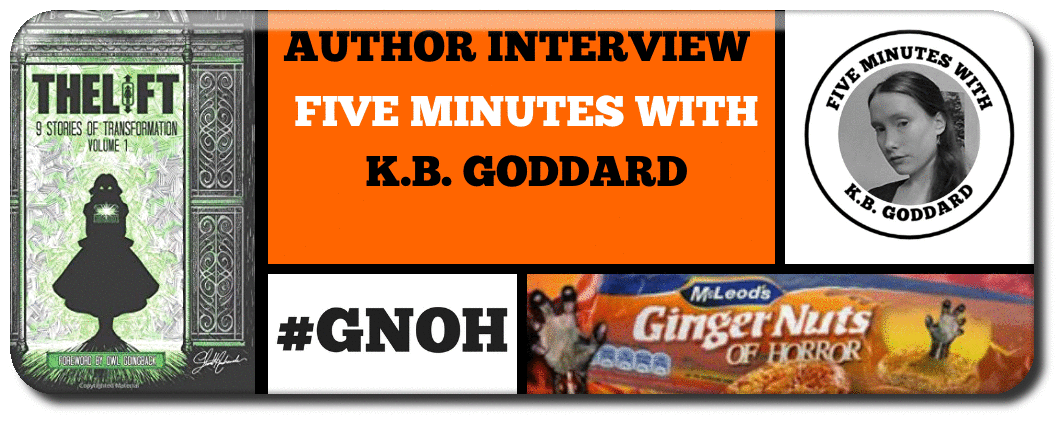  K.B. Goddard was born and raised in rural Derbyshire. She is a writer of traditional ghost stories and supernatural fiction. Her horror and folklore articles have appeared on The Spooky Isles, and her short stories have been produced as dramatic readings for the Wicked Library podcast. The episode of the Wicked Library featuring her story "Shadows" won the 2017 Parsec Award for Best Speculative Fiction Story: Small Cast (Short Form). She also penned the opening episode of season 2 of The Lift podcast "The Lost Library", Which was a finalist in the same category. Her work has appeared on Shadows at the Door and she was honoured to be one of the thirteen writers chosen to contribute to their first anthology. She is also one of the writers featured in The Lift's first written anthology. Could you tell the readers a little bit about yourself? I think I’ve always known that I wanted to do something related to the arts. When I was 16 I went to college to study Performing Arts, which was a strange choice because I was painfully shy; really it was painful. In some ways it helped to build my confidence, or at least helped me to wear a mask that didn’t show the inner panic. I think I was drawn to the idea of pretending to be someone else for a while: it was more interesting than being me, after all. But it was obvious that I didn’t have the nerve of the stomach for all the travelling and auditioning that acting involves. It took me a long time before I got around to really trying my hand at writing, although I had dabbled and had it in the back of my mind for a while. When I eventually got stuck in I found it a much better fit than acting. Writing is kind of like acting on paper, only you get to be inside the head of all of the characters. Since then I’ve been lucky enough to be featured in anthologies and podcasts. What do you like to do when you're not writing? Until recently I was studying with the Open University and that occupied a lot of my time. For the last year or so I have been crocheting, which is not very in keeping with the horror vibe is it? But it’s very therapeutic. Other than the horror genre, what else has been a major influence on your writing? I’ve always been interested in myths and folklore. Some of my stories do have more of a mythical or folklore feel than a horror feel; there’s always a supernatural element though. Classic detective fiction holds an appeal to me too. I guess it’s something about trying to get to the bottom of a mystery to understand something unknown that appeals to me in all these things. The term horror, especially when applied to fiction always carries such heavy connotations. What’s your feeling on the term “horror” and what do you think we can do to break past these assumptions? I am often in two minds about whether to promote myself as a horror writer for this very reason. Say horror to people nowadays and they will usually think of blood, guts and gore, the slasher movies etc. It is as if the ghost story or traditional supernatural tale has been booted out of the genre altogether. I don’t know, perhaps it should have its own category but book shops and retailers still class it as a subgenre of horror. Personally, I have never really been in to the whole blood and guts type of horror. It has it’s place and its fans and that’s fine but mostly it’s just not for me. I have written stories with some physical violence but it always has a purpose; the violence itself isn’t the driving force of the story. I prefer the subtle chill, the air of slight, creeping unease. I’d like to see this element of the horror genre make a definite comeback. I think if we are going to show people that the horror genre is not all about the gore then we need to show them the alternatives, that horror can have a broad and varied meaning. A lot of good horror movements have arisen as a direct result of the socio/political climate, considering the current state of the world where do you see horror going in the next few years? The increasing influence of technology will probably become more prevalent. I can see a technology-fuelled, dystopian type horror taking hold. Or people may become so disillusioned with the modern world that horror goes the opposite way and goes back to its supernatural roots as a reaction against modernity. Who knows? What are the books and films that helped to define you as an author? The ghost stories of M. R. James were a big influence on me, especially Oh, Whistle And I’ll Come To You, My Lad. The Sherlock Holmes stories also influenced me because it was through them that I found that I really loved the Victorian style of writing that inspired my stories; it was more formal but also more elegant in many ways. I just loved the way the language flowed. I know that style isn’t a hit with a lot of people now but it fascinated me as a 14 year old reading them for the first time. It’s perhaps because I was always fascinated by history too when I was growing up. The historical element added to the escapism, which is something I think I needed, and I think that’s something the best fiction does, takes you out of yourself for a while. I don’t think I’ve ever been heavily influenced by films. I don’t think I have a very visually-orientated imagination, although, my first Victorian ghost story was inspired in part by a film I saw once years ago, called The Asphyx, in which a scientist experimented with ways of storing the soul to prevent death. What new and upcoming authors do you think we should take notice off? I must confess I’m not very good at keeping up with “the new”. By the time I read a book it’s probably been out for years. Ironically, while studying creative writing I had no time for reading anything other than my course materials! So, I have a lot of catching up to do. That said the other year I took part in an anthology project for Shadows at the Door and through that I met a lot of great authors, some more established than others. Likewise, podcasts such as The Wicked Library and The Lift are always showcasing upcoming authors so I’d say many of the authors contributing to those three projects are worth checking out. They are real melting pots for new talent. How would you describe your writing style? Old-fashioned or traditional. At the moment I am mostly writing Victorian-style ghost stories and supernatural tales. Some are traditionally spooky, some are just weird. I write them in a mock-Victorian, but hopefully still very readable, style. Are there any reviews of your work, positive or negative that have stayed with you? I try not to get hung up on negative reviews, which isn’t always easy. Luckily most people who have reviewed my work have been pretty gentle with me. I did get a 2 star rating once with no review and that was quite deflating because there was no way of knowing what went wrong: did my book fail totally or did I just not tick the boxes they were looking for? You can never please everyone and I am aware that I am writing in quite a niche style in an often overlooked subgenre. One reviewer did once suggest I might be a time traveller, which was a lovely way of saying that I had achieved the style I was going for. What aspects of writing to do you find the most difficult? Coming up with new stories ideas and plots. Is there one subject you would never write about as an author? Well, never say never, but I can’t see me ever writing full on slasher fiction or erotic scenes. How important are names to you in your books? Do you choose the names based on liking the way it sounds or the meaning? Usually I choose them depending on how they sound and whether I feel like they suit my characters. They also need to be period appropriate for my Victorian stories. Writing, is not a static process, how have you developed as a writer over the years? Well, I feel like it’s still quite early days for me as I got off to a slow start and I’m quite a slow worker. I’ve been experimenting with different lengths of work: I wrote my first novella last year. Since then I’ve been studying and thinking in more detail about the use of the senses in creating the feel of a scene, which is hopefully something that will show through in my future work. Because I don’t think in a very visual way I want to explore the role of the other senses more to add depth to my work. After all. The best supernatural fiction is often about the unseen. What tools do you feel are must-haves for writers? It seems an obvious thing to say but primarily pen, paper and imagination. These days a computer is pretty essential, of course. Often, though, it can be easier to let your thoughts fly when writing by hand; you’re not so fixated on editing. You can always tweak it when you type it up. That way it hits the computer keyboard with the first edit done. I often like to draft an awkward scene by hand. I don’t know why but sometimes it feels more natural. With a pen and a notebook you can also easily write down a sudden spark of inspiration when it hits. What is the best piece of advice you ever received with regards to your writing? Don’t give up. Getting your work noticed is one of the hardest things for a writer to achieve, how have you tried to approach this subject? I use Facebook and Twitter. I used to keep a blog too, but I’m taking a break from that; it wasn’t really something I excelled at and never got much traffic. I have probably gained more notice via submitting stories to podcasts and articles to a horror and folkore website. I have Goodreads too but I’m not a natural at promotion! It is certainly a challenge. To many writers, the characters they write become like children, who is your favourite child, and who is your least favourite to write for and why? As most of my stories so far have been shorts, I haven’t had chance to really bond with many characters. The character of Algernon Hunter has recurred in a few stories so he’s an obvious one. I gave him a wife who I would like to do more with; she has psychic powers but struggles with them, so I think I could have fun developing her and seeing who she is once she’s in control of her gift. I think a character I wrote who was an internet troll was kind of nasty to write because he was just such a horrible person. Likewise, the husband in my novella was a creepy character. What piece of your own work are you most proud of? Probably a short story I wrote called Reflections on a Malady. It was my first Victorian ghost story and it’s still one of my favourites. And are there any that you would like to forget about? I could not possibly comment. For those who haven’t read any of your books, which of your books do you think best represents your work and why? Probably A Spirited Evening and Other Stories. It has one of my favourites in it. It was my first book and was written as a homage to the classic ghost story. I think it captures the feel of the old fashioned ghost story pretty well for the traditionalists out there. Do you have a favorite line or passage from your work, and would you like to share it with us? “She sighed and picked up her necklace from the dressing table and held it to her throat. The metal was cold against her skin, and she shivered as it touched her neck. The clasp was awkward, and she struggled for a few moments, becoming increasingly frustrated. She contemplated finding Maria or a maid to assist her. Suddenly her frustration gave way to terror. This time it was not the touch of metal that caused her to shiver but the touch of hands! Cold, invisible hands took the necklace from her and fastened the clasp. She sat motionless, too terrified even to scream, as she felt the phantom fingers move around her throat; she thought they meant to strangle her, but after a moment’s pressure they released their grip and moved downwards, coming to rest on her shoulders. She felt their evil caress and a sensation as of breath against her neck.” Can you tell us about your last book, and can you tell us about what you are working on next? My last book was a Victorian, gothic novella called The Girl With The Roses: A Tale From The Haunted Auctions. It is about a young woman who is married off to a rich widower. She finds herself isolated and surrounded by strange things and starts asking herself what happened to this man’s first wife. I’ve also just had a story published as part of The Lift’s first written anthology; there are definitely some horror elements in my tale. As for upcoming projects, I’m planning for a new collection of ghost stories. If you could erase one horror cliché what would be your choice? The reliance on physical violence and the idea that if someone isn’t brutally murdered or tortured it isn’t horror. What was the last great book you read, and what was the last book that disappointed you? I’ve just read Carnacki The Ghost Finder. I really enjoyed that, a nice mix of horror and mystery. Not a horror book but The Watchmaker of Filigree Street gave me a very slight feeling of disappointment. It had some interesting ideas but ultimately I felt the premise actually played a tiny role in the story and it just petered out and didn’t really go anywhere, which was a shame. Still, I enjoyed reading it. What's the one question you wish you would get asked but never do? And what would be the answer? Can we make your ghost stories into a series for Christmas on the BBC? My answer: Let’s talk! Please follow the links below for more information Twitter: www.twitter.com/kbgoddard Facebook: www.facebook.com/kbgoddard Goodreads: www.goodreads.com/author/show/8514985.K_B_Goddard Amazon author page: www.amazon.com/author/kbgoddard  
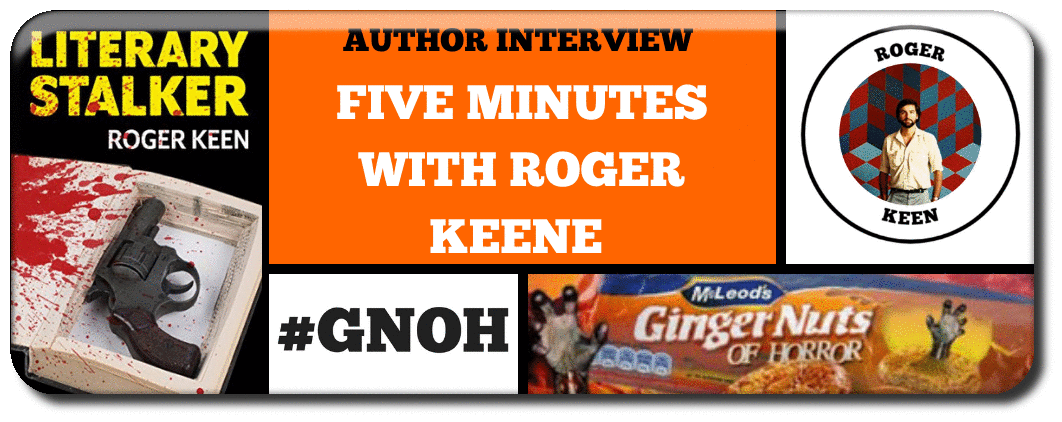 Roger Keen is a writer, filmmaker and film critic with a special interest in surrealism, counter-culture and psychedelia. He has contributed to many award-winning programmes for the BBC, ITV and Channel 4, and his short stories, articles and reviews have appeared in numerous magazines and online. He is the author of the novelistic memoir The Mad Artist: Psychonautic Adventures in the 1970s and the psychological horror/crime thriller Literary Stalker. Visit him on: http://www.rogerkeen.com/ Could you tell the readers a little bit about yourself? I went to art college in the 1970s and was very involved in the counter-culture scene of that era. I particularly loved the Beat writers, Burroughs and Kerouac, and surrealist painters such as Dali and Magritte. I painted for a while and then took up photography and filmmaking, and after college I worked in TV, including the drama series Robin of Sherwood in the ’80s. I’ve always liked Gothic fiction and movies, and in the ’90s I started writing horror stories and got into the scene, as it was then. More recently I’ve been reviving those associations because Literary Stalker is a return to the horror/crime genre and also it’s ‘about’ the horror-writing world. What do you like to do when you're not writing? Watching films and TV and reading, naturally. I try to root out more obscure films and novels I’ve always meant to watch and read – and also classics – and when I finally get around to experiencing them it’s always rewarding. Also I like walking, sometimes in wild country such as the Lake District and the Alps, and occasionally I play golf and ski in winter. I’m a big fan of Indian food and West Country cider, usually in that order. Other than the horror genre, what else has been a major influence on your writing? I’m a particular fan of 20th century experimental writing. William Burroughs was a big early influence – because his work has elements of science fiction and horror as well as hard-boiled crime in the mix, and I liked that genre mash-up effect, imitated by many. Other similar writers would include Beckett, Borges and Nabokov. Also I’ve been a long-time fan of Kurt Vonnegut and Philip K. Dick in science fiction, and when it comes to crime, I like Patricia Highsmith, Thomas Harris and Ruth Rendell. The term horror, especially when applied to fiction always carries such heavy connotations. What’s your feeling on the term “horror” and what do you think we can do to break past these assumptions? I’ve always looked at the term “horror” in fiction in a broad sense, because you can find it in many places, outside the traditional boundaries of the genre and classic “Gothic” work. Shakespeare, for example, contains loads of horror, which has been used in horror films such as Theatre of Blood (which I pastiched in Literary Stalker); and you can see those elements in “literary” writers such as Dostoevsky and Maupassant. Contemporary authors such as Irvine Welsh and Ian McEwan have written great “horror” stories that would fit seamlessly into anthologies alongside the works of genre writers. So I think we shouldn’t get stuck with labeling work too much – that can sometimes be an advantage but also a disadvantage. A lot of good horror movements have arisen as a direct result of the socio/political climate, considering the current state of the world where do you see horror going in the next few years? New technology and media, and changing geopolitics have influenced horror a lot lately – reality TV, Facebook interaction, ubiquitous surveillance, found footage, you name it. I think we’ll get more horror that’s themed around the political polarization we’re seeing on social media, plus the threat of terrorism and breakdown in the social order. The rise of weaponised robots and similar tech will also figure. Whether this will spawn a whole new “movement” or not remains to be seen. What are the books and films that helped to define you as an author? In my youth I read novels like Burroughs’s Naked Lunch and Vonnegut’s Slaughterhouse 5, and I loved them because they were both hip and of the moment, and also they messed around with traditional narrative rules in a postmodern way. I have tried to emulate that principle in my writing, though not in quite the same fashion. When it comes to film, I’ve always loved the dark and weird, and so I’m a particular fan of the two Davids – Lynch and Cronenberg. Two films I saw in childhood really came to define my approach to writing. The first is the 1940s portmanteau chiller Dead of Night, because it’s about nightmares leaking into reality and also dark psychology – the ventriloquist being taken over by his dummy is an especially good example. The other film is The Wizard of Oz, which I saw in a cinema at the age of eight – exactly the right age – and it’s juxtaposition of worlds: real and fantastical, sepia and Technicolor, really set my imagination going. The same is true of Ray Harryhausen’s films, which I also saw in the cinema at an early age. What new and upcoming authors do you think we should take notice off? I have to confess that I’m perhaps not as familiar with the latest in new authors as I should be! When it comes to writers who’ve been around a few years now, then Joe Hill is an obvious one to mention. His early stories, such as ‘Best New Horror’, were both edgy and excellent, and he’s followed up that promise with his novels. Sarah Pinborough, who again is hardly new, has recently broken through to the bestseller lists with Behind Her Eyes, which is a clever newer kind of thriller, mixing crime with the borderline paranormal – I think we’ll see more of such subtle genre fusions in the future. How would you describe your writing style? Sort of ‘dark literary’ and also ‘metafictional’. I’ve been banging on lately about ‘metacrime’ and ‘metahorror’ in relation to Literary Stalker, because it’s that kind of a work – having novels-within-novels and narrator self-consciousness. I don’t know if that puts some people off, because they think it will be too obscurantist. Whatever tricks I use, I try to keep the pace and interest in the story going, otherwise there’s no point. Are there any reviews of your work, positive or negative that have stayed with you? Oh indeed – good reviews are lifeblood to the ‘struggling writer’! The Digital Fix critic Noel Megahey has reviewed both of my books very positively, showing a deep understanding and insight into what I’m trying to do, which is most heartening. I’ve also had positive reviews from established authors like Simon Clark, and upcoming crime writer Michael Mackenzie. It’s always good when people (especially writers) ‘get’ your work. A few don’t quite get it, of course, and I’ve had lukewarm reviews, but no real stinkers thankfully! What aspects of writing to do you find the most difficult? Staying focused and following through to finishing points, though I’m getting better in older age! In the past, my worst fault has been writing never-ending novels – in the sense of never finding a final form. I keep getting new ideas and moving the goalposts, though on the plus side the changes are doubtless improvements. I’d find it very difficult to be one of those book-a-year types of writers! Is there one subject you would never write about as an author? I can’t think of one in particular at the moment. In the past, I might have said ‘romance’, but there’s a kind of romance going on in Literary Stalker – though it’s a twisted, perverse, obsessional (and one-sided) romance, so I suppose that’s okay! How important are names to you in your books? Do you choose the names based on liking the way it sounds or the meaning? Names are very important, and I constantly study names with a view to using them in future – and I try out different combinations of Christian and surname. Names say so much about a character even before we get any description. Dickens was the master in that department. I tend to use shorter, more common names for narrators and viewpoint characters, and longer ones for other characters with some distinct quality I want to highlight. Liking the way it sounds and the meaning both figure in that. Writing, is not a static process, how have you developed as a writer over the years? I started off writing very autobiographically, which again came from the Beat authors. Burroughs’s early novels were autobiographical, as were Kerouac’s, and the two influenced each other. Then I tried to embroider my own life stories into ‘adventures’ – and my ‘novelistic memoir’ The Mad Artist revisits these two trends: firstly the real life facts and then the fictional artifice built on top. In the ’90s I got into the horror scene, partly because I was attracted to the dark, Gothic aspects, but also because it had a vibrant indie-press scene which was a gateway to publication. I did get a handful of stories published, but I moved away from that as ideas got scarcer. I also wrote a lot of non-fiction – reviews and feature articles, and in the 2000s I concentrated mainly on film criticism. More recently I’ve come back to narrative fiction, picking up on the experiments I tried decades ago and having more success at achieving results. What tools do you feel are must-haves for writers? Well, having the time to write and freedom from distraction are most important. That said, there is the obvious combination of patience, energy, a good focus on goals and the ability not to be put off by difficulty. It’s also important to satisfy yourself first and find a unique niche, and then hope your work gels with other people. What is the best piece of advice you ever received with regards to your writing? I think it’s the simple line: “keep going”. When you finish something, start the next thing and don’t to be too preoccupied with either success or rejection. Getting your worked noticed is one of the hardest things for a writer to achieve, how have you tried to approach this subject? Like most of us, I’ve joined the circus of posting promotional stuff on Facebook, Twitter, Instagram, etc., but the underlying drawback here is you’re always sending the same messages to much the same people; though the upside is you occasionally get a re-tweet from someone important which starts a whole new ballgame. I also write articles of broader interest that mention my work, which bring more people to my blog and website. Earlier in the year, I commissioned a blog tour for Literary Stalker, which was very useful and put me in touch with a lot of new people. To many writers, the characters they write become like children, who is your favourite child, and who is your least favourite to write for and why? I’ve come to particularly like Jago Farrar, my ‘Facebook murderer’, partly because he’s such a mean, nasty unforgiving type, totally beyond redemption; but also because he’s a character in a novel-within-a-novel, so he’s twice removed from real life and is therefore more schematic, more heightened in his behavior, and also less ‘human’ with foreshortened affect , much like an android type. What piece of your own work are you most proud of? I do like my twist endings, which I put a lot of work into fashioning. Both The Mad Artist and Literary Stalker have Mobius strip-style endings, which is another concept I’ve picked up mainly from film – David Lynch and Charlie Kaufmann, to be precise. I like to ‘pull the rug out’ from under narratives, cast doubt on certainties and offer other possibilities, perhaps cryptic ones. The success of Mulholland Drive, and the endless debating over what’s really going on, makes for a new frontier in twenty-first century narrative, in my opinion. And are there any that you would like to forget about? I wrote a story about necrophilia a long time ago, when I was in a phase of trying to shock. Thankfully it was rejected, and notwithstanding the subject matter it wasn’t very good anyway. I will have to forget it all over again now! For those who haven’t read any of your books, which of your books do you think best represents your work and why? I suppose Literary Stalker, because it is in the horror/crime genre and it encompasses trends and ideas going back to my past short stories, so it is pretty representative. Do you have a favorite line or passage from your work, and would you like to share it with us? I don’t know if it will come across well out of context, but this is a description of the climax of a letters-of-the-alphabet hallucination underwent on an LSD trip from The Mad Artist: “Gargantuan floribundant lettered planets zoomed in from space, travelling light years to reach me, glowing brightly as multifarious patterned life populated their surfaces, only then for it dim, fade and die, only then for it to be replaced by still more glorious versions, the whole process racking up exponentially with unstoppable energy till whole lettered galaxies, whole lettered universes were living and dying within the intervals of my heartbeats…” Can you tell us about your last book, and can you tell us about what you are working on next? My last book was Literary Stalker, which is about an obsessed horror author taking revenge on his enemies by “killing” them off within a novel he’s writing – The Facebook Murders. But what happens is that fiction and real life begin to crossover. The novel I’m currently working on, The Empty Chair, is more a literary work with similar nested fictions, involving a TV director trying to develop a film based on his own life, as it is happening. I also have another horror/crime piece in development, which is kind of borderline supernatural and involves chaos magic. If you could erase one horror cliché what would be your choice? I think it would have be “the killer isn’t really dead (or else has returned from the grave)”. It has been done well in the past but is now such a cliché we’re always anticipating it. What was the last great book you read, and what was the last book that disappointed you? My last really good, page-turning read was Michael Connelly’s Two Kinds of Truth, and I can’t think of a disappointing one. What's the one question you wish you would get asked but never do? And what would be the answer? Why aren’t you famous when you have such a brilliant mind, and so many people who are actually famous are also really thick (based on celeb quiz show appearances)? My answer: Ha! Ha! If only it worked that way…but it doesn’t! Thanks for the opportunity, Jim! Social Media: http://www.rogerkeen.com/ https://www.facebook.com/MadArtistRogerKeen/ https://twitter.com/The_Mad_Artist https://musingsofthemadartist.wordpress.com/ https://www.goodreads.com/author/show/4613921.Roger_Keen  
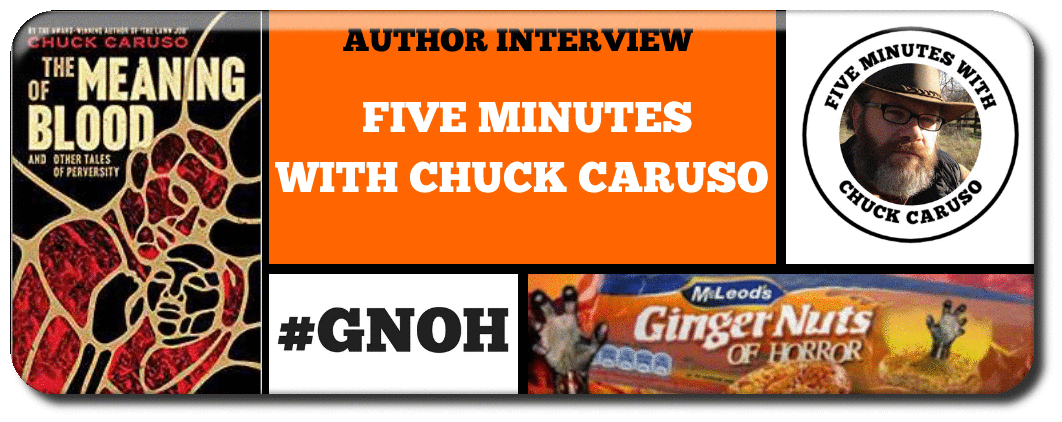 Could you tell the readers a little bit about yourself? My name is Chuck Caruso. I’m a lifelong reader and writer of dark fiction. By academic training, I’m a professor of 19th-century American literature, specifically the American Gothic. I wrote my doctoral dissertation on uncanny doubles in the work of Edgar Allan Poe. This fall, Cloud Lodge is publishing a collection of my short fiction entitled THE MEANING OF BLOOD AND OTHER TALES OF PERVERSITY. I love that title. It allows readers to be self-selecting. When you hear that title, you immediately know if the book is for you. There are several crime stories and some western noir stories, but the prevailing theme of the collection is horror. If you like Poe, I think you’ll like my stuff. What do you like to do when you're not writing? I play a fair bit of guitar and write my own songs. They’re more overtly comedic than my stories, which certainly have a dark humor but aren’t entirely funny. Playing at being a singer-songwriter provides an outlet for my sillier side. I’m also a board game geek. I love Euro-style strategy games like Through the Ages and Feast for Odin. I’ve got an entire bookshelf full of games. A few buddies and I game every Tuesday night. We even have a trophy that the week’s winner takes home at the end of the evening. I don’t win every time, but I’m happy to report that the trophy spends a fair amount of time on the mantel in my home. Other than the horror genre, what else has been a major influence on your writing? The type of horror I write really runs the spectrum from dark, disturbing westerns and gritty crime stories to what now gets called speculative fiction but what used to be thought of as a subcategory of science fiction and fantasy. For early influences, I’m thinking of work by Ray Bradbury, Shirley Jackson, Harlan Ellison, and Ursula Le Guin. Even Patricia Highsmith wrote some really weird and disturbing stories too. I’ve always been most excited and inspired by that imaginative, odd stuff that almost can’t be categorized. Alfred Hitchcock and Rod Serling were important to my early development too. The term horror, especially when applied to fiction always carries such heavy connotations. What’s your feeling on the term “horror” and what do you think we can do to break past these assumptions? I agree about those assumptions, but I do think the barriers are increasingly breaking down. Horror as a genre used to be viewed as sort of “shit lit.” The people who applied that label clearly didn’t read horror but they judged it harshly based on their mistrust of its popularity with the unwashed masses. Those old lurid covers probably didn’t help either, but the genre was viewed as poorly written, salacious garbage that succeeded by appealing to readers’ basest instincts. That attitude has been around a long time. At least since Poe, horror has been too easily dismissed as disgusting, sensationalist fiction that goes for cheap thrills and doesn’t really have anything serious to add to the literary conversation. But that view is simplistic at best, and at worst it’s completely wrong because it misses the point. When it’s written well and read sensitively, horror actually provides far deeper psychological and sociological insights and commentary than just about any other literary genre. That’s why we still read Beowulf and Gawain and the Green Knight. From a genre perspective, those classics would be classified as “horror.” Even Milton and Shakespeare use a lot of horror elements in their work. A lot of good horror movements have arisen as a direct result of the socio/political climate, considering the current state of the world where do you see horror going in the next few years? Well, I certainly think part of the recent resurgence of “horror” as a genre owes a lot to our current, troubled socio/political climate. Horror hasn’t been this “mainstream” since the 70s, which were also a time of great anxiety. As a genre, horror helps us understand and address our fears through powerful, often larger-than-life metaphors. I think right now we’re afraid of incomprehensible hordes of “the other,” which is why zombies have been dominant for the last decade or so. But notice how horror has more recently started to look at the zombie experience from a first-person perspective. We never used to see that before. Now becoming one of “them” is a real problem. First-person zombies are partly an attempt to deconstruct the idea of an absolute “other” but they’re also rooted in the fear of becoming “other.” The flip side of that same coin proves my point here. A lot of the very best and most exciting horror right now is being created by women and by people of color. The genre is growing and developing as it becomes more inclusive and cosmopolitan. If you want to see where horror is headed, you just need to watch films like Get Out, A Girl Walks Home Alone at Night, and Raw. Horror isn’t just about the fears of white, middle-class males any more. What are the books and films that helped to define you as an author? The tales of Poe were definitely a strong early influence. So were the stories of Ray Bradbury. I grew up watching Twilight Zone and Night Gallery. The Trilogy of Terror is one of the first horror shows that made a huge impression on me. My teenaged uncles were babysitting me and let me stay up to watch that with them. I loved it, but it gave me nightmares for weeks. What new and upcoming authors do you think we should take notice off? There’s so much great horror being written right now, and I’m thrilled that short fiction has remained so vital to advancing the genre. I absolutely love the short stories of Carmen Maria Machado, Jeremy Robert Johnson, and Mariana Enriquez. How would you describe your writing style? I try to write insightful, interesting prose that doesn’t call too much attention to itself. Part of the job of any artist is to stay out of the way and let the reader experience the work without thinking too much about how clever the author must be. I write character-driven horror where hell is other people but where the real monster almost always turns out to be the self. I go to some very dark places but I also try to balance things out with humor. I like to make my readers to laugh but then also to question why they’re laughing at such horrible things. Are there any reviews of your work, positive or negative that have stayed with you? I do read reviews of my work. I try to glean what I can and enjoy the praise when it comes. The few negative reviews I’ve gotten have made me feel like the reviewer didn’t quite “get” what I was doing. With the positive reviews, it’s always flattering to be compared to writers you admire. I’ve gotten some comparisons to Poe with this collection and that sort of goes to your head, but comparisons only get you so far. I must say that I like that readers can see the influence of people like Poe and Ray Bradbury and Elmore Leonard on my work. But my absolute favorite thing is when reviewers find my work compelling and disturbing. I love making people lose sleep. What aspects of writing to do you find the most difficult? Like a lot of creative people, I can be pretty scattered at times. I have a lot of interests and the ideas never stop coming at me. Probably the hardest thing for me is to stay narrowly focused on any single project long enough to really see it through from inception to a completed draft. Instead, I find myself working piecemeal, shifting from one thing to another. My creative process is messy and scattered. I shudder to think how many partial works I have in the hopper at any given time. Fortunately, there are deadlines. A hard stopping point always helps me wrap things up. Is there one subject you would never write about as an author? The short answer is no. If you’ve read my work, you know I don’t put limits on my creativity. In fact, I sort of pride myself on being willing to “go there” more than a lot of writers. We’re lucky that virtually nothing is off limits these days. One of my guiding principles for THE LAWN JOB was to write a classic noir novel that does what James M. Cain and Jim Thompson couldn’t. I wanted to write about topics that they would have explored if they’d been writing in the 21st century – legal weed, scary militias living in the woods, a transgender femme fatale. In my horror tales, I don’t hold back. I expect readers will struggle with a few of these stories. The collection starts off with “The Confession of Jeremiah Heath,” a tale about a man wrestling with his religious faith. Ultimately, it’s undeniably a horror story but it arrives at its horrors honestly. Both the story itself and the problem it presents for the reader are rooted in the narrator’s spiritual struggles. That philosophical problem isn’t just window dressing. And where the story takes us is troubling but it’s not simply meant for shock value. That would be too easy and too forgettable. This tale sticks with you because it’s an honest inquiry into a problem without an easy solution. That’s why I never shy away from confronting subjects. You can’t. How important are names to you in your books? Do you choose the names based on liking the way it sounds or the meaning? Naming characters is one of the most difficult things for me. I have to like both the sound and the meaning. I also want names to resonate and be memorable to the reader. A lot of times I find myself using placeholder names while writing an early draft because I could literally sit all day trying to name characters. Fortunately, sometimes names will just come to me. Usually that happens when the name doesn’t even seem like it could be a real name at all, but just an odd nickname. Those are the best. Writing, is not a static process, how have you developed as a writer over the years? No, writing is certainly not a static process. I think I’ve become a much better writer over the years, but only because I’ve written so much. I try to write at least a thousand words every day. I have to. When I miss a day or two, I have a hard time getting going when I come back to it. You have to practice endlessly to keep the words flowing and to develop your craft. Natural talent is great but it doesn’t necessarily get you very far. I’ve known lots of very gifted writers who didn’t progress because they didn’t stick with it. I definitely subscribe to that theory about how expertise comes from spending 10,000 hours doing something. Anybody can do anything. You just have to put in your reps. What tools do you feel are must-haves for writers? Commitment and dedication are the most essential things for any artist. You have to do your work. You can’t just want to “be a writer.” You actually have to write. That’s not the glamorous part. It’s the sweat and toil part, but it’s what separates the dreamers from the writers. Another important tool for writers is learning how to shut off the internal editor. Nobody writes a perfect draft the first time. You need to write anyway. Even if you think what you’re writing it crap, you have to get it written down. If you write it, you can fix it later. If you don’t have that shitty first draft, you have nothing. What is the best piece of advice you ever received with regards to your writing? Ray Bradbury told me, “Vomit in the morning and clean up at noon.” When I was younger and living in Los Angeles, I was blessed to spend an entire afternoon with Bradbury. He’d long been a hero of mine, so I soaked up every bit of wisdom he could offer. He told me that when he started his writing career he made a commitment to write a new story every week. He reasoned that if he wrote fifty-two stories a year, even if most of them were bad, at least a few of them would be good. And gradually more and more of them would be good. That works. I’ve followed that same method myself. Write as much as you can and some of it will be good. Bradbury kept a sign over his desk that said, “Don’t think.” I think that’s exactly right because it serves double duty. It gets you to a draft you can revise, but it also reminds you that you need to get out of your own way and let you subconscious bubble out with all the crazy stuff you won’t find if you’re constantly editing and censoring yourself. Getting your work noticed is one of the hardest things for a writer to achieve, how have you tried to approach this subject? Yeah, getting attention is hard. Social media seems like it would help but it really just amplifies the problem. Everybody has a megaphone now. I just try to do the best work I can do and put myself out there in places where I’ve personally discovered other new writers. If you can make appearances on websites and podcasts that your tribe frequents – places like Ginger Nuts of Horror – you’ll start to be noticed more. But it all comes back to doing the work in the first place. You need to master your craft so that you’ve got quality material. It’s all well and good to catch momentary attention, but at the end of the day you want readers to crave more and more. That comes from doing consistently good work. To many writers, the characters they write become like children, who is your favourite child, and who is your least favourite to write for and why? I really like my idiot children. There’s something very gratifying about writing a good dumb character, or a character who’s entirely motivated by lust or greed or addiction. Of course readers tend to prefer the clever ones, but those are more difficult to write. The characters that know too much can start to cause trouble for you as a writer because you can’t just make them fall in line and behave properly and according to plan. I strongly believe that the best writing gives full and fair human motivation to every character, which makes plotting a real challenge. That said, when you nail it, you’ve really got something. What piece of your own work are you most proud of? I’m always most proud of the last thing I’ve written because each new thing represents another challenge that I’ve conquered. So, in my new collection, I’m probably most proud of “The Fucking Robot” because that was the story I wrote last. I love reading science fiction but I’ve never felt like I could write it. That story crosses the line into near-future speculation. Barely, but I’ll count it. The story also addresses a moral question that I had been wondering about for a while: does having sex with a robot count as cheating on your human partner? I like when I manage to write something that explores an issue that’s been nagging at me. And are there any that you would like to forget about? Of course, I’ve had plenty of false starts and seemingly brilliant ideas that absolutely fell apart as I tried to write them. Happily, those tales are collecting digital dust somewhere in the recesses of my laptop. For those who haven’t read any of your books, which of your books do you think best represents your work and why? I think this new collection THE MEANING OF BLOOD AND OTHER TALES OF PERVERSITY gives a very good sense of my work because it shows the wide range of things I do while amply demonstrating my dark turn of mind. Do you have a favorite line or passage from your work, and would you like to share it with us? I slaughter my darlings as much as possible. Readers aren’t necessarily as impressed by an author’s cleverness as the author himself tends to be. That said, I really like the following sentence about a couple freshly dead pimps from one of my western tales: “They lay together in an obscene heap, oozing thick blood onto the wooden floor and twitching in a morbid parody of the carnal act they had spent their lives selling.” I also take a great deal of joy from finding opportunities to wink at clichés and bits of purple prose from my favorite pulp writers. In my pirate horror tale “Adrift on a Sea of Hunger,” I use the word “quoth” instead of “said” and I get to put a bunch of hungry zombies in a life raft. In my pit fighter story “Savage Smile” I managed to use the phrase “naked but for a loincloth” which is something straight out of Edgar Rice Burroughs or Robert E. Howard. Similarly, the blood in my tale “Hatchet Job” is called “ichor.” Can you tell us about your last book, and can you tell us about what you are working on next? My last book was my debut crime novel, a neo-noir called THE LAWN JOB came out last summer from London-based indie press Cloud Lodge Books. In addition to some very nice reviews, the novel won an Independent Publishers bronze medal, an IPPY, for best regional fiction. As I mentioned earlier, that novel puts new, 21st-century flesh on the old bones of noir crime fiction from the 30s, 40s, and 50s. With my new project, I’m working on introducing a series character. That’s something I’ve resisted in the past because it can really box you in as a writer, but I’ve found that readers who like my characters want to know more about them. Part of that comes from a technique I use where I have my characters gesture outside the current plot toward the larger world they inhabit. They’ll make unexplained reference to things that happened before or are going on off-stage as it were. That richens the reader’s experience and makes readers curious. So, I’m venturing into some uncharted territory now. I love to keep challenging myself. If you could erase one horror cliché what would be your choice? I think I’d erase the cliché of the diabolical mastermind who just enjoys tormenting people for no particular reason. This has given rise to a lot of torture porn and kind of empty stories where a group of strangers find themselves trapped in a puzzle house where they’re picked off one by one. I find that stuff sort of boring because it can tend to empty out all the characters. I like my horror to have a more philosophical edge to it. I like characters who grapple with legitimate issues that lead them into troubling territory. I want my horror to be more like Greek drama or Shakespearean tragedy. What was the last great book you read, and what was the last book that disappointed you? Oh, there’s so many great books coming out all the time that I can barely keep up with them. I’m reading Alma Katsu’s novel The Hunger right now and it’s a brilliant retelling of the Donner Party story. I dug Jonathan Janz’s Children of the Night. Christopher Golden’s Ararat was awesome. Laura Lippman’s neo-noir Sunburn was wonderful. I already mentioned those collections of stories by Machado and Johnson and Enriquez. Books disappoint me all the time too, but I’m pretty quick to set things aside these days. I don’t have time to read all the great stuff, so I’m not going to waste much effort on something that doesn’t grab me. If I’m not hooked by the first 30 to 50 pages, I’m done. Usually it’s because the characters are flat and there’s nothing at stake but sometimes its because the prose is clumsy and distracting. What's the one question you wish you would get asked but never do? And what would be the answer? Nobody ever asks me why I write. Maybe that seems too obvious, but I suspect we don’t ask authors why because it’s too scary of a question. But the answer is that I write to face down my own demons. I write to make sense of things that I can’t otherwise begin to understand, like the problems of evil, and man’s inhumanity to man, and why we desire the very things that destroy us. 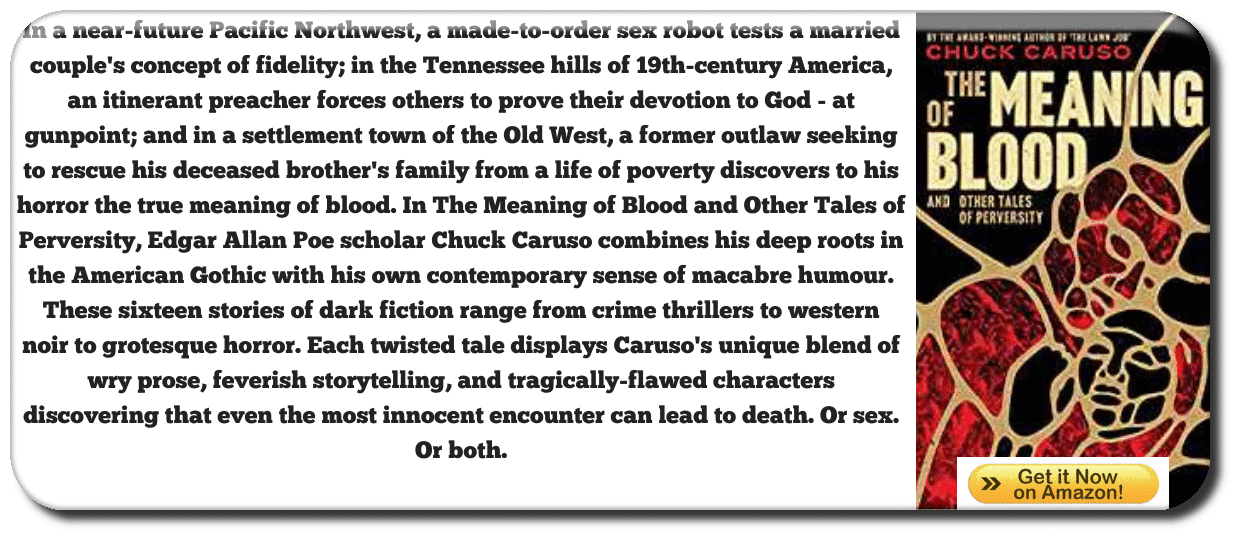 
FIVE MINUTES WITH AUTHOR SEÁN O’CONNOR
5/11/2018
 Seán O’Connor was born and grew up at the foot of the Dublin Mountains. From a young age he became fascinated with fiction, particularly stories based on the supernatural, horror, and the darker side of the human psyche. His debut book, The Mongrel, was published in October 2018 by Matador Publishing. He currently resides in Fingal County on the north side of Dublin, with his Fiancée and son, where he is at work on his next tale of woe. Could you tell the readers a little bit about yourself? I hail from Ireland and am set to get married to a wonderful woman next year. I’m also the proud father of a two-year boy and our little family resides in Swords, Dublin. Outside of family life, I do my best to go watch my favourite football club, Shamrock Rovers, but that tends to be an exercise in futility for the most part. What do you like to do when you're not writing? Unfortunately, having a busy family life and a day job doesn’t leave a lot of room for hobbies or personal time. When I do get downtime, I tend to use it to catch up with my parents and friends, watch football or if I am lucky to have a quiet house, read something. Other than the horror genre, what else has been a major influence on your writing? Music. For over a decade I played bass in various metal bands. Through this medium, I feel fortunate enough to have met some great people and got to play in cities I would never have thought to visit. My most recent band, Venus Sleeps, I learnt a lot about the creative process and which I applied to my writing. The term horror, especially when applied to fiction always carries such heavy connotations. What’s your feeling on the term “horror” and what do you think we can do to break past these assumptions? I think horror is viewed as a bit of a gimmick. Same as heavy metal is perceived to be just, noise. Yes, there is a lot of rubbish produced under the banner across the entire genre, but like all things, you need to dig a little deeper and the rewards are there. A lot of good horror movements have arisen as a direct result of the socio/political climate, considering the current state of the world where do you see horror going in the next few years? Well, I think there is danger of horror becoming too political with a focus on current affairs. Social media probably has a massive part to play with this. I would like to see authors dig deeper than that and explore the depts of what this genre offers. What are the books and films that helped to define you as an author? That’s a hard question, but if I had to narrow it down to a few stand out pieces, I would start with a non-horror book. The Road by Cormac McCartney. The power and impact both the book and film had on me cannot be underestimated. I read and saw both before I was a father and was disturbed, but when I read the book again and watched the film after my son was born, well, that’s when it really hit home with me and I felt a real fear. I used to read books for entertainment, but The Road, made me realize that creating books is one of the most important things a person can do with their life. So, in a way, it almost acted as a calling to me to get serious about my writing and give more commitment to it. What new and upcoming authors do you think we should take notice off? Off the top of my head, I’m going to mention, Matt Hayward, Alex J. Knudsen and Ted E. Grau. All three bring a fresh new voice to the world of dark fiction. I believe they deserve attention as they all have a long and interesting writing career ahead of them. How would you describe your writing style? Dark. I always try to keep it dark, because it is most real and truthful realm in reality. Sure, we’d all like to live in a world made of peace, love and happiness, but humans are not designed for that. Overall, I believe we are a decent enough species, but our vices pollute the mind and in every corner of the globe something bad is happening. When it comes to writing, I try to hone in on that. It’s uncomfortable and will burst some people’s bubbles, releasing them from their comfort zones, but it’s real, raw and it is the world we live in - I feel is important to talk and write about these things and that they should be out there. Are there any reviews of your work, positive or negative that have stayed with you? With my book, The Mongrel, I was surprised by the positive reaction it received in the Bookstagram community. It received a lot of praise, which I still find difficulty in understanding. Especially seen as though the majority of them seem to be Stephen King fanatics. What aspects of writing to do you find the most difficult? Sitting down to write. I’ve been pretty good the last year and a half with getting my arse into the chair and chipping away at something. But, after a long day getting the kid to creche, commuting into the city, a full day’s shift in the day job, commute home, make dinner, get the kid ready for bed, then spend some time with my other half, the last thing I want to do is sit down and start writing. I want to fucking sleep! But, I’ve slowly trained myself to do something every night. Which has worked out really well for me so far. Sometimes it is only for thirty minutes, others can have me up until 4AM. It all depends on the night. Is there one subject you would never write about as an author? Not really. I’d hate to pigeon hole myself into a certain theme or topic. I think everything should be game ball depending on what the story wants. When I started the first draft of The Mongrel I had no idea it would end up as a werewolf book. I’m not actually a big fan of werewolves, but at some point during the writing process, a werewolf came into play and I had to run with it. How important are names to you in your books? Do you choose the names based on liking the way it sounds or the meaning? My characters names aren’t that important to me. What is important is what they do in the book. I normally go with a name that rolls of my tongue and try and work it into the books theme. For example, I wouldn’t have a dark fantasy story with a lead character called, Billy Maguire. Names are a part of the fabric that makes up the book’s universe as well as the theme, setting and tone. Again, I tend to go with what the story wants and not what I think is a ‘cool’ name. Writing, is not a static process, how have you developed as a writer over the years? I began writing non-fiction articles. One was for a matchday program for a football club called Shamrock Rovers. The other was for a Webzine called The Sleeping Shaman, where I reviewed albums. But, that didn’t satisfy as a writer. I was drawn to fiction, and dark fiction at that. But ever really knew how to write anything of substance or length. When I made a promise to myself of having a few published books my shelf someone, I learnt that I had to learn a whole craft. I studied a few creative books, and listened to established writers about their processes. It turns out the important thing is the most obvious thing and that is that writers write. No one can develop as a writer without practice. I try to write every day, some are obviously better than others, but the muse of inspiration as a way of rewarding you when you put the work in. So, I try not to sit around waiting for her, I aim to draw her out. What tools do you feel are must-haves for writers? When I decided to take on the dream of becoming a published writer, I quickly learnt that a few things to make it happen are essential. Access to a computer with a word processor like Microsoft Word is a given. But handing someone a blank canvas and a paint brush doesn’t mean that a work of art is going to appear. These are just the tools, but the environment is must-have for me. I’m lucky that my family allow me time alone for me to go into my own space and play around with the tools – Without that, I’d never write anything. Then again, what works for me, won’t work for others. I’ve read about people writing while sitting in a coffee shop all day? I couldn’t do that. What is the best piece of advice you ever received with regards to your writing? I’m lucky to have a while range of creative people in my life. So, when it came to sending out some of my first draft pages, I had people who were honest about how shit it was. But, they also offered advice on what to do with it and thankfully I listened. Getting an editor on board was the single most important decision I have made that helped me get my writing from a pile of words into a published book. Getting your work noticed is one of the hardest things for a writer to achieve, how have you tried to approach this subject? As much as I hate it, it is unfortunately a necessary evil. Social Media. With The Mongrel, I’ve decided to take on the marketing side of things myself and have been using Facebook, Twitter and Instagram to get my book out. Facebook is a dying platform and Twitter is fairly useless, but I found the book reading community on Instagram to be very positive and engaging. With the help of passionate readers, they’ve helped me get my book noticed and I really appreciate that. To many writers, the characters they write become like children, who is your favourite child, and who is your least favourite to write for and why? I suppose, Philip Montague, for both favourite and least favourite. In the book, he is a nasty piece of work. But at the same time, I know a lot of men like him from where I grew up. I can understand his frustrations with life in modern day Ireland. Obviously, this doesn’t excuse his actions, but when I wrote about him, I wished that he’d turn out good or have someone to come in and support him. What piece of your own work are you most proud of? At this moment in time, my one and only published book, The Mongrel. The hardback edition. When I first held it in my hands, I felt a surge of joy that came close to holding my son in my arms for the first time. And are there any that you would like to forget about? Oh I have few manuscripts in the desk drawer that I have no intention of ever looking at again. For those who haven’t read any of your books, which of your books do you think best represents your work and why? Well, as The Mongrel is my debut book, I would have to ask those who haven’t read it, to go check it out. And if they do, please leave a review, good or bad. Do you have a favorite line or passage from your work, and would you like to share it with us? I like the closing passage in The Mongrel. I won’t share as it might spoil it for those who haven’t read it. But, that is one part of the book that I am proud of. Can you tell us about your last book, and can you tell us about what you are working on next? Certainly, my debut book, The Mongrel, is available now in Hardback, Paperbook and eBook by Matador Publishing. It can be purchased in any good bookshop and all online retailers. As for future works, all going to plan, in 2019 I hope to publishing a novel. I have the title for the book, but won’t reveal it now. I also have a collection of novelettes that will be published in early 2020. All will be revealed closer to the time. If you could erase one horror cliché what would be your choice? I would love to erase the “cheesy” side of horror and allow the genre become the serious subject that it really is. Gimmicks and fancy dress take the gloss off the dark undercurrent that is the foundation of the genre. But then again, who I am to take away the fun side of things for people. What was the last great book you read, and what was the last book that disappointed you? The last book to blow me away was The Fisherman by John Langan. It’s not everyone’s cup of tea, but fuck me that book consumed me and take me away from the world while I read it. As for disappointment, I only read The Haunting of Hill House by Shirley Jackson this year. I won’t say I hated it, but I certainly can’t see what all the fuss is about. What's the one question you wish you would get asked but never do? And what would be the answer? Are you happy? I suppose… 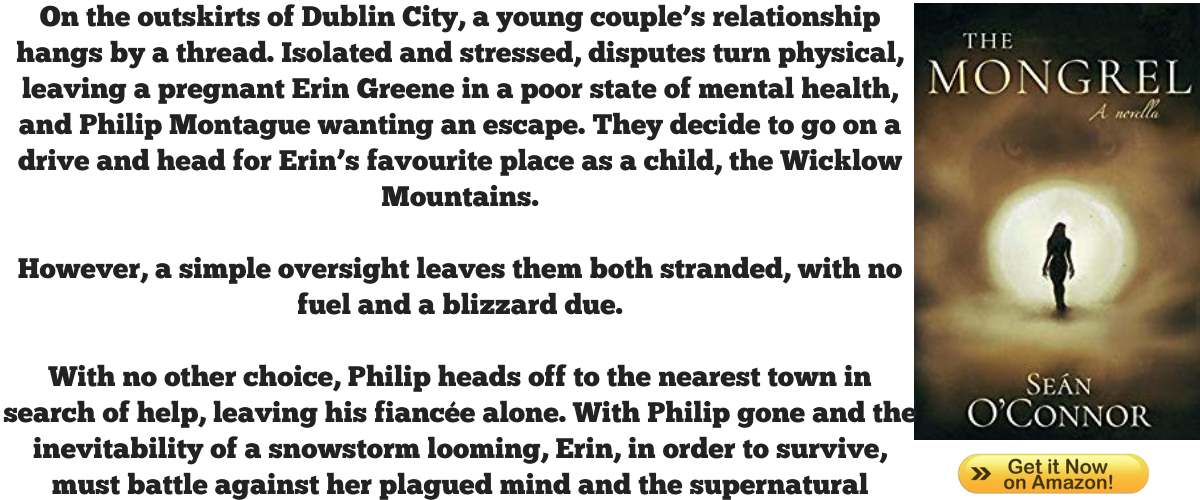 
|


Archives
May 2023
|



 RSS Feed

|

|