• HOME
  • CONTACT / FEATURE
  • FEATURES
  • FICTION REVIEWS
  • FILM REVIEWS
  • INTERVIEWS
  • YOUNG BLOOD
  • MY LIFE IN HORROR
  • FILM GUTTER
  • ARCHIVES
    • SPLASHES OF DARKNESS
    • THE MASTERS OF HORROR
    • THE DEVL'S MUSIC
    • HORROR BOOK REVIEWS
    • Challenge Kayleigh
    • ALICE IN SUMMERLAND
    • 13 FOR HALLOWEEN
    • FILMS THAT MATTER
    • BOOKS THAT MATTER
    • THE SCARLET GOSPELS
GINGER NUTS OF HORROR
  • HOME
  • CONTACT / FEATURE
  • FEATURES
  • FICTION REVIEWS
  • FILM REVIEWS
  • INTERVIEWS
  • YOUNG BLOOD
  • MY LIFE IN HORROR
  • FILM GUTTER
  • ARCHIVES
    • SPLASHES OF DARKNESS
    • THE MASTERS OF HORROR
    • THE DEVL'S MUSIC
    • HORROR BOOK REVIEWS
    • Challenge Kayleigh
    • ALICE IN SUMMERLAND
    • 13 FOR HALLOWEEN
    • FILMS THAT MATTER
    • BOOKS THAT MATTER
    • THE SCARLET GOSPELS
GINGER NUTS OF HORROR
horror review website ginger nuts of horror website
Picture

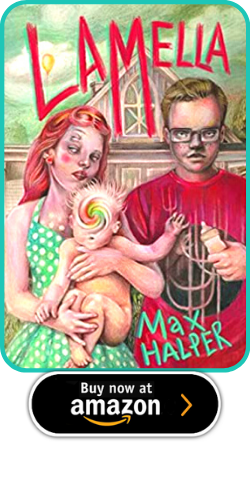
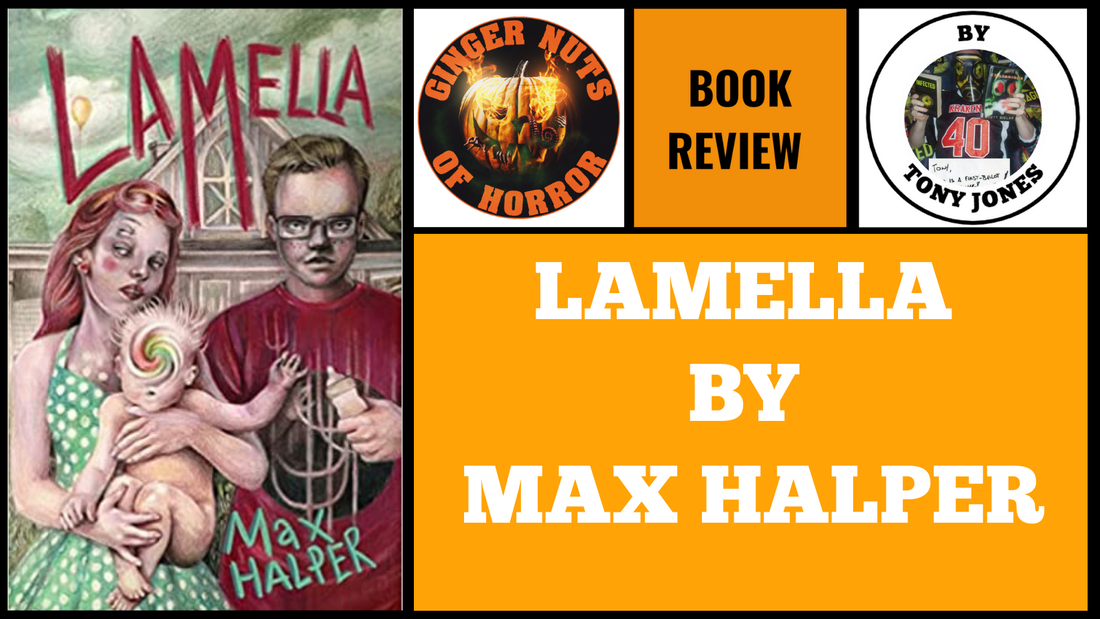
BOOK REVIEW: LAMELLA BY MAX HALPER

9/2/2022
Picture

An unexpected arrival leads to a surreal and disturbing bad trip
Sometimes the jib of a particular publisher catches your eye and when they drop something new interest skyrockets, Bad Dream Entertainment are such a small press. Back in 2020 they released Thomas Vaughan’s totally bizarre and hallucinogenic The Ethereal Transit Society which I reviewed for Ginger Nuts of Horror here:


https://gingernutsofhorror.com/fiction-reviews/book-review-the-ethereal-transit-society-by-thomas-vaughan 


I was so impressed by this bad trip tale of cosmic horror featuring cults and UFOs it also slotted into my top ten novellas of 2020 over at the Horror DNA site where I also review:


https://www.horrordna.com/features/tony-jones-top-ten-horror-novellas-of-2020


Lamella is Bad Dream Entertainment’s first release since The Ethereal Transit Society and so I just had to read it and the end result is an equally stranger and unnerving experience. This cool small press specialises in dark fiction, horror, science fiction, and humour and this latest oddity gleefully dances around most of those sweet spots. I loved Lamella and struggled to put it down and not to read its 154-pages in one single sitting. To be frank, I was really not sure what I was reading (or whether I was missing something of major significance) but found the fast paced, easy to read style, highly engaging and was sorry to reach the end.


Although Lamella is broadly horror, it is more in tune with Bizarro Fiction, which is defined by Eraserhead Press as “if an audience enjoys a book or film primarily because of its weirdness, then it is Bizarro.” I am far from an expert on this type of wackiness, but Lamella fits this description almost word-for-word and is vaguely reminiscent of other Bizarro leaning authors I have reviewed, including John Bassoff, Amy M. Vaughn, Nicole Cushing and Andrew Stone.


Before getting to the plot of Lamella, I want to highlight one of its major strengths (out of context) to avoid spoilers. The story is revealed through two closely interconnected plotlines which are linked by the major character, and first-person narrator, Mel Lane. What makes them unique is that they seemingly move at different time speeds, with one narrative taking place over a weekend and the other over a much longer period, with neither being truly aware of the other progressing at a different pace, or if they are it is not noted as significant. Confused? Do not worry, if you read Lamella you will quickly figure out what I meant. This led to a deliberately disjointed but highly engaging reading experience which clicked together nicely, even though it was totally off-the-wall.


Both plotlines are based around the internal anxieties of central character Mel who teaches English courses at a further education college. He enjoys his job but has limited ambitions and his teaching workload revolves around the basics of ‘101’ courses to students who need to pass his class to progress onto other things. However, things start to strangely unravel after he reports a student for plagiarism, who submits an excellent third essay after two earlier stinkers. Mel does not think much of this until the student then counter-reports him to the college, claiming he has been singled out, and an investigation begins. There is no Bizarro element to this part of the story, but at the same time it was populated with strange interactions and an almost Kafkaesque investigation into the student accusation which by its nature increases the anxiety of Mel who feels completely isolated. Although this was not the main part of the story I found it totally absorbing and perfectly balanced with Mel’s even stranger home life. Bizarro Fiction is often at its most effective when the mundane contrasts with the strange and Lamella does than in some style.


Mel returns home from work one day and finds his girlfriend has a baby, however, they did not have a child that same morning. Where did the baby come from? Why does she act as if the baby has always been there and that he is the father? Why does he not remember the pregnancy? One would imagine that these are all perfectly reasonable questions. To make things worse he realises his office has been turned into a nursery for the baby. This is only the beginning, the baby (or ‘it’ as Mel continually refers to the child) has holes in its face and does not even look human. Welcome to the world of Bizarro Fiction, and from that moment on things just get stranger, whilst the issues from his day job rumble on with Mel stressed that he is going to get into hot water over the student plagiarism issue.


Readers will have a lot of fun disappearing down a rabbit hole of identity with Mel who finds it increasingly difficult to focus on reality. Along the way there are a few incredibly disturbing (and grossly funny) scenes regarding ‘it’ as Mel struggles to cope with fatherhood, his girlfriend, his family and his own sanity. Lamella (also known as ‘it’) was a darkly surreal and thought-provoking story and if you ever thought the baby in David Lynch’s Eraserhead was as bad as it gets, think again and read Lamella. This was one of those novellas where there were no easy answers (even the questions themselves were obscure), but the journey was a trip in itself. Having finished this novella I’m none the wiser, but whoever said books had to make sense?


Tony Jones

Lamella Paperback 
by Max Halper

Picture

Mel Lane assumed his life was on the track it was supposed to be: a career with upward movement, a home, a long-term relationship. That is, until he comes home one day to a girlfriend he knows and a child he doesn't. Stranger still, no one else seems disturbed by the child's presence-or by its bizarre, inhuman features. Mel is a reasonable man, and he knows there is a reasonable explanation-but once the veil of reality begins to ripple, the world around him becomes something he simply doesn't understand. Worse yet, it's becoming very clear that he may never have understood it quite as well as he thought he did.


He knows there are answers, written somewhere on the walls or in the airwaves, but finding them will mean confronting truths about himself and the people around him as he spirals down a rabbit hole of identity and place that will threaten to upend the delicate balance of his life.


A darkly surreal and thought-provoking story, 'Lamella' is the debut novella of American author Max Halper.


​TODAY ON THE GINGER NUTS OF HORROR WEBSITE ​

Picture

THE HEART AND SOUL OF HORROR FICTION REVIEWS ​

PAPERBACKS FROM HELL: THE AUCTIONEER BY JOAN SAMSON

8/2/2022
PAPERBACKS FROM HELL THE AUCTIONEER BY JOAN SAMSON
The Auctioneer is something of an outlier among Valencourt’s Paperbacks From Hell line, for a number of reasons. Firstly, it was an undeniable smash hit at the time of release. Drawing near universal critical praise from outlets like Newsweek and The New York Times, selling in excess of a million copies and being advertised on television (a rarity for books, even at the time) it was even picked up for a film option that future printings teased on the cover (“Soon to be a major film”). It was a runaway success for first time novelist Joan Samson. Tragically, it proved to be her only novel, as she passed away mere months after the books release. The movie adaptation never materialised, the book went out of print, and The Auctioneer faded into relative obscurity.

Another thing that separates The Auctioneer from other horror paperbacks of this era, is how subtly it tackles its subject, and how insidiously the horror creeps up on you. It isn’t just that it is a slow burn of a book (which it is), but it manages to find horror in the most ostensibly innocuous of exchanges. There is little to no action, not a drop of blood, yet it is an immensely affecting and painfully unsettling book that finds all too plausible horror in the seemingly mundane.

Set in a small New England town in the early 1970s, The Auctioneer focuses largely on the Moore family. John Moore lives on his families farm, passed down from the previous generation, with his wife, young daughter and elderly mother. There life isn’t an easy one, but they are content, and fiercely proud of the home they have built. They care deeply about their small community, most of whom they have known their entire life, so think nothing of it when Perly Dunsmore, a new arrival in town, begins requesting donations in order to raise funds for improvements to the local police force.

When the funds are raised and the police force is increased, deputising disreputable locals into newfound positions of power, the requests for donations continue, suggesting unspoken consequences for those who dare refuse, the proceeds now lining the pockets of Perly. As the Moores find their livelihoods being literally taken from them by the charming yet conniving outsider, they’ll find their community, their relationships and their very lives at risk in this harrowing tale of helplessness and greed.

Things escalate so gradually in The Auctioneer that events have taken a subtly dark turn long before the reader realises it, the author deftly putting us in the same position as the book’s characters, whereby we don’t realise quite what we’re in for until it’s too late. What begins as a seemingly mutually beneficial arrangement whereby the towns’ residents are able to rid themselves of some unwanted belongings in exchange for some welcome cash, while also being able to support their community slowly but surely becomes something else entirely. The requests for items to sell at the auctions continue and, with the clutter gone, the families become less willing to part with their remaining properties. They realise too late that their previous generosity and community spirit has lined the pockets of a man who has no qualms using the proceeds from what they freely gave to squeeze even more from them. I wont spoil just how far things escalate, but rest assured it is a shocking revelation, and one you will not see coming.

The Auctioneer boasts a fantastic cast of characters, whether that be the stoic but conflicted lead of John Moore, torn between defending the only life he knows and protecting his family, his wife and mother who act as the personifications of this inner conflict, or local farmer turned officer Mickey Cogswell, who goes through a very different, but no less interesting journey as a result of Perly Dunsmore’s arrival in town. It is Perly Dunsmore who, unsurprisingly, steals the show and proves himself to be a literary creation you wont soon forget. He is an incredibly charismatic and charming man, friendly and affable almost to the last page. His actions, however, belie the outwardly amiable persona, making him one of the most evil and reprehensible characters ever put to paper. The callous indifference he shows in his treatment of the townspeople is unnerving and what makes him so disturbing to read is that he takes no joy in any of the acts he commits, but nor does he regret a single one. He is motivated purely by what he can take and the ease with which he manipulates everyone around him, and the extent to which he is successful, is what makes him scary.

Reading The Auctioneer, you can’t help but wonder what might have been, should Joan Samson been able to keep on writing, because it is an incredibly effective and wonderfully evocative book. There is clearly a lot of passion for the locale, which shines through when the focus is on John and his family, and which really pays dividends when the story gets going and the stakes get higher. The prose is tight and straightforward, like the story itself, and the book doesn’t build tension, so much as it is a constant, lingering presence throughout, never letting up. When you consider this was a debut novel, it makes how effective it is all the more impressive.
​
Thirteen books into the Paperbacks From Hell line, which has featured killer creatures, vampires and monsters both human and otherwise, it is difficult to express why such a low key story about an unscrupulous auctioneer is the most unsettling book of the series to date, but it is the fact that it is so understated that makes it so horrifying. It’s an all too plausible look into what can happen when you let your guard down and how easy it is to gradually find yourself in an increasingly hopeless situation. The Auctioneer may not be your typical Paperback From Hell, but it may well be the best example of just how good these books could be.
         
Join me next time when I’ll be sharing my thoughts on Gwen in Green by Hugh Zachary. If you’d like to read along with this series and want to pick up copies of the books, or learn more about Valancourts’ Paperbacks From Hell line, visit their site at www.valancourtbooks.com/paperbacksfromhell


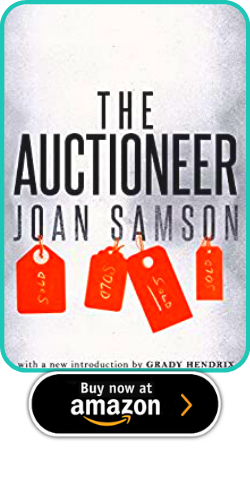
The Auctioneer 
by Joan Samson  

Picture
One of the finest and best-selling horror novels of the 1970s returns at last to chill a new generation of readers

In the isolated farming community of Harlowe, New Hampshire, where life has changed little over the past several decades, John Moore and his wife Mim work the land that has been in his family for generations. But from the moment the charismatic Perly Dinsmore arrives in town and starts soliciting donations for his auctions, things begin slowly and insidiously to change in Harlowe. As the auctioneer carries out his terrible, inscrutable plan, the Moores and their neighbors will find themselves gradually but inexorably stripped of their freedom, their possessions, and perhaps even their lives ...

A chilling masterpiece of terror whose sense of creeping menace and dread increases page by page, Joan Samson's The Auctioneer (1975) is a rediscovered classic of 20th-century fiction. With echoes of Shirley Jackson's "The Lottery" and Stephen King's Needful Things, Samson's novel returns to print at last in this long-awaited new edition, which features an introduction by Grady Hendrix (Horrorstör, Paperbacks from Hell) and an afterword by the author's husband.

"Buy this book ... there is no way to stop reading it, once you've started!" - Baltimore Sun


TODAY ON THE GINGER NUTS OF HORROR WEBSITE ​

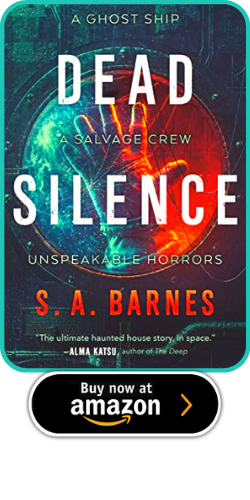
BOOK REVIEW: DEAD SILENCE BY S.A. BARNES

HOW SHOULD THE GUILTY BE PUNISHED? A COVER REVEAL FOR THE BUTCHER BY LAURA KAT YOUNG

Picture

THE HEART AND SOUL OF HORROR BOOK REVIEWS

BOOK REVIEW: DEAD SILENCE BY S.A. BARNES

8/2/2022
Picture
Is it possible to ever read a book without some preconceived misconceptions? Suppose you read the back cover copy for S.A. Barnes latest novel Dead Silence. In that case, you could easily be forgiven for thinking that you are about to read a novel that riffs on such films as Ghost Ship. By the time you reach the third half of this, you could easily be forgiven that thinking you are about t take a deep dive into an Event Horizon piece of fan fiction. I'll admit that I had some concerns about how the story was going to unfold at this point. Did I want to invest my time in a book that felt like I had read the plot a million times before? My preconceived thoughts about the book were fighting with the enjoyment I was having reading it, which sounds odd; I know, why would you stop reading a book that you enjoyed? But when you have hundreds of other books waiting to be read, do you want to invest your limited reading time reading a book that you have read so many times before from other authors. I almost put the book aside, but there was something special in Barnes' writing style, and more importantly, Barnes had created a fascinating main character in Claire Kovalic. These were enough for me to keep Dead Silence in my hands, and oh boy, was I so glad I did.  


Dead Silence is a wonderfully multilayered science fiction horror thriller; However, most of the horror doesn't appear directly on the page; the true horror of the story comes from how the characters are used by their employers to discover the truth about what happened to the luxury space liner. I won't say too much more about this as the story's truth is perhaps one of the bravest moves in plot development that the author could have taken. Barnes could easily have taken the safer, more well-travelled path in terms of narrative structure, and to be honest, it would have still resulted in a highly entertaining story. However, the massive curveball she throws into the mix is a pure stroke of genius. It not only elevates Dead Silence beyond the trappings of readers expectations in where the story is going, but it also gets the author out of a tight spot. There were many other ways the author could have taken the story. Still, all of the ones playing out in my head all felt somewhat lacklustre and filled with too many problems in terms of how it could lead to a successful and fulfilling conclusion. I'll put my head on the line here and say that it was one of the best reveals I've read in recent times, it might annoy some readers, but if you look critically at the narrative of the story, it fits perfectly.  


As mentioned earlier, Barnes has created a fascinating protagonist in Claire Kovalic; unreliable narrators are always an intriguing hook on which to hang the narrative onto, and Claire is a truly fascinating character. Deeply traumatised by previous events, she is stronghanded into leading the salvage mission. Haunted by the ghosts of her past, can we genuinely believe what she sees? Claire could easily have been portrayed as another kickass Ripley or Pvt. Vasquez hellbent on revenge on the forces that slaughtered her previous crew. While these two character tropes are fun to experience, the more relatable way Claire handled it brings more humanity to the story. I mean, who among you would turn into an all-action hero after witnessing the whole of your off-world settlement being callously left to die and then watching as your salvage crew are picked off by mysterious forces while attempting to salvage a ship filled with the corpses of its crew and passengers. Truthfully you'd be a nervous wreck; I know I would be.  


Barnes handles Claire's trauma with a sensitive and thoughtful eye, which can only come from a writer writing from the heart, from personal experience. Anxiety and fear are crippling conditions that make you take some very odd and somewhat stupid decisions, and it was an utter joy to see a protagonist that was so easy to relate to and get behind.  


Dead Silence is one of those horror novels that gleefully plays with genre tropes and the reader's expectations, tightly written, brimming with fascinating ideas, and a razor-sharp critique of big business and insignificance of us mere grunts. This is a haunting story that allows the tension to build at a perfect rate, dropping in some genuinely grotesque imagery along the way to a fitting and perfect ending. Any concerns I had about this story were blown out of the airlock long before I finished reading this deeply entertaining novel, Dead Silence, is so good you should all be screaming about it.  


 They used to say, "In space, no one can hear you scream," after reading Dead Space, it should be, "Even if they did, they just don't care." ​

Dead Silence 
by S.A. Barnes  

Picture
​Titanic meets The Shining in S.A. Barnes’ Dead Silence, a SF horror novel in which a woman and her crew board a decades-lost luxury cruiser and find the wreckage of a nightmare that hasn't yet ended.

A GHOST SHIP.
A SALVAGE CREW.
UNSPEAKABLE HORRORS.

Claire Kovalik is days away from being unemployed—made obsolete—when her beacon repair crew picks up a strange distress signal. With nothing to lose and no desire to return to Earth, Claire and her team decide to investigate.

What they find is shocking: the Aurora, a famous luxury spaceliner that vanished on its maiden tour of the solar system more than twenty years ago. A salvage claim like this could set Claire and her crew up for life. But a quick search of the ship reveals something isn’t right.

Whispers in the dark. Flickers of movement. Messages scrawled in blood. Claire must fight to hold on to her sanity and find out what really happened on the Aurora before she and her crew meet the same ghastly fate.

​TODAY ON THE GINGER NUTS OF HORROR WEBSITE ​

PAPERBACKS FROM HELL: THE AUCTIONEER BY JOAN SAMSON

HOW SHOULD THE GUILTY BE PUNISHED? A COVER REVEAL FOR THE BUTCHER BY LAURA KAT YOUNG

Picture

THE HEART AND SOUL OF HORROR FICTION REVIEWS 

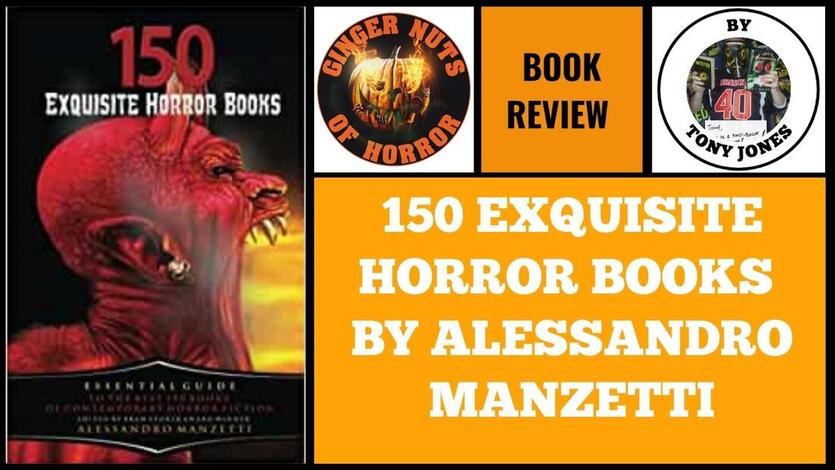
150 EXQUISITE HORROR BOOKS BY ALESSANDRO MANZETTI

4/2/2022
HORROR BOOK REVIEW 150 EXQUISITE HORROR BOOKS BY ALESSANDRO MANZETTI
Don’t know what to read next?

Alessandro Manzetti will happily sort you out…
In 150 Exquisite Horror Books: Essential Guide to the Best 150 Books of Contemporary Horror Fiction Alessandro Manzetti provides 150 short reviews of novels published between 1986 and 2020. These are all personal choices he loves and recommends. According to the author this specific date range allows him to feature the Splatterpunk movement, Extreme Horror, whilst also covering the renewal in the genre from kicked-off around the mid-eighties. Each novel is presented with its own page and a 100-to-200-word review with cover graphics. With such a short word count each piece lacks the level of detail you might find on any similar horror website review, but nevertheless provide nice engaging summaries which also indicate which type of reader might like the book. Released by Crystal Lake Publishing, this directory is inexpensive and represents excellent value for money, being very easy to dip in and out of, with more academic examples such as The Readers' Advisory Guide to Horror incredibly expensive in comparison.

Considering Manzetti recommends all the books I am surprised he felt the need to include a rating system, surely he believes them all to be great? The relevant Good Reads rating is also included (which is totally pointless) who genuinely gives a monkey what that website says? Ratings can lead to unjust comparisons and if all 150 books rated are awesome the score should be entirely redundant. The lowest rating is 82 and the highest is 96 for Toni Morrison’s slave drama Beloved. I found it surprising that Manzetti even included this book, then bizarrely decided to rate it above the giants of genre, Robert McCammon, Graham Masterton, Ramsey Campbell and countless others. I am not disputing the quality of Beloved, but it is a highly distinguished mainstream modern classic, and scoring it above the very finest horror writers sends a mixed or negative message, particularly to newbie readers who might look at the exalted 96 score and decide that anybody can write horror. Ultimately Toni Morrison sits slightly uncomfortably at the top of a tree which celebrates horror fiction and her novel really needed no promotion in a horror genre guide. Of course, if there was no rating system in place she would have been less noticeable.

The beauty of ‘best of’ lists is that they are eternally open to debate and whilst I agree with many of Alessandro Manzetti’s selections, there are plenty I would not personally recommend. I also felt there were too many short story collections featured, so many in fact they could have merited being in a separate section and I got bored reading about them as they are difficult to review in 100-200 words. For the sake of argument, throughout this article, I will provide you with a few of my own ‘mini’ lists inspired by Manzetti’s 150 and you are very welcome to disagree with my own tips.

Ten of the 150 where Tony agrees with Manzetti (stone cold classics)
Alma Katsu – The Hunger
John A Lindqvist – Let the Right One In
Jonathan Maberry – Dead of Night
Jonathan Maberry - Ink
Josh Malerman – Bird Box
Robert McCammon – Boy’s Life
Robert McCammon – Swan Song
Dan Simmons – The Terror
Paul Tremblay – A Headful of Ghosts
Kristopher Triana – Gone to see the River Man


Thankfully I found myself agreeing with Manzetti on many of his selections, particularly those which were very well known, including the ten I have singled out above. Any newbie horror reader which picks up this guide is not going to go very far wrong with these novels and longer-term fans will undoubtedly have come across them, even if they have not read them. There are also a few authors, Poppy Z Brite for example, which Manzetti features three times, the maximum number a single author can be listed in his book.


Ten of the 150 which Tony believes are overrated (or failed to finish)
Mark Z Danielewski – House of Leaves (joint second highest scored with 95)
Silvia Moreno Garcia – Mexican Gothic
Sara Gran – Come Closer
Grady Hendrix – The Southern Book Club’s Guide to Slaying Vampires
Gabino Iglesias – Coyote Songs
Stephen Graham Jones – The Only Good Indians
Chad Lutzke – The White Pale
Ahmed Saadawi – Frankenstein in Bagdad
Tim Waggoner – The Mouth of the Dark
Sarah Waters – The Little Stranger


Another reviewer would undoubtedly feature another ten disagreements, however, this list does host some of the most overhyped novels of the last few years, in particular House of Leaves (totally polarising), Mexican Gothic, The Southern Book Club’s Guide to Slaying Vampires and The Only Good Indians being four examples which I am forever shaking my head about. The Little Stranger is in the same boat as Morrison’s Beloved and I would argue that the mainstream media and literary world has given that book more than enough attention and plaudits. Thankfully the list where we disagreed was mercifully short and I am well aware that these books are loved by many.


Ten of the 150 Tony has not read, but intends to after being sold by Manzetti’s reviews
Tom Piccirilli – A Choir of Ill Will
Gary A Braunbeck – Coffin County
Gary A Braunbeck – In Silent Graves
Owl Goingback – Crota
Samantha Schweblin – Fever Dream
Elizabeth Hand – Generation Loss
Rick Hautala – Night Stone
Wesley Southard – One for the Road
Daryl Gregory – Pandemonium
Nicola Lombardi – The Tank


I am delighted to note that the above list of ten I had not read (but now want to) could have been considerably longer and it goes to show the depth of quality in the world or horror and that even the prolific readers cannot track everything. Extreme Horror and Splatterpunk are not my areas of expertise and I found reviews of the likes of Edward Lee very useful, as these were authors I did not know too much about and came across as solid starting points for exploration. I also appreciated the fact that on many occasions Manzetti did not choose the most obvious example, with Kathe Koja The Cipher would be the natural selection, but instead another is highlighted. Authors such as Graham Masterton and Ramsey Campbell quite rightly made more than one appearance, and even though I have read a lot of books by both authors, again I was pleased to find that the selections were alternatives I had not read or the most glaringly obvious.


The 150 reviews are beefed up with lots of additional mini top ten interludes by the likes of Ellen Datlow, Ramsey Campbell, John Skipp, Owl Goingback, Eric J Guignard, Brian Evenson and many others. A couple of longer essay contributions are provided by Stephen Jones and Lisa Morton giving readers lots of further opinions to dig their teeth into.


One could argue that 150 Exquisite Horror Books does not do anything Ginger Nuts of Horror or any of the other best horror websites does, however, it does conveniently bring together lots of resources and ideas into a single well-presented resource. No matter how well read you are this is a very handy book to have sitting on your kindle for whenever you’re caught short or have the appetite to try something new.


Tony Jones

150 Exquisite Horror Books: Essential Guide to the Best 150 Books of Contemporary Horror Fiction

Picture
​A guide to some of the best horror and supernatural books, as recommended by several of the biggest names in the industry.

Compiled and edited by the Bram Stoker Award-winning author Alessandro Manzetti, this is a guide to the best 150 books of modern horror, weird, and dark fantasy fiction (single author novels, novellas, and collections of short stories) published between 1986 and 2020.

This captivating book includes publication details, reading notes and ratings for each work, as well as top-ten lists contributed by well-known writers, editors, critics, and essayists,

TODAY ON THE GINGER NUTS OF HORROR WEBSITE ​

THE HORROR OF MY LIFE BY HARRISON PHILLIPS

Picture

THE HEART AND SOUL OF HORROR FICTION REVIEWS

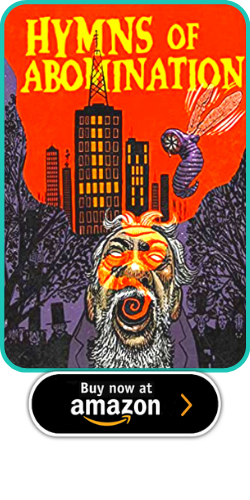
Hymns of Abomination: Secret Songs of Leeds (2021)

3/2/2022
Picture
Hymns of Abomination: Secret Songs of Leeds (2021)
by Justin A. Burnett (editor)
Review by: Mark Walker


Welcome to Hymns of Abomination: Secret Songs of Leeds, an anthology of fiction compiled to celebrate the work of Matthew M. Bartlett.


“Hymns of abomination is a vivid, communal nightmare. A fitting tribute to a contemporary master of the weird.”
    Laird Barron, Author of Swift to Chase


This book is packed with weird fiction and horror writers, both established and new, who have been invited to play in Bartlett’s imaginative sandbox. Hymns of Abomination burrows deeper into nightmarish Leeds than is safe. This volume is a must for fans of Bartlett and horror fiction in general.


As the back of the book attests, Hymns of Abomination is a tribute to, and celebration of, the works of Matthew M. Bartlett, set in and around his Silent Hill-esque, hellhole of a city, Leeds.

Not being familiar with Bartlett’s work before reading this anthology, I was a little concerned that I would not ‘get’ the stories within or find myself confused, missing in-jokes and references only the truly initiated would understand.

I needn’t have worried. All the stories work without any prior knowledge of Leeds or the mind-bending, corruptive influence of the WXXT radio broadcasts that permeate every page. While I am sure I probably missed some references to previous works, I don’t feel I was at any disadvantage from this. In fact, in many ways, by the time I was through with Hymns of abomination, I wasn’t entirely sure I needed to find out more about Leeds; I was almost glad to have shaken off its oppressive air of despair and left it behind! Although, to be honest, even after you finish the book and put it on a shelf, or shut down your Kindle, Hymns of Abomination sticks to you, defying any efforts to forget the hellish journey you have just been taken on by a group of brilliant writers not afraid to disgust and delight in equal measures. However, having said all that, there is enough intrigue in Hymns to entice you back to Leeds, to explore Bartlett’s work if you haven’t already, which is exactly what the WXXT Jocks intended all along… once you pass the city limits, you are lost!

The collected tales of Leeds play out like a series of discordant notes banged out on a badly tuned piano, but to a still recognizable tune. It’s disturbing and sometimes painful to listen to, but you can’t quite manage to pull yourself away.

There is an oft discussed fallacy about authors; that you are what you write. People think that, just because you write murder, you must be a murderer. We all know this is patently rubbish, but that will come as a big relief and reassurance with this lot of twisted minds! There is a wealth of talent on show in Hymns and an incredible array of fevered imaginations eager to share their nightmares with you; nightmares that include witches, doppelgängers, ghosts, creepy kids, sacrifice, and meat leeches. Yep, leeches… made of meet… with teeth. If you think the Milkman is creepy, wait until you get a load of the Meatman.

The stories are all connected to the (hopefully fictional) city of Leeds, a character itself, looming large and toying with the lives of the unfortunates caught in its shadow. There is something about the city that pulls people in and won’t let them leave, that twists their minds and perception, pushing them to the very edge of sanity and despair. Residents and visitors alike find themselves caught by the hypnotic words floating over the airwaves from the hard to find, but difficult to ignore, WXXT radio station; another shared motif across many of the stories.

As with any anthology, and especially one with so many tales, not every story is going to land with the reader. A couple didn’t quite grab me as much as the others, but that is a personal thing, there is nothing wrong with the stories themselves, I just didn’t “get” then in the same way as others. Your Mileage May Vary! To critique every part of Hymns would make for a very long review and I like to treat anthologies as a whole, but rest assured, in this case, the sum of the parts make up an impressive whole. There is something for everyone in Leeds and I don’t want to risk spoiling anything by working through an extensive account of each tale.

However, I will say that Uncle Bart’s Map, the final story in the collection, was my favourite. I enjoyed the way it was written and how it recounted the protagonist’s history and relationship with Uncle Bart, slowly introducing questions about the uncle’s mysterious life and the titular map. It takes us on a journey through strange alleyways and worlds before leaving us on a fantastic cliff-hanger. It gives us few answers but delivers just enough information to intrigue and fascinate. I think it was the longest story in the collection and, although it takes its time, it does so with style.

Every other story deserves to be in there and they will all find an audience, but Uncle Bart’s Map stood out for me. Thinking about it, as also probably the least grimy account of Leeds in the book, perhaps it was the feeling of relief as I knew I was finally going to escape that damned city!

Nestled between many of the stories is a series of short adverts for “Anne Gare’s Rare and Import Video Catalogue” written, this time, by the editor Johnathan Raab. These sections offer a fleeting break between the disturbing visions of Leeds and the people that live(d) there. Each entry describes a suitably odd recording/film/DVD that is available for purchase, highlighting a wide array of strange and disturbing images and events. The sorts of things that you might hear about in whispered conversations and tell yourself you would never watch but can’t help Googling when you are alone. Anne Gare will no doubt have a physical store somewhere down a grubby back alley in Leeds – I wouldn’t recommend a visit.
​
Hymns is a dirty, grimy collection of disturbing people, situations, murder, sacrifice, depravity, and violence. Some of it is unpleasant, and much of it will leave a lasting impression – the impression that if you were driving down a lonely road one night, lost and confused, when you come to the road sign that points left for Leeds and right to Castle Rock… for God’s sake turn right. TURN RIGHT!

Hymns of Abomination: Secret Songs of Leeds Paperback – 
by Justin A. Burnett 

Picture
"Hymns of Abomination is a vivid, communal nightmare. A fitting tribute to a contemporary master of the weird."
Laird Barron, author of Swift to Chase


Welcome to Hymns of Abomination: Secret Songs of Leeds, an anthology of fiction compiled to celebrate the work of Matthew M. Bartlett.


Bartlett is a beloved voice in contemporary weird fiction known for his richly nightmarish tales of Leeds, a fictionalized version of a village that's part of Northampton, MA. What began as Livejournal posts circulated among friends in the early 2000's, Bartlett's short, macabre, and imaginative yarns found their way into Gateways to Abomination, a collection that swept the small world of weird fiction into giddy delirium. Since then, Bartlett has continued to influence writers and readers alike with his dark, grotesque, and tantalizing tales.


This book is packed with weird fiction and horror writers, both established and new, who have been invited to play in Bartlett's imaginative sandbox. Featuring all original tales from John Langan, Gemma Files, Brian Evenson, S.P. Miskowski, and many more, Hymns of Abomination burrows deeper into nightmarish Leeds than is safe. This volume is a must for fans of Bartlett and horror fiction in general.  


TODAY ON THE GINGER NUTS OF HORROR WEBSITE ​

FILM GUTTER REVIEWS: SNAKE DICK (2020)

Picture

THE HEART AND SOUL OF HORROR FICTION REVIEWS

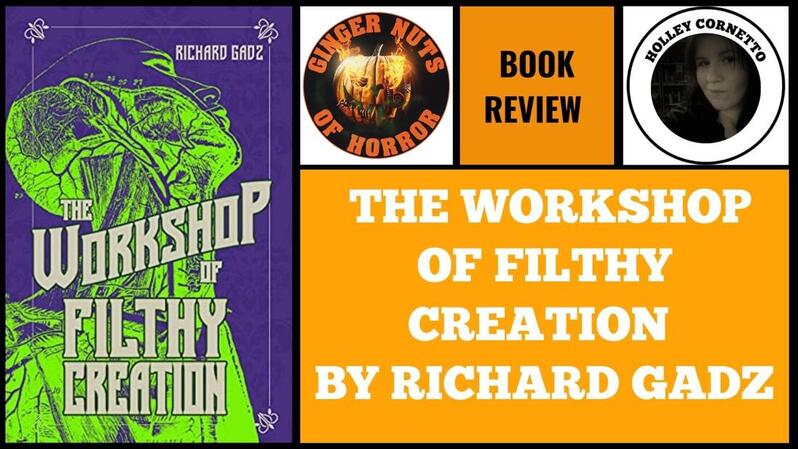
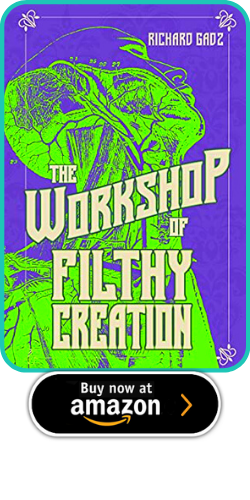
Book Review: The Workshop of Filthy Creation by Richard Gadz

2/2/2022
Picture
Book Review: The Workshop of Filthy Creation by Richard Gadz
A book review by Holley Cornetto
The Workshop of Filthy Creation is a historical horror fiction novel that pays homage to the genre’s roots. Set in London in the 1870s, this book provides a sense of history and atmosphere, making it a worthy tribute to Shelley’s masterpiece.

Wilhem von Frakken has discovered the means to create artificial regenerative human flesh. His creation is embodied in Maria, serving as this novel’s parallel of Frankenstein’s monster from the original. Maria is self-aware, at first not knowing the full extent of what she is – and is not. Like most women of the era, Maria is little more than a pawn, whose fate is not within her own power to control.

Like many classic works of genre fiction, this story explores what it means to be human. Is it self-awareness? A conscience? Is it a soul? What is the precise line at which a being can be considered human? Along with this larger philosophical conundrum, Gadz provides plenty of horror, mystery, and gore throughout the telling of the story.

Whether you enjoy more subdued Gothic horror, suspense, body horror rife with gore, or thought provoking ethical and moral dilemmas, this book has something for you. While I personally found the earlier chapters a little slow to start, the story did eventually pick up, and made the build up worth it. Gadz not only highlights questions about humanity, but questions about society, inequity, and exploitation. The highlight of the book, for this reader, was the beautifully detailed setting of Victorian London. Descriptions of homes, museums, hospitals, and people were rendered with painstaking attention to historical detail.
​
Recommended for fans of Frankenstein, Gothic horror, historical horror, and atmospheric novels with a distinct sense of time and place.

The Workshop of Filthy Creation 
by Richard Gadz  

Picture
"The Workshop of Filthy Creation is a remarkable book, visceral and philosophical in equal measure. The perfect combination of big ideas and a rattling good yarn. Hell of a read." - James Kinsley, author of Playtime's Over

In the autumn of 1879, an intelligent, artificially-created being—outwardly a young woman called Maria—arrives in London under the protection of biologist Professor George Hobson. Hobson gathers a few close friends and reveals her existence, explaining that she is the final result of a research programme undertaken by a dynasty of unethical scientists, the von Frakkens—all now dead.

Unknown to Hobson, one of his friends, Jabez Pell, is linked to an underground scientific organisation, the Promethean Society. Set up in the early 1800s, its aim is to conquer death by whatever means possible. Pell immediately recognises the potential that Maria's regenerative abilities can offer to the Prometheans – but after his attempt to kidnap her turns deadly, Maria goes on the run.

Maria finds herself at the heart of raging controversy: some want her jailed, some want her dead, and some want to peel the flesh from her bones. Worse, she is now hunted not only by members of the Prometheans but also by the police—and her creator Wilhelm von Frakken, who, as it turns out, is alive (in a sense).

Thrilling and evocative, fantastical and grotesque, The Workshop of Filthy Creation uses a Frankenstein-ian thread to stitch together elements of real scientific history with the darkest parts of Victorian London and speculation on the nature of human life.

​TODAY ON THE GINGER NUTS OF HORROR WEBSITE ​

SUSAN LIEN WHIGHAM TAKES A TRIP DOWN MULHOLLAND DRIVE

Picture

the heart and soul of horror fiction reviews

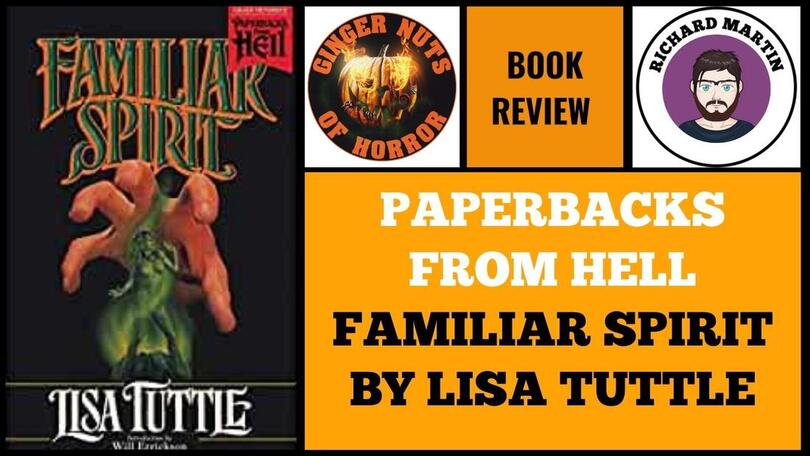
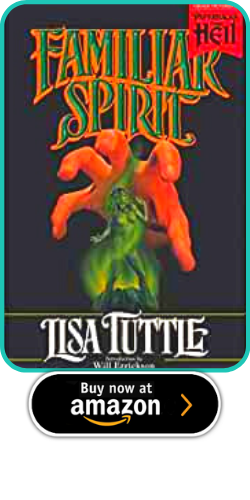
Paperbacks from Hell: Familiar Spirit by Lisa Tuttle

1/2/2022
HORROR BOOK REVIEW PAPERBACKS FROM HELL- FAMILIAR SPIRIT BY LISA TUTTLE
Horror was doing big business in the bookstores in the 1960s. This was largely thanks to gothic literature which promised gentle tales of haunted manors and melancholy spirits on their covers. Things took a more devilish turn towards the end of the decade with the release of ‘Rosemary’s Baby’ in 1967, followed by William Peter Blatty’s ‘The Exorcist’ and Thomas Tryon’s ‘The Other in 1971, but the real fun began in 1974 with the release of two books that would open the floodgate for pulp horror.

Jaws (Peter Benchley) and The Rats (James Herbert) proved that there was an appetite out there for books that weren’t ashamed to be all-out horror. The publishing industry took note and throughout the 1970s and 1980s, companies such as Zebra, Tor and Pinnacle published a seemingly endless supply of books promising unspeakable terrors and sporting covers that had to be seen to be believed. Sometimes the content was great, other times… not so much, but one thing that you could always be guaranteed was a fun and entertaining read.

By the mid-90s, horror paperbacks were seemingly out, and thrillers were in. Gone were the lurid covers of skeletons, evil dolls, creepy kids and flesh hungry critters. The horror was still there, it just wasn’t marketed as such, treated like a shameful secret. As titles fell quickly out of print, many of the horror authors and their work became increasingly forgotten by all but the most avid fans and collectors.

Enter Will Errickson, Grady Hendrix and ‘Paperbacks From Hell’.

In 2017 Hendrix and Errickson released their seminal love letter to the horror paperbacks of a bygone era, shining a light on some long-forgotten classics and renewing interest in the mass market horror paperbacks of the 1970s and 80s. Not content to simply share their passion for these oft maligned but much missed books, thanks to their partnership with Valancourt Books, we are being treated to new reprints of the best of these decades-old, forgotten gems.

To date, fourteen reprints have been published, retaining the original cover art and boasting brand new and insightful introductions from Hendrix and Errickson. In this series I’ll be reading each and every one and posting articles at Ginger Nuts of Horror looking back at the best books two decades of horror has to offer.
​
It wasn’t too long ago that I posted my five-star review of Lisa Tuttle’s’ short story collection ‘A Nest of Nightmares’ as part of this series. That stellar collection was my first-time reading Lisa Tuttle and, as I mentioned in the review itself, left me with sky-high expectations for this, her first published horror novel. Familiar Spirit embraces some of the themes she touches on in ‘A Nest of Nightmares’, whether that be the breakdown of a relationship (‘Need’, ‘The Nest’), helplessness against an outside force (‘The Other Mother’, ‘The Horse Lord’) or placing an ordinary, female lead character in extraordinary supernatural peril (pretty much all of them) and digs a little deeper.

Sarah is a graduate student who, up until recently, had been sharing an apartment with her long-term boyfriend, Brian. The dissolution of their relationship once Sarah discovers Brian has been unfaithful is quick, but painful and Sarah rushes to find a suitable place to live.

The large, weathered house on the edge of town seems too good to be true at first. It offers peace and quiet and more space than she knows what to do with, and the rent is unbelievable. The opportunity is so good that she ignores the warning signs. The creepy former tenant who avoids her questions and seems too eager for Sarah to move in, the odd symbols drawn on the floors, and the horrific nightmares she suffers as soon as she’s settled. The longer Sarah stays the more she begins to feel as if her mind is not her own. She no longer recognises her own thoughts and cannot rationally explain her increasingly erratic and unpredictable actions. As she looks deeper into the house’s history, she finds answers in the form of grisly murder and black magic. Will the answers come too late for Sarah to save her sanity, and her soul?

Novels about possession were in plentiful supply on horror stands in the Paperbacks From Hell era, particularly in the 1970s following the breakout success of ‘The Exorcist’ (William Peter Blatty) and ‘The Entity’ (Frank De Felitta), which spawned numerous (and often lesser) copycats. By the time Familiar Spirit came along in 1983 it was a fairly packed marketplace for this kind of book. I was glad (but not altogether surprised) to find that Tuttle delivers a strongly written book with enough surprises to set it apart from the crowd.

The back cover copy promises that Sarah’s possession will fill her with “screaming horror one moment, and relentless, burning pleasure the next”, so plenty of sex and horror seems to be on the menu, and I can confirm that Tuttle doesn’t skimp in either department. The books prologue is a harrowing read, with plenty of blood and violence, while also being incredibly effective from a psychological perspective. In fact, later scenes struggle to live up to the dozen or so opening pages, so effective are they. Tuttle is far from prudish with the sex scenes either, which are as plentiful as they are explicit.

When Sarah first meets Valerie, the young woman who first unleashes the entity in the book’s prologue, she has driven up to show her round the now vacant house in a new Ferrari. Which raises some interesting questions that you rarely see in possession novels, namely, is it really all downside and no benefit? In the opening pages the (then) unseen presence inhabiting Valerie says “there is much I can do for you, many benefits that can be gained by accepting my presence in your body”. Given we next see her in a brand-new sports car, there may be something to that. Sadly, it’s touched upon a few times but never fully explored.

As the novel goes on and we get to learn more about this seemingly malevolent entity, the story starts to go into more unexpected and interesting directions, separating itself from the plethora of other demonic possession novels on the stands at the time. The reveal of what is trapped in the house and possessing whoever enters it doesn’t come until later, and it was one I wasn’t expecting, and perhaps sheds a slightly different light on what precedes this revelation. There is a lengthy section of exposition in the form of a diary around the midway point, taking us back around fifty years into the past and giving an origin story of sorts that increases the stakes in the present day. In a lesser book, this side track may have felt jarring or out of place, but in Tuttle’s hands it actually proves to be a highlight, telling an entertaining and self-contained story that adds to Sarahs own, which is just getting started.
​
Familiar Spirit is an interesting spin on the demon possession genre and one that boasts a more well-rounded cast of characters than you would typically expect for the sub-genre. It’ll terrify and titillate in equal measure and leave you with the burning question “If I were possessed by a demon, what luxury car would I ask for”?
        
Join me next time when I’ll be sharing my thoughts on The Auctioneer by Joan Samson If you’d like to read along with this series and want to pick up copies of the books, or learn more about Valancourts’ Paperbacks From Hell line, visit their site at www.valancourtbooks.com/paperbacksfromhell


FAMILIAR SPIRIT BY LISA TUTTLE​

Picture
THE BIG OLD HOUSE WAS PERFECT FOR SARAH
Now that her life with Brian was over, she would have a home of her own. She could begin again.
But something was waiting for Sarah in her new house, waiting to welcome her, to make her feel at home. Something was waiting for Sarah in the night with golden eyes that glowed and burned, commanding her obedience, demanding her soul, promising her ... 
Sarah tried to escape the power, but night after night it drew her back, filling her with screaming horror one moment, and relentless, burning pleasure the next.
Sarah tried to escape the house, to fight the evil. But she came back. She will always come back. Because now Sarah is never alone ...
This reissue of Lisa Tuttle’s first novel Familiar Spirit (1983) features the classic cover art by Lee MacLeod and a new introduction by Will Errickson.

TODAY ON THE GINGER NUTS OF HORROR WEBSITE ​

JASON OFFUTT SAYS DON’T BE AFRAID OF THE DARK, BUT DON'T BELIEVE HIM HE MIGHT BE ONE OF THEM

Picture

THE HEART AND SOUL OF HORROR BOOK REVIEWS

Forward
    Picture
    Picture

    RSS Feed

    Archives

    May 2023
    April 2023
    March 2023
    February 2023
    January 2023
    December 2022
    November 2022
    October 2022
    September 2022
    August 2022
    July 2022
    June 2022
    May 2022
    April 2022
    March 2022
    February 2022
    January 2022
    December 2021
    November 2021
    October 2021
    September 2021
    August 2021
    July 2021
    June 2021
    May 2021
    April 2021
    March 2021
    February 2021
    January 2021
    December 2020
    November 2020
    October 2020
    September 2020
    August 2020
    July 2020
    June 2020
    May 2020
    April 2020
    March 2020
    February 2020
    January 2020
    December 2019
    November 2019
    October 2019
    September 2019
    August 2019
    July 2019
    June 2019
    May 2019
    April 2019
    March 2019
    February 2019
    January 2019
    December 2018
    November 2018
    October 2018
    September 2018
    August 2018
    July 2018
    June 2018
    May 2018
    April 2018
    March 2018
    February 2018
    January 2018
    December 2017
    November 2017
    October 2017
    September 2017
    August 2017
    July 2017
    June 2017
    May 2017
    April 2017
    March 2017
    February 2017
    January 2017
    December 2016
    November 2016
    October 2016
    September 2016
    August 2016
    July 2016
    June 2016
    May 2016
    April 2016
    March 2016
    February 2016
    January 2016
    December 2015
    November 2015
    October 2015
    September 2015
    August 2015
    July 2015
    June 2015
    May 2015
    April 2015
    March 2015
    February 2015
    January 2015
    December 2014
    November 2014
    October 2014
    September 2014
    August 2014
    July 2014
    June 2014
    May 2014
    April 2014
    March 2014
    February 2014
    January 2014
    December 2013
    November 2013
    October 2013
    September 2013
    August 2013
    July 2013
    June 2013
    May 2013
    April 2013
    March 2013
    February 2013
    December 2012

https://l.facebook.com/l.php?u=https%3A%2F%2Fmybook.to%2Fdarkandlonelywater%3Ffbclid%3DIwAR1f9y1sr9kcIJyMhYqcFxqB6Cli4rZgfK51zja2Jaj6t62LFlKq-KzWKM8&h=AT0xU_MRoj0eOPAHuX5qasqYqb7vOj4TCfqarfJ7LCaFMS2AhU5E4FVfbtBAIg_dd5L96daFa00eim8KbVHfZe9KXoh-Y7wUeoWNYAEyzzSQ7gY32KxxcOkQdfU2xtPirmNbE33ocPAvPSJJcKcTrQ7j-hg
Picture