• HOME
  • CONTACT / FEATURE
  • FEATURES
  • FICTION REVIEWS
  • FILM REVIEWS
  • INTERVIEWS
  • YOUNG BLOOD
  • MY LIFE IN HORROR
  • FILM GUTTER
  • ARCHIVES
    • SPLASHES OF DARKNESS
    • THE MASTERS OF HORROR
    • THE DEVL'S MUSIC
    • HORROR BOOK REVIEWS
    • Challenge Kayleigh
    • ALICE IN SUMMERLAND
    • 13 FOR HALLOWEEN
    • FILMS THAT MATTER
    • BOOKS THAT MATTER
    • THE SCARLET GOSPELS
GINGER NUTS OF HORROR
  • HOME
  • CONTACT / FEATURE
  • FEATURES
  • FICTION REVIEWS
  • FILM REVIEWS
  • INTERVIEWS
  • YOUNG BLOOD
  • MY LIFE IN HORROR
  • FILM GUTTER
  • ARCHIVES
    • SPLASHES OF DARKNESS
    • THE MASTERS OF HORROR
    • THE DEVL'S MUSIC
    • HORROR BOOK REVIEWS
    • Challenge Kayleigh
    • ALICE IN SUMMERLAND
    • 13 FOR HALLOWEEN
    • FILMS THAT MATTER
    • BOOKS THAT MATTER
    • THE SCARLET GOSPELS
GINGER NUTS OF HORROR
horror review website ginger nuts of horror website
Picture

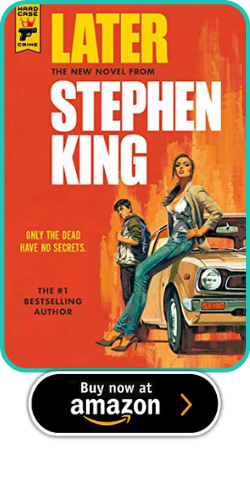
LATER BY STEPHEN KING (BOOK REVIEW)

14/5/2021
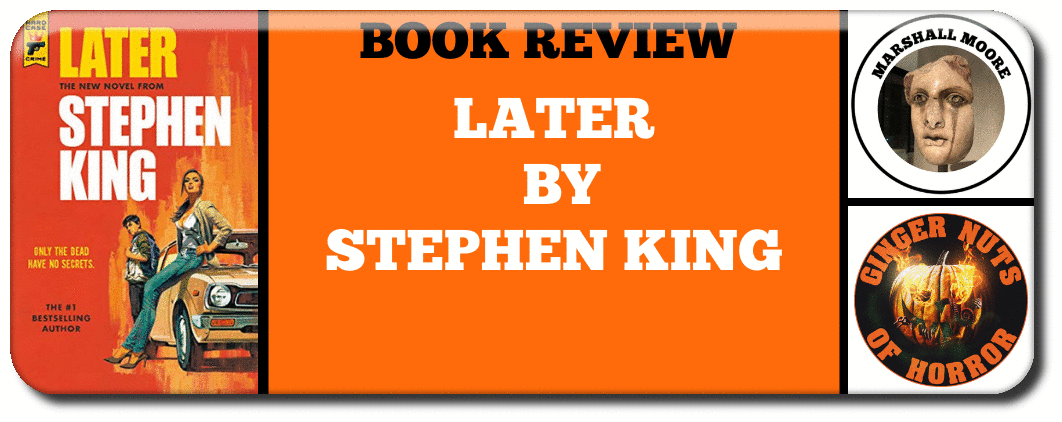
LATER BY STEPHEN KING (BOOK REVIEW)
Books like Later and The Institute remind us -- as if we need reminding -- why King occupies the place he does in contemporary letters. As a technician, he rarely puts a foot wrong: his characters feel fleshed out and inhabited, and their intentions make sense even when they’re being idiots.

Later by Stephen King (book Review by Marshall Moore)
​

Jamie Conklin can see dead people. While hardly an original premise for a story -- there’s a winking acknowledgment to M. Night Shyamalan’s The Sixth Sense early on -- Stephen King immediately does what he does best with it: he folds it into his own cosmology yet grounds it in such a credible, homey American setting that the weird goings-on feel as familiar and inevitable as the brand names and the other realistic details you will encounter. But Later is also a bit of a departure for King. Yes, there’s a tenuous bit of continuity with It, a plot device he deploys in both stories. There’s an interesting tension this time, though: is Later a ghost story or a horror novel or a noir or all of the above? King hasn’t done this before, not exactly, not all at once, not in quite the same way.


Jamie lives with his mother Tia, a single mom who juggles keeping her literary agency afloat during a run of extraordinary bad luck (financial troubles, relationship issues, a brother with early-onset Alzheimer’s). His ability to see and speak with the dead comes about rather matter-of-factly: a downstairs neighbor passes away and the ghost manifests in the corridor while Tia and Jamie are consoling the grieving widower. We soon learn that there have been other such sightings and visitations. There are rules, of course: Ghosts linger for a few days before passing on to wherever they go next. They look the same as they did when they died: they’re wearing the same clothes, and any physical injuries such as gunshot wounds are still visible. This is important to the story, and even more important is the fact that for some reason ghosts are compelled to answer questions truthfully, even if they don’t want to. Tia is in a relationship with a problematic woman named Liz, a corrupt cop who moonlights as a drug courier. They eventually split up, but Liz has seen evidence of Jamie’s ability and kept him in mind for future exploitation. Some years later, when he is in his early teens, she abducts him in order to use him to foil a bombing case. The serial bomber has committed suicide. One bomb remains. No comment on whether Liz’s plan succeeds, but suffice to say her actions put a much worse chain of events into motion.


There are several reasons why this is a bit of a standout for King. One is personal: I researched and analyzed ghost stories intensively as part of my PhD research, so I immediately recognized what he was doing with the structure and with the rules around ghost manifestations. Numerous times in Later, King references the classic MR James story “Oh, Whistle, and I’ll Come to You, My Lad.” For that matter, I suspect it is not a coincidence that the main character is named James. If you’ve read MR James’s work and other such stories from that era, you will know that the presence of ghosts is usually hinted at rather than made explicit. There is a very specific structure of delicate reveals. Narrative tension in these stories is created through questioning and doubt. Are the ghosts real, or is someone going mad? Ghost-story classicists also have famously argued that ghost stories are not a subset of horror, that they are a separate body of fiction altogether. I am not sure I agree. King seems not to, either: he has fused the Victorian ghost-story restraint with his more directly iterative approach: his ghosts have agency and some of them are bad. He knows how to withhold his glimpses. He also knows when it’s time for a scary disfigured thing to attack, as famously happens at the end of the aforementioned James story. Someone whistles, something comes. As Jamie reminds us several times in the narrative, this is a horror story. I would add that there’s more going on than just that, though.


Later also reads as if King had fun writing it. He has said in interviews that he enjoys the Hard Case Crime format and brief. He has written two previous novels for the series as well, The Colorado Kid (which somehow spawned the Syfy series Haven) and Joyland (loved it). This time out, perhaps more than the first two, King has infused an element of noir into the story that melds well with everything else that’s going on. Apart from Jamie himself, most characters’ intentions are dark and the good ones are thwarted. Things go to shit and then get worse. There are brief moments of respite. Then the darkness returns. But some of the fun clearly comes from the literary-adjacent setting. Tia is an agent. The client whose work provides her main income is a bestselling hack to whom Bad Things happen. The world of writing and publishing is full of disappointments, horrors, and reversals even at the best of times, so there’s room for King to be sly and poke a bit of fun even while using darkly truth-flavored details to underpin the plot. He’s done enough of this throughout his career to know where the balance lies.


Kids with paranormal abilities have long featured in King’s work: we’ve encountered them in Carrie, The Shining, Firestarter, and more recently, Doctor Sleep and The Institute. Danny Torrance from The Shining and Doctor Sleep is the obvious predecessor to Jamie Conklin, yet it doesn’t feel as if King is repeating himself here. Even at a young age, Jamie has a certain New York steeliness, whereas Danny was traumatized by his abilities and his wreck of a father. There’s no promise that things are going to end well for Jamie, of course. This wouldn’t be a satisfying noir story if there were. But it’s hard to escape the feeling he will know what to do when the time comes.


Books like Later and The Institute remind us -- as if we need reminding -- why King occupies the place he does in contemporary letters. As a technician, he rarely puts a foot wrong: his characters feel fleshed out and inhabited, and their intentions make sense even when they’re being idiots. His sentences click together like Lego blocks. I’ve been reading his work for almost 40 years and don’t believe I have ever been pushed out of the story by unclear wording or ambiguous grammar. This is more unusual than it sounds. Now that I’m in my 50s, I can look back at his early work and see places where he was reaching, perhaps trying to sound older than he was, but there’s nothing in evidence here but confidence and skill. Later is a master class in how to write dark fiction. Longtime readers will enjoy it, and it would be a terrific introduction to someone new to his work.
Picture
SOMETIMES GROWING UP MEANS FACING YOUR DEMONS

The son of a struggling single mother, Jamie Conklin just wants an ordinary childhood. But Jamie is no ordinary child. Born with an unnatural ability his mom urges him to keep secret, Jamie can see what no one else can see and learn what no one else can learn. But the cost of using this ability is higher than Jamie can imagine – as he discovers when an NYPD detective draws him into the pursuit of a killer who has threatened to strike from beyond the grave.
​
LATER is Stephen King at his finest, a terrifying and touching story of innocence lost and the trials that test our sense of right and wrong. With echoes of King’s classic novel It,LATER is a powerful, haunting, unforgettable exploration of what it takes to stand up to evil in all the faces it wears.

Picture
Marshall Moore is an American author, publisher, and academic based in Cornwall, England. He is the author of four novels (Inhospitable, Bitter Orange, An Ideal for Living, and The Concrete Sky) and three short-fiction collections (A Garden Fed by Lightning, The Infernal Republic, and Black Shapes in a Darkened Room). With Xu Xi, he is the co-editor of the anthology The Queen of Statue Square: New Short Fiction from Hong Kong. His short stories have appeared in Quarterly Literary Review Singapore, Asia Literary Review, The Barcelona Review, and many other journals and anthologies. Recent work has appeared in the anthology Hong Kong Noir (Akashic, 2018) and the journals Menacing Hedge and Bewildering Tales. His next book is a co-edited (with Sam Meekings) book from Bloomsbury. The title is The Place and the Writer: International Intersections of Teacher Lore and Creative Writing Pedagogy. He holds a PhD in creative writing from Aberystwyth, and he teaches at Falmouth University. For more information, please visit www.marshallmoore.com.

Linkages:
Website/blog: www.marshallmoore.com
Twitter: @iridiumgobbler
Amazon: https://www.amazon.com/Marshall-Moore/e/B001K8LUDC?ref=sr_ntt_srch_lnk_1&qid=1610574747&sr=1-1

TODAY ON THE GINGER NUTS OF HORROR WEBSITE

REVISITING THE ‘MASTERS OF HORROR’: JENIFER BY RICHARD MARTIN

Picture

THE HEART AND SOUL OF HORROR FICTION REVIEW WEBSITES 

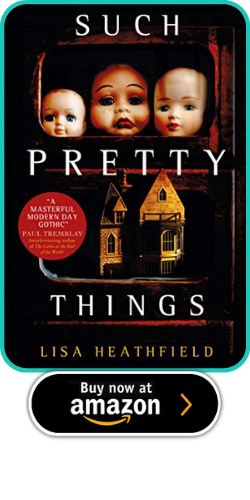
SUCH PRETTY THINGS BY LISA HEATHFIELD ​(BOOK REVIEW)

13/5/2021
SUCH PRETTY THINGS BY LISA HEATHFIELD ​(BOOK REVIEW)
An established YA author heads into decidedly darker territory with her adult debut

Such Pretty Things by LISA HEATHFIELD
​(Book Review by Tony Jones)

Your opinion on Lisa Heathfield’s adult debut Such Pretty Things may well depend upon your expectations when starting the book. It features some elements of a traditional horror novel, but there are no ghosts except within the imaginations of the characters, so the comparisons in the blurbs to the classics The Haunting of Hill House and Turn of the Screw are slightly over-egged. Other more realistic contemporary comparisons might be CJ Tudor’s The Chalk Man or Alex North’s The Whisper Man which dance around ambiguity in a similar fashion to this. Even though it does have elements of the Gothic, Such Pretty Things is more of a powerful and complex character study of grief, loss and isolation. But if you are after a good scare look elsewhere, however, this remains a thoughtful and convincing read, which is a promising adult debut.


Heathfield has previously authored four YA novels, so it is no surprise that the main character in Such Pretty Things is a fourteen-year-old girl. Clara has been sent, along with her younger brother Stephen, to live with an aunt and her husband whom they have never met, residing in an isolated part of Scotland. There has been a tragedy in the family, with her mother seriously injured and in hospital, their struggling father has sent them to live (temporarily) with their aunt, dropping them off in the novel’s opening sequence. One of the most successful aspects of the story is the level of personal grief which bubbles below the surface, Clara, who has to mother her eight-year-old brother whilst trying to be grown-up herself, has nobody to lean on herself or talk to, except her strange aunt.


Such Pretty Things was supposed to be set in Scotland, but apart from the use of the word ‘loch’ there was nothing to distinguish it from anywhere else in the UK and not enough was made of the remote setting. Children are known for exploring, but apart from one occasion when they visit a nearby loch, they barely make it beyond the expansive garden. By way of comparison, Francine Toon’s Pine (2020) was an excellent example of a recent supernatural novel which made 110% of its rugged Scottish location, an aspect this story lacked. The early stages helped build atmosphere as the children explored the interiors of the musty house, in the opening sections there were clever references to the many little dolls, which seemed to change locations, but if you are expecting something of the ilk of Adam Nevill’s House of Small Shadows (2013) you are going to be disappointed. The early promise of a supernatural tale or ghost story quickly petered out and this might disappoint some readers, but fans of the psychological have much to look forward to.


Smaller parts of the story jump to ‘Aunty’, which are italicised, although it was interesting to have this other perspective, it also provided obvious spoilers for what lay ahead. The reader knows from the outset there is something odd about the aunt and all these sections do is blatantly spell it out for the reader, whilst Clara struggles to cope. This might work in a YA novel, which the author specialises it, but for an adult reader this was telegraphed. Connected to this, the aunt makes it clear early in proceedings what ‘Uncle’ Warren does not want them in the house and although he is rarely sighted, it put the kids on edge. This aspect of the story was also very obvious, but the italicised Aunty sequences made it even more easy to figure out much earlier than the author probably intended.


The core of the novel and one of the stronger aspects of Such Pretty Things was the dynamics between the three key characters and how they evolve dramatically as things move on. Right from the off it’s clear the Aunt is an odd fish, maybe too obviously so, but it was interesting seeing the power shift via a few key, but very subtle, scenes. When a novel, such as this, has so few characters the interactions need to be spot on and it was reminiscent of Susan Hill’s I’m the King of the Castle which also played out entirely in a remote house with only two principal characters.  At times Clara and Stephen deliberately antagonise their aunt by rejecting her food and instantly pick up on her agitation and on other occasions Clara feels that Stephen shows too much affection for the aunt and feels jealousy which changes the dynamics of the three-way relationship. This begins to boil deliciously as the aunt gives the children old-fashioned home-made clothes which Stephen accepts without question, but Clara rejects, leading to more friction which quickly escalates.


Even though Clara was an interesting main character there were times when she was both unlikable and annoying. The story was set in the 1950s, when food was in short supply, so I was surprised to see children continually stick their noses up at big meals and be such fussy eaters. Also, they made mistake after mistake, such as stupidly walking through the vegetable patch and other stuff which came across as either obnoxious or ungrateful, so there was little in the way of surprise when the aunt got spiky.


Such Pretty Things is a slow burner and although it lacked chills was a solid read about the trials of children, abandoned by their family, trying to negotiate the complexities of a very damaged adult world. This was a very melancholic reading experience and although there was a certain ambiguity to some of the story, my interpretation of the ending was rather shocking. The number of authors who can convincingly write both YA and adult fiction are few and far between and although Heathfield has previously written very dark fiction which tackles both cults and dystopias, she has not written a pure YA horror novel and continues this trend with this adult debut, a tasty dark thriller, with a topping of horror.


Tony Jones
Picture
A terrifying story of ghosts and grief, perfect for fans of Shirley Jackon's The Haunting of Hill House and Henry James The Turn of the Screw, in award-winning author Lisa Heathfield s first adult novel.

Following their mother’s accident, Clara and Stephen are sent to stay with their aunt and uncle. It’s a summer to explore the remote house, the walled garden and woods. Beyond it all the loch sits, silent and waiting.

Auntie has wanted them for so long - real children with hair to brush and arms to slip into the clothes made just for them. All those hours washing, polishing, preparing beds and pickling fruit and now Clara and Stephen are here, like a miracle, on her doorstep.
​
But as they explore their new home, the children uncover ghosts Auntie buried long ago. As their worlds collide, Clara and Auntie struggle for control. And every day they spend there, Clara can feel unknown forces changing her brother. Haunted and bewildered, this hastily formed family begins to tear itself apart.

TODAY ON THE GINGER NUTS OF HORROR WEBSITE ​

FILM GUTTER REVIEWS: THE BROOD (1979)

Picture

THE HEART AND SOUL OF HORROR FICTION REVIEW WEBSITES 

YOU KNOW IT'S TRUE BY J.R. HAMANTASCHEN - BOOK REVIEW

11/5/2021
YOU KNOW IT'S TRUE BY J.R. HAMANTASCHEN
this is not horror fiction designed to reinforce; it is brutally surgical in its willingness to pare through rot and bullshit, often exposing things along the way that many would rather not examine too closely. The assaults on assumptions such as “family” or “relationships” are particularly acute, and often near-contemptuous in tone. 
​Regular readers of J.R. Hamantaschen will know that he rarely -if ever- backs down from confrontation. His work is pervaded by a quality not unique to horror fiction but often exemplified by it: a willingness to approach what other genres will not, to consider what wider culture regards as taboo or too sacred to be dissected. In previous collections -such as You Shall Never Know Security-, Hamantaschen established his manifesto; an oath that is made overt in titles that often scan as bordering between promises and veiled threats. Here is a writer who is not interested in coddling or comforting; in providing rehashes of conventional tropes or familiar cliches; his is not the horror of the familiar. Rather, he seeks to sincerely unsettle the reader not only by dint of the imagery and subject matter he conjures, but by assaulting fondly held assumptions and the cultural proscriptions that inform our worlds. 


Rather than regurgitating mythic and traditional cautions regarding the purportedly sacred or beyond consideration, Hamantaschen is intent on subverting those very concepts; it is clear from reading his work that he has no time for the eye that refuses to look or the mind that refuses to consider, no matter how distressing or subversive the ultimate extrapolations. In that interest, his work often borders on the aggressive, by which I do not mean in terms of its subject (though each and every story in this latest collection certainly qualifies), rather by the manner of its approach: 


Whilst You Shall Never Know Security established the writer's characteristic, sardonic style (every story he concocts maintains a certain subtext of gallows irony; a dry satirism that sometimes borders on the contemptuous), You Know It's True takes that quality and shrugs off all pretensions of politeness or self-restraint: Here, Hamantaschen's stories have the quality of a brutal, misanthropic sage; a teacher that provides revelation through blows and snarling condemnations, who holds its student's faces down in the blood and effluent of their lives and demands that they see. 


Take, for example, the opening salvo: the gloriously entitled I Should Have Been a Pair of Ragged Claws/Scuttling Across The Floors of Silent Seas. Title aside (which is a piece of sublime, sardonic poetry), the story approaches subjects many, many other writers would not, and certainly not in the manner that Hamantaschen does: Here, cultural narratives of family life, mythologies of “childhood” and innocence are undone in the most intimate, brutal fashions. Everything from depression to self-harm, from psychopathy to suicide, form the nihilistic weave of this tale. Artefacts that would be icons of sympathy and identification in other tales become sources of profound ambiguity and posthumous atrocity, here: the family who would be sympathetic victims revealed as almost grotesque in their naivety of what festers at the cankered heart of their little dream-world, in their blithe ignorance of a child who is as alien in that realm as any extra-dimensional or inhuman cuckoo. Normality is not something to aspire to or protect, the subtext seems to growl; the dreams you live that are proscribed by systems designed to mulch you up and cannibalistically feed you to your kin are not things to treasure. Rather, in this story -and, indeed, throughout the collection-, such proscriptions become the sincere source of all horror; the sedative conditions that distract us from fractured reality, and ultimately lead to our slaughter. It's a jagged edge that Hamantaschen walks in this one, as, although there is notable and evident contempt for those caught up in these dreams of living, there is also a degree of affection; he does not demonise the “normal” in the manner that writers such as Barker often do. Rather, he describes it as something that is; a phenomena that's almost meteorological in nature, as beyond human control as it is a product and expression of collective humanity, in all of its banal fantasies. He does not hate these characters, nor does he enjoin the reader to hate them. Rather, he hates what the world has made of them, in a manner not dissimilar to the story's protgaonist, who, by his nature, stands as a conscious refutation of myths of childhood “innocence.” 


Whilst it might be tempting to take the images of violence and brutality (much of it self-inflicted) and focus on them as expressions of the horror at the heart of this tale, such would be to do it a grand disservice: the point here is that such phenomena are almost banal compared to the monolithic horrors of which they are merely symptoms: suicide, murder; even the elaborate string of manipulation that ultimately results in the final brutality of the story are all incidental next to the contexts in which they occur: The real horror here, Hamantaschen implies, IS family, IS humanity, IS culture, in all of their vapid proscriptions, lazy and inefficient assumptions and the blindness to one another they necessarily consist of. The visceral deconstruction of the family unit here from within is an assault upon the very notion; a project which Hamantaschen takes to with a despairing glee that is as toothsome as it is potentially alienating. 


Or what about my own personal favourite from the collection; Nothing Goes Wrong From The Couch?; Here, Hamantaschen introduces a rare element of the -potentially- supernatural into a situation that could just as easily form the basis of a 1990s sitcom; two college friends, young professionals struggling to make a place and purpose for themselves, the girlfriend who upsets the delicate equilibrium, though here the hijinx are of disturbing kind rather than banally amusing. Once again, what would be the foci of horror in other stories -the monstrous, shape-shifting inverterbrate that invades their apartment and assaults the girlfriend in the shower- is a mere incidence; a cypher for allowing pre-existing tensions and conflicts to bubble to the surface. Its parasitic monstrosity notwithstanding, the entity is barely remarked upon, save in terms of how it affects the dynamics within the household; there is no effort or attempt to explain what it is or where it comes from, because that isn't what Hamantaschen is concerned with. What fascinates him is the horror of humanity; the pre-existing tensions and potential violences that are part and parcel of every human dynamic, be they platonic, professional and/or romantic in nature. 


Here, the “monster” is incidental, and that is entirely the point: strange as it is, compellingly unpleasant as it is, it merely serves to bring those tensions to the surface and provide context for their expression: here, we have commentary on post-modern alienation (a gruesome death occurs in the same apartment complex as a result of the “monster's” interference, but the main cast barely even hear about it, and, when they do, don't know how to emotionally respond. Likewise, despite living in close quarters and even romantic entanglements, they are fundamentally aliented from one another, which allows deeper atrocities to occur), patriarchal objectification of women (despite being assaulted and almost murdered in her shower, the female lead is largely ignored and dismissed by the two male protagonists, despite her overt descent into depression and paranoia), the unspoken violence that is part and parcel of the protagonist's relationship, despite it's aesthetic bon homie. Whilst the “monster” manifests certain Freudian notions of the male gaze (that, interestingly, it precipitates and darkly satirises during the shower scene), it is an ambient demon; a creature that encapsulates and boils down certain misanthropic themes that pervade the story and are expressed through its characters and their relationships. 


This is what Hamantaschen wants his audience to understand: the absurdities, the monsters, the seemingly supernatural forces, are not the sources or foci of horror here or, indeed, in the waking world that he perceives: horror derives from humanity; from the corrupt and cannibal systems of tradition we have allowed to sustain, regardless of their lack of fitness, and even from factors as inalienable as our own animal conditions; the evolutionary and biological influences that make us what we are. 


Despite the brutally sagastic nature of these stories, Hamantaschen does not make the mistake of attempting to answer the problems her perceives: these are, after all, fundamentally human concerns that have plagued philosophy, science and numerous schools of thought since time out of mind. Rather, Hamantaschen presents himself -or rather, his narrators- as voyeurs to these horrors: there is a peculiarly uncomfortable quality as of being dropped invisibly into the lives of people we do not know, forced to witness what we, perhaps, should not be looking at, and certainly not finding ourselves stirred or fascinated by. 


That sense of voyeuristic intrusion is enhanced by the nature of Hamantaschen's prose, which often takes an oddly relaxed, distanced perspective from the atrocities on display, as though we are witnessing them through a window or TV screen. That, in itself, cultivates a certain atmosphere; a sense of prurient fascination but also of helplessness; the audience have no more agency here than the characters on the page: what unfurls is inevitable, often as a result of manipulations and forces that cannot be defined, much less predicted or accounted for. 


Take, for example, House Katz; a thoroughly post-modern tale that makes reference to the effects of isolation, social upheaval and the exaggerated pressures of existing in a family unit as a result of pandemic-inspired quarantines. Once again, the horrors are pre-existing; the tensions that occur within the family either overtly drawn or remarked upon internally by the characters before anything abstruse or bizarre takes place. In this instance, the phenomena will be familiar to horror audiences in terms of its subject, but likely not in terms of its framing or significance:


Whilst going about the petty, picayue distractions of their lives, the eponymous Katz family find their apartment assaulted by swarms of cats that, in the vein of Alfred Hitchcock's The Birds, become murderous, turning on humanity and its confections in homicidal frenzy. Trapped in their apartment block, they try to secure it against the invasion, to find some safe space in which to ride out the phenomena, only to find that there are none; that their little kingdom has been undone in the space of an hour, and all they've struggled to build and maintain is for nothing. 


The implications of the story are clear; once again, Hamantaschen doesn't concern himself or belabour the reader with trying to explain the phenomena or focus on the animals themselves. Rather, they become vehicles for a more profound, human commentary. In this instance, a distressingly cold dissection of the fragility of our structures of family and shelter. The murderous cats -and other animals- are, ultimately, akin to the pandemic itself; a natural phenomena that arises unexpectedly, without significant warning, and desolates everything from our social lives to our economic systems, imposing traumas and transformations that humanity is not collectively ready to cope with. It is a story of how unexpected, external influences, beyond any and all control, have the propensity to undo our assumptions of certainty and safety; how homes become prisons, how structures such as family provide no protection, despite what our fondly-held meta-narratives would insist. 


That Hitchockian principle of trespassing beyond the picket-fences and peering through windows pervades the collection: if there is hypocrisy or pretence or abuse, Hamantaschen wants his readers to see it, wants them to understand it, and comprehend that they are not separate from it; we are all products and expressions of the same systems, these stories proclaim; as much victims as proponents of them, and the same innate capacities for violence, abuse and atrocity are bred in each and every one of us, not to mention the systems and circles we cultivate and call “life.” 


The unflinching nature of the stories, their insistence on not looking away and actively commenting on the day to day states of incipient atrocity in which we all exist, combined with the sometimes-bordering-on-bolshy nature of the prose, might prove alienating for some. To reiterate: this is not horror fiction designed to reinforce; it is brutally surgical in its willingness to pare through rot and bullshit, often exposing things along the way that many would rather not examine too closely. The assaults on assumptions such as “family” or “relationships” are particularly acute, and often near-contemptuous in tone. 


Take, for example, May As Well Blame It On The Heat; arguably one of the most subtly cynical stories in the entire collection, and one that assaults a particularly enshrined sacred cow: the imperative to have children. 


As the title suggests, the protagonists of the story, Sunil and Nakia, find themselves in circumstances where they feel inclined to “try” for a child, but in a manner that is almost blasé; the imperative being the result of myriad, external and unspoken pressures, rather than any genuine consideration of what having a child would mean for them. What Hamantaschen makes clear from the outset is that: neither of them truly want a child, neither of them even sincerely consider the implications of it. Rather, it is something they feel compelled to do by narratives that have, thus far, failed to fulfil and which may, in short order, result in the falling apart of their little domestic kingdom. The viciousness of the commentary is subtle and subtextual; Hamantaschen describing through the characters what he perceives in wider humanity, i.e. that, in the cultural systems we have accrued, the notion of conception is treated in a commodified, incidental manner; as a lifestyle choice, rather than with the existential weight it deserves. Of course, in this instance, those unspoken, sublimated concerns result in a manifestation of something truly horrific, but which is also, by story's end, a bleak kind of blessing. That Hamantaschen dares to suggest that an apparent miscarriage might be welcome is, in itself, incendiary, but also uncomfortably, undeniably true. Once again, this is a horror that is part and parcel of our day to day experience as human beings, especially for women, upon whom the unspoken pressures in question are exaggerated to the Nth degree. That the story switches perspective from Sunil to Nakia and back again throughout, thereby providing insight into ubiquitous confusions from both the male and female perspective, serves to emphasise the quiet insanity of the status quo; that people are forced into these profound decisions with little in the way of appropriate consideration or preparation. In many respects, Sunil and Nakia have the quality of children themselves, despite being in their early forties; they do not understand what they are doing, any more than any prospective parent, despite the research they conduct, the received wisdom they assimilate, the myriad procrastinations they engage in to ensure the babe's health. They are sublimely out of control throughout the narrative, prey to pressures and factors that they have no say or influence over. For the most part, they don't even understand what informs their own decision-making; they merely concede to the pressures they viscerally experience without deeper examination. Theirs is a microcosm of the wider phenomena of deciding to have children; it begs the reader to consider their own experiences thereof, and to understand that, maybe, the decision was never theirs to begin with. 


Alternatively, we have It's Always Time To Go; a story that assaults myths of childhood innocence by simultaneously presenting an ostensible “child” character who is far from it and also suggesting a Lovecraftian metaphysics against which childhood itself is no talisman or defence. Placing an adult male consciousness behind the eyes of a child, allowing those two elements to mingle and pollute one another, is one of the subtly darker concepts within the collection, the later revelations that said “child” provides shuddering in their metaphysical import; themselves a commentary on the invisibly, ineffably hostile reality Hamantaschen perceives humanity operating in. What should be an instance of joyous growth and social development becomes one of revelatory horror and, ultimately, atrocity whose description is shudderingly bizarre. We, as the reader, are given little in the way of insight into what forces have visited the boys in the night; only that it came as a result of the child-who-is-not-a-child, pursuing him in a manner not dissimilar to the Cenobites pursuing Frank Cotton in Clive Barker's Hellraiser. 


Everything from notions of family to delusions of memory, myths of childhood to distorted nostalgia, are fodder for assault in this collection: Hamantaschen's consistent credo appears to be: Nothing is sacred, and that which is packaged as such is either a dream or a lie. No matter who comes to this collection, there will be an image, a situation, a theme, a concept, that chimes unpleasantly; something sacred to them as individuals that is critiqued or unzipped. In that regard, many will find the collection difficult to read in its totality, especially in concert with Hamantaschen's uniquely aggressive prose. 


In Short Bloom, Long Fading, Hamantaschen presents the portrait of a world that has acclimated to a particular atrocity; one that occurs so regularly, it has been subsumed into wider culture, even becoming the subject of weather reports and children's games: suspicious holes spontaneously blossom throughout humanity's settlements; holes that contain creatures which, if made contact with, prove grotesquely fatal to their prey. In part, the story is concerned with how readily we assimilate the awful and atrocious into our cultures; how we merely accept certain evils because they are purported to be part and parcel of the world we live in. However, the story also takes a turn into the intimate, exploring the development of relationships, specifically between childhood friends who become adults together, the dynamic of their relationship changing in response to that turbulence along the way. The ubiquitious personal detatchment and alienation that is an underlying -or overt- element of every story becomes pronounced here, but so too does a commentary on the objectifying nature of the male gaze: from afar, the protagonist regards his former childhood friend with disturbed romanticism, making her an icon of passions and affections that she does not court or want and that have no basis in reality. Whilst the language he uses to describe his relationship to the woman is generally benign and romantic, it is also profoundly disturbing, given the intensity of its fascination, the degree of its poetry. The final sequence is perhaps one of the most shocking in the book, as it involves a necrophiliac rape that is also, for the protagonist, a moment of profound revelation; a personal transcendence that he describes in luridly metaphysical language. That co-mingling of seemingly disparate or contrary elements -the carnal and the metaphysical, the base and the transcendent- is another means by which Hamantaschen upsets expectation and places the reader in a state of suggestible uncertainty. 


In truth, there is so much in this collection that warrants dissection and discussion, a simple review can barely scratch the surface. There are brief notes after each story, explaining their context and conception in some detail. Whilst these are engaging and entertaining, the stories themselves are consistent, thematically and stylistically strong enough to sustain without them. There is a certain gallows joy to be had in slowly unearthing the thematic consistencies and commentaries Hamantaschen makes without any direct input or explanation; these are stories that demand a degree of dissection and engagement in order to fully appreciate or understand. That itself may put off more casual readers or those who seek something lighter and more distractionary from their horror fiction. 


However, for those of us that -perhaps masochistically- ache for the deeper cuts, there's little more willing and able to exercise its sadism on us. 


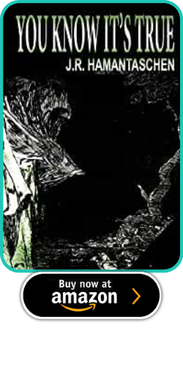
YOU KNOW IT'S TRUE BY J.R. HAMANTASCHEN​

Picture
Twelve Stories of Truly Dark FictionAcclaimed throughout the underground horror world and having come seemingly out of nowhere, J.R. Hamantaschen built a reputation based solely on the quality of his stories. He returns to the short story genre and finishes what he started with his last collection of horror fiction, containing some of his most innovative, unsettling, and uncompromising tales.


TODAY ON THE GINGER NUTS OF HORROR WEBSITE 

LUCKY (DIR. NATASHA KERMANI​) - HORROR FILM REVIEW


horror website uk

THE HEART AND SOUL OF Horror Fiction review websites 

MISTS AND MEGALITHS BY CATHERINE MCCARTHY - BOOK REVIEW

10/5/2021
BOOK REVIEW MISTS AND MEGALITHS  BY  CATHERINE MCCARTHY
Mists and Megaliths in a collection of diverse short stories set within the landscape, culture and history of Wales. Reading this anthology I was reminded of E Nesbit’s Ghost Stories anthology and The Woman in Black by Susan Hill. McCarthy’s stories feel like modern classics. In a hundred years from now I can see people still reading them or teaching them in schools. They have that kind of timeless feel, probably because despite the fantastic elements, they deal with real people living real lives having real human fears and tragedies. Humanity as well as the Welsh setting links the stories. Despite some common themes, the stories vary greatly from one another, some are humorous, some are heart wrenchingly tragic but each one has stuck in my memory. Some more so than others and some I liked better than others.
    
Among my personal favourites are Two’s Company, Three’s A Shroud a humorous and horrific take on the afterlife. Retribution is a story about power and prosperity granted by the presence of an imprisoned monster. I particularly liked the ending and the stories treatment of the creature. Coblynau is a story about an elderly man and his conviction that Coblynau spirits will come for him. As with Retribution I particularly liked the ending and the representation of the Coblynau. I would also like to say that the elderly man and his care home are represented in grim realism of what I like to think of as historic bad care. I would like to add (in case anyone is in any doubt) that no one should be catheterised because of incontinence, that is what incontinence pads and convenes are for. I also really enjoyed Carreg Samson a story told from the first person voice of a million year old rock in Wale’s. It is possibly the most tragic story in the collection and the one with the most gruesome deaths. I enjoyed the concept of something watching humanity, then popping up to fuck us up when we go too far destroying the planet. I found it particularly poignant reading it as the world tries to recover from the Covid pandemic.
    
I would greatly recommend this anthology, all the stories are very good to excellent. They are timeless and really capture the history, myths and culture of Wales. I can see people enjoying this book for many years to come.

Review by Astrid Addams ​
Picture
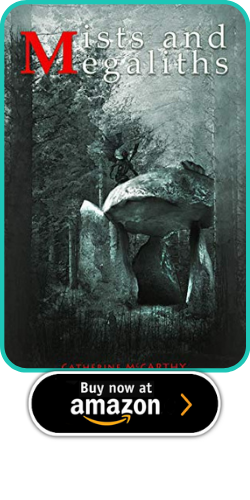
Welcome to Wales, land of mists and megaliths, where mythical creatures and ancient spirits lurk in the strangest of places.

This collection of 10 supernatural stories offers a flurry of folklore, a gathering of ghosts, and even a cosmic cave creature.

Stories include...

Lure: A fisherman who nets the tail fin of a lure becomes obsessed with finding the rest, but what else lies hidden in the ancient lake?

Carreg Samson: A Neolithic burial chamber stares out to sea, remembering times long since past, but when it loses its heart of stone to a young girl the repercussions are hard to bear.
​

Coblynau: An old man watches the mountain which was once a slag heap of coal. He listens for the knock of the Coblynau, certain they will come for him... soon, just like they did to warn of the Aberfan disaster.

Author Catherine McCarthy’s second collection invites the reader on a regional journey, evoking a sense of quiet horror from the cosmic to the Gothic.

TODAY ON THE GINGER NUTS OF HORROR WEBSITE ​

THE HORROR OF HUMANITY: THE AUTHOR VS. THE VOICE OF DISCORDIA BY P.L. MCMILLAN

horror website uk the best

THE HEART AND SOUL OF HORROR FICTION REVIEWS ​

BEAUTIFUL/GROTESQUE EDITED BY SAM RICHARD - BOOK REVIEW

7/5/2021
BOOK REVIEW BEAUTIFUL/GROTESQUE EDITED BY SAM RICHARD
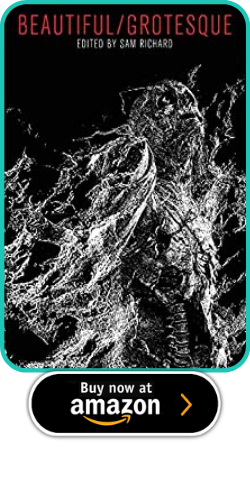
Beautiful/Grotesque is a collection of five stories by Roland Blackburn, Jo Quenell, Katy Michelle Quinn, Joanna Koch and Sam Richard. All five have work published by Weirdpunk Books, which has also published the collection. The theme is quite simply to interpret the Beautiful/Grotesque theme, and as a result the five stories take different paths.

With most anthologies, you expect some stories to hit the mark and a few to maybe miss it in terms of personal taste when it comes to style and content. It’s the nature of collections. When you’re dealing with a very limited number of stories, you end up hoping they all land with something of an on-target thud, and to some extent Beautiful/Grotesque managed it for me.

God of the Silvered Halls by Roland Blackburn is set in a mortuary. When a mysterious cadaver comes in, a bisected woman probably hit by a train, Patience becomes mesmerised by her tattoo. The calligraphic etching turns out to be a recipe, and unable to resist, Patience decides to cook it up. The outcome sets her on a path which enables her to discover some of her victim’s dark secret. It’s a well written tale, and while the narrative arc is pretty obvious, it still delivers a well-told tale.

Threnody by Jo Quenell starts with a singer practising her piece for a funeral. It creates a mood of expectation and reluctance, a suffocating mood which for reasons unknown seems to stifle any positivity from Lydia, the singer. As the tale is woven, so the reader is drawn into an emotional maze which is both challenging and chilling in equal measure. I first came across Jo Quenell when reading The Mud Ballad, which I loved. This is very different, but still has the intensity of her novella. For me, it was the story of the collection.

The Queen of the Select by Katy Michelle Quinn is themed around a grand and opulent event which transpires to be not as grand and opulent as it appears. Gritty, dirty and vicious, it flicks between a few points of view to reveal a story heavy with savagery. Well crafted and mesmerising in parts, it occasionally staggers a little towards the farcical, but manages to right itself before stepping over the line.

Swammord by Joanna Koch will be, for many, a bit of a marmite story. Indeed, some readers may well veer from love to hate or vice versa during the story itself. It’s bold and challenging, a juxtaposition of the real and surreal, with a few glances towards the culture of yesteryear. My first impression wasn’t great, mainly because I made a wrong assumption early on, but as the story started to weave into a complex tapestry of emotional turmoil I became more invested. By its conclusion, I realised it was a journey I was happy to have undertaken.
​
The collection closes with The Fruit of a Barren Tree by Sam Richard. It’s a tale rich with regret, remorse and ultimately hope. From a position of suicide, we follow what feels like a story of transformation to a state of acceptance, of a kind! It’s an emotionally charged episode, which although pretty strange feels somehow normal.
All in all, Beautiful/Grotesque is a collection of well crafted tales which all address, in some small way, the title and its delightful paradox.

BEAUTIFUL/GROTESQUE EDITED BY SAM RICHARD

Picture
Five authors of strange fiction, Roland Blackburn (Seventeen Names For Skin), Jo Quenell (The Mud Ballad), Katy Michelle Quinn (Winnie), Joanna Koch (The Wingspan of Severed Hands), and Sam Richard (Sabbath of the Fox-Devils) each bring you their own unique vision of the macabre and the glorious violently colliding. From full-on hardcore horror to decadently surreal nightmares, and noir-fueled psychosis, to an eerie meditation on grief, and familial quiet horror, Beautiful/Grotesque guides us through the murky waters where the monstrous and the breathtaking meet.
They are all beautiful. They are all grotesque.

Picture

Peter Caffrey is a writer of tales with an absurdist bent. A born and bred Londoner, he currently lives in the middle of nowhere with nothing but the North Sea and fog for company. Introduced to horror as a small child by a Mother who was too scared to watch films on her own, he has a fondness for demonic possession, crucifixion and impalements. His novels, The Devil’s Hairball and Whores Versus Sex Robots are available from Amazon. He drinks too much, exercise too little and is unlikely to change.
 
http://petercaffrey.com

​


TODAY ON THE GINGER NUTS OF HORROR WEBSITE ​

REVISITING THE MASTERS OF HORROR, DREAMS IN THE WITCH HOUSE BY RICHARD MARTIN

horror website uk the best

The Heart and Soul of Horror Fiction Reviews ​

DREAD SOFTLY: A COLLECTION BY CARYN LARRINAGA - BOOK REVIEW

5/5/2021
DREAD SOFTLY: A COLLECTION BY CARYN LARRINAGA
A Basque- American dark fiction writer, Caryn Larrinaga is the author, among her various books,  of the “Donn’s” series of mystery novels.

The present volume is a collection of short stories, some original to this collection, some previously appeared in print.

Truth be told this collection  is really a mixed bag of  good stories and of forgettable tales, some of which are a challenge to that indispensable suspension of disbelief required to really enjoy any type of fiction.

But when Larrinaga succeeds she does that in flying colors, so let me focus on the stories which impressed me more.


“ Empire of Dirt” is a strong, accomplished story about sisterly hate and its dire consequences, while “Family Time” is a well crafted cautionary tale about greed, where a grandfather clock plays a pivotal role.

“Watcher’s Warning” - my favorite story in the book- is a quite original piece desribing the misadventures of a woman just moved into a disreputable house, as seen through the eyes of her cat.
​
“ Inguma We Trust” is an interesting mix of mythology and dark fantasy, featuring the monster Inguma and a bunch of imps, and depicting their battle about a little child.


The above stories certainly show that Larrinaga has the potential to produce valuable short dark fiction. I am looking forward to her next collection.

Reviewed by Mario Guslandi

DREAD SOFTLY: A COLLECTION BY CARYN LARRINAGA​

https://smarturl.it/r86jti
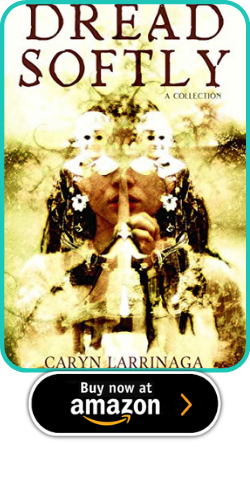
A woman struggles to outsmart the demon who bargained for her father’s soul. An elderly shut-in with a monstrous secret is tormented by a door-to-door salesman. Six-eyed creatures congregate on the ceiling of a remote bungalow, puzzling a newly rescued tabby cat. An imp’s loyalties are torn between a vulnerable child and the god of dreams.
In her debut horror collection, award-winning author Caryn Larrinaga spreads her nightmares under your feet. Fed by the dread her anxiety brings her, each of these eleven tales is a journey into an unsettling universe just parallel to our own—one populated by haunted objects, unwanted urges, and creatures from beyond human understanding. Dread softly.


TODAY ON THE GINGER NUTS OF HORROR WEBSITE ​

REVISITING THE ‘MASTERS OF HORROR’, INCIDENT ON AND OFF A MOUNTAIN ROAD BY RICHARD MARTIN


Picture

the heart and soul of horror fiction review websites ​

UNDER A RAVEN’S WING BY STEPHEN VOLK - BOOK REVIEW

4/5/2021
Picture

Under A Raven’s Wing 

Under A Raven’s Wing is unquestionably a work of loving devotion to both Poe and Doyle's Holmes, and every page rings with that love. It also represents an astonishing feat of imagination, bringing out all of Volk’s talents at evoking time and place, together with a literary approach that’s faithful
The Apprenticeship of Sherlock Holmes
In 1870s Paris, long before meeting his Dr Watson, the young man who will one day become the world’s greatest detective finds himself plunged into a mystery that will change his life forever.
​

A brilliant man—C. Auguste Dupin—steps from the shadows. Destined to become his mentor. Soon to introduce him to a world of ghastly crime and seemingly inexplicable horrors.
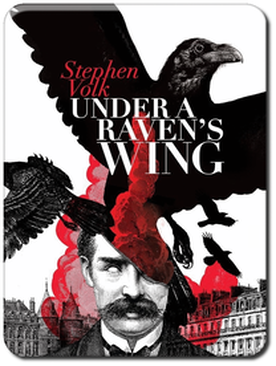
Under A Raven’s Wing is Stephen Volk’s latest from PS Publishing, and the core conceit is as simple as it is daring; in the 1870’s, a twenty-year-old Sherlock Holmes, taking a break from his university studies to accompany two of his student friends to Paris, meets Dupin, the detective from Edgar Allan Poes’ Murder In The Rue Morgue, The Mystery of Marie Roget, and The Purloined Letter. They form a friendship, and Holmes, under the tutelage of Dupin (during which he investigates the most intractable and bizarre crimes of the era), slowly grows into his destiny as The World's Greatest Detective.


As core ideas go, I was struck by two immediate thoughts; the first, that it’s obviously one of the best ideas for a set of new Holmes stories that anybody has ever had, and secondly, that I have no idea how one would begin to actually write such an undertaking.


And before we go any further, I guess I should put out my own position with regard to the source material, in the interests of transparency: I love the Doyle canon of Holmes stories, and have read all of them (with the exception of the Valley Of Fear novel) several times (I’m actually doing a Patreon exclusive podcast series on the Holmes canon right now, with friends Jack Graham and Daniel Harper). Poe I am less familiar with, though I have read Rue Morgue and Purloined Letter - I’d describe myself as more of a Greatest Hits Poe fan than a devotee, for sure.


I say that because it’s important to understand the degree to which these stories are a fusion of the Doylian and Poe’s literary style. The framing device means that most of the stories are presented as first-person accounts written by Holmes himself, near the end of his life, and sent as letters to a confidant; as such, the tales are written very much in Holmes’s voice (which is distinct from Watson’s voice, narrator of the original tales); but they also portray a version of the character we’ve not seen before; there’s a vulnerability, a fallibility, to this version of Holmes, a sense of a young man adrift in a strange city, and, whilst still clearly almost supernaturally intelligent, lacking both the confidence and insight of the incarnation we’ve grown to know and (in my case, at any rate) love. It’s true that, despite Watsons’ protestations in the original texts, Holmes was always portrayed as a more passionate and emotional creature than the popular image would suggest; and of course he is also occasionally fallible, especially in the earlier short stories. That said, Volk very much takes this to the next level in these tales, by placing Holmes out of his element, and before he’s even settled on his vocation. This mix of Old Holmes as narrator and Young Holmes as protagonist is fascinating, and Volk weaves the tales with admirable seamlessness, keeping us for the most part within the driving narrative, with only very occasional asides to fill in some post-tale detail that might occur to the reader (in doing this, Volk also takes advantage of the Boswellian quality of the original tales - that is to say, the fact that Watson may not always be the most reliable of narrators in the original narratives - to allow Holmes to ‘correct the record’, to delightful effect for a Holmes nerd like me).


So, yes, Doylian, absolutely; but, just as crucial, if not more so, is that these are also Dupin stories.


Which is to say, narratively, they are Poe stories.


As a result, the mysteries all take a turn to the bizarre, the grotesque, and the terrifying. For example, one of the stories purports to tell the true story behind which the myth that became The Phantom Of The Opera was born. Another, The Three Hunchbacks, riffs on The Hunchback Of Notre Dame (as well as containing a fascinating, mirror-darkly allusion to one of my favourite Holmes stories, The Man With The Twisted Lip). Another story is called, with admirable directness, The Purloined Face. As I noted above, my familiarity with Poe’s work is far less than with Doyle’s Holmes canon; even so, I was able to catch a few clever, unobtrusive references to the man’s body of work, and I’m sure for the hardcore devotee (as I suspect Volk is) there’s a treasure trove of such moments.


Volk also, in my view, displays a very deft hand in dealing with some of the more problematic aspects of the source materials, without in any way compromising on what were, often, the very ugly prejudices and deprivations of the time. He does this in a number of ways; sometimes by confronting the issue directly (there’s a moment when a member of the Pinkerton detective agency popped up, and then delivered a short monologue, that made me actually punch the air with delight) and sometimes, where appropriate, by simply acknowledging it and letting it sit for the reader to judge.


Throughout, there is a palpable sense of the macabre, of a seething darkness just under the surface of things, which is both true to Poe and true to the time (history being, in many important respects, the original and greatest horror story). 1870’s Paris is a character unto itself, lurking in the background of all the stories, every bit as much as London is in the Holmes tracts; and Volk evokes the grime and splendour of the era, the ghost of Revolution still haunting the streets and psyche of many of the characters; and, of course, the enormous wealth disparities of the time, with great wealth and pomp living shoulder to shoulder with awful poverty and deprivation. It is a heady and unsettling cocktail, and suffuses all the tales in the collection with a sense of dread and melancholy.


And, look, I’m a big Stephen Volk fan, and a fan of the source material, and it’s true to say that, while I’d never have come up with the idea myself, it’s a near-perfect project, practically laser-targeted at my particular tastes. That said, the potential pitfalls for such a project are many, and in some cases quite sizable.


It is my considerable pleasure to report that, for this reviewer at least, Volk does not merely sidestep those pitfalls; rather, he transcends them. In the process, he’s produced a collection of long short stories that manage to form part of not one, but two beloved literary canons; giving us an enticing new mythology for the birth of Holmes, and recasting Dupin, and Poe’s work in general, in an exciting new light. Under A Raven’s Wing is unquestionably a work of loving devotion to both Poe and Doyle's Holmes, and every page rings with that love. It also represents an astonishing feat of imagination, bringing out all of Volk’s talents at evoking time and place, together with a literary approach that’s faithful without being in any way derivative. In this fusion of two absolute classic voices of genre literature, Volk has created something gloriously all it’s own; a set of tales worthy to stand alongside the past masters in whose proud tradition he follows.


by Kit Power 
3/5/21

UNDER A RAVEN’S WING​ BY STEPHEN VOLK 

Picture
A COLLECTION by Stephen Volk
CATEGORY Horror
PUBLICATION DATE  March 2021
COVER & INTERIOR ART Pedro Marques
INTRODUCTION Charles Prepolec
PAGES  327

EDITIONS 
Jacketed Hardcover — ISBN  978-1-786367-06-8  [£25]
JHC signed by Stephen Volk and limited to 100 numbered copies  — ISBN 978-1-786367-07-5  [£35]

SYNOPSIS

The Apprenticeship of Sherlock Holmes
In 1870s Paris, long before meeting his Dr Watson, the young man who will one day become the world’s greatest detective finds himself plunged into a mystery that will change his life forever.
​

A brilliant man—C. Auguste Dupin—steps from the shadows. Destined to become his mentor. Soon to introduce him to a world of ghastly crime and seemingly inexplicable horrors.
  • The spectral tormentor that is being called, in hushed tones, The Phantom of the Opera . . .
  • The sinister old man who visits corpses in the Paris morgue . . .
  • An incarcerated lunatic who insists she is visited by creatures from the Moon . . .
  • A hunchback discovered in the bell tower of Notre Dame . . .
  • And—perhaps most shocking of all—the awful secret Dupin himself hides from the world.

Tales of Mystery, Imagination, and Terror

Investigated in the company of the darkest master of all.


Purchase a copy direct from PS Publishing here 

TODAY ON THE GINGER NUTS OF HORROR WEBSITE ​

COVER REVEAL: THE DAMOCLES FILES, RAGNAROK RISING  BY BENEDICT J JONES AND ANTHONY WATSON

horror-website-uk-the-best_orig

THE HEART AND SOUL OF HORROR FICTION REVIEWS 

SAVAGE BY DAN SOULE - BOOK REVIEW

3/5/2021
BOOK REVIEW SAVAGE BY DAN SOULE
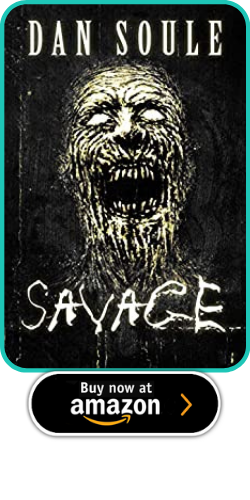
​Dan Soule’s Savage is a contemporary monster tale wrapped in a cloak of Jack the Ripper mythology. The book opens following “Annie,” an unapologetic reference to the real Jack the Ripper’s fourth victim Annie Chapman who, before her body was discovered slashed and disemboweled, had been last seen leaving her place of residence in search of a trick to glean rent money. Soule’s modern-day Annie is also a prostitute, but she trusts the wrong stranger in order to fund her heroin habit. Soule’s pacing works to establish ominous suspense, but it’s his sly ironic winks that made me want to read further. “He was alright looking, this one. A bit oddly dressed, but he had a handlebar moustache that was quite fetching. Those hipster wankers usually dressed like they were either tramps or living in the wrong century.” A solid chunk of the book revolves around the investigators’ building analysis of the copycat nature of this and subsequent murders, and while the goings-on of lawmen Kenny and Roj will satisfy any crime reader’s cravings, they are the least interesting parts of the novel.


The Jack the Ripper trope has been picked to pieces, so much so that it almost resembles Jack’s historical victims themselves: hollowed out with little to reassemble in any sort of viable way. However, Soule approaches the narrative through a fresh set of eyes: that of paperboy-cum-drug mule Dylan Savage, who, in the midst of being bullied by a gang of neighborhood thugs, finds himself in “the strange house at 25 Gallows Court,” the epitome of that creepy structure in everyone’s childhood neighborhood that invited dares and legends. The home and its inhabitants become a source of respite, providing a safe haven for the boy as the ever-present Duppy Gang pursues Dylan on his route. Unlike the haunted houses of our memories, however, this domicile is filled with real monsters. 


The greasy drug kingpin for whom Dylan works (predictably, to help his indentured mother rather than as a purposeful career choice), fittingly named Henry Grime, is likely the weakest aspect of the book, as the character’s actions and dialogue feel funneled from a Training Day casting call. The more intriguingly colourful characters are the supernatural residents of 25 Gallows Court, especially as the true extent of their abilities is demonstrated in the novel’s final third. 


At close to 400 pages, Savage is not a quick read, but Soule’s meticulous volleying between Grime, the investigators, and Dylan leaves little downtime for filler or fluff. His vampires sleep not in coffins but upside down in sarcophagi and are creatures that are a seamless blend of ancient and contemporary mythos, and while the book is far from being classified as splattergore, it holds its own in some memorable scenes of horror (one in particular featuring a room full of disembodied heads throws out a smart bit of comic relief as well). Overall, Soule puts forth a fun and engaging bildungsroman-terror-thriller mash-up that will satisfy any reader who prefers their vampires with more Blade and Nosferatu than Twilight.

SAVAGE BY DAN SOULE

Picture
Jack is back, but he isn't even the worst thing on the streets of Whitechapel...
The Ripper copycat murders are on the front pages, and Dylan is just a paperboy forced to deliver drugs along with the morning news. When a new house appears on his paper round, fate pushes Dylan into a rival gang's territory. Risking being stabbed and robbed, he delivers the paper to 25 Gallows Court. But there's something not quite right about the rundown house. Apart from being boarded up, and guarded by a rabid dog, no one else seems able to see it. Not the shopkeepers on either side. Not even the three kids from the Duppy Crew who chase Dylan one morning. When he steps off the pavement and vanishes from view, the house seems to offer protection from a cruel and unforgiving world. On the backstreets of London, where life is cheap, there are always deals to be made. Dylan might want to be a little more careful with whose offer he takes. Because what he gives away might wake up something far worse than the murderer stalking the women of Whitechapel...
Dan Soule delivers another of his Fright Night novels, reviving the vampire mythos with aplomb. If you can't get enough of dark and gripping suspense with compelling characters set in a gritty world, then you'll love Savage.

Picture
Rebecca Rowland is the American dark fiction author of the short story collection The Horrors Hiding in Plain Sight and the novel Pieces and curator of four horror anthologies. Her work has appeared in venues such as Bloody Disgusting’s Creepy podcast, The Sirens Call, Coffin Bell, Curiouser, and Waxing & Waning and has been anthologized in collections by an assortment of independent presses. She delights in creeping about Ginger Nuts of Horror partly because it’s the one place her hair is a camouflage instead of a signal fire. For links to her latest publications, social media, or just to surreptitiously stalk her, visit RowlandBooks.com.​


TODAY ON THE GINGER NUTS OF HORROR WEBSITE ​

FIVE HORROR STORIES THAT WILL GIVE YOU PHONE PHOBIA BY DOUGLAS WYNNE

horror website uk the best

THE HEART AND SOUL OF HORROR WEBSITES ​

Forward
    Picture
    Picture

    RSS Feed

    Archives

    May 2023
    April 2023
    March 2023
    February 2023
    January 2023
    December 2022
    November 2022
    October 2022
    September 2022
    August 2022
    July 2022
    June 2022
    May 2022
    April 2022
    March 2022
    February 2022
    January 2022
    December 2021
    November 2021
    October 2021
    September 2021
    August 2021
    July 2021
    June 2021
    May 2021
    April 2021
    March 2021
    February 2021
    January 2021
    December 2020
    November 2020
    October 2020
    September 2020
    August 2020
    July 2020
    June 2020
    May 2020
    April 2020
    March 2020
    February 2020
    January 2020
    December 2019
    November 2019
    October 2019
    September 2019
    August 2019
    July 2019
    June 2019
    May 2019
    April 2019
    March 2019
    February 2019
    January 2019
    December 2018
    November 2018
    October 2018
    September 2018
    August 2018
    July 2018
    June 2018
    May 2018
    April 2018
    March 2018
    February 2018
    January 2018
    December 2017
    November 2017
    October 2017
    September 2017
    August 2017
    July 2017
    June 2017
    May 2017
    April 2017
    March 2017
    February 2017
    January 2017
    December 2016
    November 2016
    October 2016
    September 2016
    August 2016
    July 2016
    June 2016
    May 2016
    April 2016
    March 2016
    February 2016
    January 2016
    December 2015
    November 2015
    October 2015
    September 2015
    August 2015
    July 2015
    June 2015
    May 2015
    April 2015
    March 2015
    February 2015
    January 2015
    December 2014
    November 2014
    October 2014
    September 2014
    August 2014
    July 2014
    June 2014
    May 2014
    April 2014
    March 2014
    February 2014
    January 2014
    December 2013
    November 2013
    October 2013
    September 2013
    August 2013
    July 2013
    June 2013
    May 2013
    April 2013
    March 2013
    February 2013
    December 2012

https://l.facebook.com/l.php?u=https%3A%2F%2Fmybook.to%2Fdarkandlonelywater%3Ffbclid%3DIwAR1f9y1sr9kcIJyMhYqcFxqB6Cli4rZgfK51zja2Jaj6t62LFlKq-KzWKM8&h=AT0xU_MRoj0eOPAHuX5qasqYqb7vOj4TCfqarfJ7LCaFMS2AhU5E4FVfbtBAIg_dd5L96daFa00eim8KbVHfZe9KXoh-Y7wUeoWNYAEyzzSQ7gY32KxxcOkQdfU2xtPirmNbE33ocPAvPSJJcKcTrQ7j-hg
Picture