


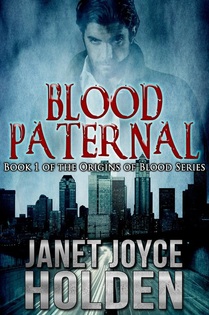
 Blood Paternal is a modern vampire novel which successfully blends the familiar gothic angst and melancholy of the classic tales with a slickness and style that conjures images reminiscent of The Matrix, Inception and Equilibrium. Holden’s vampires bite but they also lock and load. The emotional core of Blood Paternal is built around Mark Gannon; an aspiring actor who is kidnapped, tortured to death by one family, or house, of vampires and then revived by another. In a haunting sequence, he comes to grips with his reborn nature as a vampire and what follows is his initiation into a strange new world where vampires walk around in daylight and are accompanied by human companions known as donors. Mark’s new family are part of a war initiated by Anton Weiss; the father of all vampires, who wishes to exterminate his kin. Mark’s personal growth flows along seamlessly with the plot, all of which leads towards the revelation of his, poss_ibly fated, part to play in the unfolding war between the vampire houses. Holden’s love for the setting, story and her characters is evident throughout as she brings her world to life with an evocative eye for detail which ensures a character’s dress and appearance tells you as much about them as their own words. And, in the case of the latter, the author’s talent for naturalistic dialogue also shines through. The roots of her world are recognisable in urban fantasy but this has a harder edge to it, which recalls the vampire underworld of Anne Rice and its social complexities, as well as Clive Barker’s post-Hellraiser explorations of darker, more fantastic realities. Blood Paternal is one for vampire fans who don’t mind their horror being mixed with high-octane action and who are not averse to some interesting new twists on the traditional myths. GREG JAMES
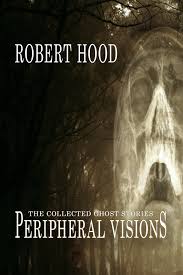 Over the course of close to three decades, between 1986 and 2014, Robert Hood had written forty-four stories concerning ghosts: many short and bite-sized reads, a few novelettes for passenger-side driving, and a single novella that’ll last you at least a couple visits to your doctor’s waiting room.
These collected works (along with notes on the inspiration of each tale) are divided into what the writer has called “thematic categories”, a sort of grim and deathly taxonomy -- a directory of “haunted” things, if you will; and they come together to form the volume, Peripheral Visions. These categories are as follows: haunted places, haunted families, haunted minds, haunted youth, haunted vengeance, and haunted realities. The book itself is a whopping thing, whether we’re talking paper or megabytes – about two-hundred twenty thousand words, not including the author’s notes. |


Archives
May 2023
|

|

|
 RSS Feed