


 Vicious Oz outback horror thriller with serious bite Hardcore horror fans will be familiar with the subgenre ‘Hillbilly Horror’ pioneered by films such as Texas Chainsaw Massacre, Deliverance and The Hills Have Eyes where unsuspecting tourists or those who have wandered off the beaten track are menaced by nutters or inbred locals. This subgenre has also spawned many novels such as Jack Ketchum’s masterpiece Off Season, although they are predominately set in America, once in a while one does pop up set elsewhere, and Gabriel Bergmoser’s, Australian set, The Hunted is a truly stellar example. There is another subgenre, discussed much less frequently, called ‘Outback Horror’ in which the violent Australian serial killer film Wolf Creek is probably the best-known modern example. However, The Hunted is most definitely the new player in town, and I recommend this book very, very highly. First up, it’s not particularly genre fiction and for most of the time you might not realise you are reading a horror novel and hats off to Faber for getting behind such a brutal book. As it seems to be the type of book much more likely to end up on an independent press. After setting the scene, The Hunted moves quickly into thriller, with some outstanding action sequences, before moving full throttle into horror. But if the nutter serial killer from Wolf Creek passed by for gas, I would not have been surprised at all! In Hillbilly Horror we all know what waits for those dumb enough to venture into the backwaters of Louisiana, but Australia does not quite have the same reputation when it comes to the genre. This novel scratches that idea entirely and I guarantee it will not be used by the Australian tourism industry anytime soon. But for non-Australians it asks some interesting questions: for backpackers there are very popular (and approved) tourist trails for travelling from town to town, but is there a ‘real’ Australia we never hear about? Are there tiny backwater places, like in The Hunted, which do carry genuine levels of threat and menace? As in the famous 1980s film Crocodile Dundee they seemed harmless enough! Although the novel is nothing like it, it still makes me think of the cult 1971 film, Wake in Fright, about a young teacher who finds himself stranded in a violent Outback town. This film also explores the idea of masculinity, which is also a major background theme to The Hunted. Do city dwellers have any right to explore the Outback if they do not have the tools to defend themselves? If this book is accurate, like in America, everybody has guns and knows how to use them. Threat soaks through much of this novel and the city slickers who feels it most. The story is presented as a ‘now’ and ‘then’ narrative of two different stories which eventually explosively meet, but it cleverly takes its time revealing the true direction of the plot. I knew very little about the novel in advance and I would suggest avoiding spoilers; a very big penny dropped at 49% on the Kindle and until then everything was nicely shrouded. The ‘now’ story involves a guy called Frank, probably in his fifties, who has been badgered by his son (who he hardly ever sees) to take his granddaughter Allie for the summer. Frank and Allie have hardly ever met, she has been having problems at school and suspects her parents might be getting a divorce. Frank owns a gas station and fast food eatery, which is the only one for miles, and in the middle of nowhere. He has no friends and struggles to connect with Allie. The book is written in the third person and seen from the point of view from both characters.  The ‘then’ story firstly introduces us to Simon, who is Australian, but is aimlessly driving around the country trying to find the ‘real’ Australia, the problem is he has little cash and is not sure what he is looking for. He has read Jack Kerouac and dreams of exploring the empty landscapes but has been shocked by the vastness and bleakness of the areas he has been driving through. When he is nursing a beer in a remote pub a beautiful young woman walks in and after they hit it off, start to travel together. However, Maggie has her own agenda, her own plans, but for a while she is happy to travel with Simon. This story strand concerns where the two end-up. Is it a wrong turn or not? You’ll have to read to find out, but if I ever went to Australia I would be heading in the opposite direction! Early in the novel a shot and broken woman stops at the gas station which Frank and some customers decide to help. However, this is just the beginning of an unrelenting thriller which grabs by the throat and just does not let go, spiralling to a hair-raising finish. I do not want to say too much more about the plot to avoid spoilers. Frank, who has a history, is a tough as nails character who would not be out of place in an American hard-boiled thriller and seeks redemption of his own. It might not be the most original story, but in the end of the day, it’s how you tell it that matters. I loved The Hunted which was perfectly pitched between thriller and horror which I found incredibly difficult to put down and read it in a couple of days. Highly recommended. 5/5 Tony Jones   the heart and soul of horror review websites The Midnight Lullaby shines with its ability to wrap the reader up emotionally and then cut deep. I felt for these characters and wanted them to be safe, happy, and to live out their ghost/human love story. Benedict Lyon is the youngest son in a family of spiritualists, ghost whisperers, witches, and psychics. Once the black sheep of the family with no ability to see ghosts, Benedict now works as a ghost hunter to "cleanse" houses of the spirits that inhabit them. The only problem is, he still can't see ghosts. Well, except for one. Emmeline is the ghost of a murdered young woman that has been tied to Benny since he was a teenager. Since she showed up, he has learned to live with a ghost companion to the point where it's pretty clear that they love each other. She helps him bust ghosts, telling him where they are, what they are saying, and how to get rid of them. Because of Emmeline's help, Benedict is no longer considered the outcast of the Lyon family, finally earning their respect. However, when Benedict's mother dies, he must return to the family home with Emmeline in tow. While both are concerned about having a ghost in the house with a family of ghost hunters, they couldn't see her in the past, so what could go wrong? I loved this book so much. It's a deeply emotional story, and while the supernatural horror is present, the real horror in this book is subtler and closer to home. I felt a deep connection to Benedict and Emmeline's relationship from the very beginning chapters. The way Low describes the emotional weight of not being able to have physical contact is excellent and gives a hint of sadness to their relationship. I also especially enjoyed the dynamics at play within the Lyon family. Every family has secrets, but when your family is steeped in the supernatural, those secrets hold more weight. 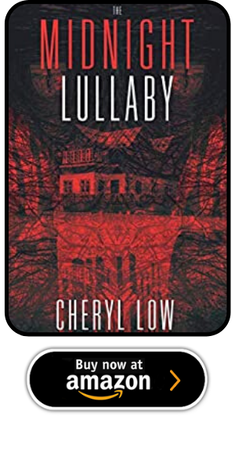 I'm a fan of quiet, emotional horror, and this book delivers that in spades. Even though the supernatural horror is present and terrific, The Midnight Lullaby shines with its ability to wrap the reader up emotionally and then cut deep. I felt for these characters and wanted them to be safe, happy, and to live out their ghost/human love story. One of the moments that made me feel that way was when Benny would hold open doors for Emmeline. Even though she's a ghost and could pass through the door, it makes them both feel like she's part of the world and that their relationship is a tangible thing. It's a beautiful and tender moment between characters that conveys so much about their relationship. I won't discuss the ending at all, but I will say that I thought it was perfect. This is the second book by Cheryl Low that I have read. The first was Infernal the story about a nature documentary crew that explores an evil deserted island. Both of these books have been incredible making Cheryl Low a must-read author in my view. The Kindle edition of The Midnight Lullaby is available now, with the paperback being released at the end of July. I highly highly highly recommend that you read The Midnight Lullaby. 5 out of 5 stars  Matt is originally from Kentucky but now lives somewhere in Arkansas with his beautiful wife and a small child. In order to support his book-buying habit, Matt is a high school special education teacher. When he’s not reading, Matt enjoys playing ridiculously complex board games about trains. Social Media www.instagram.com/teamredmon www.twitter.com/teamredmonreads www.goodreads.com/teamredmon   the heart and soul of horror fiction review websites It's not all bad, which is why The Virgin is a bit of a frustrating book. Some of the humorous moments add to the enjoyment of the read, and a few of the gore-filled incidents are well crafted. There’s no indication of the ending until you get there, as the story is written from multiple POVs. As I was reading The Virgin by Wol-vriey, I struggled decide whether I liked it or not. Now I’ve finished the book, I’m still caught up in indecision. Part of my problem is the novel has what I can only call a patchwork feel; it’s inconsistent. At times it drifts towards base-level comedy, but at other times the tone turns more serious. Some chapters read well while others are clunky and could do with a few more revisions to strip out some of the errors. There are serious passages alongside moments of absurdity, but it’s difficult to tell whether the latter are tongue-in-cheek or a genuine attempt to add some splatteriness. The core story is relatively straightforward: five virgins and ten suitors are thrust into an artificial setting for three hours as part of a dark web game show. The objective is simple: the virgins must remain virgins and the suitors have to attempt to deflower them. Oh, I nearly forgot; the virgins also have carte blanche to kill each other, or the suitors, if they so desire. The top prize of $10 million is shared between the girls with intact hymens at the end of the show. The game isn’t actually that straightforward. It has various elements which crop up, seemingly to get the characters out of (and sometimes into) perilous situations, but it does keep the pace up and the action flowing. Between the sexual jiggery-pokery and the violence there are moments of cartoon-like comedy: think people running into rooms, legs whirling as they hit a patch of oil before careering out of control into a wall. There are also moments of bizarre comedy: think a woman who has had her vagina surgically removed with hymen intact, which she keeps in a jar to celebrate her virginity. At other times, the humour drains away, and when it does the errors become more obvious and the many bracketed comments explaining why things are the way they are become intrusive to the story.  As The Virgin heads for its climax (no pun intended), it suddenly takes a strange turn with a scenario coming out of left-field. The whole thing is so at odds with the rest of the story it’s more of a distraction than anything else. I found myself on the verge of giving up reading, because it very much felt like an after-thought. Then, just as the confusion hits the high-tide mark, we’re back in the main story. I appreciate you should always expect the unexpected, but in this case it jarred, and the story never got back on track for me. It's not all bad, which is why The Virgin is a bit of a frustrating book. Some of the humorous moments add to the enjoyment of the read, and a few of the gore-filled incidents are well crafted. There’s no indication of the ending until you get there, as the story is written from multiple POVs. However, for me, the thing The Virgin left me with was indecision as to how I felt about it. The reason I can’t be sure is because the story twists from slapstick to horror to splatterotica and back again without any element remaining throughout. It has a little bit of everything thrown in, but I thought it would be stronger with more of a focus. That said, for those that want a cocktail of gore, aggressive sex and bizarre episodes, it will be a fun read. Review by Peter Caffrey  Peter Caffrey is a writer of tales with an absurdist bent. A born and bred Londoner, he currently lives in the middle of nowhere with nothing but the North Sea and fog for company. Introduced to horror as a small child by a Mother who was too scared to watch films on her own, he has a fondness for demonic possession, crucifixion and impalements. His novels, The Devil’s Hairball and Whores Versus Sex Robots are available from Amazon. He drinks too much, exercise too little and is unlikely to change. http://petercaffrey.com  the heart and soul of horror fiction review websites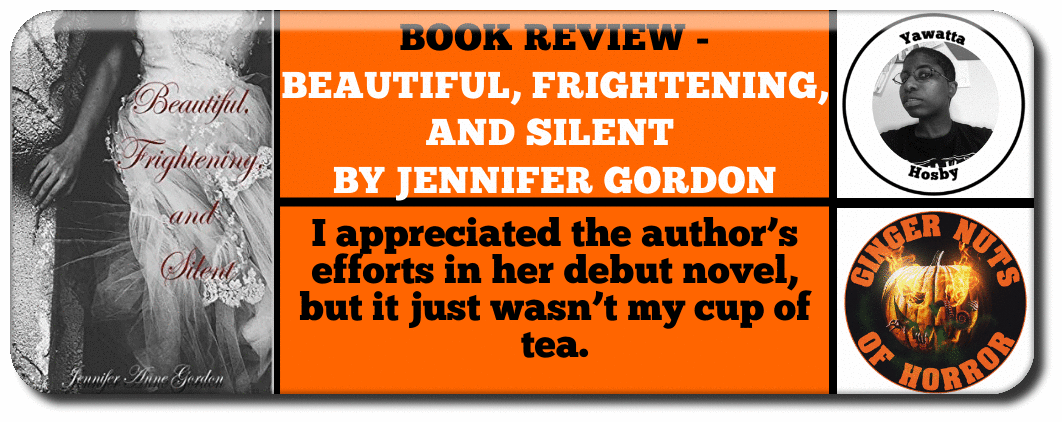 The author did a great job with describing the setting. I could picture that creepy mansion vividly in my mind. And, she did awesome with characterization. I didn’t like any of the characters, but that’s not a deal breaker for me as a reader. I loved the title of this book. It was poetic, and I appreciated the author’s efforts in her debut novel, but it just wasn’t my cup of tea. Just because ghosts are mentioned doesn’t mean a book should be in the horror genre. I wouldn’t even really call it a paranormal romance, maybe contemporary drama… My favorite parts of the book were the flashback scene of the car crash and Adam’s downward spiral before going to the haunted mansion. Once he arrived on Dagger Island, I was confused on what was going on plot-wise. The ending definitely left me confused. I ended up with questions that left me frustrated as a reader. Why was the son hiding? What was so special about “mother’s” room? Did these people already know their fates? Etc, etc, etc My favorite lines: 1) Anthony grew up with the reality of a haunting, the same way other children grow up with the facts of grass being green and snow being cold. 2) She hears the rattling of death, climbing out from the deepest parts of his lungs each time he exhales 3) Somethings, even uninvited, come back to stay. 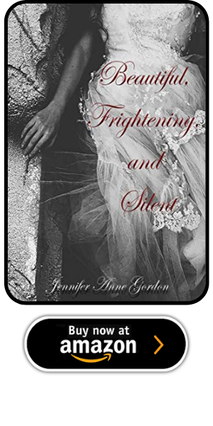 I was going to give this book 4-stars but I knocked off a star for the unformatted ARC being a distraction. There were random page numbers inserted in the middle of scenes, sometimes even disrupting an actual sentence. I didn’t understand why so many different paragraphs were used for characters speaking. Most of the time quotation marks were missed because of this. The author did a great job with describing the setting. I could picture that creepy mansion vividly in my mind. And, she did awesome with characterization. I didn’t like any of the characters, but that’s not a deal breaker for me as a reader. The author showed their flaws in a poetic way. However, I didn’t care about anyone’s journey, especially Adam’s. Spoiler alert: if a main character narrates that he doesn’t care about his child and is only going through the pretences because it’s something he should be doing, then I don’t give a damn about the main character trying to find his ghost son. Keep smiling, Yawatta Hosby 3 out of 5 stars the heart and soul of horror fiction reviews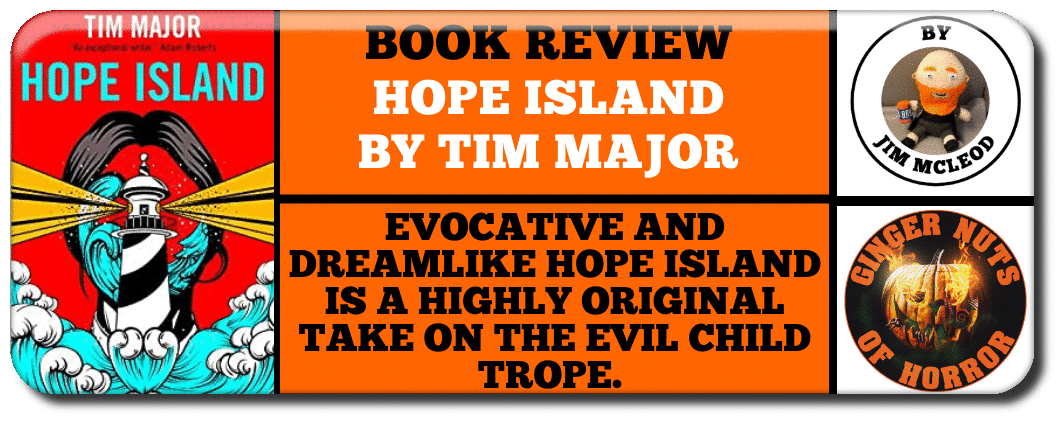 You would think that living with the mighty Cthella® would mean that I was totally inured to any horror story that revolved around strange and scary children. Well you'd be wrong, perhaps it's there is some projection of the powers, abilities and actions of the kids onto my daughter or possibly having spent almost 12 years living with the human manifestation of an Elder God has left me tattered and broken. Either way, Hope Island by Tim Major is does nothing to alleviate the constant dread I have towards children. When overworked TV producer Nina Scaife takes her daughter Laurie to Hope Island, after her partner and fat| her to Laurie, Rob walks out on them both. However, the island is home to Rob's parents who are wary of Nina, and to make matters worse the locals are acting very strange (to fair locals are always stranger to outsiders, add in a recently unearthed archaeological site, a dead body on the beach, and ever increasingly terrifying silent island children, this is not going to be the getaway that they thought it was going to be. Before we go any further, let's get the children shaped elephants out of the room. Many of you will draw some similarities between Hope Island and The Midwich Cuckoos, and it's a fair comparison to make. Both novels involve a group of kids who ooze ominous otherworldliness, and both are highly effective in delivering an engaging and chilling narrative. In all honesty, though I think that a lot these comparisons are being made, because The Midwich Cuckoos is the text that springs to mind as there aren't that many novels dealing with crowds of creepy kids. As a riff on this theme Hope Island, more than stands on its own two feet. Major has crafted a classic slow burn novel, that drip feeds the reader with an ever-increasing sense of dread and disquietude, leading to an awe-inspiring battle against mysterious forces that threaten the whole island. 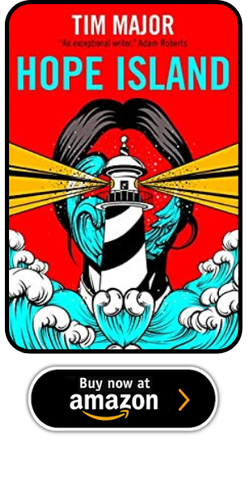 Populating Hope Island is a fantastic cast of characters, Major goes for gold in creating a wonderfully insular population, that while not reaching the utter eeriness of Royston Vasey, still leaves the reader with no doubt in their minds that they would never want to be an interloper in this community. Some of these characters are integral to the story, while many of them are used in a periphery manner to add an excellent extra layer of world-building. This is another way in which this book excels, Major has taken great care in building a stable framework form which to tell the story, the island and its denizens live and breath, allow the more supernatural elements of the story to ring true. And as for the supernatural elements of the story, oh boy, you are in for a treat. These "black eyes children" (if you haven't read about these go and google them they will freak you out), are terrifying, especially as Major keeps the reader guessing as to their true nature, are they real or are they a figment of Nina's distraught and heartbroken mind. Major carries this theme throughout the narrative, with an almost surreal sense of reality, there is an ethereal nature to this folk horror novel, that invokes a strong feeling of emotional agitation within the reader as it leads them through to a superlative esoteric conclusion that maximises the intensely ethereal buildup of the narrative before this. A powerful, potent and claustrophobic novel that picks away at the paternal notion of the nurturitive nature of parenthood Evocative and dreamlike Hope Island is a highly original take on the evil child trope.  the heart and soul of horror fiction review websites
Owen Banner's Those Who Hunger: An Amish Vampire Thriller, in the sort of short form plot summary that often adorns book covers or online product descriptions, sounds like a surefire winner of a supernatural thriller. In the green hills of rural Pennsylvania, a teenager is found violently mauled to death in an underpass. Haddassah Zook is the lone keeper of the dark secret of what happened to the dead boy. However, Hadassah is not the only one keeping secrets in the tightly knit Amish community, which harbors a population of "marked ones", who bear a Biblical curse of vampirism. As the body count rises, all of this secrecy threatens to destroy not only the Zook family, but the entire Amish settlement. The cloistered community now facing grave threats from both internal dangers, and the outsider FBI agents tasked with investigating the bizarre murders. The book's prose is delightfully atmospheric, and shows there was some careful research into the local color of the central Pennsylvania town where the majority of the story is set. The central conceit of the austere Amish lifestyle being a penance for the vampiric curse of the descendants of Cain is a very clever take, and marries two disparate elements ( and vampires) in a way that feels fresh and organic for the book's universe. While teenage Hadassah (nicknamed Haddie) Zook is our principle protagonist, the large cast of characters both in the Zook family and the wider Amish village at hand are distinct enough that it doesn't become a chore to keep track of the denizens and their relationships. What squanders Those Who Hunger's initial promise are some serious issues with plotting, pacing and character development.  The main plot is set in motion by an unpleasant and mostly unnecessary sexual assault. Haddie discovers her vampiric nature when a local boy attempts to rape her, and her cursed abilities manifest in a bloody murder of her assailant. None of this is addressed in any significant manner other than as a source of guilt for Haddie, as her keeping secret both her status as a vampire and the murder itself is essential to the plot. Considering that every other character in the book manifests the curse in a less hackneyed manner, the oversight of Haddie's trauma being the sympathetic plight in the situation casts an unpleasant pall over the proceedings. While the members of the Zook family and their dynamic amongst the Amish community are nicely fleshed out, the book bogs down what was a rather tight thriller about all of the ties that bind us together, with far too many secondary characters and thinly sketched side plots. The introduction of police procedural (the FBI agents) and coming of age (Haddie's Chicago Rumspringa/search for her lost older brother) elements adds several hundred pages of complications to the book's 625 page length, but little in the way of intrigue or insight. Overall, Those Who Hunger: An Amish Vampire Thriller has some excellent foundational and thematic elements, but collapses under the weight of what was perhaps an excess of conceptual ambition. Sadly, this leaves what could have been a very intriguing thriller (given a much tighter edit) buried in the rubble. Review by G.G. Graham  the heart and soul of horror review websites Dark Blood Comes From the Feet might at first be considered an odd name for this eclectic collection of seventeen literary horror short stories. Once you delve within the pages, suddenly the title proves to be a perfect fit. The line is from the story, "Cellar Door" and states: "I felt your trauma. I saw it pour out from the soles of your feet. Old, dark blood. Old trauma you have hung on to for too long. The dark blood comes from the feet." If that quote doesn't immediately give you a feeling for Emma J. Gibson's dark and gorgeous prose, I don't know what will. There's a haunting almost melodic quality to her writing. Mainly told in first-person narrative, her characters are—like in the quote above—those who have or are experiencing something soul-changing. An awakening to a new reality if you will. The children of Lovecraftian orphanage "St. Scholastica's Home for Children of the Sea" open new and terrifying eyes for the narrator, but the monsters aren’t always the ones you expect. "Janine" tells us of a woman whose frightful experience is ultimately too much to handle; Sometimes just knowing is dangerous. The narrator in "This Is Not the Glutton Club" learns the truth about his uncle's long flirtation with disease and mortality.  The diversity of styles and settings confirm that Gibbons is nothing but adaptable. Stories with a contemporary slant like "Rise", in which a neglected wife's transformation brings freedom, fit seamlessly beside the darker, gothic feel of Victorian-set tuberculosis tale "Infection". Locations are just as varied. You will find yourself transported one moment to a post-apocalyptic world in "Sermon from New London" and the next to purgatory in "The Limbo Lounge". Spanning horror themes from the consumptive body horror of “Devour” to the paranormal “Ghost Maker”, every story contained within this collection was a joy to read. The emotional spectrum in the stories was everything! Sadness, disgust, fear, and yes, even hope and happiness. My personal favorite of the collection was “Porch”, about a big, black cat named Rufus bringing his barely-alive, broken treasures to his owner who becomes a odd sort of grim reaper, escorting those poor creatures from their pain and suffering. "Porch" broke my heart, as it did the narrator's, but the ending was simply beautiful. While this was my favorite, there weren't any of the seventeen stories that I didn't enjoy. Dark Blood Comes From the Feet was a delight. Emotional, visceral, and just a lovely assortment of horror. Review by Valerie Lester  the heart and soul of horror fiction reviews Horror fiction has always been a genre that is ideally situated to deal with and dissect the modern way of life. The use of macabre metaphors can be a powerful tool for looking at how we deal with real-life problems. However, in most cases, these type of horror stories are a reactive look at the events unfolding in the world; they are written in response to the events, rather than predicting them. After reading Paul Tremblay's Survivor Song, I am left with the feeling that we might be dealing with a modern-day Nostradamus, or perhaps some mad and crazy virologist who thought "hey I have a great idea for a story and an even better idea for a viral marketing campaign" (sorry I couldn't help myself). I chatted to Paul about his latest novel months before #generationLockdown, and the idea that as a planet we would be laid low by a viral outbreak was even hinted at never mind a full-blown reality. Sitting here almost seven months since first hearing about this book, I am beginning to worry about what his next book might be about; I don't think this planet can survive another Tremblay creation. There was a degree of trepidation, going into this novel, in a previous life, I spent many years working with and researching ways to more effectively cultivate the rabies virus in a laboratory situation. Don't worry; it was for nefarious reasons; we were doing it for Rabies testing kits. And, if there is one thing I hate in all forms of fiction is horrible science, there is a well-known zombie book, that uses a different microbiological reason for the zombie outbreak. While the idea has some validity, it's execution within the book angers me so much. Tremblay gets around this in several ways, most of which is handled by the fact that there are no zombies in this zombie novel. There I have said, and you are free to argue about this with me online, I have already spent the day building a custom hill in my backyard to die on over this. Secondly, he researched the hell out of this novel, and more importantly understood, and put into practice the sciences of virology and epidemiology into this book in one of the most coherently and correct ways I have ever seen in a "zombie novel". Don't worry though this isn't a dry novel filled with scientific terms and info dumps, Tremblay has perfectly incorporated the "boring science bits" seamlessly into one of the most heartbreakingly and terrifying stories of recent years. The premise of Survivor Song is relatively basic, Natalie, who is eight months pregnant and infected, along with her best friend, Dr Ramola "Rams" Sherman must battle their way through an early stage "super rabies" outbreak in Massachusetts, can they find safety, and can they deliver Natalie's baby before she succumbs to the virus. More importantly, will the baby be one of the infected when it is born, can this strain of the rabies virus cross the placental barrier? Well, that would be telling, wouldn't it? You'll have to go and buy a copy of this book and find out for yourself. At its heart, Survivor Song is a novel about the strength of friendships, the bonds between Natalie and Ramola, is sturdy and unbreakable; we should all be lucky to have a friendship this powerful. Tremblay's depiction of it never veers into slushy territory, this is an almost unsentimental discourse on bonds, don't get me wrong there is heart and soul to the friendship and the novel at large, it just never suffers from what can be best described as afternoon telly sentimentality. These two leads are both strong and well-rounded characters, and while this is mainly Natalie's story, you will find yourself connecting more with Ramola. There is a coldness to Natalie, that prevents you from adequately caring about her, it is best shown by the agreement she had made with her husband before she became infected at the start of the novel. I'll be honest it was a shocking revelation and a brave one as it goes against the cliched way in which pregnant women are often portrayed in horror novels. My take on it is Tremblay is commenting on how we as a species are heading towards a more selfish and self-centred mentality, with Ramola acting as a representation of the more kind and caring side of our psyche. However Tremblay isn't content with just leaving Natalie and to a lesser extent Ramola as an undeveloped pair of characters, throughout the story, Tremblay allows them to grow and develop, this best shown by the insertion of Natalie's recordings to her unborn child. These moments of respite from the events unfolding around them are a tender and moving part of this novel. By having Survivor Song take place over a few hours, allows Tremblay to stripe away many of the stylistic leanings that he is well known for, this is his most streamlined novel if you are a fan of his more ambiguous stories, you won't find any of this hear, this a lean and mean narrative that begins with one of the most heart in your throat, bite your fingernails, OMG this is so intense opening chapters you are likely to read, and never gives up right to the end of the book. There is an unstoppable rhythm at play here that will have you turning page after page as Tremblay delivers a masterclass in plotting and pace.  Survivor Song is never afraid to take multiple punches to the throat of modern America; there are blistering attacks on the current social and political landscape, from a bumbling and ineffectual President who cares more about the public perception of himself than the problem at large, to the woefully unprepared and underfunded healthcare system, and the bane of the idiotic anti-vaxxers. It never descends into socio-political ranting, Tremblay expertly splices these salient discussions into the story without ever disrupting the tension filled rhythm of the book. I loved his use of transcripts from social media posts and text messages, as they added a sense of reality and grounding for the story to unfold around. Survivor Song is a brutal and relenting novel, filled with explosive, violent episodes, but tempered with a sincere heart and a sense of poignancy, and littered with a wry sense of humour, and an easter egg that fans of Tremblay's previous novels will lap up with glee. This novel cements Tremblay's reputation as one of the most vital and essential novelists working in horror fiction. Just be sure to set aside a whole day to read this, as once you start you won't want to stop.   the heart and soul of horror fiction reviews |


Archives
May 2023
|

|

|
 RSS Feed