• HOME
  • CONTACT / FEATURE
  • FEATURES
  • FICTION REVIEWS
  • FILM REVIEWS
  • INTERVIEWS
  • YOUNG BLOOD
  • MY LIFE IN HORROR
  • FILM GUTTER
  • ARCHIVES
    • SPLASHES OF DARKNESS
    • THE MASTERS OF HORROR
    • THE DEVL'S MUSIC
    • HORROR BOOK REVIEWS
    • Challenge Kayleigh
    • ALICE IN SUMMERLAND
    • 13 FOR HALLOWEEN
    • FILMS THAT MATTER
    • BOOKS THAT MATTER
    • THE SCARLET GOSPELS
GINGER NUTS OF HORROR
  • HOME
  • CONTACT / FEATURE
  • FEATURES
  • FICTION REVIEWS
  • FILM REVIEWS
  • INTERVIEWS
  • YOUNG BLOOD
  • MY LIFE IN HORROR
  • FILM GUTTER
  • ARCHIVES
    • SPLASHES OF DARKNESS
    • THE MASTERS OF HORROR
    • THE DEVL'S MUSIC
    • HORROR BOOK REVIEWS
    • Challenge Kayleigh
    • ALICE IN SUMMERLAND
    • 13 FOR HALLOWEEN
    • FILMS THAT MATTER
    • BOOKS THAT MATTER
    • THE SCARLET GOSPELS
GINGER NUTS OF HORROR
horror review website ginger nuts of horror website
Picture

HELL HATH ONLY FURY, EDITED BY S.H. COOPER & OLI A. WHITE

12/4/2023
HORROR BOOK REVIEW HELL HATH ONLY FURY, EDITED BY S.H. COOPER & OLI A. WHITE
 Sexual assault and misogyny, menopause and infertility: all of these horrors are told in tales that are often heartbreaking, sometimes allegorical, but always unsettling if not downright terrifying.
Hell Hath Only Fury (Edited by S.H. Cooper & Oli A. White)

ASIN ‏ : ‎ B0BKHZBRQH
Publisher ‏ : ‎ S.H. Cooper (21 Oct. 2022)
Language ‏ : ‎ English
Paperback ‏ : ‎ 186 pages
ISBN-13 ‏ : ‎ 979-8215434703
​

A Horror Book Review by Rebecca Rowland
​
The American judicial system’s overturn of the landmark Roe v. Wade decision guaranteeing access to abortion sparked a number of projects in rebuttal, from art installations to literary collections. S.H. Cooper and Oli A. White’s contribution, Hell Hath Only Fury, is an array of twenty-seven speculative short stories penned by twenty-five different scribes. With a theme “of fright and fighting back” to regain control and reclaim independence of one own’s body, the anthology is an evocative display of quiet horror, dark fantasy, science-fiction terror, and psychological fiction.
Although pregnancy does factor into several of the stories, more often than not, protagonists are plagued by forces outside of their bodies. Co-curator Oli A. White’s own tale, “A Gentle, Soft Boy,” tackles an aspect of misogyny rarely spied in horror literature: while internet trolls and incels are ubiquitous, the sociopaths who hide in feminist facades are invasive forces far more destructive. The narrator explains, “This was his Twitter bio: ‘Nice boy, good friend, soft-spoken somebody. Kindness is cool, selfishness sucks! #RespectWomen.’ Every time I see a guy with a bio like this these days, I start shaking.” White’s villain is certain to make the reader angry, if only because we have all met a Robin and seen him nurtured by the blind sheep of social media, but White gleefully evens the score. Likewise, “June 24th, 2032” by G. Kimball, the anthology’s closing tale, provides a haunting glimpse at the possible domino effect anti-abortion rulings could have regarding the rights of sexual assault victims; in this story, it is both the judicial system and the angry mob of society that the narrator must defend against.

Two other tales take widely different approaches to the theme of reclaiming one’s destiny but are equally effective in evoking shock and horror. Syn McDonald’s entry will have readers thinking long after they have closed its pages. In “Life Support,” when a nonbinary person discovers that they are pregnant, their ferociously religious mother threatens to do everything in her power to prevent her child from having an abortion: “‘I’m on birth control, Momma. Apparently it didn’t work.’ She lifts her chin. ‘Just another sign the Lord wants you to have this child! He bypassed those medications you used to stop it from happening!’ Says the woman with seven children.” The shocking denouement of this tale reiterates the harm deadnaming and dismissing gender identity generates. Sandra Ruttan pens a sly wink to Ancient Greece’s deity of the hearth in “The Goddess Complex.” Vesta walks home with a male co-worker who hides a secret, nefarious hobby, and soon, her life direction is reorientated by acts of violence and vigilante justice: “Dark hoodie, dark jeans, dark sneakers. Nothing that would stand out. A lamp near the road offered enough light for her to read the street numbers. This was it…Her variation of the 12-step plan was a little different than the usual ones, but they started the same.” There are some acts, however, for which there is no absolution.

Three other standouts in the collection utilize a Cronenbergian method of skirting the edges of bizarro horror, and the resulting effect is delightful. The narrator in Dana Vickerson’s “8W2D” is trying to get pregnant but suffers a missed miscarriage. Her state’s laws, however, prohibit medical intervention in expelling the tissue. What follows is a visceral experience in terror: “Inside the black and white bulge of my uterus, I see the monster. I see its wriggling tentacles, its gaping mouth. I see claws and fangs and hundreds of eyes, all opening and closing with the lub-lub-lub of its heart.” Vickerson constructs a wickedly smart extended metaphor of the helplessness felt by women in the overturn of Roe as well as the patronizing misogyny set forth by the right-wing faction who pushed for it. Still more chilling imagery wafts through “The Change,” where Alice Towey’s protagonist begins a transformation. The world wants to teach Sarah skills to “cope” with her body’s change, but Sarah has a better idea: “She threw up, yards of thick white material spilling from her mouth. She touched it with trembling fingers. It was wet and fibrous. Soft, but strong. She understood.” Towey’s tale is quietly creepy, offering empowerment in a time of seeming impotence.
​
Finally, co-curator S.H. Cooper’s “The New Front Line” is simply genius: an art exhibit that is removed by officials from a political protest returns, grows, and shatters the fourth wall. The Inheriting Her Ghosts author offers a mesmerizing piece of speculative fiction that saddens, angers, and provides hope to the reader all at once. Cooper and White have assembled a solid line-up of writing styles and approaches. Reinforcing the notion that Draconian decisions affect more lives than those in power may comprehend, people with uteruses in all stages of life are represented Hell Hath Only Fury. Sexual assault and misogyny, menopause and infertility: all of these horrors are told in tales that are often heartbreaking, sometimes allegorical, but always unsettling if not downright terrifying.

HELL HATH ONLY FURY, EDITED BY S.H. COOPER & OLI A. WHITE

HELL HATH ONLY FURY, EDITED BY S.H. COOPER & OLI A. WHITE
On June 24, 2022, a cry rang out across the United States of America. It echoed, reverberated, and extended out across the world. To some it represented the fear of what’s to come. To others, a reality that was all too familiar. It was a cry of anger. Of terror and anguish. Of desperation. But it wasn’t one of surprise.

In its wake, voices joined and rose with warning tales of the impending future. Bodies stripped of autonomy, identities denied, freedoms robbed, lives lost. And so much rage. For these are not voices that will go gentle into this terrible night. These are stories of fright and fighting back. These are stories of reclamation and defiance. These are stories of warriors. Because when all they give us is hell, we will respond with only fury.

Hell Hath Only Fury is a charity anthology for the benefit of abortion services in the United States of America following the overturning of Roe v. Wade.

Rebecca Rowland

Picture
Rebecca Rowland is an American dark fiction author and curator of seven horror anthologies, the most recent of which is American Cannibal. She delights in creeping about Ginger Nuts of Horror partly because it’s the one place her hair is a camouflage instead of a signal fire. For links to her latest work, social media, or just to surreptitiously stalk her, visit RowlandBooks.com.

the heart and soul of horror fiction review websites 

THE MARIGOLD BY ANDREW F. SULLIVAN {BOOK REVIEW}

10/4/2023
HORROR BOOK REVIEW THE MARIGOLD BY ANDREW F. SULLIVAN
Wickedly funny, nihilistically hopeful, The Marigold is a body-horror ecological disaster that submerges a whole city for the crime of a few residents asking for a better quality of life.
The Marigold  by Andrew F. Sullivan
ECW Press, 352 pages
ISBN: 9781770416642

A Book Review by Justin Allec 


Mycological horror is pervasively thriving right now in both books and film. Recent examples I’ve enjoyed are HBO’s The Last of Us, that pool scene from Annihilation, Kingfisher’s What Moves the Dead, McCloud Chapman’s Ghost Eaters, Moreno-Garcia’s Mexican Gothic, and I’d even add in that mushroom episode from the first season of Hannibal. Still reeling from a global pandemic and faced with self-inflicted ecological destruction, it’s no wonder that we believe the very fibers of the earth will resist domination and are plotting our destruction. Yup, malevolent fungus has become one of the new terrifying big bads.

Each of those works I’ve mentioned uses fungus in a different way, but I haven’t come across an example as nihilistically volatile, as paranoid, as linguistically slippery as what Andrew F. Sullivan images in his second novel The Marigold:

“Naming the thing is supposed to control it, right? What it does is change. Constantly.”

Dubbed ‘the Wet’ in his book, Sullivan’s version of fungus is like if Society’s shunting scenes were distilled and weaponized for use on the plebs and dregs of an uncaring Toronto. Birthed from the last grasping squeeze of terminal capitalism and pop culture debris, this fungus is active, insidious, and independent of the dispassionate 0.01% who want to understand it and wield it for their own corporate benefit.

As Canada’s biggest city—like every big city everywhere—everyone who spends time in Toronto has a love/hate relationship with the place. It’s big, it’s busy, it’s full of fun things, but there’s also much to dislike about the endless sprawl, the sucking humidity, and the obvious disparity between wealth and squalor. Sullivan satirically pushes his residents of Hogtown to grapple with a city intent on burying them alive in debt, surveillance, and apathy. No one, be they a resident of the titular Marigold or struggling on the margins, is safe. Violence is less of a threat than a byproduct of purposeful civic neglect and lazy corruption. People who teeter on the edge of the gig economy, who attempt to maintain some higher standard of public health and concern, or are just looking for a good time, are all consumed. And that’s before the fungus starts to creep up out of fractured foundations in a hell-bent push for assimilation.

High above the uncaring streets stands The Marigold, the titular sky-high condominium, and the near-abandoned sinkhole of a matching twin tower. These private spaces provide the backdrop for developer Stan Marigold to attempt to bend reality to his legacy, while on the ground (and below it) characters search for the origin of the disease and the futility of a cure. From the Marigold’s penthouse to nightmarish subterranean caverns, Sullivan’s writing etches like a laser as it traces their journeys through the urban decay with equal parts cynicism and sympathy.
​
Can a book be moist? I mean, The Marigold’s pages are dry paper, obviously, but this story is positively dripping with moisture. It leaves stains; it leaves puddles. It creeps. Read too much in one shot and you’ll be seeing the world through a Vaseline-smeared lens. Wickedly funny, nihilistically hopeful, The Marigold is a body-horror ecological disaster that submerges a whole city for the crime of a few residents asking for a better quality of life.
If you enjoyed this article, please consider sharing it via the social media buttons at the side and bottom of this article.  

MARIGOLD BY ANDREW F. SULLIVAN 

MARIGOLD BY ANDREW F. SULLIVAN
The Marigold, a gleaming Toronto condo tower, sits a half-empty promise: a stack of scuffed rental suites and undelivered amenities that crumbles around its residents as a mysterious sludge spreads slowly through it. Public health inspector Cathy Jin investigates this toxic mold as it infests the city's infrastructure, rotting it from within, while Sam 'Soda' Dalipagic stumbles on a dangerous cache of data while cruising the streets in his Camry, waiting for his next rideshare alert. On the outskirts of downtown, 13-year-old Henrietta Brakes chases a friend deep underground after he's snatched into a sinkhole by a creature from below. All the while, construction of the city's newest luxury tower, Marigold II, has stalled. Stanley Marigold, the struggling son of the legendary developer behind this project, decides he must tap into a hidden reserve of old power to make his dream a reality - one with a human cost. Weaving together disparate storylines and tapping into the realms of body horror, urban dystopia, and ecofiction, The Marigold explores the precarity of community and the fragile designs that bind us together.

​​JUSTIN ALLEC

Picture

I'm a husband and father of three young boys based in Northwestern Ontario, Canada. Since first reading R.L. Stein and Christopher Pike when I was young, I have been invested in the horror genre. After a lifetime of enjoying horror in all its forms, I decided to attempt to contribute my own stories and after a few years of work, I now proudly call myself a novice horror writer. I have my first short story pending publication with Ghost Orchid Press, and I have received an Ontario Arts Council grant to support my effort to produce a short story collection. I also review films for Thunder Bay's Terror in the Bay Film Festival. I'm interested in reviewing new horror writing as a way to help support other novice writers and learn a thing or two.

All-time Favorite Horror Books:
Robert Chambers, The King in Yellow
Clive Barker, The Damnation Game
William Peter Blatty, Legion
Daphne du Maurier, Jamaica Inn
Iain Banks, The Wasp Factory
Dan Simmons, The Terror
Joe Hill, Horns
Margaret Atwood, The Handmaid's Tale
Robert R. MaCammon, Boy's Life
Catriona Ward, Sundial

...and if I had to pick only one Stephen King book, it'd be Night Shift.

Facebook: Justin Allec
Twitter: @justinallec807

the heart and soul of horror fiction review websites 

A MAN AMONG GHOSTS BY STEVEN HOPSTAKEN {BOOK REVIEW}

7/4/2023
A MAN AMONG GHOSTS BY STEVEN HOPSTAKEN
Seeing ghosts are only the beginning of David’s problems
Steven Hopstaken’s debut Stoker’s Wilde (2019) and sequel Stoker’s Wilde West (2020) were warmly received upon release and his third novel A Man Among Ghosts is a clever change of pace, abandoning the adventurous historical world of Bram Stoker and Oscar Wilde for contemporary America, featuring a seriously weird, haunted house.


There are a lot of ghosts featured in A Man Among Ghosts, so many in fact that they fail to have much in the way of a scare factor, even if some are aggressive, unpredictable or dismissive. This is partly because the ghosts have their own agenda and motives, which is integral to the main longer arc of the novel which is revealed nice and slowly. Ultimately this makes A Man Among Ghosts a very unorthodox, haunted house novel, as it does not include many of the usual type of “Boo!” moments or fear factor style atmosphere. However, it is far from predictable and where the plot ends up is a million miles from where it begins, so much so I would avoid spoilers in other reviews. Much is crammed into its 240 unpredictable pages and it was an entertaining read.


The novel begins with David buying a dilapidated Victorian house after becoming tired of renting. Working in computer programming, he feels that it is time to settle down and live a more adult lifestyle. However, he is also slightly depressed as his best friend Gary (and girlfriend Shannon) will soon be moving out of the area and he hopes to make new friends but feels his best years might be behind him. Disaster then strikes and a brain tumour diagnosis means he only has three months to live and around this time he starts to see ghosts in his new house.


Mentally David finds himself in a very fragile state and calls of his old friend Gary to help, who is a successful magician/illusionist, but does not believe in ghosts and is sure he can prove what Gary is seeing is not real. It is difficult to say much more about A Man Among Ghosts without heading into spoiler territory, but I found myself seriously invested in figuring out what was going on. David makes friends with Gus, his next-door neighbour, and even finds a new girlfriend, but can’t shake off the sense of paranoia that somebody is messing with him, but why? Strangely, many of the characters accepted very easily the fact that David saw ghosts and there are even a couple of exorcisms thrown into the mix courtesy of David’s estranged evangelical Christian father. Even more surprising, he soon learns that some of the spirits he sees are of people who are not yet dead and so somewhat tricky to exorcise! When he sees ghosts (or whatever they are) in locations other than the house things get even wackier.


The advance blurbs namechecked the film Jacob’s Ladder, Stephen King’s The Dead Zone and Shirley Jackson’s The Haunting of Hill House. Comparing it to the all-time Jackson classic is probably overreaching slightly, but I could see snatches of Jacob’s Ladder and more significantly The Dead Zone which the book owes a larger debt to. It must also be said that there was also a very cool (unnamed) cat in this novel which made me smile. Even though the book was built around David I did not find him to be particularly likable, but not did I dislike him and just found him rather bland. It might have been a stronger read if he been a slightly deeper character.


A Man Among Ghosts was a solid horror thriller which what it lacked in scares more than made up with a clever, unpredictable, and well developed plot. It was also a very easy to read novel and I had fun speeding through it in no time at all.


Tony Jones

A Man Among Ghosts
by Steven Hopstaken 

A MAN AMONG GHOSTS BY STEVEN HOPSTAKEN  purcase link .png
You'll love this if you like the movie Jacob’s Ladder, Stephen King’s The Dead Zone or Shirley Jackson’s The Haunting of Hill House.

After surviving a near-death experience, David finds himself haunted by ghosts in the old Victorian house he is renovating. These tortured souls beg for his help and offer him protection from a demonic presence that wants David dead for a crime he doesn’t remember committing. Even more surprising, he soon learns these are spirits of people who are not yet dead. Is this real, is he hallucinating, or is someone trying to drive him insane? As his paranoia ramps up, he discovers the truth is even more bizarre. The haunting won’t stop until he kills a man named “Fitz.”

check out our brand new feature series below 

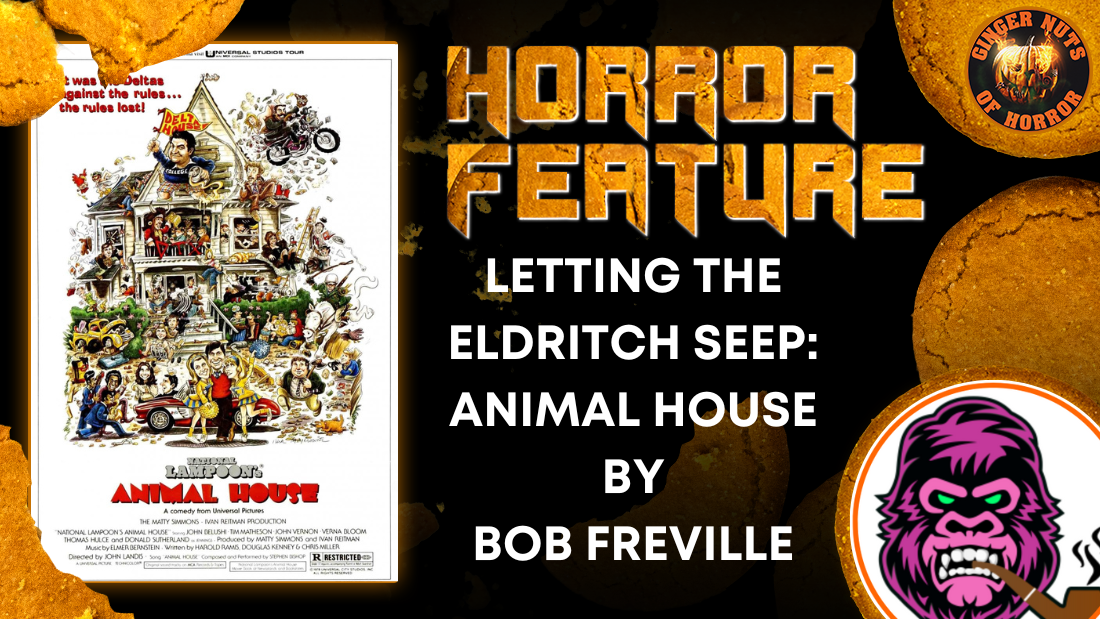
LETTING THE ELDRITCH SEEP: ANIMAL HOUSE BY BOB FREVILLE

the heart and soul of horror fiction review websites 

BOOK REVIEW: INSIDE OUT By Lor Gislason

6/4/2023
HORROR BOOK REVIEW by Damascus Mincemeyer
If the litmus test for any creative work is how much it impacts an audience, Inside Out matches—and even exceeds—the seat-squirming squeamishness induced by any of Croneneberg’s flicks.
BOOK REVIEW: INSIDE OUT By Lor Gislason
DarkLit Press; 107 Pages; Available now on Amazon
Review by Damascus Mincemeyer
Let’s begin with some unusual facts about human anatomy:

- Some women can lactate through the skin of their armpit after giving birth.

- A condition called hyperdontia causes people to be born with an excessive amount of teeth.

- Body odor originates from bacteria eating sweat on the skin’s surface.

- Approximately one in one-thousand people are born with extra digits on their hands or feet.

- The average person produces enough saliva during their lifetime to fill two swimming pools.

There’s something inherently mystifying about the body. It is, in and of itself, contradictory: so strong,  yet ultimately so fragile. The quirky enigmas of our physicality are enough to send even the stoutest among us into obsessive-compulsive hypochondria—the notion that millions of microscopic organisms are crawling in and out and over our every square inch right now can be an unsettling one. When our bodies rebel against us, too, through disease or inherited disorders, it can seem as if we’re sudden spectators to organic functions over which we have—and never have had—control.

In fictional terms, it’s that loss of biological autonomy that serves as the foundation of what’s popularly known as ‘body horror’. With a literary lineage extending as far back as Mary Shelley’s Frankenstein, Franz Kafka’s Metamorphosis and H.P. Lovecraft’s ‘The Colour Out of Space’, body horror was brought to its greatest public prominence through the work of Canadian auteur David Cronenberg, whose queasifying set pieces highlighted such films as Shivers, Rabid, Videodrome, The Fly and ExistenZ.

Modern practitioners of body horror need not look far for inspiration. In a post-pandemic world the whole of humanity’s collective unconscious has been influenced by the very real concept of viral/bacteriological contamination, and while some may argue it’s too soon to explore such a narrative track, Vancouver Island resident Lor Gislason boldly disregards those concerns with the release of the DarkLit Press novel, Inside Out.

Beginning quietly with an accident deep in a British Columbia mine, a previously undocumented pathogen is released into the environment that causes those exposed to physically degenerate into viscous, semi-sentient globs of flesh. These ‘Outers’, as they become known (short for ‘Inside-Outers’), cease to exist as individuals; their newly liquefied state allows them to join into a collective mass (referred to by both scientists and soldiers as ‘The Pile’), with other infected people. Prolonged exposure isn’t required to contract the illness, either—a simple scratch will transform you into a ravenous, jelly-like blob in a matter of mortifying minutes, and as the plague rapidly spreads, the ramifications upon society are ever-present and, perhaps fittingly, ever-evolving.

Gislason’s skill with Inside Out lies not in its setting; the viral Armageddon scenario, already tired before Covid-19, is wearier now than ever. No, the strength here is the manner in which the story unfolds. Overall, the book has the feel of a short story collection rather than a novel, and even plot, in the conventional sense, is non-existent: the situation advances instead through sixteen small character-portrait vignettes (dubbed ‘Segments’) that describe the plague’s effect on the lives of a variety of unrelated protagonists across North America. On the surface such an approach shouldn’t work, but leaving careful narrative gaps allows readers to fill in the empty spaces regarding the outbreak’s wider consequences by themselves. The segments, too, are masterfully rendered with realistic, three-dimensional characters in scenarios infused with tongue-in-cheek humor: the landlord who continues making the rounds to his various properties to check on his molten tenants; the anxious teenage virgin whose friend is devoured during a botched attempt to get laid; the tattooist determined to carry on with his daily routine until it’s far too late.
​
If the litmus test for any creative work is how much it impacts an audience, Inside Out matches—and even exceeds—the seat-squirming squeamishness induced by any of Croneneberg’s flicks. Every segment revels in hyper-detailed descriptions of bodily disintegration more potent than the grossest of hack ‘n slash gorefests. Every orifice that can squirt, ooze, dribble or drip is explored, stretched, strained and rearranged with a relish rarely seen on the written page. Gislason’s grisly passion for the subject shows in every paragraph, and it’s that unabashedly demented spirit that earns Inside Out a 4.5 (Out of 5) on my Fang Scale. Not recommended for anyone easily nauseated by reruns of House, M.D. For everyone else: get in the pile!

Inside Out 
by Lor GislasoN

INSIDE OUT  BY LOR GISLASON
INSIDE OUT is an over-the-top tribute to the goopy, grimy and gross horror of the 1980s. After a mysterious infection spreads through the world, people and animals start melting into horrific monsters. This wild debut novella follows everyday people dealing with the new chaotic reality, from school children to scummy landlords to mad scientists. Featuring illustrations from horror artists such as Enuch Duncan, Matt Pierce, and SJ Miller, with cover art by Eduardo Valdés-Hevia. Barf bag not included.

Damascus Mincemeyer

Picture

Exposed to the weird worlds of horror, sci-fi and comics as a boy, Damascus Mincemeyer was ruined for life. Now he spends his time doing lurid book cover illustrations and publishing fiction in various anthologies. He lives near St. Louis, Missouri, USA, and has one volume of short horror stories, Where The Last Light Dies, and a forthcoming horror novel, By Invitation Only, to his credit. He spends his spare time listening to music nobody else likes and wasting far too much time on Instagram @damascusundead666

CHECK OUT TODAY'S HORROR MOVIE REVIEW 

MALUM DIRECTED BY ANTHONY DIBLASI

THE HEART AN SOUL OF HORROR BOOK REVIEW WEBSITES 

EXPLORING THE LABYRINTH: TERMINAL - AUTHORS PREFERRED TEXT

5/4/2023
HORROR BOOK REVIEW EXPLORING THE LABYRINTH- TERMINAL - AUTHORS PREFERRED TEXT
It’s easy to see why Keene was so frustrated by the original release of the novel, and why he’s worked so hard for so many years to get the rights back. And as an early tentpole release for his new publishing company, Manhattan On Mars, it’s a pretty powerful statement of intent.


In this series, I will be reading every Brian Keene fiction book that has been published (and is still available in print), and then producing an essay on it. With the exception of Girl On The Glider, these essays will be based upon a first read of the books concerned. The article will assume you’ve read the book, and you should expect MASSIVE spoilers.


I hope you enjoy my voyage of discovery.


20: Terminal - Authors Preferred Text


So. Breaking format a bit with this one. I originally covered Terminal in the third essay of this  series, as that’s when the book was originally released. In the postscript for that essay, I noted that the book had been significantly altered by the editorial process, cutting a bunch of material around the child hostage, Benji; in particular, the revelation that Benji had been immaculately conceived and was in point of fact the second coming of Christ. Keene’s been on the record as saying the changes came about because of fears of a religious backlash by the publishers, and were effectively imposed on the book. He’d also been public about the fact that he didn’t hold the rights and hoped one day to regain them, in order to be able to publish the definitive version of the text.


Well, that day has come. So while, strictly speaking, I should cover this text at the end, I figured I’d take the opportunity to celebrate hitting twenty essays by revisiting one of my favourites in the Keene canon, and see how the new material sits.


And I guess we should start with how the story grew in my estimation following that initial essay. Revisiting what I had to say then, I can see that while I clearly had a good time, I was also clearly a little down on the second half of the novel, and in particular the siege situation.  And yet when I’ve come to talk to other people about this essay project, at cons or in interviews, I found myself name dropping Terminal as one of my favourites, even before the preferred text announcement had been made. Part of the reason I decided to read a book ahead for this project - that’s to say, I finish reading the next book in the canon before I write the review of the previous one (meaning, yes, I just finished Clickers III) - is because I recognize that initial impressions can often deviate significantly from longer term appreciation. For me, the process of ‘mulching down’ - getting a little distance, letting the work sit, digest, even grow a little dim around the edges, I guess - often brings a greater clarity than the sit-down-right-now-and-tell-you-what-I-think approach. Your mileage may and probably does vary, of course; this isn’t meant as implied criticism of other approaches or self aggrandisement - I’m just talking about what I’ve found works best for me.


All that said, maybe I didn’t leave enough space before writing the Terminal piece. Because while, having reread that essay in prep for this, I understand what I had to say, and could remember feeling it at the time, Terminal has absolutely gown in stature, for me; enough that, when the preferred text edition came out, I snapped it up eagerly, and was excited enough to read it that I was willing to break the format of this series in order to cover it reasonably close to initial release.


And I’m very, very glad I did so.


The gap was big enough that I couldn’t put my finger on where most of the additional 6,000 words landed. That said, I felt like Tommy and his crew were even more vividly realised; the dialogue and chemistry between them (a quality I remarked on in the previous essay) is an enormous strength of the piece, and it was a real joy to revisit. Similarly, Tommy’s own voice as the first person narrator crackles with energy. In the previous essay I spent some time wondering if Keene was conscious of the class dimensions to Tommy’s rage and situation, especially in the scene where his better-paid, better-insured boss discloses his own recent brush with cancer, and having read this version (and much more Keene in between) I feel like I owe him and you an apology for that - it’s clear Keene knew exactly what he was about in that part of the story. Similarly, Tommys speech in the church is still a highlight for me - of the novel, and of Keene’s writing in general. This time out, I could really picture it as a scene from a movie, the kind of monologue you’d get in a Mike Flannigan piece, if Mike Flannigan was monumentally pissed off with the world and done taking shit.


I do still prefer the first half of the book to the back half; I suspect primarily if not entirely due to matters of taste (I still want that pure crime thriller from Keene, damnit). While the swerve into hostage drama obviously wasn’t a surprise this time, it does still feel abrupt and jarring; though with the benefit of a second read through I can see how it’s supposed to be that way. Similarly, I found the sense of building dread even more acute, this time out, thanks to having a clear sense of what Sherm was capable of (and indeed one of the pleasures of revisiting the story was in getting to track how Sherm’s nature was carefully seeded through the setup).


That said, this is also where I noticed the biggest changes, at least in terms of impact on my enjoyment of the narrative.


I’d had memories of not really enjoying the dialogue in the second half, the first time out; feeling like it was… well, a bit like it was a textbook case of Stockholm syndrome, my basic problem with that being that Stockholm syndrome has since been debunked as total bullshit.


But now, of course, it turns out Benji isn’t just some mysterious kid with healing powers; he’s actually The Second Coming. And suddenly it all makes sense; how his very presence brings a sense of calm, encourages people to open up. It makes sense of Tommy’s openness, and even the old lady’s unpleasantness and Sherm’s escalation; it’s clear the presence of this kid draws people out, surfaces their true natures.


One of the things I’ve found admirable about Keenes’ work is his willingness to take on perspectives other than his own, and really try and feel his way through them. Take The Long Way Home has a Jewish man living through the born-again rapture, Dead Sea stars a black gay man facing an old school zombie apocalypse; here, he really commits to the premise of the idea of the second coming; a being both fully divine and fully human. And then, this being a Keene novel, he has that being killed.


I’m a strong enough Agnostic most would mistake it for Atheism, and I’m fine with that, but I have to say that these changes to Terminal really did give the climax and denouement of the novel a significant extra wallop I hadn’t been expecting. Because, now, it’s not just the end for Tommy, and the other people Benji cured; it’s clear that we’re in yet another Keene apocalypse, our doom as certain as it will be when the dead walk the earth or it starts raining one day and doesn’t stop. It gives extra weight to an already-heavy ending; not only are all the cured going to fall sick again, you get the impression that, absent Benji’s influence, the whole world may well have become terminal.


It’s easy to see why Keene was so frustrated by the original release of the novel, and why he’s worked so hard for so many years to get the rights back. And as an early tentpole release for his new publishing company, Manhattan On Mars, it’s a pretty powerful statement of intent.


But most importantly, it’s simply the best version of one of Keenes best novels, and I had a brilliant time with it. Again.


KP
7/1/23


Next up - Clickers III

Terminal: Author's Preferred Edition 
by Brian Keene 

TERMINAL: AUTHOR'S PREFERRED EDITION  BY BRIAN KEENE
For over two decades, fans of Brian Keene’s cult-classic novel Terminal have heard rumors of an uncut version that was never published. Now, for the first time anywhere, here is that version, as the author originally intended.

Tommy O’Brien once hoped to leave his run-down industrial hometown. But marriage and fatherhood have kept him running in place, working a job that doesn’t even pay the bills. And now he seems fated to stay for the rest of his life. Tommy has just learned he’s going to die young — and soon. But he refuses to leave his family with less than nothing–especially now that he has nothing to lose. Over a couple of beers with his best friends, John and Sherm, Tommy launches a bold scheme to provide for his family’s future. And though his plan will spin shockingly out of control, it will throw him together with a child whose touch can heal — and whose ultimate lesson is that there are far worse things than dying. Now, one man’s war with God may impact us all.

“A powerful, unique novel with a fascinating plot and characters, and echoes of Stephen King’s working-class voice.” — Ed Gorman

““If Brian Keene’s books were music, they would occupy a working class, hard-earned space between Bruce Springsteen, Eminem, and Johnny Cash.” — John Skipp

CHECK OUT THE LATEST MY LIFE IN HORROR ARTICLE 

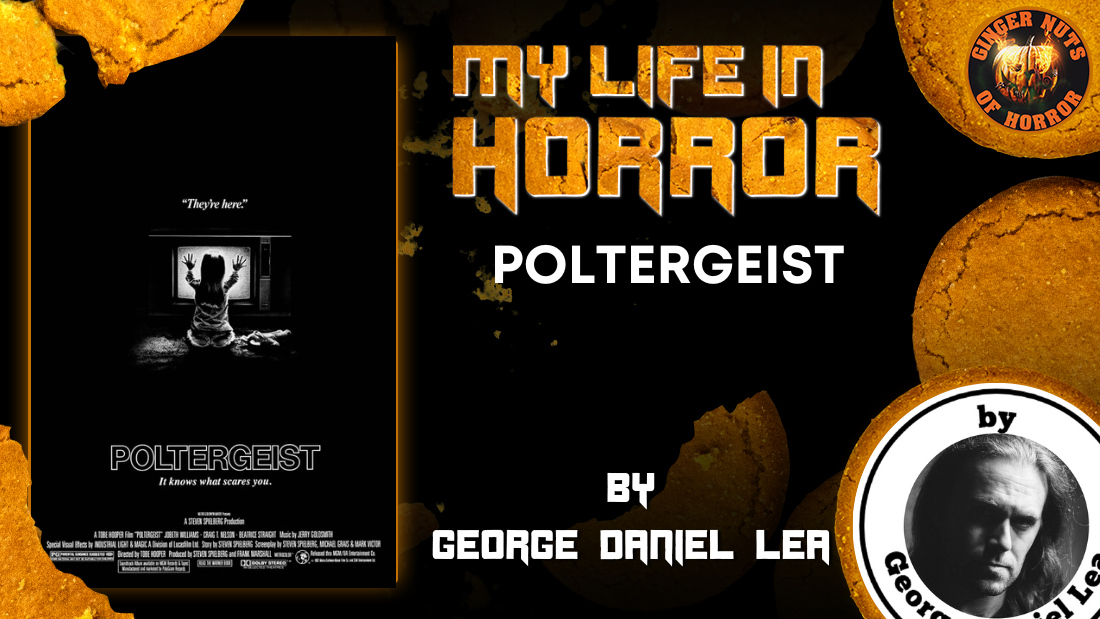
MY LIFE IN HORROR ​MY LIFE IN HORROR POLTERGEIST

the heart and soul of horror fiction review websites 

WHISTLER BY MATT CONVERSE {BOOK REVIEW}

2/4/2023
HORROR BOOK REVIEW THE WHISTLER  BY MATT CONVERSE
Whistler By Matt Converse

This is a story that's been told before.
​
Horror writer being stalked by his biggest fan. Like other stories that get retold. Matt Converse does something different to make the story his.

The fan is building up to be a serial killer. Mason Murdock is the author of scary books, being scared by a killer who whistles.  It would have been cool to have a sound clip of the whistling to listen to while reading the story.

Overall it was a decent read. Some of it does get repetitive. The same thing being told over and over. If the books was 10-15 pages shorter this would have been an excellent read.

Is it worth reading yes I feel it was. Would I read it again probably not. Does that mean other people won't love it no. We all have our own taste. It's a quick read and would fit nicely in-between two heavier reads.

The Whistler 
by Matt Converse 

Picture
When you hear him, it's already too late.

No one has seen him. He only comes out in the dead of night, whistling a haunting tune.

As a horror writer, Mason Murdock scares people for a living. Now the tables have turned.

The killer leaves gruesome, bloody clues on his victim's bodies to let the world—and Mason—know who will be next. And no one is safe.

check out today's horror feature article below 

OH NO KYLA LEE WARD IS STUCK IN A GOTHIC WORLD

the heart and soul of horror fiction review websites 

PIÑATA BY LEOPOLDO GOUT {BOOK REVIEW}

30/3/2023
HORROR BOOK REVIEW PIÑATA-  BY LEOPOLDO GOUT
a diverting read which made good use of a threatening Mexican location, taking characters out of their comfort zone and provided many uncomfortable moments when lovely Luna turns into something significantly darker.
Piñata: A Novel by Leopoldo Gout 
​Publisher ‏ : ‎ Tor Nightfire (25 April 2023)
Language ‏ : ‎ English
Hardcover ‏ : ‎ 304 pages
ISBN-10 ‏ : ‎ 1250781175
ISBN-13 ‏ : ‎ 978-1250781178

A Horror Book Review by Tony Jones 
An intriguing possession novel with a convincing Mexican heartbeat


Although Leopoldo Gout has a few books behind him, I first came across him way back in 2008 when he co-authored one of the excellent YA science fiction series Daniel X: Alien Hunter with James Patterson. Five other novels have since followed, including thrillers, horror and YA fantasy, before his latest release Piñata.


Advance praise has connected Gout to some big genre names, including Paul Tremblay, V Castro and Stephen Graham Jones with “A Head Full of Ghosts meets Mexican Gothic in Piñata, a terrifying possession tale….” being one of many memorable quotes. These are honest and accurate comparisons and if you are a fan of these three authors there is a strong chance you will enjoy this book also.


Piñata was a very solid read, but it failed to blow me away as I felt I had travelled across this type of territory many times previously. Ultimately it concerns an ancient cursed or haunted piñata, with some wider social commentary about colonisation and the struggles of women in modern day Mexico. Some of the non-supernatural sequences, and particularly the disintegration of the family unit with the mum struggling to succeed at work, contrasted nicely with those with the possession of the girl.  The manner in which the child went downhill was sensibly restrained and lacked any of the head spinning associated with films like The Exorcist.


The story kicks off with single-parent Carmen Sanchez returning to her Mexican homeland after years away to supervise the restoration of an ancient abbey which is being converted into a hotel. Carmen might be Mexican, but she is still seen as a foreigner and struggles to manage the male dominated construction crew who are not used to taking orders from a woman. A decent sized section of the novel focusses on this part of the story with every clash increasing Carmen’s anxieties and imposter syndrome, which is amplified by the fact that in her time away from Mexico she has forgotten how dangerous her homeland truly is. A multitude of missing posters and never-ending newspaper stories of murders, torture, rape and kidnappings only ramp-up her anxieties and was a threatening backdrop adding atmosphere to proceedings.


At no point in Piñata is Carmen not stressed and not too much supernatural happens in the first half with the plot edging into family kitchen-sink territory. Her surly sixteen-year-old daughter Izel wishes she were back in New York, whilst her bubbly eleven-year-old Luna is much more open to embracing local culture. Carmen’s permanent state of anxiety tested my patience, forever getting stressed when losing sight of her daughters on multiple occasions and not letting them wander outside unaccompanied, which particularly riled the teenager.


Whilst Carmen continues to clash with her site supervisor an accident at the worksite unearths a stash of ancient artifacts in a hidden room, including a very old piñata which had some connection to religion before the arrival of the Spanish colonists. What followed was fairly predictable with the object beginning to change the normally chirpy and open Luna into a much darker character. These family moments were very nicely handled, even if it took Carmen an age to accept there was something wrong with her younger daughter. Even though the elder daughter Izel was self-obsessed and not particularly likable she was very believable and a perfectly pitched teen who came into her own when she realised things were going south with her normally happily go lucky younger sibling.


Other local characters are thrown into the mix who are aware of the pre-Spanish culture and superstitions, including a clunky and unnecessary storyline involving a coyote journey into America. For the main characters the second half of the plot makes a smooth jump back to New York and some of the school scenes involving Luna, her classes, teachers and bullies were amongst the strongest in the book as they nicely clash the supernatural with every-day events.

Piñata was an entertaining possession novel which even though did not do anything especially new was a diverting read which made good use of a threatening Mexican location, taking characters out of their comfort zone and provided many uncomfortable moments when lovely Luna turns into something significantly darker.


Tony Jones

Piñata: 
by Leopoldo Gout

PIÑATA:  BY LEOPOLDO GOUT
“This creepy, fast-paced read brings a fresh voice to horror…. Fans of Paul Tremblay, Stephen Graham Jones, and V Castro will devour this bloody tale of vengeful spirits and the dark legacy of colonialism.”―Booklist

A Head Full of Ghosts meets Mexican Gothic in Piñata, a terrifying possession tale by author and artist Leopoldo Gout.

It was supposed to be the perfect summer.

Carmen Sanchez is back in Mexico, supervising the renovation of an ancient abbey. Her daughters Izel and Luna, too young to be left alone in New York, join her in what Carmen hopes is a chance for them to connect with their roots.

Then, an accident at the worksite unearths a stash of rare, centuries-old artifacts. The disaster costs Carmen her job, cutting the family trip short.

But something malevolent and unexplainable follows them home to New York, stalking the Sanchez family and heralding a coming catastrophe. And it may already be too late to escape what’s been awakened…


They were worshiped by our ancestors.
Now they are forgotten.
Soon, they’ll make us remember.

At the Publisher's request, this title is being sold without Digital Rights Management Software (DRM) applied.

check out today's horror movie review below 

HORROR MOVIE REVIEW SUMMONING SYLVIA (2023)

the heart and soul of horror book review websites 

SUBURBAN MONSTERS: THIRTEEN TALES OF TERROR BY CHRISTOPHER HAWKINS {BOOK REVIEW}

26/3/2023
HORROR BOOK REVIEW SUBURBAN MONSTERS-   BY CHRISTOPHER HAWKINS
I have the feeling that Hawkins has a remarkable potential as a skilled narrator, but that he has not fully expressed it. If so, let’s consider this volume as a tasty appetizer of what he’s going to serve in the future to his faithful customers.
SUBURBAN MONSTERS
Thirteen Tales of Terror
By Christopher Hawkins
Reviewed by Mario Guslandi
​Here we have a collection of terror tales ( mostly reprints plus a couple of previously unpublished stories) bound to entertain and disquiet horror fans. Needless to say not all the stories are memorable, but on the whole the book appears to be interesting enough to deserve a place in your bookshelves.

I’ve especially enjoyed “ Green Eyes”, the touching but unsettling portrait of the squalid life of a young girl and of her sick mother and “ Ten and Gone” an offbeat story where a thief breaking into an  apparently empty house finds more than what he was bargaining for.

Other stories worth mentioning are “ Interude” , a heartbreaking tale about a boy whose body is transformed into an inhuman, pitiful travesty of his old self, “ Polly” an insightful, creepy tale describing the unexpected  outcome of a robbery in a peculiar store, and “ Sallow”, a grim piece of psychological horror describing the physical destruction of a lost soul.
​
I have the feeling that Hawkins has a remarkable potential as a skilled narrator, but that he has not fully expressed it. If so, let’s consider this volume as a tasty appetizer of what he’s going to serve in the future to his faithful customers.

Suburban Monsters 
by Christopher Hawkins 

SUBURBAN MONSTERS  BY CHRISTOPHER HAWKINS
The house at the end of the block with the overgrown lawn. The darkened store window in a forgotten corner of the shopping mall. The colorful characters of a children's TV show. What dark secrets do they hide?

From award-winning author Christopher Hawkins come thirteen tales of the horrors lurking right next door.
​
  • A shut-in sets out to make a new life for himself by losing weight at the point of a scalpel.
  • A store clerk with a mannequin obsession hides a macabre and tragic secret.
  • A master thief tries for one last score in a house that doesn't want him to leave.
  • Two friends learn the hard way that having superpowers doesn't always make you a hero. It might just make you a monster.
  • A lonely painter finds freedom with the help of something lurking beneath the ocean waves.
At turns whimsical and somber but always unsettling, this debut collection of short horror stories is essential reading from a rising voice in dark literary fiction.

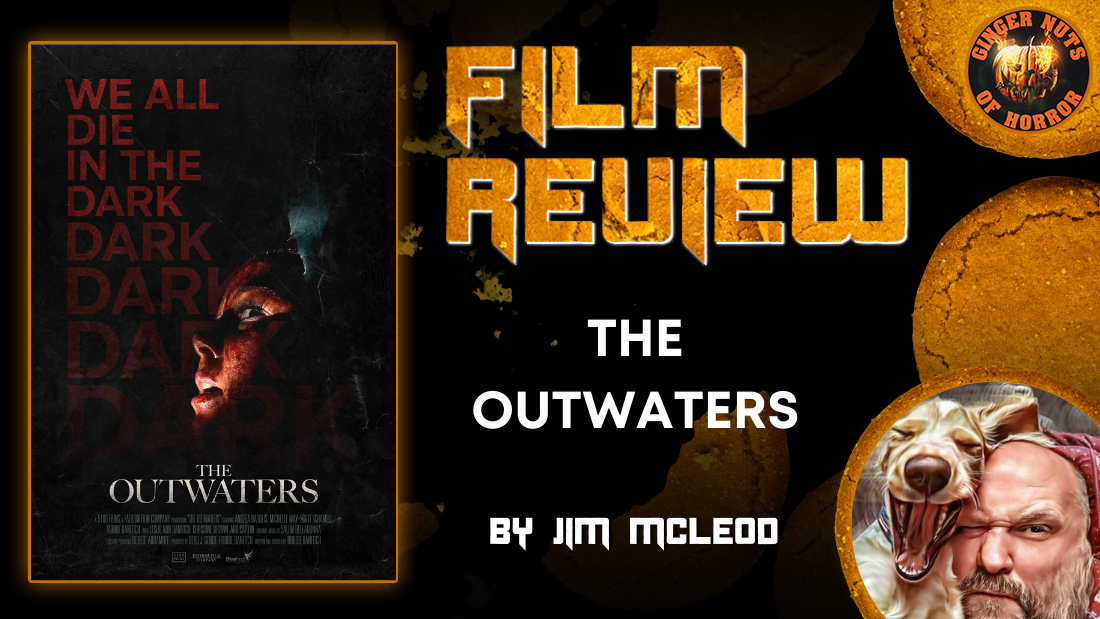
the outwaters is reviewed below 

THE OUTWATERS, AN OASIS IN A DESERT OF FOUND FOOTAGE HORROR MOVIES

the heart and soul of horror fiction review websites 

Previous
Forward
    Picture
    Picture

    RSS Feed

    Archives

    May 2023
    April 2023
    March 2023
    February 2023
    January 2023
    December 2022
    November 2022
    October 2022
    September 2022
    August 2022
    July 2022
    June 2022
    May 2022
    April 2022
    March 2022
    February 2022
    January 2022
    December 2021
    November 2021
    October 2021
    September 2021
    August 2021
    July 2021
    June 2021
    May 2021
    April 2021
    March 2021
    February 2021
    January 2021
    December 2020
    November 2020
    October 2020
    September 2020
    August 2020
    July 2020
    June 2020
    May 2020
    April 2020
    March 2020
    February 2020
    January 2020
    December 2019
    November 2019
    October 2019
    September 2019
    August 2019
    July 2019
    June 2019
    May 2019
    April 2019
    March 2019
    February 2019
    January 2019
    December 2018
    November 2018
    October 2018
    September 2018
    August 2018
    July 2018
    June 2018
    May 2018
    April 2018
    March 2018
    February 2018
    January 2018
    December 2017
    November 2017
    October 2017
    September 2017
    August 2017
    July 2017
    June 2017
    May 2017
    April 2017
    March 2017
    February 2017
    January 2017
    December 2016
    November 2016
    October 2016
    September 2016
    August 2016
    July 2016
    June 2016
    May 2016
    April 2016
    March 2016
    February 2016
    January 2016
    December 2015
    November 2015
    October 2015
    September 2015
    August 2015
    July 2015
    June 2015
    May 2015
    April 2015
    March 2015
    February 2015
    January 2015
    December 2014
    November 2014
    October 2014
    September 2014
    August 2014
    July 2014
    June 2014
    May 2014
    April 2014
    March 2014
    February 2014
    January 2014
    December 2013
    November 2013
    October 2013
    September 2013
    August 2013
    July 2013
    June 2013
    May 2013
    April 2013
    March 2013
    February 2013
    December 2012

https://l.facebook.com/l.php?u=https%3A%2F%2Fmybook.to%2Fdarkandlonelywater%3Ffbclid%3DIwAR1f9y1sr9kcIJyMhYqcFxqB6Cli4rZgfK51zja2Jaj6t62LFlKq-KzWKM8&h=AT0xU_MRoj0eOPAHuX5qasqYqb7vOj4TCfqarfJ7LCaFMS2AhU5E4FVfbtBAIg_dd5L96daFa00eim8KbVHfZe9KXoh-Y7wUeoWNYAEyzzSQ7gY32KxxcOkQdfU2xtPirmNbE33ocPAvPSJJcKcTrQ7j-hg
Picture