


THE BREACH BY M.T. HILL: BOOK REVIEW
16/3/2020
 One theme that has been ever-present in horror is that of the notion of self, the loss of and the idea that we all own our destiny. When these constants in our lives are thrown out of the window by forces unknown, it can give rise to some excellent meditations on what it is to be human, from the fear of losing ourselves to a mindless primal force such as in The Thing—or losing control of our thoughts and emotions to an evil entity such as in The Exorcist. To the more basic concept of loss of control of being thrown into a situation that we have no control over such as any countless number of man versus monster novels and films. You could argue that all horror, when stripped to its most basic concept is only about the fear of the loss of control of what makes us us. In M.T. Hill's latest novel from Titan Books, The Breach takes this concept and runs with it from two divergent but different angles. This dark, psychological adventure-filled thriller is a unique beast, mixing subtle shades of Philip K. Dick high concept weirdness with gritty down to earth detective story. That keeps the reader always on the wrong foot with regards to where they think the story is going, leading the reader into a rabbit warren of pure Alice in Wonderland proportions. Set in a near-future / slightly different version of our world, where self-driving cars and a vastly superior version of the internet as we know it, sit alongside characters who remember Margaret Thatcher as PM. Even the basic setting and world building of the novel seems designed to keep us on the wrong foot. It is a world that is instantly recognisable to us, yet at the same time feels Blade Runneresque slightly with its technological differences. At first, this is somewhat offsetting with regards to becoming invested in the book, and you spend a little bit too much time becoming invested in the world that Hill has created, however, once it all clicks into place Hill's world of the Breach becomes a fully realised 3D world of what could be your worst nightmares. While never actually making a stance or drawing a line in the sand with regards to the technological advances that are portrayed in the novel, Hill has created a world straight out of my nightmares. Everything you do leaves a trace. The self-driving cars can get you caught if you dare to go somewhere that you shouldn't have. Finding out information about you is easier than ever, and you can even have your data stream hacked by a crazy climber hanging off a wall while you are trying to some research. A world where social media likes and syndication can make a massive difference to everyone's life. A world where you have your own VPN and spam killer, just to try and have a bare minimum of privacy. Thankfully there are still areas of the information highway that are somewhat off the grid, such as the secretive community of Urbexers. A band of adventure junkies and adrenaline freaks who like nothing better to do on a Saturday night than to break into some restricted area and illegally explore it. It's this murky world of Urbex that brings our two main protagonists clashing together in such a way that will change both of their lives forever. A mysterious underground bunker which has a lie changing effect on anyone who enters it brings the ambitious reporter Freya Medlock headlong into the world of Urbex when her investigation into the death of an experienced climber puts her in the path of Ubrexer, and steeplejack Shep. Out of the two characters, Shep is the most interesting; it is clear from what happens to Shep in the passages that describe his work life that Hill has extensive knowledge of what it is like to be a trainee / the new boy, on a tightly knit crew, who depend on each other for safety. I winced at some of the interactions that Shep has to endure, some of them and the attitudes of the workmates were all too real for me. The character development of both Shep and Freya, was spot on, as their motivations change during the unfolding of the plot, they both make decisions and choices that feel natural and more importantly, believable. Which for a novel like this where everything else seems to be going down the path of "what the hell did I just read" allows for grounding of the narrative flow. As for the narrative itself, oh boy, you are in for a wild ride, Hill has created a rhythm to the story that is like a wild rollercoaster, fused with periods of LSD infused madness. I wouldn't say he keeps you reading by the perfect dropping of cliffhangers, reveals and plot twists, that would be too much of a pun. What he has done is to create a narrative that pulses with an intense sense of vague dread. Just as you think you have a handle on what is going on, he pulls out the rug from beneath your feet, in fact pulling the handle on a trapdoor would be a better metaphor, such is the rush you get from the changes in direction the story takes. What starts out as sounding like a dark faerie tale, quickly morphs into some way more sinister. The Breach is a book that demands your full attention, its heady mix of high concepts and shifts of reality, will keep you guessing as to what is happening right up to the end of the story. If you haven't been paying full attention to it, you might be confused as to what you have just read, but when it all sinks in, you will love how it all played out. The Breach is a powerful novel that takes a hard look at what it means to be an individual in a world where individuality and anonymity are becoming ever harder to be. Smart and unique, this is one of those novels that have more to say about the modern world the longer you think about and has gone straight to the top of my books of the year list. The Breach by M. T. Hill From Philip K. Dick Award-nominated author M.T. Hill, The Breach is a unique science fiction mystery set in the dangerous underground world of the urban exploration scene. Freya Medlock, a reporter at her local paper, is down on her luck and chasing a break. When she's assigned to cover the death of a young climber named Stephen, she might just have the story she needs. Digging into Stephen's life, Freya uncovers a strange photo uploaded to an urban exploration forum not long before he died. It seems to show a weird nest, yet the caption below suggests there's more to it. Freya believes this nest - discovering what it really is and where it's hidden - could be the key to understanding the mysteries surrounding Stephen's death. Soon she meets Shep, a trainee steeplejack with his own secret life. When Shep's not working up chimneys, he's also into urban exploration - undertaking dangerous 'missions' into abandoned and restricted sites. As Shep draws Freya deeper into the urbex scene, the circumstances of Stephen s death become increasingly unsettling - and Freya finds herself risking more and more to get the answers she wants. But neither Freya nor Shep realise that some dark corners are better left unlit.    This chapbook contains five new short stories, one extended essay, a piece covering the history behind Wildgoose Lodge, and story notes for The Unheimlich Manoeuvre. That book, which I reviewed here, is being reissued in a deluxe edition; this chapbook represents the new material in that edition, allowing those of us who already have the book to pick up the additional pieces in this format (which I think is very considerate). The first piece is an academic essay in which the author discusses the relationship between the uncanny and domestic spaces in her own work; using examples from the stories, along with quotes from various reviews, she draws connections between Freud’s essay on the subject of the uncanny in fiction and the stories in her collection. It’s a fiercely intelligent and thoughtful essay that demonstrates a level of insight into the themes underpinning the author’s work that I found extraordinary. Of the five new tales, ‘Haunted By The Ghost’ is a flash piece on a single page that reads almost as poetry - it uses two symmetrical passages as a call and response, turning sunshine to chilling shade with remarkable efficiency. ‘That Thing I Did’ is a study of grief and depression that resonates with a powerful desperation. Fahey cleverly runs the narrative along a twin track, with the backstory behind the cause of the lead character's grief and guilt unspooling in tandem with his slow motion emotional collapse. Fahey captures the spiral of misery with great clarity and without mawkishness, before landing a hammer blow in the closing pages. Stunningly well crafted. ‘The Wrong House’ invokes dislocation, isolation; the terrifying feeling that one’s life is wrong; that, to quote the song, you may tell yourself, this is not my beautiful wife. Again, Fahey is masterful in painting a portrait of psychological trauma, with a vivid eye for the telling detail and a voice that drew me in and evoked my sympathies immediately. ‘Possession’ takes themes from the first two stories - dislocation, deterioration - but threads in a new concern in terms of identity. Fahey does a fine job of grounding this tale, as the others, in the mundane; in this case, a new job in a new town and a new house. The main character is an estate agent, and Fahey does a superb job of painting a portrait of her new office environment, and the people she works with, before the strangeness begins to intrude. What I especially enjoyed about this one was the slippery feeling of things just gradually falling out of control, without there being any obvious trigger point; anyone who has ever started struggling with memory loss or disorientation as a result of prolonged sleep issues will find this one uncomfortably relatable, I suspect. And then ‘I Wait For You’ flips the script by taking the perspective of the house as a starting point; a delicious conceit that Fahey commits to with full hearted glee, producing in the process a brilliantly eerie tale that examines notions of ownership and belonging. The story notes that close the chapbook out cover the entire collection, and give a fascinating insight into the process behind the creation of the tales. Overall I’d say if you haven’t yet picked up The Unheimlich Manoeuvre, you should grab the deluxe edition; these stories are every bit as strong and fascinating as those in the main book, and they manage to fit in thematically whilst creating their own resonances and perspectives. Similarly if, like me, you read and enjoyed the earlier release, this serves as a brilliant coda to that book; providing the opportunity to revisit Fahey’s preoccupations with domesticity, identity, and the alienation of the familiar. As with the original release, very highly recommended. KP 9/2/20 UNHEIMLICH MANOEUVRES IN THE DARK BY TRACY FAHEY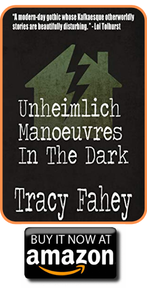 Tracy Fahey’s stunning debut collection, The Unheimlich Manoeuvre, is a book that refuses to stay quiet. Originally released as a limited edition by Boo Books in 2016, it was nominated for Best Collection in the 2017 British Fantasy Society Awards. In 2018 a second edition was published by the Sinister Horror Company.   'Outstanding blend of thriller, horror and true crime cleverly built around local legend, ‘The Lantern Man’ Last year I was mightily impressed by Jon Bassoff’s wonderful and decidedly weird The Drive-Thru Crematorium which ended up one of my favourite novellas of 2019. This time out Bassoff expands from the 160-page novella into a shortish, but perfectly formed, 226-page novel. Some of the very cool quotes, which are worth revisiting, about Bassoff initially attracted me to his work include; “Bassoff is the Kafka of Colorado, a writer who spins feverish nightmares out of the insane realities of modern life” and “Toss Kafka, David Lynch, and a pinch of Flannery O’Connor in a blender, and you might end up with The Drive-Thru Crematorium”. Now having read The Lantern Man, these outlandish quotes ring truer than ever before. The Lantern Man is another strange book, but not to the surreal levels of The Drive-Thru Crematorium, and clearly illustrates the diverse writing ability of the author, with a different blend of ‘crazy’ this time out. If you’re expecting more of the same, think again, this latest work follows a blueprint which heads into true-crime territory. It is presented in the form of newspaper clippings, interview transcripts, photos, drawings and other documents pertinent to a concluded police investigation. However, the most crucial document is a diary of a young woman, who apparently, committed suicide which takes up most of the book page-time, with the other documents dispersed throughout the very twisty narrative. The diary recovered was titled ‘The Lantern Man by Lizzy Greiner’ and was retrieved close to the burned body of a young woman. The book was closely scrutinised by Detective Russ Buchanan, who believed the investigation into the circumstances of the death of Lizzy was flawed and that the case should be reopened. The Lantern Man opens with a letter from Detective Buchanan to Chief Mickel of the Leadville Police Department, requesting they take another look. Although most of the book is told via Lizzy Greiner’s diary narrative, it has numerous footnotes written by Detective Buchanan who often questions or debunk what Lizzy is saying, and his voice is as entertaining as the young woman. But is he really the voice of reason? A lot of the fun is had in reading between the lines of these contrasting narratives. The reader has no idea where The Lantern Man is going and that holds a lot of attraction in a novel which cleverly blends horror, thriller and true crime as it slowly reveals that the Greiner family had more than a few issues. It drops breadcrumbs all over the place, many are red herrings, and you have to decide yourself whether you want to believe Lizzy Greiner’s narrative, which Detective Buchanan does his best to debunk; Lizzy was seeing a psychiatrist and had a whole heap of emotional problems is an obvious example he drops. Lizzy was a classic unreliable narrator, so how much could she be trusted anyway? Could you believe anybody who would deliberately sets themselves on fire? Jon Bassoff has previously been compared to David Lynch and there is most definitely a slice of Laura Palmer in Lizzy Greiner. Twin Peaks was all about secrets, and what lay below the surface, The Lantern Man is no different. Lizzy has a great voice and as you follow her narrative the whispering Detective Buchanan is never far away giving his slightly different versions of events. She is an odd girl for sure, seemingly obsessed with her brother Stormy, his relationships, and struggling to get over the death of her sister from an earlier drowning accident. Being inside the head of Lizzy is very convincing and so the notes provided by Buchanan are very jarring and combined they keep the readers on their toes as things play out very slowly in what was a cleverly plotted story with Buchanan’s voice becoming more prominent as the story spins on. Who is ‘The Lantern Man’? you may be asking and what is his role in proceedings? All small towns have their own local legends and ‘The Lantern Man’ is a local boogieman tale used to scare little kids. Reputedly he was a miner who died after becoming trapped in a blocked cave who came back from the grave and haunted the local area, close to where he died. Lizzy has an unhealthy interest in this story and believes he was involved in both the drowning of her sister and other crucial plot developments which play out deliciously. Detective Buchanan, of course, investigates further…. It is not going to take you long to read The Lantern Man, which was very fine company for a few hours. I must also compliment the author on his very clever ending, which I really did not see coming, but once it dropped lots of other things became considerably clearer. Mixing genres is never easy and Jon Bassoff nails the cross between mystery, crime and horror in some style with this clever and sneaky read which will keep you on your toes until the final page. 4.5/5 Tony Jones  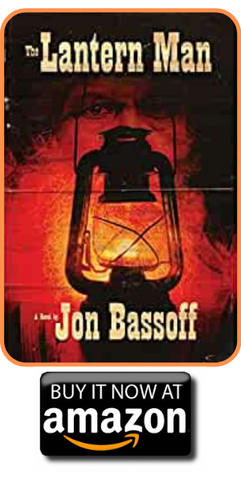 Shortly after her brother, Stormy, is convicted of the brutal murder of a classmate, seventeen-year-old Lizzy Greiner is found dead in an abandoned mountain shack, the result of an apparent suicide by fire. Next to Lizzy’s charred body, investigators find several of her journals, safely stored inside a fireproof box. It soon becomes evident that these journals contain a narrative that Lizzy wanted the police read, the truth that she wanted them to know.   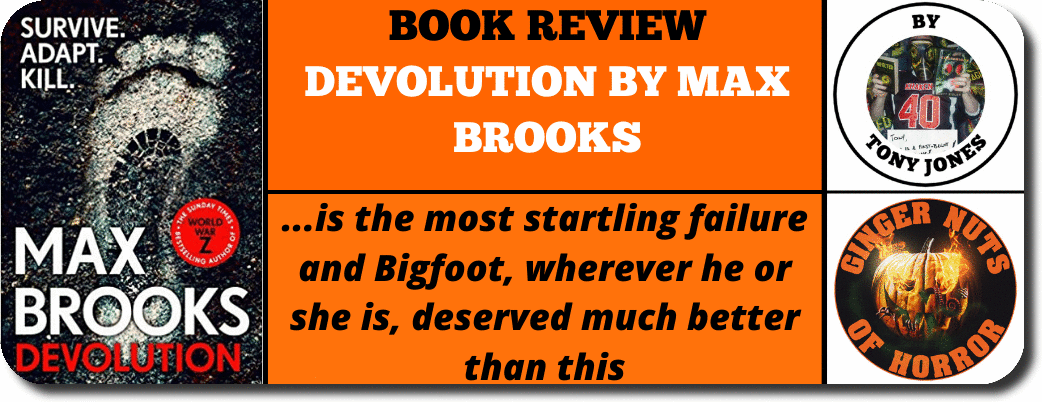 First zombies, now Bigfoot; what next Max Brooks? |


Archives
May 2023
|

|

|



 RSS Feed