


 They say all roads lead to Rome. However, Four Paths lead to betrayal, small-town feuds and monster from beyond the veil that is gaining power with each passing day. Violet has just lost her sister, and her mother has decided that it is time to return to her ancestral hometown of Four Paths, a town that is as trapped in its ties to the past, as it is to the monster that is imprisoned within the prison created by four of the town's founding families. A prison that exists out of time and place and yet overlays itself upon the town. As is want to happen in books such as this the barriers between the prison dimension and our world are beginning to thin allowing the monster to cross over to our dimensional and brutally kill the residents of Four Paths. It's up to children of the founding families to put a stop to the monster once and for all. Now, this may all seem like your typical horror thriller aimed more at the YA end of the horror spectrum, and while it does contain numerous tropes and character types that can be found in a thousand other novels, The Devouring Grey has a strong enough identity of its own to stand out from the other books jostling for attention on this shelf of the genre spectrum. A lot of comparisons will be made to things such as Buffy, and maybe even Riverdale, but this is a little bit unfair, yes they focus of the story is on the band of plucky teenagers and their fight against evil and the fights between themselves as they struggle to keep their family name and history intact. However, Herman's novel has more in common with the works of Ray Bradbury than the more obvious comparisons. Herman's prose has that almost poetic turn of phrase that the backbone of Bradbury's prose, it also shares that sense of mounting dread, and something not being quite right that was evident in some of Bradbury's best work. There is a thin veneer to life in Four Paths, and Herman takes excellent care to peel this veneer away in a controlled and chilling way to reveal the hidden truth beneath the picturesque and pastoral facade of Four Paths. Herman has also plotted out the narrative arc with the finesse of a master storyteller, the balance between the interpersonal relationships of the teenagers and the necessity to drive the story forward with plot reveals and action is handled almost perfectly, with each "scene cut" merging perfectly together. However, this is also where the only gripe with the book comes in. While the characters are carefully crafted to have individually strong personalities, and fully rounded motives and desires, they do tend to at the beginning merge into one another. It may have been helpful to introduce them slightly slower and allowing them to individually breathe on the page for a short while allowing their identities for cement in the reader's mind. The handling of the four main protagonists is handled sympathetically, for example, two of the characters are bisexual, but the inclusion of this in the story feels natural, and never feels as though it is a box-ticking exercise. And this has to be applauded, diversity representation in YA fiction is significant, but if handled poorly will cause more damage than good, and Herman's depiction of them is exemplary. The Devouring Gray is a profoundly atmospheric story, the mist-shrouded world of Four Paths, and lives of its inhabitants lives and breaths on the page thanks to a deft descriptive style and a natural sense of dialogue between the characters. With strong themes of identity, sins of the past, and deciding between carving your own path in the world and the keeping the ties that bind to your past, The Devouring Gray is a strong and emotive journey through the dark heart of small-town rural America. They say you can't escape your past, but sometimes your history contrives to trap there. the devouring gray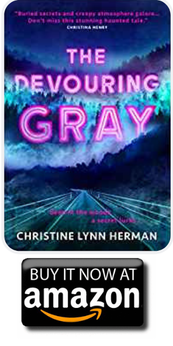 For fans of Stranger Things, Riverdale and The Raven Cycle. Can a group of teenagers hold back the otherworldly horror that stalks the woods? On the edge of town, a beast haunts the woods, trapped in the Gray, its bonds loosening… Uprooted from the city, Violet Saunders doesn’t have much hope of fitting in at her new school in Four Paths, a town almost buried in the woodlands of rural New York. The fact that she’s descended from one of the town’s founders doesn’t help much, either—her new neighbours treat her with distant respect, and something very like fear. When she meets Justin, May, Isaac, and Harper, all children of founder families, and sees the otherworldly destruction they can wreak, she starts to wonder if the townsfolk are right to be afraid. When bodies start to appear in the woods, the locals become downright hostile. Can the teenagers solve the mystery of Four Paths, and their own part in it, before another calamity strikes?     Recently republished by The Sinister Horror Company, The Unheimlich Manoeuvre is Fahey’s debut short story collection. Described by the author as tales of the ‘uncanny domestic’, there’s thematic residences throughout the book; motherhood is a theme that revisits more than once, alienation, dislocation, depression, and a sense of the world being askew in some definite yet intangible way. Across the fourteen tales in the collection, Fahey rheuminates powerfully on psychological trauma, the peculiar isolation of suburbia, the spaces between people, friends and lovers. It’s heavy stuff, and Fahey is fearless in her exploration of the territory; extraordinarily sure footed, the stories each find their own voice and rhythm, their own path through. Though this is a collection with recurring themes, there’s also a considerable variety across the piece, in both style and narrative type. Opener Coming Back has an ethereal, slightly disconnected quality, whereas A Lovely Place To Live has a more vivid, conversational style. That last offers a very different expression of some of the same themes in Ghost Estate, Phase II, regarding the peculiarities of suburbia; but both the narratives and prose are starkly different, each allowing the voice to form a crucial part of the story. Similarly, Two Faced and Something Nasty In The Woodshed encompass back-to-back tales highlighting the essential unknowability of the other, but while the former is a study of two people, of perspective and communication, the latter is an altogether more visceral affair that reveals, onion like, the emotional horror at the core of the physical one. Fahey also has considerable flair as a deliverer of twist endings. Whilst not every tale ends on a revelation, most do, and often one that is startling, occasionally revelatory. I Look Like You, I Speak Like You… was particularly impressive in this regard, with a final paragraph that was as narratively satisfying as it was emotionally shocking, and The Woman Next Door and A Lovely Place To Live landed similar punches in their final paragraphs. Fahey also isn’t afraid to go there. Whilst there’s nothing in the collection you could describe as gratuitous, much less prurient, there are occasional depictions of violence that are shocking; perhaps especially so given the domestic setting of most of the tales. This is a brilliantly written collection, with a compulsively readable prose style that also has a commendable eye for the telling detail that evokes a bigger picture - literary without falling into the pitfalls of being over verbose, or pretentious, in other words - but it is also not afraid to shock, if the story calls for it. Overall, The Unheimlich Manoeuvre is an absurdly accomplished debut collection, brimming with atmosphere, character, and an impressive balance of variety within key thematic concerns. Charming, moving, and disturbing, this is a superb collection - if any of the above sounds appealing to you, I can recommend it unreservedly. KP 10/2/19 THE UNHEIMLICH MANOEUVRE BY TRACY FAHEY The Unheimlich Manoeuvre explores the psychological horror that occurs when home is subverted as a place of safety, when it becomes surreal, changes and even disappears… In these stories, a coma patient wakes to find herself replaced by a doppelgänger, a ghost state reflects doubles of both houses and inhabitants, a suburban enclave takes control of its trespassers, and a beaten woman exacts revenge. Just as the Heimlich Manoeuvre restores order, health and well-being, The Unheimlich Manoeuvre does quite the opposite. This new edition contains revised versions of the original stories and a brand new tale, Something Nasty In The Woodpile. "A modern-day gothic whose Kafkaesque otherworldly stories are beautifully disturbing." - Lol Tolhurst    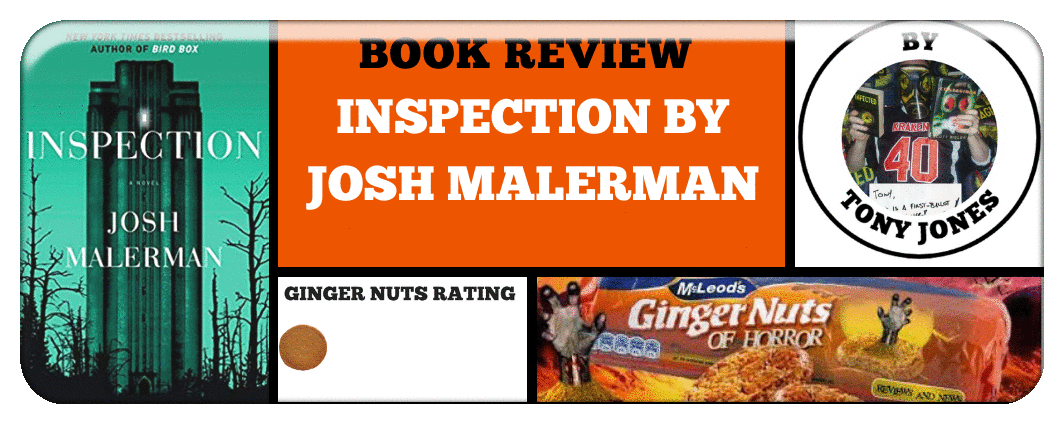 Boys and girls are unaware of each other’s existence in uninspiring thriller Josh Malerman set the horror world alight back in 2015 with his dazzling debut Birdbox and followed that sleeper hit with a string of highly original releases; novels, novellas and short stories. However, his latest offering Inspection is a misfire, lacking the originality, frights, pacing and most importantly, the plot to drive a near 400-page novel. The main concept (the only one if I’m brutally honest) behind the story would be better suited in a Young Adult (YA) release as it concerns the separation of boys from girls. The subjugation of kids in YA dystopian fiction, and how they rail back against the system, has been the number one theme since Katniss Everdeen fired her first arrow. Let’s be absolutely clear, there is no Katniss in this dull and repetitive novel. Part one focuses on the ‘Alphabet Boys’, 26 young males who are being trained in a school hidden in a remote forest. They are part of an experiment which is supposed to create (or breed) child geniuses, those behind the project believe that if boys are kept in total isolation from girls, ultimately, they will perform better academically, much better. However, this thought experiment takes everything a stage further and the boys do not even know girls, or the female sex, exist at all. They have been told that they were plucked from trees which grow in the local forest, not knowing any better, they believe this tale which has been reinforced since birth. The 26 boys (24 actually, two are dead) do not have proper names and are known as A-Z and the novel is seen mainly from the point of view of a boy called J, who quietly begins to question what is going on around him. All the boys are the same age and are approaching puberty, which is obviously a key stage of their physical and mental development. The first problem with Inspection was the fact that these children were fairly one-dimensional and Malerman fails to convince in creating authentic child voices. Some of the interactions amongst each other in this weird environment, especially when J begins to ask questions, were interesting enough but everything moved at the pace of a slug. It was also limited by their non-existent life-experiences, which made them come across as rather flat. The author failed entirely in creating kids I cared about. One can make comparisons with Sarah Pinsborough’s modern YA classic The Death House in which teenagers are sent to an island prison to die when they are diagnosed with a virus. Several years after I read that book I still remember the central character was named Toby and in comparison the lettered characters in Inspection are already drifting from memory. Pinborough’s children had personalities, fears and shed real tears whilst J and his friends simply merged into one ‘boy’. Part one ‘Alphabet Boys’ and part two ‘Needs’ plod along for a stodgy 200 pages and we are simultaneously introduced to the adults who run the experiment. They were as tedious as cardboard cut-outs with very limited backstories and once their limited pasts are slowly revealed any existing tension in the novel disappears as they have very little to say and their motivations go unexplored. There is not any big secret, reveal, revelation or anything else, and you’ll begin to wonder about the point of it all? The book has the subtlety of a sledgehammer; if children misbehave there is the threat of the ‘Corner’, or the kids are scared of ‘being spoilt rotten’ by imaginary diseases, with the guy in charge is known as D.A.D and seen as the father to all the boys. The only thing I found faintly amusing was the idea that one man was writing a whole library of new literature which only these 26 boys would read! Books written without the notion of women or girls… My heart sank at around 200 pages and I almost quit the book. This is in the blurb, so it’s not a spoiler, part ‘K’ is about an identical school but with girls. For the next 100 pages, or more, Malerman repeats the same sort of thing from the previous two parts, but this time with girls. This was both boring and repetitive, and this time we have M.O.M instead of D.A.D, but a similar punishment system. The plot development was particularly obvious; of course, the boys and girls were going to meet. One wonders why M.O.M and D.A.D whose main purpose was to keep two sets of children isolated from each other would actually place them in the same forest? Very stupid or perhaps I missed something as my attention was fading fast. When the kids finally meet it got even more ridiculous. Remember, these are children NOT teenagers. Within five minutes they start kissing and fooling around. It was just stupid and stretched credibility way beyond anything I might swallow and heads towards an underwhelming ending. The way the kissing sequence was handled was completely botched and it raises questions about sexuality in the rest of the novel. There is no evidence of pre-teen angst or sexuality issues, there seem to be no gay kids, no masturbation or any kind of experimentation which might occur when kids are living together when the lights go out. Maybe I missed something, but completely ignoring the possibility of homosexuality was a major weakness. Earlier this year Ginger Nuts of Horror did a huge feature month long feature on diversity in horror, considering this is a novel with gender as a major theme, where is the diversity? Whether you regard Inspection as dystopian fiction or not you have to believe in the world which the author has created and in this respect this novel fails to convince. In Margaret Atwood’s The Handmaid’s Tale the way the sex act is carried out is both horrific and implausible, but in the world she has created everything has a purpose and the rules of the Republic of Gilead are very believable within the creation. This book fails in every way which makes the Atwood novel so stunning, nothing genuinely gels together and the twee idea of kids being threatened to be sent to the ‘Corner’ was particularly uninspiring. Considering Malerman gave us such a vividly created post-apocalyptic world in Birdbox, and a wonderful recreation of the 1950s in Mad Black Wheel I’m surprised that the turreted schools of Inspection turned out to be so drab. Inspection has been picking up favourable reviews elsewhere, however, I shake my head at unwise comparisons with the likes of The Handmaid’s Tale and Ishiguro’s Never Let Me Go. Those novels are modern masterpieces whose reputations have only strengthened over time, on the other hand, this novel with the tired, clunky and outdated gender-based plot, will have nowhere to go. 1/5 Tony Jones INSPECTION BY JOSH MALERMAN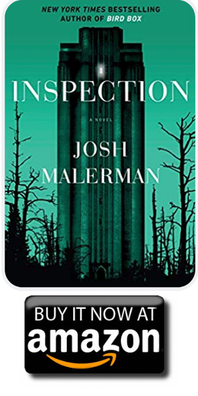 Boys are being trained at one school for geniuses, girls at another. Neither knows the other exists--until now. The New York Times bestselling author of Bird Box invites you into a world of secrets and chills in a coming-of-age story like no other.One of Elle's "Best Books to Read in Spring 2019" - "Josh Malerman is a master at unsettling you--and keeping you off-balance until the last page is turned."--Chuck Wendig, New York Times bestselling author of Blackbirds J is a student at a school deep in a forest far away from the rest of the world. J is one of only twenty-six students, all of whom think of the school's enigmatic founder as their father. J's peers are the only family he has ever had. The students are being trained to be prodigies of art, science, and athletics, and their life at the school is all they know--and all they are allowed to know. But J suspects that there is something out there, beyond the pines, that the founder does not want him to see, and he's beginning to ask questions. What is the real purpose of this place? Why can the students never leave? And what secrets is their father hiding from them? Meanwhile, on the other side of the forest, in a school very much like J's, a girl named K is asking the same questions. J has never seen a girl, and K has never seen a boy. As K and J work to investigate the secrets of their two strange schools, they come to discover something even more mysterious: each other.    When reading horror, by the very nature of the genre, you have to some degree of suspension of belief. The genre has many absurd elements, haunted houses, vampires, werewolves, demons giant or mutated monsters all of them require you to put aside all rational thought to enjoy the story without thinking 'hey this could never happen" But what happens when you come face to face with a concept that is so absurd, and so utterly bollocks that even the most irrational and non-critical thinking reader would be thinking to themselves, "looks like we have a crossed line, only for the other voice in their head to say "shut up and keep reading this may be bollocks but even the dog's proverbial has nothing on this book, and when was the last time you had so much fun reading a horror book. Bollocks it may be, but it may also be a stroke of pure genius" Mr Sucky by Duncan P Bradshaw is one such book, this won't be a spoiler since you will know exactly what to expect with regards to the wide narrative brush strokes of this novel, a career serial killer gets his comeuppance and ends up trapped in a Mr Sucky , which I assume is a budget knock-off version of the beloved Henry, vacuum cleaner. Yes, you read that right a vacuum cleaner. Hey come back, don't walk away, trust me the concept may be a bit bollocky bonkers, but look through the history of horror, there is some previous form for this. We have had Christine, a killer car, Chucky a killer doll, The Mangler, a killer mangler (OK that one may win the award for the most stupid possessed killer object, but that one sucked big balls, at least Mt Sucky doesn't suck balls), as you see the concept for this novel may not seem as stupid as you first thought. At least the reasoning behind who the serial killer becomes one with the household appliance makes a lot of sense, even if it might not be exactly what was intended. In terms of the plot, this is a simple tale, serial killer gets killed, becomes one with a vacuum cleaner, goes on a killing spree in a budget motel, and ends up in a battle with his own conscience and that's about it, except the journey that you will take while reading this will take you past a family of serial killer killers, invisible radioactive dinosaurs, the most inept disciple of evil ever committed to page and perhaps the most fun be had while reading a horror book. Humour and horror share a common psychological response, however, humorous horror stories are notoriously difficult to get right, they either fail to be horrific or they come across as a groan-inducing grind that has you wondering if you will ever laugh again. MR SUCKY is one of those very rare instances where the author delivers on all counts. Let's not beat around the bush here Bradshaw brings out both barrels of the absurd and stupid cannon and keeps on firing them in rapid succession from the first page right up to the end of this side splitting horror comedy, so much so that you will be left chuckling to yourself for days after you finish this book while wondering if you will ever get the smell of absurd and stupid cannon gunpowder out of your nose. Bradshaw has a unique sense of humour, which effortlessly transfers to the written word, and if you can get on board with the concept of this book I can guarantee that you will love every single minute of this book. First and foremost this is a comedy, but Bradshaw keeps the reader's attention transfixed between the jokes with a fine line of bloody and at times brutal horror, there are enough blood sweat tears and shit, (oh good the shit) splattered around this book to keep even the most purest of horror fans happy. So much so that you will never, ever think out what it would feel like if you used that part of a vacuum cleaner, for doing that to yourself, and don't be coy, you know exactly what I'm hinting at, we have all tried it. From Mr Suky's unique way of dealing with the stairs (up yours Daleks with you fancy pants levitation discs) to the most inventful use of a vacuum storage bag, Bradshaw has put a lot of thought and effort into creating and pulling off clever set pieces that add to the enjoyment of this novel. Mr Sucky, may well by potty and preposterous but it is one of the most assured and enjoyable books I have read in recent memory, Bradshaw never once fumbles the ball, which is no mean feat when you consider the content of the book, in lesser, less gifted hands this book would have been an utter mess, but Bradshaw knocks it out of the carpark of your nearest budget motel. At one point in the book, someone asks "Who the fuck do you think you are? Van Halen?" I say you need to jump at this book, but I'll let you decide if it Van Halen with Roth, Hagar or Cherone, hint it sure as hell ain't Cherone. MR SUCKY BY DUNCAN P. BRADSHAw It doesn't matter if it's completely mucky, no job is too big for Mister Sucky. Serial killer Clive Beauchamp has checked into his hotel room and is all set to increase his death toll by one. However, intended target Angela Foxe has other ideas and murderer becomes murderee. Determined to save Clive's soul from eternal damnation, an ancient evil instructs one of his acolytes to intervene. Unfortunately for Clive, the hired help is not the brightest bulb in the box, and instead of Clive being born anew within an avatar of unparalleled strength and brutality, his spirit is interred inside a vacuum cleaner. Irked but undeterred, Clive decides that the only course of action is to finish what he started, taking care not just of Angela, but everyone else involved in the plot to kill him and stuff his corpse in a dingy cleaning cupboard. The only thing that can stop him comes not from the other hotel guests or staff, but from within, as a growing, nagging voice threatens to escalate a simple case of revenge, into something far, far worse. Will Clive get payback for being killed? Is a vacuum cleaner capable of murder and mayhem? Does this book suck? Does this synopsis blow? Can you come up with a better vacuum cleaner related joke? Find out in...Mr Sucky    This House of Wounds is the debut collection from award winning author Georgina Bruce. Published by Undertow books you expect a beautiful book (which is delivered by the striking cover art of Catrin Welz-Stein, and the cover design by Vince Haig), and quality stories (which are certainly provided by the extremely talented Georgina Bruce). This House of Wounds not only has some of Georgina’s best known work, including her BFS award winning short story “White Rabbit”. It also contains four new stories, original to the collection. Georgina Bruce’s writing can be difficult to categorise, but her strong story-telling means her tales can sit easily amongst many genres, and her previous work has appeared in both “Best British Horror” and “The Best British Fantasy” anthologies. Georgina’s writing has an almost poetic beauty to it that belies the darkness underneath, and her stories often don’t sit comfortably with the reader (This is one of the few books that after reading it, gave me nightmares). With the underlying themes covering subjects as varied as human trafficking “Cat World”, dementia “White Rabbit”, and the dangers of consumerism “Wake up, Phil”. The stories within This House of Wounds can all be read as separate entities, but there do tend to be linking themes in language and characters. There is a strong sense of loss of identity throughout the collection, most notably in her re-occurring characters of The Dreemy Peeps. The very human robots/androids which are routinely dehumanised by those around them. With this loss of identity for her characters there also comes a loss of control and disassociation. Resulting in her character’s battles, both physical and mental, to decide whether it is better to regain that control or to relinquish it and to embrace the loss and the madness that protects them. This collection may not be an easy read, but it is an enjoyable one, and I think it is an important one too, both in a social and literary context. Georgina’s skill at her craft is astounding, her debut collection may not be a comfortable read, but it takes you out of your humdrum life and makes you think, and what more could you ask from an author than that. Georgina Bruce is a writer and teacher currently living in Edinburgh. Her short stories have been widely published in magazines and anthologies, and have been longlisted for the Bridport and Mslexia short story prizes. In 2017, her story White Rabbit won the British Fantasy Award for Short Fiction. This House of Wounds is her debut fiction collection. You can find Georgina (when she isn’t writing) at Twitter @monster_soup or at her website http://www.georginabruce.com and you can read our interview with Georgina Bruce here This House of Wounds The devastating debut short story collection from British Fantasy Award-winning author Georgina Bruce. Haunting and visceral tales for the lost and the lonely. An emotional and riveting debut. Advance praise for Georgina Bruce's 'This House of Wounds.' "An astonishing, totally absorbing debut collection. Edgy, disturbing and delicious in equal parts. Georgina Bruce plays with myth and horror beautifully." -Kerry Hadley-Pryce, Author of Gamble, and The Black Country "The stories in This House of Wounds strike me as both an emotional and intellectual examination of pain, from how it spreads and is passed on to others to how it can easily turn us into different, crueller creatures. Each act formed in pain leads to another, then another, and this makes for twisted, beautiful reading. Georgina Bruce is a courageous and compelling writer." -Aliya Whiteley, Author of The Loosening Skin, and The Beauty  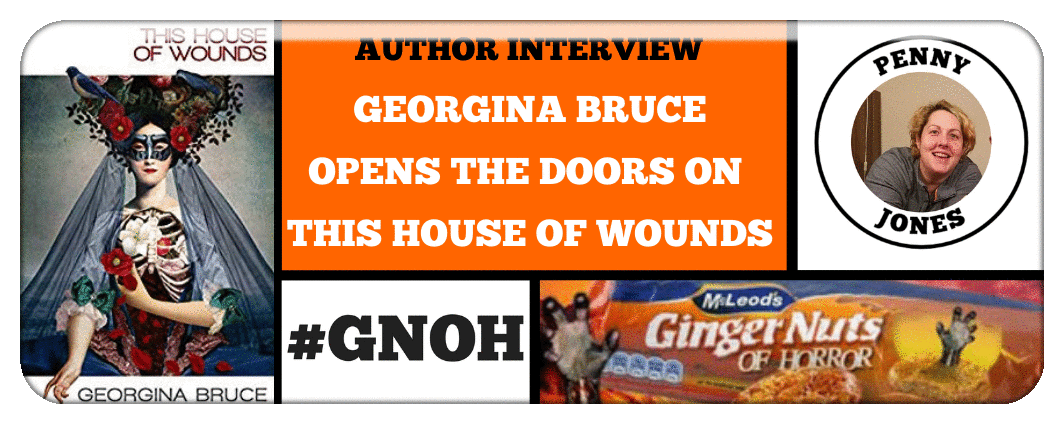  After finishing this a couple of months ago, I have found myself trying to figure out how to review such a book. A book that is painfully brilliant in its truth as well shocking in its delivery. Autumn Christian's new novel sums itself up in these words..."A dark journey of self-discovery. An existential labyrinth of love, sex and self-actualization where the only way out is through." That's a far more spot on boil down than I could ever do. Beverly Sykes is a high school virgin when we first cross her path. One night, she finally decides to take the step and sacrifices her virginity--it is at this moment her life changes...and as it turns out not only hers. Beverly has magical orgasms. As in they change those whom she is coupling with. They cause reflection on a soulful level and often lead to a quest for betterment in all aspects for the person...well, almost always. As Beverly grows older and realizes what her calling seems to be, she has perils to dodge both familiar and strange. Relationships are never simple. Things are never clear as crystal. She begins to wrestle with her position and her gift--or is it a curse--and her and its place in this big ol' swirling mess of a world. I haven't heaped a lot of information on you, just the basic timbers that hold this house of a book up. And let me tell you, it's a book you'll be living in for some time. I found myself thinking on it a lot upon completion. While I am no prude, I am not much a fan of sexually graphic books, I tend to find all that jazz distracting and not-all-that-important to the narrative. In this instance, it was wholly necessary and served as important as the ideas behind the story. Girl Like A Bomb is an important novel about self-discovery and destiny. About living to help and helping to live. It's fantastic and beautifully written and it is also achingly sad and bleak as hell at times. I'm saying it's nearly perfect. Girl Like A Bomb is soon to be available from Clash Books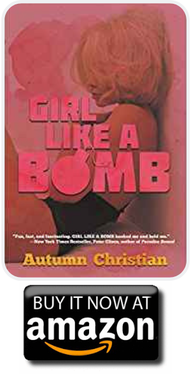 Autumn Christian’s third novel is a dark journey of self-discovery. An existential labyrinth of love, sex, and self-actualization where the only way out is through. When high schooler Beverly Sykes finally has sex, her whole life changes. She feels an explosion inside of her that feels like her DNA is being rearranged, and she discovers a strange power within. After chasing that transcendent feeling and fucking her way through the good, the bad, and the dangerous boys and girls that cross her path, Beverly notices that all of her ex-lovers are undergoing drastic changes. She witnesses them transcending their former flawed selves, becoming self-actualized and strong. Beverly gives herself over and over to others, but can she become who she is supposed to be, with the gift and curse that nature gave to her?   |


Archives
May 2023
|

|

|
 RSS Feed