

FIVE MINUTES WITH TABATHA WOOD
12/4/2019
 Tabatha Wood lives in Wellington, New Zealand with her husband and two boys. A former English teacher and school library manager, her first published books are non-fiction guides aimed at teachers and others who work in education. She now teaches from home, while writing in her spare time. Born in Whitby, North Yorkshire, Tabatha has always had a passion for weaving strange, unusual often gothic tales, entwined with her deep love for the land and sea. She strongly encourages the use of writing and creativity for positive mental health, and runs a group which supports women who write for wellness. She also hosts writing workshops, often gets involved in cosplay charity events, and enjoys knitting and making jewellery. Her short story collection, Dark Winds Over Wellington: Chilling Tales of the Weird & the Strange is the first time she has published her fiction. Could you tell the readers a little bit about yourself? I was born in ‘Dracula’ country. No, not Transylvania, but Whitby, on the north east coast of England. The imposing form of Whitby Abbey standing on the headland and glaring down upon the town was a constant reminder of the gothic myth, and in some ways, a powerful motivator. I did write creepy stories when I was a kid, but I got a pretty negative reaction from my family, so I ended up abandoning writing fiction for a long while, and my first published works were books for education, which I wrote while I was working as a teacher. I’m proud of that achievement, but it’s a very different kind of writing, and not one which I derive much pleasure from. I’m a Jack of all trades when it comes to writing and art, but I don’t see that as a negative thing at all. My most recent collection of short stories are rooted in horror and the supernatural, but I write material in a swathe of genres. I’m a bit of an ageing Goth-slash-hippy, and I’ve always been attracted to anything dark and weird, but I’m also a bit of a creativity magpie — writing, to me, is my “shiny” and I get very easily distracted, tempted and absorbed. I’m also a self proclaimed serial procrastinator; I need to have very clear goals, or I tend to wander off and start getting involved in something new. It’s only as I’ve got older that I've found the courage and the confidence to try writing fiction again, and I’ve also found different ways of working which I hadn’t explored before. What do you like to do when you're not writing? I love being outside in nature, and I have a passion for swimming in the sea off the coast of Wellington. I’m a water baby, but I stopped swimming for many years. I have nerve deafness in both ears, and for a long time I felt really uncomfortable about taking my hearing aids out to swim. I was too scared. Too self-conscious. I’m glad I’ve got over that now. Ocean swimming is both humbling and grounding — you can enjoy the feeling of being free in the water, while also being acutely aware that you can never get too comfortable just in case the sea decides it’s had enough of you. I like that. I like the excitement it brings. Whenever I need to quieten my mind, or just get a sense of myself again, I go to the sea. The sea doesn’t care who you are or what you do — it can be beautiful and calm, or mighty and terrifying. It just does as it wants, it needs no validation. I can identify with that. Other than the horror genre, what else has been a major influence on your writing? I read a lot. Of all kinds of stuff and by a whole range of authors. I’ll even be completely honest and say I don’t read nearly as much horror as I probably should. I can never really pinpoint what the touch paper was, what triggered the explosion that provided my creative boom. While the usual male suspects of King, Koontz, Barker and Hutson got me into horror as a teen, it’s been other writers such as Tom Cox, Deric Longden, Ursula Le Guin, Karin Slaughter, Lee Murray, and the late, great Terry Pratchett who have helped me hone my own fiction writing. They all showed me very different ways of crafting a story. Amanda Palmer’s ‘The Art of Asking’ is basically what inspired me to get off my backside and stop waiting for permission. Meeting and talking with (‘Constantine’ writer) Jamie Delano made me want to prove to myself that I could do this. A personal loss led me to using writing cathartically to balance myself again and embrace the habit of writing every day. Around ten years ago I found myself getting into graphic novels much more than books. My husband is a big comic book fan, but they appealed to me most when I lacked the free time to actually sit down and read a novel. Raising my kids took priority. I’ve carried on reading them because the stories are just so good. Some of my favourite runs are: Brian K. Vaughn’s ‘Y, the Last Man’, Kieran Gillan’s ‘The Wicked and the Divine’, Garth Ennis’s ‘Preacher’, Warren Ellis’s ‘Transmetropolitan,’ all of the original ‘Constantine: Hellblazer’ series — Delano, Ennis, Gaiman, Carey, et al, and ‘The Astonishing X-Men.’ arcs written by Joss Whedon. I used to be such a book snob at one point, I really didn’t understand what kind of positive impact comic books and their writers could have on the literary world. It’s a very different, visual style of writing, but one which I have found has taught me a lot in terms of thinking about story progression, dramatic tension and character arcs. Every time I write a story I think about how I would shoot it cinematically. This always helps me fully realise my characters, and consider their interactions within the narrative. Plus, its always kind of fun to imagine which actor or actress you might cast if you had the opportunity! The term horror, especially when applied to fiction always carries such heavy connotations. What’s your feeling on the term “horror” and what do you think we can do to break past these assumptions? I think that a lot of people hear the word “horror” and assume blood, guts and grisly death. They think ‘Hellraiser’, 'American Horror Story' or ‘Texas Chainsaw Massacre,’ and they forget that horror doesn’t have to be disgusting, or even remotely bloody. I think a lot of that misunderstanding is due to the influence of movies and television which tend to use the horror tag to focus on the revolting and violent as much as the frightening. There is also that lingering social prejudice that horror writers and readers are a bit weird or unpleasant. There are as many clichés attached to horror writers as there are in some of the stories themselves. I initially struggled to find beta readers amongst my immediate writing feedback group because a lot of people said, “Oh, horror isn’t really my thing.” What they meant was, “I don’t like gruesome and grisly stories,” or, “I am concerned that people might think I am weird for liking this.” I had to promise them that it was “emotional horror” and not gore. I actually used to worry that my stories weren’t horrific enough, that they didn’t even really fit into the horror genre. Not enough blood or monsters. Not weird or other-worldly enough. I understood that horror holds up a mirror to society and explores its fears. It highlights the distrust of the Other and the unknown. When I first started writing, I wasn’t fully sure how to capture that and present it without resorting to gratuitous bloodshed, and still be accepted as a ‘real’ horror writer. I now know that was because I didn’t really understand what being a writer of horror really meant to me personally. I needed to find my own style. Horror, much like speculative fiction, is such an umbrella term for any story which unsettles or revolts us. I know some authors even shun the term, and prefer to label their work as dark fiction, or gothic fantasy. Psychological horror always seems to get lumped in with thrillers, which makes no sense to me. Horror writers shouldn’t need to feel apologetic for their art, nor have to find alternative ways to describe it. We could definitely start by redefining some of the parameters of what the horror genre covers and start owning the horror label with pride, rather than trying to water it down by calling it something else for fear of alienating readers. A lot of good horror movements have arisen as a direct result of the socio/political climate, considering the current state of the world where do you see horror going in the next few years? I feel like we need stories which not only scare us, but educate us. Stories which don’t shy away from facing the monsters in our midst — quite specifically, certain governments and world leaders. Stories which acknowledge the potential for humanity’s impending doom, but offer some way we can change the narrative. I imagine we will see a lot of new horror focusing on our desire to terraform and build societies on other planets. Stories which focus on the likelihood of extinction events and our need to survive. I also anticipate much more dystopian horror — not just exploring themes of societal control and government intervention — but racial and sexual tensions, and the beasts who live beside us and within us which we can’t always see. Or don’t want to. I often think a lot of the real horrors in our world are what’s out there waiting for us. The impending environmental, medical and population crises many humans don’t want to acknowledge let alone tackle. All those things which we do to ourselves, and make it harder for humanity to thrive. What are the books and films that helped to define you as an author? I’ve always been a writer in some shape or form, from being very small. I mentioned being inspired by Bram Stoker’s gothic novel, but I think my earliest memory of really wanting to be a proper writer was after reading C.S.Lewis’s Narnia chronicles and thinking, “I could do this. Hey, I want to do this!” I knew I was pretty good at creating believable characters, and as a clichéd only child, I enjoyed spending time in my own head. Daphne du Maurier’s ‘Rebecca’ and Susan Hill’s ‘Woman In Black’ definitely inspired me to write the slow-creep kind of horror which I really enjoyed. ‘American Psycho’ (Bret Easton Ellis) shook me up and stayed with me for weeks. I hated it. It’s a great book, but I found it hard to stomach. Honestly, I think I am inspired by everything I watch and read, without always being conscious of it. It’s really hard for me to say, “that, there, is where it all started” or “that’s been a huge influence to me,” because I tend to squirrel everything I see or read in the creative filing cabinet inside my brain, and it all gets mushed up into other things. It’s often suggested that, “good writers borrow, great writers steal.” (The internet is hazy about who actually said this.) If I were pushed, I would probably name television shows such as: ‘Buffy the Vampire Slayer', ‘Dead Like Me’, ‘Supernatural’ and ‘Being Human’; and movies such as ‘The Cabin in the Woods’, ‘What We Do in the Shadows,’ ‘An American Werewolf in London’, ‘Clive Barker’s Nightbreed’, and the original ‘Red Dragon’ movie, ‘Manhunter’ with William L. Petersen. In reality, any movie which tells a good story with great pacing and characters is teaching me how to craft a tale. I always want to be surprised. I think it’s worth mentioning that I learn just as much from the not-so-great stuff too. Sometimes it’s good to take notes from stories you find mediocre or just plain bad, and think about how you might try to improve them. There are quite a few popular horror books and movies which just don’t excite me at all, and some which are considered a bit middle-of-the-road which I adore. Inspiration often arrives when you least expect it, you just have to be open to letting it in. What new and upcoming authors do you think we should take notice off? Can I say myself? *haha!* That wasn’t a terribly original response was it? I’m going to come clean and say because I’m just returning to the ‘scene’ of sorts, I’m still finding and exploring new authors. I’m making a point this year of reading more female-authored work, and exploring the indie publishing scene a lot more. They are not all necessarily new and upcoming, but on my reading list at the moment are: Priya Sharma, Sunny Moraine, J. C. Hart and Georgina Bruce, plus a whole load of others. I am also going to mention Penny Jones, because without her I really don’t think I would have finished my own collection. She is a master at creating tension and suspense in her writing, and always writes fully realised and believable characters. She is a little ray of sunshine in the horror writing world and I mean that in the best possible way. She highlights just how important being genuinely kind and networking well really is. I’ve found that the community on the whole is very welcoming, and I really want to uphold and foster that sense of belonging, not to accrue more sales, but to find more friends who ‘get’ me. How would you describe your writing style? My style of horror is the creep of paranoia, where everything is almost normal, but not completely. It could be real, but not quite. I don’t want to write something that repulses people, I want to create something that lingers. Good horror will leave you with a feeling of unease. An itch in the brain that you can’t quite scratch, but equally you can’t ignore. It should squirm around in your head for a while, and leave you still thinking about it for a few days afterwards. I don’t write about blood and gore because I personally don’t like it much. The things my brain often conjures up, I don’t want to commit them to paper, because I am always totally weirded out by where those thoughts have come from! I don’t feel comfortable sharing them. Yet. Maybe my next collection will be full-on shock and gore. Are there any reviews of your work, positive or negative that have stayed with you? I’ve been super lucky not to receive any negative reviews yet. I am sure they will come along in time. I tend to be of the opinion that any kind of criticism is always useful, but I don’t have to be immediately beholden to it. I understand that I can control what is on the page, but I can’t control how people react to it. I know I still have a lot to learn, and that’s half the fun of it. I’m actually really excited to see how my writing style might change and evolve, and I’m just trying to be the best writer I can be right now. I suffer from terrible imposter syndrome and at the moment I feel like I’m still waiting for someone to say to me, “You’re no good at this, kid. Go back to the day job.” One positive not-quite-a-review which really tickled me was when someone ‘live tweeted’ my stories to me while they were reading them, and it was great fun to read their reactions. It reaffirmed for me the reasons why I enjoy writing; not for fame and riches, although they would be very nice, but because I like entertaining people. I still get that warm, fuzzy glow when someone reads my work and likes it. That’s why I do it, and why I will continue to do it. What aspects of writing to do you find the most difficult? Letting the story go. Actually admitting to myself that it is finished, that I have to stop tweaking it and changing it, and put it out there. Also, I love writing dialogue, so my characters always talk a lot. Maybe even too much. I can easily get carried away and a character will start monologuing. I’m aware that sometimes I fall into the trap of too much ‘throat clearing,’ and I have to work hard to avoid that. I’m still finding my voice. I’m not even sure I have settled into a particular style as yet. I also struggle with some the technical stuff like accurate punctuation and formatting. Teaching grammar as a subject to a class of thirty kids is somehow very different to putting it into practice in my own writing. Is there one subject you would never write about as an author? Yes, and I’m not going to write about it here either. Let’s just say it involves creepy crawlies and leave it at that. How important are names to you in your books? Do you choose the names based on liking the way it sounds or the meaning? In most cases it’s a bit of both. There are characters in my recent collection who have been named very specifically, and others which were basically picked out of a metaphorical hat. I try to consider diversity while I’m writing, so I don’t want every name to be inherently ‘white’ unless there is a good reason for that. Equally, you can’t write diversity simply by dropping a non-white name into the story — every character should fit their name. Writing, is not a static process, how have you developed as a writer over the years? I definitely plan more now, and in greater detail, than I used to. I suspect part of the reason I never actually completed any of my fiction stories was due to a dreadful combination of not feeling like I was a good enough writer, and not having a clear goal or plan of progress. I pay more attention to the ‘rules’ of writing now too, although I do also break them occasionally. As you can imagine, writing non-fiction is quite different to writing fiction, and for me at least, it was a hell of a lot easier. You don’t really put anything of yourself into non-fiction, and that was something I struggled with at first when I came to write some of the short stories in my most recent collection. One in particular is very personal, and I deliberated for a long time about whether or not I should include it. I’m beginning to see my writing as a journey now, and I’m embracing that as much as I can. What tools do you feel are must-haves for writers? I can’t speak for every writer, but for me there are a few essentials: A regular writing schedule so I can write daily and just get shit done; a notepad with me at all times — paper or electronic — it doesn’t matter as long as I always have somewhere I can capture the muse, because they almost always arrive unexpectedly and at inappropriate times; a bottomless coffee pot; a good pair of headphones so I can work anywhere without distractions, an understanding partner who doesn’t mind when I abandon them to go and write; and a bunch of writing buddies/critique group who share my drive and passion. What is the best piece of advice you ever received with regards to your writing? If it’s not working, let it go. Don’t be afraid of scrapping it and starting again.William Faulkner once said that in order to be a good writer you must, quite often, “kill your darlings.” Understanding that sometimes the creative journey is better than the destination will help you as a writer. There’s absolutely zero shame in accepting that. I’ve adopted quite a few mantras in the past couple of years and the two I get the most from are: “shovel the sand to build sandcastles” and “progress not perfection.” I believe a good writer needs a good growth mindset if they want to evolve and improve. Getting your work noticed is one of the hardest things for a writer to achieve, how have you tried to approach this subject? The usual suspects of social media have been useful to me, but I have to admit that I find Facebook, Twitter etc. absolutely emotionally exhausting, and it’s often hard for me to maintain my online presence. Equally I know it’s part of the job. Networking is essential, as is having realistic expectations of how your work will be received. Friends and family might say they’ll support you, but in reality they are not your target audience. Being genuine and polite will get you everywhere, and if you say you’re going to do something for someone, do it. Even if you get nothing in return, you should always present yourself with the utmost integrity. I’ve also got better at asking for help. There is a great quote in Amanda Palmer’s book which I feel is super important to every creative individual: Asking for help with shame says: You have the power over me. Asking with condescension says: I have the power over you. But asking for help with gratitude says: We have the power to help each other. I like to try and look for the ‘purple cow’ approach whenever I do something new; that is, if there are fifty cows in a field, people will remember a unique, purple one. Figure out what other people are doing which works and look for ways to add to it. For example, I made a Spotify playlist to accompany my stories. It’s a small thing, but it’s about utilising the platforms available to you in different ways and making yourself stand out. To many writers, the characters they write become like children, who is your favourite child, and who is your least favourite to write for and why? I genuinely don’t have a favourite yet. The female vampire character in two of my stories — I won’t name them so as not to give away any spoilers — has definitely stuck with me, and I think she has a few more stories left in her yet. I don’t really like her, she is quite problematic and dishonest, as well as pretty manipulative. She is, however, great fun to write. The empathy she garners is due, in part, to her humanity, which is ironic given that she is no longer human. I keep considering killing her off, but somehow always manages a reprieve. What piece of your own work are you most proud of? I’m genuinely proud of all of my stories at the moment, although my favourites are “From The Deep,” “The Things You See,” and “Heat Pump”, simply because they were the most fun for me to research and write. And are there any that you would like to forget about? The first draft of “Blood Bonds” was awful. Really and terribly awful. I was trying to incorporate some Māori legends and people into my stories, as they are all set in New Zealand, but I got it really wrong. I ended up writing stereotypes and potentially offensive ideas without even realising I was doing it. I was approaching another culture from a privileged, white perspective — writing about my idea of Māori culture instead of writing what I knew. I am so grateful to my friend who read it and told me bluntly, “Do not publish this!” and then advised me where I’d gone wrong. I learned a lot about myself that day and also how much responsibility writers have to properly research and present their subjects, or risk a serious backlash. Thankfully I am not averse to the idea of scrapping my work and starting again. Remember; “kill your darlings.” So that’s exactly what I did. For those who haven’t read any of your books, which of your books do you think best represents your work and why? Right now, I have only released one fiction collection — “Dark Winds Over Wellington: Chilling Tales of the Weird & the Strange.” I would say it’s an accurate representation of where I am as writer and a person, right now. I might feel very different about it a few years, and hopefully a few more books, down the line. Do you have a favorite line or passage from your work, and would you like to share it with us? One of the stories in the collection, “Mongrel” was written as an experiment. I wanted to see if it was possible to write a story completely through dialogue. It’s actually the shortest in the book, but I think it’s pretty fun. I particularly like the opening lines. “Are humans classed as red or white meat?” “What?” “Are humans...” “No, I heard what you said, I’m just disturbed by the content.” “It’s a perfectly reasonable question.” “Yeah. For a cannibal, maybe. Or a serial killer. Should I be concerned?” Can you tell us about your last book, and can you tell us about what you are working on next? My last book was a collection of short supernatural-themed stories all based around the ‘Coolest Little Capital’, Wellington in New Zealand. They mix local legends and folklore with elements of horror. It was, at least in part, inspired by Taika Waititi’s ‘What We Do in the Shadows’ and ‘Wellington Paranormal’, but it was also very much a result of my own research into the local area and my need to integrate myself in the community. As a recent immigrant to the country, it was very important to me to learn about the culture and the people. The stories are a result of the excitement and joy I felt at living in Wellington, while giving a little nod to some of the weirder parts of the city. I feel like I want to continue writing about Wellington, as it just has so much inspirational material to offer me. As is usual for me, I have a couple of ideas already sketched out just waiting for me to sit down and give them some real attention. However, I am involved with running and facilitating some writing workshops in Wellington for women for the next few months, so I suspect most of my free time will be focused on those. If you could erase one horror cliché what would be your choice? If I could only erase one, it would likely be the overuse of negative stereotypes which depict mental illness as a cause of violent or abhorrent behaviour. If I could rub out two, using rape or sexual assault as a shock tactic rather than progressing the plot in any way is another I’d like to see gone for good. What was the last great book you read, and what was the last book that disappointed you? ‘The Bone Season’ by Samantha Shannon had me absolutely riveted from the very start. I don’t know how I had managed to miss her until recently, but I’m so glad I’ve found her now. It’s a dystopian supernatural story, and not at all what I expected. The last book that disappointed me, although it is still a good story, was M.R. Carey’s ‘The Boy on the Bridge’. It is a prequel to ‘The Girl With All the Gifts’, which I really enjoyed, but I just didn’t feel like it was as thrilling, probably because the ending was a forgone conclusion. What's the one question you wish you would get asked but never do? And what would be the answer? “Would you like ten million dollars and a lucrative publishing deal with Big Name Publishers?” “Certainly!” Okay. Seriously, I often wish people would ask me why I so often put queer, disabled and/or people of colour characters in my stories, just so I could remind them that a broad range of character representation in every genre is incredibly important. It’s not about ticking some “diversity checklist,” but because minorities are seriously underrepresented in many genres, and particularly in the horror genre, and we should be challenging and changing that. Dark Winds Over Wellington: Chilling Tales of the Weird & the Strange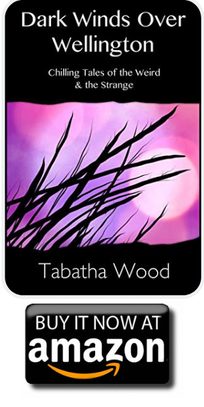 Horror and speculative fiction author Tabatha Wood invites you to the Coolest Little Capital, where nothing is quite what it seems. Strange creatures lurk in the shadows of the Beehive, while a beast From The Deep is determined to destroy us all. Being Neighbourly might just change your life, and if you listen closely you can hear demonic Whispers in the wind. So sit back, take a sip of A Good Cup of Coffee and question all The Things You See. In the city, there are no Second Chances and every chapter might be your last. Inspired by Wellington legends and folklore, these thirteen original short stories will drag you on a chilling journey through the eerie, the weird and the strange.   
Ramsey Campbell
12/4/2019 10:45:30
A fine interview, and I hardly need to say how much I agree with saying we write horror. Comments are closed.
|


Archives
May 2023
|
 RSS Feed

|

|