


|
By Tony Jones “Abstract horror which seriously disappoints 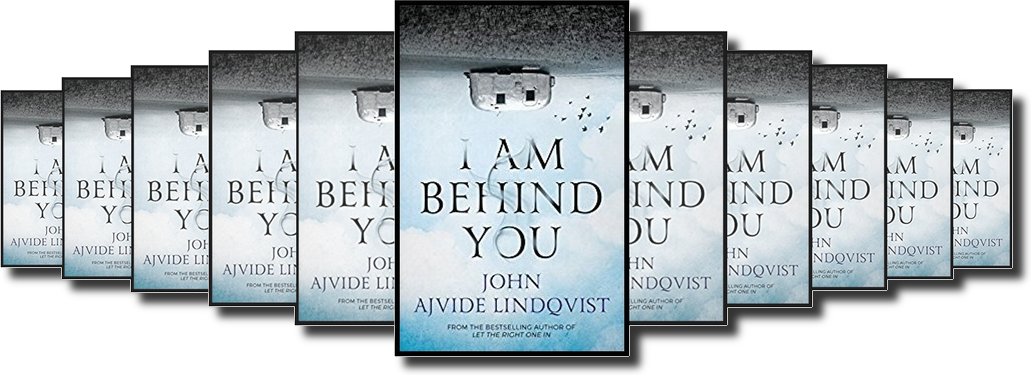 “I Am Behind You” is John Ajvide Lindqvist’s first novel to appear in English since “Little Star” in 2011, being a major fan of this highly versatile Swedish author I was really looking forward to reading something new. However, this was a major disappointment and it does not compare favourably to any of his previous four novels. Interestingly, it appeared in Sweden way back in 2014 and the translation has taken a while to materialise, perhaps they struggled to find a home for it? If that was the case, it really would not surprise me. However, a second book (in this projected trilogy) has recently been released in Sweden, so the story does continue. The original title, in Swedish, translates into English literally as “Heaven’s Beach”.
"those who still enjoy the Mythos-inspired stories of Frank Belknap Long, Brian Lumley, or even August Derleth, The Fiddle is the Devil’s Instrument offers the literary equivalent of comfort food" 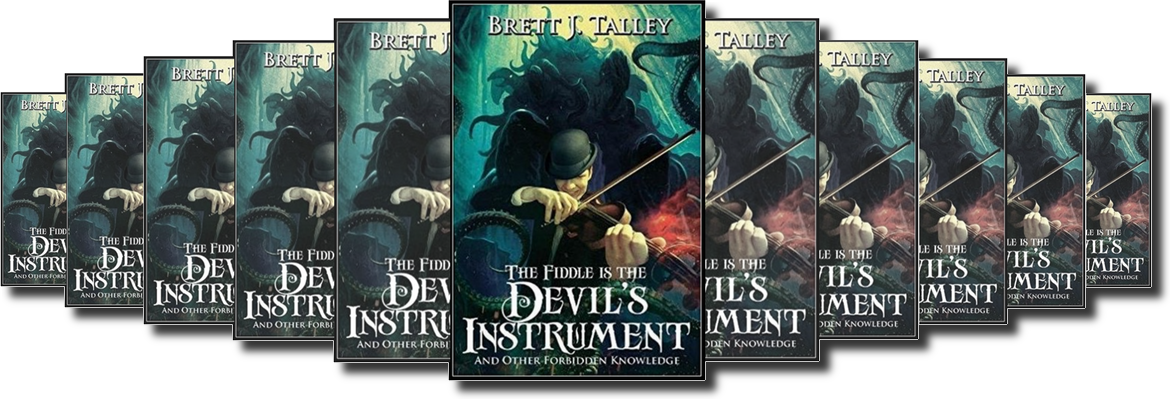 In genre fiction circles, the name H.P. Lovecraft has long been revered. These days, the most noteworthy of the many, many writers who invoke that name tend to take influence from the man’s more “literary” qualities. They craft subtle, atmospheric, often quite poetic tales of philosophical horror with cosmic implications and an emphasis on suggestion over explication. It’s worth remembering, though, that Lovecraft’s legacy is equally rooted in the realm of pulp fiction.
Indeed, what originally attracted both readers and writers to Lovecraft’s output was not so much his style or worldview (as largely seems the case today), but rather the open-source mythology he created as a background for his tales. From pantheons of alien gods to whole bookshelves stuffed with arcane grimoires, Lovecraft’s sandbox has always been flush with toys practically begging storytellers to jump in and play with them. LOST BOY BY CHRISTINA HENRY
2/8/2017
I felt tired and old and untrusting rather than darkly delighted. It felt like being trapped in an awful relationship with a narcissist, with no way out. 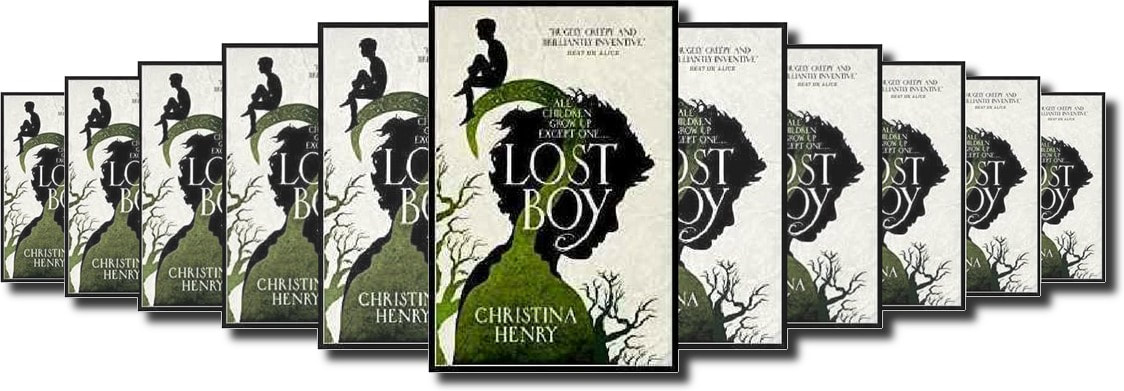 I have to start out this review with: I wanted to like this more than I did. However, the issue I have with the book isn't going to be one that most readers have. YMMV.
Lost Boy is a dark retelling of the Peter Pan story from Captain Hook's perspective. Jamie isn't based on the historical captain James Cook (which I was half-expecting), but on an ordinary boy. A mostly ordinary boy, who nevertheless is the kind of kid who can keep up with Peter for more years than one likes to think about. If the implications are true, Jamie may go back all the way to 1750--or perhaps just to the mid-1800s. It's hard to tell. Peter is a bad boy. A truly bad boy, as it turns out. Reprehensible doesn't cover the half of it. Jamie, on the other hand, is his one true friend, both to Peter and to the rest of the lost boys, and if he has a few anger issues, they're certainly nothing unreasonable, all things considered. Or at least that's what he says--he's telling the story, isn't he? Of course he's put a little bit of a shine on himself... "It was dirty, physical work, but it was second nature to Alce by now. She still marvelled at the complacency of the oblivious public she dealt with. The ludicrous way they could remain blind to the nature of the wider world until the unpleasant realities of it impinged on their own. She remembered wishing she could feel so immune. She wished she could leave the house one morning and see only the world as it pretended to be. It must be so easy to be ignorant. So happy to not know." - 'We All Need Somewhere To Hide' 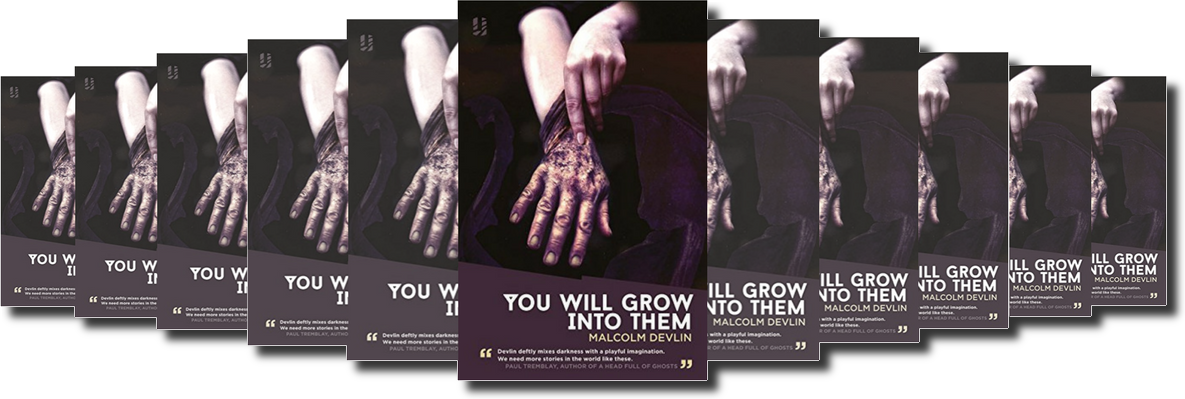 "Tom imagined his life as a transplant operation. The fictional world he’d lived in was being cut out of him and a weighty reality was being wired into the hole it had left behind. But transplants were dangerous, and Tom found himself living at one remove, convinced his body would rebel at any arbitrary moment, rejecting the reality he had been forced to accept." - 'Songs Like They Used To Play' Malcolm Devlin's debut short story collection You Will Grow Into Them marks the debut of an exciting new talent. Over the course of ten stories, Devlin shows just how varied Horror and Weird fiction can be, effortlessly fusing elements from folklore, science fiction, regency comedy of manners and urban fantasy into a cohesive and compelling whole. Each story demonstrates Devlin's mastery of prose; his writing is beautiful and clear, and his characterisation deft. The stories are thematically linked through the idea of the coming of age tale. With each story, Devlin uses Horror and the Weird to remind us of the gap between our perception or reality and reality itself, and to explore what lurks in the shadows in between. His writing is fascinated with transitory states and the liminal, the space that exists between the rigidly defined strictures of the world around us. In this his work echoes the philosophical approach of Philip K. Dick and Thomas Ligotti, reminding us of the power of genre fiction to ask profound questions about our relationship to reality. |


Archives
May 2023
|

|

|
 RSS Feed