• HOME
  • CONTACT / FEATURE
  • FEATURES
  • FICTION REVIEWS
  • FILM REVIEWS
  • INTERVIEWS
  • YOUNG BLOOD
  • MY LIFE IN HORROR
  • FILM GUTTER
  • ARCHIVES
    • SPLASHES OF DARKNESS
    • THE MASTERS OF HORROR
    • THE DEVL'S MUSIC
    • HORROR BOOK REVIEWS
    • Challenge Kayleigh
    • ALICE IN SUMMERLAND
    • 13 FOR HALLOWEEN
    • FILMS THAT MATTER
    • BOOKS THAT MATTER
    • THE SCARLET GOSPELS
GINGER NUTS OF HORROR
  • HOME
  • CONTACT / FEATURE
  • FEATURES
  • FICTION REVIEWS
  • FILM REVIEWS
  • INTERVIEWS
  • YOUNG BLOOD
  • MY LIFE IN HORROR
  • FILM GUTTER
  • ARCHIVES
    • SPLASHES OF DARKNESS
    • THE MASTERS OF HORROR
    • THE DEVL'S MUSIC
    • HORROR BOOK REVIEWS
    • Challenge Kayleigh
    • ALICE IN SUMMERLAND
    • 13 FOR HALLOWEEN
    • FILMS THAT MATTER
    • BOOKS THAT MATTER
    • THE SCARLET GOSPELS
GINGER NUTS OF HORROR
horror review website ginger nuts of horror website
Picture

[BOOK REVIEW] ​LONDON GOTHIC BY NICHOLAS ROYLE

23/8/2021
[BOOK REVIEW] ​LONDON GOTHIC BY NICHOLAS ROYLE
Loneliness, insanity, lovelessness, purposelessness, obliteration, are all just around the corner, and the truth is that we can’t bear to think about them. And yet, as Royle—a unique stylist and teller of genuinely unsettling stories—demonstrates, we do.
​London Gothic by Nicholas Royle
​(Confingo Publishing, pb , 198pp, £12.99)
Review by Mike O’Driscoll
Hard to believe that London Gothic is only Royle’s fourth collection, especially given that his first stories appeared in print in the late 1980s. Such was the quality of his work that almost from the start, his stories were being picked up by professional editors and reprinted in years best anthologies, as well as small press titles like Peeping Tom and The 3rd Alternative. It seems that over the last thirty years, half the horror anthologies and year’s best collections I’ve read, have been graced with one of his stories. I can’t claim to have read all his fiction (aside from novels and chapbooks, the internet science fiction database lists over 120 stories in print), but over the years I’ve read quite a few. To encounter a Nicholas Royle story, particularly his best work—for example ‘The Obscure Bird,’ ‘The Proposal’, or ‘Flying into Naples’—is always a delight, albeit usually an unsettling one. To dive headfirst into a collection of his fiction is a different experience entirely. The cumulative effect of these fifteen stories is to cause a sense of disturbance, of being dislocated, not only from mundane reality, but from oneself. When we read stories like ‘Standard Gauge’ or ‘Train, Night’ (trains and railway lines are a recurring motif), we quickly become aware of (and sympathetic to) the quiet desperation of the protagonists, and their desire to subsume themselves into the nascent unrealities that play out around them. That’s to say, we go along with them, even if it leads to violent and unexpected consequences. It’s only afterwards that we ask ourselves, to quote Talking Heads, well, how did I get here?


Part of the answer lies in Royle’s understanding of ‘gothic’ not only as a literary mode, but in its relation to art and particularly architecture. The advent of the gothic heralded an increase in secular art and, with the growth of cities and increased trade, the emergence of wealthy patrons commissioning art, and of trade guilds to which painters and artists belonged. Buildings play a crucial role in Royle’s fiction, whether new, repurposed or abandoned, domestic or commercial, and, frequently, no longer there. Houses converted to flats; bars, railway and underground stations, galleries, offices—the places we live and work in, seek out for recreation, move through in search of something; buildings that confine us and which we imbue with meanings known only to ourselves. It’s no coincidence that many of the characters who inhabit these pages and the buildings in them, are themselves artists—film-makers, writers, curators, photographers, actors, people who write about art—striving to make their mark, or, to put it another way, to make their presence known to an otherwise indifferent world. Royle is also acutely aware of the gothic’s reliance on such tropes as isolated settings, and inexplicable, macabre events, as well as its tendency toward emotion, particularly the notion of the sublime, that sensation of being taken outside ourselves. His stories make deft use of these tropes, repurposing—like his converted galleries and studios—the gothic, and the idea of London as a place in which to live and work, for 21st century readers.


We begin with a ‘Welcome’, which seems appropriate. The story takes the form of a welcome note left by the former occupants of a flat, for the new owners. The note contains instructions regarding keys, the boiler and waste disposal, but also alludes to the occupants of the other five flats, hinting at strange behaviour and even violence. It’s a slight but amusingly macabre tale that serves as a discordant introduction to what is yet to come. And what does come next is Royle at his most provocative and disconcerting best. ‘Inside/Out’ immediately creates a frisson of anticipation when we learn that the building in which the protagonist has just started work, is close to a similar building in which “Hitchcock had shot scenes from Frenzy … ten years earlier.” Films and filmmakers, particularly Hitchcock and Nicholas Roeg, and characters obsessed with their work, are another theme running through many of these stories. But rather than Frenzy, the film that ‘Inside/Out’ most explicitly references, is Vertigo, not least in the protagonist’s twenty year obsession with former work colleague Judy, who, as the story unfolds, he repeatedly confuses with the similar looking Madeleine. Having recently returned to London after twenty years in Japan, and prompted by the memory of a kiss with Judy, he begins to stalk her. The memory of the kiss is housed in a room in his head “at the top of a house with cream anaglypta wallpaper and stripped floorboards and a sash window” – a room he is outside of but wants to be in. Judy’s house doesn’t seem quite right: it has two exterior doors in walls adjacent to each other, and a photograph in the hall depicts the street on which the house stands, showing the newer block of flats nearby, but not the house itself. Something is out of place. Things—houses, people, songs, language itself—are not where they should be. In Japan, he never properly learned the language, instead picking up phrases from Hitchcock movies dubbed into Japanese. Later, he had learned new Japanese constructions through watching J-Horror films such as Ringu and Audition. He misremembers the track order on Joy Division’s Unknown Pleasures, and it’s significant that two of those mentioned are ‘Disorder’ and ‘I remember nothing’; at times, he feels as though he is living in a movie, and his stalking of Judy seems a deliberate re-enactment of Scottie’s obsession with Madeleine. But Judy is not Judy, or if she is, she’s not where she should be. In what reads like a bizarre Hitchcock/Nakata hybrid, he witnesses Judy/ Madeleine appearing to mimic the behaviour of female ghosts seen in J-horror films. In a room that mirrors the room of his memory, he encounters Hitchcock himself, who taunts him by asking, “Are you conducting a survey,” something the protagonist had earlier claimed to be doing. At the very end, he is, finally, inside, but, one imagines, it is not a place he wanted to be.


This sense of being undone by one’s desires is seen again in the narrator of ‘Standard Gauge’, a grifting filmmaker struggling for recognition, working on a film whose central conceit is that everyone who lives in London has, at some time in the past, or will in the future, live in Sinclair Street, near Shepherd’s Bush. Like other strivers in these stories, he’s willing to use others to further his own ambitions, principally Marco, an alienated individual with a thing for the internal layout of houses converted into flats, and an obsession with a lost west London railway line. Marco lives on Sinclair St and hears trains running by on the lost railway line. He has books on Aleister Crowley, and appears fixated on the height of particular women. The narrator also exploits Vita Ray, a young woman willing to pose for nude photographs as a gateway to film work, by drawing her into his scheme to use Marco’s flat for location filming. The story is full of the kind of incidental details that set Royle’s fiction firmly in the real world—the type of people who frequent familiar chain pubs, the demographics of a particular neighbourhood, a concern with property prices—while at the same time acting as a veil behind which lies the possibility of the absurd and grotesque. The narrator gives the appearance of being in control of events, and yet there’s a contradictory sense of complicity, an awareness that he’s allowing himself to be drawn into Marco’s craziness. His own ambition seems, in the end, a necessary part of Marco’s design, a fact that he only begins to understand after the shocking and violent climax, one that leaves us disoriented, struggling to make sense of the lines that go across, and lines that go down.


Trains also feature in ‘Train, Night’, a superbly constructed tale of memory and betrayal in which a chance encounter with a stranger, leads to the protagonist devising a bizarre revenge on her ex-lover. The title is a reversal of a 1968 Belgian film, Un Soir, Un Train, that she and Alex had watched shortly after they had got together. She conflates her recollections of the film itself, partly set in London, with her memory of watching trains through a window the first night she and Alex were together, and him telling her how the people in the train had watched them, thinking they looked good together. In retrospect, she wishes she had been one of the passengers on the train, free to disembark at a station and carry on with “a different life,” perhaps the one that Anouk Aimée’s character had gone on to live after she had disappeared. She pictures this other life, with the stranger—Anthony—standing as surrogate for Alex, and stages a macabre re-enactment of a scene from the film, one that serves as a kind of brutal reverse revenge tape.


The perception of film plays a key role too in the ominous ‘Necklines through the ages,’ a story that instils a creeping sense of dread as two writers, Tim and Sarah, wander through the rooms of the British galleries at the V&A museum. He is there because he believes the reconstruction of an 18th century room from a Henrietta St house (this being the street where Robert Rusk, the serial killer from Frenzy, occupied a flat), will help inspire an article he is writing on Hitchcock. Tim is envious of Sarah as she has been commissioned to write a piece on author Derek Marlowe, whereas his article is for a non-paying market. Her visit is prompted by the hero of Marlowe’s A Dandy in Aspic, having a collection of porcelain in one of the museum’s vaults. As they each visit separate rooms in the museum, both deliberately imagine, in what Tim  calls an act of ‘psychogeography’ characters from Hitchcock’s film, and the film version of A Dandy, inhabiting the same space as themselves. Royle’s disquieting story sees past and present, reality and fantasy collide, as Sarah and Tim become unwitting players in their own movie, pursuing and pursued by the reified figures of Rusk and Alexander Eberlin.


Art, the way we perceive (or perhaps misperceive) and the ways in which we consume it, are another preoccupation of many of these stories. The commodification of art is satirised in ‘The Old Bakery’, a scathing and hilarious tale that not only nails the pretentiousness of so many would be artists and artisans, but also skewers the seething resentment of aspiring writers who feel they’ve been shafted by the system. ‘Artefact’ takes the trope of found footage familiar from movies like Paranormal Activity and Rec, and does something unique with it, blending recordings of an old TV show with what may be home movie footage to create a sinister story with particularly nightmarish implications. As well as containing a brilliant joke about gallery visitors at the expense of Last Year at Marienbad, ‘Empty Boxes’ serves as a weird homage to London’s lost cinemas. Simon’s obsession is not with where a film was shot so much as where it was first exhibited in London. He maps their locations across the city, and at the point at which the lines that link them intersect, he finds a gallery that may prove the locus of another, vanished picture house whose very essence he hopes to capture for his collection. ‘Trompe l’oeil’ is an intense and unnerving example of Royle’s ability to wrong-foot his readers, to take them outside of themselves. Again, it’s set in the world of art, focusing on three individuals, the editor, writer and designer of a contemporary art journal. The writer, Toby, believes he is being stalked by a woman who repeatedly visits the same exhibitions that he does, signing the visitor’s book a few names above his. The editor, somewhat flippantly, tries to assuage his fears. The story explicitly mentions a trompe l’oeil, and contains within the text two, more subtle examples. The first is a description of an installation that, upon exiting, gives the visitor “the shock of your life”; the narrator’s description is so vivid we can almost experience it ourselves, only for him to withhold what it is that is most shocking. And in another nod to Hitchcock—and perhaps Brian De Palma—there’s another visual deceit being pulled, not only on poor Toby, but, in the denouement, on the reader. 


There’s a Brexit story—‘The Vote’—which reads like a cross between Don’t Look Now and Fawlty Towers, and a tale, ‘Guys’, that updates the idea of serial killer tourist trails—as in the Jack the Ripper tours of Whitechapel—to accommodate Denis Nilsen. But among a collection of powerful stories, the real standout is ‘L0nd0n’—that’s London with zeroes replacing the Os—a story at the centre of which is a mise en abîme, a technique in visual art in which a painting or photograph contains a smaller copy of itself, or in literary terms, a story within a story. 


On the surface, this is the story of an editor, Nick (the name is suggestive), securing the work of a new writer and editing his novel which is about “London …about despair … and holes in the fabric of reality that may or may not exist.” It is also about maps “and spies” that aren’t important. Whether or not this is true of Ian’s novel is never clear—it’s also beside the point, because Royle’s story is about all of these things. The two zeroes in the story’s title may signify emptiness, or the double zero of despair, or they may be the holes through which the narrator is increasingly drawn from the reality in which he shares a flat with girlfriend Jane, to one in which Jane is simply a mannequin and his best friend Joe Cross (a writer whose stories seem to overlap with Royle’s) is dead, his identity supplanted by Ian’s. And of course, this being a story marginally about spies, specifically a Bond minus his final digit, we have to ask who it is being spied upon. As in ‘Trompe l’oeil’, there’s an explicit instance of an artistic technique but its appearance comes immediately after a temporal disruption, one in which Nick may (or may not) have fallen through one of those holes in reality. Like a sleight-of-hand artist, Royle constantly misdirects the reader, to the extent that the truth of what is really going on remains just out of reach. The mise en abîme of a photograph of a red vase positioned next to the vase is echoed in the physical similarity of Ian and Joe Cross, and again in Nick’s dressing the mannequin in his absent girlfriend’s clothes. Another scene has Nick observe through the kitchen window, a couple in the next flat washing the dishes together, just as he and Jane are doing. The question of what’s significant in the story is constantly up for grabs. As if sensing the waning attention of the reader when confronted with an unnecessarily detailed description of some cabling in a subway, Nick (or Royle), disrupts the fourth wall when he addresses us directly: ‘Go ahead. Skim. I’m just telling you what I saw. It might be important. It might not.’ Nick tries to locate the premises of a map-making firm called Geographia, which in Ian’s novel forms part of an “espionage sub-plot”, even though he’s unconvinced of its importance to the meaning of the novel. Maybe what the story is suggesting is that everything has already been told—individuals are conflated or erased, events are duplicated, behaviours mirrored, the same tricks deployed, old texts plagiarised. Individual experience is not unique, we make no difference, we fade away without having made an impression and we do not understand why. Ultimately, ‘L0nd0n’ may be the perfect embodiment of the gothic story; it is a story about the story within itself, one that hides in plain sight, while at the same time remaining unknowable.


Cumulatively, the stories in London Gothic, map out our contemporary anxieties, our fragile sense of who we are as individuals and as a society, that sense of disruption and fragmentation made explicit by Brexit and Covid. These are stories that speak to, even ‘infect’ each other, like virulent examples of mise en abîme: perhaps ‘The Old Bakery’s pretentious artist and would be novelist ,Willet, is working on ‘Trompe l’oiel’; maybe the novel that Ian from ‘L0nd0n’ is writing is a version of ‘Empty Boxes’; perhaps the found footage in ‘Artefact’ was staged and shot by the jilted female protagonist of ‘Train, Night’; is it possible that Judy’s house in ‘Inside/Out’ is an installation visited by the unstable editor of ‘Trompe l’oeil’? 


Using his own interest in films, contemporary art, London architecture and neighbourhoods, trains, gentrification, and flaneurs, Royle unpicks our own obsessions with identity and how we present ourselves to (and are perceived by) others; with status, particularly as it relates to work and property (he’s very funny when writing about house prices and estate agents) and art with a capital ‘A’ and people who write about it. This may sound like another manifestation of the typically British literary trait of writers writing fiction about writers, but the reality is Royle is mercilessly taking the piss, and doing so from the vantage point of one on the margins. He’s not a mainstream literary figure, operating as he does within the borders of horror/fantasy fiction, but his stories have always had a distinctly ‘literary’ bent. And like Moorcock or Samuel Delany, he’s not embarrassed by genre—he actively embraces it, citing fantasists such as Ramsey Campbell and M. John Harrison, as well as marginal figures like Derek Marlowe and BS Johnson. It might seem a stretch to suggest that a collection of stories in which tricks of the eye, decaying architecture, old films, and lost railways, should speak to us of contemporary universal anxieties, but somehow, these stories do just that. It has something to do with the manner in which we use all of these to distract us from the things that really frighten us—the sense of having little control over our lives, the very real possibility that the centre has broken and things really are falling apart. Loneliness, insanity, lovelessness, purposelessness, obliteration, are all just around the corner, and the truth is that we can’t bear to think about them. And yet, as Royle—a unique stylist and teller of genuinely unsettling stories—demonstrates, we do.


Mike O’Driscoll

London Gothic: Short Stories 
by Nicholas Royle 

Picture


​In his fourth short story collection, an exploration of the dark side of modern London, Nicholas Royle redefines urban Gothic for the twenty-first century. Often writing against a background of film, art or literature, he unearths unease in the streets of Shepherd’s Bush, Hackney or South Tottenham, and creates uncanny effects with innovative, experimental forms.

Mike O’Driscoll

Picture
Mike O’Driscoll’s fiction has appeared in Black Static, The Magazine of Fantasy and Science Fiction, Interzone, Crime Wave and numerous anthologies including Best New Horror, and Year’s Best Fantasy & Horror. Two collections of his stories, Unbecoming and The Dream Operator, were published by Elastic Press and Undertow Publications, and his story, Eyepennies, appeared as the first of TTA Press’s series of stand alone novellas, in 2012. His story, Sounds Like, was adapted by Brad Anderson for an episode of the mid-noughties horror anthology show, Masters of Horror. A new novella, Pervert Blood, will appearing Black Static #80/81, due later this year.


@MikeODriscoll6

https://www.facebook.com/mike.odriscoll.52/


TODAY ON THE GINGER NUTS OF HORROR WEBSITE

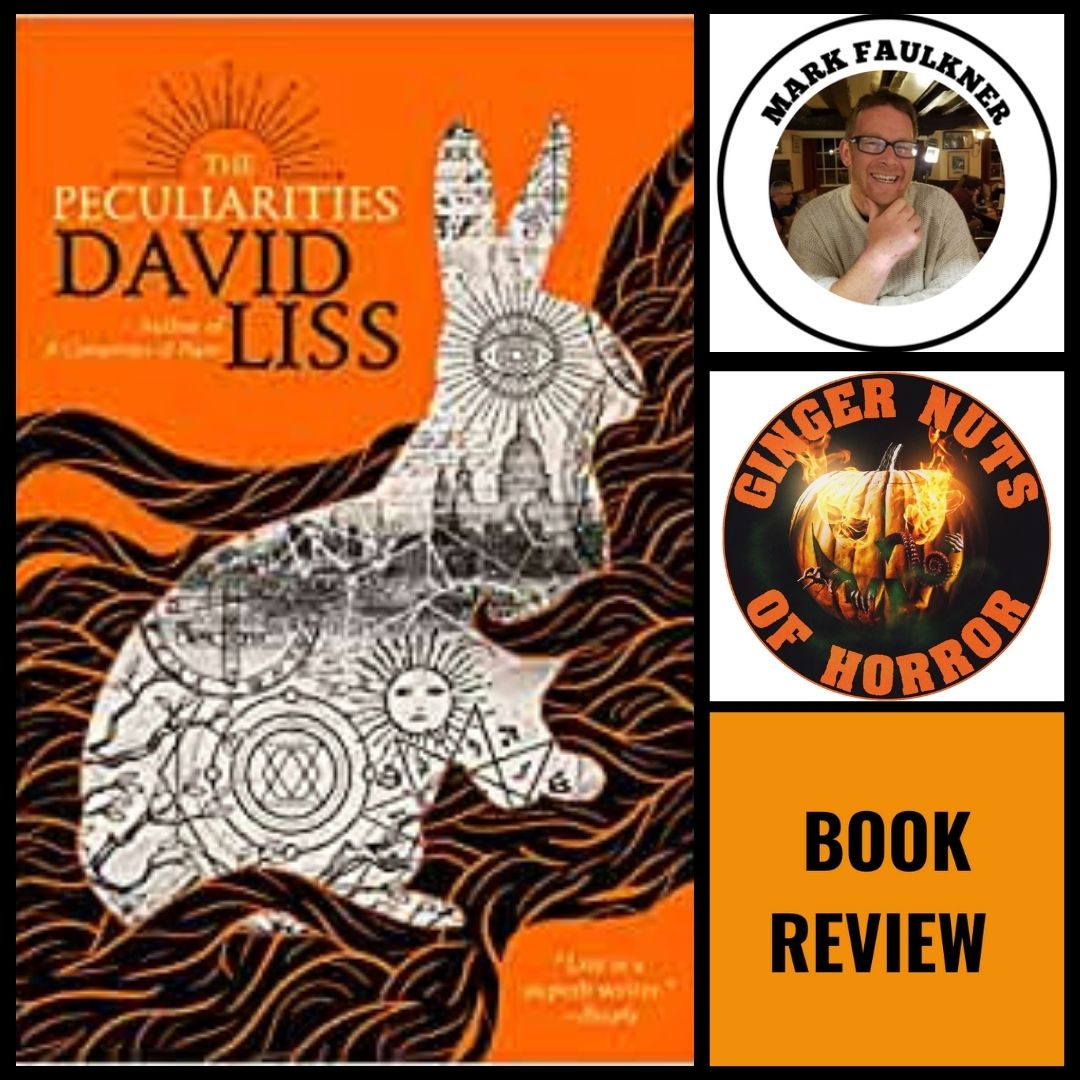
[BOOK REVIEW] THE PECULIARITIES BY DAVID LISS

Picture

the heart and soul of horror fiction reviews 

[BOOK REVIEW] THE PECULIARITIES BY DAVID LISS

23/8/2021
Picture
an entertaining supernatural romp around late nineteenth-century London, which I felt was let down by casual antisemitism, which served no purpose (that I could discern) other than to leave an unpleasant taste in the mouth.

THE PECULIARITIES BY DAVID LISS
a book review by mark faulkner 

CW: Racism. Sexual assault.
Just before the turn of the 20th century, London is plagued by mysterious thick fog, and a collection of phenomena known as the peculiarities, which cause the residents of the city to be prone to strange afflictions.

Following their father’s death, our protagonist is placed in the care of his dispassionate elder brother and given enough funds to live as a fop until he’s taken into the employ of the family bank, starting as all family members do, as a junior clerk.

It’s here he begins to learn of the bank’s ties to prominent occultists, and its connection with the peculiarities.


Before we go any further, I need to address the racism in this book; in particular, antisemitism. I had to Google if the author was himself Jewish, else it would have been a DNF after the first few chapters. Don’t get me wrong, I don’t mind uncomfortable reading, as long as it serves a purpose, which in this instance it didn’t seem to, or the message was lost on me.
​
While I appreciate the author was probably trying to reflect attitudes at the time the book was set, it didn’t bring anything to the story, and it coloured my enjoyment of this novel. I do try to see the best in people, so I’m going to assume the author had the best intentions but didn’t quite pull this off. I also wasn’t overly enamoured with the way some female characters were portrayed, although this improves later in the story.


An interesting feature about this book was the use of real-life characters in a fictional setting, doing fictional things. Aleister Crowley is a prominent character, as are Yeats and Arthur Conan Doyle, although the latter two are minor players. Much of the story is based around the social circles these people would have moved in, but for the purposes of this story I felt fictional characters would have better filled the role, with the real-life personalities maybe putting in a cameo appearance. However, this is probably my personal taste, and I can see how these characters would appeal to many people.


For all my grumping, and there does seem a lot, there are plenty of things to like about this story. The premise, setting and style are right up my street, and once it gets going there’s plenty to keep the reader entertained and enough depth to keep us guessing, with a couple of decent twists for good measure.


To sum up, this is an entertaining supernatural romp around late nineteenth-century London, which I felt was let down by casual antisemitism, which served no purpose (that I could discern) other than to leave an unpleasant taste in the mouth.

The Peculiarities Paperback 
by David Liss 

Picture
From popular historical fiction author David Liss (A Conspiracy of Paper) comes the tale of a clueless young man embroiled in a deadly supernatural mystery in Victorian London. Rooted in strange conspiracies and secret societies, this absurdist comedic romp combines strange bedfellows with murderous creatures, resulting in an unexpectedly delightful consequences."David Liss masterfully blends rich historical fiction with terrifying supernatural body horror . . . Highly recommended."
--Jonathan Maberry, author of 
V-Wars and Ink

Thomas's problems are more serious than those of a typical young Victorian gentleman. His elder brother may be sabotaging the family's bank. His childhood friend has died under mysterious circumstances. Far worse, leaves are sprouting on Thomas's skin. Perhaps it is all the fault of the long-rumored "Peculiarities" lurking in London's grey fog?
Proper society scoffs at the notion of magic, even as it seeps into their buildings, transfiguring the rich and poor alike. If Thomas is going to save the family business --and stop turning into a tree--he'll need help from some rather improper companions. Desperate for counsel, he seeks the advice of a lycanthropic medium and London's unacceptable occult society...including a strange fellow named Aleister Crowley.

​MARK FAULKNER 

Picture
Mark is an Environmental Scientist and horror author from the West Midlands, currently living in Staffordshire with his partner, children and cats.
​

He’s previously released two novels, Flux and The Dark Stone, and a novella, Infested. His next novel, Picker’s Bleed, will be published on the 13th of September 2021.


TODAY ON THE GINGER NUTS OF HORROR WEBSITE ​

[BOOK REVIEW] ​LONDON GOTHIC BY NICHOLAS ROYLE

Picture

THE HEART AND SOUL OF HORROR FICTION REVIEWS

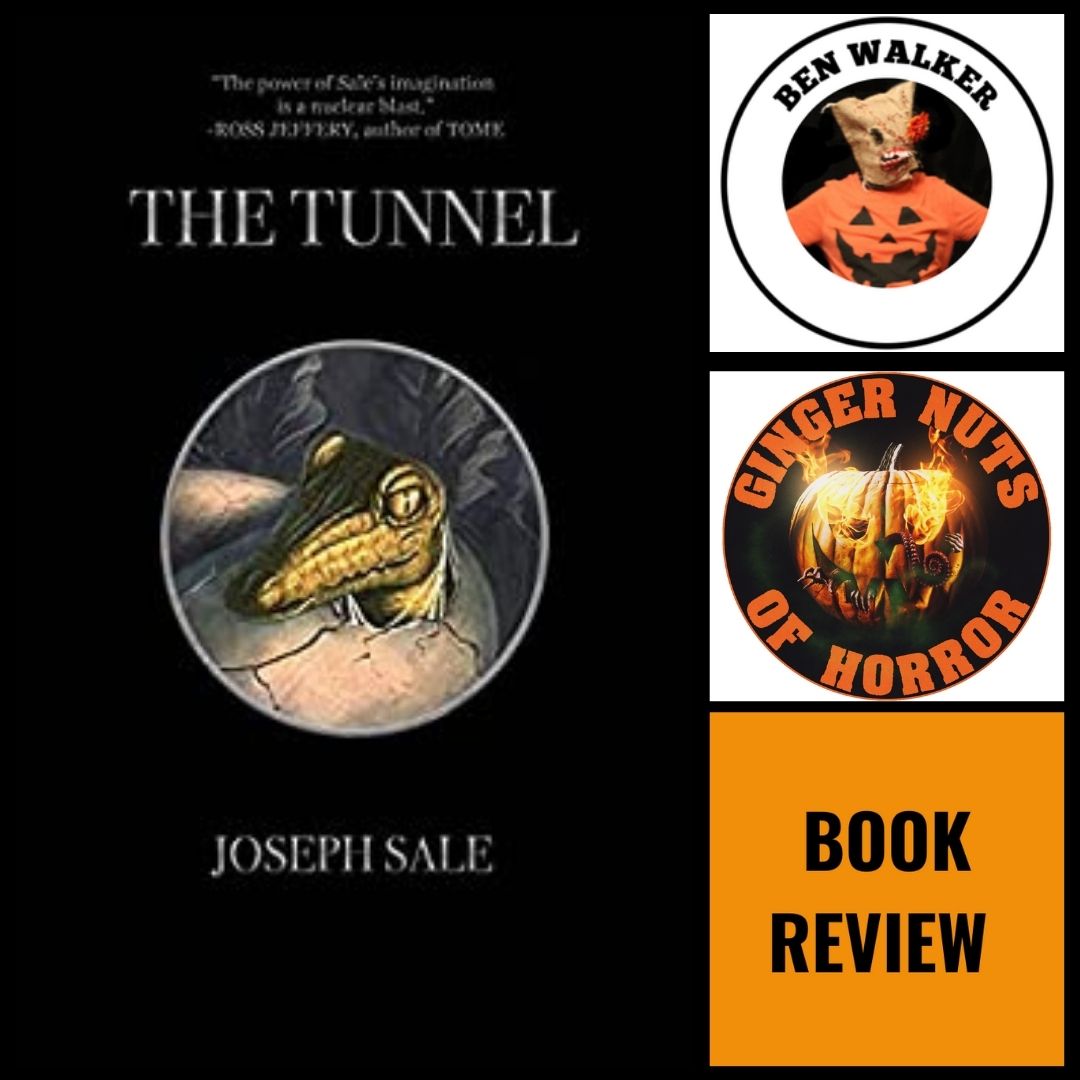
[BOOK REVIEW] THE TUNNEL BY  JOSEPH SALE

20/8/2021
Picture
a deftly handled combination of hokey action and intelligent insights into its main character's motivations, making for a satisfying read.
When I think of tunnels, crocodiles aren't the first thing that spring to mind, so I was a bit weirded out by that little bugger peeking out from the cover of Joseph Sale's latest book. Once you get into the meat of the story though, things fall into place pretty fast. Billing itself as a kind of creature-slasher, the plot involves a young woman forced by circumstance to seek an ancient killer in the depths below London.


Based on what I've read of Sale's before – namely his rock-fantasy epic Dark Hilarity and his unforgettable duck-based slasher story featured in the Burnt Fur anthology – I was expecting dense writing, layered with metaphors, rich imagery, effective foreshadowing, and vivid scene setting. And that's exactly what you get here, as well as a protagonist whose past is mired with family problems stemming from an abusive father, and whose fate seems predestined. There's a layer of mythology to go alongside the modern-times plot, including shared universe style callbacks to the author's other works, with well-thought out attention to detail and world building throughout. The pace stutters a bit at times, but never enough to fully derail your enjoyment.


The lead character of Georgina has an interesting journey, as she gradually works up the will to reclaim something special from her childhood, and work out her feelings towards her parents. The only problem is, there's a massive fucking crocodile in her way. One which might have a link to her past, or at least serve as a metaphor for it, in both subtle and explicit ways. It's great writing, with Georgina's perception of events defining the terror, relating each encounter with the croc to her own fears. Whether she can overcome those, and her past, are the main drivers of the story, and it's a rocky road, with a lot of pain both emotional and physical to be overcome by the blood-drenched denouement.


The scares don't just come from you following along with Georgina's train of thought though; there are also vividly shocking bursts of gore, the descriptions of which are pretty gruesome, giving you smells, sights and sounds which never fail to elicit a strong reaction. The beast itself is a true monster, large enough to give Coyote Peterson the willies. He's a messy eater too; there are more intestines on show here than a KNB workshop. And if you've ever walked down the Thames on a hot day and caught a whiff of whatever lurks beneath the surface, you'll be reading with one hand over your nose at times, especially as the characters descend into the sewers of London. The descriptions of the stink down there almost roll off the page in sickening waves.


All this gore and grue work in service of the story without being too gratuitous, though things do veer off into pure 70s/80s beast-on-the-loose movie territory at times, with some larger than life bit-part characters introduced only to be served up as fodder for the croc's mighty appetite. These lurches between less serious moments and the very real worries of the lead character make for some abrupt shifts in tone, but the fun never comes across as out of place. There's a Guy N Smith feel to some of the creature action, especially the scenes where some rather over-confident hunters converge in an attempt to snag the prehistoric pest.


In short, this is a deftly handled combination of hokey action and intelligent insights into its main character's motivations, making for a satisfying read.


THE TUNNEL BY  JOSEPH SALE

Picture
A monster haunts London. Some believe it is the reincarnation of Jack The Ripper, come to clean the streets once again. Others believe it is merely a freak of nature. Whatever the case, London’s waterways, sewers, and coasts are no longer safe. As the death-toll mounts, and the creature grows bolder, a young webcam model, Georgie, begins to realise that there is a terrifying connection between her and the darkness stalking her city. World-class hunters are unable to stop the beast. The million-pound bounty on the creature’s head has proved ineffectual. Only she has the power to end the reign of the terror, but to do so, she will have to enter the tunnel… The Tunnel is a novel about the traumas we endure in childhood, the way the things we fear most return to haunt us, and the healing power of forgiveness.


TODAY ON THE GINGER NUTS OF HORROR WEBSITE ​

EVAN WITMER IS ONE OF PLAUSIBLE PEOPLE-EATERS

Picture

THE HEART AND SOUL OF HORROR FICTION REVIEWS ​

[BOOK REVIEW] THE ANGELS OF L19 BY JONATHAN WALKER

17/8/2021
[BOOK REVIEW] THE ANGELS OF L19 BY JONATHAN WALKER
I was shocked by the ending and you may wonder whether redemption is ever truly possible. Highly original, thought-provoking, personal, and undoubtedly one of the literary highlights of 2021.


‘The Angels of L19’ is undoubtedly one of the literary highlights of 2021


The beautifully written The Angels of L19 takes us back to Liverpool 1984, building a fascinating story around a small community of Evangelical Christians who all attend the same local church, go on the same camps and whose lives are united around Jesus. First up, the church aspect of the novel is perfectly pitched and 100% convincing, partly because the author experienced growing up in this type of environment and the insider track he provides is one of the great strengths of the story. It is comparable to Jenn Ashworth’s outstanding The Friday Gospels which takes a look at a Mormon family from within the walls, neither novel provides a contrasting viewpoint from out with the community and the reader is treated to an intricate closeup of the innerworkings of the belief system from a unique teenage perspective.


A second feature of The Angels of L19 which blew me away was the fact that Jonathan Walker does not judge or poke fun at Evangelicals, which can be easy targets for ridicule in horror or wider fiction. Instead, he builds a beguiling and convincing story which utilises closely observed realism and unsettling fantasy with a strong Biblical feel to it via the use of Scripture and the internal questions the characters ask of themselves. Evangelical Christians believe in the everyday supernatural and when the main character is visited by beings, which he believes to be angels, his behaviour begins to be erratic and instead of going to the church elders for guidance he bottles everything up and proceedings begin to escalate, which is the main focus of the novel. If you empathised with the pain of the disturbed young woman in the recent art house horror hit Saint Maud, then this novel explores some of the same areas of faith. The Angels of L19 is far from a standard or traditional horror novel, you might even classify it ‘Quiet Horror’ which is character driven, has virtually no bloodletting and does not rely upon big scenes or cheap shocks. Instead, it gets seriously under your skin and refuses to budge long after the powerful final pages are concluded.


In one of his blog posts Walker mentions that his elevator pitch for the book is “Donnie Darko but all the characters are evangelical Christians” which really nails the strangeness of his creation. Fifteen-year-old Robert was an outstanding central character and the ambiguity of his visions is not a million miles away from Donnie and his six-foot rabbit Frank. Along the way the story takes in undiagnosed mental illness, eating disorders and bereavement, all of which add extra levels of reality which were equally captivating and bleak. Bearing in mind the story is set in 1984, an era dominated by the Miner’s Strike, Margaret Thatcher and a period were getting in touch with your ‘feelings’ was not particularly high up on the agenda.


Walker also mentions in his blog that the novel fits the criteria of ‘Christian Fantasy’ as defined by Colin Manlove, as the work is framed entirely within the Christian framework. However, this book is not preachy or attempting to convert, but alternatively takes Christian belief and the supernatural seriously in the conviction that an engagement with more meaningful questions is worth the effort. A person I know very well grew up in a Christian sect which is not dissimilar to this church where it was common for members to vomit up demons into buckets and something very similar happens in this story, with little or no fanfare. If you have any interest in the differences of various types of Christianity then this book is fascinating, for example, there is a type of exorcism performed, but it is a million miles away from what you might see with William Peter Blatty or any of the subsequent Exorcist films with the potential supernatural being deliberately kept low key and bland.


The use of music in The Angels of L19 was truly sublime, repeatedly returning to U2, with Robert seeking for a deeper Christian message within Bono’s lyrics, with the story taking in many other bands such as The Smiths and their performances on legendary TV show Top of the Pops. The novel beautifully illustrates the power of music, its discovery and the impact it can have on young lives. Robert and his friend Tracey, who also plays a major role in the story, do not exactly see music as a ‘vice’ (but neither is it truly Christian) and Tracey openly questions whether she would ever be able to give it up, attempting to balance her love for Jesus and music. A big ask for any teenager.


I loved Tracey and her friendship with Robert was another soaring highlight of the novel. Aged sixteen she was a year older than the boy, but as she perceived his faith to be so strong he was the natural leader of the pair and she looked up to him. Tracey also featured in some truly memorable scenes, when she was being baptised (totally submerged in water) and trying to connect with Jesus, she had the famous New Order song ‘Blue Monday’ stuck in her head! The two characters contrasted each other, but also had many similarities, but combined provided the reader with a deep exploration of how faith might work in teenagers and the trials they face in modern society.


The Angels of L19 is littered with powerful scenes, many of which would be very personal to Christians, and one of my favourites was when the two teenagers proclaimed their faith in a school assembly. Although Robert and Tracey knew other ‘Born Again’ Christians in their school they all kept it very quiet and after a church leader from their youth group asked them to publicly proclaim their faith, Tracey decided to stand behind Robert and I found this to be a rather beautiful sequence.


This novel is a work of literary fiction which began life as part of a doctorate in creative writing, so if you are after head-spinning or the gates to Hell opening then look elsewhere, however, if you enjoy thoughtful and mediative explorations of faith then The Angels of L19 gives the reader much to ponder but provides no easy answers. The sense of time and place adds extra flavour and this book is a million miles from kitsch ‘Christian message’ fiction the likes of CS Lewis provide, however, whatever you believe this is a fascinating and intelligent read. I have to say, I was shocked by the ending and you may wonder whether redemption is ever truly possible. Highly original, thought-provoking, personal, and undoubtedly one of the literary highlights of 2021.


Tony Jones
Picture
There's more than one way to be born again. Liverpool, 1984. The teenagers at Garston Chapel are the same as the rest of us: The Smiths, U2, crushes, football, mates. The grimy, low\-down politics of the Thatcher era casting deep shadows in this proud and broken city, but the kids have got other things on their minds... Jesus Christ Our Lord for one. Almost normal kids, then. But Robert isn't at all normal. Because Robert is visited by angels,  if that's what they are. He can't tell a soul about his secret. All anyone can see is his strange behaviour as he desperately seeks to understand what they mean, what they want from him. As Robert's two worlds merge, the real and the visionary intersect with increasing intensity and what is being asked of him becomes terrifyingly clear. The Angels of L19 is a moving and entirely original story of young lives at the confluence of faith and doubt, angels and demons, life and death. And where redemption is possible, even for those we think might be lost forever

Or purchase a copy direct from Weather Glass Books  ​


TODAY ON THE GINGER NUTS OF HORROR WEBSITE

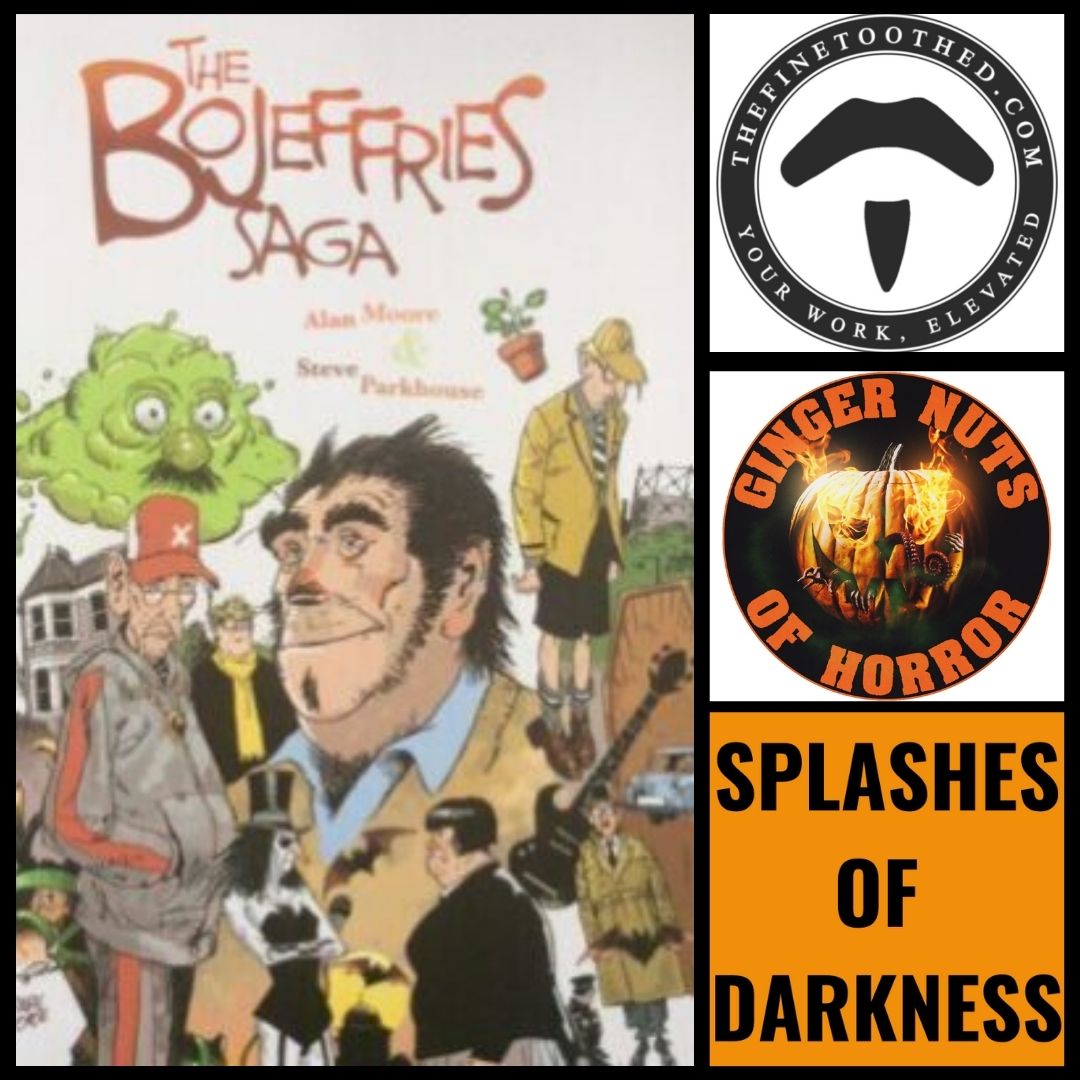
SPLASHES OF DARKNESS: THE BOJEFFRIES SAGA - COMIC REVIEW

Picture

the heart and soul of horror fiction reviews 

SPLASHES OF DARKNESS: THE BOJEFFRIES SAGA - COMIC REVIEW

17/8/2021
SPLASHES OF DARKNESS: THE BOJEFFRIES SAGA - COMIC REVIEW
I fell in love with these characters from the very first page, and the whimsically dark sense of humour tickled me the whole way through the volume
Comic-books are a medium, not a genre; they can tell any story and suit any palate. You want horror? I've got bottles of the stuff. Welcome to 'Splashes of Darkness.'
Picture
The Bojeffries Saga is the kind of beveragre you eye with suspicion. It looks vaguely familiar, nostalgiac even, but there's something a little off about it. You take a sniff. Is that the Dandy? Hm. There's a chemical tang like Viz or bleach. (Mental flashes: hours spent throwing up, followed by an uneasy peace; your cheek resting on the cool, comforting porcelain of God's telephone. How funny.) You give it a doubtful stir and take a swig. An eyeball bobs against your lips. Ah yes, that's the stuff. Gothic humour with... hm... mm ... wet farts and stale Wotsits. Erm. Excuse me--

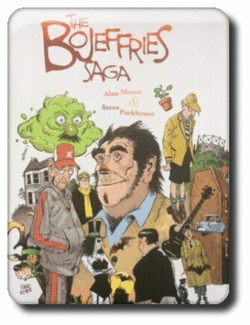
We’ve all heard of The Addams’ Family and The Munsters, living the high life in their imposing American-Gothic piles, but what you may not be aware of is that Alan Moore gave us a British equivalent in the 1980s. They’ve been quietly living out their bizarre lives on a council estate in the Midlands ever since. The ‘curiosity dampers’ around their house have started to fail now, so we can finally take a look at their bizarre little world. Leave your preconceptions at the door, wipe your feet, and step inside to meet the Bojeffries.
Picture
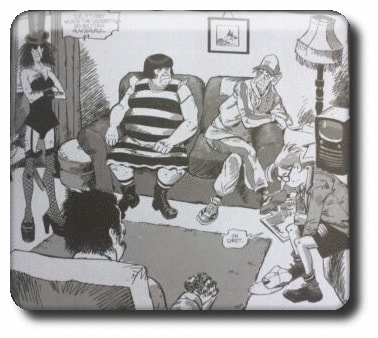
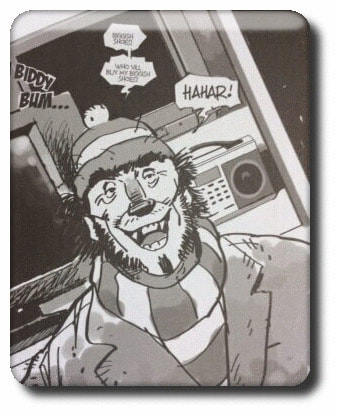
First up, there’s Jobremus, the head of the household, wearily struggling to keep his family in check. Uncles Raowl and Festus are (respectively) a cheerfully dumb werewolf and a bitter old vampire. Grandpa is in the final stages of organic matter, so it’s best to tread carefully around him. Young Ginda - Jobremus’ moody daughter - is quite possibly the most powerful creature on the planet, and the baby puts off enough radioactive energy to power nations! Finally there is Reth - son of Jobremus - eternally trapped in the body of an 11 year old boy. His only dreams are escaping this madhouse.
Picture
The Bojeffries Saga is one of those culty comics that you either love to bits or have never heard of.  I was in the latter camp until this little gem popped through my door for review. It all began in the pages of Warrior, birthplace of V For Vendetta and Moore’s own take on Marvelman. At that time, British humour was being transformed by the alternative comedy scene and, whilst very different tonally from the brash antics of The Young Ones, The Bojeffries Saga does follow a similar path in that it deconstructs the classic British sitcom.

​Of course the critical question is ‘is it any good?’ The answer is a resounding, ‘yes!’

Picture
I fell in love with these characters from the very first page, and the whimsically dark sense of humour tickled me the whole way through the volume. The last time I saw straight up comedy in a British comic, outside of the little newspaper strips, was probably in my Beano and Dandy days, so it was really quite refreshing to read a book that was completely unshackled from lengthy back-stories or complicated plots; something that could just be read and enjoyed for what it was.
Picture
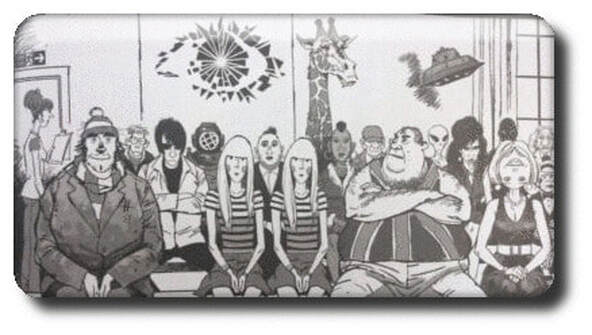
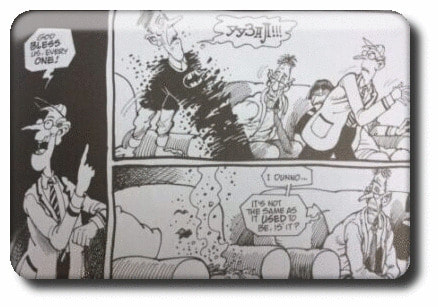
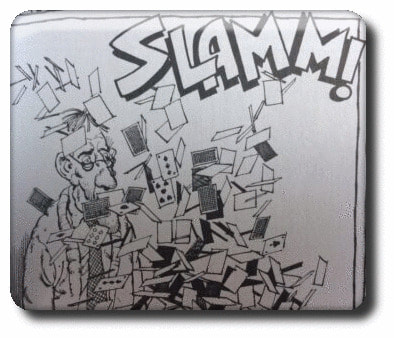
The artwork by Steve Parkhouse is smashing stuff, though the style varies massively from story to story – presumably in part due to the extended period of time over which it was produced. In each section though, he manages to give his Midlands suburbia a truly Gothic feel, with dramatic silhouettes giving depth to the night. His hatching makes things dirty looking and bleak, and there’s something kind of scrappy about his paneling, but all of this adds to the low-rate charm.
​
His gallery of grotesques are not restricted to the house, which is another pleasing feature. So many comics these days try to make everyone and his mother aesthetically pleasing when the fact of the matter is that most people are kind of weird looking. You could (almost) say the Bojeffries Saga has a kitchen-sink reality to it, painting people (and behaviours) as they really are rather than prettying them up. In this way even Parkhouse’s most extreme freaks of nature feel familiar and comfortable.
Picture
There’s no getting away from it: we are the Bojeffries, and the Bojeffries are us. There is no particular main character; everyone gets their chance to shine in a personal story. Obvious favourites will be the uncles with their crazy eastern European ways and their profound innocence in the face of modern society. Ginda is a surprisingly funny person to watch in action (though you would never actually want to meet her). Reth and Jobremus are Everymen with little personal impact, but their reactions can be priceless to behold.
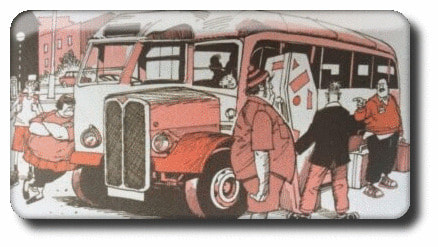
What stands out above the characters though, is the quintessential Britishness of the strip: everything from our pass-times and traditions to the foibles of working class life, our attitudes to sex, and that mightiest of drinks, Bovril. It even comes out in the formats used: One story ‘Our Factory Fortnight’ is produced as wordless illustrations combined with short passages of text below, just like you’d find in the old annuals of the 1950s. Another story, ‘Song Of The Terraces,’ is done as a light opera à la Gilbert and Sullivan.

My favourite story is a brand new one, written to round off this definitive collection. In it, Moore brings the Bojeffries bang up to date (well, to 2009 at any rate) to show us what life has been like for the family since they achieved fame. With this, Moore brings our modern obsession with celebrity and a (supposedly) broken Britain. The characters are boiled down to their essential qualities by contrasting their onscreen personas with their abrasive family life. Watching them trapped in the bell jar of the Big Brother house is like watching ourselves: funny and tragic at the same time.
​
The Bojeffries may be ridiculous, but they are also true. Recommended reading. Just have some Alka Seltzer to hand for the morning after.
Picture
​Written by Alan Moore
Illustrated by Steve Parkhouse
Published by Knockabout Comics
Available now!


Reading experience: 4/5
Reviewer: Dion Winton-Polak
Review originally written for Geek Syndicate.

Check out Dion's other comic book reviews here 

TODAY ON THE GINGER NUTS OF HORROR WEBSITE

[BOOK REVIEW] THE ANGELS OF L19 BY JONATHAN WALKER

Picture

THE HEART AND SOUL OF HORROR COMIC REVIEWS ​

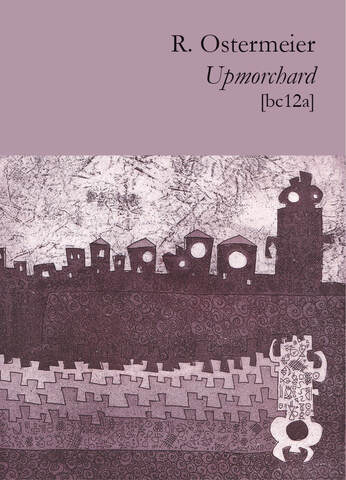
[BOOK REVIEW] UPMORCHARD BY R. OSTERMEIER

14/8/2021
[BOOK REVIEW] UPMORCHARD BY R. OSTERMEIER
an atmospheric and enjoyable read, reaching a conclusion that leaves the reader guessing; not in a head-scratching, ‘what the hell was that all about?’ kind of way, but one that leaves you revisiting what you have read and digging into the meaning of the stones.
[Book Review] UPMORCHARD by R. Ostermeier
by Mark Walker
“You belong to me until morning.”
​
Brooding, mysterious words, most apt for a brooding and mysterious tale set in the remote corners of the South West Peninsula.


Upmorchard concerns itself with the wanderings of Watts Barlik – Barley – taking time out to walk the Peninsula coast before starting his first research post. Although trying to escape academia, he hears talk of mysterious stones unearthed on an old spit island and is drawn into the orbit of two researchers struggling to understand the strange writing which covers the fascinating discovery. It is not long before he is seduced by the secrets of the stones and soon begins to experience unsettling dreams and visions of a disturbing past.


To say any more would be to spoil the story.


Ostermeier weaves a gripping tale of mystery, secrets, and suspense, drawing the reader into Barley’s world and not letting go until they have been taken from the ordinary, rational world of the academic, and been thrust into a realm of disturbing visions and frightening history.

At just over eighty pages, Upmorchard is a quick read and I found myself hooked straight away. I enjoyed Ostermeier’s style and voice and was reminded of the work of Lovecraft through the vivid descriptions of the real, sometimes mundane world, contrasted with the disturbing and horrific. There was definitely something about Upmorchard that was reminiscent of the atmosphere and creeping dread of At the Mountains of Madness.

As a short, the number of characters is limited, but they are well crafted with distinct voices. They feel real.

In a few places I felt that Upmorchard suffered a little from ‘over-writing,’ in the same way that some (all?) of Lovecraft’s work can, but never enough to distract from the read and, in many cases, contributing to the style befitting such a tale. There were a couple of errors in continuity that forced me to read one or two passages twice, but that may have been more noticeable because I was reading for a review, rather than purely for pleasure. Again, I don’t feel these would be a major cause for concern for the majority of readers.


Ultimately, I found Upmorchard to be an atmospheric and enjoyable read, reaching a conclusion that leaves the reader guessing; not in a head-scratching, ‘what the hell was that all about?’ kind of way, but one that leaves you revisiting what you have read and digging into the meaning of the stones. Upmorchard is likely to reveal more of its secrets on a second or even third read through and it is crafted well enough to warrant a return.


I had a fascinating time in Upmorchard… but I don’t think I want to visit!


Recommended for fans of Lovecraft or anyone with a penchant for folk stories and creepy tales.


“Here lie our children, still and cold, put to sleep by swords.”

R. Ostermeier, Upmorchard, Hardback 

Picture
Strictly limited to one hundred copies, and never to be reprinted as a standalone volume, Upmorchard revisits the peninsula’s past for the tale of Watts Barlik – Barley – who is drawn to an abandoned fishing hamlet and the stone artefact housed there--
“With prompting, Mrs Lofts told him all about the discovery. Out there in the darkness was what she called a spit island, Gloy Ness. The island’s geography and composition was impermanent. The shingle was endlessly reformed by storms, the tide, littoral drift. Ten years previously a feral storm uncovered a vast area of human-made artefacts. Gloy Ness was roughly five miles long, and it shifted quickly in tough-weather years so whatever the artefacts were, they took them out in case of damage (or loss) had the island reformed over it.
By this time Barley was like a dog with its teeth stuck in a toffee. He leaned towards what he could see of the woman, hoping the dark would rattle more out of her. It did—.”

Purchase a copy here 

https://broodcomb.co.uk/?page_id=84

mark walker 

Picture
Mark is an NHS worker living in Gloucestershire with his family and a plethora of pets, including rats, guinea pigs, a rabbit, beetles, tarantulas, chickens and degus. When he is not working or feeding the animals (not to each other) he writes screenplays and short stories as well as working on his first novels that, one day, might see the light of day. Funnily enough, the subject matter of the majority of this writing is Horror. While he has dabbled in drama and family films, he is always drawn back to ghouls and ghosties and all things grotty. He currently has a number of short stories published across three compilations.

He has had a fascination with the dark side ever since begging and begging to be allowed to stay up late and watch things like The Horror Express or Salem's Lot, before crapping himself to sleep (which is a euphemism, he hastens to add). Introduced to the works of Dennis Wheatley by his mum, it was only a matter of time before he was getting Stephen King for Chistmas (books, not the actual man) with notes from his grandparents asking if his mother knew he was reading this stuff. This also led to his mum questioning his friends as to the state of his mind as his interest in horror grew... which was strange, seeing as it was her fault for telling him to read Wheatley and letting him stay up to watch Salem's Lot in the first place!

Anyway, fast forward to now and he still loves watching and reading horror, as well as trying to write it. Favourite books and films? Well, that will be a long list. Mark has always loved Stephen King but is hoping working with GNoH will help broaden his horizons to new writers, which can only be a good thing. Film-wise, it is hard to pin down as he enjoys a wide variety of films from both the past and the present. From Alien, The Thing and The Shining to Ringu, Midsommar and Fear Street, if it has monsters and things that go bump in the night, he is happy.

He can currently be found trying to corrupt his daughters by sharing many of his favourite films and rising to their challenge when they say the last one wasn't all that scary....


​


TODAY ON THE GINGER NUTS OF HORROR WEBSITE ​

THE IRONY OF THOSE TRIGGERED BY TRIGGER WARNING
BY MATT SHAW

Picture

the heart and soul of horror fiction reviews 

[BOOK REVIEW] STRANGER WITH FRICTION, VOL 2, EDITED BY TIM MURR

11/8/2021
[BOOK REVIEW] STRANGER WITH FRICTION, VOL 2, EDITED BY TIM MURR
​
With a treasure trove of transgressive fiction and hip criticism and commentary, Murr has cultivated something unique in Stranger with Friction, and I’ll be picking up subsequent volumes in the future.

STRANGER WITH FRICTION, VOL 2, EDITED BY TIM MURR
a book review by rebecca rowland 

Editor Tim Murr notes in the Foreword to volume two of his outsider literature book-zine, “Punk rock was the inspiration for me launching my own indie publishing imprint: if Black Flag put out their own albums, why don’t I put out my own books?” For about half the price of a traditional horror anthology, Stranger with Friction is overflowing with top-notch material, achieving a delicate balance between Gen X nostalgia and new, fresh fiction, all colored in a transgressive hue. Its first volume offered poetry, cerebral pieces on Waxwork Records, The Texas Chainsaw Massacre, and the transformation of novella into film of Clive Barker’s Cabal (Nightbreed), as well as a sprinkling of dark fiction, including a particularly well-done nightmare of parental angst, “Cramps” by Lamont A. Turner. In its second foray, Stranger seems to have tightened the scope on its sniper rifle even further, and the result is a volume guaranteed to make any diehard horror fan satisfied.

Though most of the magazine is comprised of short fiction pieces, the nonfiction articles are well-researched and worth the purchase of the volume alone. Chris Cavoretto analyzes the Repo Man soundtrack, Murr looks back at the greatest releases from Alice Cooper as well as the horror genius of Dan O’Bannon, and a lengthy excerpt from Jean-Pierre Bertin-Maghit’s Filmed Letters from Algeria: Soldiers on Screen 1954-1962 offers a view of war documentary filmmaking previously unseen by most readers. Although as a metal gal, I was fascinated by the Cooper article, I relished the seven fiction offerings even more.

E.C. Hanson introduces the pack with his flash fiction piece, “A Little Juant”; in it, fourteen-year-old Greta is full of teenage lust, but she must outwit her overprotective father and perpetually intoxicated mother in order to escape on a clandestine rendezvous. I know Hanson’s other fiction and held my breath as the story progressed, knowing that the author holds his cards close to the vest until he can punch the reader with a twist ending, and he does not disappoint here. Later in the volume is Carter Johnson’s paean to those office employees whose supervisor makes work a living hell. In “Secret Satan,” Matt’s boss, Kowalski, is the bane of every employee’s existence, so Matt takes it upon himself to disinfect a toxic work environment.

Three of the other stories dance around religious themes. In “Giants” by Thomas R. Clark, a former soldier is tasked with determining the authenticity of a Biblical artifact and discovers there is something more sinister to the archeological find than first glimpsed. In “As We Forgive Those” by Paul Lubaczewski, lovebirds Richard and Summer seek refuge in an abandoned-looking church only to discover its inhabitants are members of a denomination whose devotion to redemption through suffering is one of nightmarish proportions. Finally, in a delightfully creepy piece of folk horror penned by the Chicago punk scene’s own Jeremy Lowe, “Bury Them Deep,” members of a traveling carnival set up shop in a town run by the sadistic Fruits of the Holy Spirit Church, and carnage ensues.

Although I rarely gravitate toward extreme horror, I found myself enthralled by the two most gruesome of the fiction offerings. In John Baltisberger’s “En Amarillo,” a tasty tale of splattergore and just desserts, Josh may be a foot soldier in the local Aryan brotherhood, but he has ambition, proving his devotion to the cause in an intricately described torture scene that will make any reader’s skin crawl—and that’s only the first of Josh’s trials. In Reed Alexander’s “The Night Life,” the bouncer at an exclusive rave greets his guests with the promise, “Welcome, babes, to Toy Land! The music is loud, the lights are colorful, the drugs are free!” but after imbibing the nightcaps handed out by their hosts, the real revelry begins, and this one involves teeth and a dinner party these ingénues never saw coming. This tale is a real edge-of-your-seat thrill ride that holds its own against the many of the heavyweights in the slasher canon.
​
With a treasure trove of transgressive fiction and hip criticism and commentary, Murr has cultivated something unique in Stranger with Friction, and I’ll be picking up subsequent volumes in the future. Despite its anti-establishment edges, the hybrid book-zine more than holds its own against its mainstream counterparts.

Stranger With Friction: Issue Two Paperback 

Picture
STRANGER WITH FRICTION Issue Two/Spring Edition
Contents...
EDITOR: STANDING ON THE SHOULDERS OF GIANTS…TO MORE EASILY CHOP OFF THEIR HEADS/TIM MURR
MUSIC IN PUNKSPLOITATION: REPO MAN/CHRIS CAVORETTO
fiction/A LITTLE JAUNT/E.C. HANSON
NOW LET US PRAISE NOISE: THE CROSS YOU FORGOT TO WEAR/TIM MURR
fiction/EN AMARILLO/JOHN BALTISBERGER
fiction/THE NIGHT LIFE/REED ALEXANDER
fiction/BURY THEM DEEP/JEREMY LOWE
MY HEROES HAVE ALWAYS BEEN MONSTERS: DAN O’BANNON/TIM MURR
fiction/GIANTS/THOMAS R CLARK
fiction/SECRET SATAN/CARTER JOHNSON
fiction/AS WE FORGIVE THOSE/PAUL LUBACZEWSKI
euro-cult/FILMED LETTERS FROM ALGERIA: SOLDIERS ON SCREEN, 1954-1962/Jean-Pierre Bertin-Maghit/translated by MARCELLINE BLOCK

TODAY ON THE GINGER NUTS OF HORROR WEBSITE ​

[INTERVIEW] JAMIE RYDER MIGHT BE DEAD BY DUSK

Picture

THE HEART AND SOUL OF HORROR FICTION REVIEWS ​

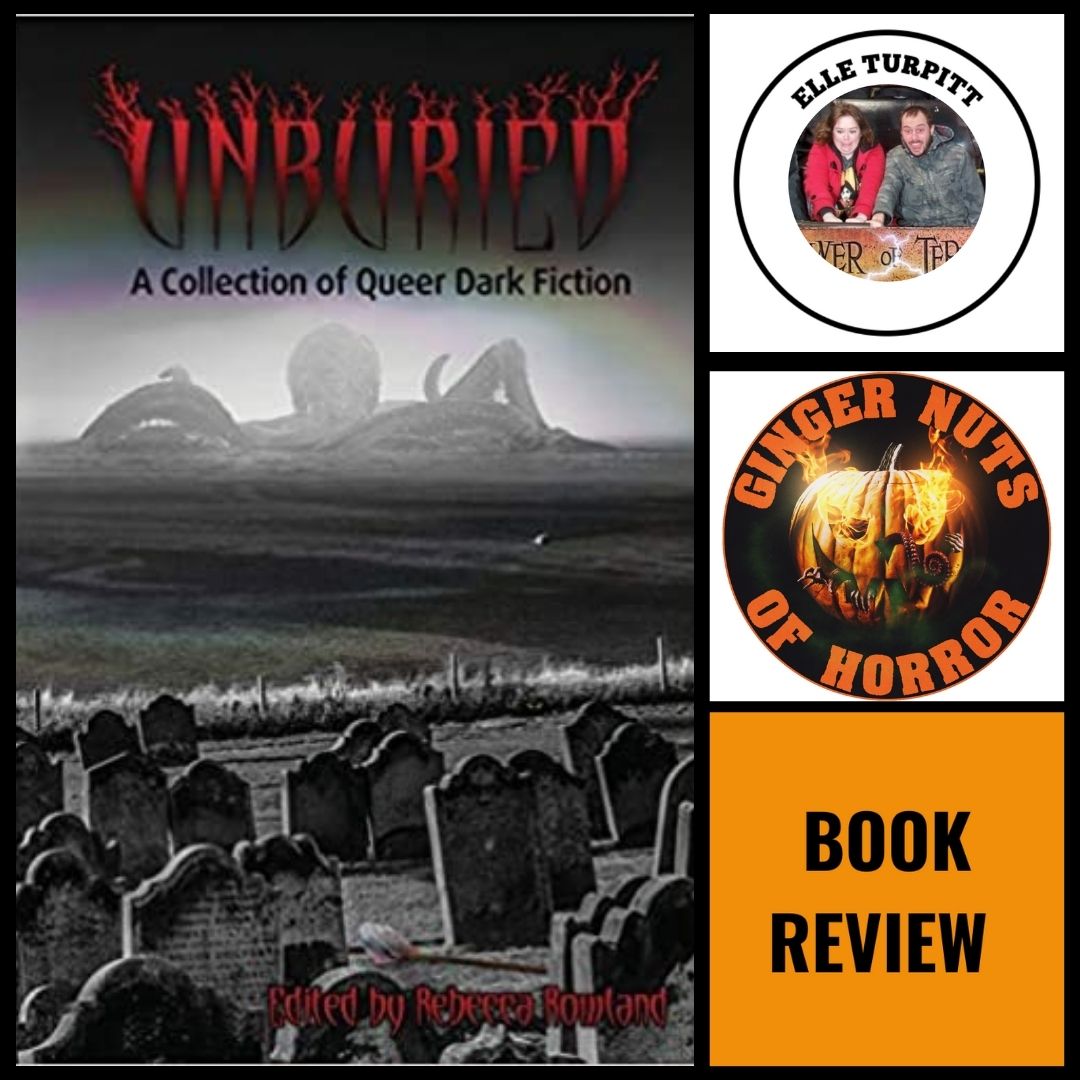
UNBURIED: A COLLECTION OF QUEER DARK FICTION , EDITED BY REBECCA ROWLAND (BOOK REVIEW)

9/8/2021
UNBURIED, EDITED BY REBECCA ROWLAND (BOOK REVIEW)
I absolutely fell in love with the two women. It’s a fantastic, wonderfully written tale of Hollywood Horror
Unburied is an anthology of horror and dark fiction, focused on LGBT+ writers and characters. It’s a fantastic idea, so let me start by saying, we need more anthologies like this, please! And another one is always good news.

There are a few really good, excellent stories here, but unfortunately there’s also some which really let the anthology down. It felt at times that some of the stories didn’t fit in well together, the lengths were almost too different and maybe the placement of the stories could have done with more consideration. Because of the variety, I’m going to touch on each story. There are 16 in total, and whereas the variety in quality is frustrating, the actual variety with things like setting and characters was a strength.

Sweet Dreams – The first short story of the book is about a married couple. Their son believes a monster is lurking under his bed, and one of his dads goes to check it out. It started off interesting, but I feel like I’ve read this story before, and it is, overall, a bit too predictable.

Night Follows Night -  This was excellent, and a really good punch to the gut. A man walks through a supermarket, but as a former cult member, he is constantly looking over his shoulder. Excellent build up of tension, and overall executed really well.

Flawed – This was interesting, and fun to peel back the various layers. It’s engaging. A man spots an interesting mirror in a strange shop, and soon realises it has the ability to show somewhere completely different.

When the Dust Settles – Not too bad, and the author sets up the general atmosphere really well. A good enough story. Miners and missing limbs, and a strange cooperation who owns everything.

I Can’t Wait to Become a Man – A story of addiction, and the struggles that come with it, this dipped into some interesting territory in places but ultimately felt like it dragged on too long.

Open Up and Let Me In – Completely drew me in. The small hints spread throughout, the uncertain nature, the tension – this was an absolute ride, and one of the strongest in the anthology.

The Red Candle – Something about this put me off, and to me it was one of the weakest in the anthology. It kind of created an almost disorientating effect, compared to the one before and the one after.

Razor, Knife! – An unsettling tale about two kids who meet a third. One kid crushes on the older boy, while the other wants him gone from their lives. The interactions, the relationship, the descriptions all add up to a wonderfully creepy story with an ending that absolutely nails it.

The Procedure – This really stuck out to me as being misplaced in the anthology. But I’m sure this one will still have its fans. Maybe it’s just me, but I’m already tired of seeing ‘Covid-XX’ stories, and this one feels like the author hasn’t actually learned much about Covid over the last year. This one could have been really interesting if a completely fictional disease had been created, rather than tying it in so closely to the real world, the inaccuracies and misinformation mean the whole thing reaches beyond suspension of disbelief.

Moi Aussi – Another favourite. Two Hollywood wannabe starlets find themselves tied to a house where famous men gather. The women enact their revenge, and it’s portrayed so beautifully, I absolutely fell in love with the two women. It’s a fantastic, wonderfully written tale of Hollywood Horror, and if this had come my way when we did the competition last year, it would have placed very highly.

The Other Boy – Creepy and atmospheric, a coming of age tale, a story about coming to terms with sexuality in a house where being a male means loving beer and football.

Cut Off Your Nose to Spite Your Race – To be totally upfront, the author of this story has become a dear friend of mind, since she first hired me to edit her short stories. And I’ve edited many of them since, including this one. I do love it, of course, but I won’t say too much – you’ll just have to read it and see for yourself how good it is.

For the Gods – This was a really good story, but did not feel like it fit in with the rest of the anthology. There are moments where this one really drags, and compared to the other stories it’s overly long. Again, the story is good – a young man struggles with his identity, and there’s a lot to unpack in here, but it felt like it could have been stronger elsewhere, or else cut down somewhat to make it tighter.

Some Kind of Monster – I really liked this one – a beautiful stranger’s kindness hides something darker. A story of seduction, told really well.

1,000 Tiny Cuts – Another excellent tale. This is probably the one most grounded in reality throughout the whole anthology, and it hits deep, showing how the ‘small’ things soon add up, and reflecting the abusive cycle.

Blessed -  A different choice could have been made for the final story, but “Blessed” is still an intriguing choice. It’s a bit weird, trippy, and almost mesmerising. Not really totally my thing, but it’ll hit that sweet spot for some, definitely.

I would still strongly recommend this anthology. Although some of these stories felt a bit stale, they’re in the minority, and even with these it’s clear in these shorts all the writers have talent. Some are, yes, stronger than others, with a few really standing out, but the rest aren’t bad as such – more middling. I think this is really one of those anthologies that has something for everyone, and it’s a good variety.

Grade: C

​

Unburied: A Collection of Queer Dark Fiction 

Picture
In a bloody twist on the antiquated trope of "burying the gays," the newest anthology from Dark Ink Books boasts brand new short stories spotlighting LGBTQ+ characters. Presenting the darkest of themes as explored by sixteen established and award-winning genre fiction scribes from around the globe, Unburied contains creature features and paranormal hauntings, shadow fables and dreadful delusions. This twisted box of curiosities serves the readers a cornucopia of chilling horror, sci-fi terror, and dark fantasy. Prepare to unearth your deepest nightmares.

Elle Turpitt

Picture
Elle Turpitt is a writer and editor from South Wales, UK. Her short stories have appeared in various anthologies and online, and details about these along with her book blog can be found at elleturpitt.com. She is Content Editor for Dead Head Reviews, and offers Fiction Editing for writers via elleturpittediting.com. When not reading, writing, editing or playing video games, she can usually be found on Twitter, @elleturpitt


TODAY ON THE GINGER NUTS OF HORROR WEBSITE

[FEATURE] DOCTOR TERRIBLE’S HOUSE OF HORRIBLE:  A RETROSPECTIVE BY DAVID COURT

Picture

the heart and soul of horror fiction reviews

Previous
Forward
    Picture
    Picture

    RSS Feed

    Archives

    May 2023
    April 2023
    March 2023
    February 2023
    January 2023
    December 2022
    November 2022
    October 2022
    September 2022
    August 2022
    July 2022
    June 2022
    May 2022
    April 2022
    March 2022
    February 2022
    January 2022
    December 2021
    November 2021
    October 2021
    September 2021
    August 2021
    July 2021
    June 2021
    May 2021
    April 2021
    March 2021
    February 2021
    January 2021
    December 2020
    November 2020
    October 2020
    September 2020
    August 2020
    July 2020
    June 2020
    May 2020
    April 2020
    March 2020
    February 2020
    January 2020
    December 2019
    November 2019
    October 2019
    September 2019
    August 2019
    July 2019
    June 2019
    May 2019
    April 2019
    March 2019
    February 2019
    January 2019
    December 2018
    November 2018
    October 2018
    September 2018
    August 2018
    July 2018
    June 2018
    May 2018
    April 2018
    March 2018
    February 2018
    January 2018
    December 2017
    November 2017
    October 2017
    September 2017
    August 2017
    July 2017
    June 2017
    May 2017
    April 2017
    March 2017
    February 2017
    January 2017
    December 2016
    November 2016
    October 2016
    September 2016
    August 2016
    July 2016
    June 2016
    May 2016
    April 2016
    March 2016
    February 2016
    January 2016
    December 2015
    November 2015
    October 2015
    September 2015
    August 2015
    July 2015
    June 2015
    May 2015
    April 2015
    March 2015
    February 2015
    January 2015
    December 2014
    November 2014
    October 2014
    September 2014
    August 2014
    July 2014
    June 2014
    May 2014
    April 2014
    March 2014
    February 2014
    January 2014
    December 2013
    November 2013
    October 2013
    September 2013
    August 2013
    July 2013
    June 2013
    May 2013
    April 2013
    March 2013
    February 2013
    December 2012

https://l.facebook.com/l.php?u=https%3A%2F%2Fmybook.to%2Fdarkandlonelywater%3Ffbclid%3DIwAR1f9y1sr9kcIJyMhYqcFxqB6Cli4rZgfK51zja2Jaj6t62LFlKq-KzWKM8&h=AT0xU_MRoj0eOPAHuX5qasqYqb7vOj4TCfqarfJ7LCaFMS2AhU5E4FVfbtBAIg_dd5L96daFa00eim8KbVHfZe9KXoh-Y7wUeoWNYAEyzzSQ7gY32KxxcOkQdfU2xtPirmNbE33ocPAvPSJJcKcTrQ7j-hg
Picture