|
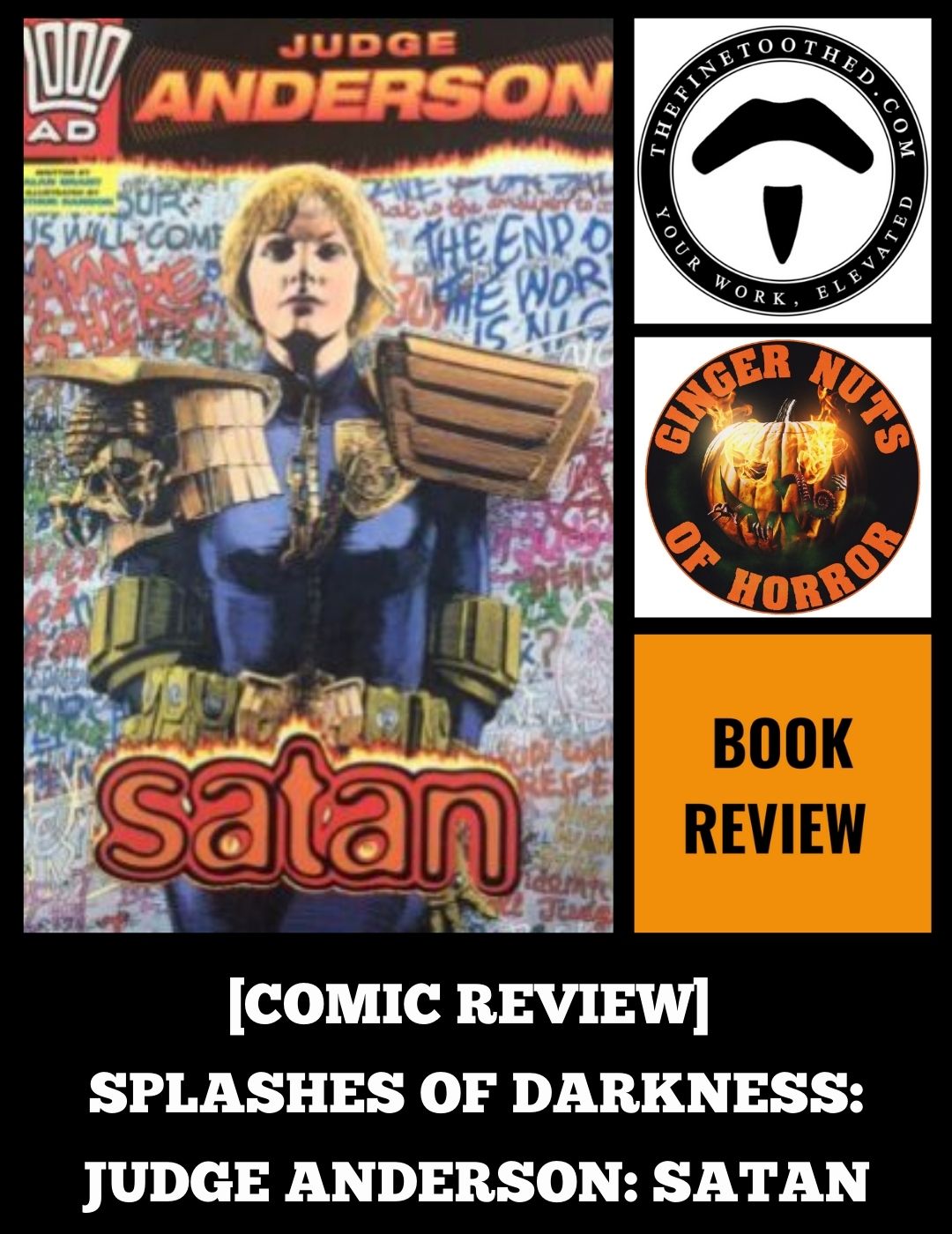
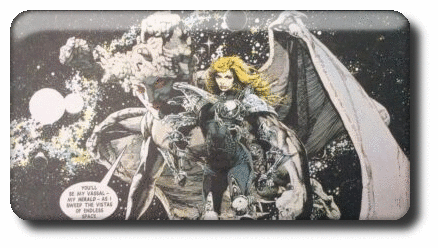
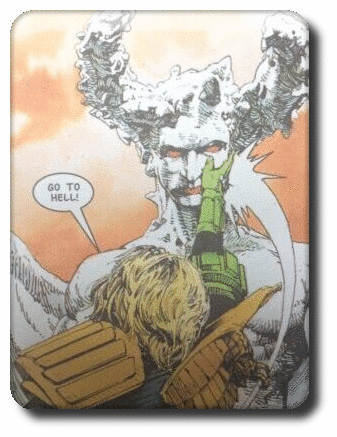
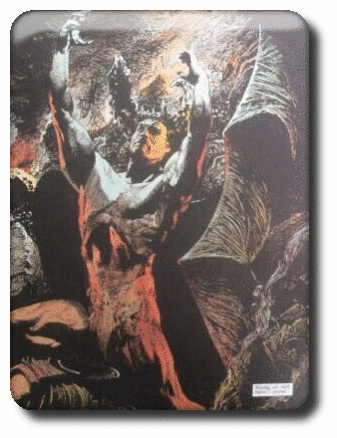
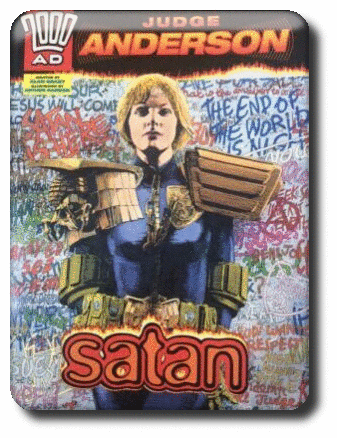
Comic-books are a medium, not a genre; they can tell any story and suit any palate. You want horror? I've got bottles of the stuff. Welcome to 'Splashes of Darkness.' SPLASHES OF DARKNESS: Judge Anderson: Satan (COMIC REVIEW BY DION WINTON-POLAK) Judge Anderson’s a long, cool, meditative drink, cwtched up in a shady spot on the hottest, most wretched day of the year. The city may be stinking, noisy, fractious and intense, but there’s refuge to be had here. Satan is a surprising but well-balanced addition to the mix. Dangerous, tantalising, intoxicating. He’s the stranger who catches your eye at the bar, the off-hand comment that snags your interest and – were it not for watchful friends – the nightmare you’d be praying to wake from. The Hamlyn edition of Satan that I own pairs the main story with an earlier short called The Jesus Syndrome. It’s a slender tale with a lot of heft, in which the Chief Judge outlaws Christianity – a minority religion in this world of the future. The writer (Alan Grant) uses this as a lens through which to examine the morality of the Judges system, pitting Anderson against the thuggish Judge Goon, bringing her inner conflicts to a head, and sending her off on her own path. Satan, set several years later, brings Anderson back to Megacity One to be assessed for fitness by Judge Dredd. During this time, an asteroid crashes to Earth, unleashing the long-imprisoned Lucifer. Only one woman has the skills, insight and experience to confront the devil. Of all the characters I’ve come across in 2000AD, Cassandra Anderson undergoes the biggest internal journey. She is the pure soul trying to stay sane, moral and whole in a dystopian state run by fascists, trying to change the system from within. Anderson sunk her nails in deep when I was at an impressionable *age, for all the wrong reasons. Halo Jones was mine, but Judge Anderson belonged to my brother so, naturally, I grew jealous. Where Halo was an ingénue, trying to find her place in her world, Judge Anderson came fully-formed. She was a psychic cop, dealing with supernatural threats – tough as nails when she had to be, but sensitive and kind when it mattered. And in the brutal world of 2000AD, it mattered a lot. Back then, I wanted her (ahem… her book) more than anything else in the world. Satan came along **much later. In terms of narrative and sheer artistry, it displayed a maturity that far outstripped its contemporaries at DC and Marvel, and gave me a whole new appreciation of what the medium could do. I’m not religious now, nor was I then, but the questions raised in this book surpassed theology to plumb the depths of humanity. It’s a thoughtful read, carefully paced to give the reader time to ponder the imponderables. They get to the heart of what it means to be righteous and flawed, what it means to make a choice and take responsibility for your actions. Any hormone-driven fantasies I’d previously entertained were cast aside through raw appreciation of the heart and soul Grant gave this extraordinary character and the philosophical narrative he wove around her. Arthur Ranson’s artwork plays a huge part of that too, bringing subtlety of expression, cultural diversity, and a full emotional range to the inhabitants of Megacity One. The story may be relatively low on action but it remains an apocalyptic event – both literally and figuratively. As such, he draws it big, wielding his fine-liners fearlessly to create some truly epic and astonishing imagery, crammed with sumptuous detail. I have never been more taken in by the sketched sense of ‘multitudes’ – whether in the revivalist crowds of John Baptiste, the rotting bodies littering Lucifer’s history, or the extraordinary page of reaction portraits Ranson uses as Icarus comes crashing to Earth. This style, melded with Grant’s deeply introspective script, creates a deeply familiar world – for all its SF trappings – full of downtrodden masses and callous bullies, fear and love, honour and hypocrisy, etched on the faces of those around us. Satan himself must have been quite the challenge to both Grant and Ranson. Encapsulating the ultimate religious evil as a credible being, a vast supernatural threat, and yet still something that can be ultimately defeated (spoilers be damned) is a tough act to pull off. I mean, if nukes don’t cut it, does Cass really stand a snowball’s chance? I was blown away by it. This is Milton’s Satan in many ways – beautiful, charming, innocent and defiant – but taken to the far edge of his existence and beginning to crack. The character design is deliberately statuesque, marble made flesh, standing 120 feet tall; overwhelming in every way. It shouldn’t work, conceptually or narratively, and yet for me, the creators nail it, thematically, spiritually, and emotionally. The dénouement did feel a little precipitous first time round – having had all that build-up – and we get precious little sense of the effect Satan has on Anderson, the Judges, or the world at large. (In the timeframe of this story, at least.) However, subsequent readings have given me more appreciation of the inner tale, told from Satan’s perspective: his rambling reminiscences, all his insecurities and uncertainties layered in from the start. It’s good stuff: unexpected and powerful. I don’t know if mankind’s origins and destiny are delved into any ***further by the team at 2000AD or whether this is something of an aberration in their universe, but I’d certainly be interested to find out. Like many of these long-running series, there are various jumping-on points which crop up for newbies and, checking the online stores, I see there are currently 5 chunky collected editions of Anderson stories available, both digitally and in paperback. Hmmm. I might…just…add some to my basket and… oops. Written by Alan Grant Illustrated by Arthur Ranson Lettered by Annie Parkhouse/Steve Potter Published by 2000AD Available now! Reading experience: 4.5/5 Reviewer: Dion Winton-Polak * I was 9, maybe 10 years old. One Christmas my foster-brother’s dad dropped by with some presents for us. Judge Anderson Bk2 for Patrick, and The Ballad of Halo Jones Bk2 for me. Neither one of us had been comic readers up to that point, but they blew our tiny minds. ** Christ, I was in university when it was published! *** I’m talking rot. Just remembered that an earlier Anderson story is referenced in Satan where we learn about an alien race that created humanity. Lucifer talks as though there is a God though, so who knows how they untangle it all. Or if… TODAY ON THE GINGER NUTS OF HORROR WEBSITE[BOOK REVIEW] |
This is the beat up, dog-eared paperback that you’re going to want constantly tucked into your back pocket so you can quickly find your place again. It’s the book with faded grease stains from the slices of pizza you’ve been clutching while you read because you can’t be suffered to put the thing down long enough to eat. |
One of the more vivid cinematic memories I still hold on to from my younger years was seeing the Blair Witch Project when it came out. The Internet was a pale shadow of what it is now, really only accessible to those who knew what they were doing and as a result the film took on a special kind of aura to it. The history channel even aired a fake documentary all about the town and the “legend” of the Blair Witch.
The movie wasn’t real. We all knew that. It was just a gimmicky film designed to give a false air of reality.
Still. Were you sure it wasn’t real?
I mean, really sure?
I know when I pedaled my bike past the cemetery that night after seeing it, I don’t think I was sure it wasn’t real.
Chasing the Boogeyman isn’t a story about witches or the supernatural but I feel like the comparison on this point holds solid. Is it true or isn’t it? It got to the point while reading when I honestly wanted to ask someone but I didn’t want to look like an idiot. Chizmar seamlessly creates a book that feels like a hard-hitting expose on a series of local tragedies. And I feel like I know enough about Richard Chizmar that I realize the events of this book didn’t happen, right?
I mean...right?
Obviously the goal of any writer is to find people who are willing to read your work. But the extension of that dream is to be able to craft a book that sticks to the inside of their brain like a mental adhesive. In this case? Saying “mission accomplished” doesn’t even cover it. Chasing The Boogeyman is a book that achieves exactly what you would get from a great Netflix docu-series that you binge and walk away from feeling an uncertain dread at every dark corner you look into. It evokes such a spectacular atmosphere of creepy tension that you can’t turn away.
In this story, Richard Chizmar plays himself, a young writer who has returned to his home town of Edgewood, Maryland and arrived in the midst of a series of killings. As a lifelong fan of the macabre, it stands to reason that Chizmar would be fascinated by these events and would find himself close to the heart of the investigation.
This works for me on several different levels. First, without going overboard with a bunch of graphic violence or detail, Chizmar none-the-less is able to craft a story that is disturbing and unsettling. And the feelings are only highlighted by the expertly done supplemental materials throughout the text in the form of black and white photographs of the victims and locales. The frantic fears of this community comes through clearly and the despair of the families is a resounding chorus as you weave through the text of a violent Maryland summer.
But on a more basic level, and beyond just this book, Chizmar’s style in general is one that I find incredibly easy to engage with. He and I aren’t quite the same age but I feel pretty comfortable with his generational perspective and I find myself reading over his work and discovering experiences similar to my own past. The nostalgia of his prose makes the book incredibly accessible and gives the entire thing the vibe of spending an afternoon with an old friend. It might seem out of place in the context of such tragedy to say that the story still manages to find some warm fuzzies but that’s kind of what I’m saying.
Lots of authors go into their projects determined to be the ground breaking first steps out onto a narrative landscape that no one has ever seen before. We all want to be the first moon landing. We want to be fresh and original but some writers try so hard to achieve this that their work just ends up feeling contrived and gimmicky. A true magician is able to pull off their gaff without you even being aware that you’re being put on. Chizmar is such a talent at this that he makes the book feel like the work of a veteran of the genre, without even making it feel like he’s manufacturing a point of view.
The greatest praise I can pile onto the book is this, I have never really read much of what would be considered the true crime genre. Sadly, most of my personal experience would probably be contained within various marathon sessions of Unsolved Mysteries and the legendary Robert Stack. Still, this book makes me want to read more True Crime. And if a book presenting an illusion of a genre makes me want to actually delve more into that genre, I would say you can safely categorize this project as a success.
One last aspect I wanted to touch on is a little more tricky because it’s pretty much impossible to do so without ruining the experience for the reader. Chizmar has already been intertwined somewhat with Stephen King, either from the imprint he started, Cemetery Dance, or from the book he has co-written with King, Gwendy’s Button Box. Chizmar has even had the rare privilege of being granted the keys to the King universe with his followup to Gwendy in which he was able to take full authorial control.
With Chasing the Boogeyman, Chizmar drops in quite a few King related Easter eggs and references that I found pretty entertaining and perfectly placed within the context of the story. It buffs out the corners of the plot and gives the story just the right tones of supernatural possibility.
This is not the first book of Richard Chizmar that I have read but I feel like this has easily surpassed all that came before. I was really impressed with the level of craft that was brought to this book. If you’re looking for a great distraction while in the backseat of a long road trip or stuck in an airport or if you just want something to steal the weekend away, stop looking.
You found it.
This is the beat up, dog-eared paperback that you’re going to want constantly tucked into your back pocket so you can quickly find your place again. It’s the book with faded grease stains from the slices of pizza you’ve been clutching while you read because you can’t be suffered to put the thing down long enough to eat. This is the musty book you find in a cardboard box of old sports trophies in the garage and immediately make you want to put your chores on hold in favor of another read.
I just finished the book this morning and I’m still thinking about it and yeah I really am pondering reading it again. Shall we return to Edgewood?
Do yourself a favor. Go and read.
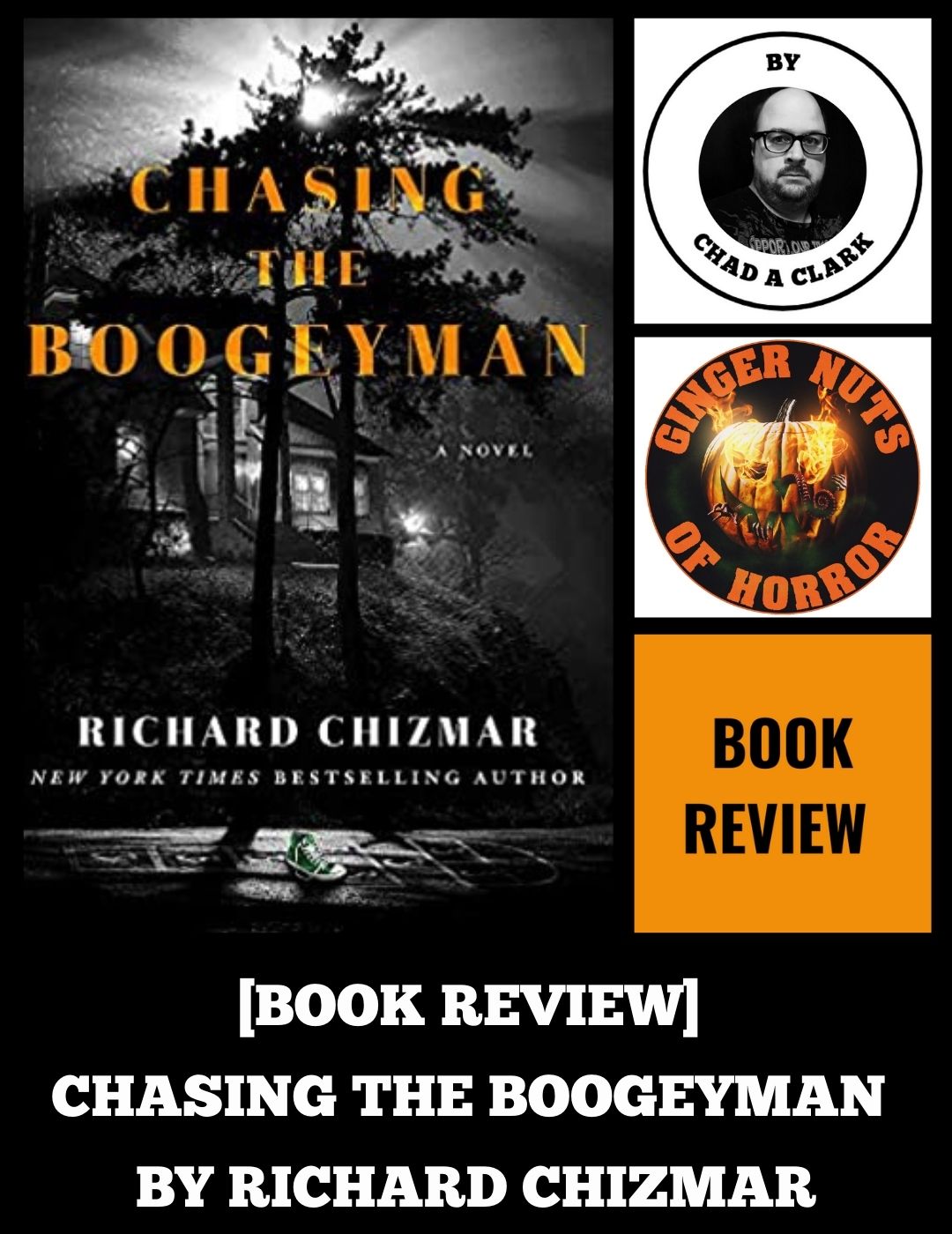
CHASING THE BOOGEYMAN By Richard Chizmar
In the summer of 1988, the mutilated bodies of several missing girls begin to turn up in a small Maryland town. The grisly evidence leads police to the terrifying assumption that a serial killer is on the loose in the quiet suburb. But soon a rumor begins to spread that the evil stalking local teens is not entirely human. Law enforcement, as well as members of the FBI are certain that the killer is a living, breathing madman-and he's playing games with them. For a once peaceful community trapped in the depths of paranoia and suspicion, it feels like a nightmare that will never end.
Recent college graduate Richard Chizmar returns to his hometown just as a curfew is enacted and a neighborhood watch is formed. In the midst of preparing for his wedding and embarking on a writing career, he soon finds himself thrust into the real-life horror story. Inspired by the terrifying events, Richard writes a personal account of the serial killer's reign of terror, unaware that these events will continue to haunt him for years to come.
A clever, terrifying, and heartrending work of metafiction, 'Chasing the Boogeyman does what true crime so often cannot: it offers both chills and a satisfying conclusion' (Stephen King). Chizmar's 'brilliant . . . absolutely fascinating, totally compelling, and immediately poignant' (C.J. Tudor, New York Times bestselling author) writing is on full display in this truly unique novel that will haunt you long after you turn the final page.
chad a clark
TODAY ON THE GINGER NUTS OF HORROR WEBSITE
[BOOK REVIEW]
BOYS IN THE VALLEY BY PHILIP FRACASSI
[COMIC REVIEW]
SPLASHES OF DARKNESS: JUDGE ANDERSON: SATAN
THE HEART AND SOUL OF HORROR FICTION REVIEW WEBSITES
It’s a murder-mystery more than a horror novel. The gore is beside the point. But the book is aimed squarely at the alt-lifestyle set of the horror audience and should connect there, or with people who are not extremely well-read in-genre and don’t get the tropism and inside joke level that is built-in to things like this. |

Ween later covered the track and made it considerably more sexually explicit, which is actually in keeping with the meaning of the song’s title to Jesse Jones, who used it to describe his feelings of desire.
The main characters of Jon O’Bergh’s novel appropriated the title for a horror podcast. One can’t copyright a title, but sometimes it’s not really appropriate to use one that is identified with a certain time or deed. Certain expectations get set up.
I get it, though. “Shockadelica” is more suitable for address to say, early Black Sabbath, Blue Cheer, Bloodrock’s DOA, stuff that was informed by psychedelic music but had deeper and darker intent.
Still, it’s offputting. It takes a while to assimilate the new meaning, if indeed one ever does.
The two podcasters run into some serious weirdness in the building they live in, and the result of their investigations into that weirdness are the events of the book.
It’s what I’d call a ‘summer read’. There’s not a tremendous depth to it, it is not weighed down by the author’s philosophy, it’s just a sequence of events, with some fun characters.
One of the main characters is the “Bone Man’, whose name is a re-spelling of Alice Cooper’s offstage name, and O’bergh recorded an album of songs ostensibly by this character, which is available at, say, Soundcloud if you’ve a mind to look it up.
They’re not terrible songs, and O’Bergh is an able musician. He’s also an able writer… though in truth it took me a while to cozy up to his terse sentences. The style is a little choppy – not clunky exactly but it took a few pages for me to assimilate.
The book is not especially original, but the characters are well-drawn, not caricatures. The tropes the author invokes have their own resonance and inform the narrative – with the rock-world backgrounding there’s an especial poignance to the images of goat-headed Satanists and the metal musician with serial-killer tattoos.
It’s a quick read. I read the ebook, which didn’t have page numbers, but I’d say it was somewhere around 50,000 words. The action moves along rather well, and the series of events isn’t out of line for the setup.
The protagonists are likable enough. I do confess that I expected Alan and Velma and Daphne to come in at some point, and Shaggy and Scooby. It didn’t turn out that way but the comparison is unavoidable for me.
I like Scooby Doo, Where Are You? So that wasn’t an issue, and overall I’d give the thing 3 ½ stars. There’s a lot to like. But I did find this to be very nu-horror in that it is slight and depends on in-vogue tropes and feels inspired by 80s fictions – the closest comp to the style would be two-headed Canadian novelist(s) Michael Slade. The apartment building is very Ira Levin with maybe a side of Seinfeld for comic relief and updating.
The actual horror isn’t super-horrible. It’s a murder-mystery more than a horror novel. The gore is beside the point. But the book is aimed squarely at the alt-lifestyle set of the horror audience and should connect there, or with people who are not extremely well-read in-genre and don’t get the tropism and inside joke level that is built-in to things like this.
It’s an accomplishment, I think, to take such banal elements and concoct a readable tale. That speaks well of the author’s ability, and I’ll look out for the next burnt offering.
The book is tasty and the impression overall is amiable. I just found the recipe a little underdone.
Shockadelica
by Jon O'BergH
Two horror podcasters—drag artist Kendall Akande and best friend Jenna Chen—share a passion for art, fashion, and horror. When they learn their Victorian-era apartment building might be haunted, they see an opportunity for an entertaining podcast episode. But as they investigate further with the help of their quirky neighbors, they uncover something far more sinister. Their quest brings them face to face with a house of curiosities, a witch, and an intimidating musician named the Bone Man with tattoos of serial killers on his arms. Then a stranger appears who promises protection if Kendall sacrifices something of value. While Kendall struggles to understand his recurring nightmare and the demands of the stranger, Jenna struggles to cope with her grandmother's dementia. As the ghosts of the past become entwined with the growing terror, Kendall and Jenna must use their creativity to confront the evil force that threatens them all.
An album of horror-themed songs by the Bone Man complements the novel and is available at most streaming sites and online retailers.
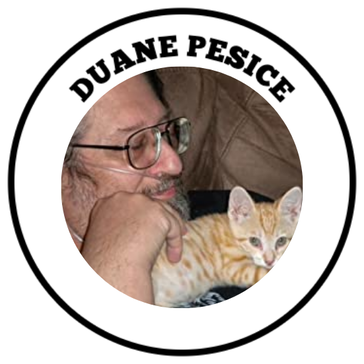
MEET Duane Pesice
My primary interest is speculative fiction, but that often leaks into weird/horror, and I dearly love the cosmic and mythopoetic, as long as they don't involve castles or dragons. I'm not so much for earthly/undead monsters -- vamps and wolves and zombies (I do like zombis though) and such, and I eschew most religious horror. The Lovecraftian bestiary is fun. Not so much his stories, which are iffy for me, but his critters, his mythopoeia, his universe. Initially they reminded me of Ditko's Dr Strange. That is in fact why I picked up the Ballantine pb edition of The Dream-Quest of Unknown Kadath at the library when it was first published. I was in second grade then.
My favorite horrors are either modern-day or pre-King, pre-Exorcist/Omen. I find splatter messy, though I like wild animal stories. I like original. I like jazzy. Think Tom Tryon, early GRRM, Barker, Barron. The late Joe Pulver was a particular favorite of mine.
You'll find I don't blow much smoke. I am a fair but honest reviewer.
Duane is the author of a small but vocal army of weird fictions, an editor and publisher of same, a cat-daddy, guitar-player, herbal enthusiast, disabled-American, and a journalist. He is currently the owner of the micro-press Oxygen Man Books (http://oxygenmanbooks.com) and formerly the editor of the Planet X Publications series of weird fiction anthologies.
He can be found on Facebook and Twitter and sometimes even replies to posts or messages. His things can be found at Amazon (https://www.amazon.com/Duane-Pesice/e/B00X707580)
THE HEART and soul of horror fiction review websites
Clint Smith
(Hippocampus Press, pb, 324pp, $20.00)
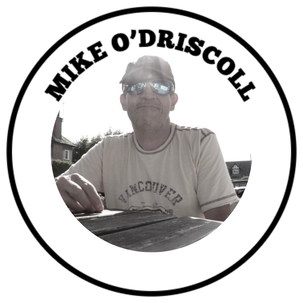
Review by Mike O’Driscoll
At the beginning of ‘Details that would be Otherwise Lost to Shadow’, the narrator, Tara Keltz, stands at an upper storey window watching as her husband gets out of his car with their daughter and a woman who seems like an awkward, jilted mockery of herself. The house from which Tara watches her family enter their own house, is itself a parody, one she calls the ‘Motley House’, describing it as schizophrenic, as though built by “four or five capable craftsmen”, each of whom had contributed their own “inimitable elements,” no matter how discordant it made the whole. From the day they moved into their own home seven months prior, Tara, an interior designer, is intrigued by the house across the street, and finally gets the chance to satisfy her curiosity when a ‘for sale’ sign appears in the front yard. It is in the course of this first visit—or perhaps ‘intrusion’ is the more correct word—that Tara catches that unsettling glimpse of her alternative self. The scene feels almost Lynchian in its depiction of a distorted reality, of a world turned inside out. It’s as though Tara has stumbled into Lynch’s mysterious red room, or perhaps the house’s designers were familiar with the peculiar geometries of Hill House. Afterwards, she realises she’s experienced a dislocation of both time and self. Nine years earlier, she had almost been killed after being hit by a car while out for her morning run. Is this apparition she encounters a version of herself, one where that ‘almost’ doesn’t apply? Subsequent trips to the second floor room seem to suggest that this grey, decaying zombie-like Tara, has become the repository of the physical pain the living Tara was left with after the accident, pain that she had, for professional and personal reasons, worked hard to suppress. What Tara witnesses from the window, and what is made clear in the disturbing climax, is that this broken, shadow creature is trying to usurp the life that Tara has. Smith’s rendering of this eerie confrontation is skilfully done, and the story’s understated coda feels right, leaving Tara as one of the few characters in the collection, to achieve some measure of reconciliation with the past.
Gwen, the central character of ‘The Undertow, and They that Dwell Within’, is coming to terms with the end of her marriage, and with trying to console her mother, Kathy, grieving the recent loss of her father. As a distraction, the two agree on a road trip from rural Tennessee to the Florida coast for a short beach vacation with Gwen’s two kids. Throughout the journey, Gwen reflects on the causes of the slow dissolution of her relationship with Sean, not caused by any infidelity—unlike her mother’s marriage—but rather the gradual abdication of responsibility, the realisation that long before their break-up, she was living the role of single parent. She also has to contend with her mother’s search for consolation, found in a hybrid of religion and self-help texts, and perhaps an over-idealisation of her recently dead father. The friction between the two is palpable, and is underscored by TV reports of mass shark attacks along the coast, reports that appear to both fascinate and scare Gwen’s kids. An explicit reference to the cross country road trip undertaken in Flannery O’Connor’s ‘A Good Man is Hard to Find’, adds to the sense of foreboding, of the family blundering toward some existential threat. Two further incidents ramp up the anxiety: an accident in their motel room involving her young daughter Abbi; and a dream Kathy relates to her about a vision she has of her father standing in a field surrounded by forest, dressed in his old rail-man’s uniform. Elements of the dream disturb her—old cornstalks snap beneath her feet as she runs toward him; his lips are withered and he has no teeth, his voice seems to go backward, as if “looping down his throat”; as he talks, seeming to warn her about shells, black hair dye runs down his face like blood. Despite the strangeness of the dream, Kathy consoles herself with the claim that he’s “safe in Heaven.” Later, alone, Gwen interprets the dream far more ominously, imagining her grandfather was speaking about Hell. The increasingly hysterical tone of the media reports about the shark attacks also begins to seep into her consciousness, causing her to envision herself being eaten alive—the “paramount horror.” By the time the family reach their rented beach house, even the idyllic scene—the “twilight tinge” of the sky, and the soft powdery sand—can’t quite dispel the feeling of unease. In a sense, it’s the dreadful power of Kathy’s dream, coupled with the more widespread sense of mass anxiety about sharks, that triggers the startling, nightmarish apparition that engulfs the family at the end. Again, Smith paints a vivid and surreal picture of horror manifesting out of the collision of sensationalism and petty human anxieties. It’s a bold and memorable story.
Another of the more successful stories is ‘Fiending Apophenia’, a cloying, almost suffocating tale, that, on the surface, is about two young men, small time cannabis peddlers, paying the consequences for failing to adhere to that most basic of drug business tenets, to not get high on your own supply, or indeed, to not short-change the boss. But the tale morphs into something much weirder as the particular variety of dope that protagonist Wes and his pal Todd smoke—christened Apophenia by their boss—leads Wes, perhaps in a state of heightened paranoia—to perceive a kind of inverted world existing in the shadows of our own. Smith uses a first person framing device that works as a literalisation of the phenomena of apophenia—prompted by news of the discovery of a mutilated body and the disturbing, resonant memory of the number 283, the narrative shifts from first to third person as Wes suffers a dissociation of both time and identity. There’s a sense then that the body of the story is Wes’s attempt to find connections, to see the pattern hidden in the bizarre and violent events of this one night in the past when he caught a revelatory glimpse of something both horrific and impossible, yet at the same time real—“that these things (that both he and Todd would become) were always there--here”. Though Wes escaped that purposeless life, going on to graduate and become a teacher, marry and have a kid, there’s one final reunion with his old drug pals that confirms what he has known all along, that the young man he has seen as a negation of himself, is in fact, inescapably, the real Wes. There’s something of Ligotti in this willing acceptance, this “heaving hunger in these bottomless apertures between who we were and who we will be.”
Both the longest story ‘Haunt Me Still’ and opener ‘Lisa’s Pieces’ are about men who return to their home towns—the former for a funeral, the latter for a high school reunion—in what turn out to be doomed attempts, if not to recapture people they had lost, then at least to understand the reasons for that loss. Despite being very different in tone—‘Haunt me Still’ is more reflective and searching, more grounded in reality, while ‘Lisa’s Pieces’ is more vengeful and more firmly located in the grand guignol tradition—both are concerned with guilt and the need to expiate for past mistakes. Though the latter story is indebted to Mary Shelley (and Universal’s Bride of Frankenstein), in its botched attempt to resurrect the title character, Smith loses control of the material and it descends into a luridly over-written and the over-the-top climax, whose impact is dissipated beneath an avalanche of alliterative images and compound modifiers. Colin, the villain of the story, doesn’t simply intuit something, he “cognitively catches” it; the reanimated Lisa is described as draped in a “tangle-swaddled sheet”, and as “a ghastly statue, a vein-rivered Venus from some lurid Louvre”; protagonist Lew “parry-ducked” when defending himself from Colin, and lands a punch that causes a “meaty-moist gasp”. ‘Haunt Me Still’ is less burdened by such over-writing, (though again the occasional sentence is “gilded with gravelly giggles”), and is far more effective for it.
Most of the remaining stories suffer from Smith’s tendency to over-elaborate a description, to stretch a metaphor too far, to use words like ‘pate’ or ‘repast’ in place of head and meal. He has a fondness for the word ‘appraise’ which he uses frequently when describing what a character sees, with no sense of assessment or judgement involved. Narratives become bogged down in the clutter of superfluous description, as in the opening of ‘Fingers Laced, as Though in Prayer’, where a stern school bus driver tells off one of her charges, “addressing the boy by way of the rearview reflection in the wide, overhead mirror, ” and a little later, when we’re told that the sunlight accentuates “the cornfields already withered appearance.” The story itself echoes works like T.E.D. Klien’s The Ceremonies, that explore links between nature, harvest, and sacrificial rites, while others deploy familiar tropes like werewolves (‘Animalhouse’), witches (‘By Goats be Guided’), pagan cults (‘The Pecking Order’) and the harvesting of body parts (‘The Rive’). Sometimes, as though unsure of his characters’ motivations, he feels the need to give us details that have little consequence in the story. In ‘The Pecking Order’, we’re told Meg wears her purse strap across her chest as “a habit of mugger deterrence she and many of her female classmates had adopted in college in a self-defense class near her dorm.” I get it, Meg is cautious, but do I need to be told about her classmates, or about the proximity of the self-defense class to her dorm?
This is a shame, because such laboured and turgid prose distracts from the inventiveness of Smith’s storytelling. For example, ‘The Fall of Tomlinson Hall: or, The Ballad of the Butcher’s Cart’, is one of the rare stories here that is perhaps underwritten, and is all the better for it. The story nods overtly to Robert Louis Stevenson, as it follows the quest of two cooks to gain ‘leverage’ on their employers at a well-to-do gentleman’s club. The story reworks themes around bodysnatching and cannibalism to offer a glimpse of the not so subtle mechanisms through which social and political elites exploit the underclass. There’s no doubt that, perhaps with the help of a more judicious editor, Smith has the potential to become a very good writer. He has a wild imagination, and the ability to conjure up vividly original metaphors, as when describing a character’s sense of guilt “that worked like an unexpected bruise, one you catch in the mirror—surprised to see it, but unsure of how it had set in so deeply”. At his best, his stories show us ordinary people trying and, more often than not, failing, to make sense of a fucked-up world. No matter how grotesque or unreal the situations in which they find themselves, nor how egregious their mistakes, these are men and women we can empathise with. Suffice to say, Smith himself is not yet the finished article, but a work in progress.
Mike O’Driscoll
The Skeleton Melodies
by Clint Smith (Author), Adam Golaski (Introduction)
Other stories treat of domestic strife leading to supernatural or psychological horror, such as “Animalhouse” or “The Undertow, and They That Dwell Therein.” The volume culminates in the richly textured novella “Haunt Me Still,” one of the most subtle and powerful ghost stories in recent years.
Mike O’Driscoll
@MikeODriscoll6
https://www.facebook.com/mike.odriscoll.52/
TODAY ON THE GINGER NUTS OF HORROR WEBSITE
[BOOK REVIEW] FAR FROM THE LIGHT OF HEAVEN BY TADE THOMPSON
[FILM REVIEW] THE COVE/ESCAPE TO THE COVE (2021)WRITTEN AND DIRECTED BY ROBERT ENRIQUEZ
the heart and soul of horror fiction reviews
ASIN : B08M5BZN13
Publisher : Orbit (26 Oct. 2021)
A review by James Bennett
With deft prose and vivid imagery, FAR FROM THE LIGHT OF HEAVEN is a fast-paced and exciting read. Thompson assembles an interesting cast of characters in an immersive futuristic scenario. The friction between Shell and Finn, two similarly jaded professionals, contrasts well with the alien and beguiling Joké, while the mandroid Salvo provides a logical foil to proceedings. This unlikely team find themselves trapped aboard the crippled Ragtime with their life support running out, the tension ratcheted up by a malfunctioning AI, berserk killer robots, leaked experimental plants – and a rampaging wolf. As in the author’s ground-breaking ROSEWATER trilogy, the spiritual elements add colour and mystique to the hard-tech backdrop.
A host of influences are on display here from 2001 to Iain Banks (‘Excession’ came to mind) to Alien, yet Thompson weaves his own story, and with remarkable poignancy for such a speedy escapade. There’s insightful commentary about the price of colonialism and those who exploit humanity for their own ends, woven around the central murder of a character who’s hard to care about, but ultimately makes for a compelling point.
In fact, FAR FROM THE LIGHT OF HEAVEN plays out more as a thriller than a mystery. While the setup suggests a puzzle at the heart of the novel, the plot resolves without much complexity and the political elements surrounding the action provide the real intrigue. The moral subtext is both thought-provoking and timely.
The cracking pace, richly realised setting and sharp characters result in a smart, original and above all electrifying deep space adventure.
Strap in for the ride.
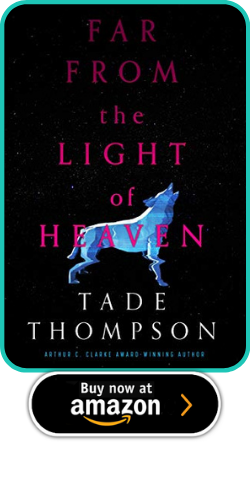
Far from the Light of Heaven
by Tade ThompsoN
Arthur C. Clarke Award winner Tade Thompson makes a triumphant return to science fiction with this unforgettable vision of humanity's future in the chilling emptiness of space.
The colony ship Ragtime docks in the Lagos system, having travelled light years from home to bring one thousand sleeping souls to safety among the stars.
Some of the sleepers, however, will never wake - and a profound and sinister mystery unfolds aboard the gigantic vessel. Its skeleton crew are forced to make decisions that will have repercussions for all of humanity's settlements - from the scheming politicians of Lagos station, to the colony planet of Bloodroot, to other far flung systems and indeed Earth itself.
'Readers looking for a smart sci-fi mystery should snap this up' Publishers Weekly
'First-rate space opera from one of the genre's most exciting voices' Gareth L. Powell
'Tade Thompson is a writer of enormous heart and talent. Just brilliant' Dave Hutchinson
James Bennett
James lives in Spain where he's currently at work on a new Fantasy novel.
Feel free to follow him on Twitter: @Benjurigan
Or join him on Facebook: fb.me/Benjurigan
TODAY ON THE GINGER NUTS OF HORROR WEBSITE
[BOOK REVIEW] THE SKELETON MELODIES BY CLINT SMITH
[FILM REVIEW] THE COVE/ESCAPE TO THE COVE (2021)WRITTEN AND DIRECTED BY ROBERT ENRIQUEZ
THE HEART AND SOUL OF FICTION REVIEWS
Archives
May 2023
April 2023
March 2023
February 2023
January 2023
December 2022
November 2022
October 2022
September 2022
August 2022
July 2022
June 2022
May 2022
April 2022
March 2022
February 2022
January 2022
December 2021
November 2021
October 2021
September 2021
August 2021
July 2021
June 2021
May 2021
April 2021
March 2021
February 2021
January 2021
December 2020
November 2020
October 2020
September 2020
August 2020
July 2020
June 2020
May 2020
April 2020
March 2020
February 2020
January 2020
December 2019
November 2019
October 2019
September 2019
August 2019
July 2019
June 2019
May 2019
April 2019
March 2019
February 2019
January 2019
December 2018
November 2018
October 2018
September 2018
August 2018
July 2018
June 2018
May 2018
April 2018
March 2018
February 2018
January 2018
December 2017
November 2017
October 2017
September 2017
August 2017
July 2017
June 2017
May 2017
April 2017
March 2017
February 2017
January 2017
December 2016
November 2016
October 2016
September 2016
August 2016
July 2016
June 2016
May 2016
April 2016
March 2016
February 2016
January 2016
December 2015
November 2015
October 2015
September 2015
August 2015
July 2015
June 2015
May 2015
April 2015
March 2015
February 2015
January 2015
December 2014
November 2014
October 2014
September 2014
August 2014
July 2014
June 2014
May 2014
April 2014
March 2014
February 2014
January 2014
December 2013
November 2013
October 2013
September 2013
August 2013
July 2013
June 2013
May 2013
April 2013
March 2013
February 2013
December 2012


RSS Feed