• HOME
  • CONTACT / FEATURE
  • FEATURES
  • FICTION REVIEWS
  • FILM REVIEWS
  • INTERVIEWS
  • YOUNG BLOOD
  • MY LIFE IN HORROR
  • FILM GUTTER
  • ARCHIVES
    • SPLASHES OF DARKNESS
    • THE MASTERS OF HORROR
    • THE DEVL'S MUSIC
    • HORROR BOOK REVIEWS
    • Challenge Kayleigh
    • ALICE IN SUMMERLAND
    • 13 FOR HALLOWEEN
    • FILMS THAT MATTER
    • BOOKS THAT MATTER
    • THE SCARLET GOSPELS
GINGER NUTS OF HORROR
  • HOME
  • CONTACT / FEATURE
  • FEATURES
  • FICTION REVIEWS
  • FILM REVIEWS
  • INTERVIEWS
  • YOUNG BLOOD
  • MY LIFE IN HORROR
  • FILM GUTTER
  • ARCHIVES
    • SPLASHES OF DARKNESS
    • THE MASTERS OF HORROR
    • THE DEVL'S MUSIC
    • HORROR BOOK REVIEWS
    • Challenge Kayleigh
    • ALICE IN SUMMERLAND
    • 13 FOR HALLOWEEN
    • FILMS THAT MATTER
    • BOOKS THAT MATTER
    • THE SCARLET GOSPELS
GINGER NUTS OF HORROR
horror review website ginger nuts of horror website
Picture

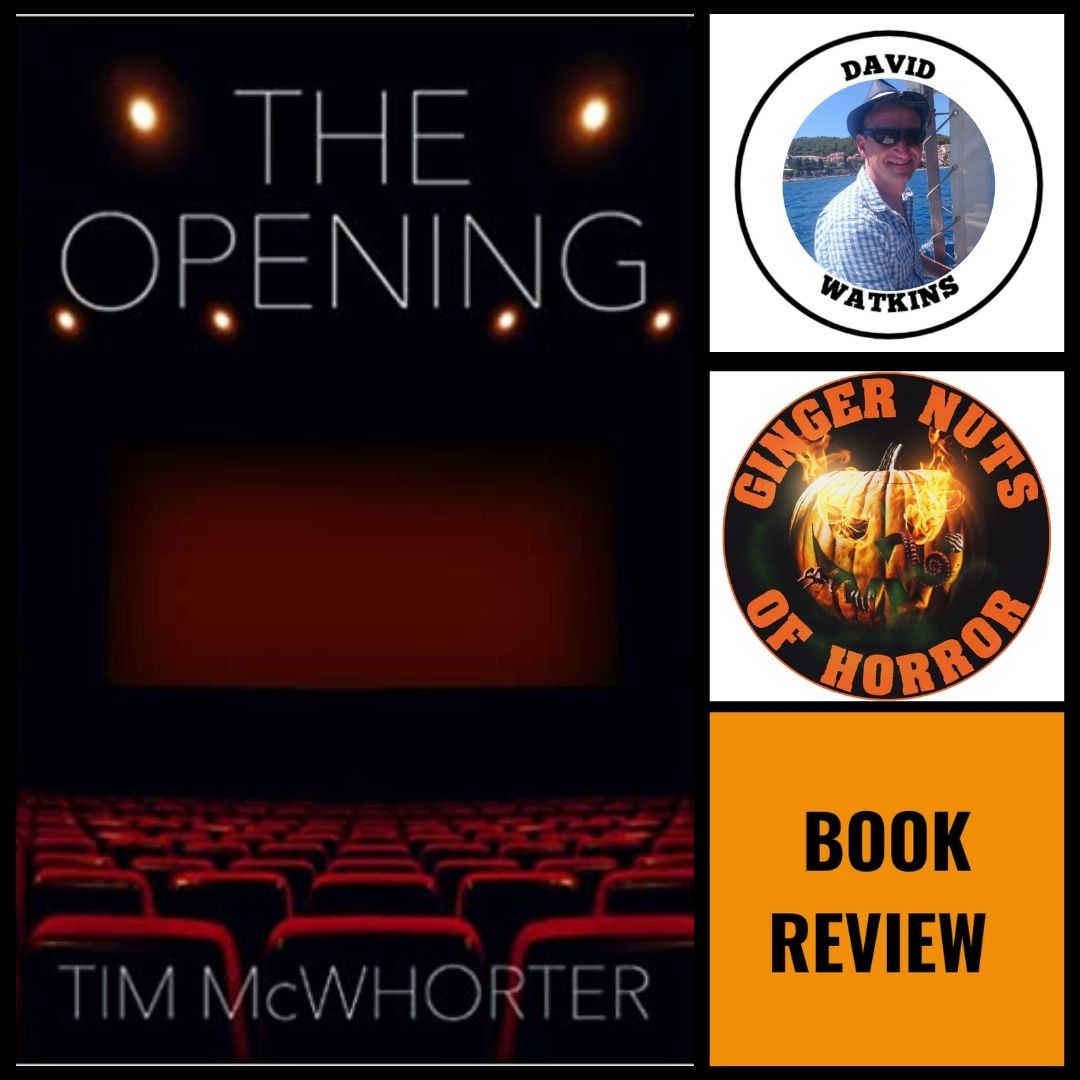
[BOOK REVIEW] THE OPENING BY TIM MCWHORTER

18/9/2021
The Opening Paperback – 25 May 2021 by Tim McWhorter  (Author)
Nick Fallon knows failure all too well. His string of collapsed business ventures make for a resume from hell. This next one, however, will be different. The Chamberlain Theater (sic) itself is different.


​

Nick has bought himself a theatre and renovated it into a state of the art 4-D experience, but there’s something wrong with The Chamberlain. That’s the (very) basic premise for this entertaining ghost story. Things predictably don’t go according to plan for Nick and he ends up having to hire a team of paranormal investigators.

The opening section of this book is the strongest . We have a suicide followed by carnage in quick succession, and this gets the book off to a great start which had me hooked. Unfortunately, it couldn’t keep this up, and quickly changed into more of a mystery than a horror. This is not a problem, if that’s what you’re expecting, but the opening few chapters made me think I was going to read a terrifying, full-on horror story.

One of the problems I had as the story developed was the introduction of the German paranormal team FAUST. Claudia was a bit of a cliché, in my opinion, as she was this beautiful, intensely sexual, gothic psychic. There are only three male characters in the book, and they all objectified her in some way, including her husband. I struggled a lot with this – she felt more like a fantasy than a real character.

The later pages of the book also have some pace sucking sections where the characters sit around and talk a lot or sit in their hotel rooms getting dressed. These scenes were too long for what they offered to the plot, and whilst I accept there is a bit of place holding and scene setting inherent in these sections, I felt they could have been trimmed so we get back to the entertaining main plot more quickly. A drawback of these scenes is that I started to notice typos, and in one paragraph, a complete change of tense.

For these reasons, I find The Opening a tough book to recommend. There is much to like, and a lot of people will enjoy it if they go along for the ride. I found it a good read, overall, but slightly frustrating. It could’ve, should’ve been better.


The Opening Paperback 
by Tim McWhorter  

Picture
Nick Fallon knows failure all too well. His string of collapsed business ventures make for a resume from hell. This next one, however, will be different. The Chamberlain Theater itself is different.


Yet, even before renovation can begin, tragedy strikes, hanging a dark cloud over the old theater. Nick must rely on an opening night gala to turn things around. But, when opening night goes horribly wrong, the good people of Angler Bay turn their backs on both Nick and the theater.


In a last-ditch effort to save himself from financial ruin, Nick calls in a team of paranormal investigators. Together, the husband and wife team, a local reporter, and Nick try to get to the bottom of the disturbing occurrences at the theater.


Are any of them prepared to uncover The Chamberlain's darkest secrets?

Picture
My bio 
David Watkins lives in Devon in the UK with his wife, two sons, dog, cat and two turtles. He is unsure of his place in the pecking order: probably somewhere between the cat and the turtles. 
​
He has currently released three novels, (The Original’s Return, The Original’s Retribution and The Devil’s Inn) and has a short story in the werewolf anthology Leaders of The Pack.  His most recent release is the short story Rhitta Gawr available as part of the Short Sharp Shocks! Series from Demain Publishing.


Website: www.david-watkins.com 
Twitter: @joshfishkins 
Amazon: author.to/DavidWatkins 


TODAY ON THE GINGER NUTS OF HORROR WEBSITE ​

Picture

the heart and soul of horror fiction reviews 

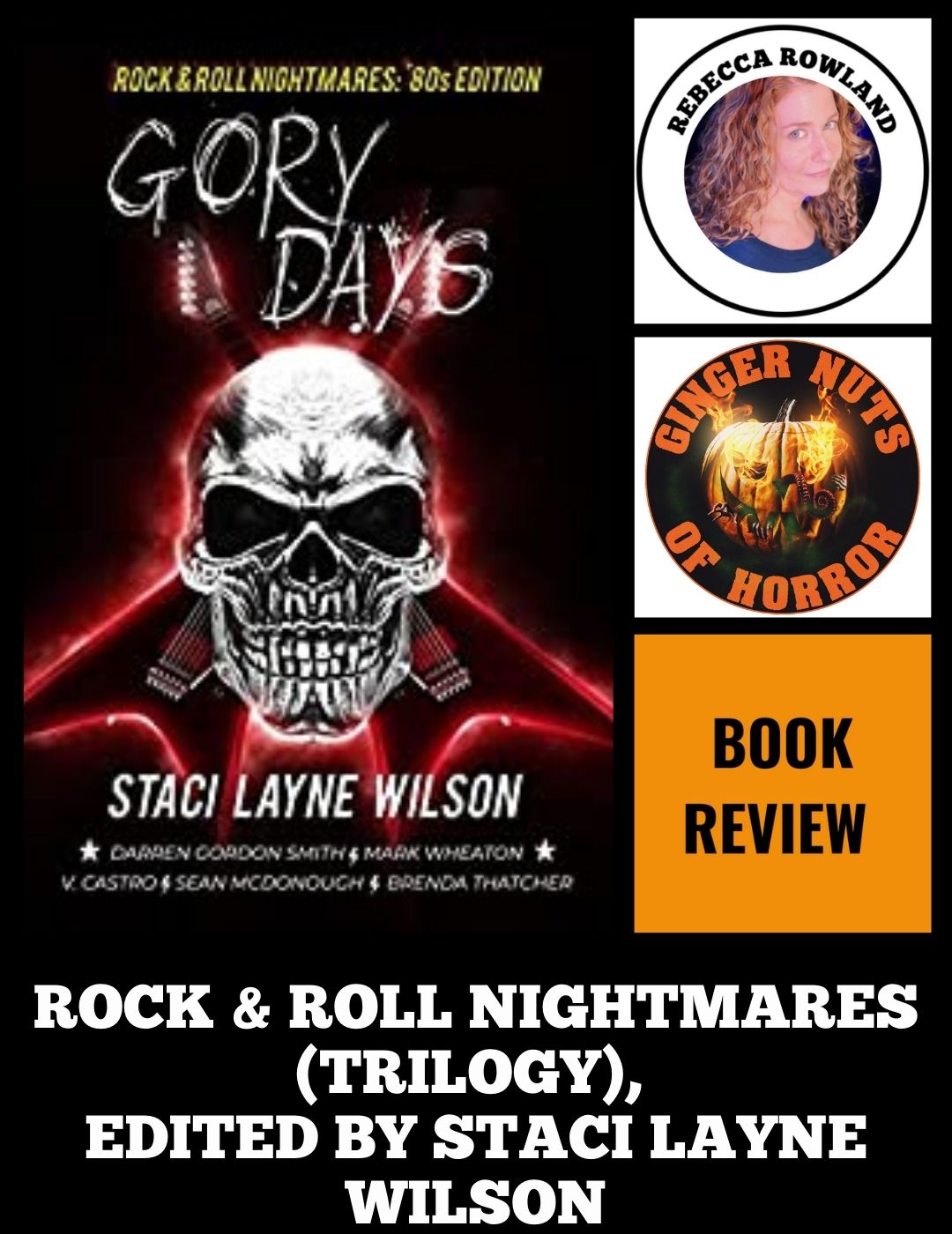
[BOOK REVIEW] ROCK & ROLL NIGHTMARES (TRILOGY), EDITED BY STACI LAYNE WILSON

17/9/2021
HORROR FICTION REVIEW  ROCK & ROLL NIGHTMARES (TRILOGY), EDITED BY STACI LAYNE WILSON.jpg
Whether you select one of the three volumes or invest in the whole trilogy, Rock & Roll Nightmares is certain to bring you on a rollicking ride of time-bending terror tales. Staci Layne Wilson is a savvy curator of selections that prove both smart and entertaining.
Book review by Rebecca Rowland
Rock & Roll Nightmares (trilogy)
edited by Staci Layne Wilson
Everyone can appreciate a good pun; it’s when a writer goes overboard and tries to stretch the wordplay too far, making the tongue-in-cheek feel forced, that ruins the wit factor. Despite a whopping thirty-one stories, Rock & Roll Nightmares, edited by Staci Layne Wilson, achieves the perfect balance of paronomasia in its arsenal of music-inspired horror tales titled after classic tunes from the 60s, 70s, and 80s. From “Papa’s Got a Brand-New Body Bag” to “Shivin’ on a Prayer,” each installment in the series nips at nostalgia while dishing out balanced plates of fear and dark humor. The techniques and subgenres are as varied as the musical stylings of the three decades, and a reader will be hard pressed to not find a bevy of stories inside to enjoy.

In Along Comes Scary, the 60s tome of the trio, Shane Bitterling’s “Daydream Bereaver” opens with a film crew discovering the disembodied head of a musician on the beach. They are shooting a Beach Blanket Bingo-esque flick, one in which Patty, a diehard fan of the starring band, has wriggled her way into nabbing a walk-on role. Events take a turn when a mysterious femme fatale emerges into the camera’s frame, giving “screen siren” a whole new meaning. In the same collection, Jeff Strand’s “Do You Believe in Tragic?” serves splatter with a well-earned laugh track in the rock ballad of Susie and her propensity for selecting lovers who die horrifically gruesome (and delightfully described) deaths.

In the 70s volume, Do You Fear Like We Do, the variety and quality continues, but the beehives and Beatles are replaced with disco balls and shock rock. In Dr. Oolong Seemingly’s “Love Dies Bleeding,” Amber is recruited from her Catholic school talent show to become the lead singer of an all-girl horror-show band set to open for Alice Cooper. When a bandmate shows up at her door with a Ouija board to help her write a few songs for the upcoming tour, inspiration comes from a nefarious source. In “Comfortably Dumb” by LeeAnne Rowe, Rebecca mans the merchandise stand outside of the local arena where traveling bands play. Instead of just t-shirts, however, the newest tour provides her with free, unusually-themed stickers to distribute to attendees, along with clear instructions to scratch and sniff the decals during the encore, and Rebecca’s curiosity is piqued.

Editor Wilson’s own ditties appear throughout the three volumes, but my favorite of her stories has to be “Don’t Stand So Close to Meat,” the leading entry in Gory Days. In it, a personal chef lusts after her employer, a guitar legend, and sets out to woo him using delicious dishes containing some very unique ingredients. “Don’t” is the perfect pairing of body and psychological horror seasoned with just enough progressive madness to horrify and enthrall, and it sets the tone perfectly for the 80s installment of the Rock & Roll Nightmares trilogy. Following Wilson’s story is—like the previous volumes—a bumper crop of stories I had difficulty putting down. In V. Castro’s stand-out “Pour Some Sacrificial Blood on Me,” Nima slaves each day in a dead-end hospitality job, barely making ends meet in the hope of hitting the big time with her music, but when hard rock’s It Boy checks into the hotel, Nima takes a chance and passes along her demo tape. Anyone who spent their youth enamored with 80s pop metal will take particular joy in this tale with its references to Def Leppard, Poison, Warrant, and most importantly, Lita Ford.
​
Whether you select one of the three volumes or invest in the whole trilogy, Rock & Roll Nightmares is certain to bring you on a rollicking ride of time-bending terror tales. Staci Layne Wilson is a savvy curator of selections that prove both smart and entertaining. The plays on words may draw you in, but it’s the creativity level on display that is certain to make you stay. As a character in one story so accurately professes, “The title has something to do with it for sure, and the lyrics are appropriately saucy, but it’s the guitar break that gets me going.” Rock on to that.


Rock & Roll Nightmares 
​
(3 books)

Picture
GORY DAYS

Break out the keytar, throw your horn-hands, and get ready to rock down to electric avenue! Gory Days is set in an alternate evil ’80s where androids take the stage, a washed-up rock star discovers the secret to time travel, and an aspiring musician puts her demo tape into the wrong hands. Stories include Don’t Stand So Close to Meat, Hip to Be Scared, and Dead Over Heels.

10 stories by Staci Layne Wilson, Mark Wheaton, Darren Gordon Smith, V. Castro, Sean McDonough, and Brenda Thatcher.

PRAISE FOR THE ROCK & ROLL NIGHTMARES SERIES
Short Stories set in the ’60s, ’70s, and ’80s

Rock & Roll Nightmares has all the sex, drugs, and broken dreams you can handle without going to rehab, plus musical fun facts interwoven throughout stories that are written by folks who know their music—and clearly love it. (Killer Queens Podcast)

Whether you’re a Metallica devotee or a Monkees disciple, you’re bound to be shocked by something in these books… but if you can’t laugh at the idea of pitting Phil Specter against Richard Ramirez in a fight to the death at the Cecil Hotel, then you’re not invited to the afterparty! (Classic Rock Memories)

Perfect for fans of Rock Stars Do the Dumbest Things and The Dirt—you will be laughing, grossed out, and scared to death all at once. (On Deck Book Review)

The anti-Summer of Love! The bands are still crazy after all these years, thanks to the twisted minds behind Rock & Roll Nightmares. Find out how the ‘27 Club’ really got started, discover why writing lyrics on a Ouija board is a bad idea, and if you think disco is dead you ain’t seen nothing yet. (Sucking in the ’70s Radio, Detroit, MI)


​TODAY ON THE GINGER NUTS OF HORROR WEBSITE ​

ROSEMARY’S BABY MEETS OCTAVIA E. BUTLER IN THE DARK AND DAZZLING DEBUT FLOWERS FOR THE SEA ZIN E. ROCKLYN

Picture

the heart and soul of horror fiction review websites

[BOOK REVIEW] THE QUEEN OF THE CICADAS BY V. CASTRO

15/9/2021
[BOOK REVIEW] THE QUEEN OF THE CICADAS BY V. CASTRO
If you're not excited about what V. Castro might write next after you finish this book, check your pulse.
There are three things you can reliably expect from a V. Castro story, in my experience – sex, death, and vivid mythology. And I'm happy to report that Queen of the Cicadas, a.k.a. La Reina de las Chicharras, has plenty of each element, with its time-hopping plot involving interdimensional goddesses, tragedy, vengeance, and no small amount of blood.


Bridging two time periods, the plot follows Belinda in the modern day and Milagros in the past. We start with Belinda, a woman in the process of pulling herself out of a deep depression as she attends a wedding. There, she hears murmurs about the history of the venue, which has links to a Candyman-style urban legend involving the titular Queen. This sets her on a path to find out the truth behind that story. In the past, we follow Milagros as she falls victim to a horrendous bunch of murderous racists, and is given power by an Aztec goddess to seek her revenge. Both stories gradually intertwine as we discover the fates of both women, and perhaps the world...


Just to get it out of the way, my one criticism is that the back and forth between modern day and past events is sometimes hard to follow; the book doesn't always tell you what time period you're reading about. It sometimes feels like you're having to play catch-up as the story hops back & forth between past and present, often several times in a chapter. It's a small quibble though, as there's such a richness of language and deep lore to explore that it's never distracting enough to throw you completely off track.


For me, Castro's writing shines brightest when the monsters – or those who others see as monsters at least – get to speak to the reader. In one chapter the Goddess of Death steps in to do just that, which is both a brilliant break in the main narrative and a way of fleshing out what could otherwise have been a one-sided story, with only the humans' viewpoints to rely on. The real monsters here are the ones who took Milagros' life, the only true evil on display coming from them. Any interventions from the Goddess of Death or the Queen of Cicadas have more to do with restoring the balance, as well as some long-awaited justice for Milagros. This leads to some satisfyingly gory moments as the murderers get what's coming to them.


Not that the human characters don't have a strong voice too. Belinda's truth-seeking arc steadily gives both her and you answers about Milagros' murder and how the Queen of Death became involved. Without giving too much away, the story goes much further than this, gradually veering away from its cicada-filled version of Bloody Mary, turning into something far more ambitious and ultimately satisfying. There are some otherworldly scenes and encounters which dive deep into Mexican folklore and mythological imagery, reminding me of the glimpses behind the cosmic curtain you got in Skull: The Mask, or the mood that some of Clive Barker's work has, with forces far beyond comprehension. You can either align with, or be destroyed by them, and this leads some of the characters down some very interesting paths.


Also like Barker's work, there's a welcome amount of non-stereotypical queer representation, both in the past and present, giving you a small glimpse of how attitudes have shifted over the decades. The book has far more to say about racial injustice and inequality though, the horror blending nicely with the social commentary, sometimes giving you a glimmer of hope but also making it plain that nothing good ever comes without sacrifice.


All told, this is a story to savour in small parts, not something to be rushed, or else you might miss the care that's gone into the world created on the pages. It's a world that mirrors our own but also dares to go to some fantastical places and present a few what ifs to the reader. If you're not excited about what V. Castro might write next after you finish this book, check your pulse.

The Queen of the Cicadas
​by V. Castro  

Picture
"In the age of phony fiction, V. Castro is the voice of authenticity; una voz que lucha por la igualdad. Dark, atmospheric, sexy, and dangerous, her fiction brings readers her unfiltered Latinx essence and a unique pulpy flavor. Her work matters. Read it." ―Gabino Iglesias, author of Coyote Songs

2018 - Belinda Alvarez has returned to Texas for the wedding of her best friend Veronica. The farm is the site of the urban legend, La Reina de Las Chicharras - The Queen of The Cicadas.

In 1950s south Texas a farmworke r- Milagros from San Luis Potosi, Mexico, is murdered. Her death is ignored by the town, but not the Aztec goddess of death, Mictecacíhuatl. The goddess hears the dying cries of Milagros and creates a plan for both to be physically reborn by feeding on vengeance and worship.

Belinda and the new owner of the farmhouse - Hector, find themselves immersed in the legend and realize it is part of their fate as well.

FLAME TREE PRESS is the new fiction imprint of Flame Tree Publishing. Launched in 2018 the list brings together brilliant new authors and the more established; the award winners, and exciting, original voices.


TODAY ON THE GINGER NUTS OF HORROR WEBSITE ​

THE HORROR OF MY LIFE: CONOR METZ

[TV REVIEW] BRAND NEW CHERRY FLAVOUR

Picture

the heart and soul of horror fiction review websites 

[SPLASHES OF DARKNESS] THE HARTLEPOOL MONKEY

14/9/2021
Picture
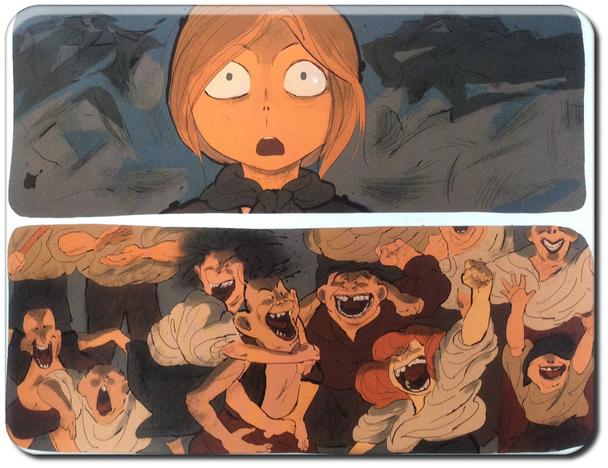
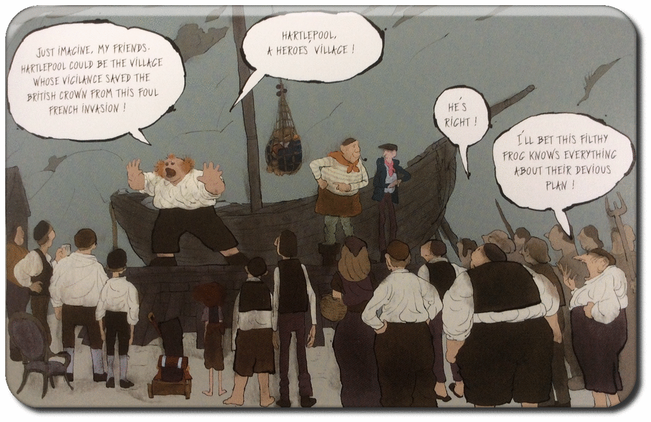
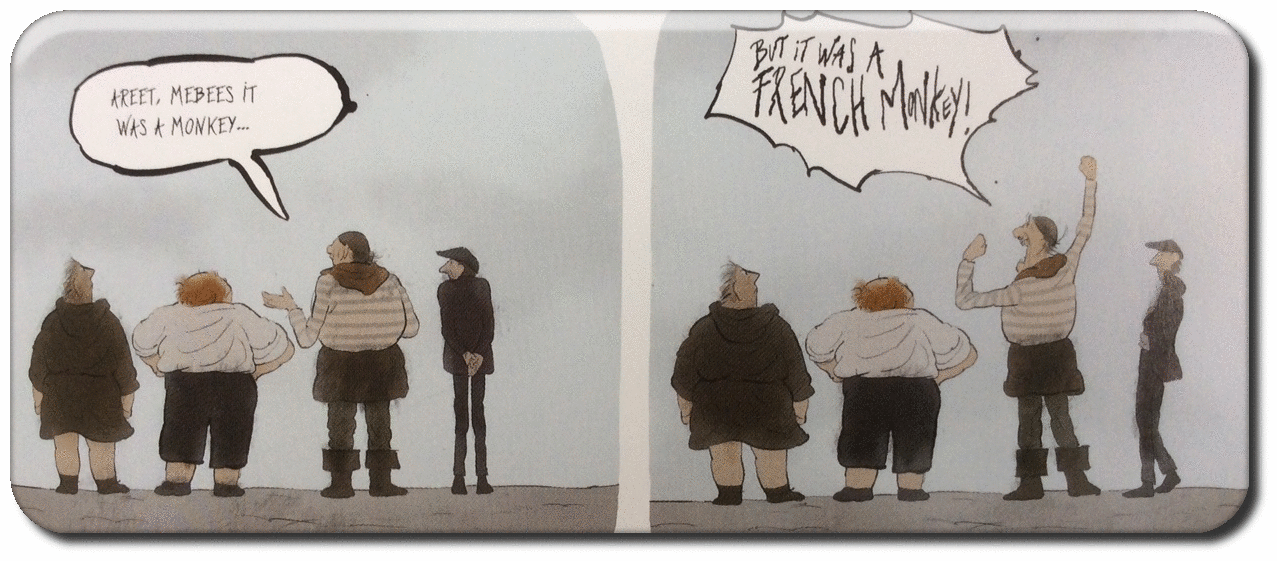
The story demonstrates how easy it is to hate someone you’ve never seen before, and about whom you hardly know anything. The imagery reflects this intent beautifully with its cast of grotesques leaping straight from the pages of Punch. It’s beautifully hideous stuff, full of flying spittle and the vinegar of irony.
A Nation is a society united by a delusion about its ancestry and by common hatred of its neighbours. – [Dean William Ralph Inge]
Comic-books are a medium, not a genre; they can tell any story and suit any palate. You want horror? I've got bottles of the stuff. Welcome to 'Splashes of Darkness.'
Picture
The Hartlepool Monkey is a fruit punchbowl, innocently sat out at the pub barbecue amongst the squashes and pop on the kids’ table. There’s something different about it, though: something…off about the colour. Most of the children who drink from it are giggling, but others seem changed somehow. A little more thoughtful, perhaps; a little blue. Wait a minute. Is this on the right table? Has some scamp slipped a little something extra into it, maybe? Cautiously, you take a sip…


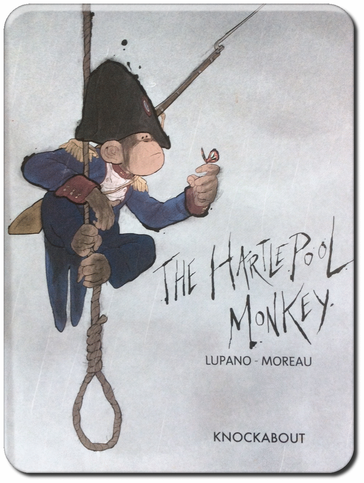
There are people with certain attitudes, events that unfold around us almost daily, where you almost have to laugh or you’d cry: where tragedy cleaves so close to comedy they become all but indistinguishable. Wilfrid Lupano and Jérémie Moreau stride that tightrope over despair’s abyss with supreme confidence in their humorous retelling of The Hartlepool Monkey. Factual details are sparse, but the legend goes that the people of Hartlepool once hanged a monkey, believing it to be a French spy. Upon this slender thread of history the creative team build a multi-layered masterpiece that explores the mechanics of nationalism, the horror of mob mentality, and what hopes we may have for a civilised future.
Picture
The Hartlepool Monkey is that rarest of beasts, a truly all-ages comic. I found it enjoyable to read on every level and was quietly delighted by what it had to say. It is a mischievous book, energetic and troublesome. It may appear to be poking fun at British stupidity but, despite its Gallic provenance, the project remains even-handed throughout. As the writer stated in an interview with Forbidden Planet, he just wanted to write a satire about extreme nationalist behaviours from the point of view of the ordinary people. It could have happened in France with an English monkey, (as far as a monkey can have a nationality).


The story demonstrates how easy it is to hate someone you’ve never seen before, and about whom you hardly know anything. The imagery reflects this intent beautifully with its cast of grotesques leaping straight from the pages of Punch. It’s beautifully hideous stuff, full of flying spittle and the vinegar of irony.
Picture
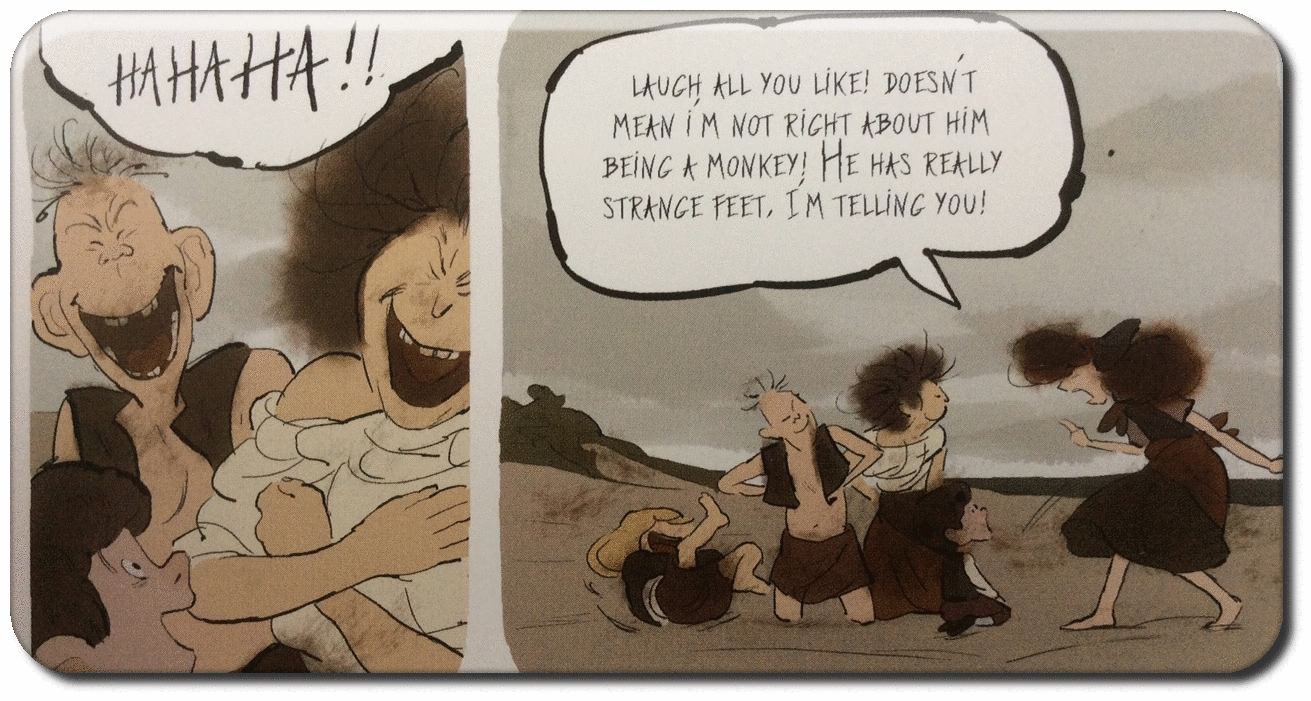
What impressed me the most is the manner in which the legend is brought to life. Forget exposition, thought bubbles and narrative captions; these are master tale-spinners at work. It reads more like a slice of life than a history lesson, using everyday language and familiar behaviours. We simply have to accept what is placed before us, building up an understanding of events from the action and conversations as they unfold. Lupano gives us two sets of characters to follow: the adults, egging each other on with jingoistic fears, and the children, caught up in the thrill of events yet unable to fully comprehend them.


Who were these ordinary people though, what could have led them to be so appallingly stupid? Crucially, are we really so far removed from them?


While the children fall into natural new friendships with the strangers in their midst, the grown-ups become ever more hysterical in the build-up to the farcical lynching. Lupano handles the dual narratives effortlessly, using the generation gap to reveal the adults hypocrisy and demonstrate how thoughtlessly we foist follies upon our offspring. There is something of the danse macabre in the book, structurally and thematically speaking. Each step is simple and easy to follow, yet together they form a complex pattern which is at once light-hearted in tone and grimly inevitable in its direction.
Picture
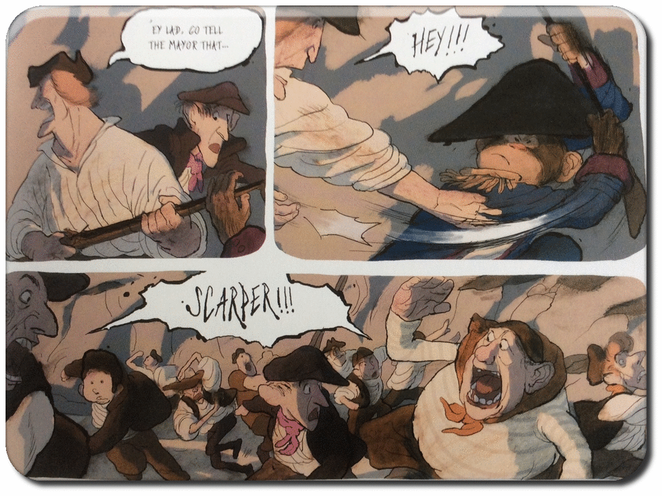
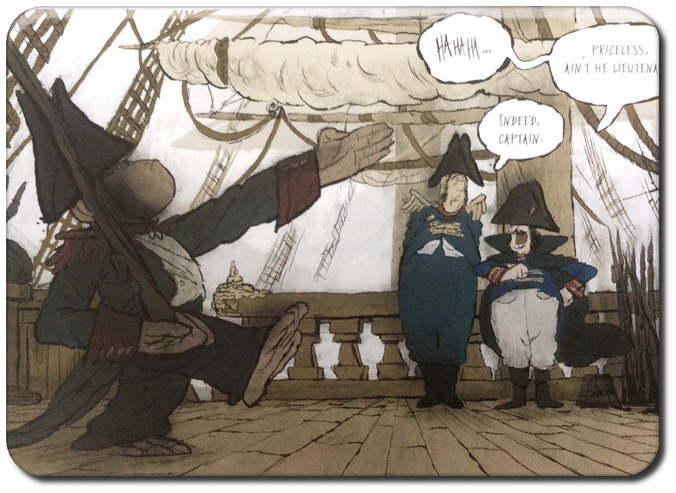
Moreau’s artwork feels to me like a mongrel blend of Quentin Blake and Raymond Briggs – adorably warped, scratchy, warm and chock full of nervous energy. Everybody is plug ugly, with the exception of Philip, Melody and Charlie – the children who offer us the greatest hope for the future with their thoughtful intelligence and warmth – and this is surely no coincidence. Neither is the fact that so many of the Hartlepuddlian rabble-rousers look distinctly simian themselves, skewering them with their own prejudices. Who are the real beasts? The fact that the monkey had been dressed in a French uniform, and has been trained to march like a soldier for the amusement of its Captain, only adds to the pitch-black hilarity.
Picture
The art here bear a greater weight of the story-telling than I am used to in my comic-reading experience (though this is far from a silent book), and this collaborative method works tremendously well. In some instances action scenes are unveiled in a manner that lets you engage more, filling in the deafening storm or artful oration with your own imaginations; silence is also used to help the reader see things from the perspective of the innocent monkey, to whom speech is a meaningless abstraction; while yet other panels are simply there to help pace out the narrative, set a scene or evoke a certain mood.


The rounded-off panels and slightly chaotic layouts subtly defy the hard-edged strictures of the medium and help develop the fundamental theme that the barriers we surround ourselves with are artificial, preventing us from seeing the real world—though I may well be spiralling up my own arse here. The point is, the creators know what they’re doing, they are working collaboratively towards that aim, and they’re bloody good at their jobs.


It is a genuine pleasure to read, and I cannot recommend it enough.


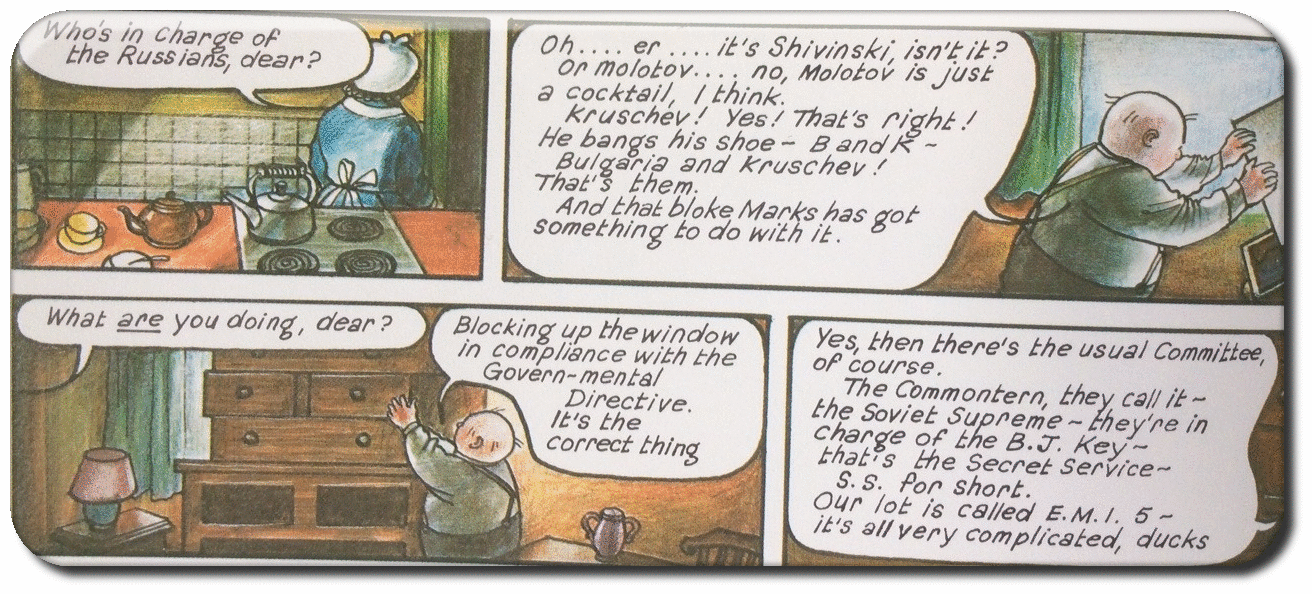
Now, I mentioned Raymond Briggs back there and I just want to take a moment to compare The Hartlepool Monkey to one of his finest. When The Wind Blows had a similar remit of tackling monstrous truths through satirical horror, humour and the perspective of everyday people. It was hugely important in its day for stirring public debate about nuclear weapons across the generations, and it still resonates powerfully with its readers today. However, to my mind The Hartlepool Monkey is a far more accessible work.
Picture
It talks about big subjects but it does so in a way that everyday people can really get to grips with. It scales Nationalism down to simple tribalism: whether it be denigrating the French, looking down on the nearest town down the coast, or making the new kid play ‘the Frenchies’ just because he’s not from around here. It has a simplicity of language, a broadness of applicability and, more importantly, contains a diverse cast of recognisable people with different opinions.
Picture
Where Wind bombards you with information, Monkey gives you an example; where Wind scares you, Monkey makes you angry, makes you want to shake people out of the dark ages and embrace the future—ever more applicable in these days of hard-right populist governance, Brexit, and the so-called War on Terror, where hate-mongers constantly try to scare us into shunning the outsider.


If you are trying to find new ways to engage your class at school, spark interesting discussions with your family, or just want a damn good read, then The Hartlepool Monkey should be top of your list.

​

Picture
Written by Wilfrid Lupano

Illustrated by Jérémie Moreau

Published by Knockabout Comics

Available via eBay

Reviewer: Dion Winton-Polak
​

Reading experience: 5/5


TODAY ON THE GINGER NUTS OF HORROR WEBSITE

[YOUNG BLOOD LIBRARY]
​THE BEST RECENT YA HORROR, THE SPOOKTEMBER EDITION

Picture

THE HEART AND SOUL OF COMIC REVIEW WEBSITES 

[BOOK REVIEW] BRAND NEW DARK: A BISHOP RIDER BOOK BY BEAU JOHNSON

13/9/2021
HORROR FICTION REVIEW BRAND NEW DARK- A BISHOP RIDER BOOK BY BEAU JOHNSON
The retribution is brutal and your imagination will play games with you as you read, but he doesn’t linger or revel in the violence and it never feels gratuitous. That said, it is still unpleasant, so do proceed with caution if you are easily triggered by these subjects 
Review by Mark Walker for Ginger Nuts of Horror
​

Right, let’s get this out the way right at the beginning. I might not have been the best choice to review Brand New Dark or, more accurately, it might not have been my best choice. I haven’t read any of Johnson’s Bishop Rider books so was coming in cold to this review. At first, I wasn’t sure if that was a good idea or not but, in many ways, it gave me a unique perspective into the world of Rider (a very violent, explosive world) coming in without any prior knowledge or preconceptions as I was.
Brand New Dark (I’m going to call it BND from hereon in) comes across like a collection of deleted scenes from a Blu-Ray. Watched in one sitting they are unlikely to tell you the whole story but, put together, they start to paint a picture of the characters and situations you might encounter if you watch the film proper. Or, in this case, read the original Bishop Rider novels.

It took me a while to get into the swing of things with BND as it throws you right into the action. The names, characters, relationships and history were all new to me and I was having to play catch up. However, Johnson’s writing does a great job; it is fluid, easy to read, and descriptive enough to draw you in, without over-egging the pudding, and this is key for what is, essentially, a collection of scenes and vignettes of around 3-5 pages a piece.

Once you are settled in and have worked through three or four stories, even with no prior knowledge, you start to get a feel for who Rider is, what his story is and for his relationships with his buddies and his enemies. Names that start out as a blur of confusion, quickly coalesce into a roster of regulars who, even with just a few pages per story, you get to know, understand and even root for. Considering it is a loose collection of interconnected snapshots, it does a great job of painting a picture of the world these characters inhabit.
And it isn’t a pleasant world.


“Either way, we’re going in hot.”


Rider’s world is violent. Very violent. These stories are not for the fainthearted and I suspect neither are Johnson’s novels. Rider is on a quest to avenge his murdered mother and his raped, tortured and murdered sister. My initial thought was, okay, here we go again. Revenge for rape is a common trope and one I know a lot of people are getting fed up with. The reader learns that this is what is driving Rider very early on and there was a part of me that was worried about what was to come.

However, Johnson handles it well. It will trigger readers and it isn’t a subject most people would relish reading about. But revenge is. And that is where Johnson pulls it off. While we briefly hear about what happened to Rider’s mother and sister, we don’t get any of the details; Johnson saves those for the revenge.

And it comes fast, furious, deadly and extremely bloody. Rider is a man with a particular set of skills (an ex Army medic) and a specific group of friends who you wouldn’t want to find yourself on the wrong side of. Initially setting out to seek revenge for his mother and sister, Rider and his posse end up on a crusade to rid the world of deviants, perverts, molesters and traffickers. They hunt the lowlife ‘shitbirds’ of the backstreets and underworld; filth that really does need to be washed off of the streets.

Johnson doesn’t shy away from telling you what these guys are doing, but he also doesn’t go too far. The retribution is brutal and your imagination will play games with you as you read, but he doesn’t linger or revel in the violence and it never feels gratuitous. That said, it is still unpleasant, so do proceed with caution if you are easily triggered by these subjects and, after an afternoon of reading 25 mini-revenge stories, I did feel a little saturated. 

Johnson doesn’t just play it for effect though, and the shorts do start to build up a picture of Rider that draws the reader in, perhaps more so if you are not familiar with him, as I wasn’t. It’s almost like watching Man Bites Dog as you realise you have been drawn into the world of a killer and have become a voyeur and observer cheering on the demise of shitbird after shirtbird. Although these are scumbags of the lowest order who deserve to be punished, even Rider questions what he is doing and whether it is right, but he recognises he has gone too far to stop.


“What we do, what we’ve done, it’s not a perfect solution.”


If anything, it can get a bit repetitive. The stories follow a similar pattern; a pattern of kidnapping a victim and taking them back to a safehouse kill room before dismantling them with a variety of unpleasant tools, Rider often using his skills as a medic to prolong the victims life and torture. Some readers may get fatigued by this, but the very nature of the book allows you read in bite-sized chunks, so you can dip in and out as you please. The 25 stories do, however, include a handful of monologues from a character preparing victims for Rider which shake things up a bit and provide a moment of almost light relief from the relentless rampage of revenge.

But only almost.

Ultimately BND plays out as a collection of off-cuts, missing tales to help fill the gaps in the Bishop Rider story. Some of it may not make sense if you haven’t read any of the original novels and, while I would perhaps recommend doing so before reading BND, reading it without that prior knowledge is not a particular disadvantage. In fact, while not sure what I was going to make of BND before I started it, by the end of the book, I had a fair understanding of Rider and his motivations, and I found myself contemplating the novels. I was drawn in by the characters and found myself wanting to know more. BND serves as a taster, an aperitif to get you in the mood for Rider proper.
​
It is violent and unpleasant in places (actually quite a lot of places) referring to subject matter that will be triggering for many, but Johnson doesn’t linger on the really unpleasant stuff and doesn’t dwell on the catalysts for Rider’s anger, instead it concentrates on the fates of those that deserve the retribution.
If you enjoy violent revenge, then you will enjoy Brand New Dark.


PS – Obviously the novels will allow more space for Johnson and Rider to do their thing. Having not read them, I cannot comment on how triggering they may be or whether the acts that Rider is seeking revenge for are more graphically described than in BND. If this tempts you to explore the world of Rider in more detail, I would simply suggest you proceed with caution.

Brand New Dark – A Bishop Rider Book
by Beau Johnson (2021)

Picture
 Bishop Rider Lives! And for a dead man, he’s been busy. His story and the parts of it yet to be told being what populates Brand New Dark. Unseen moments pulled from between the pages of A Better Kind of Hate, The Big Machine Eats, and All of Them to Burn. Twenty-five new tales that bridge what came before and expand upon what can only come after.

Come, see what happened in-between.

Come, see how he made them burn.


TODAY ON THE GINGER NUTS OF HORROR WEBSITE ​

PANDEMIC HORROR:
​POET SILVIA CANTÓN RONDONI IN CONVERSATION WITH LEE MURRAY AND GENEVE FLYNN

Picture

THE HEART AND SOUL OF HORROR FICTION REVIEWS ​

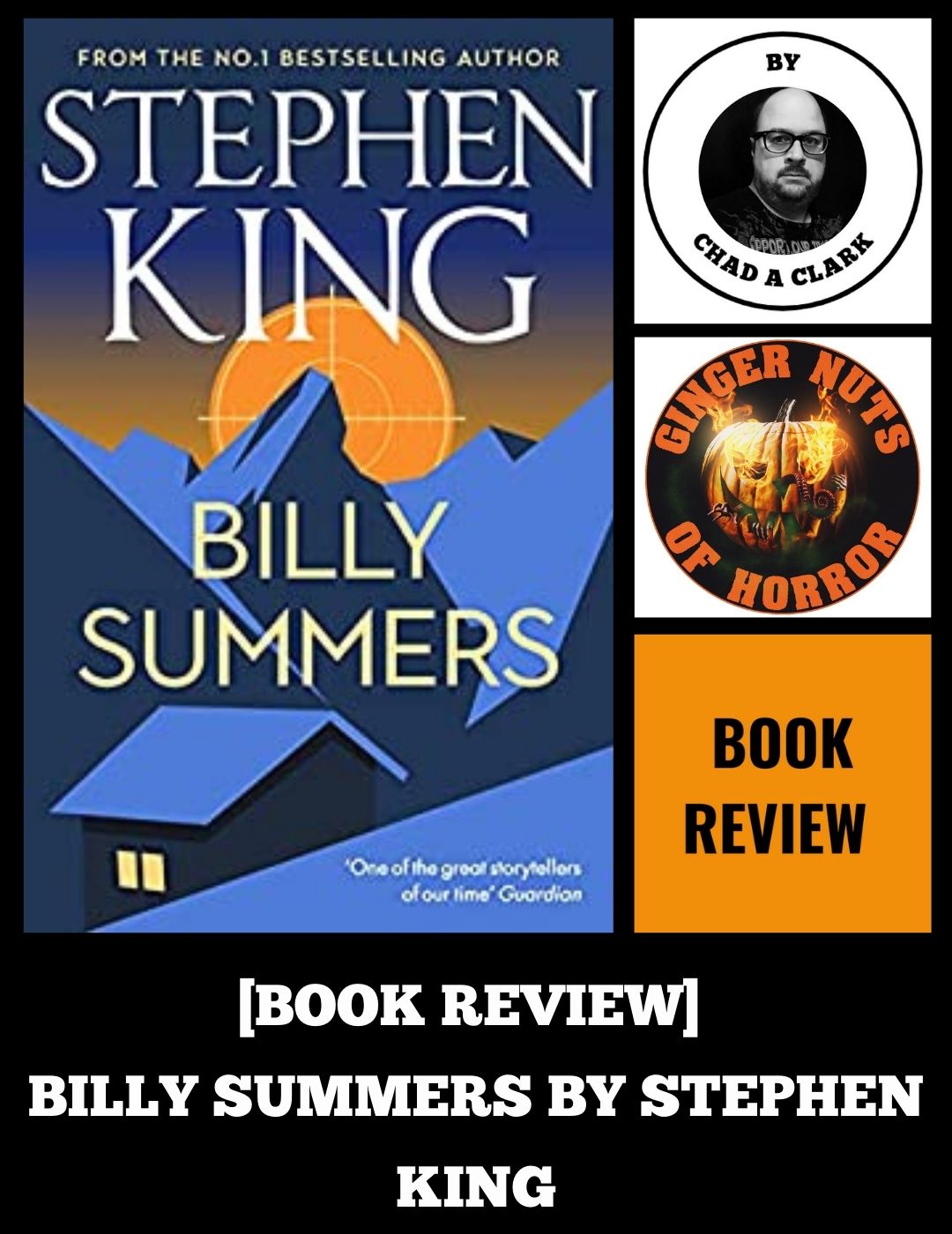
[BOOK REVIEW] BILLY SUMMERS BY STEPHEN KING

11/9/2021
Picture
​The truth is that Billy Summers is a human story about people from completely different worlds finding each other across a divide of tragedy and violence. It isn’t a flashy tale and it happens largely in the quick shadows that flash past you as you turn the pages. 
I remember reading at some point that when Stephen King wrote The Dead Zone, part of his challenge to himself was to try and make the act of political assassination sympathetic.

That fact was on the edge of my train of thought as I read his latest, Billy Summers. Yet another tale when our “hero” is someone who does things that most would consider having villain-like qualities.

Billy is an assassin for hire, although with a sort of Lestat-like twist, an assassin who will only kills people who deserve a good killing. Justice for hire then, achieved through the barrel of his sniper’s rifle. The book opens quickly as he takes what we soon learn will be his last job and as King has proven to do so many times in the past, things fall apart from there.

I have to say that from the start of this, I was sure that I was reading a Dark Tower adjacent book. The circumstances of Billy being hired and his target make it pretty clear that the situation is more complicated than it appears and the question of who exactly is hiring him is kind of a murky one. In a way, it reminded me a little of Dinky Earnshaw in King’s novella, Everything’s Eventual and I wouldn’t have been surprised at all if we ended up discovering that Billy was hired by a certain Sombra Corporation, in close cooperation with North Central Positronics and LaMerk Industries.

This never really materialized but it was a fun game of connect the dots as I made my way through the opening act of the story. And I think that was fortunate because, being completely honest, I wasn’t really sold on the opening chapters of this book.

I wouldn’t say that the opening was a failure. Billy is intriguing and that did keep me engaged with the story, there’s just a feeling prevalent in the first half or so that we are mostly kind of going through the motions. That the real story is about to unfold but that part of the book won’t work unless we have this.

So please just eat your broccoli.

Things fall apart in the job that Billy has been hired for and in ways that should be pretty predictable for most of you. Billy himself has his suspicions and pretty well predicts and telegraphs where things are going. It is interesting seeing how he works as he is clearly a master at creating new personas and identities for himself. Watching him weave these various identities and characters within himself is definitely a brighter aspect of the first half of the book and breaks apart at least slightly the feeling of rinse and repeat.

But the story really picks up when we are introduced to Alice, the other half of what becomes the duo in this book. Billy saves her as he manages to come across the scene of an attempted rape in progress. He takes Alice in while he himself is on the run and helps her back to health, both in a physical sense but also in helping her deal with her emotional trauma.

Much of the rest of the book is driven by this relationship that develops and I thought things really took off nicely. Is it possible that maybe it’s a little too quick, clean and easy in terms of Billy helping Alice deal with her emotional trauma? I think that would be a fair criticism and ultimately different readers are going to take that aspect of the book differently. Some may see it as King glossing over what should be a heavy emotional process. For me, though, the point was seeing a bond form between these two characters in a short time frame and it was their closeness that made the book feel more special to me and elevated things more than the mechanics of the plot.

Their relationship was more than just friendship but not falling down the trope-bricked road of making it romantic. Sort of one part Stockholm, one part Bonnie & Clyde, and one part paternal. Not completely platonic but not crossing over the divide into physical, either. King had many an opportunity to take this aspect of the book down many a well traveled road and I was glad he resisted those opportunities. I think that many would agree that characterization is where King excels and this was another example.

A story that begins as an assassination/heist story becomes more of a revenge/justice angle and it was this, combined with the great relationship between Billy and Alice that rescued the book for me. I liked the fact that the relationship underlined Billy’s inherent morality, despite the things he does to make a living. So while I had my doubts early on, I’m glad that I stuck with it.

King has built a career on intertwining his works with books stuffed with various references to each other. Some of this book takes place in Colorado and in case there is a King fan that doesn’t immediately perk up at that tidbit, I will say that there is quite a bit of fun references to a certain haunted hotel.

Another aspect of the book left me thinking quite a bit about Misery where, in addition to the narrative of the story, we also get to see Paul Sheldon’s novel being created, his “gift” for Annie Wilkes. In this book, when Billy is hired for the assassination, his employers establish a cover story for him which is supposedly what brings him to town. He is to play the part of an aspiring novelist who has rented office space in order to finish a project. The idea is that following the killing, when the police begin to investigate, he will have had a reason to be in town. Not a stranger appearing out of the blue just before a high profile murder. Just one of the locals.

Since Billy has a fair amount of downtime in the planning of his operation, he decides to go all in and actually starts writing his own story. Finding he enjoys writing, we get to read his own account of his life, from childhood, through his time in the war and onto his current profession.

I didn’t click with this aspect of the book at first. It was interesting from an intellectual perspective, I just didn’t feel like the thrust of the book was gaining anything from it. In the grand scheme of the narrative, I just didn’t think it had a clean place in the puzzle.

It was getting to the point where, being completely honest, I was starting to feel like Billy’s “novel” was little more than filler. Yes, it was delivering back story and the material in there was powerful but it also wasn’t anything I haven’t gotten from a dozen movies that I have seen centered around the experience of war.

I will concede that I respect how the tone of Billy’s book shifts as the story progresses. When we first meet Billy, we discover that he has a sort of cover personality he puts on for people who hire him, in order to be seen as simple minded and then underestimated. So when he starts writing his book, he does so with this voice, misspelling and using incorrect words all over the place. As a result, the early segments from his book come off as actually fairly childish.

But as things move forward and he begins to realize that he’s pretty much writing the book for himself, the tone adjusts to what I would assume is his natural voice. Showing this in the text was pretty clever, in my opinion and a deft example of King’s craft.

And by the end, Billy’s book ended up being a pretty brilliant device used to further the narrative. This is the one point of the book I definitely don’t want to spoil so the best I can say is that the perspective of the book shifts and Billy’s book becomes a means for that transition to take place. So while that content felt kind of draggy to me early on, it proved to give the structure of the ending a fresh and different feel.

Billy Summers for me was a book that sneaked in under cover of darkness and ended up being far superior than it seems on the surface. And even in the parts that I found more lackluster I was still compelled to keep on reading and I think that in and of itself is a statement on the quality of King’s craft and his writing.

This isn’t a horror book by any stretch of the imagination. It seems like anymore over his recent releases we see the same old debates over how King has “abandoned” his horror roots in favor of crime fiction. As if it’s somehow a dig against him that he doesn’t want to keep writing the same book again and again.

I feel like often in this society, we have taken on the tendency to oversimplify things and vanquish the context of anything. So if it isn’t horror, insert eye roll and bemoan his recent love of writing crime fiction. The truth is that Billy Summers is a human story about people from completely different worlds finding each other across a divide of tragedy and violence. It isn’t a flashy tale and it happens largely in the quick shadows that flash past you as you turn the pages. If you’re looking for the thrill of a good and scary tale, definitely give this one a pass. But if you’re on the lookout for King’s deft ability to craft sympathetic characters, I think this book would be more along your lines.

There is one other issue I wanted to tackle and it feels like one I have dealt with in recent reviews but in this day and age it seems to be at the forefront of any new release of King’s. But I’m not so much of an egomaniac that I’m going to assume any of you have read my other reviews dealing with this. So what am I talking about? Cue ominous music for atmosphere....

Stephen King’s politics. The blue colored elephant in the room.

And look, I’m not going to begrudge anyone for their political leanings. It’s not my place to say who’s right and wrong. Everyone is entitled to their opinions and perspective.

Thing is, though, even someone as famous as Stephen King deserves that same sensibility from us. Are there a lot of references to Trump? Yes. I will concede that he probably leans too often on the easy pot shots against our former president. But let’s be fair, if by now you don’t know that Stephen King really doesn’t like Trump, you haven’t been paying attention. It may feel irrelevant or distracting from the plot of the book but the fact is we live in a society where people still are regularly expressing their dislike of the man.

And Trump is no victim here. He has participated and engaged just as much as anyone else on this playing field. He has dished out just as much flak as he has received and he doesn’t need you to have his back. Trust me, this is the kind of thing he lives for.

And King didn’t just suddenly become a “political” author. Go back to novels like Insomnia, Rose Madder, Delores Claiborne and Gerald’s Game and you will get the full treatment to his discussion of issues such as domestic abuse or sexual abuse of children. Go back further and you get Gardner’s epic rant against nuclear power in Tommyknockers. And as far as books like Dead Zone, Firestarter, Running Man or Roadwork and I think you can see a general disdain for political authority.

My point with all of this is that Stephen King is no stranger to bringing his point of view to whatever it is he’s writing. And I realize that King’s Twitter feed and how he interacts with his fans has become a large hot-button topic. But the last time I checked, a big motivation of being an artist was to use your art to express your point of view. I’ve never been one to support the mentality regarding celebrities that is basically telling them, “Go sit in the corner and shut up until I want you to do that voice I like.” If you don’t happen to like what King has to say these days, I suspect his response would be of the “sorry not sorry” variety. You have the right to not read his books and he has the right to air his opinions. You may not have any interest in his politics but other constant readers are interested in it and ultimately none of us are any more important than the next. King’s art is what it is. We don’t get to send the book back like dissatisfied diners at a bistro. Read his books or don’t. Spare us all the theatrics around your choice. Your decision is yours. Leave it that way.

I know, I know. Beep beep, Richie.

So back to center. Billy Summers. What’s the verdict?

I liked the book. Did I love it? Not necessarily. I certainly wouldn’t rank it among his greatest works, although that’s not really a fair bar to set. I don’t know if I would say this is worth paying opening day prices for the hardback. If you’re more lukewarm on King’s work, it might be worth holding off for a paperback edition or getting on a wait list at your library. It’s a book that didn’t really get its hooks in me until about the midway point but I still felt nicely propelled through the whole thing. The specifics of the plot are familiar and to some will likely feel like recycled material. Still, like a slow-simmered sauce that’s been carefully developed can elevate a plate of bland noodles, King’s talent in his prose is more than able to hold this book above the water line. This is a comfortable tale that was pleasant to read and efficient in its execution. Speaking for myself, I don’t need every book I read to rock my world down to its core.

If you’re a fan, give it a twirl. I think you might enjoy it.
If you would like to read of Chad's thoughts on the works of Stephen King, be sure to check out his website 

Tracing The Trails: A Constant Reader's Reflections on the Work of Stephen King 

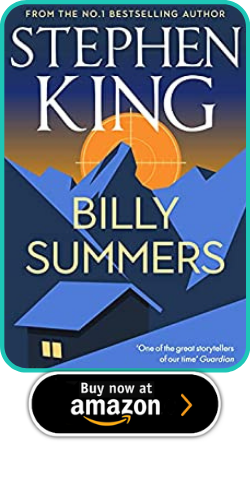
Billy Summers
by Stephen King  

Picture
From legendary storyteller and No. 1 bestseller Stephen King, whose 'restless imagination is a power that cannot be contained' (The New York Times Book Review), comes a thrilling new novel about a good guy in a bad job.

Billy Summers is a man in a room with a gun. He's a killer for hire and the best in the business. But he'll do the job only if the target is a truly bad guy. And now Billy wants out. But first there is one last hit. Billy is among the best snipers in the world, a decorated Iraq war vet, a Houdini when it comes to vanishing after the job is done. So what could possibly go wrong?

How about everything.

This spectacular can't-put-it-down novel is part war story, part love letter to small town America and the people who live there, and it features one of the most compelling and surprising duos in King fiction, who set out to avenge the crimes of an extraordinarily evil man. It's about love, luck, fate, and a complex hero with one last shot at redemption.

You won't put this story down, and you won't forget Billy.

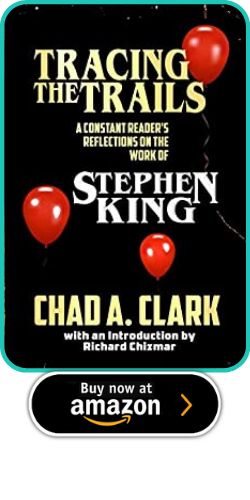
Tracing The Trails: A Constant Reader's Reflections on the Work of Stephen King 
by Chad A. Clark 

Picture
For over forty years, Stephen King has been one of the biggest names in literature and popular culture.

In 2013, author and Constant Reader Chad A. Clark embarked on a journey, not of miles but of pages and words, reading all of Stephen King's works. Every book and short story, in the order they were released.

What lies between these covers are his reflections along the way, the search for inspiration in a style of writing that has evolved over all this time. A trip from Castle Rock to the depths of Derry. From the Blasted Lands to the farthest reaches of Mid-World.

For all of us who have been lost in many a King book and pined for the chance to look him in the eyes and say, "We thank you."

With an introduction by Richard Chizmar and tons of guest reviews, this book is over 400 pages of pure King fandom. Get your copy now!

Chad A. Clark

Picture
Chad A. Clark is an author of dark-leaning fiction, born and raised in the middle of the United States. His road began in Illinois, along the banks of the Mississippi and from there he moved to Iowa, where he lives with his wife and two sons. From an early age, he was brined in the glory that is science fiction and horror, from the fantastical of George Lucas, Gene Roddenberry and Steven Spielberg to the dark and gritty tales of Stephen King, Wes Craven and George Romero. The way from there to here has been littered with no shortage of books and movies, all of which have and continue to inform his narrative style to this day. Chad's work can be found on Amazon or at www.cclarkfiction.net


TODAY ON THE GINGER NUTS OF HORROR WEBSITE ​

Picture

THE HEART AND SOUL OF HORROR FICTION REVIEWS ​

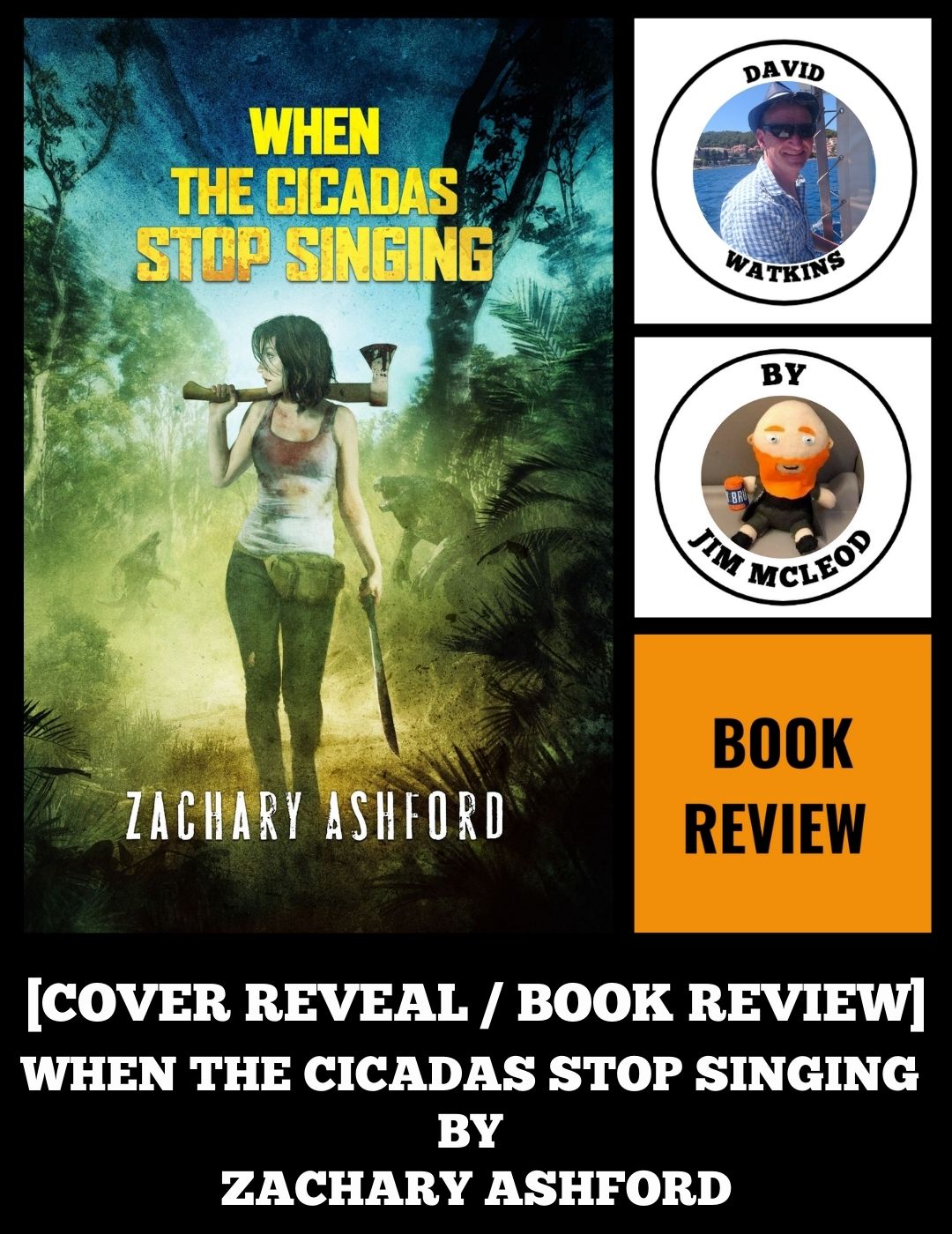
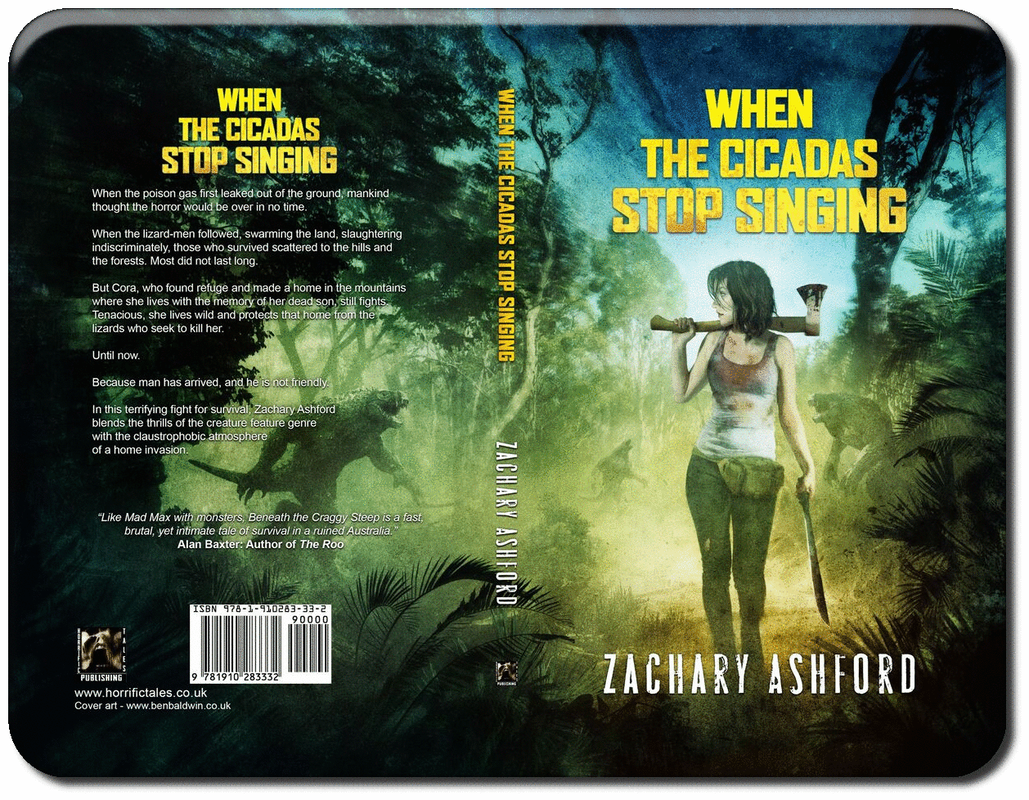
[COVER REVEAL / BOOK REVIEW]: WHEN THE CICADAS STOP SINGING BY ZACHARY ASHFORD

8/9/2021
Picture
When the Cicadas Stop Singing is a captivating novella, brutal, visceral, and unceasing in its narrative drive, but with a tender heart beating at its core, proving that even in our darkest days, our humanity will win out. 
When The Cicadas Stop Singing by Zachary Ashford
Two Reviews by Jim Mcleod and  Dave Watkins 
It's the end of the world as we know it; some unknown calamity has befallen humanity, and civilisation has broken down. The survivors, what's left of us, are trying to survive by any means possible while trying to evade the attention of a new breed of killer lizard that has a taste for human flesh. Cora, the hero of this story, is holed up in her camp in the heart of the Australian bush; she is surviving by living off the land, using her bushcraft skills to eke out a life of sorts from the unforgiving and relentless danger of the Australian land. She has a relatively good life in her small oasis, but everything changes with the arrival of two strangers; from here on in its turtles all the way down for Cora.  


When the Cicadas Stop Singing by Zachary Ashford is the latest novella from the author who brought you the thrilling Sole Survivor series about killer koala bears, there is a massive tonal shift from those two classic when animals attack stories. When the Cicadas Stop Singing is a far more serious effort, Ashford swaps out the humour for a strange but compelling mix of melancholy and breathtaking action sequences. Those of you expecting Ashford's combination of over the top, humourous, horror-action will find a very different beast here.


Most post-apocalyptic stories are massive affairs, with chapter after chapter of scene-setting and backstory; I'm looking at you King, and your The Stand, (you'll want to lie down after reading When the Cicadas Stop Singing, such is the ferocity of its narrative drive), however, Ashford throws all of this out of the window, there are practically zero backstories, and even less explanation of why the world ended and the source of the killer lizards.


Usually, this would be something of a bugbear; I like things to be explained; I need to know why things happen; I don't particularly appreciate being kept in the dark. However, where this lack of answers would generally elicit an angry response, after finishing this novella, I fully understand why Ashford left these details as vague as he did. 


When the Cicadas Stop Singing isn't a post-apocalyptic story, it is about one woman's fight for survival in a world that doesn't care about her, a world where death is just a heartbeat away. It is a deeply personal story that uses the framework of an action-packed horror-thriller to look at the effects of grief and loss on how a person interacts with the world around them.  


One of the most overused cliches in reviews is "this was a breakneck-paced story ", it ranks up there with this was unputdownable as a phrase that sets the teeth on the edge of nearly every other reviewer. However, at this risk of sounding like a massive cliche myself, this book was both. From the opening scene right through to the glorious finale, Ashford pumps nitrous into the narrative fuel lines with gleeful abandonment. The action set pieces are described with an incessant ferocity, so much so that you can almost feel the hot, fetid breath of the killer lizard on the back of your neck. You genuinely feel like you are standing just over to the side and witnessing the events first-hand.  


However, Ashford doesn't allow the action parts of this novella to overshadow the more intimate and personal elements of the story.  


We aren't given much with regards to the background of Cora, and there is even less given to Darren and Sarah, but that works for this story. What is important isn't so much as who she is. It's why does she do what she does. The main driving force behind Cora is grief; the loss of her son drives her determination to preserve what is left of her way of life. There is a point in the story where she could easily have packed her bags and done a moonlight flight, but her inability to move past her sense of grief prevents her from doing the most logical of things.  


Hell, even Cora's interactions with Sarah can be placed squarely at the feet of her inability to process the stages of grief fully. Cora almost acts as a mother figure towards Sarah, even though you know, deep down inside, Cora doesn't trust her. Cora could have just dumped Sarah at multiple points during the story and left her to her fate, but she allows her deep mothering instincts to kick in.  


And it is her relationship to grief that drives her actions at the end of this gripping tale. Does she make the right decision? We will never know (unless there is a second instalment coming, is there Zachary?) if she made the right one, but I loved how the ending of this novella had a wonderful nod to the conclusion of Shane; it certainly had me screaming to myself "Cora, come back!"


The duality of purpose between Cora and Darren is another strength of this novella, where Cora is warm and loving, over and above her aversion to being around others, Darren is pure bestial rage, and angry white male, mad at the world for no other reason than he feels he is owed everything for doing nothing in return. He is the perfect example of a toxic male. You can read the dynamics of Cora and Darren's interactions as a metaphor for how society still allows for nasty characters like Darren to thrive.  


In terms of plot depth, this is a relatively simple story on the surface, the world has gone to pot, and two undesirables crash into the life of one of the last good people left alive and smashed it to pieces. But look a little deeper, and you will find a hidden depth to this tale. One of the blurbs for this story likens it to Mad Max, which I get, but this reads more like a classic western; in fact, all that is missing from it is a mule and Clint Eastwood.  


When the Cicadas Stop Singing is a captivating novella, brutal, visceral, and unceasing in its narrative drive, but with a tender heart beating at its core, proving that even in our darkest days, our humanity will win out.  ​
Picture
Cover design by Ben Baldwin 
When The Cicadas Stop Singing by Zachary Ashford
Review by Dave Watkins 
Wow, what a ride! It’s difficult not to read this in one sitting as the pace is absolutely frantic. This is going to be a short review: buy this book now.

Ashford has created a post-apocalyptic world where humans have been hunted to the point of extinction by a race of humanoid lizards.

The opening scene sets the tone for what follows. Our heroine, Cara, is being pursued by one of the lizard people. It’s a great scene and shows us everything we need to know about Cara – tough, resourceful and in fear of losing her humanity. It also establishes the nature of the apocalypse, and all the information we need is given to us in approximately two sentences. Quite an achievement!

Other characters are soon introduced, but the novel’s focus is almost exclusively on Cara and her struggles. To say anything more would go into spoiler territory, and I’m not going there.

For me, this is an easy book to recommend. It has a well-drawn and realistic main character who is easy to root for, several horrific scenes (one of which had me going ‘Jesus, Zac, really??’), short chapters which really propel the action forward and it is a great fun read.

Horrific Tales have another winner on their hands here and I will definitely be reading whatever Ashford comes up with next.

Highly recommended.

 WHEN THE CICADAS STOP SINGING 
​BY ZACHARY ASHFORD

Picture
When the poison gas first leaked out of the ground, mankind thought the horror would be over in no time.

When the lizard-men followed, swarming the land, slaughtering indiscriminately, those who survived scattered to the hills and the forests. Most did not last long.

But Cora, who found refuge and made a home in the mountains where she lives with the memory of her dead son, still fights. Tenacious, she lives wild and protects that home from the lizards who seek to kill her.

Until now.

Because man has arrived, and he is not friendly.

In this terrifying fight for survival, Zachary Ashford blends the thrills of the creature feature genre with the claustrophobic atmosphere of a home invasion.
​
Like Mad Max with monsters, Beneath the Craggy Steep is a fast, brutal, yet intimate tale of survival in a ruined Australia. – Alan Baxter: Author of The Roo


Picture

David Watkins lives in Devon in the UK with his wife, two sons, dog, cat and two turtles. He is unsure of his place in the pecking order: probably somewhere between the cat and the turtles. 

He has currently released three novels, (The Original’s Return, The Original’s Retribution and The Devil’s Inn) and has a short story in the werewolf anthology Leaders of The Pack.  
​

His latest release is Rhitta Gawr. What happens if a couple of tourists decide to climb Snowdon? In the dark. Alone.


Website: www.david-watkins.com 
Twitter: @joshfishkins 
Amazon: author.to/DavidWatkins 

Picture

the heart and soul of horror fiction reviews

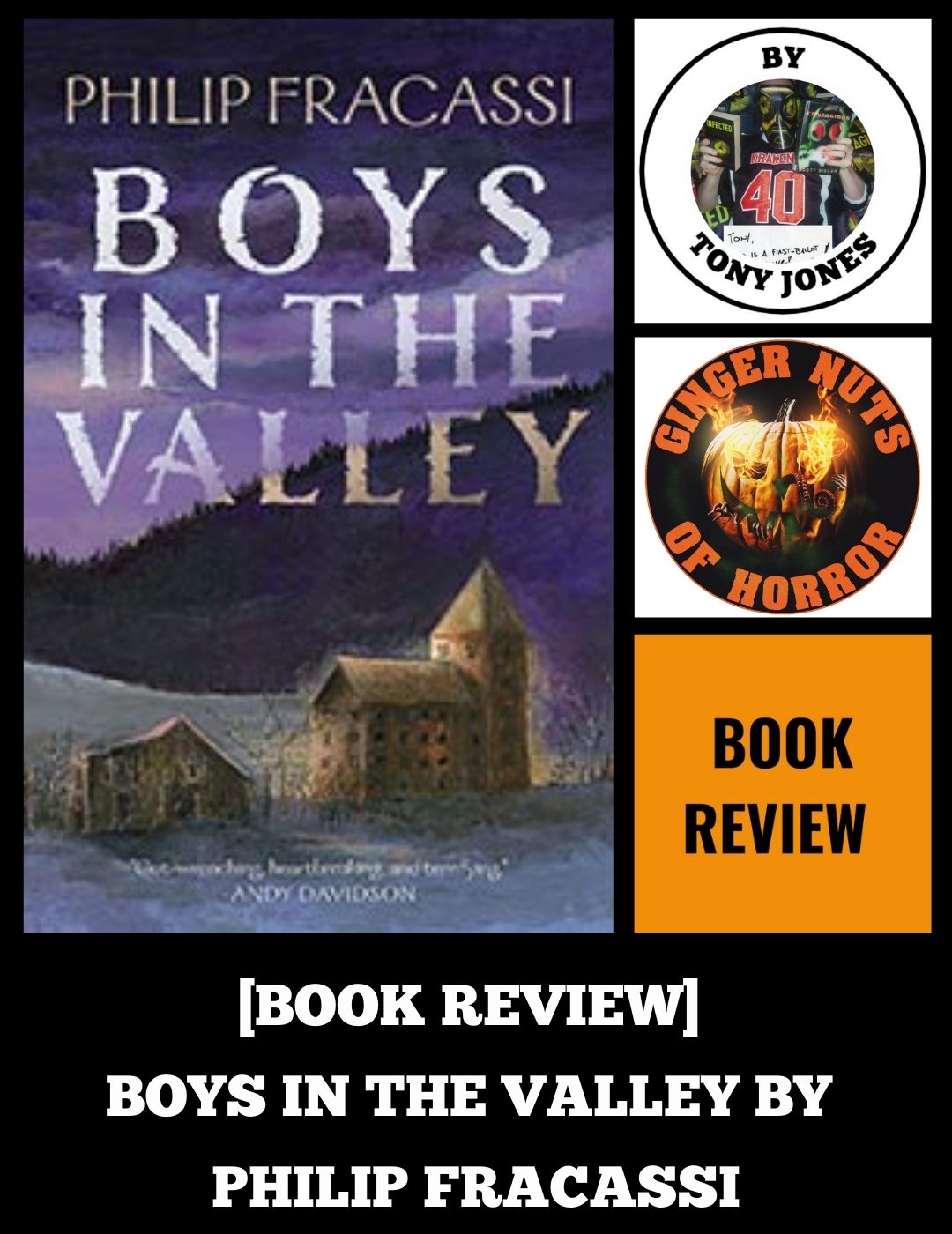
[BOOK REVIEW] BOYS IN THE VALLEY BY ​PHILIP FRACASSI

7/9/2021
HORROR FICTION REVIEW BOYS IN THE VALLEY BY ​PHILIP FRACASSI

Boys in the Valley can be read as a good versus evil story and is a rollicking good yarn, which is built around a great range of well-drawn characters of which even the most brutal garner sympathy.
Evil visits an isolated Pennsylvanian orphanage
If you looking to snag a copy of Philip Fracassi’s latest work Boys in the Valley then I suggest you move fast as the 500 signed/numbered hardbacks being released by Earthling Publications around Halloween time are dwindling, and I imagine will all be snagged via pre-orders. This is much too entertaining a novel to keep hidden away from the general public and one hopes it will resurface as a trade paperback and ebook further down the line, picking up a wider audience.  
   

I approached this book with considerable interest as I have read the majority (and reviewed several) of Fracassi’s other works and was particularly keen to see how he made the jump to a full novel. If you have never read him, simply put, Fracassi is an absolute master of the short story and novella and has the back catalogue to prove it. He can weave literary magic over the 100-page format and few can nail a sentence to the page better than he, but could he pull the rabbit from the magic hat over 320 pages? Indeed, he can.

Before we look at Boys in the Valley in more detail, if you are new to Fracassi here are some of my personal favourites you can check out to get a feel of his earlier works should you find it difficult securing a copy of this limited release. Both Behold the Void (2017) and the recent Beneath a Pale Sky (2021) are sublime short story collections and my favourite novellas are Fragile Dreams (2016), Sacculina (2017) and Shiloh (2018). There is also a brand-new novella, Commodore, which has not yet appeared as an ebook and I am looking forward to snagging that as soon as it comes available.

One of the major strengths of Fracassi’s short work is the fact that his stories have absolutely no flab and not a word is wasted and he carries this forward into Boys in the Valley which had a tight story, told over four distinct parts, which hangs together nicely having me on the hook for the entire duration. I am a prolific and fussy reader but sped through this gripping and excellently paced novel over three evenings as events quickly spiralled from bad to worse. One wonders whether this story started life as a novella and then the author realised there was just too much going on to squeeze it into his usual 100-pages? If that was the case Fracassi did the right thing, expanding it into a fuller and richer work where the pain and fear of the little boys literally bleeds from the pages.

The action takes place in St. Vincent's Orphanage for Boys, which is located in a remote Pennsylvanian valley, where the nearest town is over twenty miles away. Set in 1905, thirty orphan boys live, work and worship under the tutelage of a small group of priests. This is a very harsh, cruel and hungry life, the boys farm much of their meagre crops and the painful pangs of starvation are never far away. Fracassi sets the scene beautifully, this is not a choice of faith, the boys are there simply because they have nowhere else to go and as orphans are unwanted and unloved. Punishments are cruel and unwashed hands can lead to missing a meal or overnight stays in an underground hole similar to something you might find in a prison chain-gang. However, most have accepted their lot in life and make the most of this very tough existence, dreaming of escape when they come of age.

Boys in the Valley is told from several points of view, both boys and priests. Interestingly, Peter Barlow who is the main character and takes up the most page time, has his story told in the first person, whilst all the others are in the third person. Peter is the most fleshed out, given the most comprehensive backstory and nudges the plot into the realms of a coming-of-age story. At sixteen, not only is Peter the oldest of the boys he is also contemplating life as a priest and is encouraged by Father Andrew who acts as his mentor. However, Peter is conflicted as he is attracted to a local farm girl, from where the orphanage trades goods and writes letters to her. This was an engaging part of the story as Peter’s inner voice and his turmoil surrounding his faith and temptations which could be compared to the bigger picture of what is about to play out in the orphanage.

Early in proceedings, late one night a group of men arrive, one of which is badly wounded. Amongst the group is the sheriff from the local town who has the injured man tied up. Seeking sanctuary, the orphanage takes in the man whose body is covered with strange symbols carved into his flesh. At this point the story is seen from the point of view of Father Andrew, who believes the man to be possessed and after violent death, it soon becomes clear that he has brought some sort of evil into the orphanage that infests St. Vincent's and the children within.

I do not want to say too much more about the plot except that things take a dark turn and it happens relatively quickly. Events kicks off beautifully and with some intensity, one boy is unexpectantly defiant to the priests in dinner (something which is unheard of) and is sent to the hole and quickly boys begin to act differently, taking groups and sides. Younger boys are suddenly confrontational to their elders and the atmosphere in the sleeping dormitory darkens and can be cut with a knife. Fracassi builds this threatening tension beautifully and Peter worries something unnatural is at work.

Boys in the Valley can be read as a good versus evil story and is a rollicking good yarn, which is built around a great range of well-drawn characters of which even the most brutal garner sympathy. Once the plot shifts through the gears there is a great deal of violence and some horrific imagery with Fracassi’s lean and brutal prose spilling into the bloodletting as things spiral out of control and the smallest instruments are used as weapons of attack and defence. Strangely, something of the isolated snowbound reminded me of John Carpenter’s The Thing, in that at certain points of the story it was difficult to tell which side some of the boys were on.
​
Fracassi recently announced he was taking a break from his day job to concentrate on his writing and I hope this bold move takes his fiction to a wider audience. His existing fans will lap up Boys in the Valley and its eventual wider availability should bring in plenty of new readers also. To make a living as a successful horror writer, novels are the key to the big time and Fracassi most definitely has the literary juice to mix with the big boys. His website already lists A Child Alone With Strangers (2022) and Don’t Let Them Get You Down (2022) for release, an announcement which should excite the horror world.

Tony Jones

Boys in the Valley
by Philip Fracassi

Picture
S​t. Vincent's Orphanage for Boys.

Turn of the century, in a remote valley in Pennsylvania.

Here, under the watchful eyes of several priests, 30 boys work and learn and worship. They live their lives in a methodical way and get along despite different personalities and pasts. Peter Barlow, orphaned by a nighttime murder at his childhood home, has made a new life here. As he approaches adulthood, he has friends, a future … a family.

Then, late one stormy night, a group of men arrive at their door, one of whom is badly wounded, his body covered with occult symbols carved into his flesh. Upon his death, an ancient evil is released that infests St. Vincent's and the children within. Soon, boys begin acting differently, forming groups. Taking sides.

Others turn up dead.

Now Peter and those dear to him must choose sides of their own, each of them knowing their lives — and perhaps their eternal souls — are at risk.

Purchase a copy direct from Earthling Publications 

http://www.earthlingpub.com/pf_boysinthevalley.htm​

TODAY ON THE GINGER NUTS OF HORROR WEBSITE ​

[BOOK REVIEW] 
​CHASING THE BOOGEYMAN BY RICHARD CHIZMAR

[COMIC REVIEW]
​SPLASHES OF DARKNESS: JUDGE ANDERSON: SATAN​

Picture

THE HEART AND SOUL OF HORROR FICTION REVIEWS ​

Previous
Forward
    Picture
    Picture

    RSS Feed

    Archives

    May 2023
    April 2023
    March 2023
    February 2023
    January 2023
    December 2022
    November 2022
    October 2022
    September 2022
    August 2022
    July 2022
    June 2022
    May 2022
    April 2022
    March 2022
    February 2022
    January 2022
    December 2021
    November 2021
    October 2021
    September 2021
    August 2021
    July 2021
    June 2021
    May 2021
    April 2021
    March 2021
    February 2021
    January 2021
    December 2020
    November 2020
    October 2020
    September 2020
    August 2020
    July 2020
    June 2020
    May 2020
    April 2020
    March 2020
    February 2020
    January 2020
    December 2019
    November 2019
    October 2019
    September 2019
    August 2019
    July 2019
    June 2019
    May 2019
    April 2019
    March 2019
    February 2019
    January 2019
    December 2018
    November 2018
    October 2018
    September 2018
    August 2018
    July 2018
    June 2018
    May 2018
    April 2018
    March 2018
    February 2018
    January 2018
    December 2017
    November 2017
    October 2017
    September 2017
    August 2017
    July 2017
    June 2017
    May 2017
    April 2017
    March 2017
    February 2017
    January 2017
    December 2016
    November 2016
    October 2016
    September 2016
    August 2016
    July 2016
    June 2016
    May 2016
    April 2016
    March 2016
    February 2016
    January 2016
    December 2015
    November 2015
    October 2015
    September 2015
    August 2015
    July 2015
    June 2015
    May 2015
    April 2015
    March 2015
    February 2015
    January 2015
    December 2014
    November 2014
    October 2014
    September 2014
    August 2014
    July 2014
    June 2014
    May 2014
    April 2014
    March 2014
    February 2014
    January 2014
    December 2013
    November 2013
    October 2013
    September 2013
    August 2013
    July 2013
    June 2013
    May 2013
    April 2013
    March 2013
    February 2013
    December 2012

https://l.facebook.com/l.php?u=https%3A%2F%2Fmybook.to%2Fdarkandlonelywater%3Ffbclid%3DIwAR1f9y1sr9kcIJyMhYqcFxqB6Cli4rZgfK51zja2Jaj6t62LFlKq-KzWKM8&h=AT0xU_MRoj0eOPAHuX5qasqYqb7vOj4TCfqarfJ7LCaFMS2AhU5E4FVfbtBAIg_dd5L96daFa00eim8KbVHfZe9KXoh-Y7wUeoWNYAEyzzSQ7gY32KxxcOkQdfU2xtPirmNbE33ocPAvPSJJcKcTrQ7j-hg
Picture