


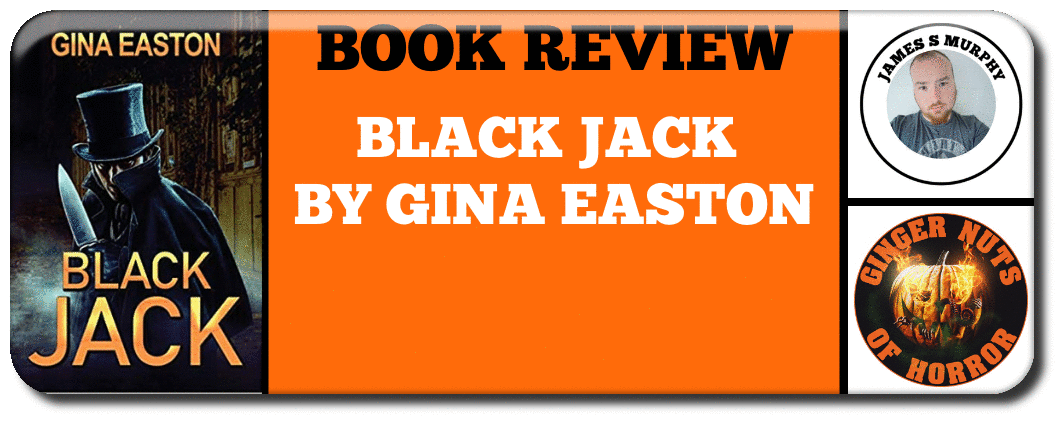
 Jack the Ripper continues to compel the imagination of millions even 140 years after he last went out murdering on Whitechapel’s streets in that giant hat we assume he had for some reason. As the first serial killer picked up for profit by an incipient mass-media, fascinated sickos like me tend to see the Ripper as an origin story for the multiple murderers of the modern age and, as Alan Moore has it in his masterpiece ‘From Hell’, for the twentieth century itself. The premise of Black Jack isn’t that the star of School of Rock restarts his career after an entirely pointless reversal of his christian and surname, but rather posits the idea that the Ripper was not some misogynist aristocrat or consumptive minor royal, but rather an actual demon. Jack the Ripper is not the only antagonist of the piece. London itself is the first challenge that our brave heroes must battle. Black Jack has the London of ‘City of Sin' by Catherine Arnold and ‘the Five’ by Hallie Rubenhold (one of the best non-fiction books of the last few years) as a main character and a foul fantasy world. Its slums are turned into seeping wounds which let loose every conceivable human degradation. Fortunately for the toothless, foul smelling poor of the suburb, there are archetypal members of the better sort available to do good works. Some of the most compelling scenes come not when our heroes are fighting the obvious evil, but instead in the infirmary where Emma Hollander, our heroine, works, which ring with an educated truth. Equally charming is the romantic relationship as sketched between her and her fiance, the well-born Andrew Hewitt-Brown. They are well meaning and comparatively well-to-do and find themselves caught in the stratified, Darwinian nightmare of the late nineteenth century with no class based analysis to explain the good fortune which pricks at their consciences. The Demon Ripper is well realised, a semi-Lovecraftian creature of pure malevolence, a Season One Buffy demon let loose in a world utterly unprepared for it. It’s an artist of carnage, leaving mementos for the capital to make sense of. I love the chapters from the monster’s point of view, plotting its escape to the continent or revelling in its own evil. Easton is not stingy with her words. She luxuriates in the protean possibilities of the period’s language. The Victorian inflected prose takes the reader on a tour of the natural and supernatural ills of the city alike. The novel isn’t written like a dreary Thomas Hardy book, but instead pulses on like the contemporary penny dreadfuls, the type of pulp that would terrify the populace at the time with tales of Springheel Jack or Sweeney Todd. Sometimes this native Londoner finds the dialogue a little iffy, and perhaps a bit anachronistic, but that only adds to the feeling of the book at its best, of a top of the range Hammer horror as the studio dealt with the changing landscape of the 1970s.  James S Murphy was reared on the top floor of a South London council estate and fled the capital when the rents meant there was no way to live honestly in the city. He's currently in Birmingham, where he funds his writing, podcasting, and bad habits with a series of braindead jobs. He tries to be good to people who deserve it and stand against those who don't. You'd like him. https://twitter.com/JimCrop1916 https://www.patreon.com/jimslater 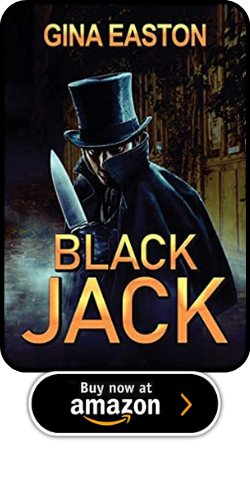 Set against the brooding backdrop of one of London's poorest slums, Black Jack explores the mystery of Jack the Ripper. No mere mortal, but a demon masquerading as a human, Jack the Ripper is intent on wreaking chaos and horror. Only one person can stop him. Andrew Hewitt-Brown possesses the occult skills necessary to confront the demon. He decides to hunt the Ripper when his fiancée, Emma Hollander, a nurse working in Whitechapel, becomes the target of the fiend's insatiable evil. Black Jack contains elements of magic and horror, but ultimately it is a testament to the love between two extraordinary people who must battle a great evil.   Comments are closed.
|


Archives
May 2023
|

|

|
 RSS Feed