


Book review: Pangs by Jerry Wheeler
22/3/2022
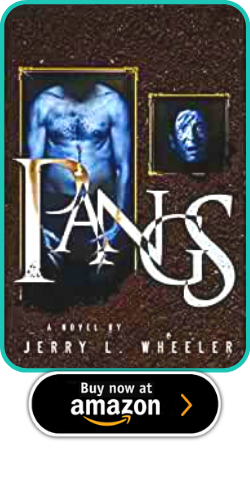
 Book review: Pangs by Jerry Wheeler Publisher: Queer Space (Rebel Satori Press) Link: https://rebelsatori.com/product/pangs/ Pub date: Sept. 23, 2021 Page count: 232 By Marshall Moore Talent vampires. That’s what this book is about. I’ll put that front and center because, not to put too fine a point on it, it’s such a terrific concept that you’re allowed to approach the first page with a little anxiety. If the author gets it right, you’re in for a fun ride with (most likely) a helping of satire on the side. If they get it wrong, on the other hand, there will be twice the disappointment: it’s not just a failed story but a missed opportunity. Jerry Wheeler’s debut novel Pangs falls into the former, getting-it-right category. Told from main talent-vamp Warner’s point of view, Pangs starts out as a sort of tug-of-war with another vampire for access to Wade, a young country musician endowed not only with once-in-a-generation talent but with smoldering good looks and a great physique. This second vampire, Seth, is a longtime frenemy of Warner’s: there has been conflict between them over the centuries, yet they maintain a certain mutual respect. The magnitude of Wade’s talent will be enough to sustain one of them for decades without actually damaging the young man and his potential career. Thus, the game begins, the two vampires posing as producers in order to keep him close at hand. However, there’s a lot more going on in Pangs than a supernatural tussle over possession of a budding musical genius who is yet to work out whether he prefers men or women in bed. There are different types of talent vampire, for one thing: some go after musicians; others are more literary. And one of Wheeler’s authorial gifts is in his layered characterizations. To an almost noirish extent, no one is quite who they seem. There are murderous agendas, and there is also a deftly handled undercurrent of regret and even anguish at times: Warner is not at entirely comfortable drawing sustenance by obliterating talent, because unlike the blooded victims of conventional vampires, his own victims go on living but are empty wrecks when he’s done with them. Wheeler is well known as the editor of a number of anthologies, author of the collection Strawberries and Other Erotic Fruits, and founder of the LGBTQ-focused book-review website Out in Print. He has also worked as an editor for a number of independent presses over the years, and he maintains a professional editing practice. It only takes reading a couple of pages to ascertain what a confident and capable writer Wheeler is. His exposition has a quietly authoritative quality, an interlocking precision I don’t often see even in bestsellers from major publishing houses. Yet Wheeler is also clearly having fun here: he has the experience to know all the rules and conventions, and the chops to send the plot on unexpected-but-essential pivots that shouldn’t work but do. I should mention a couple of things I kept noticing, and then acknowledge the Catch-22 in so doing: here and there, the dialogue became expositional, with the characters explaining things more for the reader’s benefit than their own. I also had the occasional qualm about the voice Wheeler used for these centuries-old vampires. On the one hand, well, yes, they were supposed to sound ancient, and did. But I’m not sure they needed to. Both of these choices make sense, depending on how you look at them: in the first case, Wheeler had some complex world-building to do and dispensed with it efficiently rather than mindlessly adhering to the “show, don’t tell” dictum writers are supposed to live and die by; in the second, he made an effective stylistic choice and deployed it consistently. The only reason I bring these two points up is to highlight the contrast with the strength of his own prose. And that’s the conundrum: when Wheeler is writing as Wheeler, he’s excellent, and these two choices read almost as if he doubted his own (considerable) abilities to pull these aspects of the story off in his own voice. In the end, though, there’s a lot of fun to be had here. This isn’t a horror novel in the most traditional sense—these are sexy vampires in the Anne Rice tradition, but unlike Rice’s literary creations, Wheeler’s talent-vamps can have sex and often do—and the tension comes less from scares than from concern about what’s going to happen to a character you like. But this is very much the work of a writer who knows the horror genre well. There are nods to Anne Rice throughout, as well as to Stephen King, Clive Barker, Poppy Z. Brite, and even Lovecraft. In fact, this could almost be a long-lost Brite novel from before he moved away from horror and wrote Liquor and its sequels… which in itself is plenty of reason to justify tracking it down and checking it out. Pangs |
 |  |


May 2023
April 2023
March 2023
February 2023
January 2023
December 2022
November 2022
October 2022
September 2022
August 2022
July 2022
June 2022
May 2022
April 2022
March 2022
February 2022
January 2022
December 2021
November 2021
October 2021
September 2021
August 2021
July 2021
June 2021
May 2021
April 2021
March 2021
February 2021
January 2021
December 2020
November 2020
October 2020
September 2020
August 2020
July 2020
June 2020
May 2020
April 2020
March 2020
February 2020
January 2020
December 2019
November 2019
October 2019
September 2019
August 2019
July 2019
June 2019
May 2019
April 2019
March 2019
February 2019
January 2019
December 2018
November 2018
October 2018
September 2018
August 2018
July 2018
June 2018
May 2018
April 2018
March 2018
February 2018
January 2018
December 2017
November 2017
October 2017
September 2017
August 2017
July 2017
June 2017
May 2017
April 2017
March 2017
February 2017
January 2017
December 2016
November 2016
October 2016
September 2016
August 2016
July 2016
June 2016
May 2016
April 2016
March 2016
February 2016
January 2016
December 2015
November 2015
October 2015
September 2015
August 2015
July 2015
June 2015
May 2015
April 2015
March 2015
February 2015
January 2015
December 2014
November 2014
October 2014
September 2014
August 2014
July 2014
June 2014
May 2014
April 2014
March 2014
February 2014
January 2014
December 2013
November 2013
October 2013
September 2013
August 2013
July 2013
June 2013
May 2013
April 2013
March 2013
February 2013
December 2012

|

|
 RSS Feed