


 Kristi DeMeester has an extensive and impressive horror pedigree. Her short fiction has appeared in Black Static, Apex Magazine, The Dark and Strange Aeons, to name but a few; she is also no stranger to Year's Best anthologies. It's safe to say that this collection has been highly anticipated. DeMeester's style errs definitively towards the 'weird' end of the horror spectrum. Her imagined worlds carry a distinctive Southern Gothic vibe; they are populated by strange, unnerving characters who belong on the fringes, in the shadows. Consequently, there is a vein of stark realism which compliments the dreamy unreality of DeMeester's storytelling. Titular tale "Everything That's Underneath" and "The Wicked Shall Come Upon Him" both shine a light on the inner mechanisms of human relationships, and the outside forces which exert themselves upon our lives, from the mundane evil of illness to the coming apocalypse. DeMeester handles both tales with a blunt and honest humanity; the horror of slow, inevitable decline complements the more visceral, immediate horror of uncanny things lurking in the shadows, and the pain of infidelity is a backdrop to something almost biblical in its strangeness. "To Sleep Long, To Sleep Deep" is pure horror from start to finish. A tale of obsession infused from the very beginning with a palpable sense of wrongness, the ending is somehow both inevitable and shocking. "The Fleshtival" is far more unpleasant, and not always in a good way. The characters are all utterly unlikeable, and it's difficult to care about anything that might happen to them. The eventual payoff is satisfying, but it's a labourious journey, made somewhat easier by the perfusion of rich, dark imagery - something DeMeester excels at. Her prose reads more like poetry in places, which may not appeal to some, but her ability to weave complex and vivid imagery is undeniable. "The Beautiful Nature Of Venom" treads perilously close to cliché; short, sharp and punchy, a conspiratorial tale addressed to 'you' in which the reader is aware of what is going to happen but, of course, utterly powerless to stop it. "Like Feather, Like Bone" is an early highlight - a tale picked by Laird Barron for inclusion in The Year's Best Weird Fiction, and it's not difficult to understand why. This is pure Southern Gothic and is as beautiful as it is terrible. Opening with a strange, nameless young girl eating birds beneath the narrator's porch, this is a very effective tale of loss and ultimately, of healing. "Worship Only What She Bleeds" is another strong story, showcasing DeMeester's unique ability to write female-driven narratives which are both incredibly strange and highly relatable; the relationship between Mary and her mother is the star of the show here, played out against a nightmarish backdrop of bleeding houses and raw meat, and an ending which horrifies in how right it feels. "The Tying Of Tongues" has a distinctly different feel to the stories that precede it; almost folkloric, a Grimm's fairy tale as seen through Angela Carter's lens. "The Marking" is a piece of deeply discomfiting body horror, and another example of DeMeester's excellent mother-daughter dynamic, and the interplay between familial nurture and destruction. "The Long Road" takes us back to the realms of Southern Gothic with a story that is light on plot but rich in unsettling imagery. "The Lightning Bird" is another female-driven tale which touches upon African mythology and provides an interesting new lens through which we might view the mother-daughter dynamic so familiar to this collection. "The Dream Eater" is a superb piece of weird fiction, an almost Lynchian apocalyptic nightmare which verges on the nonsensical in the best possible way. Probably the best story in the collection, in my humble opinion. "The Dream Eater" is a very difficult act to follow, but "Daughters of Hecate" is well chosen to succeed it. One of the more plot-heavy stories in the collection, it's a complex examination of motherhood both from a daughter's perspective, and from that of a prospective parent. DeMeester's stories tend towards the abstract rather than the emotional, but this proves that she has the ability to get to the heart of matters, and to find painful truth in them as well as the artistic and the disturbing. "Birthright", original to this collection, is a clever and creepy novelette reminiscent in ways of Paul Tremblay's 'A Head Full of Ghosts'. "All That Is Refracted, Broken" takes a similar path, but ends up somewhere very different indeed - a brother-sister relationship this time, jagged stream-of-consciousness prose and an unexpected but excellent ending. I had read "December Skin" in its original publication in Black Static and it holds up just as well on re-reading. "Split Tongues" exhibits a wholly unfamiliar religious terror which, to this British reader, is alien and unsettling in a quintisentially American kind of way. The final story, "To Sleep in the Dust of the Earth", is almost a coming-of-age tale, a story in which the strangeness takes a back seat to the relationship between Willa and Lea; perhaps the most 'earthly' of DeMeester's stories in many ways, but no less eerily beautiful for it. There are 18 stories in this collection, and the sheer density of it invites frequent pause, not least because these stories are best read with time to digest before diving into the next one. Consequently it is not an easy read. It is, however, very rewarding; it’s likely to be a favourite for lovers of weird fiction and beautiful prose alike. 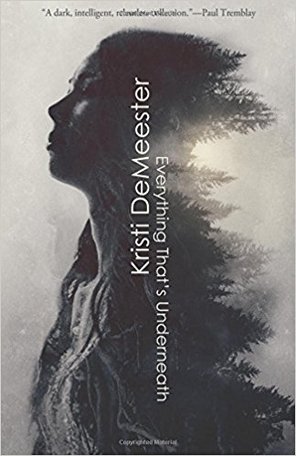 Everything That’s Underneath, Kristi DeMeester’s debut powerful horror collection, is full of weird, unsettling tales that recall the styles of such accomplished storytellers as Laird Barron and Tom Piccirilli. Crawl across the earth and dig in the dirt. Feel it. Tearing at your nails, gritty between your teeth, filling your nostrils. Consume it until it has consumed you. For there you will find the voices that have called from the shadows, the ones that promise to cherish you only to rip your body to shreds. In Everything That’s Underneath, Kristi DeMeester explores the dark places most people avoid. A hole in an abandoned lot, an illness twisting your loved one into someone you don’t recognize, lust that pushes you farther and farther until no one can hear yours cry for help. In these 18 stories the characters cannot escape the evil that is haunting them. They must make a choice: accept it and become part of what terrifies them the most or allow it to consume them and live in fear forever.  Comments are closed.
|


Archives
May 2023
|

|

|
 RSS Feed