


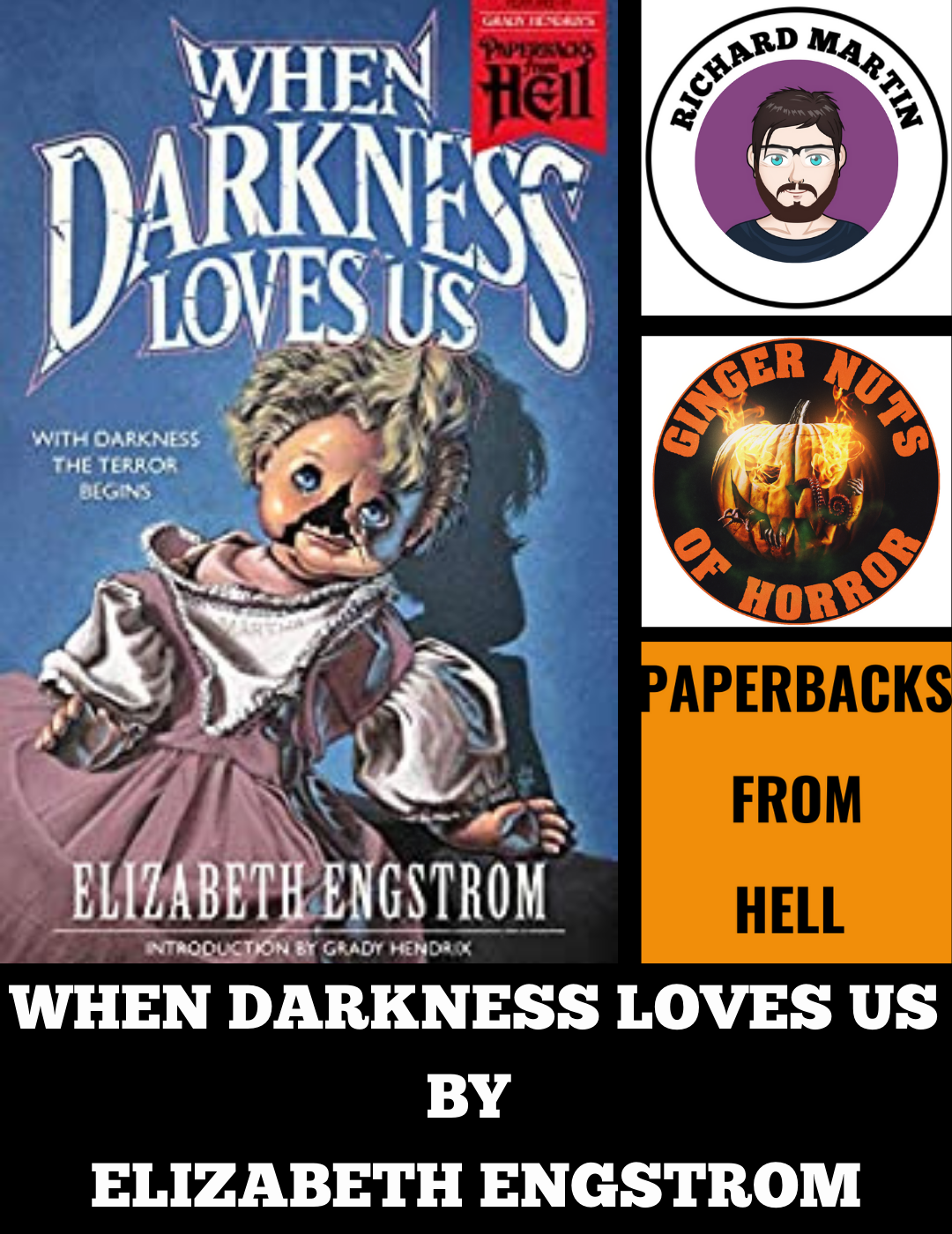
When Darkness Loves Us by Elizabeth Engstrom Publisher : Valancourt Books Language : English Paperback : 234 pages ISBN-10 : 1948405318 ISBN-13 : 978-1948405317 Horror was doing big business in the bookstores in the 1960s. This was largely thanks to occult and gothic literature which promised gentle tales of haunted manors and melancholy spirits on their covers. Things took a more devilish turn towards the end of the decade with the release of ‘Rosemary’s Baby’ in 1967, followed by William Peter Blatty’s ‘The Exorcist’ and Thomas Tryon’s ‘The Other in 1971, but the real fun began in 1974 with the release of two books that would open the floodgate for pulp horror. Jaws (Peter Benchley) and The Rats (James Herbert) proved that there was an appetite out there for books that weren’t ashamed to go all-out horror. The publishing industry took note and throughout the 1970s and 1980s, companies such as Zebra, Tor and Pinnacle published a seemingly endless supply of books promising unspeakable terrors and sporting covers that had to be seen to be believed. Sometimes the content was great, other times… not so much, but one thing that you could always be guaranteed was a fun and entertaining read. By the mid-90s, horror paperbacks were seemingly out, and thrillers were in. Gone were the lurid covers of skeletons, evil dolls, creepy kids and flesh-hungry critters. The horror was still there, it just wasn’t marketed as such, treated like a shameful secret. As titles fell quickly out of print, many of the horror authors and their work became increasingly forgotten by all but the most avid fans and collectors. Enter Will Errickson, Grady Hendrix and ‘Paperbacks From Hell’. In 2017 Hendrix and Errickson released their seminal love letter to the horror paperbacks of a bygone era, shining a light on some long-forgotten classics and renewing interest in the mass market horror paperbacks of the 1970s and 80s. Not content to simply share their passion for these oft-maligned but much-missed books, thanks to their partnership with Valancourt Books, we are being treated to new reprints of the best of these decades-old, forgotten gems. To date, thirteen reprints have been published (with a fourteenth on the way), retaining the original cover art and boasting brand new and insightful introductions from Hendrix and Errickson. In this series, I’ll be reading each and every one and posting articles at Ginger Nuts of Horror looking back at the best books two decades of horror has to offer. The second book in the series is ‘When Darkness Loves Us’ by Elizabeth Engstrom. Originally published in 1985 by William Morrow, this debut collection of two thematically linked novella showcased Engstrom’s talent for writing strong and engaging characters along with a knack for delivering wildly unpredictable stories that get under the reader’s skin. The title novella introduces us to Sally Ann; a newly-wed girl of seventeen who lives on her family farm with her husband. Finding herself bored one day, she decides to revisit a favourite childhood haunt of hers; an underground tunnel leading to a set of caverns. When she becomes trapped underground, alone and in the pitch black, becoming increasingly lost and disorientated, she fights to find her way out to save, not just herself, but also her unborn child. The above synopsis accounts for barely the first half dozen pages of this opening story and the less you know about the remainder going in, the better. Engstrom cleverly sets up expectations and subverts them, and you can never be sure where the story is taking you. Clocking in at a slim 65 pages, ‘When Darkness Loves Us’ wastes no time in getting started. The writing itself is equally lean. The style reminded me a lot of the late, great Jack Ketchum, who was a master of writing that seemed simple and straightforward but was incredibly honed with not a single word wasted. ‘When Darkness Loves Us’ pulls this off wonderfully. Much like Ketchum’s work, this story goes to (pardon the pun) some pretty dark places without falling victim to the absurd excess mass-market horror often embraced. Powerfully bleak and brilliantly inventive, you couldn’t wish for a stronger opening statement from a new author. The second, longer story of the two is ‘Beauty Is’ and focuses on Martha, a developmentally challenged woman of middle age, who lives alone after the recent passing of her mother and father. As Martha slowly grows accustomed to her new life on her own, she begins to unlock memories of a childhood that she had blocked out for forty years, and once those memories return her life, and those of the town that watch out for her, will be irrevocably changed. This story had a lot to live up to after such an intense opener but it managed to exceed even those lofty expectations and was probably the stronger of the two. The focus here is on character, and every person in the cast feels so well realised. ‘Beauty Is’ tells an interwoven story, switching each chapter to focus on Martha, and then her mother, effectively telling Martha’s story from birth by cleverly revealing snippets of Martha’s past that inform her actions, and those of the people around her, in the present. Much like the first story in this book, the story does not go where you expect it to, and being less overtly ‘horror’ than its predecessor, makes the story all the more harrowing when things take a dark turn. The ending is one that will stay with you long after you put the book down. I feel like it is worth noting that this is not the only Elizabeth Engstrom book in Valencourt’s Paperback From Hell line (her vampire novel ‘Black Ambrosia’ is book six) and I think it says a great deal that of the thirteen books that make up the line to date, selected from literally thousands of forgotten and out of print horror books from the period, that two are from the same author. If Black Ambrosia is even half as unique and engaging as When Darkness Loves Us, then it's easy to see why. I have never read anything quite like either of these stories, both of which work so well together as a pairing. They not only share common themes (love, whether that be a partner, a child or a parent, and acceptance being two connecting through lines across both pieces) and both boast complex and interesting female protagonists, but both also completely defy expectation and deliver stories that set up a seemingly standard horror premise (whether that be subterranean horror or a more grounded tale of a social outcast) and takes it in new and unexpected directions. When Darkness Loves Us defies the common expectation of a Paperback From Hell by entirely avoiding excess, horror tropes, stock characters or gore, instead offering up a genuinely thought-provoking and disturbing work. If the rest of Valencourt’s reprints can even come close to being this good then sign me up for a lifetime subscription. Join me next time when I’ll be sharing my thoughts on The Reaping by Bernard Taylor. If you’d like to read along with this series and want to pick up copies of the books, or learn more about Valancourts’ Paperbacks From Hell line, visit their site at www.valancourtbooks.com/paperbacksfromhell When Darkness Loves Us |


Archives
May 2023
|

|

|

 RSS Feed