• HOME
  • CONTACT / FEATURE
  • FEATURES
  • FICTION REVIEWS
  • FILM REVIEWS
  • INTERVIEWS
  • YOUNG BLOOD
  • MY LIFE IN HORROR
  • FILM GUTTER
  • ARCHIVES
    • SPLASHES OF DARKNESS
    • THE MASTERS OF HORROR
    • THE DEVL'S MUSIC
    • HORROR BOOK REVIEWS
    • Challenge Kayleigh
    • ALICE IN SUMMERLAND
    • 13 FOR HALLOWEEN
    • FILMS THAT MATTER
    • BOOKS THAT MATTER
    • THE SCARLET GOSPELS
GINGER NUTS OF HORROR
  • HOME
  • CONTACT / FEATURE
  • FEATURES
  • FICTION REVIEWS
  • FILM REVIEWS
  • INTERVIEWS
  • YOUNG BLOOD
  • MY LIFE IN HORROR
  • FILM GUTTER
  • ARCHIVES
    • SPLASHES OF DARKNESS
    • THE MASTERS OF HORROR
    • THE DEVL'S MUSIC
    • HORROR BOOK REVIEWS
    • Challenge Kayleigh
    • ALICE IN SUMMERLAND
    • 13 FOR HALLOWEEN
    • FILMS THAT MATTER
    • BOOKS THAT MATTER
    • THE SCARLET GOSPELS
GINGER NUTS OF HORROR
horror review website ginger nuts of horror website
Picture

RELUCTANT IMMORTALS BY GWENDOLYN KISTE

14/6/2022
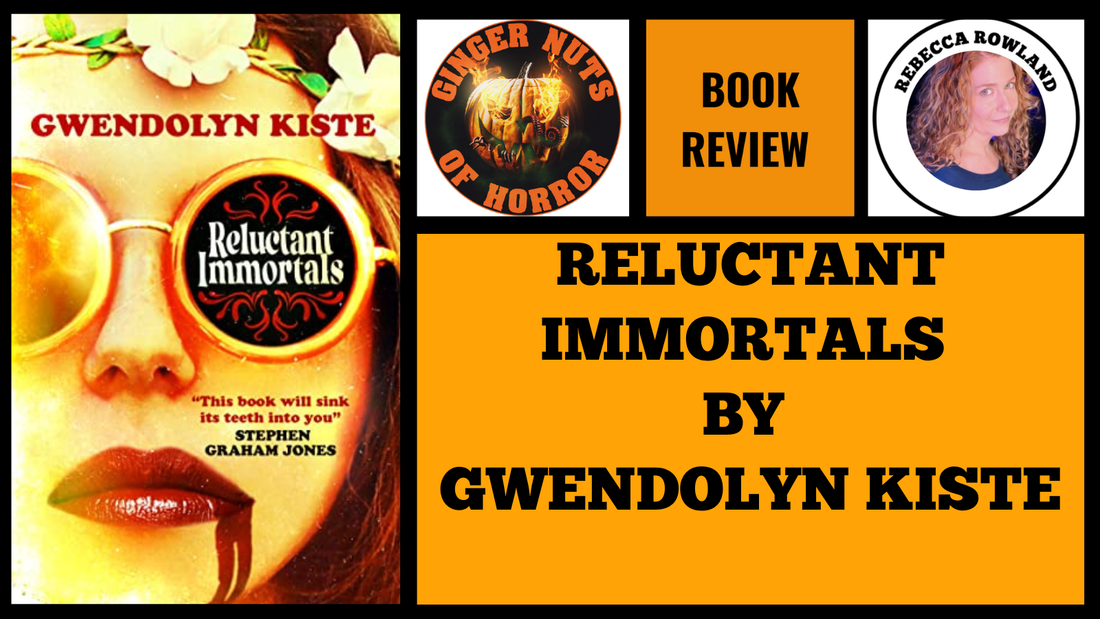
HORROR BOOK REVIEW Reluctant Immortals  by  Gwendolyn Kiste
When Dracula asks, “You’re not the nice girl you pretend to be, are you, Lucy?” and Kiste’s heroine responds, “Who wants to be a nice girl anyhow?” the reader is certain to cheer.
Reluctant Immortals by Gwendolyn Kiste

ASIN ‏ : ‎ B09VXBH2DD
Publisher ‏ : ‎ Titan Books (14 Nov. 2022)

Book Review by Rebecca Rowland)
The first line of Reluctant Immortals reads, “It’s almost sundown in Los Angeles, and Dracula’s ashes won’t shut up.” Herein lies the chief conflict of Gwendolyn Kiste’s newest delight: her protagonist, a resurrected Lucy Westenra from Bram Stoker’s classic tale, accompanied by a similarly revived Bertha Mason, fresh from Thornfield’s destruction in Jane Eyre, are living in the late 1960s California, and the men—or better stated, monsters—who devoured them in their human lives are back and in pursuit.

Of course, if you paid attention during Stoker’s rendition, you might wonder how Lucy could be walking around counterculture America after turning into a vampire, then staked and beheaded by Van Helsing and her former suitors. “There are tales about Rochester and Dracula, books and movies, ones where Bee and I have been mostly written out, deleted from our own story, our own lives. Every time I turn around, it seems there’s another version of Dracula, another casting call for nubile young women, corseted and blushing and breathless for him. He’s become an unlikely hero, a bloodsucking James Bond, and I’ve become less than a footnote. The disposable victim who should have known better.” In Reluctant Immortals, one of Stoker’s discarded players takes center stage, and she proves to be more than worthy, balancing quick wit and keen survival instinct with a deadly hunger always simmering quietly just beneath the surface: “When he looks at me, he sees what everyone else does: a perfectly fine young lady, red curls in her hair, red rouge on her cheeks. Never mind the dirt beneath her fingernails and the teeth that sharpen if you catch her on a bad night.”

When the story opens, however, it is Lucy’s fastidious guarding of Dracula’s ashes that comprises most of her time, protecting both herself and the world from her maker’s destructive force. She isn’t alone: luckily, she previously had encountered another character adrift from Gothic’s heyday and the two formed an instant friendship. “In all the movies about [Bertha Mason’s] life, she’s no more than an extra locked away in a flimsy attic. She gets a few meager frames of screen time before a fire gobbles her up in the third act. She’s ash; she’s nothing; she’s an obstacle to overcome. She has to die so that Rochester and his new wife can live.” If Lucy’s character gets a spit and polish in Kiste’s reimagining, Bertha’s receives a full simonizing. Bertha, or Bee, is the perfect complement to hypervigilant Lucy, and together, when an unlucky series of events sends them speeding north toward San Francisco, they transform into a powerhouse duo, picking up new friends from 1960s touchstones (the Vietnam War, the hippie movement) along with ones from their old haunts (Renfield and Jane Eyre herself) along the way. While Lucy and Bee begin their adventure fighting the demons that pursue them, they soon recognize that Dracula and Rochester will never stop preying upon women in general—“We’re interchangeable to them, featureless as a fistful of clay, disposable as a leaky bag of garbage”— and they must save those new friends from sharing their unfortunate fate.

Those acquainted with the classics from Stoker and Brontë will savor this story; the author coyly places Easter eggs for bibliophiles to relish. However, even if the reader is not familiar with the original source material, Immortals serves new gothic atmosphere along with well-crafted wry humor. When Dracula’s habits result in an untidy tableau at Rochester’s modern mansion adjacent to the Golden Gate Bridge, the latter “just shakes his head. ‘Look what’s become of this place.’ Dracula glances around, seemingly pleased with himself. ‘I’d call it an improvement.’ ‘I’d call it a blight on property values.’ Rochester sneers.” Sly winks to the Western canon source material, including a banter over Lucy’s three suitors in Stoker’s novel, twinkle like merry holiday lights throughout the story.
​
Kiste’s 2019 precursor to her protagonist’s revival, “The Eight People Who Murdered Me (Excerpt from Lucy Westenra’s Diary),” set the stage for her newest offering. Her Pretty Marys All in a Row wove well-known characters from popular culture into a chilling urban fantasy; The Rust Maidens danced joyfully between historical fiction and literary horror. Each of these entries added a rung on the ladder to Reluctant Immortals, a novel where the author is in top-notch form. When Dracula asks, “You’re not the nice girl you pretend to be, are you, Lucy?” and Kiste’s heroine responds, “Who wants to be a nice girl anyhow?” the reader is certain to cheer.

Reluctant Immortals 
by Gwendolyn Kiste

Picture
For fans of Mexican Gothic, a harrowing, sultry horror novel about the forgotten women in Dracula and Jane Eyre as they combat the toxic men intent on destroying their lives.

Los Angeles, 1967. Lucy Westenra and Bertha Mason – the forgotten women in Dracula and Jane Eyre – have been existing as undead immortals for centuries, unable to die and still tormented by the monsters that made them.

Lucy has long fought against Dracula’s intoxicating thrall, refusing his charismatic darkness and her ensuing appetite for blood. Bertha Mason, the madwoman in the attic, is still pursued from afar by Mr Rochester, who wants to add her to his collection of devoted female followers.
​

Then Dracula and Rochester make a shocking return in San Francisco. To finally write their own story, Lucy and Bertha must boldly reclaim their stories from the men who tried to erase them in this harrowing gothic tale of love, betrayal and coercion.


CHECK OUT TODAY'S OTHER HORROR ARTICLES 

HORROR BOOK REVIEW CLASSIC MONSTERS UNLEASHED EDITED BY JAMES AQUILONE
Picture

THE HEART AND SOUL OF HORROR PROMOTION ​

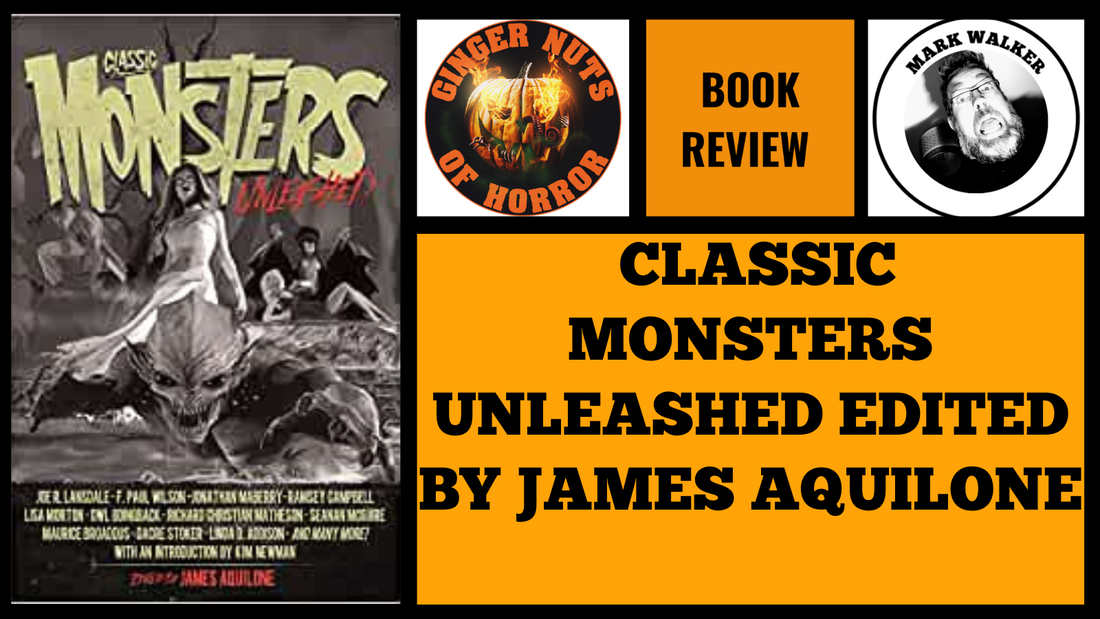
BOOK REVIEW: CLASSIC MONSTERS UNLEASHED EDITED BY JAMES AQUILONE

14/6/2022
HORROR BOOK REVIEW CLASSIC MONSTERS UNLEASHED EDITED BY JAMES AQUILONE.png
Classic Monsters Unleashed
James Aquilone (Editor)


Review by: Mark Walker

ISBN-10: 1645481212
ISBN-13: 978-1645481218
Available at Amazon from 12th July 2022
There is nothing too terrifying or too extreme here which feels fitting in many ways. Those classic films I was raised on, showing on BBC2 at 6pm in the UK when I was a kid, were never that scary. However, they were fun and still come with a reassuring element of nostalgia which is the same here. What we have is collection of stories that have the same source of influence but, with such a variety of writers, presents us with an eclectic mix of tributes to the Golden Age of Monsters 


I’m beginning to think I’m developing a review fetish. In the months I have been writing reviews for Ginger Nuts, this will be my sixth review of an anthology. Perhaps I’m carving out my place as resident “collection connoisseur” for reasons that can only be found deep in the bowels of my subconscious. Whatever the reason, the same caveat applies here as for those other reviews; I am not going to review each story within Classic Monsters Unleashed. The quality of individual tales will be completely subjective; what works for me, may not for you, and vice-versa. I will be looking at the package as a whole and whether it is worth your time and money.

Fetish jokes aside, and ignoring whatever my subconscious might be trying to tell me, who wouldn’t be attracted to a collection that pays tribute to classic monsters such as vampires, wolfmen, witches, and Frankenstein’s monster? Throw in an introduction by the legendary Kim Newman and what else could you want?

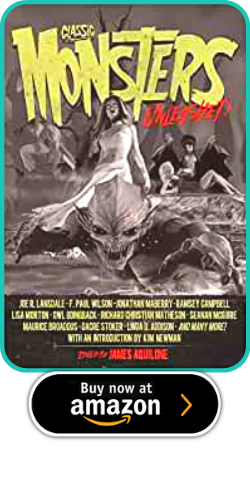
Well, a physical copy for starters. One of the drawbacks of reviewing books before release is the occasional need to review a PDF ARC. Now, I am not knocking the opportunity to read books like this ahead of release, but the black and white PDF just didn’t do it justice; just how good does that cover look? There more illustrations scattered throughout so I am sure the physical edition of the book will be a delight to hold in your hand. It is due for release in July on Kindle, in hardback and in paperback and I am tempted to get myself a physical copy

Anyway, once I dealt with my mild jealousy over anyone with a physical copy, I delved inside to explore the dark minds of the collected writers…

I am, like many horror fans of a certain age, very familiar with the classic monsters popularised through the films of studios such as Universal and Hammer that have graced our screens for decades now. We all have a soft spot for them. Kim Newman lists a familiar selection of them in his introduction; Dracula, Frankenstein, The Mummy, The Invisible Man, The Wolfman, The Phantom of the Opera, The Hunchback of Notre Dame, Jekyll and Hyde. They are all here; villains, beasts, and creatures we all know and love. It is a comfort to be reminded of so many old friends.

Many tales take direct inspiration from their source monster, such as You Can Have the Ground, My Love by Carlie St. George which follows the Bride of Frankenstein as she finds a place for herself in the world, or Höllenlegion by Jonathan Mayberry which plays out as a sequel to the Island of Dr Moreau.

Others are more “inspired by,” taking their lead form the originals, but coming up with a new slant, such as John Palisano’s She Creature from the Golden Cove or Modern Monsters from Monique Snyman which gives us a glimpse of what is likely to happen if you mix The Fly with a mad military scientist and reality TV.

A third group of stories take a completely new approach and are linked simply by a concept or a theme but are no less effective for it. In The Invisible Man: The Fire This Time, Maurice Broaddus takes the concept of the Invisible Man and uses it to effectively explore race and discrimination. In Tim Waggoner’s Old Monsters Never Die, the legendary Werewolf is presented as more than just a simple killing machine. Here, the werewolf has a higher purpose, and the story explores what happens when commitment to duty clashes with family and species bonds.

And that is just a selection. There are twenty-nine stories and one poem in this volume, and they all pay tribute to and/or develop the mythology and lore around our favourite Classic Monsters.

As I mentioned above, I won’t review each story individually. However, in the interest of transparency, I will admit there were one or two stories that just didn’t do it for me. Whether I just didn’t connect with them or didn’t ‘get’ them is immaterial because of our own subjectivity. I don’t see any reason to highlight these particular entries as they may well turn out to be YOUR favourites, and it’s important to remember that this is an anthology and, as such, the chances of you absolutely loving every single story are slim. It’s not quite perfect (for me) but there is a lot of good stuff here between the covers. After all, two or three misses out of thirty is a pretty good hit rate and should not put anyone off. Remember, those one or two stories aren’t ‘bad’ stories, they just weren’t for me.

There is nothing too terrifying or too extreme here which feels fitting in many ways. Those classic films I was raised on, showing on BBC2 at 6pm in the UK when I was a kid, were never that scary. However, they were fun and still come with a reassuring element of nostalgia which is the same here. What we have is collection of stories that have the same source of influence but, with such a variety of writers, presents us with an eclectic mix of tributes to the Golden Age of Monsters which is both new and familiar. While there are a couple that didn’t do much for me, the majority were good stories with a few great ones that had me shaking my head and lamenting, “why didn’t I think of that?”
​
If classic monsters are your thing, I think you will enjoy this volume which looks like it should be a fantastic physical copy when it is published.

Classic Monsters Unleashed (Unleashed Series): Volume 1 Hardcover – 12 July 2022

Picture
Stories of famous monsters in a new horror anthology featuring Joe R. Lansdale, F. Paul Wilson, Jonathan Maberry, Ramsey Campbell, and many others. Dracula, Frankenstein's Monster, the Bride of Frankenstein, Dr. Jekyll and Mr. Hyde, Dr. Moreau, the Headless Horseman, the Invisible Man, the Phantom of the Opera, the Wicked Witch of the West--they're all here, in this collection of horror short stories that reimagine, subvert, and pay homage to our favorite monsters and creatures. Written by the biggest names in the genre--including Joe R. Lansdale, F. Paul Wilson, Jonathan Maberry, Ramsey Campbell, Lisa Morton, Owl Goingback, Richard Christian Matheson, Seanan McGuire, Maurice Broaddus, Dacre Stoker, Linda D. Addison, Alessandro Manzetti, Tim Waggoner, John Palisano, Mercedes M. Yardley, Lucy A. Snyder, Gary A. Braunbeck, Rena Mason, and Monique Snyman. And monstrously illustrated by Colton Worley and Mister Sam Shearon.


CHECK OUT TODAY'S OTHER HORROR ARTICLES 

RELUCTANT IMMORTALS BY GWENDOLYN KISTE
Picture

THE HEART AND SOUL OF HORROR PROMOTION ​

BOOK REVIEW: INTO THE NEVER BY ADAM STEINER

13/6/2022
Picture
 like The Downward Spiral, this is a potent combination of obsessive research and carefully constructed discussion underpinned by a deep passion for the source material.
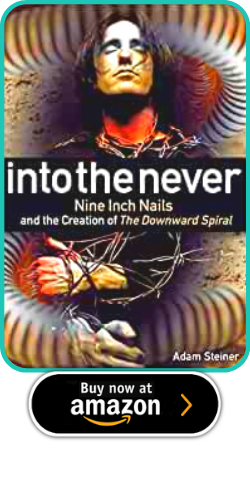

Into The Never is an exploration, dissection, and discussion concerning the seminal Nine Inch Nails album The Downward Spiral. In this scholarly, meticulous book, Steiner presents a chapter by chapter breakdown of both the album itself, and the cultural and personal moments that surrounded, and fed into and off of, the album.


The Downward Spiral is unquestionably one of the great albums of the 90’s; in fact, it’s arguably one of the great artistic achievements of that decade full stop, and one of those rare cases of a genuinely uncompromising piece of outsider art achieving notable mainstream success; as such, it’s a work worthy of a full book-length exploration, and Steiner delves into the task with precision, meticulous research, and a clear passion for the subject matter.


The format of the book is almost that of a dual narrative, in that the chapters alternate between focussing on the track listing in order and discussing wider matters pertaining to the work, such as Reznor’s prior work with NiN, cultural events happening before and during the recording, and other albums and artists that were also causing shockwaves during the era.


It’s a smart approach; it allows Steiner to weave a wider commentary about the cultural moment whilst retaining a deep focus on the album itself. The song chapters are superb; taking in the themes of the lyrics, the often intricate and complex methods of both recording and production (music nerds will delight in Steiner’s grasp of this technical minutiae, though I never felt it was overwhelming proceedings), and of course the overall feelings the songs evoke, as well as their placement in the running order. Whilst it’s clear Steiner finds the album impressive, this is no simple fan service; the author isn’t afraid to interrogate the darker aspects of the often troubling source material, and for me, some of the strongest passages were when the author was almost visibly wrestling with his admiration for the artistry alongside a concern over what was being expressed. I also especially enjoyed the exploration of Rezbor’s own push/pull relationship with perfectionism and the desire for mess, distortion, chaos - all forces clearly at work in an album that is, amongst other things, a spectacular achievement in terms of production.


The bridging chapters are similarly well written and researched, and provide vital context, both for Reznor’s career and the culture at large. I especially enjoyed the frequent references to Nirvana's Nevermind, an album from a different musical tradition that nonetheless had some resonance with The Downward Spiral, in terms of being an expression of profound alienation. There’s also discussion of Reznor’s earlier album work, his infamous music videos, the inevitable post-Columbine backlash, and much more. Throughout both chapter formats, there are frequent quotes from Reznor himself, taken from various sources over his decades of public interviews, as well as collaborators and, where appropriate, critics, all of which adds to the feeling of reading a piece of journalism with real weight.


The book also closes strongly, with a whirlwind tour through Reznor's post-Spiral output; I personally could have stood to read a deal more of the excellent work Steiner put in here about the immediate NiN followup album, The Fragile, though I do begrudgingly accept that would have been, by definition, outside of the scope of his project.


Overall, I found Into The Never to be a worthy companion to the seminal album that is it’s subject; like The Downward Spiral, this is a potent combination of obsessive research and carefully constructed discussion underpinned by a deep passion for the source material.


KP
3/2/22
Further reading 

​THE REAL HORRORSHOW: INFLUENCE OF HORROR ON THE MUSIC OF TRENT REZNOR BY ADAM STEINER

Into The Never: Nine Inch Nails And The Creation Of The Downward Spiral 

Picture
Ushering in a new era of confessional music that spoke openly about experiences of trauma, depression, and self-loathing, Nine Inch Nails' seminal album, The Downward Spiral, changed popular music forever bringing transgressive themes of heresy, S and M, and body horror to the masses and taking music technology to its limits. Released in 1994, the album resonated across a generation, combining elements of metal, industrial, synth-pop, and ambient electronica, and going on to sell over four million copies. Now, Into the Never explores the creation and cultural impact of The Downward Spiral, one of the most influential and artistically significant albums of the twentieth century, or ever. Inspired by David Bowie s Low and Pink Floyd's The Wall, the album recounts one man's disintegration as he descends into nihilism and nothingness. Blurring the lines between autobiography and concept album, creation and decay, it is also the story of Trent Reznor (the man who is Nine Inch Nails) as he pushed himself to the edge of the abyss, trapped in a cycle of addiction and self-destruction. The Downward Spiral also presents a reflection of America and a wider culture of violence, connecting the Columbine High School shooting, the infamous Manson family murders, and the aftermath of Vietnam and the Gulf War.


​CHECK OUT TODAY'S OTHER HORROR ARTICLES 

HORROR FEATURE  HORROR OF MY LIFE-  RUS WORNOM
Picture

THE HEART AND SOUL OF HORROR 

BOOK REVIEW: TERRITORY BY DAN HOWARTH

9/6/2022
HORROR BOOK REVIEW TERRITORY  BY  DAN HOWARTH.png
Territory by Dan Howarth

ASIN ‏ : ‎ B0B14JLJTB
Publisher ‏ : ‎ Independently published (12 May 2022)
Language ‏ : ‎ English
Paperback ‏ : ‎ 127 pages
ISBN-13 ‏ : ‎ 979-8825226576
​
Review by David Watkins
Howarth packs a lot into these hundred or so pages. Each character is well drawn, with clear motivations and feelings. Their reactions to the escalating plot feel real and earned – no mean feat given there are a lot to keep track of. 

Howarth’s latest novella is an absolute doozy. An atmospheric slow burn, full of incidental detail where you can almost feel the cold and smell the desperation of his characters.
​
Jari is a stoic hunter, still living in the tiny hunting village he grew up in. He is mourning the loss of his wife and hunting dog (although Howarth never makes it clear exactly which one he misses the most!) and is disappearing into drink. His former best friend, Asko, returned to the village around a year ago, with his gorgeous new wife.

A pack of wolves is hunting the livestock in the area, and this inciting incident puts the two friends at loggerheads. Jari wants to exterminate the wolves whilst Asko wants to leave them alone. It’s easy to draw COVID parallels here, with Asko playing the part of the COVID deniers of the last couple of years. He thinks the wolves will move on and there is no inherent danger to their presence. This conflict between the two men is the heart of the novella as they each try to sway the villages to their point of view.

Howarth packs a lot into these hundred or so pages. Each character is well drawn, with clear motivations and feelings. Their reactions to the escalating plot feel real and earned – no mean feat given there are a lot to keep track of. Howarth also packs in some great scenes, which have you on the edge of your seat – a particular stand out has two boys running for their school bus.

This is an easy book to recommend. It is superb, from its attention to detail through to the aforementioned scenes of horror. I liked Howarth’s earlier stuff too – his collection ‘Dark Missives’ is also worth your time, but this is a step up from anything in that.

Highly, highly recommended.


Territory 
by Dan Howarth

Picture
In a remote Finnish hunting community, darkness and the cold hold the villagers close. As a pack of wolves threaten the village’s future, grief-stricken hunter Jari must unite the population to reclaim their territory.

Haunted by the loss of his wife and his best hunting dog, hunter Jari tries to flow the stem of alcohol and grief that threatens to destroy his life. As the darkness and isolation of winter settles around his small hunting community in remote Finland, it brings with it another threat. The encroachment and growing boldness of a pack of wolves endangers the villagers’ way of life. The presence of the wolves opens old feuds and cracks within the community’s makeup. As Jari tries to lead the villagers through their toughest season, it soon becomes clear that not everyone will survive the winter...

Picture
David Watkins lives in Devon in the UK with his wife, two sons, dog, cat and two turtles. He is unsure of his place in the pecking order: probably somewhere between the cat and the turtles.

He has currently released three novels: The Original's Return, The Original's Retribution and The Devil's Inn. Each book is well rated and reviewed on Amazon and beyond.
​

His most recent release is Rhitta Gawr, part of the Short Sharp Shocks series.
Coming this summer... The Exeter Incident from D&T Publishing.

Read more here: author.to/DavidWatkins


CHECK OUT TODAY'S OTHER HORROR ARTICLES 

HORROR FEATURE IT’S THE QUIET ONES YOU HAVE TO WATCH OUT FOR BY STUART D. MONROE
Picture

The Heart and Soul of Horror 

BOOK REVIEW: GROWTH BY ELIN OLAUSSON

8/6/2022
BOOK REVIEW: GROWTH BY ELIN OLAUSSON
Elin Olausson may be a relatively new reverberation in the symphony of dark fiction authors writing today, but she is one on which to keep a close eye. Her stories are on par with those of other powerhouses in contemporary psychological fiction—Iain Reid, Asa Nonami, Alex Michaelides, Gillian Flynn—and saunter with creepiness of the highest caliber.
Book review of Growth by Elin Olausson (review by Rebecca Rowland)


Writing a piece of fiction in present tense is tricky; veterans warn that it is an approach to be used sparingly and only in cases of urgency. In many stories, such an approach can quickly wear on the reader or even feel awkward or out of place. Elin Olausson, however, pulls it off with such skill, it is unimaginable to read one of her stories written any other way. Her meticulously crafted stories of quiet horror are not simply creepy: they slash into the psyche with twists both unexpected and chilling. I had been familiar with her pieces “Uncle,” “Chalk,” and “Razor, Knife” previously and knew Olausson was gifted; when I read the rest of her debut collection, I was left awe-struck.

In “Roadkill,” the opening tale, Linda and Dolores live an isolated life, save for the occasional visit from Gabriel, who brings them news from the outside world. Travelers who venture past their house at night are greeted with an unhappy surprise. Linda herself has created a world of her own in a lonely shack filled with other people’s belongings. “When I come back inside a while later she’s in the kitchen, knife in one hand and an apple in the other. She chops it in pieces, shoving them into her mouth and chewing soundlessly. The pale flesh is streaked with maggot trails, running here and there like scabs. The knife slices through a live maggot, and I look away. In front of the sink I spot that feather from before. It’s crumpled—one of us must have stepped on it. Just another speck of dirt on a filthy floor. ‘I didn’t ask for this,’ Dolores says, apple kernels dropping from her mouth into her lap. ‘We’re just surviving. That’s all we’ve ever done.’ I don’t know what she wants me to say, so I stay quiet. In fact, I’m not sure she’s talking to me at all.” The story’s tone grows more and more ominous until the plot arc shatters deliciously into a million shards. The reader will return to read the story again just to collect the breadcrumbs surreptitiously dropped from the very first lines.

When a new family moves into the Mansion—called this by the narrator’s family because of its incongruence to others in the neighborhood, Anna introduces herself to the new residents and makes instant friends with their daughter, a black-haired girl with blood-red lips. Titled after Anna’s nickname for her beautiful companion, “Snow White” builds tension with the same quiet ferocity that is a hallmark of Olausson’s fiction. “People died on our street. Not while we lived there, but before, and the once-pretty bungalows and terrace houses lined the road like broken shells. I don’t think my parents noticed it at first. The desolation. Our house is a good one—two stories high, with a large basement and an attic. We even have a porch. But no matter in which direction you look, there are untamed gardens and weeds that have wormed their way through cracks and blocked doors. Our dead neighbors’ windows are black eyes staring into nothing, and a few tiles slide off the roof of the house next door every time there’s stormy weather. Many of the houses have been demolished, of course, leaving only foundations behind bushy hawthorn hedges. Every time I go grocery shopping I have to walk past them—the remnants, the reminders…A deserted land, and I am the only one here.” What seems to build as an admiration by a reticent schoolmate stealthily spirals into something much more malevolent until again, Olausson slyly pulls the rug out from under her readers.

There isn’t a weak entry in Growth, though a few tales shine especially bright. The intriguing new neighbor trope resurfaces in “Laurent,” but this time, the tale’s narrator finds shelter in her neighborhood’s hiding places, and when Laura appears, living with her grandmother in the “witch-house” just down the lane, their household becomes a haven for the withdrawn pre-teen, even as the specter of Laura’s unseen twin brother haunts her curiosity. Family secrets take center stage in “The Ice,” when Nina, the youngest of the sisters, dreams of their late sibling Viola in their isolated hut “beside the cold, dangerous lake” and discovers the secret that they have been hiding from her. In “Slither,” Aura is sent to live with Vera and Ivan when her mother is forced into rehab, but it’s the “wet slithering sound” coming from Ivan’s mother’s house next door that draws Aura’s full attention.
​
Elin Olausson may be a relatively new reverberation in the symphony of dark fiction authors writing today, but she is one on which to keep a close eye. Her stories are on par with those of other powerhouses in contemporary psychological fiction—Iain Reid, Asa Nonami, Alex Michaelides, Gillian Flynn—and saunter with creepiness of the highest caliber. Growth is a collection that is a must-read for anyone who appreciates literary horror, as it’s certain to finish as one of 2022’s best releases in the genre.

Growth Paperback – 20 Jun. 2022
by Elin Olausson 

Picture
Twenty dark tales of psychosocial horror fill the pages of Elin Olausson's stunningly creepy short story collection debut.    Three sisters live isolated in the wilderness, unbothered, until their world shatters with the arrival of a stranger. A young man revisits the childhood home where his sister danced and his mother died. A woman is promised the house of her dreams and goes mad when she doesn't get it. Two evil teens stand united against the world, until one of them falls in love. In an abandoned asylum in the desert, a girl chants her own name.       


Filled with madness, darkness and the truth of the human condition, Olausson's stories will leave readers thinking about their own sanity and questioning the motives of those who are closest to them.  ​


CHECK OUT TODAY'S OTHER HORROR ARTICLES 

FILM REVIEW: MAD GOD (2021) WRITTEN AND DIRECTED BY PHIL TIPPETT
Picture

THE HEART AND SOUL OF HORROR PROMOTION ​

BOOK REVIEW: BEL, THE LAST DRAGON: JUNGLES OF HABBIEL BY JOHN BALTISBERGER

7/6/2022
HORROR BOOK REVIEW BEL, THE LAST DRAGON- JUNGLES OF HABBIEL BY JOHN BALTISBERGER
Over the last few years, John Baltisberger has been a busy dude. I’m not gonna list everything he’s done in this intro because that would make for a pretty clunky start, but whether he’s writing, publishing, podcasting, or playtesting, he’s constantly adding cool shit to the worlds of genre fiction, splatterpunk, and Jewish literature. His own fiction runs the gamut from kaiju to poetry and from splatterpunk to pulpy revenge thrillers and works inspired by Jewish mythology. His latest, Bel, The Last Dragon: Jungles of Habbiel is another splattery, pulpy, testament to his creativity and versatility.

To be clear, Bel, The Last Dragon: Jungles of Habbiel, isn’t technically a horror book. Sure, it’s got horrific elements, including some seriously grisly scenes of death and destruction, but it’s more akin to fantasy than horror. Baltisberger himself refers to it as Splatterpulp and says it’s part of the same series as War of Dictates.

Distinctions aside, though, this is a hell of a lot of fun. Populated by angels, demons, dragons, satyrs, succubi, and loads more awesome creatures, this book wastes no time getting us into the thick of things. If you’ve followed any of Baltisberger’s Wandering Monster podcast, you’ll know he loves his tabletop roleplaying games, and this book has that feel right from the start.

The protagonist, Bel, like all good dragons, has been asleep for quite some time. And yes, Bel is a dragon, a shapeshifting dragon who’s most frequently in human form, but who is quite capable of spitting fire and making meals of his enemies – which he does! He’s also a famed warrior from The War of Dictates, and you’d better believe he’s going to put his ass-kicking skills to good use. As mentioned before, this book is good fun in all the best ways.

Once Baltisberger has built some pathos, introduced some more of his trademark characters, and allowed Bel to experience the joy of a hot dog, he sets his protagonist up with a party of fellow adventurers and a spicy little quest into the jungles of Habbiel. At this point, you should know that Baltisberger infuses all of this with a tremendous amount of lore, but it’s delivered in such a succinct way that the story doesn’t bog down. One of the complaints I’ve often had with fantasy is that between set pieces, there can be novella-length passages of exposition. This book doesn’t have that problem.

Instead, we’re allowed to feel our way through the world without needing to know the history of every tree or have some weird gumboot-wearing hermit sing us songs. Baltisberger eschews those tropes and focuses on moving his plot forward while drip-feeding us what we need to know. As a result, even though this was my first visit to the War of Dictates series, I never felt lost, and that’s the mark of a good writer. The characters speak for themselves, and so does the lore.

Once the quest is firmly underway, there are gruesome battle scenes, epic action, a fight of truly inhuman proportions, some of the authors trademark brutality, a touch of humour, and even a love (lust) story. Throughout this, we learn the scale of how much Bel has lost during his slumber. In turn, we can’t help but take great joy when he violently takes his frustrations out on his enemies in creative ways.

In summary, this is a delightfully grisly and gruesome fantasy novella that trims the fat from the genre and delivers on its promise to leave the reader with a splattery, pulpy tale about a famed hero getting back into the business of destroying those who’ve wronged him and his people.
​
It’s good stuff. Bring on the next one.

Bel, The Last Dragon: Jungles of Habbiel 
by John Baltisberger 

Picture
In 1865, Bel, in the service of Ashmandai and Lillith, fell in battle to one of the Grigori.

Nearly 200 years later, Bel has awoken to find that his people, the mighty Dragons of the Sheydim, are long dead, casualties in the War of Dictates.

Mind set on revenge, the last dragon ventures to a world hidden in mists to confront the fallen angel Habbiel and tear apart their empire in glorious violence and bloodshed.

"John Baltisberger nails another foray into the cosmic horror and epic fantasy realms with this one." --Nikolas P. Robinson, Author of May Cause Occular Bleeding

Zachary Ashford

Picture
Zachary Ashford is an Australian educator, a freelance writer, and the Aurealis Award-nominated author of When the Cicadas Stop Singing from Horrific Tales. He spends long periods of time surrounded by horror merch, listening to metal and conjuring Australian horror stories that represent our themes of isolation and conflict with a hostile environment.

CHECK OUT TODAY'S OTHER HORROR ARTICLES 

COVER REVEAL: THE SECRET GARDEN OF YANAGI INN BY AMBER A. LOGAN
Picture

THE HEART AND SOUL OF HORROR PROMOTION ​

BOOK REVIEW: BLACK MAMBA BY WILLIAM FRIEND

6/6/2022
HORROR BOOK REVIEW BLACK MAMBA BY WILLIAM FRIEND
Invisible friends were never more unsettling…..
​
Invisible friends are a tricky phenomenon to get right in horror fiction and in reality characters from films spring more readily to mind than the printed page. Many of my favourites are from non-horror novels, ranging from Fight Club to the obscure Aussie novel Pobby and Dingan (Ben Rice) and freaky kid’s dark fantasy The Imaginary (AF Harrold). Last year Stephen Chbosky’s 700 pager Imaginary Friend brought the subject to the international bestseller charts, but in a brief 247 pages William Friend’s startling debut totally blows the bloated excesses of Imaginary Friend out of the water. Not a word is wasted in this tight novel which will have you turning the pages at speed whilst you forget to draw breath and twitch at the flicker of a shadow in a darkened bedroom.


I should get the weakest feature of this book out of the way straight away: the title. I hate it. Black Mamba sounds like a cross between an eighties action movie and a Quentin Tarantino character (which it is in Kill Bill). This title fails to sell the book as the exceptionally clever psychological horror novel it truly is. The blurb name-checks it against The Babadook (which if fair enough) but The Babadook has an ominous ring which Black Mamba totally fails to conjure, probably because it is so easily connected to a snake. Considering the unsettling presence the Black Mamba creates in the household of Alfie and his family it could have done with a more striking name, as even though we are crossing mediums it was every bit as good as The Babadook.


This was one of these books which could be equally enjoyed by both thriller and horror fans and does not rely upon cheap thrills, violence of exorcist style head-spinning for its unsettling moments. The action is all very realistic, quiet, subtle and character driven, for example, there was one excruciating scene where the social services appear at the family home after an incident at school which was so painful I was hanging on every word as the tension between the characters heightened. One of the truly outstanding features of Black Mamba was its sneaky use of ambiguity in the relation to the invisible friend, if your book is under 250-pages and the writer is as skilled as William Friend the reader is pulled by the nose before repetition sets in. Often such endings can be disappointing, but this is not the case with Black Mamba, which maintains its level of unease to the final pages. You will probably read the final paragraph more than once (I certainly did).


Imaginary friends aside, at the heart of Black Mamba lies an incredibly convincing cross-generational family drama, which at the outset seems like a normal unit trying to recover from a terrible personal tragedy. However, as the slow burning and shadowed events move on this intricate story goes much deeper as we find out more about Hart House and the startling events which preceded the family living there. The manner in which little tip-bits regarding the family are dropped into the plot are beautifully handled and help creative an unnerving atmosphere with the reader is never quite sure whether they are being fed the truth.


How can two very well-behaved twin little girls messing around with an invisible friend called ‘Black Mamba’ be so unsettling? It’s hard to explain, but once you have spent time with the family you will know exactly what I mean. The novel starts nine months after their mother Pippa died in a freak accident and the family is struggling to cope. Grief, undiagnosed trauma and pain oozes from the pages as Alfie cannot deal with losing Pippa, the love of his life. In the opening pages the twins wake Alfie and tell him there is a man standing at the bottom of their bed. ‘Black Mamba’ has made his first appearance and to say much more about the plot in this deeply psychological novel would spoil the twists and turns which lie ahead.


This stunning literary suburban chiller is seen from two points of view, Alfie and Pippa’s twin sister Julia, who is a psychotherapist struggling with her own demons after their joint devastating loss. Julia also has a tricky relationship with her mother who plays a key role in the plot, especially in her slightly off-kilter religious beliefs which lurk in the background. A great deal of the success of the novel revolves around the relationship between Alfie and Julia and how they manage the appearance of Black Mamba, especially since they are both suffering from a combination of grief and trauma which impacts how they perceive the twins. Although the novel is not seen from the point of view of the girls, the story does not throw any cheap shots by portraying them as evil devil children and is all the better for it because they are so believable and when one of them acts out of character, which happens on several occasions, it is truly startling.


It would have been easy to deliver a loud bombastic ending, instead a beautifully observed family drama, where all the participants are emotional wrecks, plays out. Both Alfie and Julia were sympathetic characters and the dream sequences were particularly striking with even the sudden movement of a shadow being played out with profound effect and atmosphere. I loved Black Mamba and recommend it very highly, interestingly one of the genuine gold standards of novels with invisible friends was Thomas Tryon’s classic The Other, which also had twins. Coincidence? I wonder….


Tony Jones

Black Mamba
by William Friend

Picture
Daddy, there's a man in our room...

This is the chilling announcement Alfie hears one night, when he wakes in his quiet, suburban house to find his twin daughters at the foot of his bed. It's been nine months since Pippa - their mother - suddenly died and they've been unsettled ever since, so Alfie assumes they've probably had a nightmare. Still, he goes to check to reassure the girls. As expected he finds no man, but in the following days the girls begin to refer to someone called Black Mamba. What seemingly begins as an imaginary friend quickly develops into something darker, more obsessive, potentially violent. Alfie finds himself struggling to cope, and so he turns to Julia - Pippa's twin and a psychotherapist - for help. But as Black Mamba's coils tighten around the girls, Alfie and Julia must contend with their own unspoken sense of loss, their unacknowledged attraction to one another, and the true character of the presence poisoning the twins' minds...

A darkling tale of tragedy, hauntings and sexual desire, Black Mamba is a novel of a father's love for his struggling daughters, and a widower's growing love for a woman after his wife's death. With smart, gothicky touches and a large and generous challenge to our assumptions of what and who constitutes a modern family, it explores both the limits we'll go to for our children and the sunken taboos of grief - of how erotics can still exist, and can even be life giving, after suffering loss.

CHECK OUT TODAY'S OTHER HORROR ARTICLES 

HORROR FEATURE  A RAINBOW AT NIGHT- REAPPRAISING THE ‘BURY YOUR GAYS’ TROPE IN TERMS OF MODERN QUEER EXPRESSION BY JAMES BENNETT
Picture

THE HEART AND SOUL OF HORROR PROMOTION ​

LIES OF TENDERNESS BY STEPHEN VOLK - A REVIEW

24/5/2022
Picture
there’s a real sense of anger in many of these stories; a sense of profound dissatisfaction with the brutality of the status quo, and a desire for things to be other, better. 
Lies Of Tenderness by Stephen Volk - A Review
Lies Of Tenderness is Stephen Volk’s latest collection from PS Publishing; seventeen short stories, plus an introduction by Priya Sharma and a generous set of story notes.


And it’s superb.


The collection starts with The Holocaust Crasher; the tale of an elderly man who has discovered a newfound sense of purpose in old age by touring schools and delivering speeches-plus-Q&As to classes of schoolchildren about his experiences surviving the holocaust. The only slight wrinkle being that his number tattoo is drawn on with biro, because he’s an imposter, delivering stories synthesised from studying history.


So much of what makes Volk such a brilliant writer is encapsulated in this tale. For starters, there’s the voice - the narrative is first person, so we’re inside the mind of the main character from the opening, seeing the deceit play out almost in real-time. The man is avuncular and honest (er, well, with us, anyway), and as repellent as his behaviour is, I found it increasingly hard not to enjoy his company. It’s an incredibly accomplished character portrait.


Then there’s the simple brilliance of that core conceit; what makes someone live a lie? And what makes this someone pick that particular lie? One of the things Volk talks about in the story notes afterwards is how he’s especially attracted to stories where it’s, on the surface, hard to sympathise with a protagonist or position; one is left with the impression that in some cases the stories come from an attempt to make sense of the apparently nonsensical.


That tendency is certainly on display in this opening tale, and I was left marvelling at Volk’s ability to generate interest and sympathy for such an on-the-surface unlikeable character, as well as weaving a narrative that I’ve found my mind returning to again and again since I completed my initial read.


It’s a thread that is woven into many of the tales that follow; The Little Gift and Adventurous feature very different takes on adulterous relationships, Sicko takes in a thief who has a date with cinematic history (or, does she?), and Bad Langage is a gut-wrenching journey into the dark side of grief and rage. In many of these stories, people are committing immoral, even monstrous acts; but regardless of the consequences, Volk doesn’t stint on displaying their essential humanity, frailties and strengths, virtues, and sometimes fatal flaws.


Another thing that makes the collection impressive is how these elements sit alongside tales of the mystical and mythical. Agog and A Meeting at Knossos take us behind the eyes of ancient mythical creatures, while The Airport Gorilla gives us a modern mythology to chew on, from the perspective of the titular stuffed toy. And if that sounds funny, well… it is.


At first.


Then there are the moments where these modes of storytelling collide (in what happen to be two of my favourite stories in this exceptional collection): Outside of Truth or Consequences and the previously mentioned Adventurous. The former is an absolute classic tale of American crime fiction meets The Twilight Zone, with a twist ending that still makes me grin to recall. And Adventurous pulls off the amazing feat of presenting a central conceit that is gleefully demented and yet manages to be simultaneously hilarious and oddly touching, all at once. And I think the why of how it works is instructive about the collection as a whole; Volk is alive to the absurdity of the situation, but, crucially, never sells the characters short, and their sincerity gives proceedings a quiet pathos that accentuates the comedy.


Two other stories fell somewhat into that glorious Twilight Zone mode, for me; The House That Moved Next Door and Beat The Card Home, though I note there’s elements of that genre of storytelling in Vardoger and even The Flickering Light, in a way. One of the things I enjoyed about the collection is Volk’s ability to move between stories of naturalism and tales of the supernatural (and even mythical); because of his commitment to realism in terms of the characters, as a reader I was never sure which way the stories were going to turn - and indeed with The Flickering Light I found a pleasing ambiguity that left a lingering impression.


Another thread that runs through the collection, in the best possible way, is a sense of Volk’s social conscience. In addition to being attracted to ‘difficult’ subjects and people, there’s a real sense of anger in many of these stories; a sense of profound dissatisfaction with the brutality of the status quo, and a desire for things to be other, better. Elements of this approach abound, but these tendencies are especially pronounced in The Black Cat (which takes on historic racism with a brutal directness, without ever for a moment spilling into prurience) and another personal favourite, Unchain the Beast, which is a genuinely thrilling story that also poses some really tough, fundamental questions about the role of art in the face of brutal authoritarianism.


In summary, Lies Of Tenderness is another absolutely outstanding collection from Stephen Volk, a writer who continues to challenge, to grapple with contentious ideas, and subjects, and who in the process produces work with an incredible range of moods, textures and emotions, but which are united by an exceptional level of quality. It’s an absolute belter of a collection, in other words, and I recommend it enthusiatisically and unreservedly.


KP
20/5/22

Lies Of Tenderness by Stephen Volk

Picture
A woman parks her car outside a fateful, familiar motel. The last giant of Albion finds connection with a soul not long for this world. A lightning-struck man seeks meaning for his longing and loss.

​

In this new, startlingly wide-ranging collection, Stephen Volk explores hidden truths and secret wishes, deceit and delusion, the paths not taken, and the pang of dreams unrealised. Proof once again he is “once of the most provocative and unsettling of contemporary writers” – with seventeen tales that break boundaries, and will break your heart.


CONTENTS
Introduction by Priya Sharma
The Holocaust Crasher
The Airport Gorilla
The House That Moved Next Door
Unchain the Beast
Outside of Truth or Consequences
The Little Gift
The Black Cat
Beat the Card Home
Vardøger
A Meeting at Knossos
Sicko
The Naughty Step
Adventurous
The Flickering Light
Bad Language
Agog
Orr
Story Notes & Acknowledgements
PURCHASE A COPY DIRECT FROM PS PUBLISHING HERE 

CHECK OUT TODAY'S OTHER ARTICLES BELOW 

HORROR FEATURE THE HORROR OF HUMANITY SHUT UP, SHUT UP, SHUT UP...
Picture

THE HEASRT AND SOUL OF HORROR REVIEW WEBSITES 


Previous
Forward
    Picture
    Picture

    RSS Feed

    Archives

    May 2023
    April 2023
    March 2023
    February 2023
    January 2023
    December 2022
    November 2022
    October 2022
    September 2022
    August 2022
    July 2022
    June 2022
    May 2022
    April 2022
    March 2022
    February 2022
    January 2022
    December 2021
    November 2021
    October 2021
    September 2021
    August 2021
    July 2021
    June 2021
    May 2021
    April 2021
    March 2021
    February 2021
    January 2021
    December 2020
    November 2020
    October 2020
    September 2020
    August 2020
    July 2020
    June 2020
    May 2020
    April 2020
    March 2020
    February 2020
    January 2020
    December 2019
    November 2019
    October 2019
    September 2019
    August 2019
    July 2019
    June 2019
    May 2019
    April 2019
    March 2019
    February 2019
    January 2019
    December 2018
    November 2018
    October 2018
    September 2018
    August 2018
    July 2018
    June 2018
    May 2018
    April 2018
    March 2018
    February 2018
    January 2018
    December 2017
    November 2017
    October 2017
    September 2017
    August 2017
    July 2017
    June 2017
    May 2017
    April 2017
    March 2017
    February 2017
    January 2017
    December 2016
    November 2016
    October 2016
    September 2016
    August 2016
    July 2016
    June 2016
    May 2016
    April 2016
    March 2016
    February 2016
    January 2016
    December 2015
    November 2015
    October 2015
    September 2015
    August 2015
    July 2015
    June 2015
    May 2015
    April 2015
    March 2015
    February 2015
    January 2015
    December 2014
    November 2014
    October 2014
    September 2014
    August 2014
    July 2014
    June 2014
    May 2014
    April 2014
    March 2014
    February 2014
    January 2014
    December 2013
    November 2013
    October 2013
    September 2013
    August 2013
    July 2013
    June 2013
    May 2013
    April 2013
    March 2013
    February 2013
    December 2012

https://l.facebook.com/l.php?u=https%3A%2F%2Fmybook.to%2Fdarkandlonelywater%3Ffbclid%3DIwAR1f9y1sr9kcIJyMhYqcFxqB6Cli4rZgfK51zja2Jaj6t62LFlKq-KzWKM8&h=AT0xU_MRoj0eOPAHuX5qasqYqb7vOj4TCfqarfJ7LCaFMS2AhU5E4FVfbtBAIg_dd5L96daFa00eim8KbVHfZe9KXoh-Y7wUeoWNYAEyzzSQ7gY32KxxcOkQdfU2xtPirmNbE33ocPAvPSJJcKcTrQ7j-hg
Picture