


RESEMBLING LEPUS BY AMANDA KOOL
22/4/2022
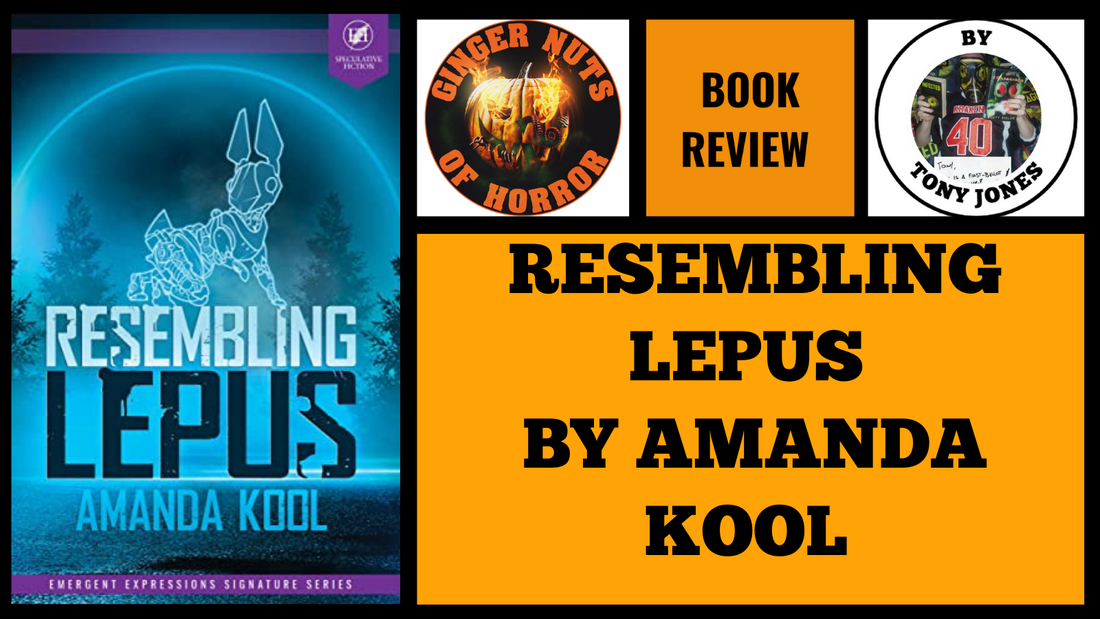 A most peculiar murder mystery debut where the victim is not human…. In recent years Grey Matter Press have had an excellent track record in producing high quality horror, dark and weird fiction from the likes of Paul Kane, Karen Runge, John FD Taff and Alan Baxter. The latter two being responsible for two truly outstanding series The Fearing (Taff) and Ali Carver (Baxter) which rank amongst my recent personal favourites. In 2022 GMP are expanding their range with a multi-genre sequence of four novellas by debut and emerging authors, including Andrew McRae (horror), Patrick Bard (Fantasy) and Matthew R Davies (thriller). Down the years, the strength of GMP has been its ability to effortlessly move between the boundaries of dark fiction, encompassing thriller, horror, science fiction, crime/noir, horror, speculative fiction and fantasy. It looks like this new series is going to continue this tradition and in a nutshell, it is always worth keeping a keen eye on what they publish. GMP’s brand new Emergent Expressions series kicks off in some style with Amanda Kool’s debut novella Resembling Lepus and even though it is best described as a rather quiet cli-fi story, it is still a banger. I’ve been a fan of cli-fi since I discovered JG Ballard’s The Drowned World over thirty years ago and Kool’s fascinating debut skilfully avoids all the stereotypes you usually see in modern post-apocalyptic fiction or dystopia fiction where resources are scant with mankind teetering towards extinction. Instead, we are presented with a very civilised society, where rationing exists, water is shared, chocolate is a treat and mankind is genuinely sorry for the catastrophes its previous generations inflicted on the planet. The sort of stuff JB Ballard was prophesising about in the sixties. Set in the UK some years after a global cataclysm shattered many of the Earth’s ecosystems, mankind has battled back from the brink and now exists in a post-dystopian civilisation. This in itself is rather unique, as in fiction there is usually either no way back (Cormac McCarthy’s The Road) or small pockets of hope (think Robert McCammon’s Swan Song or Stephen King’s The Stand) but in this novella, even though there are dystopian hallmarks such as surveillance and rationing energy consumption, things could be significantly worse. Amanda Kool drip feeds tasty little tip-bits throughout the story and I found myself trying to jigsaw together all the facts in creating an accurate big picture in which the rather bizarre story is framed. In Resembling Lepus, instead of cannibalism (two of my recent dystopian favourites which tackle this trope being Cody Luff’s Ration or Agustine Bazterrica’s Tender is the Flesh) we have a society which almost worships the last surviving animals which are closely monitored, tracked, numbered and categorised. The story is built around the ‘murder’ of a rabbit and the detective who is tasked with solving this horrendous crime. In this version of Britain, the killing of a rabbit is significantly worse than offing a human and the death shocks the country, with the animal having a full autopsy and the detective feeling the loss like one would a butchered child. Or perhaps a modern-day comparison of equivalent outrage would be somebody climbing into the panda cage in Edinburgh Zoo and slaughtering Yang Guang and Tian Tian with a blunt machete! Once you get your head around this weird paradox Resembling Lepus becomes a fascinating detective mystery, with the problem being there are a lack of clues, until other dead rabbits start turning up and the outrage grows. The story also has a serious Bladerunner vibe to proceedings (think of Sean Young’s owl) as science has also found a way of using technology to breathe life into long-dead species, which can act as pets or surrogate animals should you have the huge bundles of cash to buy them. So, there are two types of animals, biologically real and reproductions, and bizarre ways in which animals can be requisitioned or recycled (for want of better words). For a novella length work Resembling Lepus was brimming with clever ideas and the ending was totally off-the-wall. One could argue that the detective solved the case slightly too easily, but in some ways the mystery was a distraction to the unique setting and the way in which man interacted with animals, real of otherwise. The first book in the new GMP range Emergent Expressions is a strange one and although post-apocalyptic stories continue to be released at pace the manner in which Resembling Lepus was framed was both original and quirky. The cli-fi vibe was reminiscent of the cult 1970s Silent Running, but with the last surviving animals being revered in the same way Bruce Dern cultivated his plants in that film. Rabbit stew (yuck) will never be the same after reading this little gem! Tony Jones Resembling Lepus |


Archives
May 2023
|

|

|
 RSS Feed