


 The Butchering Art became a bit of an obsessive read for me. A woefully fascinating and devastating gory look in Victorian surgical practices. It is the story of Joseph Lister, a visionary surgeon who radically changed surgery practices from brutal and unsanitary to the safe and sterile practices we now take for granted. The author takes us on a harrowing trip through history, the age where amputations were rife and survival was at an all time low. She gives us the life of Joseph Lister, a young Quaker medical student whose eye for detail, a dedication to his patients and his unwavering belief that germs were responsible for the post-surgery infections and that this could be treated with the right antiseptics. The 19th century was a barbaric time for surgery. Crude instruments and rough man handling surgeons pinning their screaming and wide-awake patients to the bed while the sawed off their limbs. It was almost certainly a death sentence if you had an accident that require a surgeon’s hand. Infection was common, gangrene and sepsis the norm. It was unheard of to wash your instruments after use, or to sterilise your environment. Surgeons went from patient to patient, even performing autopsies and then using the same instruments on the living. It is horrifying to think this practice was the norm. The concept of germs, well this was laughed out of the building. Just like the flat-earthers scoffing at our spheroid planet, ‘experienced’ surgeons made a mockery out of germs. They went as far as to outlaw the use of Lister’s antiseptic practices in their hospitals, believing it all to be hooey. Fortunately for modern medicine, Joseph Lister’s theories and practices were eventually accepted and shaped the future of surgery and aftercare. This is a gore-filled tale, a strong stomach is required (especially the men in certain parts, even I winced). There is a lot – and I mean A LOT – of surgical procedures, sepsis, amputations and some nasty animal cruelty. On top of this though there is the inspiring story of the life of Joseph Lister and his family. I am ashamed to say I didn’t know too much about the man before I read this book. I am in awe of him, he was a true visionary, an inspiration and the definition of someone who won’t give up no matter what. He stuck by his beliefs, held true to what he wanted, and by god he got there. He did it. I can’t recommend this enough, it’s a real eye-opener into times past and it’s one of the most interesting books I have read in a long time. I adore horror fiction, horror facts, this is something else. 5/5 THE BUTCHERING ART: JOSEPH LISTER’S QUEST TO TRANSFORM THE GRISLY WORLD OF VICTORIAN MEDICINE BY LINDSEY FITZHARRIS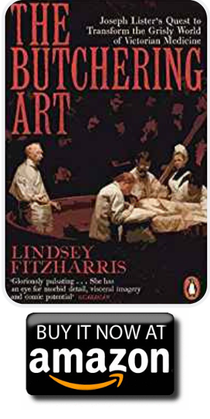 DAILY MAIL, GUARDIAN AND OBSERVER BOOKS OF THE YEAR 2017 Winner of the 2018 PEN/E.O. Wilson Prize for Literary Science Writing Shortlisted for the 2018 Wellcome Book Prize Shortlisted for the 2018 Wolfson Prize The story of a visionary British surgeon whose quest to unite science and medicine delivered us into the modern world - the safest time to be alive in human history In The Butchering Art, historian Lindsey Fitzharris recreates a critical turning point in the history of medicine, when Joseph Lister transformed surgery from a brutal, harrowing practice to the safe, vaunted profession we know today. Victorian operating theatres were known as 'gateways of death', Fitzharris reminds us, since half of those who underwent surgery didn't survive the experience. This was an era when a broken leg could lead to amputation, when surgeons often lacked university degrees, and were still known to ransack cemeteries to find cadavers. While the discovery of anaesthesia somewhat lessened the misery for patients, ironically it led to more deaths, as surgeons took greater risks. In squalid, overcrowded hospitals, doctors remained baffled by the persistent infections that kept mortality rates stubbornly high. At a time when surgery couldn't have been more dangerous, an unlikely figure stepped forward: Joseph Lister, a young, melancholy Quaker surgeon. By making the audacious claim that germs were the source of all infection - and could be treated with antiseptics - he changed the history of medicine forever. With a novelist's eye for detail, Fitzharris brilliantly conjures up the grisly world of Victorian surgery, revealing how one of Britain's greatest medical minds finally brought centuries of savagery, sawing and gangrene to an end.   Comments are closed.
|


Archives
May 2023
|

|

|
 RSS Feed