


THE GULP BY ALAN BAXTER: BOOK REVIEW
13/1/2021
 Much like Roysten Vasey, The Gulp is filled with bizarre and unsettling locals who you wouldn't want to meet in an alley on a dark night, but unlike Roysten Vasey, The Gulp should never be just for local people. Grab a copy and pay a visit to one of the most interesting locations in recent horror history. Gulp verb (used without object)To gasp or choke, as when taking large drafts of a liquid. verb (used with object)To swallow eagerly, or in large drafts or morsels (often followed by down): To suppress, subdue, or choke back as if by swallowing: to gulp down a sob. noun The act of gulping: He drank the whole bottle of beer in one gulp. The amount swallowed at one time; a mouthful. All of these definitions of the word Gulp can be used to describe this latest portmanteau novel from Alan Baxter; once you have started it, you'll want to gulp it down in one, with the occasional gulp of revulsion as Baxter's depictions of some of the events in Gulp unfold, and be sure to not eat any food during your time in this novel as you might end up gulping for air as the tense narrative chokes you. So what is Gulp? Well, Gulp is Alan Baxter's attempt at creating a mythos, Lovecraft had Innsmouth, King has Maine, and Ramsey Campbell has Liverpool. And now we are invited to walk the streets of this latest mysteriously malevolent metropolis (note it's not a metropolis it's not large enough, but Jimmy loves his alliterations) Presented here are five novellas that can be read individually when read in isolation; each of them provides the reader with a satisfying and varied set of stories. If this classed as a collection rather than a "novel", then you would still be delighted after spending time walking the streets of The Gulp. But this isn't just five independent stories linked by only a location. This is a cleverly plotted and exceptionally well-executed five-sectioned novel where the finale of the last story in the novel brings everything that has gone before it into perspective and envelopes them with a sense of dramatic unease at what has just happened, and what will hopefully come (I'm praying there is a volume two in the works). The range of styles that Baxter presents ensures that the reader is kept glued to the pages, from the surreal opening story of a delivery driver being in the wrong place at the wrong time has an almost Twin Peaks vibe to it. There is a deep sense of unease and danger, on show here, with an overlying sense of "what the hell is going on here" It proves my theory that no one should ever look into a hole, nothing good will come from it. It also serves as a fantastic opening story that sets the scene and introduces us to some of the characters who will make appearances throughout the rest of the stories. Baxter drops just enough hints and winks at what is to come, while allowing the opening story to lay the groundwork of the nature of The Gulp, without ever resorting to a massive info dump. There are enough hooks and breadcrumbs on offer here to ensure that you don't take the first bus out of town. Baxter takes on numerous styles and atmospheres throughout the rest of the novel, from a fantastic take on fungal body horror to an extraordinary Lovecraftian tale of horrors from the sea. Simultaneously, these stories may be diverse in the stylistic leanings they are held together by Baxter's strong personal style and voice. It could have been easy for this to have turned into a pastiche novel, with the individual stories being a cheap pastiche of their respective genre roots. Thankfully, Baxter is confident in the strength of his own voice, yes you will recognise the feelings and broad stylistic strokes of the subgenre presented here, but throughout the novel, you are left without a doubt that you are reading not just an Alan Baxter novel, but an Alan Baxter novel that is firing on all cylinders. Perhaps the greatest strength of The Gulp, is how Baxter interlinks each story into one cohesive narrative. The use of recurring characters is key to the success of the novel, with the opening story laying most of the groundwork, in a wonderfully executed bar scene, like most small towns the local bar is the heart and soul of the town, it's just a pity that this town's heart is black. The way in which minor characters in one story, which in most other novels be nothing more than a passing mention, come to the fore as the story progresses is a masterclass in plotting and structure. I loved how Baxter makes the reader call back to previous stories throughout the length of the book, climaxing in an ominous finale that has a perfect "season finale" ending that will leave you waiting with bated breath for the next instalment. As for the Gulp characters and denizens, there is a powerful sense of resignation and mortality. They all know there is something wrong with the town, but none of them makes a move to leave it. OK, one or two would love to make a run for it, however, they know that to do so would be disastrous for not just them but also for those they leave behind, adding another layer of dread to the narrative. In a traditional sense, there are no heroes living here. The residents all exist in an ambiguous state of being. It's a brave move to base a whole novel and possibly future ones on a cast of characters who don't have any redeeming traits. Even the one or two who may well play a vital role in the future, do things that no "hero" would do, but do their actions justify the means? Well, that's for you, my dear reader, to decide, I for one will never look at a hamster in the same way again. Suffice to say Baxter puts them through hell, and the ethical dilemmas they face and how they justify their actions are handled intelligently and sympathetically. It's easy for a reader to read things into a story that the author never intended. Still, I get the feeling that this is a sort of pandemic adjacent novel, with the constant threat and almost futility of existence that we are all feeling just now, mirrored by the life of the residents of The Gulp, where the actions of others, that initially appear to be consequence-free, but have significant implications further down the road. The Gulp is an interesting idea for a novel, I'm a massive fan of the old portmanteau horror films from the seventies, and The Gulp captures the essence of what made those films so much fun. Mixing a pulp horror sentimentality and a cast of charismatic characters with gripping narrative that keeps its secrets to itself until it is ready to scare the living hell out of you, The Gulp delivers on all fronts. Much like Roysten Vasey, The Gulp is filled with bizarre and unsettling locals who you wouldn't want to meet in an alley on a dark night, but unlike Roysten Vasey, The Gulp should never be just for local people. Grab a copy and pay a visit to one of the most interesting locations in recent horror history. 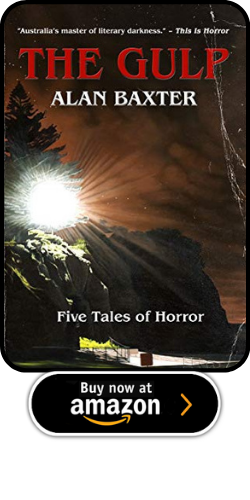 The Gulp (Tales From The Gulp #1) Strange things happen in The Gulp. The residents have grown used to it. The isolated Australian harbour town of Gulpepper is not like other places. Some maps don’t even show it. And only outsiders use the full name. Everyone who lives there calls it The Gulp. The place has a habit of swallowing people. A truck driver thinks the stories about The Gulp are made up to scare him. Until he gets there. Teenage siblings try to cover up the death of their mother, but their plans go drastically awry. A rock band invite four backpackers to a party at their house, where things get dangerously out of hand. A young man loses a drug shipment and his boss gives him 48 hours to make good on his mistake. Under the blinking eye of the old lighthouse, a rock fisher makes the strangest catch of his life. Five novellas. Five descents into darkness. Welcome to The Gulp, where nothing is as it seems.   Comments are closed.
|


Archives
May 2023
|

|

|
 RSS Feed