


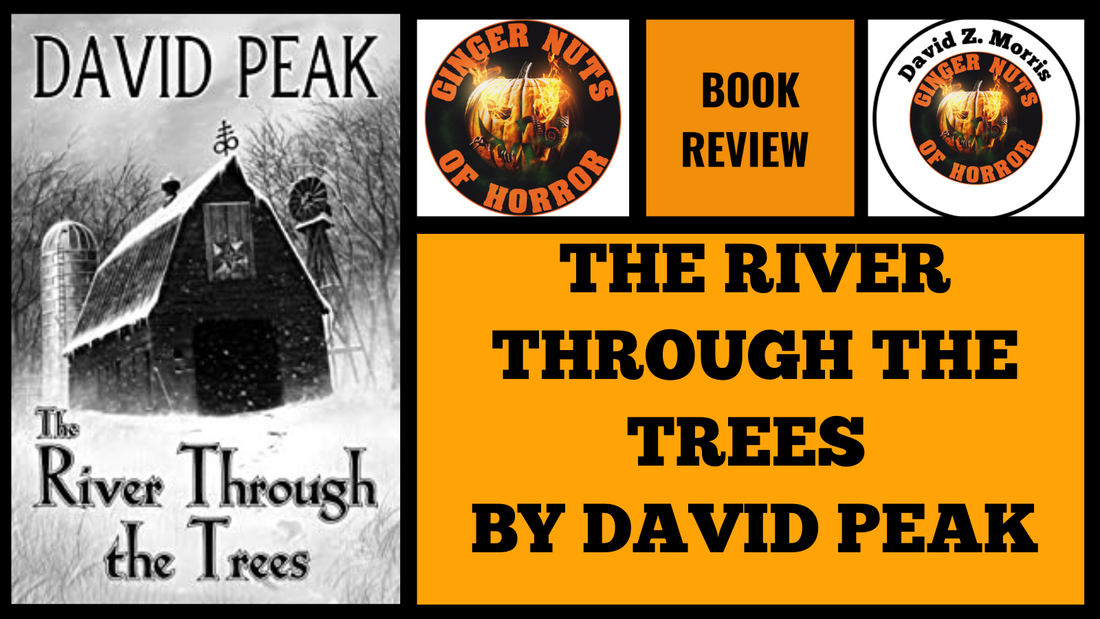
 The River Through the Trees By David Peak Reviewed by David Z. Morris I don’t know if The River Through the Trees is David Peak’s finest work. I don’t even know if it’s representative of his broader project. I’m writing this review because I came across this 2013 book almost at random, as a discount offer in one of those dangerously addictive ebooks-on-sale newsletters. This nags at me as a personal failure, given that I’m such an afficianado of the style he works here with such elegance, which I would call “post-industrial cosmic realism.” This is a nominally Lovecraftian strain of horror, dealing with cults and deep time and dark gods – but those tropes are put in service to a deeply grounded recognition that the famously indifferent and all-destroying threat of the Old Gods is not so different from the bleakness of the world we pass through every day. That abstraction is done with such subtlety that the book could be fully enjoyed as a cosmic-horror-cultist romp, but a broader reading shows it has just as much in common with the street-level wallowing of Charles Bukowski (though minus the humor). Peak, for reasons that can’t have anything to do with the taut-wire skill on display here, still seems shadowy in the mind of the same reading public (itself pitifully small and misanthropic) that laps up similar Galenic diagnoses by Matthew Bartlett or Laird Barron or Blake Butler or, dark daddy of them all, Thomas Ligotti. These talespinners create deliriously awful visions of the pedestrian overtaken by bad humours, of the degenerate ascended, within a frame of real-world decline. The essence of what they do has been captured in the terrifying sixty seconds of the infamous “dumpster monster” scene of David Lynch’s Mulholland Drive, but their work dives even deeper into the utter degeneracy that lurks just beneath the surface of our pantomime of normality. Peak’s iteration of these themes is distinctive most of all for its restraint. I doubt it’s accidental that his title lightly echoes The Place Beyond the Pines, a film released the year before this book and sharing much of its fallen-rustic setting, meticulous pacing, and threat of violence held mostly off-page. Peak’s fringe characters are part of a cult whose practices draw with brutal directness from the drug-addled reality of many former East Coast or North Country mill towns gone to seed. But in contrast to the bloodthirsty punk ciphers that move like interchangeable shadows through Blake Butler’s 300,000,000, these cultists are resolutely real people, flawed and thoughtful and – a move that amps up the book’s anxiety considerably – only violent with a human eye to the same necessity we all weigh before taking extreme actions. In short, their actions make a degree of sense that only turns proceedings even more nightmarish. That realism grounds the book’s core creative turn, one that I’m increasingly personally fond of. While the book’s characters constantly gesture at the occult, and ultimately create the evil they believe they desire, the book never truly tips its hand to any supernatural event whatsoever. In this, it seems to bring the delirious nihilism of Lovecraft home: the signature conceit of the Old Man of Providence was that the universe is uncaring and indifferent. The River Through the Trees strikes just enough notes of cosmic horror in the course of its tale of nightmarishly human trauma to drive home the point that we all carry more than a little of the Old Gods’ indifference within us. If there is a better potential basis for a slow, atmospheric, A24-style cinematic take on the Lovecraftian ethos and mythos, I haven’t read it. That cosmic indifference, and its deep rootedness within humanity, is represented here by Bicycle Bob, a half-mythological figure believed to lurk in the woods and kidnap children. At the heart of the book is a character who at least believes she has been subject to Bicycle Bob’s worst transgressions, and all the characters constantly swap tales of this dark figure. But the demon himself never appears directly on the page, and Peak constantly toys with the reader’s understanding of Bob. Does he exist, or is he simply a projected myth? If he exists, is he simply a predatory hermit, or something stranger? Bicycle Bob is, in this and other ways, a clear reference to Lynch’s other BOB. Both are shape-shifting menaces who either plants the seeds of evil, or simply provide a convenient focal imaginary for the evil of the world around his victims – or, the most interesting possiblity of all, both at the same time. This is really the quandary at the center of The River Through the Trees, probably the quandary of all great horror writing: the oscillation of trauma between circle and line, the pain of its continuation and the impossibility of its ending. The work returns us again and again to the truest and most hackneyed pillar of any horror work that aspires to status as Literature: that man is the real monster. Peak gives us a vision of abandonment and betrayal of the human, and spreads the blame around plenty. There is no monster here, only monsters, plural, all playing out a script that is ultimately more sad than brutal, more neglect than transgression, a retreat into self-interest that is all too familiar. The River Through The Trees |
 |  |


May 2023
April 2023
March 2023
February 2023
January 2023
December 2022
November 2022
October 2022
September 2022
August 2022
July 2022
June 2022
May 2022
April 2022
March 2022
February 2022
January 2022
December 2021
November 2021
October 2021
September 2021
August 2021
July 2021
June 2021
May 2021
April 2021
March 2021
February 2021
January 2021
December 2020
November 2020
October 2020
September 2020
August 2020
July 2020
June 2020
May 2020
April 2020
March 2020
February 2020
January 2020
December 2019
November 2019
October 2019
September 2019
August 2019
July 2019
June 2019
May 2019
April 2019
March 2019
February 2019
January 2019
December 2018
November 2018
October 2018
September 2018
August 2018
July 2018
June 2018
May 2018
April 2018
March 2018
February 2018
January 2018
December 2017
November 2017
October 2017
September 2017
August 2017
July 2017
June 2017
May 2017
April 2017
March 2017
February 2017
January 2017
December 2016
November 2016
October 2016
September 2016
August 2016
July 2016
June 2016
May 2016
April 2016
March 2016
February 2016
January 2016
December 2015
November 2015
October 2015
September 2015
August 2015
July 2015
June 2015
May 2015
April 2015
March 2015
February 2015
January 2015
December 2014
November 2014
October 2014
September 2014
August 2014
July 2014
June 2014
May 2014
April 2014
March 2014
February 2014
January 2014
December 2013
November 2013
October 2013
September 2013
August 2013
July 2013
June 2013
May 2013
April 2013
March 2013
February 2013
December 2012

|

|

 RSS Feed