


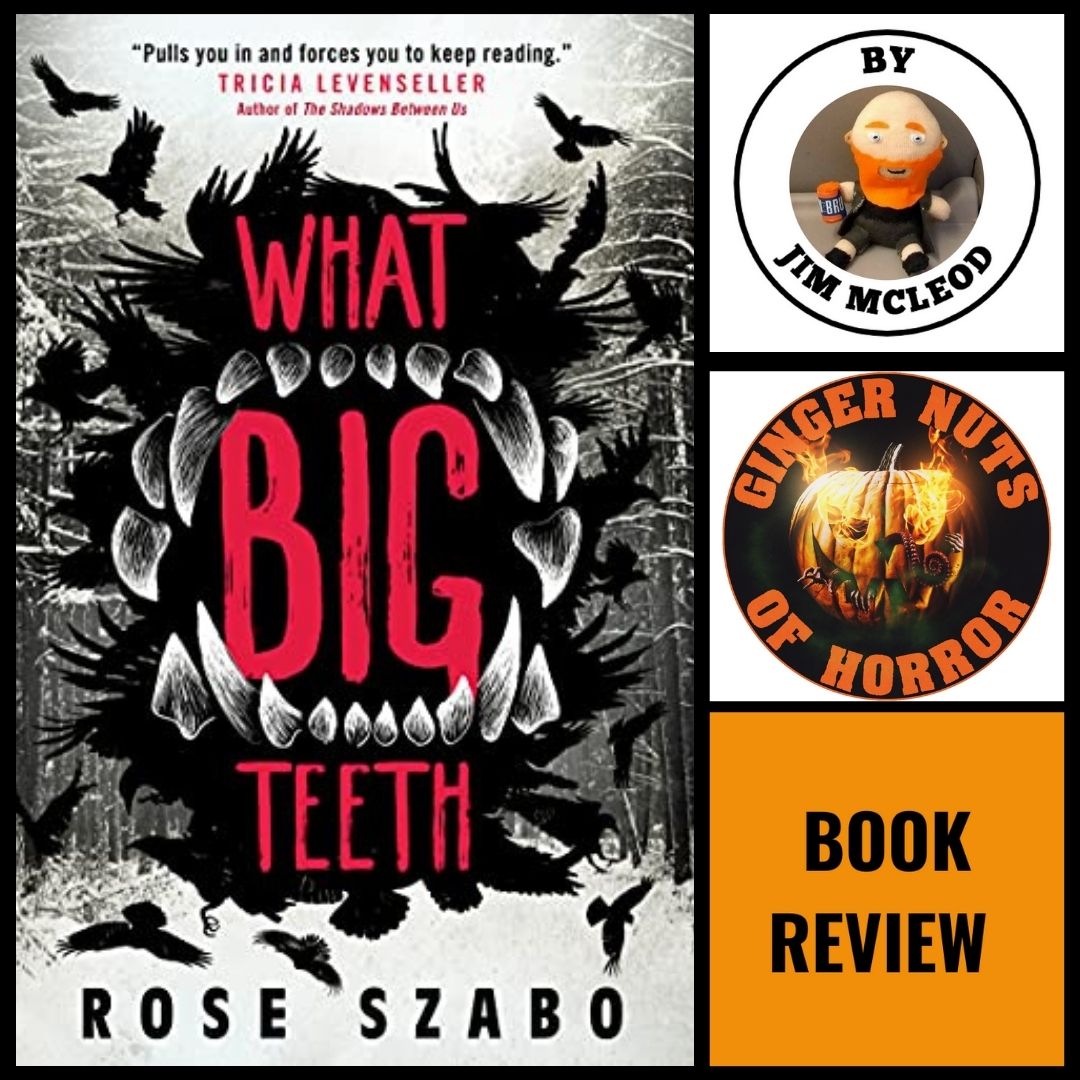
WHAT BIG TEETH BY ROSE SZAB (BOOK REVIEW)When is a werewolf novel not a werewolf novel? That's a question that needs tackling before going any further into this review of What Big Teeth by Rose Szabo. Those of you looking for a classic werewolf novel filled with vivid descriptions of people transforming from human to Wolfen form, or long gory passages from the wolf's perspective as it hunts down its prey, then this book won't scratch that itch. If, however, you are looking for a werewolf novel that grabs all of the expected tropes between its fangs and shreds them until there isn't a single recognisable werewolf cliche left, then this book is for you. In Rose Szabo's What Big Teeth, Eleanor Zarrin returns to her family home eight years after being sent to boarding school. It should be a time of joy, but like events that resulted in Eleanor being sent away, her return to the family home is shrouded in mystery. Eleanor is as nervous and scared about returning home as she is excited and relieved to finally leave the boarding school that has been the bane of her life for eight years. Her family is not your average family, a strange mix of werefolk, witches, and possibly some other denizens of the dark, and it is a family that is always on the brink of exploding and returning the old feral ways. It is only the stern, strick guiding hand of her Grandmother that keeps the family together, but when her Grandmother dies not long after Eleanor's return, it is up to Eleanor to keep the Zarrin family from imploding. What follows is a dark and twisted gothic fairytale that isn't afraid to bare its teeth at the genre conventions. Szabo wastes no time telling us that the Zarrins are werewolves, although to be honest, there shouldn't be any doubts based on the fantastic cover for this edition of the book from Titan Publishing. However, right from the get-go, we know that they are far from your typical furry monsters, and here lies the central theme of the novel. Szabo uses the werewolves as a powerful metaphor for identity, family and gender, and the dangers of holding onto trauma through a family. One of the many strengths of this novel is that the gothic and werewolf side of the story is almost superfluous to the subjects being tackled. Now that might sound like a criticism, but if you edited out all of the mentions of the family being werefolk, you would still be left with a powerful and satisfying discourse of the subject matter. But isn't that the purpose of a good metaphor? Framing the story within a gothic fairy tale setting allows Szabo to tackle these subjects with a sensitive ear to the issues surrounding them. At no point does it ever feel as though you are being beaten around the head with a heavy hand; Szabo's handling of the themes within the novel is at times so subtle that you only realise what certain sections of the book are about long after you have read them, and for this reviewer that is a sign of a writer who is aware of the how-to handle sensitive topics within the narrative. Another strength of the novel is Szabo limiting the story's scope in terms of location by keeping the places limited to the house with the occasional trip into the local town; Szabo has helped to give the narrative a wonderfully claustrophobic sense of dread. Like the protagonists of the story, you, the reader, become trapped within the narrative drive of the story. My only criticism of What Big Teeth leads us into the novel's next strength: The family itself. I felt that the family was introduced a shade too quickly; for me, this leads to a period of slight confusion as to who was who and how they fitted into the family. The family itself are just superb, brutal, feral, and always on the brink of doing something nasty; they are not the sort of family you'd invite round for a dinner party. But that's what makes them so engaging as a cast of characters. Szabo could have quickly gone for the pure sympathetic portrayal of them. What Big Teeth would have suffered if Szabo went for a sanitised, teen-friendly approach to the novel. Yes, a Groovy Ghoulies type family would have made it easier for the author to hang the story's themes onto, but this would have made for a far less believable and satisfying delivery of the story's message. Families aren't always nice, families can be horrible, and sometimes blood isn't thicker than water. I loved how Szabo used the notion of generational guilt and trauma to drive home the themes of this novel. Yes, Eleanor is a Zarrin, but her inability to transform sets her apart from the rest of the family to the point where you can feel the fear her Grandfather has towards her. However, as the narrative moves on, you become, for want of a better word, respectful of the Zarrins. Szabo ensures that they all have time to grow and develop as the story unfolds. Secrets are revealed, motivations are discussed, allowing the plot points to feel completely natural in their execution. This is Eleanor's story, above everyone's else's. And what a refreshing character to have as a lead. She is deeply flawed, and while her actions may have everyone's best interests at heart, she doesn't always make the right decision. You will swing from loving her to screaming, "what the hell are you doing?", it is a bold move to have such a complex character as the main protagonist. Far too many readers are only comfortable with binary characters, the hero, the villain, the sidekick, but as I said right at the start of this review, What Big Teeth rips these tired tropes and cliches to shreds. Of course, a book about werefolk, and other creatures of myth, must touch upon the power of transformation, and this book doesn't shy away from that. In the most basic terms, I loved how the transformation from human to werewolf was handled so matter of factly. There are no scenes of hair sprouting, no spines getting cracked, and no claws bursting forth from cracked fingers. I could be wrong here, but I felt that instantaneous transformation was used to support the exploration of gender within a family group. Being werewolves was used to show that nothing is terrifying or different about this side of their identity and nature, with Eleanor's inability to transform being used to show that she isn't like the rest of the family. However, she is still family and needs to accept the part of her that makes her different. ( I could have completely missed the point here, so apologies if my heavy-handed interpretation is wide of the topic) What Big Teeth is an irresistible read; its measured pace draws the reading into the dark and musty den of one the most interesting werewolf clans ever committed to paper. Szabo teases every last drop of tension out of the tight narrative. Secrets are revealed precisely where they are needed giving this non-Southern Gothic novel a fantastic languid Southern Gothic Feel. What Big Teeth by Rose Szab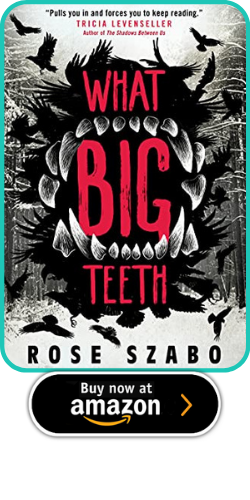 Miss Peregrine's Home for Peculiar Children meets The Addams Family in this haunting story of one girl's attempt to reconnect with her monstrous family. Eleanor has not seen or spoken with her family in years, not since they sent her away to Saint Brigid's boarding school. She knows them only as vague memories: her grandfather's tremendous fanged snout, the barrel full of water her mother always soaked in, and strange hunting trips in a dark wood with her sister and cousins. When Eleanor finally returns to their ancestral home on the rainy coast of Maine, she finds them already gathered in wait, seemingly ready to welcome her back with open arms. But a strange and sudden death rocks the family, and in order to keep the family that abandoned her from falling apart, Eleanor calls upon her mysterious other grandmother from across the sea. Grandmere brings order to the chaotic household, but that order soon turns to tyranny. If any of them are to survive, Eleanor must embrace her strange family and confront the monstrousness lurking deep within her Grandmere – and herself.  THE HEART AND SOUL OF HORROR REVIEW WEBSITES Comments are closed.
|


Archives
May 2023
|

|

|
 RSS Feed