


AND THEN I WOKE UP BY MALCOLM DEVLIN
18/4/2022
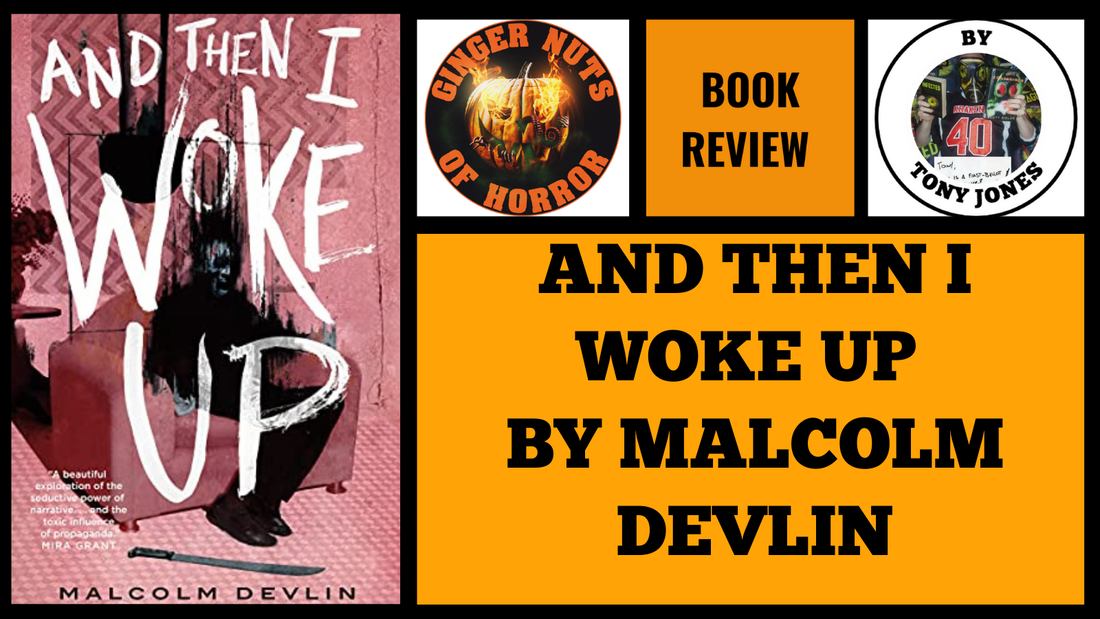 Nothing is what it seems in the aftermath of the strangest of holocausts A book with the title And Then I Woke Up implies potential connections with dreams, which it both does and does not, but ultimately context is vital. When we wake up most of us only have partial recollection of what we dreamed and if they are nightmares are often left with a residual feeling of unease of what went before. Spence, the main character in this novel has such feelings, he is aware of the troubling circumstances of his previous ‘life’, but his perception and recollection of the genuine events is off-kilter and he feels overwhelming guilt which is a key element of this story. He is trying to start over, but for reasons which become apparent, cannot move on from his past and is not as peace with himself. Even though And Then I Woke Up was quirky, had an original idea, I did find it rather frustrating, like the dream I just mentioned there were too many unanswered questions and its vagueness tested my patience. Yes, it was ambitious, but I doubt it was as intelligent as it intended to be, being built around false narratives that went nowhere except round in circles. The main story hook was a nice idea which was developed around Spence leaving a rehabilitation centre, however, what does he actually do when he leaves the place except follow a woman around? Absolutely zero. The major current time plot (not the flashbacks) lacked drive, action, substance and although the reader is supposed to question what ‘reality’ is, even though it was a short book, I was beyond caring and found the whole experience underwhelming and rather empty. This was not helped by the fact that Spence was particularly nondescript and since this was a first-person narrative he probably needed more spark to drive the story. It may well be that this is one of those books which split critical option, as some big genre names have been talking it up, including Stephen Graham Jones, Mira Grant, Alma Katsu, Jeffrey Ford, Nancy Kress and Brian Evenson. However, their comments do not reflect the book I read, so perhaps check out other reviews to see what others say and watch out for the word ‘zombie’. Although this is Malcolm Devlin’s debut novel, he is an established short story writer of note and has featured in Black Static, Interzone, The Shadow Booth and Shadows and Tall Trees. His first collection, You Will Grow Into Them was shortlisted for the British Fantasy and Saboteur Awards in 2017 and his second collection, Unexpected Places to Fall From, Unexpected Places to Land, came out last year. And Then I Woke Up opens with Spence in Ironside rehabilitation centre where the residents use group therapy to discuss a weird type of apocalypse which resulted in them ending up in the centre. We find out early in the book that Spence is seen as ‘cured’ but that in the previous ‘apocalypse’ was responsible for killing people and carries the photos of some of his victims and as part of his therapy has even tried to track down surviving members of their families to apologise. This very much came across as something akin to the 12-step program of Alcoholics or Narcotics Anonymous with the residents repeatedly talking about their previous sins especially to the new arrivals, in particular Leila who Spence feels a connection with. What was this apocalypse? Spence worked in a restaurant and whilst washing dishes hears screaming and his friend Macey tells him that some guests have started attacking and biting other visitors. Zombies. But are they? In the present time narrative, we find out that this might have been a disease which affected how reality was perceived, but not everybody was afflicted. So, in reality to escape the restaurant bloodbath Spence and Macey were not killing zombies at all, instead they were just trying to survive. Put this in a wider context, parents realise they have killed their children and husbands realise they have murdered their wives. As a result, rehabilitation centres spring up and many seek redemption in a divided country which still shows scars of the war. However, nothing is explained 100% and I cannot guarantee that is exactly what happened as the inhabitants of Ironside are not allowed to watch current news and could be being forced a particular version of the truth. Events are built via two narratives, with Spence and Macey in flashback and Leila in the current story, whom he abandons the centre to help her find the crew she used to run and kill with. Hoping for redemption he struggles to separate the truth from the lies all of which was rather confusing. Spence did not do enough to carry And Then I Woke Up, he spent a fair bit of time hanging around these two women and feeling sorry for himself. Ultimately, I did not feel much empathy towards this character and in first-person narratives the success or failure of novels depend on the reader connecting with the main character. Let’s talk zombies, I cried my eyes out at the end of Alden Bell’s The Reapers are the Angels. Why? Because my connection with fifteen-year-old Temple touched my heart. Alternatively, And Then I Woke Up is built around a quirky concept, but fails entirely to give the reader a character to believe in. If you go into this book expecting a zombie novel you will be undoubtedly disappointed, instead you are presented with one of the ultimate unreliable narrators, as even he did not truly know what went on via the loss of perception on reality. In the end And Then I Woke Up asks us who the monsters are? And there are no easy answers. Perhaps in the world of fake news, with politicians sinking lower and lower as the days go by, and Covid-19 denial continues to persist the novel is making a fair enough point, even if the message is somewhat garbled. Tony Jones And Then I Woke Up |
 |  |


May 2023
April 2023
March 2023
February 2023
January 2023
December 2022
November 2022
October 2022
September 2022
August 2022
July 2022
June 2022
May 2022
April 2022
March 2022
February 2022
January 2022
December 2021
November 2021
October 2021
September 2021
August 2021
July 2021
June 2021
May 2021
April 2021
March 2021
February 2021
January 2021
December 2020
November 2020
October 2020
September 2020
August 2020
July 2020
June 2020
May 2020
April 2020
March 2020
February 2020
January 2020
December 2019
November 2019
October 2019
September 2019
August 2019
July 2019
June 2019
May 2019
April 2019
March 2019
February 2019
January 2019
December 2018
November 2018
October 2018
September 2018
August 2018
July 2018
June 2018
May 2018
April 2018
March 2018
February 2018
January 2018
December 2017
November 2017
October 2017
September 2017
August 2017
July 2017
June 2017
May 2017
April 2017
March 2017
February 2017
January 2017
December 2016
November 2016
October 2016
September 2016
August 2016
July 2016
June 2016
May 2016
April 2016
March 2016
February 2016
January 2016
December 2015
November 2015
October 2015
September 2015
August 2015
July 2015
June 2015
May 2015
April 2015
March 2015
February 2015
January 2015
December 2014
November 2014
October 2014
September 2014
August 2014
July 2014
June 2014
May 2014
April 2014
March 2014
February 2014
January 2014
December 2013
November 2013
October 2013
September 2013
August 2013
July 2013
June 2013
May 2013
April 2013
March 2013
February 2013
December 2012

|

|
 RSS Feed