


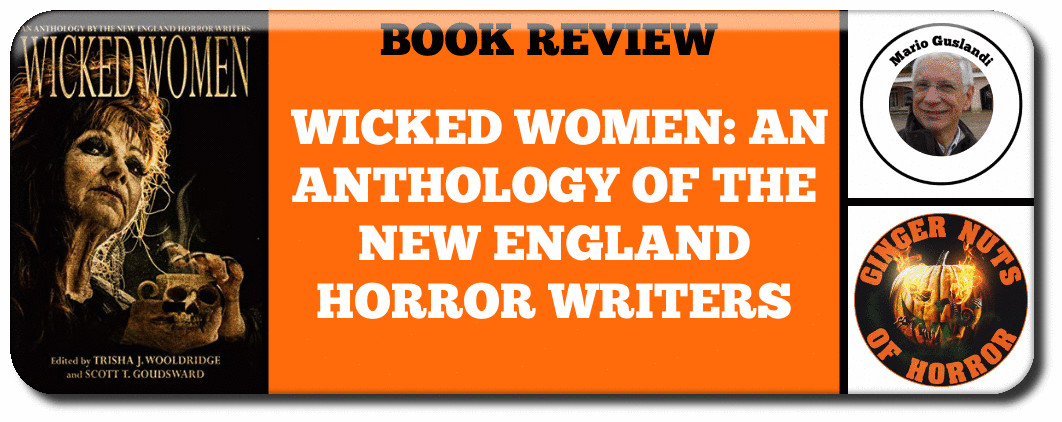
 Anthologies are known to be often mixed bags, but this particular one is especially hard to review because the quality and the narrative style of the included stories are so different that every reader ( and reviewer) will be free to pinpoint his or her favorite and nobody will be the wiser. Let me explain, first of all, that ,although a long time fan of horror fiction I had never met before the work of any of the featured female authors ( except of course Jane Yolen, who’s present here with just a little poem), so I had no bias nor prejudices. I even refrained from looking at the authors’ profiles before reading their stories. You will admit that one can’t be fairer than that. But now it’s time for me to single out the stories that I found good and forget about the others ( and no offense meant). “ Child of Reason” by Christine Lajewski is certainly my personal favorite, a superb piece of dark fantasy where upsetting family secrets are revealed during the unusual attempt to raise strange “homunculi” for unconventional purposes. “ Sunsets” by Victoria Dalpe ia rather implausible but quite tense piece of graphic horror featuring a young, yet ageless creature. The offbeat, but very effective “The Tale of Annette” by Tracy L Carbone is full of twists and unexpected angles bound to deeply upset the reader. In the unusually titled “ Souls of the Wicked Like Crumbs in Her Hand” by Suzanne Reynolds-Alpert, a mysterious woman invisible to most people plays with human lives to obtain justice ( but sometimes just to amuse herself...) Lindsay Moore’s bizarre but very enjoyable “ The Hungry Man”depicts the encounter of two former female friends whose true nature was unknown to the other. Jennifer Williams contributes the insightful ” The Monster We Become” where after her stern mother’s death a young girl discovers the hidden side of the woman and a piece of family history. So I have now a new list of capable ladies writing good horror stories to keep watching in the future. Hopefully, many readers will do the same. Wicked Woman An Anthology of New England Horror Writers Edited byTJ Wooldridge and ST Goudsward NEHW Press 2020 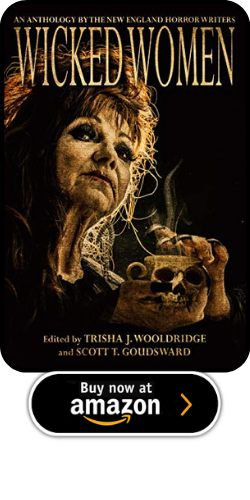 Dressing in stolen skin, watching the world through silver eyes, or questioning local folk traditions about bodies hanging in trees, these stories and poems from the women of the New England Horror Writers will leave you bleeding with fresh nightmares and hanging on with splitting fingernails to questionable reality. Wander around islands with eldritch secrets, take drug-fueled drives with carnies, and explore the arcane labyrinths trauma builds in one’s mind. But whatever you do, don't think for a moment that anyone is safe from these Wicked Women!    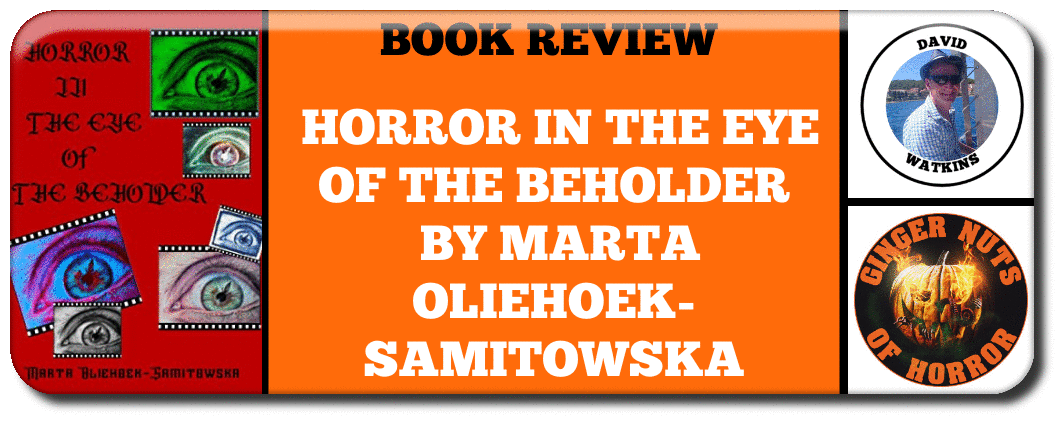 Horror in the Eye of the Beholder is an entertaining selection of interviews covering the links between cinematic horror and literature, and specifically the influences between both. The book contains 21 interviews with different authors, from genre legends Ramsey Campbell and Adam Nevill through to relative newcomers such as Gemma Amor. Each interview starts with the same question: ‘What came first: your love of literature and writing, or the love of cinema?’ but branch out from there. Many cover the same ground, with the same influences and recommendations cropping up and, as such, this is a book that’s best served by ‘dipping’ into it. This is not a criticism: I doubt there are many horror authors working today who weren’t influenced to some degree by watching The Thing, Evil Dead or the Hammer films. Some responses, however, were begging for follow up questions that never arrived. For example, in an entertaining interview, John Llewellyn Probert says ‘To play on modern terminology Horror should be your “unsafe space” and it should be “triggering” at every possible given opportunity’. I would have liked the interview to explore what he means by that in a little more detail – so, what does he think about trigger warnings in books and films? Does he have any personal triggers? Instead, the next question is about film music. As to be expected when discussing cinema and fiction influences, many themes recur. There is much discussion about gender and its evolution in horror which I found fascinating. However, whilst there is a good balance of gender in the book, there are no interviews with POC, which is very disappointing. Also, the cover is a curious choice. To be blunt, I didn’t like it and it would not have made me pick the book up in a shop (haha, if we can ever go to shops again). It’s a strange choice as the inside ‘front’ page is stunning, as are the portraits of author’s eyes dotted throughout the book, but the cover is distinctly underwhelming. I enjoyed reading the book and have come away with a few films added to my ‘to watch’ list as well as some authors I’d like to check out. Hereditary and Midsommar have now moved to the ‘much watch soon’ category (I know!). In terms of authors, I’ve read many of the people featured here, but am definitely going to check out more by Gary McMahon, Adam Cesare and Gemma Amor thanks to this book. In fact, Gemma was recently interviewed on This Is Horror, and it is an excellent listen. In all, this is an interesting read, but I’m not sure who it’s for. If you want to explore the link between cinema and horror fiction, or you want to read interviews with the authors within then jump aboard – you almost certainly won’t be disappointed. Review by David Watkins  David Watkins lives in Devon in the UK with his wife, two sons, dog, cat and two turtles. He is unsure of his place in the pecking order: probably somewhere between the cat and the turtles. He has currently released three novels, (The Original’s Return, The Original’s Retribution and The Devil’s Inn) and has a short story in the werewolf anthology Leaders of The Pack.  I COME WITH KNIVES BY S. A. HUNT
8/3/2021
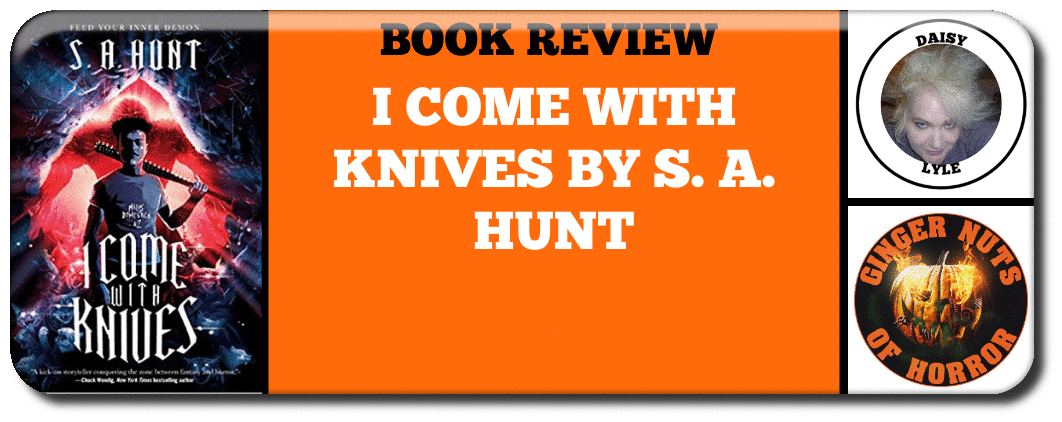 The tropes of genre can provide a useful supporting structure to a new writer, like a trellis for a climbing plant, but once you’ve gained a bit of height you have to put out a few tendrils into the unknown in order to truly flourish. I Come With Knives is the second instalment of S A Hunt’s Malus Domestica series starring Robin, a young woman whose principal interests are rage, ultraviolence and Beethoven. OK, maybe not that last bit. But A Clockwork Orange’s Alex would certainly envy Robin her job: she’s spent the first book killing witches, filming murder after murder for the delight of her army of Youtube fans. We’re not encouraged to view Robin as a psychopath, however; she’s the goodie here, propelled by a burning desire to avenge a coven that, among other things, trapped her mother in a tree and was indirectly responsible for landing her in a psychiatric facility for a chunk of her teens. She continues her vendetta through book two, aided by friends and advisers she’s picked up along the way. A few years ago I decided to watch the 70s sci-fi series Sapphire and Steel, but somehow mistook the second episode for the opening one, and ended up puzzling my way through a very confusing “first” ep starting with a long bout of violent and unexplained poltergeist activity (which I idiotically chalked down to a bold experiment with narrative structure.) Beginning the Malus Domestica series on the second book is a very similar experience. It kicks off with a head-spinning chain of events involving dimension-bending, illusion and mental dissolution, and then, just as you’re starting to get your bearings, skips to a completely different time and place. The inter-dimensional stuff settles down eventually, but there is very little recapitulation of the events in book one, and no real attempt to remind us who the characters are. When you do manage to catch up, I Come With Knives is actually very traditional urban fantasy. There is the usual crowd of demons, sorcerers, zombies, and the human (or human-ish) characters are mostly recognizable types: swish guys who look like elves, grizzled mentors, hair-dye goth chicks, wisecracking kids, cackling gloating baddies, and at the centre of it all, a pretty tomboy heroine with the kind of personality admiringly described in words ending in “-ass”. I did note that there seem to be more black people than usual in the cast, and I don’t think I’ve seen police brutality feature much in this type of book before, but apart from that it’s very standard fare. Of course, a carnival of clichés can be enjoyable as long as the characters come to life and are kept busy. And the novel is certainly full of sound and fury, with plenty of ducking, diving, maiming, killing, and a body count spiralling well into the thousands if you count the hordes of felines disposed of in its pages. Ultimately, though, it doesn’t really matter how many old women you bump off and how many cats you shove face-first into a garbage shredder, you’re not going to engage the reader if the characters aren’t convincing. None of Hunts’ crew really did it for me, though of course that may be partly because all the vital work of character development was done in Book 1. Other flaws are harder to overlook. Although the novel boasts two disabled characters there is nonetheless a nasty vein of something very much like body fascism running through the book, especially as regards the older female characters. One of the witches is enormously fat, can’t eat without smearing food over her mouth, has a bedroom stacked with filthy plates and – surprise! eventually turns into a ravening pig-demon. In this scene and elsewhere, characteristics of normal female ageing - stretch-marks, sagging “hippie” breasts etc. – are woven into descriptions in order to make the witches seem even more revolting and unpleasant. And crucially, this doesn’t happen with any of the male characters. Now, I normally like to read several books by a writer before accusing them of this kind of misogyny – for all I know, Book 1 could be packed to bursting with vomit-inducing descriptions of older male characters’ saggy ballbags and receding hairlines, and Hunt could be merely restoring the balance here. But even if you ignore the sexual politics, the fat stuff in this book undermines one of its best features. Robin has spent a good part of her youth on anti-psychotics, and Hunt makes an honest, largely unsensational attempt to depict the journey of a young person with a psychotic mental illness through the US mental health system. I was delighted, for example, to see Robin mentioning a medication that’s currently in widespread use (Abilify) instead of something ancient or the hack writers’ universal lunacy cure, lithium. But if there’s one thing many antipsychotics make you do, it’s gain weight. Vast, hideously unfair amounts of weight that can take years to shed, even after you stop taking the drugs and do the fancy diets and the gym and all that virtuous stuff. So the cheering effect this novel could have on, say, a schizophrenic reader struggling with Olanzapine bloat, is badly soured by that depiction of hulking Teresa and her bout of swine fever. Then again, maybe such readers should just pull their socks up, stop whining and embrace the keto diet that another character ends up on (it’s treated as a heart-warming sign of personal growth.) “But Daisy!” my non-existent readers cry. “Is there anything about this novel that you actually like?” Well, yes as a matter of fact. There are definitely times when it seems that Hunt is writing from the heart and not just doling out empty hackwork. Although characterization isn’t one of the novel’s strong points, Robin does develop; she’s allowed to have a decent romantic relationship with a guy who isn’t a total bell-end, and I particularly liked the way she is portrayed as a self-defining individual who is able to rise above her family background. In a literary genre absolutely rancid with genetic determinism – it often feels like you’re nobody in fantasy fiction unless you can trace your lineage back to a werefox that came over on the Mayflower – this should be celebrated wherever it occurs. Robin’s evolving, uneasy relationship with her mother is also the most engrossing part of the book. There are some good jokes and the obligatory showdown-in-an-incongruous-location (a comic shop) is amusing. The outbursts of police brutality are properly upsetting, and one compelling scene by a very unusual lake makes use of America’s lax environmental regulations in a memorable and atmospheric way. And who needs Beethoven when you’ve got two references to Queen? Style-wise, the novel is okay; Hunt has a couple of habits I don’t care for (the worst one being the tendency to write “CRACK!”, “BOOM!” etc. whenever there is a loud sound) and some unfortunate turns of phrase (whoever let “toothy canines” make it to print must be badly overworked.) But there are also some very good turns of phrase – Hunt has a knack for describing weather events in an original and elegant way, for instance, their authorial voice shining most brightly in the lulls between events. The book’s wolf-pack character dynamics, heaps of dead cats and rafts of nice juicy bones are sure to guarantee Hunt literary immortality if ever dogs learn how to read, but even if that glorious day never comes around, I reckon Hunt could still become a good writer for human consumption if they ease off on the stereotypes. The tropes of genre can provide a useful supporting structure to a new writer, like a trellis for a climbing plant, but once you’ve gained a bit of height you have to put out a few tendrils into the unknown in order to truly flourish. 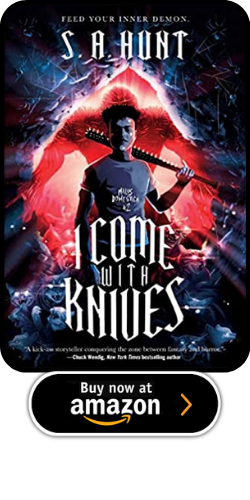 Chilling Adventures of Sabrina meets Joe Hill in S. A. Hunt's I Come with Knives, a horror-tinged action-adventure about a punk YouTuber on a mission to hunt witches, one vid at a time Robin - now armed with new knowledge about mysterious demon terrorizing her around town, the support of her friends, and the assistance of her old witch-hunter mentor - plots to confront the Lazenbury coven and destroy them once and for all. Meanwhile, a dangerous serial killer only known as The Serpent is abducting and killing Blackfield residents. An elusive order of magicians known as the Dogs of Odysseus also show up with Robin in their sights. Robin must handle these new threats on top of the menace from the Lazenbury coven, but a secret about Robin's past may throw all of her plans into jeopardy. The Malus Domestica series #1: Burn the Dark #2: I Come with Knives  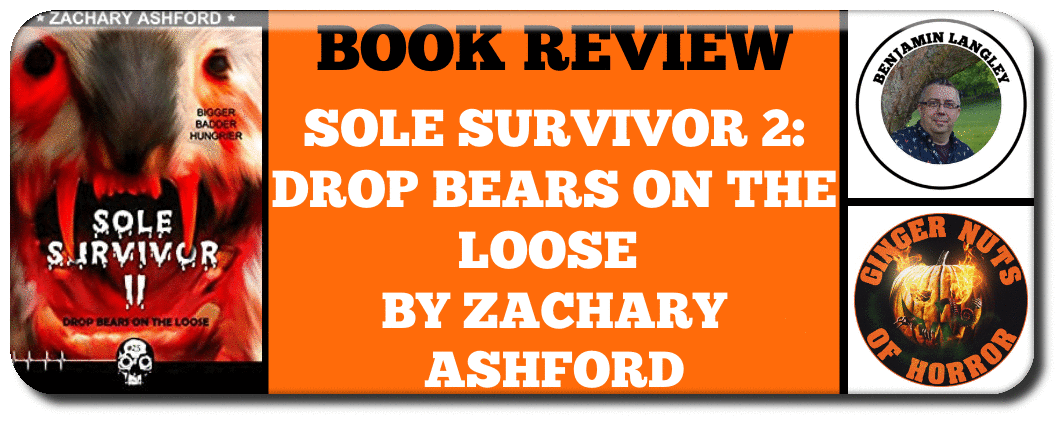 Unnerving’s Rewind or Die series has an aim to entertain, channelling the spirit of video nasties of the 80s with hideous creatures, high body counts and lots of action. What you’d also find among these titles, was sequels with ridiculous subtitles, and with Sole Survivor 2: Drop Bears on the Loose, Zachary Ashford delivers the series’ first sequel, promising, as so many of those movies did, to be “bigger, badder, hungrier”. Like those movie sequels, a knowledge of the original is not wholly required to get to grips with the story, even though it does feature the first book’s sole survivor, December Foss. Book one’s premise was simple: contestants on a reality TV show are dropped on an island to see who can survive longest. The trouble is the island is populated by carnivorous koala bears, or ‘drop bears’, based on an Australian folklore hoax (you think the spiders and snakes are bad, wait until you encounter the drop bears…). The sequel expands on that simple premise, bringing the threat to Brisbane, expanding the role of the TV show’s creator, and introducing several new threats. In this kind of scenario there’s always a danger that in taking away the original setting the story can lose its edge, but Ashford expands the story with great success. December Foss is a likeable protagonist. She’s angry about the events of the first book, particularly with Joseph Steinberg the man responsible for the show. His role is expanded hugely. We discover that he is responsible for genetically engineering the drop bears, and he’s working on some even greater horrors which feature in the second half of the novella. But it’s not Steinberg who is responsible for unleashing the drop bears on Brisbane. The first series of Sole Survivor has attracted the attention of an animal welfare organisation known as ARK. Horrified by the murder of the creatures, they swear to take down December and Steinberg. Some of their men infiltrate Steinberg’s lab and release the creatures, bringing the horror to the city. It is the drop bears who remain the main attraction here. We understand more about them. They’ve been engineered to reach maturity in 24 hours, then they can breed, and the gestation period is similarly short, so in no time at all they could over-run the city. With a far more complicated story, with multiple elements, Ashford could lose the focus on what makes the story engaging. Instead, he turns up the bloodshed, the carnage, and the mayhem. The city perhaps isn’t the best setting for drop bears, but Ashford gets around this by setting scenes where the urban collides with nature – the mountains, the gardens, the river, all of which allow the creatures to thrive. Many chapters end with the introduction of a character whose only purpose is to fall foul of the creatures. Here, Ashford creatures characters who are deliberately ridiculous – the soldier desperate to take on the threat on the drop bears, the woman relying on religion to protect her, and the gentleman who drops a bottle of Viagra pills for the beasts to hungrily gobble up. While these scenes add nothing whatsoever to the plot, they’re all incredibly entertaining. Without a doubt, entertainment is high on Ashford’s agenda. His informal, colloquial style, full of slang is perfectly suited to the scenario. His similes are often beyond ridiculous, and all the more fun for it. As the body count continues to rise, as the situation grows both tenser and more outrageous, on every page there’s either a turn of phrase or an image that had me chuckling to myself. When a story concept is as ludicrous (deliberately) as this one is, it is absolutely the right choice to play the situation for laughs were possible. Plot-wise, while there are numerous elements, all focus on December, and for that she becomes a much stronger and more interesting character than any in the original. With so many threats against her, and her desire to save her parents and escape from the events of the first book once and for all, we have a character we can root for. Other point of view characters are interesting because of the way their stories interlink with hers, whether that be as an antagonist or an ally. This focus makes for a much stronger novella, and gives the story a heart to go along with all of the mayhem. Those that have read the first novella will understand references to characters and events in the first, and when a new threat emerges in the second half of the novella, fans of the original will perhaps appreciate it a little more, but there’s nothing to stop a first-timer enjoying this aspect. Ashford does a great job of weaving in the references so as not to alienate new readers or frustrate those in the know. This story is so different from the original too, that it is never in danger of becoming a re-tread of what went before. Sole Survivor 2 is not a novella to take seriously. It’s not going to last long in the memory or have a profound effect on you. It will, however, make you laugh. It will keep you entertained for a couple hours, and there’s a chance it might just make you look at koalas in a whole new light. Review by Ben Langley 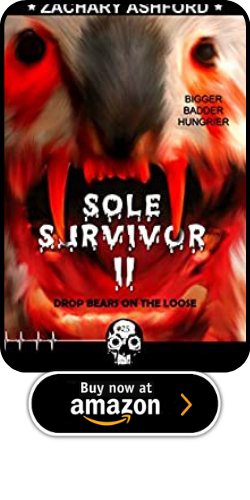 The first season of Sole Survivor has aired, a traumatized December Foss is trying desperately to escape her fifteen minutes of fame, and everyone thinks the drop bears are dead. Everyone that is except The Ark: a radical group of eco-terrorists with an axe to grind, and Joseph Steinberg, who still has plenty of them in reserve. When the Ark release the drop bears from captivity, all hell breaks loose and December must face them again. This time, though, they’re on her turf. This time, it’s personal! "Twice the torment, two-fold the turmoil, and double the drop bears! If you like your creature features fast and furious, you’ll enjoy the marsupial madness of Sole Survivor 2!" - D.I. Russell   Unnerving's Rewind or Die series is an love story to the blood-spattered covers of horror movies of the 70s', 80s', and 90s'. Capturing the spirit of those garish gore-filled films, this series seeks to recreate the B-horror feel of those decades and once again, Zachary Ashford has created a volume overflowing with viscera and wit. Sole Survivor II: Drop Bears on the Loose picks up after the island carnage of Sole Survivor. Now our lone survivor December Foss is trying to find her way back in the "real world" after the broadcaster reality slaughter. Permeated with survivor's guilt, December is struggling to fulfill her obligation to continue to promote the show that took the life of her friend Robin. Constantly bombarded with the same questions on every talk show and podcast that she has to appear on, now December is the target of an animal rights group known as the Ark—as if she is the one responsible for using the drop bear massacre as entertainment. You certainly don't need to read the first novella to enjoy this one, but it definitely ups the enjoyment. Ashford wastes no time in delivering the same ridiculous amount of mangling and macerating as before, beginning with the gruesome death of an activist cameraman. With blood fountaining and teeth and nails tearing, it's a bloody start to a second helping of transmogrified drop bear chaos. It's a slice-and-dice free-for-all as the modified bears proliferate and dispense havoc and destruction over all who come in contact with them. As before, there is unquestionably nothing cute and furry about these creatures but it's even worse now. This time we get behind the scenes and some up close and personal action with television network owner and producer, Joseph Steinberg and his pet scientists as they perfect their creature mutations. The dialogue is snarky and funny (though the jokes do occasionally dip into crude, an unwelcome change from the first novella). The violence is ferocious, the blood is flowing, and the guts are spilling. The large cast once again allows for plenty of grisly and raw deaths. This marsupial murder mayhem is absolute. Characters are introduced just to be ripped and torn to pieces by the beasts and sometimes even by Steinberg's goons. If you thought it was thankfully all over, the ending is left open with just enough opportunity to make this duo a trio. This is just a merry romp gruesomely filled with blood and gore and monstrous killer koala uproar. Like the tag line says:Bigger, badder, hungrier...". If you are looking for twisted timelines and plot points you have to concentrate to comprehend, you won't find it here. But you won't have this much fun anywhere else! Review by Valerie Lester  The first season of Sole Survivor has aired, a traumatized December Foss is trying desperately to escape her fifteen minutes of fame, and everyone thinks the drop bears are dead. Everyone that is except The Ark: a radical group of eco-terrorists with an axe to grind, and Joseph Steinberg, who still has plenty of them in reserve. When the Ark release the drop bears from captivity, all hell breaks loose and December must face them again. This time, though, they’re on her turf. This time, it’s personal! "Twice the torment, two-fold the turmoil, and double the drop bears! If you like your creature features fast and furious, you’ll enjoy the marsupial madness of Sole Survivor 2!" - D.I. Russell  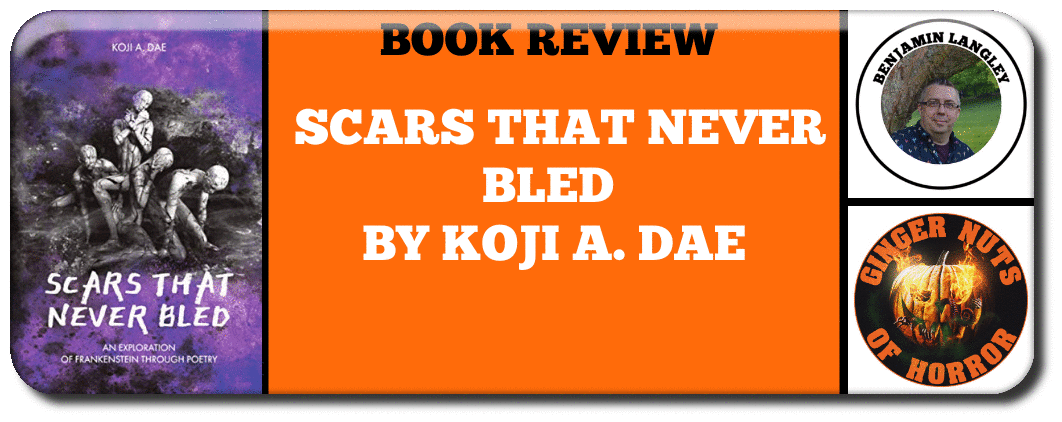 As an exploration of Shelley’s novel, this collection is a success. It touched on ideas I’d already considered about Frankenstein, and opened my eyes to some new interpretations. Without knowledge of the text, it would be difficult to appreciate the poems in quite the same way, but as many of the themes of Frankenstein are universal and the ideas have be borrowed time and again, those with only a base knowledge of Frankenstein will find much to enjoy here. Scars That Never Bled is a collection of dark poetry by Koji A. Dae that explores the events and ideas of Mary Shelley’s Frankenstein. As Mary Shelley was inspired by the Promethean myth when writing Frankenstein, Shelley’s 1817 novel has served as inspiration for many writers in the genres of both horror and science fiction, and for good reason. Its theme of playing God, pushing the limits of human endeavour while also questioning the morality of that exploration remains relevant as mankind continues to push the boundaries of possibility. Here with her poems, Dae explores some of these ideas in a unique and individual way. The preface takes us through the poet’s relationship with Frankenstein, how she became more interested in it when she learnt Mary Shelley’s story, and how she came to formulate and arrange the poems. An original aspect of the collection is the decision to use Tarot cards to organise the poems into chapters. Tarot is something I have a limited understanding of, but each chapter explains the main ideas that card as we’re taken through the fool’s journey, in which we travel from ignorance to experience, so we start with the fool, move to the magician, and then through the high priestess, the empress, the emperor, the hierophant, before finishing with the lovers. This enables the collection to start with poems based upon the monster, before exploring Victor Frankenstein, Mary Shelley, and some of the novel’s themes. The poems are largely written in first person, sometimes directed at a second person. This helps to give each piece a personal and emotional perspective. Sometimes, when the second person is used this comes across as accusatory, and is successful when exploring some of Victor Frankenstein’s dubious choices. The poems which are tackle the creature’s story were, for me, most effective. Here the subject matter is most easily recognisable from Shelley’s work. It makes for a sensible first port of call in the exploration. The idea of desire versus reality is important here, and there is a degree of facing ourselves here, acceptance of who we are. Freedom and rights, and the lack of rights are universal themes which these poems shine a light upon and help to give sympathy to the creature. We also see development that matches the novel, with the imperative language used in the poem ‘Bride’ demonstrating the creature’s ability to use human traits such as manipulation and bargaining. At times, the imagery is a little gruesome - a ‘mangled eye’ here, and a ‘tattered cheek’ there, without it ever being graphic or the purpose of the poem. Between some of the poems are quotations from Frankenstein or from Shelley, and these help to draw focus to the idea that Dae tackles in her poems. In this way, the collection is well organised. It’s clear that Dae wants you to accompany her on this exploration of the text rather than to enforce her views on the reader. In the second part, in which we look at Victor Frankenstein as creator we start to touch more on these ideas of playing God, but it starts at a very base level, the robbing of the graves to obtain the bodies. The first poem in this section. ‘Graverobber’ make that harvesting of body parts an intimate experience, here sourcing a heart: “my fingers clutch the muscle, until memories of its rhythm, beat through its heavy chill’. In this part, the limitations of science are also explored and a question about how future generations will see the scientific advances and ideas of the current age. Once more, it’s an interesting concept. Scientists fear that their work will not stand the test of time, but of course, Victor Frankenstein doesn’t want to see his work replicated or improved upon. As we continue through the next couple of parts, the poems move further away from the events of the text itself. From the preface we see that an understanding of Mary Shelley’s life gave Dae a new appreciation of the text, and her enthusiasm for Shelley’s own story comes across here. Dae draws a parallel between Frankenstein creating the monster and Mary Shelley creating the novel. ‘Complicated’ is a favourite here: ‘obsessed with simplicity, we shove and snip our shapes, to fit constructed categories’. These lines could be about either the writing process or the selection of body parts for the creation of a monster. Much of the rest of the collection tackles themes of the novel. While my preference was for those more closely related to the events, there is still much to admire in the collection. There’s interesting poems that tackle the idea of motherhood – how the creature is born motherless and therefore never has the love, warmth and acceptance a mother would give. Ideas of playing God are also explored further, but also the rejection of responsibility after one has committed an act only Gods were deemed capable of. Most of the poems have a similar form, though there are a few that play with this, appearing different on the page. I’m glad the poet decided to explore other ideas on how to present the poem in ‘Breathing Avalanches’, ‘Shunned Consent’, and ‘A Thrill of Terror’. I couldn’t quite get to grips with what the poet was saying in these poems, but I was glad of the use of experimentation with form. As the collection moves into its last pair of chapters there’s some honesty from Dae as she tries to link her ideas to the tarot concept of the hierophant. This struggle leads to the longest poem in the collection, ‘For Want of a Friend’. It’s one that speaks of hope and redemption, and also a huge what if moment. Victor Frankenstein is posed with many choices in Frankenstein before he reaches a point of no return, and this poem mirrors that well. The final section, The Lovers, is not about love, but about knowledge and experience, but also a rejection of that. There is more tenderness in this section, exploring the ‘shadow of your curves’ and ‘the hollow of your hip’. It showcases a different side to Dae’s poems. The final poem, however, ‘When Science Couldn’t Kill Magic’ suggests that our knowledge doesn’t encompass all. It starts with the idea that science can take the magic away, ‘bunsen burners, melted away my shadow magic.’ However, that is all lost at the end in the lines ‘all explained by science, until his lips touch mine’. This final poem reflects on what we don’t yet know. It feels like an important place to leave this. Victor Frankenstein thought he could master life itself. How little he knew. As an exploration of Shelley’s novel, this collection is a success. It touched on ideas I’d already considered about Frankenstein, and opened my eyes to some new interpretations. Without knowledge of the text, it would be difficult to appreciate the poems in quite the same way, but as many of the themes of Frankenstein are universal and the ideas have be borrowed time and again, those with only a base knowledge of Frankenstein will find much to enjoy here. Review by Benjamin Langley 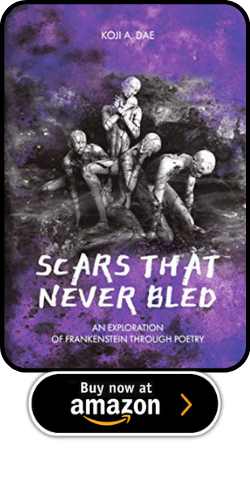 Mary Shelley's Frankenstein continues to haunt each generation. Although the story was written at the cusp of the industrial revolution, it continues to posit important questions about technology and humanity. In this book, Koji A. Dae uses poetry and tarot to explore some of the deeper questions within the classic Frankenstein archetypes. Join along to find pieces of yourself in the creature, the magician, Mary Shelley, the mother, god, nature, and the lovers. Please note: Stanza breaks may not display properly if you have a large font on your reader. Accessibility is important to me, so I created a format that allows font changes. However, if the poem does not appear to display correctly, please try a smaller font size.  |


Archives
May 2023
|

|

|
 RSS Feed