


 Most people, well those of us with the even a modicum of sanity, would be honoured to have not just a book written about your greatest achievements but also a film of your endeavours. We all crave validation and desire to be at least famous if not infamous. Thankfully this isn't the case with Dr Valentine, the antihero of John Llewellyn Probert's third and possibly final volume (hey like so many horror films there is always the chance of another sequel) of the crazy adventures of the world's most flamboyant serial killer. The Last Temptation of Dr Valentine is the most outlandish and fun-filled outing of this most excellent series of novellas and novels. When an American film crew decides to come to Bristol to make a film of the book which chronicled the murders he committed against those who he felt were responsible for the deaths of wife, Dr Valentine takes this as a slight upon himself forcing him out of retirement to deliver his own unique brand of revenge and restitution to the utter delight to the reader. Probert has an encyclopedic knowledge of UK horror films and he uses this gift perfectly throughout this novel, drawing on some of the most iconic, and few lesser known but equally outstanding death scenes as the mode of revenge from Dr Valentine to create a novel so gloriously over the top that it should contain a Government health warning from fear of getting lockjaw from all the gleeful grinning you will be doing while immersed in the pages of this love letter to the genre. The pace never lets up, The Last Temptation of Dr Valentine steams through its narrative with the unrelenting power of some Horror Expres. Each chapter is essentially a set up for the punch line, where the punchline is a clever and witty take on an amazing death scene. Some you will recognise instantly, and some of them might have you wondering where they came from, all I'll say is that this is the best use of a penguin in a horror novel that I can think of. While each chapter s essentially a meet and say goodbye to one of the characters, it never gets old, Probert's writing is captivating, he captures the essence of what made these horror films so uniquely British, managing to take sly digs at the media, and the conveyor belt mentality of American horror cinema, without ever losing sight of the main objective of this novel which I think is to bring the sense of un back to horror. The character of Dr Valentine, if you have read the previous two books in the trilogy will always be associated with Vincent Price, one of horror's greatest actors, and the notion of casting Nicholas Cage in the role of the good Dr is a stroke of genius, I'll assume this is a not so subtle dig at Cage's woeful turn in the sacrilegious remake of the Wicker Man. Valentine is such a marvellous creation, intelligent, resourceful, erudite. and aloof, he could easily have been an altogether unlikeable antihero, however, his fragile sense of ego turns him into one of the greatest horror villains of all time. Pitting him once more against the down to earth, curmudgeonly and world-weary former Inspector Longdon only serves to highlight the twisted sense of self-importance that Dr Valentine feels about himself. Not quite a battle of wits, as no one would ever dare to claim to be comparable to the Dr, this is more like a game of cat and mouse where the mouse is far more dangerous than the cat. The Last Temptation of Dr Valentine combines a thrilling narrative, with a warm and witty look at the history of British horror, to deliver an exuberant and triumphant story that will put a smile on the face of even the most indifferent of horror fans. I have a theory that no horror franchise needs or should continue after its third outing, but reading this book Probert has hit that theory into submission, I long for at least one more outing for our good if slightly nasty doctor. PICK UP A COPY FROM BLACK SHUCK BOOKS BY CLICKING HERE
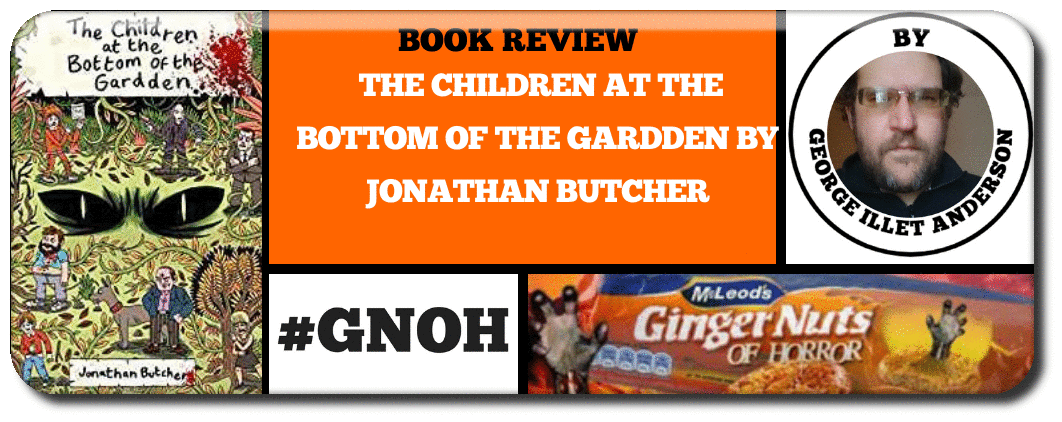 Jonathan Butcher appears to be the type of writer who excels in creating uncomfortable and painful stories that challenge your sensibilities. His previous novella, the uncompromising and brutal “What Good Girls Do,” was a delve into the fractured psyche of an extremely damaged child and the consequences of her exposure to normal life. Truly one of the more disturbing reads of modern times, the novella’s graphic content masked a deft and assured writing style. So, when it was announced that he was releasing his debut novel from Burdizzo Books I was more than a little intrigued as to what his twisted imaginings would conjure forth. The result is “The Children at the Bottom of the Gardden,” a novel that can best be described as a multi-layered crime story seeded with elements of folk horror, Quentin Tarantino’s “The Green Man” if you will. Set in the seedy and crumbling seaside town of Seadon, the plot is teased out through the perspective of seven individuals who at first appear to be a random collection of lost and broken souls. However, as the story progresses, their individual paths begin to intermingle and coalesce around the eponymous garden of the title, the home to something far more insidious and manipulative than anything they could possibly imagine. From the get-go, “The Children at the Bottom of the Gardden” has a discordant and jarring feel to proceedings, not only in terms of content but also in terms of presentation and structure. Each of the key characters in the book has an individual style of font through which their story is told. Though initially unsettling you quickly realise that there is a method to this madness. In Butcher’s chaotic world of barely restrained violence, seething anger and repressed desires, the presentation lends credence to the notion that you are witnessing distinctive personalities who all bear scars of one form or another Within the space of a few chapters, you quickly realise that the main characters are very damaged people who aren’t particularly redeemable but the skill with which Butcher brings his characters to life is such that you can’t help but feel engaged with them. This is surprising considering it is almost impossible to distinguish who is a victim or assailant, a user or being used as their increasingly complex web of secrets and lies leads them to inexorably to the rewards that await them in the Gardden. Much like his debut novella, this is a book that deals with the damage wrought on people by their environment and shares similar themes of control, manipulation and abuse. There are shocking scenes throughout the novel but unlike its predecessor this novel isn’t a sustained and abject lesson in brutality. The brief moments of violence serve to reinforce the point that these are broken people who can’t necessarily be repaired in any traditional sense of the word. I can appreciate that from this review you are probably sitting there scratching your head wondering what on earth this novel is about. Just trust me when I say that “The Children at the Bottom of the Gardden” is an absolute beast of a novel and well worthy of your time. 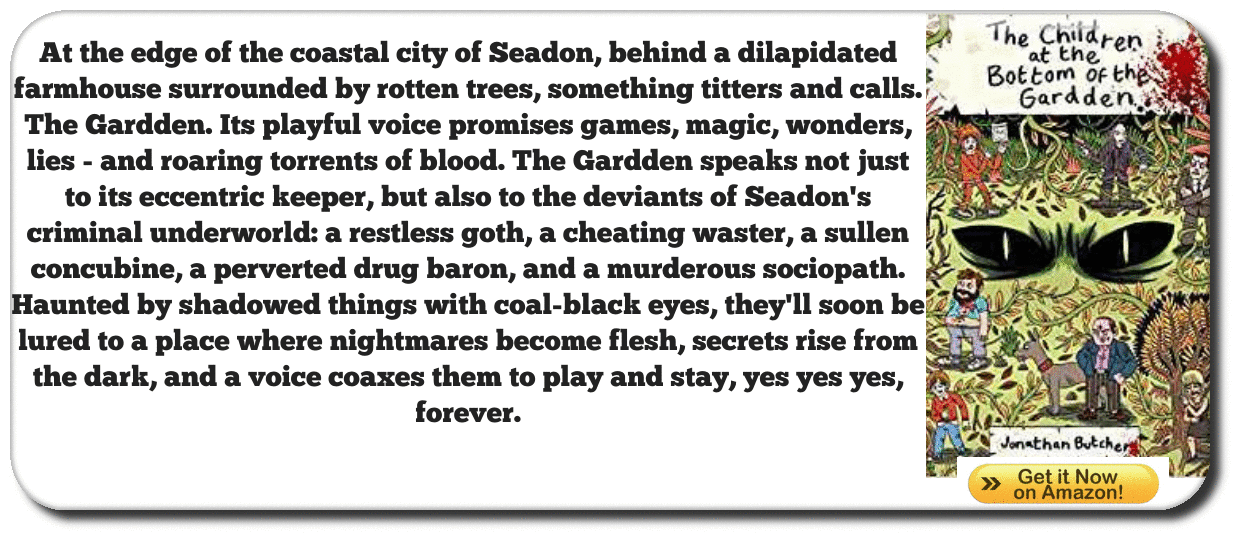 
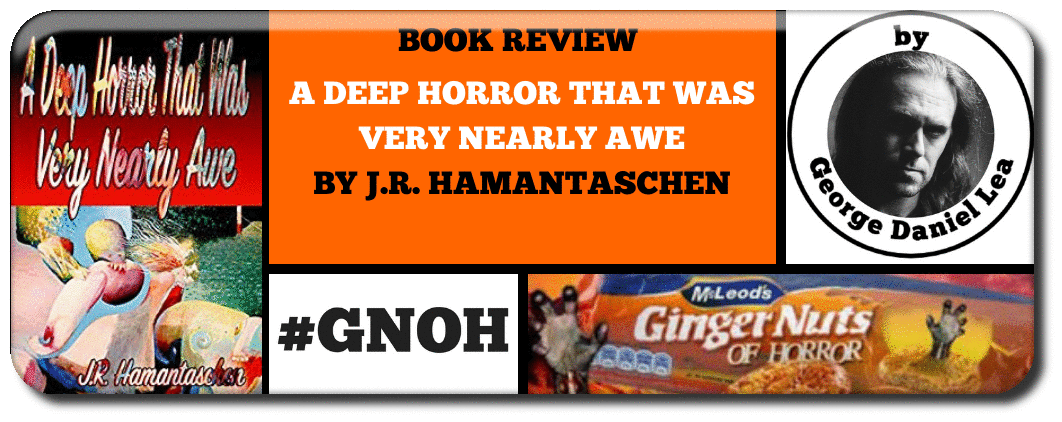 As with J.R. Hamantaschen's previous collection, You Shall Never Know Security, the title of this collection serves as a profound promise, almost a threat, to the reader, pre-empting their reaction in a manner that begs to be fulfilled. It's a bold move on the author's part, as any reader will come to the work as a challenge, girding their loins and annealing their souls against its content, daring the work to make good on its oaths. Before we delve into whether the collection is the equal of its promise or not, one thing that immediately strikes is how removed the collection is aesthetically from its predecessor: whereas You Shall Never Know Security is a threatening and ominous work from the cover onwards, its palette consisting of grim greys, tempestuous blues and varying shadow shades, A Deep Horror That Was Very Nearly Awe is a kaleidoscopic explosion of colour, a riot of far more surreal and overtly distressing imagery that serves to shunt the reader into a particularly unsettled frame of mind. Here, rather than the deep sense of foreboding that its predecessor inspired, the reader is blasted into a far more fractious state of discomfort, the cover so kaleidoscopic, it leaves us with an abiding sense of mystery as to what the stories can possibly contain or consist of. In conspiracy with the immediately intriguing, pre-emptive title, the cover artwork provides a degree of frisson, of scintillation for the reader, that the stories within must fulfil in order to avoid disappointing. From the first instance, it's very clear that this collection is several shades removed from You Shall Never Know Security. Tonally, the stories are far more diverse and eclectic, which works entirely in the collection's favour: each piece is its own, self-contained work, so removed from its siblings as to continually refresh the palate rather than jarring or contrasting too strongly. There's an experimental quality to both the concepts and style of writing here that has to be applauded, even if the collection does, at times, perhaps stray a little too far into abstraction and doesn't quite take the time and space to flesh out its ideas (one or two of the stories end in a truncated manner, feeling as though there might have been more made of their always intriguing ideas and subjects, their often lurid and seductively wrought imagery). Here, Hamantaschen provides commentary on any number of prevalent, post-modern subjects, ranging from tribal work place dynamics (No One Cares But I Tried) to sexual politics and identity (Bleecker and Bleaker; Or, Gay For Muesli), each of the stories a witty and wry take on familiar situations or confusions, shot through with veins of often surreal, outre horror, much of which is almost incidental to the more banal, waking life dreads and terrors that occur around it. In this, Hamantaschen provides a fairly bleak, almost nihilistic contrast between the worlds of our nightmares and the drear, grey delirium of waking life: the horrors here are often pre-existing, all too familiar, born of disappointment and disease and betrayal, of politics and cruel and inhumane systems. Whereas those which are more abstract or fantastical often occur incidentally or in such a manner as to throw harsh and unflattering lights on the lives they haunt or infest. Very often, the latter are drawn with such lurid intrigue, such variously-coloured bravura, they are far more attractive and seductive than the grey worlds of plasic, dust and broken dreams the protagonists invariably inhabit. It's as though Hamantaschen is proclaiming: “Yeah, there are nightmares out there. And guess what? Nightmares are better than what we've built, better than what tradition proscribes, better than what we've come to assume and believe.” In this, the collection has a far more activist tone than You Shell Never Know Security, which generally took a recessed perspective on the events it narrated. Here, Hamantaschen often adopts an involved style and perspective, many of the stories told in the first person, as stream-of-consciousness confessionals rather than journals, which lends them an emotional immediacy and degree of grit that they might otherwise lack. The fact that the reader is often forced into the perspectives of characters that are far from likeable (Bleecker and Bleaker's Ken springs immediately to mind, as does Upon a Path Suddenly Irradiated at Some Halfway Point by Daybeams as Rich as Hers's Barbara Cromwell, who isn't profoundly antagonistic or dislikeable, but boasts a weary, defeated desperation, a myopia born of age and divorce and perpetual disappointment, in which she has come to belief that everything that occurs in her life is the result of some negative agency, as opposed to her own qualities and character) serves to intrigue rather than alienate, for the most part: it's so, so easy for stories that involve immoral, stupid, unthinking or emotionally desolate characters to become too simplistically moral or didactic. This does not occur within the pages of A Deep Horror That Was Very Nearly Awe. Instead, the writer explores who these characters are and why within the contexts of the worlds that birthed them: even some of the most grotesque and repellant garner some sympathy -or at least complexity- by story's end, and whatever reprisals they suffer are not fairy tale or finger wagging, but naturalistic. By the same token, there are often entirely innocent or incidental characters that often meet with terrible ends simply by blind chance or idiot luck, from concerned and empathetic young boys getting eviscerated by other-worldly monstrosities in a gas-station public toilet to women who happen to be too young and pretty having their minds warped and lives destroyed by a jealous but powerfully psychic workplace rival. The particular strain of amorality that runs through the work -and I cite that as a powerful, powerful positive- is attractive and intriguing in itself: no one feels particularly safe here, especially given Hamantaschen's penchant for throwing in surreal twists that often change the tone and timbre of entire stories. As the writer previously promised: we SHALL never know security, especially when reading one of his books: don't expect to come to this work and find the usual tropes and templates, because they simply don't exist: there are no “zombie stories” here, no “vampire stories,” no “haunted house” stories: this collection throws out the familiar and instead opts for a scope that wouldn't be out of place in a Dario Argento or David Lynch script: absurdity, strangeness and off-the-wall metaphysics are often the orders of the day, laced with a degree of sardonic wit that is simultaneously humorous and despairing. As commentaries on human experience, society and history, these stories are like the jokes of some bleakly amused immortal, which the reader is forced into the position of: for all of the horror, grotesquery and disturbia they contain, there's always a simmering undercurrent of wit and wry amusement, a “laughing-at-the-mushroom-cloud” quality that is sincerely redolent of our present-day political discourses and cultural conditions. What Hamantaschen has created here is not a love letter to some horror tradition, a paeon to enshrined tropes and subjects and templates, but a more ragged-edged, saw-toothed and sadistically surgical work that is intended to rip open the reader and spew its hallucinogenic venom directly into their naked and infested minds. In that, it is generally successful: the stories are often stylistically deviant, such that some of them even deliberately shift gears and status part way through, breaking the fourth wall to inform the reader that this is no way to proceed. The general success of this -often flippant- approach to storytelling depends on the proclivities of the reader: those that favour something more traditional in their media are likely to find it jarring or even frustrating. For my part, I enjoyed the disruption and change in tone the technique often signifies, the variety and sense of conspiracy that it creates with the reader: Far from treating the reader as a passive subject, Hamantaschen's work actively involves them, treating them as agents that are conspiring with him -or his characters- to create the stories or realise them in the reader's own imagination. That interactivity necessarily requires a degree of engagement that more traditional tales do not, acknowledging the reader as a thinking, conscious entity that reacts in real time, rather than something to be coaxed or coerced into feeling and thinking as the writer demands. The sheer variety of invention on display means that there will necessarily be moments where the stories aren't quite as successful as their enthusiasm or bravura titles suggest, but that is more than overriden by the flights of genuine, demented genius the collection ascends to. A work that may require approaching with consideration, given its experimental nature, its flirtation with or outright flouting of tradition and assumption, but one more than worthy of its reader's time, and that, in a sadly rare display of respect, treats them as entities capable of engaging with its ambiguities and absurdities without feeling the need to over-explain or justify them. Lastly, there are the titles. Good, sweet Baphomet, Hamntaschen has a way with titles that is enviable: they scan like lyrics from some arthouse piece of underground music, like extracts from impromptu poetry readings. Many of them, like the title of the wider collection, even presume to predict or pre-empt the reader's emotional reaction to their content: a pleasantly deviant trick that works entirely to the collection's advantage. If nothing else, if you take no other pleasure from this, then scanning the contents page should provide a sincere jolt of linguistic joy. A more than worthy successor to its predecessor, and one that demonstrates a writer growing in confidence and capability. For my part, I'm more than intrigued as to what J.R. Hamantaschen will drag screaming into reality next.  
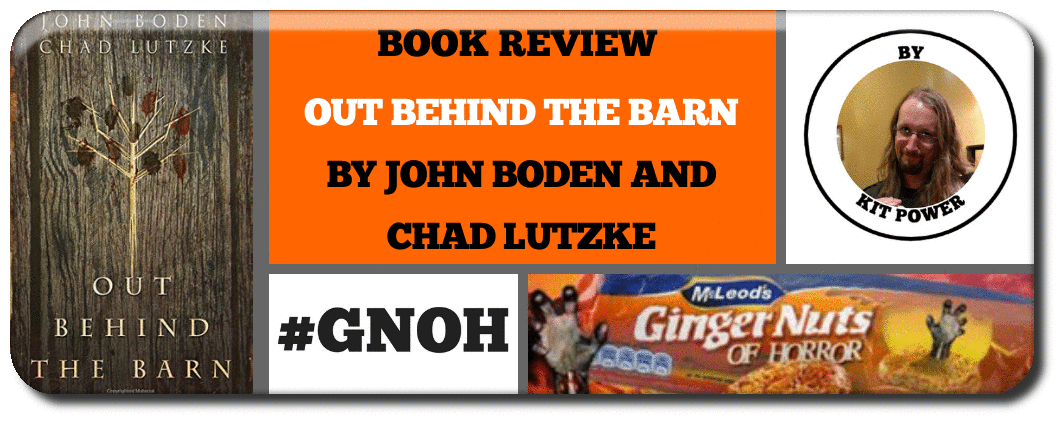 I’ve reviewed the work of both John Boden and Chad Lutzke for this site before, so I was very keen to check out a collaboration. I enjoy both writers, but while there is some crossovers in terms of tone and subject matter, they are very different in terms of voice, each having their own compelling but quite divergent approach to prose. One of my big curiosities going in was to how the prose would work with to such distinct voices. Out Behind The Barn is the story of two boys, Davey and Ronny, and their mother figure, Maggie, and their lives together on a farm. The book evokes an idyllic simplicity of rural life, without overly romanticising it’s slightly rugged nature, and one of the things the book excels at throughout is a very faint sense of wrongness, a world just slightly out of kilter. The narrative does, by degrees, peel away the layers to reveal the mysteries at the centre of the tale, but, while I did find the resolution deeply satisfying and emotionally resonant, at least as much of the pleasure of reading the book came from the journey, of the children and their new companions. I’d say the prose style overall leans more towards the superb Boden lyricism, but there is also a plain spokenness that speaks to Lutzke’s influence. What impressed me was how well the two blended to create a new voice that felt consistent and assured. It’s also a near-perfect novella length tale, that manages to thread the needle of providing enough incident to justify the running length, but also allowing the characters to breathe, and the setting to shine. It’s that impression of setting that stays with me the most, even beyond the startling imagery of the final pages - this is an amazingly evocative and atmospheric read, invoking childhood and the isolation and warmth of rural life in an emotional yet unsentimental way. I’ve thoroughly enjoyed the work of both authors in the past, and with this, they’ve produced something very special indeed. If you’ve enjoyed either man’s work in the past, I’m confident that you’ll find this novella a richly rewarding read. I certainly did. KP 21/10/18 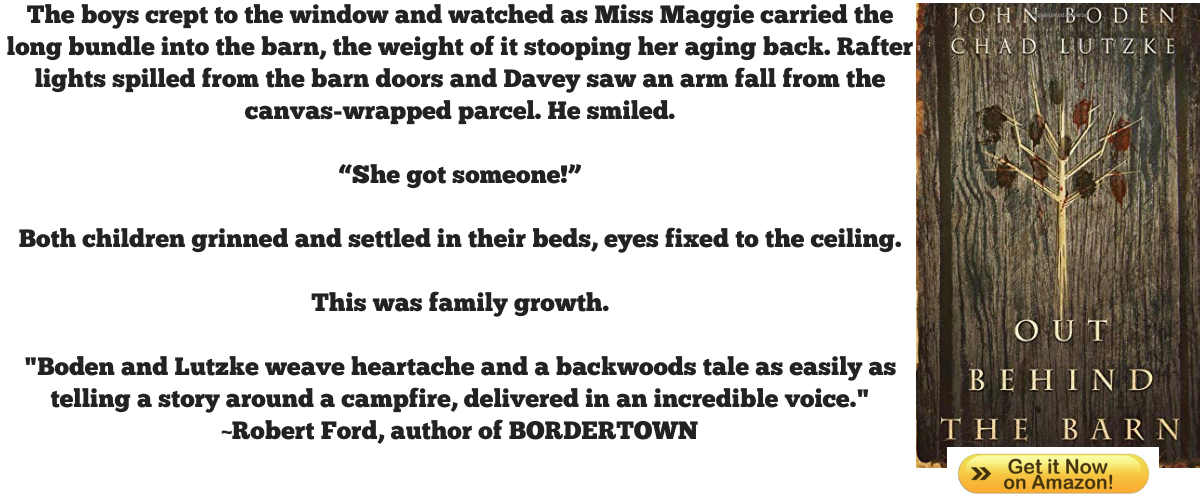 
 The first thing that really grabbed my attention with this book was Chris Carlisle. A guy, just trying to make it through life, struggling the same way we all do. Mundane job, living payday to payday, debating with himself over the now regular winter ‘heating or eating’ dilemma. This is a great story, a supernatural horror story encompassing not only the horrors of the supernatural world, but also the horrors of our own everyday existence. I felt his internal struggle, his guilt, and his overwhelming need. He needed the money, he knew he was wrong, but it was going to help him more than the dead guy wasn’t it? Or so he thought. I really loved the undertones about our general money worries, and the depths we can be driven to in desperation. For me personally, it felt like John F. Leonard was getting right into the nitty gritty of our materialistic society. The rich get richer and the poor get squashed. Our ‘need’ as it were, for the things we don’t really need, take over our senses and cause us to do things completely out of character, ruining our lives and those of our loved ones. Those of us who are desperate enough can be completely blinded by obsession and greed. To me, this was a story examining just how far one is willing to go, and how much is one prepared to turn a blind eye to, just to get on in this mundane existence we have created for ourselves. A particular quote I loved “I might have no time for Fleecebook and Twitter-Tattle, Snapshat or Instawhatever, but it loves them like naughty sons. The more noise the better as long it keeps a few real truths quiet.” I felt this partly summed it up, our materialistic obsession. We love sharing so much with friends via social media. We lose ourselves in the moment, rather than enjoying what is in front of us right now, we sacrifice it for a few likes and retweets. We are missing so much. I am as guilty as the rest for this. There is a pressure here too, the ‘keeping up with the Jones’’, the need to acquire things just to show we have them. We don’t like the idea of people knowing we are struggling, we don’t always ask for help when we should. It’s like this ‘shame’ has been bred into us. There is no shame in needing help. To me anyways, it felt like this was one of the points of the books. Speak to people, ask for help if you need it. Don’t leave it so the ‘help’ seeks you out. Evil is attracted to the most vulnerable among us. My favourite character has to be Ronald Hodge. My god that guy is a creep. I felt like I needed a shower each time he was in a chapter. He is one horrendously bad man, in every possible way. I absolutely loved the development of his story. The way it just kept getting worse and worse (in a very good way), he is awful. Reading about Steph in his house gave me chills. It was so bad yet so good. I really don’t want to say too much on Ronald as I don’t want to totally ruin it for people. This is must read, for this character if nothing else. Bad Pennies is brilliantly thought out and written, it flows so easily from one chapter to the next. The switch up in characters is obvious without being confusing. The fluidity of the story and realness of all the characters made this a truly horrifying pleasure to read. I am very much excited to delve deeper into The Scaeth Mythos, it’s fascinating. The other realm, the manipulations of our reality and the descriptions of the, do I call them familiars? I’m not sure. King Ratty was a definite favourite. When he became spider-rat, oh god, I was itching all over. I hate spiders! I really can’t wait to read the next instalment. Anyway, that is more than enough from me raving about how much I loved this book. 5/5 – I love it!! Lesley-Ann (Housewife of Horror)  
 One of the best things about reading horror fiction is the diversity in genre that exists within horror itself. You’ve got your standard variety of creature features, hulking slashers, quiet haunted houses, invasions of body and mind, and so forth, and so on. I especially enjoy when horror gets mashed up with other forms of genre fiction--check out books like Gabino Iglesias’ Zero Saints or Alan Baxter’s Manifest Recall for an intoxicating blend of crime and horror, as a small example. I devour stuff like that. Don’t get me wrong, I love my horror fiction pure and unadulterated, but sometimes, it’s a lovely breath of fresh coffin air to check out something a bit…different. Which brings me to one of horror fiction’s unsung heroes: the Weird Western. I’ve long detested that label. Weird western? Really? I wish we had stuck with the term that the old Razored Saddles anthology from the ‘80s tried to coin: “cowpunk.” Sure, it was done with tongue incredibly far in the cheek, as a soft jab at those who called themselves The Splatterpunks at the time, but…weird western? That’s the best we could do? Anyway. This particular flavor of dark fiction is known for combining elements of traditional pulp western fiction, with more fantastical elements of horror and fantasy. Simple enough, right? Right. Dawn In Damnation is an excellent entry point for anyone who is interested in this funky little corner of dark fiction. Damnation is a strange town, existing almost as a Purgatory for suddenly-dead travelers from the old West of the United States. The town is in a perpetual stay of dusk (or is it dawn?), with a dust storm clearly demarcating the town limits. New arrivals to Damnation always come stumbling out of the dust storm, but any attempts to venture back out into it always end with the explorer getting mysteriously turned around to where they began. The main attraction of Damnation is that its denizens no longer have to worry about dying. They’re already dead. No need to eat, or drink, really, but since there’s nothing else to do, everybody ends up drinking at the local saloon run by Sal. Some play poker to pass the time, others beg, borrow, or steal for drinks, because at least you can still get drunk in the afterlife. Tom is our narrator. He was a newspaper editor in life, and has taken it upon himself to chronicle the comings, goings, and various acts of violence that the locals of Damnation seem to love visiting upon each other. Oh, did I mention that there’s werewolves, and a vampire? The werewolves mostly keep to themselves, as they can be a rowdy bunch when they get down to serious drinking. The lone vampire of Damnation, a rather mysterious fellow known as Nigel, is incredibly bored and incredibly hungry. He cannot drink the blood of dead men--at one point, he compares it to “brackish water”--and such, only takes enjoyment from witnessing the occasional gunfight in the saloon or out in the street. He’s a dangerous wild card for the various heroes and villains of Damnation, and his backstory is surprisingly sad. Soon, a new arrival to Damnation threatens to shake things up quite a bit. It’s a woman, which isn’t exactly new, but this woman is pregnant, and she’s got a heck of a story to share. I’ll leave my vague plot summarizing at that. This story is a pleasant little treat for adventurous readers. Dawn In Damnation is presented as a series of vignettes in the everyday life of the town, as observed by Tom, and the story moves along on its main track quite well in the background. This novel leans a bit heavier on the “western” in weird western, but it served me well. Little tidbits of history and trivia from the western frontier boom in the US were sprinkled throughout, but it didn’t feel like a history lecture. The stranger elements of the novel were still there, but I felt they were downplayed a little. I really could’ve done with more spooky stuff, but there were a few key scenes that were executed very well. Without spoiling much, I’ll just say that there’s a showdown with the werewolves of Damnation that is a solid chunk of pulp action writing. Overall, I’d recommend this novel to readers starting to branch out into the many subdivisions of horror fiction, dark fiction, whatever you want to call it. Clark Casey delivers clean writing, subtle world-building, and twists on old tropes to this novel. The second in the series, Dead Indian Wars, is also available now, from Kensington’s Lyrical Underground Press. I should note, also, that Clark uses the term “paranormal western” to describe his stories, which I do like. 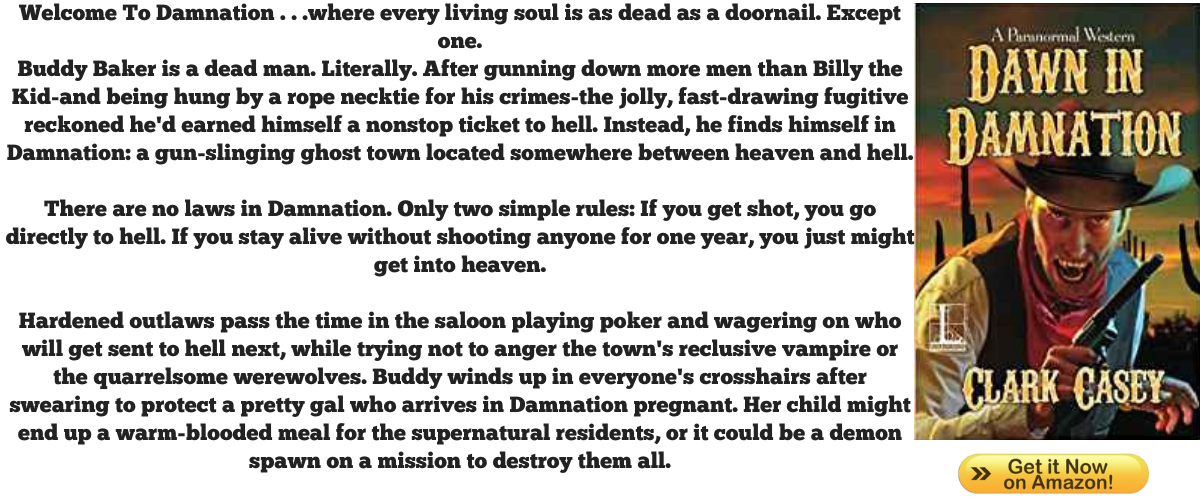 
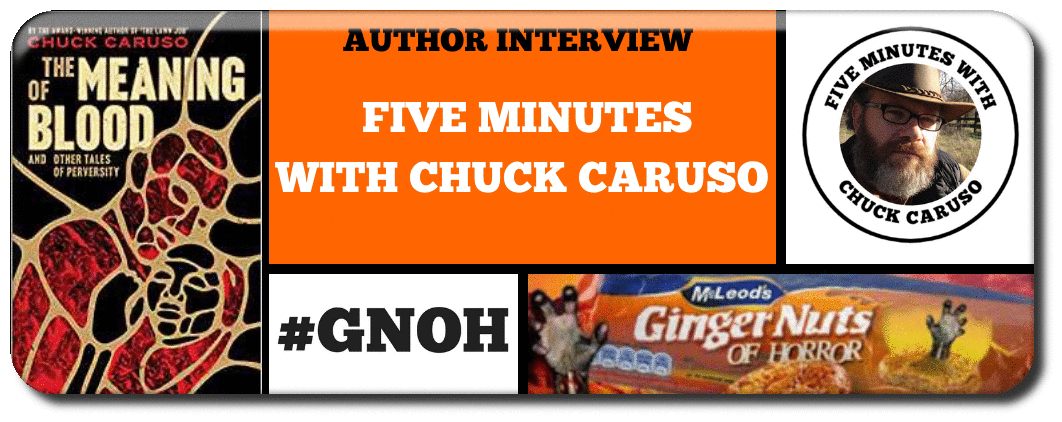
 I will be honest - I started reading this book with the assumption that the stories would be filled to the brim with blood and gore. While I wouldn’t say the stories are filled with blood and guts, the stories are full of wit, unexpected turns, and yes - some blood and guts. Chuck’s writing immerses the reader in the story with a pleasing amount of detail and usually at a comfortable pace. So while the focus within each story may not be to try to be the scariest or most depraved thing you’ve ever read, each story is very cleverly written and enjoyable to read. Some stories had me feeling like I was reading a book published over many decades years ago, and others felt like I was reading something from today. While I usually read books published within the past 20 or 30 years, I have read a fair amount of classic books. When reading classic books, I felt like the author was giving me their eyes to see what the world was like for people living long ago, like I was learning some history while enjoying the book. Some of Chuck’s stories gave me that same cozy feeling. Not what you’d expect from a collection of dark stories, right? Within this collection, the story settings vary from some point in the 1800’s to stories within more modern times. Some were in the first-person point of view, and others in third-person point of view, with the writing style resonating with modern language or with language common to the time period in which the story took place. And in a lot of the stories, I found myself laughing out loud to some witty quip that sound like something I would think or say. I’ll summarize the stories below and try not to give anything away since you would really enjoy reading these for yourself. The Confession of Jeremiah Heath - This story follows the confession of a man who found it hard to believe in God because he’d never found a sign that proved His presence. One trying day, he found the sign and to assure his salvation, must do the unthinkable. While this story’s ending was fairly predictable and abrupt, the main character was likable despite his misgivings. None of Ours - This story is not very scary, but it does play well with a tense situation that may end very badly. Overall the story is thought-provoking and believable with a great flow. A Savage Smile - If you like bloody action scenes, this one's for you. The story’s setting is a fighting pit where veteran fighter Donkey Jack may have met his final match. This story plays out like a good action scene with an interesting end. Meet the Beetles - Roy is an exterminator who has been called to the house of a lonely woman claiming to have been recently abandoned by her husband for another woman. A house call to deal with what she claimed were roaches turned out to be very interesting, to say the least, and I could not have predicted the ending. Plus - bugs inside the house are just gross to me. Get Off My Cloud - How far would you go to help cover up the crime committed by a loved one, even if you thought they were justified in committing it? Professor Spano finds out that helping his beloved Tanya may be a bit more than he should try to handle. Another cool thing about the story - it retells an old joke I probably last heard last when I was in high school, so it was cool to be taken back. The Fucking Robot - This story was one of the longer ones, but it is a very interesting take on how a futuristic sex robot could drive a wedge between a husband and wife. It follows Eileen as she learns what the robot is capable of doing and what it has become to her husband, and how she decides to handle it. I went into this story expecting that a very different plot would unfold than what really did. This story is more drama than horror, but overall pretty good. A Lady’s Pistol - Set in the mid-1800’s, this story is a tale of an assassination attempt gone wrong. Dickie is a simple-minded man who agrees to a suggestion to kill the owner of a local brothel. The brothel in question is cutting into the profits of the other establishments in town. While the story was well written, just wasn’t my cup of tea. Six Cases of Beaujolais - Set in modern times, this story of a one-sided rift between friends reminded me of Poe’s “The Cask of Amontillado.” It was pretty creepy and had an ironic last line, but wasn’t my favorite story in here. Hatchet Job - This story is one of the more graphic ones in the bunch, and there is a great balance between action and description so you can picture everything exceptionally in your head. The narrator is recalling his battle against a mysterious co-worker who transforms into something awful under the light of the moon. The ending was somewhat predictable, but this was otherwise a cool story. Snapshots from a Family Album - This is a great story about a haunted house that affects the whole family. I like the style of this story - it is broken into segments where each segment depicts horrific things that happen to each family member as they are exposed to whatever is haunting the place. I got a lot of creepy feelings when reading this one, but a couple chuckles from some of the lines by the character. And the main character has my all-time favorite Led Zeppelin song playing in the background, so I thought I had to mention that :). Adrift on a Sea of Hunger - A haunting story that I believe takes place during colonial times, this was probably the first zombie story I’ve read and actually liked. Made me feel sorry for zombies. A very good story with an ending open to endless possibilities. Everybody, Do the Apocalypse - I’m not usually drawn to end-of-the-world (apocalyptic) stories, and I didn’t think I’d like this one. But it’s very well done with a great pace and believable characters. I also like the gory, creepy scenes the characters got themselves into. Not sure how it compares to other stories of this type, but I really enjoyed it. Rusty’s Last Joke - Rusty is the beloved group prankster whose antics can’t be beaten. After a few drinks, Rusty and the gang head out to prank an old classmate from long ago. For some reason, this one reminded me of something that would be in Scary Stories to Tell in the Dark - nice and dark. They’ll Call Me Whistlin’ Pete - This story is short and sweet with a great ending. I don’t want to give away too much about the plot. It’s a cleverly written piece that takes place long ago. Hellfire - Roger generously shares his campfire and dinner with a preacher who is just passing through and ready to settle for the night. Unfortunately, this stranger is a little too serious about preaching the Good News. The story was pretty predictable for me. The Meaning of Blood - Ross is a wayfaring man who spends his money on gambling, booze and whores. But when he receives a letter notifying him of his brother’s death, Ross decides to visit his sister-in-law and offer any assistance - or himself in marriage. Along the way, he stops at a saloon for a fun night in case it is his last before committing himself to a family. Unfortunately, he didn’t choose his night’s companion very wisely and ends up paying for it in a couple of different ways. This story was very dramatic and would make a great film. This collection showcases Chuck’s ability to appeal to different types of readers in terms of topics or in writing style. I enjoyed the mix of characters, narrative voices and time periods. I think his stories could reach a wide array of people.  
|


Archives
May 2023
|

|

|




 RSS Feed