• HOME
  • CONTACT / FEATURE
  • FEATURES
  • FICTION REVIEWS
  • FILM REVIEWS
  • INTERVIEWS
  • YOUNG BLOOD
  • MY LIFE IN HORROR
  • FILM GUTTER
  • ARCHIVES
    • SPLASHES OF DARKNESS
    • THE MASTERS OF HORROR
    • THE DEVL'S MUSIC
    • HORROR BOOK REVIEWS
    • Challenge Kayleigh
    • ALICE IN SUMMERLAND
    • 13 FOR HALLOWEEN
    • FILMS THAT MATTER
    • BOOKS THAT MATTER
    • THE SCARLET GOSPELS
GINGER NUTS OF HORROR
  • HOME
  • CONTACT / FEATURE
  • FEATURES
  • FICTION REVIEWS
  • FILM REVIEWS
  • INTERVIEWS
  • YOUNG BLOOD
  • MY LIFE IN HORROR
  • FILM GUTTER
  • ARCHIVES
    • SPLASHES OF DARKNESS
    • THE MASTERS OF HORROR
    • THE DEVL'S MUSIC
    • HORROR BOOK REVIEWS
    • Challenge Kayleigh
    • ALICE IN SUMMERLAND
    • 13 FOR HALLOWEEN
    • FILMS THAT MATTER
    • BOOKS THAT MATTER
    • THE SCARLET GOSPELS
GINGER NUTS OF HORROR
horror review website ginger nuts of horror website
Picture

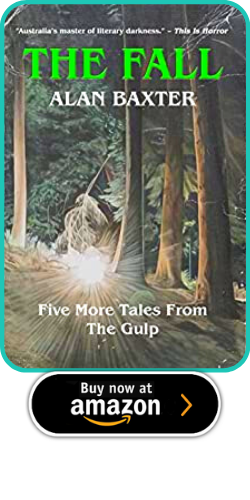
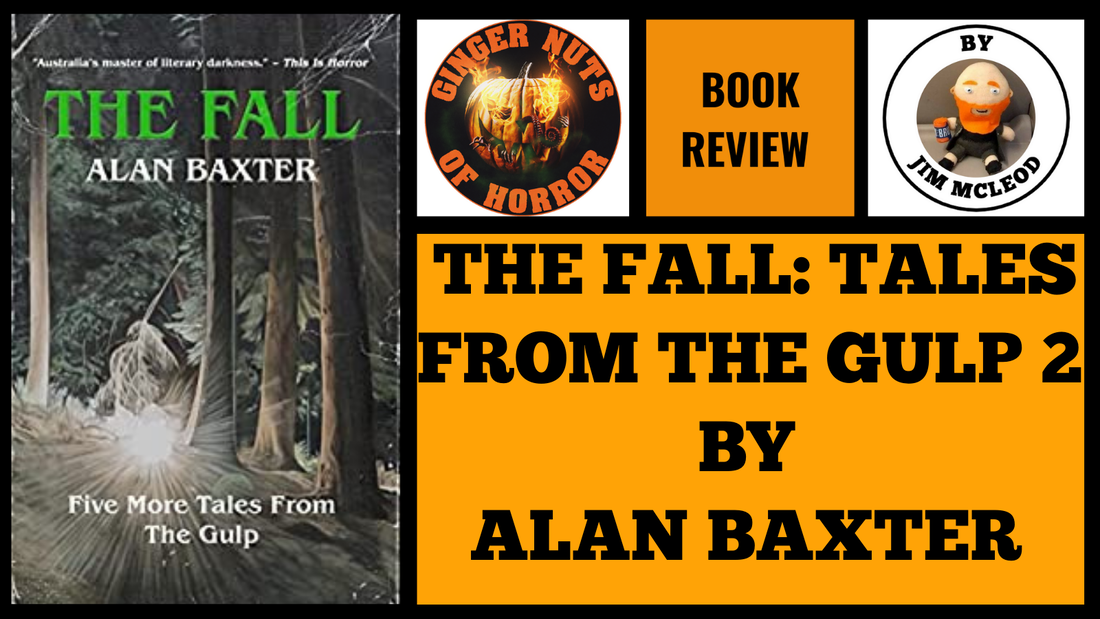
THE FALL- TALES FROM THE GULP 2  BY ALAN BAXTER

12/4/2022
HORROR BOOK REVIEW THE FALL- TALES FROM THE GULP 2  BY ALAN BAXTER
Have you ever, ever felt like this?
Have strange things happened,
Are you going round the twist?


If you are from Gulpepper, strange things happening to you should be the least of your worries, for this is no quaint odd Australian town where seagulls mass poo on your head or the outside dunny has a friendly ghost. You see, this is the real side of Australia, the side where even their so-called cute national animals are really evil, vicious creatures; if you don't believe me, just check out Alan Baxters Roo or Zachary Ashford's Sole Survivor. 


And that's where we have an inherent problem with Australian horror fiction. How can anything even begin to compare with the reality of living in a country where everything has the ability and desire to kill you.  


Those of you who have been following Ginger Nuts of Horror will already be aware that Alan Baxter is an author that we all look forward to reading; he is one of those authors with a rare gift of writing stories that are instantly accessible while also being filled clever twists on commonplace tropes and themes. For example, Devouring Dark is a crime, horror mystery that manages to be all three, yet something altogether different from its component parts. That capacity to find fresh takes on the genre's staples, his ability to turn the familiar into the fantastic, the average into the extraordinary! And that's where a lot of the strength of Alan's writing comes from.


The Fall is the sequel to last year's excellent The Gulp, a portmanteau novel that introduced us to the weird, wretched and woebegone town of Gulpepper, a town that will literally swallow you whole if you fail to heed the warnings of the locals. Like all tremendous first books in a series, The Gulp ends on a pernicious cliffhanger that left this reader desperate to know more bout this masterful modern mythos.  


The Fall, like the previous volume, consists of several disparate stories that at first glance seem entirely isolated and unconnected to each other, as the encompassing narrative that links each of these stories together comes to the fore in the final act of the novel, Baxter weaves all of these seemingly isolated tales into a richly woven fabric of alarming proportions.  


Those of you who read volume one in The Tales of the Gulp will know that it ended with one of the best cliffhangers in recent years; the revelations about the truth of The Gulp and how the lives of its residents are so intrinsically intertwined will leave you sitting there with your eyes wide open gagging to know more, it's a wonderfully cinematic end to a brilliant novel. 


The Fall doesn't pick up directly where The Gulp ended; that would be far too simple of a literary device. Instead, it takes its cues from volume one and presents the reader with five seemingly separate stories, but we know, we all know this isn't the case and as we devour these stories with a rampant desire to see the truth.  


One of the joys of having previously read volume one is you kind of know what is going to come. However, you never truly know, other than nasty things are going to happen, So when Andrew McDermott ignores the warnings of so many locals and stays in the Gulp rather than getting on his motorbike and getting the hell out of town, you will be doing the almost impossible and reading this opening story through your hands, will screaming "you goddamned idiot, what are you doing."


This opening novella sets the mood perfectly for the rest of the novel. Baxter builds a suffocating sense of dread and foreboding horror as Andrew visits the local junkshop antique business. Why do people do this? I thought it was common knowledge that places are filled with evil shopkeepers or cursed objects. I will say that when Gulpepper Curios takes a massive handbrake turn into the weird, you won't ever be prepared for what you are about to read. Like a nasty version of Tales of the Unexpected, this opening story is delivered with such a brilliant sense of timing, and, as Baxter rips away the curtain to reveal the truth of Gulpepper, you just know that you are in for another wild ride.  


The Fall truly is one of those novels where the less you know going in, the better your experience will be by the time you close the back cover and take a massive gulp of fresh air, steadying yourself on something solid as you allow yourself some time to take in what you have just read. Because, trust me, no matter what you think you will encounter, or even if you think you know exactly where this story is going, Baxter will give you a wry smile as he hits you over the head with another brilliant reveal.   


Some authors have what I call an instant readability factor; I've never managed to explain what I mean by this fully. But Baxter has it in buckets. His narrative style has an effortless grace to it. It picks the reader up in its arms and carries the reader through many stories, filled with nerve-wracking tension, dry as a desert black humour, and some masterfully horrific set-pieces. While still managing to touch on some powerful issues such as domestic abuse and suicide. This is a powerful and thought-provoking tale that Baxter handles with an empathetic eye for the subject matter.   


As The Fall reaches its conclusion, you can tell that Baxter is having as much fun writing this story as we, the readers, are reading it. He gives it to us while still being able to sidestep us and surprise us with some fist-pumping revelations and the appearance of some well-beloved characters from the previous volume. I love it when an author has this level of synergy with their readers, and he knows what we want.  


Baxter hints in the afterword that he may not be finished with The Gulp; I hope he isn't, as I would gladly purchase a timeshare in this messed uptown; the Gulp is more than welcome to swallow me up whole.  ​

The Fall: Tales From The Gulp 2 
by Alan Baxter  
Book 2 of 2: Tales From The Gulp

Picture
Strange things happen in The Gulp. The residents have grown used to it.

The isolated Australian harbour town of Gulpepper is not like other places. Some maps don’t even show it. And only outsiders use the full name. Everyone who lives there calls it The Gulp. The place has a habit of swallowing people.

A man enjoying early retirement makes the mistake of visiting The Gulp.
A fishing boat crew find themselves somewhere entirely unexpected.
A farmer has an argument with his wife that turns violent and then entirely catastrophic.

A Venture Scout troop from Enden travel a little too far on their bush excursion.
Everything that’s been getting stranger than usual in The Gulp begins to run completely out of control.
​

Five more novellas. Five more descents into darkness.
Welcome to The Gulp, where nothing is as it seems.


“If you’re a fan of one town horror anthologies with a best of 80s vibe (like anything from Castle Rock or Josh Malerman’s Goblin) then you really should get yourself some ‘Tales from the Gulp‘ by Alan Baxter.” – Sarah Pinborough, bestselling author of BEHIND HER EYES

the heart and soul of horror fiction reviews 

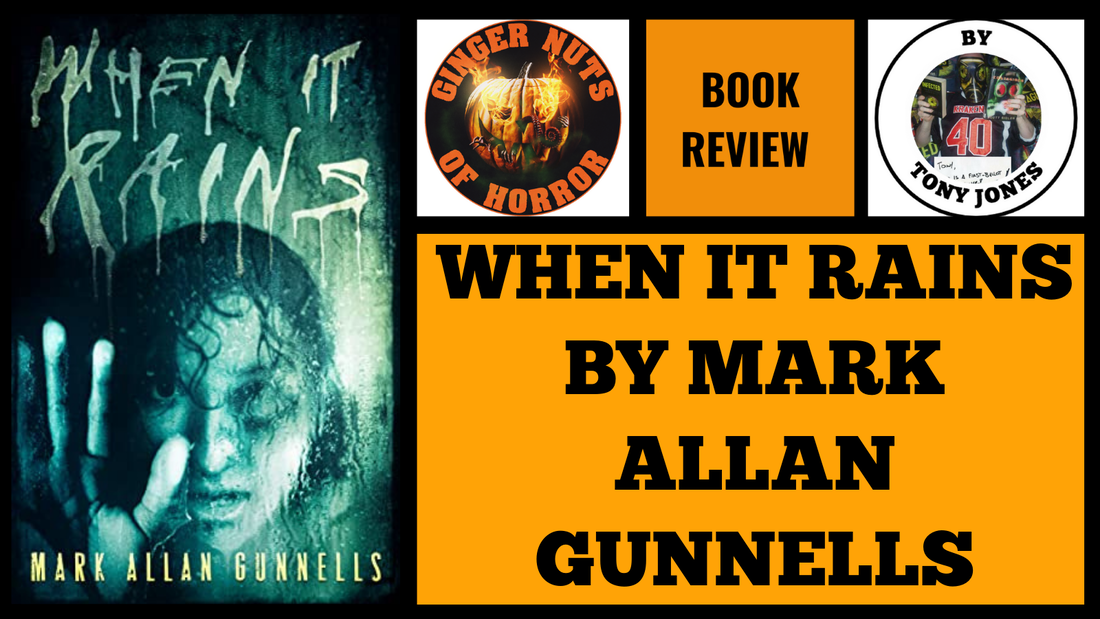
When it Rains by MARK ALLaN GUNNELLS

11/4/2022
HORROR BOOK REVIEW WHEN IT RAINS BY MARK ALLAN GUNNELLS.png


Who will survive ‘the Deluge’?


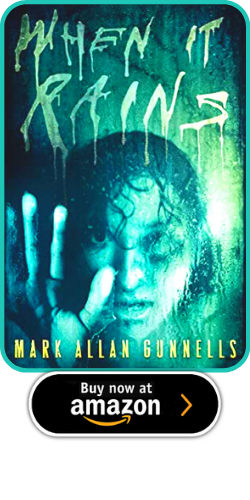
If you are seeking a fast-paced and short read then look no further than When it Rains by Mark Allan Gunnells. This was one of those random books I picked up on spec for potential review, had limited expectations for, but quickly found myself being pleasantly surprised by a story which jogged along at speed and before long this easy read novella was done and dusted.


Interestingly, there were a number of Covid-19 references, with the author making clear that the action takes a few years after the ongoing Pandemic. However, the behaviour of the characters the story focuses upon, could well have been influenced by how many of us reacted to Covid. As the plot develops an ‘us’ and ‘them’ theme bubbles in the background which was not a million miles away from to ‘masks’ or ‘no masks’ or even ‘vaccine’ or ‘no vaccine’. The author does not make any clear political statement or judgements however, but the similarities are striking and are nicely handled without ever getting preachy.


When it Rains has a terrific introduction which nicely lays its cards on the table for what lies ahead with an extract from the text ‘The Day the Rain Came: An Annotated Timeline of the Deluge’ which foreshadows the direction of the plot. On the 24th of April 20- (in Greenville, South Carolina) there was an incredible and unexplained metrological phenomenon which was later named ‘The Deluge’ where a slimy type of rain started steadily falling (firstly in Greenville) and then fanning out across the world. As this town, with a population of 58,000, was the ground zero epicentre scientists and historians took a special interest in these local events, a snapshot covered by the plot of When it Rains.


Like with George Romero’s Night of the Living Dead we do not really find out what is going on elsewhere in the world instead Mark Allan Gunnells sets all the action in the Friedkin University bookstore and coffeeshop which is based on the university campus. All other news and tip-bits comes via television rumours of ‘outbreaks’ which only heighten the tension, paranoia and anxiety of those stuck in the coffeeshop when the rain begins to hammer down. Keeping the story very localised was extraordinarily effective and the lack of available information played a big part in the friction between those stranded in the shop. I found this to be all very believable (think of Covid-19 again) and you might ask yourself what you might have done if your friend or family member had been hit by the rain and might therefore be contaminated or contagious.


The non-fiction Annotated Timeline aspect of the story gave proceedings a slight World War Z whiff but if you are expecting zombies here you might be disappointed, it is significantly more subtle and is topped by an excellent ending I did not see coming but did think was very cool. It is not a particularly violent or gory book and is more interested in exploring the varying motivations of the characters, which are not so straightforward, when they are stuck in the shop. Once the group get stranded in the coffeeshop, rather than World War Z, I started drifting towards The Mist as a point of reference where a similar bunch are isolated inside a building and within a few pages Gunnells makes his own referential Mist references, which was a nice touch.


When it Rains is set over a relatively short period of time, kicking off shortly before the rain begins, at 11.35am with Pamela Weston overworked and flying solo in the coffeeshop, getting stressed by the elongating queue. It is just like any normal day. From that moment on the action, written in the third person, jumps from character to character taking in a very diverse bunch, including a gay couple whose personal problems spill onto the shop floor. Also featured was a teenage girl visiting the campus with the parents and later hoping to attend the university, other shop workers, a university lecturer, students and baristas. I enjoyed the fact that when the plot jumped from character to character, due to the fact the majority did not know each other, they were portrayed from alternative points of view, but with the reader being able to pick up on who they were through description, dress, and mannerisms. Considering the short page length and the number of characters covered the author did a fine job of easily bringing them to life.


I enjoyed the manner in which the rain was portrayed, unpleasantly clinging to the skin making it very difficult to wash off, quickly causing the division in the Friedkin University bookstore after rumours spread that it may contain a toxin which could potentially make everybody sick. As the overall edginess increases with unreliable news reports various moral dilemmas surface, none more important than bathroom breaks! I don’t recall ever recall anybody in The Walking Dead ever needing the toilet, but it becomes an issue in When it Rains, what if a potential infection could be passed on via the toilet? Should those who have been ‘slimed’ alternatively use buckets? All interesting questions!


When it Rains was entertaining company for a couple of hours which skilfully sidestepped most of the features you might expect to see in this type of fiction and instead keeps things nicely restrained and both character and emotional centred. It’s also worth noting that I can think of many worse places to be stranded that a coffee/bookshop!


Tony Jones

When it Rains 
by Mark Allan Gunnells  

Picture
It may be dangerous to go out in the rain…
But it may be even more dangerous to stay inside.

Just after noon on a sunny spring day at Friedkin University, a layer of strange clouds smudges across the sky, and a mysterious rain begins to fall. This isn’t just a surprise spell of rain—this substance is slimy and gelatinous…and it’s not letting up any time soon.
​
The rain spreads across the country, the hemisphere, and the globe, with growing ripples of panic and paranoia gathering behind it. Is it a natural, undocumented phenomenon? A chemical weapon? Some kind of bacterial contagion? As fear turns theories into conspiracies and no clear answers are given, factions start to form between those who have been exposed to the rain and those who stayed dry. Who is safe? Who is marked? Who is dangerous, and who is not?

The rain keeps falling, and at Friedkin University, the sanctuary of the campus bookstore swiftly becomes a dangerous battlefield. Is it man versus nature? Or man versus man?

When it Rains is a perfect read for fans of Stephen King, Clive Barker, and Nick Cutter, or books like
 One Rainy Night by Richard Laymon, Bird Box by Josh Malerman, and Rain by Joe Hill, and even movies like Night of the Living Dead and The Thing.

Proudly represented by 
Crystal Lake Publishing—Tales from the Darkest Depths.

CHECK OUT TODAY'S OTHER ARTICLES ON GINGER NUTS OF HORROR

MY LIFE IN HORROR: WHERE THERE’S A WILL
Picture

The heart and soul of horror fiction review websites 

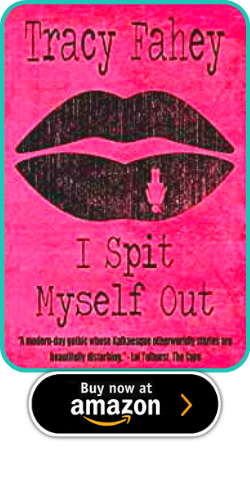
I SPIT MYSELF OUT REVIEW BY TRACY FAHEY

5/4/2022
HORROR BOOK REVIEW I SPIT MYSELF OUT REVIEW BY TRACY FAHEY.png
Tracy Fahey - I Spit Myself Out review


Having previously read and enjoyed Fahey’s The Unheimlich Manoeuvre (and the ‘bonus tracks’ collection Unheimlich Manoeuvres In The Dark), I was eager to get my hands on her most recent collection from Sinister Horror Press.


It did not disappoint.


I Spit Myself Out is a collection of stories with strong thematic resonances; the collection ‘writes the Gothic self’, as the brilliant introduction has it. Recurring themes are aging, mortality, hauntings both internal and external, and self alienation. Not every story carries every element, but threads of these concerns are woven throughout the collection. These stories are also unapologetically told from a woman’s perspective, though as a man currently trying to make sense of middle age, I found many of the stories powerfully resonant and relevant.


It’s also part of why this review has taken so unforgivably long to produce; the stories carry a powerful emotional weight, and I frequently found myself needing to take a break to digest what I’d just read. Fahey has a distinct voice, gently but insistently poetic, and an enviable talent for building tension or describing a downward spiral; taken together, this creates a collection of considerable emotional weight and depth.


Despite the thematic commonalities, there’s also considerable variety here; I’ll Be Your Mirror, for example, deploys an interwoven flashback narrative alongside a tale about object obsession to deliver a powerful double emotional blow ending, The Wrong Ones goes in tight for a claustrophobic slice of rural secrets forced to the surface, Becoming tackles aging and a growing sense of alienation from one's own body in a narrative I’m still thinking about several months later… over and over again, Fahey matches literary technique and prose style to best serve the story she’s trying to tell.


I Spit Myself Out is a fiercely intelligent, emotionally dense collection of short horror that, for me, pulls off the extraordinary trick of rendering the deeply personal such that it has a universal resonance; by interrogating these themes fearlessly, Fahey has crafted a collection of stories that have lingered long in the mind and heart. It’s a deeply impressive achievement, and it’s been an honor to spend time in and with the narratives Fahey has presented.


KP
2/2/22

I Spit Myself Out 
by Tracy Fahey

Picture
Eighteen unsettling narratives map the female experience from puberty to menopause.


I Spit Myself Out is a collection of female-voiced stories exploring the terror that lurks beneath the surface of the skin.


In this collection, an Anatomical Venus opens to display her organs, clients of a mysterious clinic disappear one by one, a police investigation reveals family secrets, revenge is inked in the skin, and bodies pulsate in the throes of illness, childbirth and religious ritual.


Disturbing and provoking in equal turns, I Spit Myself Out reinvents the body as a breeding ground of terrors that resurface inexorably in the present.

CHECK OUT TODAY'S OTHER ARTICLES ON GINGER NUTS OF HORROR

author interview  TIM MENDEES HAS THE SECRET TO MIRACLE GROWTH
Picture

THE HEART AND SOUL OF HORROR FICTION REVIEWS 

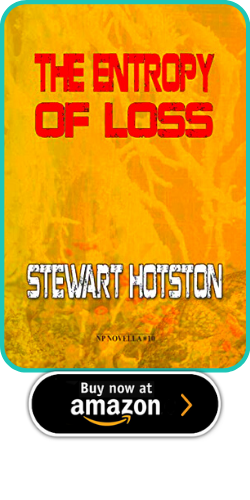
THE ENTROPY OF LOSS BY STEWART HOTSTON

4/4/2022
HORROR BOOK REVIEW THE ENTROPY OF LOSS BY STEWART HOTSTON.png
No one leaves you
When you live in their heart and mind
And no one dies
They just move to the other side
When we're gone
Watch the world simply carry on
Tales of first contact with alien lifeforms have been with us since the dawn of time. If you believe the wild-haired crazy bloke on the Discovery Channel, the aliens have been with us all along, which has always made me wonder what they think of our numerous depictions of them in our media.  


It's a fascinating genre of fiction; despite the majority of stories falling into one of two camps, the aliens are here to take over our planet or here to share their advanced technology with us and level us up to join some intergalactic club for good. I've never understood that I don't allow my kids to touch any new technology that comes into the house. However, every now and again, a new story comes along that does something different. The Entropy of Loss by Stewart Hotson is one such novella.  


From the opening paragraph, you know that you will be reading a powerful and emotive story that attempts to bring a sense of understanding and meaning to some heady topics. Rather than setting the story on the global stage, Hotson delivers an intimate story that intertwines a narrative thread about first contact with an alien species and the final days of "contact" between the scientist at the centre of the story and their wife. This is a brilliant concept as a framework on which to build the story.
"After three years of stalling, the sand in her hourglass was measured now in days and hours. Minutes "
Sarah Shannon is a theoretical physicist working on advanced computer modelling of black holes while dealing with the impending death of her wife, Rhona. Broken from the inevitable end of the love of her life and unable to process her emotions and fear of being alone, she has found solace in an affair that she regrets at the core of her being with her coworker Akshai. But when their simulations start going haywire, resulting in some unenforceable and unexpected results, they attempt to cut the power from the simulations, but that only throws them onto a path of discovery that will forever leave them changed.  


All great tales of first contact must contain one vital ingredient; without it, they become lifeless, dull, and devoid of any sense of reality. That vital ingredient is a sense of wonder. It's a hard concept to do these days in a world saturated with fantastical stories and endless films about aliens coming to earth. But imagine for a minute what it must have been like to read something like War of The Worlds, The Mote in God's Eye, The Sparrow, or Dawn by Octavia Butler, with a fresh set of eyes untainted by the cynicism of decades of media consumption. These were the critical texts of first contact stories that this reviewer consumed as a kid and as a teenager. The one thing they all shared, despite their apparent differences, was a profound sense of awe and wonder; I remember devouring these texts with my eyes wide open at the vastness of their narratives and the revelation of the minuscule role our tiny minor planet has in the grand scheme of things.  


The Entropy of Loss, despite being a far more intimate story than any of those mentioned above, has this same sense of awe and wonder. How does Hotson achieve this, especially when the intimacy of the story is driven home by setting the story in only two locations, the hospice where Rhona is counting out the last of her days and the research laboratory where first contact is made. They are grey and humdrum for want of a better word; there is nothing special about them. Hotson doesn't have the easy option of using vast alien vistas, or wondrous advanced alien tech, swooshing about the page like some widescreen shot in a sci-fi blockbuster film. He achieves this by melding a tableau of human emotions with complex mathematical theory. Now I may have lost some of you here, and some of you may be more intrigued by the promise of complex mathematical discussion in a sci-fi novella. While Hotson does use these concepts, they never, despite this reviewer really not knowing what they really mean. Mathematics and astrophysics are an integral part of this story, providing the narrative with a sense of mystery and reality. Hotson doesn't resort to the classic trope of using made-up technobabble terms, and it is no surprise that after reading his biography, he is a doctorate in physics.  


So when the aliens manifest into our world and the research lab is transformed into some crazy techno-organic Lovecraftian nightmare, we truly aren't in Kansas anymore. These passages describing the tentative foray of the aliens into our world are wonderfully rendered into the reader's mind. While The Entropy of Loss is not technically a horror story, this section of the story has enough dread and nerve-wracking terror to qualify this as a being under the horror banner for me. As Sarah and Akshai attempt to get away from the meeting point, the existential dread drips off the page.  


Just don't expect and Dr Who type aliens. These aliens are so far beyond our limits of comprehension that they can only communicate to us through universal constants.  


Told through the eyes of Sarah, The Entropy of Loss only allows us one person's account of what happened, and while this might typically not be a problem, it does raise a question as to how we relate to Sarah as a protagonist.


Except for Rhona and the aliens, everyone is reduced to narrative remnants, so Akshai becomes little more than the alluring temptress who drew Sarah away from Rhona and the authorities who try to isolate and control the situation become nothing but heartless totalitarian constructs.  


Now, this might seem like a problem, but it is far from it because this is Sarah's and Rhona's, and while the motives and actions of the others should be important in this story, they are only there so Sarah can tell her story. And it is a powerful story, where Hotson discusses some powerful themes, love, life-death, and our place in the universe. It is a touching story that will pull at your heartstrings as Sarah goes through the stages of grief. Finally coming to terms with not only the death of her wife but with the thought of living a universe without her and knowing that as a species, we are just not good enough. We cannot help but feel for Sarah, we might not forgive her for having an affair while her wife is dying, but we accept that this is her story.  


There is a sense of sad acceptance that we all die alone at the end of the day, and those left behind must live in a universe that doesn't care if we exist.  


The Entropy of Loss is a powerful and challenging look at the human condition Hotson has written a first contact novel for the new Millenium one that shows us we are nothing but the third rock from the sun.   ​

The Entropy of Loss 
by Stewart Hotston  

Picture
Sarah Shannon is a scientist working at the cutting edge of black hole research. She is also a woman seeking to cope with the impending death of her wife, Rhona, the love of her life. Unable to come to terms with this inevitable loss, she has embarked on an affair with her work colleague, Akshai; and that’s only the start of things getting complicated.

Something has gone wrong with Sarah and Akshai’s ground-breaking simulations of black holes. When they are able to correct the errors the system abandons their simulations, instead spitting out equations as if demanding a response. When they answer, the system takes over their lab and starts to transform their equipment - forcing them to flee. They are left suspecting the impossible: First Contact.

As Sarah's employer steps in and seeks to take control, she risks losing access to her own work. Worse still, when they fled the lab she and Akshai had to leave Rhona behind, and Sarah will do whatever it takes to get her back.

Stewart Hotston delivers a fast-paced and fully plausible novella of science, science fiction, and first contact.

CHECK OUT TODAY'S OTHER ARTICLES ON GINGER NUTS OF HORROR

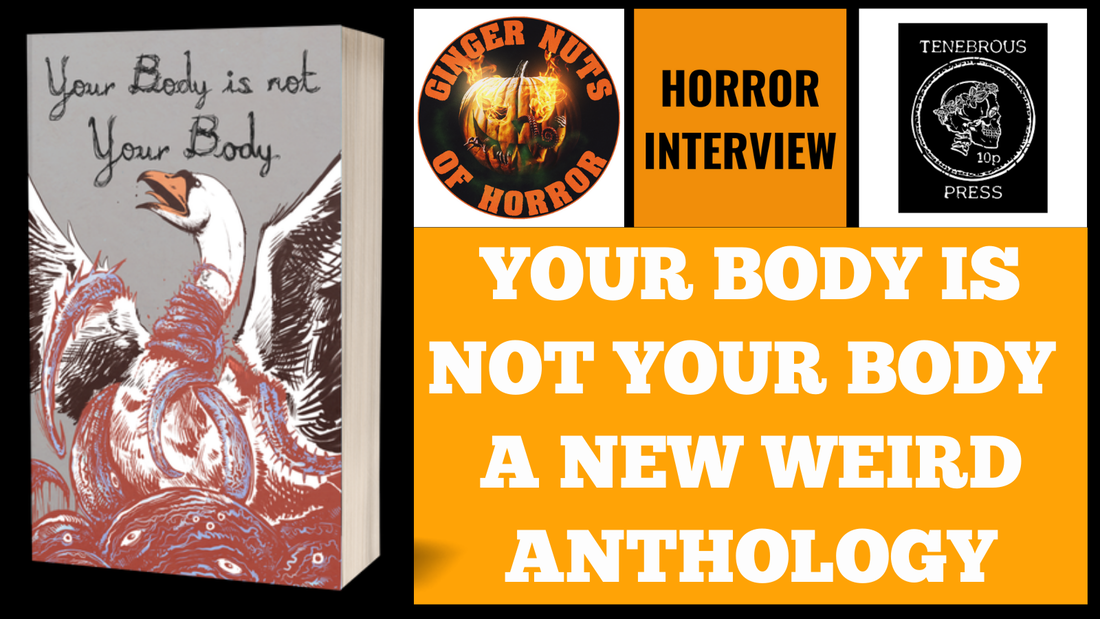
YOUR BODY IS NOT YOUR BODY: A NEW WEIRD ANTHOLOGY, AN INTERVIEW WITH TENEBROUS PRESS
Picture

THE HEART AND SOUL OF HORROR FICTION REVIEWS 

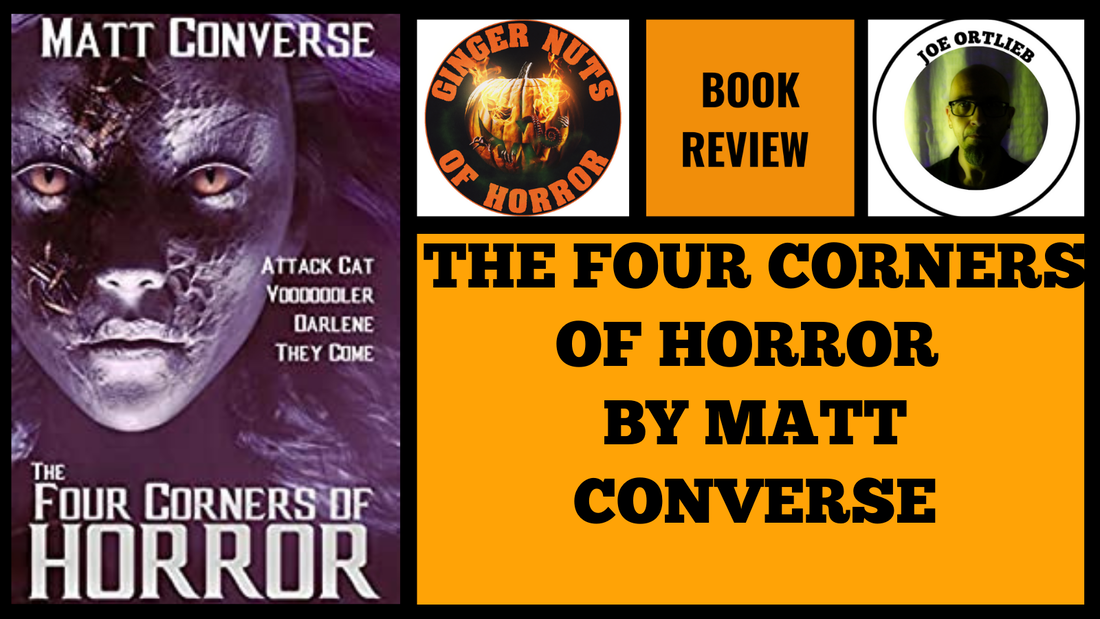
THE FOUR CORNERS OF HORROR BY MATT CONVERSE

2/4/2022
HORROR BOOK REVIEW THE FOUR CORNERS OF HORROR BY MATT CONVERSE.png
A Book Review by Joe Ortlieb

​Four corners is four stories running at 62 pages. Four different stories. All of them being pretty damn good.

Attack cat. Was my favorite among them being that my one cat is pretty evil himself.
Voodoodler is a little girl who can draw really good.
Darlene is a girl who might have a few issues.
They Come looks up to The Birds.

Overall it was a good quick read. So if you have to many kids and not enough time to read pick it up. If you have plenty of time to read pick it up. The first and last stories were my favorite, and the ones in-between are worth the space.

So yeah all four are good, different from each other, and will keep you reading to the end. So if you get put in a corner don't worry you won't be disappointed which ever  one you get put in. Worth the read.

The Four Corners of Horror 
by Matt Converse  

Picture
Four twisted tales that will chill you to the bone!

Attack Cat is one mean animal on a killing spree, so Maverick takes things into his own hands. Can he end Attack Cat’s reign of terror?

Darlene is a girl who hears voices. Some are imagined but others are real. Is she insane or possessed by the devil? It might be both.

Marissa is the Voodoodler, a cute little girl who loves to doodle. But don’t cross her, as her classmates and teacher will soon find out.

They Come starts with a bang at the window near Madison’s hummingbird feeder, and ends in a flurry of feathers and fear.

CHECK OUT TODAY'S OTHER ARTICLES ON GINGER NUTS OF HORROR

Picture
Picture

THE HEART AND SOUL OF HORROR fiction review WEBSITES

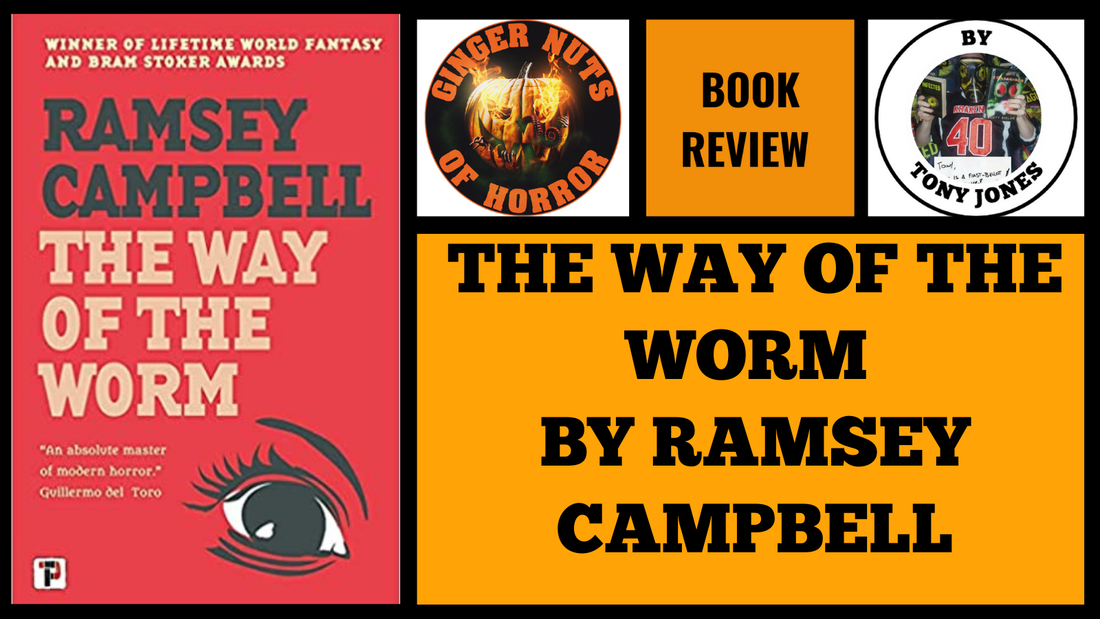
THE WAY OF THE WORM BY RAMSEY CAMPBELL

29/3/2022
HORROR BOOK REVIEW THE WAY OF THE WORM  BY RAMSEY CAMPBELL.png
The Three Births of Daoloth trilogy concludes in great style
​
Between 2016-18 PS Publishing released collector editions of Three Births of Daoloth trilogy and if you wish to purchase any of these hardbacks expect to pay big bucks for the privilege. However, it would have been a literary tragedy for such exceptionally good horror novels to remain so tricky to locate and so the Frame Tree Publishing rereleases over the last couple of years are most welcome. Do not embark upon the final instalment The Way of the Worm unless you have read its predecessors, they are intrinsically linked, and you can check out both my GNOH reviews here should you be unfamiliar with these terrific books:


The Searching Dead (book 1)
https://gingernutsofhorror.com/fiction-reviews/book-review-the-searching-dead-by-ramsey-campbell


Born of the Dark (book 2)
https://gingernutsofhorror.com/fiction-reviews/book-review-born-to-the-dark-by-ramsey-campbell


Although the combined trilogy as a single piece of horror literature ranks amongst the best sequences of the last decade, capped with an absolutely killer ending, The Way of the Worm fails to match The Searching Dead, which vividly brought 1950s Liverpool to life in my favourite of the series. This is one of the rare occasions (The Influence is another) where Campbell has children as his main characters. Book one is set in the fifties, the second the eighties and by the time we get to the conclusion the main character Dominic Sheldrake is an elderly man who has recently lost his wife. Dominic is a cantankerous old git who does not get on with anybody, with the exception of his two old school friends Bobbie and Jim and is forever antagonising his son and family. Considering the whole book revolves around Dominic, on occasion his narrative tested my patience which is portrayed in a similar fashion as he was when middle aged earlier in Born of the Dark.


I do not want to sound unduly negative because Dominic also had numerous good points and was very loyal towards his friends, but his taxing personality was also strongly connected to the main theme of the trilogy, his obsession with Christian Noble. This harked back to when he was in first year at secondary school and a pupil of Noble’s in The Searching Dead kicking off a weird game of supernatural cat-and-mouse game which spans all three books and a lifetime after he uncovers Noble’s ability to communicate with the dead. The problem is nobody believes him or cared and the spectre of Nobel is never far away, quietly tormenting him as he exerted influence over Dominic’s family.


The Way of the Worm should be taken as the endgame with Dominic desperately trying to extricate his family from The Church of the Eternal Three, led by Noble and his family Christina and Christopher (Toph). However, their influence is spreading and when the novel opens we find out that his own son Toby and his daughter-in-law Claudine are highly ranked in the establishment. Even more worrying, his little granddaughter Macy is either dangerously brainwashed or a fully-fledged member of the cult which is able to keep its true intentions shrouded. We only see the inner workings of the church on a couple of occasions in great sequences where their ability to dream and connect to the world beyond is explored and develops the sleeping experiments from Born of the Dark. I would have loved to have found out more about this as the glimpses were unsettling glances into what lies beyond the other side of the veil.


What can an elderly grandad do to prevent a cult from growing? He once again turns to his old schoolfriends, Jim and Bobbie. They are the only ones he can trust and he unofficially reunites the ‘Tremendous Three’ as they were known in The Searching Dead who are ready to use their media and police contacts to challenge the Noble clan, whilst freeing his family. The theme of family is core to the novel and the reader feels Dominic’s fear and emotions as he realises how deeply his son is involved with the leader and the wider influence of the organisation with members in the police force and other places of power.


Other highlights include the unrelenting creepiness of the Nobel family and how they seem to merge into one entity, viewing Dominic as a spider trapped in their forever gloating web. Probably more so in this final instalment, the spectre of Lovecraft is never far away, particularly in the end sequences. As the plot moves on the levels of dread and menace are heightened as Noble’s influence increases and he begins to widen his targets in some awesome sequences where to the casual observer poor Dominic is ranting like a man possessed.


The unique convention of advancing the story thirty years between each book was also very clever and helped keep things fresh, as we are reacquainted to the world and characters with Campbell periodically filling in the blanks with what happened between instalments. The bleak ending was a great culmination of the sequence, that somehow managed to find the smallest flicker of light amongst the hopelessness and powerlessness that dominated proceedings. It is up to the reader to decide whether that final bit of ambiguity is real or merely the hope of a fool.


If you have read book one and two then The Way of the Worm is essential reading and the series as a whole rank amongst Ramsey Campbell’s finest work. It is not shout out loud, violent or action-packed horror, instead it’s something which is more likely to sneak up on you or unsettle your dreams. The very best horror has that knack of getting under your skin without relying upon cheap thrills and this series does that in spades.


Tony Jones

The Way of the Worm

Picture
"With The Way of the Worm, Campbell’s cosmic trilogy comes to a triumphant conclusion." ― S.T. Joshi

Book 3 in the Three Births of Daoloth trilogy.

The present day, or something very like it. Dominic Sheldrake has retired from lecturing and lives on his own. His son Toby is married with a small daughter. The occultist Noble family are more active than ever. Their cult now openly operates as the Church of the Eternal Three, and has spread worldwide. The local branch occupies the top floors of Starview Tower, a Liverpool waterfront skyscraper. To Dominic’s dismay, Toby and his wife Claudine are deeply involved in it, and he suspects they are involving their small daughter Macy too.

Dominic lets his son persuade him to attend a meeting of the church, where he encounters all three generations of the Nobles. Although Christian Noble is almost a century old, he’s more vigorous than ever – inhumanly so. The family takes turns to preach an apocalyptic sermon that hints at dark secrets masked by the Bible and at the future that lies in wait. In a bid to investigate further Dominic undergoes the rite the church offers its members, which confers the ability to travel psychically through time. Before he’s able to flee back to the present he has a vision of the monstrous fate that’s in store for the world.
​

Dominic discovers a secret he’s sure the Nobles won’t want to be made public. Although he has retired from the police, Jim helps him establish the truth, and Roberta publishes it on her online blog. It’s the subject of a court case, the results of which seem to defeat the Nobles, only for them to return in a dreadfully transformed shape. Now Dominic and his friends are at their mercy, and is there anywhere in the world to hide? Even if they manage somehow to deal with the Nobles, there may be no escaping or preventing the alien apocalypse that all the events of the trilogy have been bringing ever closer...

CHECK OUT TODAY'S OTHER ARTICLES ON GINGER NUTS OF HORROR

TOP TEN RESIDENT EVIL MONSTERS NEMESIS (RESIDENT EVIL 3 REMAKE)
Picture

THE HEART AND SOUL OF HORROR fiction reviews

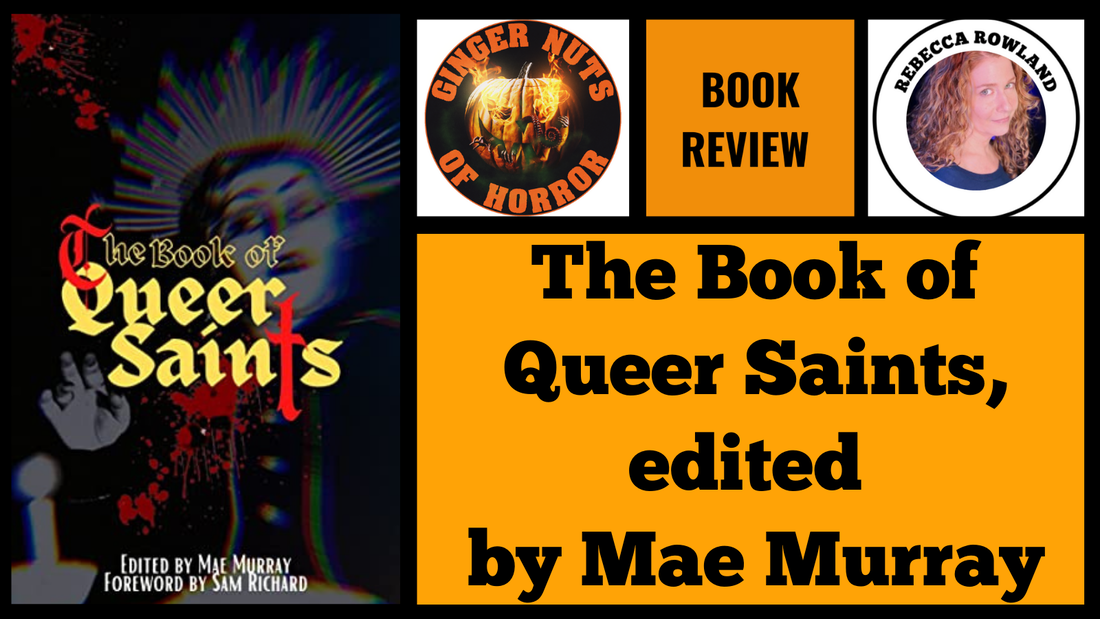
The Book of Queer Saints, edited by Mae Murray

28/3/2022
The Book of Queer Saints, edited by Mae Murray Review by Rebecca Rowland
The Book of Queer Saints, edited by Mae Murray
Review by Rebecca Rowland
Lea’s cadence is both hypnotic and beautiful, a fitting presentation for a new gothic tale of an ageless predator plucked from the horror canon.
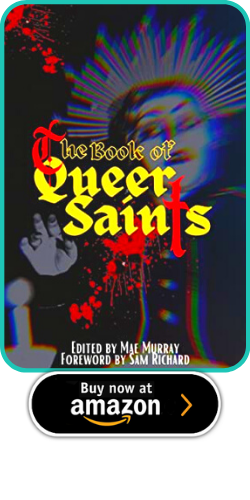
Inklings of Mae Murray’s project, an anthology that would “take a stand against the concept of purity in queer representation” (as she notes in her Introduction), first appeared in social media posts shared last year. I remember them well and had been both intrigued and excited at the concept of a queer horror collection that did not cater to web trolls who, from the holes in their ghoulish masks of anonymity, vomit bullying critiques of how LGBTQ+ characters are portrayed in indie literature. Murray promised that The Book of Queer Saints would be a publication where “queers in fiction [would] be nuanced and whole,” and she keeps her word in this thirteen-story compilation that includes Weirdpunk Books’ Sam Richards, award-winning authors such as Joe Koch, Haley Piper, and Eric Larocca, and a smattering of gifted scribes who readers may or may immediately recognize but are certain to investigate further.

Among the strongest of the entries is James Bennett’s “Morta,” which begins “Ever since the day I ate Frank, I knew I wasn’t like the other boys. This was in Cinder, Idaho, about two years ago. And I didn’t exactly eat Frank, to be fair. It isn’t like that matters now anyway; no one ever found him and no one is going to find him either.” The story’s protagonist first presents as a gay, second generation Puerto Rican teen trapped in Big Sky country, an outsider looking in, but appearances can be deceiving. “Frank wasn’t going to stop screaming. If I’d tried to free him once digestion had begun, I’d only do damage to myself. There was nothing else to do but drag him into the shadows of the bleachers and devour him whole.” Bennett’s story is a Kafkaesque coming-of-age, the mood of which vacillates between predatory and paranoid, and its conclusion is simply delicious.

As Joshua R. Pangborn’s “Crumbs” opens, Ray is trapped, handcuffed to a bed with his lover’s cooling corpse draped across his torso. “I look down at Jeremiah, lying on my chest. He’s still dead, of course. He won’t be much help deciding what to eat today. Which kind of sucks because that’s sort of his responsibility. His face is still buried between my tits. As my mother always said: If they bounce when you run, Ray, they’re tits, don’t matter if you’ve got a cock or not.” Despite Ray managing to buck Jeremiah’s body from the bed, a moment later, the dead man reappears at his side, catalyzing a tale that delightfully straddles the line between bizzaro horror and a contemporary rendition of An American Werewolf in London’s undead Jack jauntily taunting and pestering David Naughton as the latter struggles to escape misfortune.

A number of the stories assembled for Queer Saints refuse to be pigeonholed into a singular sub-genre; whether Murray did this intentionally to drive home the theme or it occurred by happy accident, it is this variety that is Saints’ most irrefutable strength. K. S. Walker’s “Three for a Funeral” melds revenge yarn, quiet horror, and creature feature into a tale difficult to put down. “I have to decide if I want to go through with this. I’ll never say it out loud, but there’s a small part of me that is thrilled by the prospect; to put on a monster’s skin, wield all the power, and damn the consequences. And that small voice? It scares the hell out of me. But this is Diana I’m talking about. She’s never asked me for a damn thing she didn’t need. And besides, has there ever been anything I wouldn’t do for her?” Walker’s heartwarming entry is an engaging allegory of the darkly beautiful magic that binds individuals together.

If you are already a fan of George Daniel Lea (as I am), reading “The Last Disgrace” will be like slipping into a welcoming, warm bath. His unnamed narrator prowls the streets, searching for his next willing victim: “I like to think that conscious inclination drew me here, the hope of finding a partner I can hate without remorse: a child abuser, a malignant narcissist, a con-artist. Maybe even another Dennis Nilsen. But no. Those who linger here remain stubbornly untainted, barring whatever pretty poisons the world has cultivated in them. Little flashes of malignance, weeds that will die long, long before they have a chance to flower.” Lea’s cadence is both hypnotic and beautiful, a fitting presentation for a new gothic tale of an ageless predator plucked from the horror canon.
​
In his Foreword to the anthology, Sam Richards drives home what makes the collection so satisfying: “The true Saints are all the queer writers, artists, and creators who are making art on their own terms.” Bravo to the editor and to all of the contributors featured in The Book of Queer Saints for creating horror that presents the way horror should: as compelling, personal, and most of all, entertaining as hell. Queer horror, like any horror, shouldn’t have to contort itself to appease formulaic expectations. As one of the characters in Nikki R. Leigh’s “Stage Five Clinger” so aptly notes, “Please stop telling me how to gay. It’s my gay or the highgay.”
Further Reading 

MAE MURRAY OPENS THE BOOK OF QUEER SAINTS

THE BOOK OF QUEER SAINTS 
BY MAE MURRAY  

Picture
In this debut horror anthology by editor Mae Murray, queer villains reign supreme. The Book of Queer Saints features 13 short stories and a lineup that includes renowned authors Eric LaRocca, Hailey Piper, and Joe Koch.


​Joining them are the innovative visions of Briar Ripley Page, Nikki R. Leigh, Joshua R. Pangborn, Eric Raglin, Belle Tolls, Perry Ruhland, James Bennett, LC von Hessen, K.S. Walker, and George Daniel Lea. A fresh blend of transformative body horror, crimson-coated romance, and monstrous eroticism, this anthology is sure to satisfy your every depraved itch. Foreword by Sam Richard of Weirdpunk Books.

the heart and soul of horror fiction reviews 

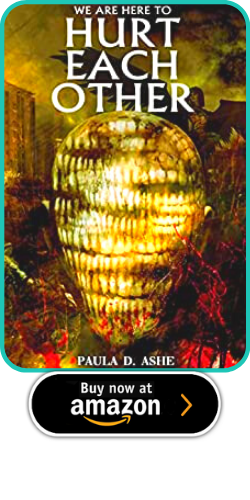
We Are Here to Hurt Each Other by Paula D. Ashe

28/3/2022
Picture

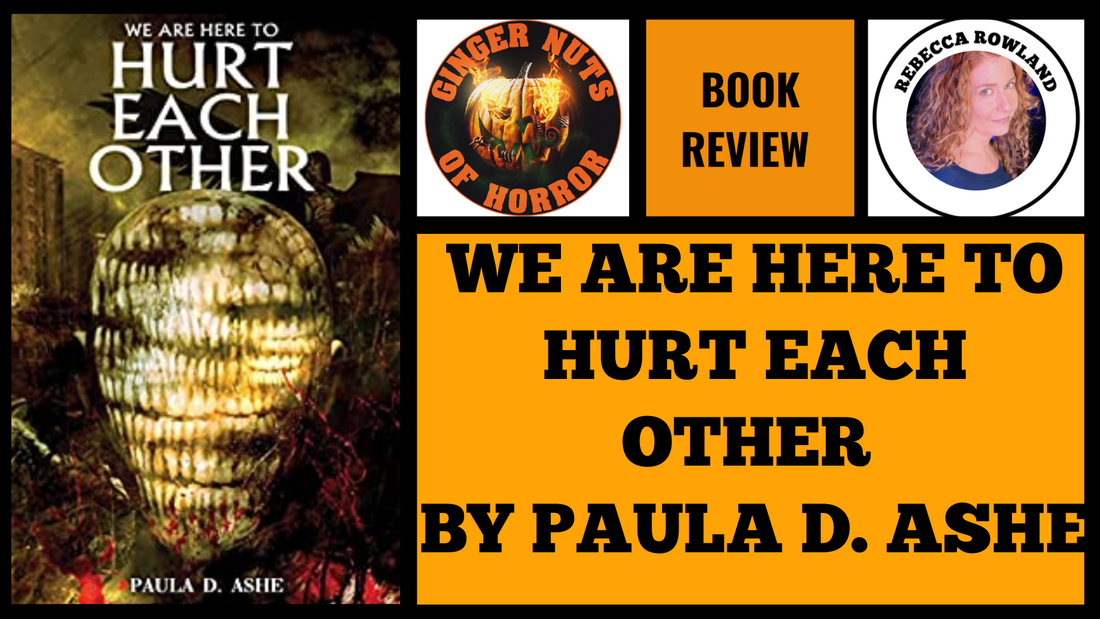
We Are Here to Hurt Each Other by Paula D. Ashe
Book Review by Rebecca Rowland
“Above the boy’s bed I scrawled the sigil into the wall with the edge of the spoon’s handle. Once Cameron and the family return, when the dark reaches its umbral peak, the Man with a Face of Teeth with come.
As he came to me.”
​
With a title as seemingly nebulous as We Are Here to Hurt Each Other, Paula D. Ashe’s collection of thirteen vignettes might have been a weepy romance, a genteel drama, or even a feminist manifesto. The back cover summary boasts that the writer will take the reader into a “dark and bloody world where nothing is sacred and no one is safe,” but don’t most horror releases promise similar results? In this case, however, Ashe isn’t bluffing. From the very first pages, We Are Here to Hurt Each Other lays the splatter on extra thick and double dares the reader to maintain a settled stomach as her tales vacillate between quick jabs of frightening flash fiction and knockout punches of literary torture porn.

Told in an exchange of emails between the managing editor of a BuzzFeed-like news site and a freelance writer, “Exile in Extremis” begins with some questioning about the veracity of a particularly gruesome story concerning a well-known entrepreneur and “the ‘female corpse recirculation’ racket.” As the online story amasses a flurry of viewers and comments, the editor himself begins to investigate the incident, which sets off a much different dynamic between the manager and his contracted employee: “I’m trying to say that these were real people and shit like this just doesn’t happen to real people. Maybe I’m a ‘normie,’ (‘normy?’) but this is just some super fucked up shit and it’s making me super uncomfortable. I appreciate your kind words in your previous message about being afraid of this ‘Priest of Breathing’ person, but I’m really starting to wonder about your ‘methods’ and your angle.” In a fresh take on a creepy cult-found footage mash-up, “Exile” keeps the reader glued to its pages until the very end.

Written in epistolary format, “The Mother of All Monsters” begins with a summary of local child abductions; there have been so many, in fact, that the narrator comments that she’s “never seen a summer so absent of children.” The disappearances are quickly replaced with grisly discoveries of bodies, and with those, a healthy sprinkling of paranoia and despair among the local residents. “Hailey had been abducted a few days after the last day of school from a nearby park…Her parents went on the news, haggard and dark-eyed, pleading for their child’s safe return. There was an Amber Alert and reports that she’d been sighted up near Silver Lake, multiple times. Turns out, it was just a little girl who looked a lot like Hailey. Her parents stop appearing on the news after that.” The rest unfolds into a disturbing journey examining the terrible fruit harvested when the seeds sown are rotten; readers who are also parents, especially those with young children, will be turned inside out in its path.
​
In “Because You Watched,” Taze and Marissa are siblings meeting in a diner to discuss the younger sister they’ve returned after many years to see. “He keeps talking, giving details, his hand partially obscuring his mouth. I only catch the tail end of his sentences and nothing makes sense. Our sister Lily had given birth. Crazy Lily. Lily, who would play with her own shit and then throw it at you if you bothered her; Lily, who stood outside on feverish spring nights, her arms outstretched, claiming she was holding up the moon…Before Taze’s phone call this morning, I had not seen him since our parents’ funeral six years ago. After that, Lily was placed in an institution. When she turned eighteen, Taze and I left her the house, their money, and the silent plea to forget we ever existed.” When the two return to their childhood home and the sister they abandoned long ago, the smothered memories of what transpired between them flood their consciousness. Ironically, although “Because” is one of the least intricately detailed story in its gore, it is—by far—the most unsettling of all of Ashe’s thirteen tales and one primed to leave the reader with lasting nightmares.

In an age where trigger warnings nervously tiptoe about indie (though, curiously, not mainstream) horror fiction like ghosts weighted heavily with cacophonous chains, Ashe’s slim but mighty collection of extreme horror is a refreshing splash of ice-cold water. Among the misadventures, a hostage is forced to witness a fellow victim’s live disarticulation and then mutilate herself, a killer tucks Easter eggs of beauty—semi-precious stones, flower petals, and so forth—into body cavities and orifices before dumping the victims’ remains to be discovered, and a predator with “yellowing, neglected teeth” and a body of “heavy, sharpened bones” makes a poor choice in his selection of tiny prey. In each of Ashe’s offerings, her lack of censor shocks and intrigues, and at the same time, composes a landscape so viscerally alarming, it is guaranteed to fill the belly of every splattergore fanatic.

We Are Here To Hurt Each Other
by Paula Ashe 

Picture
With these twelve stories Paula D. Ashe takes you into a dark and bloody world where nothing is sacred and no one is safe. A landscape of urban decay and human degradation, this collection finds the psychic pressure points of us all, and giddily squeezes. Try to run, try to hide, but there is no escape: we are here to hurt each other.

CONTENT WARNINGS FOUND INSIDE BOOK

“Gooey, gory and utterly mesmerizing, Paula D. Ashe's debut short fiction collection reads like the sloppy love-child of Clive Barker and David Cronenberg--Barker for sheer gruesomely sensual intoxication, the language of blood-soaked angels, Cronenberg for bodies flipped inside-out and messed around back-to-front like suppurating biological Rubik's Cubes. I want to study it; I wish I'd written it.”
—Gemma Files, author of In That Endlessness, Our End and Experimental Film

"My god, this book Where do I even begin? The exquisite language. The devastation. The slow, creeping dread. Truly masterful. I’m a new and devoted fan of Paula D. Ashe."
—Eric LaRocca author of Things Have Gotten Worse Since We Last Spoke

"Clive Barker is her Virgil, but Paula D. Ashe is Dante guiding you ever deeper into an Inferno more hellish and cursed than the 14th Century Catholic poet could've possibly envisioned. The only salvation possible for these damned souls is to find rapture in suffering and release in condemnation. Most are lucky just to find the one, true end to all woe. Paula D. Ashe is a Prophet of Pain."
--Christopher Ropes author of These Tales Are Winter: A Phenomenology of Ghosts.

"Paula D. Ashe came to hurt me, refused to apologize, and left me in a forensically unfeasible state of despair. Holy fuck."
—Joe Koch author of The Wingspan of Severed Hands

"The stories in Paula D. Ashe's debut collection are brutal, intense, and will have you questioning what lies beneath the veneer of strangers, of loved ones, and of yourself."
—Doungjai Gam, author of glass slipper dreams, shattered and watch the whole goddamned thing burn

“Poignant, grim, and startling, the remarkable stories of We Are Here To Hurt Each Other shine with luminescent dread. In this collection, Paula D. Ashe reminds us that monsters aren’t just real: they’re here and they’re human.”
—Tiffany Morris author of Havoc in Silence

“To hold the reader’s undivided attention, such a degree of blistering honesty requires an equally high level of storytelling skill, and Ashe does not disappoint. Here is a writer whose impeccable prose grips the reader from the first sentence, and commands attention. The stories in this collection convey a chilling urgency, as all truthful and uncompromising fictions do.”
—S. P. Miskowski, author of I Wish I Was Like You

CHECK OUT TODAY'S OTHER ARTICLES ON GINGER NUTS OF HORROR

Picture
Picture

THE HEART AND SOUL OF HORROR PROMOTION WEBSITES

Previous
Forward
    Picture
    Picture

    RSS Feed

    Archives

    May 2023
    April 2023
    March 2023
    February 2023
    January 2023
    December 2022
    November 2022
    October 2022
    September 2022
    August 2022
    July 2022
    June 2022
    May 2022
    April 2022
    March 2022
    February 2022
    January 2022
    December 2021
    November 2021
    October 2021
    September 2021
    August 2021
    July 2021
    June 2021
    May 2021
    April 2021
    March 2021
    February 2021
    January 2021
    December 2020
    November 2020
    October 2020
    September 2020
    August 2020
    July 2020
    June 2020
    May 2020
    April 2020
    March 2020
    February 2020
    January 2020
    December 2019
    November 2019
    October 2019
    September 2019
    August 2019
    July 2019
    June 2019
    May 2019
    April 2019
    March 2019
    February 2019
    January 2019
    December 2018
    November 2018
    October 2018
    September 2018
    August 2018
    July 2018
    June 2018
    May 2018
    April 2018
    March 2018
    February 2018
    January 2018
    December 2017
    November 2017
    October 2017
    September 2017
    August 2017
    July 2017
    June 2017
    May 2017
    April 2017
    March 2017
    February 2017
    January 2017
    December 2016
    November 2016
    October 2016
    September 2016
    August 2016
    July 2016
    June 2016
    May 2016
    April 2016
    March 2016
    February 2016
    January 2016
    December 2015
    November 2015
    October 2015
    September 2015
    August 2015
    July 2015
    June 2015
    May 2015
    April 2015
    March 2015
    February 2015
    January 2015
    December 2014
    November 2014
    October 2014
    September 2014
    August 2014
    July 2014
    June 2014
    May 2014
    April 2014
    March 2014
    February 2014
    January 2014
    December 2013
    November 2013
    October 2013
    September 2013
    August 2013
    July 2013
    June 2013
    May 2013
    April 2013
    March 2013
    February 2013
    December 2012

https://l.facebook.com/l.php?u=https%3A%2F%2Fmybook.to%2Fdarkandlonelywater%3Ffbclid%3DIwAR1f9y1sr9kcIJyMhYqcFxqB6Cli4rZgfK51zja2Jaj6t62LFlKq-KzWKM8&h=AT0xU_MRoj0eOPAHuX5qasqYqb7vOj4TCfqarfJ7LCaFMS2AhU5E4FVfbtBAIg_dd5L96daFa00eim8KbVHfZe9KXoh-Y7wUeoWNYAEyzzSQ7gY32KxxcOkQdfU2xtPirmNbE33ocPAvPSJJcKcTrQ7j-hg
Picture