• HOME
  • CONTACT / FEATURE
  • FEATURES
  • FICTION REVIEWS
  • FILM REVIEWS
  • INTERVIEWS
  • YOUNG BLOOD
  • MY LIFE IN HORROR
  • FILM GUTTER
  • ARCHIVES
    • SPLASHES OF DARKNESS
    • THE MASTERS OF HORROR
    • THE DEVL'S MUSIC
    • HORROR BOOK REVIEWS
    • Challenge Kayleigh
    • ALICE IN SUMMERLAND
    • 13 FOR HALLOWEEN
    • FILMS THAT MATTER
    • BOOKS THAT MATTER
    • THE SCARLET GOSPELS
GINGER NUTS OF HORROR
  • HOME
  • CONTACT / FEATURE
  • FEATURES
  • FICTION REVIEWS
  • FILM REVIEWS
  • INTERVIEWS
  • YOUNG BLOOD
  • MY LIFE IN HORROR
  • FILM GUTTER
  • ARCHIVES
    • SPLASHES OF DARKNESS
    • THE MASTERS OF HORROR
    • THE DEVL'S MUSIC
    • HORROR BOOK REVIEWS
    • Challenge Kayleigh
    • ALICE IN SUMMERLAND
    • 13 FOR HALLOWEEN
    • FILMS THAT MATTER
    • BOOKS THAT MATTER
    • THE SCARLET GOSPELS
GINGER NUTS OF HORROR
horror review website ginger nuts of horror website
Picture

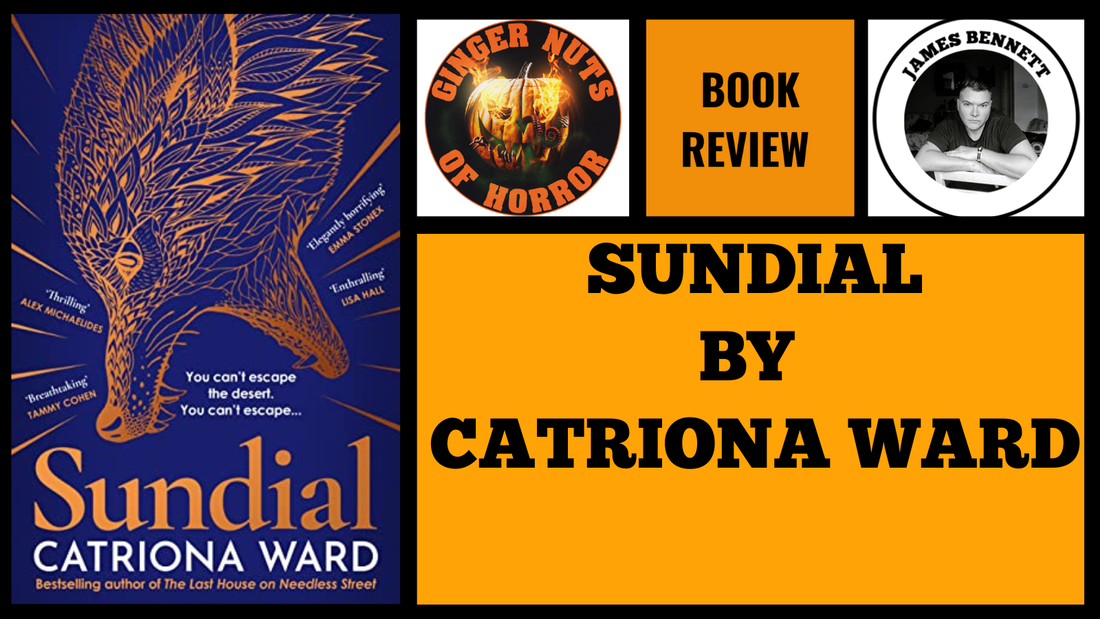
BOOK REVIEW: SUNDIAL CATRIONA WARD

2/5/2022
HORROR BOOK REVIEW BOOK REVIEW- SUNDIAL CATRIONA WARD
The desert knows how to keep a secret…
Catriona Ward, author of last year’s standout novel, ‘The Last House on Needless Street’ returns to the shelves with ‘Sundial’, another jaunt into grim and twisty Horror fiction.

Trapped in an abusive marriage and fearful for her daughter’s mental health, Rob resolves to take Callie, the twelve-year-old in question, back to her childhood home for a reckoning. The old house, the eponymous Sundial, stands deep in the Mojave Desert, a former hangout for anti-establishment scientists and burnt out hippies, the building and the labs abandoned for years. Haunted by the wind as much as by secrets, Rob begins to unravel her past in an attempt to save her daughter from a hereditary darkness – a past that involves controversial animal experiments, a power struggle and an explosively violent tragedy. Can Rob save Callie from a similar fate before it’s too late? If blood runs thicker than water, will it again stain the floorboards and history of Sundial?

‘Sundial’ is a novel that’s best approached blind and one that will leave readers with chilling food for thought. With deft prose and stark imagery, Ward unfolds a family drama of monstrous proportions. Related in parallel narrative by mother and daughter, it’s the depth and complexity between the characters that makes the novel shine, most notably in the siblings-turned-rivals played out by Rob and her unruly teenage sister Jack. This absorbing backstory forms the spine of the novel and provides a few touching and resonant moments. The sentimentality soon gives way to rising tension and an oppressive atmosphere, however. Ultimately, readers may struggle to find any character herein admirable – a small caveat as this is a searingly angry yarn and far from reconciliatory.

At its gruesome, sun-baked heart, ‘Sundial’ is Horror with a capital H. The pages fly by with aching pathos and recognisable altercation; Ward portrays adolescent rebellion to perfection, and one or two scenes elevate the nastiness with echoes of memory and loss. Framed by a setting as vast as the desert, the isolation feels claustrophobic and Ward does an excellent job of boxing her theatre in with dangers out in the sands – both the horrors of the past and the beasts that lurk hungry in the waste. Parts of the novel are brutal indeed (latter scenes reminiscent of Stephen King’s ‘Cujo’) but it’s the conflicts at play that amount to a tightly plotted thriller that will keep readers guessing as much as emotionally fraught. The novel leads you breathless through a series of confrontations and scales to an eventual, shattering truth.

Packed with surprises and the lightest thread of the supernatural, ‘Sundial’ plunges headfirst into a psychological Horror par excellence where all the monsters wear a human face and the stakes go beyond the grave. Easily up there with Ward’s previous outing into the dark, ‘Sundial’ is another class act from a writer at the very top of her game.    

Sundial: 
by Catriona Ward  

Picture
'DO NOT MISS THIS BOOK' - STEPHEN KING
'A thrilling hall of mirrors filled with twists' - ALEX MICHAELIDES
'Brilliant and moving' - SARAH PINBOROUGH

You can't escape the desert. You can't escape Sundial.

Rob fears for her daughters. For Callie, who collects tiny bones and whispers to imaginary friends. For Annie, because of what Callie might do to her. Rob sees a darkness in Callie that reminds her of the family she left behind. She decides to take Callie back to Sundial, her childhood home deep in the Mojave Desert. And there she will have to make a terrible choice.

Callie is afraid of her mother. Rob has begun to look at her strangely. To tell her secrets about her past that both disturb and excite her. And Callie is beginning to wonder if only one of them will leave Sundial alive...


A gripping gothic masterpiece from the bestselling and award-winning author of THE LAST HOUSE ON NEEDLESS STREET, SUNDIAL is a must-read for fans of GIRL A and SHARP OBJECTS.

'A desert-dust nightmare with a scorpion's sting. I loved it' - EMMA STONEX, author of THE LAMPLIGHTERS

'Impossible-to-put-down. Sundial is a heart-in-the-throat smash' - JOE HILL, author of THE FIREMAN

'Ambitious, brutal and breathtakingly original' - TAMMY COHEN, author of WHEN SHE WAS BAD

'A wild, twisted family gothic unlike any you've read before' - PAUL TREMBLAY, author of A HEADFUL OF GHOSTS

'Dark and unsettling, creepy and enthralling' - LISA HALL, author of THE PARTY

'Evocative, lyrical and beautiful. I loved it' - ARAMINTA HALL, author of PERFECT STRANGERS

​​JAMES BENNETT ​

Picture

James Bennett is a British writer raised in Sussex and South Africa. His travels have furnished him with an abiding love of different cultures, history and mythology. His short fiction has appeared internationally and his debut novel CHASING EMBERS was shortlisted for Best Newcomer at the British Fantasy Awards 2017.

Picture

the heart and soul of horror fiction review websites 

BOOK REVIEW: THE MIDNIGHT GAMES BY  RHIANNON RASMUSSEN

29/4/2022
HORROR BOOK REVIEW BOOK REVIEW- THE MIDNIGHT GAMES BY  RHIANNON RASMUSSEN


Midnights games is six stories by six authors. Each story is a different  "game".
I didn't love it, but I didn't hate it either. It's one of those books that I read that I'm not mad I did, but the odds are I'll never revisit it again.

Two of the stories I truly enjoyed and wish they were longer and more detailed.  One of them when I finished I had no clue what I just read. To me it was like I just read a bunch of random words that didn't make any sense to me. The other three were ok.

Of course this is how I felt and maybe I'll be the only person who reads it and feels this way. Everyone else will truly enjoy it. It's not long so it'd be good to read in-between longer books maybe.

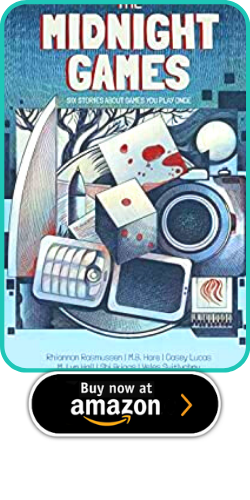
The Midnight Games: Six Stories About Games You Play Once
by  Rhiannon Rasmussen 

Picture
OF COURSE IT'S DANGEROUS.
THAT'S HALF THE THRILL, ISN'T IT?


Games and rituals are a part of humanity as old as language. Since time immemorial, we have passed down rituals, allowing future generations a chance to harness the powers our forebears discovered-if they follow the rules just right.


Have you ever wanted to know your future?
Have you ever wanted a peek at the other side?
Fancy a wager or a party with powers unknown?


Six stories await you inside this anthology, with step by step instructions for those brave-or desperate-enough to play.

the heart and soul of horror fiction review websites

A Bouquet of Viscera by Bridgett Nelson

26/4/2022
HORROR BOOK REVIEW A BOUQUET OF VISCERA BY BRIDGETT NELSON
"but Nelson pulls the wool over our eyes so stealthily, the ending leaves the reader shaken. Bravo to the author for bending the trope in another direction: the resolution haunted my mind long after I had closed the pages."

​A Bouquet of Viscera by Bridgett Nelson
(review by Rebecca Rowland)
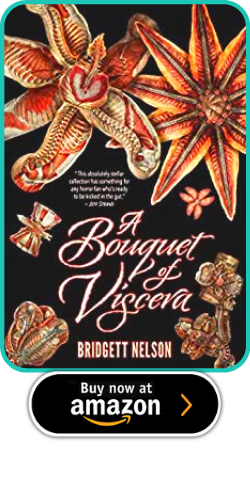
Anyone who is familiar with artist Lynne Hansen’s book covers knows that there are few competitors who can hold a candle to her designs. The cover and interior of A Bouquet of Viscera, a kaleidoscope of creature-flower hybrids poised to chew on the reader’s fingers, are certain to draw curious investigation of Nelson’s fiction, and gleefully, the collection delivers.  Comprised of eight tales alternating between short story and novelette length, A Bouquet of Viscera is a delightfully disturbing arrangement of monster, apocalyptic, and body horror.

When “Invader” opens, an unnamed seventeen-year-old girl stumbles upon a stretch of hidden beach nestled quietly along the shore of the Pacific Northwest island where she makes her home. At first glance, the area is “stunning with sand as white as snow, pristine seashells scattered about, and water as clear and blue as any she had ever seen.” Soon, however, she discovers what the inlet is really hiding: “a nightmarish creature—the thought of which would most assuredly terrify her for the rest of her days. The monster effortlessly wrapped its muscular girth around the shark’s body, like a snake suffocating its prey, and quickly pulled it under the swells. Several minutes later, the crystal blue water was stained burgundy and pieces of gray flesh and yellow fat floated aimlessly in the waves.” With whispers of Stephen King’s “The Raft” nestled cozily within its most fervently tense scenes, Nelson’s story hits the sweet spot between satisfying revenge yarn and creature feature.

The zombie-themed “Cooked!” opens with a scene of secret government experimentation so sinister, it will push the reader’s paranoia into overdrive. This is soon followed by an introduction of a microchip that wards off all deadly viruses and may halt the progression of a global health emergency. Although the last thing any horror reader craves in 2022 is a pandemic tale, “Cooked!” quickly veers into fresh and welcome territory when Flanna O’Rourke is chosen to be one of the chip’s lucky recipients. Being one of the first citizens to participate in the medical trial comes with an added benefit: the O’Rourke family receives additional food rations, but ironically, the unfortunate protagonist won’t be needing them. “Flanna lurched to a sudden stop, her nostrils flaring. What was that smell? Oh my God…what was it? She excitedly turned her head, one way and then the other, searching for the source of food that was making her salivate. She would gladly hand over all the money she had in her purse for whatever this mouthwatering feast was. Following her nose, she sniffed the area trying to pinpoint which direction the enticing aroma originated. The woman sitting on the bench stared back quizzically but said nothing…Flanna turned, walking directly in front of the woman—and immediately she knew. That scent—the tempting aroma which made her mouth water in hunger—was emanating off this woman in waves. Her pulsing blood. Her healthy organs. Her taut muscles. A ravenous Flanna wanted to devour every inch of her body.” As someone whose personal trigger used to be characters who bite, I thought The Walking Dead had dealt out enough exposure therapy to vanquish my queasiness for good. Kudos to Nelson for bringing it back with a vengeance.

Speaking of vengeance, “Jinx” is preceded by a content warning, and it more than earns it. The story begins with a terrifying brutal sexual assault, but Nelson’s pacing achieves exactly what it is striving for: as the scene progresses, what intensifies in the reader is not simply a mixture of revulsion and terror, but an intensifying rage: wherever the narrator decides to take us, we are all in for the ride. Six years later, when the survivor encounters a seemingly innocuous item that reminds her of the attack, we are two steps ahead of Jinx as a revenge plan forms in her head. “My heart instantly started pounding, and tiny droplets of sweat beaded on my brow. Elle noticed my reaction and slurred, ‘I know you’re upset. You need to get back at those rapist fuckers, Jinx. Mutilate them!’ She giggled, obviously too intoxicated to have a firm grip on her message. ‘And if you can’t find the exact dudes, find stand-ins! There are tons of skeevy guys out there.’…With that, she rolled over and immediately fell into a deep slumber. I sat for a long time on the side of the bed, staring at this beautiful woman who, by some miracle, loved me as much as I loved her…and considered her words.” The stage appears to be set for a traditional rape-revenge tale, but Nelson pulls the wool over our eyes so stealthily, the ending leaves the reader shaken. Bravo to the author for bending the trope in another direction: the resolution haunted my mind long after I had closed the pages.
​
In his Foreword to the collection, Ronald Kelly notes, “When I began my journey into A Bouquet of Viscera, I was already primed for an enjoyable reading experience. Little did I know that the style and intensity of Bridgett’s prose—her voice and imagination, as well as her willingness to apply them with precision, confidence, and an utter lack of restraint—would immediately win me over and turn me into an instant fan.” I had gone into Nelson’s newest release already a fan of her short fiction, and Viscera only solidified that feeling. It is an array of unsettling fiction that surprises, disturbs, and challenges expectations.

A Bouquet of Viscera 
by Bridgett Nelson  

Picture
An overzealous vigilante, who sees her victims' auras, finds herself in a very uncomfortable situation. A young woman, injected with a microchip in a futuristic America, develops unusual and grisly cravings. Four high school graduates end up on the menu of a giant, mutant sea creature. Diary entries share shocking and disturbing confessions...but who is the author?

Bridgett Nelson, a fresh new talent in the world of horror, makes her debut with this short fiction collection containing these stories and more! These gory tales of revenge and retribution are sure to terrify and delight readers in equal measure.

Before opening the pages of 
A BOUQUET OF VISCERA, be sure to take a deep, calming breath. Because these nightmare scenarios, and many others, are lurking under the covers and waiting just for you.

Foreword by Ronald Kelly.

Praise for A BOUQUET OF VISCERA:

“From genuinely disturbing body horror, to savage sea creatures, to grisly satire and much more, this absolutely stellar collection has something for any horror fan who’s ready to be kicked in the gut. It’s dark stuff, sometimes very dark, so don’t come crying to me if you can’t handle it!”– Jeff Strand, author of CLOWNS VS. SPIDERS

"Gnarly and excellent, the stories in A BOUQUET OF VISCERA will grab you by the throat and not let you go."- Richard Dansky, author of GHOST OF A MARRIAGE

CHECK OUT TODAY'S OTHER ARTICLES ON GINGER NUTS OF HORROR

WHAT'S AT THE SHARP END OF THE RAINBOW?  IT'S  MADELEINE SWANN!
Picture

THE HEART AND SOUL OF HORROR FICTION REVIEW WEBSITES ​

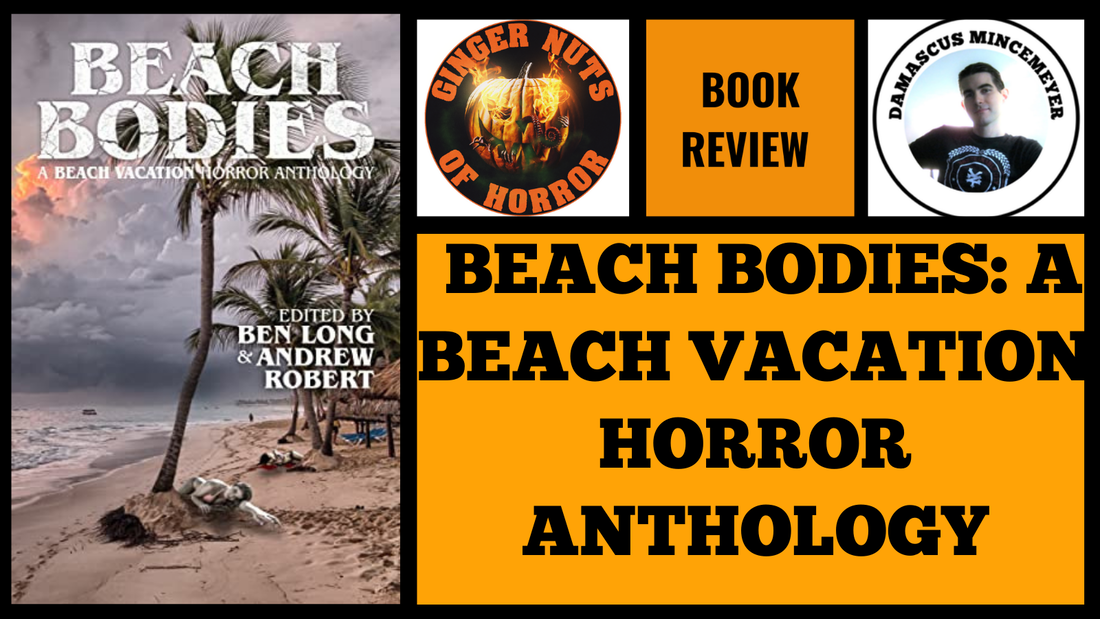
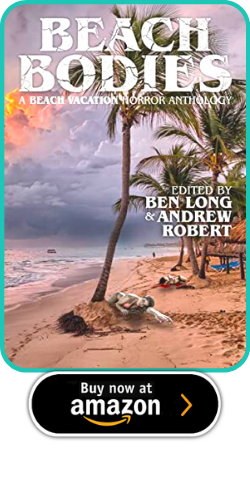
BOOK REVIEW: BEACH BODIES: A BEACH VACATION HORROR ANTHOLOGY

25/4/2022
BOOK REVIEW: BEACH BODIES: A BEACH VACATION HORROR ANTHOLOGY
Unlike its companion volume, Beach Bodies seems less continuously focused on relationships; the story selection by editors Andrew Robert and Ben Long instead sternly emphasize the transgression and trespasses into regions hidden and forbidden and, perhaps most vividly, on survival⎯entrapment, escape, and excitement coils around the reader at every twist and tumultuous turn.
In ancient times, the concept of what we call a vacation⎯those rejuvenating get-away-from-it-all excursions to exotic locales⎯existed solely for the upper echelons of society. The equivalent of upper-middle-class Roman elites popularized the notion of visiting far-flung areas of their Mediterranean empire for relaxation, and during the late Middle Ages and into the Renaissance the nobility retreated to faraway countryside estates for extended leisure stays. Only in the nineteenth century, however, with the ascendancy of the true, widespread middle class and fostered by new and easier modes of transportation⎯railroads, steamboats, stagecoaches, the horseless carriage⎯did vacationing become available to the masses. In America, Florida, then California, established the first resorts to attract mass-tourism, and by the 1890’s, company-abetted vacations became the norm, allowing those early Clark Griswolds to indulge their adventurous spirits. Yet, as even the light-hearted National Lampoon films demonstrate, any excursion into the unknown, however well-intentioned, can be fraught with danger.
​
It’s with that in mind that DarkLit Press unveils Beach Bodies, an eighteen story, multi-author volume subtitled as A Beach Horror Vacation Anthology. Released simultaneously with its equally admirable sister tome, Slice of Paradise, Beach Bodies turns a wary eye to the risks involved when one strays too far into uncharted territory, and the result is an impressive collection of top-tier terror from a stable of on-the-rise authors.

Damien Casey’s ‘Aloha From Hell’ offers an early dose of devilish humor, when a man and his wife discover their beachside resort lies beside the lake of eternal fire and brimstone. The mood blackens as a woman fights for her life after wildlife on an oceanic isle revolts against humans in ‘The Dive’, Kelly Brocklehurst’s supremely tense nail-biter. Something witchy this way comes on the ‘Soucouyant Shore’ in Ronaldo Katwaroo’s enticing examination of Caribbean folklore. A spelunking group of treasure-hunting thrill-seekers find shiver-me-timbers torment in Julie Sevens’ ‘Île aux Forbans’, an exciting romp that puts one in mind of a deadly, adult version of the ‘80’s classic, The Goonies, while a criminal forensic scientist and her wife have their intended Mexican honeymoon turned into a ghoulish ‘Island Nightmare’ in Nat Whiston’s intensely chilling piece. A youth out for ‘A Walk on the Beach’ in John Durgin’s macabre tale similarly stumbles into a cave populated by grotesque, flesh-hungry creatures eager for a boy-sized midnight snack.

The second half of the book is framed by startling samples of flash fiction, ‘The Shell’, Bret Laurie’s twisting ode to M.C. Escher, and Grace R. Reynolds’ eye-popping ‘Sanguine Sunrise’. The recently betrothed take center-stage in both Wendy Dalrymple’s ‘Babe’, a bloody bout of body horror concerning a husband who ventures too close to the tide against the better warnings of his soon-to-be-widowed bride, and Chelsea Paravel’s examination of the spectral Hawaiian ‘Nightmarchers’ who unleash grisly retribution upon an intrusive wedding party. An assault survivor discovers a most unusual camera that takes beastly photos in Danielle Ramaekers’ vengeful ‘Memory Shots’, while characters unable to leave the shore star in Scott Cole’s postcard-perfect surrealist nightmare, ‘Greetings From Trammel Beach’ as well as ‘The Price of Paradise’, Jena Brown’s grim hallucinogenic account of demonic appeasement.

Unlike its companion volume, Beach Bodies seems less continuously focused on relationships; the story selection by editors Andrew Robert and Ben Long instead sternly emphasize the transgression and trespasses into regions hidden and forbidden and, perhaps most vividly, on survival⎯entrapment, escape, and excitement coils around the reader at every twist and tumultuous turn. Yet this anthology’s central weakness, like that of Slice of Paradise, is one of repetition. Taken independently, each entry is vivacious with craft, engrossing protagonists and perilous suspense, but when administered as a whole vacation fatigue inevitably sets in, due more to the narrowness of the book’s theme than to any lack of narrative variety: every feasible (and some hitherto unheard of) horror scenario arises⎯ghosts and demons and cannibals, oh my!
That (extremely) minor quibble aside, there’s an abundance of rich, fast-paced and lively yarns available within these pages, yet five distinguish themselves from the herd by their unnerving inventiveness, storytelling charm and unerring ability to entertain even the most jaded genre fan. A couple on the rocks, their savvy kids, a bartender and a drunkard are the dramatis personae in Jay Alexander’s astoundingly enjoyable ‘Red Sands’, a sharply clever undead apocalypse scenario buttressed by a shrewd non-linear plot and bitingly witty dialogue. A group of friends heading to an out-of-the-way beach become prey to a vicious, flamethrower-wielding madman in Leeroy Cross James’ ‘The Scorching’, a story that would be perfectly at home as a feature film sharing triple bill with like-minded slashers My Bloody Valentine and The Burning. Similarly, an expectant newlywed wife and her husband are given passes to a million-dollar retreat for ‘The Honeymoon’, Max Christmas’s distressing slow-burn love letter to old-school mondo grindhouse exploitation flicks such as Make Them Die Slowly, Mountain of the Cannibal God and Cannibal Holocaust. ‘The Cedar Haven Sun Werewolf’ by N.A. Battalgia offers a delightfully fun detective story that transposes a classic Universal monster to gorgeous island territory and conjures Kolchak, the Night Stalker vibes with its cryptid-chasing reporter leads. Yet by far the tale inducing the most palpable shivers is the very one that kicks off the volume: Fox Claret Hill’s outstandingly original ‘The Flesh of the Golden Dune Hotel’, a piece of label-defying bizarro shock that follows a couple discovering their resort is literally alive and ravenous for the meat of its guests. At once paranoid, frightful and heartbreaking, its plot seizes the audience’s throat and refuses to let go until the final, inescapable conclusion.

There’s little doubt that time spent lounging, whether on an unexplored foreign coast or poolside in your own back yard, can ease the mind and soothe the soul. But beware, brave travelers: terror can be a vacation destination, too, and for companionship on those more sinister journeys I readily recommend Beach Bodies and give it a respectable and well-deserved 3.5 (out of 5) on my Fang Scale. I’d also say DarkLit Press is off to a great start in this publishing gig.

BEACH BODIES: A BEACH VACATION HORROR ANTHOLOGY

Picture
​
DarkLit Press is back with another anthology of beach horror by authors from around the world.

A family’s vacation is cut short when the dead begin to rise. A strange hotel will do anything to keep its guests from leaving. A series of murders leads a local reporter on the hunt for a werewolf. A distraught man discovers he’s on a vacation from hell. Friends on vacation come face to face with an ancient curse.

Beach vacations are meant for relaxing and unwinding away from the drudgery of normal life. The sparkling sun, shimmering on cresting waves. A light breeze as you sit with toes in the sand, a cold drink in one hand. Utopia on an island. But what happens when that paradise suddenly becomes a purgatory of pain?

What will you do when the beaches fill with bodies and the waters run red with blood? When creatures crawl the coastline and the jungle teems with terror. How will you survive when a tropical respite becomes an arena of peril?

Beach Bodies features sixteen terrifying tales of beach vacation horror. For even more scares, check out the companion anthology Slice of Paradise out now from DarkLit Press.
​

This anthology includes stories by Scott Cole, Jay Alexander, Kelly Brocklehurst, Damien Casey, Leeroy Cross James, Max Christmas, Ronaldo Katwaroo, Nicholas A. Battaglia, Fox Claret Hill, Nat Whiston, Chelsea Paravel, Wendy Dalrymple, John Durgin, Jena Brown, Danielle Ramaekers, and Julie Sevens.

DAMASCUS MINCEMEYER

Picture
Exposed to the weird worlds of horror, sci-fi and comics as a boy, Damascus Mincemeyer was ruined for life. Now he spends his time doing lurid book cover illustrations and publishing fiction in various anthologies. He lives near St. Louis, Missouri, USA, and has one volume of short horror stories, Where The Last Light Dies, and a forthcoming horror novel, By Invitation Only, to his credit. He spends his spare time listening to music nobody else likes and wasting far too much time on Instagram @damascusundead666

CHECK OUT TODAY'S OTHER ARTICLES ON GINGER NUTS OF HORROR

EXPLORING THE LABYRINTH 17: CASTAWAYS
Picture

THE HEART AND SOUL OF HORROR FICTION REVIEW WEBSITES 

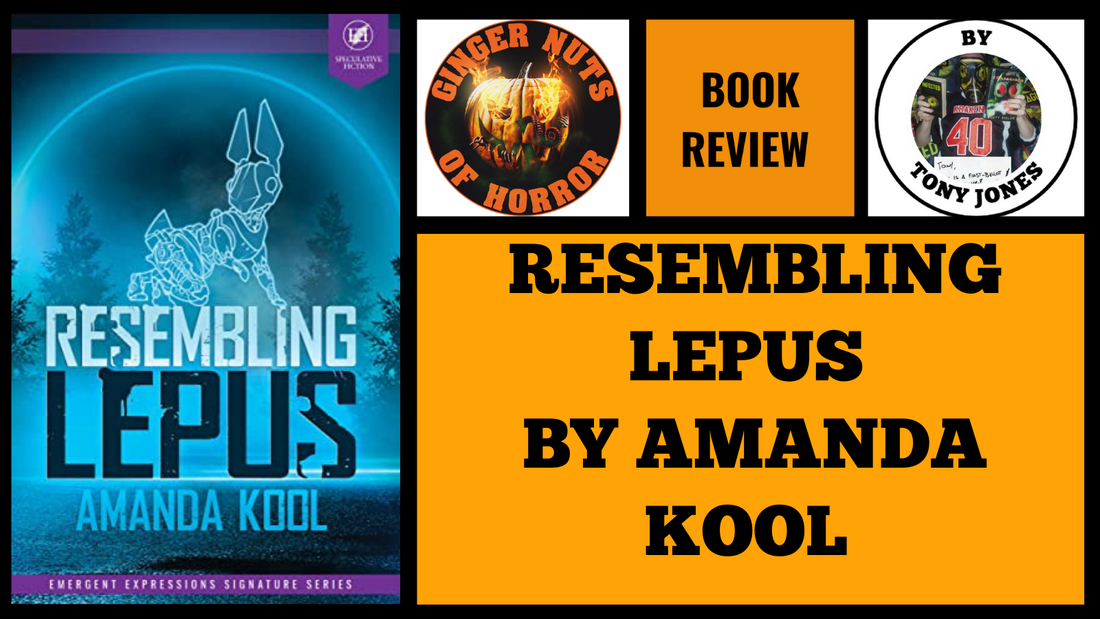
RESEMBLING LEPUS BY AMANDA KOOL

22/4/2022
HORROR BOOK REVIEW RESEMBLING LEPUS  BY AMANDA KOOL
A most peculiar murder mystery debut where the victim is not human….
In recent years Grey Matter Press have had an excellent track record in producing high quality horror, dark and weird fiction from the likes of Paul Kane, Karen Runge, John FD Taff and Alan Baxter. The latter two being responsible for two truly outstanding series The Fearing (Taff) and Ali Carver (Baxter) which rank amongst my recent personal favourites. In 2022 GMP are expanding their range with a multi-genre sequence of four novellas by debut and emerging authors, including Andrew McRae (horror), Patrick Bard (Fantasy) and Matthew R Davies (thriller). Down the years, the strength of GMP has been its ability to effortlessly move between the boundaries of dark fiction, encompassing thriller, horror, science fiction, crime/noir, horror, speculative fiction and fantasy. It looks like this new series is going to continue this tradition and in a nutshell, it is always worth keeping a keen eye on what they publish.


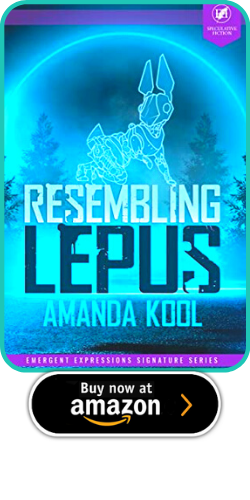
GMP’s brand new Emergent Expressions series kicks off in some style with Amanda Kool’s debut novella Resembling Lepus and even though it is best described as a rather quiet cli-fi story, it is still a banger. I’ve been a fan of cli-fi since I discovered JG Ballard’s The Drowned World over thirty years ago and Kool’s fascinating debut skilfully avoids all the stereotypes you usually see in modern post-apocalyptic fiction or dystopia fiction where resources are scant with mankind teetering towards extinction. Instead, we are presented with a very civilised society, where rationing exists, water is shared, chocolate is a treat and mankind is genuinely sorry for the catastrophes its previous generations inflicted on the planet. The sort of stuff JB Ballard was prophesising about in the sixties.


Set in the UK some years after a global cataclysm shattered many of the Earth’s ecosystems, mankind has battled back from the brink and now exists in a post-dystopian civilisation. This in itself is rather unique, as in fiction there is usually either no way back (Cormac McCarthy’s The Road) or small pockets of hope (think Robert McCammon’s Swan Song or Stephen King’s The Stand) but in this novella, even though there are dystopian hallmarks such as surveillance and rationing energy consumption, things could be significantly worse. Amanda Kool drip feeds tasty little tip-bits throughout the story and I found myself trying to jigsaw together all the facts in creating an accurate big picture in which the rather bizarre story is framed.


In Resembling Lepus, instead of cannibalism (two of my recent dystopian favourites which tackle this trope being Cody Luff’s Ration or Agustine Bazterrica’s Tender is the Flesh) we have a society which almost worships the last surviving animals which are closely monitored, tracked, numbered and categorised. The story is built around the ‘murder’ of a rabbit and the detective who is tasked with solving this horrendous crime. In this version of Britain, the killing of a rabbit is significantly worse than offing a human and the death shocks the country, with the animal having a full autopsy and the detective feeling the loss like one would a butchered child. Or perhaps a modern-day comparison of equivalent outrage would be somebody climbing into the panda cage in Edinburgh Zoo and slaughtering Yang Guang and Tian Tian with a blunt machete! Once you get your head around this weird paradox Resembling Lepus becomes a fascinating detective mystery, with the problem being there are a lack of clues, until other dead rabbits start turning up and the outrage grows.


The story also has a serious Bladerunner vibe to proceedings (think of Sean Young’s owl) as science has also found a way of using technology to breathe life into long-dead species, which can act as pets or surrogate animals should you have the huge bundles of cash to buy them. So, there are two types of animals, biologically real and reproductions, and bizarre ways in which animals can be requisitioned or recycled (for want of better words). For a novella length work Resembling Lepus was brimming with clever ideas and the ending was totally off-the-wall. One could argue that the detective solved the case slightly too easily, but in some ways the mystery was a distraction to the unique setting and the way in which man interacted with animals, real of otherwise.


The first book in the new GMP range Emergent Expressions is a strange one and although post-apocalyptic stories continue to be released at pace the manner in which Resembling Lepus was framed was both original and quirky. The cli-fi vibe was reminiscent of the cult 1970s Silent Running, but with the last surviving animals being revered in the same way Bruce Dern cultivated his plants in that film. Rabbit stew (yuck) will never be the same after reading this little gem!


Tony Jones

Resembling Lepus 
by Amanda Kool 

Picture
Earth’s sixth mass extinction has ended, and in its wake a post-dystopian civilization has struggled to rebuild after a global cataclysm shattered its ecosystems and propelled all life to the brink of eradication.

In a world where the air is unhealthy, food is strictly rationed, and the energy consumption that triggered the destruction is highly regimented, scientists experiment with artificial biospheres to secure survival and techno-mimicry to breathe life into long-dead species. It’s an unavoidable surveillance state where every living thing is tracked, numbered, and categorized.

In this fledgling society born out of catastrophic loss and now challenged with a new reverence for all life, a lone detective is haunted by a series of murders traumatizing the populace. Assisted by a medical colleague, she finds herself entangled in a crisis with far-reaching consequences and dangerous repercussions that threaten the fragile balance of all existence.

What is the impact on humanity when mankind is required to play god to the creatures they have all but destroyed?


Praise for Resembling Lepus and the work of Amanda Kool:

"Resembling Lepus is a disturbing dystopian noir that takes us into a future we should hope never comes to pass. With climate change having wrought havoc on the planet, what remains of humanity faces a reckoning: What kind of value do we place on life, and what kinds of lives do we actually value? Amanda Kool sketches a complex, confronting world within this tightly plotted novella – if we're lucky, we'll see more stories from her that explore its dark and ethically tangled depths." -- Kirstyn McDermott, author of Perfections and the Never Afters series

"Amanda Kool asks difficult questions here, about life and consciousness and about rights and privilege..." -- Alan Baxter, multiple award-winning author of The Fall, The Gulp, The Roo and the Eli Carver Supernatural Thriller series

"Kool's Resembling Lepus intermingles identity, human nature, and a reverence for all life in a murder mystery that says more about the systems humans put into place to define what "life" or "murder" is. Cool, deeply imagined speculative fiction." -- John FD Taff, multiple Bram Stoker Award-nominated author of The Fearing and The End in All Beginnings


Proudly presented by Grey Matter Press, the independent home of multiple award-winning and Bram Stoker Award-nominated titles.

Grey Matter Press: Where Dark Thoughts Thrive

​THE HEART AND SOUL OF HORROR FICTION REVIEW WEBSITES

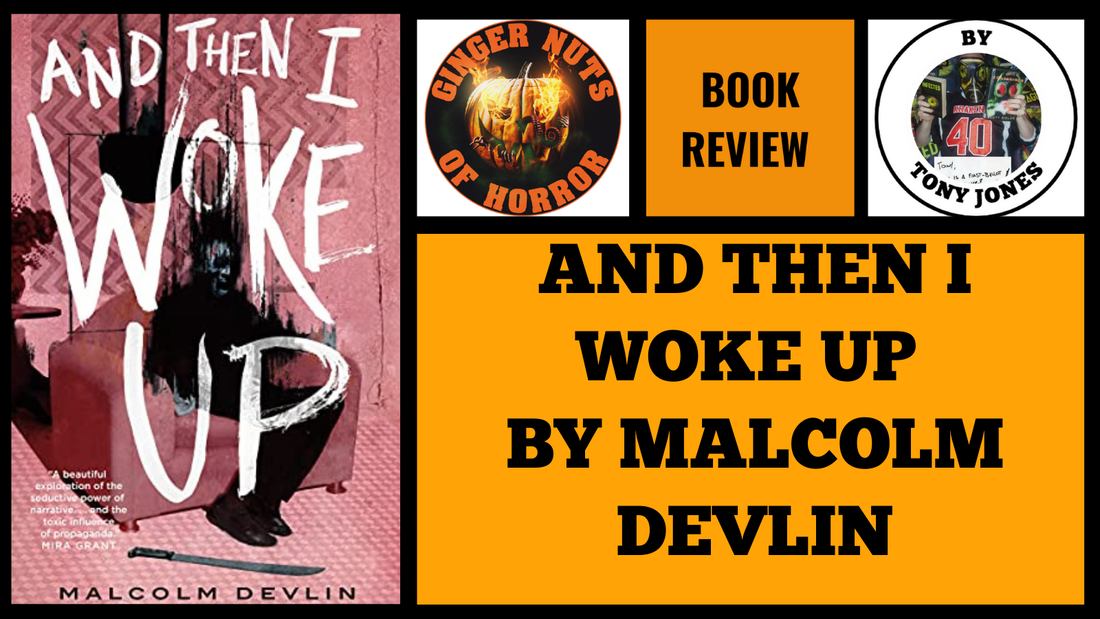
AND THEN I WOKE UP BY MALCOLM DEVLIN

18/4/2022
HORROR BOOK REVIEW AND THEN I WOKE UP BY MALCOLM DEVLIN
Nothing is what it seems in the aftermath of the strangest of holocausts
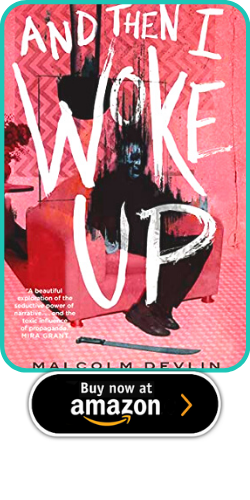
A book with the title And Then I Woke Up implies potential connections with dreams, which it both does and does not, but ultimately context is vital. When we wake up most of us only have partial recollection of what we dreamed and if they are nightmares are often left with a residual feeling of unease of what went before. Spence, the main character in this novel has such feelings, he is aware of the troubling circumstances of his previous ‘life’, but his perception and recollection of the genuine events is off-kilter and he feels overwhelming guilt which is a key element of this story. He is trying to start over, but for reasons which become apparent, cannot move on from his past and is not as peace with himself.


Even though And Then I Woke Up was quirky, had an original idea, I did find it rather frustrating, like the dream I just mentioned there were too many unanswered questions and its vagueness tested my patience. Yes, it was ambitious, but I doubt it was as intelligent as it intended to be, being built around false narratives that went nowhere except round in circles. The main story hook was a nice idea which was developed around Spence leaving a rehabilitation centre, however, what does he actually do when he leaves the place except follow a woman around? Absolutely zero. The major current time plot (not the flashbacks) lacked drive, action, substance and although the reader is supposed to question what ‘reality’ is, even though it was a short book, I was beyond caring and found the whole experience underwhelming and rather empty. This was not helped by the fact that Spence was particularly nondescript and since this was a first-person narrative he probably needed more spark to drive the story.


It may well be that this is one of those books which split critical option, as some big genre names have been talking it up, including Stephen Graham Jones, Mira Grant, Alma Katsu, Jeffrey Ford, Nancy Kress and Brian Evenson. However, their comments do not reflect the book I read, so perhaps check out other reviews to see what others say and watch out for the word ‘zombie’. Although this is Malcolm Devlin’s debut novel, he is an established short story writer of note and has featured in Black Static, Interzone, The Shadow Booth and Shadows and Tall Trees. His first collection, You Will Grow Into Them was shortlisted for the British Fantasy and Saboteur Awards in 2017 and his second collection, Unexpected Places to Fall From, Unexpected Places to Land, came out last year.


And Then I Woke Up opens with Spence in Ironside rehabilitation centre where the residents use group therapy to discuss a weird type of apocalypse which resulted in them ending up in the centre. We find out early in the book that Spence is seen as ‘cured’ but that in the previous ‘apocalypse’ was responsible for killing people and carries the photos of some of his victims and as part of his therapy has even tried to track down surviving members of their families to apologise. This very much came across as something akin to the 12-step program of Alcoholics or Narcotics Anonymous with the residents repeatedly talking about their previous sins especially to the new arrivals, in particular Leila who Spence feels a connection with.
  
What was this apocalypse? Spence worked in a restaurant and whilst washing dishes hears screaming and his friend Macey tells him that some guests have started attacking and biting other visitors. Zombies. But are they? In the present time narrative, we find out that this might have been a disease which affected how reality was perceived, but not everybody was afflicted. So, in reality to escape the restaurant bloodbath Spence and Macey were not killing zombies at all, instead they were just trying to survive. Put this in a wider context, parents realise they have killed their children and husbands realise they have murdered their wives. As a result, rehabilitation centres spring up and many seek redemption in a divided country which still shows scars of the war.


However, nothing is explained 100% and I cannot guarantee that is exactly what happened as the inhabitants of Ironside are not allowed to watch current news and could be being forced a particular version of the truth. Events are built via two narratives, with Spence and Macey in flashback and Leila in the current story, whom he abandons the centre to help her find the crew she used to run and kill with. Hoping for redemption he struggles to separate the truth from the lies all of which was rather confusing. Spence did not do enough to carry And Then I Woke Up, he spent a fair bit of time hanging around these two women and feeling sorry for himself. Ultimately, I did not feel much empathy towards this character and in first-person narratives the success or failure of novels depend on the reader connecting with the main character. Let’s talk zombies, I cried my eyes out at the end of Alden Bell’s The Reapers are the Angels. Why? Because my connection with fifteen-year-old Temple touched my heart. Alternatively, And Then I Woke Up is built around a quirky concept, but fails entirely to give the reader a character to believe in.


If you go into this book expecting a zombie novel you will be undoubtedly disappointed, instead you are presented with one of the ultimate unreliable narrators, as even he did not truly know what went on via the loss of perception on reality. In the end And Then I Woke Up asks us who the monsters are? And there are no easy answers. Perhaps in the world of fake news, with politicians sinking lower and lower as the days go by, and Covid-19 denial continues to persist the novel is making a fair enough point, even if the message is somewhat garbled.

Tony Jones


Further Reading 
​
​SOMETHING NASTY BY MALCOLM DEVLIN

And Then I Woke Up
by Malcolm Devlin  

Picture
In the tradition of Mira Grant and Stephen Graham Jones, Malcolm Devlin’s And Then I Woke Up is a creepy, layered, literary story about false narratives and their ability to divide us.

"A scathing portrait of the world we live in and a running commentary on what’s story, what’s truth, and what’s not."—Stephen Graham Jones


In a world reeling from an unusual plague, monsters lurk in the streets while terrified survivors arm themselves and roam the countryside in packs. Or perhaps something very different is happening. When a disease affects how reality is perceived, it’s hard to be certain of anything…

Spence is one of the “cured” living at the Ironside rehabilitation facility. Haunted by guilt, he refuses to face the changed world until a new inmate challenges him to help her find her old crew. But if he can’t tell the truth from the lies, how will he know if he has earned the redemption he dreams of? How will he know he hasn’t just made things worse?

At the Publisher's request, this title is being sold without Digital Rights Management Software (DRM) applied.


CHECK OUT TODAY'S OTHER ARTICLES ON GINGER NUTS OF HORROR

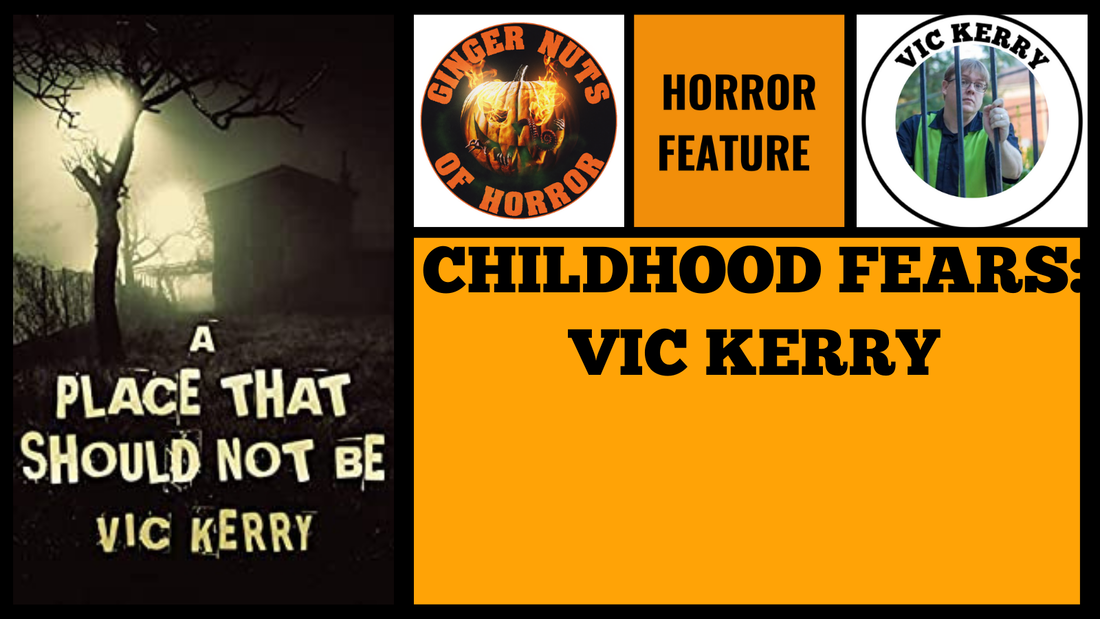
CHILDHOOD FEARS- VIC KERRY
Picture

the heart and soul of horror fiction review websites

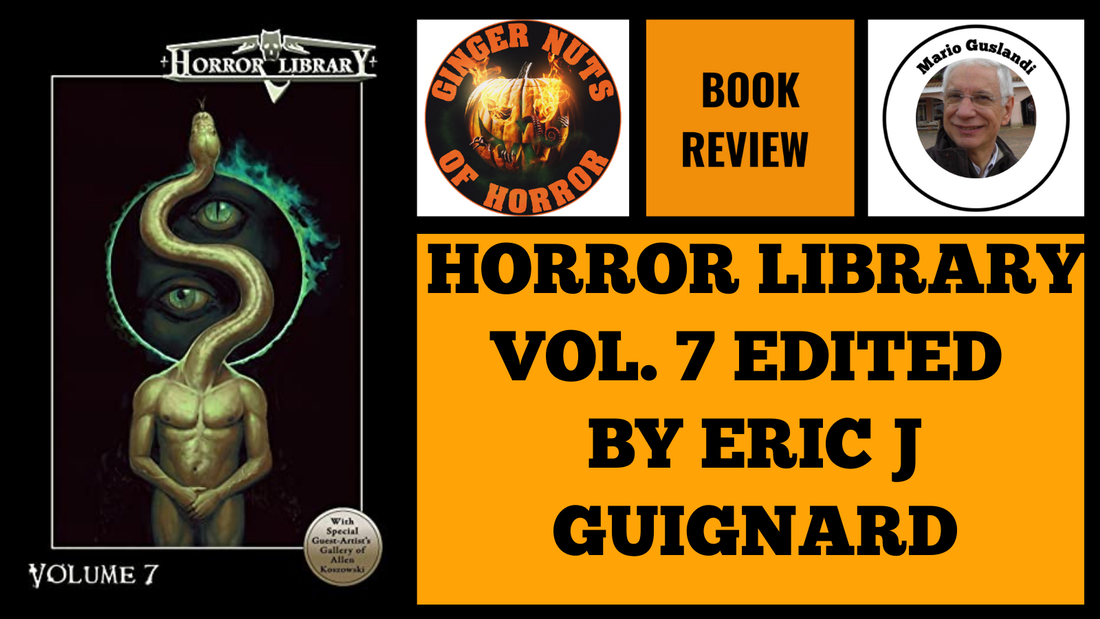
HORROR LIBRARY vol. 7 edited by Eric J Guignard

14/4/2022
HORROR BOOK REVIEW HORROR LIBRARY VOL. 7 EDITED BY ERIC J GUIGNARD
HORROR LIBRARY vol. 7
edited by Eric J Guignard
Dark Moon Books 2022
Reviewed by Mario Guslandi
The successful Horror Library series, now in the capable editorial hands of Eric J Guignard, returns with a seventh , hefty installment featuring thirty horrific short stories apt to scare and entertain horror fiction fans.

As a reviewer I’m certainly in no position to comment upon each single contributions, but I will simply focus on the stories which particularly impressed me.

Never Better by Michael Harris Cohen is an intense story about the untoward, unexpected effects of shrooms at first just used for a kind of sick joke, while  Holder City by Garick Cooke is a brief but disturbing piece revolving around a wild young girl with a hidden  family secret.

It’s almost impossible to describe Bentley Little’s In the Valley without producing spoilers. Enough to say that it’s a dark, original, disquieting tale.

Brady Golden pens Neon Showgirl a spendid story blending crime and the paranormal, and Gene O’Neill provides Ring Rust an intriguing piece about a ring fighter with some physical problems, which will be clarified only at the very end of the story.

In the cruel, but moving The Test by Zoe Kaplan, a young man faces a hard eating contest in order to get the money to cure his girlfriend.

8-Ball  by Darren Todd is an enjoyable yet unsettling tale about the uncanny prophecies generated by a magic 8-Ball.

I hope to have given you a little taste of what the anthology has in store for you. I strongly advise you to secure a copy to savor the rest of this huge menu ( including a special Guest Artist’s gallery by Allen Koszowski)

HORROR LIBRARY VOL. 7 EDITED BY ERIC J GUIGNARD​

Picture
The +Horror Library+ anthologies are internationally praised as a groundbreaking source of contemporary horror short fiction stories--relevant to the moment and stunning in impact--from leading authors of the macabre and darkly imaginative.
Filled with Fears and Fantasy. Death and Dark Dreams. Monsters and Mayhem. Literary Vision and Wonder. Each volume of the +Horror Library+ series is packed with heart-pounding thrills and creepy contemplations as to what truly lurks among the shadows of the world(s) we live in.
Containing 30 all-original stories, read Volume 7 in this ongoing anthology series, and then continue with the other volumes.
Shamble no longer through the banal humdrum of normalcy, but ENTER THE HORROR LIBRARY!
Included within Volume 7:
-  In "Hand of Glory," a despairing prison inmate studies astral projection in order to escape his cell.
-  In "The Key to Mabella," a cemetery groundskeeper discovers a mysterious vault key held by his predecessor and investigates what it unlocks.
-  In "Abandon," a tour guide takes friends to visit his home village, long-since deserted and languishing under superstition.
-  . . . and more!
-  Also including a special guest-artist's gallery of Allen Koszowski!


CHECK OUT TODAY'S OTHER ARTICLES ON GINGER NUTS OF HORROR

HORROR BOOK REVIEW KISSING THE LIZARD BY JUSTIN DAVID
https://share.novellic.com/gnoh

THE HEART AND SOUL OF HORROR FICTION REVIEW WEBSITES ​

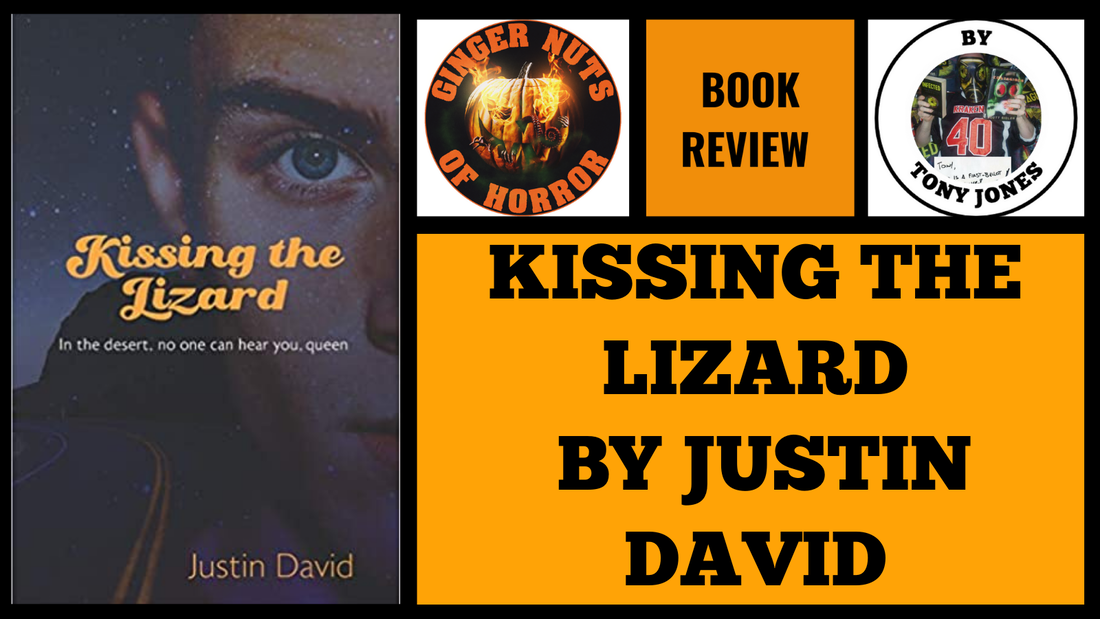
KISSING THE LIZARD BY JUSTIN DAVID

14/4/2022
HORROR BOOK REVIEW KISSING THE LIZARD BY JUSTIN DAVID.png
A dream holiday to the USA morphs into a bizarre odyssey into the unknown
I first came across indie literary publisher Inkandescent back in 2018 when I reviewed Bartholomew Bennett’s deliciously creepy novella The Pale Ones and since then they have released an impressive range of fiction, plays, poetry and short stories which often champion gay and other underrepresented voices. Kissing the Lizard first appeared in 2020, but due to the negative impact Covid-19 had on traditional book releases it is now receiving a welcome rerelease. Kissing the Lizard is in fact a prequel to The Pharmacist (which I have also read), but you can enjoy into this new work without having read the other, actually, you might fancy reading The Pharmacist after this as it stars one of the support characters.


Kissing the Lizard has the subtitle “In the desert, no one can hear you, queen” which gives the impression that this might reside at the campier end of gay fiction, but it was not like that at all and although it was in parts very funny, plays it relatively straight. Initially set in the late 1990s Soho area of London, within a few pages Justin David effortlessly recreates the vibe of that era which I remember very well with my weekly pilgrimages down Berwick Street for my music fixes from the Selectadisc and Sister Ray music shops!


I am a huge fan of novellas and the sheer richness of quality in the horror genre these days is simply staggering and although Kissing the Lizard is some distance from your standard horror offering, it’s edgy and bizarre second half is guaranteed to open your eyes. Lead character Jamie finds himself stranded, in the middle of nowhere/New Mexico, when the plot morphs from coming-of-age drama into something decidedly more sinister. I read all 162-pages in a single one-night sitting and thoroughly enjoyed laughing about it at work the next day with a colleague, replaying some of its many memorable and strangely unsettling scenes. It is blessed with a terrific balance of drama, low key threat and paranoia which is all cleverly built around the insecurities of the very naive (but equally engaging) central character.


Jamie was one of the major strengths of Kissing the Lizard, who has recently finished an art degree but finds himself working in a supermarket. Undiagnosed disappointment clings to him and he somehow feels he has missed out on the London college ‘experience’ and has boomeranged back up north to his parents as he can’t afford the rent in London. In the relatively recent past, he has revealed to his parents he is gay, although they are accepting, there are unpleasant comments from the wider family. His mother was very funny and their dynamics were amusing with Jamie trying to find his way in life without much success, with the added pressure of not wanting to let anybody down. Jamie was a sensitive guy and you will really feel for him when the dream holiday turns into a nightmare and you can almost hear his mum trumping “I told you so” in the background.


In its first half Kissing the Lizard beautifully captures the London experience; the lack of money, to crappy flats and the right of the young to make their own mistakes.  The story kicks off when Jamie rents a (very cheap) room in the house of the older Matthew and quickly falls under the spell of the seemingly sophisticated new age friend who is never short of an opinion. Thinking his life has taken an interesting upswing, Matthew introduces him to new people, the promise of an exciting job arrives and before long he is invited to join his friend in New Mexico for a month-long holiday.


I do not want to say too much about what goes on in New Mexico, where Jamie finds himself isolated and in the grip of a weird organisation. It would have been very easy for Justin David to at this point drop into cliché cult mode, but instead he skilfully avoids this and paints a very plausible scenario and if the book was longer I would have enjoyed reading more about these oddballs and what they believed in. There were some outstanding scenes here, none better than the very vulnerable and desperate Jamie feeding the last of his coins into a phone box to hear either the reassuring voice of his mother or boyfriend.  The manner in which Jamie was made to feel uncomfortable oozed from the page as he psychologically weakens and wishes he never left home.


Whilst coming-of-age stories are often teen driven Justin David cleverly shifts the narrative up a few years; as for many the transition from university to first professional job, as it is for Jamie, is just as challenging. Look back to your own early twenties; most of us will have a Matthew type character in our proverbial closet! The naivety of being young and impressionable is beautifully captured in this clever blend of black comedy and edgy unpredictable drama which is built around memorable characters and underlying free floating anxiety which takes the reader far out of their comfort zone along with Jamie. Kissing the Lizard was a highly enjoyable blend of genres and weird fiction from a publishing house which is one to watch out for.


Tony Jones

Kissing the Lizard 
by Justin David 

Picture
Justin David’s newly-released novella is part creepy coming-of-age story, part black-comedy, set partly in buzzing 1990s London and partly in barren New Mexico wildlands.When Jamie meets Matthew in Soho, he’s drawn to his new-age charms. But when he follows his new friend across the planet to a remote earth-ship in Taos, bizarre incidents begin unfolding and Matthew’s real nature reveals itself: he’s a manipulative monster at the centre of a strange cult. Jamie finds himself at the centre a disturbing psychological nightmare as they seize the opportunity to recruit a new member. Pushed to his limits, lost in a shifting sagebrush landscape, can Jamie trust anyone to help him? And will he ever see home again?This evocatively set desert gothic expertly walks the line between macabre humour and terrifying tension.

CHECK OUT TODAY'S OTHER ARTICLES ON GINGER NUTS OF HORROR

HORROR BOOK REVIEW HORROR LIBRARY VOL. 7 EDITED BY ERIC J GUIGNARD
Picture

THE HEART AND SOUL OF HORROR FICTION REVIEW WEBSITES ​

Previous
Forward
    Picture
    Picture

    RSS Feed

    Archives

    May 2023
    April 2023
    March 2023
    February 2023
    January 2023
    December 2022
    November 2022
    October 2022
    September 2022
    August 2022
    July 2022
    June 2022
    May 2022
    April 2022
    March 2022
    February 2022
    January 2022
    December 2021
    November 2021
    October 2021
    September 2021
    August 2021
    July 2021
    June 2021
    May 2021
    April 2021
    March 2021
    February 2021
    January 2021
    December 2020
    November 2020
    October 2020
    September 2020
    August 2020
    July 2020
    June 2020
    May 2020
    April 2020
    March 2020
    February 2020
    January 2020
    December 2019
    November 2019
    October 2019
    September 2019
    August 2019
    July 2019
    June 2019
    May 2019
    April 2019
    March 2019
    February 2019
    January 2019
    December 2018
    November 2018
    October 2018
    September 2018
    August 2018
    July 2018
    June 2018
    May 2018
    April 2018
    March 2018
    February 2018
    January 2018
    December 2017
    November 2017
    October 2017
    September 2017
    August 2017
    July 2017
    June 2017
    May 2017
    April 2017
    March 2017
    February 2017
    January 2017
    December 2016
    November 2016
    October 2016
    September 2016
    August 2016
    July 2016
    June 2016
    May 2016
    April 2016
    March 2016
    February 2016
    January 2016
    December 2015
    November 2015
    October 2015
    September 2015
    August 2015
    July 2015
    June 2015
    May 2015
    April 2015
    March 2015
    February 2015
    January 2015
    December 2014
    November 2014
    October 2014
    September 2014
    August 2014
    July 2014
    June 2014
    May 2014
    April 2014
    March 2014
    February 2014
    January 2014
    December 2013
    November 2013
    October 2013
    September 2013
    August 2013
    July 2013
    June 2013
    May 2013
    April 2013
    March 2013
    February 2013
    December 2012

https://l.facebook.com/l.php?u=https%3A%2F%2Fmybook.to%2Fdarkandlonelywater%3Ffbclid%3DIwAR1f9y1sr9kcIJyMhYqcFxqB6Cli4rZgfK51zja2Jaj6t62LFlKq-KzWKM8&h=AT0xU_MRoj0eOPAHuX5qasqYqb7vOj4TCfqarfJ7LCaFMS2AhU5E4FVfbtBAIg_dd5L96daFa00eim8KbVHfZe9KXoh-Y7wUeoWNYAEyzzSQ7gY32KxxcOkQdfU2xtPirmNbE33ocPAvPSJJcKcTrQ7j-hg
Picture