• HOME
  • CONTACT / FEATURE
  • FEATURES
  • FICTION REVIEWS
  • FILM REVIEWS
  • INTERVIEWS
  • YOUNG BLOOD
  • MY LIFE IN HORROR
  • FILM GUTTER
  • ARCHIVES
    • SPLASHES OF DARKNESS
    • THE MASTERS OF HORROR
    • THE DEVL'S MUSIC
    • HORROR BOOK REVIEWS
    • Challenge Kayleigh
    • ALICE IN SUMMERLAND
    • 13 FOR HALLOWEEN
    • FILMS THAT MATTER
    • BOOKS THAT MATTER
    • THE SCARLET GOSPELS
GINGER NUTS OF HORROR
  • HOME
  • CONTACT / FEATURE
  • FEATURES
  • FICTION REVIEWS
  • FILM REVIEWS
  • INTERVIEWS
  • YOUNG BLOOD
  • MY LIFE IN HORROR
  • FILM GUTTER
  • ARCHIVES
    • SPLASHES OF DARKNESS
    • THE MASTERS OF HORROR
    • THE DEVL'S MUSIC
    • HORROR BOOK REVIEWS
    • Challenge Kayleigh
    • ALICE IN SUMMERLAND
    • 13 FOR HALLOWEEN
    • FILMS THAT MATTER
    • BOOKS THAT MATTER
    • THE SCARLET GOSPELS
GINGER NUTS OF HORROR
horror review website ginger nuts of horror website
Picture

SLOTH BY JOANNE ASKEW [BOOK REVIEW]

14/12/2021
SLOTH BY JOANNE ASKEW [BOOK REVIEW]
Whether you are a diehard apocalyptic fiction fan, a dark science fiction enthusiast, or simply have an appreciation for well-rounded female characters, Sloth is certain to leave you satisfied and have you seeking out more of Joanne Askew’s work.
Picture
Sloth by Joanne Askew  ​​
Publisher ‏ : ‎ Queer Space (7 Dec. 2021)
Language ‏ : ‎ English
Paperback ‏ : ‎ 90 pages
ISBN-10 ‏ : ‎ 1608641805
ISBN-13 ‏ : ‎ 978-1608641802

A horror fiction review by Rebecca Rowland 
When Joanne Askew’s sci-fi novella opens, Natali (“Tali”) and her wife Lana are scavenging for supplies among the dead. As they step carefully through the frigid, murky water of a bog, Tali discovers a waning victim of Sloth, the deadly virus that has ravaged most of the population, and mercifully euthanizes her: “’You can sleep now,’ I said. Her long death had become short. She didn’t blink again. I watched as she sank slowly into the mud. I couldn’t tell what colour her hair used to be, what race she was, how thin she had inevitably become over the year of the Sloth. It took most of five minutes for her to fully sink. Lana called to me a few times, but I didn’t respond.” Askew paints a grim portrait, both of a world reduced to primal survival and of the struggle faced by those remaining lovers tirelessly fighting to stay human.

Methodically, the author leads her readers into a post-apocalyptic nightmare that is one part Anne McCaffrey in its cadence, one part PD James’ Children of Men in its bleak landscape: "In the gaps there weren’t cars, there were bodies. The smell greeted you like a friend you were avoiding. Once the scent took hold of your nose, it never seemed to leave. It was the fragrance of England now. Picked clean by crows and animals, beige bones flew flags of rotting material, stripes, spots, some seventies metal band T-shirts that had been all the rage just before Sloth. A raven stood atop a rib cage wrapped in an ACDC shirt; like a twisted album cover inviting you into the madness."

In a cruel joke on the listless despair most pandemics inflict on populations (as 2020 taught us), the Sloth virus only may be warded off by increasing the heartrate of those infected, so sufferers already weakened by a reduction in nourishment must force themselves to stay active as an additional torture. Forget weapons and toilet paper: in this diseased wasteland, it’s shoes and FitBits that are at a premium.
​
For much of the book, Tali and Lana are making a pilgrimage to a safer location up north that sounds promising, but the journey itself is not without its own set of perils, from opportunistic mercenaries to sadistic hunters. Askew’s characters are both complex and diverse, and she flushes each one out adroitly: no small task in a fast-paced novella clocking in at under one hundred pages. Although there is plenty of action—and quite a few suspenseful scenes as well—the tender romance between Tali and Lana that is interwoven throughout the chapters buoys the tale even higher. Whether you are a diehard apocalyptic fiction fan, a dark science fiction enthusiast, or simply have an appreciation for well-rounded female characters, Sloth is certain to leave you satisfied and have you seeking out more of Joanne Askew’s work.

​​​TODAY ON THE GINGER NUTS OF HORROR WEBSITE ​

THIRTEEN CHRISTMAS TREATS:OUR TOP YA AND MIDDLE GRADE HORROR NOVELS OF 2021

Picture

THE HEART AND SOUL OF HORROR FICTION REVIEWS ​

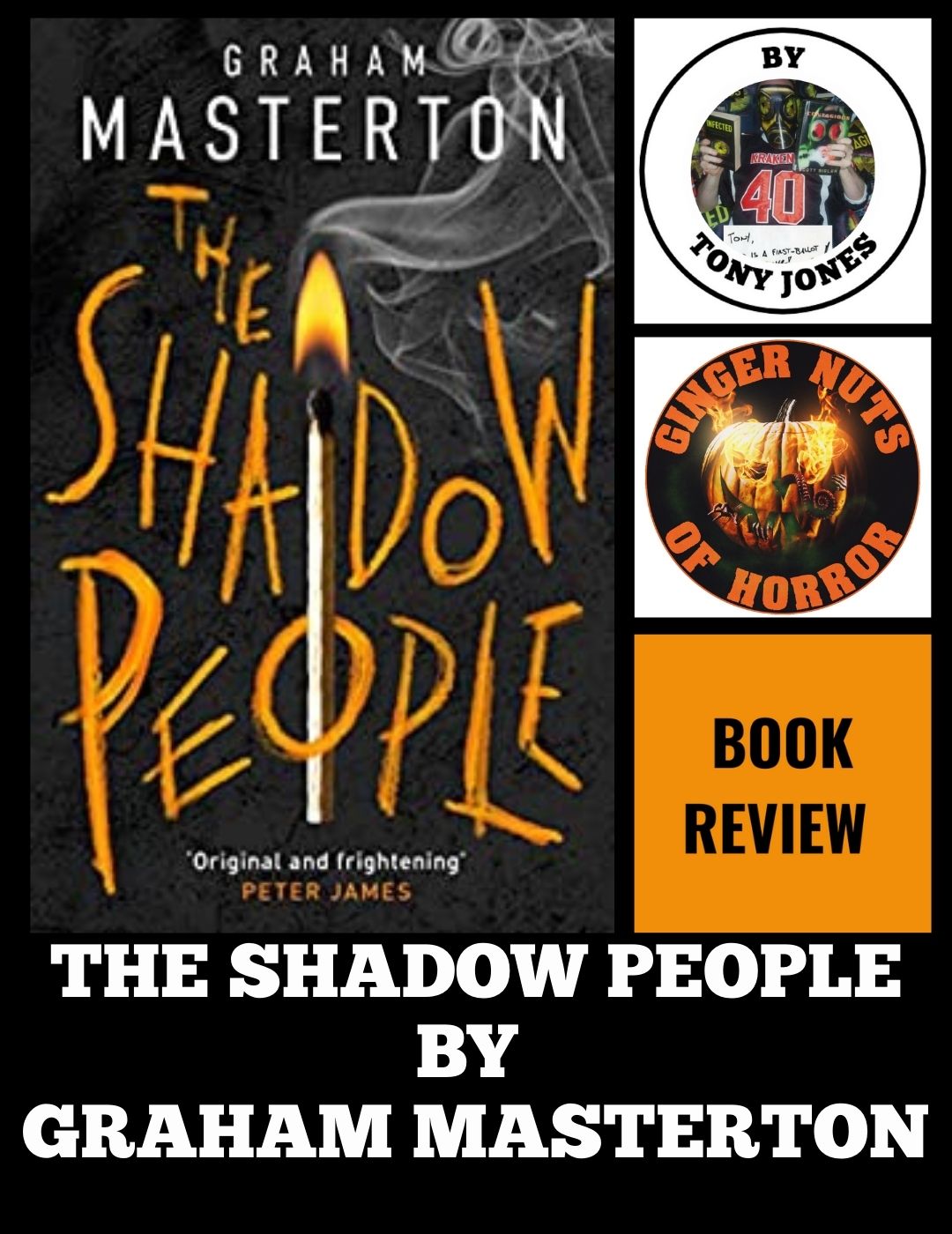
THE SHADOW PEOPLE BY GRAHAM MASTERTON [BOOK REVIEW]

13/12/2021
Picture
​Right from the start you know The Shadow People is going to be a vicious read when police discover a shopping trolley full of human skulls whilst investigating a spate of homeless people disappearances. Masterton gleefully describes the police discovering huge fire pits which they quickly realise are full of half-digested human remains.
Neolithic cannibals hunt modern day Londoners…
You guessed it; horror legend Graham Masterton is back!
​

Graham Masterton’s The Shadow People is the third novel starring his two London detectives Jerry Pardoe and Jamila Patel. Even if you have not read the previous books in the sequence The Shadow People works perfectly fine as a standalone novel making passing references to the previous cases involving Ghost Virus (book 1) and The Children that God Forgot (book 2). I am a big fan of this series and if you follow the links you can read my previous Ginger Nuts of Horror reviews for both books. Part of my attraction for this series is the fact that it is partially set in the Tooting and Streatham areas of south London where I live, particularly when something crazily supernatural occurs on my doorstep. Horror legend Masterton has been on vintage form with his recent work, with The House of a Hundred Whispers being another I loved and reviewed for GNOH.


The Fantastic Fiction website calls this the Ghost Virus series however, I prefer to refer to it as the ‘Pardoe and Patel’ sequence as ultimately it is these two detectives who connect all the stories. At previous moments in the earlier books their police colleagues have referred to Jerry and Jamilla as the ‘Ghostbusters’ as whenever there is a weird case or something unexplainable they are called to investigate. In Ghost Virus there was possessed killer clothing (don’t ask!) and in The Children that God Forgot freaky deformed kids, nasty pregnancies, and witchcraft oozing from the London sewers causing havoc. Just to be clear, the plots of these novels are totally ridiculous and hark back in style to the type of crazy horror which was hitting the bestseller shelves in the eighties. Very few authors do this type of thing better than Graham Masterton.


Just when you think it might be impossible to top the antics of its predecessor, Masterton does exactly that with the incredibly gruesome Shadow People. This is a gleefully violent book and has multiple sequences of cannibalism and torture with punters being nailed to the walls and much worse. It is not for the squeamish, will be too much for some readers, and because the torture is often inflicted on randomly normal innocents snatched from the streets going home after work it makes it even more realistically painful. At certain points others gouge out their own eyeballs and eat them (this was a new one for me). Do not say you haven’t been warned. The Shadow People deserves more trigger warnings than you can poke a cat at. Even the hardiest of readers will flinch at the nails through the kneecap sequences.


As with the previous books the story is told via multiple points of view, with the police narrative concentrating on Jerry Pardoe, who is ranked lower than Jamila Patel. Jerry has always had a secret crush on his boss but has always kept their relationship professional (Jamila would undoubtedly reject him anyway). The reader gets glimpses into Jerry’s private life, but not Jamila who remains a mystery. If this series is to have longevity then I would suggest Jamila needs to have a stronger and more distinctive voice and not just a sidekick to Jerry and seen as an ‘expert’ on the supernatural just because she is British Asian.


Right from the start you know The Shadow People is going to be a vicious read when police discover a shopping trolley full of human skulls whilst investigating a spate of homeless people disappearances. Masterton gleefully describes the police discovering huge fire pits which they quickly realise are full of half-digested human remains. Shock and astonishment quickly mount when they realise the sheer number of people the remains come from. Before long the police are on the hunt for a ritualistic cult inspired by Neolithic cannibals. How do we happen to have early-man cannibals in modern day London? Even for a Masterton novel that reasoning is farfetched once revealed! Long term fans familiar with his work will undoubtedly take it in their stride, newbies to his work might be laughing in disbelief.


Some of the alternative points of view were a real highlight, especially as we saw the inner workings of the cult and an internal power struggle within the group and what happens when two young brothers are kidnapped from a Scout campsite. Other scenes when the cannibals were marauding around in broad daylight were also wildly over the top and highly entertaining.


You just cannot take these books seriously otherwise you may well struggle with the casual sexism and other non-PC comments regarding race and gender which frequently pop up in the book. Also, there was too much Cockney slang, which might grate with non-British readers, and since the book is predominately set in south London this area does not actually speak this dialect, which originates more from east London.


One wonders where Graham Masterton might possibly take the ‘Pardoe and Patel’ series next? I almost have a gleefully morbid fascination in discovering what could possibly top The Shadow People in levels of grossness. But this author has been around the horror block so many times absolutely anything is possible. Might we see an Egyptian mummy terrorising Streatham High Road or a plague of vampire bats attack Brixton? Anything is possible and I’ll surely be jumping on the 133 bus to enjoy the ride!


Tony Jones
Picture
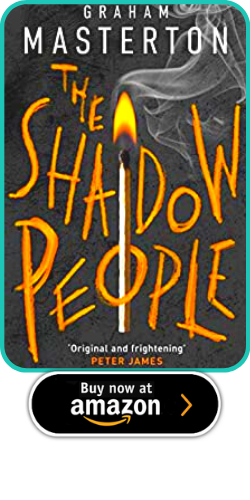
​The Shadow People by Graham Masterton

​
'God, it's good' STEPHEN KING on The House of A Hundred Whispers

Jerry Pardoe and Jamila Patel hunt down a ritualistic cult inspired by Neothilic cannibals in the new chilling horror from Graham Masterton.
A BURNING PYRE
The smell of roasting meat alerts police to squatters in an abandoned London factory. But when they arrive, the place is empty... except for a gruesome pile of scorched human heads.
AN ANCIENT RITUAL
DS Jamila Patel and DC Jerry Pardoe have solved bizarre crimes before, but nothing as spooky as this. Arcane markings on the factory wall lead them to a terrifying cult in thrall to a Neolithic god. A god who demands the ultimate sacrifice from his followers.
A CULT OF CANNIBALS
Now Londoners are being abducted off the city streets, to be mutilated, roasted and eaten. Can Patel and Pardoe save the next victim from this hideous fate? Or will they themselves become a human sacrifice?


TODAY ON THE GINGER NUTS OF HORROR WEBSITE ​

BORN IN BLOOD, VOLUME 2 BY GEORGE DANIEL LEA [BOOK REVIEW]

VILE AFFECTIONS BY CAITLÍN R. KIERNAN [BOOK REVIEW]

Picture


THE HEART AND SOUL OF HORROR FICTION REVIEWS ​

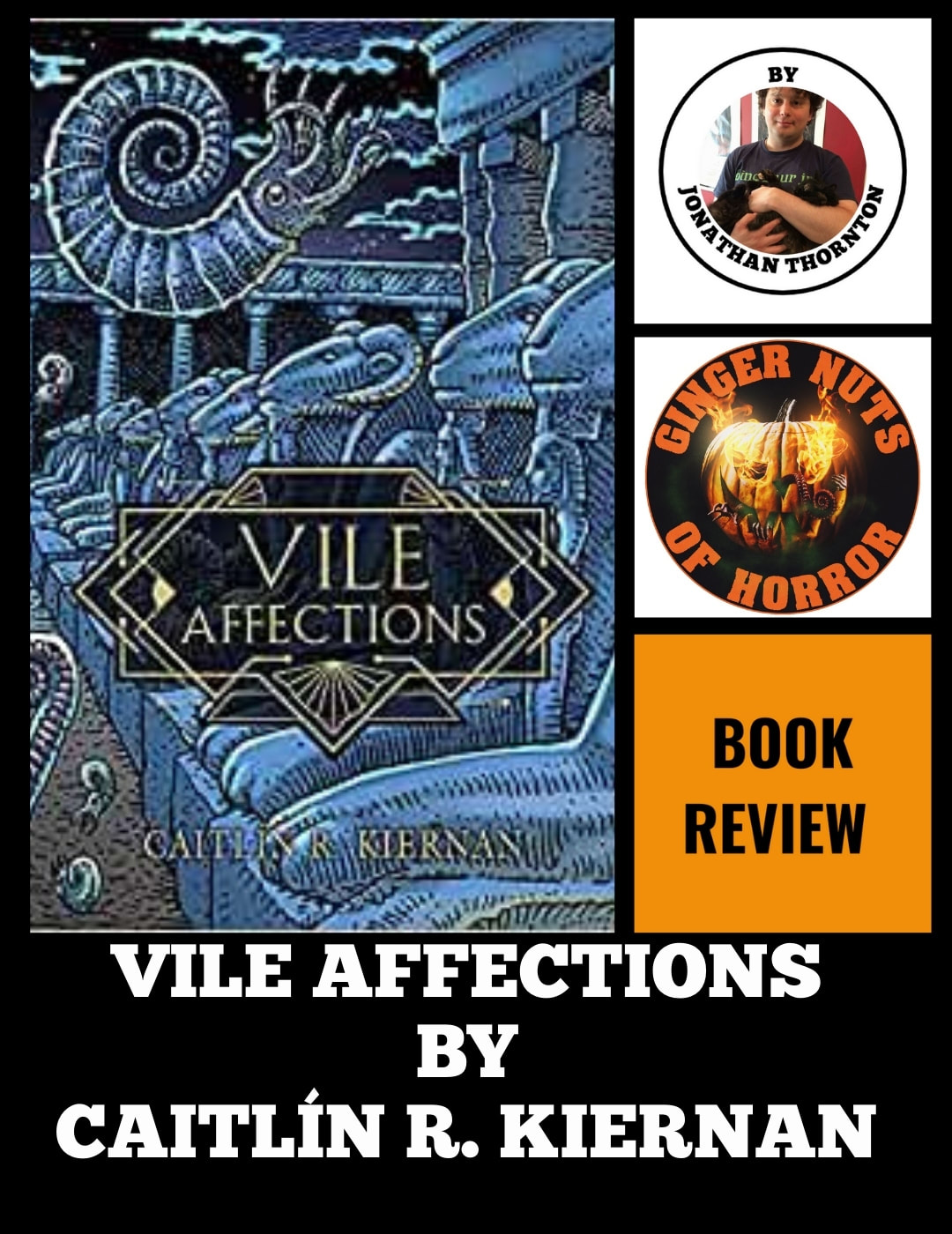
VILE AFFECTIONS BY CAITLÍN R. KIERNAN [BOOK REVIEW]

13/12/2021
HORROR FICTION REVIEW VILE AFFECTIONS BY CAITLÍN R. KIERNAN
Kiernan’s stories haunt the memory because of how vividly they conjure atmosphere and feel. From the Alabama of Kiernan’s childhood to the murky depths of prehistoric oceans to post-apocalyptic vistas mutated beyond the understanding of humans, the reader can almost taste the settings, so fully are they evoked.


“It was never a straight line but always only a maze, a labyrinth that we haunted and that haunted us back, in turn. A circular haunting, a spiritual Möbius strip – our games, your shifting faces, the sex, stories we told and untold, picked apart and refashioned to suit our needs, the loneliness, the old shack in the woods, what we found when I followed you inside, and on and on and on and on. I could write this tale for a thousand more days and nights and still I would draw no nearer to a genuine ending and I would find no tidy resolution. Conclusion is arbitrary.”

Caitlín R. Kiernan is one of the finest writers of Weird fiction across the history of the genre, and each of their new short story collections is a cause to celebrate. Vile Affections (2021) is another essential addition to Kiernan’s impressive body of work, one that gives a good example of their range and power as a writer, whilst offering tantalising hints of where they might be going next. Told with their usual mastery of language and penchant for hallucinatorily vivid prose, these 22 new stories bristle with Kiernan’s inventive talent. As one would expect from Subterranean Press, it’s a gorgeous volume as well. Each story is accompanied by an appropriately twisted illustration by Vince Locke, and followed by annotations from Kiernan themselves. It’s difficult to imagine a fan of Kiernan’s work or Weird fiction in general not wanting to read this collection.

The collection displays the themes and motifs that Kiernan is repeatedly drawn to, and demonstrates the variety of approaches they use to tackle them. Horrific visions and recurring nightmares of drowning haunt the narrators in ‘Day After Tomorrow, the Flood’, ‘As Water Is In Water’ and ‘The Green Abyss’. Kiernan takes on familiar monsters like vampires and werewolves and makes them their own in ‘Theoretically Forbidden Morphologies’, ‘King Laugh (Four Scenes)’ and ‘Mercy Brown’. They twist fairytales into strange and unnerving new shapes in ‘Iodine and Iron’ and ‘Which Describes a Looking-Glass and the Broken Fragments’. And in ‘Cherry Street Tango, Sweatbox Waltz’ they deploy noir tropes and topology in order to excavate the uncanniness and uneasiness at the heart of the genre. As always with Kiernan, nothing in these stories is quite as it first appears, and the shared themes and experiments with genre serve to highlight this. One of their great strengths as a writer is how they can take two stories with similar themes or motifs and take them both in entirely unexpected and surprising directions.

Kiernan’s stories haunt the memory because of how vividly they conjure atmosphere and feel. From the Alabama of Kiernan’s childhood to the murky depths of prehistoric oceans to post-apocalyptic vistas mutated beyond the understanding of humans, the reader can almost taste the settings, so fully are they evoked. The southern highway in ‘Virginia Story’, haunted by strange and unfamiliar roadkill, and the charred forest in ‘The Great Bloody and Bruised Veil of the World’ suggest incursions of the uncanny into our reality. ‘A Chance of Frogs on Wednesday’ takes the reader on a surreal quest into a world where the uncanny has replaced our reality. Speculative fiction stories like ‘Metamorphosis C’ or the cyberpunk-ish locale of ‘Cherry Street Tango, Sweatbox Waltz’ imagine futures haunted by the dispossessed and the down and outs, secret worlds of hired assassins, vanishing marks and subterranean horrors. Throughout them all there is a sense of the fragility of human lives, as we live on the surface of a world more nightmarish and strange than we can possibly imagine, one which might so easily become entirely inhospitable to humanity.

What’s striking about this particular collection is how many stories are essentially intimate and frequently antagonistic conversations between two characters. Kiernan excels at painting monstrous, mysterious characters, revealing what the reader needs to know about them through how they interact with others and the world. Many of the stories feature characters grappling with psychiatrists. ’Untitled Psychiatrist No. 4’ and ‘As Water is In Water’ are portraits of characters who, in what they refuse to tell their psychiatrist, reveal their deepest anxieties to the reader. ‘The Last Thing You Should Do’, ‘The Tameness of Wolves’ and ‘The Surgeon’s Photo (Murder Ballad No. 12)’ are told from the perspective of characters in thrall to sinister beings, their uneasy and abusive relationship delineated by the power dynamic displayed between them. And ‘The Lady and the Tiger Redux’ shows a relationship collapsing in on itself, brought to its knees by the couple’s encounter with the Weird. These stories demonstrate that as well as being a master of atmosphere and language, Kiernan is also crucially a master of character.
​
Kiernan’s approach to storytelling is to embrace the strange and the uncanny. Their stories are like labyrinths, mazes in which the unwary reader can become lost or trapped. They avoid easy resolutions or any sense of closure, preferring instead to discomfort and disturb. This sense of the uncanny coming from the inexplicable extends to Kiernan’s fascinating and confounding notes. They do not seek to explain or elucidate what’s happening in these stories, for that would destroy the mystery, the tension, the magic. Instead, Kiernan’s wry but honest notes tell frankly about the sometimes oblique sources and inspirations behind these stories, as well as the difficulties of writing in such turbulent times. As such, Vile Affections is not just another excellent and essential collection of Kiernan’s Weird fiction, it also offers a privileged snapshot into one of the great creative minds of our age.
Picture
Vile Affections by Caitlín R. Kiernan 

In Vile Affections, Caitlín R. Kiernan's seventeenth short fiction collection, the boundaries of desire, fascination, passion, and dread collide. That which is beautiful may easily be profane. Those who love us may devour us alive. A shadow may shine like a supernova. The eye of the beholder is God. In these twenty-two stories, Kiernan's trademark range is on display, taking us from submerged and monster-haunted dreamscapes to quiet bedroom conversation between lovers, from unexpected and uncanny roadkill to an object lesson on the perils of picking up hitchhikers on rainy Appalachian nights. Moving deftly between such disparate genres as cyberpunk, fairy tales, and Southern Gothic, this is Kiernan at their eerie best.


Publisher ‏ : ‎ Subterranean Press; Deluxe edition (30 Nov. 2021)
Language ‏ : ‎ English
Hardcover ‏ : ‎ 384 pages
ISBN-10 ‏ : ‎ 1645240436
ISBN-13 ‏ : ‎ 978-1645240433

A Book review by Jonathan Thornton 
​

​TODAY ON THE GINGER NUTS OF HORROR WEBSITE ​

BORN IN BLOOD, VOLUME 2 BY GEORGE DANIEL LEA [BOOK REVIEW]

THE SHADOW PEOPLE BY GRAHAM MASTERTON [BOOK REVIEW]

Picture

THE HEART AND SOUL OF HORROR FICTION REVIEWS ​

BORN IN BLOOD, VOLUME 2 BY GEORGE DANIEL LEA [BOOK REVIEW]

13/12/2021
HORROR FICTION REVIEW BORN IN BLOOD, VOLUME 2 BY GEORGE DANIEL LEA
George Orwell once wrote that “Good prose should be transparent, like a windowpane”. If Orwell’s prose is a windowpane, then Lea is a disaffected youth hurling a rock through it and running away shouting “Piss off, grandad!” over his shoulder.
Nearly forty years after the term was coined, “body horror” is still going strong, with several major anthologies on this theme published recently and a horde of new authors building on the foundations laid by the likes of Clive Barker and Kathe Koja. It may not be as easy to shock an audience as it was in the eighties, but transgression will always be possible as long as people try to set moral and social standards. No matter how body-positive society gets, the forced ownership of a human body will always have something horrifying about it, and the best body horror is not just physical but social and sometimes even metaphysical.

That is certainly the case with George Daniel Lea, a direct descendant of Clive Barker in style and content. Volume 1 of the Born in Blood series introduced the reader to Abarise, a realm where trauma is a universal state and suffering is the only reliable key to transcendence. He has also developed a complex multiverse governed by entities with opposing agendas, where change is the only constant and attempts to impose order inevitably end in bloody entropy, with entire civilizations collapsing into an amorphous mess like Helen Vaughan at the end of The Great God Pan.
​
Volume 2 continues to develop these themes, and also sheds light on the more uplifting side of what seems at first glance to be a very nihilistic cosmogony. As shown in “A Feast For The Eyes” (which sees the son of a serial killer retrace his father’s footsteps to find the roots of his obsession), salvation of a sort can be found through art – albeit the kind that often involves some guy sticking a corkscrew down his urethra or writing on the walls with pancreatic fluid -  and those who are able to embrace constant change win the prize of being able to “dream [themselves] other”.  There are those for whom a life of grotesque physical transformation is preferable to being trapped in a single fixed state of being, and much like Whitney Houston, Lea believes that children are our future.  In “Little Mad Gods” a little girl discovers a new lease of life when her world begins to disintegrate in a rain of blood and madness that has its share of beauty, a place where the “lips of cuts” can “[take] flight from the entities that suffered them” and become butterflies. “No Finer Heaven” features a pair of chronically disappointed teenagers who find their way into another world, an unnerving red heaven beyond the reach of the unimaginative greyfolk who superintend their waking reality. Long live the new flesh, indeed, though I couldn’t help but feel sorry for some of the parent characters.

The style isn’t for everyone. It can fairly be described as “balls to the wall”, which I suppose is appropriate considering the things that happen to genitalia in this kind of book.  Many passages are more like mantras, with certain words and concepts – filth, shit, parasites etc. - repeated again and again until all meaning is bludgeoned out of them, leaving the reader flailing in a death-metal quagmire of gore and bodily secretions. George Orwell once wrote that “Good prose should be transparent, like a windowpane”. If Orwell’s prose is a windowpane, then Lea is a disaffected youth hurling a rock through it and running away shouting “Piss off, grandad!” over his shoulder.

That’s not to say he’s a bad writer, however. Lea is quite capable of conventional storytelling when he wants to. He is, after all, a disciple of Clive Barker, and Barker is a writer with more than one face. Though the predominant influences in Lea’s work are mid-period Clive - those sprawling doorstop fantasy novels like Weaveworld and The Great and Secret Show – my favourite stories in this collection are more reminiscent of Barker’s earlier writing. The gore, romance and existential ennui of The Hellbound Heart find plenty of echoes here, with Lea’s character Kempton pleasantly redolent of Barker’s legendary GDM, “Uncle” Frank Cotton. The novella “An Idiot’s Hope” also reminds me a lot of the urban paranoia and more controlled, gritty but lyrical style of The Damnation Game or tales like ‘The Age of Desire’. This is a good thing in my book, because the Mad John Martin hugeness of Barker’s later writing leads to a certain stasis - sometimes writing about Everything can look a lot like writing about nothing, and that’s a problem Lea suffers from too on occasion. But “An Idiot’s Hope” is dynamic and also offers human focus, with solid characterization in the form of the horrid DI Roseblade and a married couple who fall foul of interdimensional horrors (I particularly liked the realistic description of the wife Jessica’s alienation from her friends and family following what everybody assumes is a bout of psychotic mental illness.) The final stories, “The Last Gospel”, and “Epilogue”, will also provide some answers for anyone frustrated by the absence of certain details in Lea’s mythos.

Overall this is a collection that demands commitment from the reader, but that commitment is rewarded, especially in the longer stories, and this book should also appeal to those who enjoy a queer or trans sensibility in their body horror. Lea’s characters often refuse to sit quietly in the physical and social box life has built for them, and discover that this is not only okay, but a precondition of survival. In a culture that’s often a bit too fond of the old sorting-hat, this polymorphism is a great strength.
Picture
Born in Blood, Volume 2 by George Daniel Lea 

Publisher ‏ : ‎ Perpetual Motion Machine Publishing (10 Aug. 2021)
Language ‏ : ‎ English
Paperback ‏ : ‎ 364 pages
ISBN-10 ‏ : ‎ 1943720568
ISBN-13 ‏ : ‎ 978-1943720569

The second volume of George Daniel Lea's Born in Blood, a collection of beautiful horror stories guaranteed to burn a hole in your heart.

SOMEWHERE BETWEEN HIGH HEAVEN AND LOW HELL

Born in blood . . . the first breath and all that follow, tainted by original trauma, echoing throughout every thought, every heartbeat; blossoming into more profound pain, until breath and thought both cease . . .
What we grow accustomed to . . . what we can endure:

The days bleed into one another, as we do; hurt defining every moment.

No more. Now, all instants are one; pulsing brilliant, ecstasy and agony, rendered down; experienced in a heartbeat.

Every shame. Every sorrow. Humanity, history. This is what we are; the God we gave birth to.

Better? Yes. Yes. Now, we all suffer the same; no more division; no privilege or powerlessness. We are the same; sexless, skinless, ex sanguine.

And we celebrate, content in our disgrace.


A Book Review by Daisy Lyle 


TODAY ON THE GINGER NUTS OF HORROR WEBSITE ​

VILE AFFECTIONS BY CAITLÍN R. KIERNAN [BOOK REVIEW]

THE SHADOW PEOPLE BY GRAHAM MASTERTON [BOOK REVIEW]

Picture

THE HEART AND SOUL OF HORROR FICTION REVIEWS ​

MILK KISSES & OTHER STORIES BY ROSS JEFFERY [BOOK REVIEW]

12/12/2021
MILK KISSES & OTHER STORIES BY ROSS JEFFERY [BOOK REVIEW]
​‘Milk Kisses & Other Stories’ is a challenging read and Jefferys latest won’t be to everyone’s taste. His stories are odd, perfectly crafted pieces of unpleasantness and I, for one, can wait to read more. What impressed me most is how distinct the authors voice is.
Milk Kisses & Other Stories (Short Sharp Shocks! Book 68) by Ross Jeffery 

ASIN ‏ : ‎ 
B097394MW8

Publisher ‏ : ‎ Demain Publishing; 2nd edition (2 July 2021)
Language ‏ : ‎ English
File size ‏ : ‎ 1297 KB
Text-to-Speech ‏ : ‎ Enabled

A Book review by Richard Martin 

Book 68 in Demain Publishing’s consistently excellent Short Sharp Shocks! Imprint collects three short stories from Bram Stoker Award nominated horror author Ross Jeffery. Anyone who has read his surreal and nightmarish ‘Juniper’ series will have some idea of what they are in for with ‘Milk Kisses & Other Stories’, which serves as an excellent introduction to the work of a unique new voice in the indie horror community.

Jefferys fiction has a tendency to present its reader with a slightly warped reality, managing to feel truthfully gritty while simultaneously adding subtly outlandish elements that give things an air of uncomfortable unpredictability. The opening story (Pareidolia) is an excellent example, telling the story of an unnamed visitor to a town with a sordid history. Much of the story is set in a single location (a tavern). The action is sparse but the tension is palpable as it’s made clear from the opening sentence that there is something not quite right about the town, the tavern, the locals, even the narrator himself and the final reveal is equal parts horrifying and bizarre.

The title story is perhaps the most grounded, and easily the most disturbing of the collection, seemingly documenting a new mothers experience with her newborn child. As with everything I have read of Jefferys work to date, everything is not quite as it seems and what starts as a realistic look at postnatal depression gradually pulls back the curtain on something far more macabre. Both the build up and the end reveal work incredibly well and it’s a story that will stay with you just as much for the unspoken implications as it will for what’s on the page.

The collection also closes strongly with an absolutely grotesque body-horror short (Hemangioma) that is much a character piece as it is a showcase for some truly strange and unpleasant visuals. Without spoiling the reveal, I’ll just say that the short follows a young boy with a somewhat unique birth defect, and follows him as he grows up and comes to terms with it. You won’t know whether to laugh, cry, or vomit, but one thing you won’t do is forget it.
​
‘Milk Kisses & Other Stories’ is a challenging read and Jefferys latest won’t be to everyone’s taste. His stories are odd, perfectly crafted pieces of unpleasantness and I, for one, can wait to read more. What impressed me most is how distinct the authors voice is. I read a lot of horror and am hard pressed to pinpoint another author who works as a suitable comparison. ‘Twin Peaks, with the horror dialled up to eleven’ is as close as I can describe the experience of reading Ross Jeffery. If that sounds like a book you’d be interested in, then I can’t recommend this one highly enough.  5 Stars

Milk Kisses & Other Stories (Short Sharp Shocks! Book 68) 
by Ross Jeffery

Picture
MILK KISSES & OTHER STORIES – three creepy offerings from Bram Stoker nominated author, Ross Jeffery.

In PAREIDOLIA a writer desperately searching for inspiration travels to a small town to investigate local lore and soon finds himself embroiled at the centre of an unfolding nightmare.

MILK KISSES: A single mother must come to terms with the cruel hand that she's been dealt and soon realises that you don't have to be a house to be haunted.

And finally, HEMANGIOMA, where a young boy discovers the thing lurking beneath his flesh is far more than what it first seems.

(with a cover by Adrian Baldwin)


Picture

THE HEART AND SOUL OF HORROR FICTION REVIEWS ​

WILD MARJORAM TEA BY SYLVIA LITTLEGOOD-BRIGGS [BOOK REVIEW]

11/12/2021
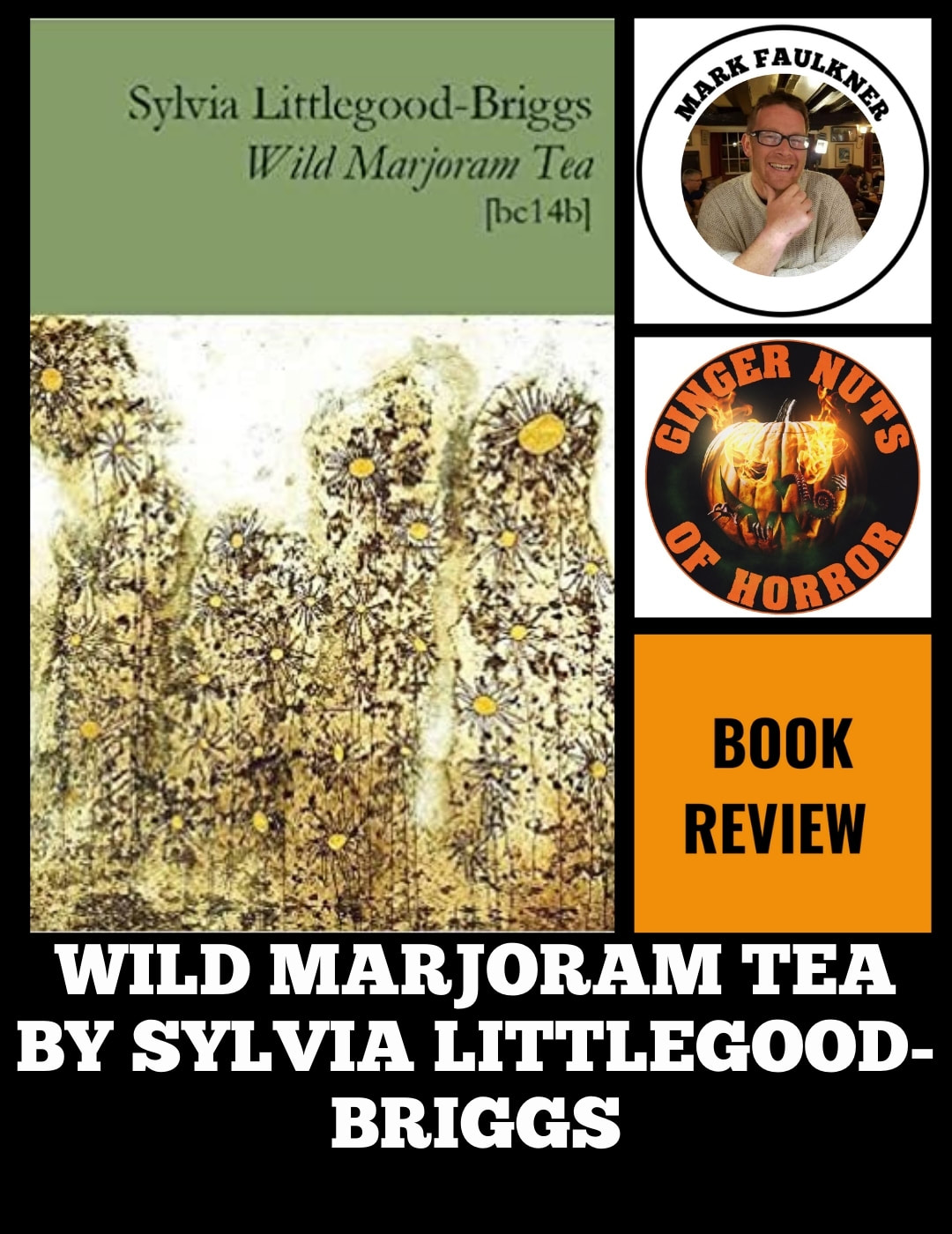
HORROR FICTION REVIEW WILD MARJORAM TEA BY SYLVIA LITTLEGOOD-BRIGGS
​This is a book which projects a deep connection with nature. The prose flows well and immerses the reader in the British countryside, which is something the author obviously has a passion for.

I’m unsure what the distinction is between folklore, folk-horror and fairytale, but Wild Marjoram Tea ticks all three boxes. All in all, a magical tale which I feel privileged to have read.
Wild Marjoram Tea by Sylvia Littlegood-Briggs

Publisher ‏ : ‎ Broodcomb Press Ltd (4 Oct. 2021)
Language ‏ : ‎ English
ISBN-10 ‏ : ‎ 1999629876
ISBN-13 ‏ : ‎ 978-1999629878

A book review by Mark Faulkner
Scratch the surface of the British countryside and you’ll find layer upon layer of folklore, myth and legend. Wild Marjoram Tea adds its own horizon to this rich mulch.

Wild Marjoram Tea follows the story of Polly and Tom, who as teenagers, are brought together under tragic circumstances. During their lengthy explorations of the local countryside, they happen upon the Littlegood house, which is set alone in the woods and inhabited by an eccentric couple, Peter and Elfy, and their non-verbal son, Robin. There they spend their days, Polly learning herbalism and soap making with Peter, and Tom spending his time out on the lawn with Elfy and Robin.

They are happy times, until one day the mood changes. Tom and Polly are given a tea, the magical properties of which open the door to another place, which for the most part, exists beneath the range of human perception.

I didn’t know what to expect when I opened this book, which is just the way I like it. I have to say I wasn’t disappointed.

Wild Marjoram Tea is written with quite an unusual structure, as in there are just two long chapters, but in this instance, it works and feels right for the story.

This is a book which projects a deep connection with nature. The prose flows well and immerses the reader in the British countryside, which is something the author obviously has a passion for.

I’m unsure what the distinction is between folklore, folk-horror and fairytale, but Wild Marjoram Tea ticks all three boxes. All in all, a magical tale which I feel privileged to have read.

Sylvia Littlegood-Briggs, Wild Marjoram Tea, Hardback 

Picture
May your pockets be deep in dust,
for each mote is a star, little one,
and your right pocket holds one world
and your left holds another.

Wild Marjoram Tea is one of the standalone texts that grow out of the peninsula’s world of weird fiction and strange tales.
As with The Night of Turns, the new book explores folklore and folk horror, yet it is also a deeply moving exploration of growing up, change and the nature of being.
Beautiful, strange and terrifying, Wild Marjoram Tea draws on a wide range of British folklore sources – from the myriad treasures of English and Scottish song to the disquieting cruelty of legend – to create a distinctive world of unsettlement.
As ever, it might not be for you—  

Purchase a copy here 

Picture

THE HEART AND SOUL OF HORROR FICTION REVIEWS ​

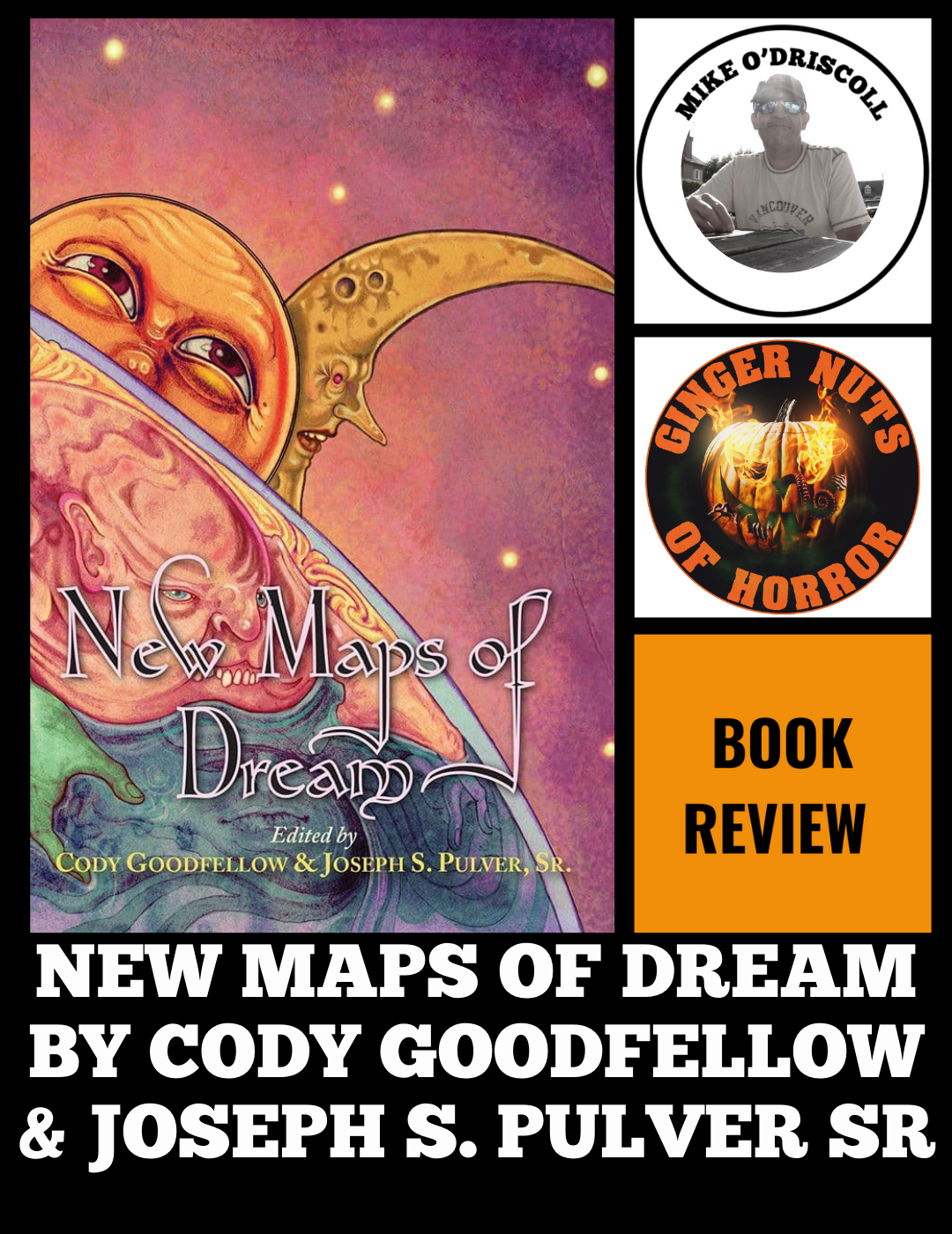
NEW MAPS OF DREAM BY CODY GOODFELLOW & JOSEPH S. PULVER SR [BOOK REVIEW]

10/12/2021
NEW MAPS OF DREAM BY CODY GOODFELLOW & JOSEPH S. PULVER SR
 Rarely has the appearance of the fantastic in a story been so brutally curtailed. It’s a fitting end to this exploration of the Dreamlands, one that suggests a realm that is still resistant to our whims and desires, a place that remains subject to its own internal and unfathomable laws.
New Maps of Dream
Cody Goodfellow & Joseph S. Pulver Sr. (Eds)
PS Publishing, hb, 266pp, £20)
I haven’t read much Lovecraft and have little knowledge of the tales that comprise his dream cycle. Perhaps that makes me somewhat unqualified to provide a critique of New Maps of Dream, but a story, whatever its external framing device or connection to an urtext, must stand or fall on its own merits. The book’s aim, according to co-editor Cory Goodfellow, is to allow contemporary writers to explore the dreamlands, or what he terms the “collective unconscious realm,” to wander through the liminal spaces at the back of our consciousness to the dreamscape, and report back on what they have found. Lovecraft’s own forays into the dreamscape were, according to Goodfellow, an attempt to repurpose “the archetypal shamanic journey to the underworld to renew the imperfect  material realm,” in which “his dreamers sought the status, adventure and beauty missing from their waking lives.” Whatever Goodfellow and Pulver’s intentions, it’s to their credit that they’ve assembled such a diverse bunch of oneironauts, rather than the usual white male suspects, to venture out into the realms of the unconscious and speak of what they found there.


The collection begins with Michael Cisco’s ‘Siren Song,’ which works better as a prose poem than it does as narrative. It may be a dream about a death to come, or one that has already happened. Or perhaps it depicts the final dreaming moments before death? I don’t know because, as in a dream, nothing is clear, nothing makes sense, nothing is resolved. While the images Cisco creates are startling in themselves—“ribbons of polished human anuses travel alongside them, ribbons like slack, elastic timing belts” or “rolls of dense shadow flow towards me from my wife”—the cumulative effect is wearying, leaving the reader with a vague sense of dissatisfaction.


I much preferred Kaaron Warren’s slippery and nightmarish ‘Rust Red in Moonlight’ in which the self-harming Kyle dreams of monsters and mutilated girls and birds feeding on the carrion. Even so, these unsettling vision are less horrific than the reality he has to wake up to. On the surface, ’If I could be any Animal I would be …’ by S.P. Miskowski is about Jayne who, whilst recuperating from abdominal surgery, discovers that her online identity has been stolen, possibly by her former friend Bella. Probe a little deeper though, and Miskowski seems to be drawing a parallel between the ‘versions’ of ourselves that we present through social media, and the roles we play out in dreams. Is Jayne—or Jay—really a victim of catfishing, or is she dreaming this alternate version of herself, “having travelled these pages (Facebook?) for nine years”?  Does her dream-self stem from this excessive use of social media, or from her reliance on oxycodone? Her life is one of absences that can only be filled with lies. The story hints at the cost of giving oneself too wholly to another, of using oneself up. More ominously, it speaks of the dangers of living too long in the narcoleptic dreamland of social media.


A powerful sense of foreboding hangs over ‘Inhata’ by Jayaprakash Satyamurthy, which tells the story of Kannan, who we first meet staring directly at the sun. He’s a lonely boy prone to losing himself in daydream, and the young playmate he meets at the start may or may not be a product of that imagination. When he is older, following a peculiar death at a party, Kannan has to call on his father to help him out. Subsequently, he is given a vaguely familiar wooden idol—the Inhata of the title— by his father as some kind of protective totem. Satyamurthy alludes to the father’s background in organised crime, though Kannan deliberately obscures the reality: “His father’s profession had remained opaque to him over the years, but he knew it was mainly about sorting things out.” It’s a life that as a young man Kannan rejects, going so far at to dump the Inhata at the bottom of a dry lakebed. This action that has its own mysterious consequences, as the notion of “sorting things out” recurs, causing a schism between father and son, but which father and son? Satyamurthy’s prose is sinuous and sensual, and the story follows its own dream logic in taking us right back to where we began.


Philip Fracassi’s ‘Over 1,000,000 Copies in Print’ is a wild and Hellish acid trip of a tale that, at its climax, explicitly references Lovecraft, when supplanting the God of Christianity for the new Gods of the Dreamlands. The story takes place at a book signing for Lake, a nine year old kid who has written of his near death experience and vision of heaven. Don, the protagonist, is the frazzled and sceptical book store manager, trying to run the event without incident. As the time approaches to let in the fans (or fanatics, as he sees them) who’ve been queueing up for two days, things take on a sinister edge as Don reads passages from the book, passages that seem to speak directly to him. From this point on the ‘normality’ that he takes for granted quickly unravels and the narrative implies that religious faith itself is a sort of conduit to a dream realm where, in place of Jesus Christ, a bunch of malevolent new gods rule.


Another tale that draws on Lovecraft’s conception of the Dreamlands, Lucy Snyder’s ‘Ruby Soul, Bone Moon,’ is a visceral polemic against racism and the kind of ideas that Lovecraft espoused. The author manages to avoid being overly didactic as she tells of a woman who, in the aftermath of a miscarriage, dreams of her ancestors and their southern, confederate heritage, and the evils inflicted on their slaves. There she also encounters a dream version of her old history teacher, Miss Green, who tells of the connection between their two families—the protagonist’s ancestors owned Miss Green’s—and a terrible wrong that was done to Abigail, her great-great grandmother. Linking the history of the American South with the far more ancient history of the Dreamlands, Snyder has the her heroine travel to Dylath-Leen on a quest to find Abigail, a quest which is as much about reconciliation as it is about righting an individual wrong. It also offers, in the form of an unwitting, but generous sacrifice, an extraordinarily moving rationale for the protagonist’s miscarriage.


‘The Sweetest Little Girl in the World’ by Damien Angelica Walters is written as a series of excerpts from transcripts between psychiatrist Dr Beaumont, and her patient, 9 year old Lissa, whose sister has disappeared. Lissa claims to have taken her sister to a ‘dream place’, though is unable—or unwilling—to account for her disappearance. Dr Beaumont is sceptical and, over the course of their early sessions, tries to draw the truth out of Lissa. It’s a deceptively simple tale, with Beaumont’s pragmatic and sympathetic questioning drawing us in, only for Walters to pull the rug of rationality out from under our feet as the little girl’s duplicity is slowly revealed and the doctor is inexorably pulled into Lissa’s pastel coloured nightmare world.        


In ‘If the Cat were around He would have eaten the Fish,’ Mehitobel Wilson plays with the idea of dreaming that one’s house has an undiscovered wing or room where all manner of dark things may happen, including the usurpation of one’s own identity by a more malevolent version of oneself. Nathan Carson’s ‘Oil of Cat,’ is a slight but amusing update on Lovecraft’s story ‘The Cats of Ulthar’ in which a pair of lucid dreamers willingly give themselves up to the dreamland. Further extrapolations of Lovecraft’s Dreamlands are presented by Scott R Jones and Matthew M  Bartlett in their respective stories, and while the former’s The Dankness over Dylath-Leen’ strains too hard for comic effect, the latter’s ‘The Malls of Ulthar,’ succeeds in giving us more ominous glimpses beyond the portal in the form of responses to an advert for authentic accounts of dreams. Nick Mamatas’ ‘The Onionland Tingle’ is a clever and engaging attempt to link the experience of ASMR—auto sensory meridian response, a pleasing form of paresthesia—with the dreamland.


The collection ends on a sombre note with Jeffrey Thomas’s melancholy and beautifully observed ‘Drunk on Dream,’ a story that warns of the dangers of seeking solace from the pain of reality in dreams. In the wake of a painful breakup, Thomas’ protagonist turns increasingly to alcohol as a means of transporting himself to the dreamlands where he searches for something to fill the emptiness in which he is drowning. His state of mind is rendered with mournful precision, as here:


    He would drink before he went to bed. It would help him fall asleep, and sleep deeply; it would help him drop away into the well of sleep with such              a plunge that he would bypass the lonely act of masturbation.


After an encounter with an old man—possibly a dream version of himself—he decides to be more purposeful in his dreaming in the hope, we suspect, that it will lead him back to the woman he loves. Just when it seems that hope might be fulfilled, Thomas brings us back to bitter reality with a literal crash. Rarely has the appearance of the fantastic in a story been so brutally curtailed. It’s a fitting end to this exploration of the Dreamlands, one that suggests a realm that is still resistant to our whims and desires, a place that remains subject to its own internal and unfathomable laws.


Mike O’Driscoll
October 2021

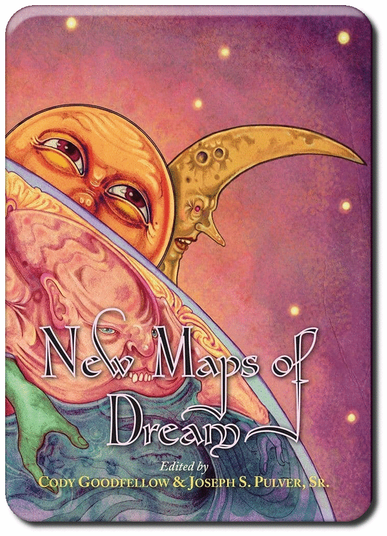
New Maps of Dream [Hardcover] edited by Cody Goodfellow & Joseph S. Pulver, Sr.

Picture
AN ANTHOLOGY edited Cody Goodfellow & Joseph S. Pulver, Sr.
CATEGORY Fantasy / Horror
PUBLICATION DATE Autumn 2021
COVER & INTERIOR ARTWORK Marcelo Gallegos
PAGES 276

EDITIONS 
Unsigned Jacketed Hardcover — ISBN  978-1-786367-25-3 [£20]

ABOUT THE BOOK
Once, the guardians of the Cavern of Flame admitted sleeping seekers to the Dreamlands, an endless realm of sublime horrors and unspeakable beauty. Some questers returned with wisdom and otherworldly inspiration to brighten the dreary waking world, while others remained forever where beggars could become emperors, mortals could cavort with gods, and ardent dreamers could cheat even death.
Once said to be more real than our own mundane reality, the Dreamlands now lie seemingly beyond our reach, the arcane art of dreaming all but forgotten. Were we exiled from it? Or has it simply changed as we have changed, since the old maps were mistaken for fantastic forgeries?
To reopen the Dreamlands for a new era, Cody Goodfellow and Shirley Jackson Award-Winning editor Joseph S. Pulver, Sr. dispatched nineteen modern oneironauts to survey the feral territories of the collective unconscious, and their reports will haunt your waking hours and invade your sleep. With New Maps Of Dream, H.P.Lovecraft’s oft-overlooked other mythos is reawakened in a unique fusion of horror and fantasy, where inner and outerworlds uneasily couple and stir strangevisions fromthe elusive planewe only touch in the depths of slumber.
CONTENTS
  • Introduction — Cody Goodfellow
  • Siren Song — Michael Cisco
  • Rust Red in Moonlight — Kaaron Warren
  • The Sweetest Little Girl in the World — Damien Angelica Walters
  • If I Could Be Any Animal I Would Be . . . — S. P. Miskowski
  • If the Cat Were Around, He Would Have Eaten the Fish — Mehitobel Wilson
  • Inhata — Jayaprakash Satyamurthy
  • Over 1,000,000 Copies in Print — Philip Fracassi
  • Blacktongue Blues — Zak Jarvis
  • Oil of Cat — Nathan Carson
  • At the Crossroads — Christine Morgan
  • The Dankness over Dylath-Leeny — Scott R. Jones
  • The Malls of Ulthar — Matthew M. Bartlett
  • Pandora — Orrin Grey
  • From Moon to Darkling Moon — Anna Tambour
  • The Onionland Tingle — Nick Mamatas
  • The Sea Witch — Rios De La Luz
  • Fearful is the Ancient Evil Of Their Faces — Christopher Slatsky
  • Ruby Soul, Bone Moon — Lucy A. Snyder
  • Drunk on Dream — Jeffrey Thomas

Purchase a copy direct from PS Publishing by clicking here 
Picture

THE HEART AND SOUL OF HORROR FICTION REVIEWS ​

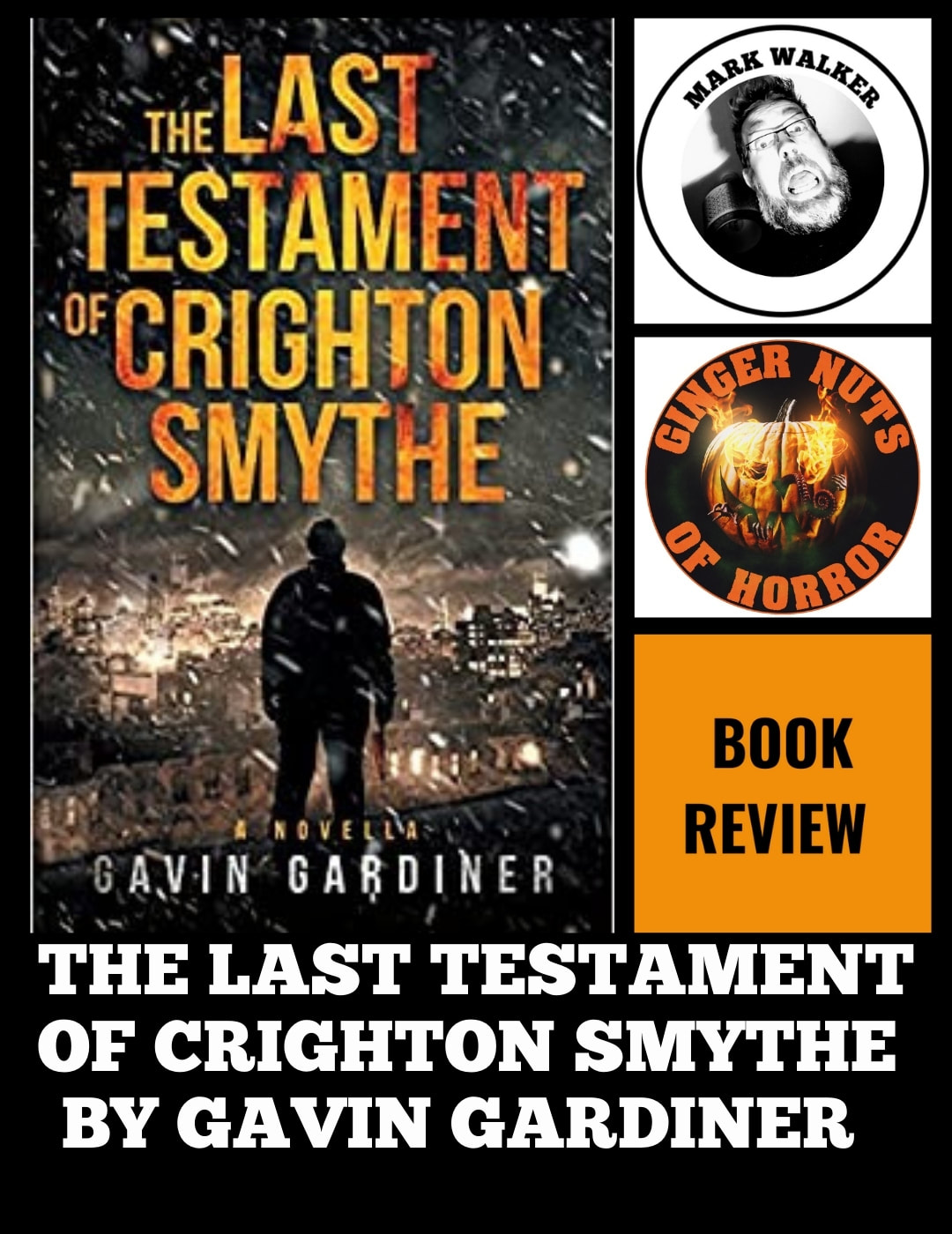
THE LAST TESTAMENT OF CRIGHTON SMYTHE BY GAVIN GARDINER

8/12/2021
HORROR FICTION REVIEW THE LAST TESTAMENT OF CRIGHTON SMYTHE  BY GAVIN GARDINER
‘it’s the journey, not the destination,’ and Gardiner takes us on a short but crazy journey into a troubled mind, giving us a glorious glimpse into the disturbing world of Crighton Smythe.
​
Join us, if you dare!
​
But bring your own butter.
The Last Testament of Crighton Smythe
 by Gavin Gardiner

Publisher ‏ : ‎ Burton Mayers Books (22 Oct. 2021)
Language ‏ : ‎ English
Paperback ‏ : ‎ 110 pages
ISBN-10 ‏ : ‎ 1838484558
ISBN-13 ‏ : ‎ 978-1838484552

Book Review by: Mark Walker


Crighton Smythe could see how everyone was going to die - except himself. A social outcast who relied on his mother to keep him, Crighton had to use his 'knack' to his advantage when Mrs Smythe took ill and financial pressures began to mount. But as his visions started to increase in intensity, and his hatred of the city around him began pushing him to his limit, he found himself wondering how much more he could take.
Then he died.
In his own words, let Crighton Smythe tell you the story of how he perished. Where is he now?
Discover for yourself.


Beware some minor spoilers for Crighton Smythe - although mostly stuff you are going to learn in the first few pages.

Crighton Smythe is dead. If only his ‘gift’ allowed him to see his own future, to foresee the manner of his own death in the same way he could for everyone around him, including his beloved, doting mother, Livvy. But that’s okay, he’s seen her die from old age surrounded by a loving family, so that must mean he is going to sell his play and save them both from the cesspit of a town and apartment building they are living in?

Or so he thinks. As Livvy’s health declines, Crighton needs to provide for them both and he uses his gift to their advantage. But don’t expect a happy ending; Crighton Smythe is, after all, already dead.

The Last Testament of Crighton Smythe is exactly that, a final confessional from Gavin Gardiner’s troubled protagonist as he writes a memoir of his final weeks on earth for an unseen audience.

But this is no American Beauty and Smythe is no Lester Burnham; Lester didn’t stalk the backstreets of his neighbourhood taking illicit bites from a stick of butter hidden in his coat pocket, for example. Crighton’s account of his last days is no romanticised account of life in suburbia. Crighton Smythe has issues – and his penchant for snacking on butter is just the tip of the iceberg!

In Smythe, Gardiner has created an intriguing character for who he cleverly weaves a story that leaves you both mildly disturbed but sympathetic towards the troubled lead. On one hand, Smythe is a caring son, looking out for his mother while trying to find a way out for both of them, on the other, he is a calculating ghoul, taking advantage of the sick and the elderly, while chewing on butter. I am still not sure why he carries butter around with him, but sometimes the simplest of things can have the biggest impact!

Gardiner’s writing does a great job of conveying Crighton’s world to the reader, writing about what is, largely, the mundane, everyday existence of people who have been hit by hard times but with the addition of a lecherous landlord and an ability to see when and how people are going to die. There is, from the off, something unnerving about Crighton and his relationship with his mother, but Gardiner elicits sympathy from the reader, and it isn’t hard to empathise with Crighton’s situation when considering what life has thrown at him. Even when his mother gets sick and he uses his skill for nefarious means, his heart is still in the right place – surprising really, considering the amount of butter he likes to eat while walking the streets.

(Yeah, in case you hadn’t realised, the butter really got under my skin!)

Ultimately, things don’t turn out how Crighton had hoped and, potentially, not how you might have expected. The ending doesn’t come as a complete surprise, but I did find it a little disappointing as it felt slightly rushed; a tacked-on coda for the main story that quickly ties everything up conveniently. I don’t think it did justice to the story that came before it, which is a compliment in many ways as Gardiner has managed to develop a realistic, grimy world around his characters in a very short space, one that I was drawn into instantly (despite the butter) and perhaps that is why I was a little “put out” by the abrupt ending. However, the ending isn’t a deal breaker and they (whoever the hell ‘they’ are) often say, ‘it’s the journey, not the destination,’ and Gardiner takes us on a short but crazy journey into a troubled mind, giving us a glorious glimpse into the disturbing world of Crighton Smythe.
​
Join us, if you dare!
​
But bring your own butter.

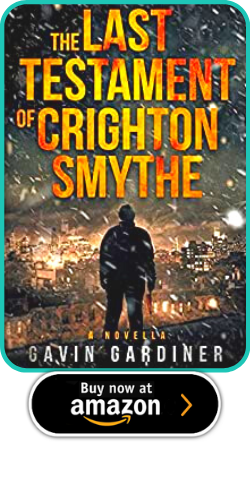
The Last Testament of Crighton Smythe 
by Gavin Gardiner  

Picture
THE LAST TESTAMENT OF CRIGHTON SMYTHE is the shocking and gruesome novella by Scottish horror scribe Gavin Gardiner, author of the bestselling psychological nightmare, FOR RYE.
Crighton Smythe could see how everyone was going to die - except himself. A social outcast who relied on his mother to keep him, Crighton had to use his 'knack' to his advantage when Mrs Smythe took ill and financial pressures began to mount. But as his visions started to increase in intensity, and his hatred of the city around him began pushing him to his limit, he found himself wondering how much more he could take.
Then he died.
In his own words, let Crighton Smythe tell you the story of how he perished. Where is he now?
Discover for yourself.


​​​TODAY ON THE GINGER NUTS OF HORROR WEBSITE ​

SLEWFOOT: A TALE OF BEWITCHERY BY BROM [BOOK REVIEW]

Picture

THE HEART AND SOUL OF HORROR FICTION REVIEWS ​

Previous
Forward
    Picture
    Picture

    RSS Feed

    Archives

    May 2023
    April 2023
    March 2023
    February 2023
    January 2023
    December 2022
    November 2022
    October 2022
    September 2022
    August 2022
    July 2022
    June 2022
    May 2022
    April 2022
    March 2022
    February 2022
    January 2022
    December 2021
    November 2021
    October 2021
    September 2021
    August 2021
    July 2021
    June 2021
    May 2021
    April 2021
    March 2021
    February 2021
    January 2021
    December 2020
    November 2020
    October 2020
    September 2020
    August 2020
    July 2020
    June 2020
    May 2020
    April 2020
    March 2020
    February 2020
    January 2020
    December 2019
    November 2019
    October 2019
    September 2019
    August 2019
    July 2019
    June 2019
    May 2019
    April 2019
    March 2019
    February 2019
    January 2019
    December 2018
    November 2018
    October 2018
    September 2018
    August 2018
    July 2018
    June 2018
    May 2018
    April 2018
    March 2018
    February 2018
    January 2018
    December 2017
    November 2017
    October 2017
    September 2017
    August 2017
    July 2017
    June 2017
    May 2017
    April 2017
    March 2017
    February 2017
    January 2017
    December 2016
    November 2016
    October 2016
    September 2016
    August 2016
    July 2016
    June 2016
    May 2016
    April 2016
    March 2016
    February 2016
    January 2016
    December 2015
    November 2015
    October 2015
    September 2015
    August 2015
    July 2015
    June 2015
    May 2015
    April 2015
    March 2015
    February 2015
    January 2015
    December 2014
    November 2014
    October 2014
    September 2014
    August 2014
    July 2014
    June 2014
    May 2014
    April 2014
    March 2014
    February 2014
    January 2014
    December 2013
    November 2013
    October 2013
    September 2013
    August 2013
    July 2013
    June 2013
    May 2013
    April 2013
    March 2013
    February 2013
    December 2012

https://l.facebook.com/l.php?u=https%3A%2F%2Fmybook.to%2Fdarkandlonelywater%3Ffbclid%3DIwAR1f9y1sr9kcIJyMhYqcFxqB6Cli4rZgfK51zja2Jaj6t62LFlKq-KzWKM8&h=AT0xU_MRoj0eOPAHuX5qasqYqb7vOj4TCfqarfJ7LCaFMS2AhU5E4FVfbtBAIg_dd5L96daFa00eim8KbVHfZe9KXoh-Y7wUeoWNYAEyzzSQ7gY32KxxcOkQdfU2xtPirmNbE33ocPAvPSJJcKcTrQ7j-hg
Picture